
200+ People Shared Their Best Paris Travel Tips – Here’s What They Said

I’ve spent months and months of my life in Paris, and as a France travel blogger and content creator, sharing practical advice for visiting is kind of my thing (such as dining tips, cultural differences, Paris fun facts, and mistakes to avoid).
But I don’t have a monopoly on good tips, and sometimes it’s nice to hear from a crowd. Strength in numbers, right?

I recently asked my community what their best tip was for someone heading to Paris for the first time. Over 200 responses later, certain themes kept repeating.
Here’s what people had to say.
1. Slow Down and Take It In
This was the dominant theme by far. People wrote:
- “Don’t try to see everything.”
- “Leave time to wander.”
- “Have a plan but be flexible.”
- “Plan 1 major thing a day.”
- “Paris will always be there.”
- “Walk up the little side streets.”
- “Wander aimlessly.”
A few people gave concrete limits. Two major sights per day, three if they’re smaller and close together. Anything more starts to eat into walking time, transit time, and meal time, and becomes a major itinerary mistake.
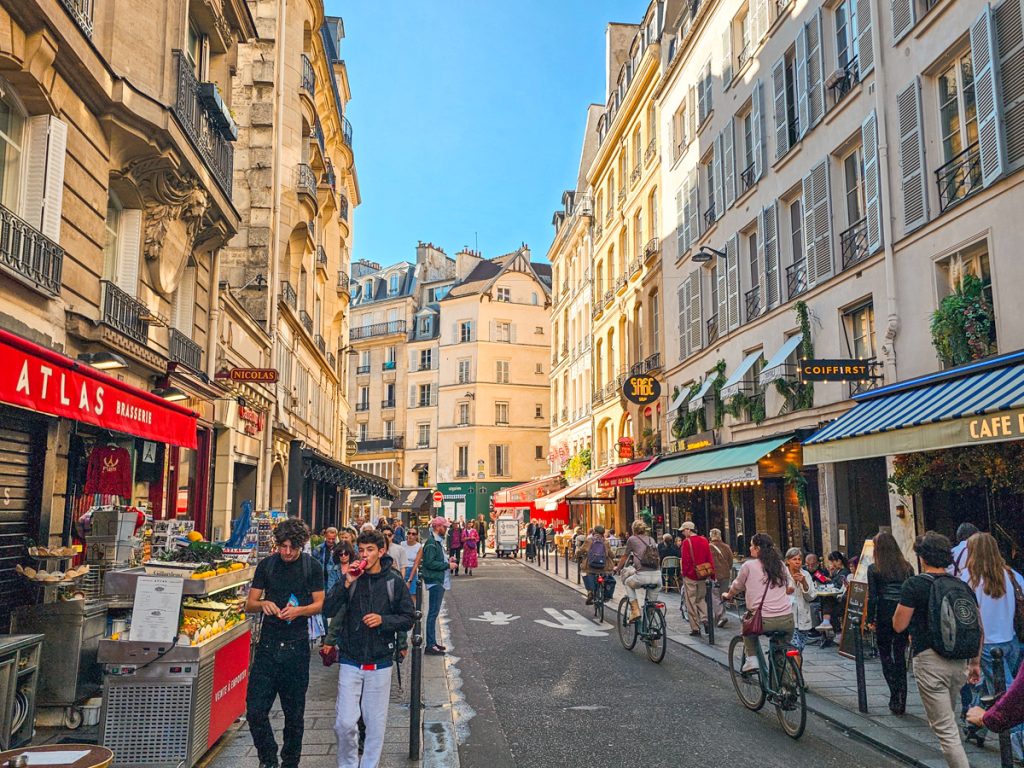
Several called Paris “a living museum.” One person said, “Walk two blocks past your destination and you’ll make a discovery you don’t want to miss.” Another wrote, “The best of Paris is the theater of the streets.”
If you map out five big, ticketed attractions in one day, you might spend a surprising chunk of that day in lines, in transit, or just worried too much about the clock.
2. You’ll Need More Time Than You Think
On a related note to #1, the idea of time showed up repeatedly in different forms.
- “Plan how many days you want to be there, and then triple.”
- “Hopefully, you’ll stay at least 5 days.”
- “At least ten days!”
- “You’ll never experience it all in one trip.”
- “Unless you have 4 weeks you won’t see everything anyway, so prioritize and enjoy.”
- “Most people return many times after the 1st time.”
Honestly, I can’t even begin to tell you how true this is.
Paris has 20 districts. Over 130 museums. Major monuments and attractions scattered across both sides of the Seine. Entire neighborhoods that feel like small towns. Markets, parks, historic churches, book stalls, covered passages, cemeteries, riverbanks, hidden gems, and day trip options galore.
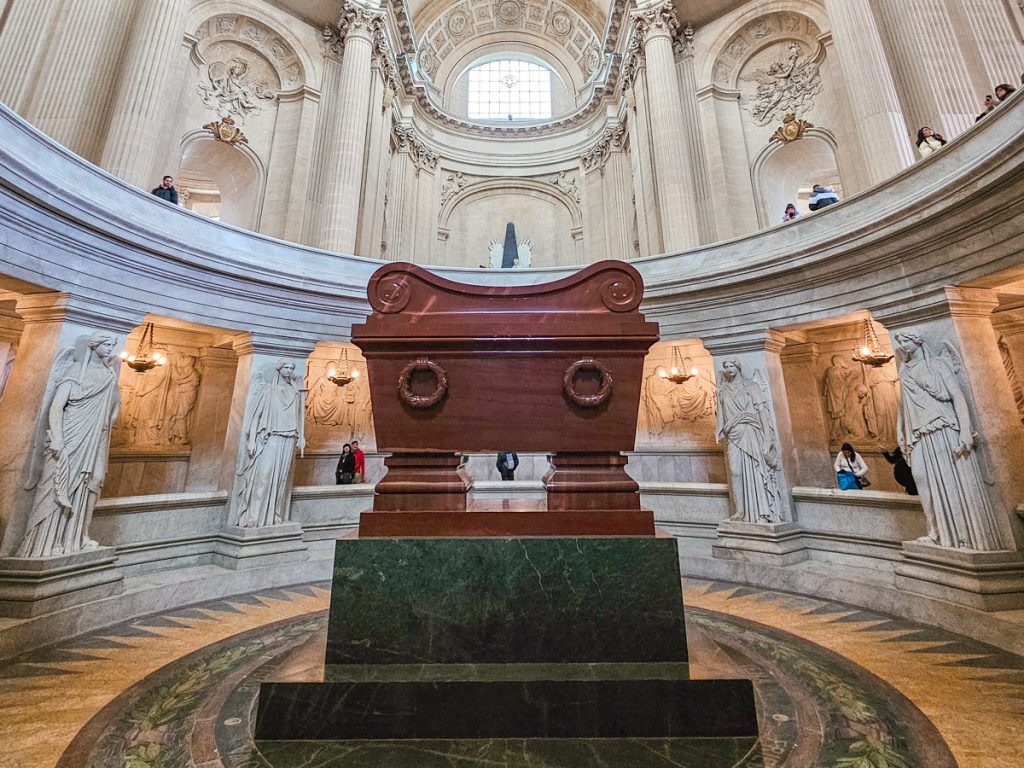
You can easily fill 3 days just with headline attractions. You can absolutely fill 7 days without leaving central Paris. You can fill 2 weeks and still leave with a list.
These commenters basically said the same thing in different words. Plan for as many days as you possibly can in Paris, but still, accept that you won’t see it all.
And many people hinted at the same outcome: One trip to Paris often turns into another.
Author’s Note: For 99+ ideas on how to fill your days or weeks, check out my Ultimate Paris Bucket List.
3. You Can Walk 15,000 to 25,000 Steps a Day
If there was one super practical piece of advice repeated over and over, it was this: comfortable shoes. It’s not hard to clock 15,000 steps in a day, and many people do 20-30,000 steps. Good shoes are imperative for these big walking days.
People said:
- “Break in your walking shoes.”
- “Waterproof walking shoes.”
- “Bring two pairs.”
- “Plan on a lot of stairs.”
Multiple people mentioned Metro stairs specifically. Many stations do not have escalators, and elevators are rare. If you’re staying in a small hotel or walk-up apartment, add more stairs to that count.
One commenter said to train ahead of time by walking 15,000 steps a day before your trip. Another tracked that they walked 11.5 miles in a single day.
Another person said, “Walk as much as you can. You miss so many interesting things, not in any guidebooks, if taking transit everywhere.”
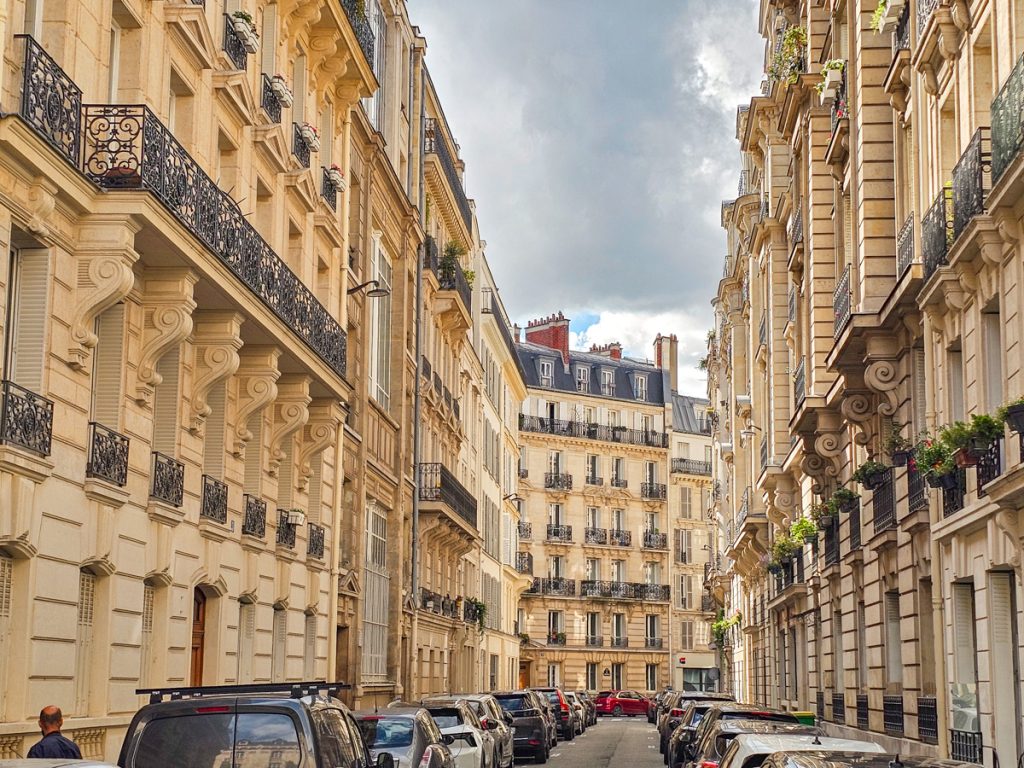
Several people added something I love. While you’re walking, look up. Notice the balconies, carved stone, ironwork, rooflines. So much of the beauty is above eye level.
4. Say Bonjour Every Time
This was another strong cluster in the thread. The phrasing was almost identical across comments:
- “Always say bonjour.”
- “Bonjour before you say anything else.”
- “Say bonjour to absolutely every service person. To not do so is rude.”
- “Bonjour, bonsoir, merci.”
And also:
- “Learn a little French.”
- “Practice your French”
- “Don’t assume they have to speak English.”
I’ll confirm that always starting with bonjour is the single most important bit of etiquette to remember in Paris.
A few people suggested memorizing a full sentence in French: “Excusez-moi, je ne parle pas français. Parlez-vous anglais?” (Excuse me, I don’t speak French. Do you speak English?)
Several comments emphasized effort. Imperfect French is fine, and courtesy goes a long way.
There were also reminders about manners more generally. “Be polite.” or “Don’t be entitled.”
Author’s Note: These are 16 great French words and phrases to know before your trip.
5. Book Ahead. Lines Are Real
This one has a big impact on how your trip goes. People made suggestions like:
- “Buy tickets ahead of time.”
- “Skip-the-line is worth it.”
- “Make reservations.”
- “Go for timed entry.”
The Eiffel Tower was mentioned multiple times as a spot to book ahead. A few people said to book as soon as tickets are released, especially in peak season. Major museums were also frequent examples (the Louvre, Orsay, and Versailles in particular).
If you show up without tickets, waits can stretch a very long time, or you might risk not being able to visit at all.
The general sentiment was simple: Where necessary, protect your time.
Author’s Note: These are 12 attractions that need to be booked ahead (and 6 that don’t)
6. Be Aware of Pickpockets and Scams
Safety came up regularly, and common advice included:
- “Watch your purse.”
- “Keep your bag in front of you.”
- “Carabiner your backpack zippers.”
- “Don’t pull your phone out near closing Metro doors.” (Author’s Note: This is a good tip – pickpocketers will sometimes grab phones out of people’s hands and jump out the doors right as they’re closing).
- “Don’t stop for games on the ground, lost rings, or surveys.”
- “Taxi scams at CDG.”
A few people specifically mentioned phone snatching near Metro doors right before they close. Others recommended crossbody bags worn across the chest with zippers facing inward.

The tone across most comments was about staying alert in crowded areas like the Metro, train stations, and around major landmarks.
Author’s Note: There is some petty theft in Paris, but you don’t need to go into your trip scared. Keep your bag in front of you, be careful with your phone on the metro, and be extra vigilant around crowded tourist attractions and you will likely be just fine.
Second Author’s Note: Taxis to/from the CDG airport are a set rate: €56 to Paris Right Bank (north of the Seine) and €65 to Paris Left Bank (south of the Seine). Only use taxis at official taxi stands, confirm the price before getting in, and know that by law taxis must let you pay by card.
7. Pack Light

This came up far more than I expected. People gave suggestions like:
- “Don’t take a big suitcase.”
- “Carry-on and backpack only.”
- “Pack light.”
Several people referenced dragging large suitcases up Metro stairs. Others mentioned small hotel elevators that barely fit one person and a bag.
One commenter said they did three weeks in France with a carry-on and backpack and it worked well. Another said they intentionally packed lighter so they had room to bring items home (there are a lot of souvenirs in Paris to buy!)
The common thread was mobility. The lighter you travel, the easier everything feels. I can absolutely second all of this!
8. Plan by Area, Not by Random Attraction
This advice was very tactical. People gave suggestions like:
- “Plan by arrondissement.” (An arrondissement is a Paris neighborhood)
- “Keep your day in the same area.”
- “Look at a map and see what’s close.”
- “Choose one area per day.”
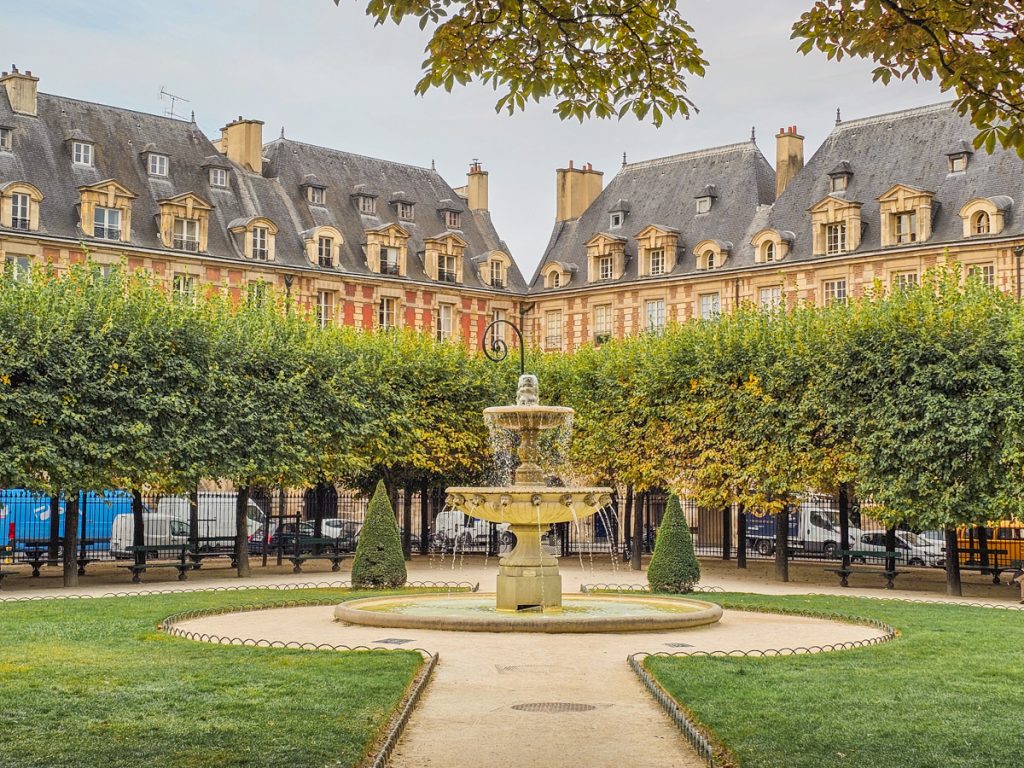
Paris is compact compared to many large cities, but crossing from one end to the other can still take 30 to 45 minutes each way, depending on connections. However, you will certainly need to use transit at some point, and these were some tips offered:
- “Use the Metro.” (Author’s Note: Read my Paris Metro Guide before you go)
- “Get a Navigo pass.”
- “Get a subway pass on your phone for 7 days.”
- App suggestions like Citymapper and Bonjour RATP.
- Using hop-on hop-off buses early in the trip to get oriented.
Author’s Note: To help with this exact situation, I’ve created neighborhood guides for 8 of Paris’s most popular districts:
- The 1st Arrondissement: Your Ultimate Guide to the Louvre Neighborhood
- The 2nd Arrondissement: Your Complete Guide
- Le Marais: A Complete Guide to Paris’s 3rd and 4th Arrondissements
- 5th Arrondissement: Your Ultimate Guide to the Latin Quarter
- Saint Germain: Your Complete Guide to Paris’s 6th Arrondissement
- 7th Arrondissement: Your Guide to the Eiffel Tower Neighborhood
- 8th Arrondissement: Your Complete Guide to the Elysées Neighborhood
- Your Ultimate Guide to Montmartre: A Self-Guided Walking Tour
9. Eat Well, But Be Strategic
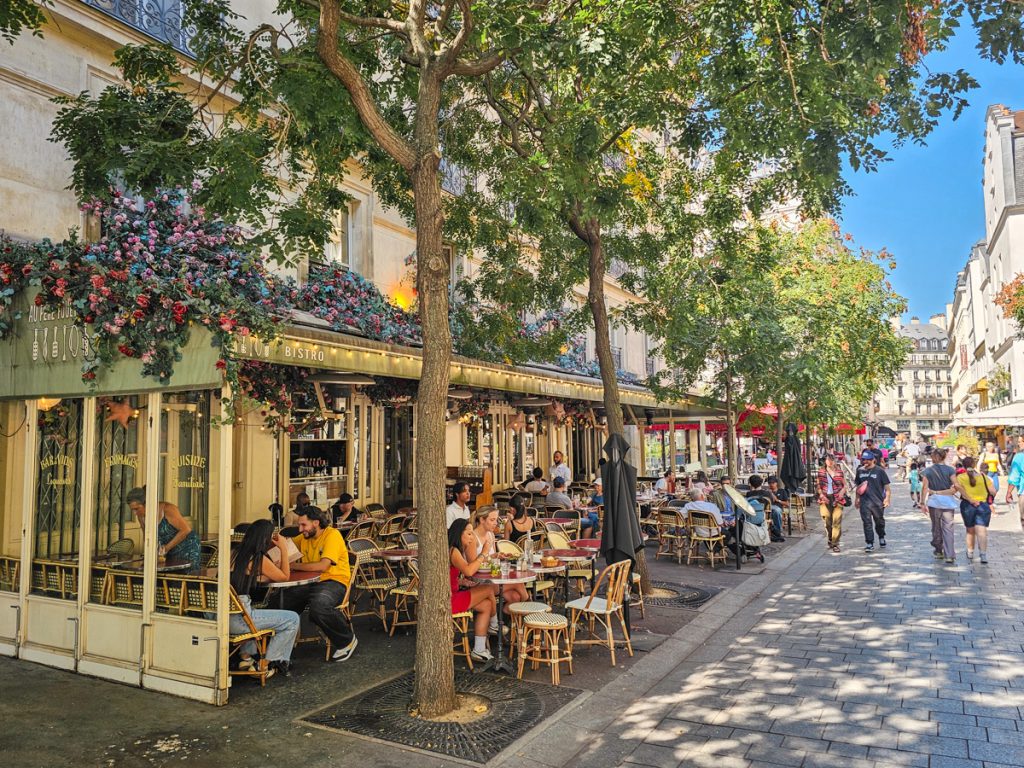
Food advice ranged from enthusiastic to practical. Some people wrote:
- “Prepare to eat butter.”
- “Stop at every bakery and cheese shop.”
- “Eat all the croissants you can handle.”
Others focused on strategy:
- “Skip cafes right around the Eiffel Tower.”
- “Terrace costs more than inside.” (Author’s Note: Sometimes)
- “Buy water bottles at grocery stores.” (Author’s Note: Or fill up your bottle at one of Paris’s many free drinking fountains)
- “Don’t wait 45 minutes for the ‘best’ croissant.”
One person suggested building picnic lunches from markets and neighborhood shops and eating along the Seine or in a park. Another reminded everyone that some restaurants close between lunch and dinner, and shops may close midday, especially in smaller towns and villages.
And one very specific reminder: “Une carafe d’eau.” (Author’s Note: Asking for a carafe d’eau gets you a free pitcher of tap water at the table).
Want more tips? Check out all of my restaurant-related posts:
- How to Order at a French Boulangerie
- 10 Common French Menu Terms Visitors Often Misunderstand
- 10 Beautiful Cafes and Bakeries in Paris
- Rating 12 of Paris’s Most Viral Food Spots
- 8 Phenomenal Hot Chocolate Spots in Paris
- Where to Find the Best Macarons in Paris
- 18 Great Parisian Restaurants to Try
10. Prepare for Weather
A few steady reminders showed up here:
- “Bring a raincoat – it WILL rain.”
- “Buy a cheap umbrella and go out anyway.”
- “If you go in December, prepare for cold. Layers.”
- “Just know that weather is very unpredictable.”
Paris weather changes quickly, and light rainy conditions are common. It’s always a good idea to pack a small umbrella, just to be on the safe side. Comfortable, weather-appropriate shoes were mentioned again here.
11. See Paris at Night
Several people emphasized doing at least one major experience in Paris after dark. For example:
- Late-night Louvre openings
- Eiffel Tower at night
- Seine River cruise after dark
- “Stay out late.”
The feeling was that the vibe of the city shifts in the evening. Streets are calmer, people gather with friends and family on cafe terraces, and monuments are lit. It feels different, almost like a bit of magic in the air.

The Random But Useful Tips
These showed up once or twice, but they’re worth noting:
- Bring change for bathrooms. (Author’s Note: Not all bathrooms are free in Paris)
- Street signs are often on building corners and can be hard to spot at night.
- Keep a butter knife in your day pack for impromptu baguette + cheese picnics.
- Don’t sleep on the flight over if you want to reduce jet lag. (Author’s Note: This is very dependent on where you’re flying from, when you’re landing, and your personal sleep habits. My flights usually land in Paris in the morning, and I definitely do better when I get sleep en route)
- Write down your hotel name and address for taxi drivers.
- Double check museum closing days before planning your week.
- Stay near a station on the #1 metro line (Author’s Note: Line 1 of the metro goes through Paris’s historic axis, hitting many of the top tourist attractions. It is a very convenient line.)
- Browse the bouquinistes along the Seine.
- Go to flea markets.
- Consider using buses instead of the metro – more scenic.
- Make perfume at Fragonard.
- Arrange a photo shoot with a local photographer (Author’s Note: This is one of my favorite travel souvenirs – we’ve done professional photo shoots in 7 countries around the world and I love them so much).
- Leave the baseball cap and gym shorts at home.
- Learn important facts about the history of Paris…you appreciate the different sites around the city better knowing the past.
Final Thoughts
When over 200 people independently repeat the same handful of ideas, it’s worth paying attention. Slow down. Walk. Say bonjour. Book ahead. Pack light. Stay aware. Soak it all in.
But above all, remember this piece of advice: “Get ready to fall in love with a city.” And honestly, I couldn’t agree more.
Need Personalized Help Planning Your Trip to Paris?
If you’re feeling overwhelmed with options or short on time, my France planning calls can help.
These one-on-one video sessions are great for getting feedback, asking questions, and sorting through options, whether you’re building an itinerary from scratch or fine-tuning plans you already have.
