

What to Expect at the Musée d’Orsay + Tips for Visiting

The Musée d’Orsay is one of Paris’s most popular attractions, and it’s often people’s top favorite museum in the city. I have to agree that it really does earn the praise, thanks to a combination of beautiful, approachable art and a setting that feels both grand and easy to take in.
The museum sits right along the Seine, directly across from the Tuileries Garden and just downriver from the Louvre Museum. Location-wise, it’s right in the middle of things, but the experience inside feels very different from the Louvre’s scale and intensity.

The Orsay focuses on art made roughly between 1848 and 1914, with a strong emphasis on Impressionism and Post-Impressionism. It holds the world’s most significant collection from these movements, along with some of the most iconic masterpieces in Paris.
What really sets the Orsay apart is the building itself. The museum is housed inside a former train station, and that past shapes the way you experience the artwork today.

Reserve Your Musée d’Orsay Entry
I highly recommend buying tickets and tours in advance, as lines can be long and days do sell out.
Guided Tour: This takes you to the most important works, and explains the historical context and meaning of the art. Great for a deeper understanding of the museum.
👉 View current prices & availability
Paris Museum Pass: Free entry to 60+ sites over 2, 4, or 6 days
Single Entry Tickets: €16 and with timed entry reservations
A Former Train Station Turned Museum
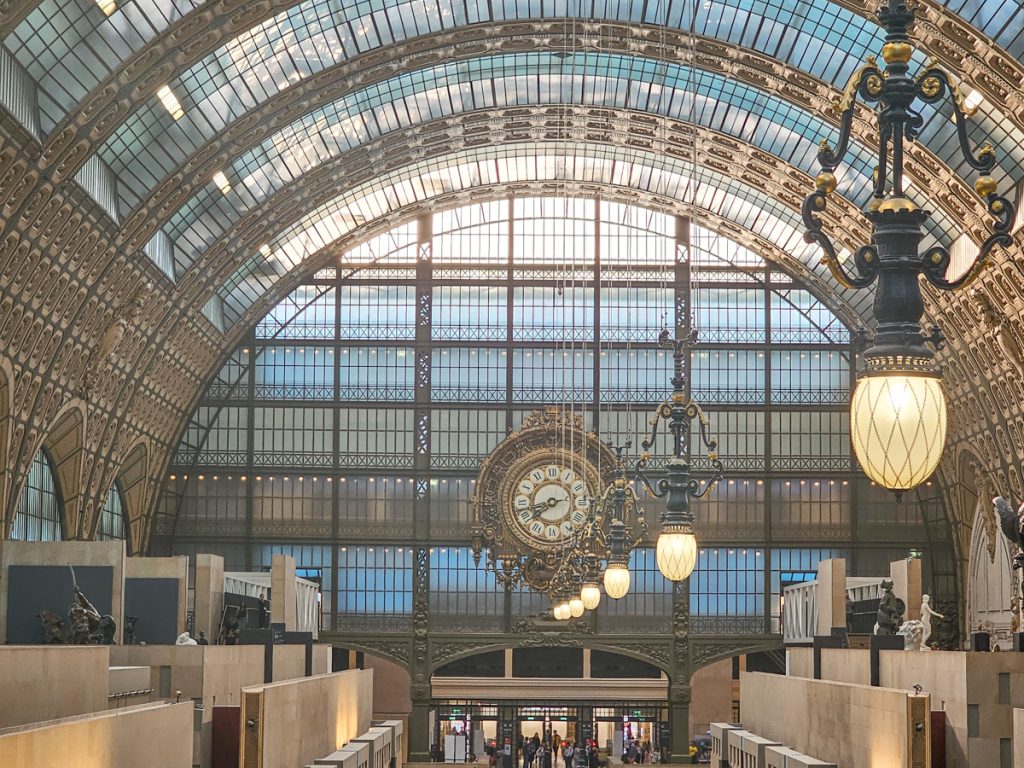
Before it was a museum, the Musée d’Orsay was the Gare d’Orsay, a train station built for the 1900 World’s Fair. At the time, it was considered modern and impressive, with electric rails, passenger elevators, and a large iron-and-glass roof that let light pour into the space. Behind the ornate stone façade was a very industrial interior.
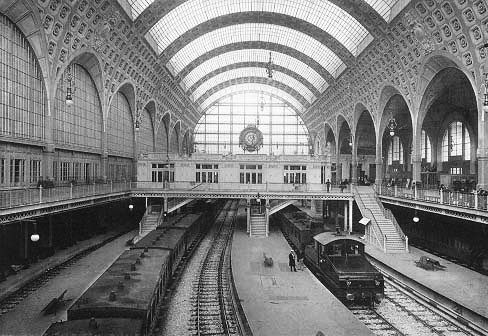
The problem was that trains changed quickly. Within a few decades, the station was no longer suited for newer, longer trains, and by the 1970s much of the building was no longer in use.
Paris needed a suitable spot for its 1800s art, so instead of tearing the station down, France decided to repurpose it. Plans to turn the station into a museum were finalized in the late 1970s.
When the building was converted, architects kept the station’s basic structure intact. The former platforms became the main level of the museum, a long central nave filled with sculptures.
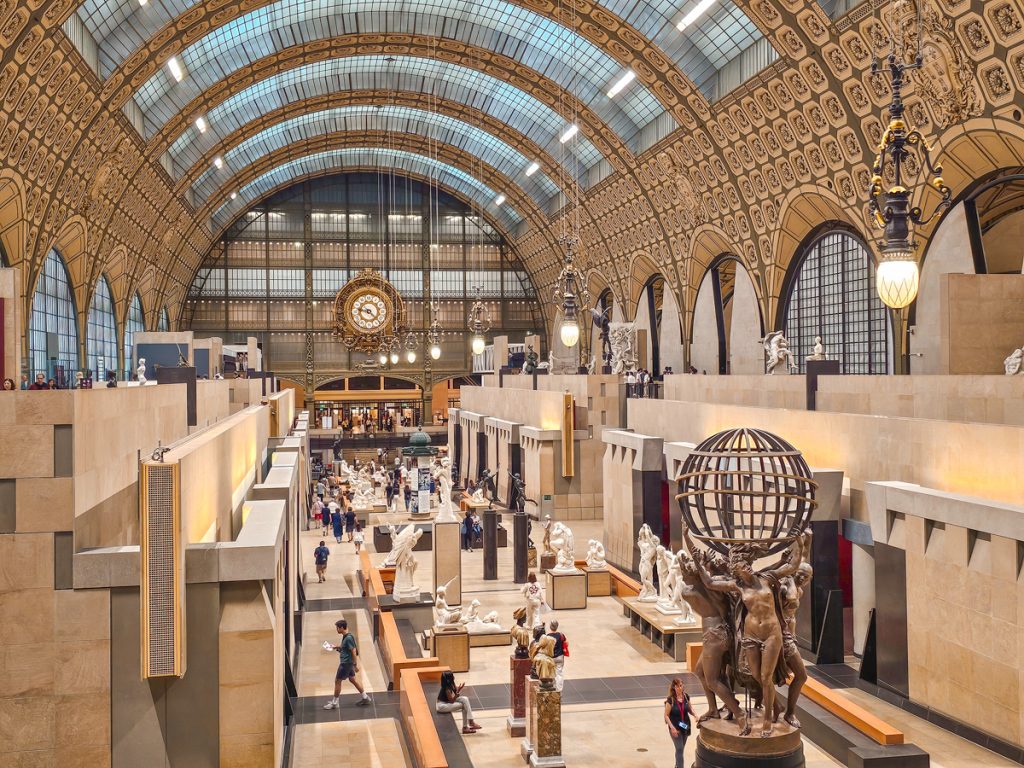
Galleries were added around and above this space, maintaining a large, continuous space. This helps Orsay feel so open compared to many other museums. You are still exploring a space designed for movement and scale, just in a very different way than its original purpose.
Impressionism and Post-Impressionism In Plain Terms
Most people come to the Orsay for Impressionism and Post-Impressionism, and it helps to have a basic sense of what those terms actually mean before you walk in.
Impressionism developed in the late 1800s as a reaction against the rigid rules of academic painting. Instead of historical or mythological scenes, these artists focused on everyday life and the effects of light, color, and movement.

Paintings were often made outdoors and finished quickly, with visible brushstrokes and lighter palettes. At the time, this approach was very controversial. Today, it feels familiar and very approachable, which is part of the Orsay’s appeal.
Some of the most important Impressionist artists include:
- Claude Monet
- Pierre-Auguste Renoir
- Edgar Degas
- Edouard Manet
- Camille Pissarro
- Berthe Morisot
- Alfred Sisley
- Mary Cassatt
- Gustave Caillebotte
Post-Impressionism came next and is less of a single style than a shared shift in direction. Artists took what Impressionism started and pushed it further, using color, form, and structure more deliberately to express emotion, ideas, or personal vision rather than just capturing a moment.

The work often feels bolder, more emotional, or more structured, and it points directly toward modern art.
Important artists of post-Impressionism include:
- Vincent van Gogh
- Paul Cézanne
- Paul Gauguin
- Georges Seurat
- Henri de Toulouse-Lautrec
Of course, these labels overlap a bit, since a few artists moved between styles over time, or got grouped differently depending on which part of their career you’re looking at.
How the Musée d’Orsay Is Laid Out
Ground floor (Level 0): sculpture and early galleries
You enter the museum on the ground floor, where a long central sculpture gallery, officially called the allée centrale des sculptures, runs nearly the full length of the building. Sculptures from roughly 1850 to 1880 line this space, and it acts as the main spine of the museum.

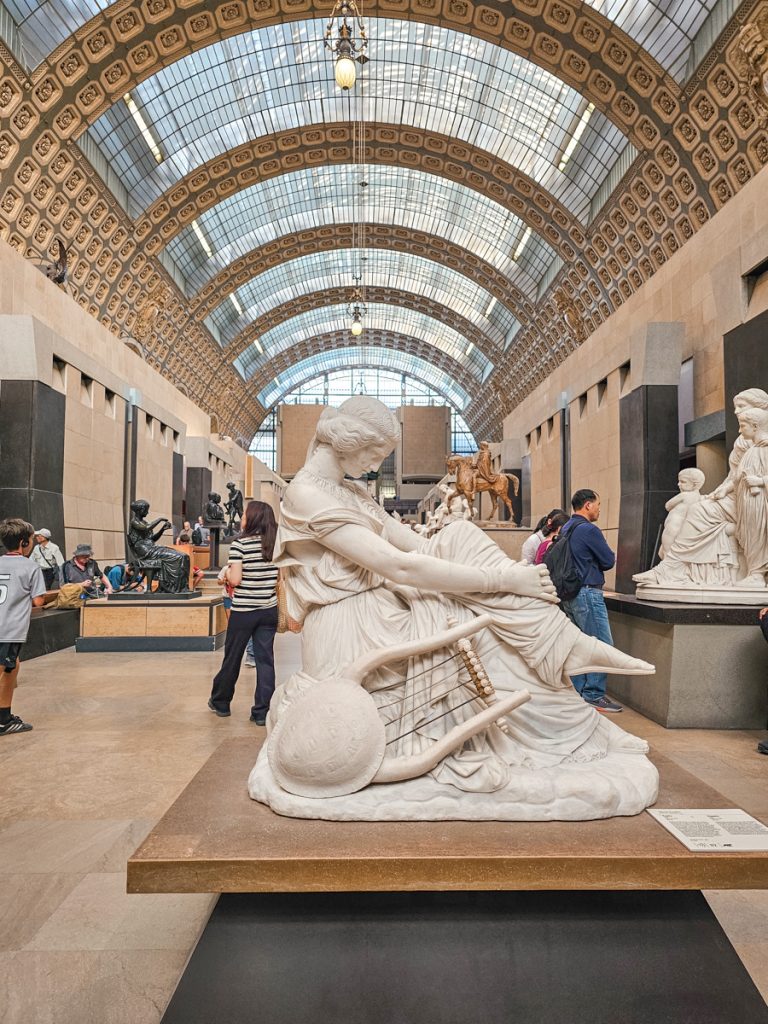
Off this central corridor are dozens of gallery rooms. Some focus on a single artist, others on a specific period, and a few bring together works from a single donor’s collection. You’ll find rooms with early Monet, Renoir, and Bazille, galleries dedicated to Manet and Degas, and several rooms focused on Courbet.

The best way I can describe these side galleries is “dense”… but in the best way. There are so many beautiful and noteworthy paintings – truly the quality and sheer number of paintings here is incredibly impressive.
There are several incredibly famous paintings on this level, including Olympia by Manet or The Artist’s Studio and The Birth of Venus by Bouguereau.


Toward the back of this level is a detailed cross-sectional model of the Opera Garnier. I love the Paris Opera House. It’s one of my favorite buildings in Paris and a great mid-range attraction to visit, so I personally found this model incredibly fascinating.

Near the model, you’ll also find paintings showing scenes of 19th-century Paris. I also found these very interesting, as Paris has changed quite a bit in the last 200 years, and they give a visual sense of the city these artists were actually living in.
I easily spent an hour just on the ground level. If you’re short on time, I’d prioritize the Seine side of the level, which is on your left as you walk in.
Upper terraces (Level 2): sculpture, themes, and views

From the ground floor, you head straight up to Level 2 (there is no Level 1), where sculpture terraces overlook the central sculpture gallery below. At the back, you’ll find the Terrasse Rodin, which includes a cast of The Gates of Hell along with several other works.

Surrounding the terraces are more painting galleries, and these tend to be organized more by theme than by individual artist. These galleries are tall, airy, and filled with natural light, with windows that look out over the Seine.
One notable exception is the decorative arts rooms, including pieces by Gaudí, which focus more on design and craftsmanship than painting.
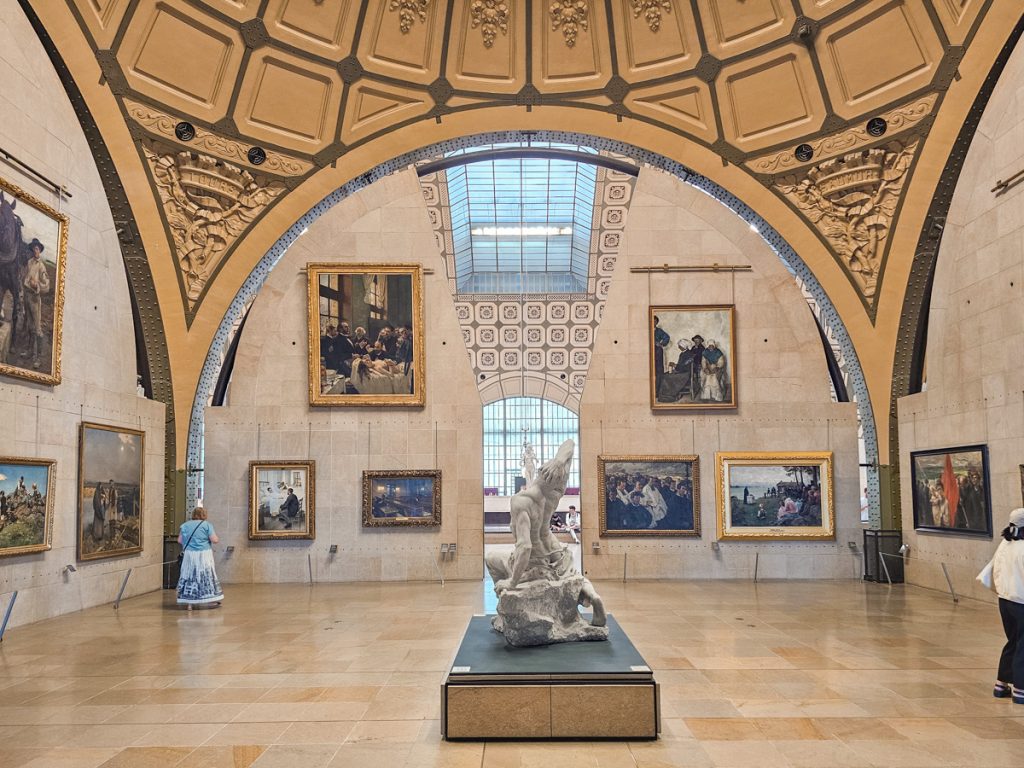
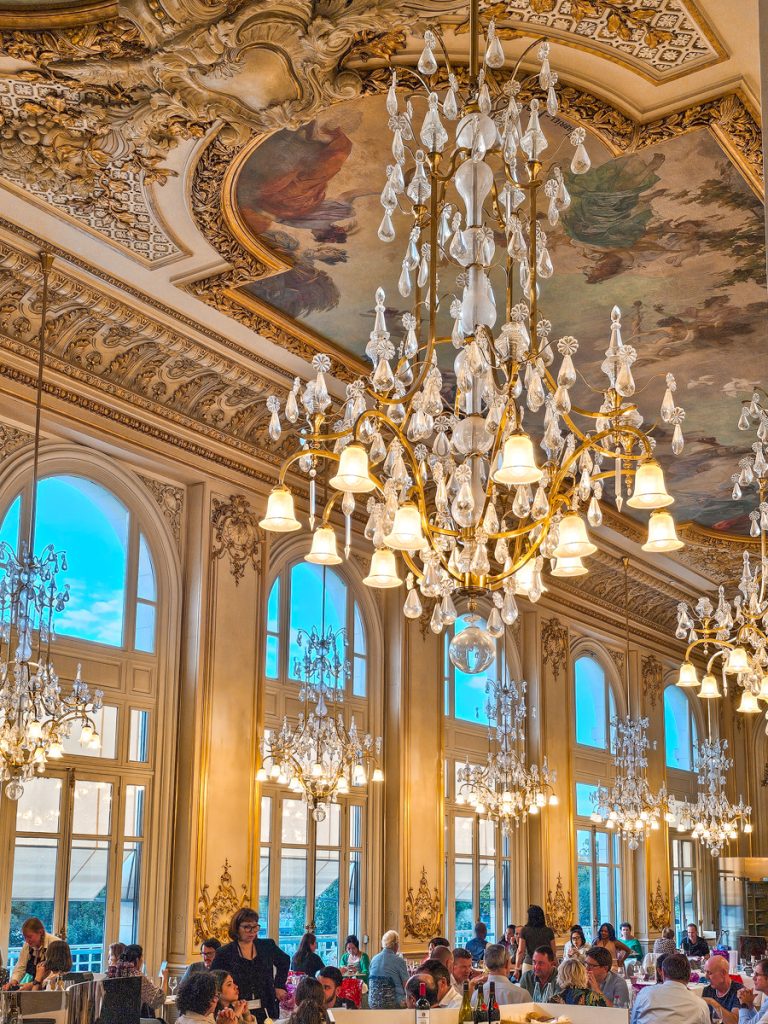
Also on this level, just above the museum entrance, is the Orsay Restaurant, in a beautiful Belle Époque dining room and serving excellent dishes. Just next to it is a grand former ballroom, though it isn’t always open.
Fifth Floor: The Most Famous Works
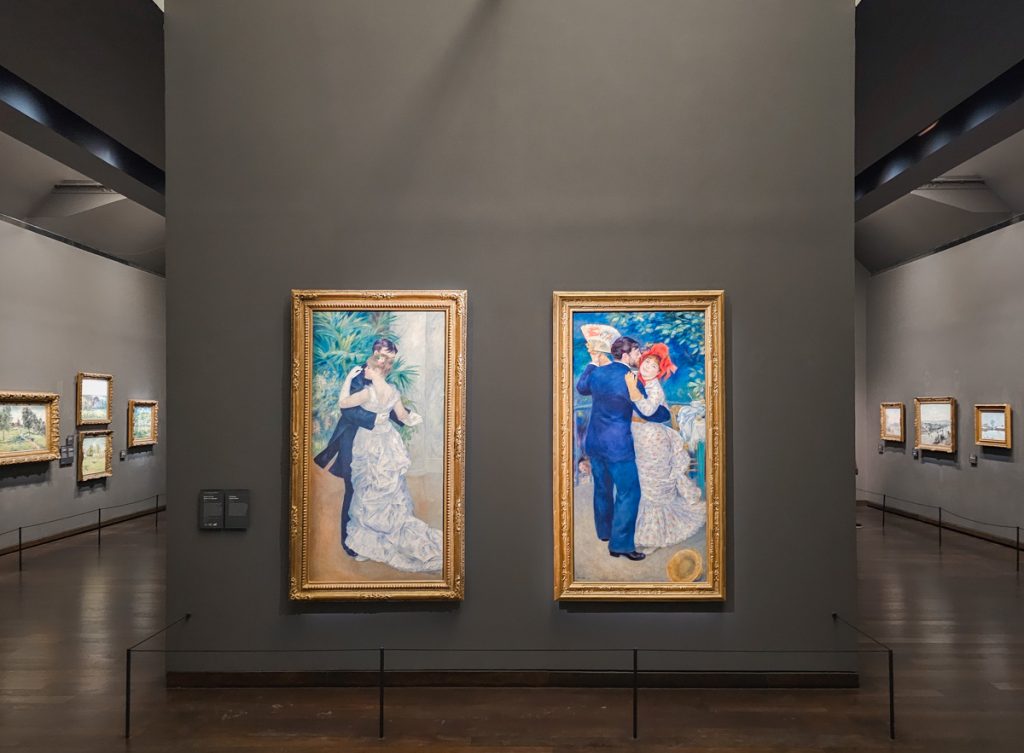
Levels 3 and 4 mostly function as stairways, so the final major stop is the fifth floor. For many visitors, the fifth floor is the highlight of the entire museum, and the galleries are largely organized by artist.
For example (and this is just a very select few), this is where you’ll find works like Van Gogh’s Starry Night Over the Rhône and self-portrait, Renoir’s Bal du Moulin de la Galette, and several of Degas’ dancer series.


There are quite a few Monet works here, including several from the Water Lilies series. It should be noted, though, that the L’Orangerie Museum offers a more immersive experience of the Water Lilies series. (Or take a day trip to Giverny and walk Monet’s gardens for yourself).
This level really does feel like one world-famous painting after another. It’s incredible and overwhelming in the best way.
The Clocks

The large clocks are one of the most recognizable features of the Musée d’Orsay. From outside, you can spot them easily from along the Seine, where they’re built directly into the former train station’s façade.

Inside the museum, both clocks are accessible on the fifth floor. One is part of the Café Campana. You’ll walk right next to this open-concept cafe to enter the 5th floor galleries and the clock sits prominently at the far end. It’s nearly impossible to miss, and everyone passing through gets a great view.
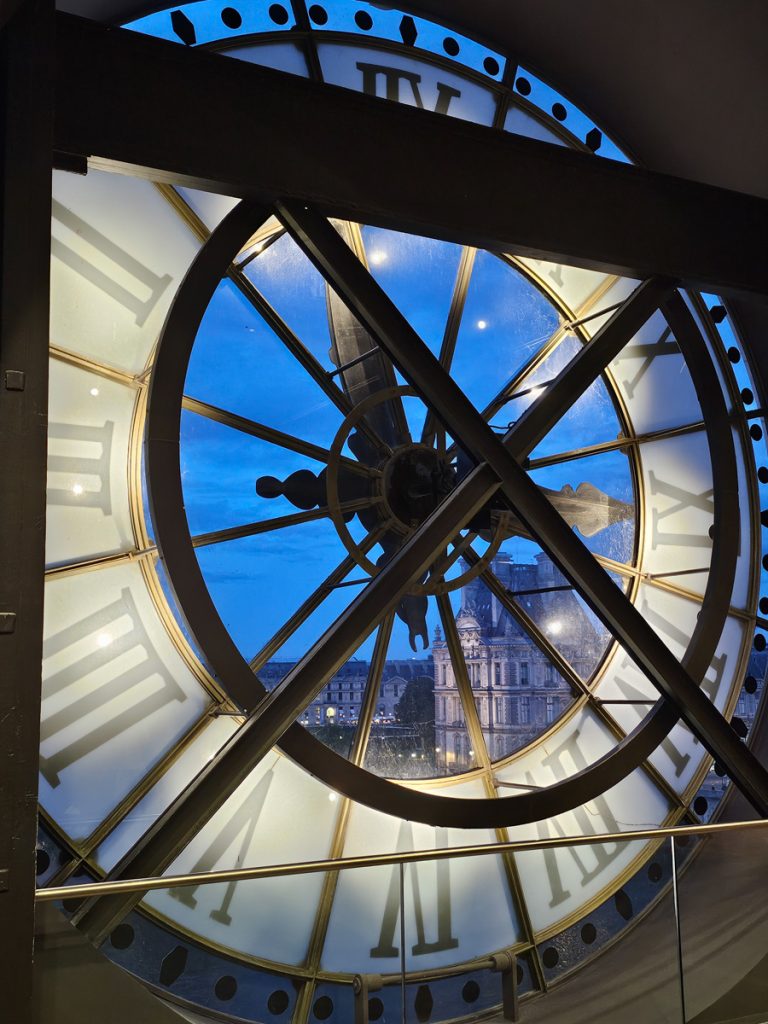
The second clock is at the opposite end of the fifth-floor galleries. Just keep walking all the way to the end and you’ll come right to it. This one is a bit easier to walk right up to, and the glass frames views of the Seine and the city beyond.
How Much Time to Plan
- 60-90 minutes if you’re selective and don’t necessarily want to see every room
- 2–3 hours for a comfortable visit and visiting most/all of the galleries
- Longer only if you’re intentionally lingering on paintings, revisiting favorites, or stopping for lunch
Tickets and Tours
There are a few different options for tickets for the Musée d’Orsay.
Guided Tour: A guided tour can be a great option if you want context as you go. It helps explain the historical moment behind the art and gives meaning to what you’re seeing, rather than just moving from painting to painting.
Tours also take you straight to the most important works, which is helpful if you don’t want to wander aimlessly or if this is your first visit to the Orsay.
👉Check prices and availability for this Musée d’Orsay guided tour
Paris Museum Pass: The Paris Museum Pass gives you free entry to over 60 sites, including the Orsay, within a 2, 4, or 6-day period. It’s a great option if you want to visit several monuments and museums during your time in Paris.
Regular Tickets: Regular tickets cost €16 online. Children under 18 and EU nationals under 26 (as well as some other groups) have free entrance.
Crowd Levels
Crowd levels in the Musée d’Orsay can honestly be pretty high, and I’d consider this one of Paris’s top 10 attractions. To put it in perspective, in 2024, the museum welcomed 3.7 million visitors, which is well below the 8.7 million visitors at the Louvre in 2024. However, the Louvre is also much, much bigger.
The 5th floor galleries in particular can be quite crowded between 10:30am and 5pm.
Tip to Avoid the Worst Crowds: If you want to avoid the worst of the crowds, book a timed entry ticket for either right at opening or 2-3 hours before closing.
If you arrive at opening, go straight to the 5th floor and work your way down. If you come at the end of the day, start on the lower galleries and end on the 5th floor. Just be sure to give yourself at least 30–45 minutes for the top level, and keep in mind that staff begin clearing galleries about 30 minutes before closing.
The Musée d’Orsay also does late night evenings on Thursdays, where the museum is open until 9:45 pm instead of 6pm. The early evening can still be pretty crowded, but crowds thin out considerably by 8:30-9pm.
Free Sundays: Free Sundays may sound appealing, but they’re usually particularly busy. I’d avoid them if at all possible (but if you do go, you need to reserve a time slot).
Common mistakes to avoid
Going straight to the fifth floor and skipping the rest
The fifth floor holds the most famous works, but it’s not the whole museum. The ground-floor galleries, especially those off the central sculpture hall, are excellent. Many visitors are surprised by how much they enjoy this level once they give it a chance.
Skipping the views and architectural details
It’s easy to focus only on the art and move quickly from room to room, but the Orsay’s setting is part of what makes it special. The clocks on the fifth floor and the windows along the 2nd floor frame views of the Seine and the city, and they’re worth pausing for, even briefly.
Visiting without a ticket
The Musée d’Orsay is definitely a spot to book ahead in Paris. The museum can sell out, especially during busy seasons, and even if it doesn’t sell out, you could be waiting in a long line to buy a ticket on-site.
Expecting the visit to explain itself
If you’re new to Impressionism or want more context as you walk through the galleries, a guided tour or audio guide (available in the museum) can be helpful. A bit of background can make the art more engaging and meaningful, especially on a first visit.
Planning the Rest of Your Time in Paris?
The Orsay is just one part of a trip to Paris. If you’re continuing to plan the rest of your visit, these guides can help:
- Where to Stay in Paris – A neighborhood-by-neighborhood breakdown to help you choose the right base
- Ultimate List of Things to Do in Paris – Nearly 100 sights and experiences, from must-sees to hidden gems
- Paris Museums Guide – A practical way to decide which museums are actually worth your time
If you want everything in one place, my Paris travel guide page pulls together neighborhood guides, attraction and museum guides, foodie recommendations, and travel tips in one hub.
And if you’re feeling overwhelmed or short on time, I also offer Paris planning calls. These one-on-one video sessions are great for getting feedback, asking questions, and sorting through options whether you need a full plan or just help fine-tuning what you already have
Final Thoughts
I was genuinely astounded by the depth of the collection at the Orsay. The sheer number of major works is hard to wrap your head around. There are Monet paintings scattered throughout the museum, more than a dozen works by Van Gogh, including several of his most recognizable pieces, along with so many other big names.
What surprised me most wasn’t just the quality, but the concentration. The Orsay doesn’t feel like a museum with a few standout works. It feels like a place where masterpiece after masterpiece surrounds you, and where the surroundings are just as memorable as the art you’re enjoying.
