
Monet’s Gardens in Giverny Feel Like Stepping Into a Painting: Here’s How to Visit

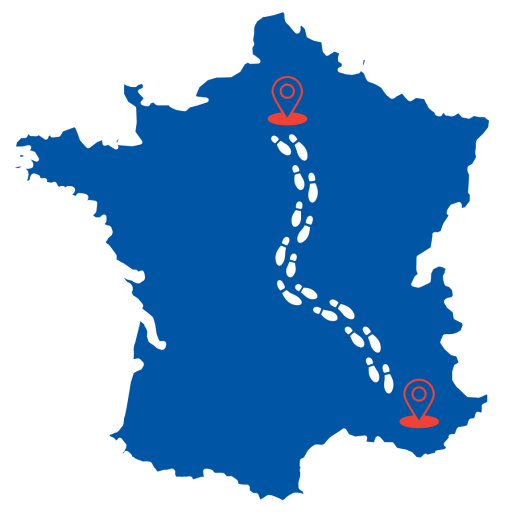
Just an hour outside Paris, in the quiet village of Giverny, sits Claude Monet’s home and gardens.
Monet lived here for more than forty years, turning a simple country house and lands into extraordinary gardens that became the real-life inspiration behind many of his most famous paintings. In his later years, he painted almost exclusively from his grounds, so visiting today feels like stepping right into a Monet painting.

Giverny is an easy day trip from Paris and an essential stop on any trip through Normandy, especially for anyone who loves art or gardens.
A Bit of Background About Monet
Early Years and the Rise of Impressionism
Claude Monet was born in Paris in 1840, but his family moved to Normandy when he was five. He grew up in the port city of Le Havre, surrounded by the region’s ever-changing skies and coastline – scenes that would inspire him for the rest of his life.
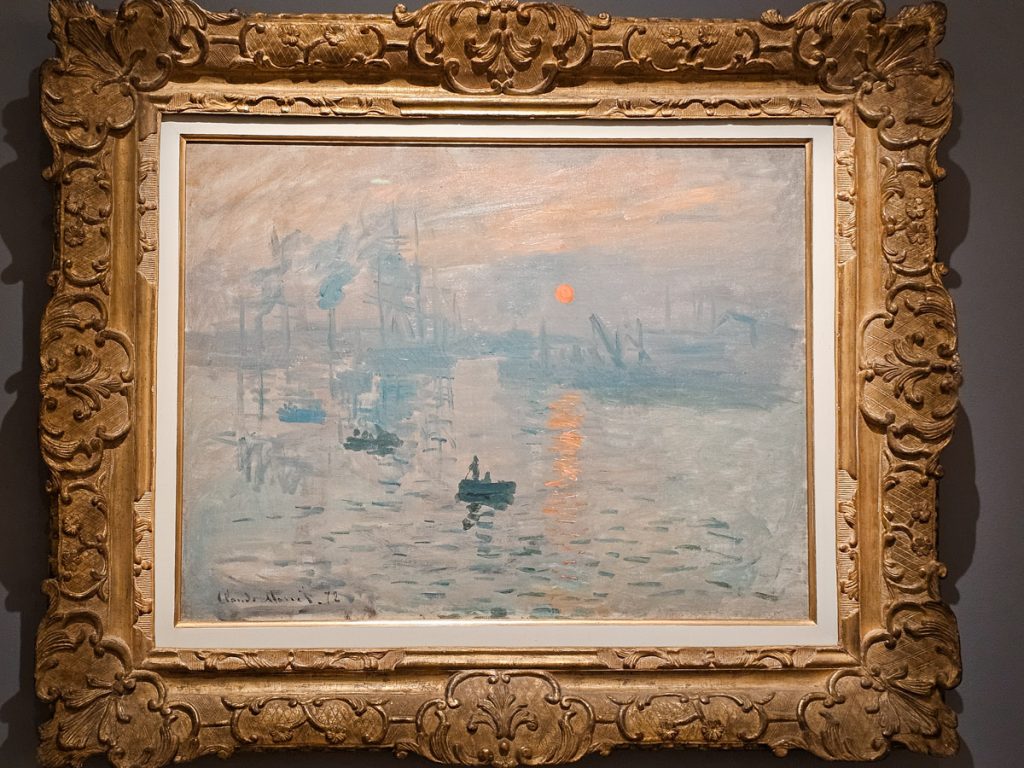
Monet became one of the founders of Impressionism, a revolutionary art movement focused on capturing light and atmosphere rather than precise detail. In 1874, he exhibited Impression, Soleil Levant, a painting that accidentally gave the movement its name.
As his career progressed, Monet shifted away from people and cities, and turned his attention to landscapes, such as bright red poppy fields, the cliffs at Étretat, or views over the Seine River.
Discovering Giverny
Monet first passed through the village of Giverny in 1883 and was immediately drawn to its gentle scenery and soft light, which he once described as the best in France.
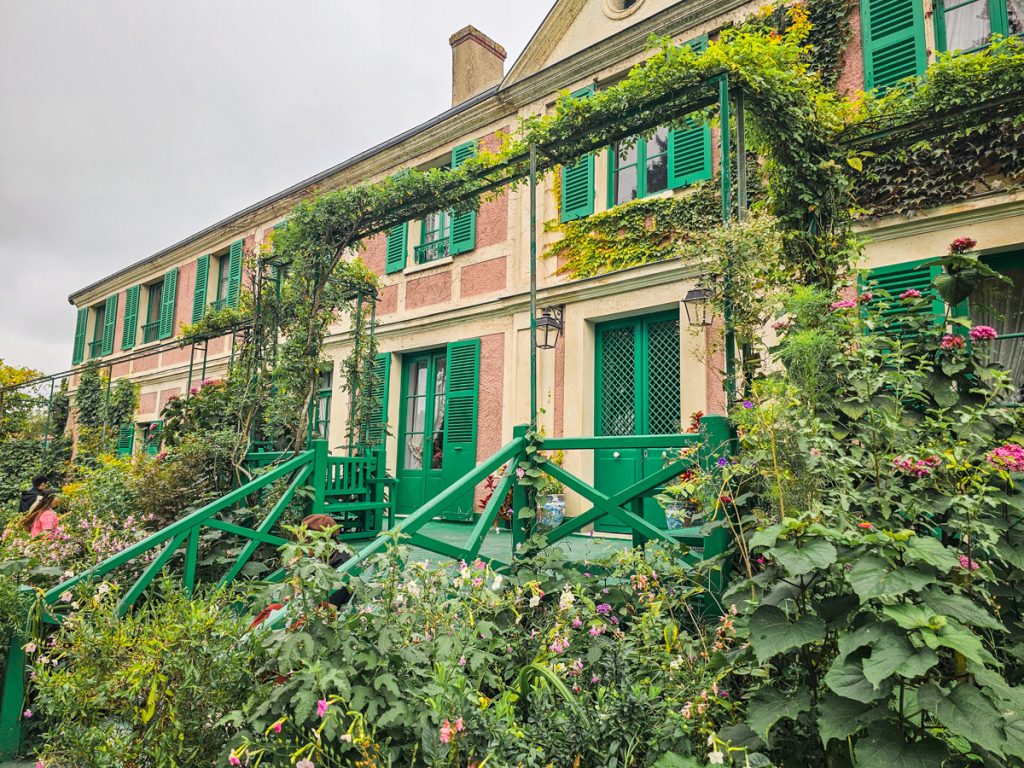
He began by renting a modest house there, later buying it and spending the next forty-three years expanding and cultivating the property.
Over time, gardening became as important to him as painting. He designed every flower bed and water feature with an artist’s eye, and eventually, his own gardens became his greatest subject, especially the famous water lilies that filled his later works.
Monet’s Gardens
Monet designed his property around two very different but equally beautiful spaces: the Clos Normand – a flower garden that stretches out in front of his house, and the Water Garden – a Japanese-inspired pond just across the road.
Clos Normand Gardens
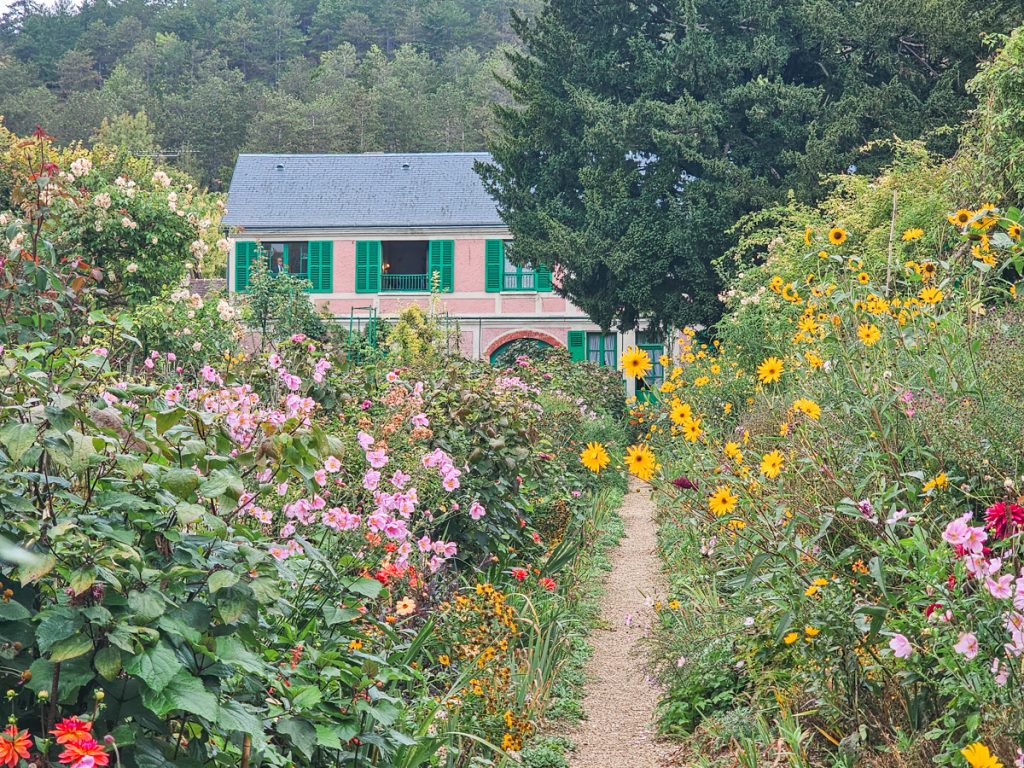
When Monet first moved to Giverny, the garden in front of his pink house looked nothing like it does today.
It was mostly an apple orchard and vegetable patch, with a straight path lined by tall spruce trees and neat boxwood hedges. Monet quickly set about transforming it into something far more colorful and expressive.
He pulled out the boxwood and cut down the spruces (despite protests from his wife, Alice), and replaced them with metal archways that still stretch over the main path.
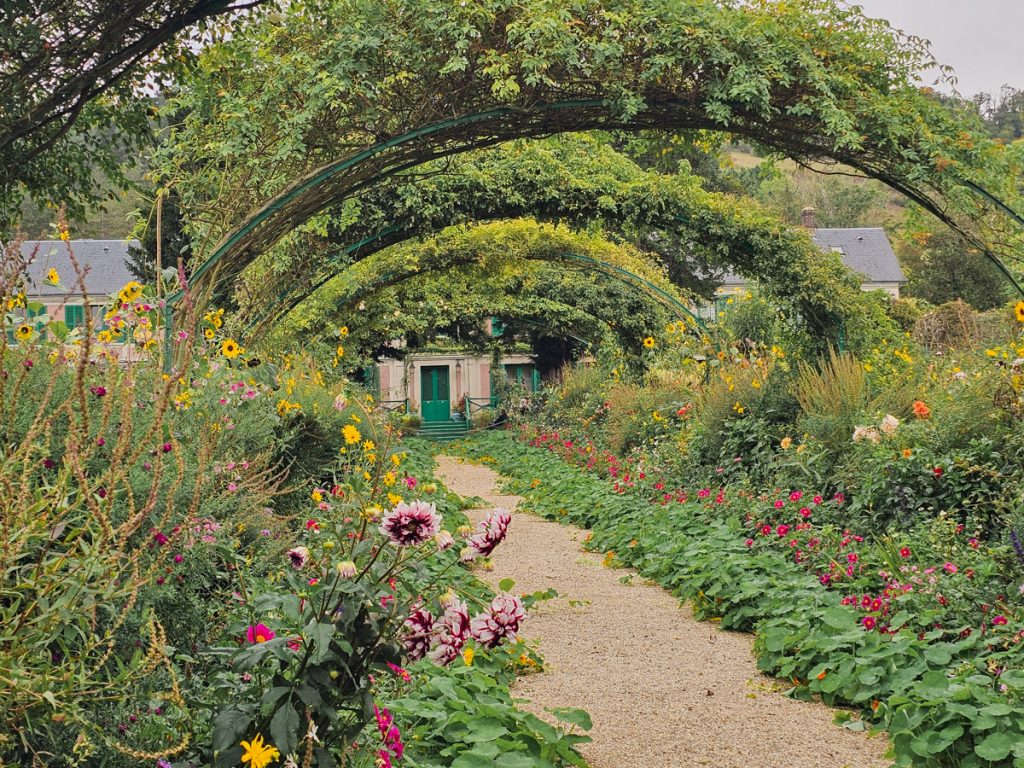
From there, he filled the space with an incredible mix of flowers, including roses, tulips, irises, poppies, peonies, daffodils, and more. Every inch was designed for color and texture, with tons of varieties mixed in with each other.
I personally was surprised by how extensive the flower gardens were. I’d always pictured Monet’s gardens as mostly the water lily ponds, but the area around the house is quite large, filled with row after row of flowers in every color.
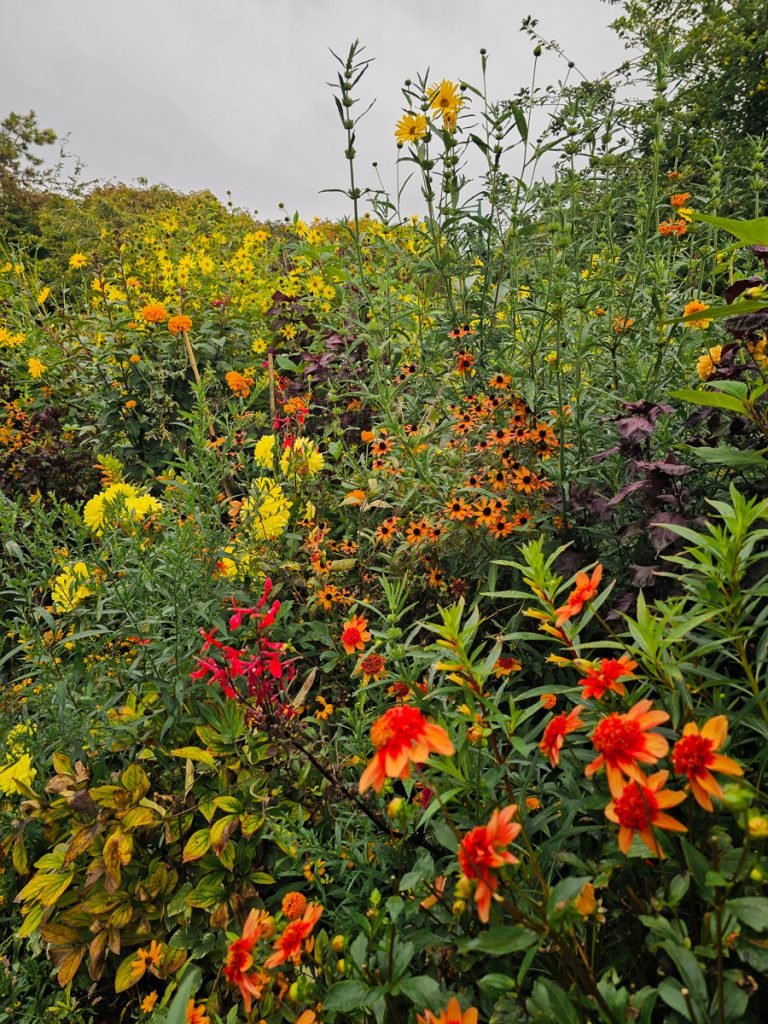
No matter when you visit, there are always dozens of flowers in bloom. However, spring is especially beautiful here, when the purple wisteria hangs from the archways over paths and bridges.
The Water Garden

Monet created the Water Garden a decade after settling in Giverny. He bought land across the train tracks from his flower garden and diverted a small stream off the River Epte to form a pond.
Nothing about the Water Garden existed before – Monet designed and built it himself, with a team of gardeners helping bring his vision to life.

Monet highly admired Japanese culture and design, and his water garden was inspired by these Japanese gardens. A green-painted Japanese bridge arches over the pond, surrounded by bamboo, willows, maples, and, of course, the water lilies in the pond itself that became his most famous subject.
I spent forever at the pond, slowly circling and admiring every angle of the lilies floating on the surface, the reflection of the sky in the water, or the flowers on the banks.
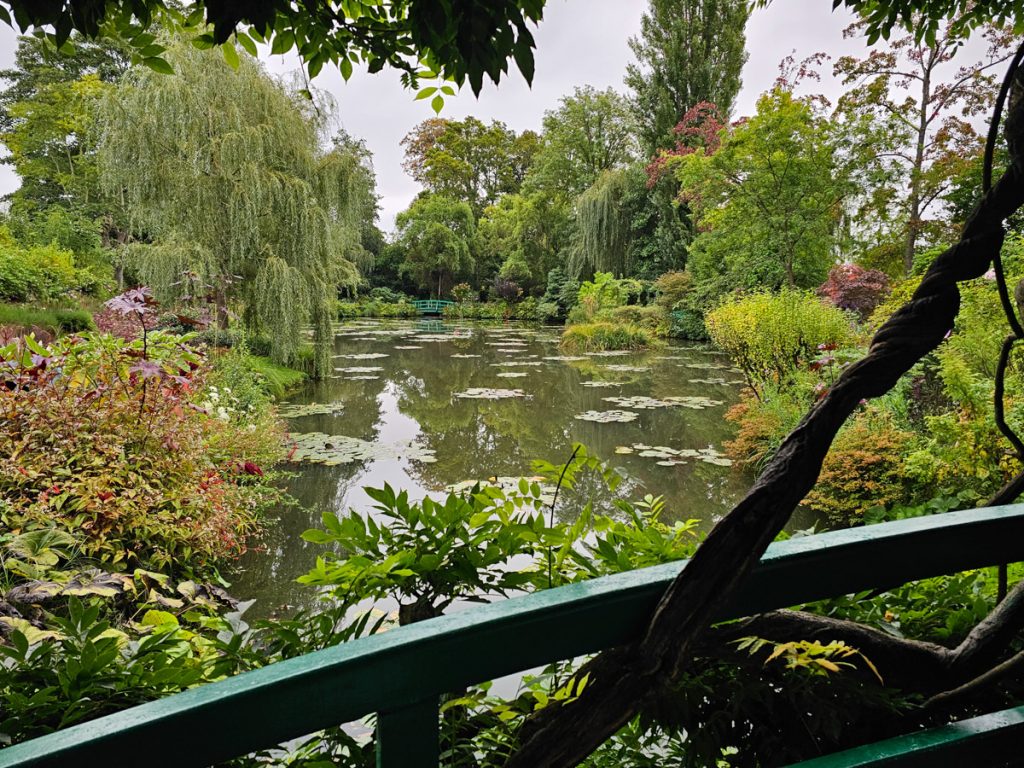
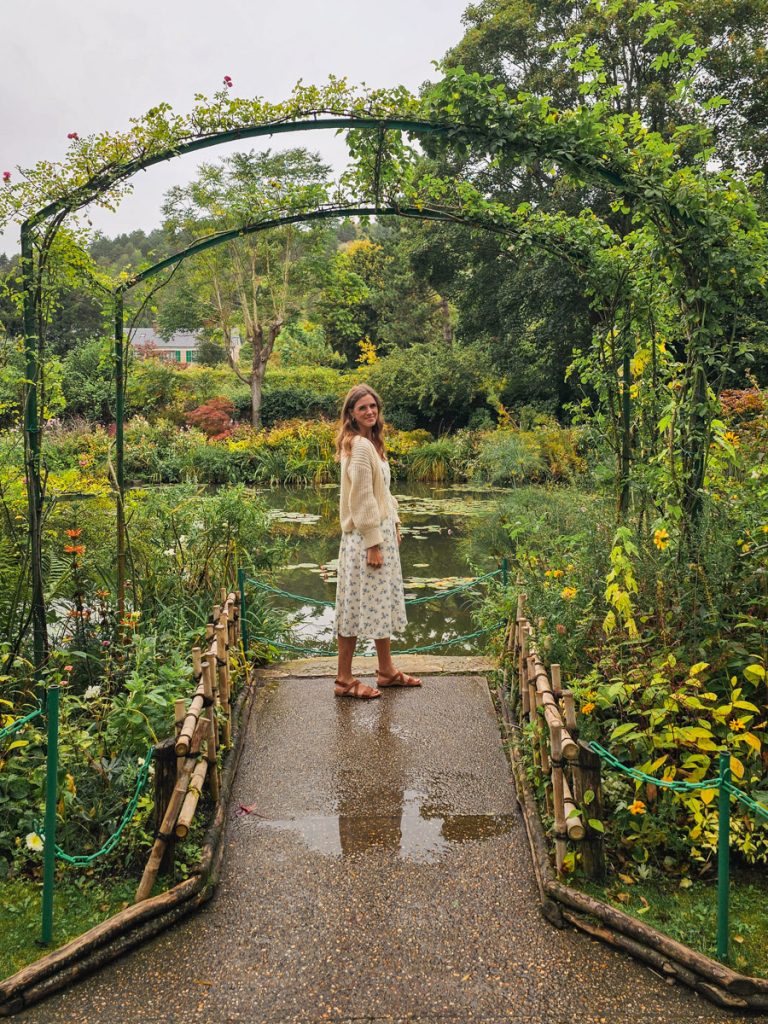
The contrast of the bridges with the water, and little details like a little rowboat tucked in the corner created the most picturesque setting. Honestly, it did feel a little magical.
I’ve admired Monet’s masterpieces for years and seen dozens of his paintings in real life, but standing here, looking at the actual water lilies, the actual bridge, the actual willows, was so surreal.
The House
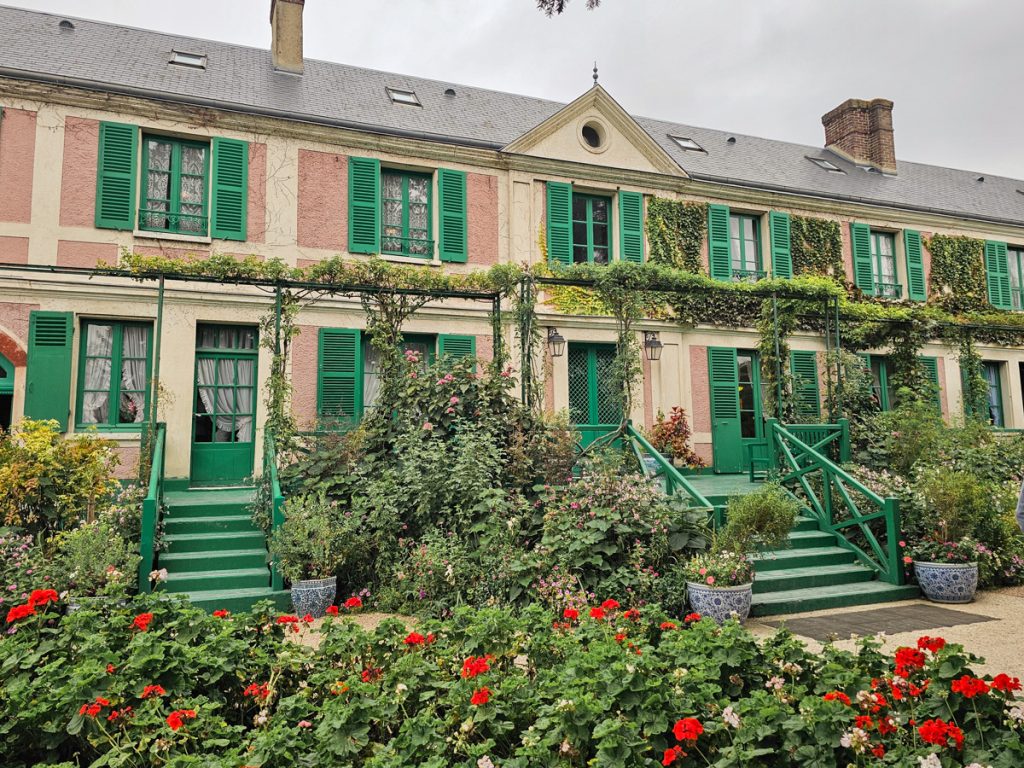
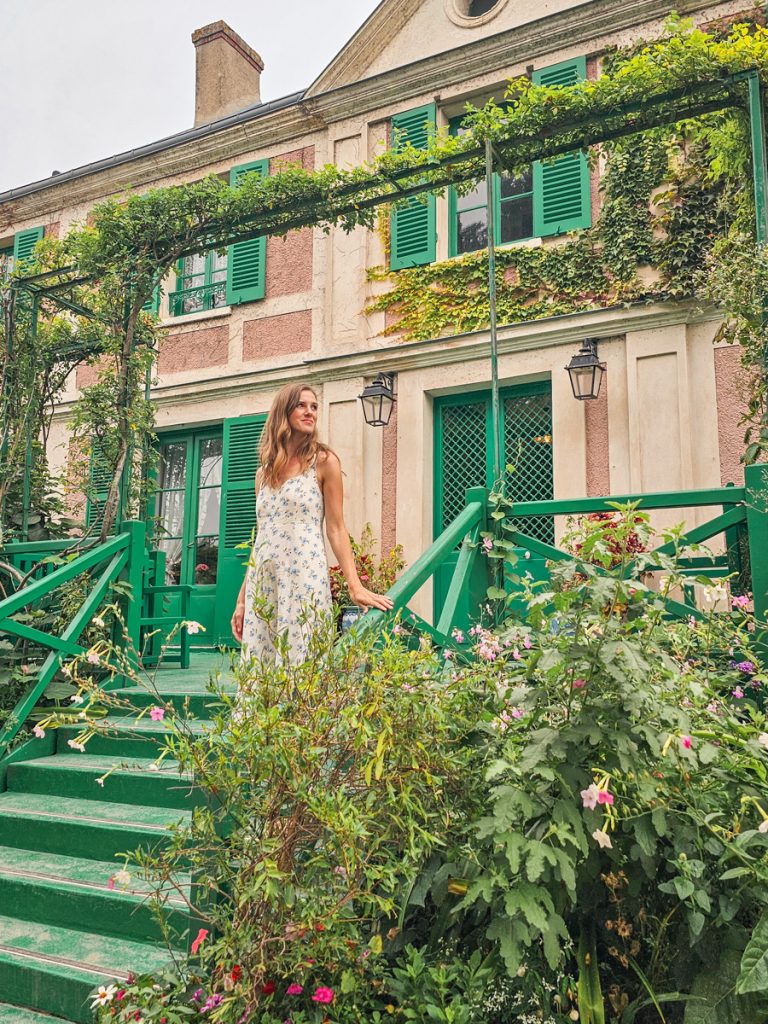
Monet’s iconic pink house is as lovely as it looks in photos, with vines climbing and flowers spilling over along the long porch that lines the entire facade.
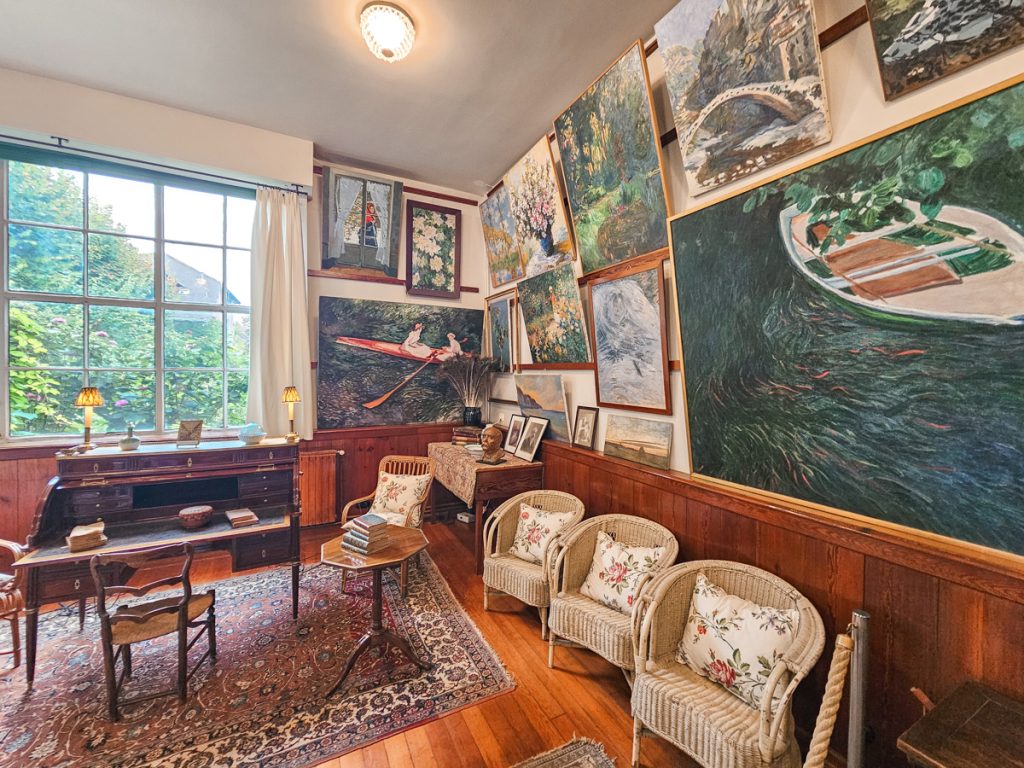
The first room you walk into is Monet’s studio-sitting room, filled with 59 reproductions of his paintings between 1915-1920 (the later years of his life). The paintings cover nearly every inch of wall, yet another reminder of how much he painted during that time.
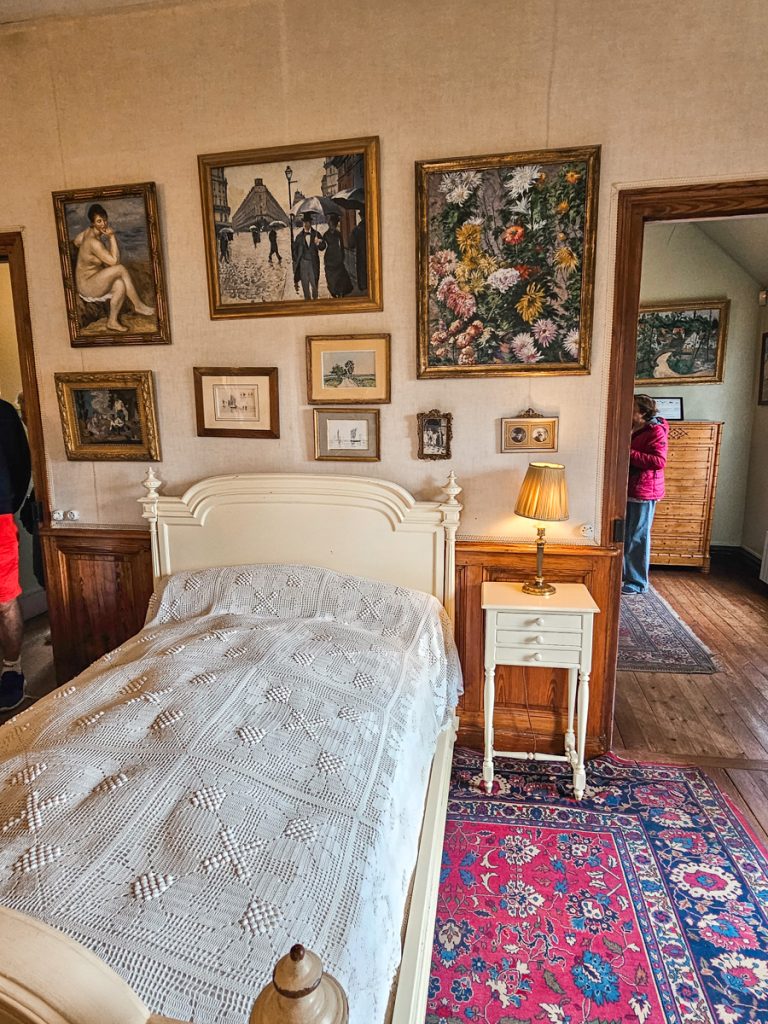
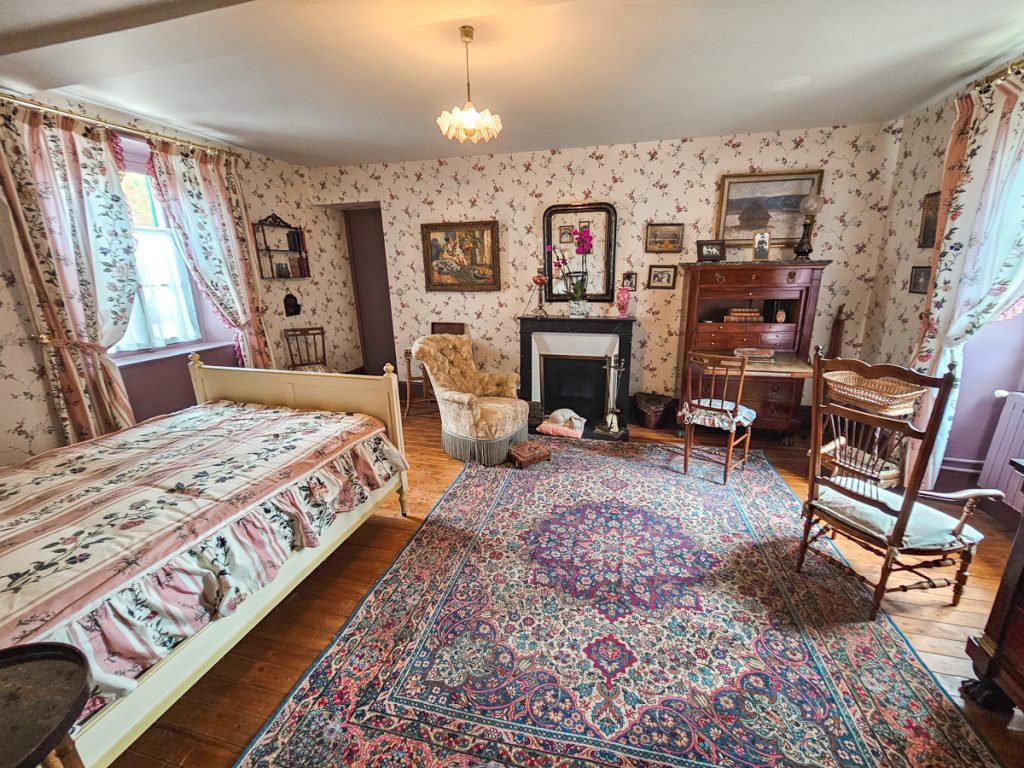
Upstairs, the living spaces have been carefully restored to look the way they did when Claude and Alice lived here.
You can see items and artworks on display in the bedrooms and adjoining washroom that were there when Monet was alive, including reproductions of paintings by his friends: Cézanne, Degas, Signac, and Boudin. You’ll also see some of the Japanese prints that Monet loved, which inspired his gardens.
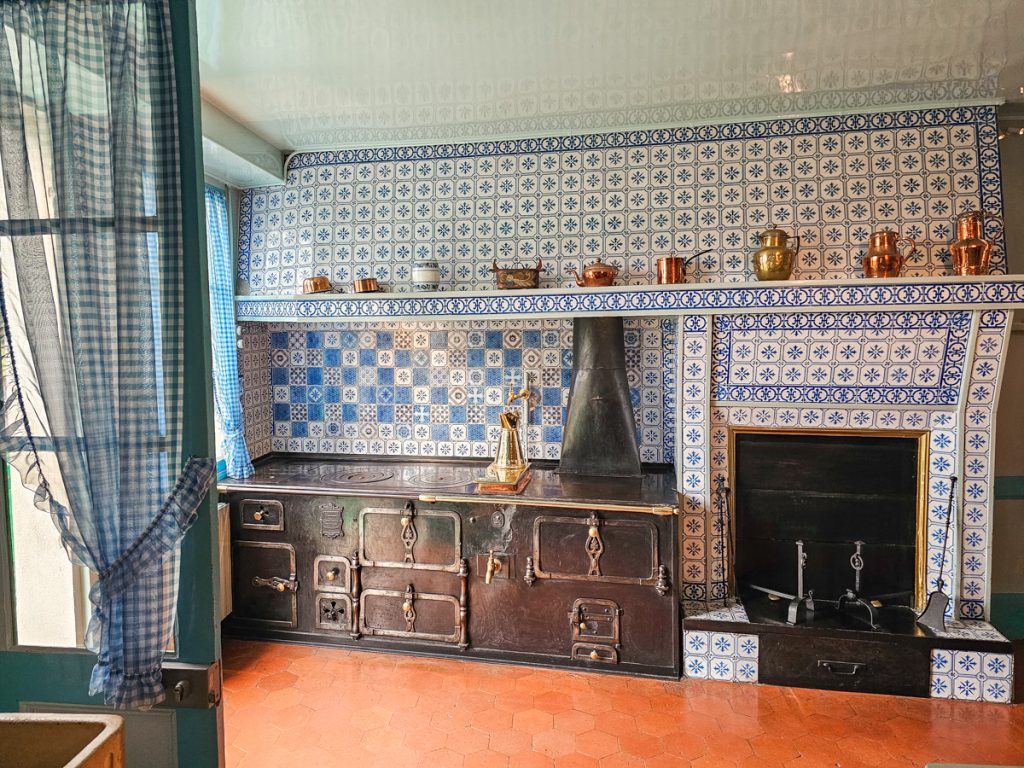
The kitchen is a delightfully aesthetic room, with a historic stovetop, copper pots, and blue and white tiles. It’s a favorite among many visitors.
The whole house feels very homey, and you can absolutely imagine a family living there.
Exploring the Town of Giverny
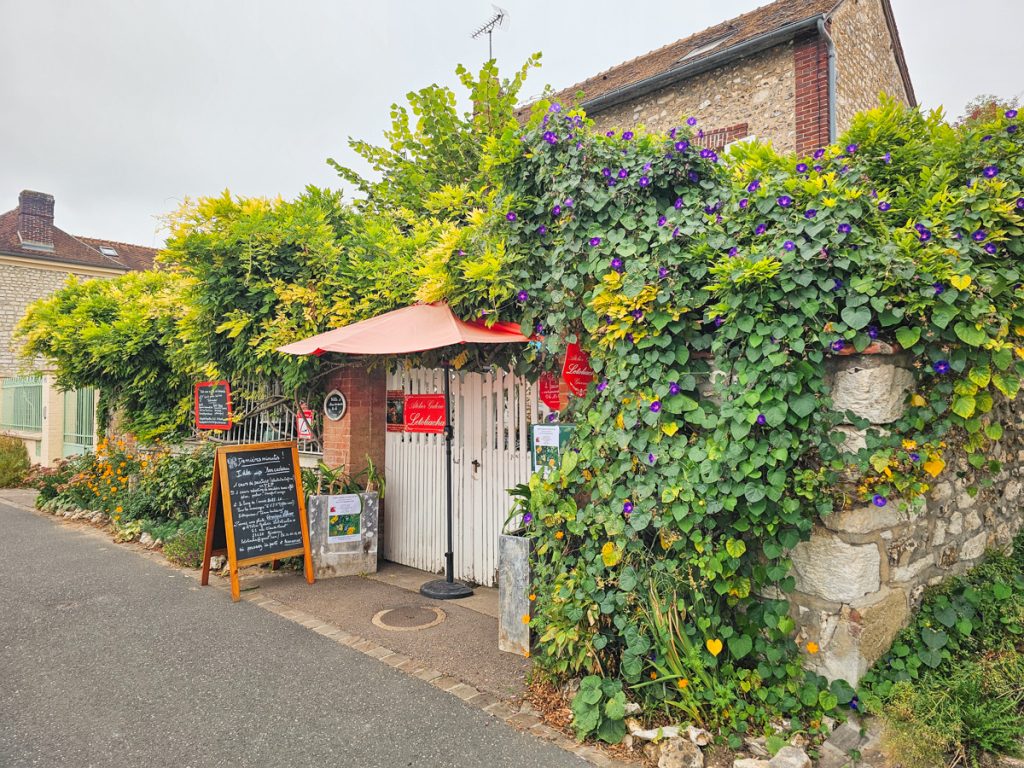
While Monet’s house is certainly the main attraction of Giverny, the village itself is every bit as charming as you’d expect, and also filled with flowers and greenery. Flowers line fences and spill over pots, while ivy climbs stone walls and quaint houses.
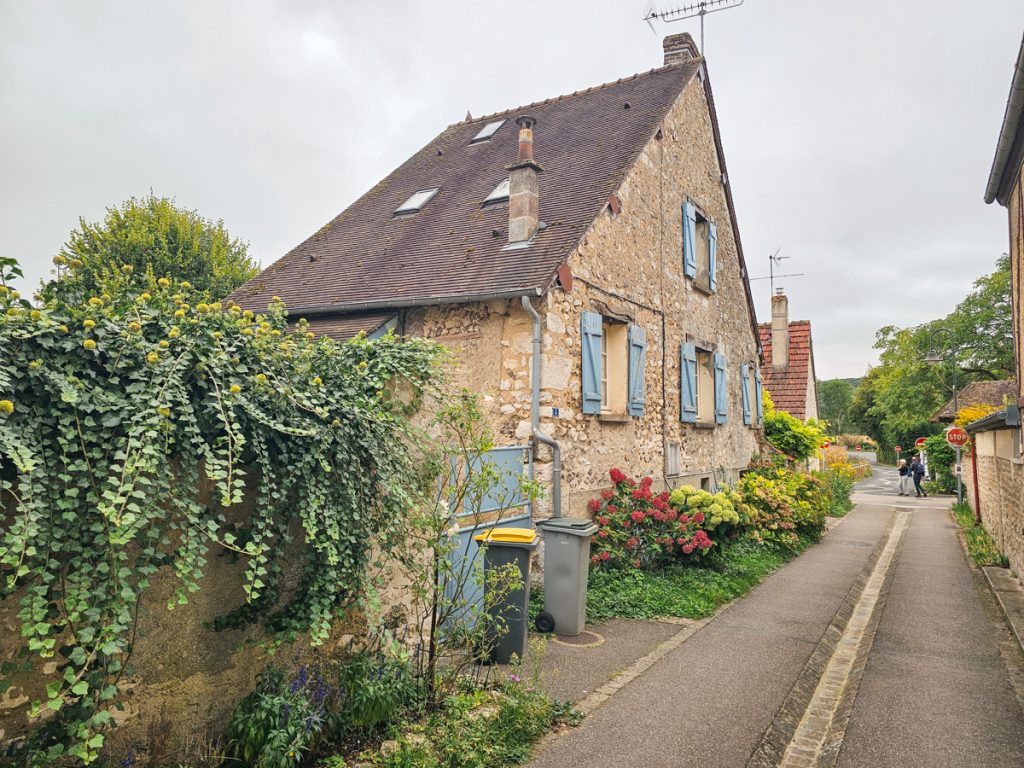
The village is very small, with essentially one main street and a few little side roads, but it’s lovely to walk around after visiting the gardens.
In the center of the village is the Musée des Impressionnismes, a small museum dedicated to other artists who were inspired by Monet. It’s a nice stop if you have extra time — not necessarily a must-see, but it’s small enough to enjoy in about half an hour.
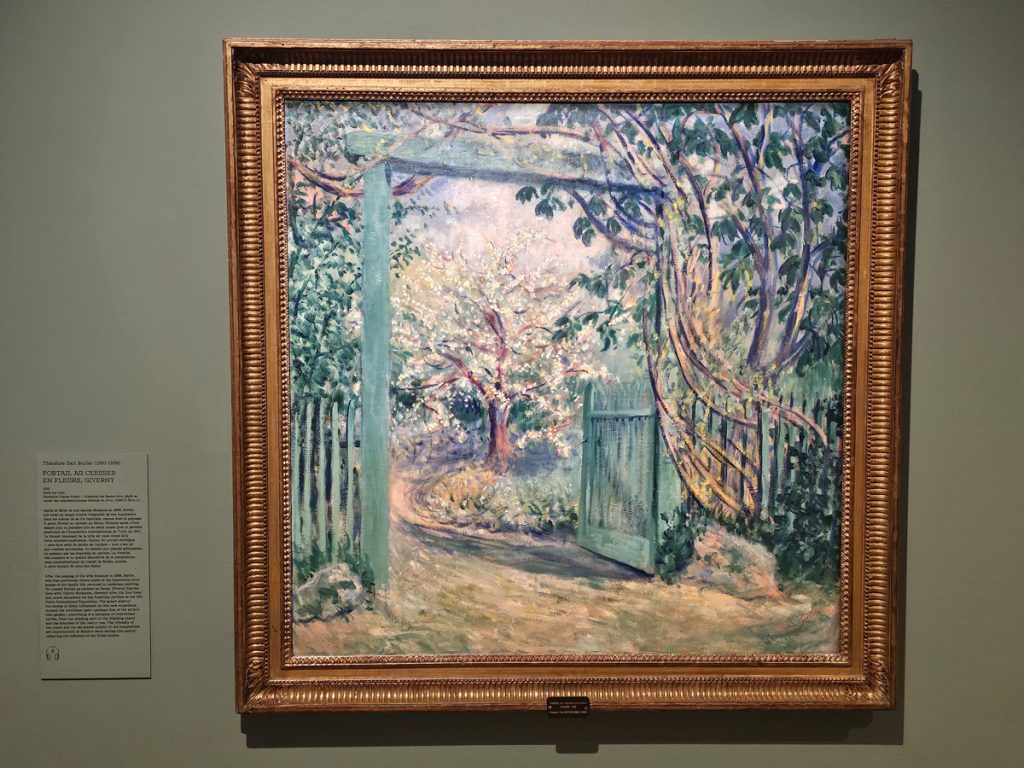
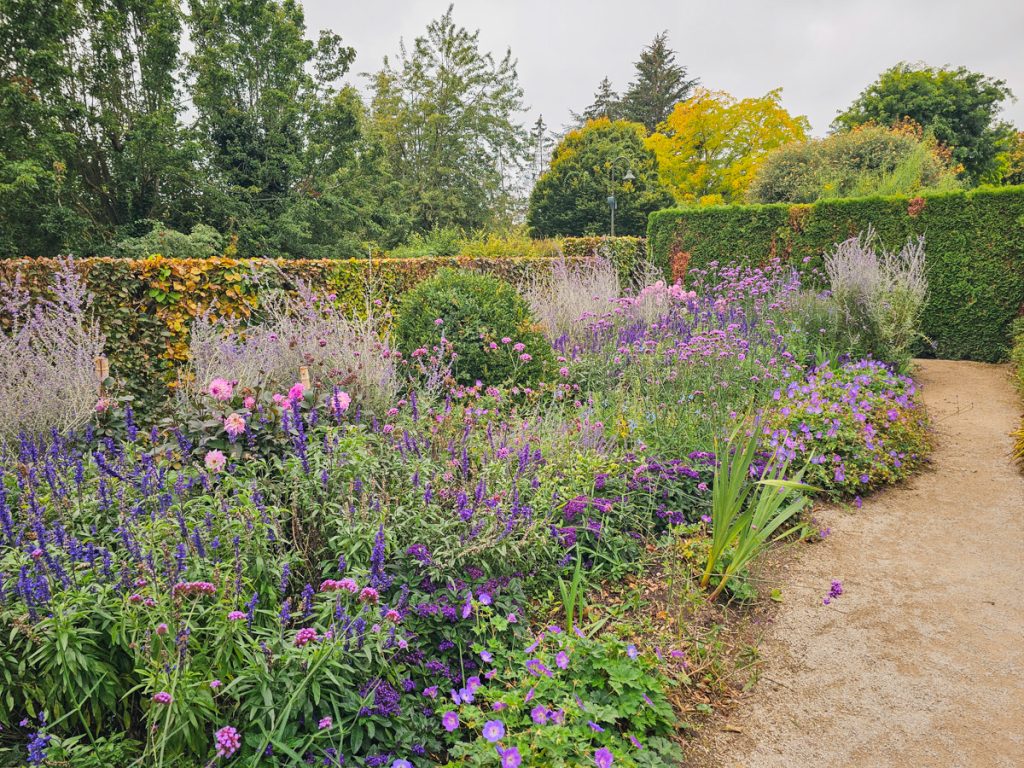
The museum gardens are free to visit and worth a short stroll. They’re divided into small sections and arranged by color, with signs explaining how each shade played a role in impressionist painting.
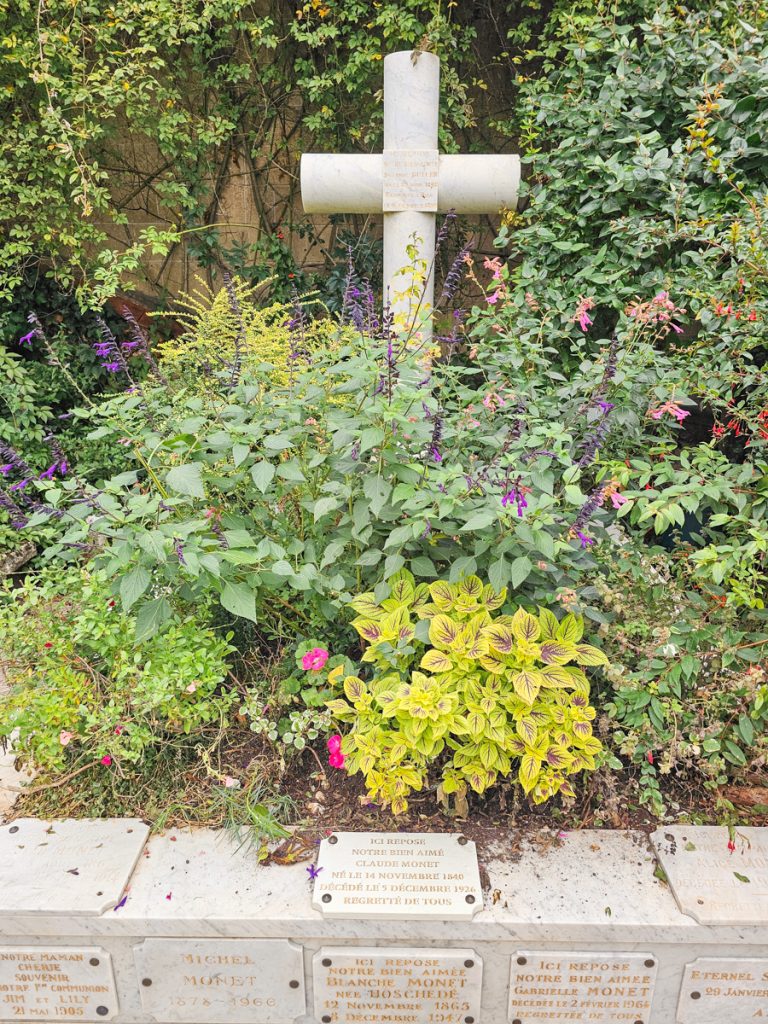
At the end of the village is the Église Sainte-Radegonde de Giverny, a church surrounded by the town cemetery, where Claude Monet and some of his family members are buried.
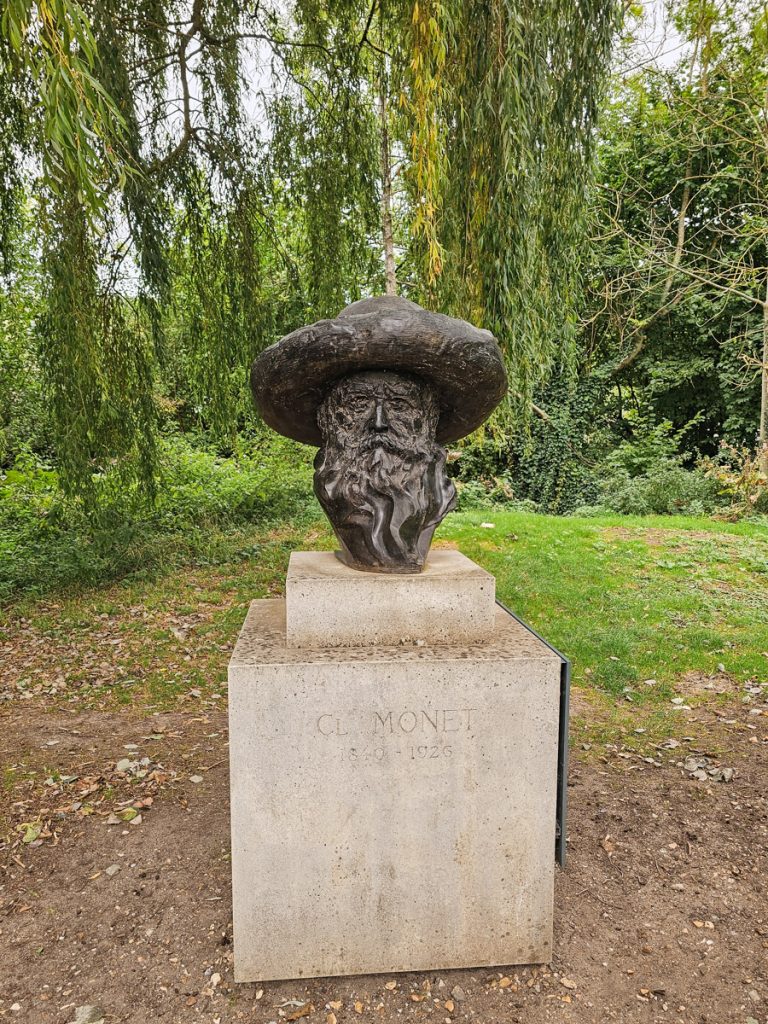
Finally, there’s a bust of Claude Monet (location) in a small copse of trees near the south parking lot for the gardens and the drop-off location of the shuttles.
How to Get to Giverny
By Car
If you’re driving to Giverny, there are several large parking lots near the House and Gardens, including this one, this one, and this one. By car, Giverny is about:
- 90 minutes from Paris
- 3 hours from Lille
- 1 hour from Rouen
- 2 hours from the D-Day beaches
- 3 hours from Mont Saint Michel
By Train
If you’re visiting Giverny as a day trip from Paris, the train is absolutely going to be the easiest and cheapest option. There are a few steps to this journey, but it’s honestly really straightforward. I am going to give really in-depth instructions here so you know exactly what to do, but it really is not terribly complicated.
Buying Tickets
You’ll take the train from Gare Saint-Lazare in the 8th arrondissement of Paris (note: there are multiple train stations in Paris, make sure you go to Saint-Lazare). This station serves the Normandy region.
There are trains that leave approximately every hour, so you have a lot of flexibility for when to go and when to come back. You can book your ticket at the train station, but I’d buy it ahead of time. I like to make my train reservations on trainline.com. You’ll buy tickets from Gare Saint-Lazare to Vernon-Giverny.
You don’t need to make the train reservations too far in advance – when I visited in September, I did it the night before. One-way tickets usually cost between €12-20, and the travel time is about 45 minutes.
Catching the Train
When you arrive in the main hall of the train station, check the large display board for your train’s platform. It will show the final destination of the train, not every stop along the way. Usually, there’s a scrolling list underneath that shows all the intermediate stops — look for Vernon-Giverny there.
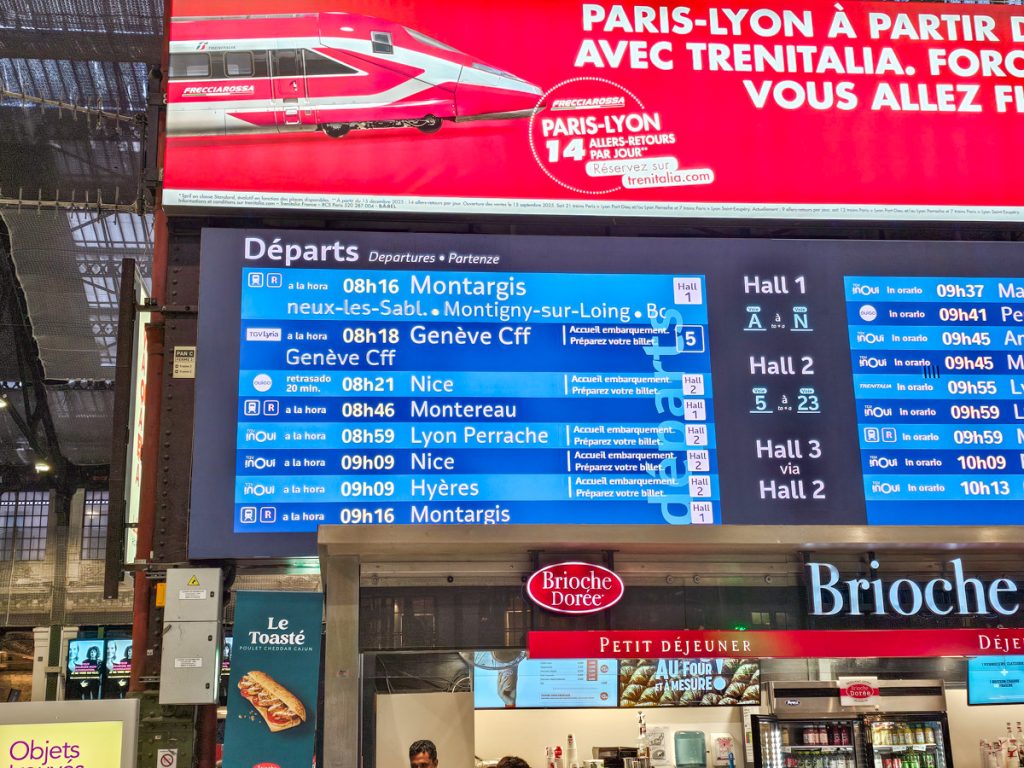
If you don’t see it right away, match the departure time and train number on your ticket with what’s listed on the screen to confirm you’re in the right place.
Plan to get to the station about fifteen minutes before departure. Any earlier and your train probably won’t have a platform assigned yet, so you’ll just be waiting around.
If you’re arriving by metro to Gare Saint-Lazare, give yourself an extra ten minutes, as it can take that long to get from the metro system up into the main train hall.
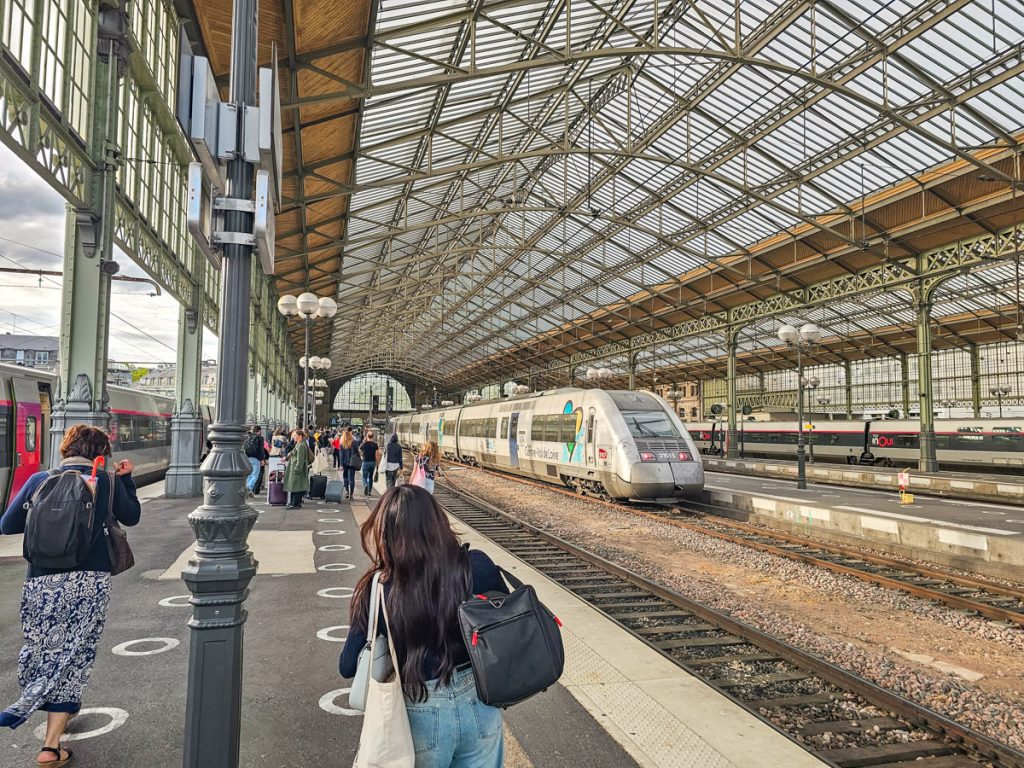
Once you’re on board, remember this is a TER regional train, which means seats aren’t assigned (unless you’ve specifically booked first class). Sit anywhere in second class.
The ride from Paris to Vernon takes about 45 minutes, and the train only stops for a minute once it gets there, so be ready to get off when the train pulls in.
Arriving at the Vernon-Giverny Train Station
When you arrive at the Vernon-Giverny train station, follow the signs for the Navettes to Giverny. You can’t miss them — they’re right outside the station entrance.
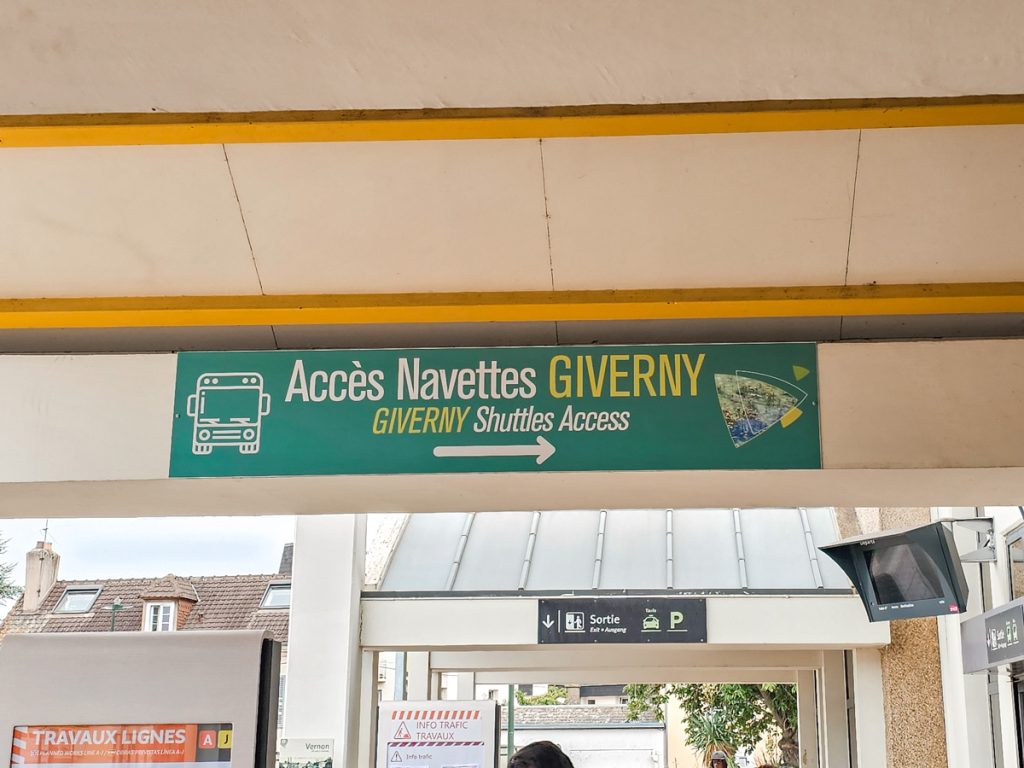
Navettes are shuttles, and there are usually two options: a small tourist “train” or a coach bus. They go the same route, so it’s really just a matter of whether you want open air views or a regular bus ride.
I took the tourist train, which cost €10 for a round trip, paid in cash to the driver (make sure you have cash!)
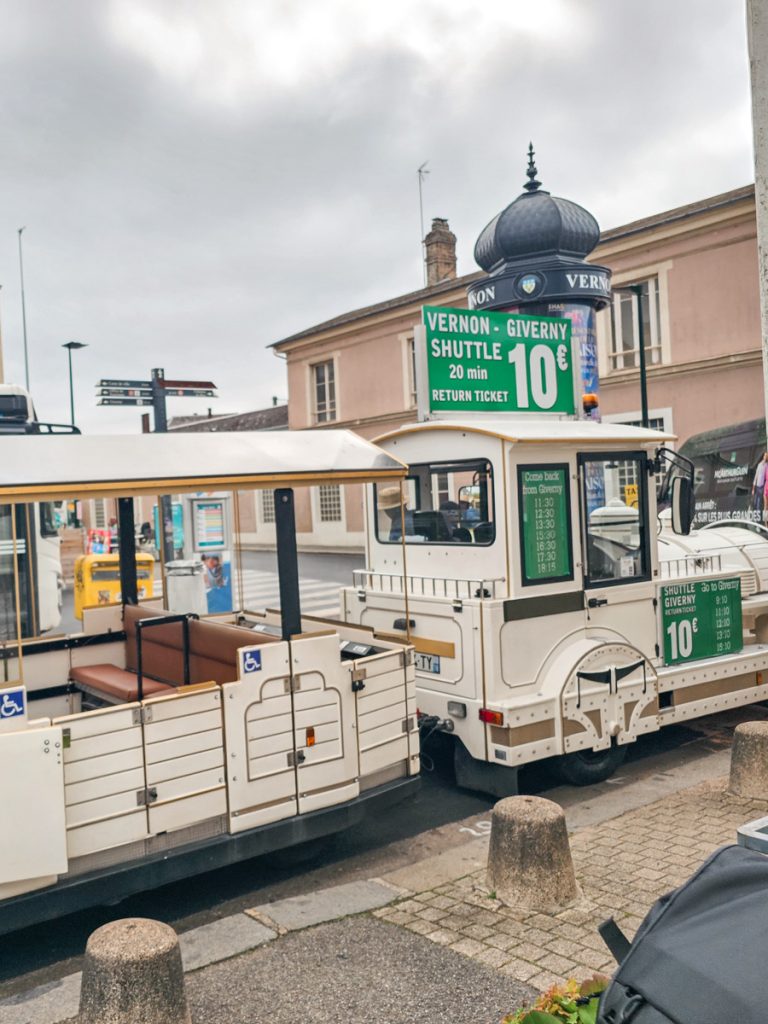
The ride takes about fifteen minutes from the station to the drop-off point near Monet’s house. There’s even an English audio guide that plays along the way, pointing out sights and sharing history about Vernon and Giverny as you go.
The shuttles drop you off in the large south parking lot, about a five-minute walk from the entrance to Monet’s house. Just follow the signs to get to the house – there are plenty and you can’t get lost.
The shuttle schedules are designed around the trains from Paris, with shuttles leaving shortly after arrivals and returning in time for departures. It’s a well-oiled machine.
Going Back

I’d recommend buying your return train ticket online before you get to the station, since you’ll only have a couple of minutes once you’re back at the station.
I wasn’t sure how long I’d want in the gardens and village, so I actually ended up buying my return ticket online while I was still there, and it worked perfectly. Just check the timetables ahead of time so you know your options.
Monet’s House opens at 9:30am, so I took the 8:14am train to arrive at the Vernon-Giverny station at 9am. I ended up walking into the gardens at 9:32am.
Giverny Hours
Giverny is open from April 1 through November 1, from 9:30 a.m. to 6 p.m., with the last entry at 5:30 p.m. It’s completely closed from November through March.
Best Times to Visit
Be aware that Giverny is a very popular destination – it’s actually the second most visited site in Normandy after Mont Saint Michel. It’s definitely not a quiet, hidden gem that you’ll have all to yourself, unfortunately.
July and August, weekends, and holidays can be packed. Weekdays in spring and fall are generally quieter. The crowds weren’t terrible when I visited mid-week in September.
The best times to go to manage crowds are first thing in the morning or during the last two hours before closing. That said, even arriving right at 9:30 a.m., the gardens were busier than I expected, with lots of visitors and tour groups already inside. Next time, I’ll probably go late in the day instead.
Tickets
Definitely buy your tickets online in advance, as they do sell out. Plan to spend around 2-3 hours exploring the house, gardens, and the village, and another hour if you grab lunch.
