

12 Delightful Paris Markets That Show Off Everyday City Life

Visiting Paris’s markets is one of the easiest ways to experience the city the way locals do. You’ll find everything from open-air food markets overflowing with produce and cheese, to sprawling flea markets packed with antiques and vintage finds.
While there are dozens of markets around the city, this guide highlights some of the best and most established markets in 4 categories: Produce Markets, The Flower Market, Flea Markets, and Market Streets.
Each one has a unique vibe, and all give a glimpse into a different side of Parisian life.
Quick Note: Opening days and hours are listed below to help you plan, but it’s always best to double-check before you go. Many stalls are cash only, so bring euros with you.
Produce Markets
Paris has open-air markets in nearly every neighborhood, and most sell a similar mix of fruits, vegetables, flowers, meat, cheese, bread, and fish. What makes each one different is the setting and the crowd – some feel local and low-key, others are large and bustling, with a bit of everything.
These are 5 of the city’s best fruit and vegetable markets.
1. Place Monge

Where: In the center of the Latin Quarter, not far from the Jardin des Plantes
Why Visit: For a traditional, mid-sized produce market popular with locals and less-touristy than others
Dates: Wednesday, Friday, and Sunday from 7am – 2:30pm

More Info: About 40 stalls fill Place Monge, the market arranged in an almost perfect square. Locals queue up for their favorite vendors, which include wine and fabric sellers.
2. Place de la Bastille

Where: Just north of Place de la Bastille, along Boulevard Richard Lenoir, in the 11th arrondissement
Why Visit: For the sheer size and variety. This is one of Paris’s biggest markets, with over 100 vendors selling a large variety of goods.
Dates: Thursday and Sunday from 7am – 2:30pm

More Info: Along with the usual produce, cheese, and other market staples, several vendors sell ready-to-eat food like crêpes, roast chicken, and fried potatoes.
You’ll also find quite a few stalls with handmade goods, clothing, and small crafts mixed in among the food stands. This market is popular with both locals and visitors and can get crowded, especially on Sunday.
3. Marché d’Aligre
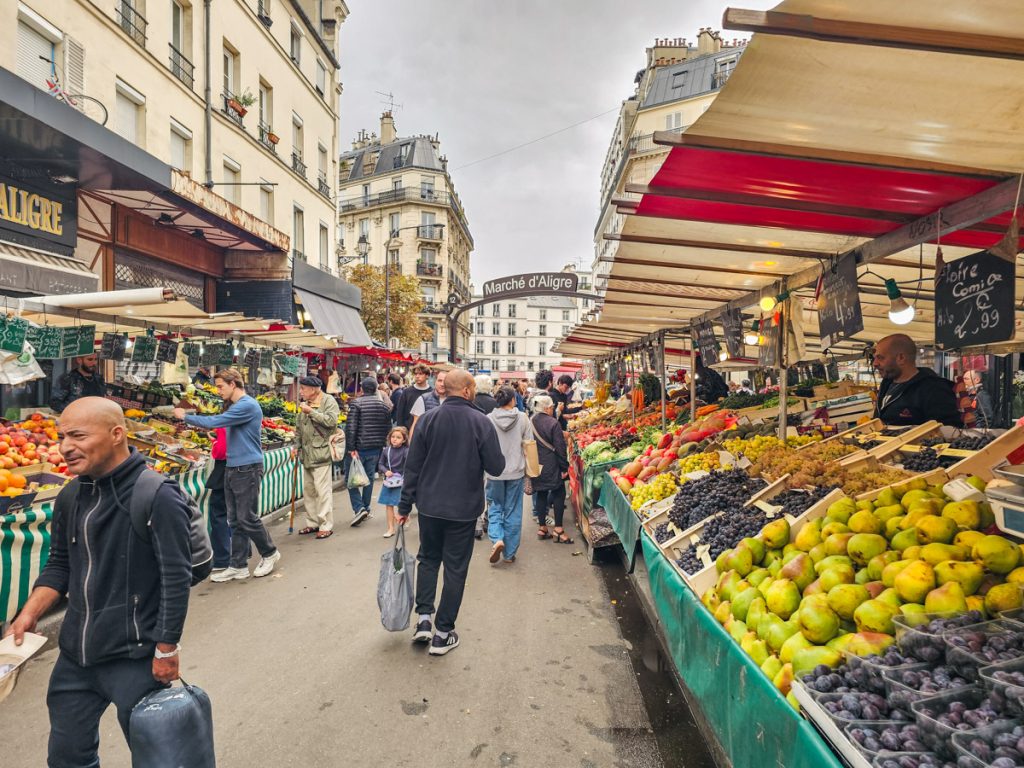
Where: In the 12th arrondissement, just off of Rue de Faubourg Saint-Antoine
Why Visit: For a little bit of everything: a bustling produce market, a covered hall with some specialty foods, and a flea market filled with secondhand finds.
Dates: Tuesday – Saturday 8am – 1:30pm; Sunday 8:30am – 1:30pm; closed Monday


More Info: The market runs along Rue d’Aligre, lined with produce vendors selling your classic market goods. Right next door, the covered Marché Beauvau has butchers, fishmongers, and stalls with spices, olives, and other slightly more specialty foods.
And in Place d’Aligre, just adjacent, the small flea market has tables covered with old books, vintage dishes, jewelry, paintings, clothing, and other secondhand items. It’s one of the most down-to-earth markets in Paris and one of my personal favorites.
4. Saxe-Breteuil
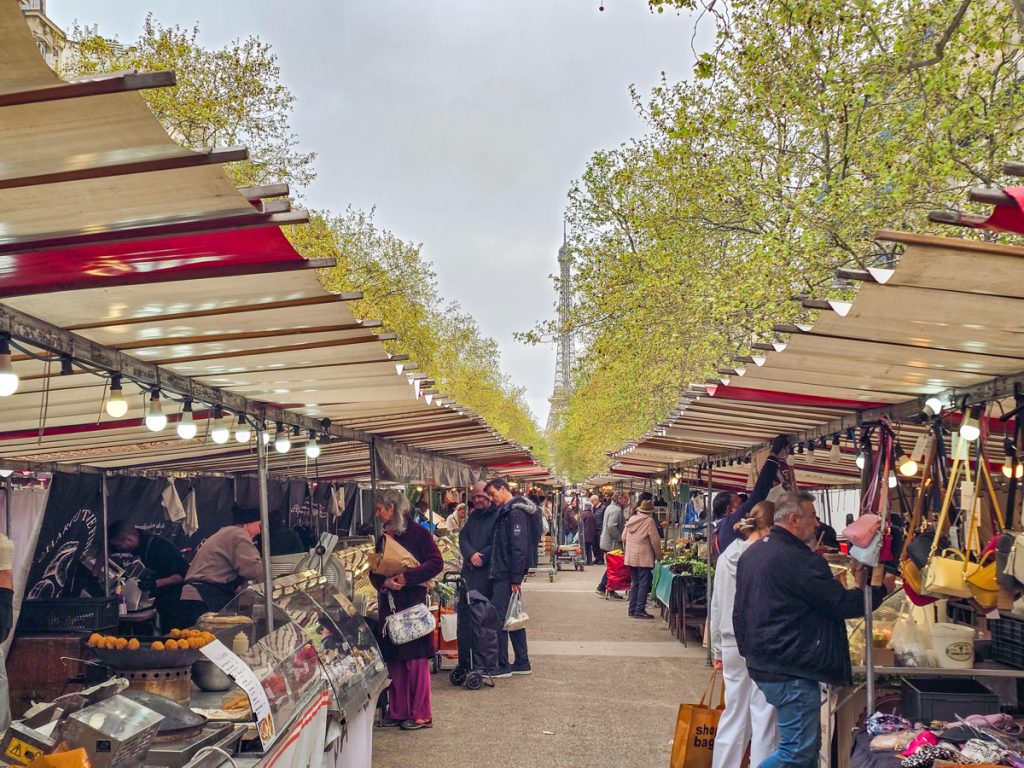
Location: In the 7th arrondissement, behind École Militaire and close to the Eiffel Tower.
Why Visit: For a traditional market with Eiffel Tower views. Here you can find everything from foods like produce, meat, cheese, fish, and breads, to purses, scarves, trinkets, knives, linens, and other “goods.”
Dates: Thursday and Saturday, 7am – 2:30pm
More Info: The first three markets on this list are clustered together on the eastern side of the city. Saxe-Breteuil, in contrast, sits on the western side. The market runs down Avenue de Saxe, with the Eiffel Tower lining up almost perfectly between the stalls.
5. Marché des Enfants Rouge

Note: The Marché des Enfants Rouges completely burned down on 12 October 2026, and is closed for the foreseeable future.
Location: In the 3rd arrondissement – part of the Marais
Why Visit: For the combination of traditional produce and cheese stalls and a wide variety of stands selling hot meals.
Dates: Tuesday to Saturday, 8:30am-8:30pm; Sunday 8:30am-5pm, closed Monday

More Info: The oldest food market in Paris, Marché des Enfants Rouges takes its name from a nearby orphanage where children once wore red coats (enfants rouges means “red children”).
While this covered market does have stands selling fruit, vegetables, cheese, and other staples, the real draw here are the rows of high-quality food stalls serving hot meals to eat at the communal tables or take away.
For example, you can grab one of the viral sandwiches from Chez Alain, a Moroccan couscous or tagine, fresh oysters, or a generous charcuterie board.
It gets very busy at lunchtime, so going early is your best bet if you want to avoid a packed market.
6. Marché aux Fleurs

Place: On the Ile de la Cité island, not far from Notre Dame
Why Visit: For the flowers, plants, and garden-related items
Dates: Every day from 8am-7pm

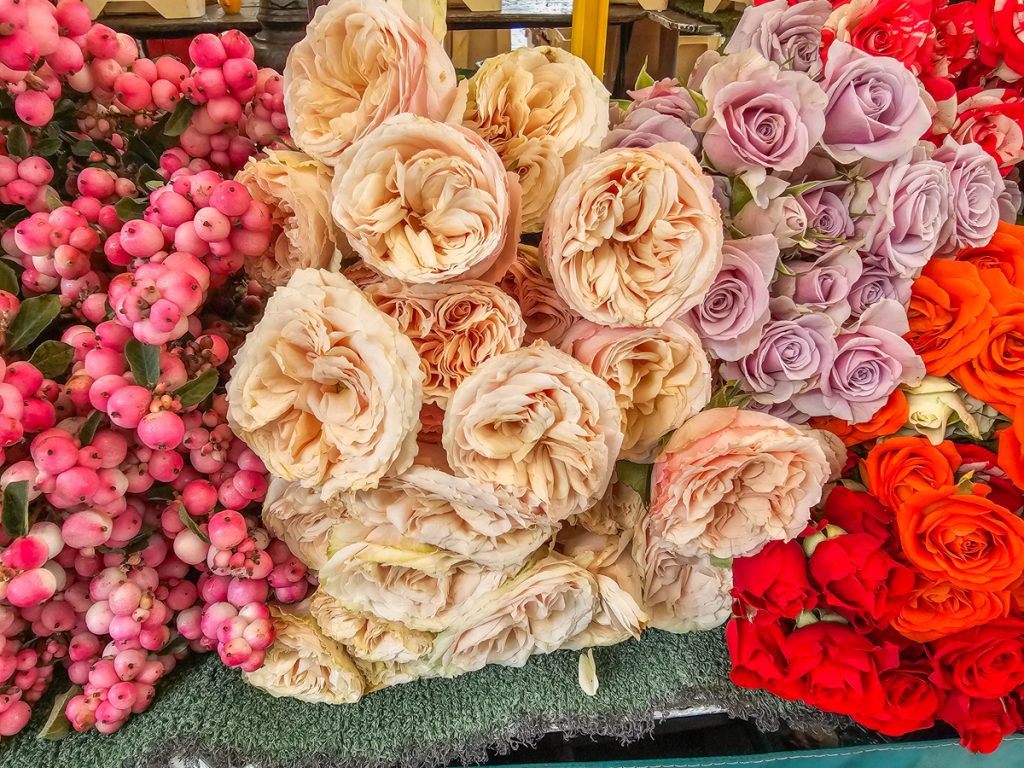
More Info: Founded by Napoleon in 1808, the Marché aux Fleurs is housed under glass-and-iron pavilions. Stalls sell flowers, potted plants, and garden items such as decorative pots, birdhouses, and wind chimes. The focus is more on potted plants than cut flowers, but the displays are always vibrant and beautiful.
There used to be a bird market at this location on Sundays, but that’s been closed for several years due to ethical concerns for the animals.
Flea Markets
Paris’s flea markets are a treasure hunt through the city’s past, filled with antiques, vintage goods, and secondhand finds.
There are plenty of smaller flea markets that pop up around Paris, but these are some of the most established ones. (Note: Marché d’Aligre also has a small flea market, but since it’s already mentioned above, it’s not included here again.)
7. Marché aux Puces Saint-Ouen

Location: Right on the northern edge of Paris, just north of Montmartre.
Why Visit: For the scale and quality — it’s the largest flea market in the world, known for true antiques from professional sellers, rather than secondhand goods.
Dates: Saturday & Sunday: 10am-6pm; Monday: 11am-5pm

More Info: The Marché aux Puces de Saint-Ouen covers several blocks just north of Paris, with around 1,500 stalls divided into a dozen submarkets, each with its own specialty.
Many sellers have permanent spaces inside covered market halls, displaying 17th–19th century furniture, art, books, clothing, and decorative items. Some sections feel almost like small museums, with carefully curated displays and restored pieces.
8. Marché aux Puces de Vanves

Location: On the southern edge of Paris in the 14th arrondissement, the market lines Avenue Georges Lafenestre between Boulevard Brune and Boulevard Peripherique.
Why Visit: For a more relaxed, open-air alternative to Saint-Ouen, with secondhand goods and vintage finds
Dates: Saturday and Sunday, 7am – 2pm
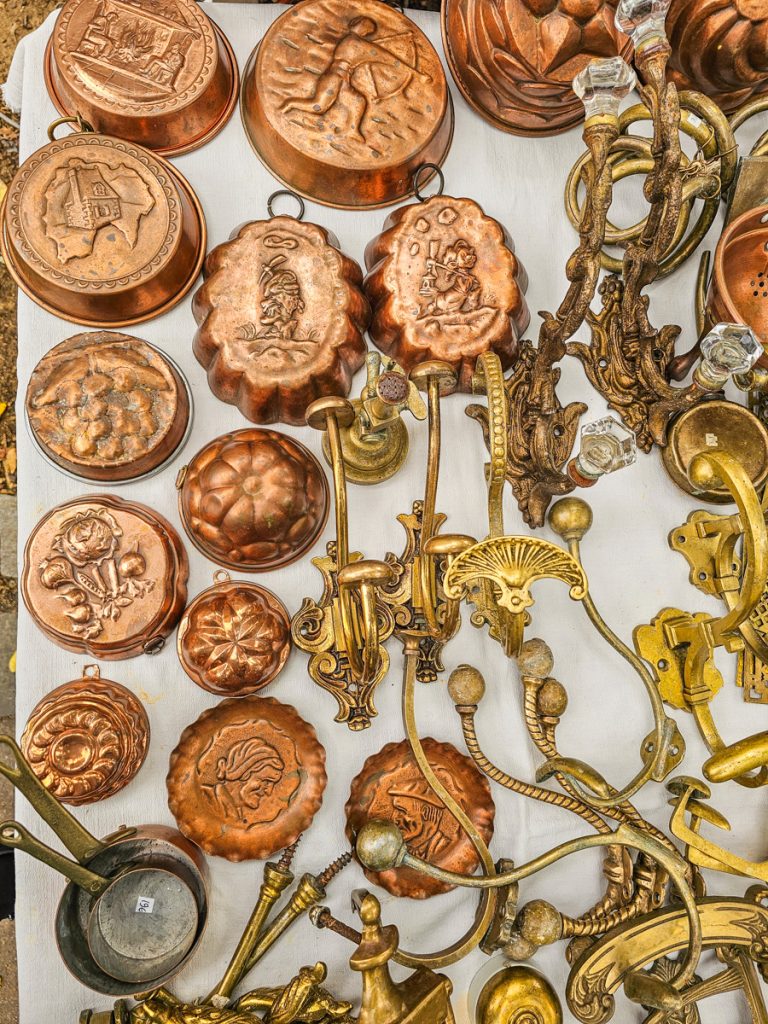
More Info: Around 400 vendors set up tables here each weekend, selling secondhand and vintage clothing, tableware, furniture, books, small collectibles, and more.
Haggling is expected, so don’t be afraid to go back and forth for a lower price. The atmosphere is informal and local, making it a large yet approachable flea market in Paris.
9. Bouquinistes
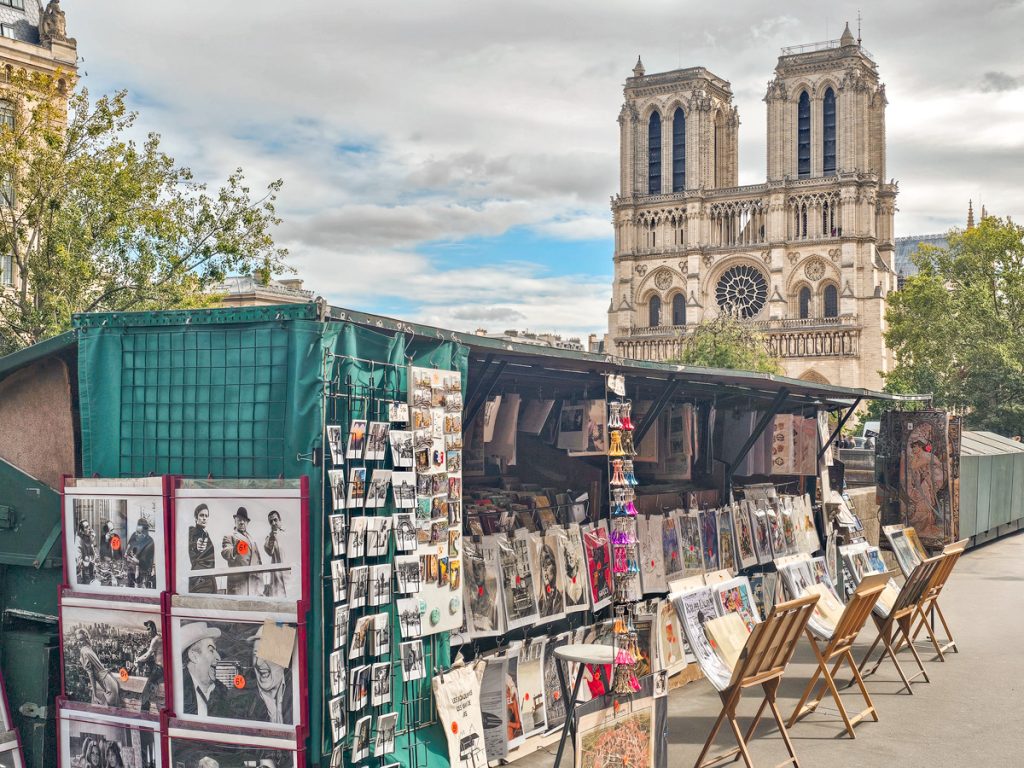
Location: Along the Seine River, especially the stretches between Notre Dame and Pont Neuf.
Why Visit: For a classic Paris experience browsing vintage paper goods sold from the city’s historic green stalls along the Seine.
Dates: Varies between stalls, usually open every day but Mondays, and many are closed in winter

More Info: The bouquinistes have operated along the river for centuries and are considered part of Paris’s cultural heritage. Most sell a mix of secondhand books, art prints, old magazine covers, and postcards, along with small souvenirs like magnets and bookmarks.
Market Streets
Market streets in Paris combine the feel of a traditional market with the convenience of permanent shops and the laidback vibe of a pedestrian walkway. You’ll find bakeries, cheese shops, butchers, produce shops, chocolate shops, and wine stores all lined up next to cafés and restaurants.
These streets are open throughout the week and are an easy way to collect a variety of fresh, high quality foods without needing to time your visit to a specific market day.
10. Rue Montorgueil

Location: 2nd arrondissement, behind the Forum des Halles
Why Visit: For its mix of classic food shops and modern cafés, and a laid-back, social vibe that makes it one of Paris’s most beloved market streets.
Dates: Many of the stores and restaurants are closed Monday, otherwise, all week long

More Info: Rue Montorgueil has a relaxed, everyday feel, with plenty of cafés offering streetside dining intermingled with the bakeries, fromageries, and produce stands.
Stohrer, the oldest pâtisserie in Paris, is located here, and one of my favorite restaurants, Le Chardonnay, is just steps away. It’s a street where you wander, take in the sights, pick up your market finds, and then stop to enjoy a late lunch on the patio.
11. Rue Cler

Location: In the 7th arrondissement, just a few streets over from the Eiffel Tower and the Champs de Mars
Why Visit: For its polished market street atmosphere and as the ideal place to grab picnic supplies before heading to the Eiffel Tower.
Dates: Many of the stores are closed on Monday, otherwise, all week long

More Info: Rue Cler is lined with wine shops, bakeries, and produce stands alongside cafés and chocolate shops. It’s one of Paris’s tidiest and prettiest market streets.
I’ve come here countless times to pick up supplies like bread, cheese, sandwiches, fruit, and drinks before walking the short distance to the Champ de Mars for an Eiffel Tower picnic. It’s one of the most idyllic ways to spend an hour in Paris.
12. Rue Mouffetard

Location: In the Latin Quarter (5th arrondissement)
Why Visit: For the distinct Latin Quarter character, with narrow, Medieval-era streets, and a mix of traditional food shops and open-air stalls.
Dates: Saturday and Sunday mornings are the most lively, but it’s open Tuesday – Friday as well. Most shops are closed Sunday afternoon and Monday.

More Info: Rue Mouffetard is one of the most charming streets in the Latin Quarter, known for its narrow cobblestones and mix of everyday and specialty food shops. Ernest Hemingway even called it “that wonderful, narrow, crowded market street,”
Start at the southern end, at Square Saint-Médard, where an open-air market sets up most mornings, and walk north toward Place de la Contrescarpe.
