
Paris’s 5th Arrondissement: A Complete Guide to the Latin Quarter

The 5th arrondissement, better known as the Latin Quarter, is one of Paris’s oldest and most character-filled neighborhoods.
It’s a mix of charming history and student energy, with winding Medieval streets, independent bookshops, and cafés that spill out onto small squares. The architecture feels older and cozier than other districts in central Paris – fewer grand boulevards, more stone walls and narrow lanes.

Sitting on the Left Bank (south side) of the Seine, the Latin Quarter is part of the city’s central core, just across from Notre Dame and the Île de la Cité.

The neighborhood gets its name from the scholars and students who once spoke Latin here, a legacy that continues with the Sorbonne and other nearby universities.
But its story goes back much further. In 52 BC, the Romans conquered the Parisii tribe and founded Lutetia, building baths, roads, and even an amphitheater. Some of those ancient remains still survive today.
Here’s your guide to the Latin Quarter: where to go, what to see, and how to experience this historic corner of Paris.

Top Sites in the Latin Quarter
This first section includes the most iconic, most popular spots in the 5th arrondissement that belong on any itinerary.
1. Pantheon

The Panthéon is one of the most important monuments in Paris, honoring France’s greatest minds and national heroes. It was originally constructed as the Church of Saint Geneviève in 1764, but it was transformed into a national pantheon in 1791 during the French Revolution.
Designed in early Neoclassical style, it features grand domes, intricate paintings and sculptures, and a massive portico lined with Corinthian columns. Almost every surface is decorated, giving the interior a feeling of grandeur.
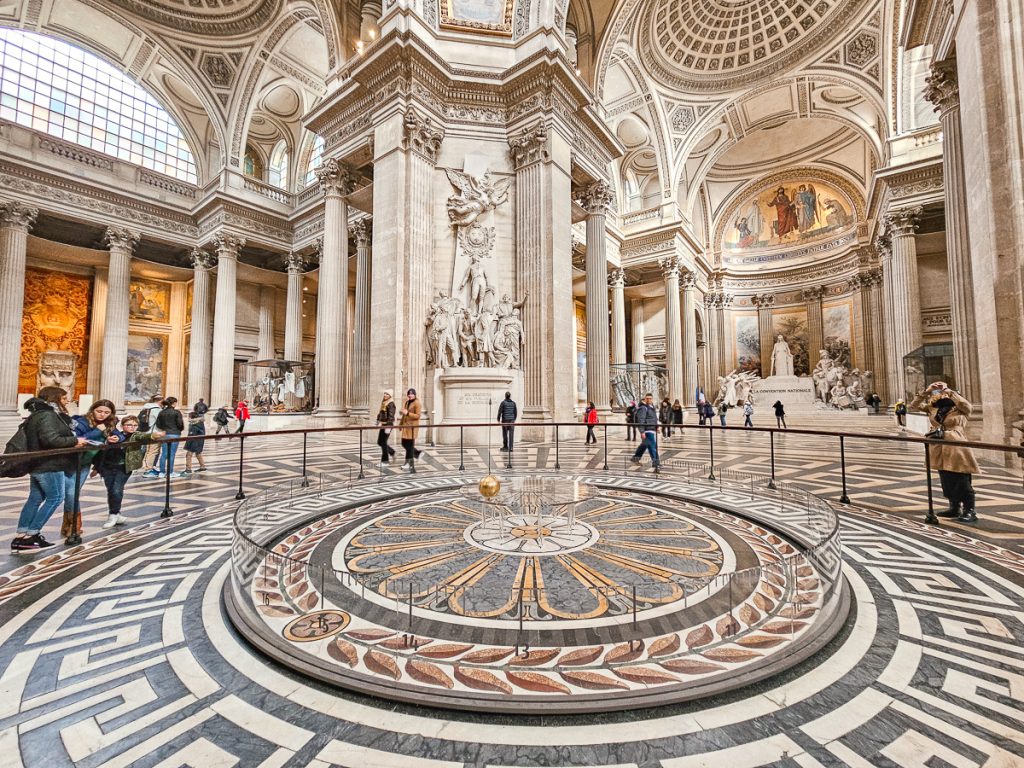
The paintings and frescoes honor Saint Geneviève, the patron saint of Paris, as well as the men and women who shaped France’s history, including Joan of Arc, Enlightenment thinkers, and Revolutionary leaders.
One particularly fascinating spot is the replica of the Foucault Pendulum that hangs in the center of the buildings. This pendulum was installed in 1851 as a groundbreaking experiment by Léon Foucault to demonstrate that the Earth rotates on its axis.
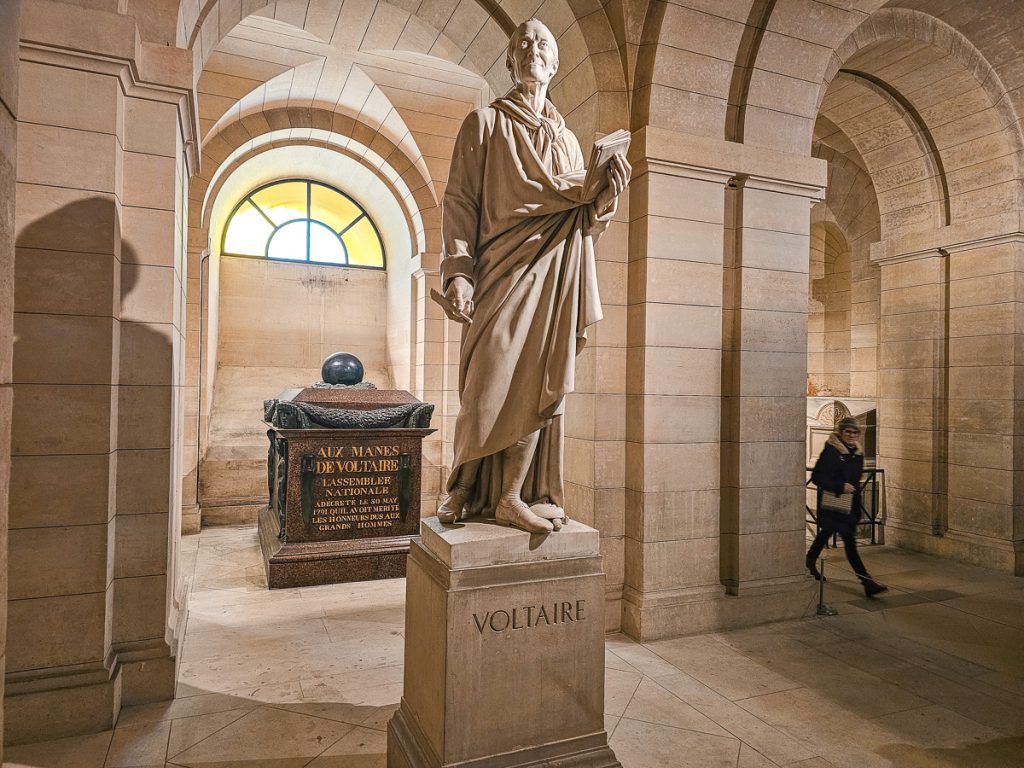
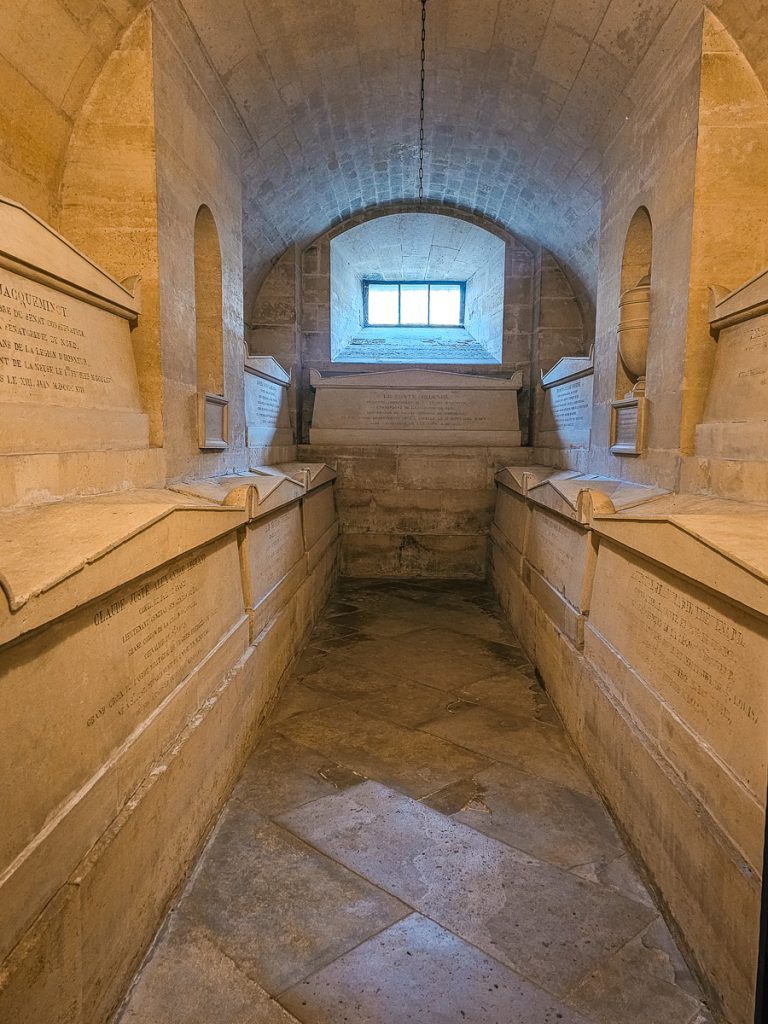
Definitely don’t miss going underground to visit the crypts, which hold the tombs of France’s most influential philosophers, scientists, writers, and leaders. Voltaire and Jean-Jacques Rousseau each have dedicated tombs and statues, while others buried here include:
- Alexandre Dumas (writer of The Three Musketeers, The Count of Monte Cristo)
- Louis Braille (creator of the Braille system)
- Marie Curie (Nobel Prize for Chemistry for her research on uranium)
- Victor Hugo (writer of Les Misérables, The Hunchback of Notre Dame)
- Émile Zola (French novelist)
2. Jardin des Plantes

The Jardin des Plantes is the main botanical garden in Paris, the largest green space in the Latin Quarter, and a favorite spot for locals and families to stroll and relax.
The main walkway stretches from the Place Valhubert entrance to the Natural History Museum. Lined with colorful flower beds and manicured bushes and trellises, it’s a beautiful path for an afternoon walk.

As a botanical garden, it features a huge variety of plants and trees, as well as specialized areas like an alpine garden, rose garden, and tropical greenhouse.
The park is lovely year-round, but it’s especially stunning in spring when the cherry blossoms bloom and the whole garden bursts into color.
The garden is free to visit, but the museums and zoo are paid attractions.
3. Cluny Museum
The Cluny Museum is the Latin Quarter’s most important museum, dedicated to the art and history of the Middle Ages.
The building was once the private residence of the abbots of Cluny and incorporates the ruins of ancient Roman baths, the Thermes de Lutèce, the most important Roman remains north of the Loire.
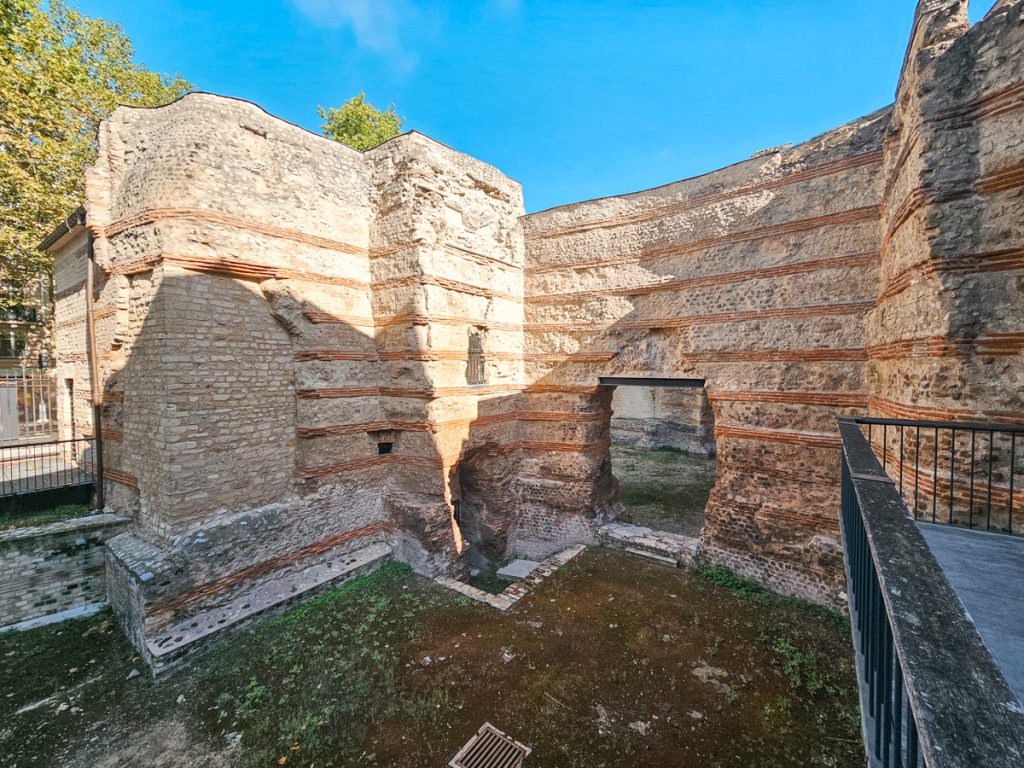
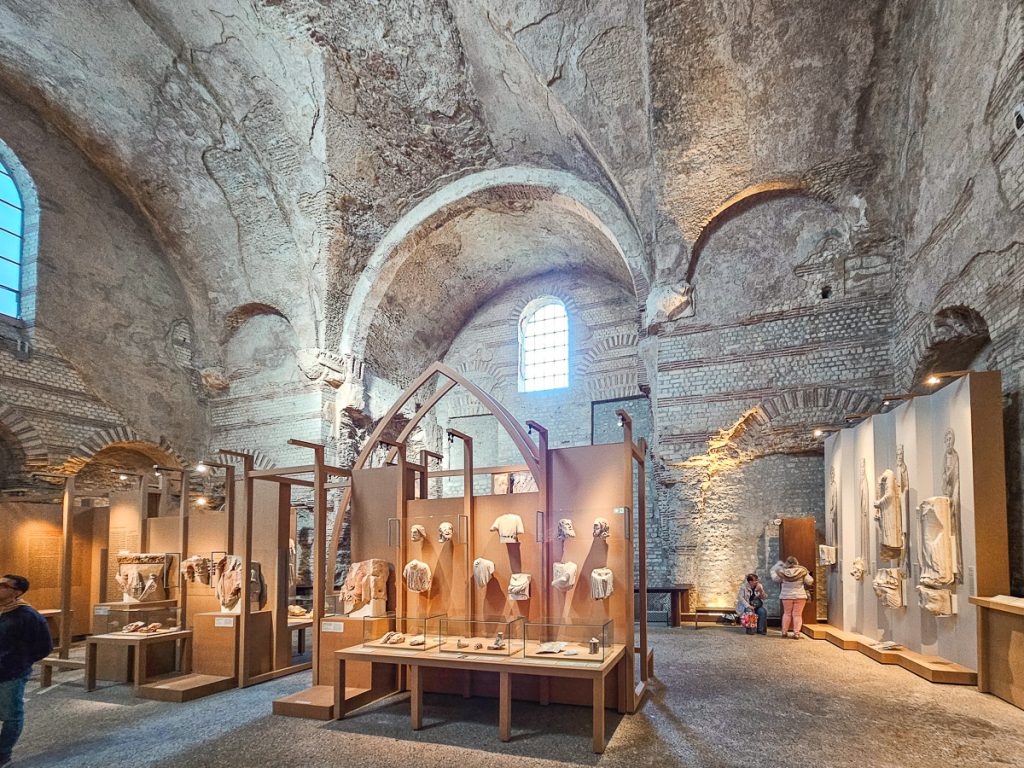
Inside, the museum’s collection ranges from Gallo-Roman artifacts to medieval sculptures, decorative arts, and artifacts from historic cathedrals.
The upper level was my favorite. It is filled with enormous, brilliantly colored tapestries that are both intricate and beautifully preserved.
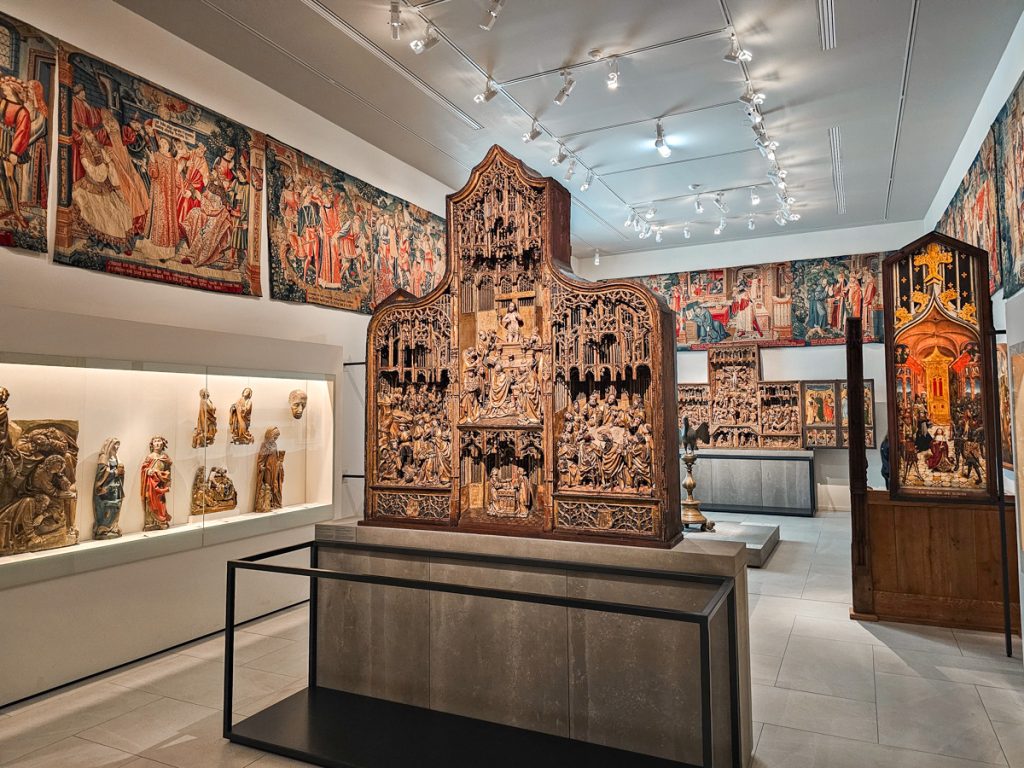
The most famous of these is La Dame à la Licorne (The Lady and the Unicorn), a series of six 15th-century tapestries commissioned for the Le Viste family.

Each panel depicts a lady, a lion, and at least one unicorn, with five of the tapestries representing the five senses. They’re breathtaking in scale and detail, and easily one of the highlights of a visit to the Cluny.
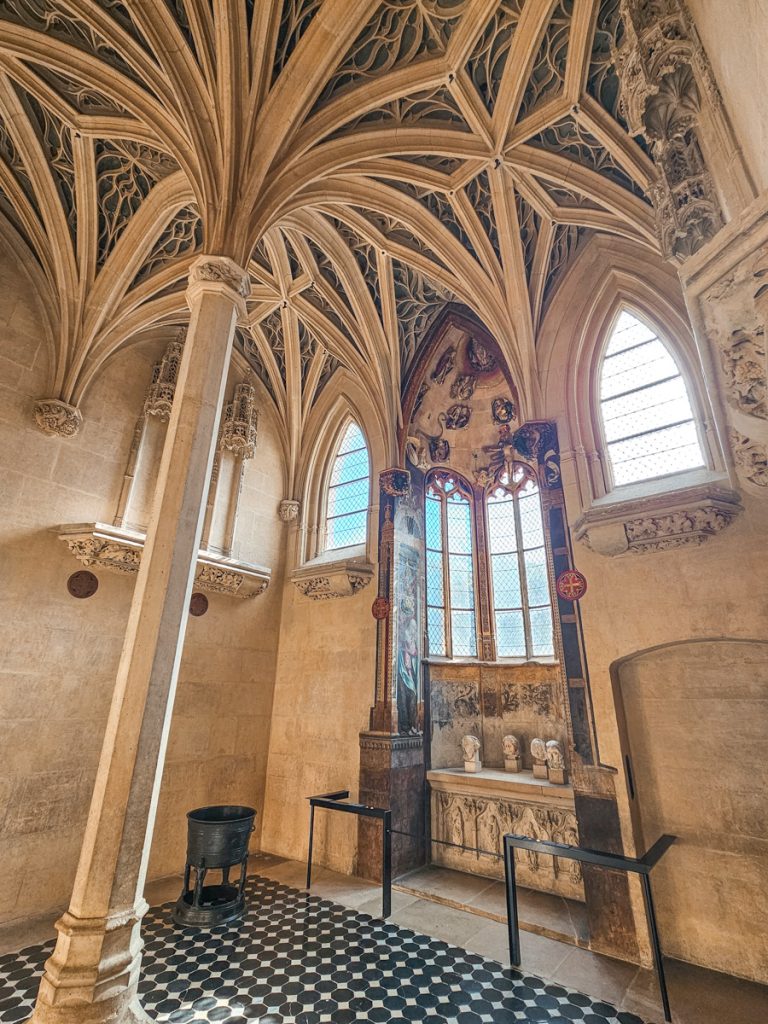
Make sure you go all the way to the back of the upper floor to find the tucked away, small Gothic chapel. It’s almost perfectly square, with delicate arches and a ceiling that almost look like lace carved from stone.
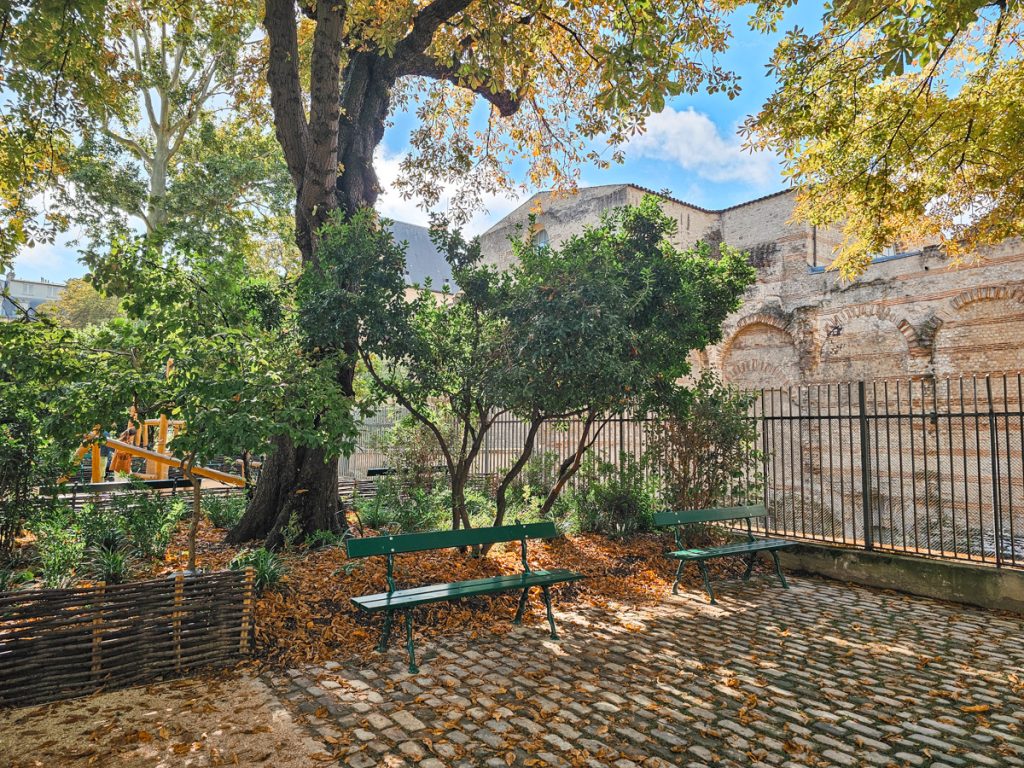
Just outside, the museum’s medieval garden backs up to the ruined thermal bath walls, and is a quiet space designed to reflect the practical gardens of the Middle Ages, complete with sections for medicinal herbs and kitchen plants.
4. The Seine & the Bouquinistes
The 5th arrondissement borders the Seine River, and includes what might be my favorite section of riverbanks in the city. You can either walk the sidewalks at street level or go down the staircases to walk the paths along the banks.
It’s a popular spot with locals for jogging or strolling, and a great way to experience the city from a different angle. I particularly recommend walking the section between the Pont Neuf and Pont de la Tournelle bridges.
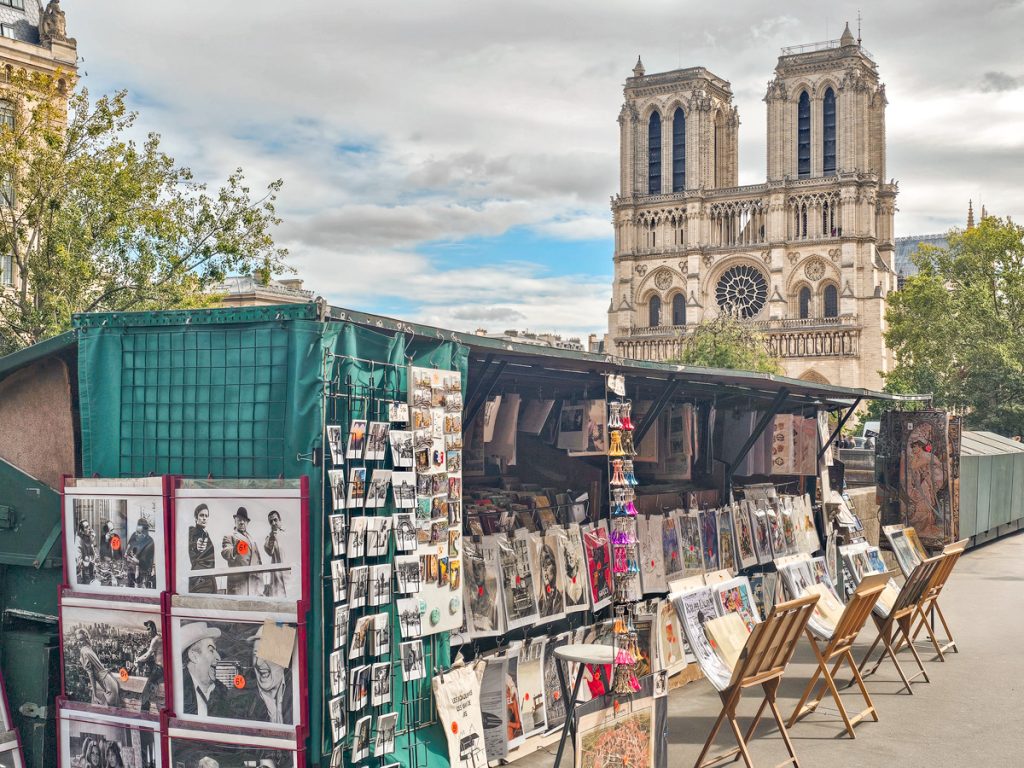
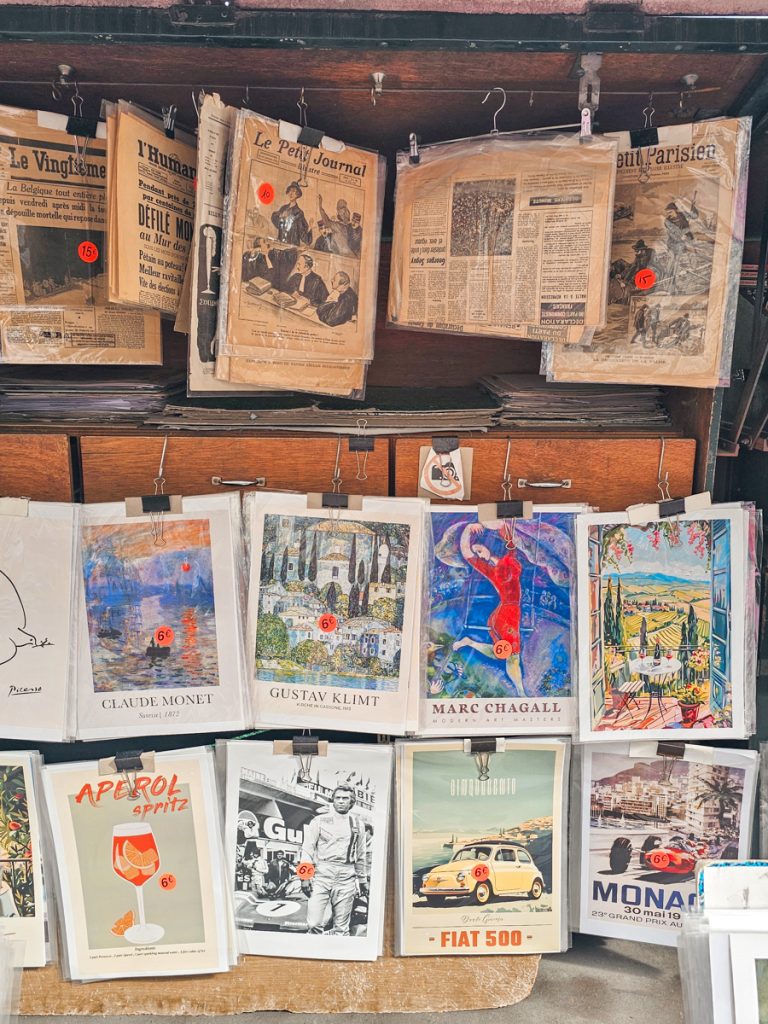
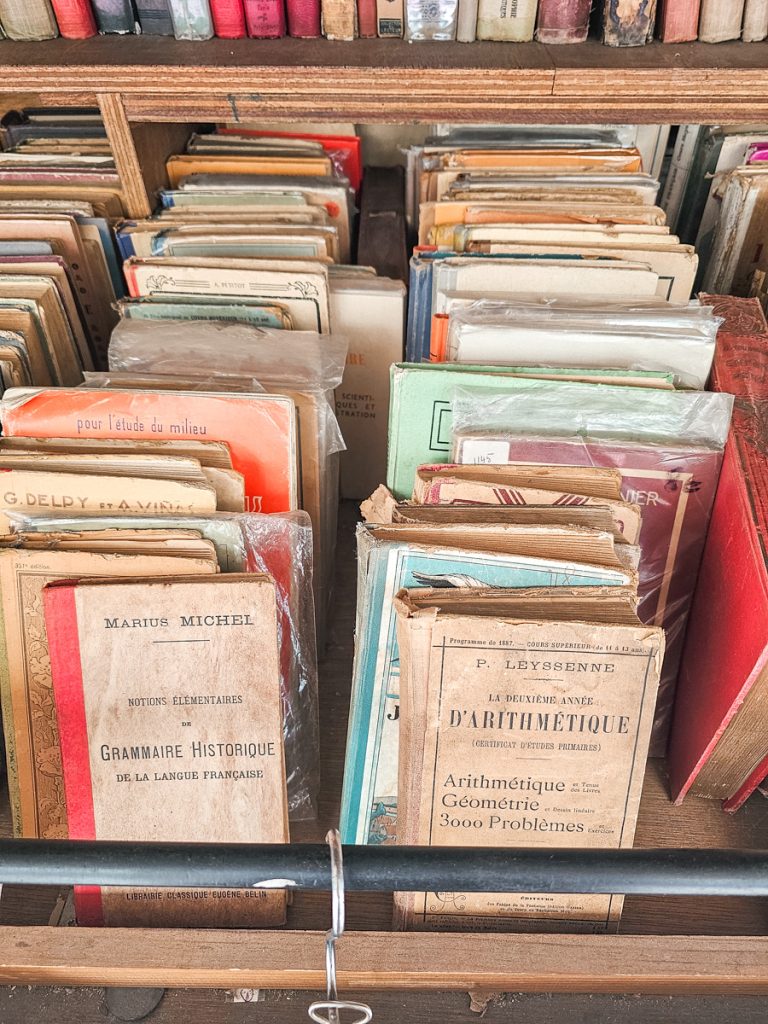
This section of the Seine is also lined with bouquinistes – historic booksellers who set up in green stalls along the walls. You’ll find all kinds of treasures here: vintage books, newspaper front pages, old Vogue covers, art prints, postcards, magnets, and other little tchotchkes.
Note: The bouquinistes are often not open in winter.
Worth a Visit
The next section of this list includes attractions that are not quite as iconic or popular as the Top Sites, but are still important spots worth a stop if you have the time.
5. Eglise Saint-Etienne-du-Mont

Located just behind the Panthéon, Église Saint-Étienne-du-Mont is one of the most beautiful and unique churches in Paris – there’s really nothing else like it. Built between the late 1400s and mid-1600s, the church is a mixture of flamboyant Gothic and early Renaissance architectural styles.

Beyond the gleaming white walls and high vaulted ceilings, the highlight of the church is its elaborate stone rood screen, the only one of its kind still standing in Paris.
The rood screen is the short “wall” separating the nave from the choir behind. In the past, church officials would climb up to the screen to preach to the congregation below.
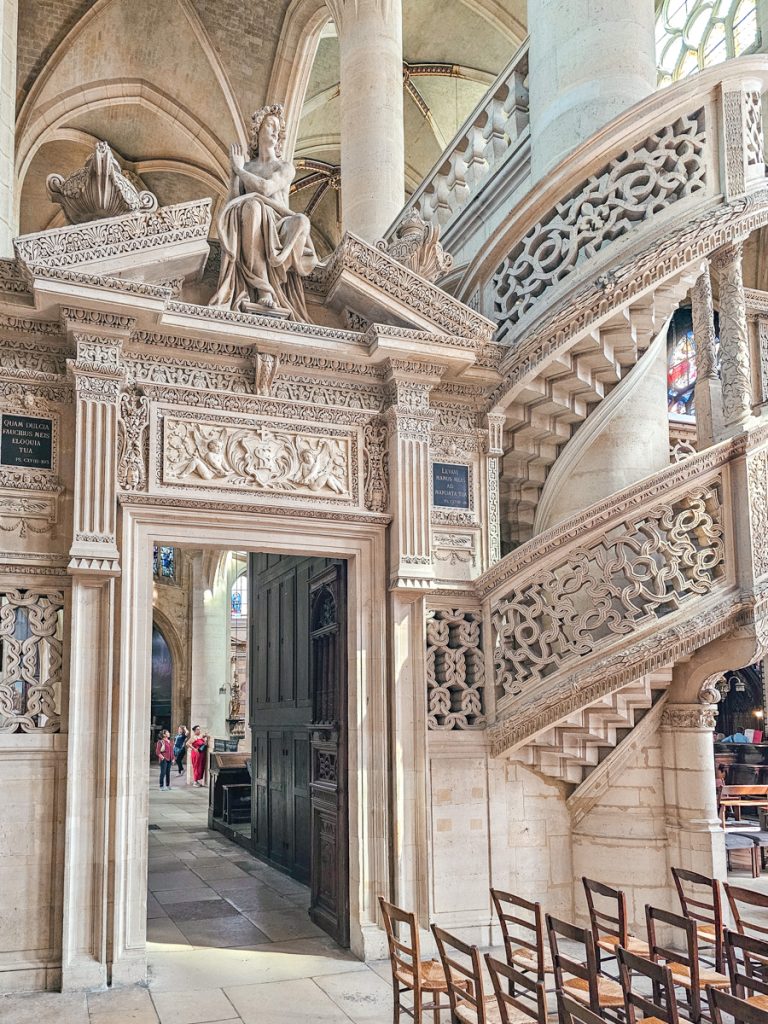
It’s flanked by two spiral staircases that wrap gracefully around the columns, covered in intricate carvings that almost look like lace.
The relics of Sainte Geneviève, the patron saint of Paris, are kept in this church, and several notable scientists from the 17th and 18th centuries are also buried here.
6. Place de la Sorbonne

The Sorbonne is France’s oldest university – and the second oldest in Europe – originally founded in the 1200s, with its main buildings dating back to the 1500s.
The square in front of the university is a classic Latin Quarter scene: small cafés with outdoor tables, benches under the trees, and students hanging out or studying between classes. At the far end, you’ll see the Sorbonne Chapel, a historic part of the university (but it’s usually closed to visitors.)
Even so, it’s a nice place to pause for a moment and take in a bit of Paris’s academic history.
7. Shakespeare and Company

Shakespeare and Company is the Latin Quarter’s most famous English-language bookshop, sitting just across the river from Notre Dame in Paris. It first opened in 1951 as “Le Mistral,” but the name was changed in 1964 to Shakespeare and Company to mark the 400th anniversary of the playwright’s birth.
This is actually the second Paris bookshop to carry the name. The original opened in 1919 and became a gathering place for legendary expats like Ernest Hemingway, Gertrude Stein, F. Scott Fitzgerald, and T.S. Eliot, along with plenty of French writers too.
Note that there can be queues to enter the bookstore (that are sometimes quite long), and no photos or videos are allowed inside.
8. Rue Mouffetard

Rue Mouffetard is one of the most charming streets in the Latin Quarter, a mostly pedestrian market street lined with fromageries (cheese shops), boucheries (meat shops), produce stands, boulangeries, and all kinds of specialty food stores spilling out onto the cobblestones.

Ernest Hemingway once described it as “that wonderful, narrow, crowded market street,” and it still feels just like that today.
It’s best to start at Square Saint-Médard on the south end, where an open-air produce market sets up most mornings, and then walk north toward Place de la Contrescarpe.

The street is busiest and most atmospheric between 10am-1pm, especially on Saturdays when locals come out to do their weekend shopping. The market is completely closed on Sunday afternoon and on Monday.
9. Place Saint Michel

Place Saint-Michel sits right on the border dividing the 5th and 6th arrondissements, and is known for its dramatic fountain showing the archangel Michael defeating the Devil.
The square was commissioned by Baron Haussmann during a period of great transformation of the Parisian streets, and has become one of the most recognizable landmarks in the Latin Quarter.
Hidden Gems
Definitely off the beaten tourist path, this section highlights other charming places to discover.
10. Grande Mosquée de Paris
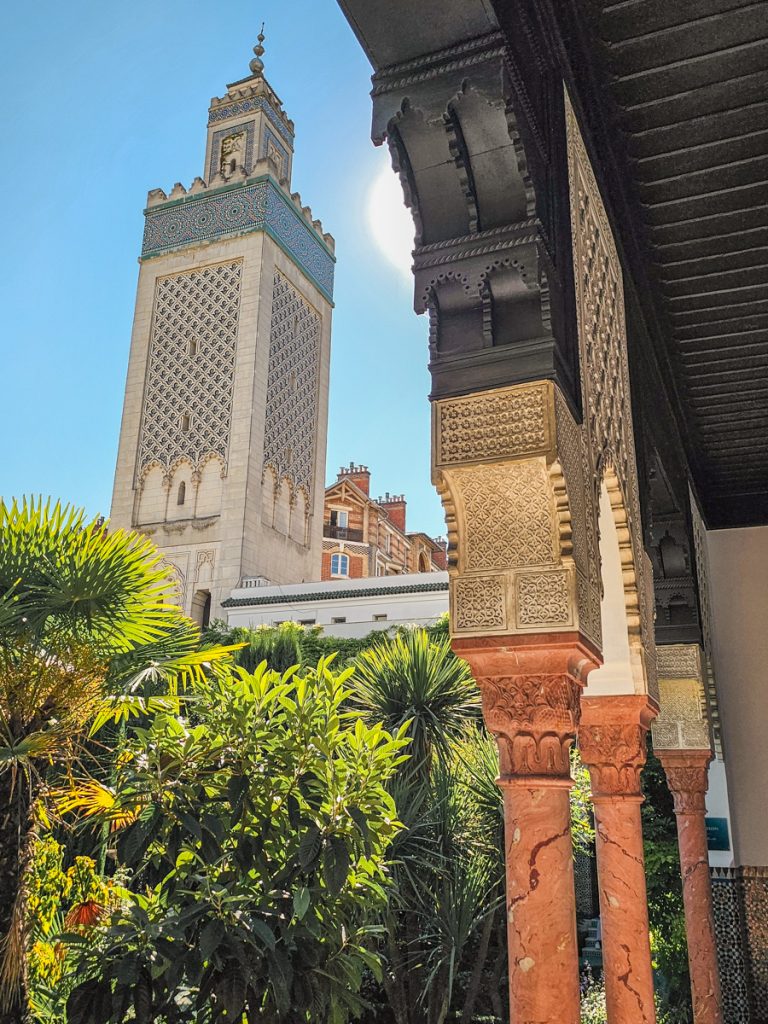
The Grand Mosque of Paris is the largest mosque in France, built in the Moorish Revival style inspired by Andalusia and North Africa. Its symmetrical design, carved stucco archways, colorful mosaics, and central fountain create an atmosphere that feels peaceful and elegant.
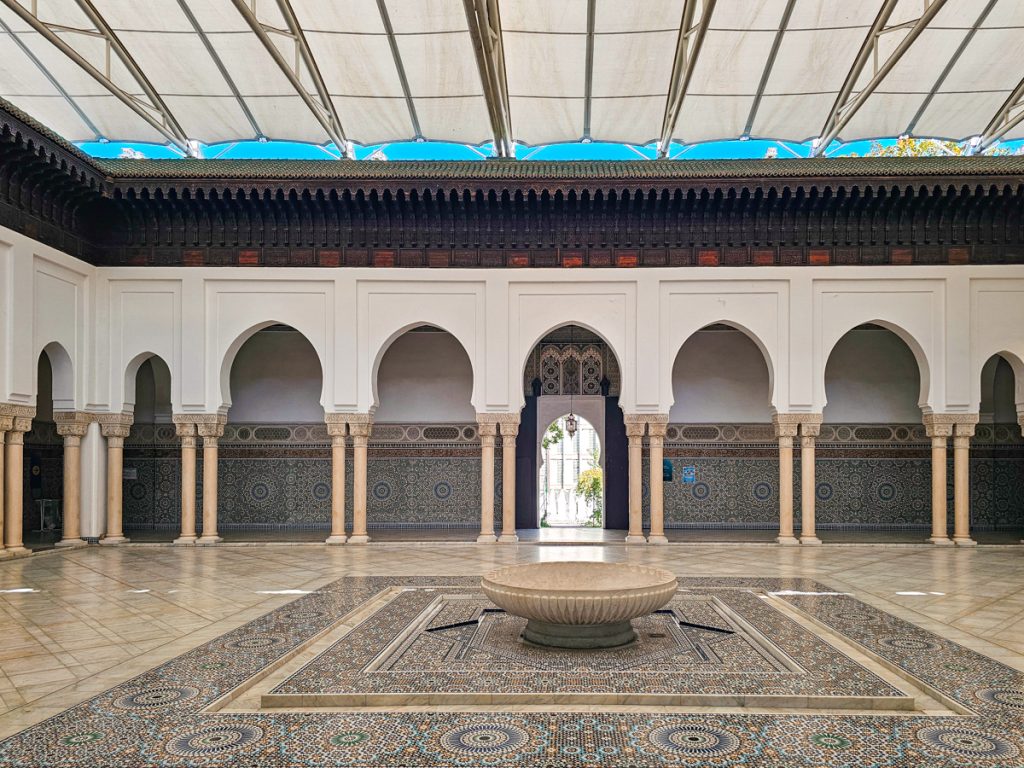
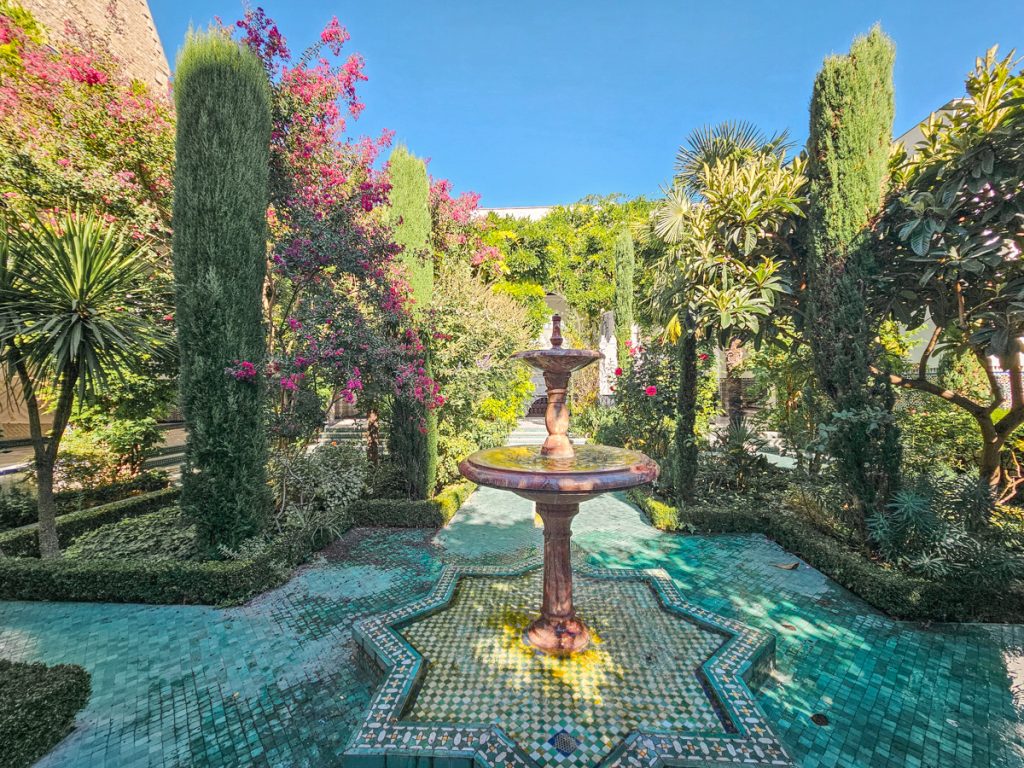
I’ve visited both Andalusia and Morocco, and the mosque immediately brought those places to mind – the same beautiful tiles, intricate details, bubbling fountains, and calm courtyards.
Visitors can explore a few interior rooms, but the highlight is the large courtyard and garden filled with plants, fountains, and a view of the 33-meter-tall minaret.
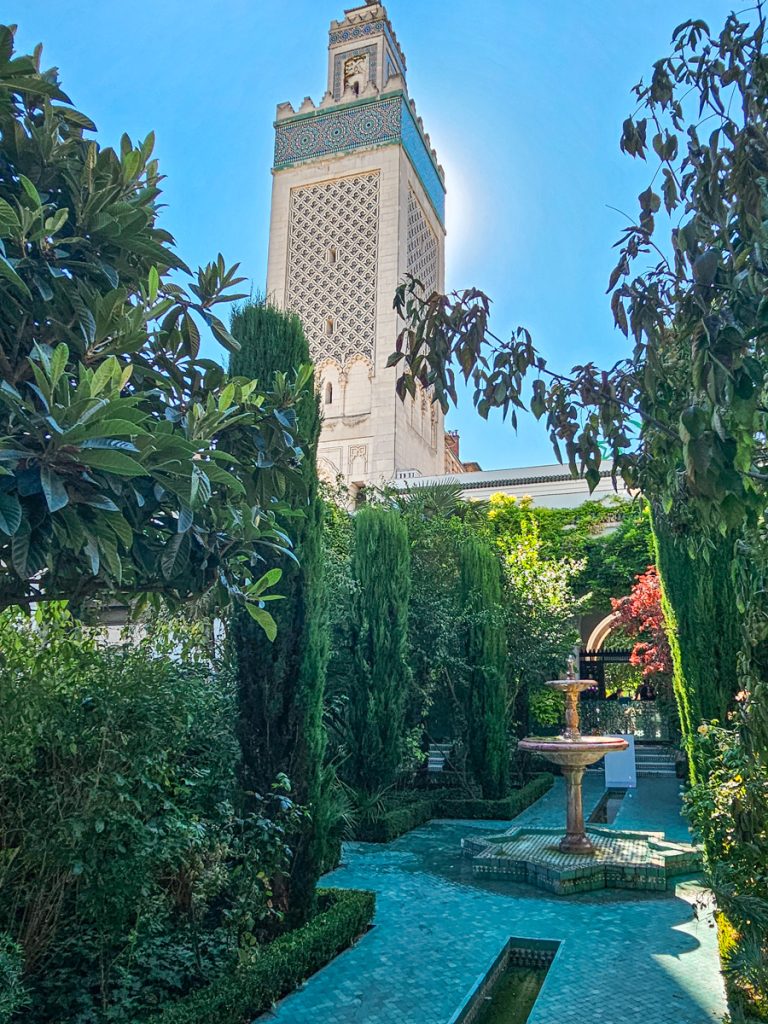
There is also a restaurant, tea room, hammam, and shops on the complex you can visit.
- Entrance Fee: €3 adults, €2 children
- Hours: 9am-6pm, closed Friday
11. Macaron Classes
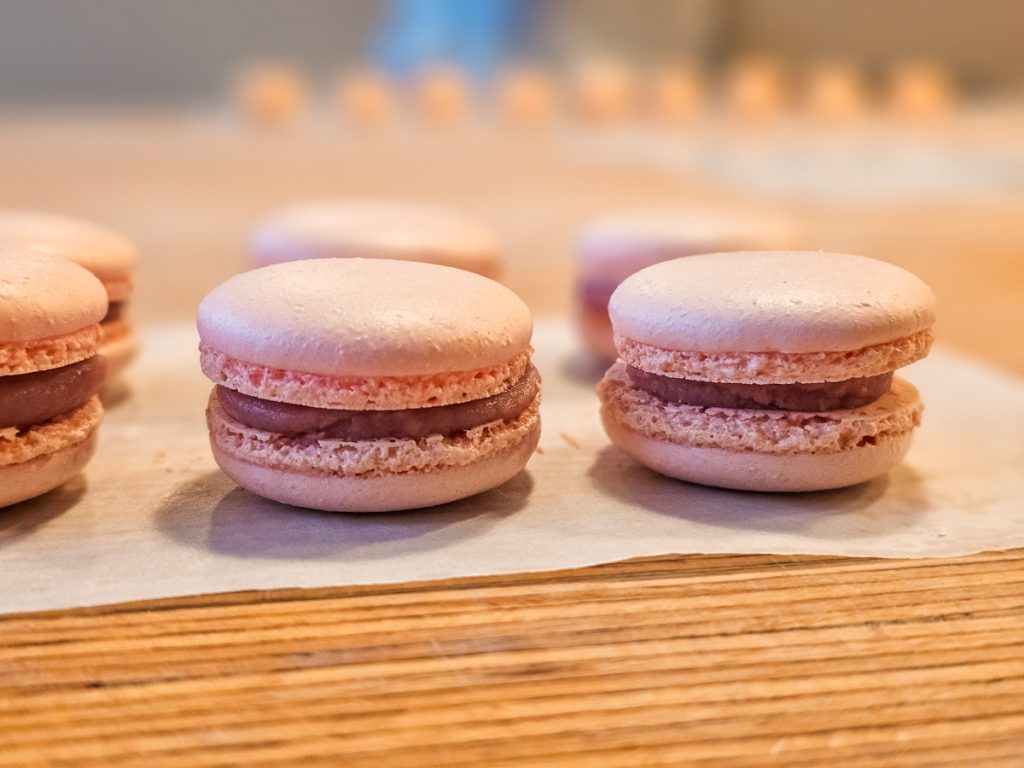
I love finding hands-on experiences when I travel that let you connect with local culture in a more personal way.
One of my favorite Paris activities has been taking a macaron-making class with a French pastry chef. She guided us step by step through the process of creating these iconic yet delicate French cookies.
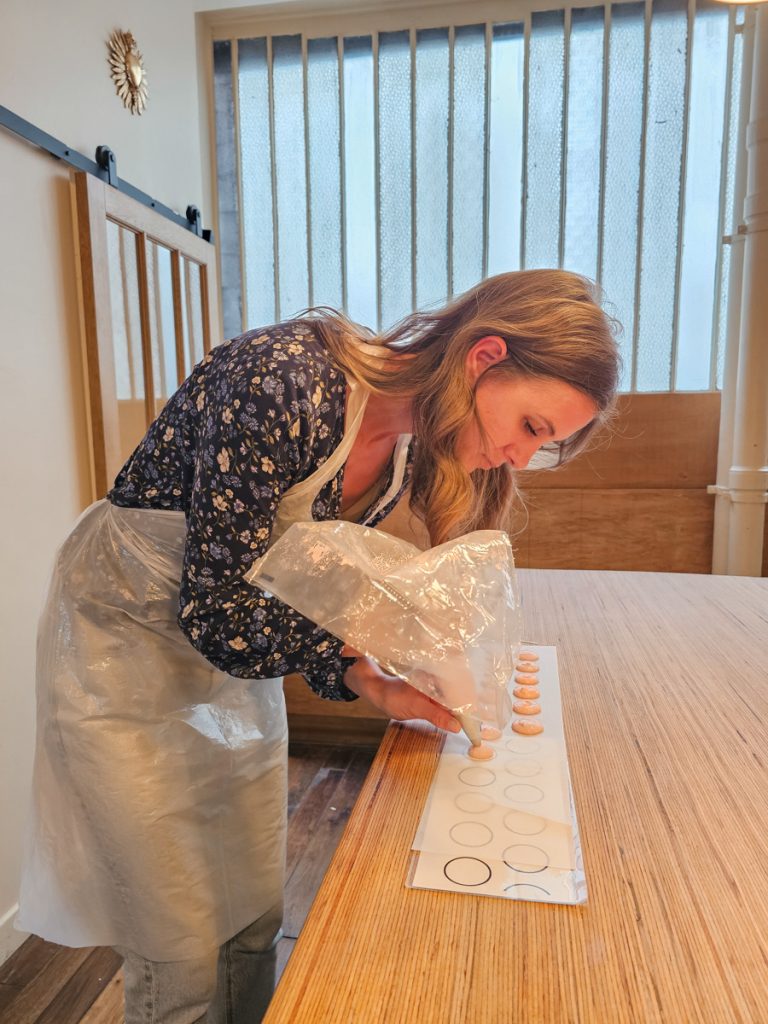
Macarons might look simple, but they’re famously tricky to get right. The ingredients are simple, but the technique and process are very specific.
We learned all the insider tips while whipping up our own flavors and designs, and it was such a fun (and delicious) way to spend an afternoon.
12. Eglise Saint Severin
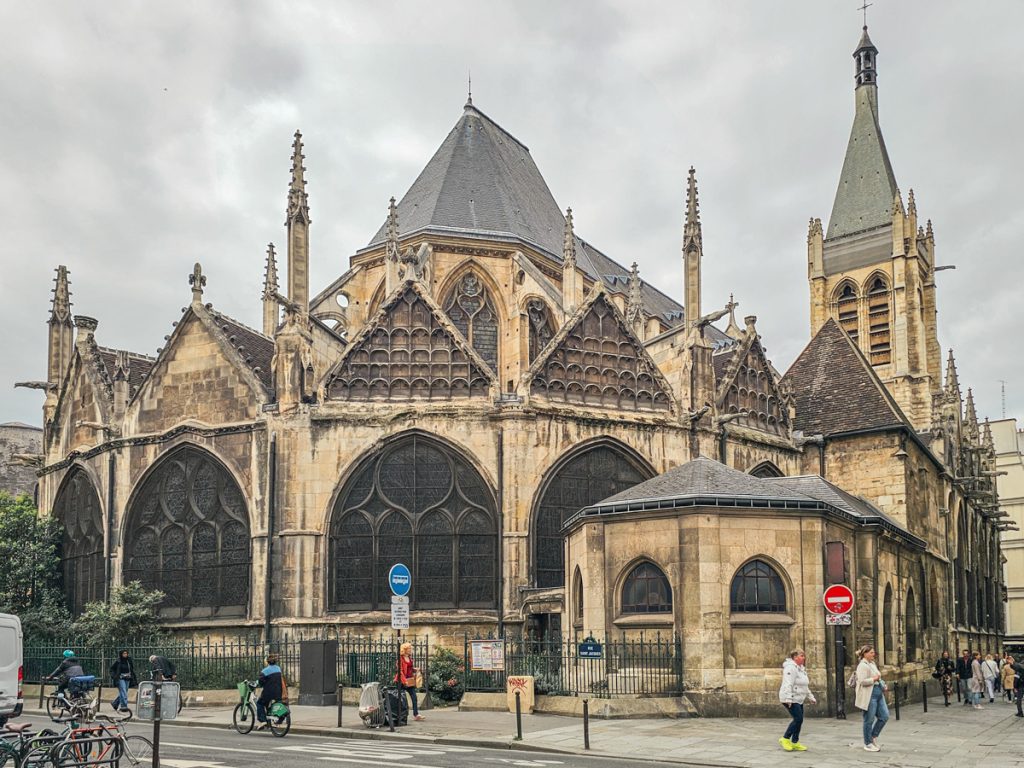
Just a couple of blocks from Notre Dame and the Seine, Eglise Saint-Séverin is almost hidden in plain sight. Built between the 13th and 15th centuries, the church once served as the parish for the nearby University of Paris, and its 15th-century bell tower still holds one of the oldest bells in the city.
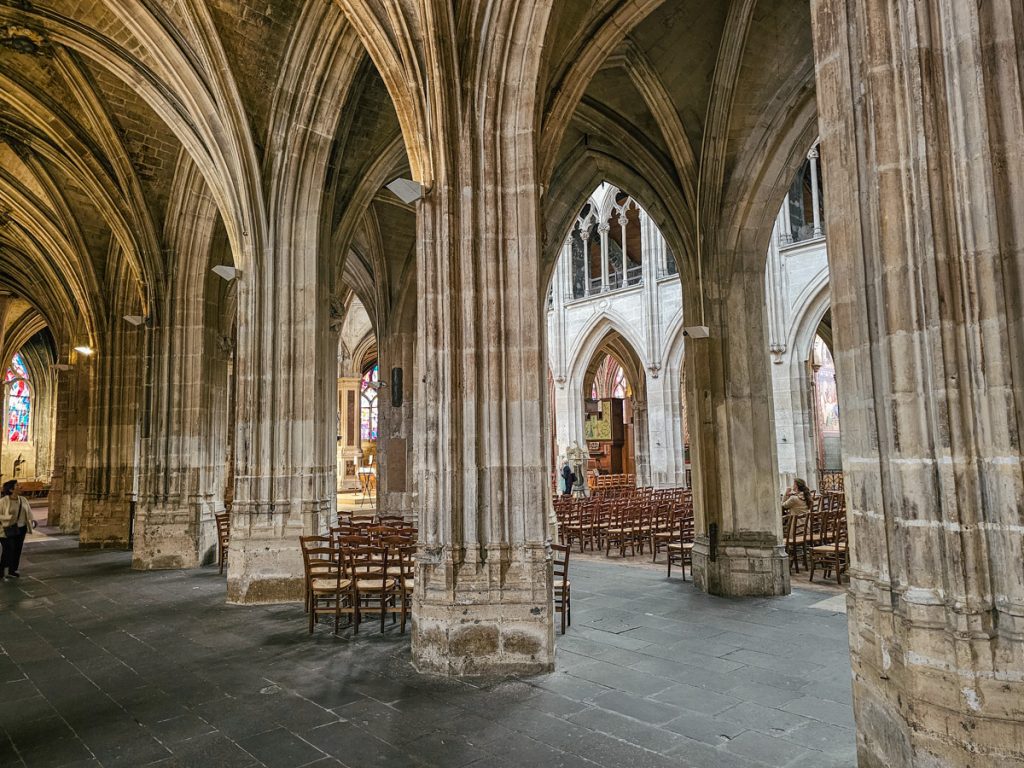
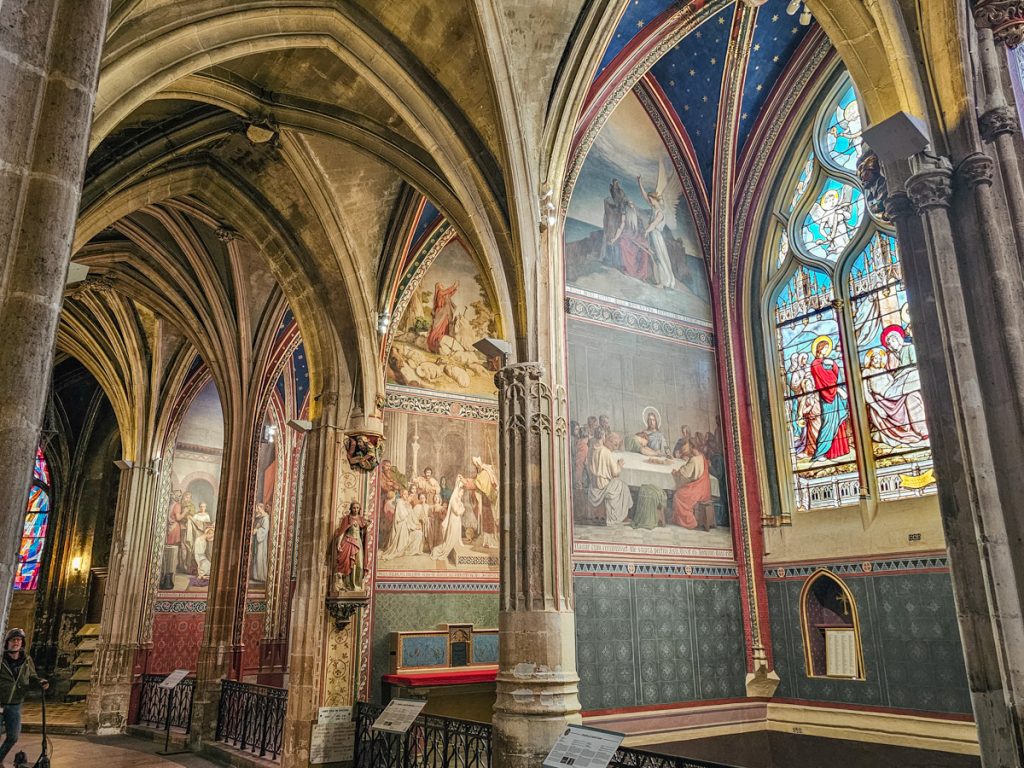
Inside, you’ll find soaring double rows of columns, vibrant stained glass, and small chapels with beautifully painted ceilings and wall scenes.
13. Rue du Chat-qui-Pêche

Connecting Rue de la Huchette to the banks of the Seine is Rue du Chat-qui-Pêche, which holds the title of the narrowest street in Paris. At just 1.8 meters (about 6 feet) wide, it’s barely enough for two people to pass each other.
Its name translates to “Street of the Fishing Cat,” a fun, quirky detail of this alleyway. To be honest, it’s perhaps not the most charming street in Paris, but still a fun one to stop by as you explore the neighborhood.
14. Arab World Institute
The Arab World Institute was created as a partnership between France and several Arab countries to celebrate and share Arab culture, art, and history.
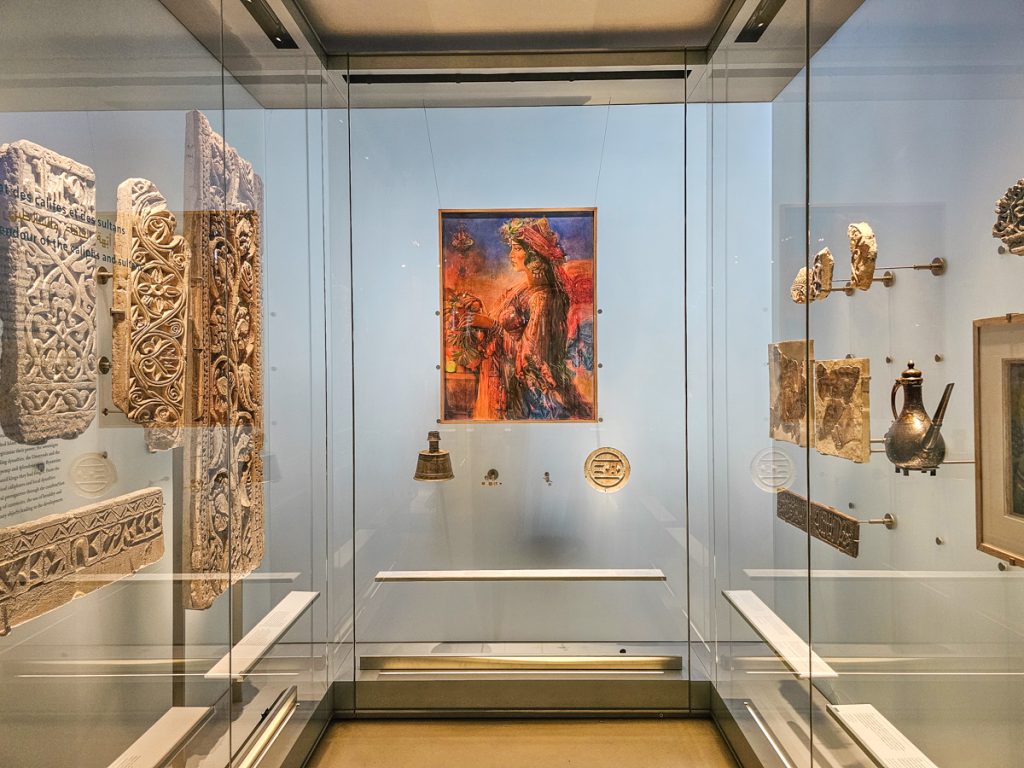
Inside, the museum showcases everything from pre-Islamic artifacts to modern works, giving an interesting look at the history and diversity of the Arab world.
Don’t miss the rooftop terrace – it’s one of the best hidden viewpoints in Paris, with beautiful views of the Seine and Notre Dame.

15. Place Monge Market
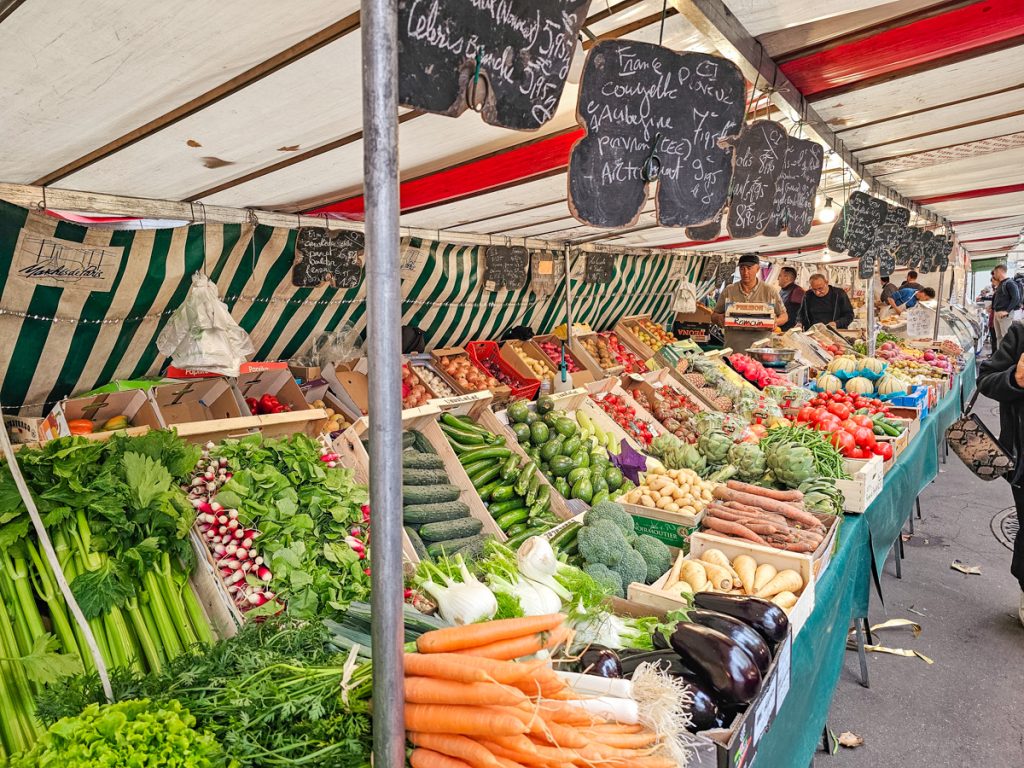
The market has been a fixture of the Latin Quarter since 1921, and is popular with locals for the vibrant stalls selling all kinds of fruits and vegetables, as well as meat, fish, cheese, flowers, dried fruit, olives, and more.
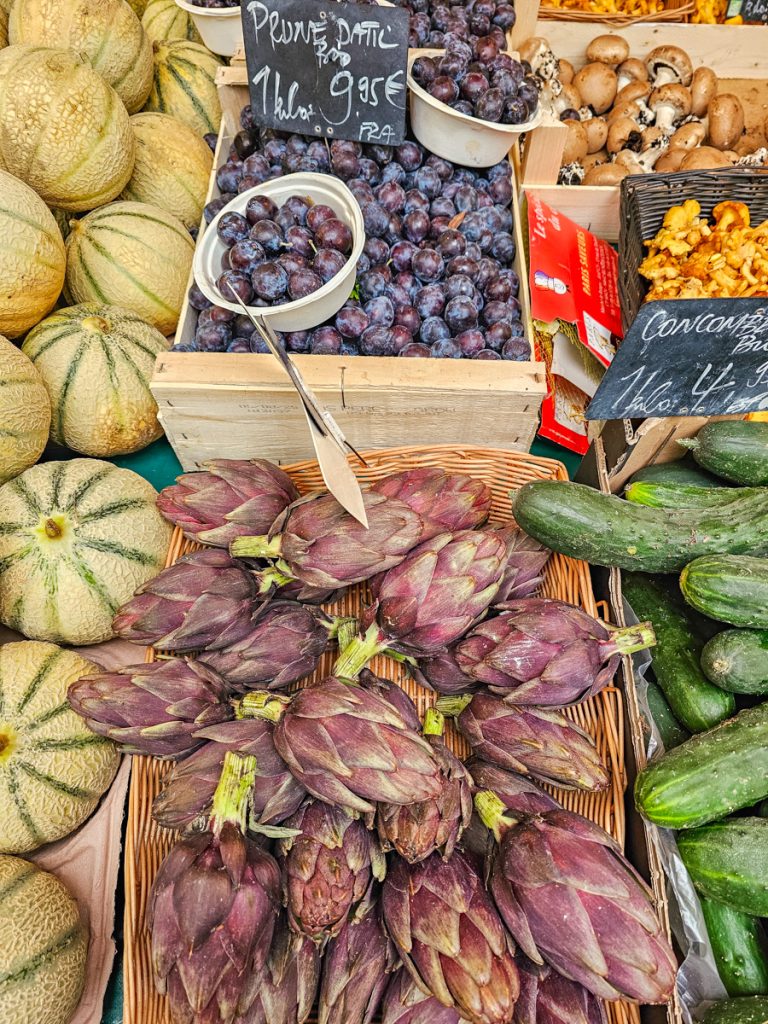
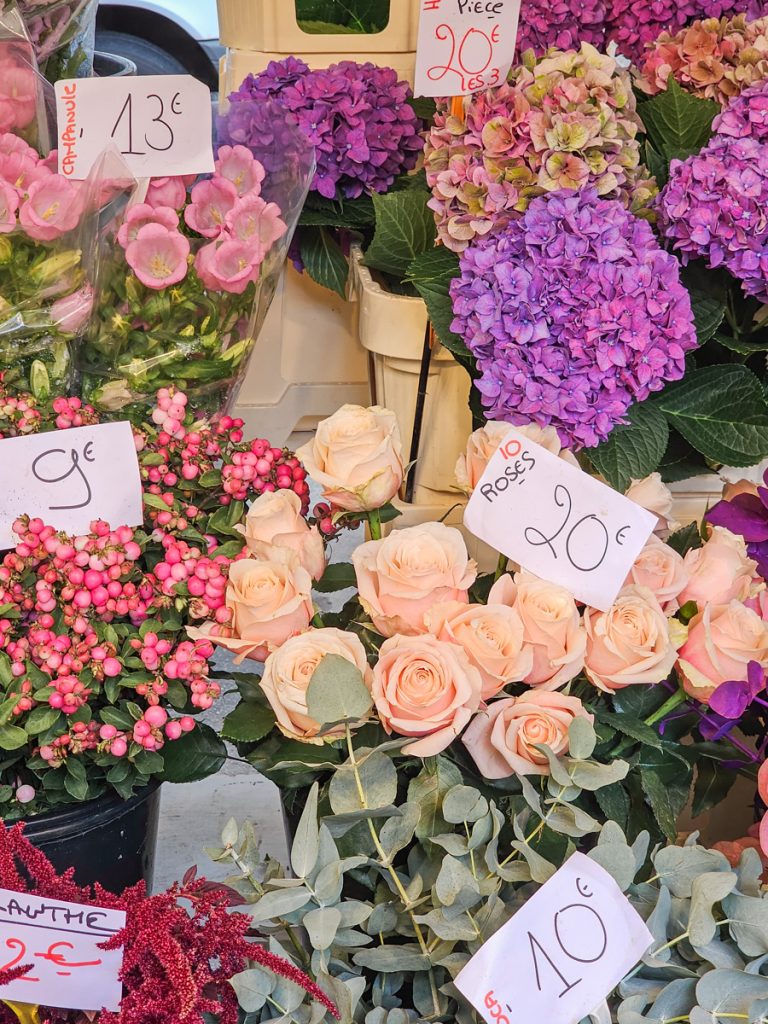
If you want to visit a market that’s more off the beaten tourist path, Place Monge is the spot for you. Note that it’s open on Wednesdays, Fridays, and Sundays only, from 7am-2:30pm.
16. Musée Curie
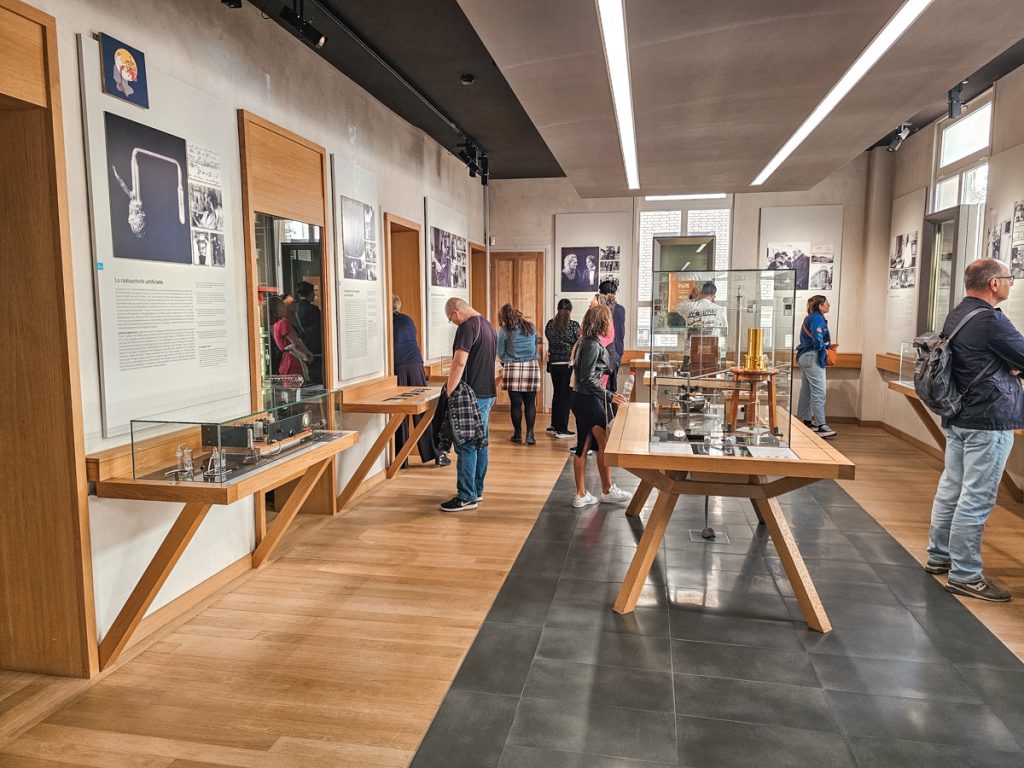
Tucked behind the Panthéon near the Sorbonne, the Musée Curie is a small but fascinating museum dedicated to the life and work of Marie Curie, the pioneering scientist who discovered radium and polonium. It’s housed within the Curie Institute, a research center that still continues her groundbreaking mission today.
The museum has just a few rooms, but they’re packed with history. You’ll learn about Curie’s research on radioactivity and her focus on using radiation to treat cancer, as well as the contributions of her family members.
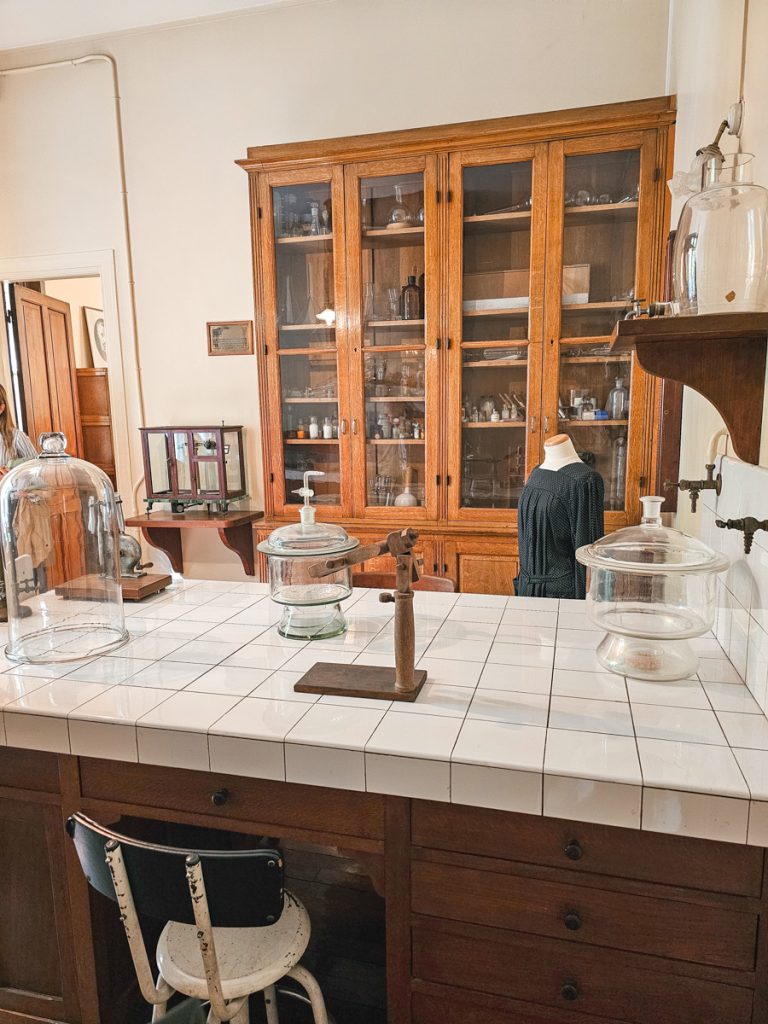
Photographs, documents, and models of her experiments are on display, and you can even step inside her preserved office and laboratory. It’s a quiet, off-the-beaten-path free museum in Paris that science lovers will find especially inspiring (but do note that the hours are limited).
17. Arènes de Lutèce
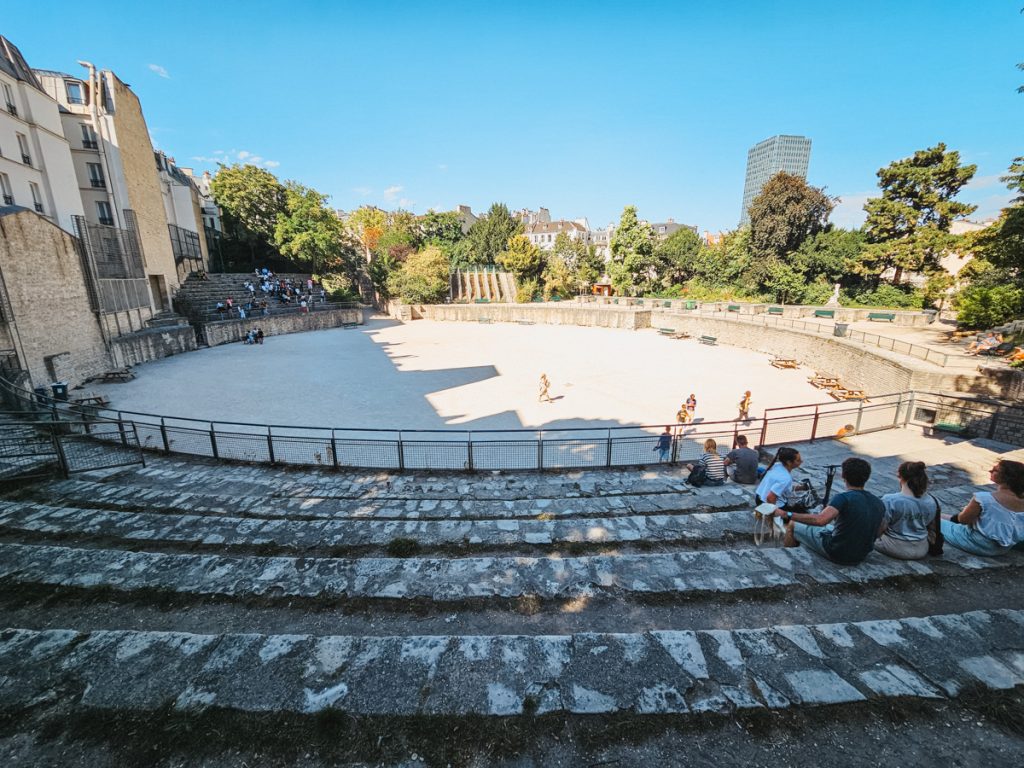
The Arènes de Lutèce are the remains of an ancient Roman amphitheater dating back to the 1st century AD, from when Paris was still called Lutetia. It was used by the Romans for nearly two centuries before being buried and forgotten, and is now one of the oldest structures in the city.
Today, the arena is a peaceful spot, surrounded by a small garden and walking paths. You can wander or relax on the stands or walk onto the sandy floor (and watch locals play pétanque!), in this quiet, unexpected glimpse into ancient Paris.
18. Square René Vivani
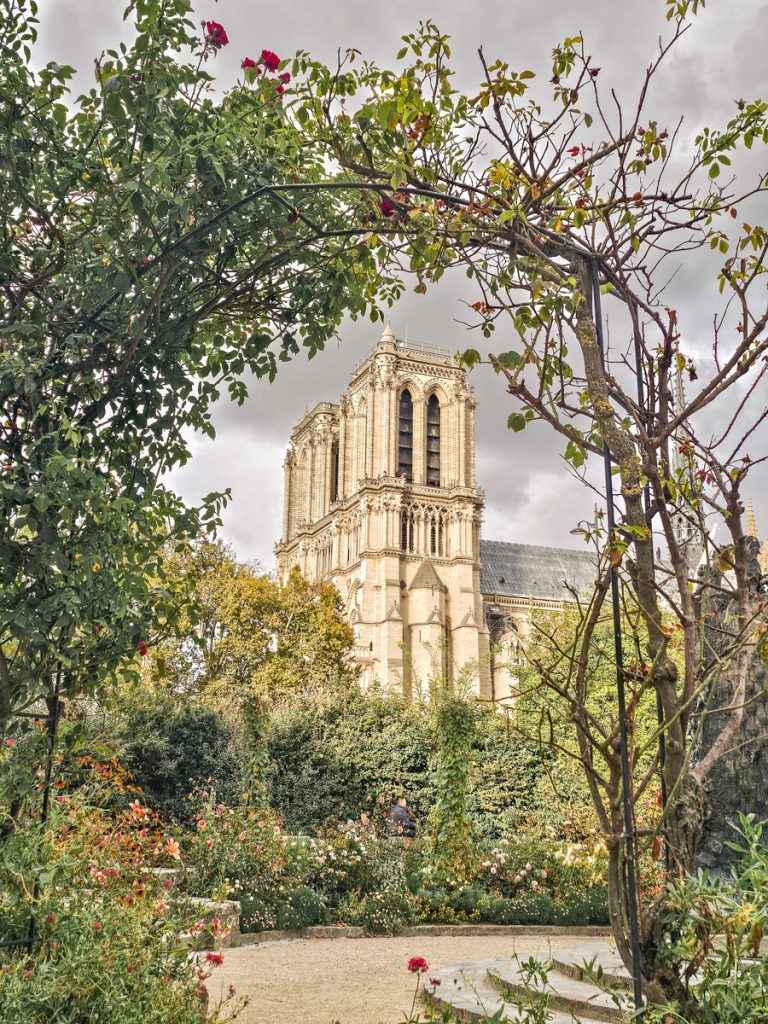
This lovely little square on the south bank of the Seine has beautiful views of Notre Dame.
19. A. Lacroix Patisserie
Let’s finish this list with a few of the 5th arrondissement’s unique treats. First off is A. Lacroix Patisserie, a dessert shop near Notre Dame that specializes in lifelike “fruits” that are actually intricate, delicious pastries when you cut them open.


They also have savory foods, like tartines, quiches, or wraps – it’s a great place to stop for lunch.
20. Odette
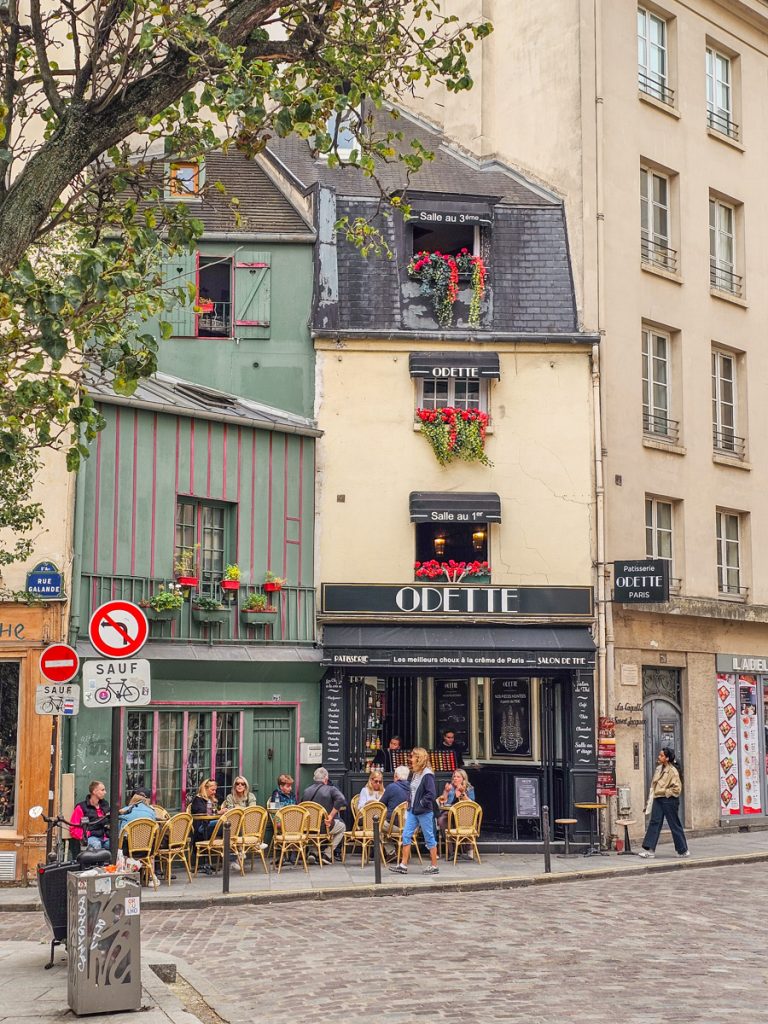
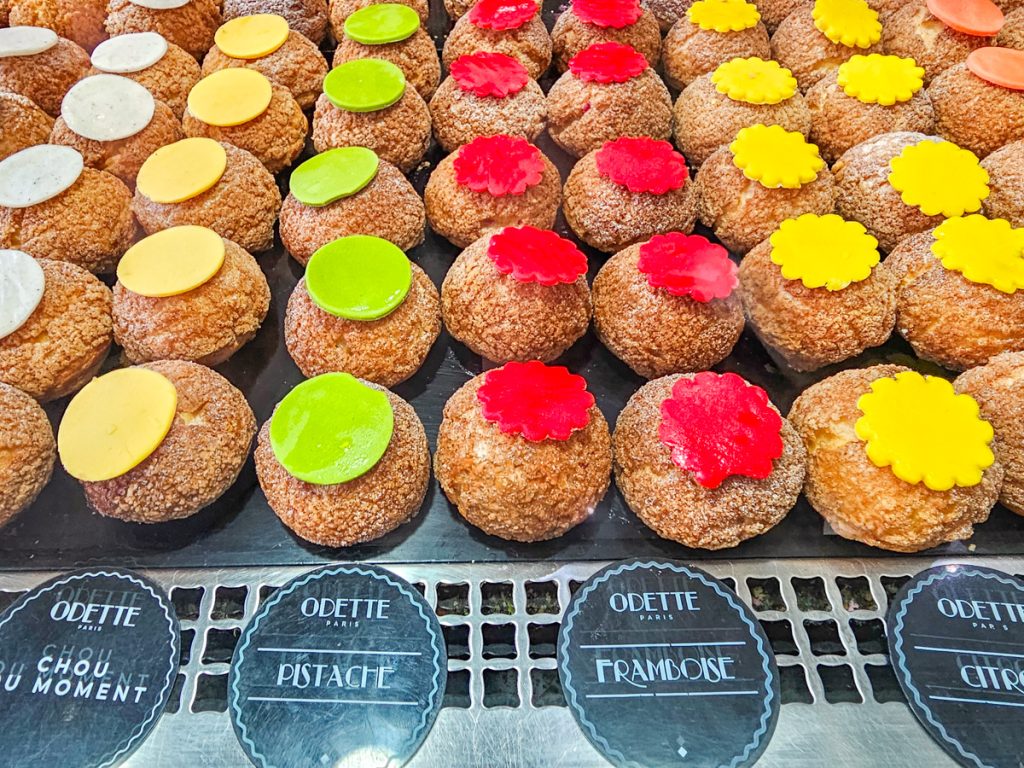
Not far away is Odette, a small shop in a charming facade that sells choux pastries (cream puffs) piped with different fillings. Absolutely delicious.
Where to Stay in the Latin Quarter
Les Rives de Notre Dame – A riverside boutique hotel with traditional French charm and views of Notre Dame from every room
Hotel des Grandes Ecoles – Peaceful, garden-filled, and warm, like a countryside escape right in the city
Hotel du Collège de France – A charming, cozy stay near major sights, just off Boulevard Saint-Germain
Map of Latin Quarter Attractions
Map key:
- Red Stars: Top Sites
- Yellow Stars: Worth a Visit
- Purple Stars: Hidden Gems
- Black Silverware: Fun Desserts
- Black Beds: Recommended Hotels
Want to Explore More Paris Neighborhoods?
Check out my other detailed Paris neighborhood guides:
- 1st Arrondissement: Your Ultimate Guide to Paris’ Central Neighborhood
- 2nd Arrondissement: Your Complete Guide
- Le Marais: A Complete Guide to Paris’s 3rd and 4th Arrondissements
- Saint Germain: Your Complete Guide to Paris’s 6th Arrondissement
- 7th Arrondissement: Your Guide to the Eiffel Tower Neighborhood
- 8th Arrondissement: Your Complete Guide to the Elysées Neighborhood
- Your Ultimate Guide to Montmartre: A Self-Guided Walking Tour
