

11 Incredible Free Museums in Paris You Need to Visit

Looking for some of the best free museums to visit in Paris? I’ve got a great list for you – read on for details!
Paris is home to over 130 museums, which are full of beautiful artwork and historical objects. I’ve visited Paris many, many times, and while I haven’t even come close to visiting all of Paris’ museums, I’ve been to several dozen, and they’ve never failed to impress me.
While most of Paris’s world-class attractions require paid admission, the city is home to plenty of free things to do, including museums that offer free admission, allowing you to experience incredible art, history, and culture without spending a cent.
In this guide, I’m highlighting some of the best free museums in Paris that I have personally visited, perfect for those wanting to experience some of Paris’ famed culture on a budget.
11 Incredible Free Museums in Paris
1. Le Petit Palais

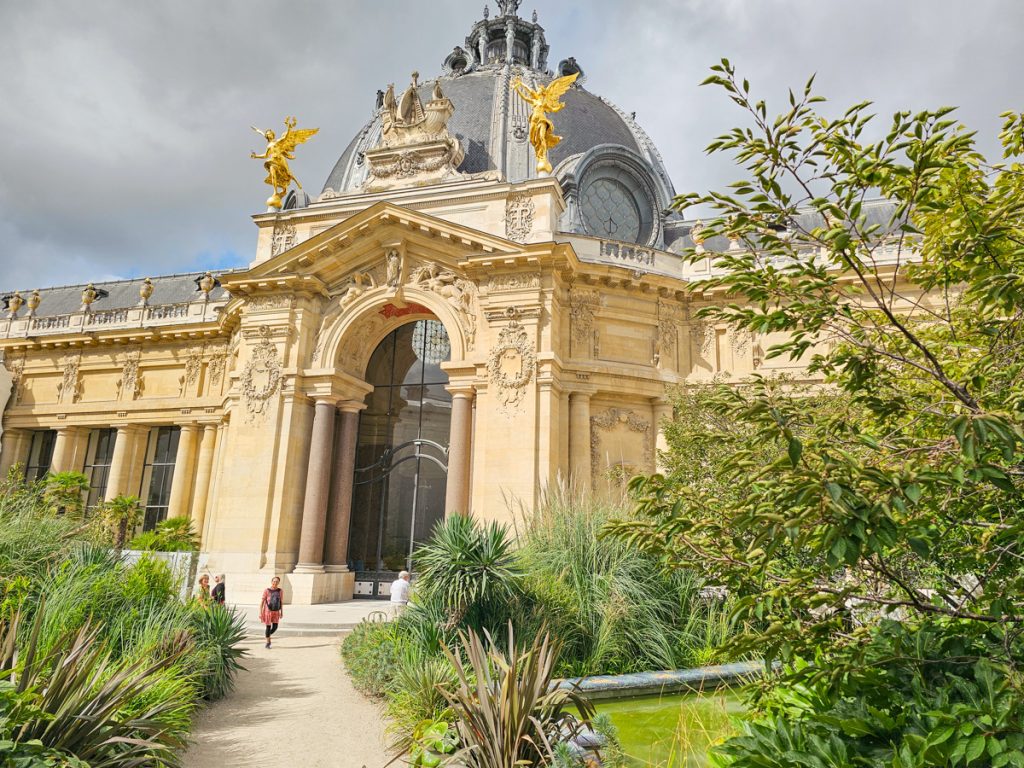
The Petit Palais is an art museum built for the 1900 Universal Exhibition. The building itself is as impressive as the artwork inside, especially the grand golden door that’s every bit as ornate as you’d expect in Paris.
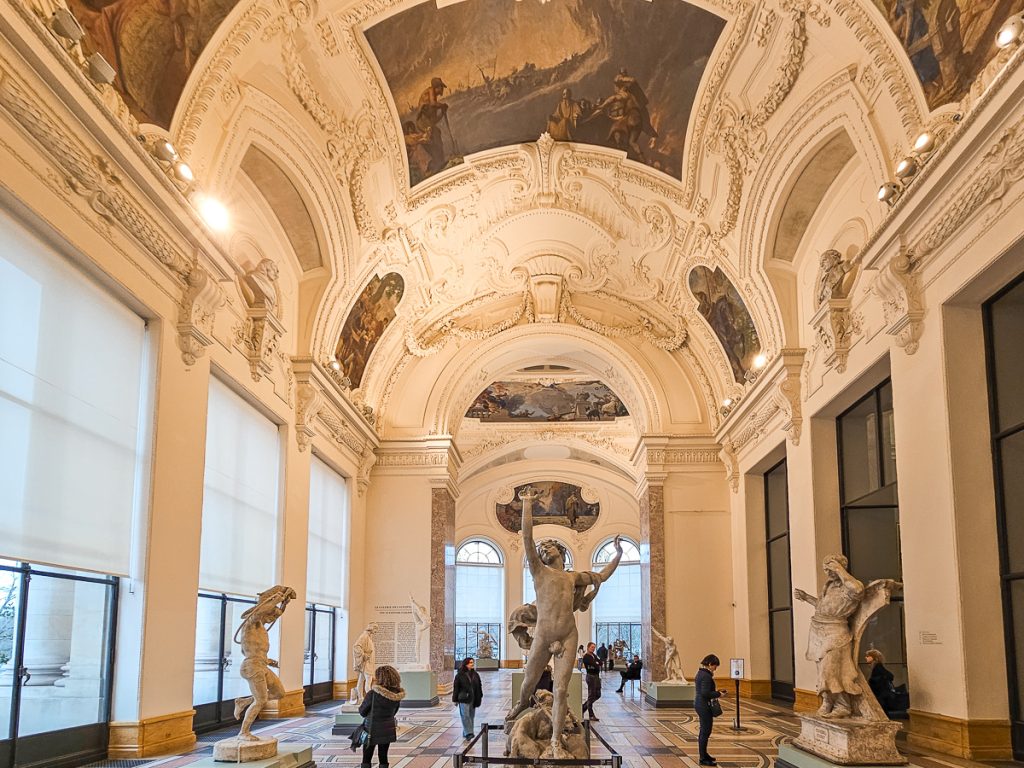
Inside, the museum features an incredible mix of sculptures, paintings, and tapestries. The main sculpture gallery is the real showstopper, not just for the pieces themselves but for the elegant arched passageway that displays them.
Many of the sculptures here are plaster casts of works from the 1800s that once decorated the streets of Paris.

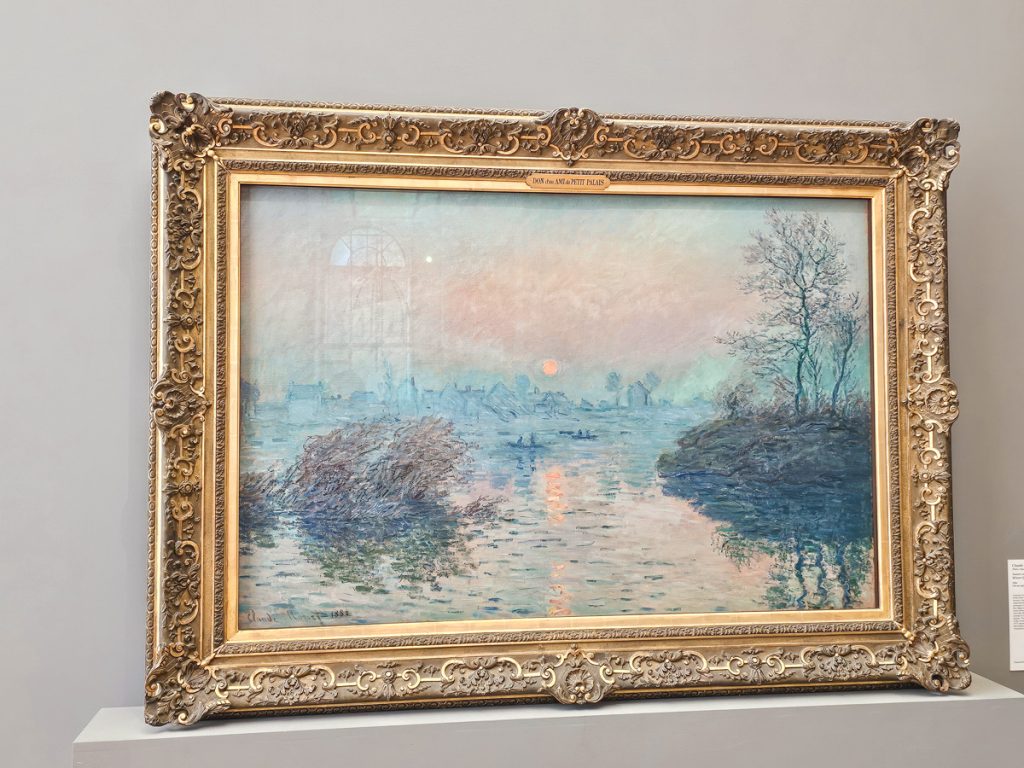
Many other beautiful paintings, sculptures, and tapestries fill the museum, including pieces by Monet, Rembrandt, Rubens, Cezanne, and Rodin. Some highlights for me included Monet’s Sunset on the Seine, a Rodin sculpture, and paintings by Eugène Boudin.
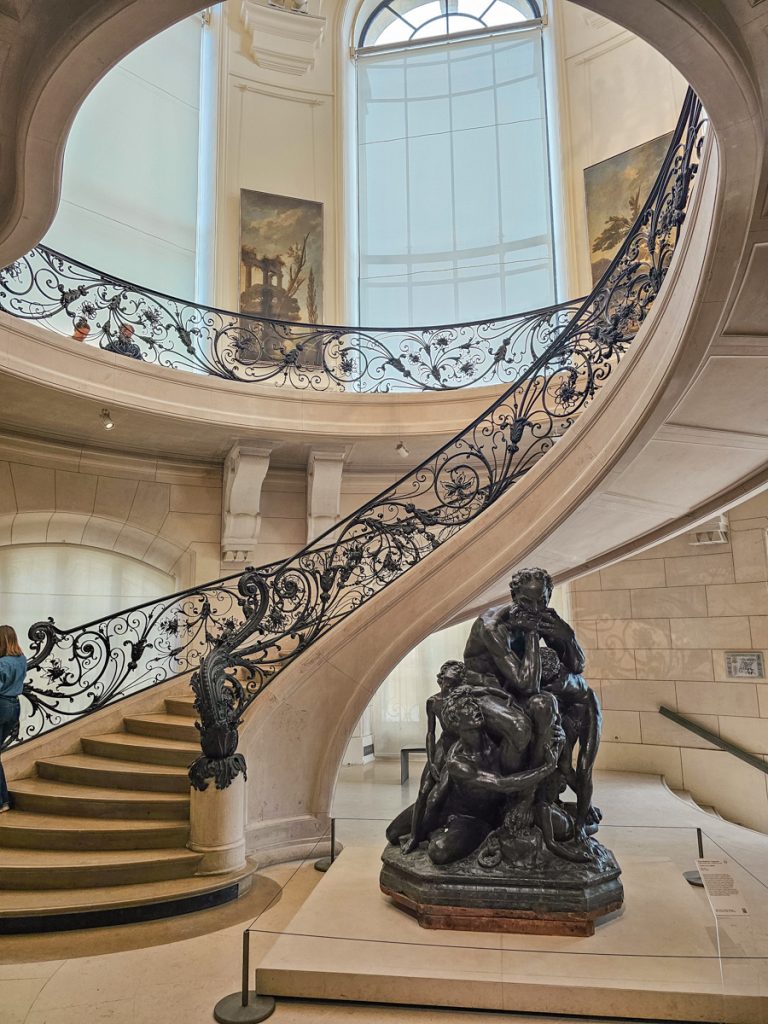
Don’t miss the courtyard and the garden cafe – it’s small but so picturesque and charming. And in addition to being a fantastic free Parisian museum, the Petit Palais also makes my list for the best hidden gems in Paris.
2. Hotel de Soubise – National Archives

The Hôtel de Soubise is a mansion that originally belonged to the Prince and Princess of Soubise, renovated in the 1730s in high Rococo style to suit the tastes of the noble family.
After the French Revolution, the manor was seized by the state and has remained government property ever since.
Today, it houses the Museum of the National Archives, where important historical documents are preserved and displayed—but it’s also a beautiful historic home to walk through.

The rooms were beautifully designed to mimic the style of Versailles, creating jaw-droppingly sumptuous spaces with gilded ornamentation, embellishments on the ceilings and walls, sculpted wood panels, and numerous paintings.
The princess’s reception room and oval salon, in particular, are incredibly lovely.
Important documents on display include:
- The Tennis Court Oath from the French Revolution
- The Edict of Nantes by Henri IV, granting French protestants freedom of belief and end to persecution
- The last letter written by Marie Antoinette before being guillotined
- The keys of the Bastille, the prison that was stormed to start the French Revolution
- A letter written by Charlemagne


I was seriously geeking out over these documents – these were huge moments written by important historical figures!
3. Musée Carnavalet
The Musée Carnavalet is entirely dedicated to the history of Paris, housed in a beautiful Renaissance-style mansion that’s one of the oldest buildings in the Marais.
The museum is surprisingly large, with exhibits spread across several floors that trace the city’s story from its earliest days to today.

It begins with old shop signs and decorations once found around Paris (a charming and unexpected touch) before moving through rooms that show maps and diagrams about how the city grew and changed over time.

Each gallery focuses on a different era, from medieval Paris to the Revolution and beyond. The French Revolution section was one of my favorites, with detailed models of the Bastille, portraits of key figures, and paintings depicting major moments like the storming of the Bastille prison or Marie Antoinette’s final days.

What makes the Carnavalet really effective is its variety: you’ll see furniture, sculptures, everyday objects, maps, models, and even some interactive displays. All of this really helps Paris’s history come to life.

And before you go, stop by the lovely courtyard garden of the museum (including the Joli Café), where you can sit for a drink or light meal, even if you’re not visiting the museum.
4. Musée de la Vie Romantique

The Museum of the Romantic Life is a small house-turned-museum that belonged to the Dutch painter, Ary Scheffer, where he lived for more than 20 years in the 1800’s.
Though not currently as famous as other 1800’s painters, Scheffer was a prominent artist and figure in Parisian society, and entertained other famous figures like Charles Dickens, Frederick Chopin, and Franz Lizst.


The museum takes you through rooms in the house, where historic furnishings and decor are displayed, as well as artwork by Scheffer and his contemporaries. The main floor of the house displays items belonging to George Sand, an enormously popular female writer in the 1800’s.

The courtyard, garden, and exterior façade of the house are lovely, and very much feel like a detached home in the middle of the big city. A glass-enclosed sunroom was built as an art workshop adjacent to the house and today is used as a café.
While the paintings on display are beautiful, you can also come just to visit the charming garden café.
5. Victor Hugo House

Located in the beautiful and upscale Place des Vosges in the Marais district of Paris, the Maison Victor Hugo (the House of Victor Hugo) is a small but fascinating look at the life of one of the most famous French writers to ever live.
Hugo lived in this apartment from 1832-1848, but was forced to flee the country in exile after he denounced the coup d’état that led to the rise in power of Napoleon III in the 1850’s. He spent most of his exile on the British island of Guernsey.

You’ll walk through the approximately eight rooms that comprise his apartments, which are richly decorated with a compilation of Hugo’s actual furniture from his Paris home, as well as many pieces from his Guernsey home.
The rooms are not exactly as they were when Hugo lived here, but are recreated pieces from his various residences.

Additionally, artwork that he owned, as well as artwork done later depicting his works (e.g. a lovely painting of the Hunchback of Notre Dame) are on display. There are also several paintings of Victor Hugo himself, alone or with his family.
I quite enjoyed learning more about Victor Hugo (I’m very much a Les Misérables fan – and Hugo wrote part of that book in this house), plus I always appreciate a beautifully decorated, historical house.
6. Musée d’Art Moderne

The Museum of Modern Art is located in the Palais de Tokyo, located right along the Seine and with a fantastic Eiffel Tower view, and near Passerelle Debilly, one of the best bridges in Paris.
This museum features a wide variety of modern art. One of the most stunning displays is The Electricity Fairy (pictured above), a massive installation that fills an entire U-shaped room.
The mural depicts the evolution of science and technology, looked over by the pantheon of Greek gods and goddesses. There are interactive iPads available to visitors that help explain different sections of the mural and what they represent.

Beyond The Electricity Fairy, there are many beautiful pieces of art, including “The Dance“, by Henri Matisse. Matisse painted several versions of “The Dance,” and the series is one of his most famous works.
The rest of the museum is filled with sculptures and paintings in a variety of modern art styles. Modern art sometimes gets a bad rap, but there are a lot of beautiful and interesting pieces that fill this museum!


Hours: Tues-Sun 10am-6pm, open until 9:30pm on Thursday
7. Musée de la Légion d’Honneur
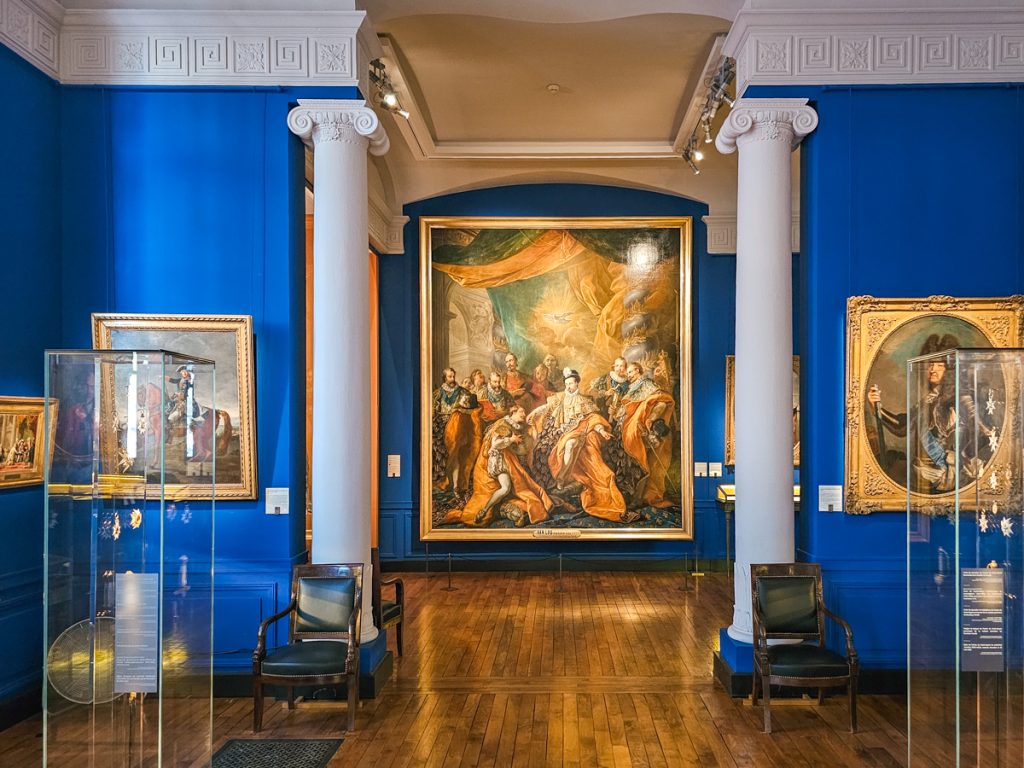
Located just steps from the Musée d’Orsay, the Musée de la Légion d’Honneur offers a fascinating look at France’s highest system of honors – awards created to recognize exceptional service to the nation, whether military or civilian.
The most prestigious of these is the Légion d’Honneur, founded by Napoleon Bonaparte in 1802 and still awarded today. Those who have been given these medals then become part of the Legion of Honor.
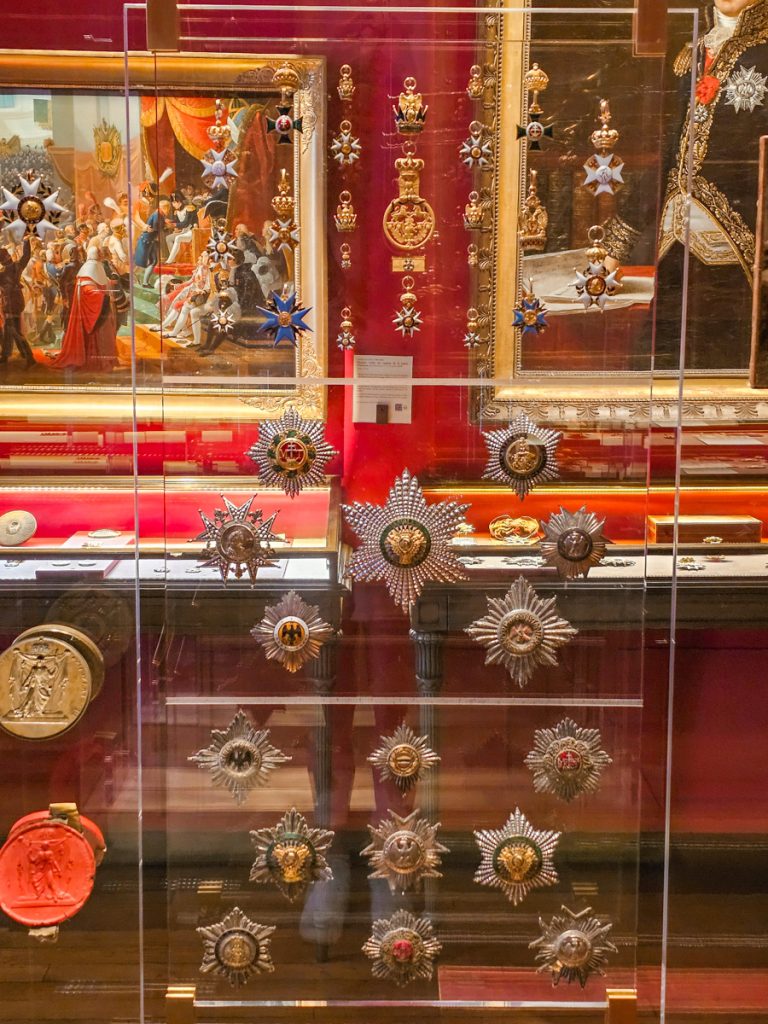
The museum, housed in a grand 18th-century mansion, traces the history of French medals, decorations, and chivalric orders from the Middle Ages to the present.
The collection includes thousands of artifacts, from Napoleonic relics and ceremonial uniforms to intricate medals and the ornate collars worn by France’s presidents as Grand Masters of the Order.
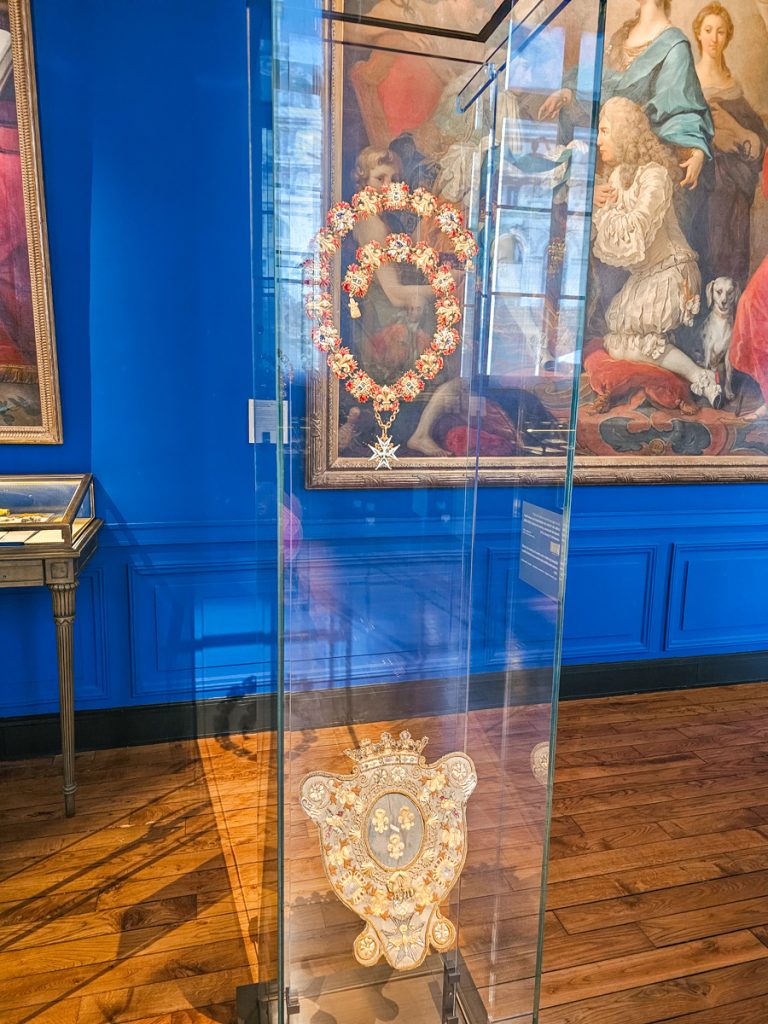
The exhibits are beautifully displayed and easy to explore. Even if you’re not normally into military or political history, it’s a fascinating look at a very niche aspect of French politics and how they celebrate merit, service, and honor.
8. Musée Cognacq-Jay

The Cognacq-Jay is a small, elegant museum tucked inside the Hôtel Donon, a 16th-century mansion in the Marais. It showcases the private collection of Ernest Cognacq and Marie-Louise Jay, founders of the famous La Samaritaine luxury department store.
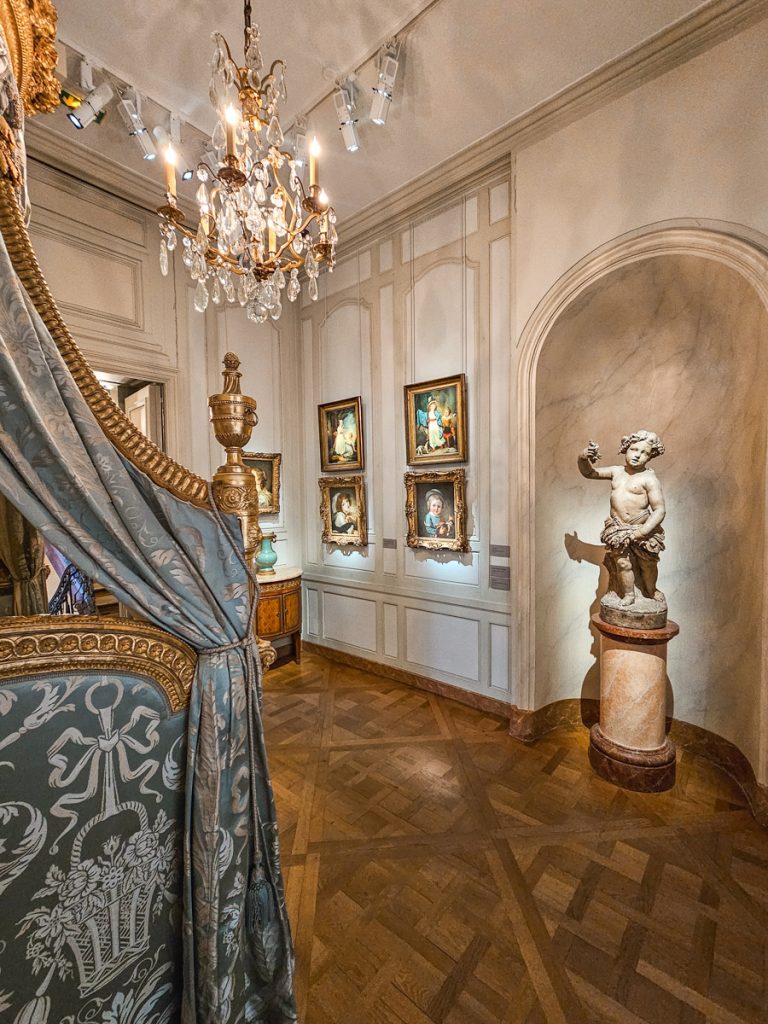
Between 1885 and 1920, the couple assembled an impressive collection of 18th-century art and decorative objects, which they immediately opened to the public. Rather than displaying them in grand galleries, they chose small, intimate rooms that feel more like a home than a museum.

Spread over three floors, the museum feels like stepping into a refined Parisian home from the 1700s. Wood-paneled rooms, period furniture, sculptures, and portraits create an almost cozy atmosphere – a charming escape right in the middle of central Paris.
9. Musée Curie
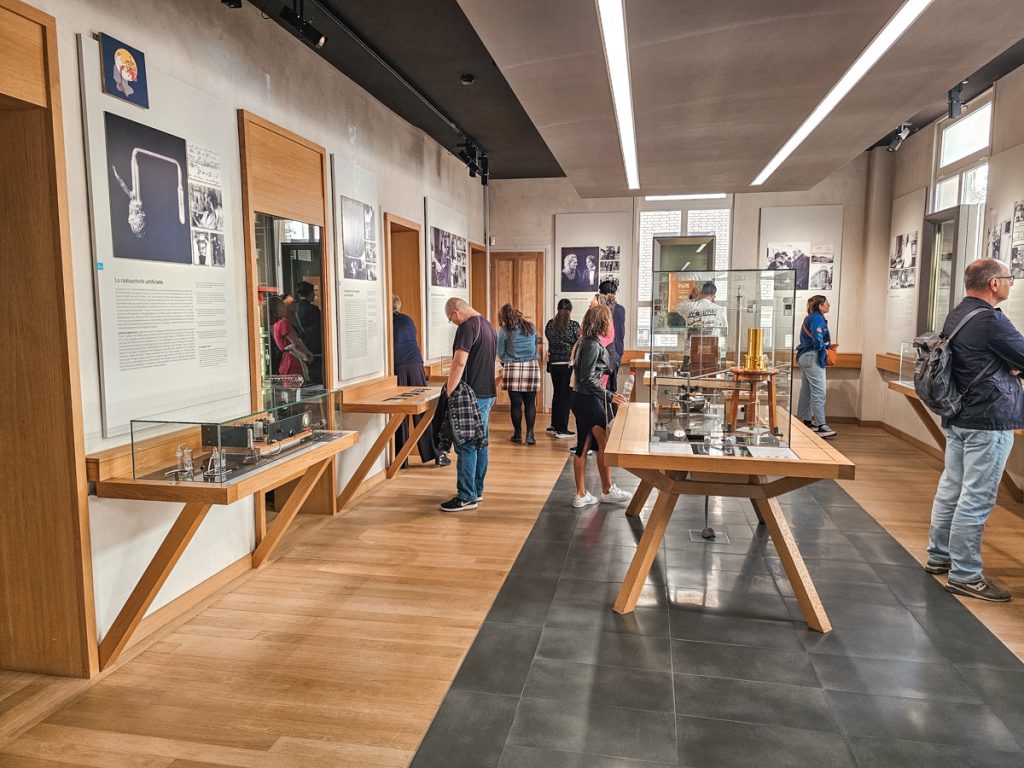
Tucked away behind the Panthéon, the Musée Curie is a small but incredibly interesting museum dedicated to Marie Curie, the groundbreaking scientist who discovered radium and polonium. It’s part of the Curie Institute, which still carries on her research into radioactivity and cancer treatment today.
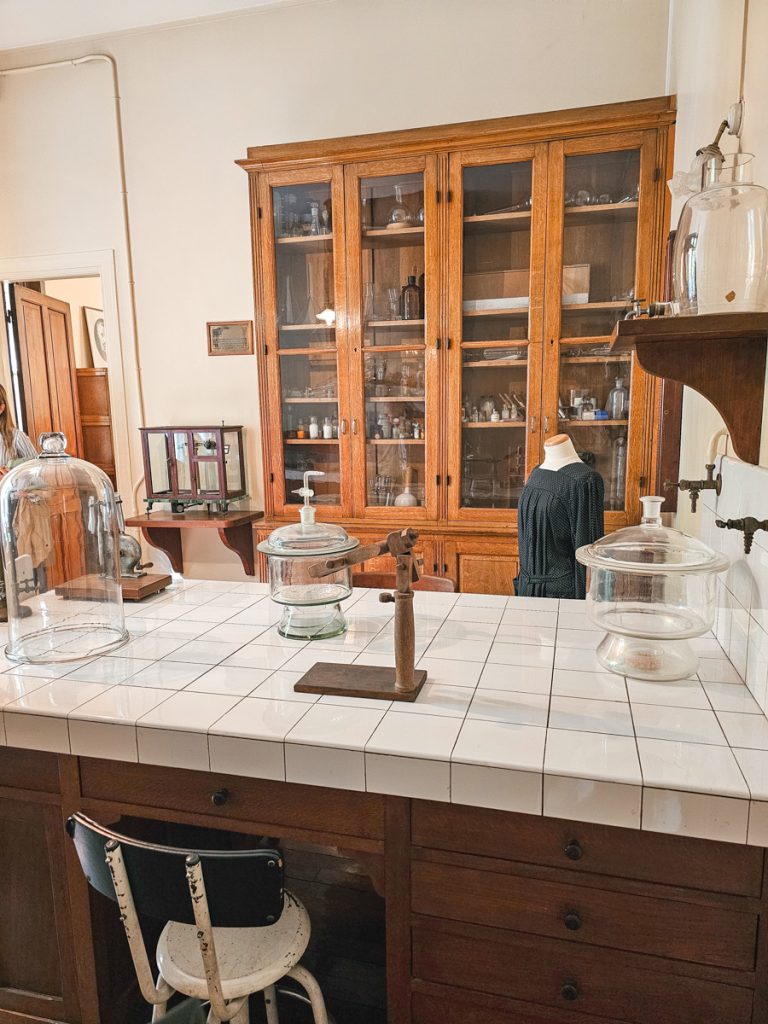
The museum only has a few rooms, but they’re full of fascinating exhibits about Curie’s research and discoveries, as well as her family’s scientific legacy. You’ll find photographs, documents, and models of her experiments, along with her restored office and laboratory.
It’s a very off-the-beaten-path museum that science lovers will find especially inspiring.
10. 59 Rivoli

59 Rivoli is a contemporary art space off of Rue de Rivoli in the 1st arrondissement, known for its creative and slightly chaotic vibe. The six-story building is home to about 30 artists who both work and display their art here, so you’ll often see them in the middle of painting or creating in their studios.

It’s a mix of gallery, studio, and boutique, and the kind of place that feels spontaneous and full of energy. Even the building has a vibe, for example, the spiral staircase is covered in bright murals that change styles from floor to floor (I loved this touch).
It’s always evolving, making it one of the most casual and offbeat art experiences in Paris.
11. Musée Bourdelle
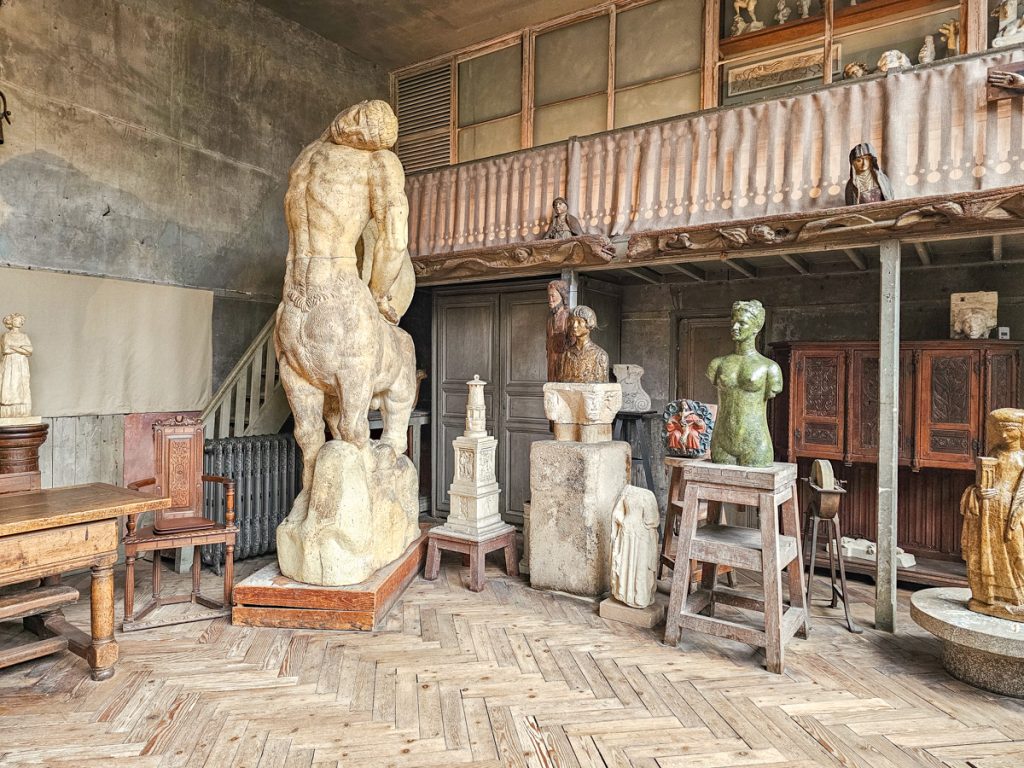
The Bourdelle Museum is dedicated to early 20th-century sculptor Antoine Bourdelle, and is located right where his original studio once stood.
Though he’s less widely known than his contemporary Rodin, Bourdelle was one of the most celebrated sculptors of his time. He was a prolific artist who specialized in monumental, large-scale works and took on hundreds of commissions throughout his career.
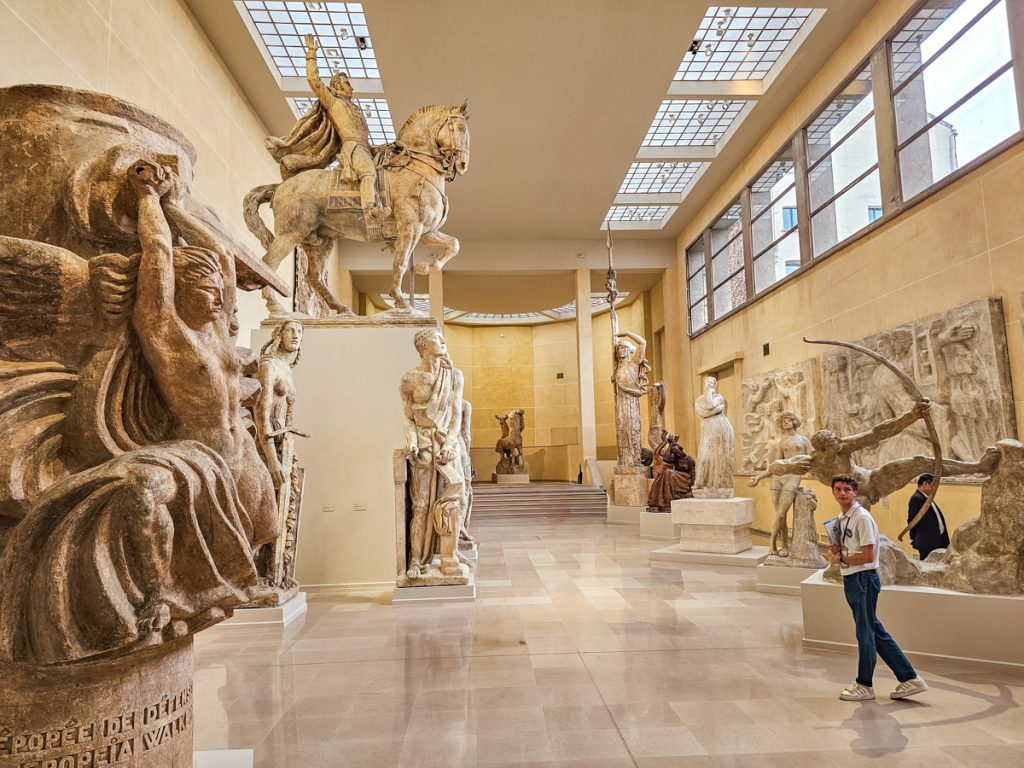
You’ll find both plaster models and bronze casts of his sculptures displayed throughout the space, which includes his preserved studio, the adjoining rooms of his home, small garden courtyards, and a soaring modern gallery.
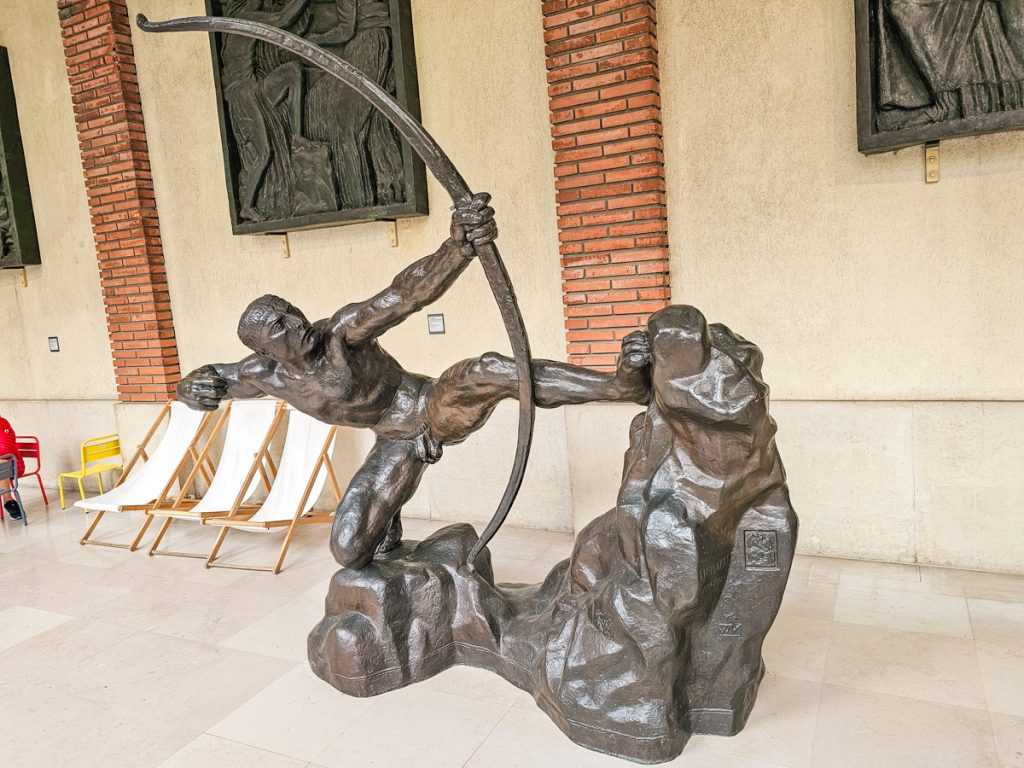
One of his most famous pieces, Hercules the Archer, helped launch him to fame and is a museum highlight. Dying Centaur, Monument to General Alvear, and Virgin of the Offering are other famous sculptures on display.
Read Next: How to Use the Paris Museum Pass (And If It’s Worth It For You)
Free Entrance to Paid Museums
Of course, the museums in this post always have free admission to the permanent exhibits, but there are some instances when you can get free admission to the “regular”, paid museums in Paris. Here’s what you need to know about getting free entrance to paid museums:
Free Admission for Children
In France, children under 18 get free entrance to almost every museum and some monuments (such as the Arc de Triomphe). Additionally, members of the EU who are under 26 generally get free admission to most museums and many monuments.
If you are a young child, you don’t need to show a photo ID to get free admission (when I visited with my 10-year-old, I was often asked for her age, but never asked for any kind of photo ID).
However, if you’re traveling with an older teenager or a young adult, you should carry an ID to prove that you qualify for free admission.
Free Museum Day
Additionally, many museums in Paris participate in Free Museum Day, which is generally the first Sunday of the month. All visitors get free admission on these Sundays.
Not every museum participates in Free Museum Sunday, but many do – I’d double-check the museums you may be visiting to confirm their policies. Some of these museums require reservations for Free Museum Day. These are a few of the notable museums that participate all year round:
- Centre Pompidou
- Musée d’Orsay
- Musée Gustave Moreau
- l’Orangerie
- Musée Picasso
Other museums not on this list may participate in Free Museum Day during the fall/winter/spring – again, I’d recommend you check the museum’s website to verify for any location you’re interested in.
The Louvre, notably, has a slightly different policy. They offer free admission on the first Friday of every month after 6pm, except in July and August.
HOWEVER! I honestly would avoid Free Museum Day like the plague. Lines to get into the museums can be extremely long, and the museums are very crowded.
It’s not a great experience or use of time – I’d personally much rather just pay the reasonable entrance fee on a regular day and save myself precious time standing in line.
The Wrap Up
Paris boasts a plethora of museums showcasing its incredible history and traditions. While you should definitely hit some of the well-known, and ticketed museums, many of the smaller museums offer cool experiences, too.
I hope this list has shown you some of the engaging free museums that can add some variety to your next Parisian vacation without adding to your budget.
