
The 7th Arrondissement of Paris: Your Guide to the Eiffel Tower Neighborhood

The 7th arrondissement is dominated by the Eiffel Tower, and, I mean, how could it not? It’s an extraordinary monument and undeniably the symbol of Paris, and one I never get sick of seeing.
But there is SO much more to the 7th beyond the Eiffel Tower. Once you step a few blocks away from the Champ de Mars, the neighborhood opens up into something more interesting than many visitors expect.
The 7th sits on the Left Bank along the Seine, stretching from the river inland toward Saint-Germain. It’s generally a more polished and upscale district, with grand avenues, stately buildings, embassies, some excellent museums, and some quietly fantastic streets to wander.
This guide covers what to see and do in the 7th arrondissement, from the big-name sights to lesser-known spots, along with suggestions on where to stay and a few restaurant recommendations.

Where to Stay in the 7th Arrondissement
- Pullman Paris Tour Eiffel – Modern hotel with Eiffel Tower views
- Hotel La Comtesse – Refined hotel, every room has an ET view
- Hotel Duquesne Eiffel – Boutique hotel near Champ de Mars
Experiences to Book Ahead
- Dinner Cruise on the Seine – Intimate experience with dinner
- Eiffel Tower tickets – skip long lines
- Musée d’Orsay tickets – skip the lines
Iconic Sites You Can’t Miss
This first section includes the most iconic, most popular spots in the 7th that should definitely be considered for your Paris itinerary.
1. Eiffel Tower
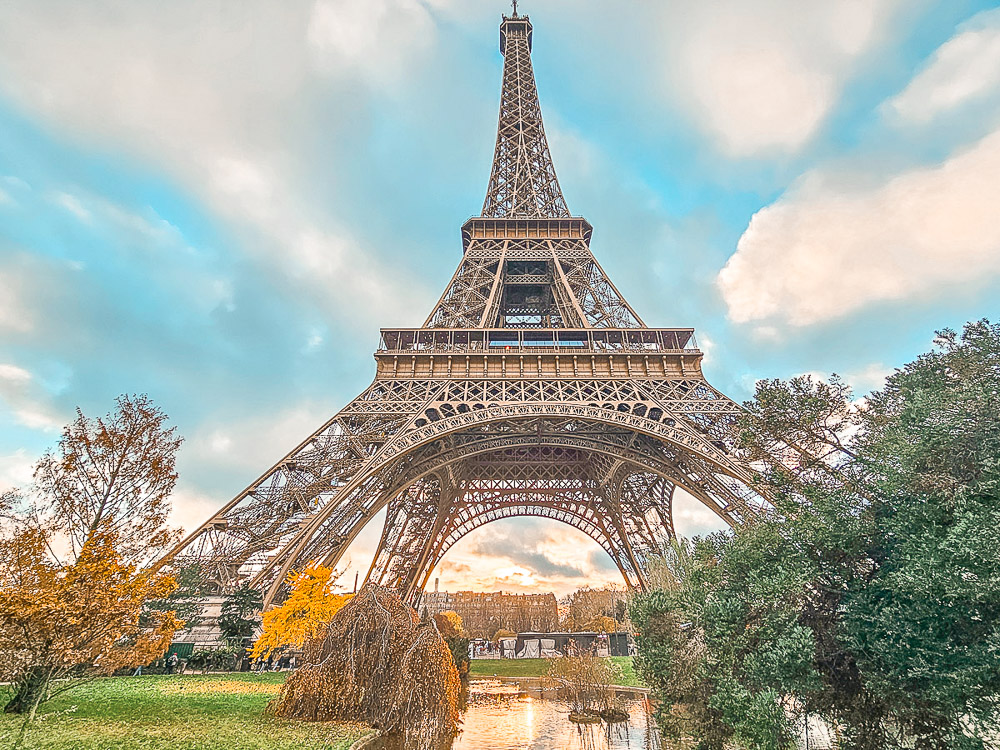
Built for the 1889 World’s Fair and originally intended to be a temporary structure, the Eiffel Tower is one of the most recognizable landmarks in the world. It feels enormous when you’re standing underneath it, and walking through the structure really gives you an appreciation for the clever engineering behind it.
There are a few options for visiting. You can take the stairs or the elevator, and you can choose to stop at the second level or continue all the way to the summit, which is accessible by elevator only.
The second level already offers excellent views and takes less time overall. From here, you can clearly see landmarks like Les Invalides with its gold dome, as well as Montmartre and Sacré-Cœur in the distance.
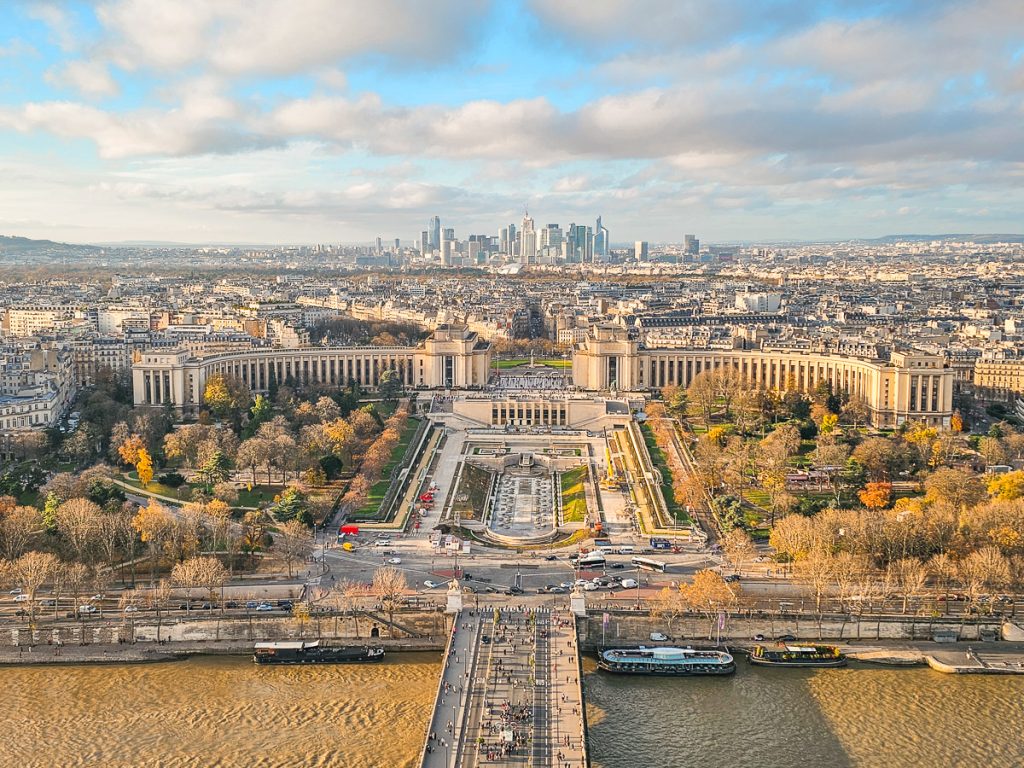
From the summit, the view stretches even farther, and the Arc de Triomphe is much easier to pick out.
If you can, buy tickets online in advance, as they sell out quickly. If you don’t have tickets, aim to arrive first thing in the morning or later in the evening, when lines tend to be shorter. Plan on spending about two to three hours here.
2. Musée d’Orsay

The Musée d’Orsay is one of Paris’s most beloved museums thanks to its astounding Impressionist and Post-Impressionist collection, the largest in the world.
It’s housed inside a former Belle Époque train station right along the Seine, directly across from the Tuileries Gardens. When the station was converted into a museum, much of the original structure was preserved.
The long central hall where trains once pulled in is now filled with sculpture, while the surrounding and upper levels hold galleries of paintings and decorative arts.
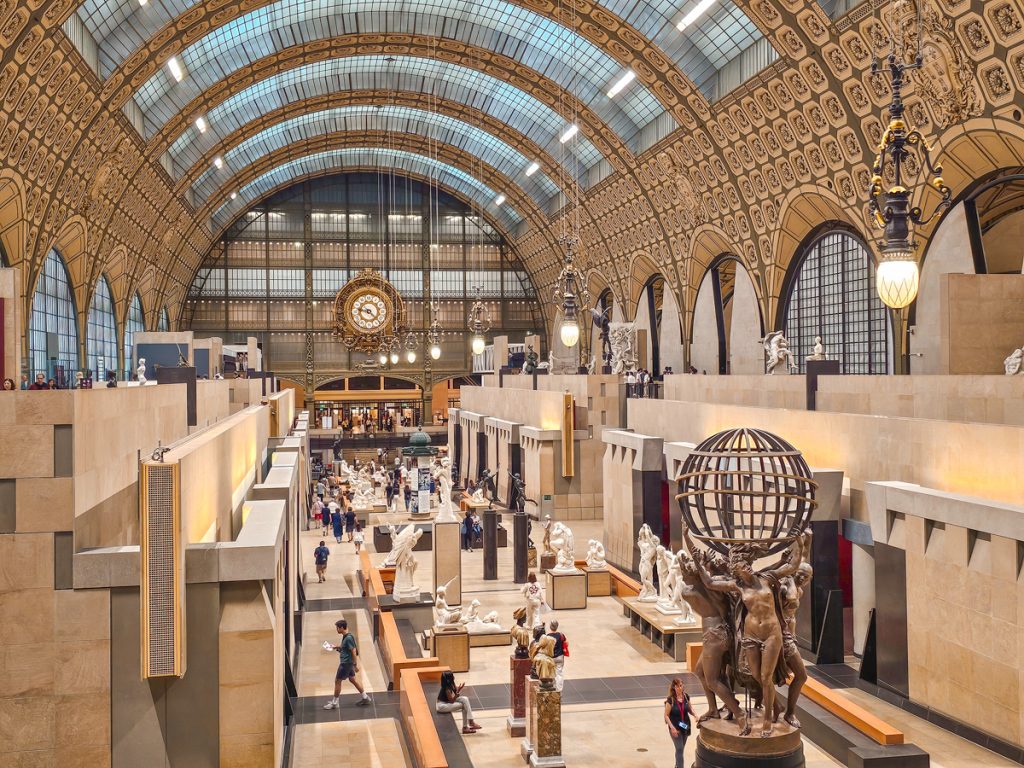
You’ll see dozens of major works by Monet, Renoir, Degas, Manet, Van Gogh, Cézanne, Gauguin, and Toulouse-Lautrec, among many others. The fifth floor, in particular, feels like one iconic painting after another. I was honestly astounded by how many world-famous works are concentrated in one place.


Before you leave, make a point to stop by the famous clocks on the top floor. They’re a holdover from the building’s days as a train station and frame beautiful views over the Seine and the city beyond.
3. Champs de Mars

The Champ de Mars is the long stretch of green space that runs straight up to the Eiffel Tower, and it’s a great place to enjoy views of the Iron Lady.
Unlike some of Paris’s more formal gardens, the Champ de Mars is much more relaxed. There are no elaborate fountains or flowerbeds here, just wide lawns lined with trees, walking paths, and benches.
The grassy areas are large and often open for people to sit and walk on, which makes it a perfect spot for a picnic or just to enjoy a leisurely afternoon. If the weather’s nice, I highly recommend spending some time here before or after visiting the tower.

In the evening, it’s also a great spot to watch the Eiffel Tower sparkle. The lights come on for five minutes at the top of every hour after dark, and seeing the sparkles just never gets old.
4. Bateaux Parisiens Seine Cruise

A Bateaux Parisiens cruise along the Seine is one of the easiest and most relaxing ways to see a lot of Paris in a short amount of time. Departing near the Eiffel Tower, these cruises float past many of the city’s major landmarks, including the Louvre, Musée d’Orsay, and Notre Dame.
The standard sightseeing cruise lasts about an hour and is very low effort. You can sit or stand along the railings, and the audio commentary explains what you’re passing. I like this option early in a trip to get a broad overview of the city.

Bateaux Parisiens also offers dinner cruises in the evening, which can be a very nice option for a special night. These typically run for a couple of hours and include a multi-course meal and entertainment as you glide through Paris after dark. Seeing the city lit up from the river, especially when you pass the Eiffel Tower as it sparkles, is undeniably memorable.
No matter which cruise option you choose, this is an easy addition to a 7th arrondissement itinerary, especially since the boats leave from right near the Eiffel Tower.
5. Pont Alexandre III

The Pont Alexandre III is widely considered the most beautiful bridge in Paris. Its elegant Beaux-Arts design includes Art Nouveau lampposts, carved stone garlands along the sides, and four massive corner pillars at each end topped with gilded bronze sculptures
Built for the 1900 Paris Exposition, the bridge was named after Tsar Alexander III as a symbol of the Franco-Russian alliance.

The bridge connects the Grand Palais and Petit Palais on the Right Bank to Les Invalides in the 7th, and the views are excellent in both directions. One end frames the glass-and-steel dome of the Grand Palais, while the other lines up with the gold dome of Les Invalides.
This is a bridge that’s definitely worth taking the time to stroll slowly across and really take in all the details.
6. Eiffel Tower Viewpoints

The 7th arrondissement has no shortage of great Eiffel Tower viewpoints, especially on streets and small squares that line up directly with the tower.
Rue de l’Université and Rue Buenos Ayres are two of the most well-known examples, and both lead straight toward the base of the Eiffel Tower, framing it neatly between classic Haussmann-style buildings.
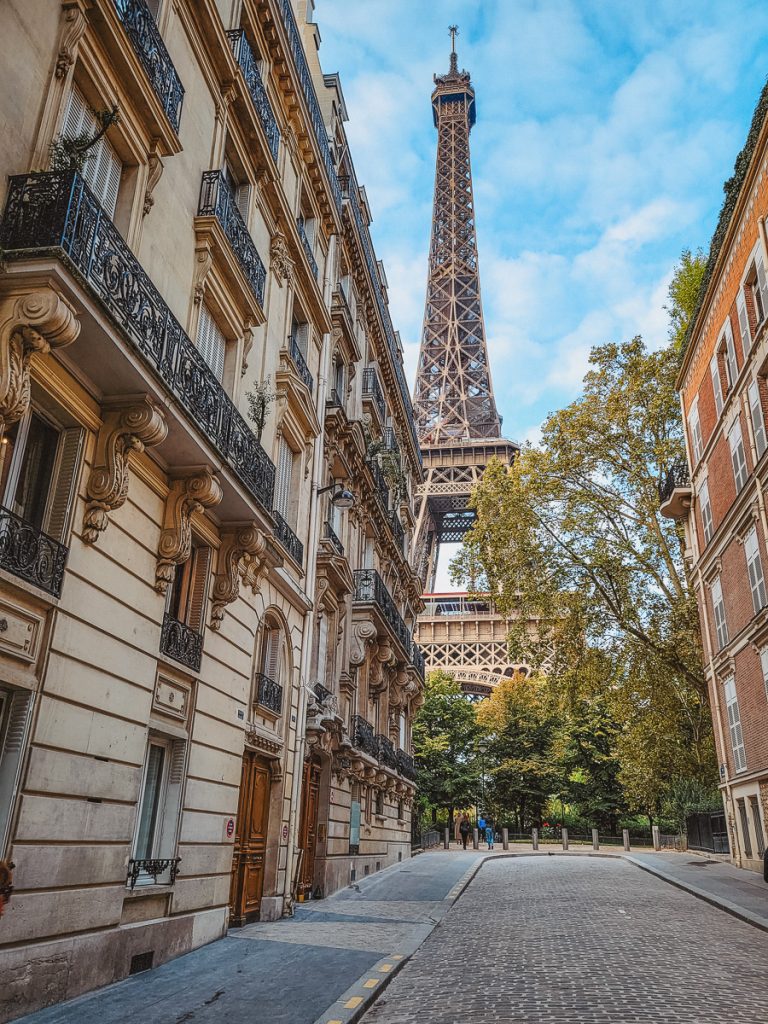

Rue de l’Université is on the north side of the tower and is the more famous viewpoint and is usually rather busy. Rue Buenos Ayres, on the south side, offers a very similar view but generally with a calmer feel.
There are plenty of other excellent spots nearby as well. Place de Sydney is a quieter, hidden gem option, Avenue de Montessuy is often overlooked, and Le Recrutement Café combines a charming café setting with a great tower view. Even the nearby Pont d’Iéna bridge under the tower offers wide, unobstructed sightlines if you want something more open.
As you wander the 7th, keep your eyes open; the neighborhood is full of small, satisfying Eiffel Tower moments.
Worth a Visit
The next section of this list includes attractions that are not quite as iconic or popular as the Top Sites. I’d call these “mid-range attractions,” that are still important sites worth a stop if you have the time.
7. Les Invalides
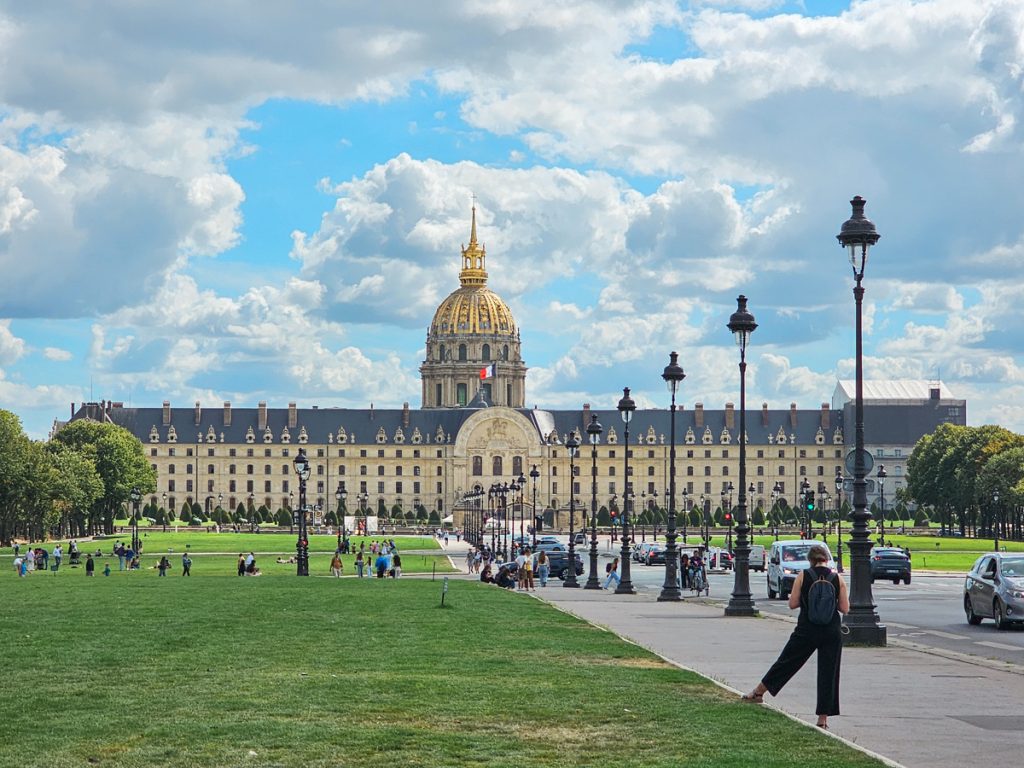
Les Invalides was founded by Louis XIV in the late 1600s as a hospital and residence for wounded soldiers. Today it also functions as a military history complex, housing the Musée de l’Armée and several important military monuments.

The large central courtyard is free to enter and lined with historic cannons and artillery. From there, you can also visit the quieter Saint-Louis Cathedral. The most famous part of the complex is definitely the Dôme des Invalides, which requires a ticket and contains the tomb of Napoleon Bonaparte.
Inside the Dome, the space is grand and soaring. Painted ceilings and marble columns draw your attention upward, while Napoleon’s massive sarcophagus sits directly below, visible through an opening in the floor. You can walk down to the lower level and circle the tomb, which gives a better sense of its immense scale.

If you have time and interest, the museum galleries focus largely on French military history from Louis XIV through Napoleon, with weapons, armor, models, and detailed relief maps of fortified cities. You don’t need to see it all, but even a short visit can be fascinating.

8. Musée Rodin

The Musée Rodin is one of my personal favorite museums in Paris, dedicated to the sculptures of Auguste Rodin and set in the 18th-century mansion where he lived and worked.
Inside the house, galleries spread across two historic floors display sculptures, studies, and sketches by Rodin, along with works by his contemporary Camille Claudel. You’ll see pieces in bronze, marble, and plaster, including the plaster version of The Kiss.


The garden might be even more special. Sculptures are scattered among clipped hedges, rose bushes, and shaded paths, and famous works like The Thinker, The Gates of Hell, or The Burghers of Calais appear as you wander. Through the trees, you’ll also catch views of the Eiffel Tower and the Dome of Les Invalides.


It’s a peaceful way to experience art and one of those places where an hour or two can slip by without you noticing.
9. Rue Cler

Rue Cler is a pedestrian-only market street just a few minutes from the Eiffel Tower. It’s one of the easiest places in the area to pick up food for a picnic at the Champs de Mars.
Along the street, you’ll find a couple of boulangeries, multiple fruit and vegetable stands, small grocery shops, and several takeaway counters selling hot food like roasted chicken and potatoes.

There are also wine shops, along with excellent fromageries just off the street, including Fromagerie Cantin (location) and Fromagerie de Grenelle (location).
It’s a casual, practical place to put together a meal on the fly. Even if you’re not planning a full picnic, Rue Cler is worth a quick walk-through for the atmosphere and the chance to browse.
10. Bon Marché

Le Bon Marché is Paris’s oldest department store and a luxury shopping destination. It’s the only department store on the Left Bank, and it feels quieter and less opulent than the big-name stores around the Opéra (like Galeries Lafayette).
Inside, you’ll find high-end fashion, beauty, and home goods spread across several elegant floors. The layout is spacious and the displays are thoughtfully curated. Even if you’re not planning to shop, it’s an interesting place to wander and get a sense of this side of Parisian luxury.
11. La Grande Épicerie de Paris
Right next door is La Grande Épicerie de Paris, which is a destination in its own right. This upscale food hall is essentially a luxury grocery store and a very fun place to browse.
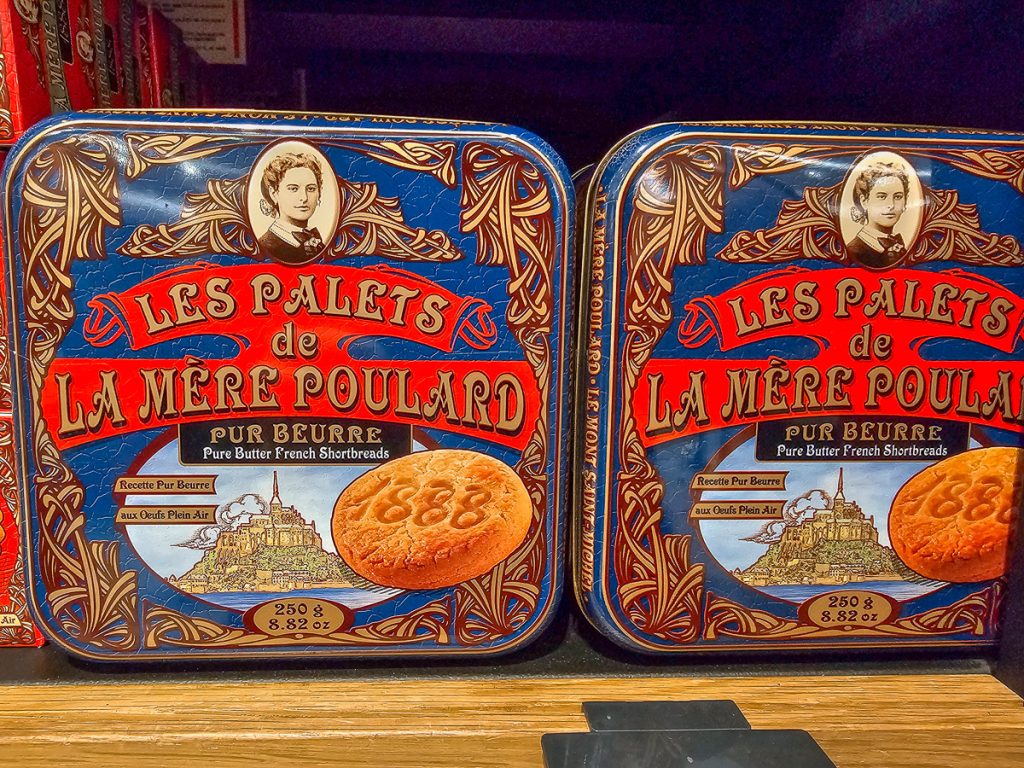
I love stopping by here and have visited several times over the years. I normally pick up a selection of chocolates and candies, peruse the selection of jams and mustards, and choose some high-quality artisanal butter and excellent cheeses from the fromagerie counter (which is way better quality than your standard grocery cases). All of these make easy souvenirs, whether for yourself or as gifts.

Beyond that, you’ll also find a wide wine selection, everyday grocery items, prepared meals, specialty ingredients from France and beyond, and a boulangerie counter selling pastries and desserts.
It fits perfectly with the 7th arrondissement’s polished, upscale feel and is one of those places where browsing is half the fun.
12. Passerelle Debilly

Just upstream from the Eiffel Tower, the Passerelle Debilly is a pedestrian bridge that offers excellent Eiffel Tower views without the crowds you’ll find nearby. Its metal arches curve gently over the Seine, which makes it feel quite different from many of Paris’s stone bridges.

The bridge links the Right Bank near the Musée d’Art Moderne de Paris to the Left Bank by the Musée du Quai Branly – Jacques Chirac. It’s a nice spot to pause for photos, especially if you want a calmer alternative to Pont d’Iéna in front of the tower.
Hidden Gems
Definitely off the beaten tourist path, this section highlights other charming places to discover in the 7th.
13. Aura Invalides
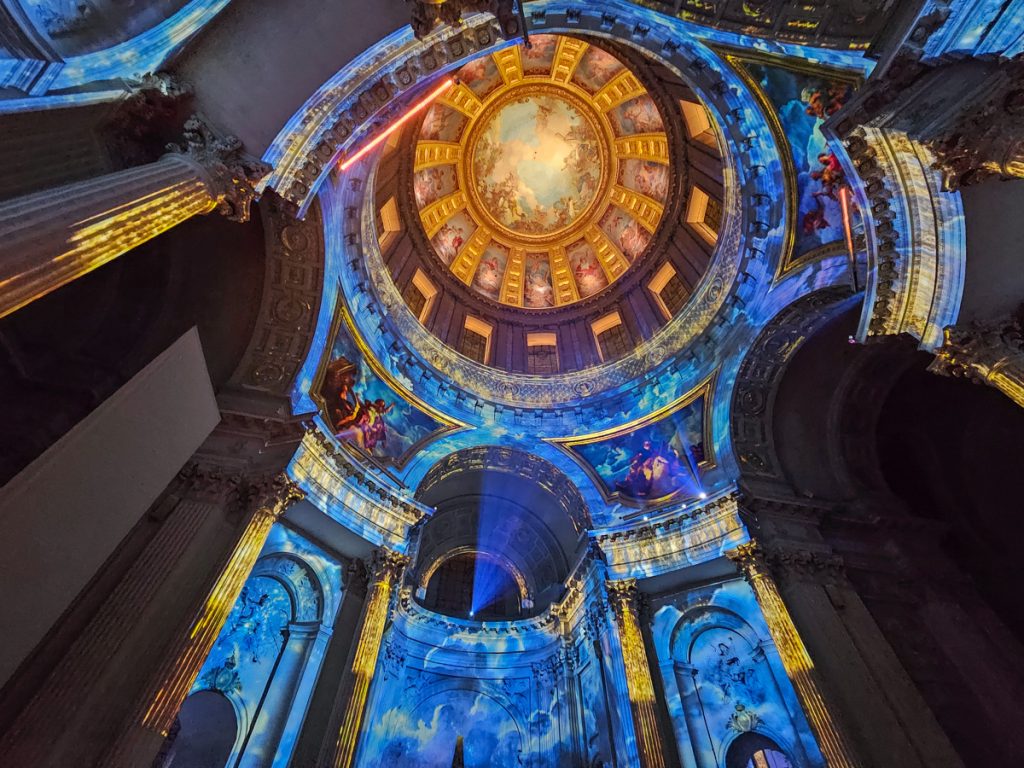
Aura Invalides is an immersive light and sound show held inside the Dôme des Invalides at nighttime, and it feels completely different from visiting during the day.
The experience combines a powerful musical score with a carefully choreographed light show that follows the architecture of the Dome. The program unfolds in three movements, with shifting light patterns that highlight the building’s columns, curves, and ceiling details, all centered around Napoleon’s tomb. It’s very atmospheric and surprisingly moving.

Even if you’ve already visited Les Invalides earlier in the day, this is very much its own experience and worth coming back for in the evening. Seeing the space transformed by light and sound gives you a totally different perspective.
14. Marché Saxe-Breteuil

The Marché Saxe-Breteuil is a classic open-air market set along Avenue de Saxe, just behind the École Militaire and not far from the Eiffel Tower. As you walk between the stalls, the Eiffel Tower lines up almost perfectly at the end of the avenue, making it one of the most scenic markets in Paris.
Like most Paris markets, you’ll find a familiar mix of fruits and vegetables, flowers, cheese, bread, meat, and fish. The market runs Thursday and Saturday mornings from 7:00 am to 2:30 pm.
If you’re in the 7th arrondissement on one of those days, it’s an easy and enjoyable stop, especially if you want a market experience with a distinctly Paris backdrop.
15. Musée Légion d’Honneur
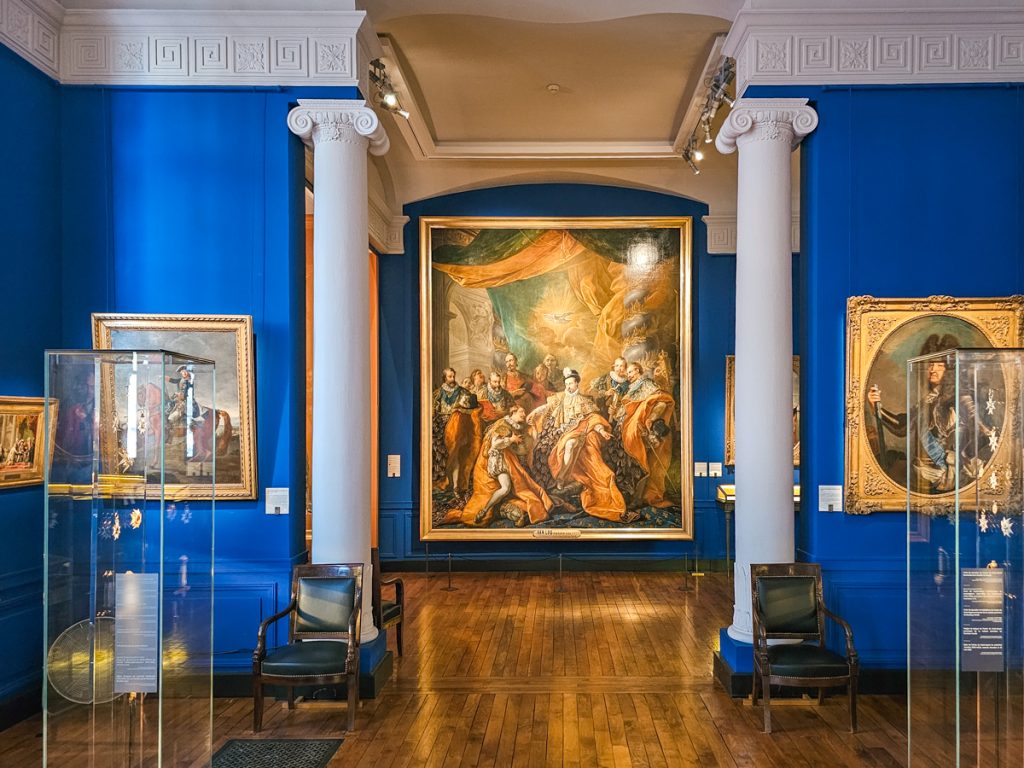
Located just next to the Musée d’Orsay, the Musée de la Légion d’Honneur is an easy museum to overlook, but it can be an interesting stop if you’re in the area.
The museum focuses on France’s system of national honors, most notably the Légion d’Honneur, founded by Napoleon Bonaparte in 1802 and still awarded today. Housed in a grand 18th-century mansion, the exhibits trace French medals and decorations from the Middle Ages through the modern era.
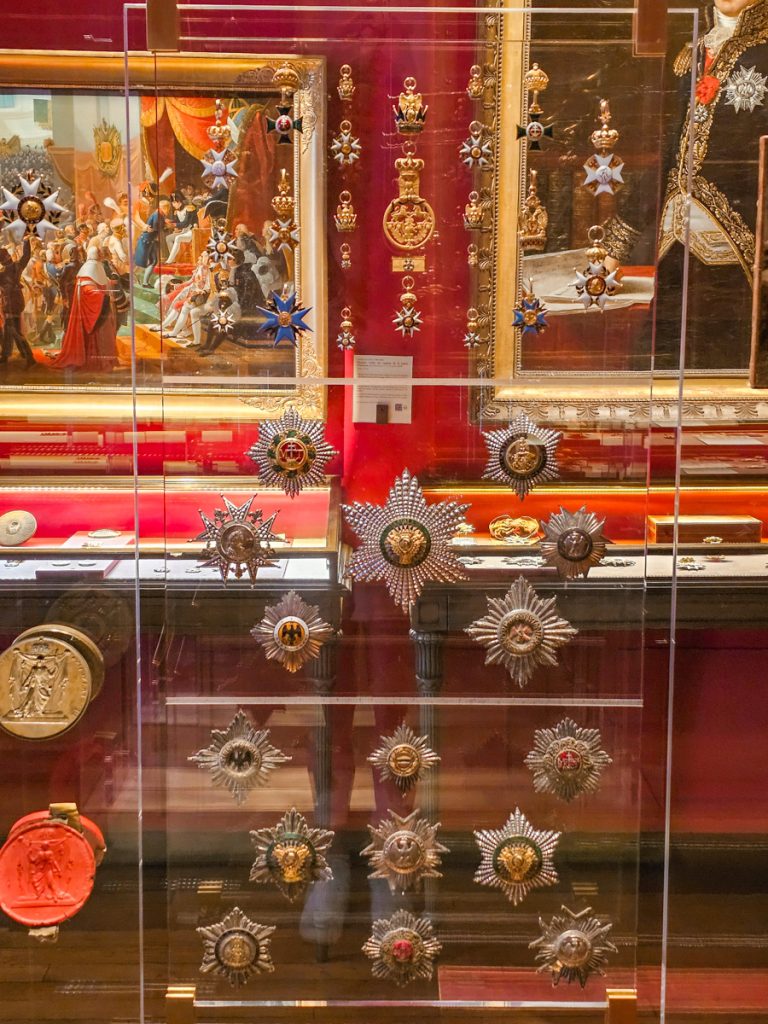
Inside, you’ll see everything from Napoleonic-era relics and ceremonial uniforms to finely detailed medals and the elaborate collars worn by French presidents. It’s a niche topic that offers a different angle on French history than most visitors expect.
Bonus – it’s free and not very large, which makes it easy to pop into before or after a visit to the Orsay.
16. Assemblée Nationale

The Assemblée Nationale is France’s lower house of parliament and meets inside the Palais Bourbon, a grand building along the Seine. The palace was originally built in 1722 for the daughter of King Louis XIV and was later seized during the French Revolution and repurposed for the state.
Free guided tours are offered regularly and are one of the more unusual experiences you can have in the 7th arrondissement. Tours are conducted in French, English, Italian, Spanish, German, Portuguese, and Dutch.
The first part of the tour is fully guided and lasts about 45 minutes, taking you through several ceremonial rooms before entering the main assembly chamber. Here, you’ll learn how the Assembly functions and see where debates and votes take place.

After the guided portion, you’re free to walk through the Salle des Fêtes, an extremely ornate hall used for official events, through a few more decorated rooms, and then into the Library of the National Assembly.
This library is absolutely stunning (and was the main reason I came on the tour). Its ceiling was painted by Eugène Delacroix, and the room houses important historical documents, including records from the trial of Joan of Arc and the Serment du Jeu de Paume.
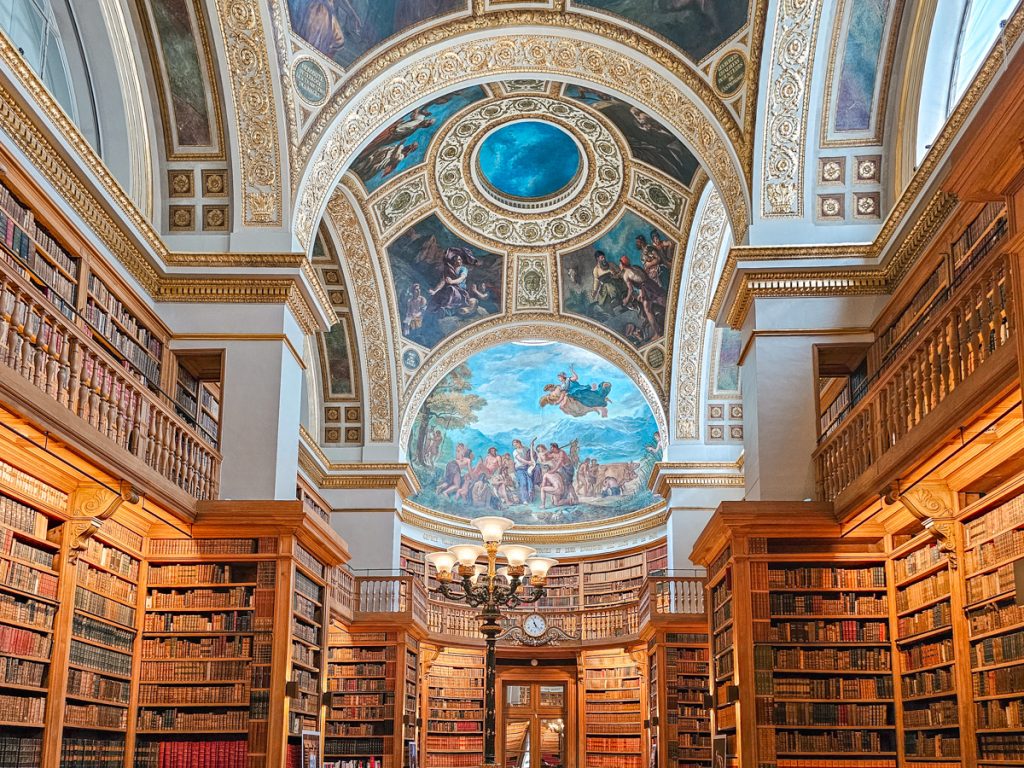
Overall, this tour offers a fascinating look inside one of France’s most important political institutions.
17. Lavirotte Building

Yes, the Lavirotte Building is just an apartment building façade, but it’s so unusual and visually striking that it deserves a mention here. Located at 29 Avenue Rapp, just a short walk from the Champs de Mars, it’s one of the best-known examples of Art Nouveau architecture in Paris.
Designed by Jules Lavirotte and built between 1899 and 1901, the building stands out immediately from its surroundings. The façade is intentionally irregular and lavishly decorated, with sculpted figures, flowing stonework, and colorful ceramic tiles framing the entrance.

When it was completed, Lavirotte was awarded a prize for the most original new façade in the 7th arrondissement. Today, it’s still one of those places that makes you stop and look twice.
18. Musée du Quai Branly – Jacques Chirac

The Musée du quai Branly – Jacques Chirac sits just a few blocks from the Eiffel Tower and focuses on non-European cultures from around the world. It’s a nice contrast to many of the museums nearby, both in subject matter and atmosphere.
The building is raised above the ground, with a two-hectare garden underneath designed to feel like a cultivated wilderness. The garden is open to anyone and is a pleasant place to walk or sit, even if you don’t plan to go inside the museum.

Inside, the permanent collection and temporary exhibitions draw from an enormous archive of objects, including musical instruments, textiles, clothing, and ceremonial pieces from Africa, Asia, Oceania, and the Americas.
A Few Places to Eat
The 7th arrondissement isn’t known for having lots of restaurants and bistrots (certainly not like its neighbor, the 6th arrondissement). Still, there are a few places in this neighborhood that I’ve eaten at and would recommend for dining out:
Au Bon Accueil

Located on Rue Montessuy, Au Bon Accueil is a great, yet laidback spot for dinner with an Eiffel Tower view. If the weather’s nice, definitely reserve a table on the outdoor terrace.
The food was truly excellent, but the setting is what makes this a fantastic choice for a relaxed but special dinner in the 7th.
Les Antiquaires

Just a five-minute walk from the Musée d’Orsay, Les Antiquaires is a solid choice for classic French food, even if it does draw a fair number of tourists due to its location. The service was genuinely friendly and welcoming.
Their specialty is the boeuf bourguignon, and it absolutely delivered. The beef was incredibly tender, the sauce rich and smooth, with potatoes, carrots, and a few mushrooms rounding it out. It was everything you want from a boeuf bourguignon. They also serve frog legs, if you’re curious to try them.
Maison Bergeron

I’ll also call out Maison Bergeron, a beautiful boulangerie with hand-painted ceiling panels, mirrors, and decorative details that give the space a refined, old-world feel.
The food itself is your typical boulangerie offerings – flaky viennoiseries (breakfast pastries), delicious desserts, and plenty of sandwich options that work well for a quick lunch on the go.
Best Hotels in the 7th Arrondissement
- Pullman Paris Tour Eiffel – Modern hotel with the most incredible Eiffel Tower views
- Hotel La Comtesse – A cozy, refined hotel with an interesting history, and every room has an Eiffel Tower view
- Hotel Duquesne Eiffel – A cute boutique hotel near the Champ de Mars
Map of Attractions
Want to Explore More Paris Neighborhoods?
Check out my other detailed Paris neighborhood guides:
- 1st Arrondissement: Your Ultimate Guide to Paris’ Central Neighborhood
- 2nd Arrondissement: Your Guide to Paris’s Smallest Neighborhood
- Le Marais: A Complete Guide to Paris’s 3rd and 4th Arrondissements
- Paris’s 5th Arrondissement: A Complete Guide to the Latin Quarter
- Saint Germain: Your Complete Guide to Paris’s 6th Arrondissement
- 8th Arrondissement: Your Complete Guide to the Elysées Neighborhood
- Your Ultimate Guide to Montmartre: A Self-Guided Walking Tour
And if you’re feeling overwhelmed or short on time, I also offer Paris planning calls.
These one-on-one video sessions are great for getting feedback, asking questions, and sorting through options, whether you need a full plan or help fine-tuning what you already have.
