
15 Unwritten “Rules” of Dining Out in France

French food is one of the great joys of visiting France, and a big part of that is dining out, enjoying long lunches, cozy dinners, and café stops in between.
But certain aspects of restaurant culture here work a little differently (especially if you’re coming from the US), and if it’s your first time in France, some things can catch you off guard.
Nothing is terribly complicated, but knowing how things work in advance can make the whole experience a lot more enjoyable.
1. Many Restaurants Close Between Lunch and Dinner
Many restaurants in France close between lunch and dinner, so you can’t count on eating at any hour of the day. Lunch service typically runs from around 12pm until 2 or 3pm, then the kitchen shuts down for a few hours. Dinner service usually starts around 7pm.
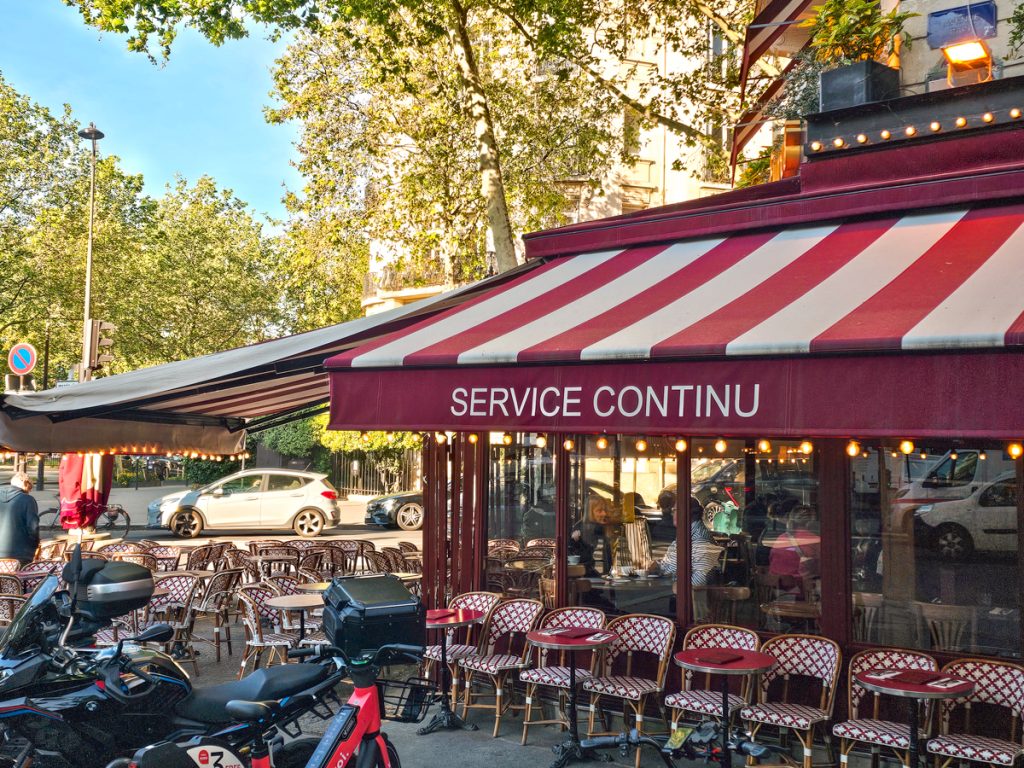
If you need to eat outside those windows, look for places displaying a “service continu” sign, which means they serve throughout the day. Cafés and brasseries almost always operate this way, while bistrots and traditional restaurants are more likely to close between services.
And you can almost always count on a boulangerie for a sandwich, quiche, or pastry at any hour.
2. The Dinner Rush Starts Late
Don’t be surprised if a restaurant feels empty at 7pm. In France, that’s early. Most people start trickling in around 7:30–8pm, with the dining room filling up between 8 and 9pm. On weekends, it’s normal for new diners to arrive at 10pm or even later, particularly in bigger cities.
If you’re used to eating earlier, you can still find restaurants open at 6:30 or 7pm. Just know you might be eating alongside a few fellow tourists while the locals haven’t even left their house yet.
3. Many Restaurants Are Closed 1-2 Days a Week
A fair number of restaurants in France close one or two days a week, with Sunday and Monday being the most common days off. Some places are closed the full weekend, which can catch you off guard if you’re not expecting it. It’s worth checking in advance if you have a specific spot in mind.
While we’re talking about it, I’ll note this pattern isn’t just for restaurants. Most museums in France are closed on Monday or Tuesday. I always try to be a little more deliberate when planning activities on those two days, so I’m not left disappointed when half the things I wanted to do are closed.
4. French People Linger Over Their Meals
French people linger over their meals, and I love that about dining here.
It’s not about eating and running. Meals are slow and social, with an unhurried feel. People take their time with each course, then often sit and chat long after the plates are cleared. It’s as much about enjoying the moment as it is about eating a meal.
As a tourist, I totally understand the temptation to eat quickly and move on to the next sight. And it’s not like the French restaurant police are going to come yell at you if you wrap up your meal more quickly than your French neighbors.
But I do try to be intentional about slowing down at mealtimes. Even if I don’t always stretch lunch into two hours, I’ll linger a little longer, soak up the atmosphere, and just be for a bit. It’s a small mindset shift, but it really changes the experience.

5. Interacting With the Waiter
Just like diners aren’t in a rush, French wait staff aren’t either, and are attentive but not hovering. They’ll usually check in once to take your order and again to see how everything is, but they won’t be popping by every few minutes the way servers often do in the US.
The biggest difference is the check. They will never bring it over unless you ask, or unless they’re about to close. When you’re ready, hail your waiter and ask “l’addition, s’il vous plaît,” or just make eye contact and do a little writing gesture. In smaller towns, it’s very common to just go pay at the bar when you’re ready to go.
One thing that catches a lot of visitors off guard: in France, the waiter never takes your card away. They’ll bring the check to the table, and if you’re paying by card, they’ll go get the card reader and bring it to you. You tap or insert your card yourself.
It’s a small difference, but after years of handing your card to a server in the US, that step is a bit of a change.
6. Seating
French dining rooms vary quite a bit. I’ve been in some restaurants with lots of space between tables, but I’ve also been in plenty of others with mere inches between our table and that of our neighbors. Just think of it as cozy (and an opportunity to have an authentic experience)!
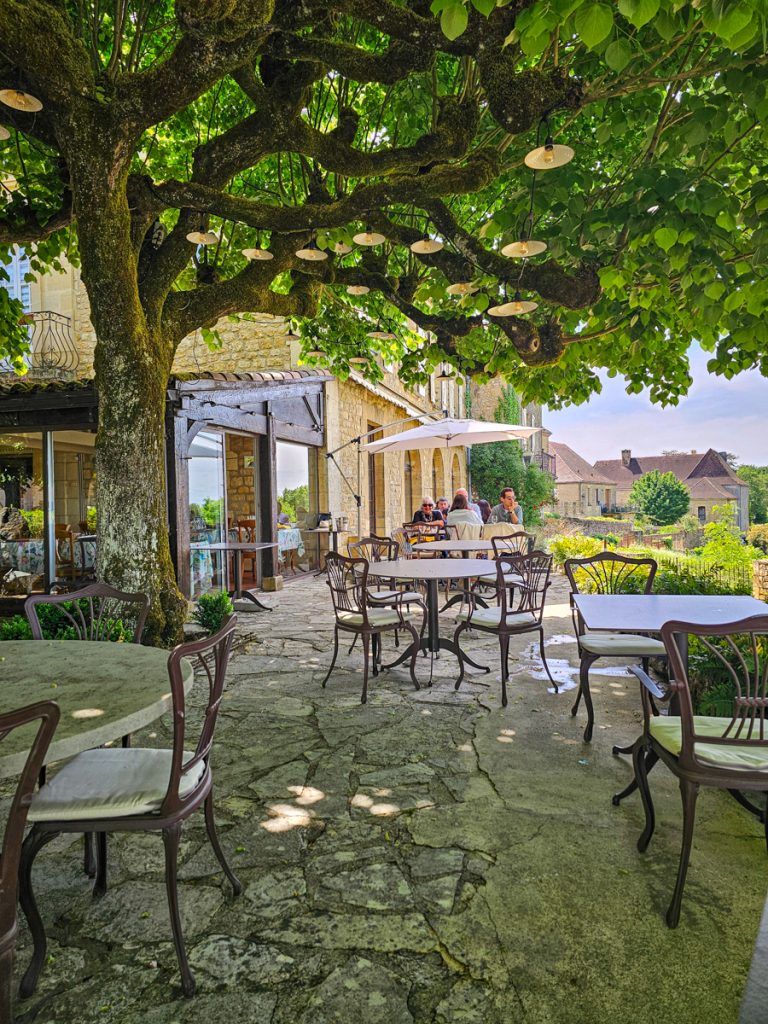
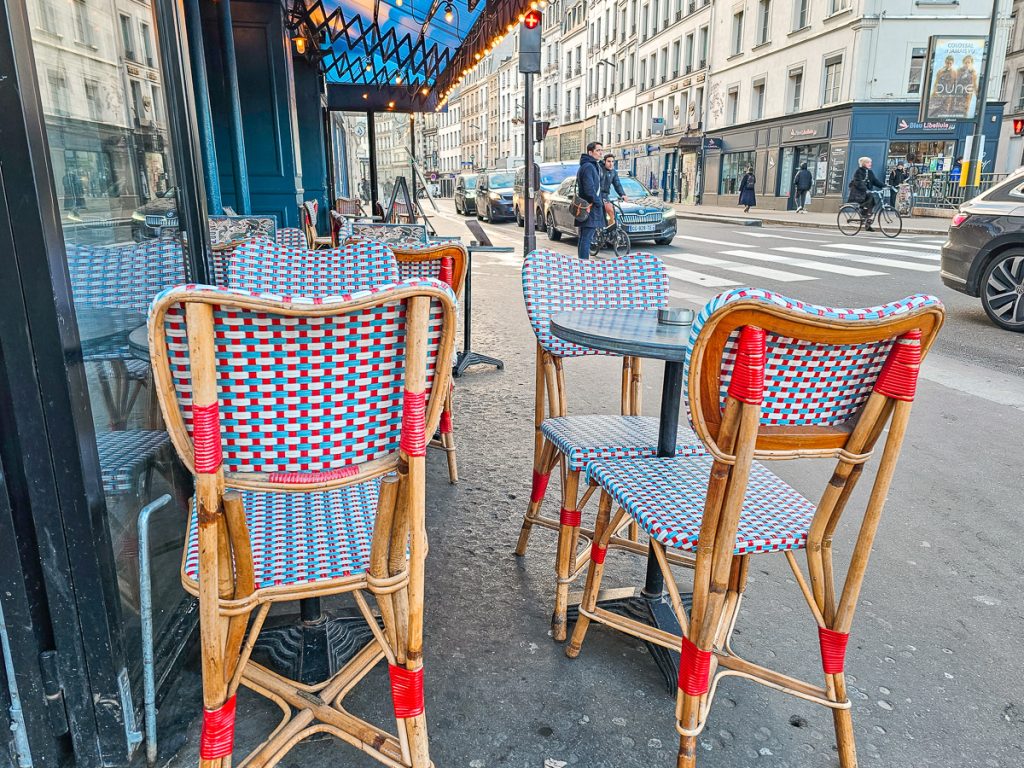
One of the most enjoyable parts of dining in France is grabbing a seat on a terrace—those small sidewalk tables lining charming streets, perfect for people-watching as the world passes by.
Just be aware that while smoking is not allowed indoors, it is allowed on open-air terraces.
7. Tap Water and Bread Are Free
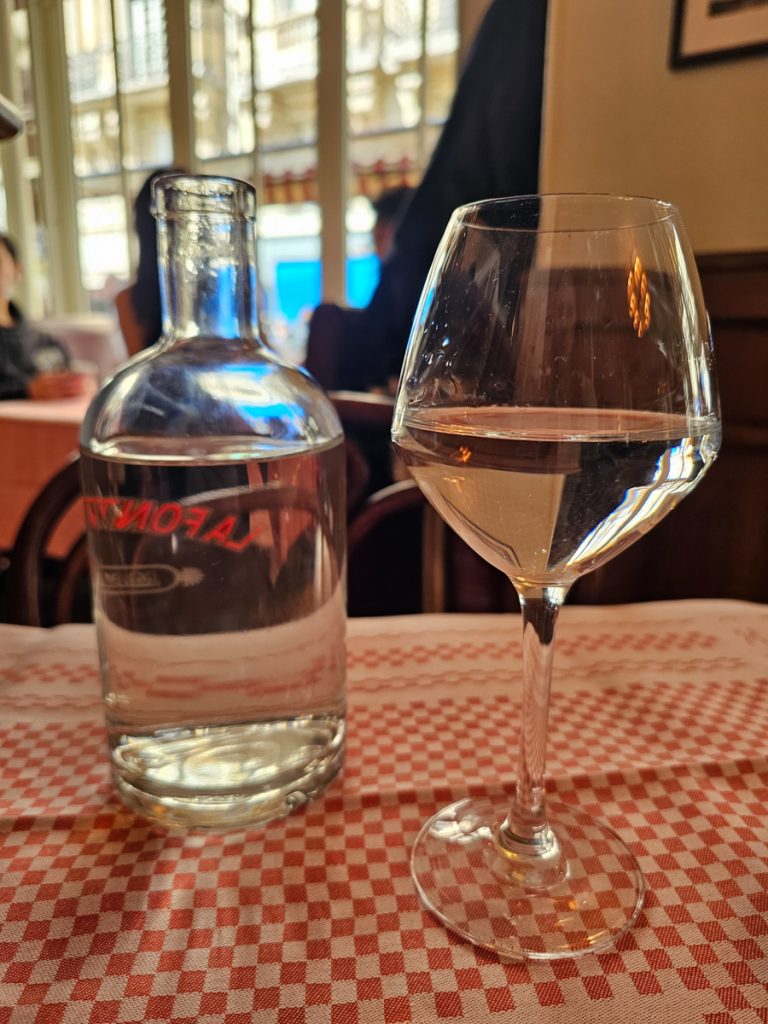
If you want free water with your meal, just ask for a carafe d’eau: a pitcher of tap water that’s always free. Don’t expect it to be ice cold, though. Ice cubes aren’t common in France, and the carafe is likely to come out room temperature or very slightly chilled. If you want a cold drink, order from the menu.
For me personally, after putting in thousands of steps every day, even room temperature water tastes amazing 😉
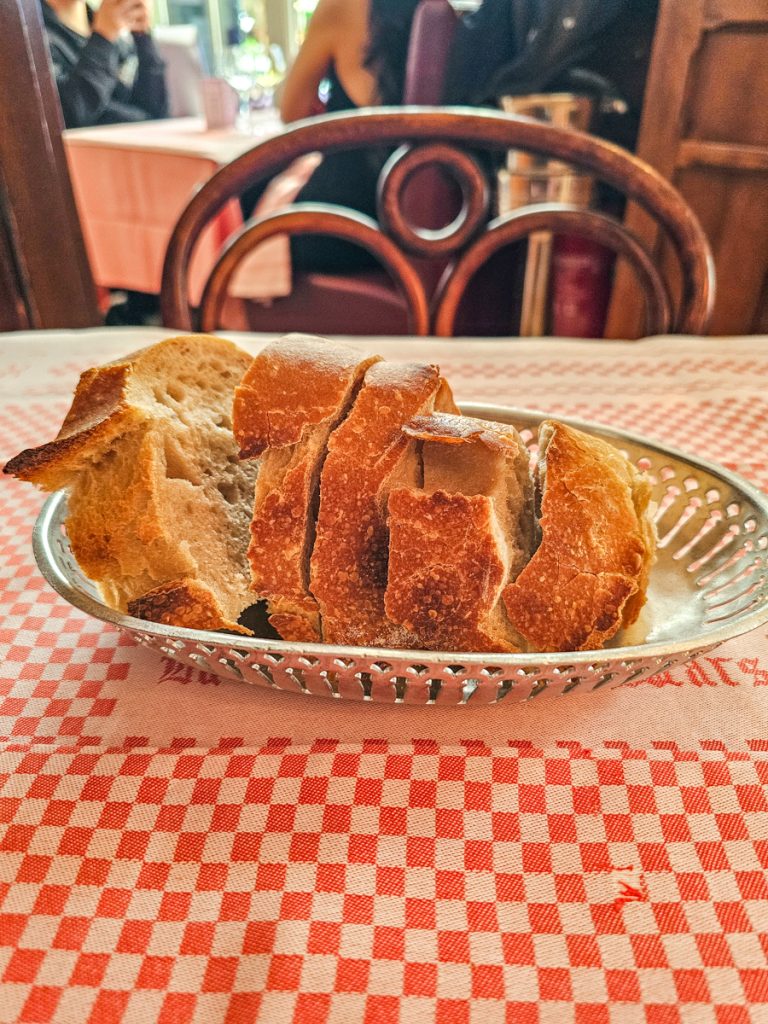
Servers will also always bring bread with your meal, sometimes with the starter, sometimes with the main dish. Bread is always free, although it’s never served with butter.
8. Coffee Culture
In France, coffee is always served after dessert, as a final punctuation on the meal.
It’s almost always an espresso or a small black coffee, and it will be offered regardless of what time you’re eating. A 10pm dinner finishing at midnight? The waiter will still ask if you’d like a coffee.
If you want milk in it, ask for a noisette (espresso with a small splash of milk). A café au lait is more of a breakfast drink and ordering one after dinner might get you a slightly puzzled look.
9. Tax and Tip Are Included in the Menu Price
While France has a reputation for being expensive, if you’re visiting from the US, the fact that tax and service are built into the price means that eating out can actually feel surprisingly reasonable. I love that the price on the menu is the total price you’ll pay.
In France, you don’t need to tip restaurant workers at all. It’s not part of the culture, and restaurant workers are paid a living wage.
I will note that I’ve heard the occasional report of a server asking patrons for a tip. Honestly, this is not normal, but if this happens to you, you can feel totally fine ignoring it.
10. Some Words Are Not As They Seem
There are a few French dining terms that look familiar but mean something different than they do in English. First up: le menu.
In France, this isn’t the full list of what’s available; rather, it refers to a fixed-price meal, usually with a starter, main, and dessert. Sometimes called la formule, these are especially common (and often a great deal) at lunchtime.
If you want to see everything the restaurant offers, ask for la carte — that’s the actual menu in the English sense.
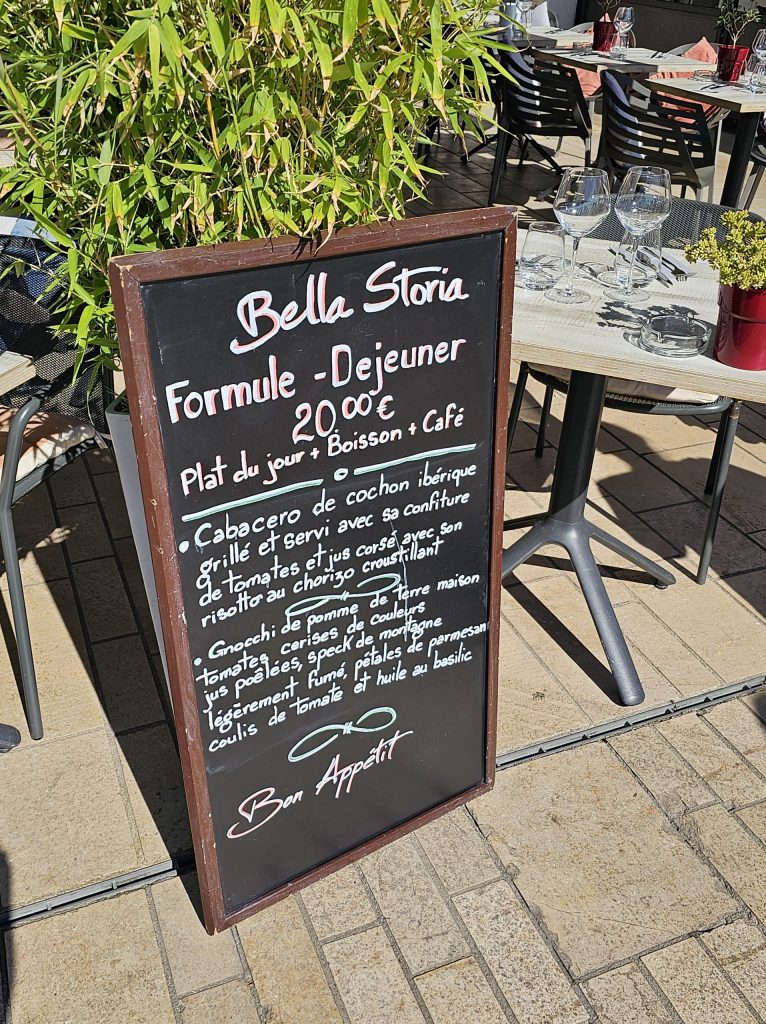
Another one to watch: entrée. In the US, that means a main dish. But in France, an entrée is the starter. The main course is called le plat principal.
11. You May Need Reservations
Some restaurants require reservations, particularly traditional restaurants, well-known spots, or more upscale places. But plenty of casual bistros and neighborhood restaurants are perfectly fine to walk into without one, especially on a weeknight.
Weekends are a different story. Many bistros and restaurants fill up quickly, so if you have a specific place in mind, book ahead. If you don’t have a reservation and can’t get a table, you might end up at a café, which is perfectly fine, just something to be aware of going in.
12. Portion Sizes and To-Go Boxes
In general, portions in France are well-sized for one person and one meal, not the oversized plates that you’ll sometimes see in American restaurants. That said, I’ve been to a few places recently where the servings were surprisingly large, so it’s not a hard rule.
The portion size thing also explains why to-go boxes aren’t a big thing in France. You rarely see French diners walking out with leftovers, simply because there usually aren’t any.
That said, you can absolutely ask your server to package up “les restes,” and some will even offer before you ask. It’s just not nearly as common as in the US.

13. Popular Proteins in French Cuisine
Duck, lamb, and beef are the most common meats you’ll see in French restaurants. Chicken and ham show up occasionally, but not nearly as often as they do in the US.
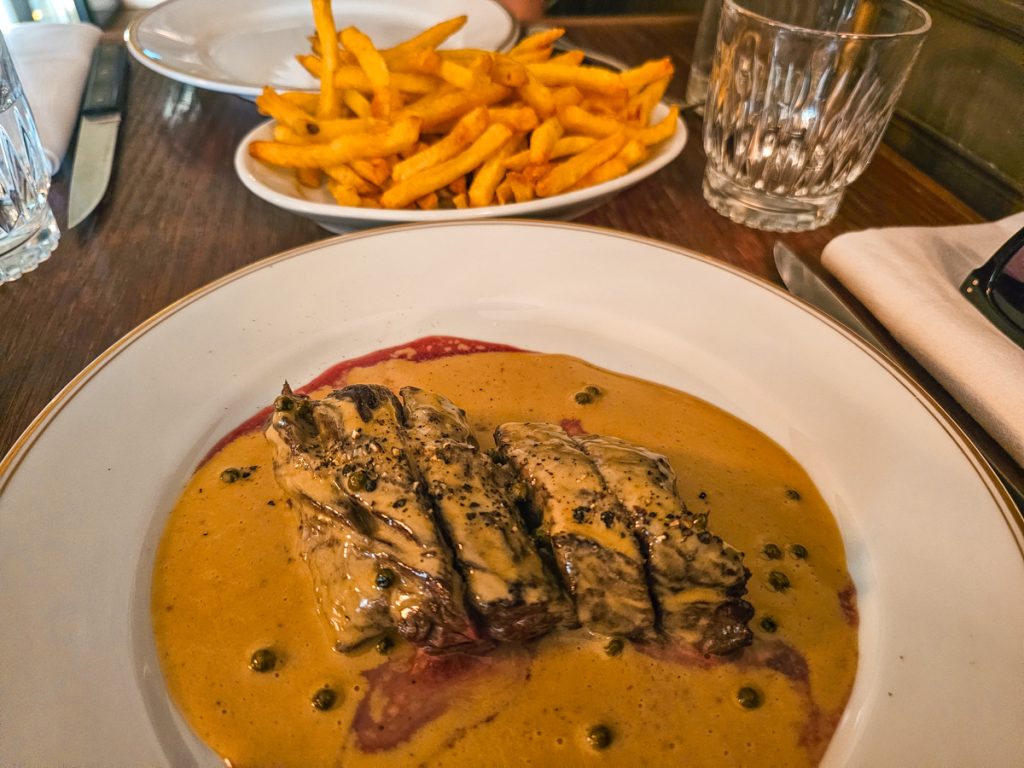
Duck in particular, especially confit de canard, is a staple on many menus: duck legs slow cooked in fat until they are tender and flavorful. Steak au poivre (steak in a pepper sauce) is another go-to you’ll see at tons of bistros.
Fish and seafood also show up on many restaurant menus, especially mussels and oysters.
And while escargot (snails) might seem like a stereotype, it’s actually a pretty common starter at traditional restaurants. Frog legs, on the other hand, are more of a novelty than a regular menu item.
14. Plan to Use Google Translate
On that note, because there are so many types and cuts of meat, varieties of seafood, and different ingredients and preparation methods, reading a French menu can be a little challenging unless you are extremely proficient in French.
I’m a pretty good French speaker, and menus are still challenging. I almost always have to whip out my Google Translate app to figure out a few words.
That being said, more and more restaurants provide English menus to clients. Now, this used to be a huge indicator of a bad restaurant (English menu = tourist trap = bad food).
That doesn’t always hold true these days, with more quality establishments printing English menus, simply because English is a commonly spoken language and can help people of many nationalities.
15. Never Say Garçon
While I don’t expect people to really do this, because it’s a bit of a stereotype, I’ll mention it: calling a waiter “garçon” is incredibly offensive and shouldn’t be done.
