

Your Guide to Visiting Orange in Provence, France

Tucked away in the South of France, this quiet town holds a Roman treasure that rivals anything in Italy.
Orange was once a major Roman settlement known as Arusio, and remnants of that history are still front and center today. The city once had an amphitheater, five necropolises lining its roads, and two major monuments that have remarkably stood the test of time: the Ancient Theater and the Arc de Triomphe.
The theater is absolutely massive, incredibly well preserved, and truly one of the most impressive Roman ruins in France. It’s what gave Orange UNESCO World Heritage site status, and honestly, it’s worth visiting Orange for the theater alone.
The name “Orange” came into use during the early medieval period, around 800 AD, during the time of Charlemagne. (And no, it’s not related to the fruit.)
Today, the historic city center is small and compact, with charming, winding streets, cute squares, and colorful accents. While there aren’t a ton of attractions to visit, what is here is exceptional — and you won’t soon forget your visit.
6 Amazing Things to Do in Orange
1. Ancient Theater
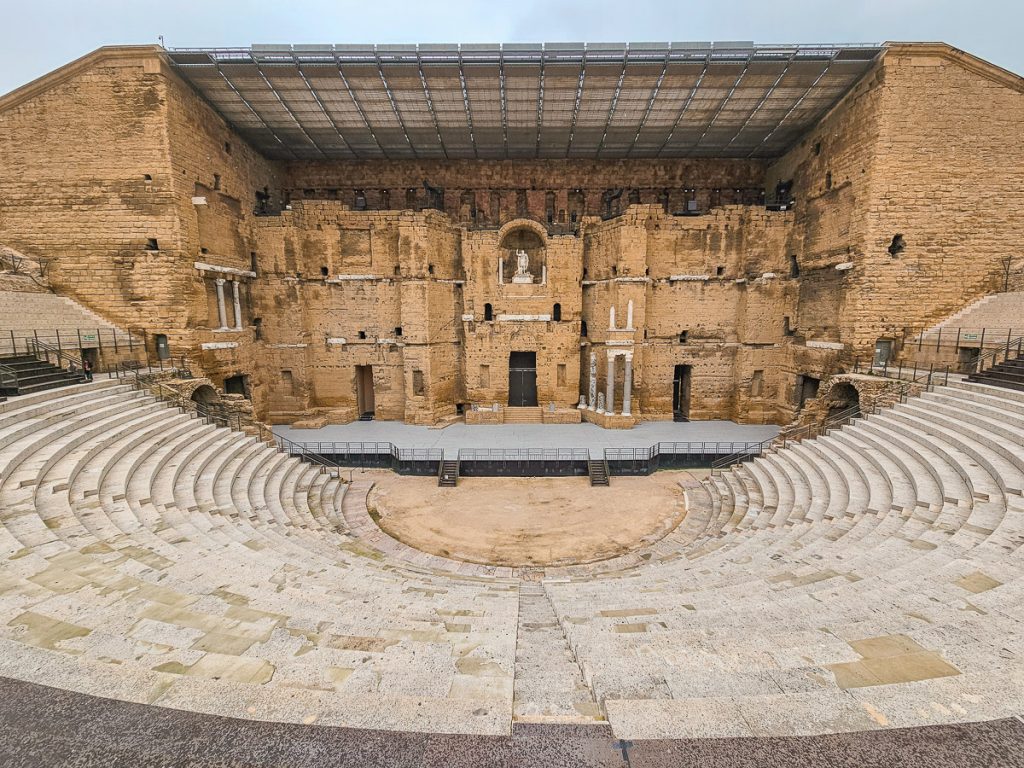
The Ancient Theater in Orange is truly an incredible Roman history site.
It was built at the beginning of the 1st century AD, under the reign of Augustus. It’s modeled after the theater in Rome, centered around the orchestra, with a massive hemicycle of bleachers built right into the side of Saint Eutrope hill. These bleachers face an enormous stage wall, a full stage, and an orchestra pit.
The stage wall is 37 meters high and 103 meters long, and the theater could once accommodate up to 10,000 spectators.

It’s richly decorated, with multiple levels of niches, columns, sculptures, and a frieze. The stage wall was constructed with marble, statues, and columns—and this kind of elaborate backdrop was a hallmark of Roman theaters.
But what’s really impressive is how intact it still is. The theater in Orange has the best-preserved stage wall in the western Roman world, and that alone earned it UNESCO World Heritage status.
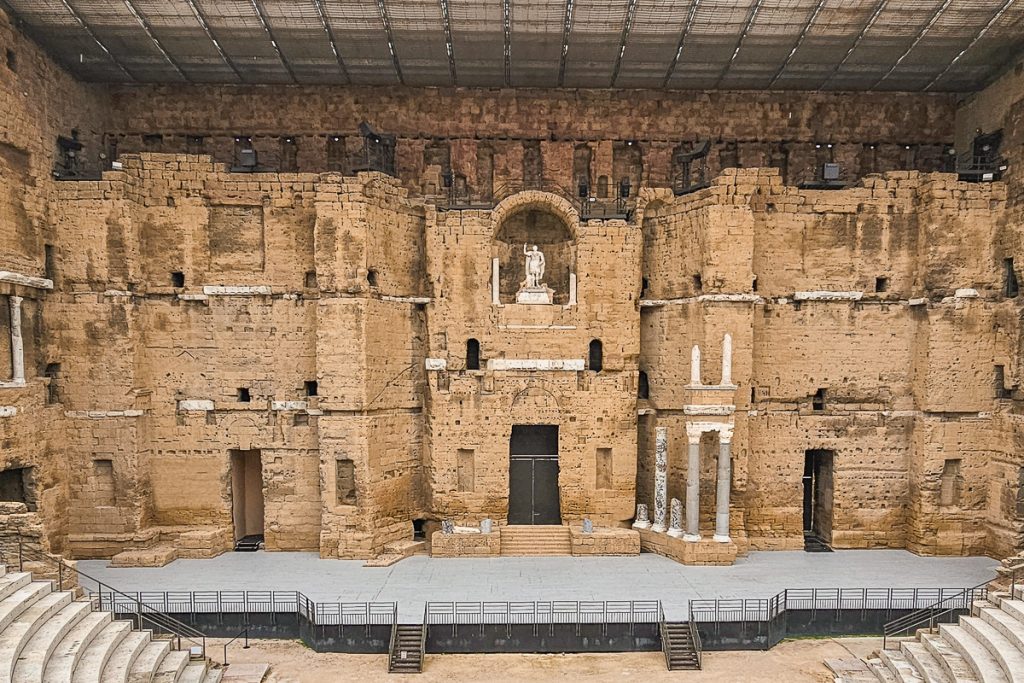
For comparison, the Roman theater in nearby Arles is almost completely in ruins—you’ll just see a few rows of seats and scattered stones and columns. But Orange? It feels complete. You can really imagine what it would have looked and felt like during a performance.
The theater’s engineering is also worth noting. They used a system of pulleys and levers to move set pieces and enhance stage effects. The structure was designed for excellent acoustics—even the people sitting in the farthest rows could hear the performers clearly.
Plays performed here included both tragedies and comedies, often Greek or Roman. These performances were meant to entertain the people (and keep them content), but they also served a political purpose—integrating locals into Roman culture and way of life. Admission was free for everyone, though seating was strictly divided by social class.
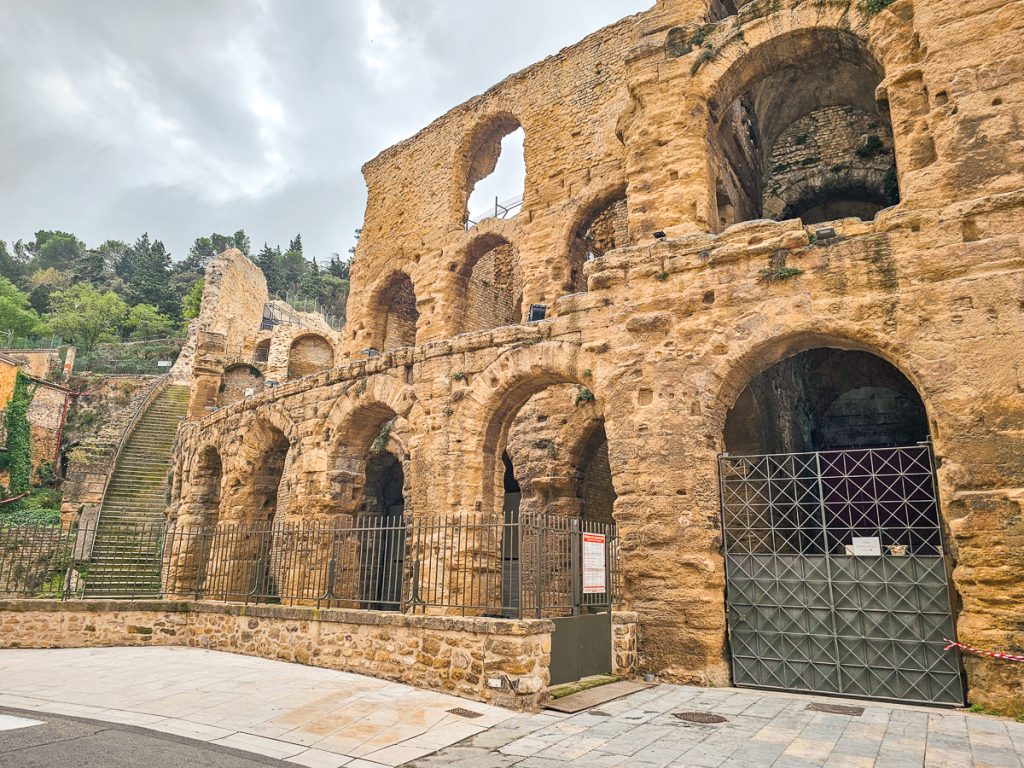
Today, the theater is still used for concerts and shows, which is pretty amazing considering its age.
Right next to the theater, you can also swing by the ruins of an imperial temple. Unlike the theater, this one isn’t well preserved—just a few stones remain. It was originally dedicated to the Roman emperors.

Your ticket includes a free audioguide, which is actually really well done.
2. Museum of Art and History

This museum is included with your ticket to the Ancient Theater, and is located just across the street in a 17th-century mansion.
The main draw of the museum are the Roman-era artifacts, including part of a frieze from the Ancient Theater, along with statues, everyday objects, and a large mosaic.

There are also rooms with paintings by two British artists, Sir Franck Brangwyn and Albert de Belleroche. Each artist has just a single room, but the paintings were really beautiful.
The story of Albert de Belleroche was especially interesting—he was a contemporary and friend of famous painters like Toulouse-Lautrec and Auguste Renoir. Despite his skill, Belleroche is a relatively unknown name today, mostly because he rarely took commissions and didn’t want to sell his work.

A few rooms are also dedicated to Orange’s local history, including the lives of some of the nobles who once lived here.
3. Arc de Triomphe
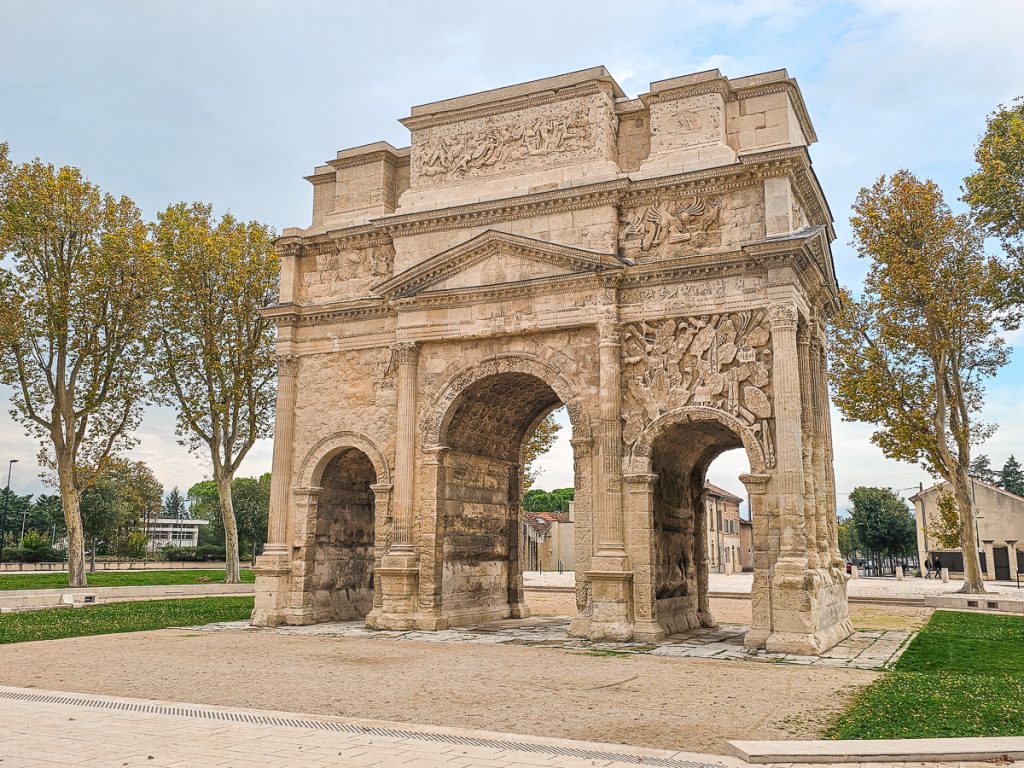
The Arc de Triomphe in Orange was built around 20 AD as a monument to the glory of Rome and served as the main entrance to the ancient city. It has three bays and three levels, and was designed to commemorate the victories of the Roman army.
The sculptures and decorative reliefs on the arch showcase Roman military power, with scenes that celebrate triumphs in battle and the strength of the empire.
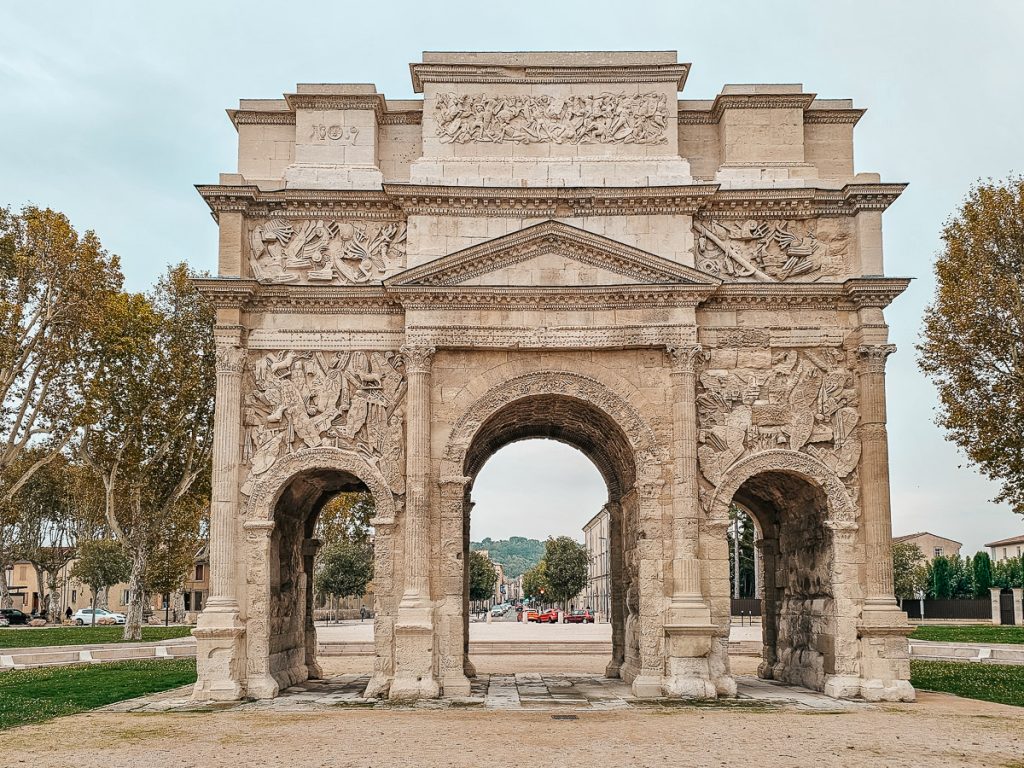
This arch once stood on the Via Agrippa, a major Roman road that connected southern France to Spain and Italy. Today, that same route is known as Rue Victor Hugo—the long, central street that stretches from the Arc de Triomphe into the heart of Orange, just like it did in Roman times.
4. Notre Dame de Nazareth Cathedral

This is the main church in Orange, dating back to 1208. The interior is really beautiful, with intricately painted arches and walls that add a lot of character.

Interestingly, several buildings have been constructed right up against the cathedral over time, so it’s not freestanding like most cathedrals in France. Still, the West Portal entrance is quite impressive, with its grand Roman-style façade, complete with columns and detailed decoration.
5. Municipal Theater
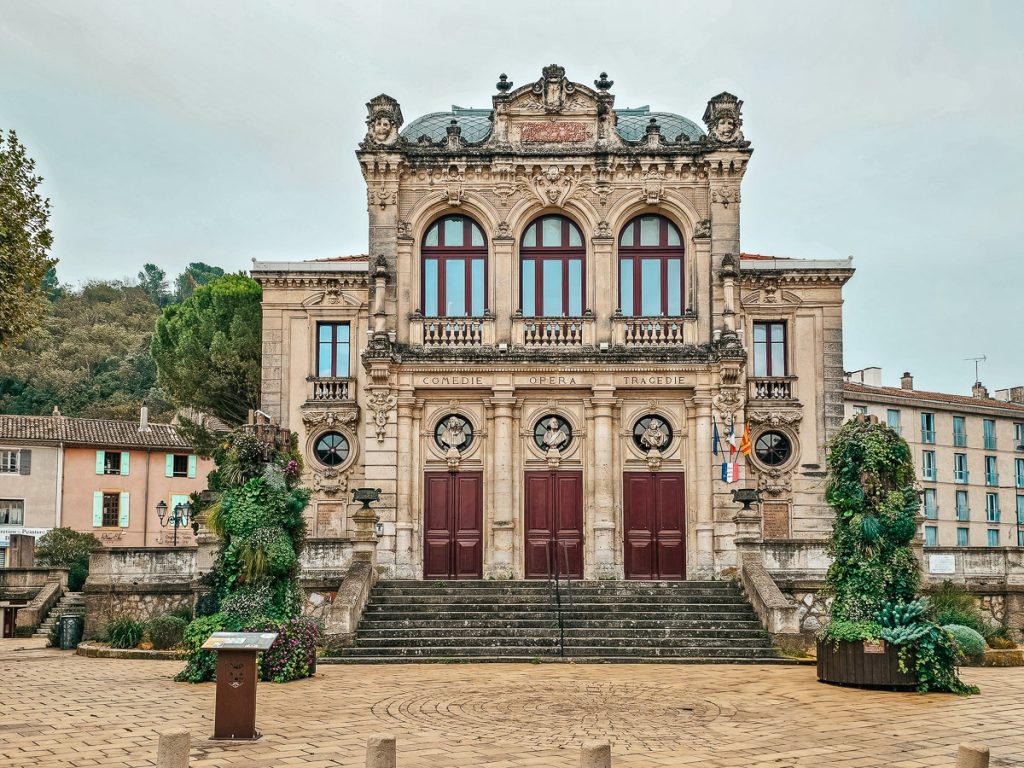
Built at the beginning of the 1900s, this theater is smaller in size but similar in design to the gorgeous and opulent Opéra Garnier of Paris. The inside isn’t open to tourists, but it’s still worth stopping by to admire the outside.

Make sure to check out the Revolution Memorial just to the left of the theater. This haunting sculpture pays homage to the citizens (including 32 nuns from a nearby convent) who were executed by guillotine on this very spot during the “Reign of Terror” of the French Revolution.
6. Hill Saint-Eutrope

This hill on the southern edge of town, just behind the ancient theater, is named after Saint Eutrope, a bishop and benefactor of the city in the 5th century.
It’s the main greenspace in Orange, with some nice walking paths and viewpoints overlooking the city, though unfortunately none of them offer views of the theater or the arch.
How Long Do You Need in Orange?
Truly, Orange is small and there are just a few things to do here. You can easily see and do everything on this list, plus wander around and explore the city center, in 3-4 hours.
The Wrap Up
Orange is an amazing yet more under-the-radar destination in Provence. I truly was blown away by the theater, and the arch was a nice touch, too. And, since Orange just requires a few hours, it’s not too hard to slip it into your southern France itinerary!
