
How the French Actually Order at a Boulangerie — And How You Can Too

Stopping into a boulangerie (bakery) is one of the most quintessential French experiences you can have. Not only are boulangeries seemingly on almost every corner, the offerings are delicious!

They’re simply part of everyday life in France, and whether you’re here for one day or four weeks, boulangerie stops really should be a regular part of your routine.
If ordering feels a little nerve-wracking the first time, especially if you don’t speak much French, don’t worry. It’s actually very simple.
Let’s walk through how French boulangeries work, a few helpful tips to know, and the exact wording in French and English you’ll use when placing an order.
What You’ll Find Inside a French Boulangerie
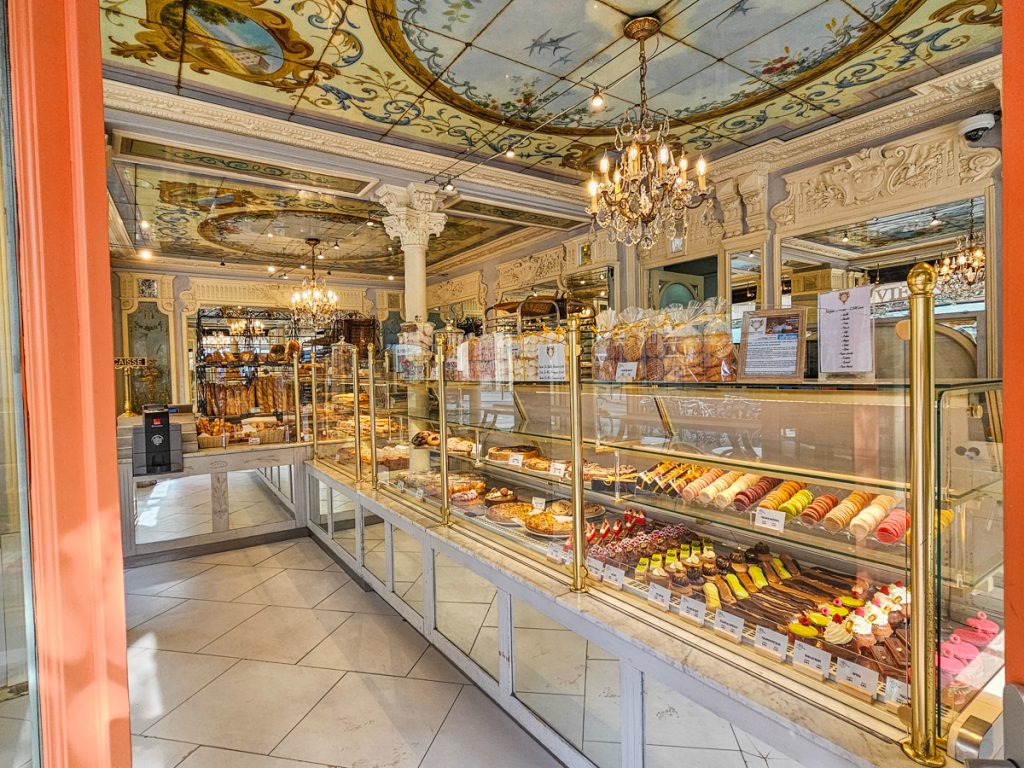
A boulangerie isn’t just about bread. Most French bakeries sell a range of breads, breakfast pastries, desserts, and easy grab-and-go items that work for breakfast or lunch or even a snack.
Baguettes
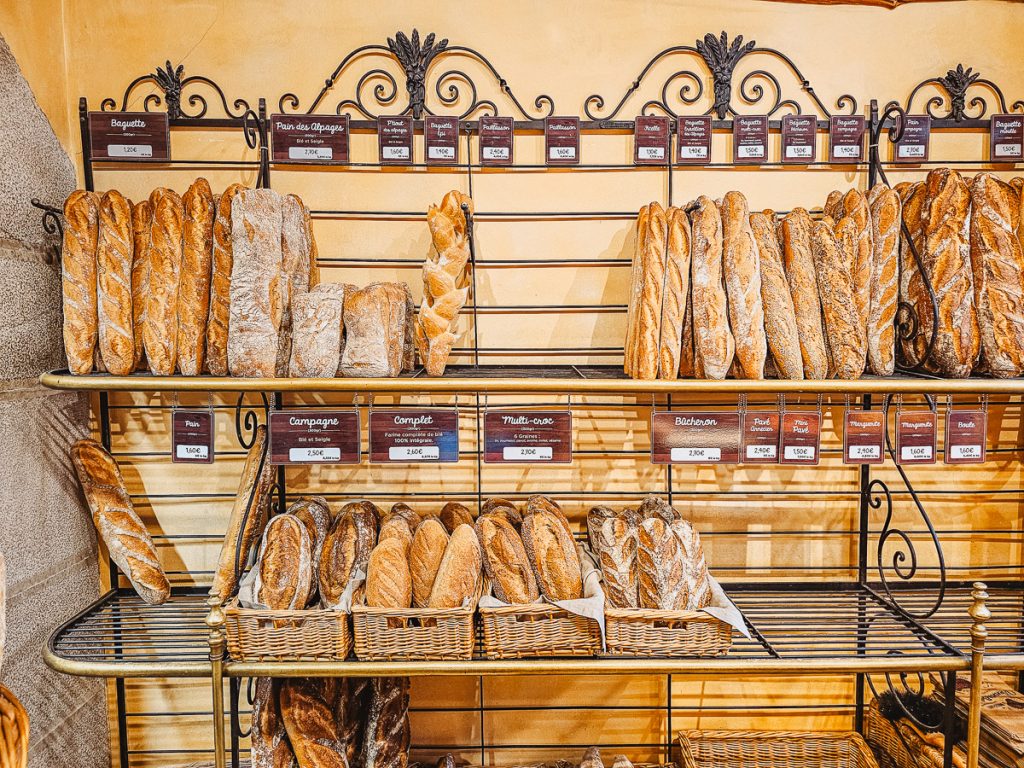
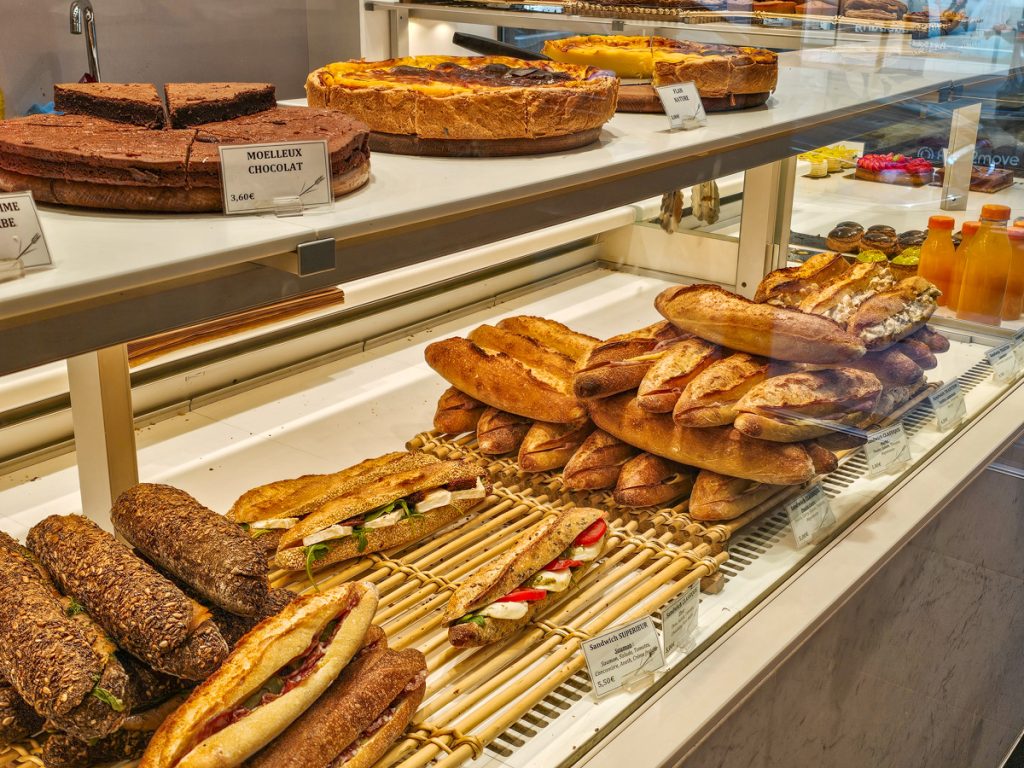
Baguettes are by far the most common type of bread eaten in France. They’re crusty on the outside and soft on the inside, and are a part of everyday food culture. You’ll usually see a few different types behind the counter.
The best version to order is a baguette de tradition, which you can simply ask for as une tradition. A baguette can only be called a baguette de tradition if it follows specific rules set by law. That means it has to be mixed, shaped, and baked on site, using just four ingredients: flour, water, leavening, and salt.
You can often spot them by their slightly irregular shape and pointier ends.
Most boulangeries also sell other types of baguettes. A baguette classique is usually a bit cheaper and may or may not be baked on site. These often have more rounded ends and a slightly softer crust.
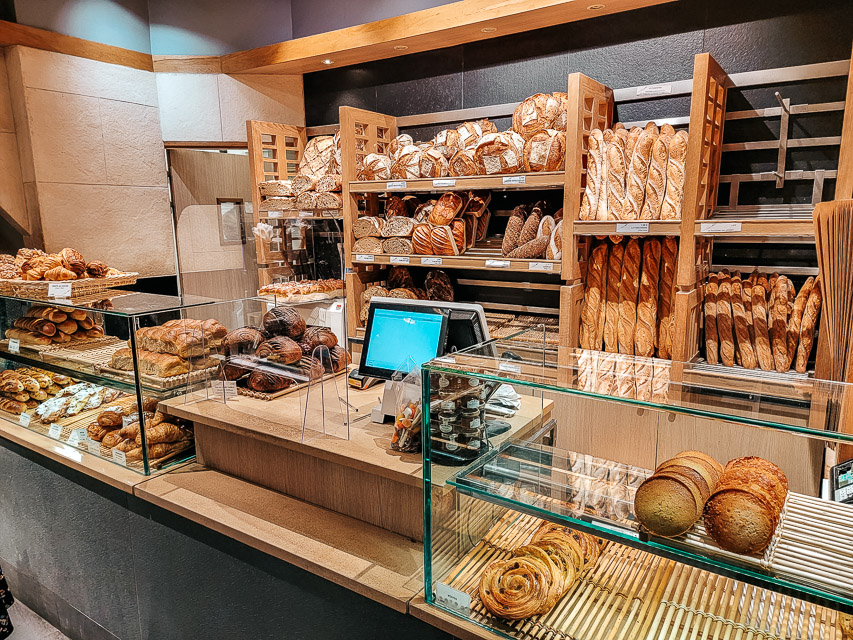
You might also see a baguette de campagne, which uses a mix of flours like white, whole wheat, or rye and has a heartier texture.
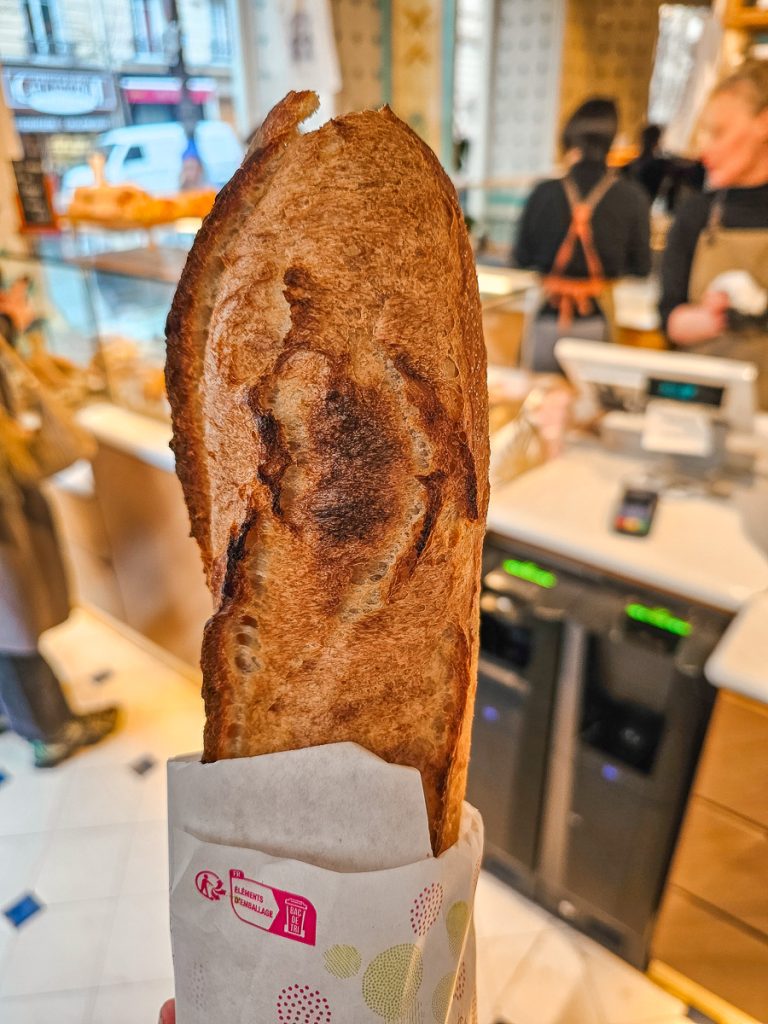
Baguettes are meant to be eaten the same day and don’t keep especially well for longer than 24 hours. You can wrap one in a dish towel to stretch it a bit, but it’s also very normal to pick up a fresh baguette when you need it.
Beyond baguettes, many boulangeries also sell larger round or oval loaves made with different grains or flours. These tend to last longer and are a good option if you want bread that holds up beyond a few hours.
- If you don’t want a full loaf, you can ask for a demi-baguette.
- Prices are refreshingly low. A baguette usually costs around 1,20 € to 1,30 €.
Viennoiseries (Breakfast Pastries)
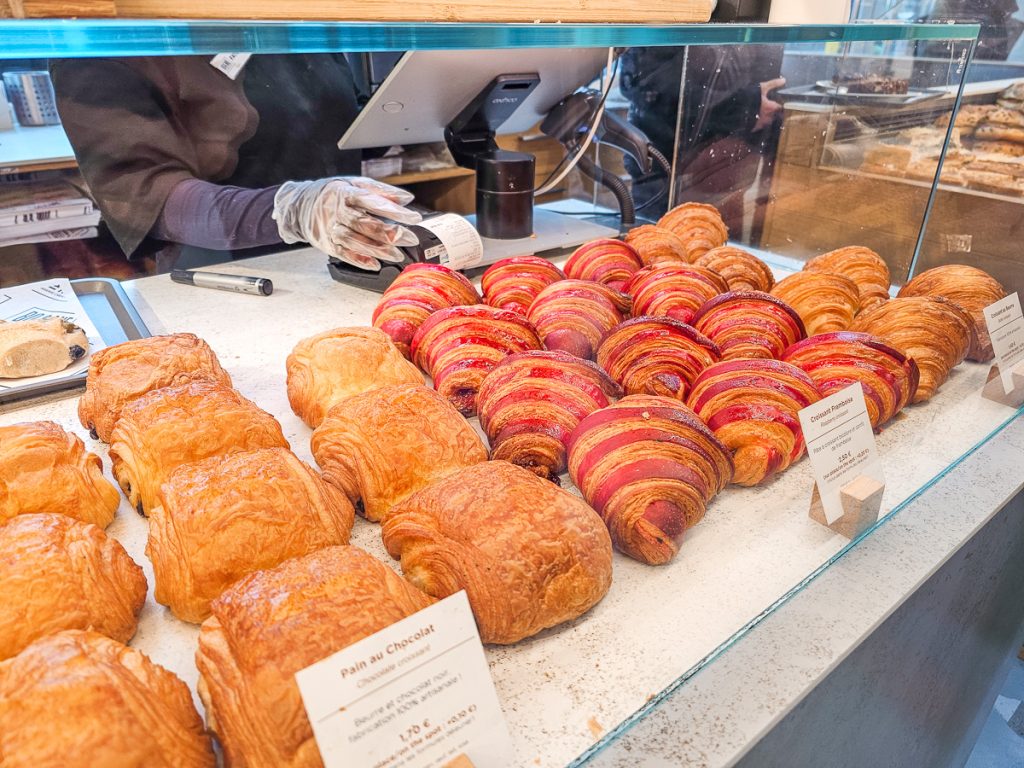
Viennoiseries are the flaky, golden-brown baked goods you often see for breakfast with a café au lait. Mornings are when viennoiseries are typically eaten, but you can pick them up any time of day.
Some common viennoiseries you’ll see behind the counter include:
- Croissant — iconic and buttery, with crisp, flaky layers.
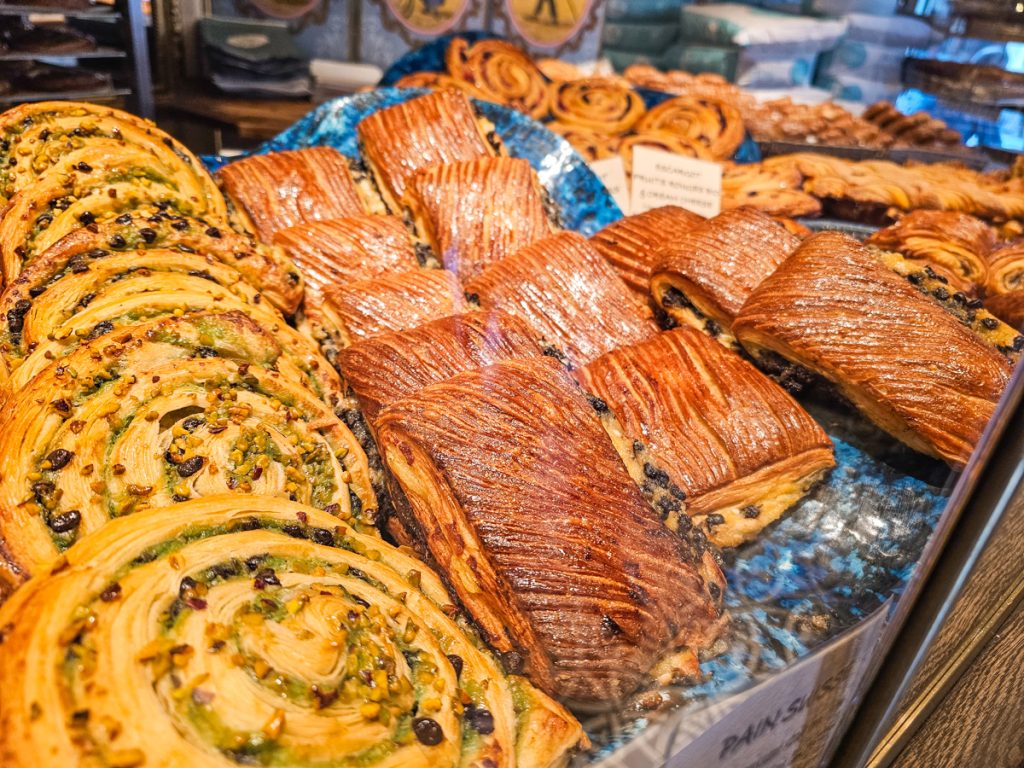
- Pain au chocolat (or chocolatine if you’re in southwest France) — a puffy rectangle of croissant dough with chocolate inside.
- Pain aux raisins — spiral-shaped with raisins and a touch of pastry cream.
- Pain suisse — a variation filled with chocolate chips and pastry cream.
These are the staples in most French bakeries, but some also have their own specialties.
Pâtisseries (Dessert Pastries)
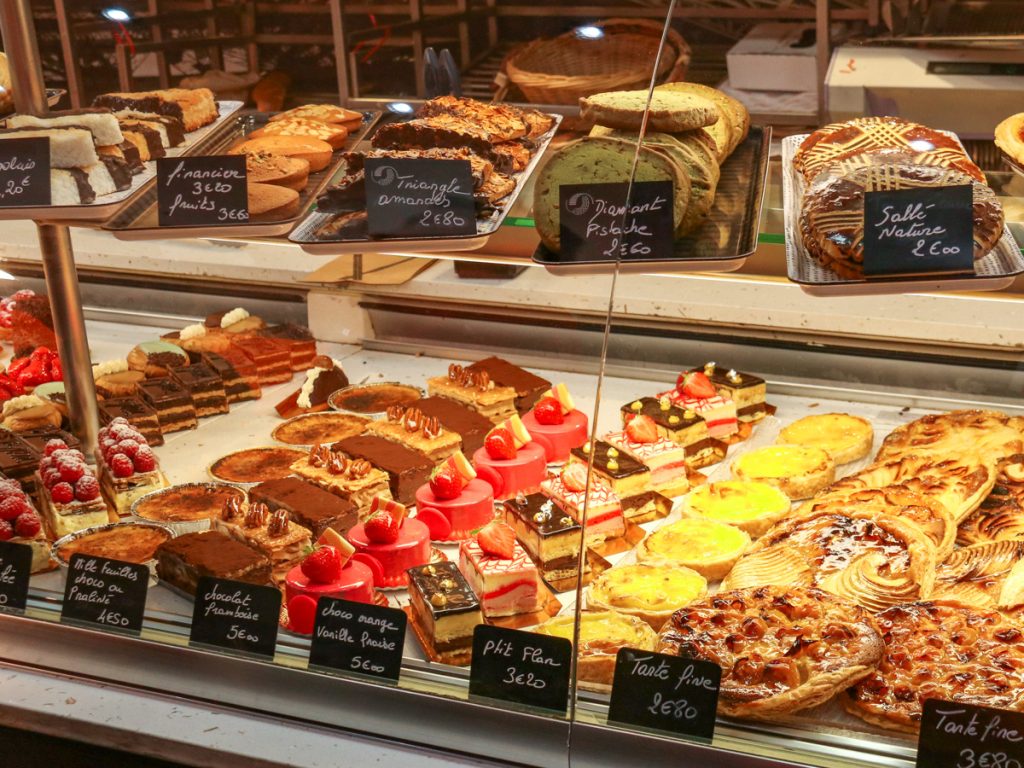
Pâtisseries are the more delicate, dessert-style pastries and sweets. Some classic pâtisserie offerings include:
- Millefeuille — layers of crisp puff pastry and creamy filling.
- Tarte aux fruits — fruit tarts, usually with berries.
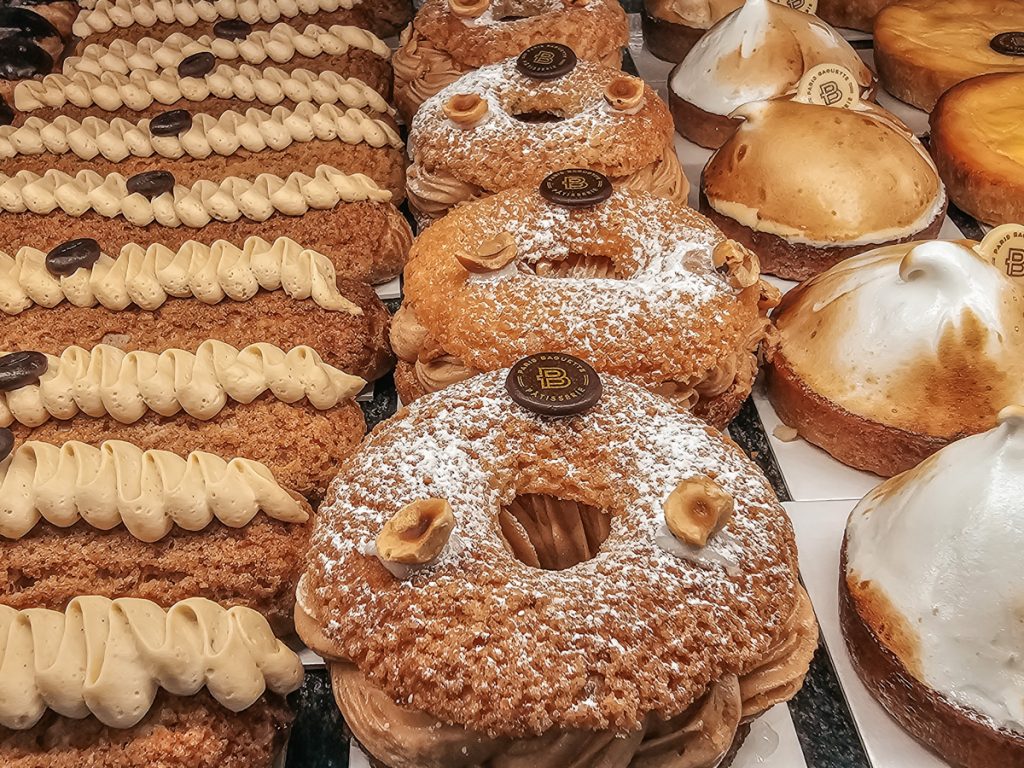
- Éclair — oblong choux pastry filled with pastry cream and topped with icing.
- Paris-Brest — a circular choux-based pastry filled with hazelnut cream.
Savory Items and Lunch Options
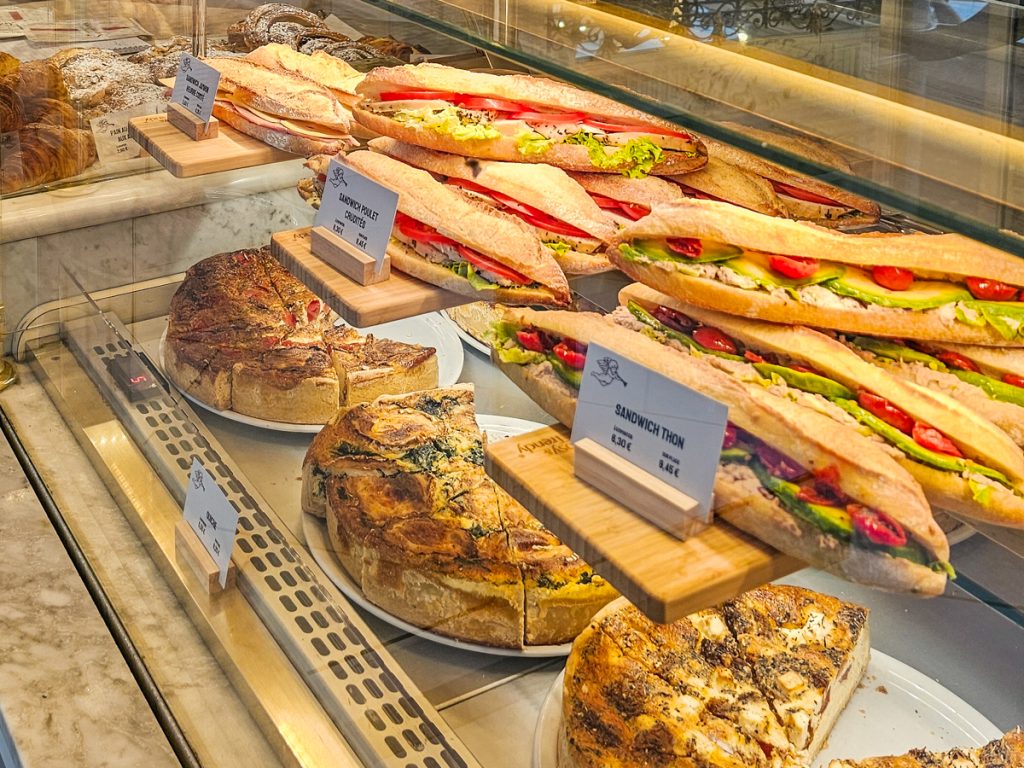
Many boulangeries also sell sandwiches as a to-go option. You might also see salads, quiches, croque monsieurs, or other savory pastries. These make an easy lunch or even a simple early dinner to take to-go, then eat along the Seine, on a bench, or in a park.
Coffee & Hot Chocolate
Most boulangeries also have coffee, espresso, and hot chocolate available for customers as well. Water and bottled drinks are also usually an option.
How to Pick a Good Boulangerie
You don’t need to hunt down the “best” bakery in a city to get good bread. In most neighborhoods, there’s at least one great option within a couple of blocks.
A few easy signs you’re in a good spot:
- A steady flow of local customers in the morning
- Bread coming in and out of the oven while you’re there (especially in the morning or late afternooon)
- A sign that says artisan boulanger, which usually means the bread is made on site
If a bakery feels busy, efficient, and a little no-nonsense, that’s often a good thing. You almost never need to cross the city for a great baguette.
Exactly How to Order at a French Boulangerie
Before we get into this, I just want to offer one important caveat: You don’t need to speak French to order at a boulangerie. Many people get by just fine in English or by pointing. The phrases below are simply for anyone who wants to try using a little French and understand how the interaction usually works.
When you enter a boulangerie, always say bonjour. Saying bonjour is an essential part of manners in France, and it’s not optional.
If the bakery is busy and there’s a line, you might not say it right away. But if a worker says it to you when you enter, say it back. Either way, always start your actual interaction with a worker with bonjour, whether you’re going to continue the conversation in French or English. Always.
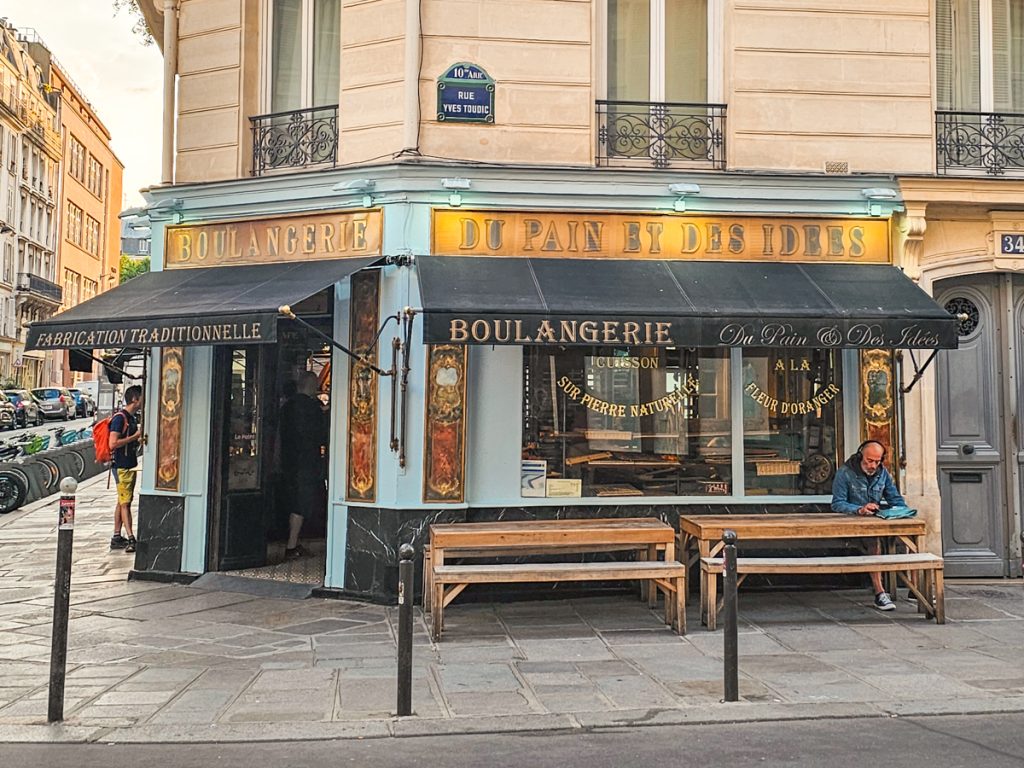
The Basic Bakery Interaction, Step by Step
Here’s what a typical exchange looks like. I’m giving the French first, followed by the English meaning.
- You: Bonjour (hello) Pronunciation: bon-zhoor
- Worker: Bonjour (hello)
Sometimes they’ll also say something like:
- Je vous écoute (I’m listening / I’m ready). But often it’s simply bonjour, said with an upward tone. Either way, that’s your cue to order.
Placing Your Order
- You: Un croissant, s’il vous plaît (one croissant, please)
You could also say:
- Je prends un croissant (I’ll have a croissant)
- Je voudrais un croissant (I would like a croissant)
Pronunciation:
- Je prends → zhuh(juh) prahn
- Je voudrais → zhuh voo-dray
- S’il vous plaît → seel voo pleh
You’ll often learn and practice je voudrais in French class, but in real life, I mostly hear people use je prends or just say the item they want. All are perfectly fine, though.
Do not skip s’il vous plaît.
Adding More Items
After you order your first items or set of items, the worker might then ask one of these questions:
- Et avec çeci ? (And with that?) pronunciation: ay ah-vek sah
- Autre chose ? (Anything else?) pronunciation: oh-truh shoz
- Ça sera tout ? (That will be all?) pronunciation: sah suh-rah too
And if you want something else you could say:
- Et… (and…) pronunciation: ay
- Aussi… (also…) pronunciation: oh-see
If you’re finished, you can say:
- C’est tout (that’s all) pronunciation: say too
Typical Follow-Up Questions
If you order something savory like a sandwich, quiche, or croque monsieur, you’ll likely be asked:
- Réchauffé ? (Warmed up?) pronunciation: ray-shoh-fay
You might also hear:
- Sur place ou à emporter ? (To eat here or to go?) pronunciation: sur plahs oo ah om-por-tay
Some boulangeries have a few small tables inside or on a terrace. This is just asking whether you’re staying or taking it with you. Occasionally, the price is slightly more if you’re eating sur place.
What Happens Next
Viennoiseries are usually placed in small paper sleeves that are twisted shut. Pâtisseries often go into small cardboard boxes. Baguettes are wrapped in paper or placed in long, narrow bags that stay open at the top. Once everything is packed up, you’ll move to payment.
Paying, Bags, and Leaving
You’ll usually pay at the end of the counter after you’ve finished ordering. Card is fine almost everywhere, but cash is also accepted. At the register, you might hear:
- Par carte ou en espèces ? (Card or cash?) pronunciation: par kart oo ahn ess-pess
After the transaction is completed, they might ask:
- Le ticket ? (Do you want the receipt?) pronunciation: luh tee-kay
More often than not, boulangeries won’t print the receipt unless you want it. A simple oui or non, merci is all you need.
Even if you have several items, larger bags are generally not provided, but you can usually ask for one. Occasionally there’s a small charge.
When you leave, say:
- Merci, au revoir (thank you, goodbye) pronunciation: mehr-see, oh ruh-vwar
You can also add:
- Bonne journée (have a good day) pronunciation: bon zhoor-nay
A Few Helpful Tips
- You can always point and say ça (that).
- If you have a question about an item, it’s fine to ask. If there’s a long line, keep it brief. If there isn’t, take your time.
- If you need a moment to decide, you can say un moment, s’il vous plaît, step aside, and re-approach when you’re ready.
Many boulangerie workers in tourist areas, especially in Paris, speak English. If you need to, you can ask:
- Bonjour, parlez-vous anglais ?
Or simply: - Bonjour, do you speak English?
If they don’t speak English, pointing and miming usually is just fine.
Even if you do the interaction in English, it’s still a good idea to start with bonjour and end with merci, au revoir.
There may be small variations or an unexpected phrase here and there, but this is the basic formula. The vast majority of bakery interactions follow this exact rhythm.
A Few Boulangerie-Adjacent Things Worth Knowing
Slicing: When eating, a baguette is generally torn, not sliced. Using your hands is completely normal, especially if you’re having a picnic or eating casually. You’ll often see people break off pieces rather than cut neat slices.
Eating on the Go: French people generally don’t eat on the go the way Americans often do. You won’t see locals sipping coffee on the run or eating a croissant during their morning commute.
Even for a quick pastry, people tend to stop and stand or sit down to eat. No one is going to yell at you if you eat on the move, but if you want to blend in a bit more and follow local etiquette, find a bench, a low wall, sit at the café where you ordered, or find a park, and take a few minutes to enjoy it.
Baguette Exception: That said, a baguette is also one of the few foods that’s socially acceptable to eat on the street. Nibbling off the top as you walk is practically a national habit, and you’ll see it all the time.
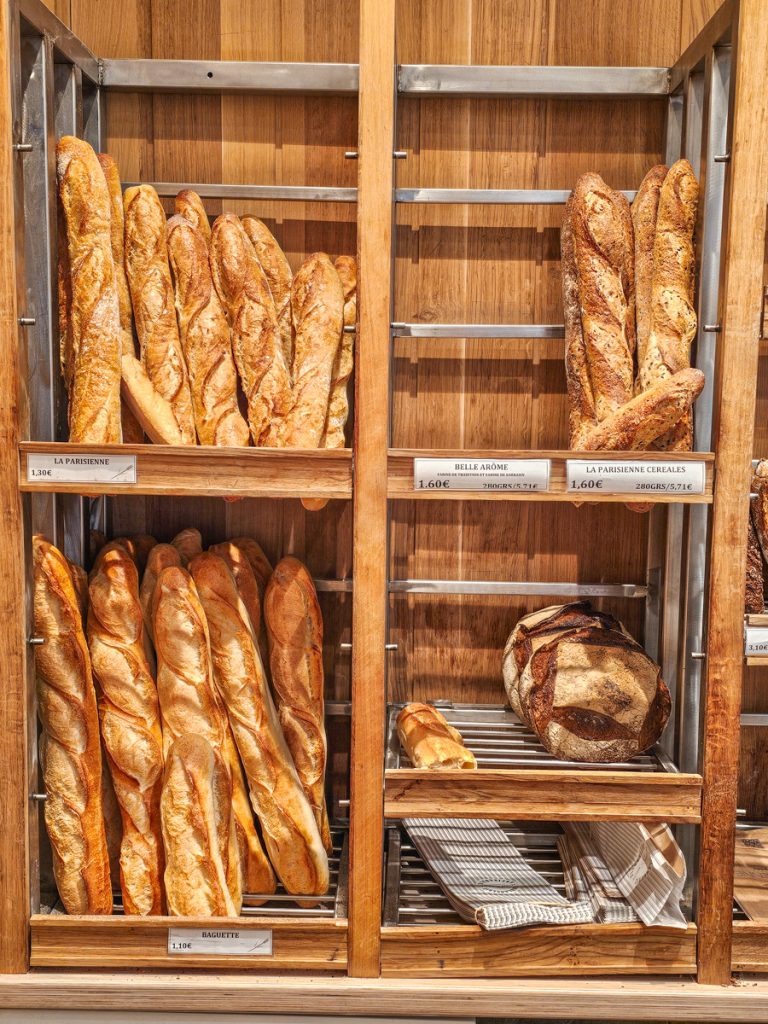
Best Baguette: If you’re curious just how seriously baguettes are taken, one little fun fact about Paris is that they host an annual competition to find the best one in the city. Every year since 1994, bakers compete in the Grand Prix de la baguette de tradition française de la ville de Paris, often shortened to the Best Baguette in Paris competition.
The rules are strict. Only baguettes de tradition can be entered, and each loaf has to meet exact requirements for length and weight. The winner earns a medal, a €4,000 prize, and the honor of supplying the Élysée Palace, the official residence of the French President, for a full year.
Unsurprisingly, the winning bakery also sees a big jump in customers. In 2025, the top spot went to La Parisienne, located in the 10th arrondissement.
Planning the Rest of Your Time in Paris?
Figuring out how things work at a boulangerie is just one small piece of visiting Paris. If you’re continuing to plan the rest of your trip, these guides can help:
- Unwritten Rules of Dining Out in France – Tips and tricks for how restaurants work, from ordering to paying
- Best Restaurants in Paris – A curated mix of classic spots and great places
- Where to Stay in Paris – A neighborhood-by-neighborhood breakdown to help you choose the right base
- Ultimate List of Things to Do in Paris – Nearly 100 sights and experiences, from must-sees to hidden gems
If you want everything in one place, my Paris travel guide page pulls together neighborhood guides, attraction and museum guides, foodie recommendations, and travel tips in one hub.
And if you’re feeling overwhelmed or short on time, I also offer Paris planning calls.
These one-on-one video sessions are great for getting feedback, asking questions, and sorting through options, whether you need a full plan or help fine-tuning what you already have.
Final Thoughts
At the end of the day, ordering in a French boulangerie is simply a quick, everyday exchange built around politeness and a few simple phrases. Once you’ve done it once or twice, it stops feeling intimidating and starts feeling like one of the easiest, most enjoyable parts of being in France.
