
12 Paris Etiquette “Rules” Visitors Don’t Realize They’re Breaking

Traveling to Paris is exciting, but it also means stepping into a culture where everyday manners and etiquette work a little differently.
Most travelers genuinely want to be polite and respectful, but it’s easy to make small missteps when you’re in a new situation and don’t know what the local expectations are. And because so many things are the same between France and other countries, it’s not always obvious which habits translate and which don’t.
These aren’t dramatic rules or anything to stress about; they’re simply helpful insights into how Parisians go about their day so you can avoid those “oh… I didn’t know that was a thing” moments.
1. Always Greet People First
Saying hello is polite anywhere in the world, but in France, skipping “bonjour” is genuinely considered bad manners. It doesn’t matter if you know zero French, this one word is the baseline for any interaction.

You’ll use it all the time, such as when you walk into a bakery or shop, step up to a counter to buy tickets, or need to ask for help. If you’re nervous about pronunciation, practice it a couple times before your trip so it comes out naturally.
And if you can’t muster the French, even a quick “hello” in English is good enough.
2. Small Talk Isn’t a Thing
French people don’t typically make chitchat with strangers, so conversations that feel normal in the U.S. can come off as a bit unexpected here. If you’re standing in line, you generally wouldn’t strike up a conversation with the person next to you. And while you should always say “bonjour” to a cashier, you wouldn’t follow it with questions about their day or other small talk.
The same goes for smiling at random people on the sidewalk. A smile at someone you know is fine, but smiling at every passerby isn’t usually done. Interactions usually stay polite and to the point unless there’s already some kind of connection.
3. Ask for the Check – And Flag Your Server When You Need Something
French servers don’t hover, and they won’t bring the check unless you ask for it. That’s not bad service, it’s just how dining works here. Restaurant meals are meant to be enjoyed without feeling rushed, so a server usually won’t interrupt your conversation unless you signal them.
A bit of eye contact or a small “s’il vous plaît” is all you need. It feels subtle compared to American restaurants, but once you get used to it, the slower pace is actually really nice.
4. Keep Your Volume Lower in Public Spaces
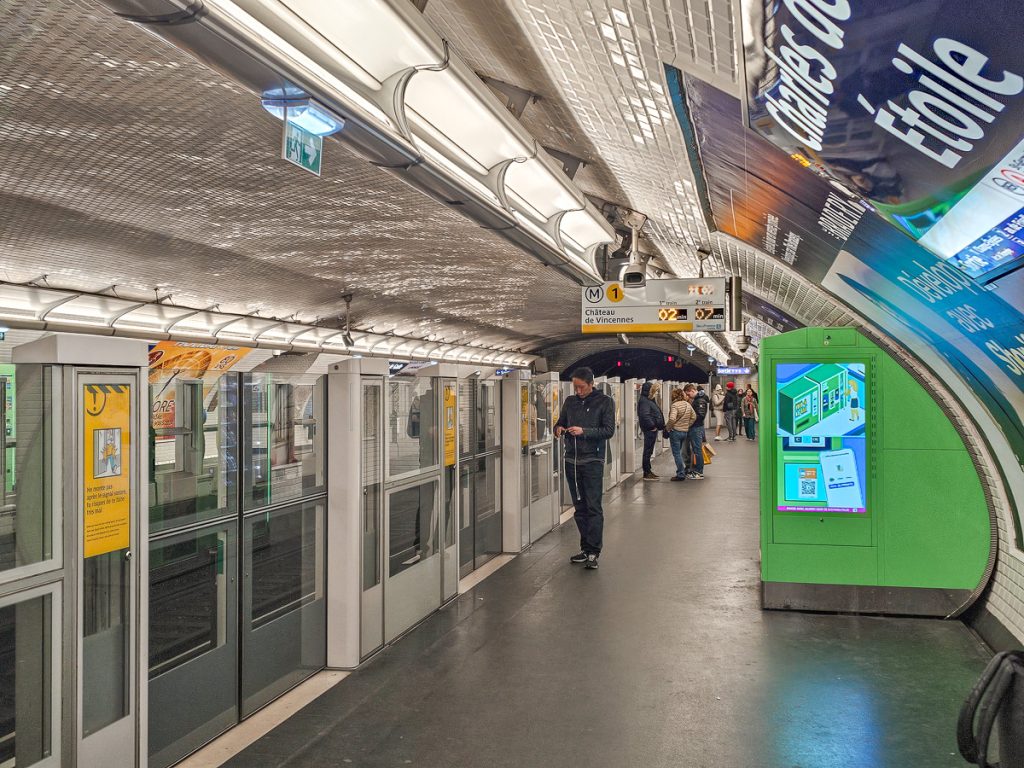
In France, generally speaking, people tend to speak more quietly, and this can be seen in restaurants, cafés, trains, the metro, and even on sidewalks. Talking super loudly can sometimes be considered rude, even though most travelers don’t mean it that way at all.
Of course, this is not a hard and fast rule. There are plenty of times that French people aren’t quiet, and certainly not all foreigners are loud.
That said, it’s a good reminder to be mindful of your volume. You don’t need to whisper, but just a bit of awareness and a small adjustment if necessary can help you blend in a little bit more and keep the atmosphere comfortable for everyone around you.
5. Don’t Sit at a Café Terrace Without Ordering Something

It’s totally understandable to want a break when you’ve been walking all day and your feet are tired. And those café terraces look so inviting, with tables and chairs set up everywhere, just waiting for someone to sit down.
But in Paris, terrace seating is for customers, even if you’re only ordering a coffee or a soda. If you need a moment to rest, it’s better to find a bench or step off to the side. Or, just order a drink to enjoy on the terrace while you rest your legs.
6. Don’t Assume “The Customer Is Always Right”
In France, the idea that the customer comes first just isn’t how things work. Rules and systems are followed as they are, and making exceptions isn’t the norm.
So if a restaurant won’t adjust a dish, or a shop or museum can’t bend a policy, it’s not personal. Again, this is not a hard and fast rule, but it is more common here than in the US.
Most travelers aren’t trying to be demanding, they’re just operating with a different mindset. Knowing this ahead of time helps set expectations and avoid too much frustration.
7. Use the Little Dish for Payment When It’s Offered
In many boulangeries and small shops, you’ll see a tiny dish or tray sitting on the counter. That’s where you’re expected to place your cash. Handing things directly isn’t wrong, but the dish is the more typical way to handle payment.
It’s a small detail, but it helps you move through everyday interactions the way locals do. And once you notice it, you’ll start spotting those little dishes everywhere.
8. Step Aside Instead of Stopping on Sidewalks

If you need to check your map or take a photo, step off to the side rather than stopping in the middle of the flow. Locals weave through the streets quickly, and even a small pause can create a bottleneck. Plus, some sidewalks can be narrow, particularly in older neighborhoods.
It’s very easy to get distracted when you’re in a new, beautiful destination, but if you can try to keep this in mind, it helps make everyone’s street experience a little bit better.
9. Don’t Put Your Feet Up on Chairs, Benches, or Ledges
Even if you’re exhausted from walking all day, putting your feet up in public spaces is a big no in Paris. That includes café chairs or metro seating. Putting your feet on a seat is considered disrespectful, and if an inspector sees you doing it on the metro, you could get an immediate fine.
A quick rest is totally fine, just keep your feet on the ground and you’ll be a-ok.
10. Don’t Sit or Walk on Lawns Unless It’s Clearly Allowed
A lot of Paris parks have grass you’re not supposed to walk or sit on, and it’s more common than many visitors expect. Some lawns are purely decorative, and the signs can be small, so it’s easy to miss.

Look for signs that say “Pelouse Interdite,” which means it’s forbidden to walk or sit on the lawn. This is the more common sign.
Occasionally you’ll see “Pelouse Autorisée,” which means the lawn is open, but it’s far more typical to simply notice where locals are sitting. As long as you don’t see an interdite sign, you’re generally safe to follow their lead.
11. Eating While Walking Isn’t Common

In Paris, eating is treated as an actual moment, not something you do on the move. You won’t usually see people walking down the street while eating their breakfast or lunch. Even quick snacks are usually enjoyed sitting on a bench or on a set of steps.
It’s not that eating on the go is “forbidden,” and certainly no one will yell at you if you need or want to eat on the go. It’s just not how French people do things.
If you want to blend in, pause somewhere comfortable and enjoy it. Honestly, it makes the food taste better anyway.
12. Skip Athleisure Wear
Athleisure is a normal, everyday look in the US, but in Paris, it’s mostly worn for… exercising. You typically won’t see people wearing leggings, biker shorts, or workout tops to museums, restaurants, or just walking around town.
Even casual outfits tend to be simple but pulled together: jeans, a basic tee, a light jacket, and comfortable sneakers.
You absolutely don’t need to dress up or try to “look Parisian,” but wearing leggings or workout clothes outside of the gym will often mark you as a tourist. This is especially true for adults, as French teenagers often dress more casually as well.
But honestly, looking like a tourist is not the worst thing in the world. Absolutely the most important thing when you’re traveling is being comfortable (especially for children), and if that’s in leggings, great. Again, no one is going to yell at you for your outfit.
But if you’re someone who likes to dress as the locals do, skip the athleisure.
The Wrap Up
Paris is an easy city to enjoy, and once you know these little habits, everything runs more smoothly. You don’t have to get it perfect, but a few small adjustments help you feel more comfortable and make every interaction a bit easier.
