

Discover the Paris Church Where Gothic Architecture Began and Kings Were Laid to Rest

The Basilica of Saint-Denis sits just north of Paris and holds a unique place in French history. This is the burial site of France’s kings and queens, the birthplace of Gothic architecture, and one of the most important churches in the country.
It isn’t in central Paris, and it doesn’t get the same attention as Notre-Dame or Saint-Sulpice. In fact, it’s definitely an off-the-beaten-path site. But historically speaking, Saint-Denis matters just as much, if not more than the big-name churches.
For centuries, this was where French monarchs chose to be laid to rest, deliberately tying themselves to what this site represented.
Saint-Denis and Why This Spot Became Sacred
Saint-Denis was the first bishop of Paris and is considered the patron saint of France. In the third century, when Paris was still known as Lutetia and part of the Roman Empire, Denis was sent to evangelize the region.
According to tradition, he was arrested by the Romans and executed by beheading on a hill north of the city. That hill is now Montmartre, which literally means “Mount of the Martyr”.
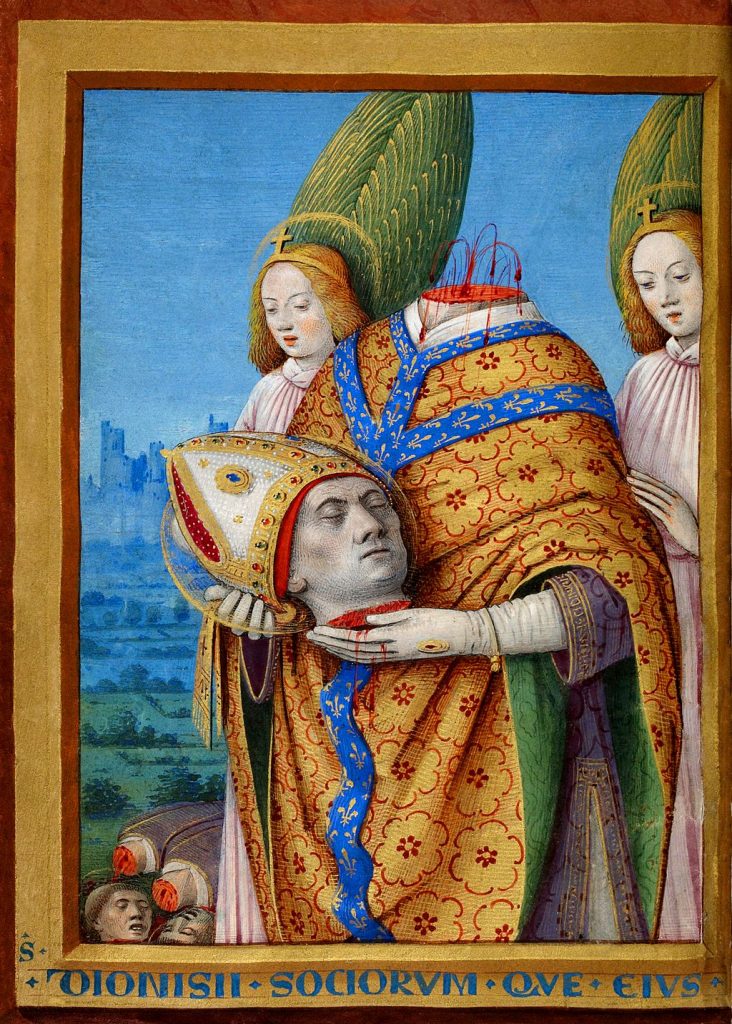
Legend says that after his execution, Denis picked up his severed head and walked north while praying, finally collapsing at the spot where the basilica stands today. A church was built on that site soon after, likely by the mid-500s.
How Saint-Denis Became the Burial Place of Kings
The first French king buried at Saint-Denis was Dagobert in 639, when the building was a much more modest church, but burial was only part of why this place mattered.
In the early centuries, particularly in the 5th and 6th centuries, Saint-Denis was an important pilgrimage site. People came to honor him, the patron saint of France and Paris, and the abbey became a well-known spiritual center long before it was firmly tied to the monarchy.
That royal connection strengthened over time. Beginning around the 10th century, French kings increasingly chose Saint-Denis as their burial site, deliberately placing themselves under the protection of Saint-Denis in the hope of eternal salvation. What started as a symbolic gesture gradually became tradition.
Saint-Denis also played a role in royal life. Many queens of France were crowned here, and the official royal regalia were kept at the abbey. Kings came to Saint-Denis for major ceremonies that reinforced their legitimacy.
One of the clearest examples came in 1593, when Henry IV formally renounced his Protestant (French Huguenot) faith here in order to become Catholic and rule France. Choosing Saint-Denis tied his reign to centuries of royal tradition.
By the Middle Ages, Saint-Denis was firmly established as the royal necropolis. In total, the basilica has held the remains of 41 kings, 26 queens, dozens of princes and princesses, and several major figures of the French state.
A Turning Point in Gothic Architecture
Saint-Denis is also where Gothic architecture truly begins in France.
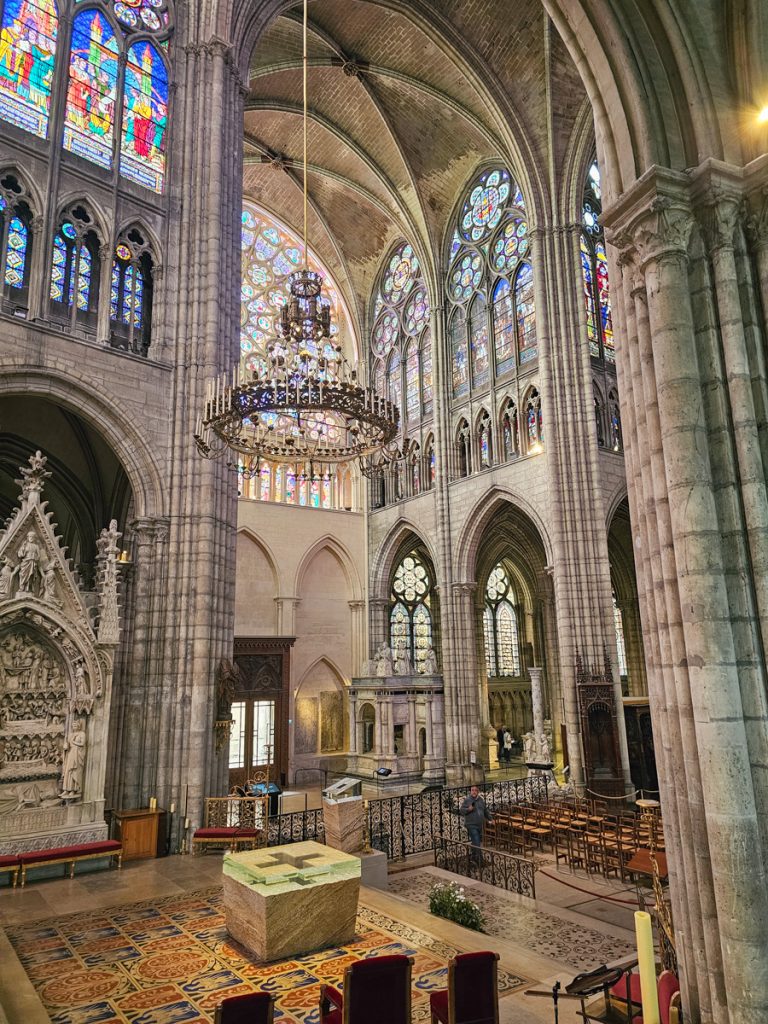
In the 12th century, Abbot Suger oversaw a major rebuilding of the church. His vision focused on light as a symbol of the divine, which led to architectural innovations that were groundbreaking at the time.

Ribbed vaults, pointed arches, and expansive stained glass all come together here in a way that hadn’t been done before (as well as flying buttresses and gargoyles, two other defining features of Gothic style).
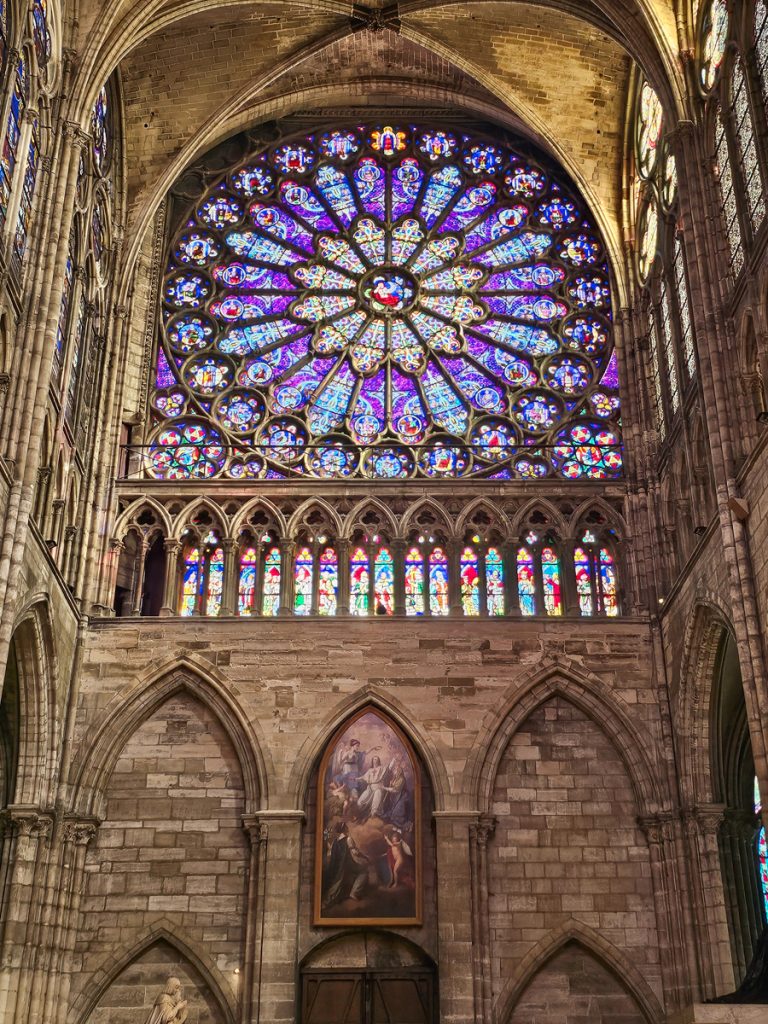
The massive rose windows in the transept became models for later Gothic churches, including Notre-Dame in Paris. When people talk about classic Gothic design, Saint-Denis is where it started.
Entering the Basilica
Inside, the Gothic ideas described above are immediately visible. The ceilings are very high, and the space feels open rather than heavy. Some Gothic churches are tall but still feel dark, but Saint-Denis feels light and bright, in part thanks to the amount of stained glass around the church.
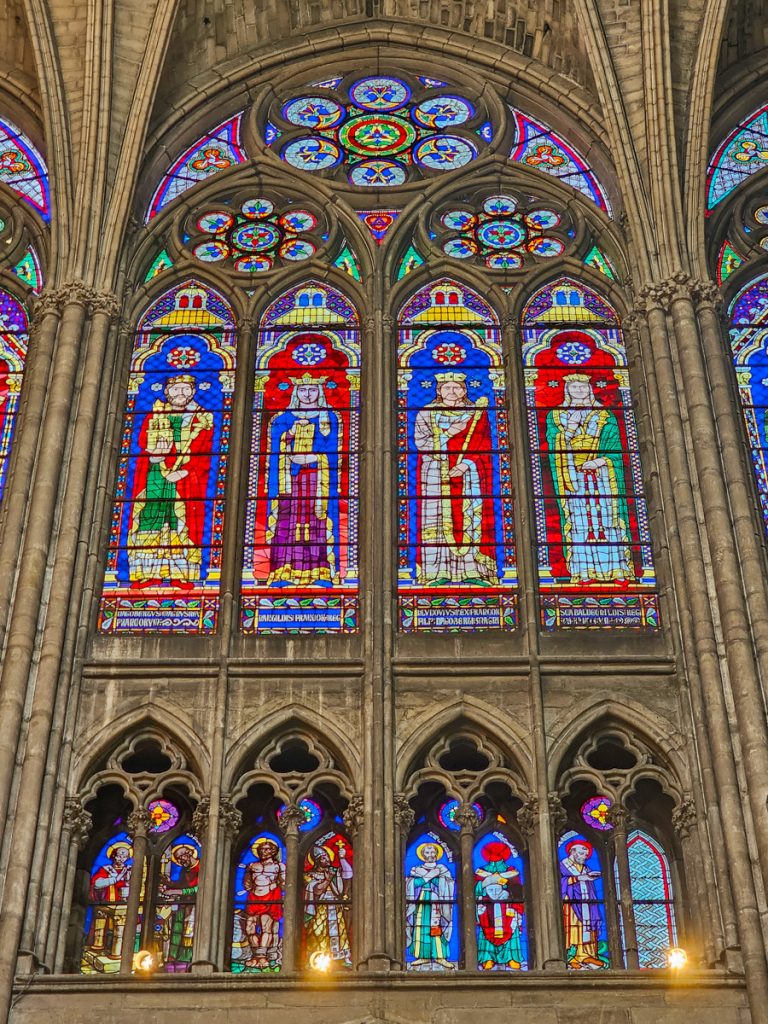
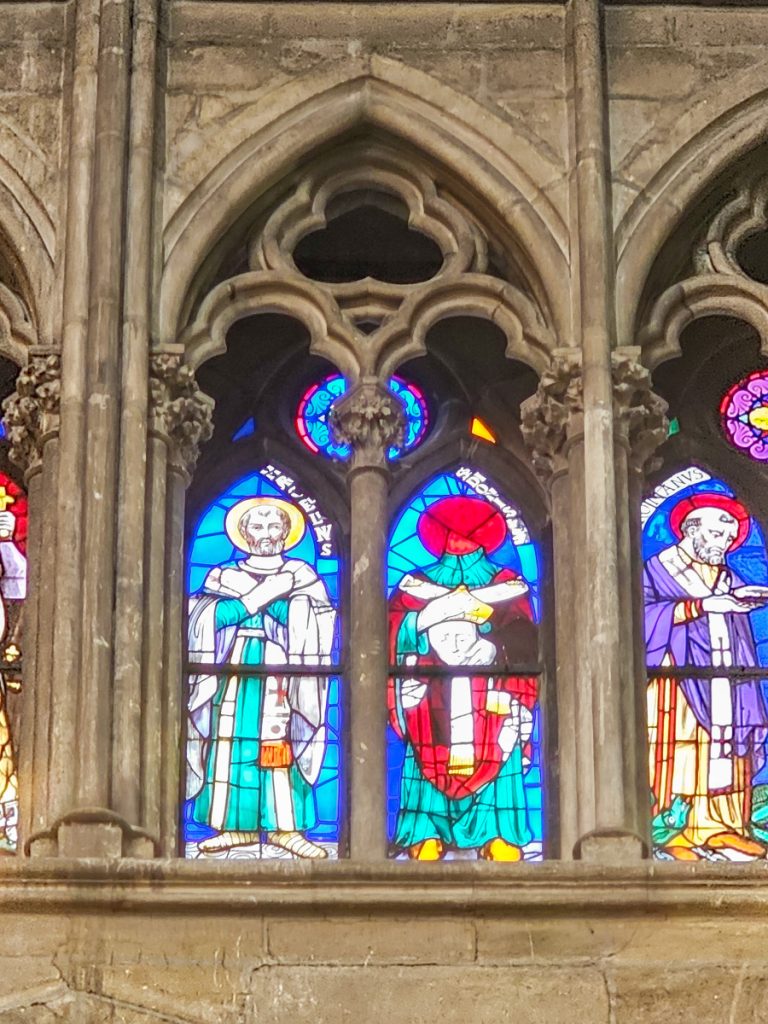
As you walk down the nave of the church, pay attention to the upper-level stained-glass windows that depict the saints, as well as the kings and queens of France. You can spot Saint-Denis here, holding his head as always.
Going Behind the Choir – The Real Attraction
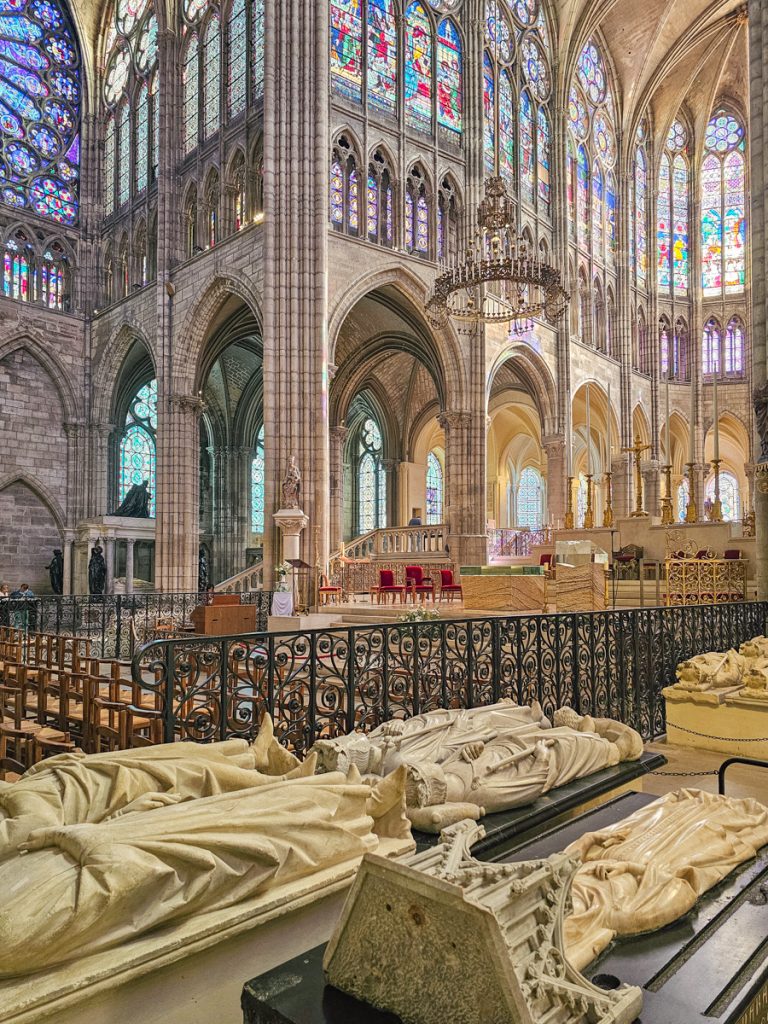
While the front part of the church is certainly lovely, the real reason to visit Saint-Denis is in the back half of the church, past a divider that blocks the view from the main nave. This is the paid section, and it is absolutely worth the cost.
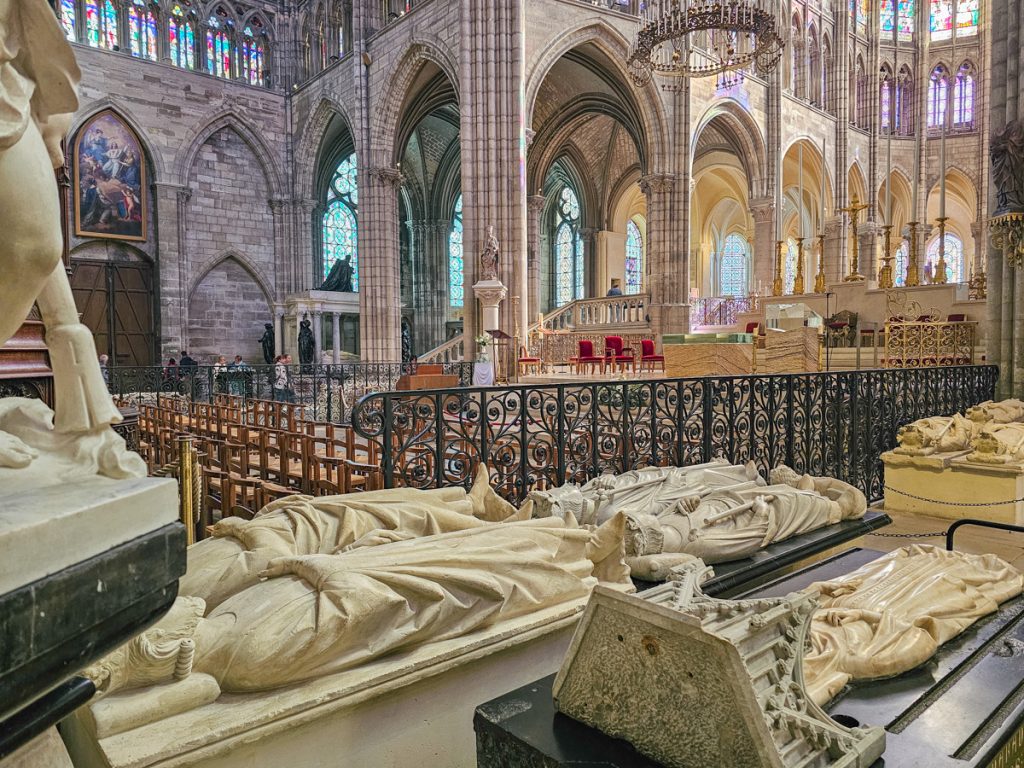
This is where the royal necropolis is, and it’s far more extensive than you might expect. Dozens of recumbent tombs line the choir and transept. These are known as gisants, stone effigies of kings, queens, princes, and princesses carved lying on top of their tombs.
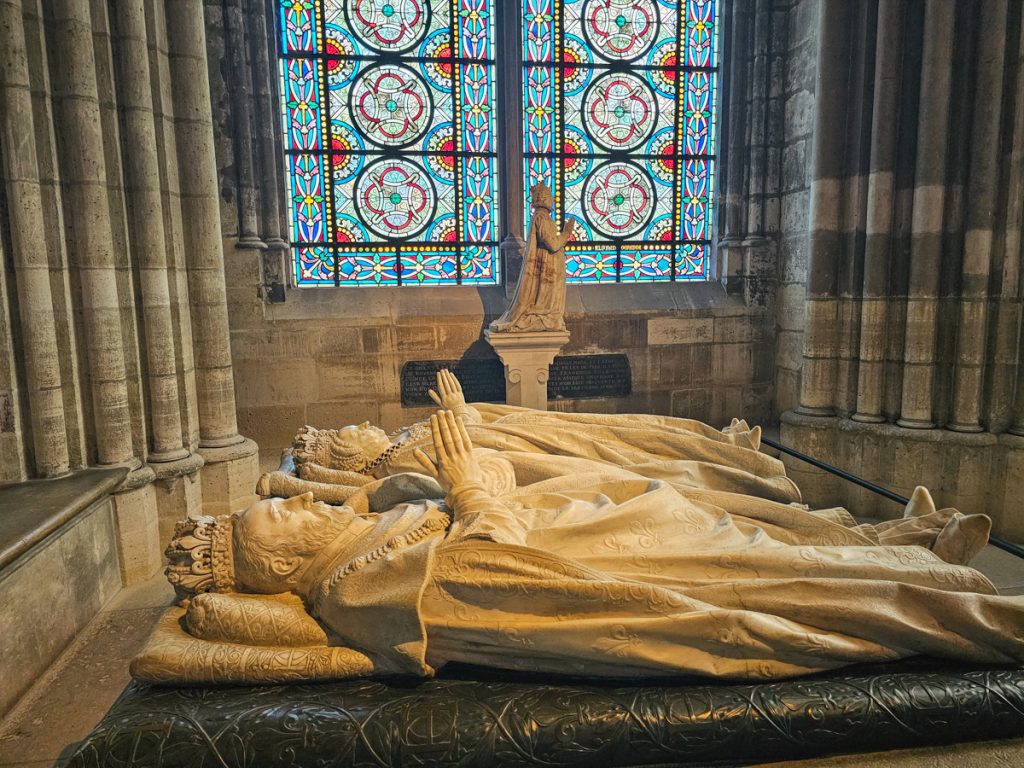
Beyond the quantity of tombs, the setting is really breathtaking. The pale stone sculptures sit in front of tall, colorful stained glass, with light filtering in behind them. You’re looking at detailed carved figures, and then just beyond them, layers of blues, reds, and greens glowing through the windows. It’s genuinely beautiful.
Currently, there are approximately 70 tombs in Saint-Denis. Many of the tombs are grouped together, often in clusters of four or five, and almost every group has an interactive screen nearby which gives short histories of the people buried there.
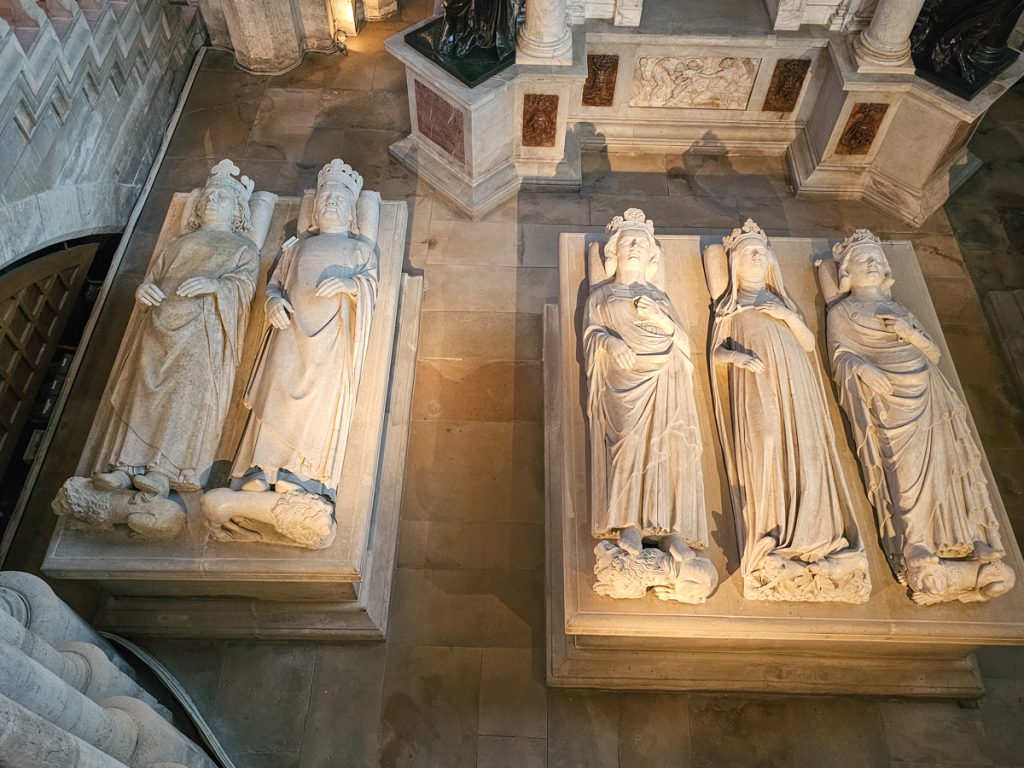
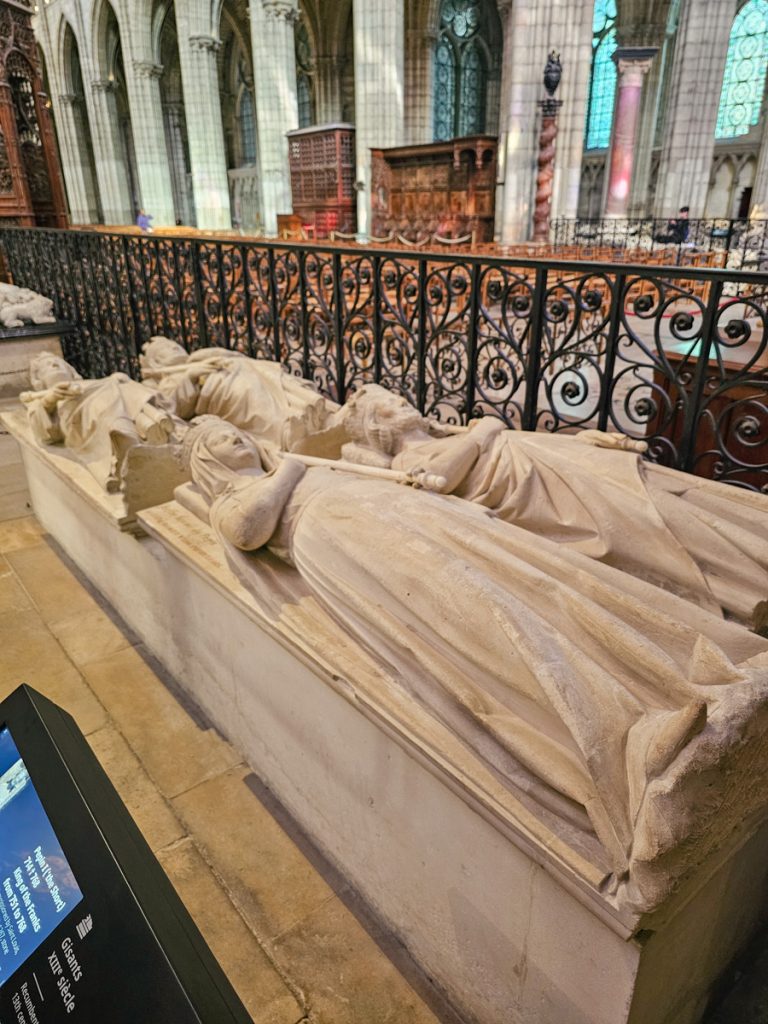
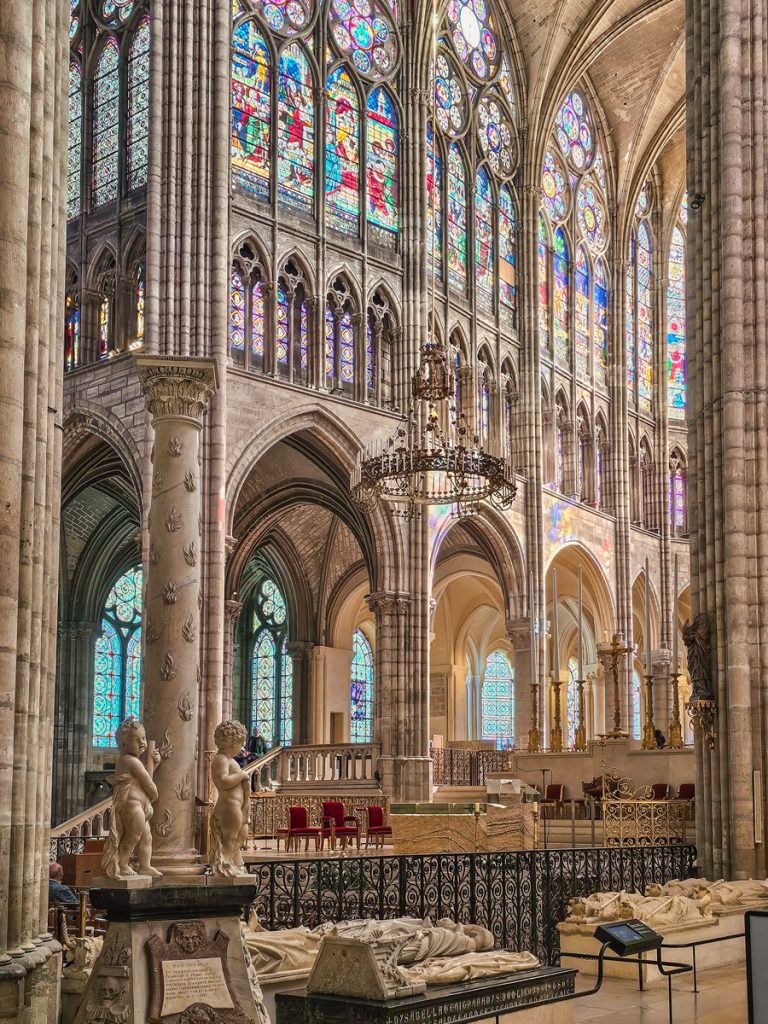
I spent quite a bit of time stopping to scroll through these. It made the experience feel more personal and helped connect names and give context to the sculptures in front of you.
The Monumental Tombs
Beyond the individual recumbent tombs, Saint-Denis also has three major monumental tombs from the Renaissance period. They all follow the same basic pattern and stand out from the rest of the tombs.
Each monumental tomb is two-tiered. On the lower level, the rulers are shown recumbent, lifeless, and stripped of royal status. Above, the same figures appear kneeling in prayer, dressed in royal clothing. The contrast is deliberate, showing both the reality of death and the hope of salvation.
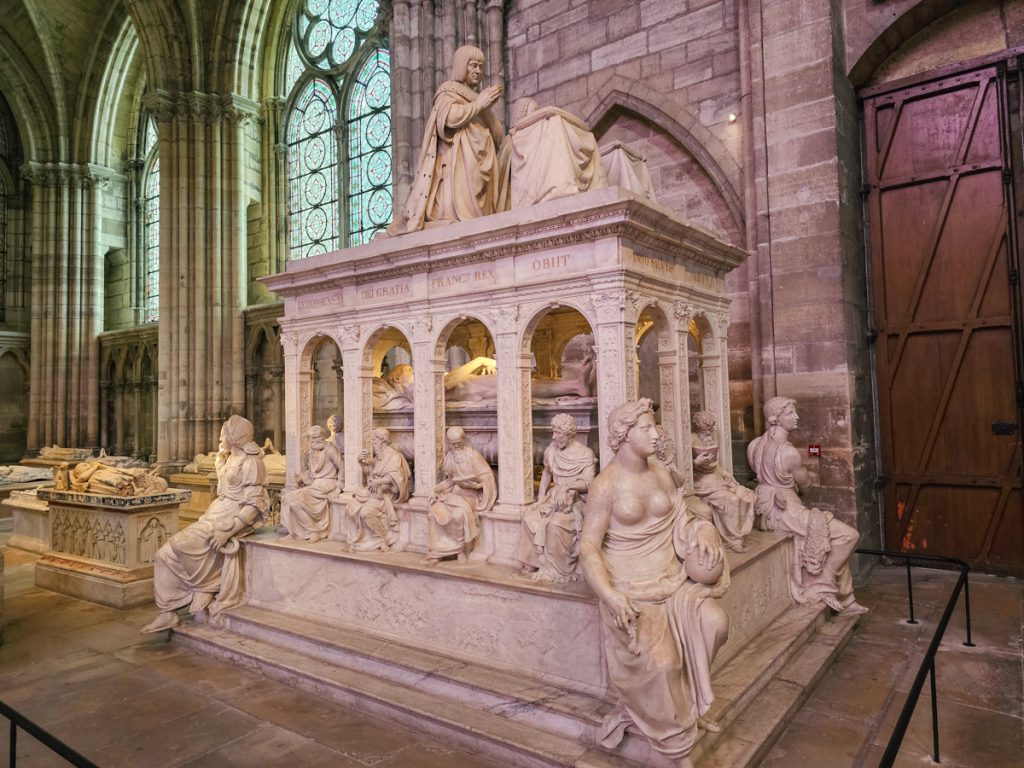
The first of these was the tomb of Louis XII (died 1515) and Anne de Bretagne. It was commissioned by François I for his parents-in-law and was the largest royal tomb in Europe when it was completed. Statues representing the four cardinal virtues stand at the corners, reinforcing the moral ideals expected of a ruler.
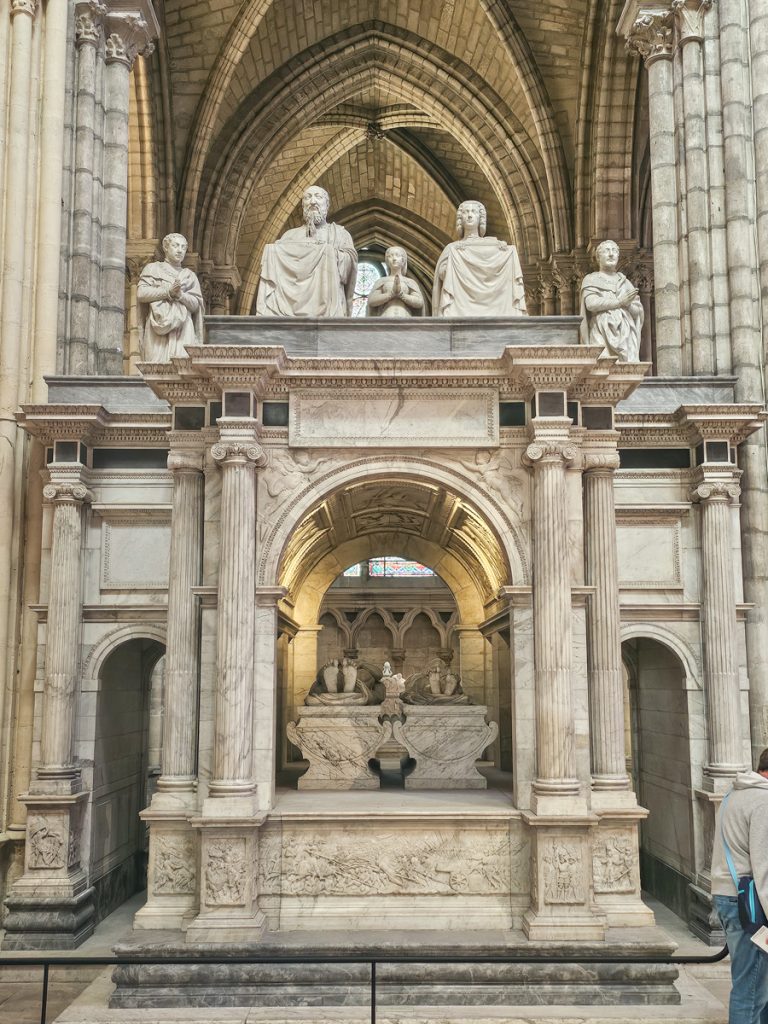
Next came the tomb of François I (died 1547) and his wife, Claude, ordered by their son Henri II. Its design draws on ancient Roman triumphal arches, a clear nod to the influence of Italian Renaissance art in France.
François I’s role in shaping Renaissance France, in part by commissioning major royal projects like Fontainebleau and several Loire Valley châteaux, makes this tomb especially meaningful in context.
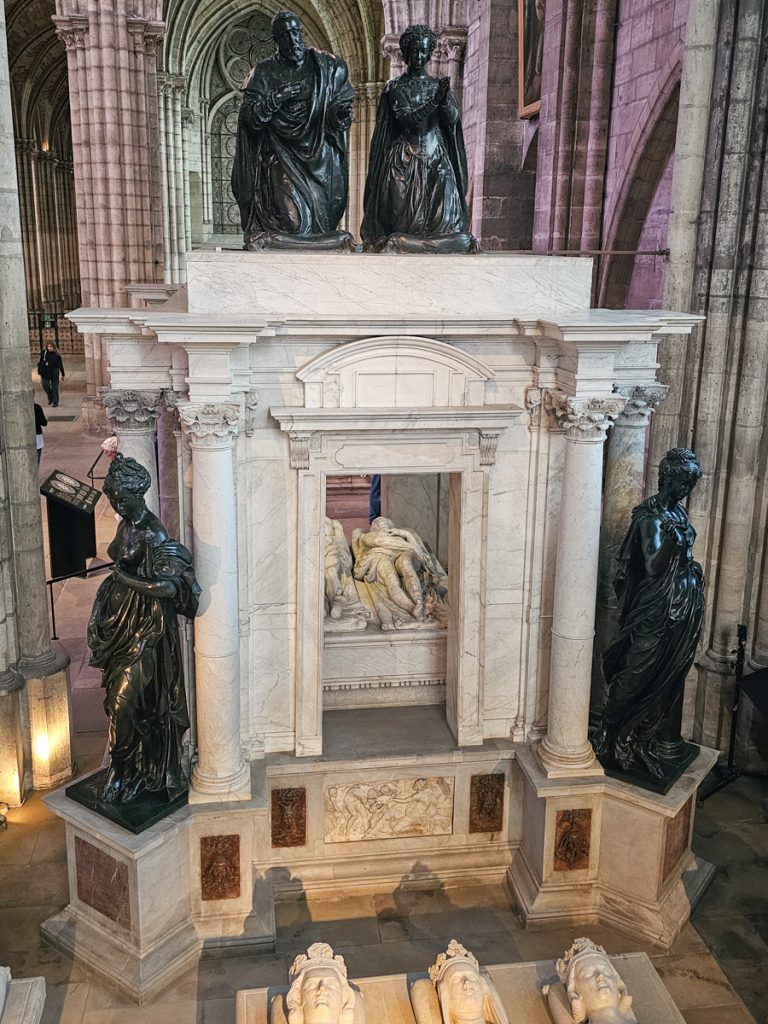
The final monumental tomb belongs to Henri II (d. 1559) and Catherine de Medici (d 1589). Designed to resemble an ancient temple, it reflects the same classical influence seen in the earlier monuments.
Catherine de Medici, who effectively ruled France for many years as regent to three kings, was the last monarch to commission a major funerary monument at Saint-Denis, bringing this tradition to a close.
The Crypt and the Revolution’s Aftermath
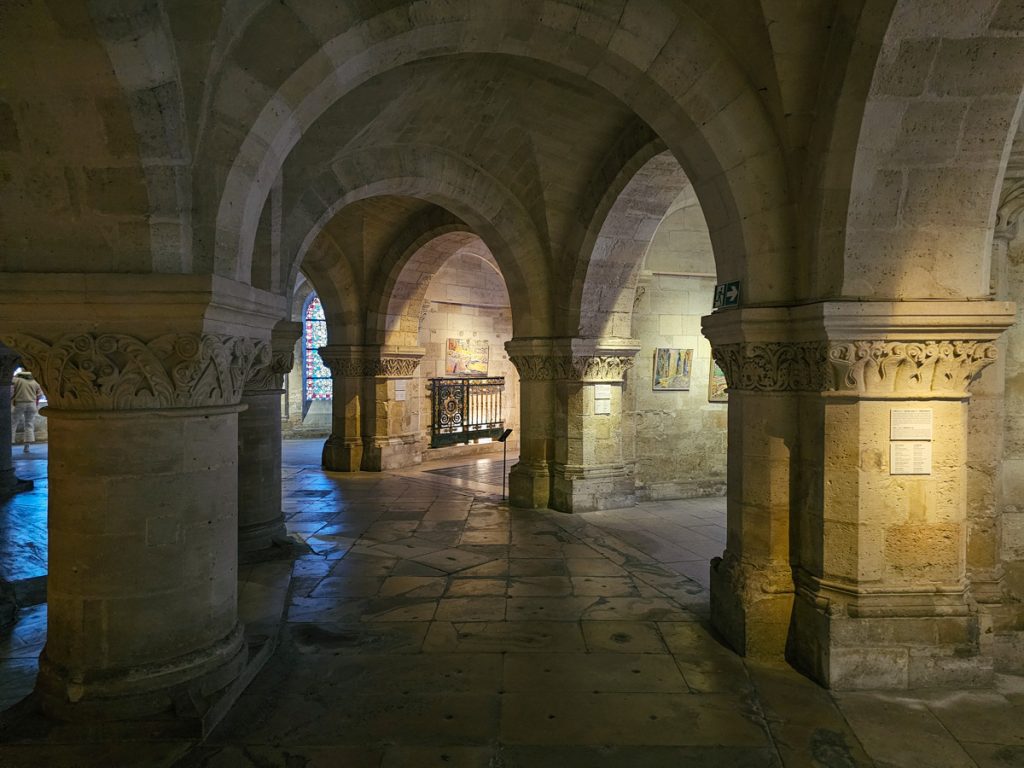
The underground crypt is made up of a series of rooms filled with simple tombs, small chapels, and scattered monuments, all connected by thick stone columns and low arches. It immediately feels older and heavier than the space above.
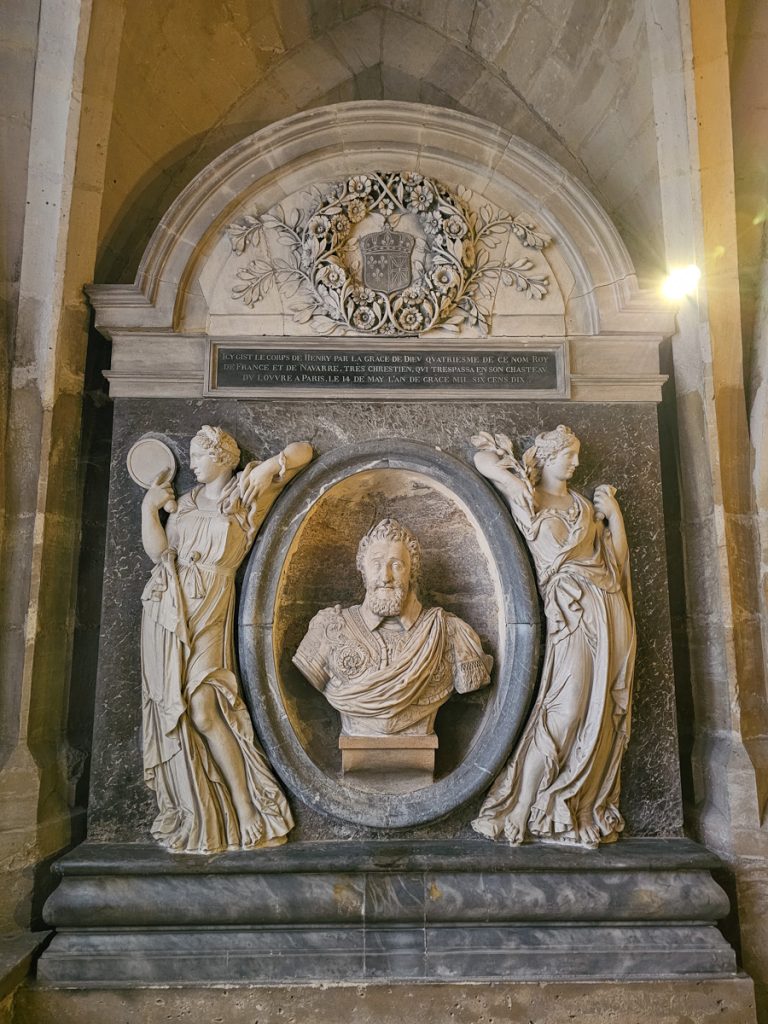
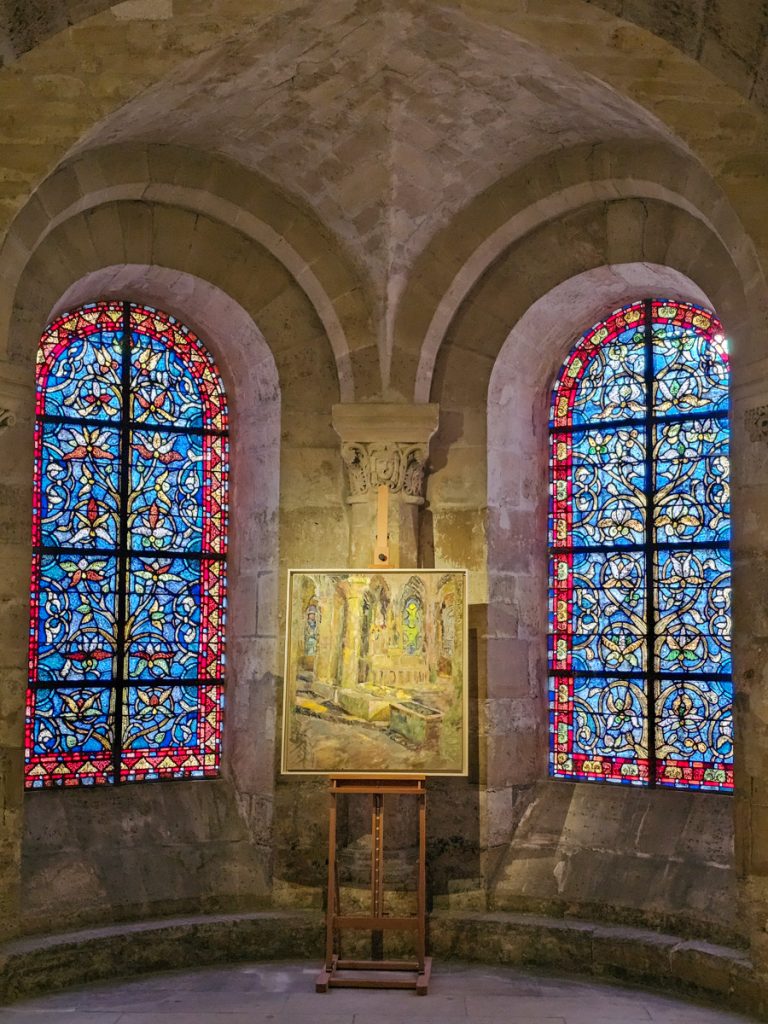
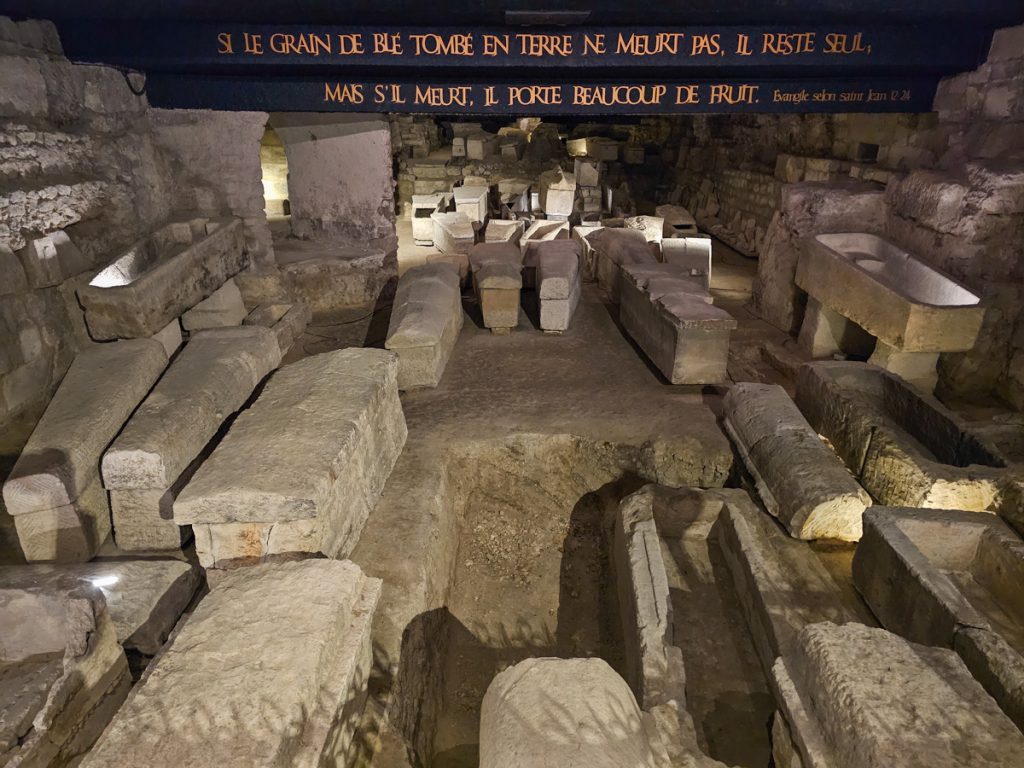
A few spots in the crypt are particularly interesting. The first is an underground “cave” filled with very old stone tombs that were uncovered during archaeological excavations in the 1950s. Not much is known about who was buried here or when, but it certainly adds a strong sense of mystery to this part of the crypt.
The crypt was also deeply affected by the French Revolution. In 1793, revolutionaries opened the royal tombs above, partly as a symbolic rejection of the monarchy and partly to recover the lead from the coffins to make ammunition. The bodies were removed and dumped into mass graves outside the basilica, leaving the elaborate tombs upstairs empty.
After Louis XVIII brought the monarchy back to power in 1814 following Napoleon’s abdication, efforts were made to recover the remains. In 1817, these bones were brought back to Saint-Denis.
Because they were badly mixed and largely unidentifiable, they were placed together in a communal ossuary within the crypt. You can step into a small room and read a long list of names representing the monarchs whose remains are believed to be here.
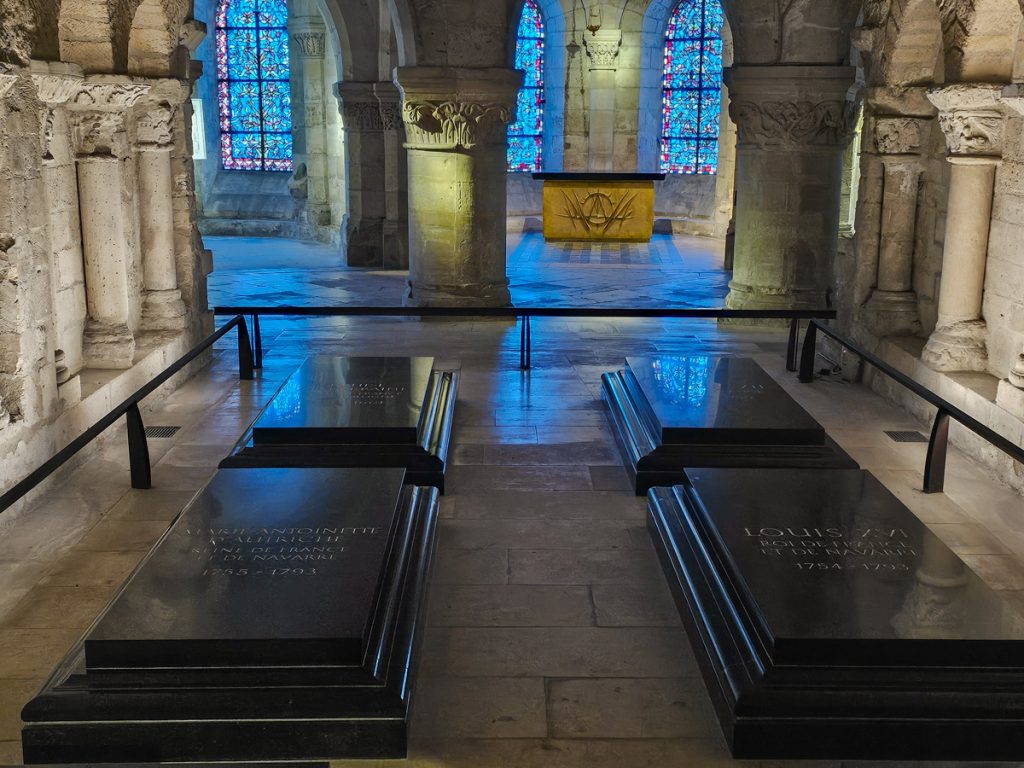
This is also where the story of Louis XVI and Marie Antoinette comes to an end. After their executions, they were originally buried at the Madeleine cemetery in Paris. Their remains were transferred to Saint-Denis in 1815, and today they rest in simple black tombs at the center of the crypt.
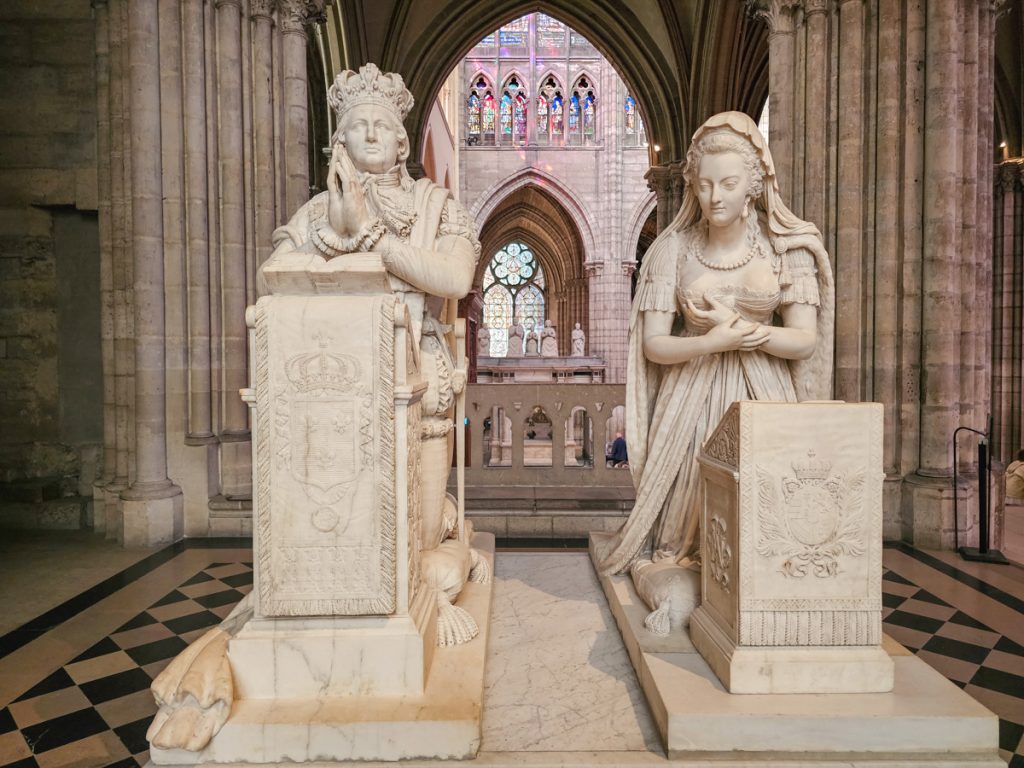
Above ground, you’ll see a monument showing Louis XVI and Marie Antoinette kneeling in prayer, dressed in royal clothing. It was also commissioned by Louis XVIII, in part to help legitimize the monarchy’s return.
A Building That’s Been Through a Lot
The Revolution was a huge blow to Saint-Denis, but it certainly wasn’t the first time the basilica had taken damage.
Long before 1789, Saint-Denis was looted during the Hundred Years’ War and again during the Wars of Religion. After the church’s tombs were plundered in the French Revolution, things got even worse. The basilica was left disused and exposed to the elements for years. At one point, it was even turned into a theater and a warehouse for flour and wheat.
Restoration slowly began in the 1800s. In 1813, Napoleon I commissioned a restoration of the building, and the work was massive, including new stained glass, facades, floors, vaults, and sculpture.
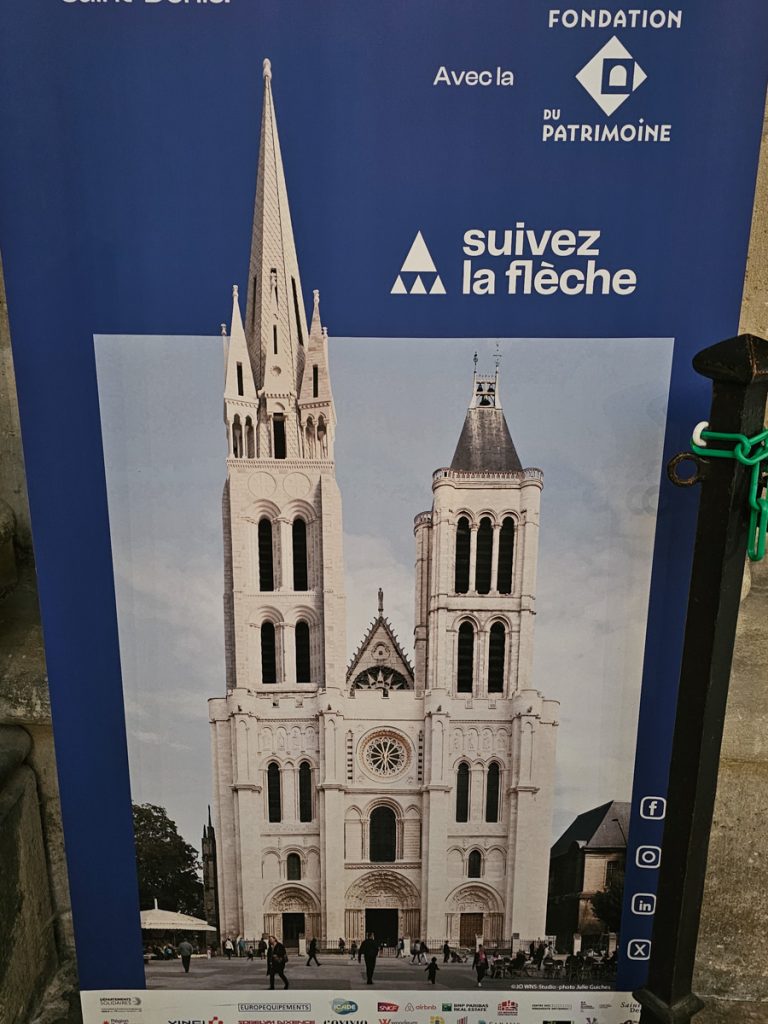
In 1837, lightning struck the north spire, which was about 90 meters tall, and in 1845, heavy storms weakened it again. In 1847, the entire northern tower was dismantled to prevent collapse, with the idea that it would be reassembled later. That never happened, and for nearly two centuries, the basilica stood with only one tower.
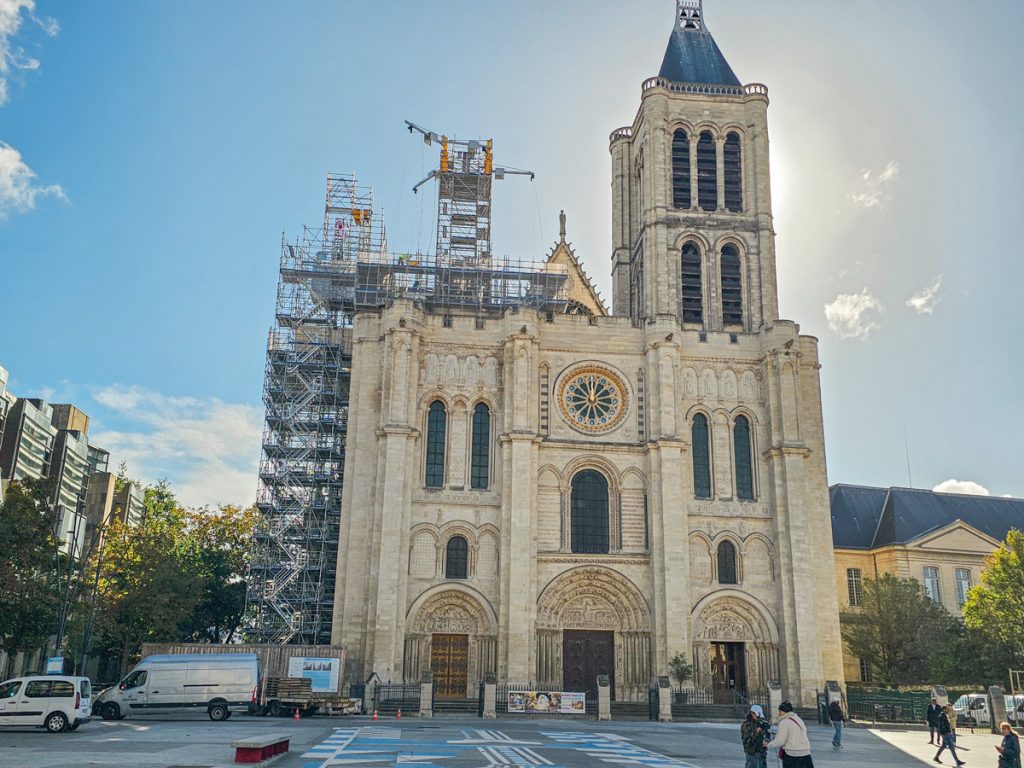
That’s finally changing. A major reconstruction project is now underway to rebuild the north tower and spire using historical plans and traditional methods. The work is expected to continue through the end of the decade, with completion currently planned for 2030.
What to Know Before You Go
Getting There: Saint-Denis sits just north of central Paris, outside the city’s 20 arrondissements, but it’s still very easy to reach. Take Metro Line 13 heading north in the direction of St-Denis Université and get off at Basilique Saint-Denis, the second-to-last stop. The basilica is just steps from the metro station.
One thing to watch for: Line 13 splits at the northern end. One branch goes to St-Denis Université, and the other goes to Asnières–Gennevilliers–Les Courtilles. Make sure you’re on a train marked St-Denis Université before boarding.
Confused by the Paris Metro system? Read my ultimate guide to navigating Paris’s public transit.
Time Needed: I spent about 45 minutes here, which was plenty of time to slowly wander around, read the signs, and take lots of pictures.
Cost: €17, or free with the Paris Museum Pass
Hours: The Basilica is open every day of the week. Opening hours depend on the day and season, and the church is occasionally closed. Check hours here.
Final Thoughts
Saint-Denis is one of the more unique churches in Paris, and because of its location, still very much a hidden gem. It’s well off the typical sightseeing route, and is a particularly good option if you have at least 5 days in Paris or are visiting for a second (or third, or fourth, or…) time.
I expected to enjoy Saint-Denis, but I ended up liking it even more than I thought I would. If you’re looking for something meaningful beyond the usual Paris checklist, this is a really solid option.
