
7 Bridges in Paris That Are Just as Fascinating as the Landmarks They Connect

I love the bridges (or ponts, in French) of Paris – they all offer incredible vistas over the Seine River and access to walking paths along the riverbanks. Plus, you often get amazing views of some of Paris’s biggest landmarks from unique angles.
And since the Seine cuts right through the center of Paris, dividing it almost perfectly in half, you’ll have ample opportunity to cross plenty of bridges as you explore both the Left and Right Banks.
Today, 37 bridges cross the Seine in Paris. All of them have their own story to tell, but these seven are some of the most iconic, interesting, and picturesque ones to see during your visit.
1. Pont des Arts

The Pont des Arts is one of Paris’s most iconic pedestrian-only bridges, connecting the Louvre on the Right Bank to the Institut de France on the Left Bank.
Commissioned by Napoleon in 1801, it was the first iron bridge built in Paris and remains a favorite spot for locals and visitors thanks to its wide-open views over the Seine. In particular, you can enjoy a stunning angle looking toward the tip of Île de la Cité.

For years, the bridge was famously covered in love locks, a romantic tradition where couples would fasten a padlock to the railings and toss the key into the river as a symbol of eternal love.
However, the weight of hundreds of thousands of locks eventually started to damage the bridge and create a serious safety hazard. Officials estimated there were between 700,000 and a million locks attached, adding anywhere from several dozen to over 100 tons of extra weight on a structure never designed to handle it.

In 2015, the locks were removed and replaced with clear panels, but even without the locks, the Pont des Arts has kept its reputation as one of the most romantic spots in Paris.
(In general, locks are damaging to structures around Paris and are considered vandalism and are illegal, so please refrain from adding one).
2. Pont Neuf

Just east of the Pont des Arts, the Pont Neuf is a historic stone bridge that stretches across the western tip of Île de la Cité – the island where Notre Dame stands.
Despite its name, which means “New Bridge,” it’s actually the oldest bridge in Paris, built between 1578 and 1607, and standing strong for more than 400 years. In 1889, it was designated a “monument historique.”
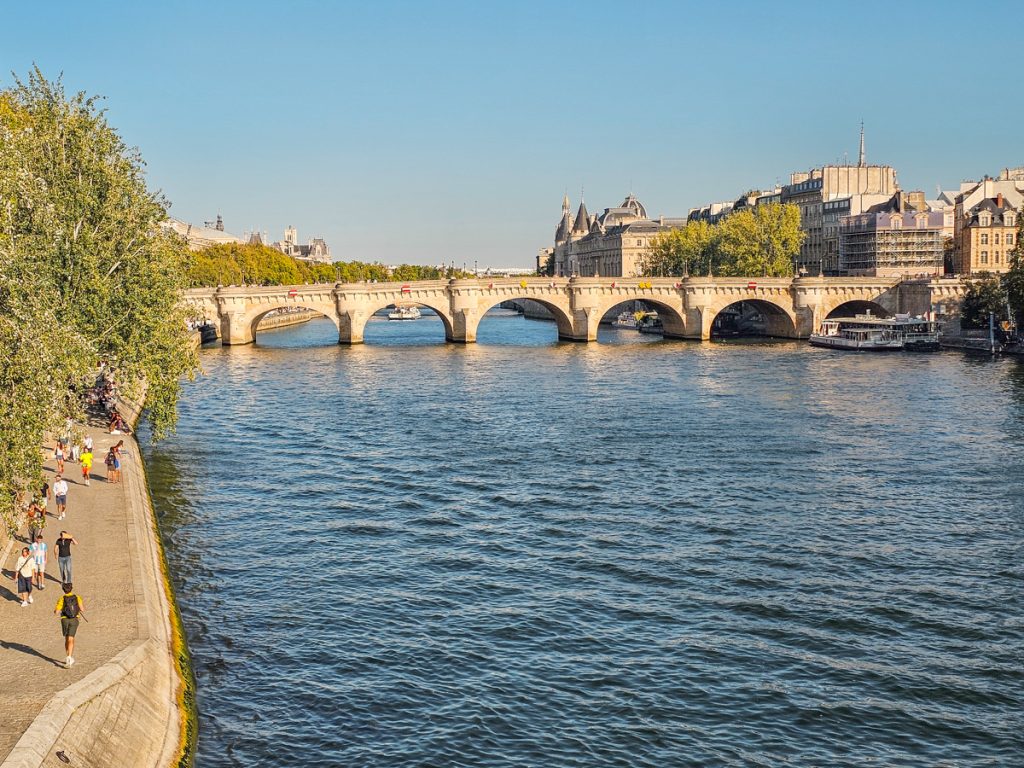
The bridge is made up of two sections: one connecting the Left Bank to the island and another linking the island to the Right Bank, with a total of twelve stone arches spanning the Seine.
At the midpoint, where the bridge crosses the island, you’ll see a bronze statue of King Henry IV, who ruled France around the time the bridge was built.

Pont Neuf is also known for its 381 stone mascarons, expressive carved faces that line the bridge’s cornices. Each one is unique, a mix of mythological and grotesque designs that were meant to ward off evil spirits.
It’s a beautiful spot to walk across, offering great views over the Seine and down toward the Pont des Arts. At the western tip of the island, you can also step down into Square du Vert-Galant, a peaceful little park surrounded by water that’s a popular evening meetup spot.
3. Pont Alexandre III

Pont Alexandre III is easily the most beautiful bridge in Paris – ornate and elegant, and full of intricate details. The bridge connects the Grand Palais and Petit Palais on the Right Bank (8th arrondissement) to Les Invalides on the Left Bank (7th arrondissement).

Built as a symbol of the Franco-Russian alliance, the bridge was named after Tsar Alexander III, with his son Nicholas II laying the first stone in 1896. It was inaugurated a few years later for the 1900 Paris Exposition. It’s been listed as a French monument historique since 1975.
The bridge is designed in the Beaux-Arts style, with elegant Art Nouveau lampposts and four enormous pillars, one at each corner, topped by gilded bronze sculptures of winged horses. These bronze sculptures represent Science, Arts, Commerce, and Industry.

The beauty of this bridge has caused it to be featured in dozens of films and TV shows.
4. Passerelle Debilly

Just upstream from the Eiffel Tower, the Passerelle Debilly is a pedestrian bridge that offers some of the best views of the Tower without the crowds. Its metal arches almost curve like waves over the river, in contrast to the many stone bridges in Paris.

The bridge connects the Quai de New York, near the Musée d’Art Moderne on the Right Bank, to the Musée du Quai Branly on the Left Bank. It was named after General Jean-Louis Debilly, who served under Napoleon and was killed at the Battle of Jena in 1806.
5. Pont de Bir-Hakeim
The Pont de Bir-Hakeim is one of the most distinctive bridges in Paris thanks to its double-deck design. The upper level carries Metro Line 6, while the lower level is for cars, cyclists, and pedestrians.
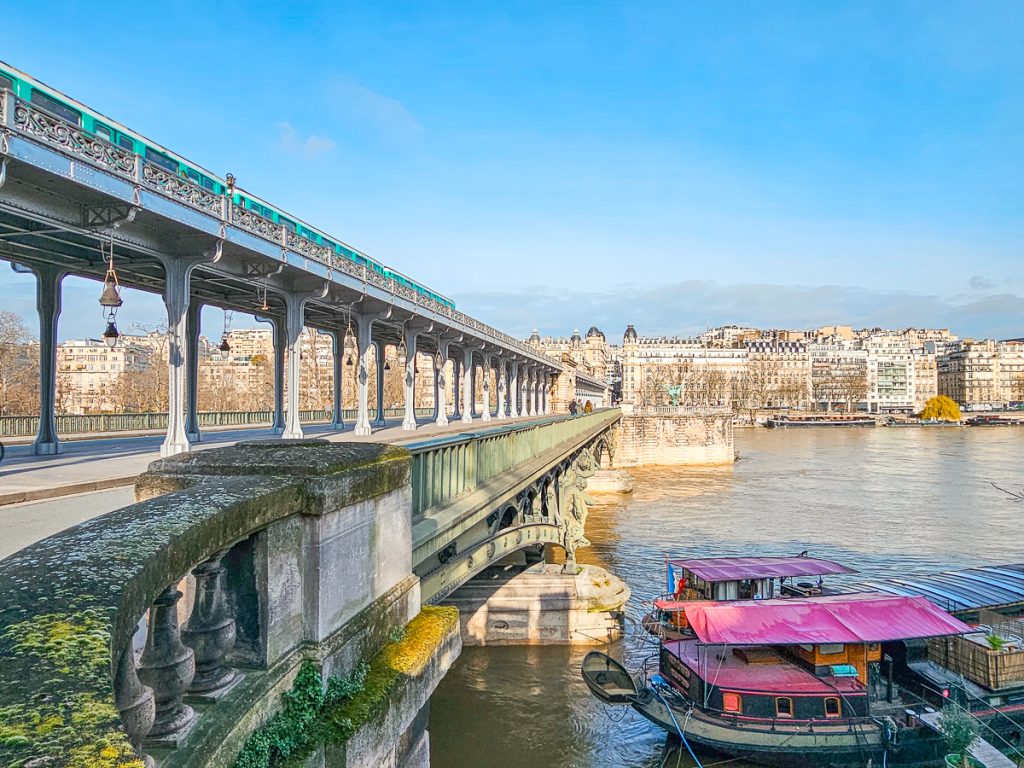
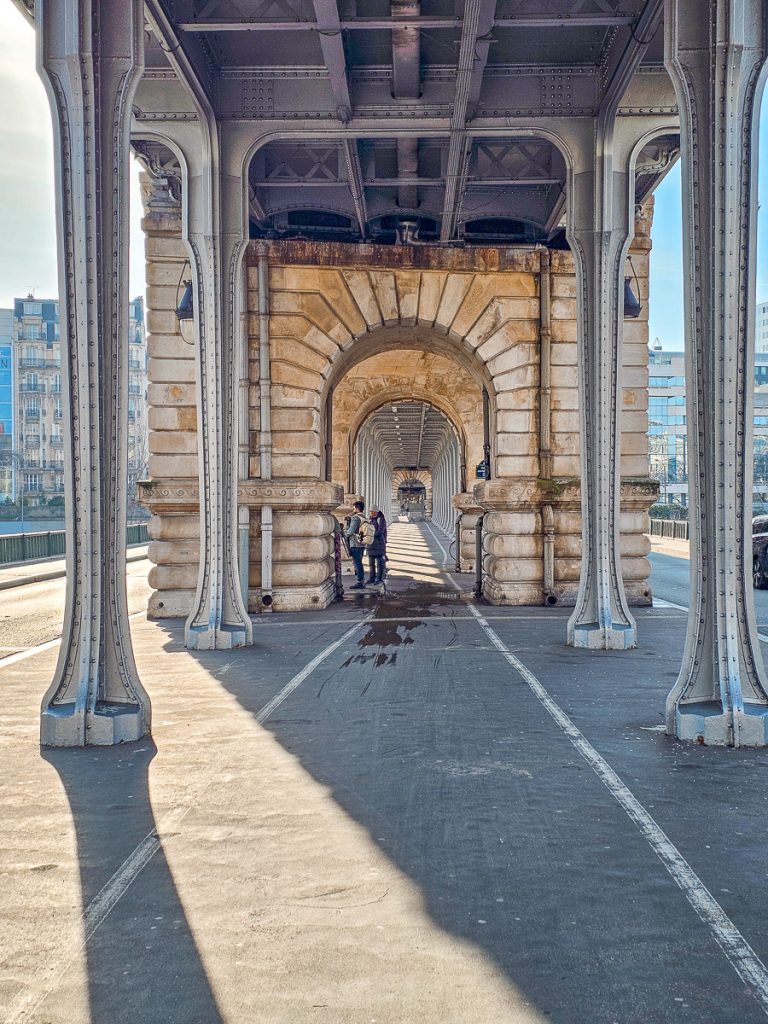
Completed in 1905, the bridge’s metal colonnades, stone arches, and art deco streetlights make it especially photogenic, framing in incredible views of the Eiffel Tower just to the north.


The bridge was named after the 1942 Battle of Bir Hakeim in Libya, a key World War II victory for the Free French Forces.
If you happen to ride Metro Line 6, grab a window seat as you cross the bridge between the Passy and Bir-Hakeim stations. Watching the train leave the city streets and glide out over the Seine, with the Eiffel Tower suddenly bursting into full view, certainly makes for a memorable metro ride.
6. Pont de Grenelle

Farther south along the Seine, near the edge of central Paris, the Pont de Grenelle gives you a great close-up view of the city’s Statue of Liberty. The smaller statue stands on the Île aux Cygnes, a narrow island beneath the bridge.

You can admire it from the bridge itself (either from the side or behind) or take the stairs down to the island for an up-close look.
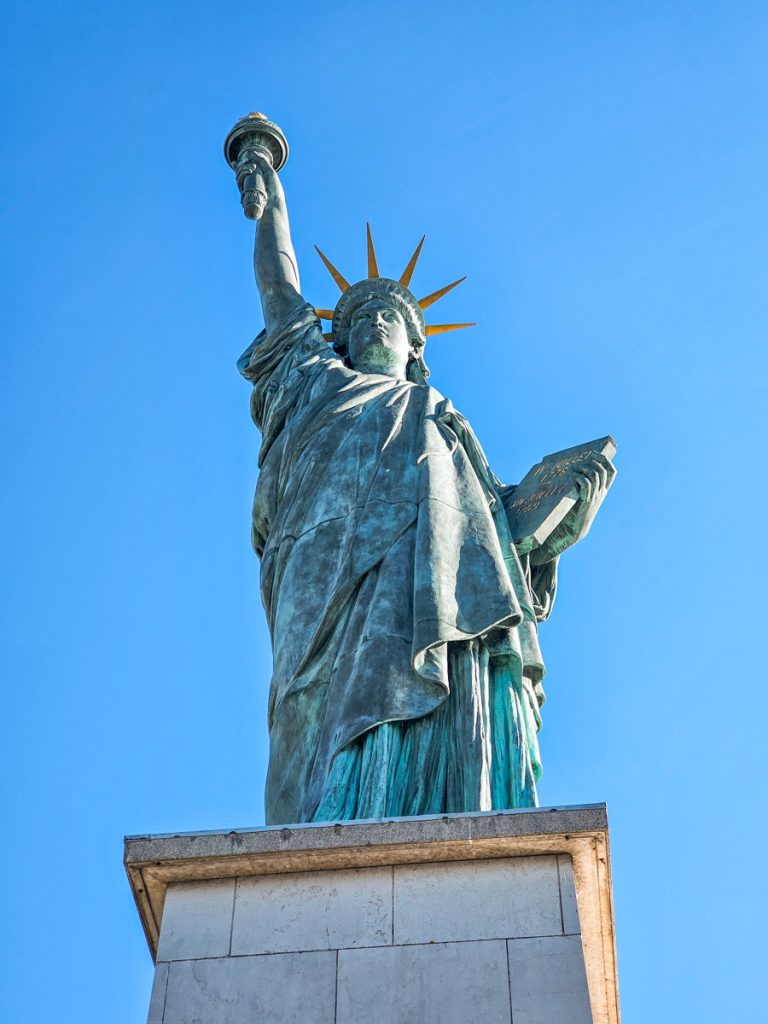
This replica was gifted to the city by the American community in Paris in 1889, just three years after the original was installed in New York, to celebrate Franco-American friendship.
7. Passerelle Richerand

The last bridge on this list isn’t on the Seine – instead, it crosses the Canal Saint-Martin. The canal was built to connect the Seine to the Canal de l’Ourcq in the north and stretches about 4.6 kilometers. Much of it actually runs underground, covered by Paris’s wide boulevards and squares.
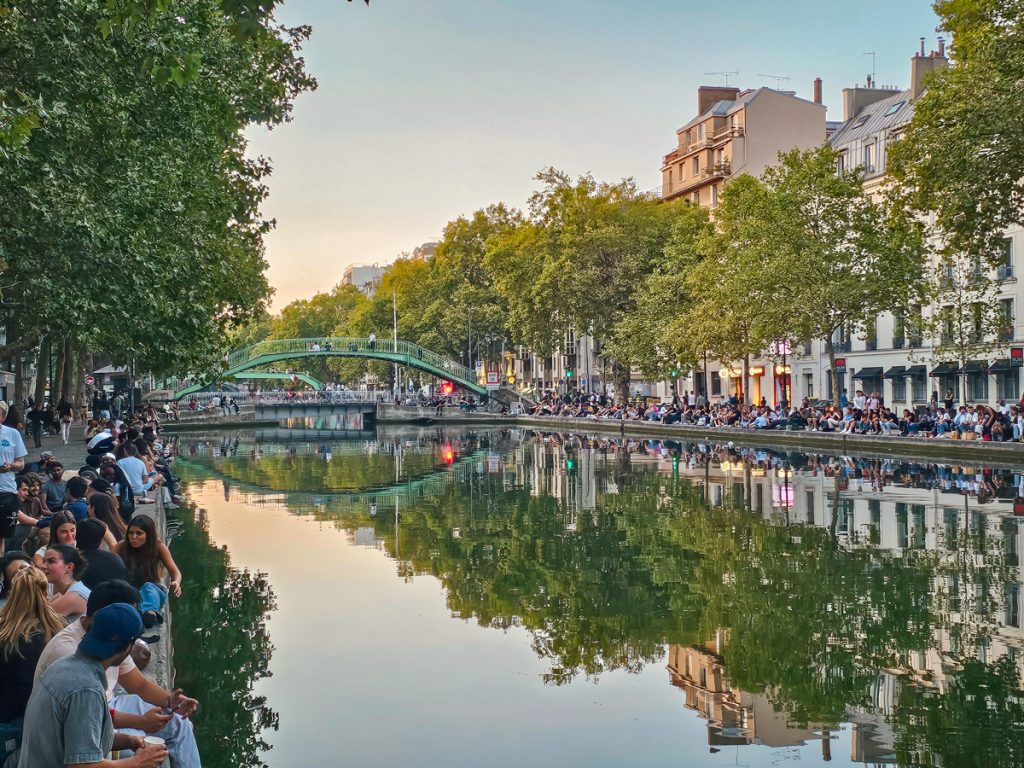
Just north of Place de la République, though, there’s a charming, open-air section of the canal that’s a popular hangout spot with locals, especially in the evenings.
The Passerelle Richerand is one of the prettiest footbridges here, with great views in both directions along the water.
Map of the Bridges
The Wrap Up
Paris has no shortage of beautiful bridges, each with its own history and view of the city. No matter where you walk along the Seine, stopping on a bridge is one of the best, and easiest, ways to take in the beauty of Paris.
