
Paris Has 130 Museums—Here’s How to Pick the Right Ones For You

If you say “Paris” and “museum” in the same sentence, most people immediately think of the Louvre. And while the Louvre is undeniably iconic, it’s really just the beginning. Paris has a lot of museums.
Depending on how you count them, there are roughly 130 spread across the city. That’s incredible… and also a little overwhelming when you’re actually trying to decide where to go.
While this list doesn’t include every museum in Paris, it is based entirely on my own personal experience, which is fairly extensive. I’ve visited all of the 33 museums included on this list, many of them more than once and in very different contexts.
Some are big, famous stops that make sense for a first visit. Others are quieter, smaller, more off the beaten path, but memorable in a totally different way.
I’ve tried to organize this guide in a way that I think will help you figure out which museums actually make sense for your trip, your interests, and your time, whether this is your first visit to Paris or your fifth.

Art-Focused Museums
If seeing paintings, sculptures, and major art collections is a priority for your trip, these are the museums to look at first.
1. Louvre Museum

Come for: The world’s largest art museum, with everything from ancient artifacts to Renaissance paintings and more. It’s enormous and can feel overwhelming, but the quality of the collection is undeniable, with iconic masterpieces (like the Mona Lisa or Winged Victory) all over the museum.
Best for: First-time visitors who want one truly iconic museum, and travelers who don’t mind crowds to experience a place they’ve seen referenced their entire lives.
Worth knowing: This is not a quick stop. Plan for 2-3 hours, and know you’ll only see a fraction of the Louvre. Booking tickets ahead of time is essential, and consider a guided tour to go straight to the biggest hits.
2. Musée d’Orsay

Come for: Impressionist and Post-Impressionist art that’s easy to love, even if you’re not usually a museum person. Works by artists like Monet and Van Gogh feel familiar for a reason, and seeing them in person is often a highlight of a Paris trip. Many visitors end up calling the Musée d’Orsay their favorite museum in the city.
Best for: Travelers who want to see famous masterpieces without committing to the scale of the Louvre, and anyone drawn to colorful, emotionally accessible art.
Worth knowing: This museum is extremely popular and can feel crowded, especially mid-day. Booking tickets ahead helps you skip long ticket lines.
3. Musée de l’Orangerie

Come for: Monet’s Water Lilies, shown as large-scale panels that nearly wrap the walls of two oval rooms. The setup is meant to feel immersive and contemplative, almost like being in Monet’s garden, and when it’s calm, it really works. Afterward, there’s a smaller but solid collection downstairs featuring works by artists like Cézanne and Matisse.
Best for: Lovers of Monet or Impressionism, or visitors who want a focused art experience that feels different from larger museums.
Worth knowing: Despite its tranquil design, this museum is very popular and can sometimes be quite busy.
4. Centre Pompidou

Come for: A bold, inside-out building with exposed, brightly colored pipes and escalators on the exterior. Inside, the focus is modern and contemporary art, including a lot of abstract work, that feel very different from Paris’s more traditional museums.
Best for: Visitors who enjoy modern or abstract art and want a museum that feels intentionally unconventional, rather than ornate or historical.
Worth knowing: The Centre Pompidou is closed for major renovations and is expected to reopen in 2030.
5. Petit Palais

Come for: A surprisingly strong art collection housed in a beautiful Beaux-Arts building. You start in a beautiful sculpture gallery, then wind through several halls that include paintings, sculptures, and decorative pieces. There’s also a beautiful central garden courtyard with a cafe that adds to the experience.
Best for: Visitors who want a museum that still feels substantial, just on a much smaller scale.
Worth knowing: Permanent collections are free to visit, and the courtyard and cafe are worth a stop on their own
6. Musée d’Art Moderne (Palais de Tokyo)

Come for: A modern art museum in a beautiful spot right along the Seine, with large, airy galleries and a collection that’s easier to take in than you might expect.
One standout is Raoul Dufy’s The Electricity Fairy, an enormous mural that fills an entire wall and tends to surprise people. Another highlight is one of the versions of Matisse’s La Danse.
Best for: Visitors who want to see impressive modern works without committing to a huge museum, or anyone looking for something less crowded
Worth knowing: The permanent collection is free, and the generous layout helps the space feel relaxed, even when there are other people around.
7. Musée Picasso

Come for: A clear look at how Picasso’s style changed over his lifetime, shown inside a beautiful 17th-century mansion. The museum moves through different phases of his work with explanations on the thought process and reasons behind the style, which makes it easier to see how and why his art evolved rather than feeling like a jumble of unrelated pieces.
Best for: Picasso enthusiasts, or visitors who want to understand Picasso better, especially if his work has never fully clicked before.
Worth knowing: One hour is enough for this museum. This is a more structured visit than most art museums, which works well if you like following a clear narrative.
8. Musée Marmottan Monet

Come for: The largest collection of Monet’s work anywhere, including the painting (Impression, Soleil Levant) that kicked off the entire movement. Beyond Monet, there are also beautiful works by other Impressionist artists, all displayed in a former mansion that gives the museum an elegant, private feel.
Best for: Visitors who love Impressionist art and want to slow down, or anyone who has already been to Orsay and wants to see more without the crowds.
Worth knowing: It’s a bit out of the way in a residential neighborhood in the 16th arrondissement, but that’s part of why the museum usually feels more relaxed than more central Paris galleries.
9. Bourse de Commerce – Pinault Collection

Come for: A contemporary art museum set inside a historic former commodities exchange in the 1st arrondissement. The main rotunda is stunning, with a glass dome above frescoed walls that fills the space with light. Exhibitions draw from François Pinault’s private collection and focus on modern and contemporary artists.
Best for: Visitors interested in current art and changing exhibitions and want to get well off the beaten path.
Worth knowing: There’s no permanent collection, and exhibits rotate every few months, so it’s worth checking what’s on before you go.
10. Grand Palais
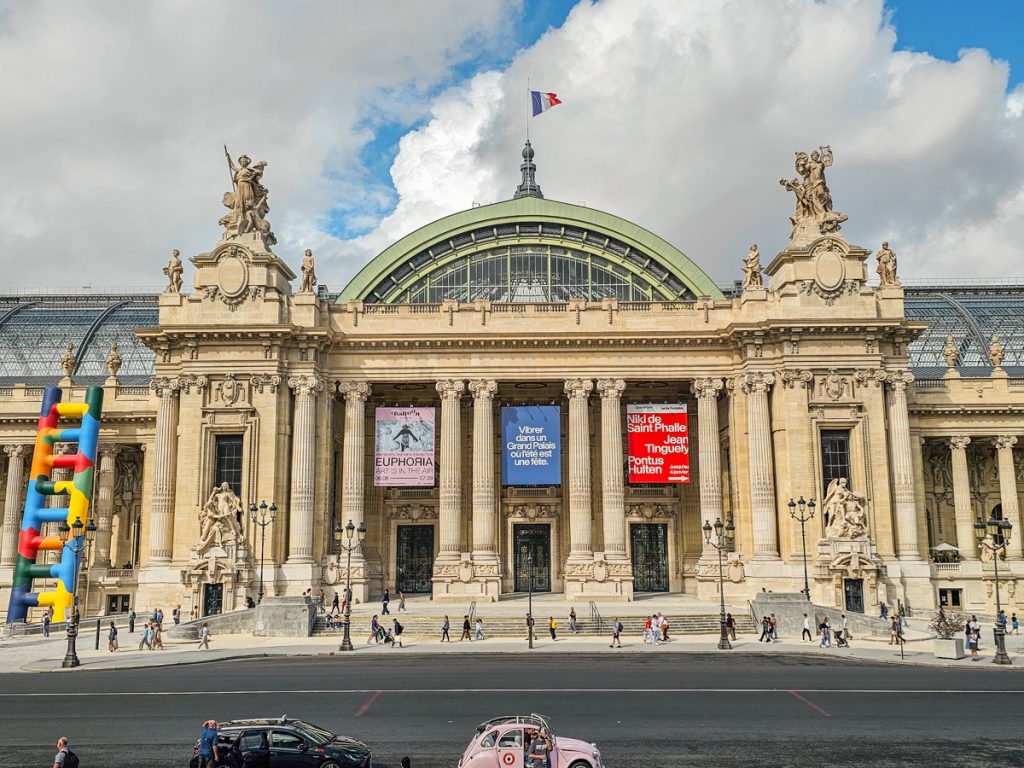
Come for the: Monumental exhibition space rather than a traditional museum, best known for its massive glass-and-steel nave (the greenhouse-looking roof visible along the Seine). It usually hosts 3-4 different art exhibitions at any one time.
Best for: Visitors who enjoy big, temporary exhibitions and are open to shaping their plans around what’s currently on view.
Worth knowing: There’s no permanent collection, and experiences vary widely depending on the exhibit. Always check what’s on before deciding if it’s worth your time.
Fascinating History Museums
This group covers a wide range of history, from medieval Paris to revolution-era prisons to military history. While these aren’t art museums first, many include paintings, sculptures, and objects that help bring the history to life.
11. Musée Carnavalet

Come for: A deep dive into the history of Paris, set inside a beautiful Renaissance-era mansion in the Marais. The museum walks through the city’s story using maps, models, paintings, diagrams, artifacts, and historic rooms to show how Paris changed over the centuries.
Best for: Visitors who want context for the city they’re exploring, especially if you enjoy understanding how neighborhoods came to be.
Worth knowing: This museum is large and detailed, so you could easily spend 3 or more hours here. Entry is free, which makes it easy to pop into even if you don’t see everything. There’s also an incredibly lovely garden cafe, which you can eat at even if you don’t visit the museum.
12. Musée de Cluny
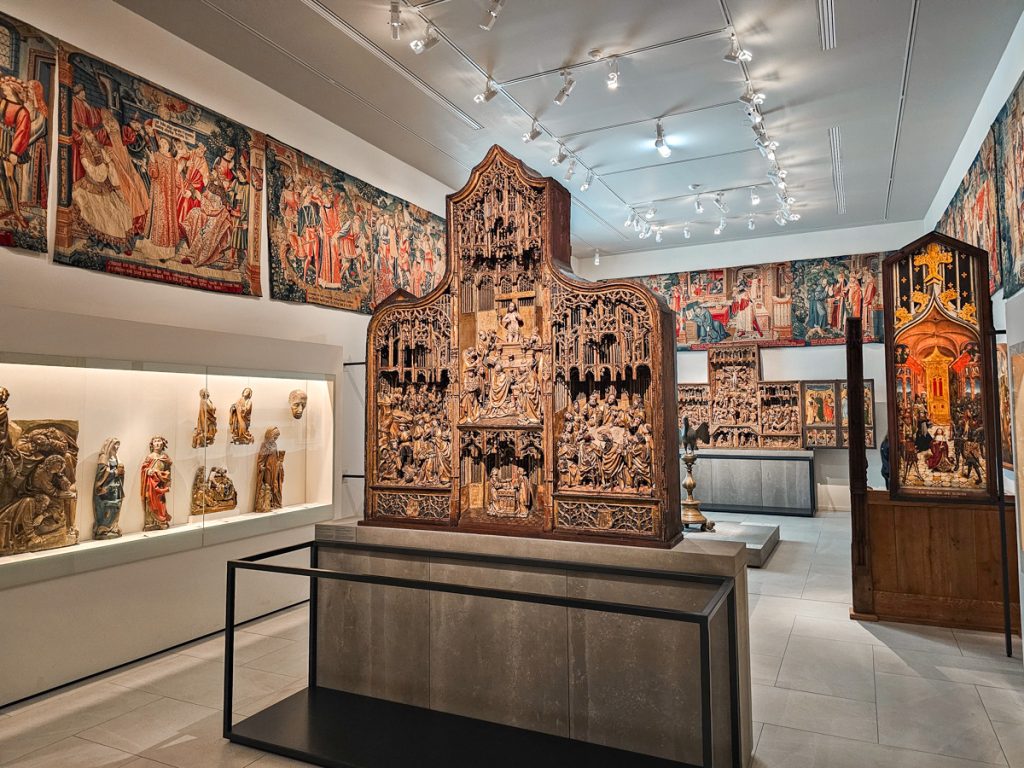
Come for: Medieval art and history set inside a former abbots’ residence that also incorporates ancient Roman bath ruins. The collection ranges from everyday medieval objects, to artifacts from churches, and large, vividly colored tapestries, including The Lady and the Unicorn, which is easily one of the museum’s highlights.
Best for: Visitors interested in the Middle Ages or tapestries, or anyone who wants a history museum that feels atmospheric.
Worth knowing: This is the headline museum of the Latin Quarter neighborhood, but even though the name is well-known, it’s rarely packed.
13. Musée de l’Armée at Les Invalides
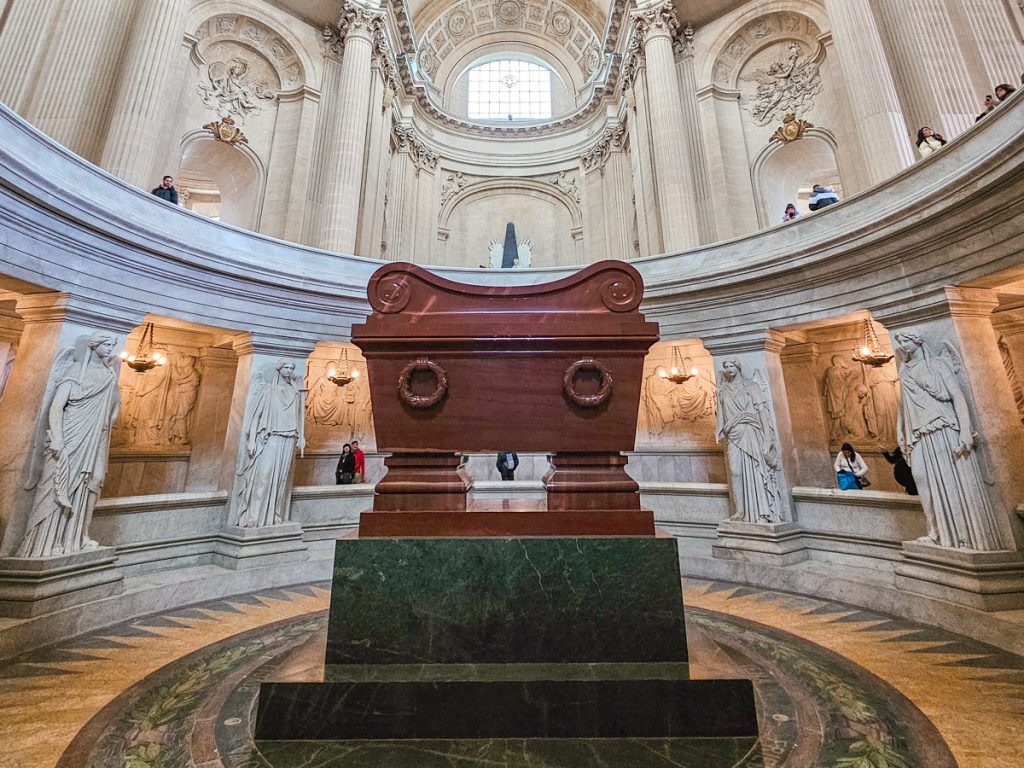
Come for: France’s military history, housed within the Invalides complex, with a strong focus on the era of Louis XIV through Napoleon. The museum itself is extensive, but the real standout is the Dôme des Invalides, where Napoleon’s massive tomb sits beneath an ornate, gold-accented dome.
Best for: Visitors interested in French military history who want something substantial, as well as anyone who wants to visit the major landmark that is Napoleon’s tomb.
Worth knowing: The museum is large and detailed, and you could easily spend three to four hours exploring the museum and the Dôme des Invalides without feeling rushed (or pick and choose if you want to spend less time, but there’s enough to fill many hours if you want). Come back at night for the Aura Invalides light and sound show.
14. Conciergerie
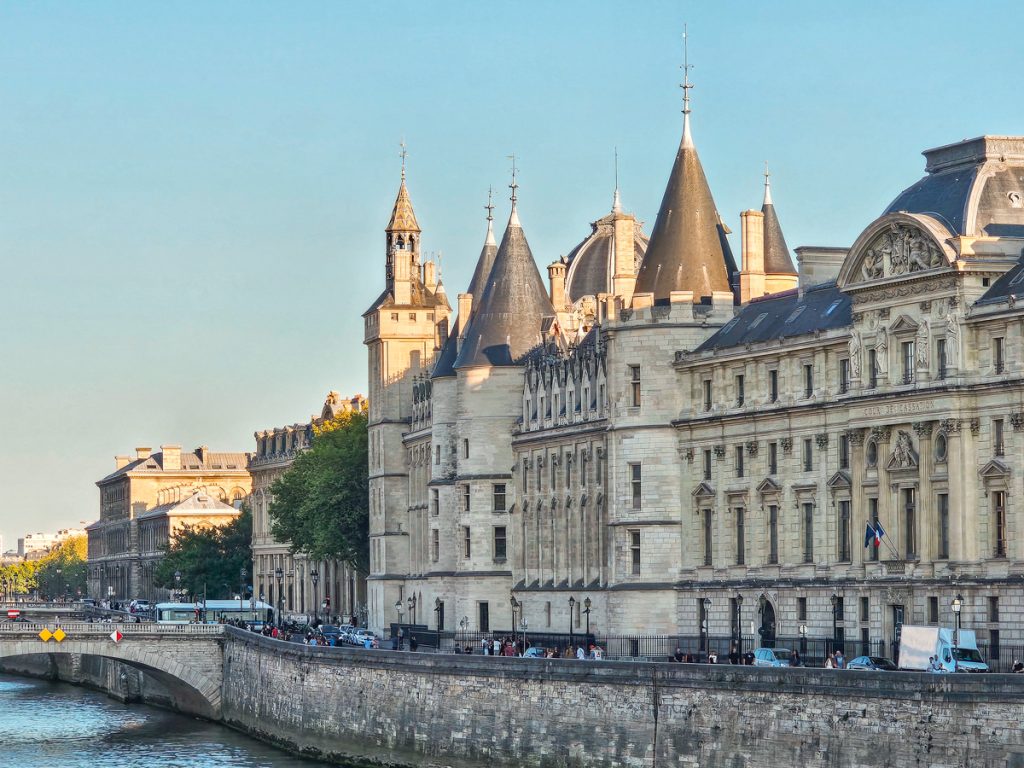
Come for: The chance to walk through a former royal palace that later became one of the most infamous prisons of the French Revolution. You’ll see grand medieval halls alongside spaces tied to the prison’s later history, including where Marie Antoinette was held before her execution.
Best for: Visitors interested in Revolutionary history who want something atmospheric but not time-intensive.
Worth knowing: The museum uses an interactive histopad that helps bring the rooms to life and makes it easier to imagine how the space changed over time. The Conciergerie is on Île de la Cité, just next to Sainte Chapelle and near Notre Dame, making it easy to pair with other sightseeing.
15. Hôtel de Soubise – National Archives

Come for: One of the most beautiful historic interiors in Paris, tucked inside a Rococo-era mansion once owned by the Prince and Princess of Soubise. Lavish salons with gilded details and painted ceilings sit alongside original historical documents, which makes the experience feel both grand and significant.
Best for: Visitors who love elegant interiors and want to see major moments in French history up close, without the crowds of larger museums.
Worth knowing: The documents on display are originals, including items tied to Charlemagne, the French Revolution, and Marie Antoinette.
16. Musée des Arts et Métiers

Come for: A surprisingly engaging look at centuries of scientific and technological innovation, from early instruments and engines to airplanes and experimental machines. The standout space is a former church, where the Foucault Pendulum swings beneath vaulted ceilings, surrounded by historic vehicles and inventions.
Best for: Visitors who like understanding how things work and want a museum that feels very different from Paris’s art-heavy lineup.
Worth knowing: The museum is large and dense, but the displays are visual enough that it never feels dry. You don’t need to see everything to enjoy it.
17. Musée de Montmartre

Come for: A look at Montmartre’s artistic past, told through paintings, photographs, and the spaces where artists actually lived and worked. The museum focuses on the late 1800s and early 1900s, when painters like Renoir were drawn to the neighborhood, and includes a small garden where artists once set up their easels.
Best for: Visitors curious about Montmartre beyond today’s tourist crowds, especially if you want to understand why so many artists ended up here.
Worth knowing: The museum is calm and low-key, and the garden is part of the experience, not just an add-on.
18. Musée Curie

Come for: A small, focused museum dedicated to the life and work of Marie Curie, located behind the Panthéon at the Curie Institute. Much of her groundbreaking research was done in Paris, and the institute she founded is still active here today.
The displays cover radioactivity, medical applications, and her family’s scientific legacy, with access to her preserved office and laboratory.
Best for: Visitors interested in science or women’s history who appreciate meaningful places over grand museum spaces.
Worth knowing: This is a quick, mostly informational visit rather than a visually immersive one, and opening hours are limited.
19. Musée de la Légion d’Honneur
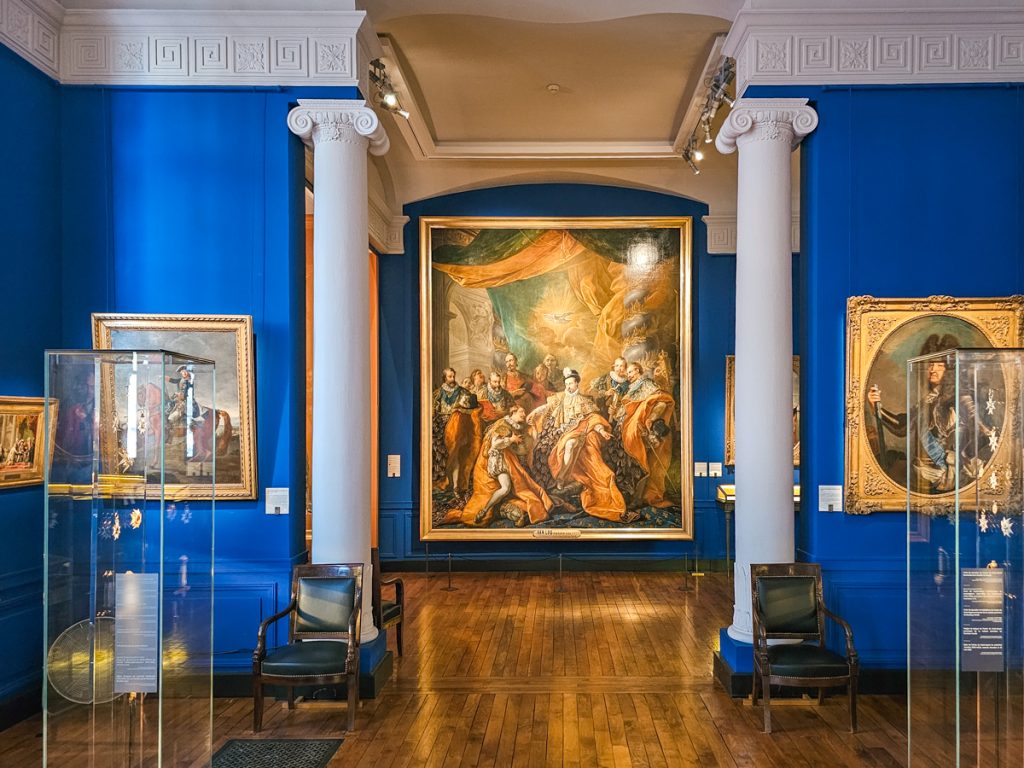
Come for: A focused look at France’s system of national honors, from medieval chivalric orders to medals still awarded today. The museum traces how decorations like the Légion d’Honneur, founded by Napoleon, have been used to recognize military and civilian service, all displayed inside an elegant 18th-century mansion near Orsay.
Best for: Visitors interested in French history who enjoy niche museums that explain a specific aspect of national identity.
Worth knowing: This is a smaller, quietly impressive museum that’s easy to pair with the Musée d’Orsay and rarely feels crowded.
20. Arab World Institute
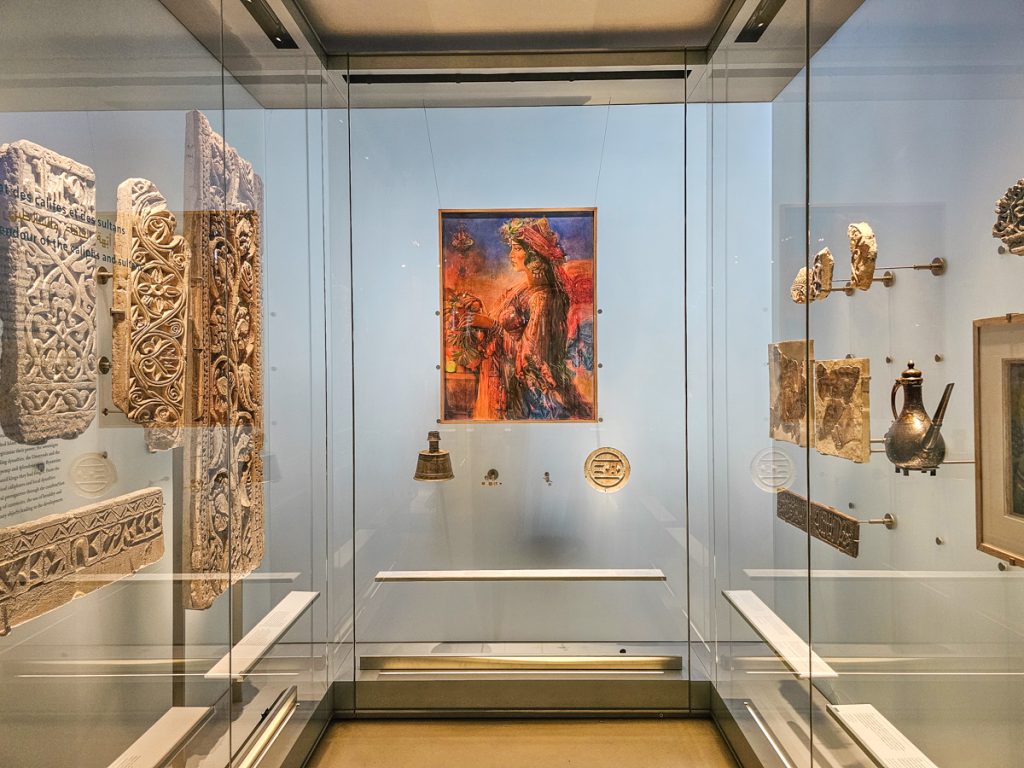
Come for: A museum created to highlight the art, history, and cultures of the Arab world, with exhibitions that range from ancient objects to more modern works. The scope is broad, and the experience depends a lot on what’s currently on view.
Best for: Visitors curious about Arab history and culture, or anyone already nearby who wants to pair a museum stop with a great viewpoint.
Worth knowing: The rooftop terrace (free and separate from the paid museum area) is one of the real highlights, with excellent views over the Seine and toward Notre Dame.
Smaller Museums Focused on a Single Artist
These museums focus on one artist at a time, usually in former homes or studios. They’re more intimate, easier to digest, and often more personal than the big-name museums.
21. Musée Rodin
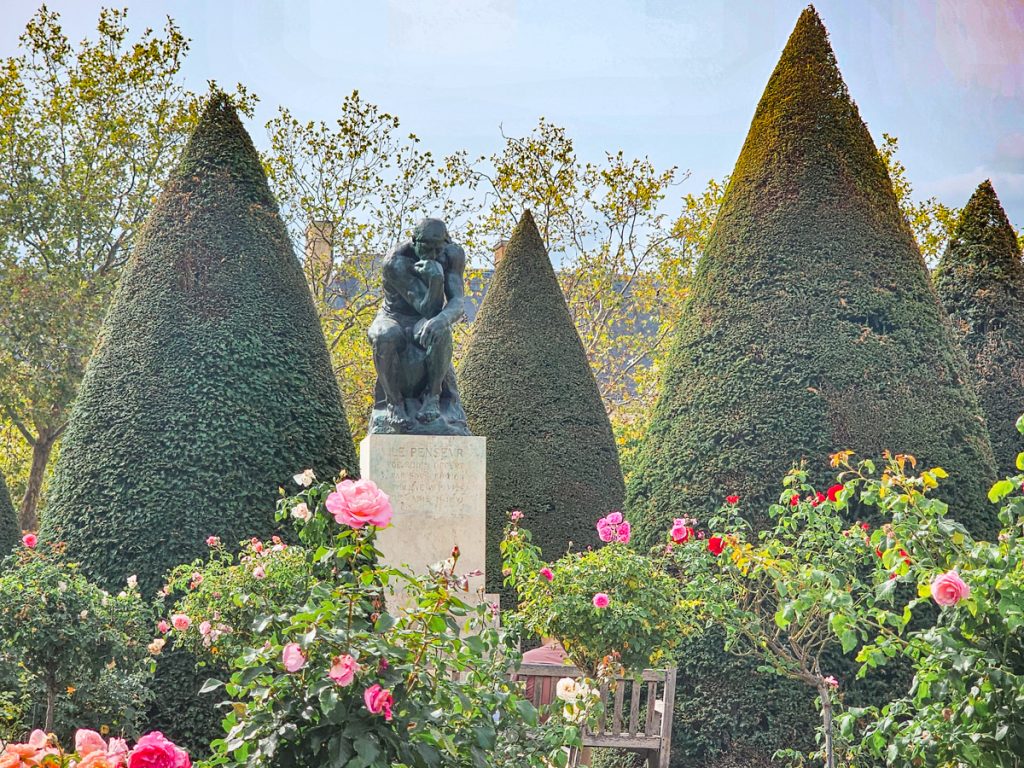
Come for: Rodin’s sculptures displayed inside his former home and throughout a large garden that’s just as memorable as the galleries. You’ll see major works like The Thinker and The Gates of Hell outdoors, where the garden setting adds a lot to the experience, alongside studies and finished pieces like The Kiss inside.
Best for: Fans of sculptures, or visitors who want a museum that feels calm and open-air.
Worth knowing: The garden is a big part of the appeal, so this visit works best in decent weather.
22. Musée Bourdelle
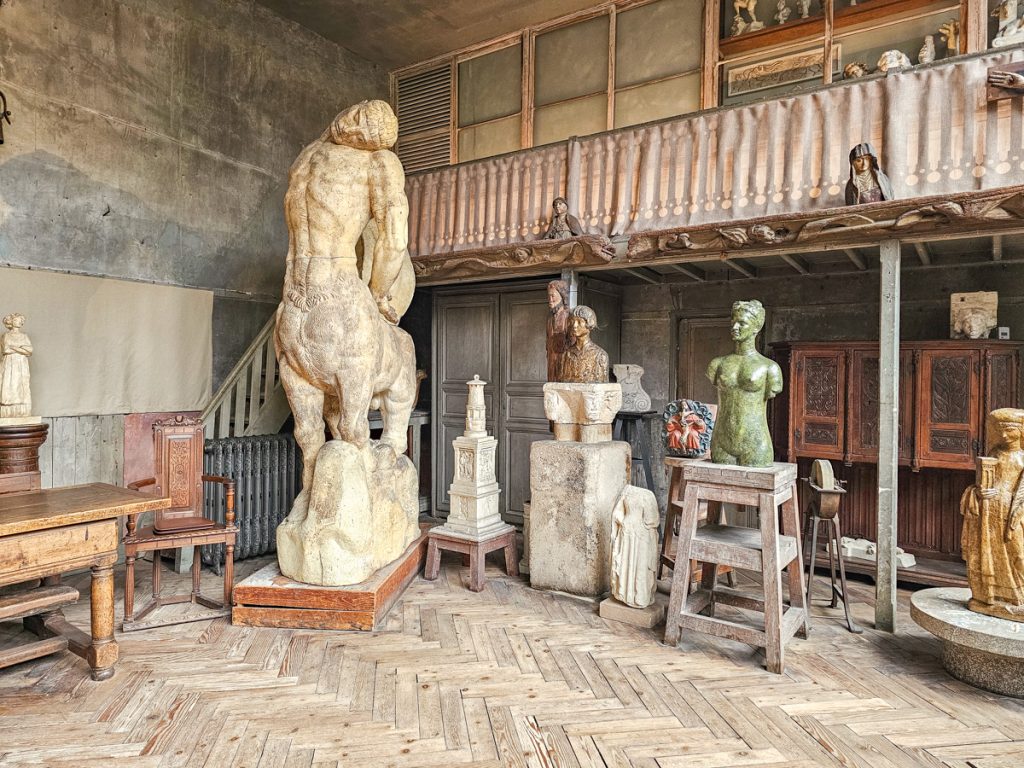
Come for: A quiet, thoughtfully laid-out museum dedicated to sculptor Antoine Bourdelle, located in his former studio and home. The space mixes plaster models, bronze casts, garden courtyards, and a large modern gallery, which gives a good sense of how his monumental works were conceived and created.
Best for: Visitors who enjoy sculpture and want something calmer and more personal than the Rodin Museum.
Worth knowing: The museum is rarely crowded and works well as a relaxed stop, even if you don’t know Bourdelle’s work beforehand.
23. Musée Gustave Moreau

Come for: The former home of Gustave Moreau, a 19th-century painter known for richly detailed, mythological works that sit somewhere between Romanticism and Symbolism. The real highlight is upstairs, where two soaring studio spaces are lined floor to ceiling with his paintings and sketches, connected by a striking spiral staircase.
Best for: Visitors who enjoy immersive artist studios or want something visually striking that feels very different from a standard gallery.
Worth knowing: Moreau carefully planned this museum himself, and quite a few works include notes that explain his ideas.
24. Musée Eugène Delacroix

Come for: A small museum dedicated to Eugène Delacroix, best known for Liberty Leading the People, one of Paris’ most famous paintings. Set in his former home and workshop, the museum focuses on his life and influence rather than recreating the space exactly, with a mix of originals, reproductions, and works inspired by his art, along with a few personal objects.
Best for: Visitors curious about Delacroix beyond his famous works in the Louvre, or anyone who enjoys artist house museums that feel quiet and reflective.
Worth knowing: The house and workshop are separate buildings connected by a peaceful garden. Entry is free the day after visiting the Louvre with a Louvre ticket.
25. Maison de Victor Hugo

Come for: A look inside the former apartment of Victor Hugo, located on Place des Vosges, where he lived for more than a decade. The rooms trace his life and work through furniture, artwork, and objects tied to both his Paris years and later exile, with clear links to novels like Les Misérables.
Best for: Literature fans or anyone curious about the personal life behind some of France’s most famous novels.
Worth knowing: The museum is small and free, making it an easy stop while exploring the Marais.
26. Musée de la Vie Romantique

Come for: A small house museum that once belonged to painter Ary Scheffer, offering a glimpse into Parisian artistic and literary life in the 1800s. The rooms mix period furnishings, paintings, and personal objects, including items connected to writer George Sand, who was a major cultural figure of the time.
Best for: Visitors who enjoy intimate museums and historic homes, or anyone looking for a quiet stop near Montmartre that feels more like visiting a residence than a gallery.
Worth knowing: The garden café is part of the appeal and can be enjoyed even if you don’t spend time inside the museum itself.
Museums With Beautiful Interior Spaces
These museums are less about artwork and more about interiors, architecture, and decorative details. The rooms themselves are the main reason to visit.
27. Hôtel de la Marine
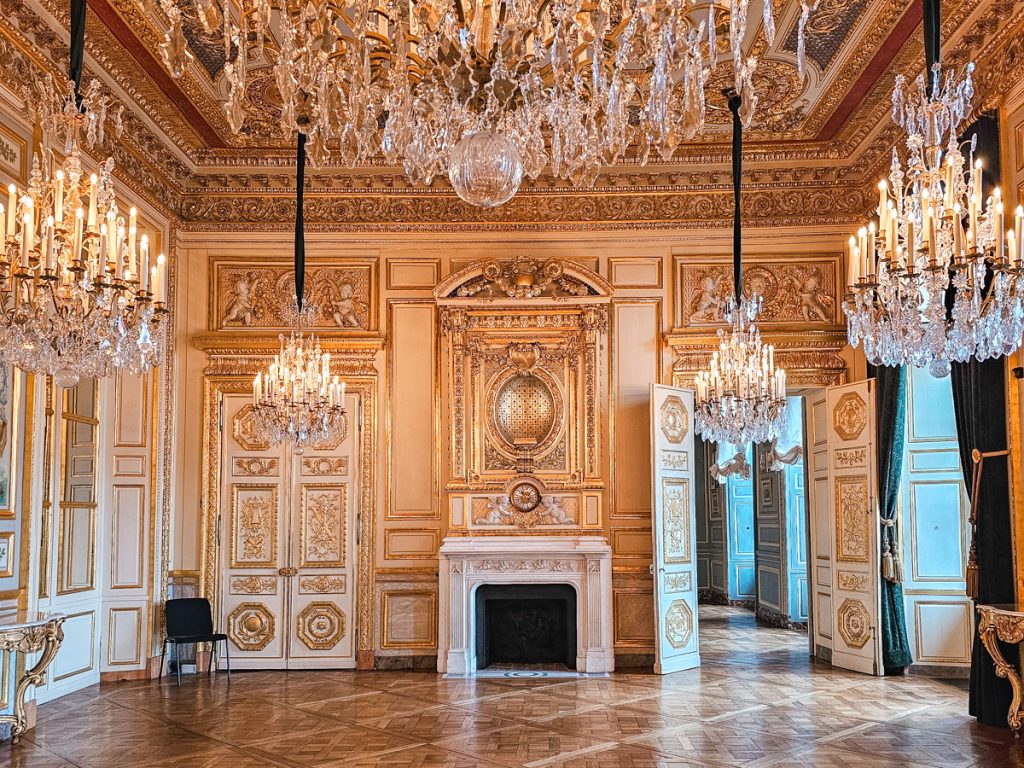
Come for: Lavishly restored 18th-century apartments overlooking Place de la Concorde, originally used to manage the king’s furniture and decorative arts. The rooms are filled with period furnishings and ornate details, and the ballroom in particular is a showstopper, with gilded moldings, chandeliers, and richly decorated ceilings.
Best for: Visitors who love grand historic interiors and want a palace-like experience without the crowds of Versailles.
Worth knowing: The audio guide is genuinely engaging and follows the lives of the families who lived and worked here, which adds a lot to the visit. There’s also a terrace with views directly over Place de la Concorde.
28. Musée Jacquemart-André

Come for: A richly decorated 19th-century mansion that once belonged to art collectors Nélie Jacquemart and Édouard André. While there are a couple of upstairs galleries focused purely on art, most of the visit feels like walking through an opulent private home where paintings, furniture, and décor are all part of the experience.
Best for: Visitors who love ornate interiors and historic homes, especially if you enjoy art presented as part of a lived-in space rather than a traditional gallery.
Worth knowing: The museum is in the 8th arrondissement and not terribly close to other attractions, which means you need to make a deliberate trip here.
29. Musée Cognacq-Jay

Come for the: A small, elegant museum set inside a 16th-century townhouse in the Marais, showcasing the private collection of the founders of La Samaritaine department store. The 18th-century paintings, furniture, and decorative objects are displayed in rooms arranged like a historic home, which gives the visit a very personal feel.
Best for: Visitors who enjoy quiet museums and historic interiors, or anyone looking for something low-key between busier stops in the Marais.
Worth knowing:
The museum is compact and rarely crowded, so it works well as a quick, relaxed visit rather than a main event.
30. 59 Rivoli

Come for: A modern, slightly chaotic art space where working artists open their studios to the public. The building itself is part of the experience, with murals covering the walls and a spiral staircase that changes style from floor to floor.
Best for: Visitors who enjoy contemporary art in an informal setting, or anyone curious about seeing artists at work rather than finished gallery pieces.
Worth knowing: This isn’t a traditional museum. Many of the works are for sale, but browsing and wandering through the space is completely welcome.
Fashion, Design & Decorative Arts Museums
This category focuses on creativity from clothing and accessories to immersive, design-forward displays.
31. Galerie Dior

Come for: Immersive fashion exhibitions centered on Christian Dior and the evolution of the Dior brand. The galleries are designed like works of art themselves, with rooms built around themes, colors, and moods, showcasing couture dresses as sculptural pieces rather than just clothing.
Highlights include Dior’s office, a recreated fashion show dressing room, and the iconic white staircase lined with miniature designs arranged in a rainbow cascade.
Best for: Visitors curious about fashion as an art form, even if haute couture isn’t usually your thing, or anyone who loves stunning exhibits.
Worth knowing: Timed entry is strongly recommended, as tickets often sell out. Same-day tickets are possible, but waits can be long, especially later in the day.
32. Musée des Arts Forains
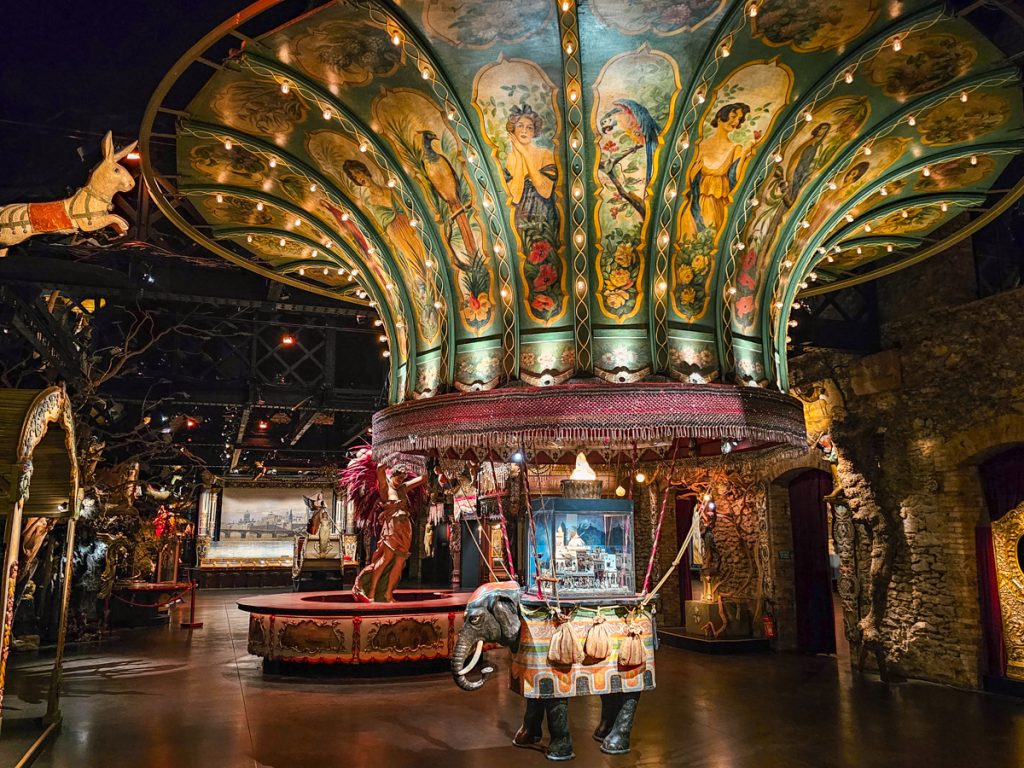
Come for: A wildly different kind of museum set inside former wine warehouses in Bercy, the Musée des Arts Forains is filled with vintage fairground rides, games, and decorative pieces from the Belle Époque. This is an interactive visit where you’re encouraged to play, ride, and participate, which makes it feel more like stepping into a living fair than walking through galleries.
Best for: Visitors who want something playful and unexpected, or anyone traveling with people who aren’t usually excited about museums.
Worth knowing: Visits are by guided tour only and must be booked in advance. Tours are lively and hands-on, and that guided format is a big part of what makes the experience work.
33. Palais Galliera – Fashion Museum

Come for: Paris’s main fashion museum, housed in an elegant palace near the Trocadéro, with temporary exhibitions that explore clothing, designers, and fashion history from different angles. The focus changes regularly, so the experience depends a lot on what’s currently on view.
Best for: Visitors with a general interest in fashion who like broader exhibitions that place clothing in a cultural or historical context.
Worth knowing: It’s a solid museum and the exhibitions can be interesting, but if your interest in fashion is more casual, I personally think Galerie Dior is the more memorable choice between the two.
Other Ways to Categorize These Museums
Below are a few additional ways to look at this same list of museums. These groupings are meant to make it easier to narrow down options based on popularity, location, cost, or how far off the beaten path a museum feels.
Most Iconic Museums
- Louvre
- Orsay
- Centre Pompidou
- Orangerie
- Cluny
- Musée l’Armée (Les Invalides)
Most Hidden Gem Museums
A large percentage of the 33 museums on this list could qualify as not often visited, but these I think are especially undiscovered:
- Marmottan
- Bourdelle
- Gustave Moreau
- Cognacq-Jay
- La Vie Romantique
- Musée Curie
- Hôtel de Soubise – National Archives
- Musée des Arts Forains
My Personal Favorites
I really do love so many places on this list, but if I had to narrow it down to 10…
- Louvre
- Orsay
- Rodin
- Galerie Dior
- Jacquemart-André
- Carnavalet
- Orangerie
- Petit Palais
- Gustave Moreau
- Arts Forains
Museums by Arrondissement
1st Arrondissement
- Louvre
- Orangerie
- 59 Rivoli
- Bourse de Commerce – Pinault Collection
- Conciergerie
3rd / 4th Arrondissements (Le Marais)
- Carnavalet
- Picasso
- Cognacq-Jay
- Maison de Victor Hugo
- Hôtel de Soubise – National Archives
- Arts et Métiers
5th Arrondissement (Latin Quarter)
- Cluny
- Arab World Institute
- Marie Curie
6th Arrondissement
- Eugène Delacroix
7th Arrondissement
- Orsay
- Rodin
- Musée de l’Armée
- Legion d’Honneur
8th Arrondissement
- Grand Palais
- Petit Palais
- Jacquemart-André
- Galerie Dior
- Hotel de la Marine
9th Arrondissement
- Gustave Moreau
- La Vie Romantique
12th Arrondissement
- Arts Forains
15th Arrondissement
- Bourdelle
16th Arrondissement
- Marmottan Monet
- Musée d’Art Moderne de Paris
- Palais Galliera
18th Arrondissement
- Musée de Montmartre
Museums That Are Always Free
The permanent collections of these museums are always free:
- Petit Palais
- Carnavalet
- Bourdelle
- Victor Hugo
- 59 Rivoli
- Legion d’Honneur
- Marie Curie
- La Vie Romantique
- Musée d’Art Moderne
- Cognacq-Jay
- Hotel de Soubise – National Archives
Museums ON the Paris Museum Pass
The Paris Museum Pass is a great option if you want to hit up several museums on your trip. These are the museums on this list that are included in the pass:
- Louvre
- Orsay
- Orangerie
- Centre Pompidou
- Picasso
- Cluny
- Musée de l’Armée
- Conciergerie
- Hôtel de la Marine
- Arts et Métiers
- Arab World Institute
- Rodin
- Gustave Moreau
- Eugène Delacroix
Paid Museums NOT on the Paris Museum Pass
- Bourse de Commerce – Pinault Collection
- Musée de Montmartre
- Musée Jacquemart-André
- Galerie Dior
- Musée Marmottan Monet
- Musée des Arts Forains
- Palais Galliera
Some Final Tips
Be realistic about how many museums fit in one trip
For most people, one big museum per day is plenty. Two can work if one is smaller or more relaxed, but trying to squeeze in three or four usually leads to burnout rather than enjoyment. Paris has so much to offer beyond museums, and overloading your days is one of the easiest itinerary mistakes to make.
Free museum days aren’t always a win
Some museums participate in “Free Museum Day”, where the first Sunday of the month has no entrance cost. However, even at smaller museums, this can create really long lines and heavier crowds. I would recommend trying to avoid any free days – the hassle isn’t worth saving €12.
Prioritize what is meaningful to you
It’s worth ending this guide with a reminder that it’s completely fine to prioritize one or two museums and skip the rest. If a place doesn’t genuinely interest you, you’re not missing something essential.
And while I totally understand the feeling of wanting to see and do everything, Paris is at its best when you leave at least some room for slower moments: wandering, sitting in cafés, and discovering the city without a strict agenda.
