

12 Extraordinary Staircases That Showcase Paris at Its Finest

I’ll admit it: I LOVE a beautiful staircase.
No matter where I am, a grand staircase has a way of stopping me in my tracks. And fortunately, Paris seems to love them just as much.
Some of the entries on this list are architectural masterpieces, while others are memorable more for their surroundings and the way they pull a space together. All of them are places where I’ve stopped, stared, taken far too many photos, and completely fallen in love with.
1. Opera Garnier
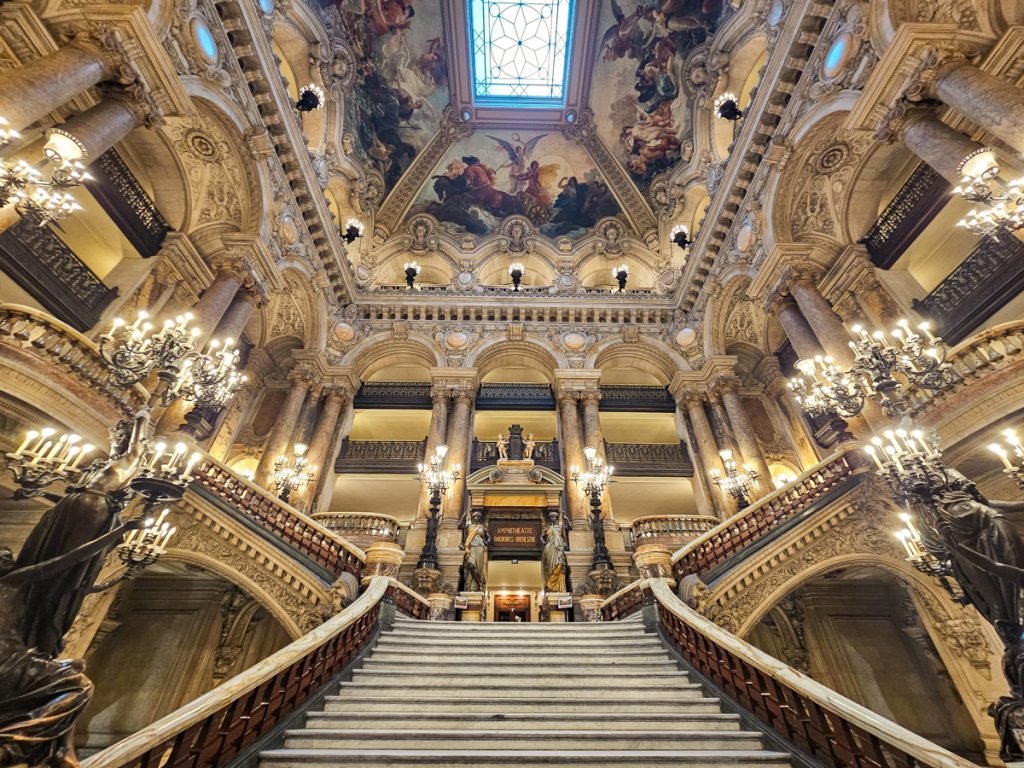
If I had to pick a favorite staircase in Paris, this would probably be it. I LOVE the Opéra Garnier, and it’s easily one of the most extravagant buildings in the city. Built during the reign of Napoleon III, the opera house was designed to impress, with marble, gold leaf, sculptures, and lavish decorative details at every turn. It’s also the setting that inspired Gaston Leroux’s The Phantom of the Opera.
At the heart of it all is the Grand Staircase. Made from white marble with red and green marble balustrades, the staircase splits into two sweeping flights beneath a painted ceiling.
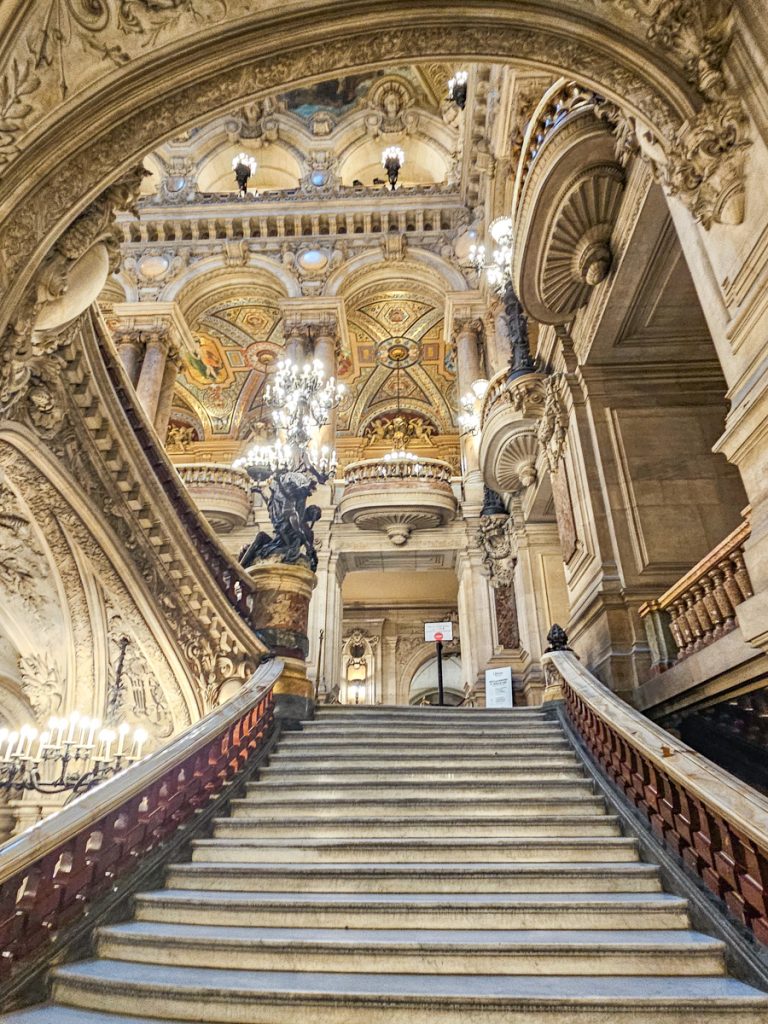
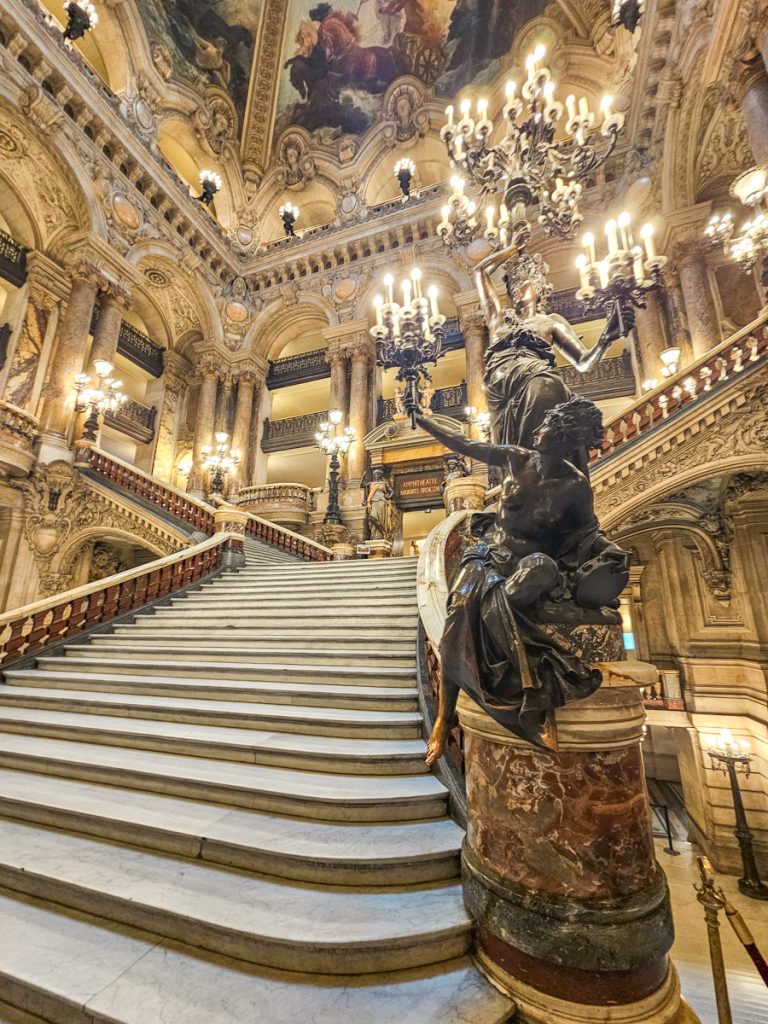
What’s especially interesting is that the stairs weren’t just designed to move people between floors. In the late 1800s, going to the opera was as much a social event as a cultural one. People came to see who was there, show off their latest fashions, and be seen themselves.
The balconies overlooking the Grand Staircase from the upper galleries make that especially clear: at the Opera Garnier, the staircase is a stage of its own.
2. Louvre Daru Staircase
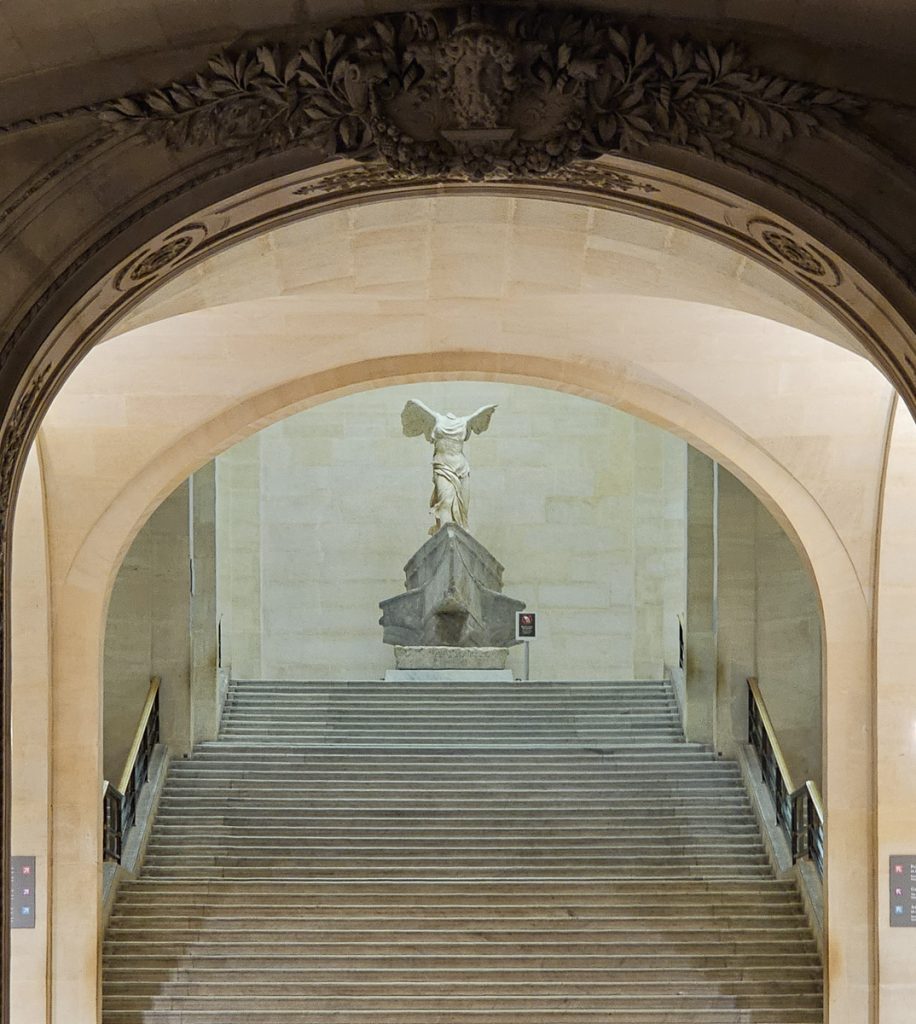
The Daru Staircase is one of the most iconic spaces in the Louvre. Built during the museum’s major 19th-century expansion, the grand staircase rises through multiple levels beneath soaring ceilings and massive stone arches.
But let’s be honest: the real star here is the Winged Victory of Samothrace.

Situated dramatically at the top of the staircase, the ancient Greek sculpture gradually comes into view as you climb. With every step, it becomes larger and more imposing until you’re standing face-to-face with one of the Louvre’s greatest masterpieces.
It’s one of the most brilliant examples of museum design I’ve ever seen, where the setting makes the artwork even more powerful.
3. Hotel de la Païva
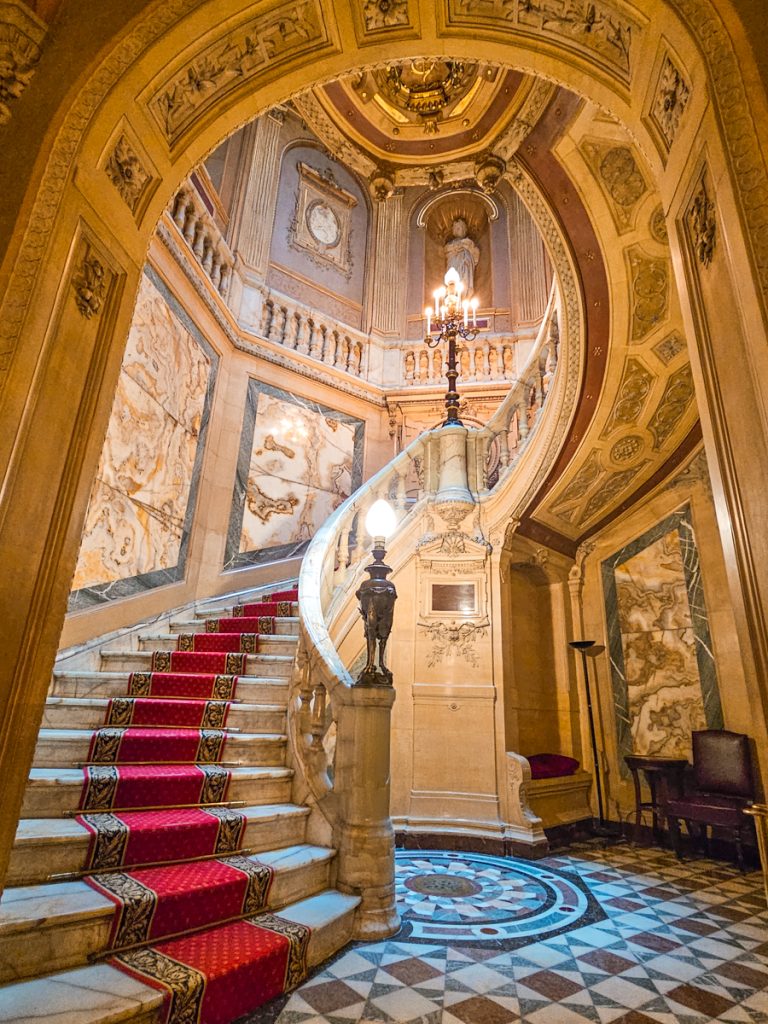
Hidden behind an unassuming doorway at #25 on the Champs-Élysées is one of the most extravagant private mansions on Paris’s Right Bank.
The Hôtel de la Païva was built in the mid-1800s for Esther Lachmann, better known as La Païva, a famous courtesan who rose from poverty to become one of the most influential women in Parisian society. No expense was spared in the construction of her mansion, and nowhere is that more obvious than in the grand staircase.
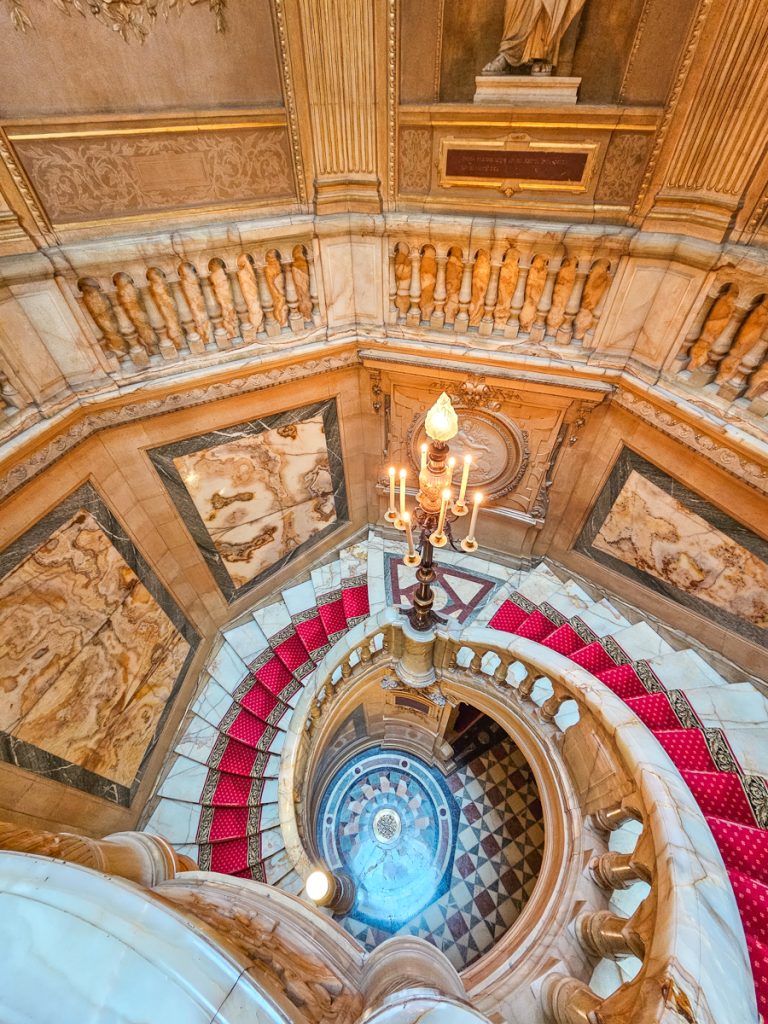
Known as the Escalier d’Honneur, the staircase curves elegantly through the center of the mansion beneath a domed ceiling. The walls, balustrades, and steps are constructed from rare yellow onyx, which gives the entire space a golden glow unlike anything else in Paris. It’s believed to be the only staircase of its kind in the world, and I’ve never seen anything quite like it.
4. Rodin Museum
The Musée Rodin (one of my favorite museums in Paris) is housed in the Hôtel Biron, a sumptuous Rococo mansion built in 1732 on Paris’s Left Bank. It later became home to Auguste Rodin, who lived and worked here in the early 1900s during the final years of his life.
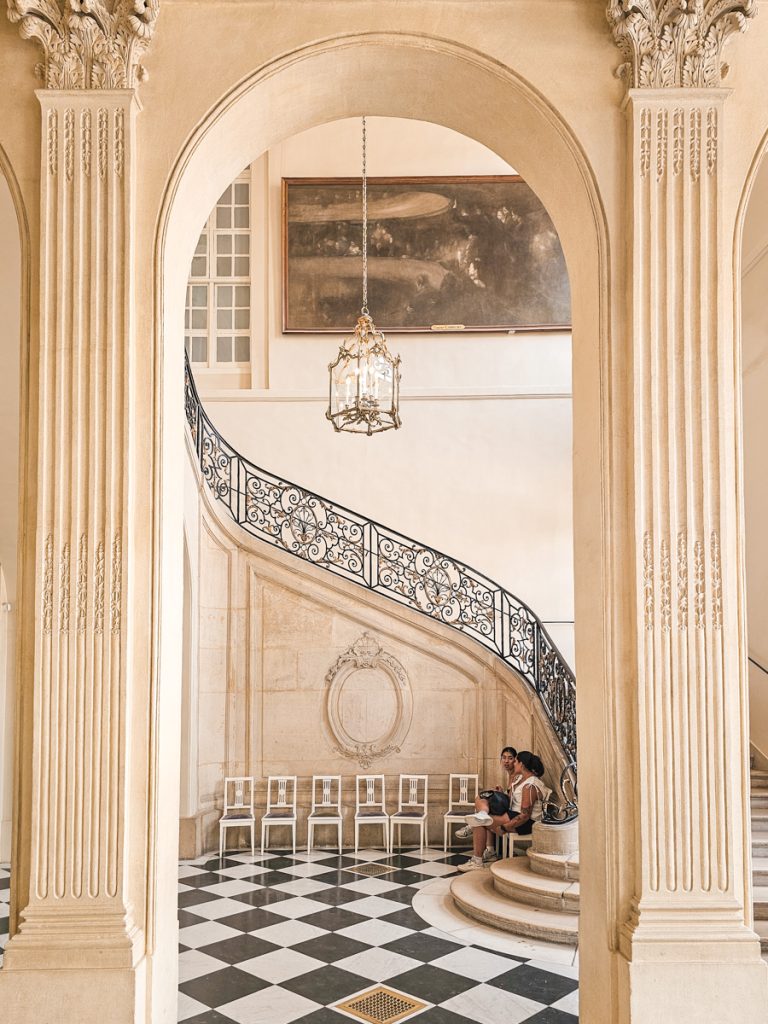
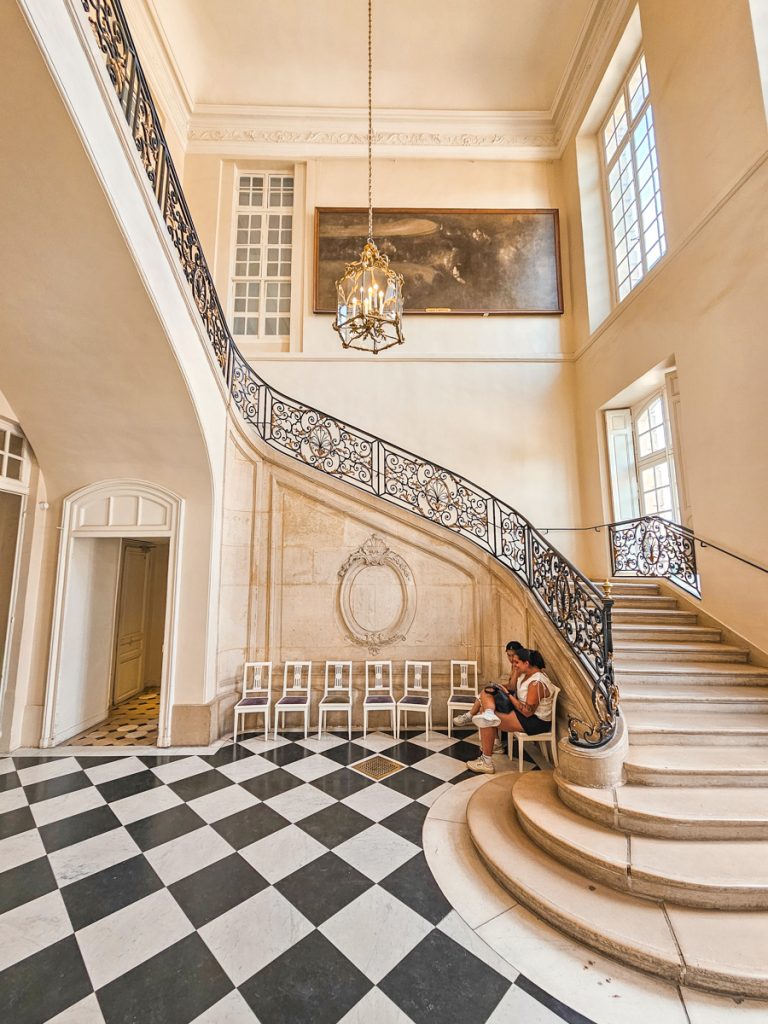
Your visit begins in the mansion’s entrance hall, where a graceful staircase curves upward around the checkered floors and tall windows. Compared to some of the grand staircases on this list, it’s relatively restrained, but every detail works beautifully together.
The sweeping curve, delicate wrought-iron railing, stone columns, and black-and-white tiled floor create a composition that feels remarkably balanced. It’s a lovely introduction to the elegant rooms and the idyllic gardens waiting outside.
5. Picasso Museum
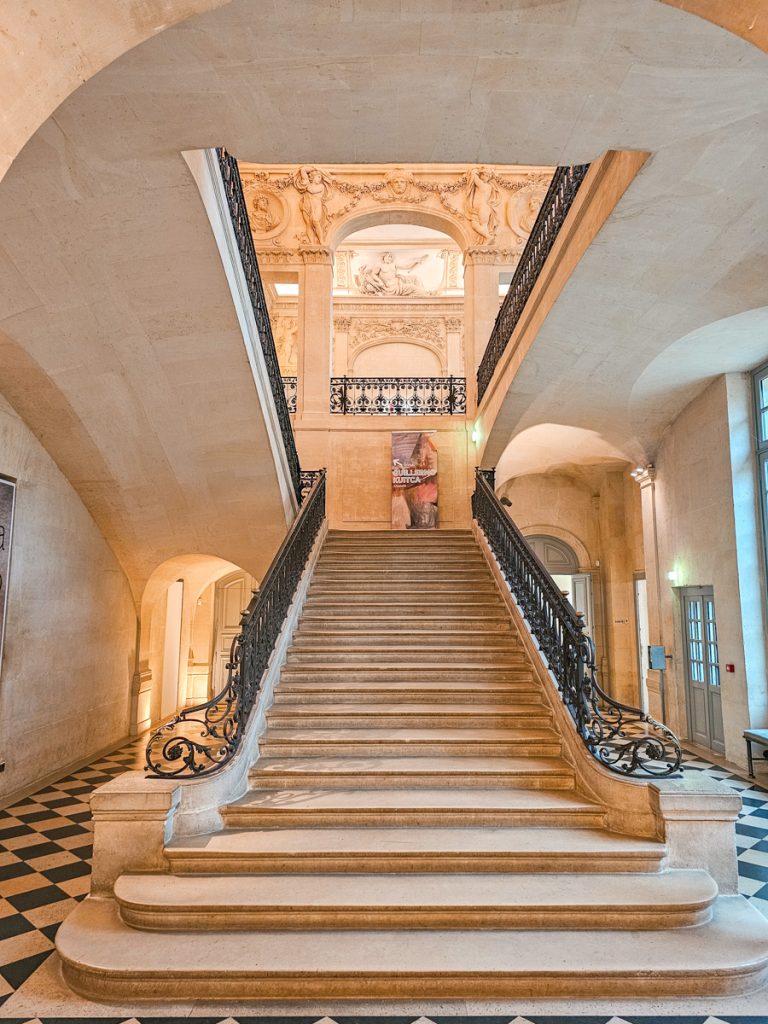
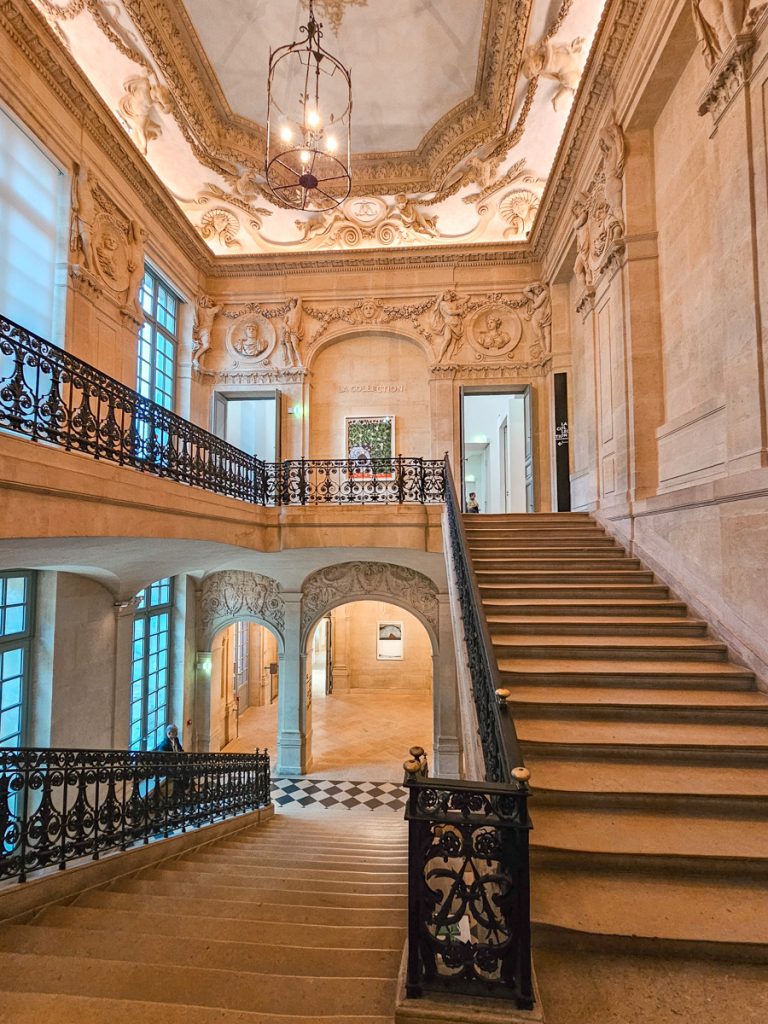
The Musée Picasso occupies the Hôtel Salé, a lavish 17th-century mansion in the Marais. Its nickname, “Salted Mansion,” comes from the fortune its owner made through the salt trade.
At the center of the building is a spectacular staircase inspired by a design created by Michelangelo for the Laurentian Library in Florence. The architects wanted visitors to experience the space from multiple angles as they moved through it. The result is a series of open staircases, balconies, and galleries that create constantly changing views as you climb.
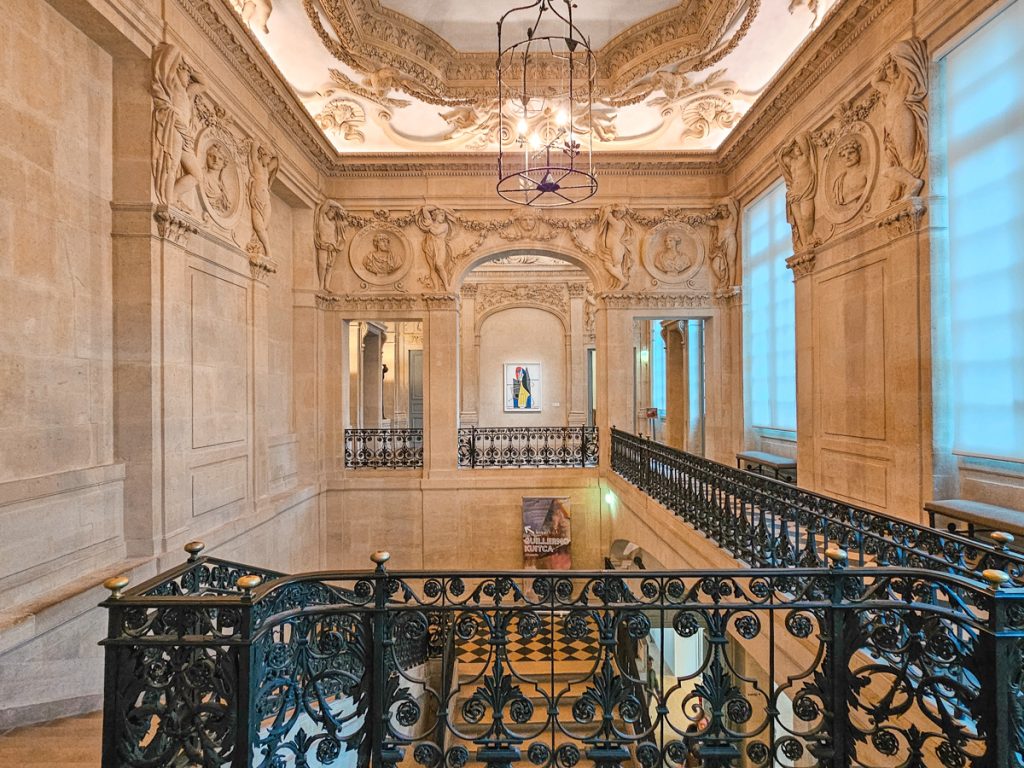
To top it off, the walls, ceilings, and arches are covered in elaborate stucco decoration featuring cupids, garlands, mythological figures, and classical motifs. It’s easy to see why the staircase is widely considered the architectural highlight of the Hôtel Salé.
6. Gustave Moreau Museum
The Musée Gustave Moreau occupies the former home of the 19th-century Symbolist painter Gustave Moreau, known for his colorful and detailed paintings inspired by mythology, religion, and fantasy. Before his death, Moreau personally oversaw the transformation of the family home into a museum so his work could be preserved exactly as he intended.
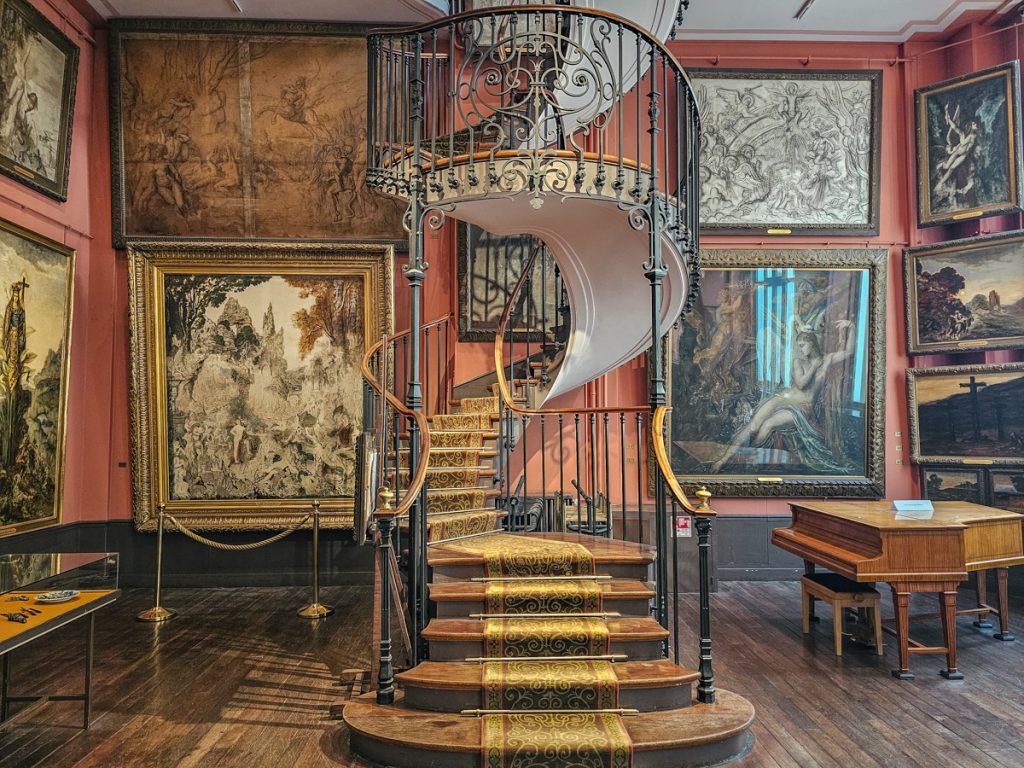
The ground floor contains his former apartments, but the real highlight is upstairs. To display the thousands of paintings he left behind, two enormous studio galleries were added to the upper floors and connected by a spectacular spiral staircase.

The staircase is undeniably the centerpiece of the museum. Its sweeping iron structure rises through the middle of the galleries, surrounded by walls covered floor-to-ceiling with paintings. It’s what takes the rooms from beautiful to unforgettable—there really isn’t another space quite like it.
7. Square Louise Michel (Montmartre)
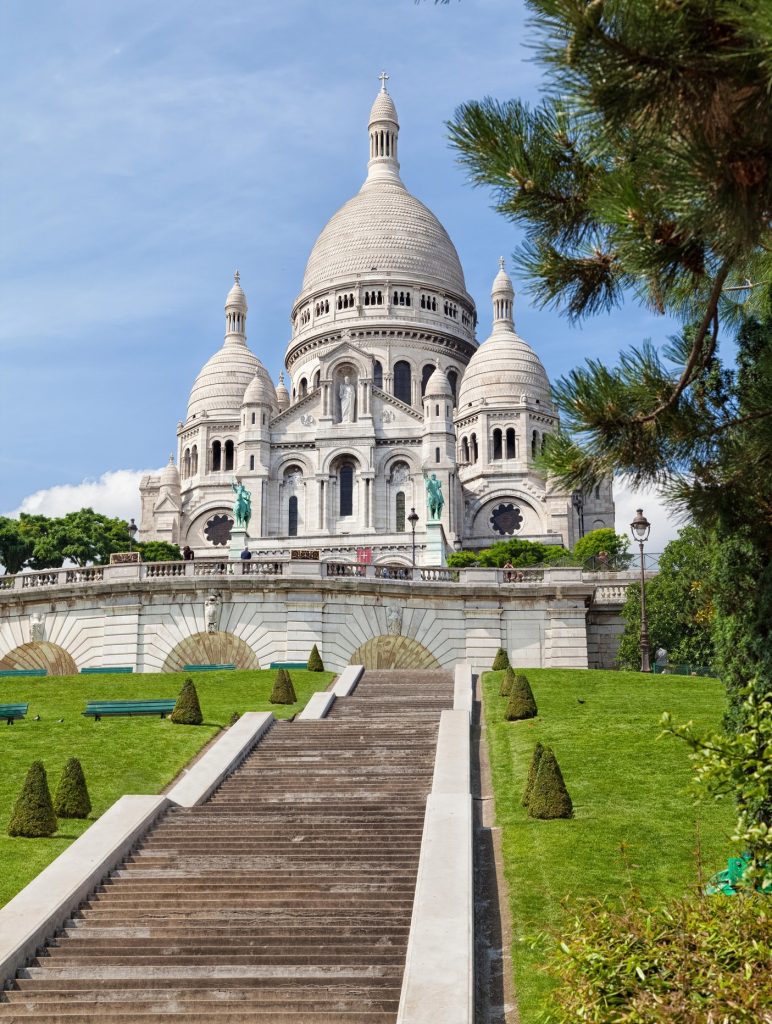
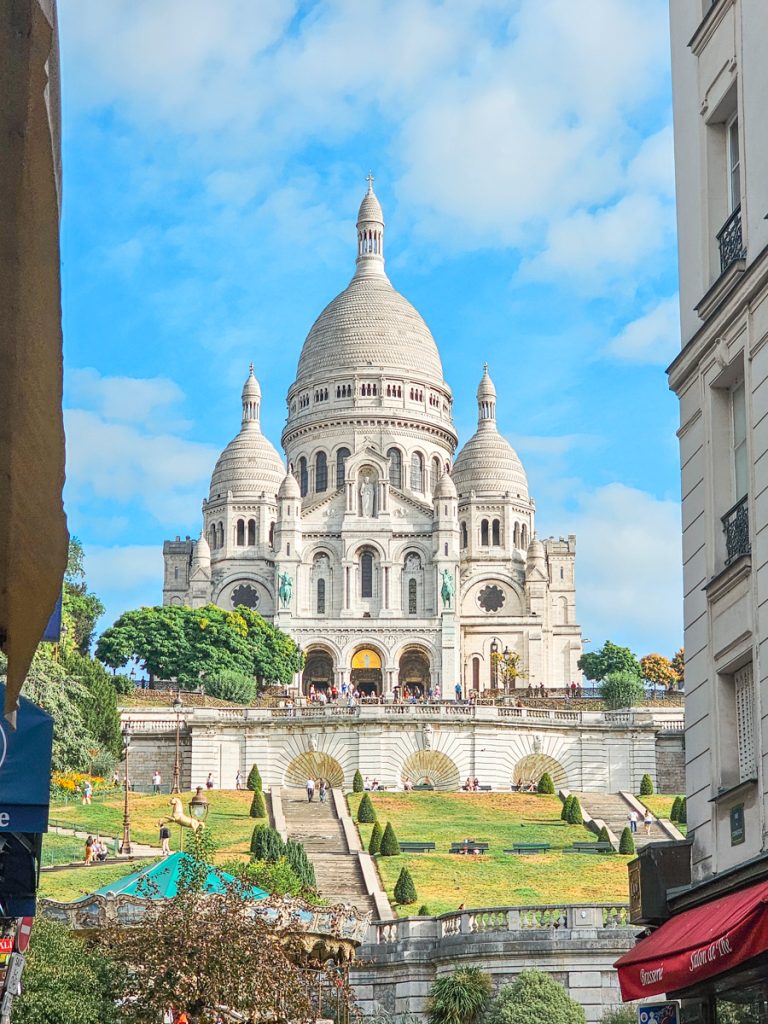
Montmartre sits atop one of the highest hills in Paris, and the gleaming white domes of Sacré-Cœur can be seen from all over the city. Leading up to the basilica is the grand staircase of Square Louise Michel, one of the most famous stairways in Paris.
As you climb, the views over Paris gradually open up behind you. At the top, you’ll find one of the city’s most popular viewpoints and a favorite sunset spot for both locals and visitors.
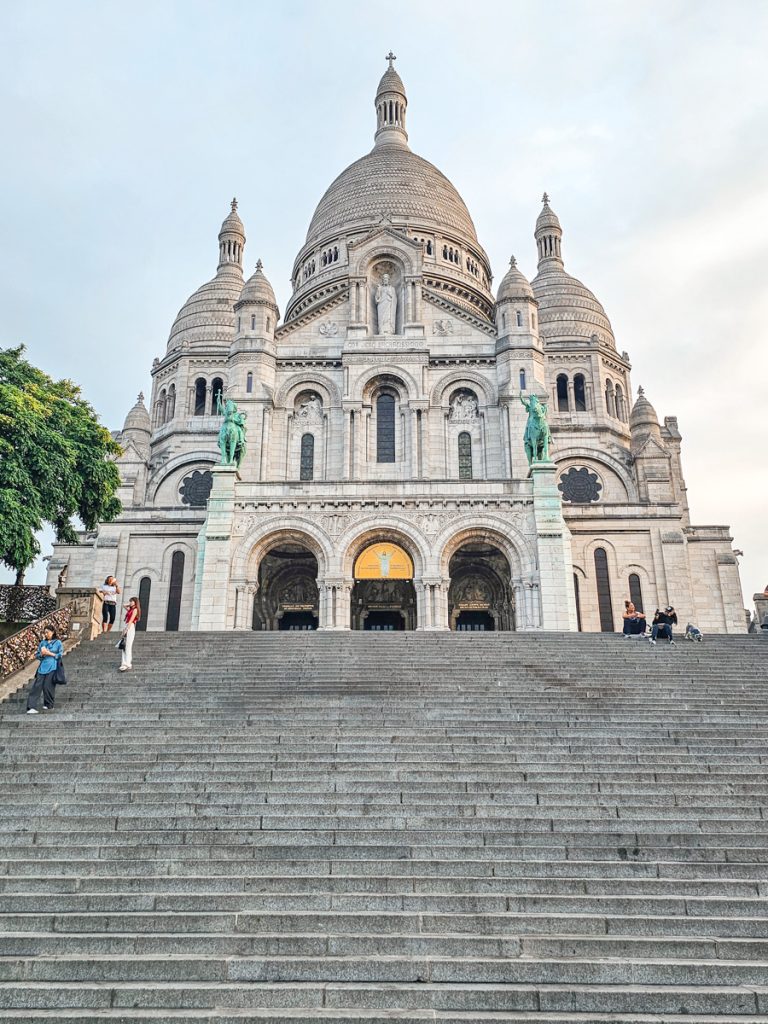
The view from the bottom looking up is just as good, though! The long staircase rises through the park, lawn, and trees toward Sacré-Cœur, perfectly framing the basilica above. It’s one of those scenes that instantly says “Paris.”
8. Other Montmartre Staircases
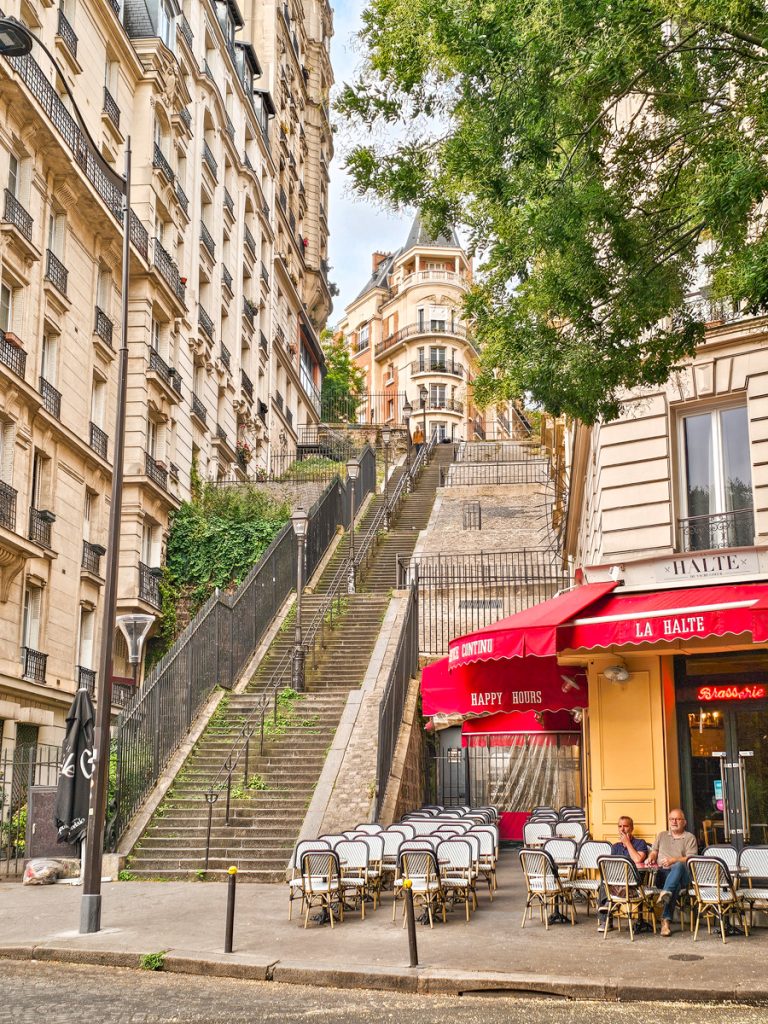
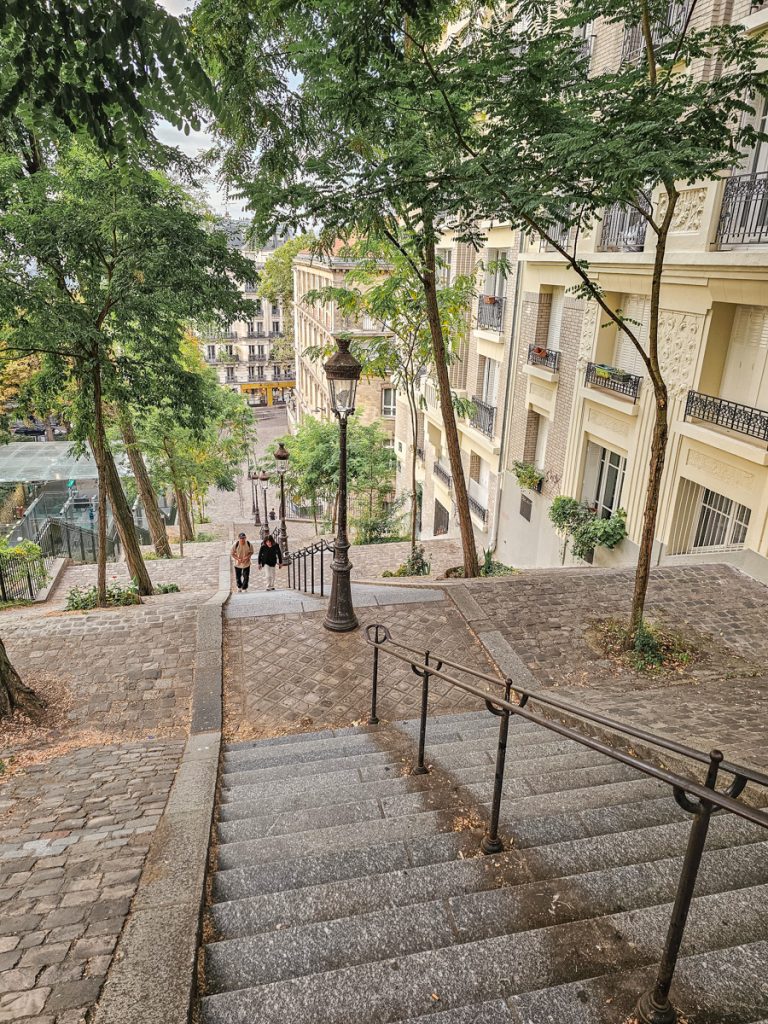
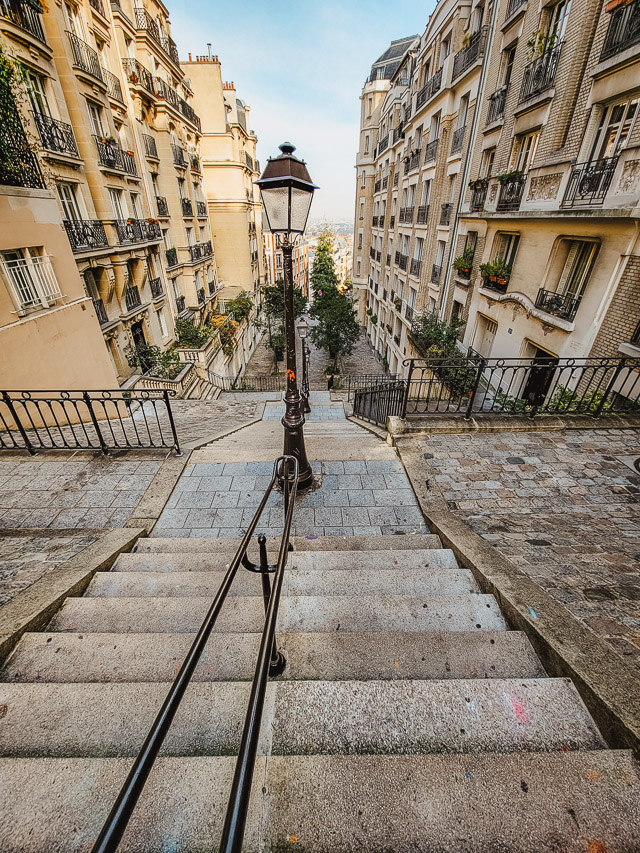
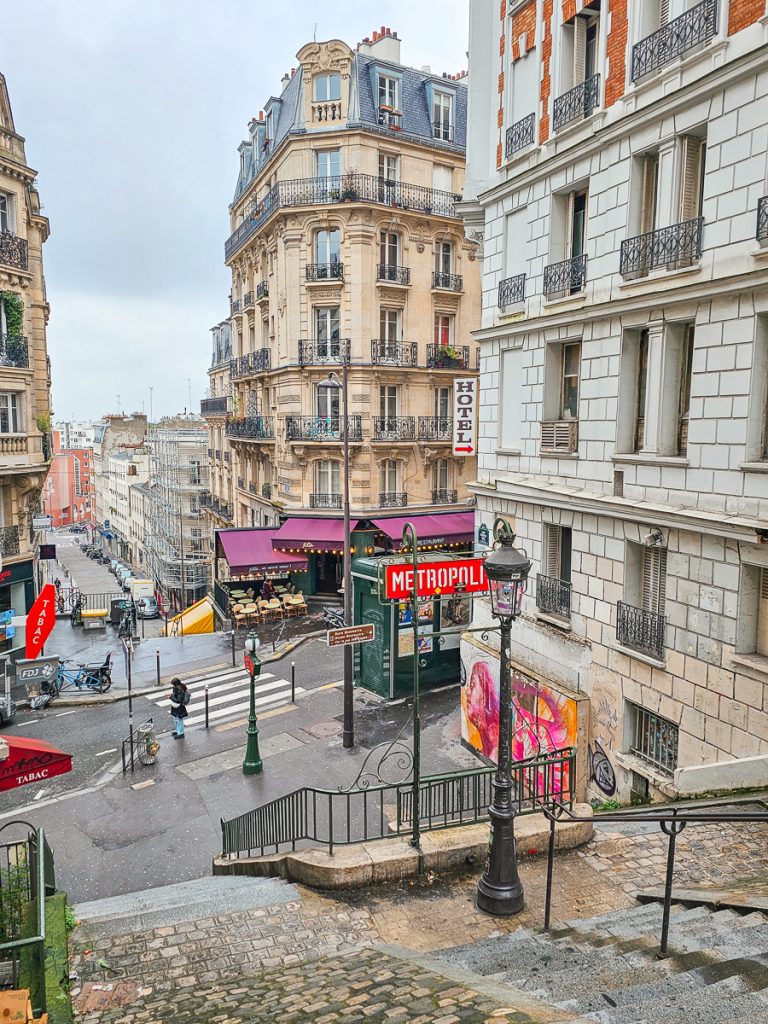
Thanks to its hilltop location, Montmartre is crisscrossed by staircases that connect the neighborhood’s winding streets and hidden corners. There are 38 public staircases in the neighborhood, and honestly, they could be the subject of an entire article on their own.
Part of the fun of exploring Montmartre is simply stumbling across them as you wander. A few of my favorites include: the Rue Foyatier staircase beside the funicular, the staircase along Rue du Mont-Cenis behind Sacré-Cœur, the iconic stairs at Lamarck-Caulaincourt Metro station, the steep staircase on Rue Becquerel, and the picturesque steps along Rue Girardon near Place Dalida.
9. Jacquemart-André Museum
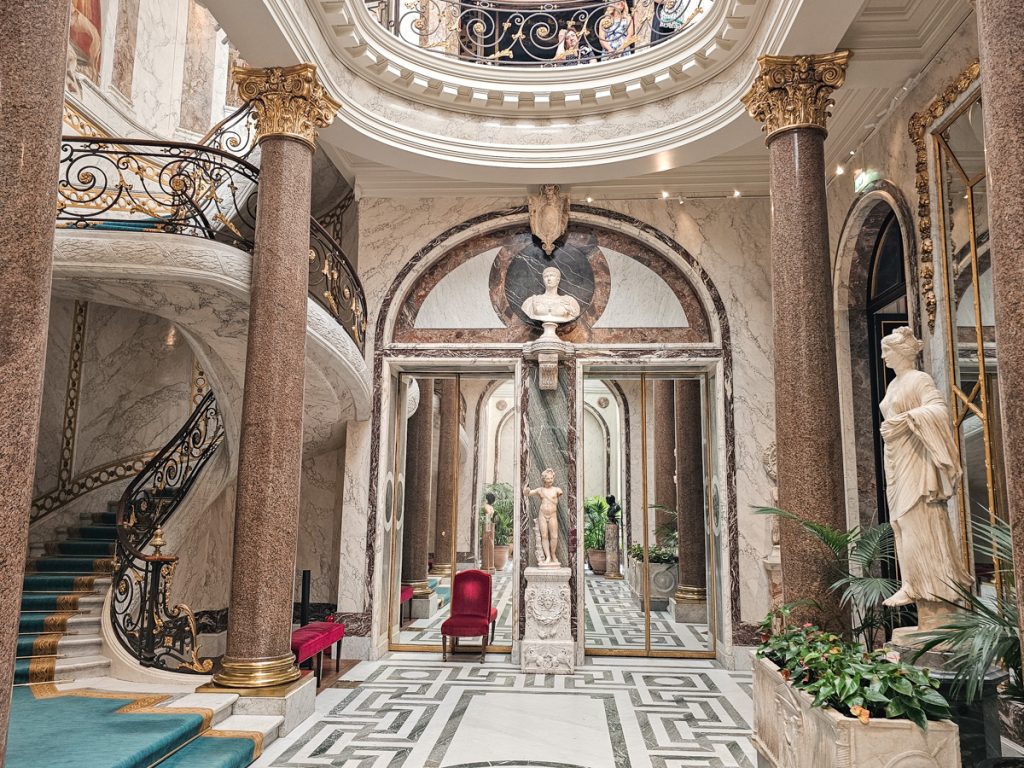
If you love historic mansions, the Musée Jacquemart-André is hard to beat (and is a huge hidden gem). Built in the late 19th century by art collector Nélie Jacquemart and her husband Édouard André, the mansion is filled with lavish reception rooms and an extraordinary art collection.
The staircase sits within the mansion’s Winter Garden, a fashionable feature of wealthy homes during the Napoleon III era. Surrounded by palms and natural light from a glass roof above, it gave guests a place to escape the crowded reception rooms and relax for a while.
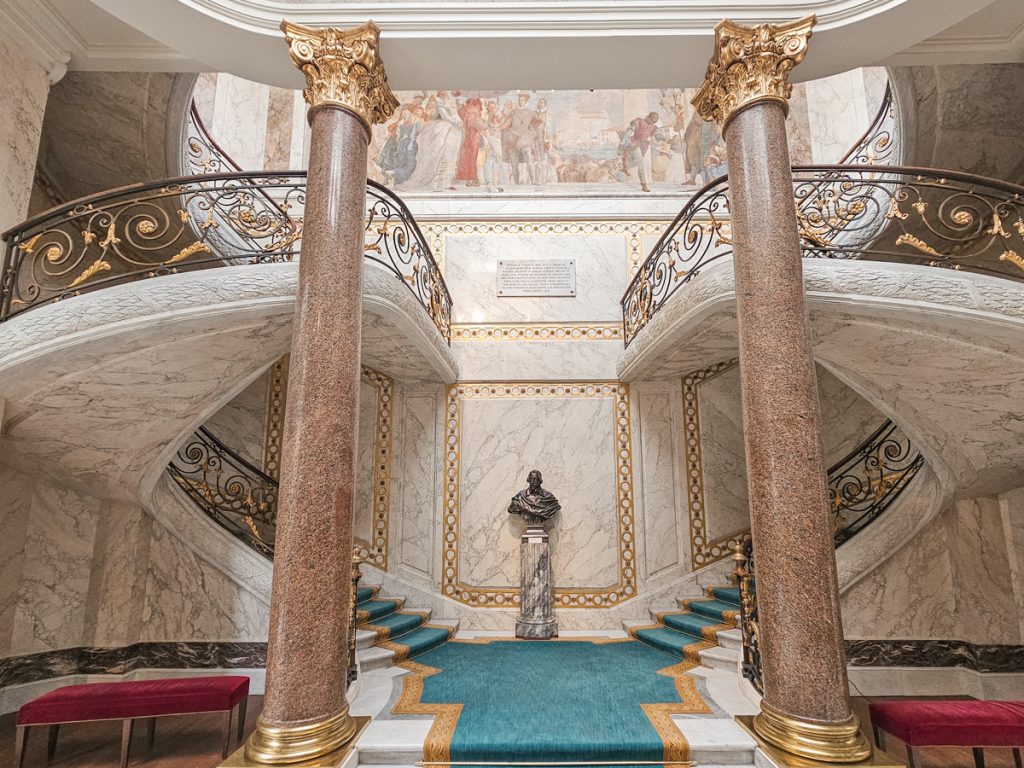
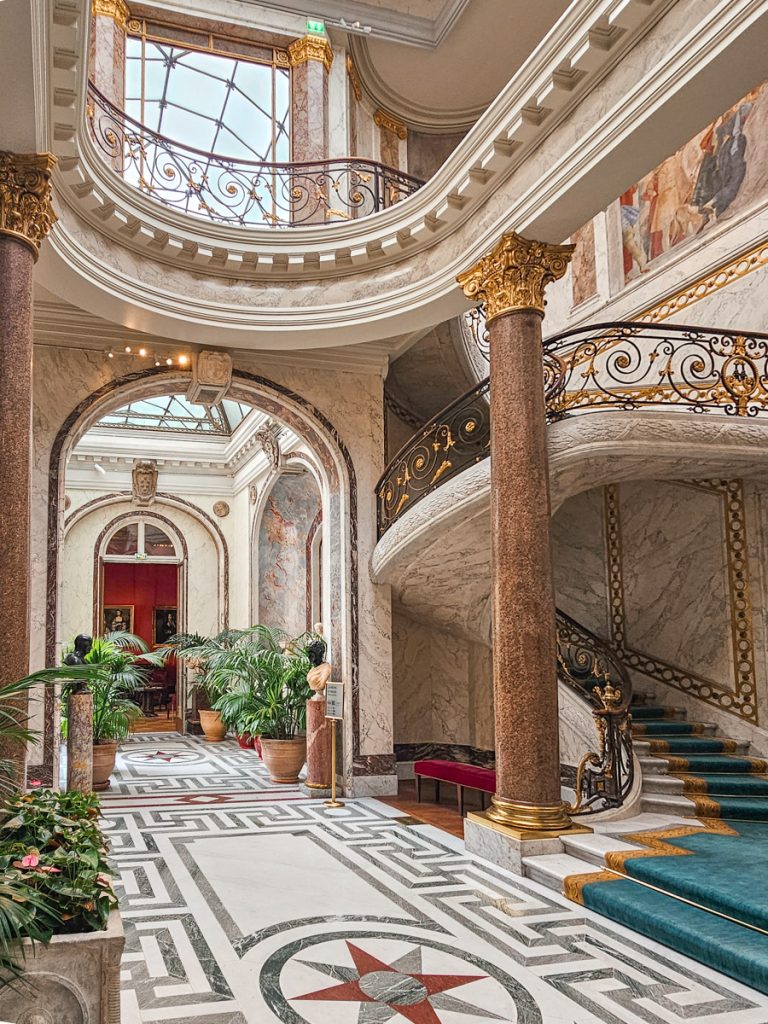
The staircase itself is rather unusual. Rather than a single central flight, two separate staircases curve upward on either side of the room before meeting on the upper level. Marble columns, gilded capitals, decorative ironwork, sculptures, and murals surround the staircase and fill the room, creating a space that somehow feels both extravagant and surprisingly airy.
10. Galerie Dior
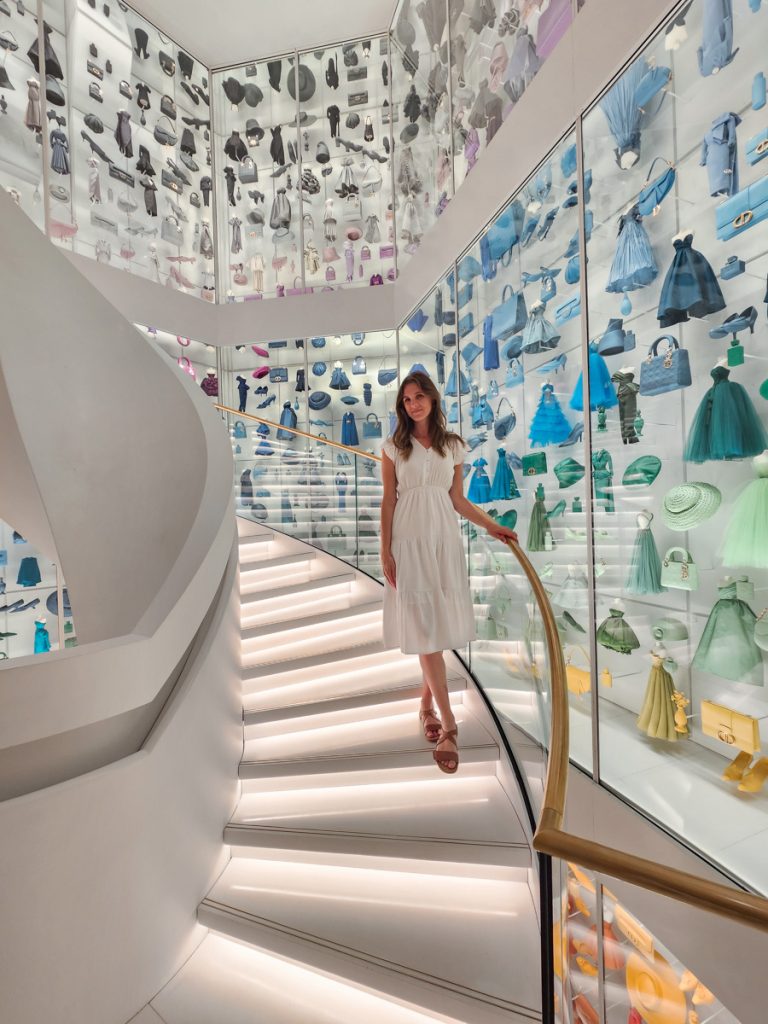
La Galerie Dior is one of the most aesthetically designed museums in Paris. Located in the 8th arrondissement, it tells the story of the fashion house through iconic Dior dresses and accessories displayed in a series of immersive galleries. Even if you’re not particularly interested in fashion, it’s hard not to be impressed by the presentation.
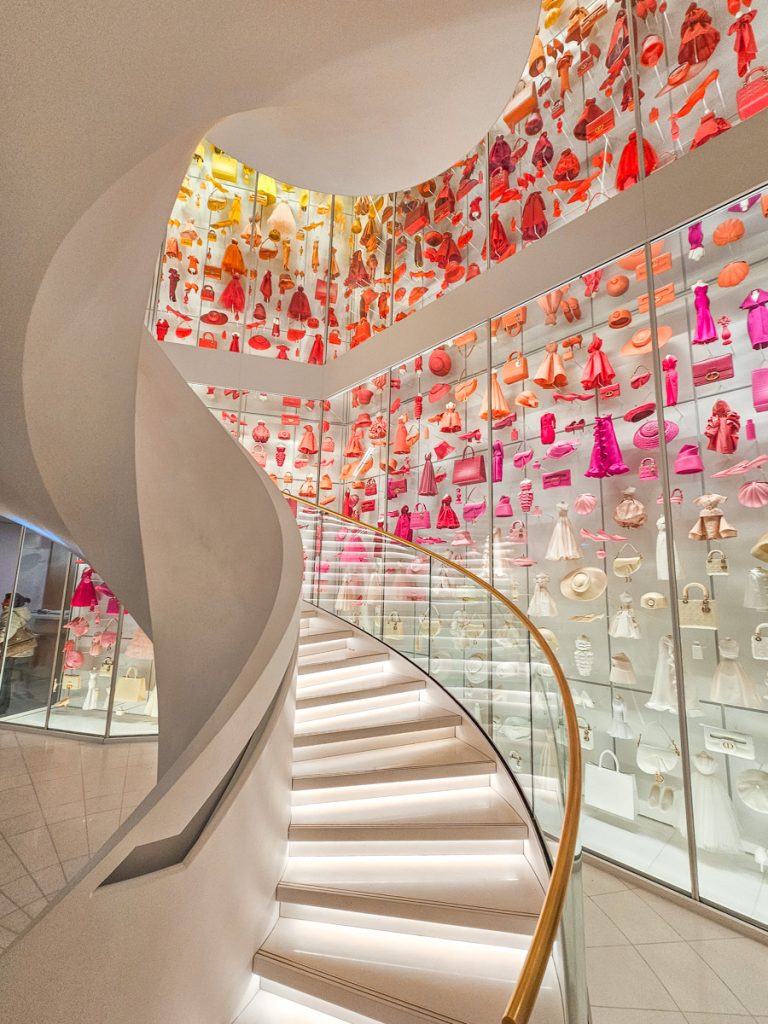
At the end of the visit, you descend a white spiral staircase surrounded by thousands of miniature Dior creations. Dresses, handbags, shoes, hats, and perfume bottles cover the walls from floor to ceiling, shifting gradually through every color of the rainbow as the display wraps around the staircase across three stories.
Rather than simply connecting floors, the staircase becomes part of the exhibit itself, a final, showstopping moment in a museum full of extraordinary displays.
11. Petit Palais
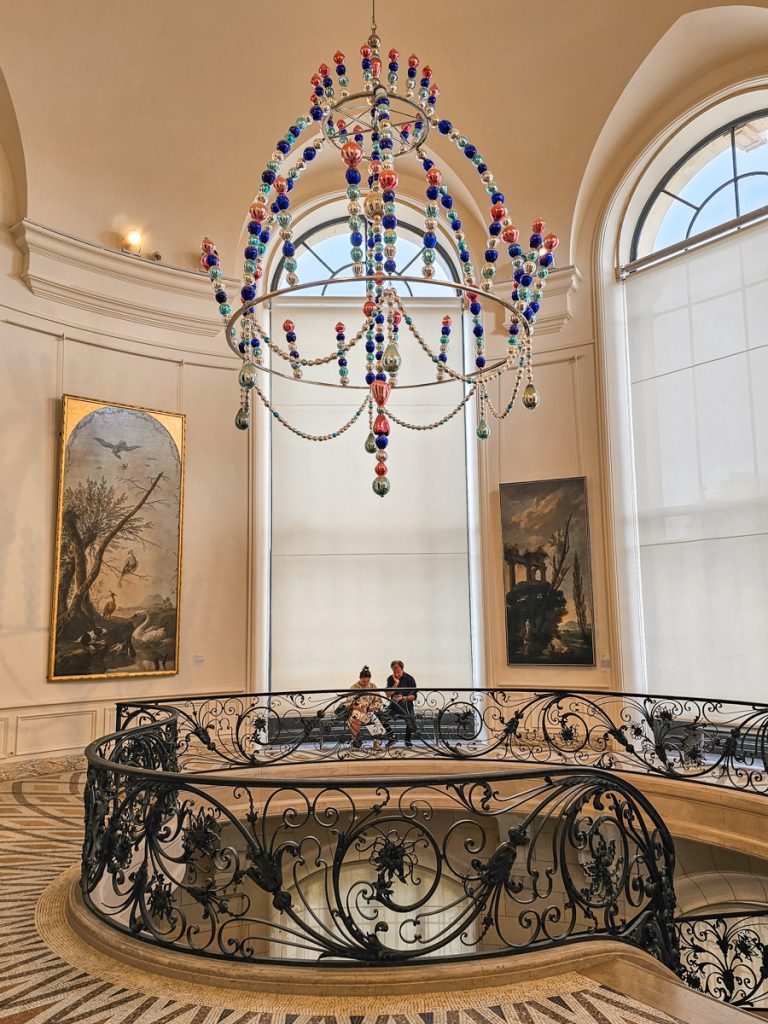
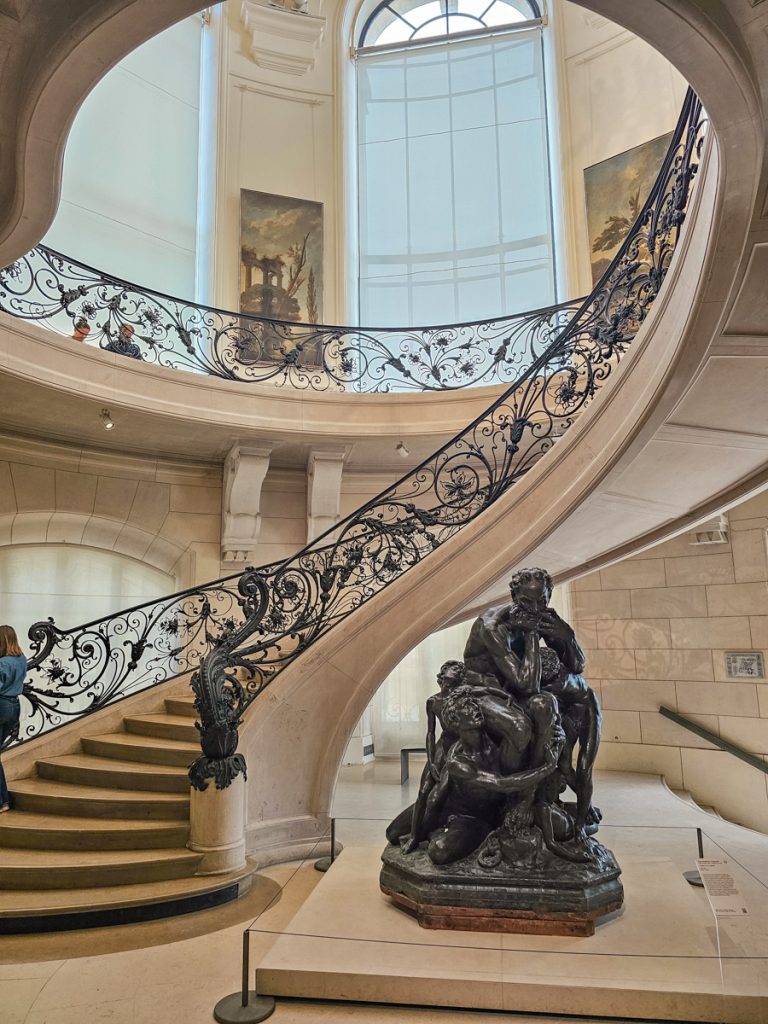
Built for the 1900 World’s Fair, the Petit Palais is one of Paris’s most stunning free museums. In the back corner of the building, a sweeping staircase connects the museum’s upper sculpture and painting galleries with the lower decorative arts galleries, beneath towering windows that fill the space with natural light.
The staircase is framed by intricate wrought-iron railings designed by architect Charles Girault, whose decorative details can be found throughout the museum. At its base sits Ugolino, a dramatic sculpture by Jean-Baptiste Carpeaux inspired by Dante’s Divine Comedy and often considered one of the artist’s most important works.
12. Bonus: Horseshoe Staircase at Fontainebleau
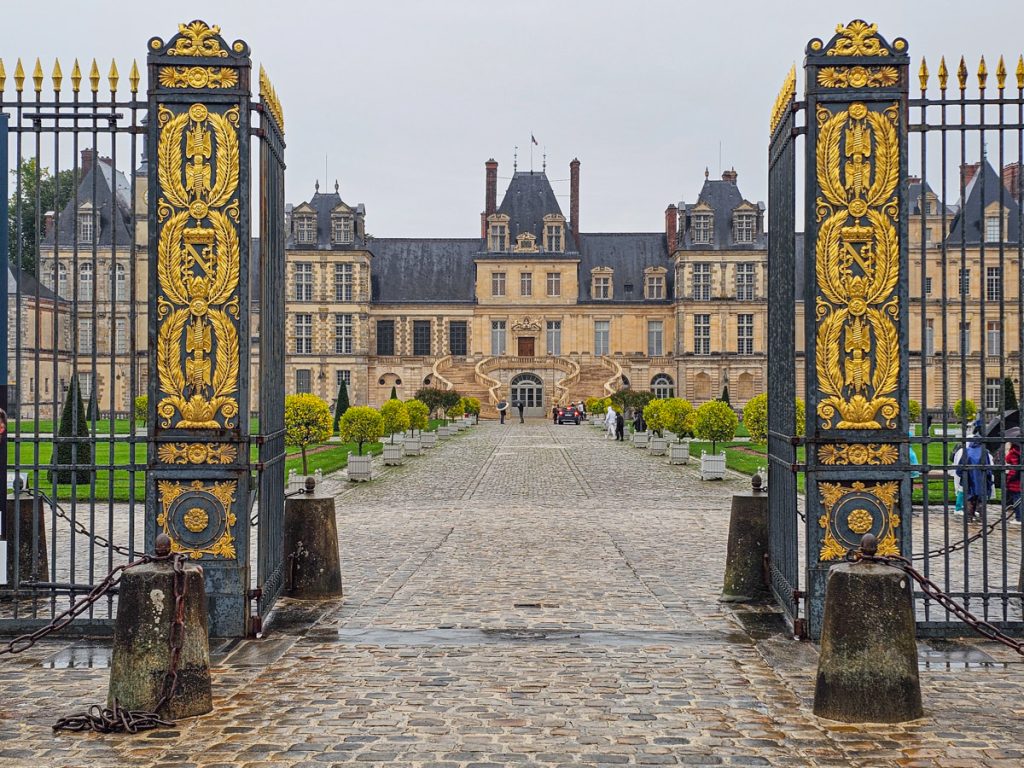
This one is technically cheating since it’s outside Paris, but Fontainebleau is one of the easiest and most rewarding day trips from the city, so I couldn’t leave it off the list.
The Château de Fontainebleau was one of the most important royal residences in France for nearly eight centuries. Kings and emperors from François I to Napoleon left their mark on the palace, creating one of the most historically significant and architecturally rich châteaux in the country.
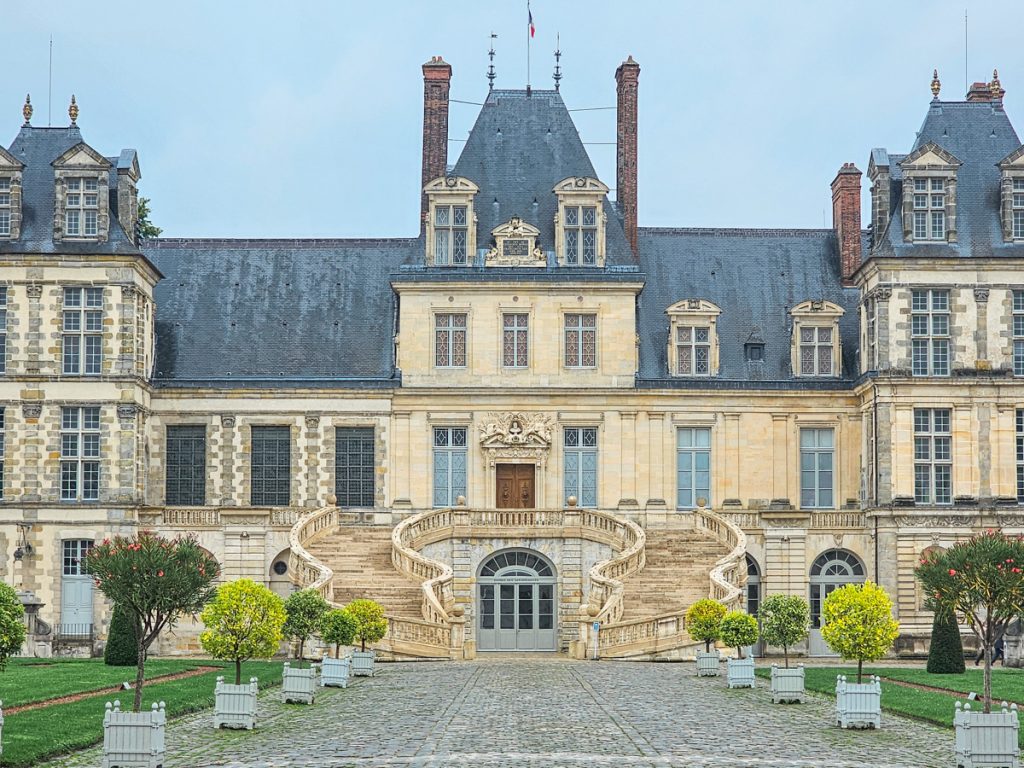
Its most famous staircase is the Horseshoe Staircase, built in the 1630’s during the reign of Louis XIII. With its distinctive curved design, the staircase quickly became an architectural landmark and was widely imitated throughout Europe.
Over the centuries, it served as the backdrop for royal ceremonies, receptions, and state occasions. But its most famous moment came in 1814, when Napoleon bid farewell to his Imperial Guard from these very steps before departing for exile on Elba.
Today, the staircase is still the symbol of Fontainebleau and one of the most recognizable staircases in France.
Want to See More Beautiful Details in Paris?
If you enjoy the architectural details that make Paris special, here are a few more guides you might like:
- 7 Stunning Paris Bridges – Historic bridges, iconic views, and some of the city’s most photogenic spots
- 11 Uniquely Beautiful Metro Stations in Paris – From Art Nouveau entrances to grand underground halls
- 10 Incredible Rooftop Views in Paris – Observation decks, terraces, and panoramic viewpoints across the city
- 15 Most Beautiful Parisian Gardens – Formal gardens, charming courtyards, and peaceful green spaces throughout the city
If you want everything in one place, my Paris travel guide page pulls together neighborhood guides, attraction and museum guides, foodie recommendations, and travel tips in one hub.
And if you’re planning a Paris trip and need some help, I also offer Paris planning calls.
These one-on-one video sessions are great for getting feedback, asking questions, and sorting through options, whether you need a full plan or help fine-tuning what you already have.
