
14 Secret Spots You’ve Never Heard Of on Paris’s Left Bank

The Left Bank is one of the largest and most historically dense parts of Paris, stretching south of the Seine through six arrondissements. It’s easy to hit some of the biggest sites — the Eiffel Tower, Musée d’Orsay, the Pantheon, maybe the Luxembourg Gardens — and feel like you’ve seen what there is to see.
But the Left Bank extends well beyond that familiar tourist path into quieter neighborhoods, Roman ruins, panoramic viewpoints, and museums that see a fraction of the crowds. Most of it goes completely unvisited.
This post covers 14 Left Bank spots that tend to fall through the cracks and are almost entirely off the tourist path.
1. Notre-Dame du Travail
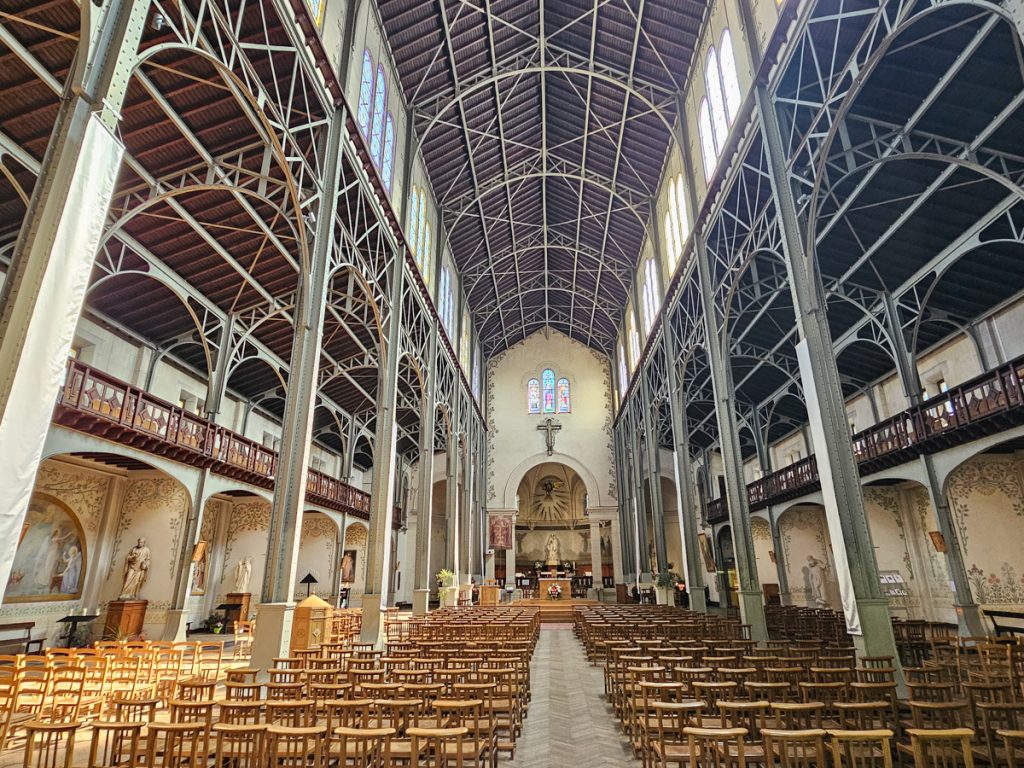
Notre-Dame du Travail sits in the 14th arrondissement, not far from Gare Montparnasse. From the outside it looks like any other Romanesque church you’d walk past without a second thought. That’s exactly what makes stepping inside such a surprise.
The church was built around the time of the 1900 Exposition Universelle in Paris, to serve the working-class laborers who lived in the 14th and helped build the fair’s various exhibits and attractions. The design was intentional — built to feel familiar to people more accustomed to factories than palaces.
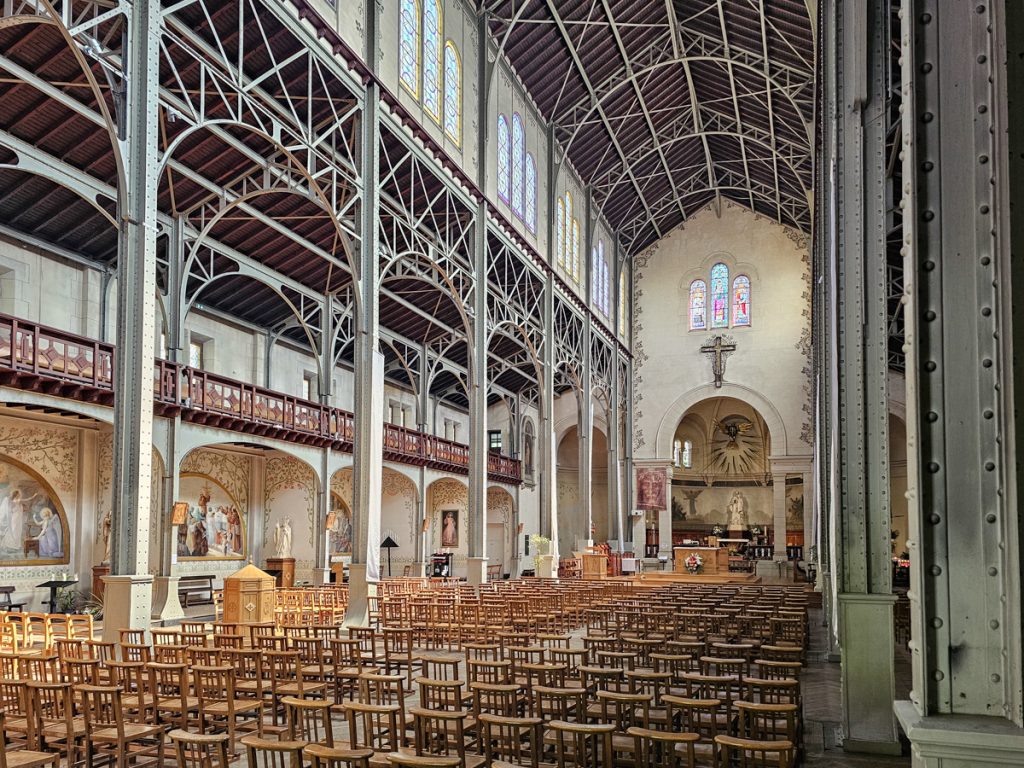
Architect Jules-Godefroy Astruc used exposed iron columns and metal trusses (believed to have come from the Palace of Industry, built for the 1855 World’s Fair) to build the nave. The result is surprisingly light and airy, with clerestory windows running along the upper walls and a beautiful wooden parquet floor.
Despite being industrial and having a utilitarian vibe, it’s quite elegant and beautiful, and certainly one of the most remarkable churches in Paris.
2. View from the Arab World Institute
The Arab World Institute sits on the banks of the Seine in the Latin Quarter. The building itself is worth a look: a modern façade of glass and steel mashrabiyas that stands out against the surrounding neighborhood. But the main reason to come here is the roof.
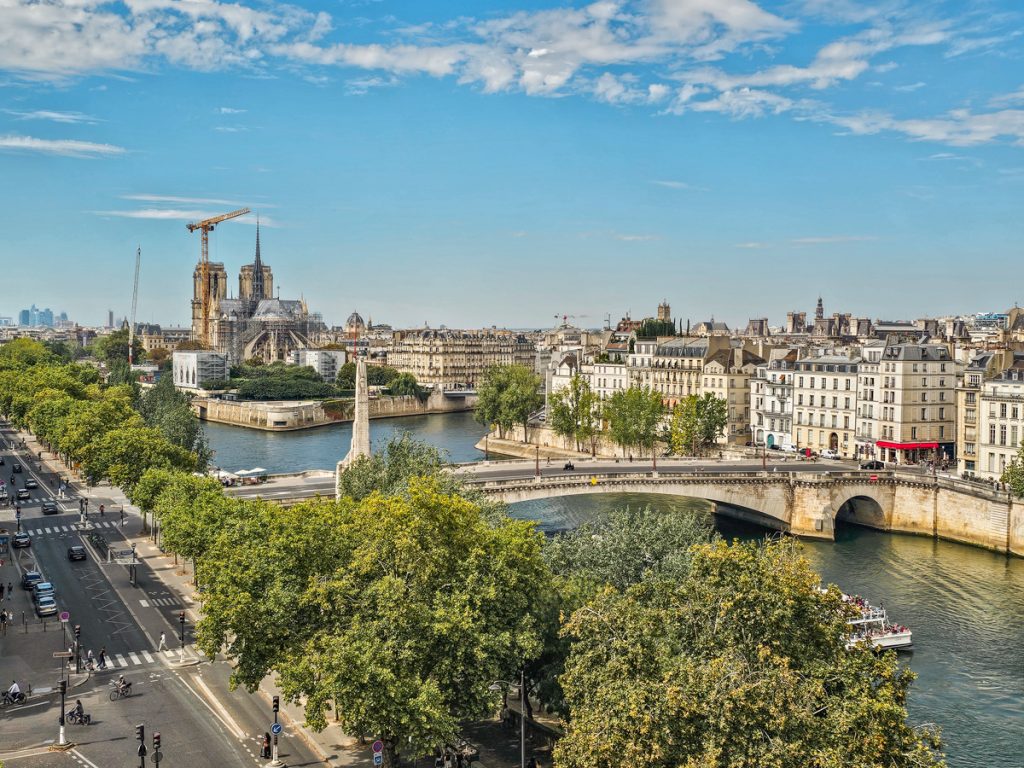
The rooftop terrace on the 9th floor is free and open to all. Just walk in, take the elevator up, and you’re there. The view takes in the rear of Notre-Dame, the Île Saint-Louis, the Marais, and the Seine: a beautiful stretch of central Paris that other viewpoints don’t capture. It’s one of the better free views in the city, and almost nobody seems to know about it.
The institute also has a museum covering Arab art, history, and culture across several floors, which is worth a look if that’s of interest. However, the terrace alone is reason enough to come.
3. “Le Bateau Ivre” Poem Mural
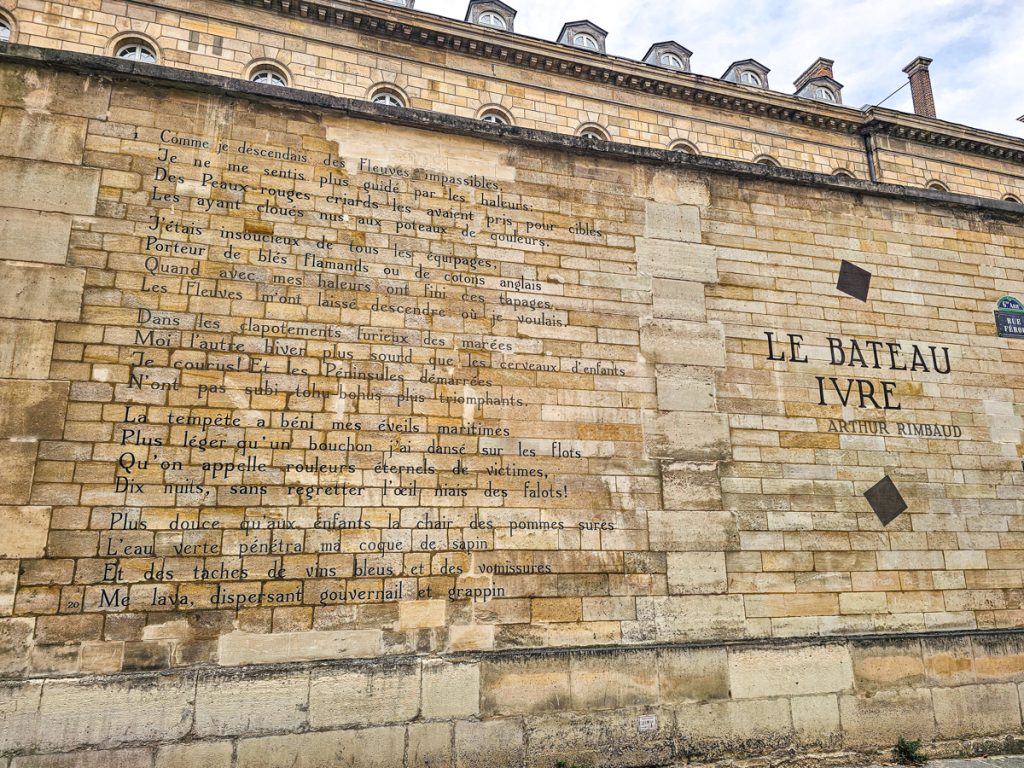
Rue Férou is an otherwise typical street running from Place Saint-Sulpice up toward the Jardin du Luxembourg in the 6th arrondissement. So it’s a bit of a surprise to find the entire 100-line text of Arthur Rimbaud’s poem “Le Bateau Ivre” (The Drunken Boat) painted across the long stone wall that runs along one side.
The Symbolist poem is written in the first person from the point of view of a boat adrift after its crew has been killed. The boat’s erratic course, the storms, and the vast open ocean all reflect the inner torment of the poet himself.
In 1871, Rimbaud recited the poem for the first time to his friends from the first floor of an old restaurant on the other side of Place Saint-Sulpice. The foundation behind the mural imagined the wind carrying his words from that café window, across the square, and down into Rue Férou.
The poem mural was hand-painted on this wall in 2012.
4. Musée Bourdelle
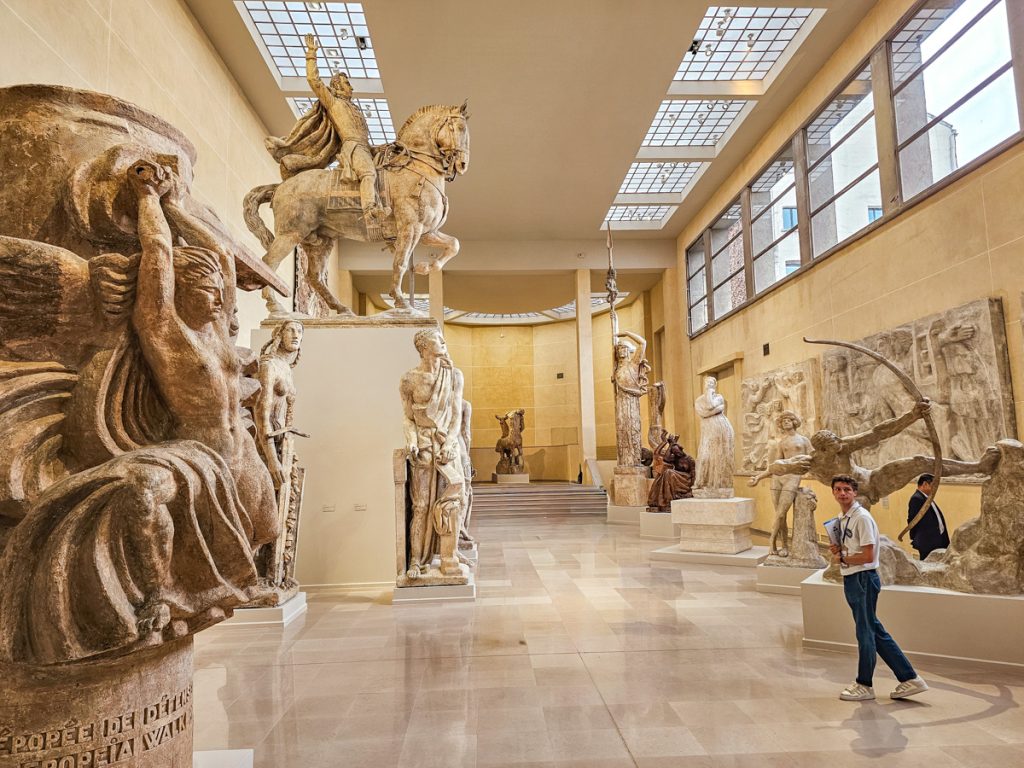
The Musée Bourdelle sits in Montparnasse in the 15th arrondissement, built around the studio where sculptor Antoine Bourdelle lived and worked for over 40 years until his death in 1929.
Though less widely known than his contemporary Rodin (whose studio he worked in as an assistant), Bourdelle was one of the most celebrated sculptors of his time, known for large-scale monumental works.
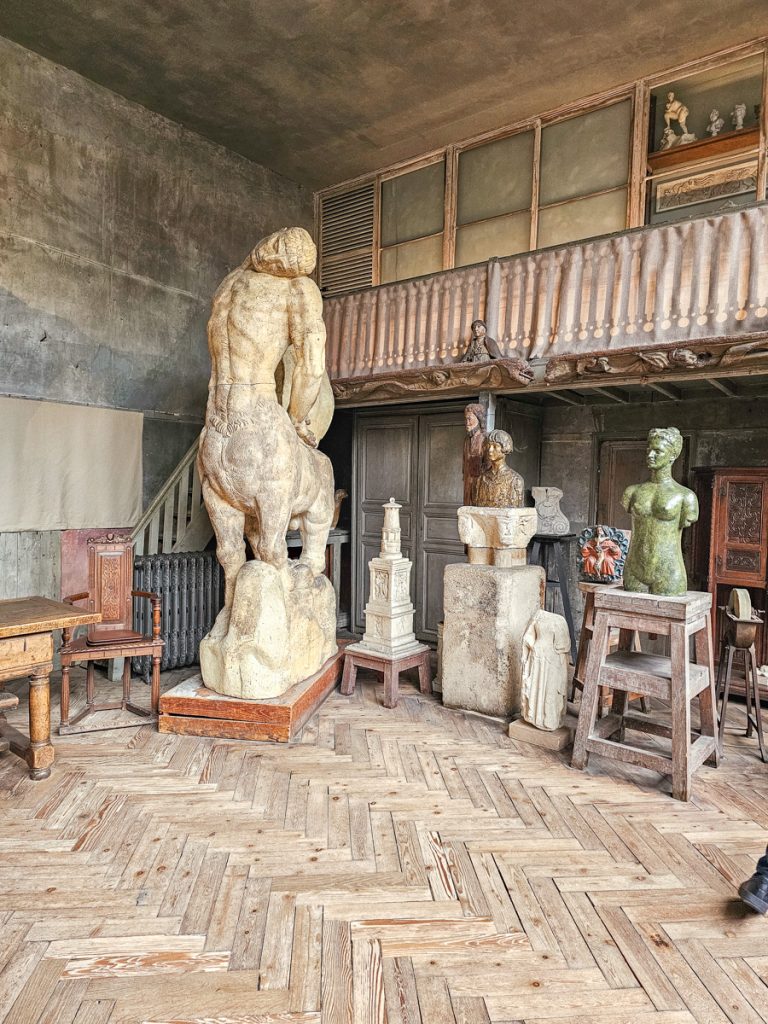
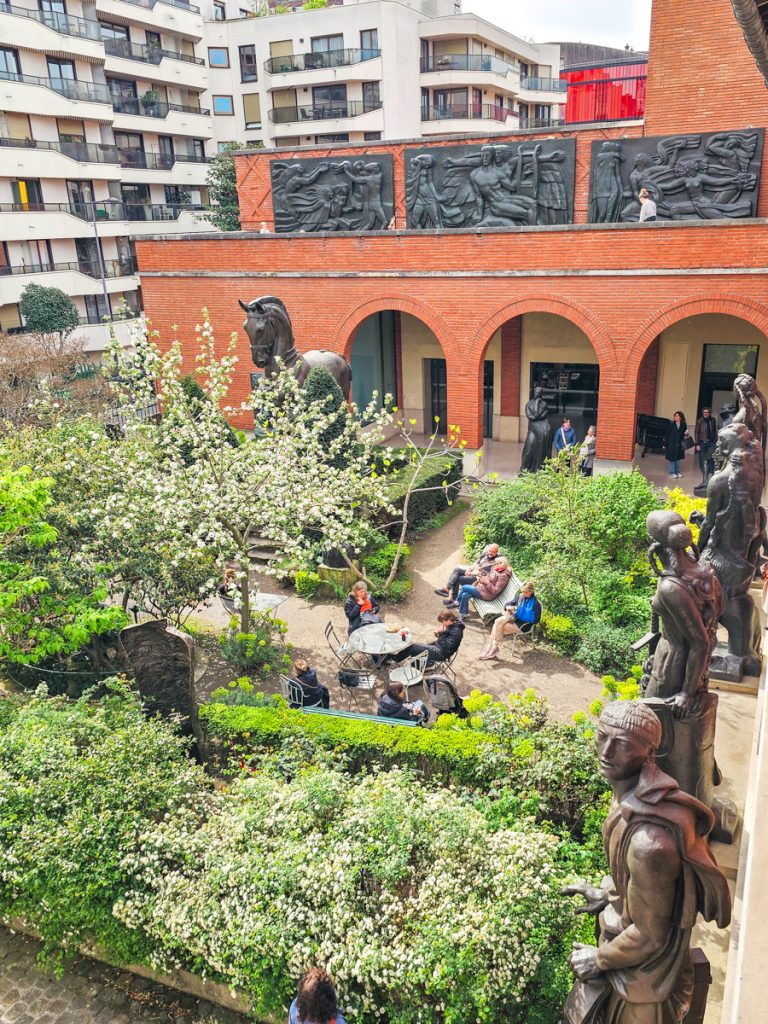
The museum includes his preserved studios, the rooms of his home, small garden courtyards, and a soaring modern gallery. You’ll find plaster models and bronze casts throughout, including some of his most famous pieces: Hercules the Archer, Dying Centaur, and Monument to General Alvear. If you’ve visited the Musée d’Orsay, you may recognize some of his work there, too.
Admission to the permanent collections is free, which makes it an easy addition to any day in this part of the city.
5. Square Gabriel Pierné
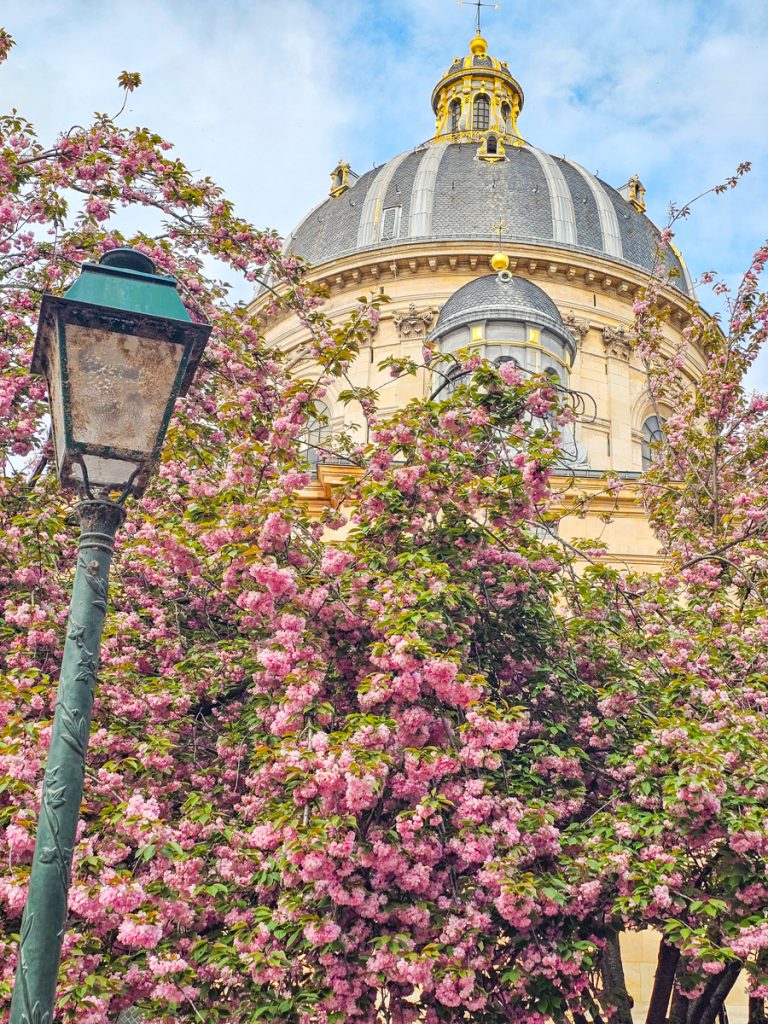
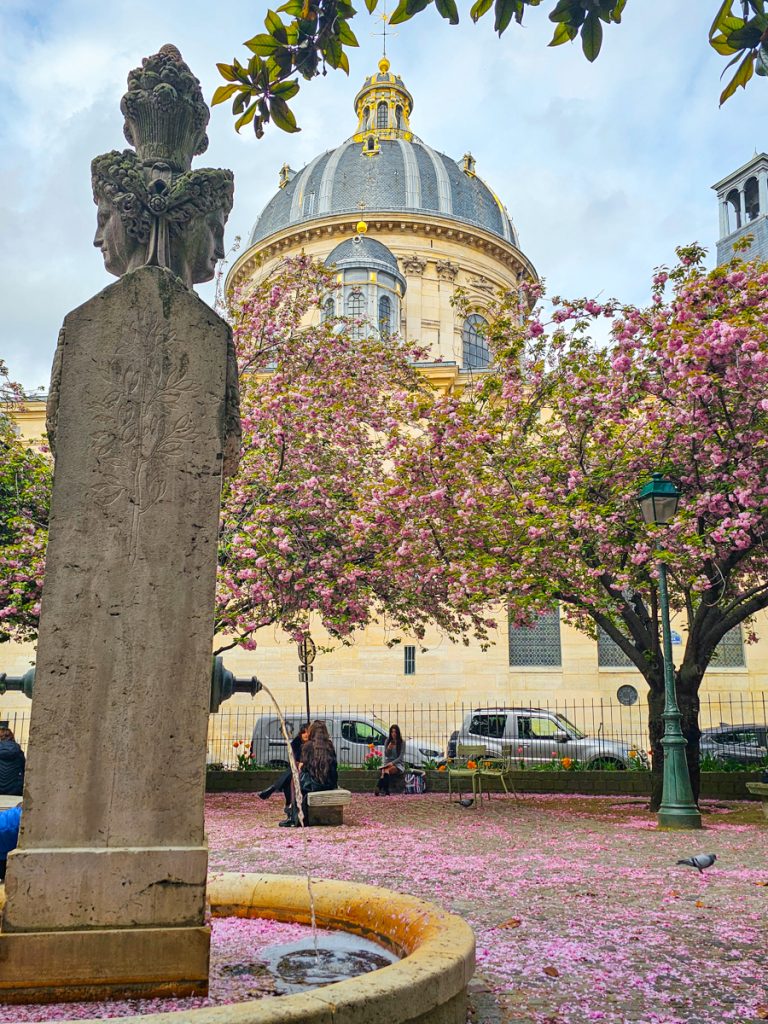
Square Gabriel Pierné is a tiny garden tucked just behind the Institut de France in the 6th arrondissement, hidden from the street by the building’s imposing facade. The dome of the Institut towers over the space, which has benches, trees, a small fountain, and not much else, but it’s a lovely spot to relax for a few minutes, particularly in spring when the cherry trees are in bloom.
The square is named after Gabriel Pierné, a French composer, conductor, and organist who was a prominent figure in Parisian musical life in the late 19th and early 20th centuries. It was inaugurated in 1938, a year after his death.
The central fountain dates to 1830 and is now a listed historic monument. There are also stone benches shaped like open books, a nod to the neighborhood’s long association with booksellers and libraries.
6. Musée des Égouts (Sewer Museum)
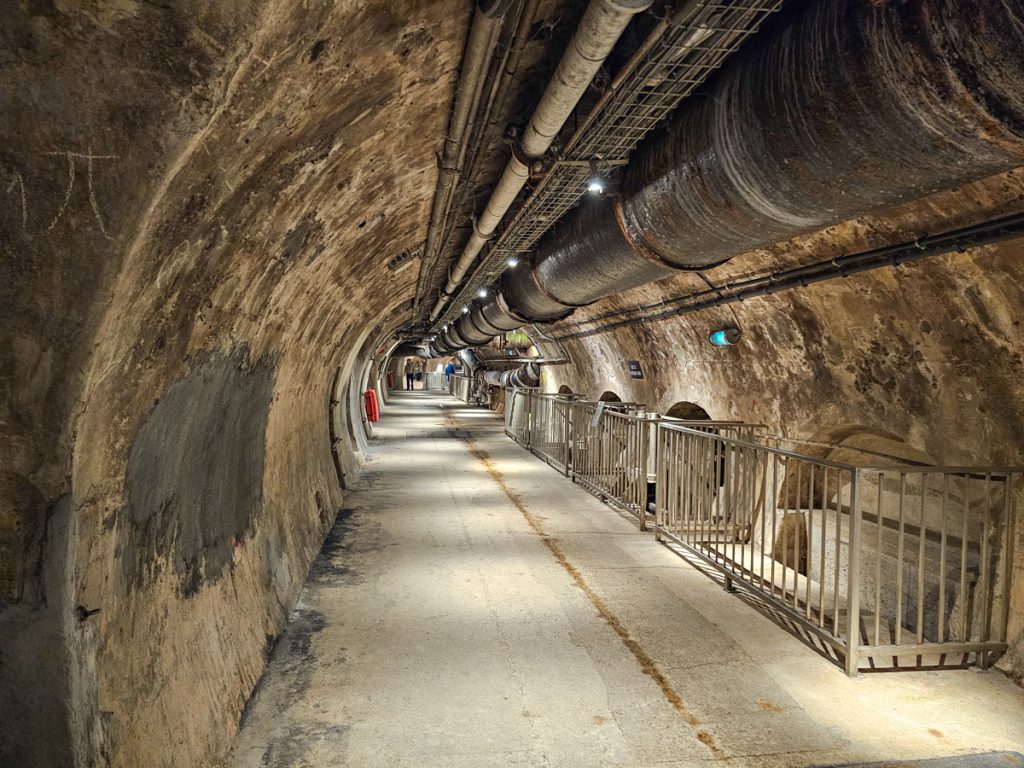
The Paris Sewer Museum sits on the banks of the Seine near the Pont de l’Alma in the 7th arrondissement, and does exactly what it sounds like: takes you underground into 500 meters of the city’s operational sewer system.
The history of sanitation in Paris is a more compelling story than it might initially sound. For much of its history, including into the 19th century, Paris was truly filthy. The 1832 cholera epidemic killed 18,000 people, largely due to poor sanitation and wastewater discharged into the streets and the Seine.
The sweeping reforms that followed, including Baron Haussmann’s famous overhaul of the city, extended underground as well as above it.
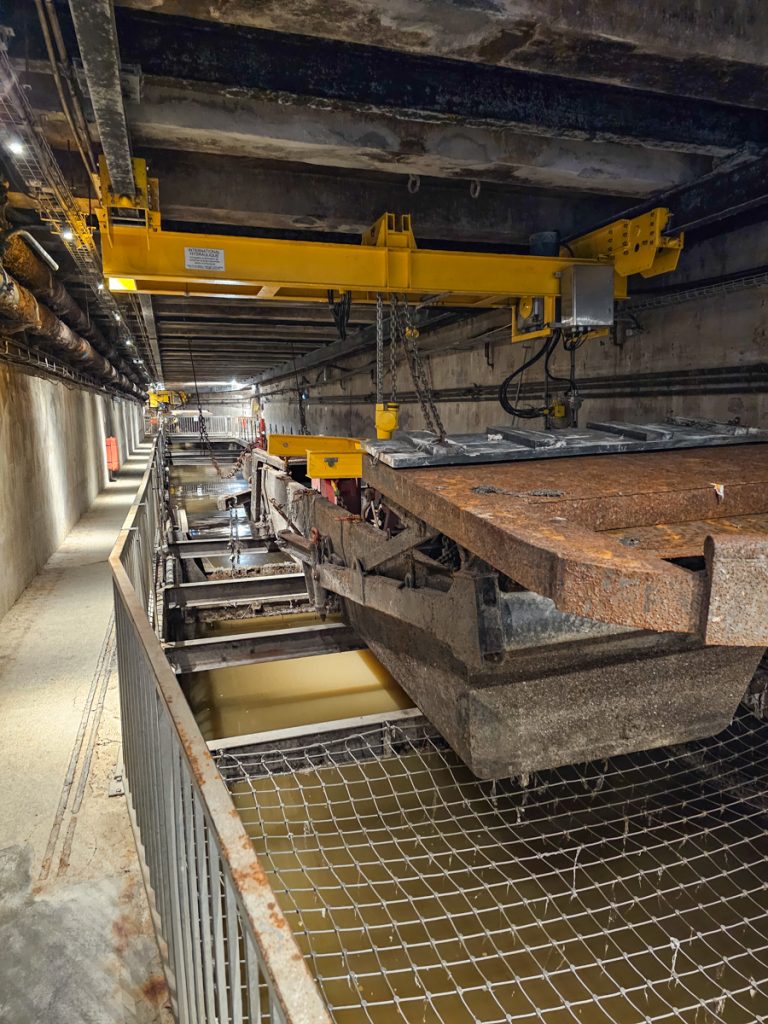
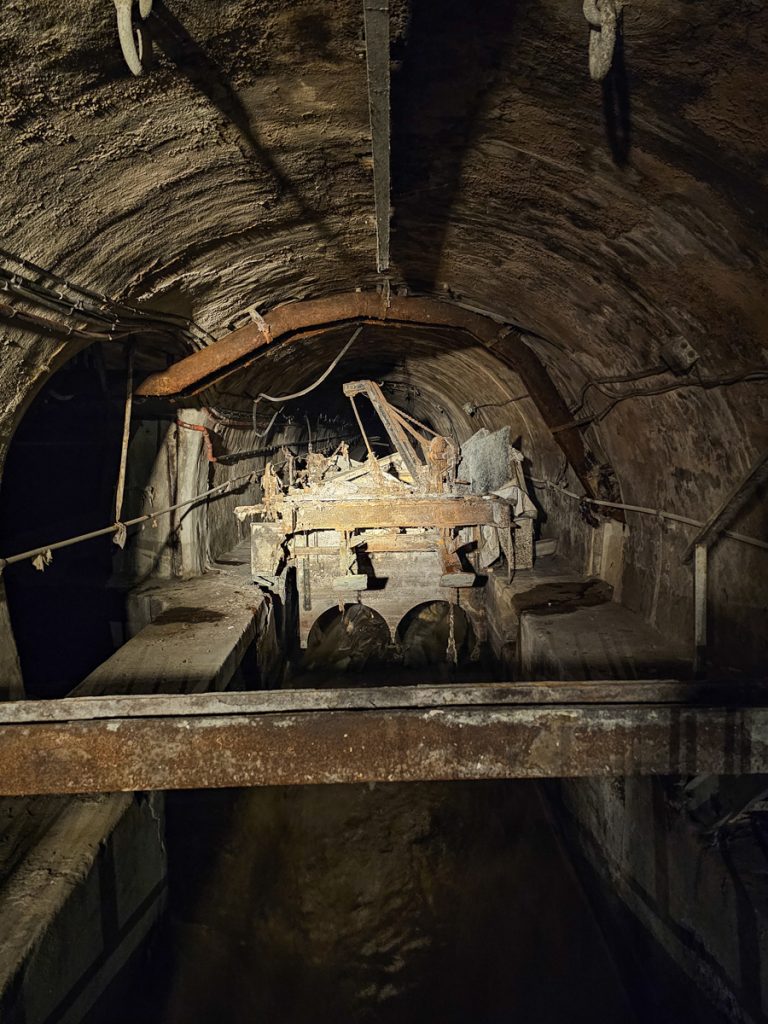
As you walk through, you get a real sense of how the system actually functions, including how wastewater moves from individual building drains into progressively larger collectors and eventually out of the city. Along the way you’ll see old dredging boats and wagons, look down shafts into active sewers, and yes, smell them too. 😉
7. Grand Mosquée de Paris
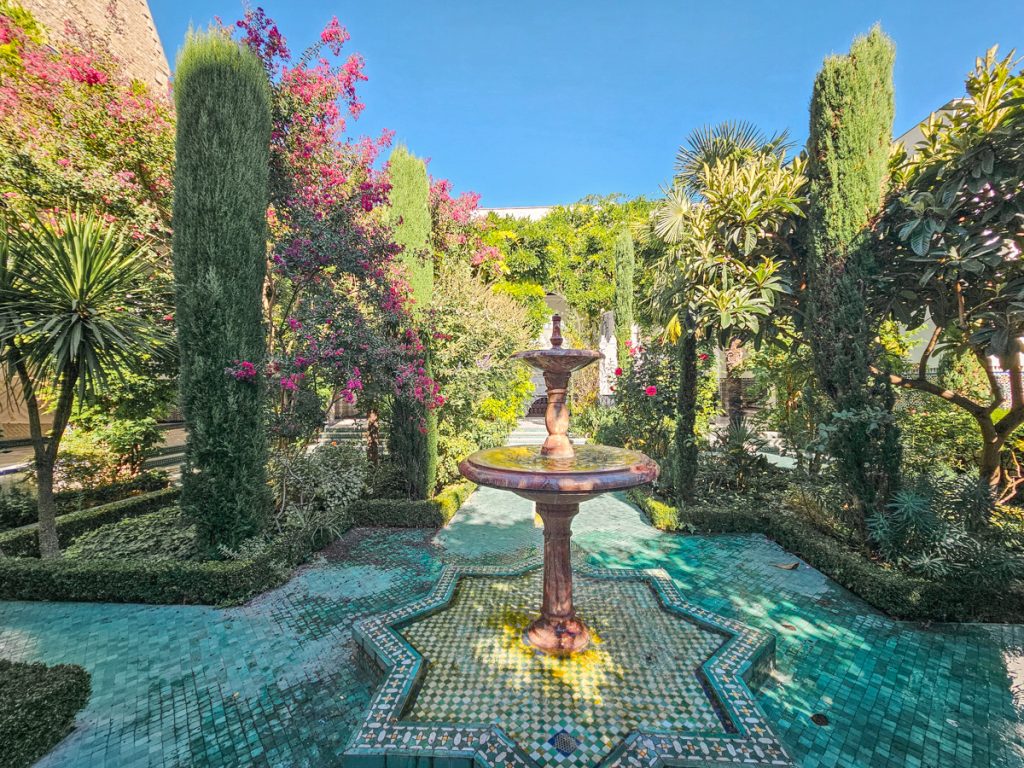
Built in the 1920s as a symbol of France’s ties to the Muslim world, the Grand Mosque is one of the most beautiful and unexpected spaces in the city. The architecture draws on Moorish and Hispano-Moorish traditions, such as carved stucco archways, intricate, colorful tilework, and shaded courtyard gardens centered around a fountain. A 33-meter minaret rises above it all.
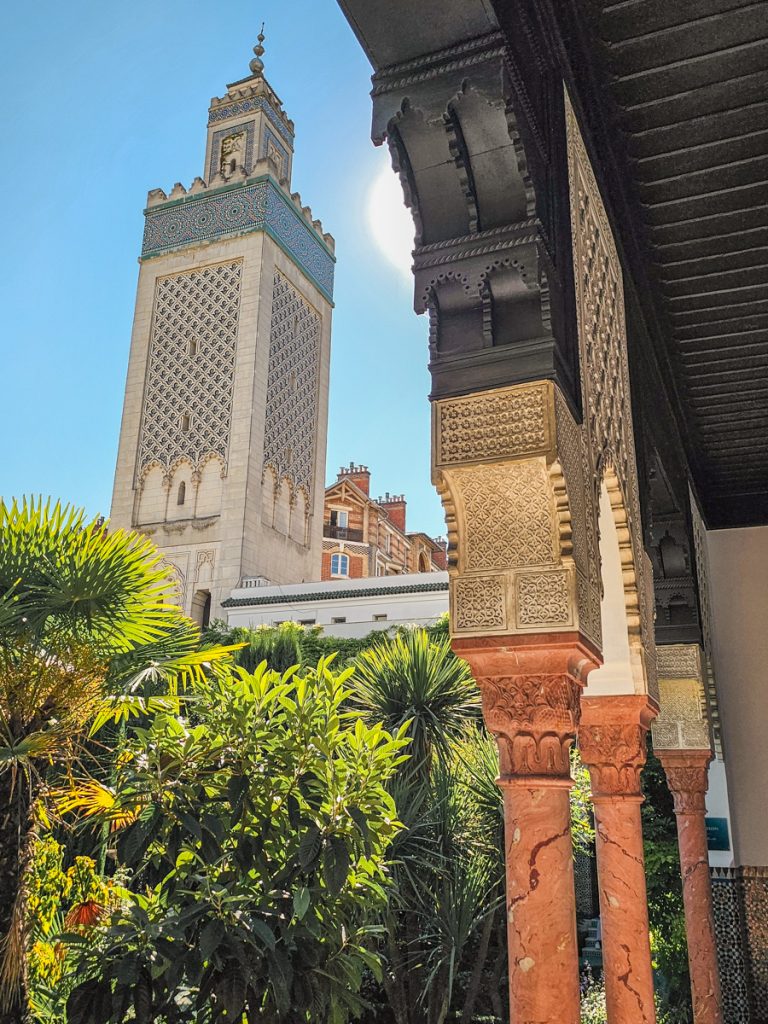
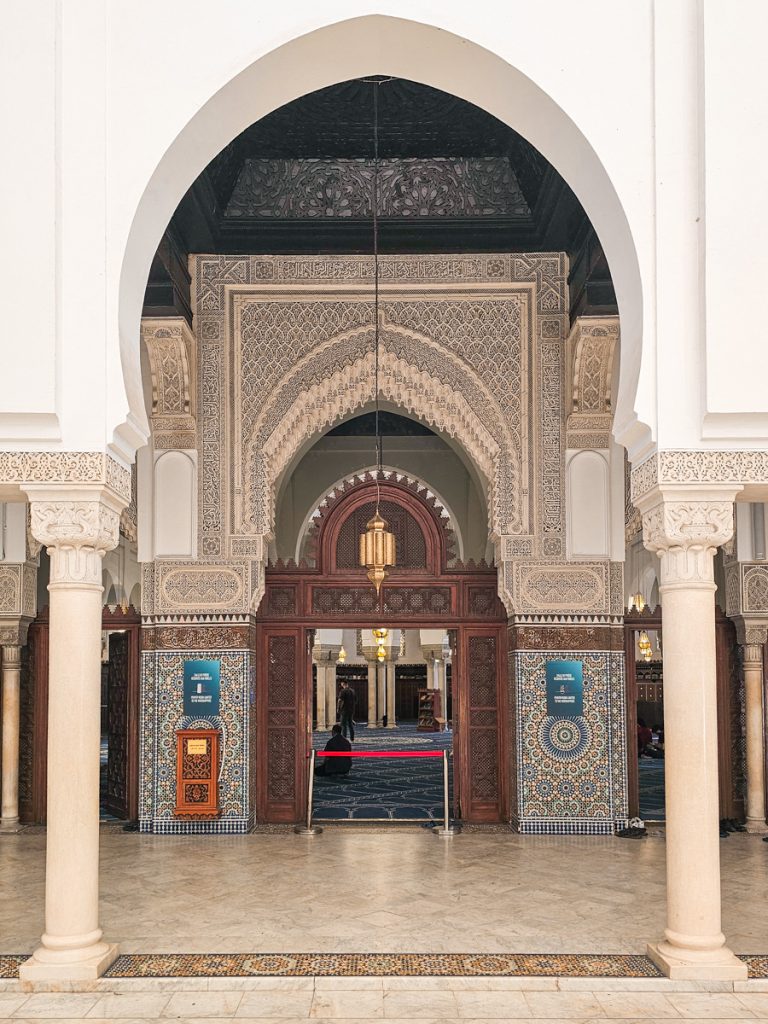
The whole complex has a calm, unhurried atmosphere that’s hard to find in this part of Paris. If you’ve spent time in north Africa or southern Spain, the architecture and vibe will feel familiar in the best way.
The mosque is open daily except Fridays. If your shoulders and knees are exposed, they’ll provide a wrap at the entrance. After your visit, the on-site tea room serves mint tea and Moroccan pastries in a picturesque tiled room, and there’s also a hammam if you want to make a longer afternoon of it.
8. Mazarin Library
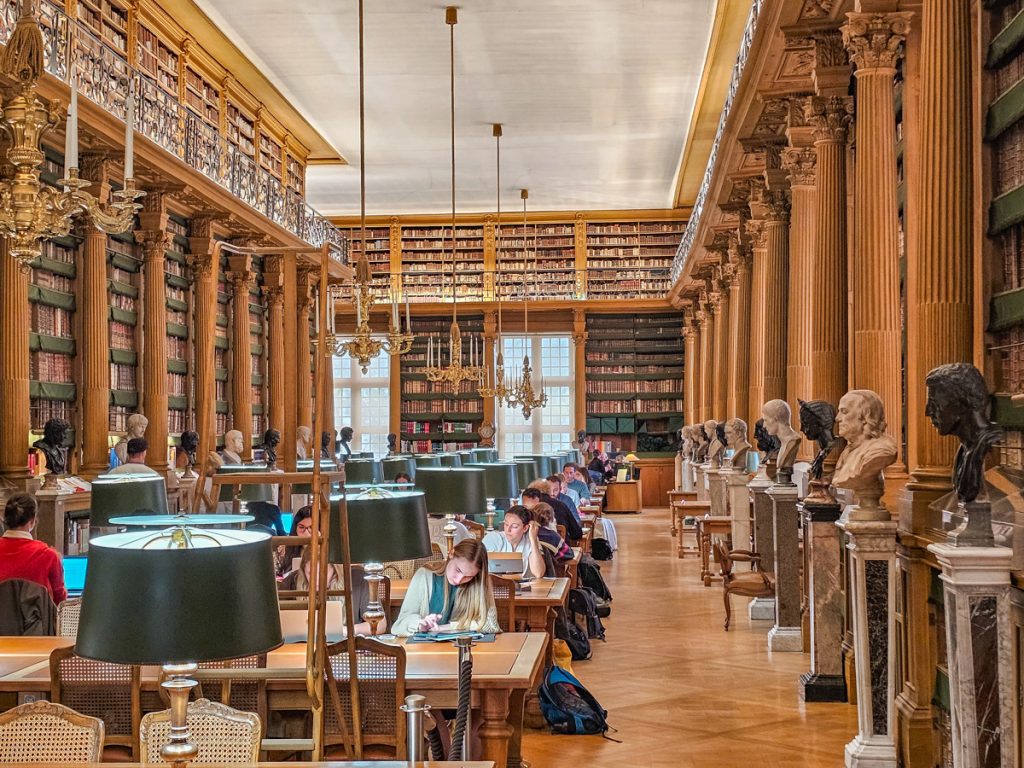
Tucked inside the Institut de France on the Quai de Conti, the Bibliothèque Mazarine is the oldest public library in France and one of the most beautiful rooms in Paris.
Cardinal Mazarin, chief minister to Louis XIV, began collecting books in the 1640s with the intention of building a library that could rival the great collections of Europe. Today, that collection has grown to over 600,000 volumes, including thousands of manuscripts and rare early printed books.
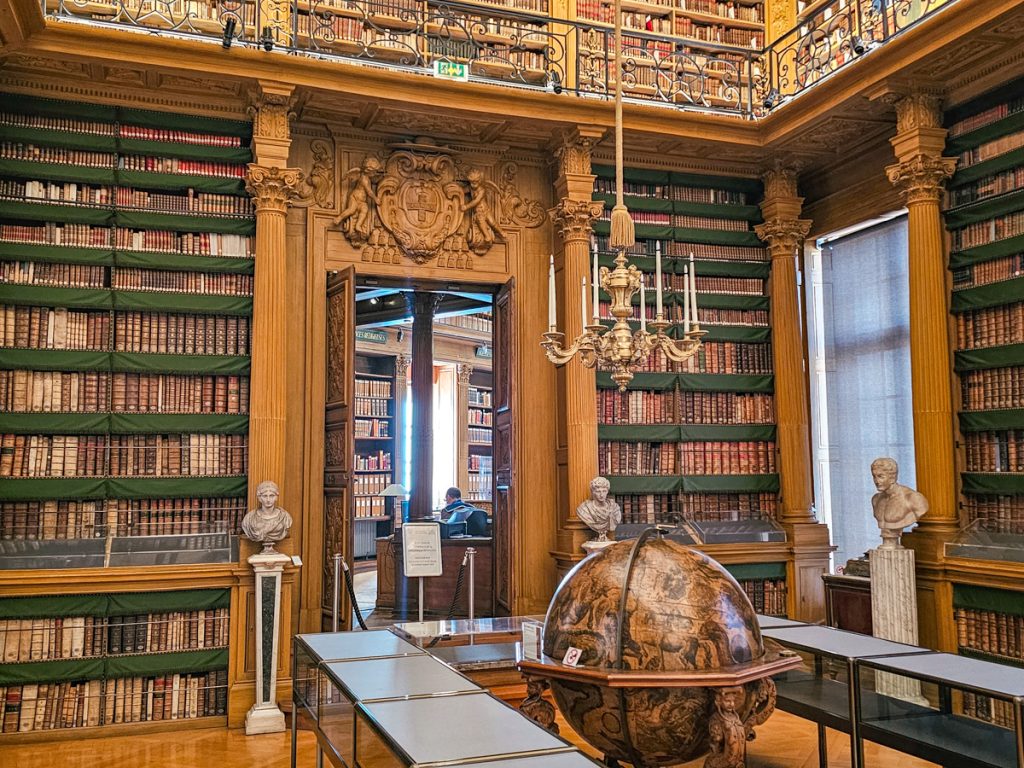
The reading room itself is the reason to come. Tall shelves of old books line the walls from floor to ceiling, marble busts of philosophers and scholars look down from above, and gilded chandeliers hang over the long reading tables where researchers and students still work every day. It was restored to its original 17th-century appearance and has barely changed since.
Casual visitors are welcome to walk through during opening hours at no charge. Free guided tours led by a curator are also available and run about an hour and a half, and are worth considering if you want the full history of the space.
9. Place Monge Market

Paris has quite a few street markets, but the one at Place Monge has a distinctly local feel. It’s been running in the Latin Quarter since 1921, and draws almost exclusively neighborhood shoppers rather than tourists. The stalls cover the usual market staples — fruits and vegetables, meat, fish, cheese, flowers, olives, bread, etc — and it’s a really pleasant spot to wander even if you’re just browsing.
The market is open Wednesdays, Fridays, and Sundays from 7am to 2:30pm.
10. Arènes de Lutèce

Tucked into a residential block in the 5th arrondissement, the Arènes de Lutèce are the remains of a Roman amphitheater dating to the 1st century AD, when Paris was still the Roman settlement of Lutetia. It once held up to 15,000 spectators for gladiatorial combats, theatrical performances, and civic gatherings. After the decline of the Roman Empire it was gradually buried, built over, and forgotten for centuries.
It was rediscovered in the 19th century during the construction of Rue Monge as part of Haussmann’s renovation of Paris, and they unearthed other artifacts (and even skeletons!) as well as the amphitheater itself. Victor Hugo led the public campaign to preserve it rather than demolish it.
Today the site is a free public park. You can walk down onto the sandy arena floor, sit in the old stone terraces, and watch locals play pétanque in the same space where Roman crowds once gathered. It’s a surreal and wonderful thing to stumble across in the middle of a city.
11. Assemblée Nationale
The Assemblée Nationale, which is France’s lower house of parliament, meets inside the Palais Bourbon, a grand neoclassical building on the Seine in the 7th. Built in 1722 as a private mansion for the Duchesse de Bourbon, a daughter of Louis XIV, it has served as the seat of the national legislature since 1798.

Free guided tours take you through the grand halls and into the main assembly chamber, where you learn about how this arm of the French government functions. The experience finishes at the historic library, which was the main reason I wanted to visit.
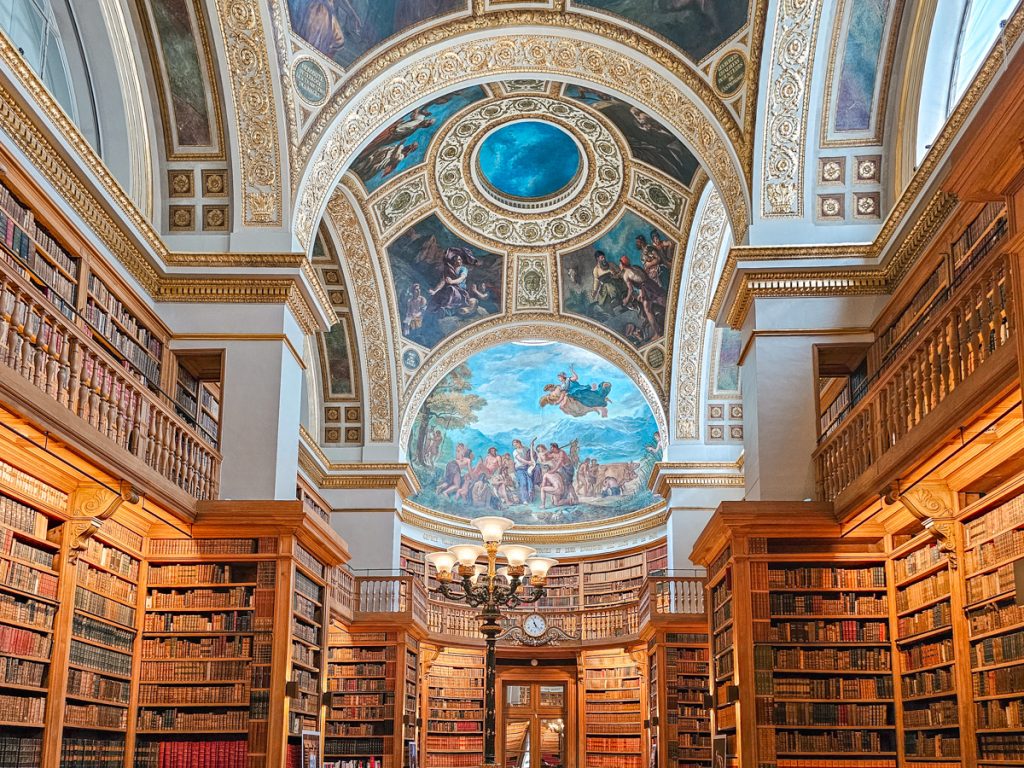
The library’s ceiling is covered in monumental frescoes by Eugène Delacroix, depicting themes of philosophy, science, law, and poetry, a project that took him roughly nine years to complete. The library also holds rare historical documents, including records from Joan of Arc’s trial and manuscripts by Jean-Jacques Rousseau.
All tours must be booked in advance through the Assemblée Nationale website and are available in 7 languages.
12. Lavirotte Building
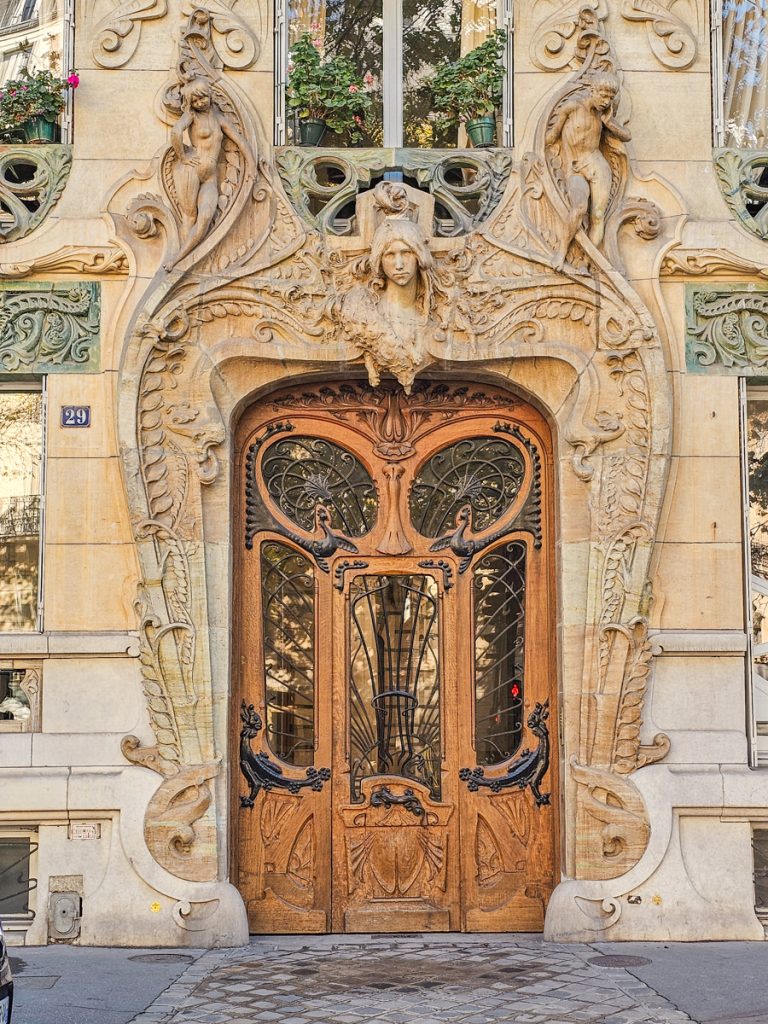
At 29 Avenue Rapp in the 7th arrondissement, a short walk from the Eiffel Tower, the Lavirotte Building is about as far from a typical Haussmann facade as Paris gets. Built between 1899 and 1901 by architect Jules Lavirotte, it’s one of the best-known surviving examples of Art Nouveau architecture in the city.
The seven-story facade is covered in glazed ceramic tiles, wrought-iron balconies, and sculptural details including lizard-shaped door handles, bison heads, and floral garlands. Lavirotte collaborated with ceramist Alexandre Bigot, who created the earthenware tiles, and several sculptors to decorate the building with flowers, fruits, plants, and animals.
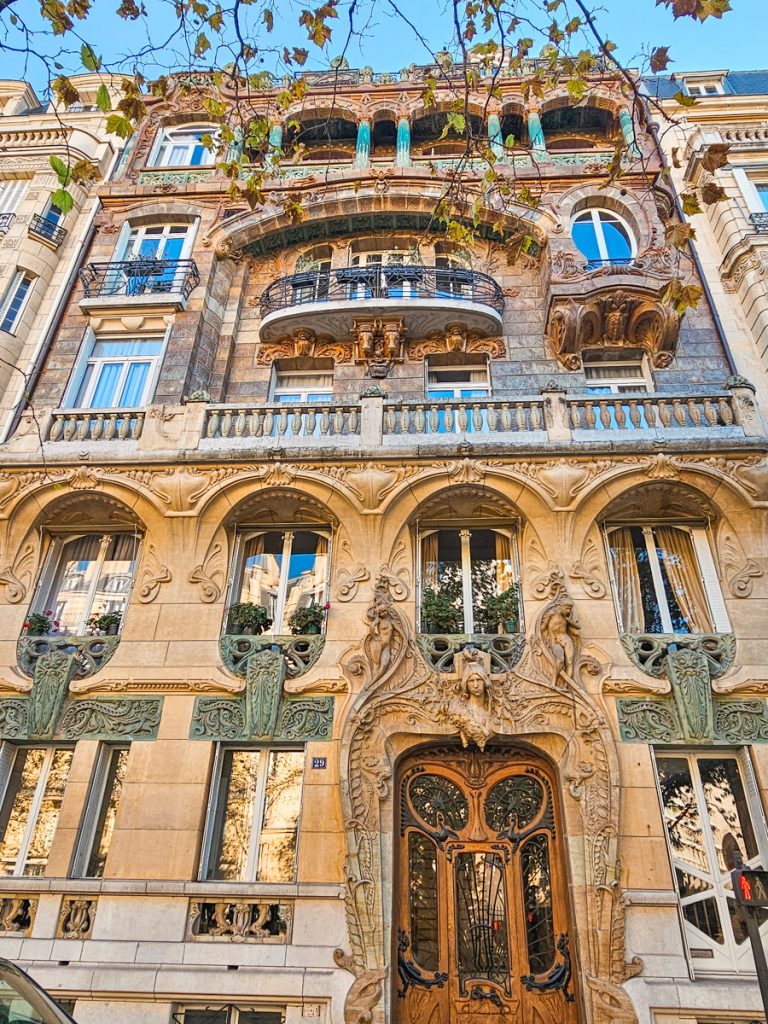
The result was considered so distinctive (and so scandalous, given the erotic symbolism worked into the entrance) that contemporary critics had a field day with it. Lavirotte won the prize for the most original new facade in the 7th arrondissement in 1901 anyway.
It’s a residential building, so you can only see the exterior, but the facade alone is worth the stop.
13. Jardin des Plantes

The Jardin des Plantes is Paris’s main botanical garden, founded in 1635 as the royal garden of medicinal plants for Louis XIII. It covers 28 hectares in the 5th arrondissement, making it one of the larger green spaces on the Left Bank — and one of the most overlooked.
While Luxembourg Gardens draws crowds, Jardin des Plantes mostly sees students, families, and neighborhood regulars, which is why it qualifies for this list.
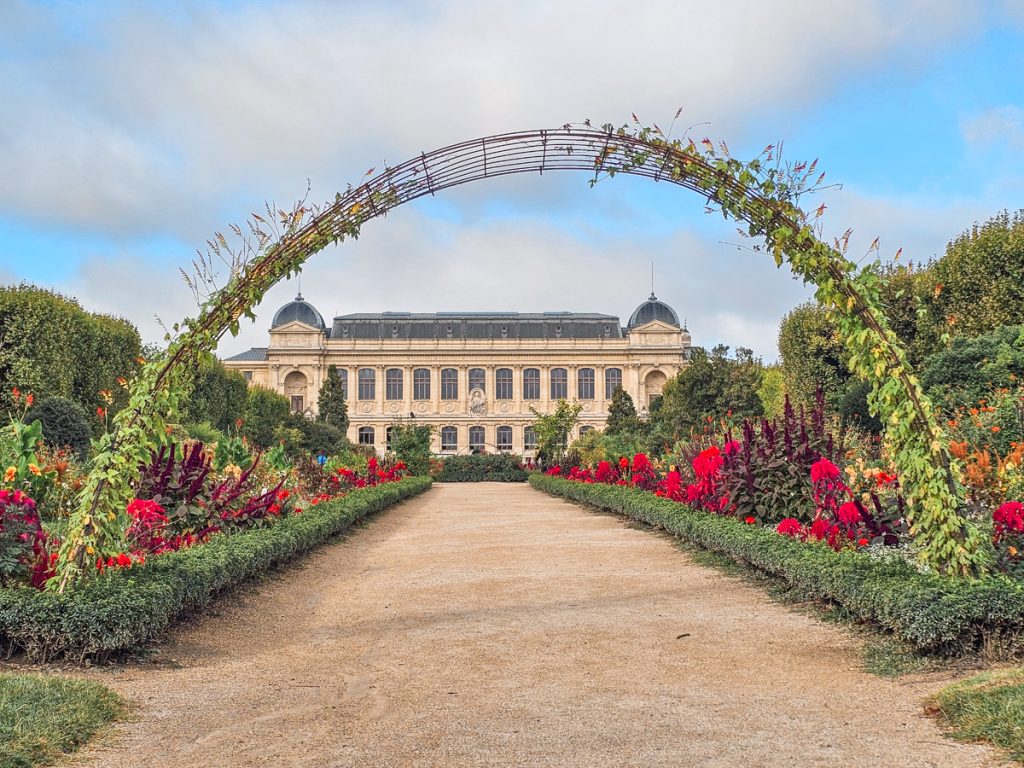
The central Grande Perspective is a 500-meter-long walkway bordered by plane trees and flower beds, and the garden expands out from there into specialized areas: a rose garden, an alpine garden with plants from mountain ranges around the world, and tropical greenhouses. In spring, the cherry blossoms along the main paths are absolutely spectacular.
The garden is free to enter, although there are also several paid attractions. There’s a zoo that dates to 1794 and is one of the oldest in the world, and several Natural History Museum galleries, including the Grande Galerie de l’Évolution, which is worth a visit on its own.
14. Musée Légion d’Honneur
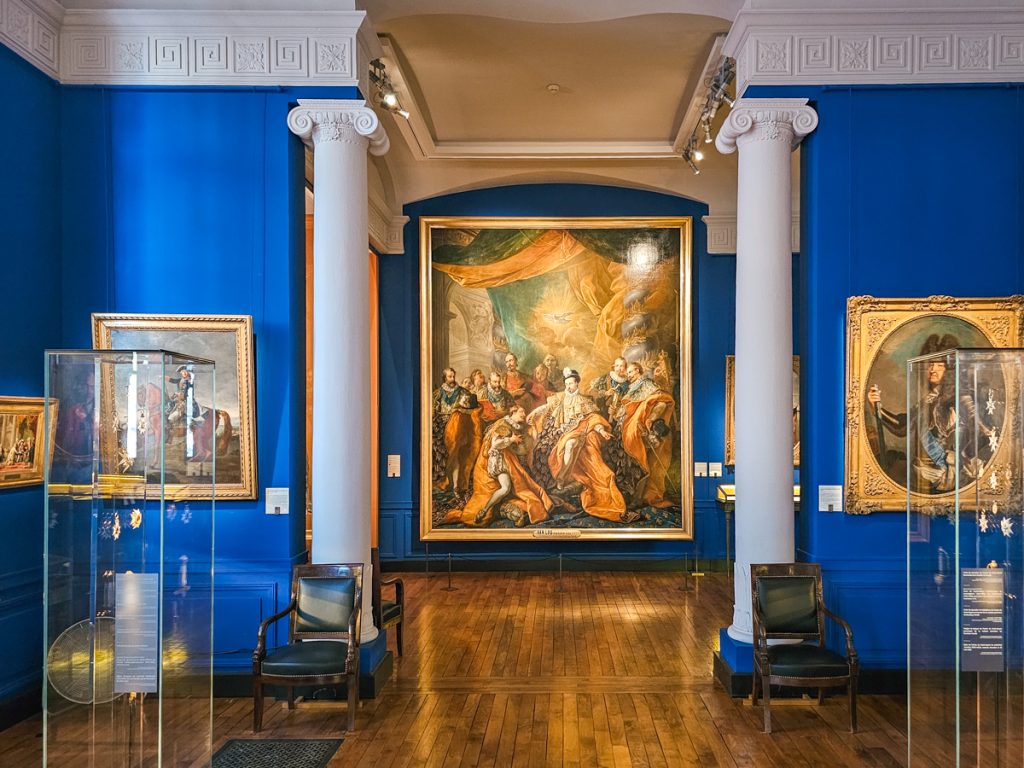
The Musée de la Légion d’Honneur sits right next to the Musée d’Orsay in the 7th, housed in the neoclassical Hôtel de Salm. It’s the only museum in the world dedicated entirely to orders of chivalry, decorations, and medals, both French and foreign.
The Légion d’Honneur itself (France’s highest order of merit, created by Napoleon in 1802 and still awarded today) is the centerpiece, but the collection covers much more than that. Exhibits include religious and military orders of the Crusades to French royal orders, Napoleon’s First Empire, foreign orders from over 120 countries, and decorations up to the present day. Napoleon’s own grand collar is among the highlights.
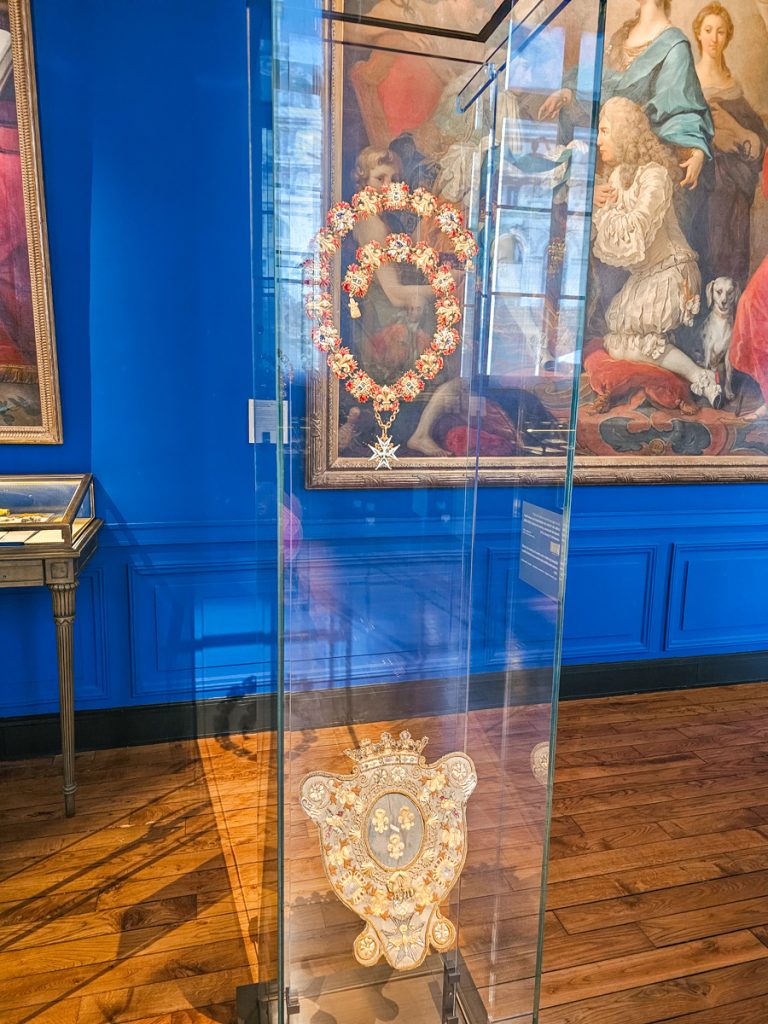
It’s a niche subject, true, but it’s also a very interesting lens on French and European history. Admission is free, the museum isn’t terribly large, and it’s an easy one to do before or after the Musée d’Orsay.
Final Thoughts
The Left Bank is large enough that you could visit Paris a dozen times and still find something new south of the Seine. And while this list certainly isn’t comprehensive, it’s a solid starting point for getting past the well-worn path and into the parts of the city that don’t make it onto most itineraries.
Want to Explore More of the Left Bank?
Check out my other detailed Paris neighborhood guides to explore the area south of the Seine in-depth:
- Paris’s 5th Arrondissement: A Complete Guide to the Latin Quarter
- Saint Germain: Your Complete Guide to Paris’s 6th Arrondissement
- Paris’s 7th Arrondissement: A Complete Guide to the Eiffel Tower District
And if you’re feeling overwhelmed or short on time, I also offer Paris planning calls.
These one-on-one video sessions are great for getting feedback, asking questions, and sorting through options, whether you need a full plan or help fine-tuning what you already have.
