
13 Unusual Things Hidden in Plain Sight on Paris’s Streets

One of the best things about Paris is that the longer you spend there, the more you notice things you walked past a dozen times without seeing. A mosaic on the side of a building. Historic ruins in the middle of a city park. A street so narrow you almost miss the entrance.
This is a collection of those kinds of delightful surprises — the offbeat, the obscure, and the easy-to-miss, scattered across the city.
1. Fake RATP Facades
Scattered across Paris are a handful of buildings that look completely normal from the outside, Haussmann facades, balconies, and windows, but are actually hollow shells hiding metro ventilation shafts.
The RATP hollowed them out in the 1980s to install infrastructure for the RER (Paris’s suburban trains), keeping the facades as-is to blend in with the surrounding buildings.
Look closely and the signs are there: doors with no handles, windows that are slightly too dark, no digicode at the entrance. The best-known example is 145 Rue Lafayette in the 10th, where an entire building was gutted while the facade was left standing.
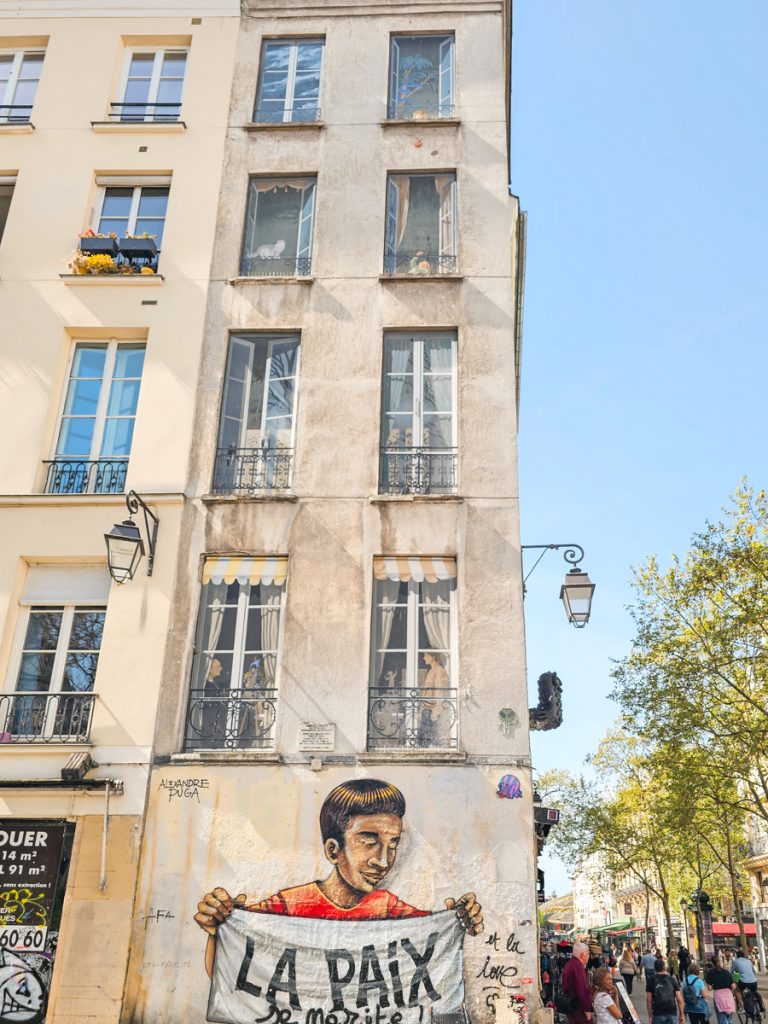
A more unusual version is at 29 Rue Quincampoix in the 4th, where the entire building has a painted trompe l’oeil mural, complete with curtains, figures, and a cat on the sill.
2. Narrowest Street
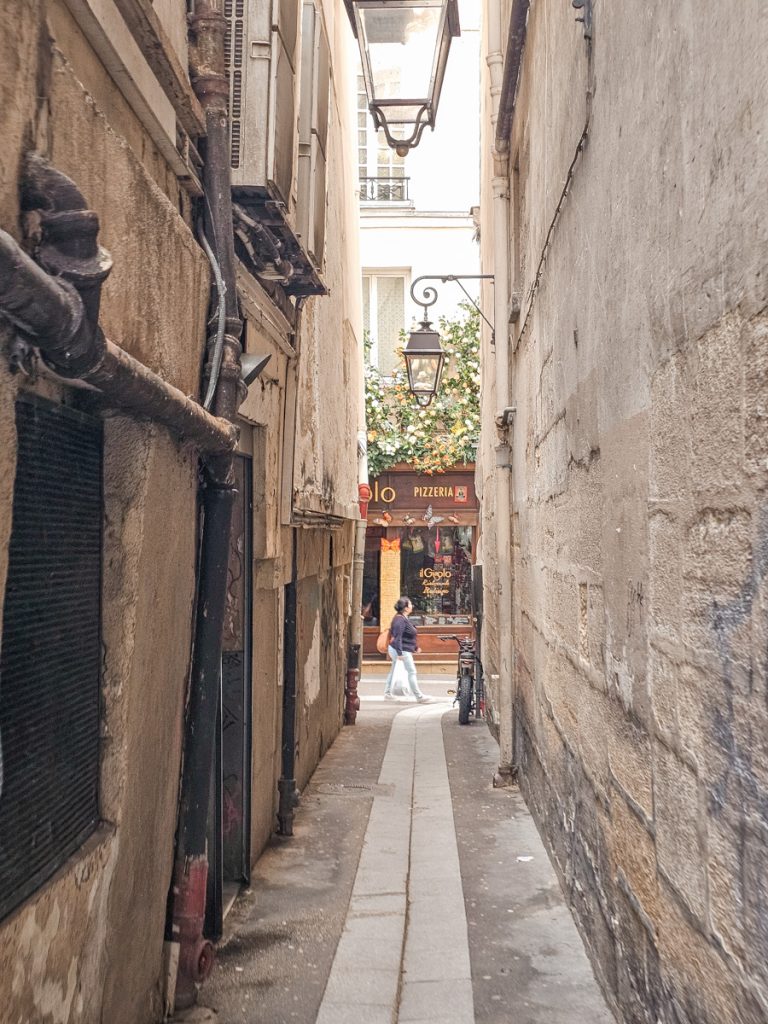
Rue du Chat-qui-Pêche, or the Street of the Fishing Cat, runs just 29 meters from the Quai Saint-Michel down to Rue de la Huchette in the 5th arrondissement, and at 1.8 meters wide, it’s considered the narrowest street in Paris. There’s nothing to see in it, really, no shops, no ornamentation, just old stone walls on either side, but it’s worth ducking into just for the novelty.
The name comes from a 14th-century legend about a canon named Dom Perlet and his black cat, which was said to catch fish from the Seine with a swipe of its paw. Three local students, convinced that the alchemist and the cat were the same person (aka the Devil in disguise), killed the cat and threw it in the river.
3. Shortest Street
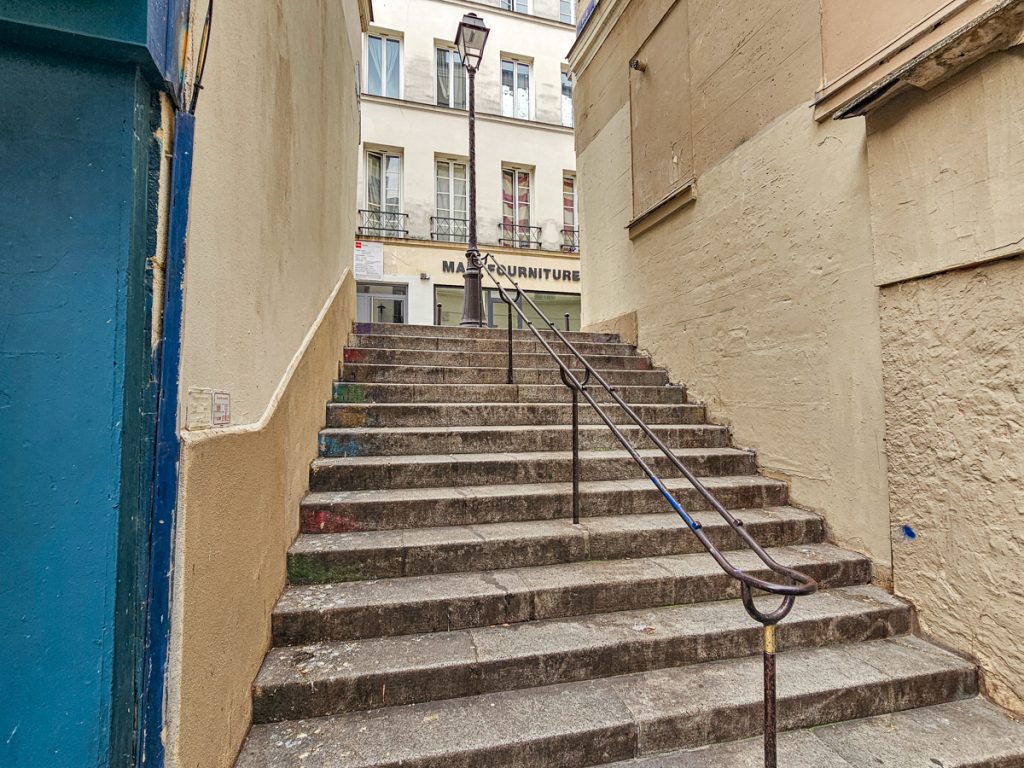
At just 5.75 meters long, Rue des Degrés in the 2nd arrondissement is the shortest street in Paris, and it’s entirely a staircase connecting Rue de Cléry to Rue Beauregard. Because it’s a formal street, it has street name plates at either end, but these signs are just a few arm’s lengths apart.
Its 14 steps were built to bridge a difference in levels left when the moat of the medieval Charles V wall was filled in during the 17th century.
To be honest, it’s really not a particularly attractive spot and I wouldn’t go out of your way to come here. If you happen to be close by, though, it is a funny thing to tick off.
4. Bastille Tower Foundations
The Bastille prison was stormed on July 14, 1789, an event that really kick-started the French Revolution. The prison was demolished very soon after, so thoroughly that almost nothing physical remains of it today. Almost.
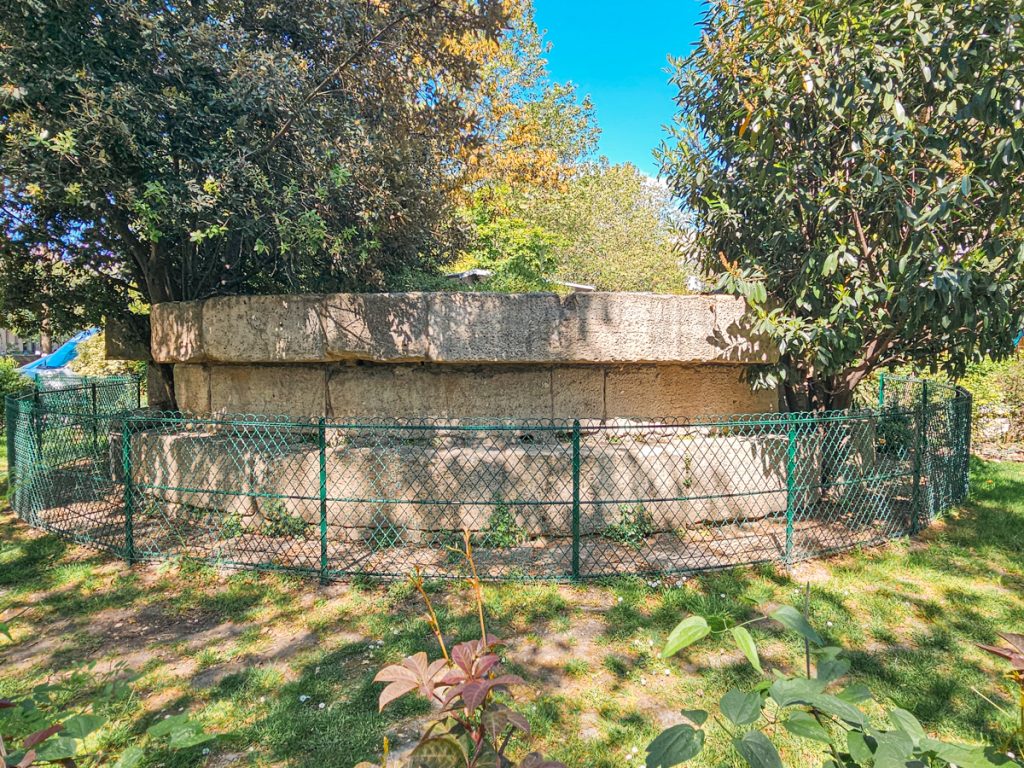
In Square Henri-Galli, a small park just off Boulevard Henri IV near the Seine in the 4th arrondissement, sits a low curved section of stone that most people walk straight past. It’s the foundations of the Tour de la Liberté, one of the Bastille’s eight towers.
When workers were excavating for Metro Line 1 in 1899, they uncovered the Bastille foundations. Rather than discard them, the stones were dismantled and reassembled here, stone by stone.
It doesn’t look like much, just a rough stone ring behind a low fence, but it’s wild to stumble across such a significant piece of French history flying under the radar in a tiny, local park.
5. Point Zéro
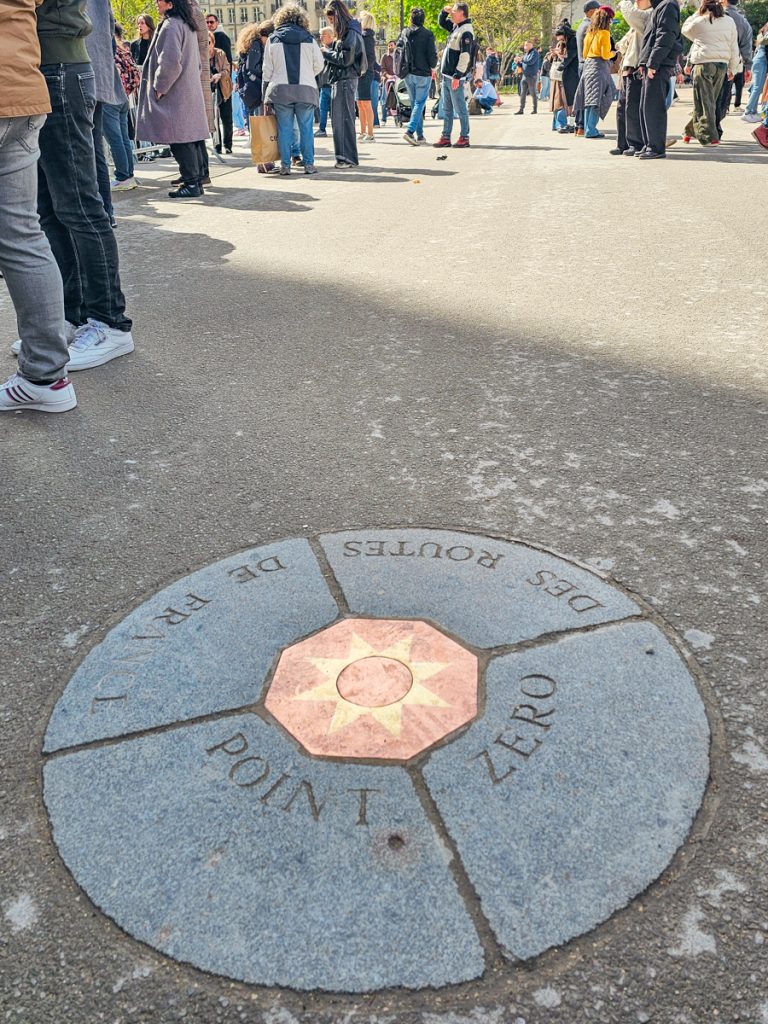
Set into the pavement on the forecourt of Notre-Dame, Point Zéro is a small bronze compass rose marking the exact point from which all road distances in France are measured.
Louis XV established it as a milestone in 1769, though the bronze medallion wasn’t placed until 1924. It’s a fitting spot, as the Ile de la Cité island is believed to be the first inhabited spot in Paris.
The market sits flush with the cobblestones, so it’s easy to miss unless you know to look down. The original medallion was damaged in the 2019 Notre-Dame fire and replaced with an identical replica, reinstalled in July 2025. The original is now held at the Carnavalet museum.
6. Wallace Fountains
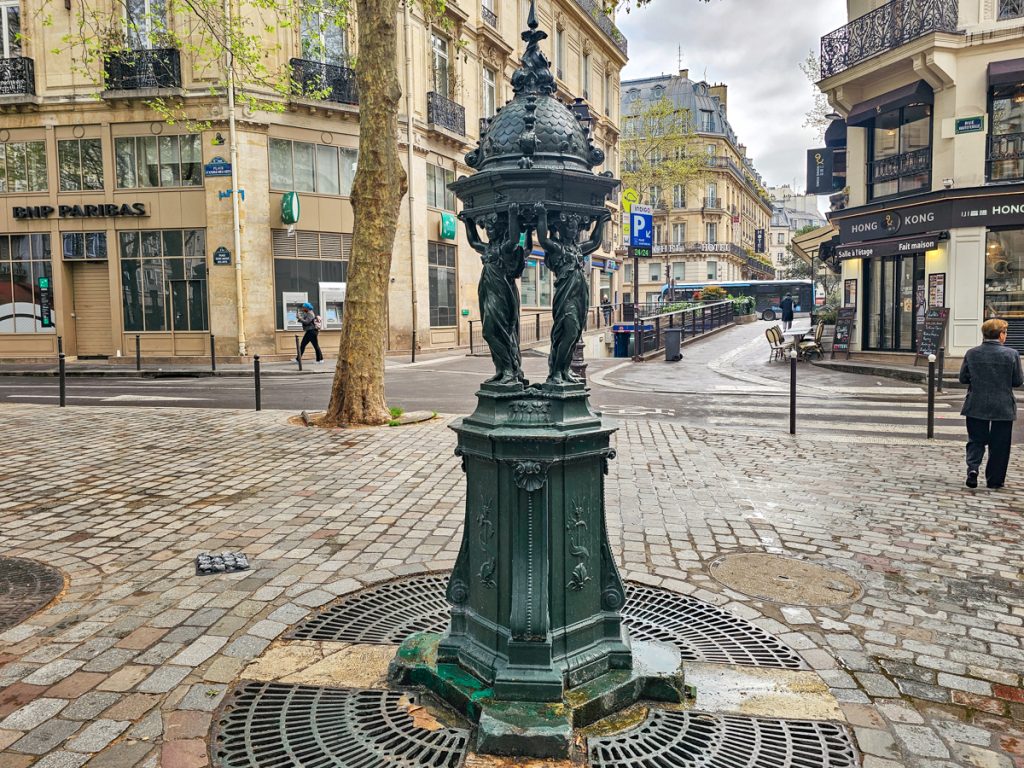
These dark green cast-iron fountains have been scattered across Paris since 1872, providing free drinking water to anyone who needs it. They blend into the streetscape so well that most people walk straight past them, but once you know what to look for, you’ll start spotting them everywhere.
The history of the Wallace Fountains is fascinating: After the Franco-Prussian War and the collapse of the Paris Commune, clean drinking water in Paris was scarce, and many residents turned to alcohol as a cheaper, safer alternative.
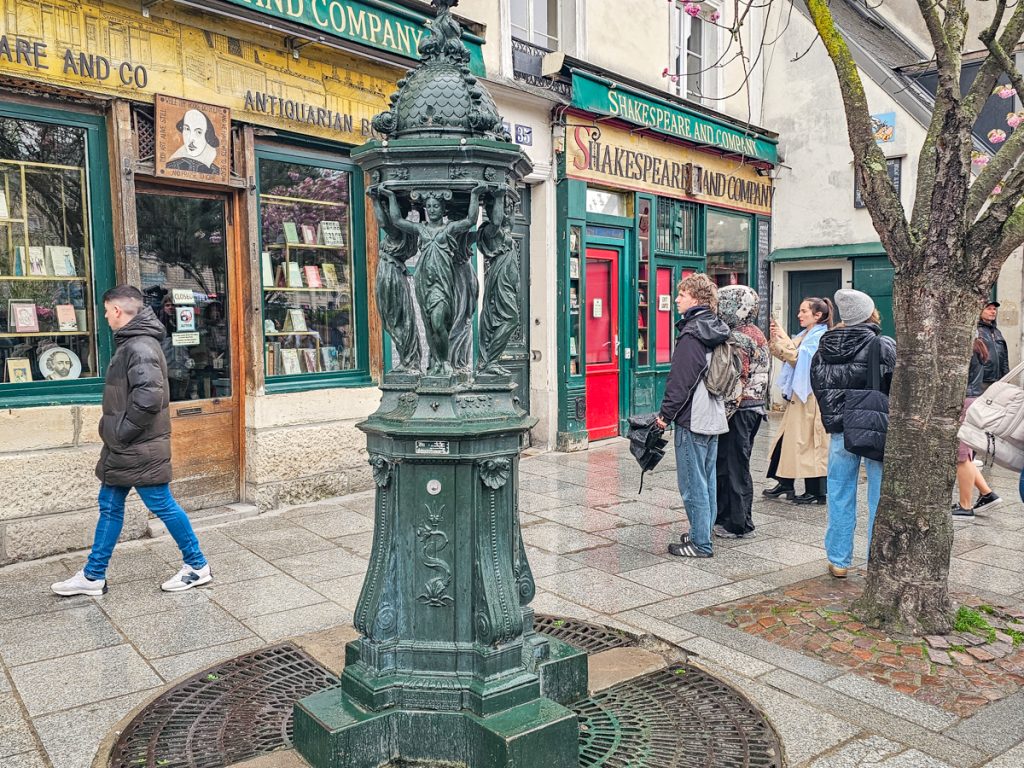
A wealthy British philanthropist named Richard Wallace, deeply fond of Paris, funded the installation of dozens of fountains out of his own pocket to give everyone free access to clean water.
They were designed to be elegant and a beautiful addition to the streets, featuring four caryatid figures supporting a dome. Today, there are over 100 fountains still standing and providing water across the city.
7. Ememem Pavement Mosaics
Ememem is an anonymous French street artist based in Lyon who fills cracks and damaged patches in sidewalks and facades with colorful ceramic mosaics, working at night so the pieces are generally discovered at dawn.
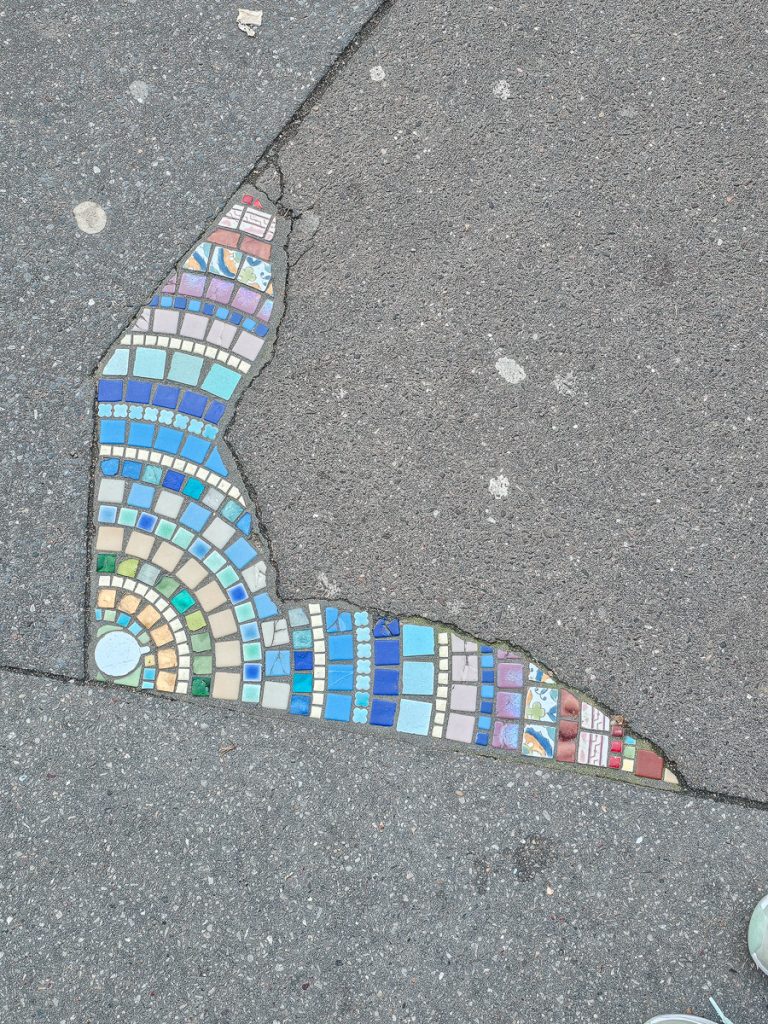
The artist calls the technique “flacking,” a play on the French word flaque, meaning puddle. Each piece is shaped around the crack or hole it fills, creating a small burst of color in the surrounding grey pavement.
His Instagram tagline is “the art of healing cracks; every crack deserves a second chance,” which honestly is pretty beautiful.
Most of his work is in Lyon, but his mosaics can also be found in Paris and in cities across Europe, including Madrid, Barcelona, and Milan. There’s no map of where to find them in Paris, so stumbling across one is part of the experience.
8. Invader Space Tiles
Since 1998, an anonymous French street artist known as Invader has been fixing small ceramic tile mosaics to buildings across Paris, typically about a story above street level. The pixelated designs are inspired by 8-bit video games, most notably the 1978 arcade game Space Invaders, with each ceramic tile representing a single pixel.
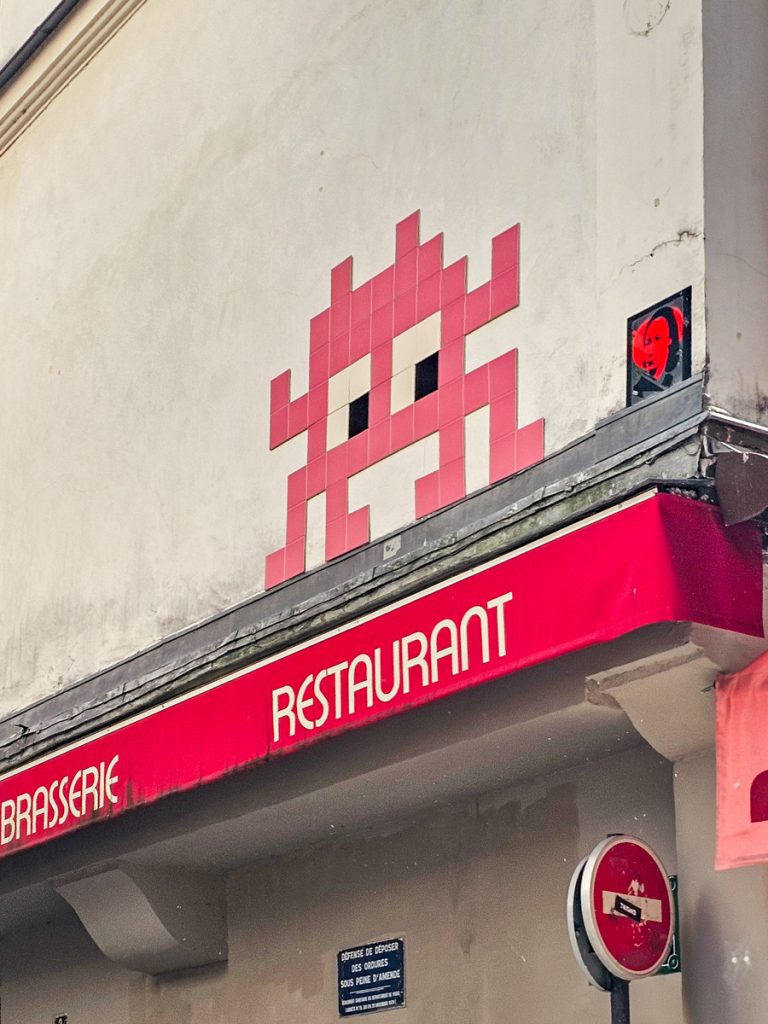
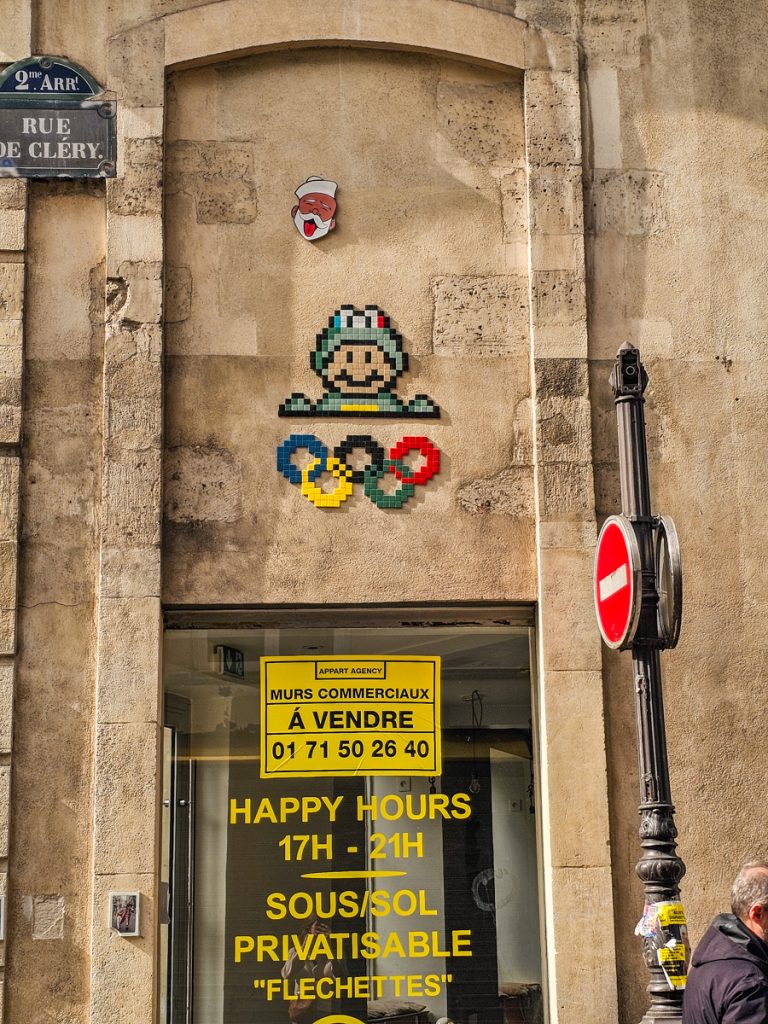
There are now around 1,200 of his mosaics across Paris alone (if you pay attention, you’ll certainly see at least a few), and he’s since expanded to over 80 cities worldwide.
He has a free app called FlashInvaders that lets you hunt them down and score points for each one you find, which turns walking around Paris into something between a scavenger hunt and a video game.
9. Le Bateau Ivre Poem Mural
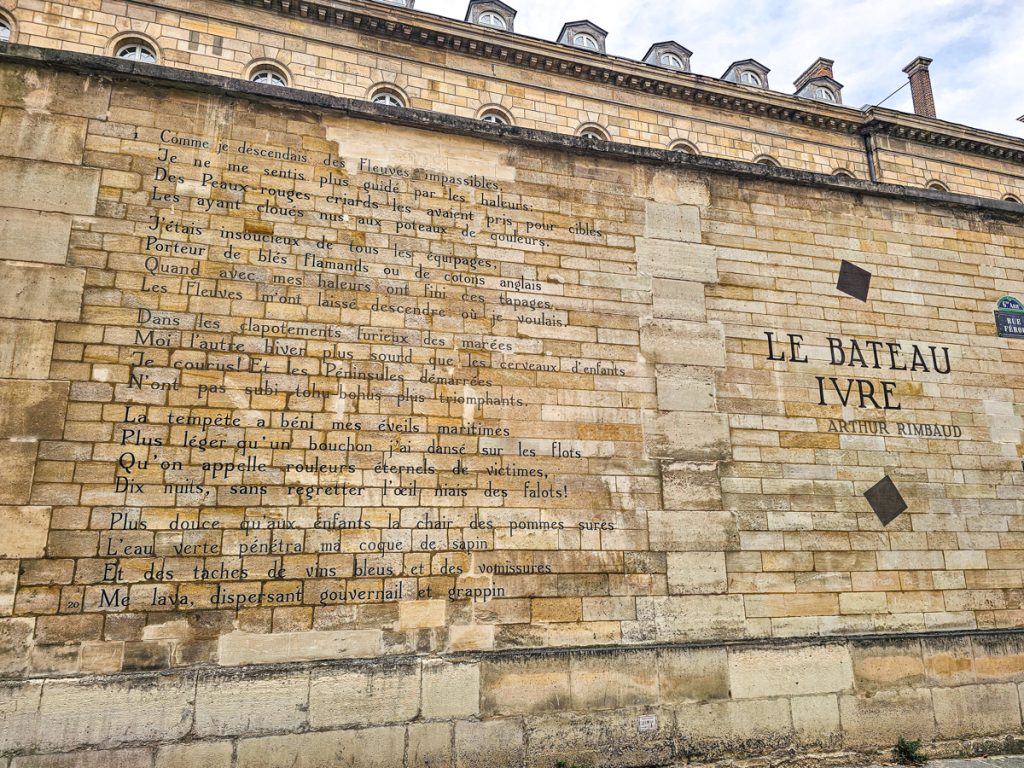
Rue Férou is an otherwise typical street in the 6th arrondissement, running from Place Saint-Sulpice toward the Jardin du Luxembourg. So it’s a bit of a surprise to find the entire 100-line text of Arthur Rimbaud’s poem “Le Bateau Ivre” painted across the long stone wall running along one side.
In 1871, Rimbaud recited the poem for the first time to friends from the first floor of a restaurant on the other side of Place Saint-Sulpice. The idea behind the mural is that the wind carried his words from that café window, across the square, and down into Rue Férou, so the poem starts at the Saint-Sulpice end of the wall and runs leftward, following that imagined path.
10. Half-Timbered Houses
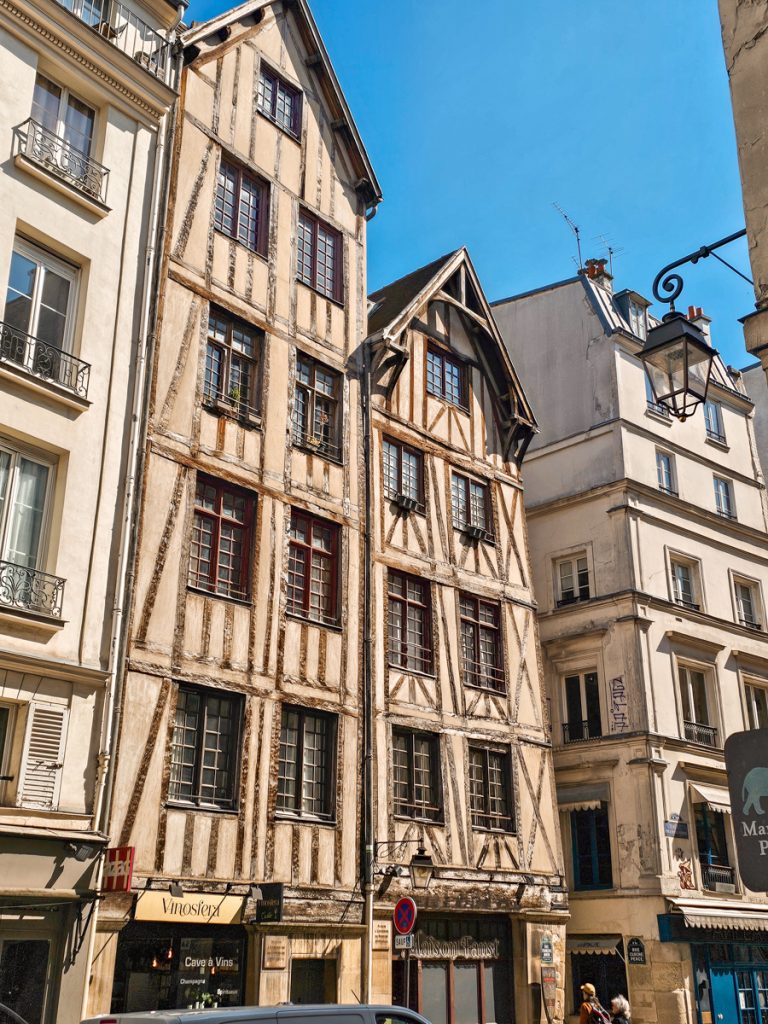
Medieval, half-timbered houses are very common in regions like Normandy and Alsace, but extremely rare in Paris, which is what makes the two at 11 and 13 Rue François Miron in the Marais worth seeking out.
Known as the Maison du Faucheur and the Maison du Mouton, they date to at least the early 16th century and possibly as far back as the 14th.
Starting in the 1600s, the half-timbered facades were covered with plaster to help prevent devastating city fires. They stayed like this for centuries, until the plaster was stripped back during a restoration in 1967, revealing the timber framing underneath.
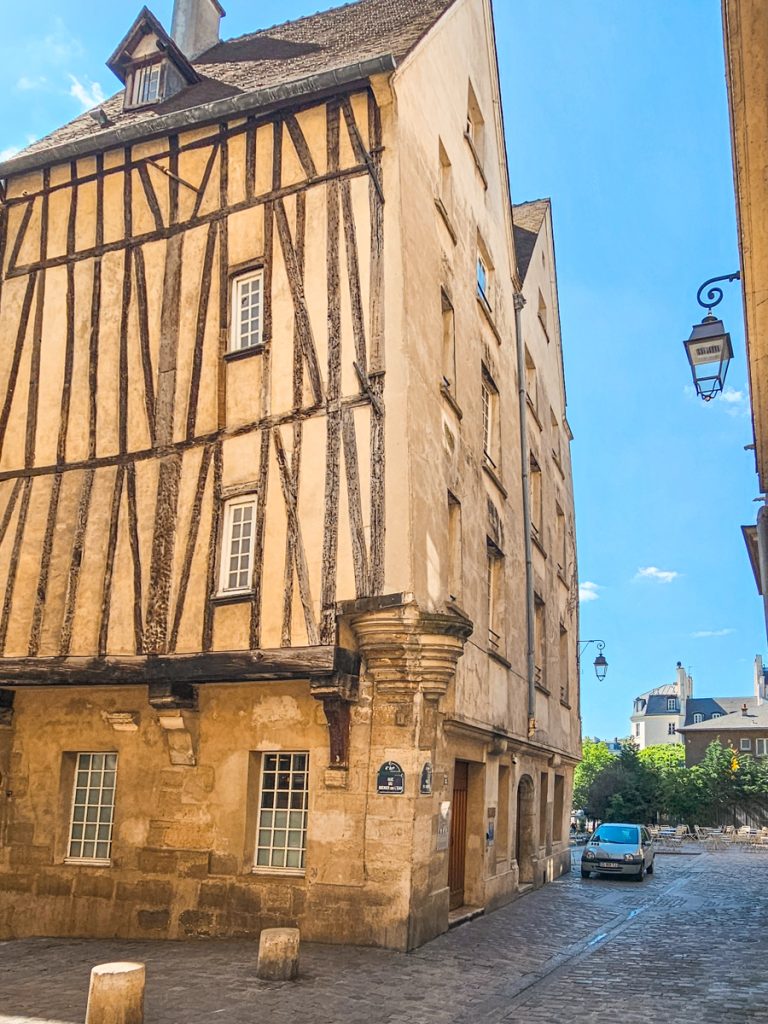
There are also medieval houses at the corner of Rue des Barres and Rue du Grenier-sur-l’Eau nearby, a short walk away and worth a look.
11. Oldest House
The Maison Nicolas Flamel at 51 Rue de Montmorency in the 3rd arrondissement is generally considered the oldest house in Paris, completed in 1407. The Rue François Miron houses may actually be older, but this is the oldest one we can put a firm date on, thanks to the inscription carved into the facade.
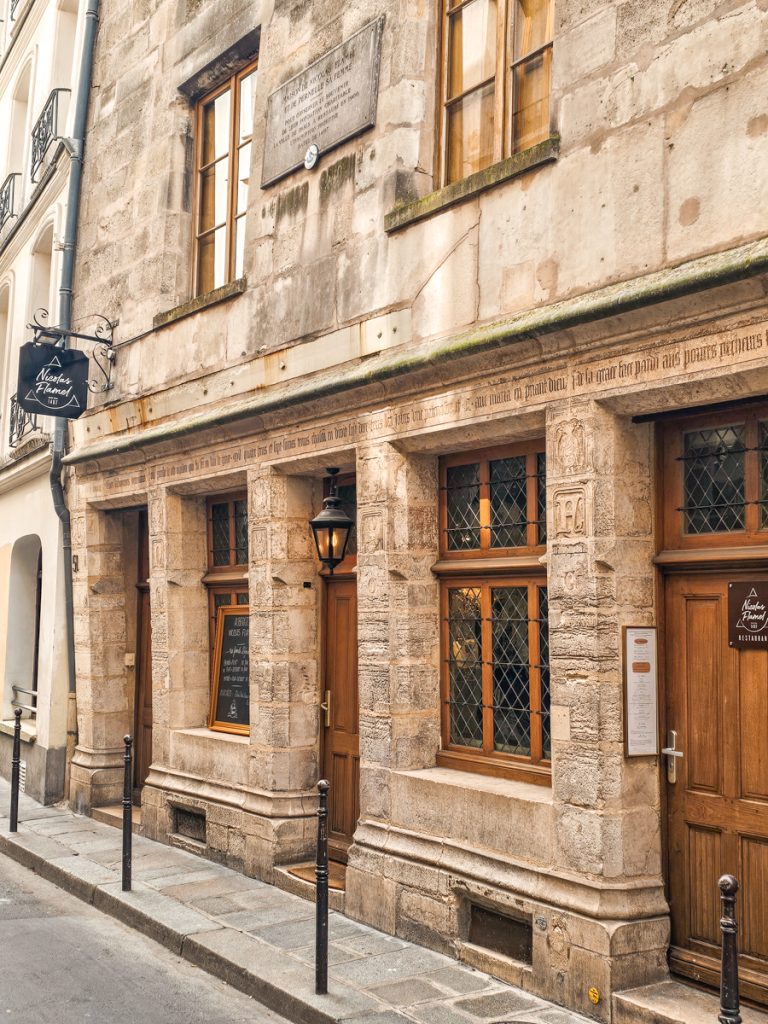
Flamel was a wealthy Parisian who built housing for the poor, offering free rooms on the upper floors in exchange for daily prayers. However, you may have heard his name due to the legend of him being a great alchemist who discovered the Philosopher’s Stone only emerged later. This legend has proved remarkably long-lasting, showing up everywhere from Harry Potter to Assassin’s Creed.
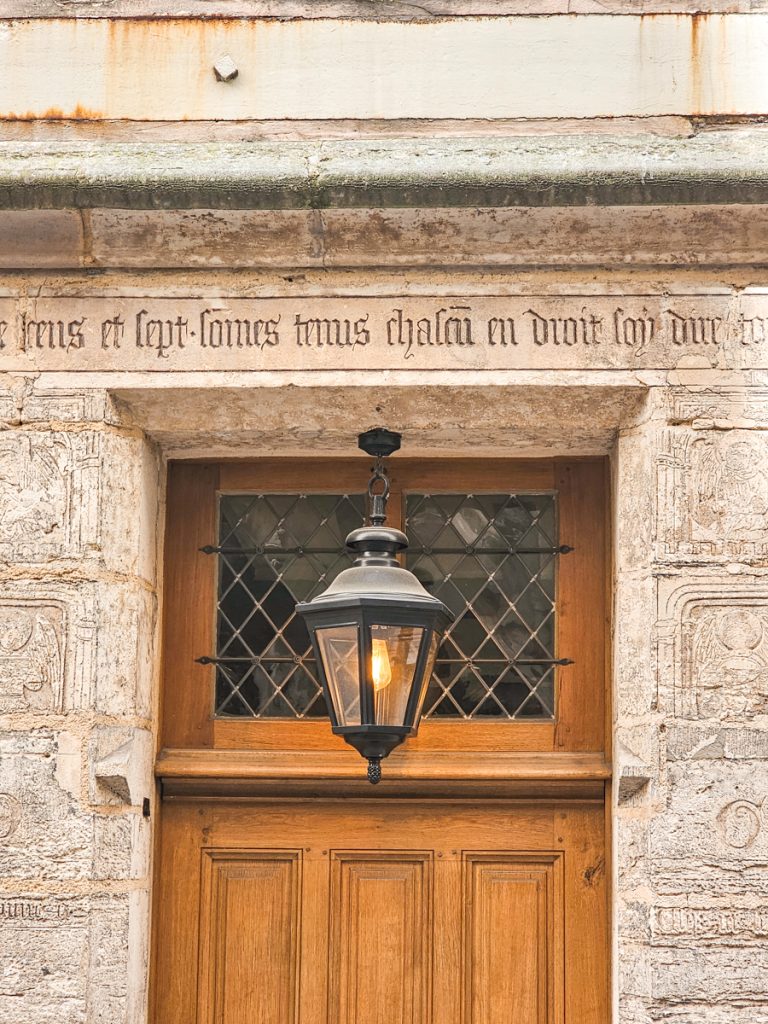
The inscription above the door, still legible today, spells out the prayer arrangement in medieval French. The facade is a listed historic monument and the ground floor now houses a restaurant
12. Camino de Santiago Waymarkers
Paris is actually the starting point of the Via Turonensis, one of the four major Camino de Santiago pilgrimage routes across France. The route begins at the Tour Saint-Jacques and heads south through Notre-Dame, the Sorbonne, and the Panthéon before continuing all the way to Santiago de Compostela in Spain.
Along this stretch of Paris, small bronze scallop shell medallions are embedded in the pavement, marking the route for pilgrims heading south.
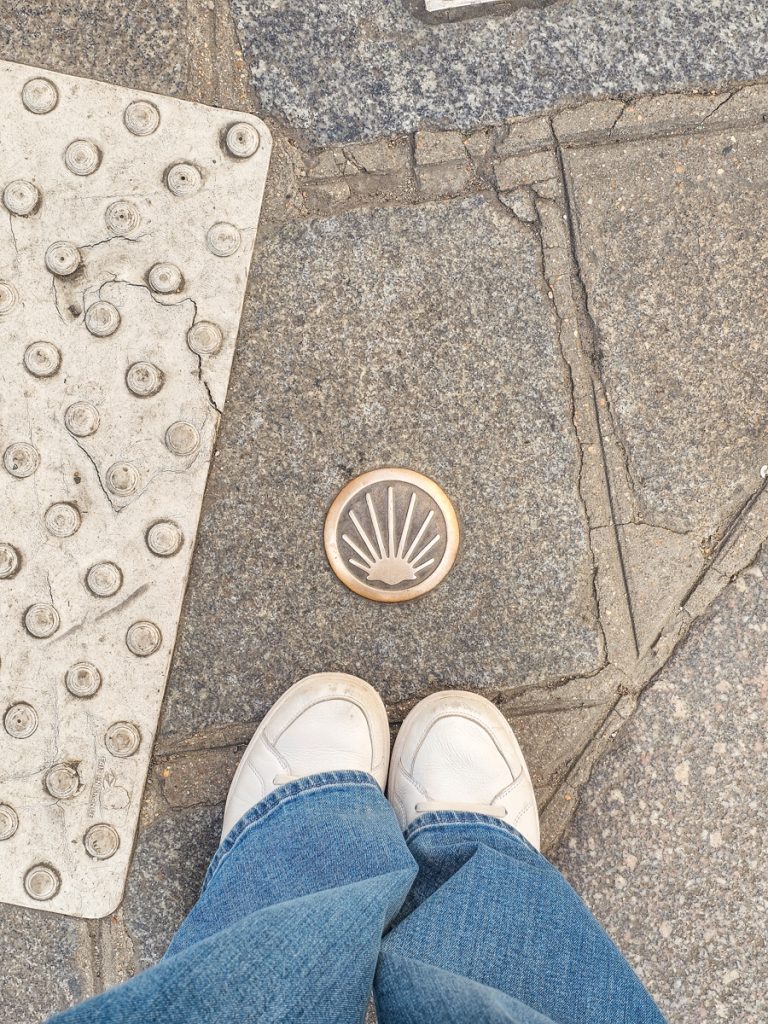
The scallop shell has been the symbol of the Camino for over a thousand years. This vast network of routes stretches across much of Europe, so once you know what to look for, you’ll start spotting these waymarkers in all kinds of unexpected places.
13. Angel of Rue de Turbigo
One of the things I love about Paris is how intricate and ornamented so many of the buildings are, and you’ll regularly see sculptures and carvings on the facades.
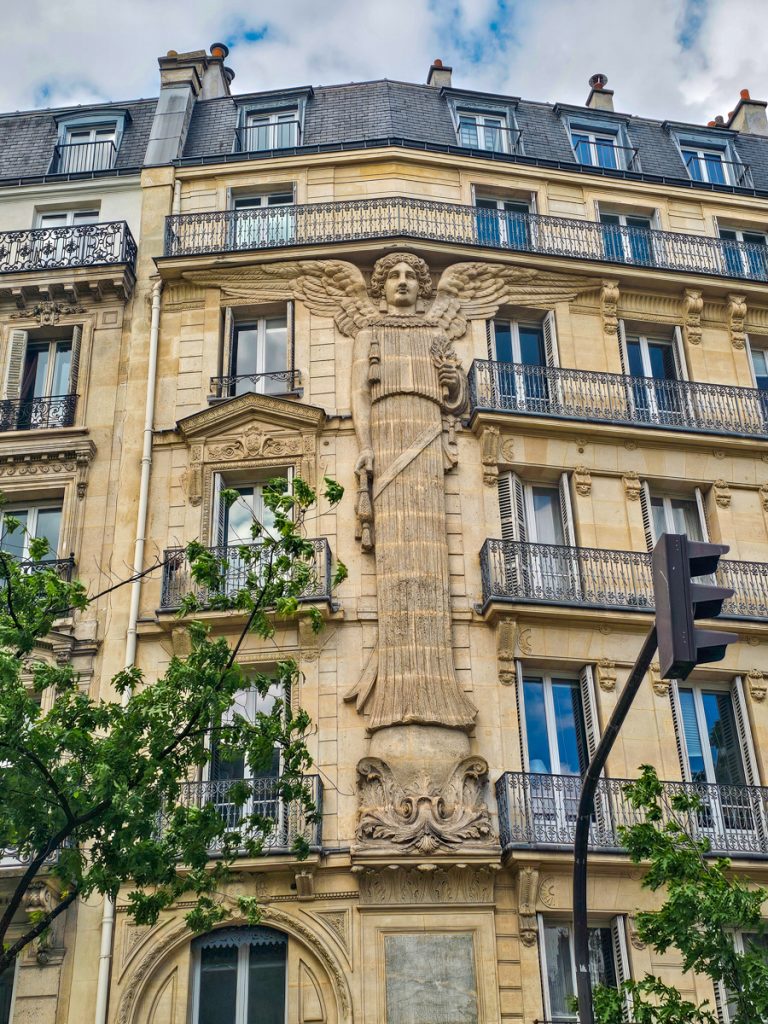
One of the most impressive examples is at 57, rue de Turbigo in the 3rd arrondissement, where a three-story stone angel has been watching over the street since 1860, wings spread across the building corner, expression almost unnervingly calm.
She’s technically a caryatid, a sculpted female figure used as an architectural support. The placement was both decorative and practical: Rue de Turbigo bends at this exact corner, and architect Eugène Demangeat used the angel to round off the angle, her outstretched wings concealing the structural supports of the balcony above.
If you happen to be visiting the Musée des Arts et Métiers, the Angel of Rue Turbigo is just around the corner.
The Wrap Up
Paris has a way of surprising you when you look up, look down, and occasionally turn down streets that don’t seem to lead anywhere in particular. Plus, this list is just the start of what you can discover in Paris. The city has been accumulating history, art, and oddities for over 2,000 years, and there’s always something else to find.
