
Tour Saint Jacques: The Secret Gothic Tower with One of Paris’s Best Views

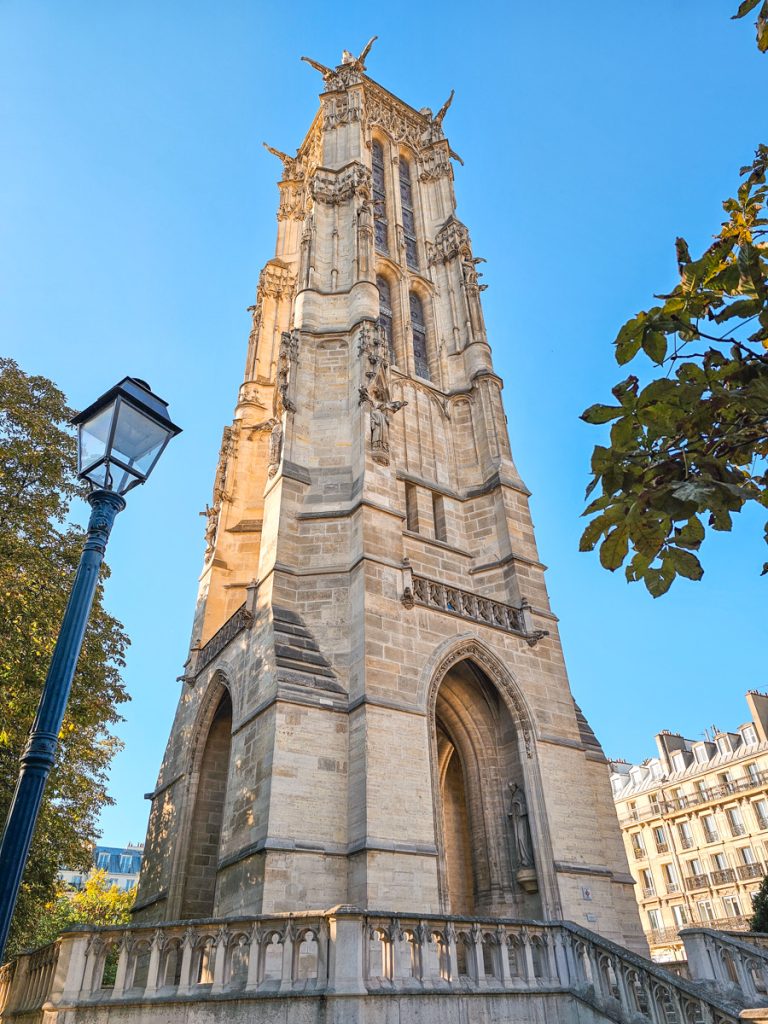
One of the coolest hidden gems in Paris is the Tour Saint-Jacques, a solitary Gothic bell tower rising in the very center of the city.

It’s the only surviving part of a 16th-century church that once stood here, and today, visitors can climb to the top for some of the best panoramic views in Paris.
I’d walked past it dozens of times on Rue de Rivoli, in the Marais, just a block from Hôtel de Ville, without realizing it was even open to visitors. I love a good panoramic view almost as much as I love an off-the-beaten-path find, so I was thrilled to finally visit on my last trip.
It’s open from May through November and can only be visited on a guided tour, but it’s absolutely worth it, not just for the views, but for the fascinating history behind it.
Note: As of May 2026, the tower is closed for renovation work. Hopefully it will reopen soon!
Origins of the Tour Saint Jacques
A small chapel first stood on this spot as early as the 10th century. In the early 1500s, it was replaced by a much larger church, Saint-Jacques-de-la-Boucherie, whose name literally means “Saint James of the Butchers.”
The area was home to Paris’s meat markets, and the local butchers were prosperous enough to fund an ornate, highly decorated church for their neighborhood.
The “Saint-Jacques” part of the name comes from the relics of Saint James that were once kept here, which also gave the church an important role in the pilgrimage to Santiago de Compostela.
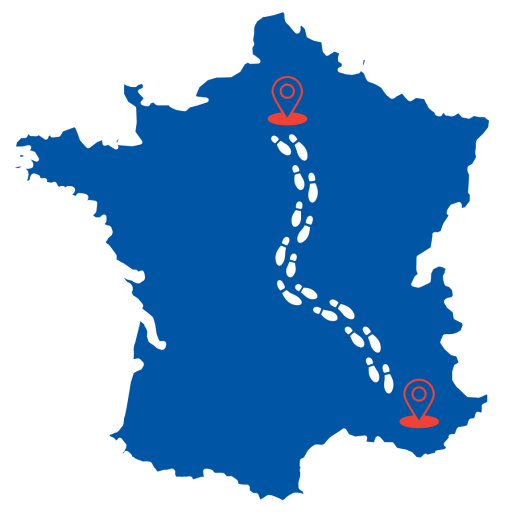
This was the official starting point in Paris for pilgrims following the via Turonensis route to Spain, a journey still taken by thousands each year.

Built in the Flamboyant Gothic style, the church featured stained glass, intricate carvings, and flying buttresses. At 54 meters tall, the bell tower was the second-highest structure in Paris after Notre Dame, an impressive symbol of both faith and wealth at the time.
The French Revolution and Later Uses
Like many churches in Paris, Saint-Jacques-de-la-Boucherie was destroyed during the French Revolution in 1797. Its stones were dismantled and reused for other construction projects, but the bell tower was spared, kept standing for its potential practical uses.
And over the years, it definitely found some unusual ones.
Starting in 1824, the tower was turned into a lead shot factory. Furnaces at the top melted metal that was dropped down the tower shaft into a pool of water at the bottom, forming bullets. This continued until 1848, when the factory shut down after several fires.
A few decades later, in 1885, physicist Joseph Jaubert used the tower for meteorological experiments. Barometric tubes were installed, and for more than sixty years, it served as one of Paris’s weather stations.
Restoration of the Tower
In the mid-1800s, Baron Haussmann’s massive reforms reshaped Paris with grand boulevards, new parks, and open squares designed to modernize the city, creating much of the Paris we know and love today.
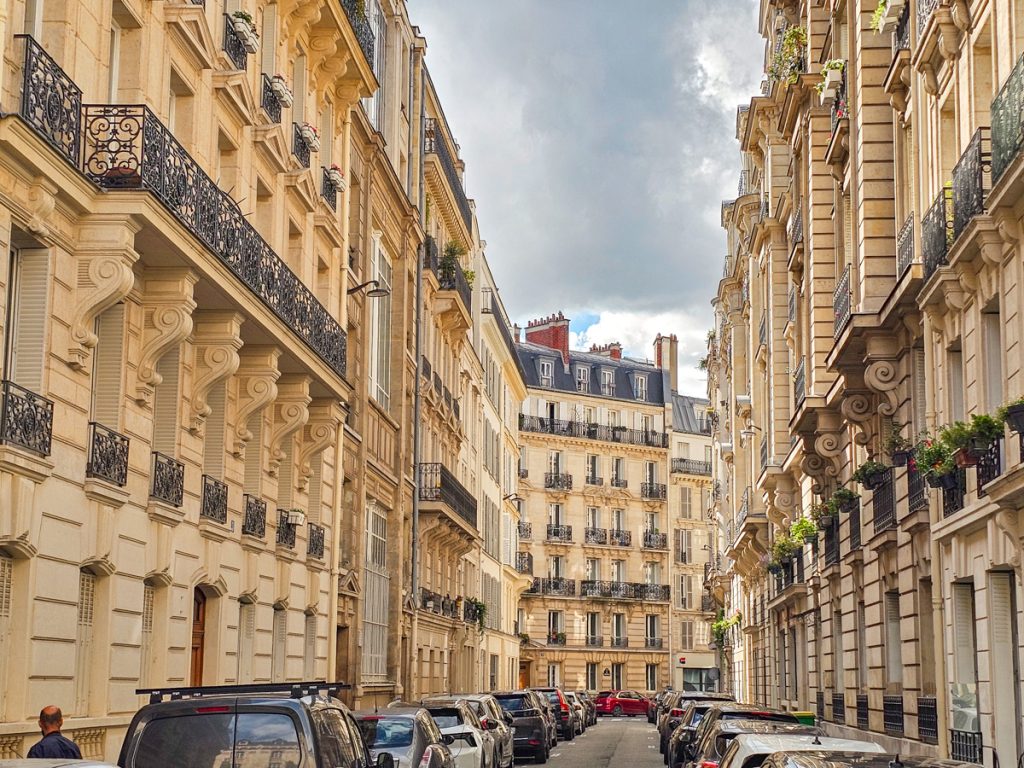
One of those changes was the formation of Rue de Rivoli, the wide, straight street beside the tower, and the creation of a small garden around the tower. Both of which serve to isolate the Gothic structure and showcase it as a monument in its own right.

The tower’s restoration was led by architect Théodore Ballu, who believed historic monuments should be both preserved and reimagined.
He added large archways at the base, stained glass in the windows, and more chimera and ornamentation on the exterior – all additions that reflected his artistic interpretation of Gothic design rather than a strict reconstruction.

Today, architects taking “liberties” with historical buildings are usually criticized, but at the time, this kind of creative restoration was a much more common practice.
In 1862, the tower was officially listed as a historic monument.
The Guided Tour
The guided tour is a great way to experience the tower, as you learn far more than I could ever fit into this post. It covers the site’s history, the story of the destroyed church, and even how this part of Paris has changed over the centuries.
The tour begins beneath the tower, where a statue of Blaise Pascal now stands in honor of the pressure experiments he conducted here in the 1600’s.

Then comes the climb: 300 narrow steps that seems to go on forever! I’d say it’s a pretty similar experience to climbing the Arc de Triomphe.

About halfway up, you pause in a small chamber to hear more stories and see a few details up close before continuing the rest of the way to the top.
On the Rooftop
Once you get to the top, though, you immediately forget about the effort to climb, because the views are just insane! You have a 360-degree view, right in the center of Paris. It’s amazing.
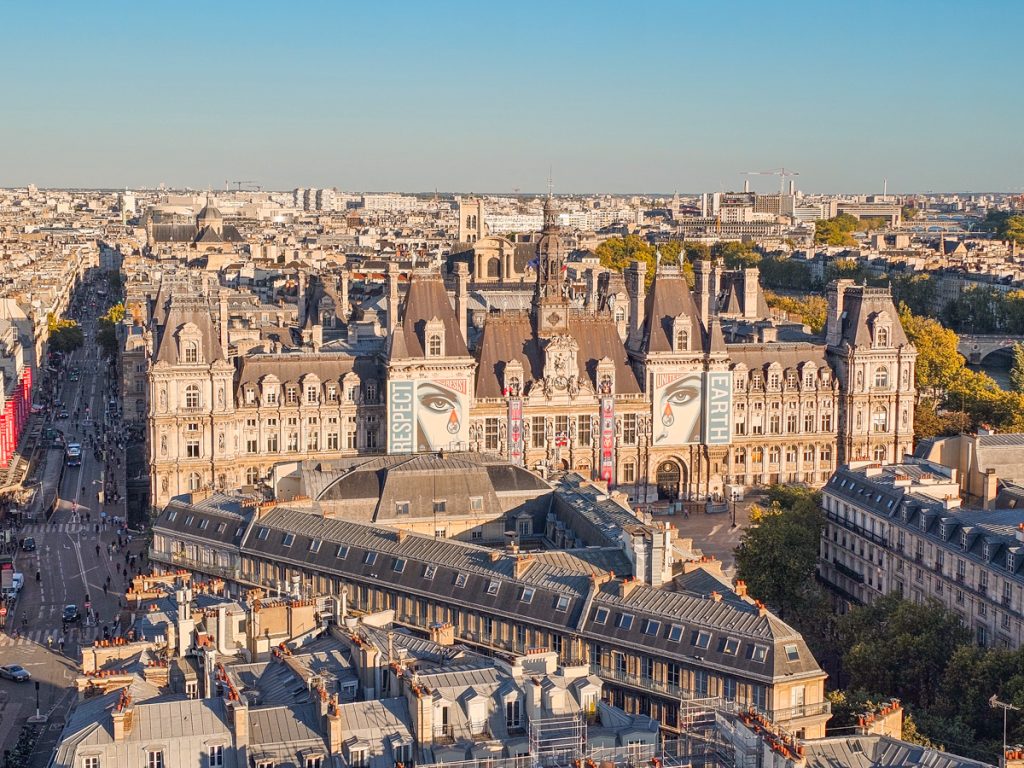
To the east, you’re looking over Hotel de Ville, Paris’s palatial city hall.
To the south, you’re looking directly at Notre Dame, the Seine River, and just a little farther, the dome of the Pantheon in the Latin Quarter.

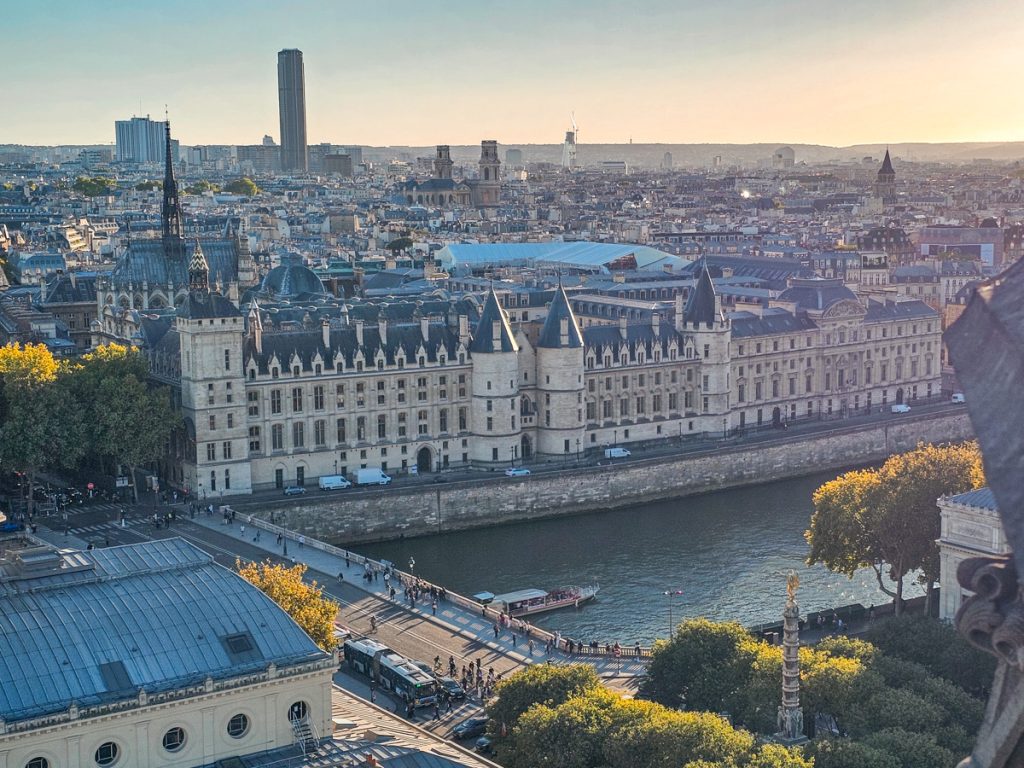
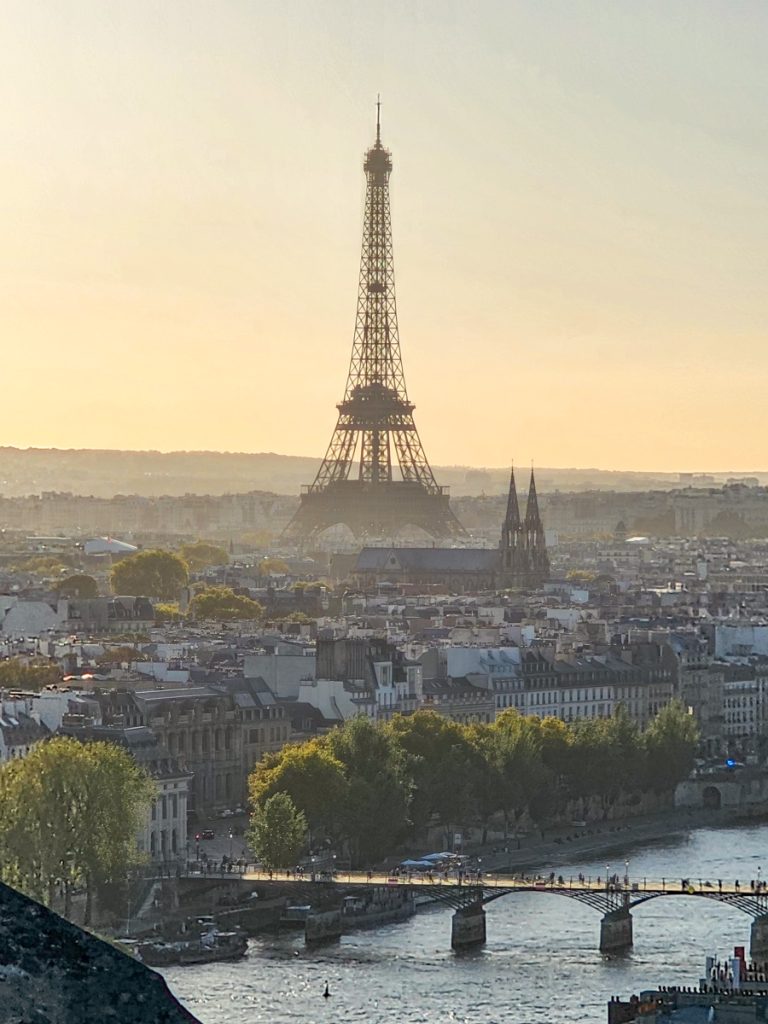
To the west, you have more fantastic Seine views, and a backside view of the Louvre. And of course, you get an amazing Eiffel Tower view!
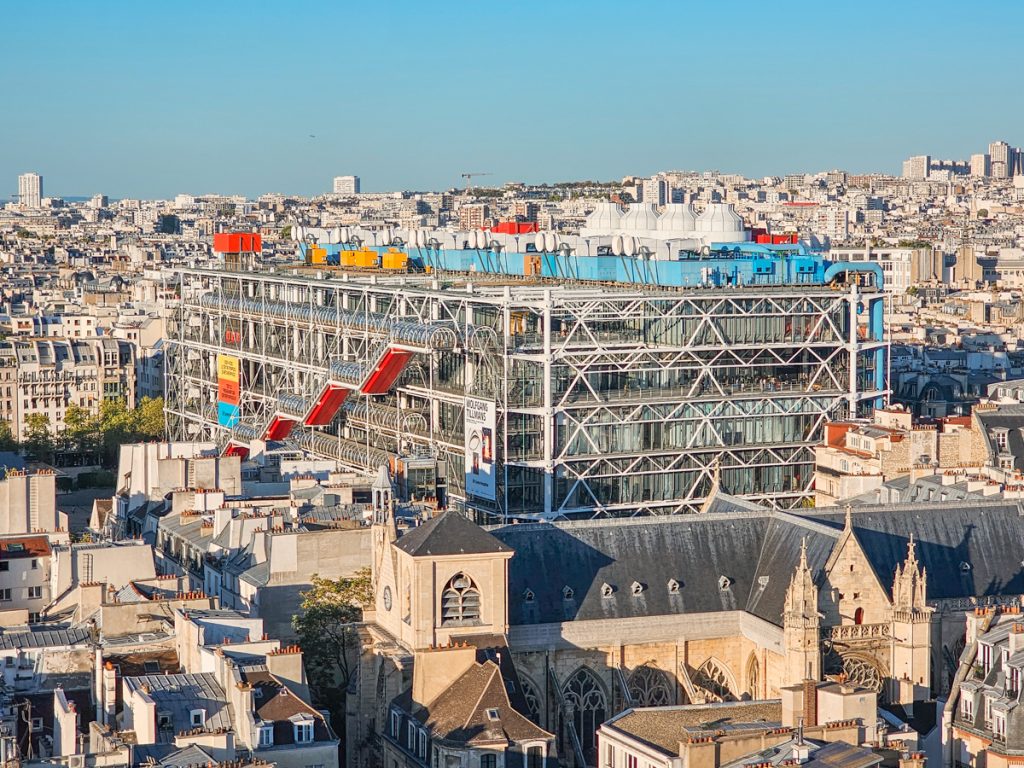
To the north, you can see the Pompidou Center, which is a very cool view, as this is one of the only panoramic views where you can see this funky, inside-out museum. You can also see the Forum des Halles shopping center and the nearby Saint Eustache church.
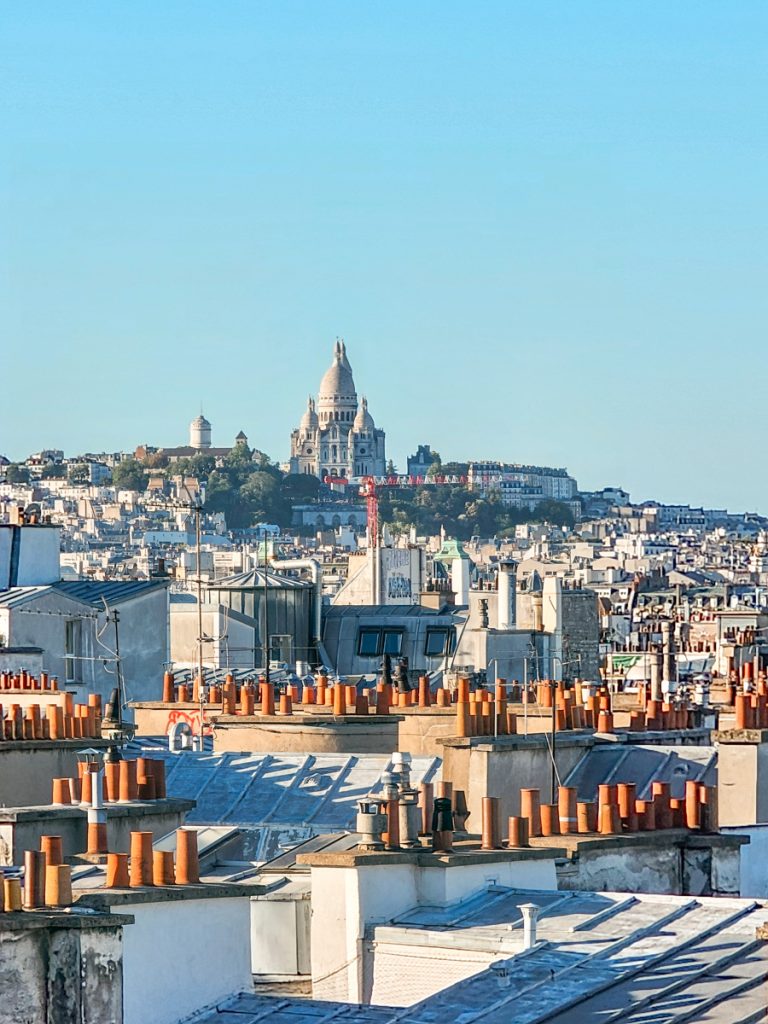
Also to the far north is the Sacré Coeur basilica, gleaming brightly at the top of Montmartre.
Back on the rooftop, carved figures of the four Evangelists, represented by a lion, a bull, an eagle, and a man, guard each corner of the roof.
The views genuinely took my breath away – I think I actually gasped when I walked out onto the roof!
Practical Information
If you want to visit, tours are offered from May through November and must be booked online in advance. Each tour lasts about one hour, including plenty of time at the top to enjoy the views. There are usually multiple tours each day, some in French and some in English.
Final Thoughts
I really enjoyed my visit, and at just an hour long, it’s easy to fit into your itinerary. Overall, I think visiting the Tour Saint Jacques is absolutely worth it for the unique history and perspective you get right in the heart of Paris.
