
7 Mistakes Visitors Make During Their First 24 Hours in Paris That Can Make Your Trip More Stressful

That first day in Paris is always SO exciting. After all the anticipation, you’re finally here!
But there are a few arrival-day logistics that are worth thinking about ahead of time. A few small decisions can make everything go much more smoothly, helping you avoid unnecessary stress when you’re tired and ease into your stay in Paris.
These are seven mistakes I see visitors make on their first day in Paris, and what to do instead:

1. Not Having a Plan for Getting Into the City

One of the biggest mistakes people make on their first day in Paris is landing at Charles de Gaulle Airport and only then thinking about how they’re getting into the city.
The trip from the airport to central Paris typically takes around an hour, and after an overnight flight, you’re tired, potentially jet-lagged, and trying to navigate one of the busiest (and most confusing) airports in Europe. This is a decision you’ll want to make before your trip.
Taxi
For many first-time visitors, a taxi is the simplest option.
Paris has fixed taxi fares between Charles de Gaulle Airport and the city: €56 for destinations on the Right Bank and €65 for destinations on the Left Bank. The price is fixed regardless of traffic, travel time, number of passengers, or luggage. If you’re going elsewhere (Versailles, Disneyland Paris, the suburbs), you’ll use the meter—make sure it’s running.
Follow the signs to the official taxi queue and ignore anyone inside the airport who approaches you offering a ride. Also, by law, taxis always accept credit cards.
Airport taxi scams do happen, and they’re usually related to charging a higher fare or claiming they don’t accept credit cards. Keep these rules in mind and don’t be afraid to push back if you’re told something different.
Uber
Uber is another popular option. However, many visitors assume it will be significantly cheaper than a taxi, which often isn’t the case.
Depending on demand and traffic, fares commonly range from €50-90, so it’s worth checking the app before deciding. There is also Bolt in Paris.
RER Train
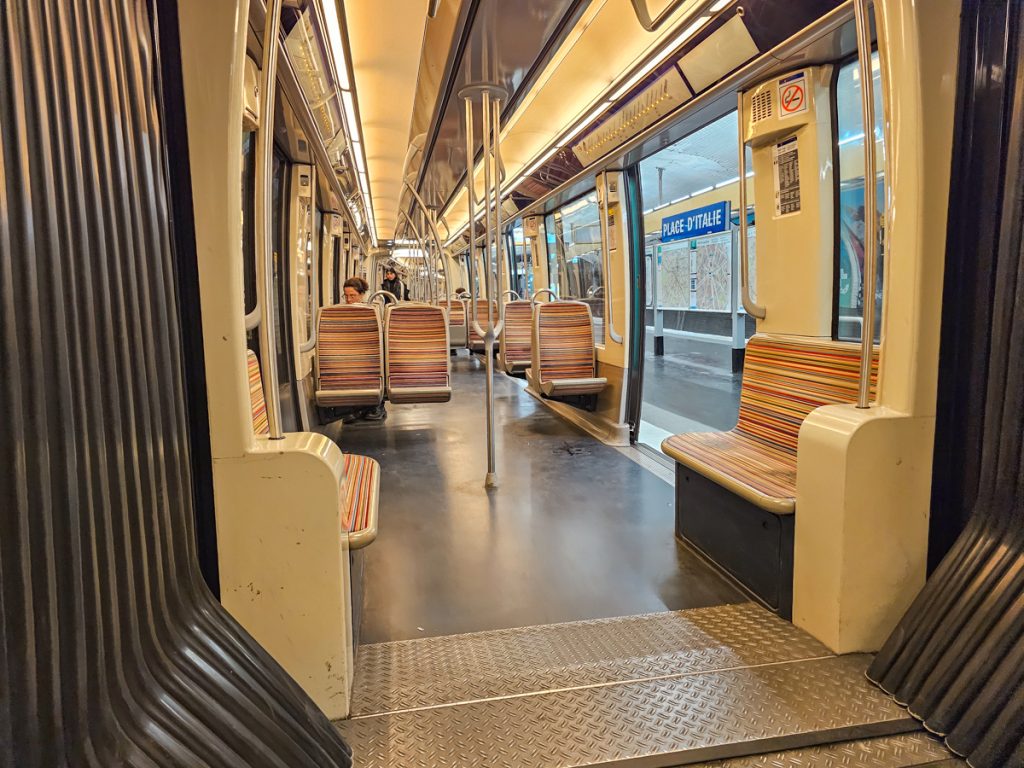
If you’re comfortable navigating public transportation and traveling relatively light, the RER B train can be a good option.
The airport fare is €14 and the train connects directly to central Paris, but most visitors will need to transfer to the Metro once they arrive in Paris to reach their final destination.
I wouldn’t recommend the RER if you’re traveling with more than a carry-on bag or if navigating public transit feels overwhelming (although public transit in Paris is overall easy to use).
If you’re staying in Paris for close to a full week or longer, the Navigo Découverte pass may be worth considering, as airport transportation is included. Just be sure to research the details, as it requires some advance planning.
Private Transfer
If you’d prefer the least amount of hassle possible, a private transfer can be a great option. You’ll have a driver waiting for you and won’t need to worry about navigating the airport, ticket machines, or transportation lines after landing.
2. Not Knowing What to Do With Your Luggage
Many people will already be familiar with this hotel tip, since luggage storage is very common throughout Europe. I’ll still mention it, because this isn’t nearly as universal in the USA.
If you’re staying in a hotel, the front desk will almost always store your luggage until your room is ready. So if you arrive at 10 am and check-in isn’t until 3 pm, you can drop your bags off, head out to explore, and come back later. The same is true on departure day if you have a late flight after checking out.
Apartment rentals are a different story, though, since there’s no front desk. In those situations, I usually use Bounce. The service partners with local businesses, including hotels, shops, restaurants, and convenience stores, that will store your luggage for however long you need.
There are locations all over Paris, and I’ve used the app numerous times throughout Europe without any issues.
3. Not Being Prepared With a Freshen Up
This is more of a personal preference, but after an overnight flight I feel super gross, and I always feel better after taking a few minutes to freshen up before heading into Paris.
One thing that’s worth knowing is that public restrooms can be a bit difficult to find once you leave the airport, and hotel lobbies in Paris rarely have them.
Because of that, I like to keep a few essentials in my personal item so I can wash my face, brush my teeth, brush my hair, or even change into a fresh outfit before I get off the plane (or at least before leaving the airport.)
4. Booking Timed Attractions

Another common mistake is underestimating how much time it’ll take to get out of the airport and into Paris.
You might assume that if your plane lands at 10 am, you can comfortably book something for noon. In reality, there are a lot of variables between the runway and your first sightseeing stop.
Getting through Charles de Gaulle Airport alone can take anywhere from 30 minutes to two hours. Passport control is the biggest wildcard. I’ve had trips where I got through in five minutes and others where I waited well over an hour.
If you’re traveling with children, be aware that families are directed into a separate passport control line. The two times I’ve entered Paris with my kids, that line was painfully, glacially slow. Hopefully I just got unlucky, but it’s worth planning for a wait just in case.
Once you’re through the airport, you’ll still need to get into Paris. Between walking to your transportation, purchasing tickets if necessary, waiting for a train or taxi, and making the journey into the city, I would generally budget another 90 minutes.
All told, it’s very normal for it to take anywhere from three hours (two if you’re lucky and super fast) to four hours after landing before you’re actually ready to start exploring Paris.
Personally, I try to avoid booking any museums, tours, or experiences that require timed entry reservations on my first day. But if you’re working with limited time and need to book something, I’d give yourself at least five hours between your scheduled landing time and your timed entry reservation.
5. Planning a Full Sightseeing Day
Your first day in Paris is not the time to try to maximize every minute. Have a loose plan, for sure, but don’t schedule too much. Instead, focus on activities that let you get the lay of the land, soak in the atmosphere, and experience Paris without feeling rushed.
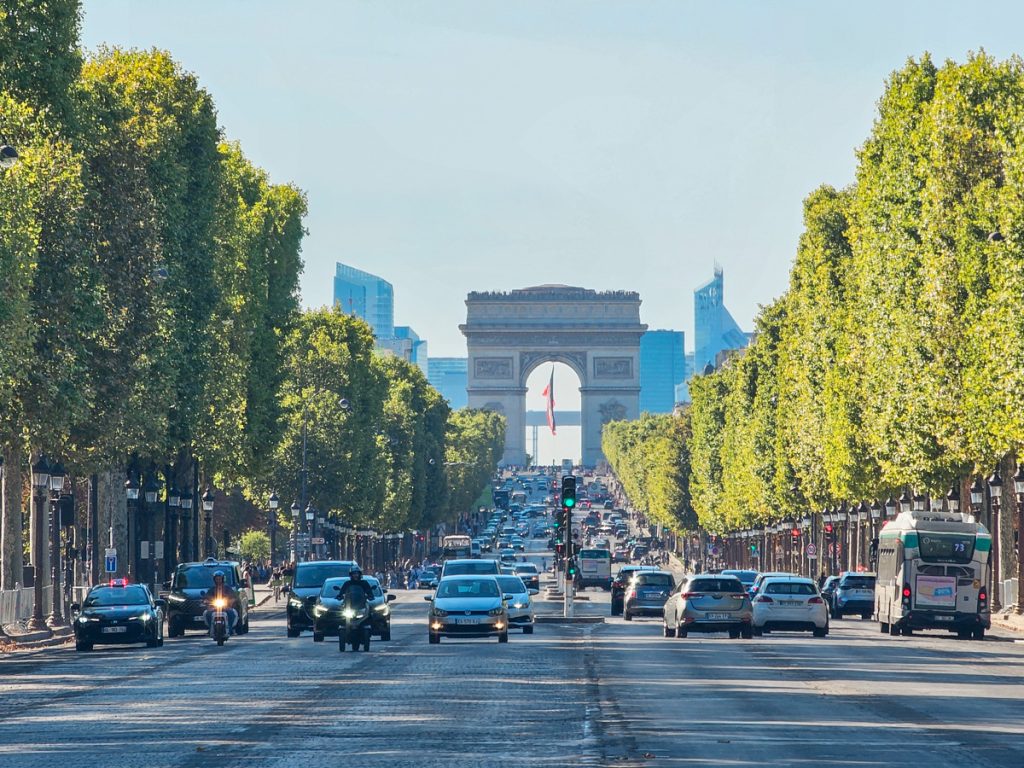
Some of my favorite first-day activities are walking around Notre Dame and Ile de la Cité, strolling the Champs-Élysées and climbing the Arc de Triomphe, wandering through a garden, walking along the Seine, seeing the Eiffel Tower from the Champ de Mars or Trocadéro, or taking a Seine river cruise.
Neighborhoods are another great option. The Latin Quarter, Saint-Germain-des-Prés, and Montmartre in particular are all easy places to spend a few hours simply exploring.
When I’m taking people to Paris for the first time, I like the first day to really feel like Paris. There will be plenty of time later for heavy-hitting museums and a full itinerary.
6. Not Having a Plan for Food
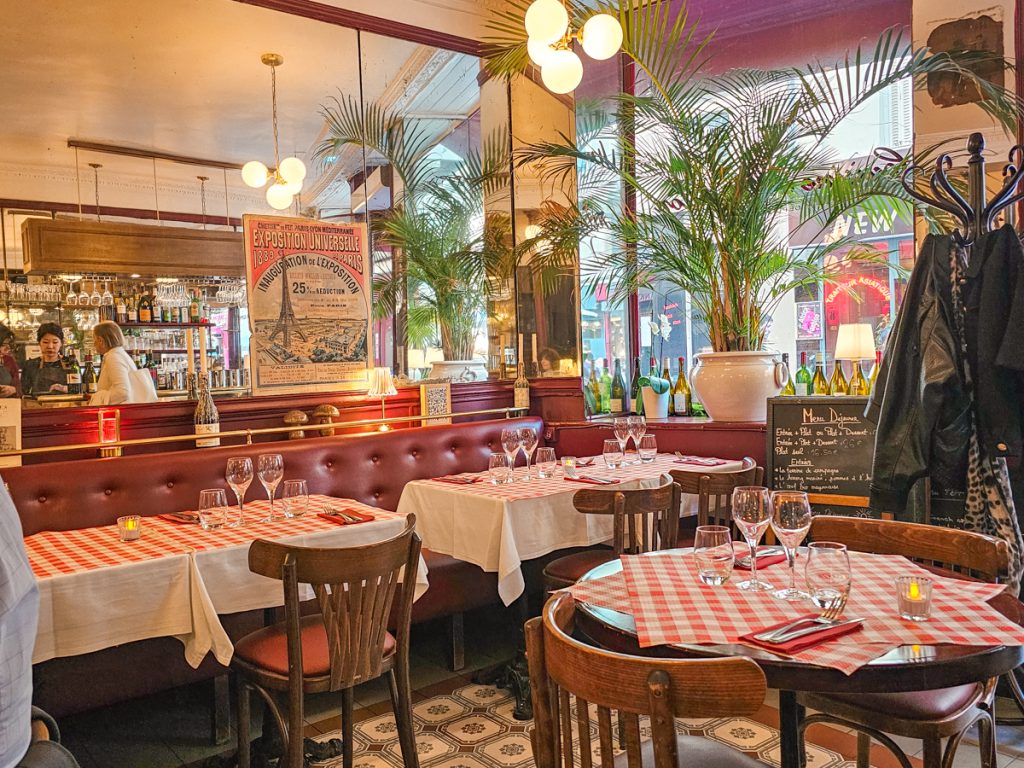
While I just said not to schedule too many timed attractions on your first day, meals are the one thing I generally do like to have a set plan.
It’s not that Paris lacks cafés, restaurants, or bakeries, many of which you can simply pop into. Quite the opposite. The problem is that when you’re tired, hungry, and in an unfamiliar neighborhood, choosing somewhere to eat can suddenly feel surprisingly overwhelming.
You also don’t want to reach the hangry stage and suddenly realize you’re in an area with no nearby restaurants (yes, it does happen).
At a minimum, I’d identify a few options ahead of time for lunch, snacks, or beverages, and I do think it’s a good idea to consider making a dinner reservation (especially if you’re arriving on a weekend when many restaurants are full).
7. Taking a Long Afternoon Nap (Or Not Taking a Nap at All)
Jet lag is different for everyone, but I’ve found that both extremes can be a mistake. If I force myself to stay awake when I’m completely exhausted, I end up just feeling miserable and not enjoying Paris, so I’m not totally anti-nap. On the other hand, a three-hour afternoon nap that keeps you up until midnight doesn’t help either.
Personally, I try to keep naps short if I need one and then stay awake until a reasonable local bedtime.
If you’re arriving very early in the morning and know sleeping on planes is difficult for you, it may even be worth booking your hotel for the night before. I’ve only done this a couple of times (once when I was traveling with all my kids), but being able to go straight to the hotel and get a little sleep was a game-changer.
And if you’re someone who struggles to sleep while traveling, come prepared. An eye mask, sleep aid, white noise app, or noise machine can make a huge difference, especially since hotel walls in Paris can sometimes be thin. I personally never travel without this tiny white noise machine—it helps me immensely.
Planning the Rest of Your Time in Paris?
Getting through arrival day smoothly is just the beginning. If you’re still working on the plan the rest of your time in Paris, these guides can help:
- Ultimate List of Things to Do in Paris – Nearly 100 sights and experiences, from must-sees to hidden gems
- Where to Stay in Paris – A neighborhood-by-neighborhood breakdown to help you choose the right base
- Unwritten Rules of Dining Out in France – Tips and tricks for how restaurants work, from ordering to paying
If you want everything in one place, my Paris travel guide page pulls together neighborhood guides, attraction and museum guides, foodie recommendations, and travel tips in one hub.
And if you’re feeling overwhelmed or short on time, I also offer Paris planning calls.
These one-on-one video sessions are great for getting feedback, asking questions, and sorting through options, whether you need a full plan or help fine-tuning what you already have.
