
7 Incredible Places to Admire Monet In & Around Paris

If you’re a fan of Claude Monet, Paris is one of the best places in the world to see his work. Some of his most famous paintings are on display here, along with plenty of lesser-known works that are really fun to discover.
Before we get into the list, a little background: Claude Monet (1840–1926) was one of the founders of Impressionism, an artistic movement that changed the course of French painting in the late 19th century.
Rather than focusing on precise details and traditional compositions, Monet was interested in the changing effects of light, color, and weather, often painting outdoors directly in front of his subjects.
Born in Paris and raised in Normandy, Monet spent much of his life painting the landscapes and everyday scenes of northern France. He often included people in his earlier paintings, but over time, he became increasingly focused on nature and light. His brushwork also became progressively looser, with some of his later paintings bordering on abstraction.
In 1883, Monet settled in the village of Giverny, where he spent the final 43 years of his life. There, he created an extraordinary garden, complete with a water lily pond, which became the primary focus of his paintings during the last decades of his career.
Here are seven places in and around Paris where you can admire Monet’s incredible paintings, all of which I’ve visited and loved.
1. Orangerie
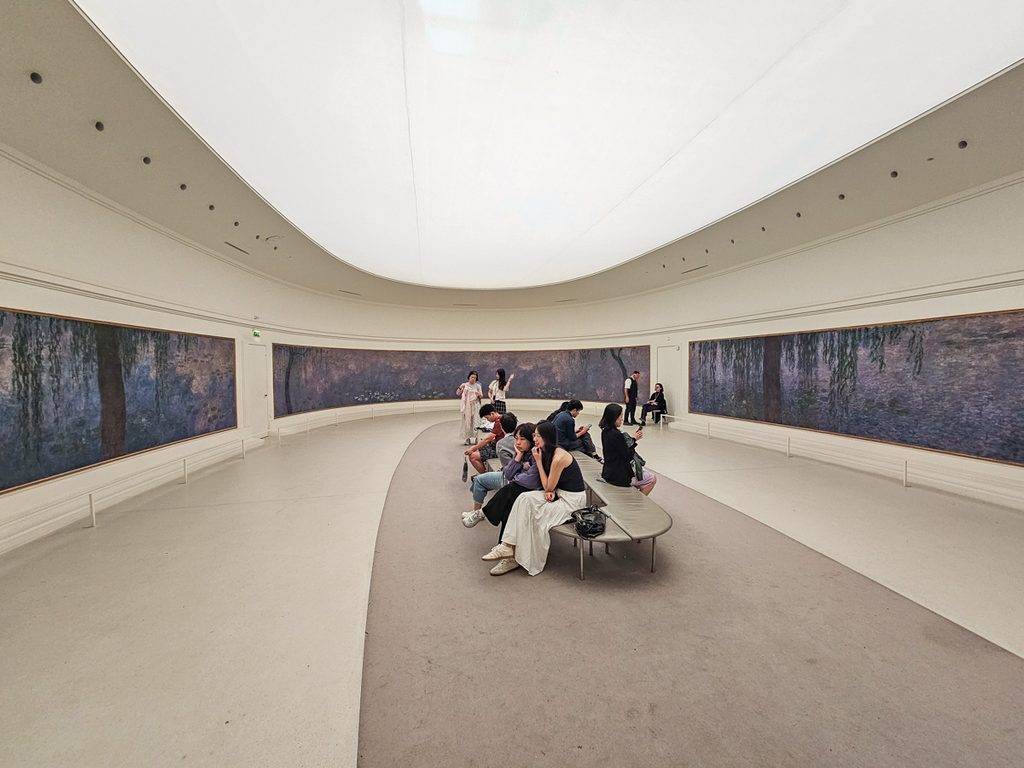
If there’s one place in Paris that every Monet fan absolutely needs to visit, it’s the Orangerie Museum. Located in a corner of the Tuileries Garden, this relatively small museum is home to Monet’s enormous Water Lilies paintings, displayed in two specially designed oval rooms.
Monet became particularly obsessed with the water lilies in his garden at Giverny, producing hundreds of paintings exploring the colors and reflections on the surface of the pond.
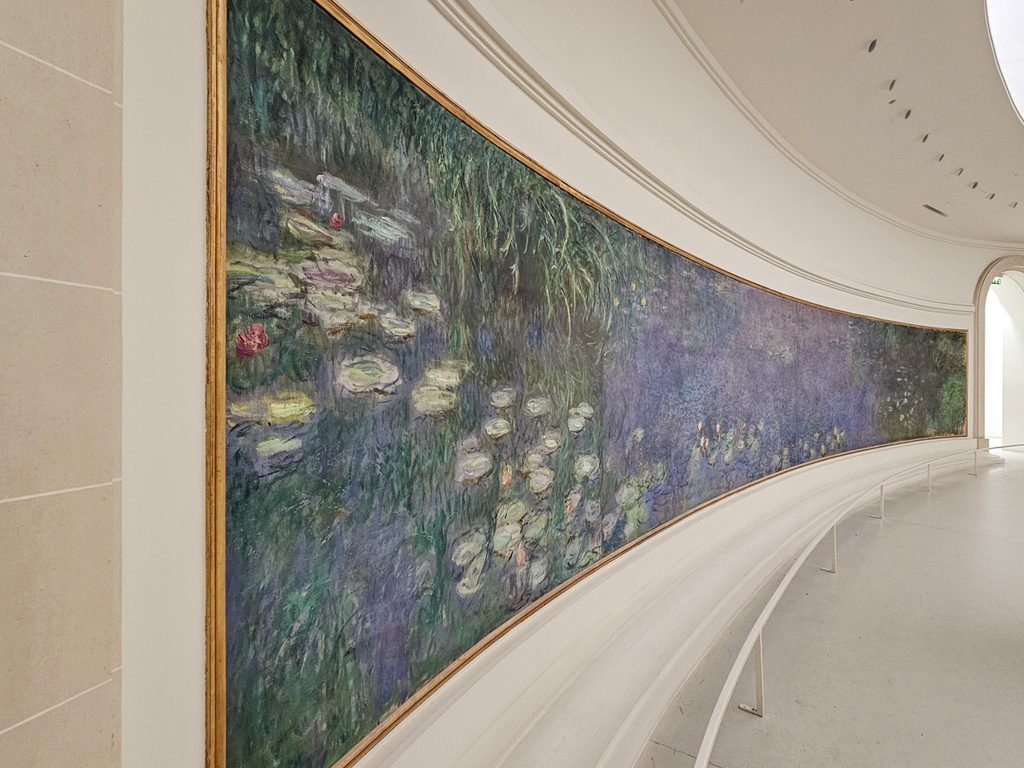
The eight enormous compositions at the Orangerie were his final great project. On November 12, 1918, just one day after the Armistice that ended the fighting in World War I, Monet wrote to his friend Georges Clemenceau, France’s prime minister, offering to donate two of his large Water Lilies panels to the French state as a symbol of peace.
The gift eventually grew to include all eight compositions, and Monet worked closely with the architect to design the rooms where they would be displayed. The two oval rooms were even arranged to resemble the infinity symbol (∞) when viewed from above. The museum opened in 1927, just a few months after his death.
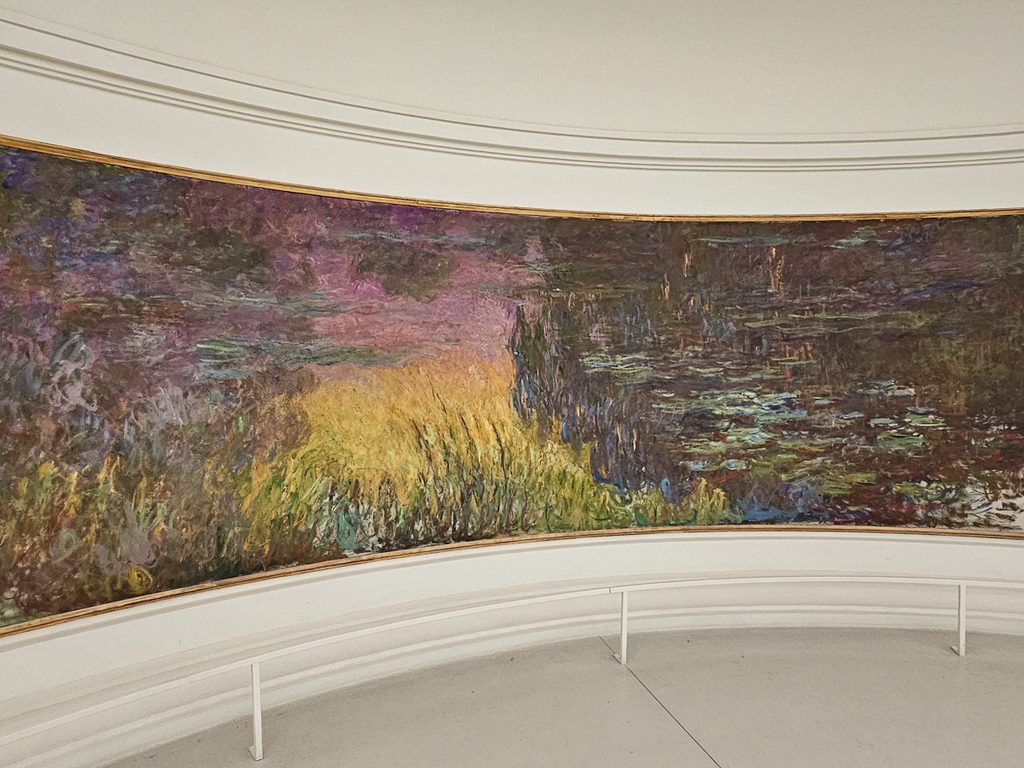
And the rooms really are spectacular. The paintings stretch across nearly 330 feet of curved walls, surrounding you with water lilies, weeping willows, grasses, and their reflections. Up close, you can admire the individual brushstrokes and all the different colors Monet used, then step back to appreciate the paintings as a whole.
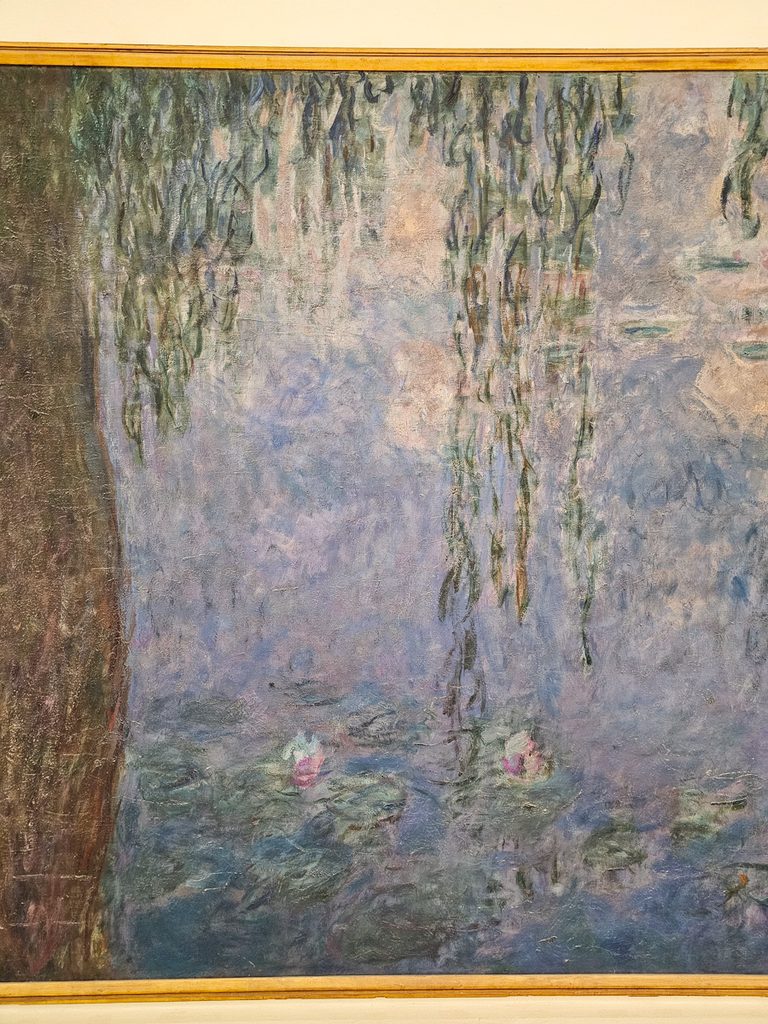
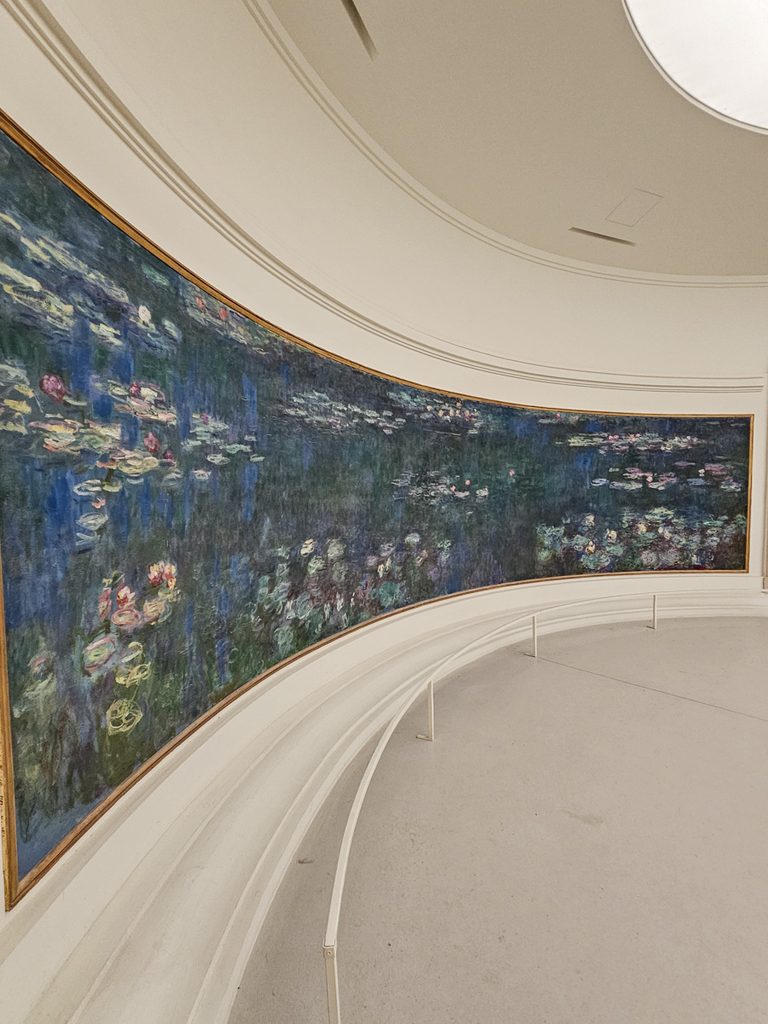
There are benches in the middle of each room where you can sit and take everything in, although don’t expect to have the place to yourself. The Orangerie is extremely popular, so I highly recommend booking a timed ticket in advance, as slots regularly sell out and walk-up lines can be long.
There’s also an excellent collection of Impressionist and modern art downstairs, so be sure to allow some extra time to explore beyond the Water Lilies rooms.
2. Musée d’Orsay
The Musée d’Orsay is one of the best museums in the world for Impressionist art, and its collection of Monet paintings is absolutely fantastic. Housed in a beautiful former railway station along the Seine, the museum has dozens of works by Monet, covering several decades of his career.
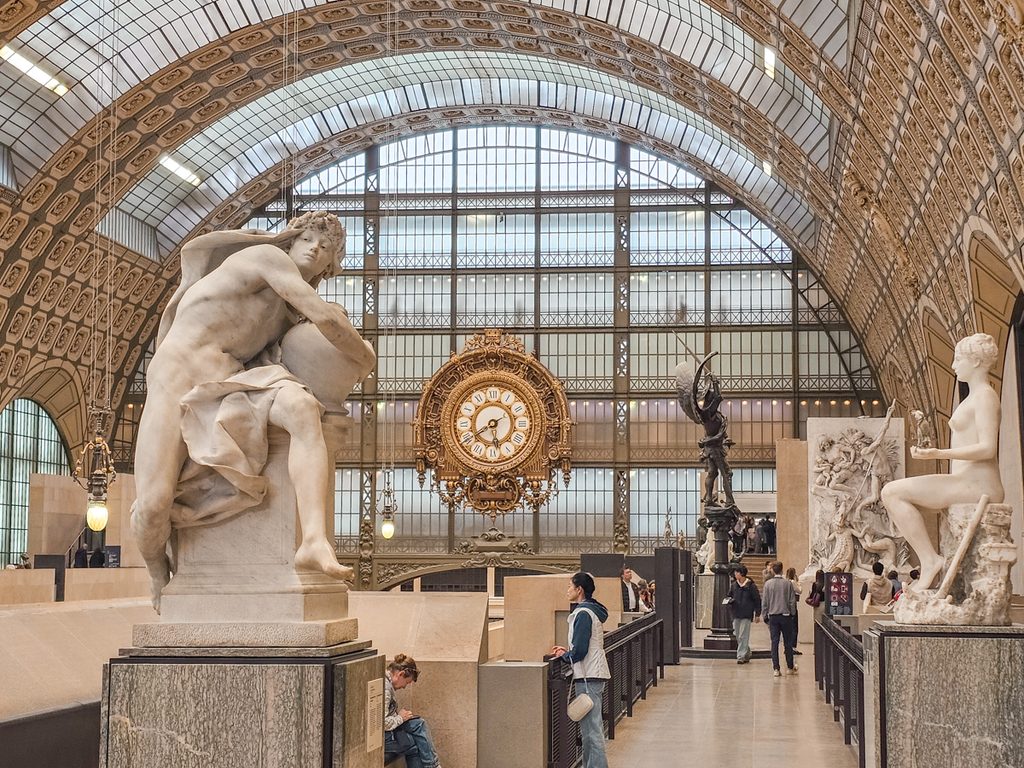
Most of the Monet paintings are displayed in the Impressionist galleries on the fifth floor, although you’ll find some on the ground floor as well. It’s very interesting to see how his style developed over the years, from his earlier paintings with recognizable figures and landscapes to the increasingly loose, colorful brushwork of his later works.
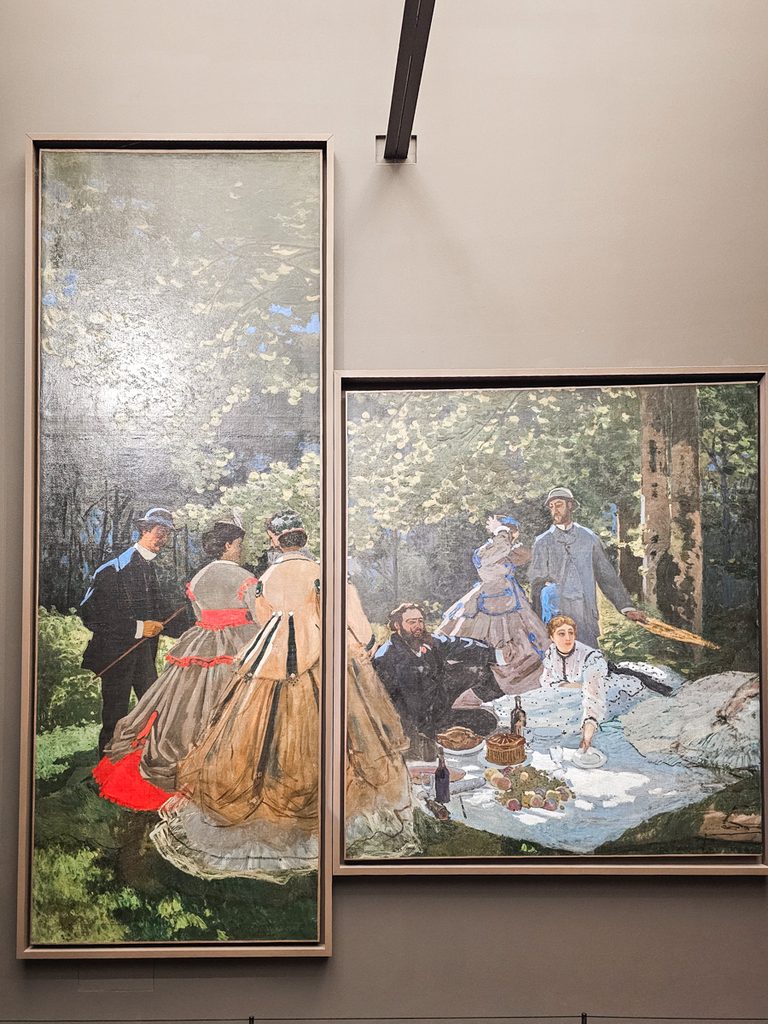
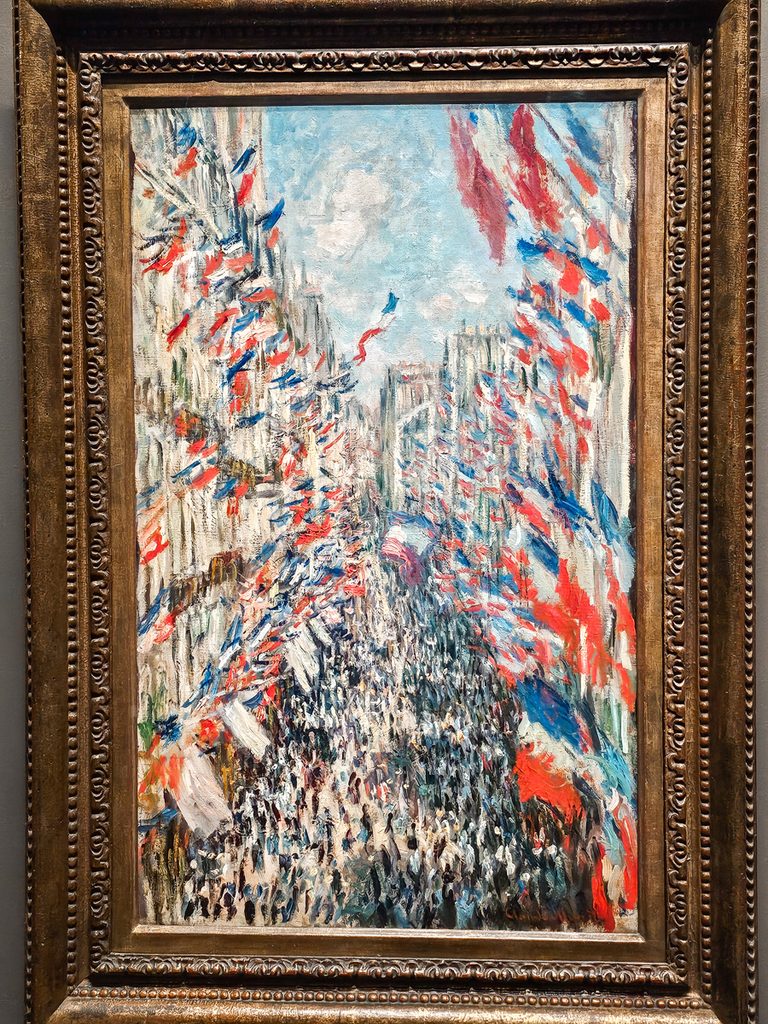
Some of the earlier works include Le Déjeuner sur l’herbe (1865–1866), a large painting depicting a fashionable picnic in the countryside, and La Rue Montorgueil (1878), which captures a Paris street filled with celebratory crowds.
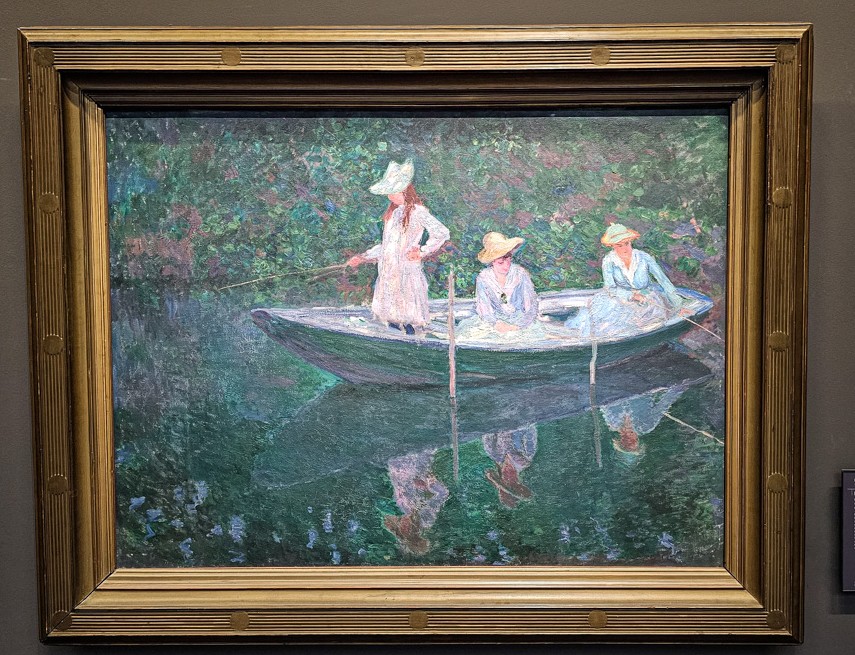
One of my personal favorites is En norvégienne (1887), which has three young women fishing from a small boat on the river near Giverny. I really like the reflections in the water, and the soft greens and blues of the surrounding landscape.
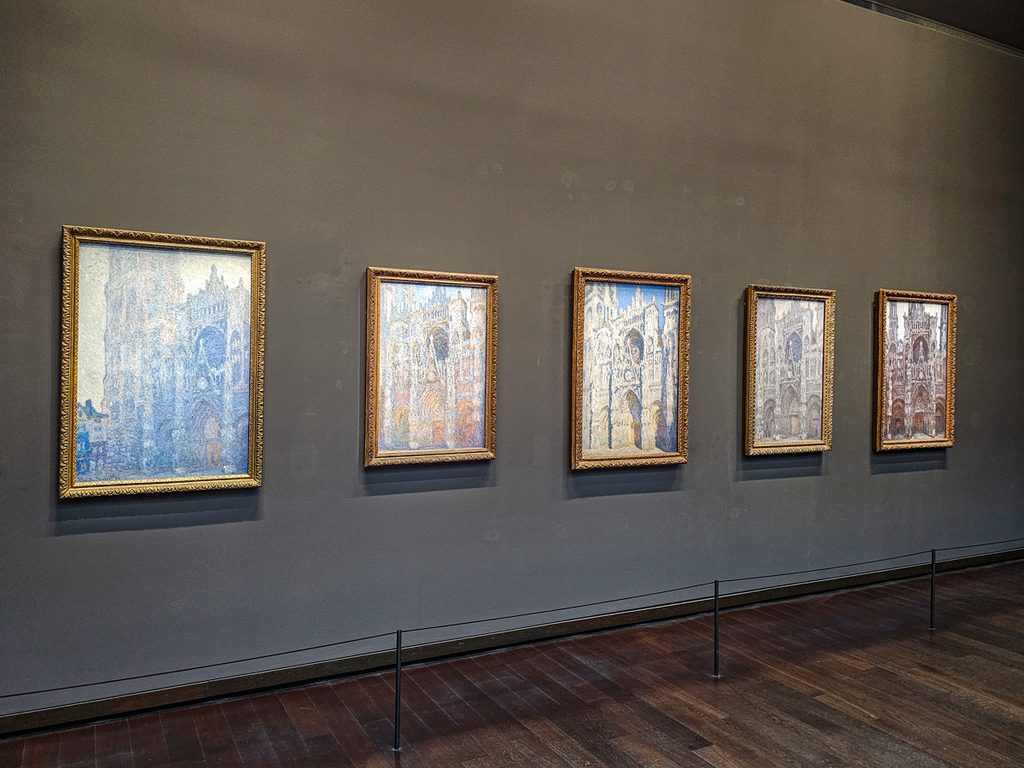
You’ll also find several paintings from Monet’s famous Rouen Cathedral series, where he painted the same building repeatedly to capture changing light and weather. The Orsay has five paintings from this series, which includes more than 30 views of the cathedral’s façade in different lighting conditions.
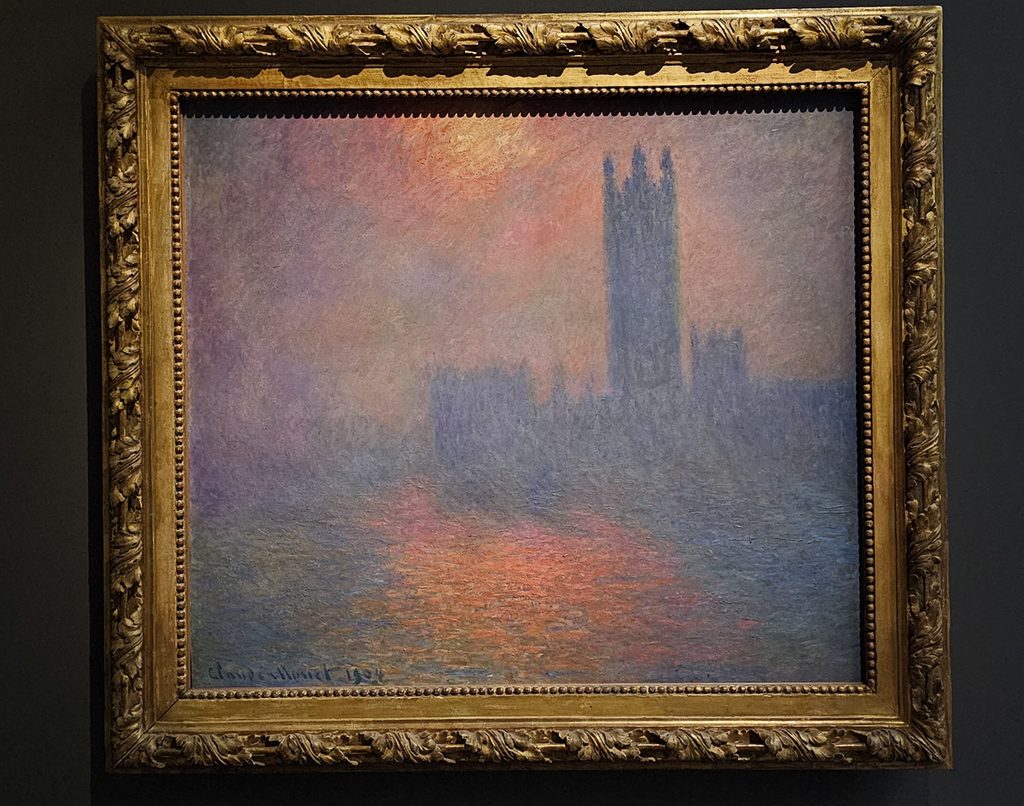
Another highlight is Londres, le Parlement (1904), one of 19 paintings Monet made of London’s Houses of Parliament. In this atmospheric scene, the buildings are little more than a dark silhouette rising through the mist above the Thames.
And of course, there are paintings of his beloved gardens at Giverny, including the Japanese footbridge and water lilies.
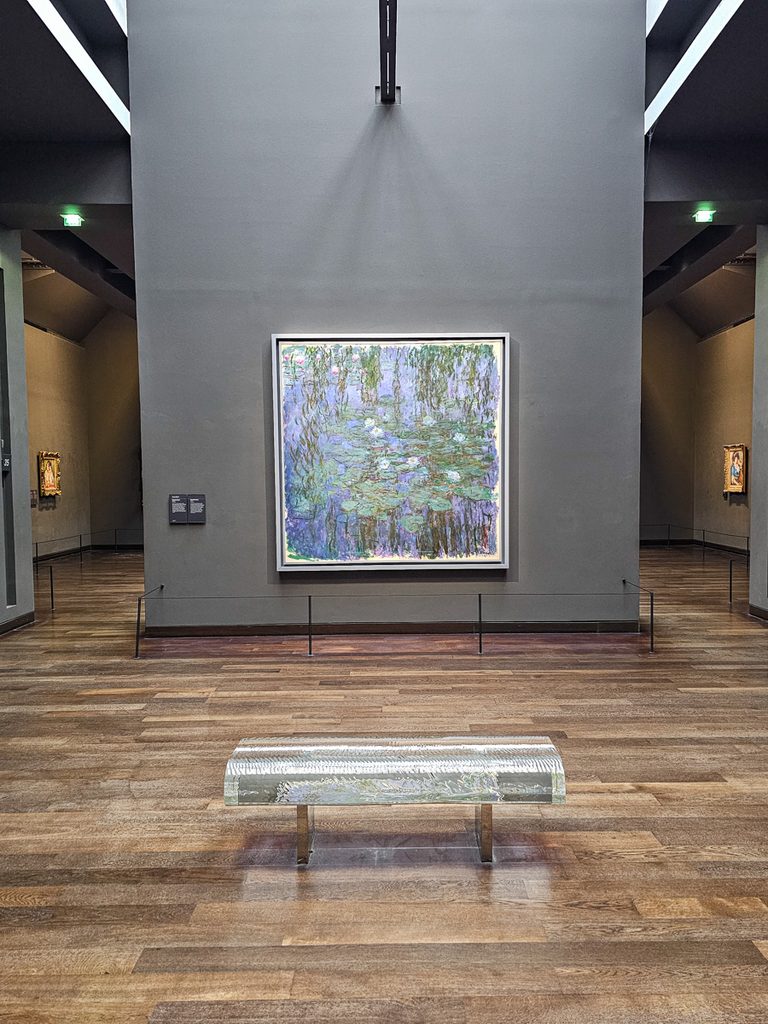
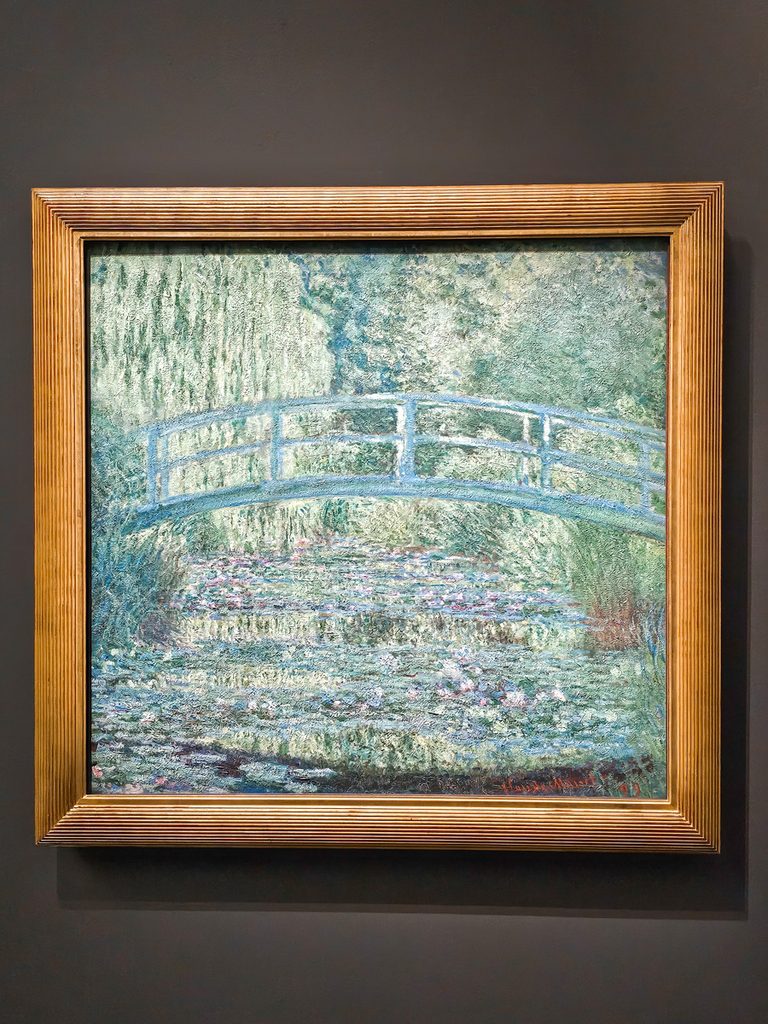
These are just a few examples; there are many other Monets on display in the Orsay.
Be sure to give yourself plenty of time to explore the museum (I’d recommend 3-5 hours), because there’s so much more to see beyond Monet, including masterpieces by Renoir, Degas, Van Gogh, and many other artists. For more advice on planning your visit, check out all my Musée d’Orsay tips.
3. Musée Marmottan Monet
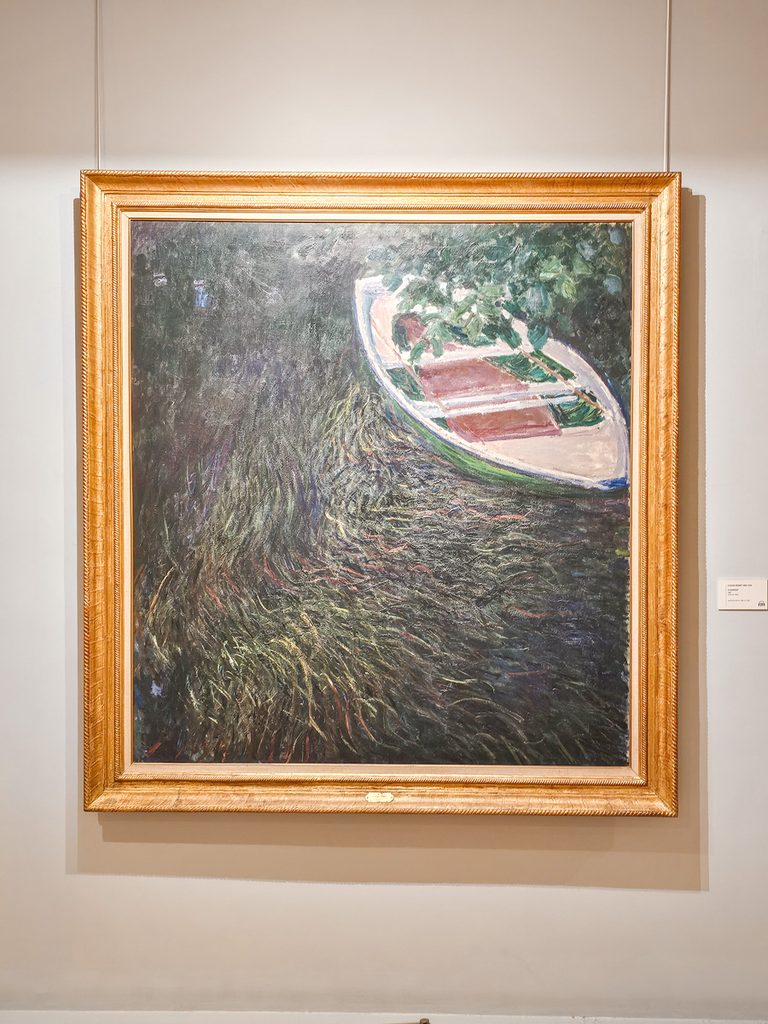
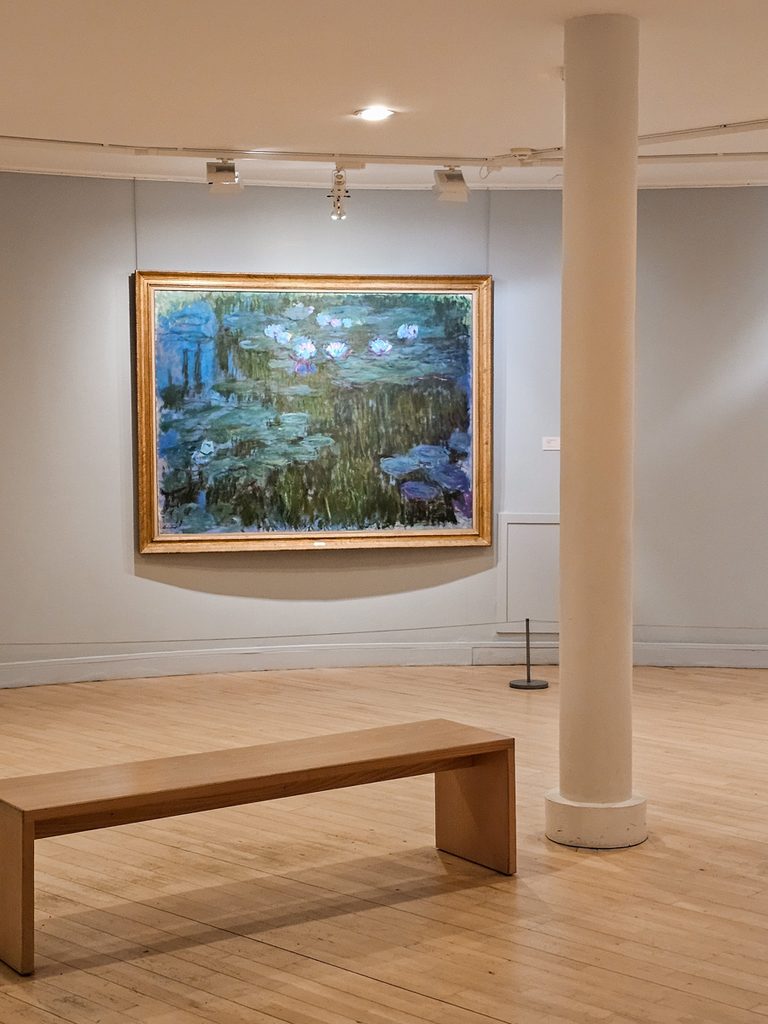
The Musée Marmottan Monet is located in a residential neighborhood of the 16th arrondissement, far from the main tourist attractions. And despite being much less well-known than the Orsay or Orangerie, it actually holds the largest collection of Claude Monet’s works in the world.
The museum’s extraordinary collection is largely thanks to Monet’s younger son, Michel, who inherited his father’s paintings after his death in 1926. Monet’s larger and almost abstract Water Lilies paintings had fallen out of favor with the art world, and Michel struggled to find buyers for them.
When Michel died in 1966, he left more than 100 of Monet’s works to the museum, including many of his large late-career Water Lilies paintings.
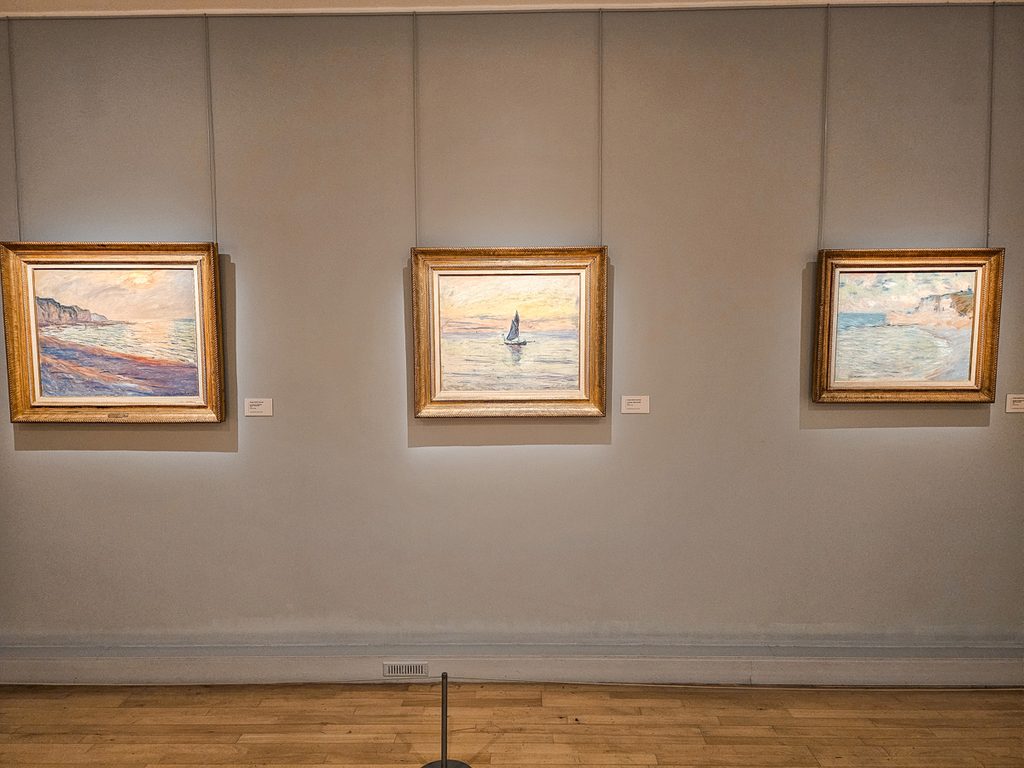
Today, these paintings are displayed in a specially designed gallery beneath the museum’s garden. It’s a beautiful space, filled with Monet’s abstract interpretations of the water lily pond at Giverny. And unlike the crowded galleries at the Orsay or Orangerie, you can often admire them with hardly anyone else around.
But perhaps the museum’s most historically important painting is Impression, Sunrise (1872), the work that gave the entire Impressionist movement its name. Depicting the harbor of Le Havre in the early morning mist, the painting was exhibited at the first Impressionist exhibition in 1874.
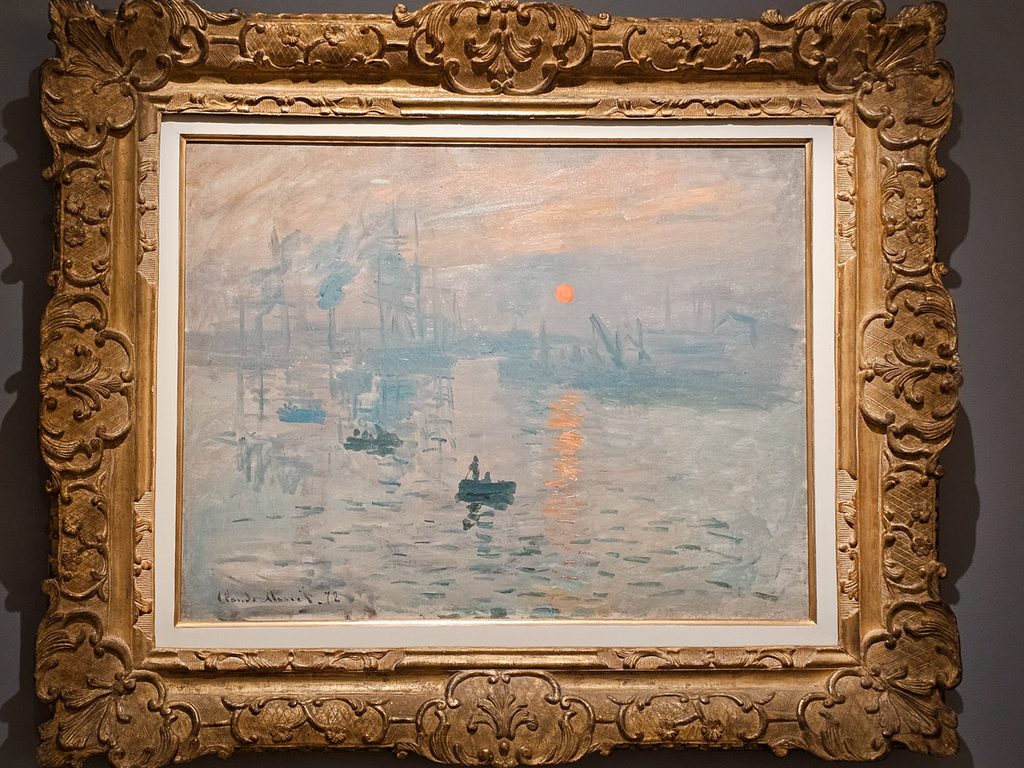
Art critic Louis Leroy mocked the loose, seemingly unfinished style of the paintings, sarcastically dubbing the artists “Impressionists” after Monet’s painting. The name stuck, and eventually came to define one of the most influential movements in art history.
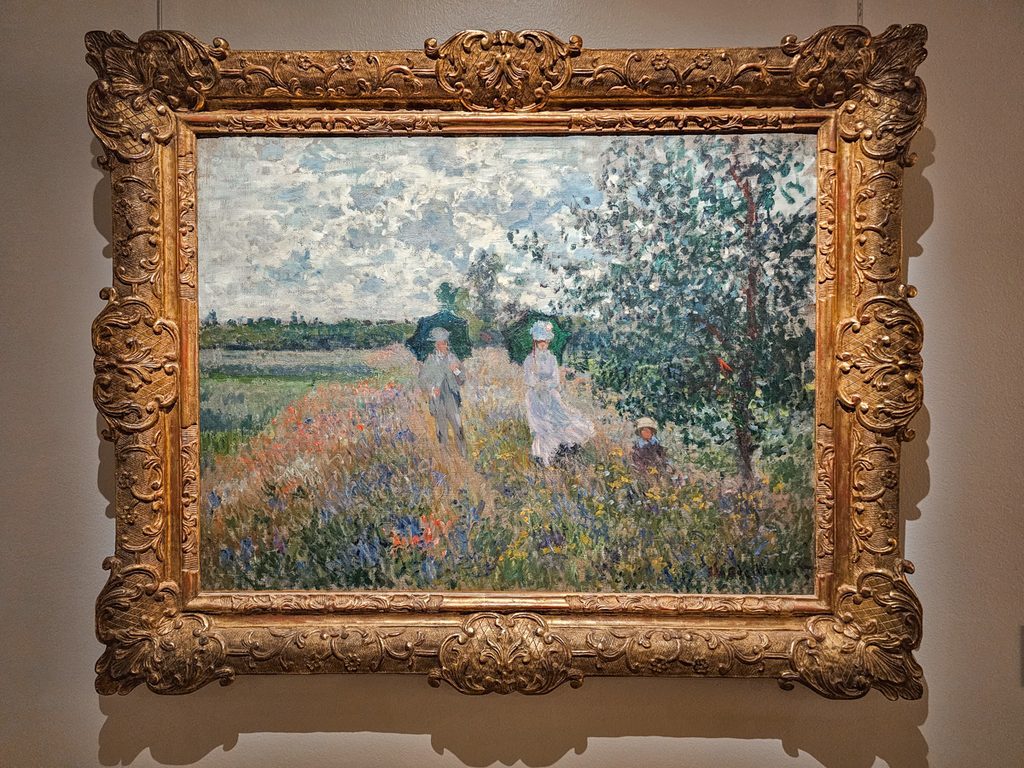
You’ll also find paintings from throughout Monet’s career, including landscapes, scenes of his garden at Giverny, and portraits of his family. Beyond Monet, the museum has an excellent collection of other Impressionist works, including the world’s largest collection of paintings by Berthe Morisot.
4. Petit Palais
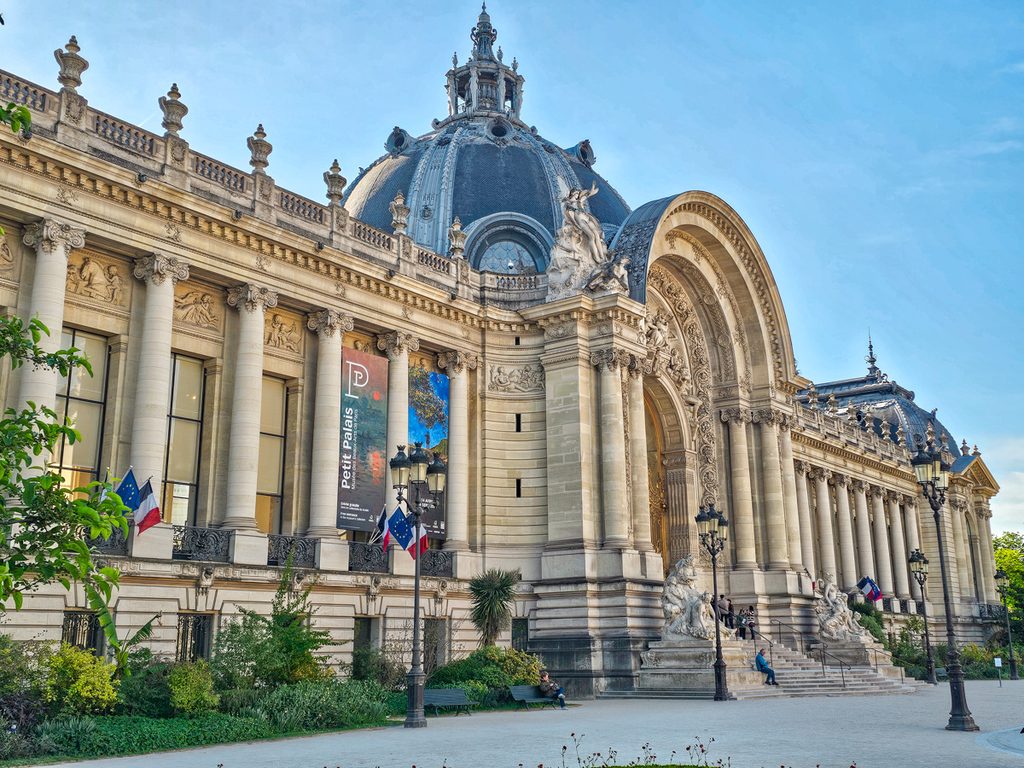
The Petit Palais is one of my favorite art museums in Paris, with beautiful Beaux-Arts architecture, an impressive collection of paintings and sculptures, and a lovely interior garden.
Among the museum’s many treasures is a single painting by Claude Monet, Sunset on the Seine at Lavacourt, Winter Effect (1880).
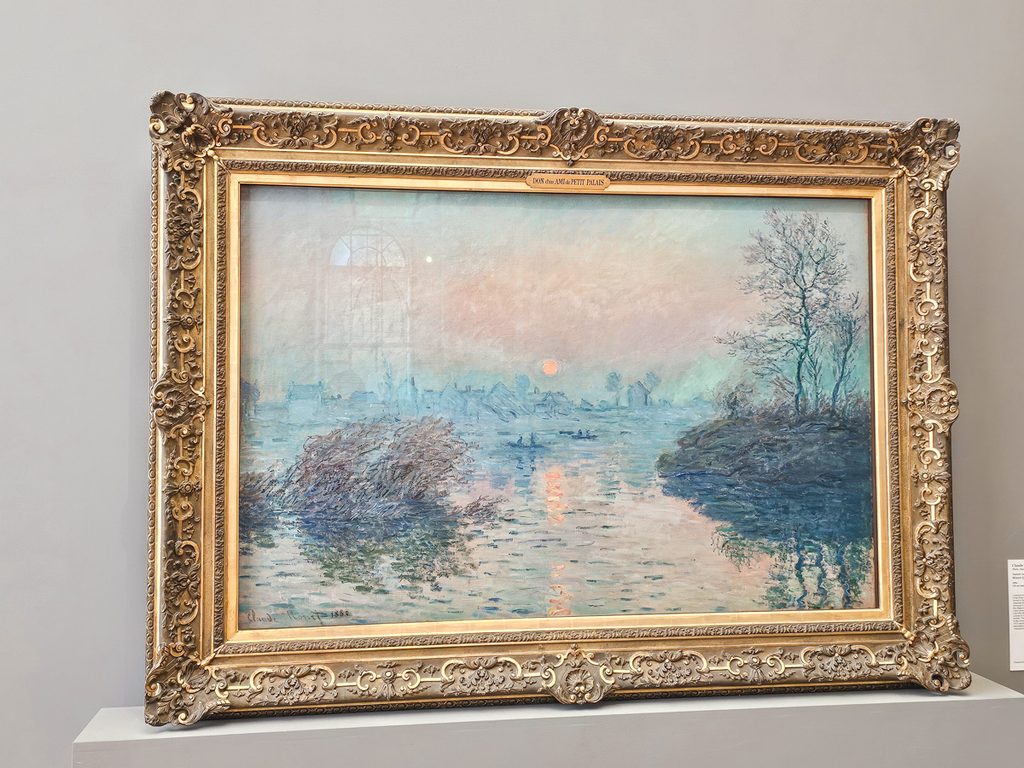
Monet painted this scene during the terribly harsh winter of 1879-1880, when the Seine froze over near his home in Vétheuil, northwest of Paris. As the ice began to thaw, he created around 20 paintings capturing the changing river.
The painting itself is lovely, with the pale orange sun reflecting across the icy blue water and the village of Lavacourt barely visible through the mist.
At the time, Monet was struggling financially and hoping to have his work accepted by the prestigious Paris Salon. He submitted two paintings. This experimental depiction of the thawing Seine is believed to have been rejected, while a more traditional landscape was accepted.
Even though there’s only one Monet here, the Petit Palais is absolutely worth visiting for its beautiful architecture and excellent art collection. And since it’s one of Paris’s free museums, it’s an easy addition to your Paris itinerary.
5. Louvre
Most people don’t realize this, but the Louvre actually has a small gallery of Impressionist paintings! It’s one of many hidden gems at the Louvre that most visitors completely miss. You’ll find it on the top floor (Level 2), in Room 903 of the Sully wing.
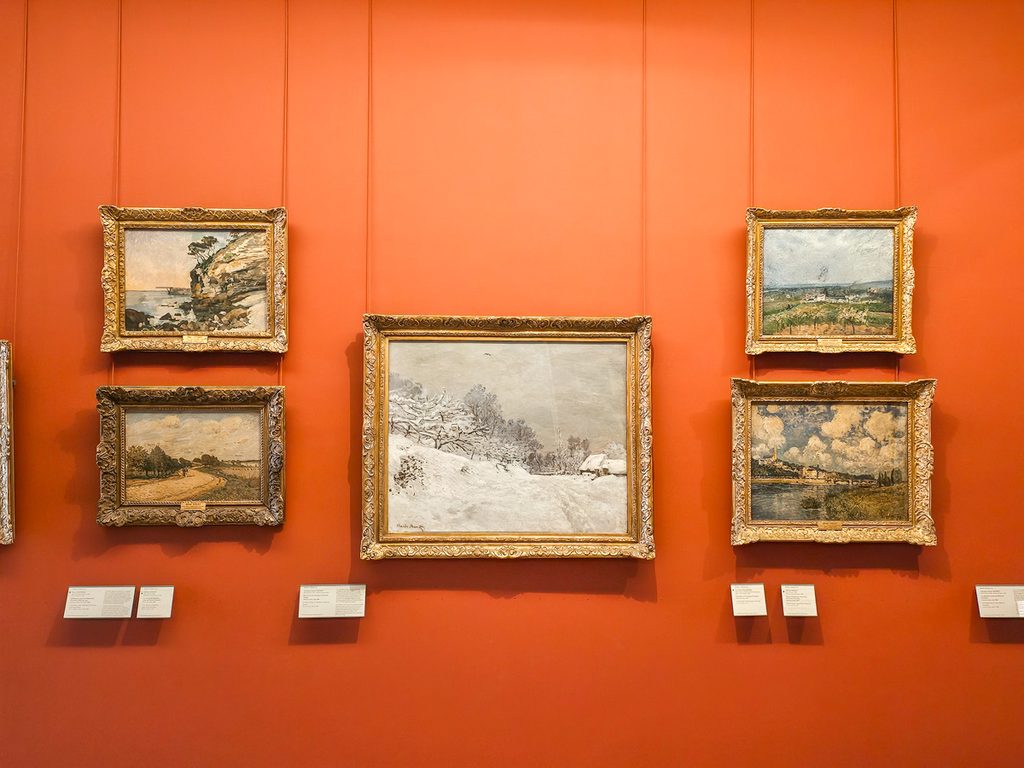
The Impressionist collection includes works by several famous artists, including Renoir, Pissarro, Sisley, and three paintings by Monet: Glaçons à Bougival, Environs de Honfleur, Neige (1867), and La débâcle près de Vétheuil (1880). All three depict winter landscapes, although they were painted at different points in Monet’s career.
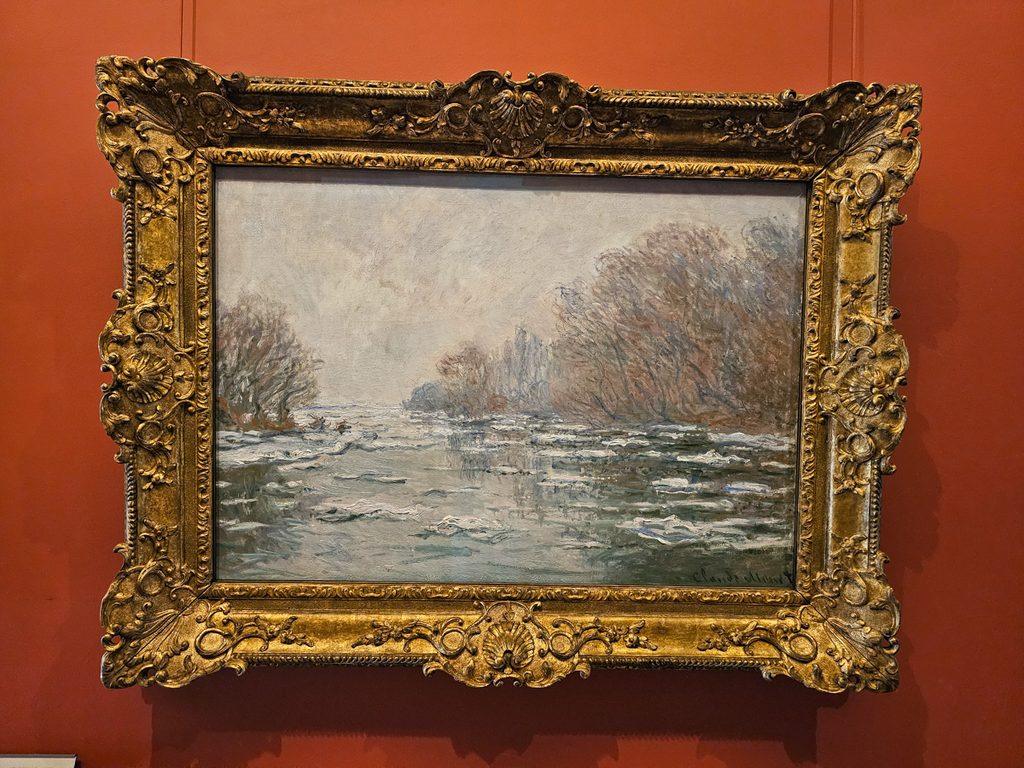
Note that the paintings on display in this gallery do rotate, so you won’t necessarily see all three during your visit.
For example, when I last visited in 2026, La Débâcle près de Vétheuil was on display, depicting enormous chunks of ice floating down the Seine as it thawed during the harsh winter of 1879-1880. Monet actually painted this scene during the same winter that inspired Sunset on the Seine at Lavacourt, Winter Effect, housed in the Petit Palais.
6. Rodin
The Musée Rodin is one of my very favorite museums in Paris, and another place where you probably wouldn’t expect to find a painting by Claude Monet. The museum is housed in the beautiful Hôtel Biron, an 18th-century mansion surrounded by gardens filled with Rodin’s sculptures, including his famous The Thinker.
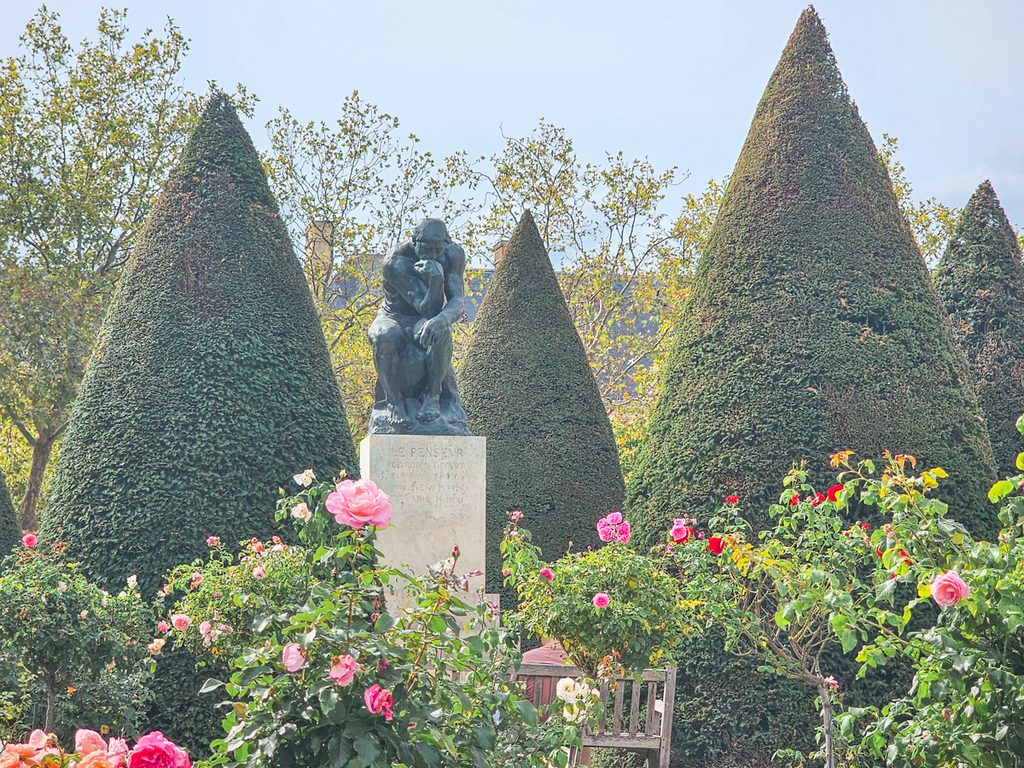
Rodin was friends with many of the leading artists of his time, and he also collected their work, including paintings by Claude Monet and Vincent van Gogh.
In one of the upstairs rooms of the mansion, you’ll find several paintings from Rodin’s personal collection, including Monet’s Belle-Île, painted in 1886.
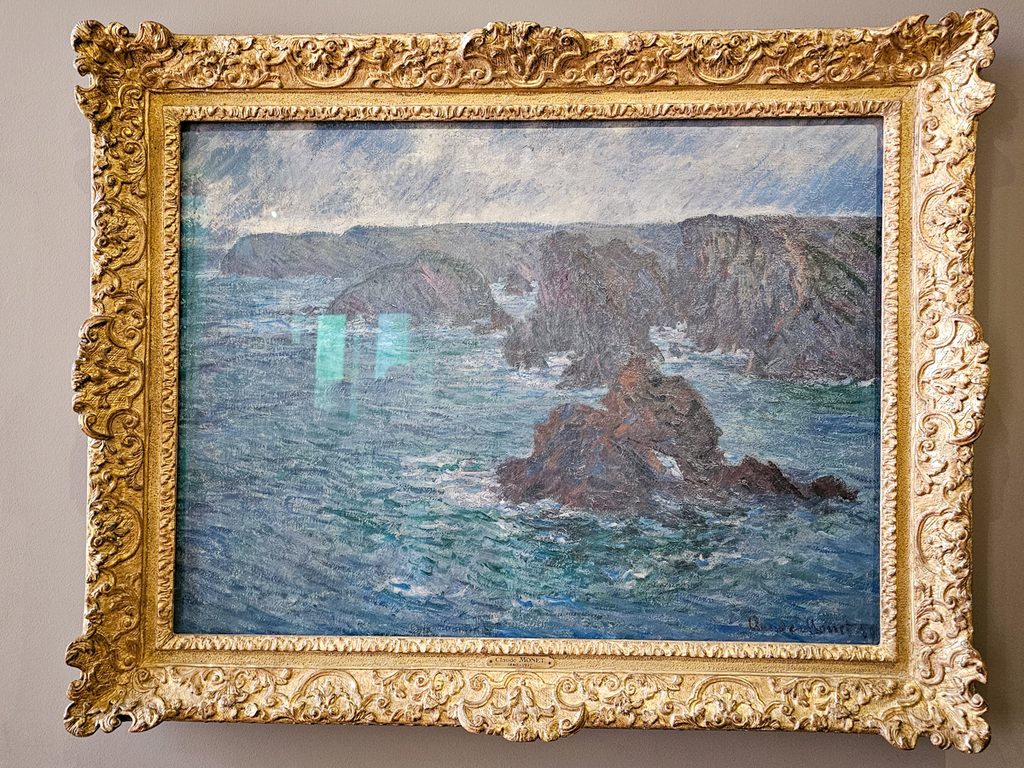
The painting depicts the rugged, rocky coastline of Belle-Île-en-Mer, an island off the coast of Brittany. Monet spent several months there in 1886, producing 39 paintings as he experimented with capturing the changing light and crashing waves along the coast.
There’s also an interesting connection between Monet and Rodin: Rodin received this painting in exchange for a copy of his sculpture Young Mother in the Grotto. The two artists later exhibited their work together at the Galerie Georges Petit in Paris in 1889.
7. Giverny
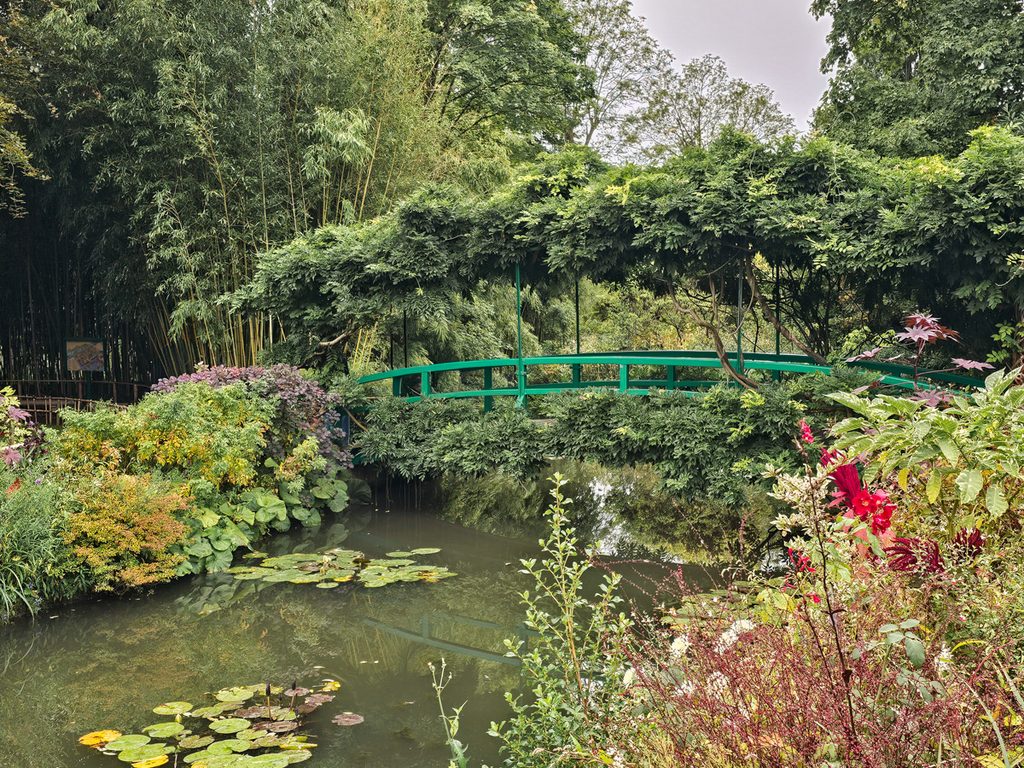
Okay, yes, Giverny isn’t actually in Paris. But it’s an easy day trip from the city, and I think it’s one of the very best you can take. If you love art, gardens, or Claude Monet even a little bit, this is an absolute must-visit.
Claude Monet moved to the small village of Giverny in Normandy in 1883, initially renting a country house before eventually purchasing it. He spent the next 43 years of his life here, transforming the property into the extraordinary gardens that inspired so many of his most famous paintings.
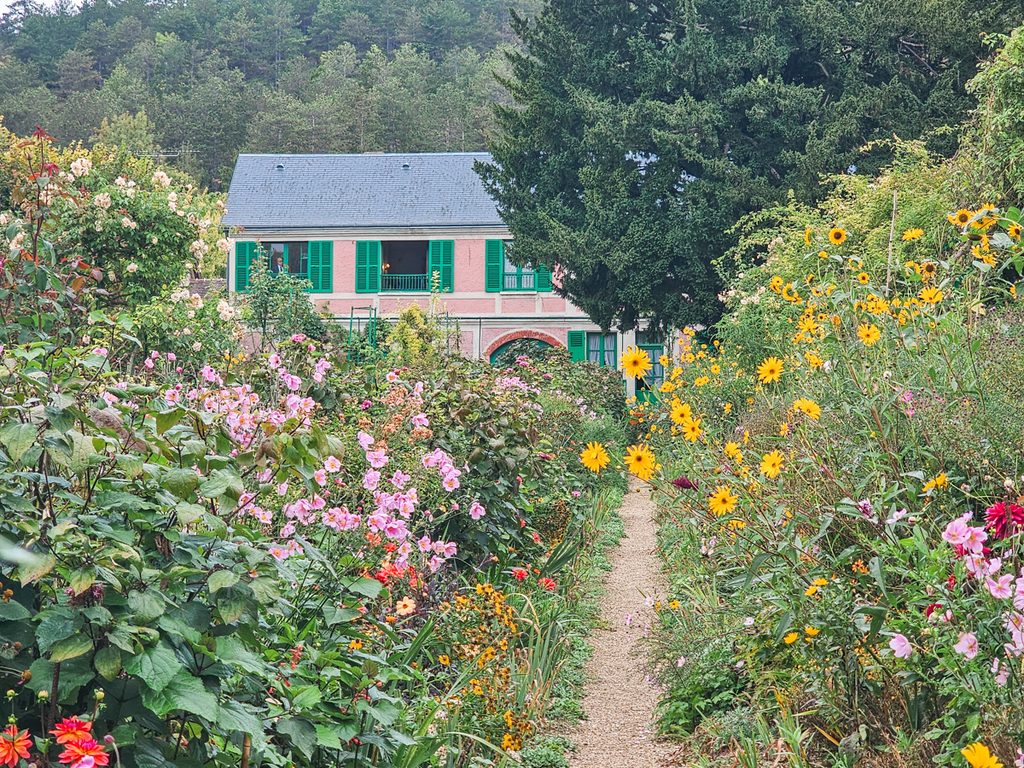
The Clos Normand garden, in front of Monet’s iconic pink house, is filled with colorful flowers and climbing roses. You can also tour the house itself, including his bright yellow dining room, blue-tiled kitchen, and studio filled with reproductions of his paintings.
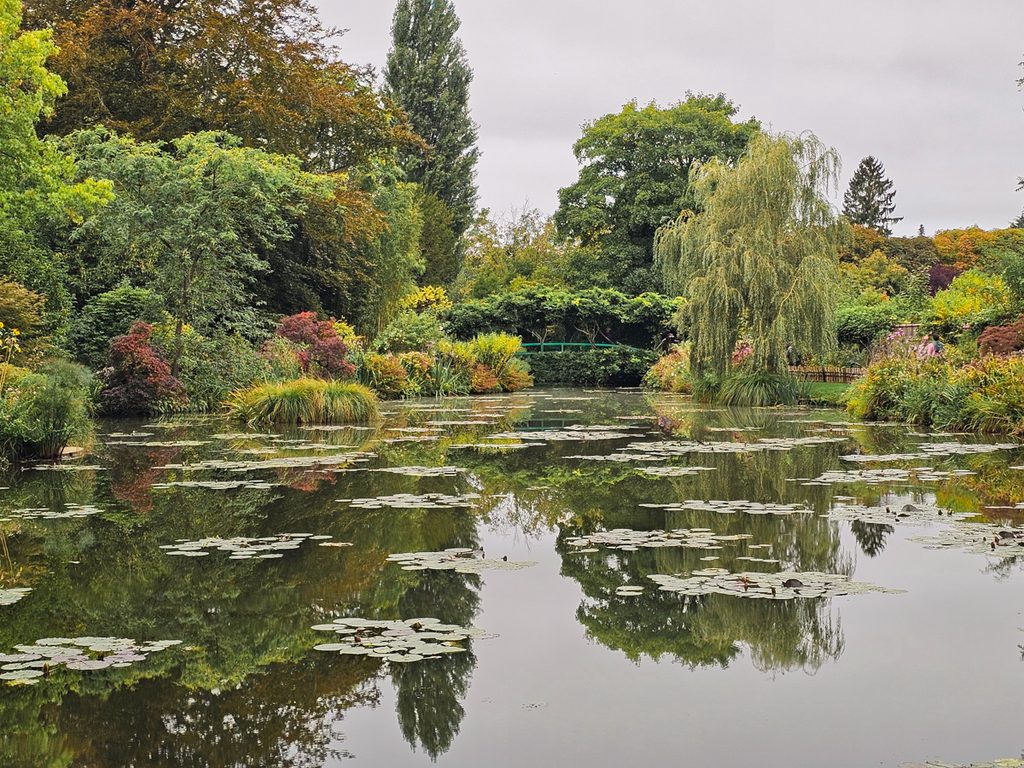
But the absolute highlight is the Water Garden, which Monet created about a decade after moving to Giverny. Inspired by Japanese gardens, he designed a pond surrounded by weeping willows, bamboo, and a green Japanese bridge. And, of course, it’s filled with the famous water lilies that became the subject of hundreds of his paintings.
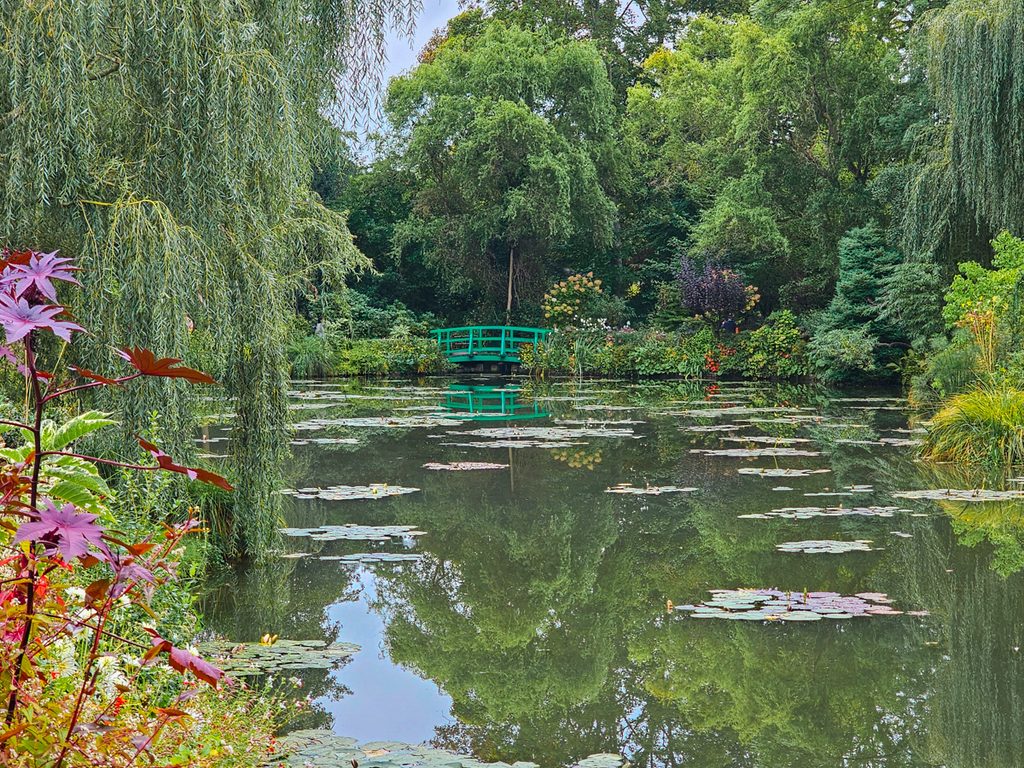
I’ve admired Monet’s paintings for years, but standing beside the actual pond, looking at the water lilies, the bridge, and the willows that I’d seen depicted in so many masterpieces, was an incredible experience. It really did feel like stepping right into one of his paintings.
Getting there: Take a train from Paris Saint-Lazare to Vernon-Giverny (about 45 minutes), then a shuttle to the gardens (about 15 minutes). The house and gardens are open seasonally, generally from April through the beginning of November, and I strongly recommend booking your tickets in advance.
You can read my full guide to visiting Monet’s house and gardens in Giverny for more details on what to see, when to visit, and exactly how to get there from Paris.
Keep Exploring Paris’s Art and Museums
If you love discovering great art and museums in Paris, there’s plenty more to explore. Here are a few of my other guides to help you find some incredible places:
- 15 Must-See Art Masterpieces in Paris – Famous works of art worth seeking out all over the city.
- 8 Unusual and Fascinating Museums in Paris – Discover some of the city’s most surprising museums that many visitors overlook.
- 8 Beautiful Museum Cafés in Paris – Gorgeous places to stop for coffee, pastries, or lunch while exploring the city’s museums
If you want everything in one place, my Paris travel guide page pulls together neighborhood guides, attraction and museum guides, foodie recommendations, and travel tips in one hub.
And if you’re feeling overwhelmed or short on time, I also offer Paris planning calls.
These one-on-one video sessions are great for getting feedback, asking questions, and sorting through options, whether you need a full plan or help fine-tuning what you already have.
