
7 Secret Spots in the Louvre To Escape the Oppressive Mona Lisa Crowds

As one of the most famous art museums in the world, the Louvre welcomes an enormous number of visitors every year. In 2024 alone, nearly 9 million people passed through its doors, which averages out to roughly 24,000 visitors per day.

In theory, the Louvre can handle that. The museum is vast – there are three main wings, four levels, hundreds of rooms, more than 35,000 works of art, and enough exhibition space to get genuinely lost in. (Case in point: after nearly two dozen visits, I still grab a map every time I go.)
In practice, though, the crowds don’t distribute evenly; they cluster around big works and certain halls. The Mona Lisa and the surrounding galleries are almost always packed. The Greek and Roman sculpture halls draw steady traffic, and areas like the Egyptian mummies stay busy all day.
That leaves large parts of the museum surprisingly calm.
A quick note: The Louvre is divided into three wings: Denon, Richelieu, and Sully. Denon is where you’ll find many of the most famous works, including the Mona Lisa, Winged Victory, Napoleon’s Coronation, etc. So, the majority of Denon can be quite crowded.
This list focuses on seven places in the Louvre where you can reliably escape the crowds while still seeing incredible artwork.
(A tip for my American friends: level 0 in France is the ground floor, and level 1 is what would be level 2 in the US, etc.)
1. Medici Gallery / Rubens Gallery
Location: Richelieu Wing, Level 2, Room 801
High up in the Richelieu wing, this long, light-filled gallery was designed specifically to display one thing: the monumental painting cycle by Peter Paul Rubens telling the life story of Queen Marie de’ Medici.
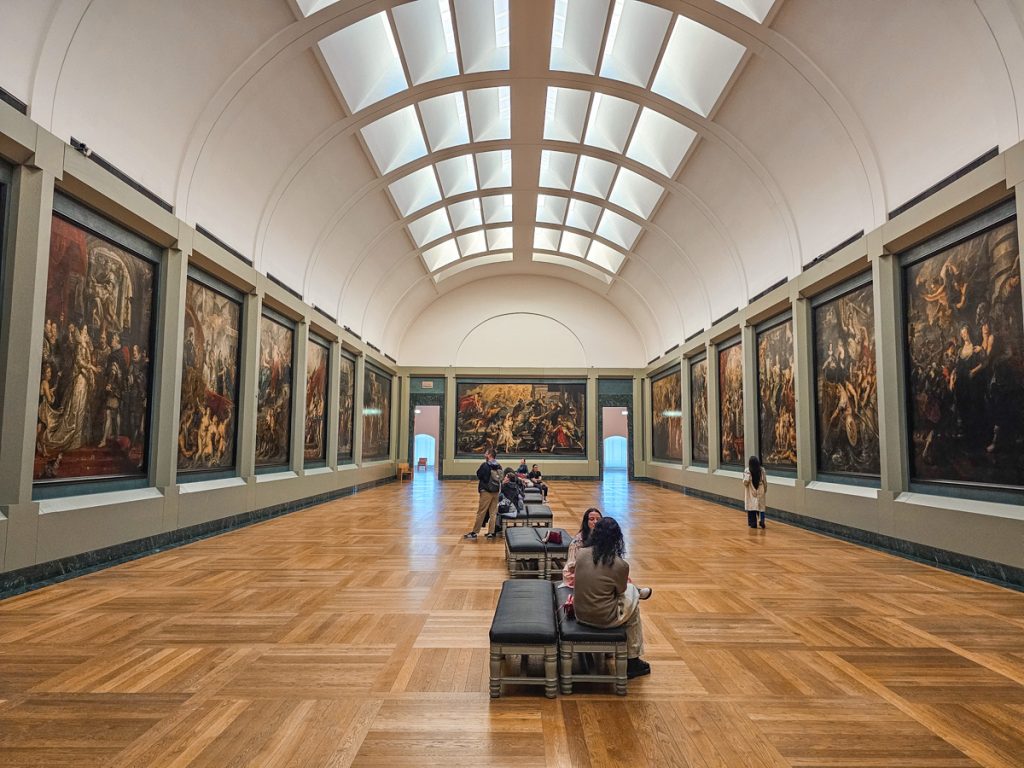
Marie commissioned the series in 1622, just after returning from exile. She was the widow of King Henri IV and the mother of Louis XIII, and her relationship with her son was, politely put, complicated. (She’s also the queen behind the creation of the Luxembourg Gardens in Paris, which she modeled after the grand palaces of her native Florence.)
These paintings were her chance to shape the narrative. Hung in chronological order, the scenes mix real events with allegory and myth, presenting an idealized version of her life and political role.
Rubens agreed to paint the entire cycle in just four years, and somehow pulled it off. There are 21 massive canvases, each around four meters tall, plus large portraits of the queen and her parents.
The scale is the first thing you notice. The second is how much motion there is everywhere, with figures, clouds, fabric, and symbols all tumbling across the walls in full Baroque force.
The gallery is incredibly pleasant to spend time in: long and airy, with natural light filtering in from above, and it’s far enough off the main Louvre circuit that many people never make it up here.
2. Medieval Louvre
Location: Sully Wing, -1 Level
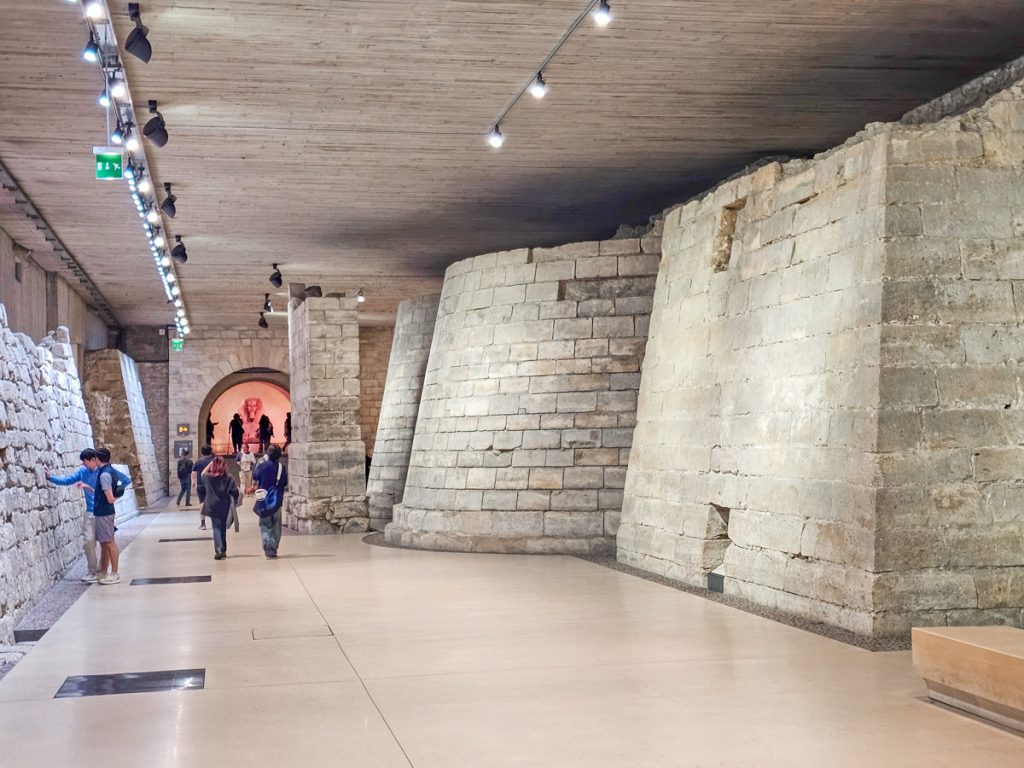
Most people think of the Louvre as a palace turned museum, and it’s easy to forget that it started as something much more practical. Hidden underground, below the main galleries, are the remains of the original medieval fortress.
The thick stone walls and moat you walk through date back to the late 1100s. Before leaving on crusade, King Philippe II ordered a fortified wall around Paris, with the Louvre built into that system, guarding the city near the Seine.
At the heart of the fortress once stood the Grosse Tour, a massive round keep that anchored the entire complex. It began as a defensive stronghold and later served as a prison and storage space for royal valuables.

By the 1300s, Paris had expanded beyond the original walls, and the Louvre’s defensive role faded. Over the next few centuries, it was transformed into a royal residence, and large parts of the medieval fortress were dismantled to make way for an Italian-style palace. Rather than being fully removed, a small bit of this underground structure was simply filled in and built over.
Today, you can walk alongside the original exterior walls, see where towers once projected outward, and step into what was once the moat surrounding the keep.

As you move through the space, look closely at the stones themselves. Small carved symbols appear throughout the walls, left by medieval stonecutters who were paid by the piece. Each mark helped track an individual artisan’s work, and many are still clearly visible today.
Because it sits underground, far from the busiest galleries, and lacks obvious visual spectacle, the Medieval Louvre is easy to overlook. Very little of medieval Paris survives at this scale, and this is one of the few places in the Louvre where the building itself is the history you came to see.
3. The Unexpected Impressionist Room
Location: Sully Wing, Level 2, Room 903

Yes, there really is a small Impressionist-era room in the Louvre, and almost no one expects to find it here.
Tucked into the upper Sully painting galleries, this quiet space holds a handful of late 19th-century works by artists like Pierre-Auguste Renoir, Camille Pissarro, and Alfred Sisley. Of course, it can’t compete with the scale of the Musée d’Orsay, but it feels like a preview you weren’t expecting to stumble into while wandering the Louvre.
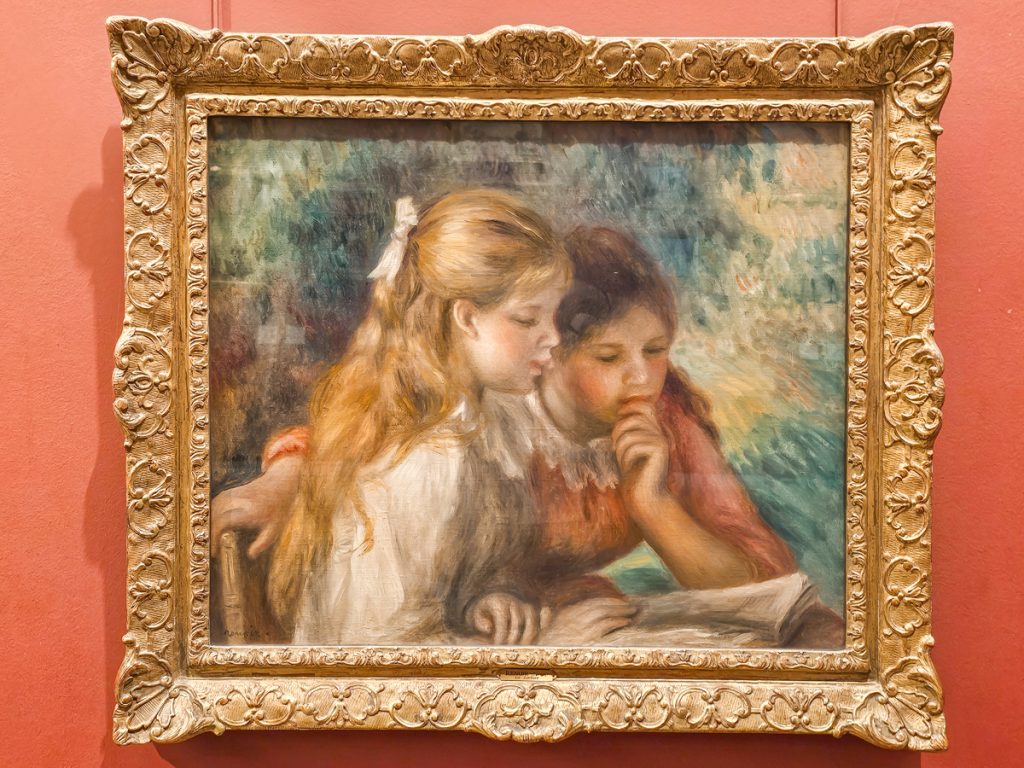
The standout here is Renoir’s La Lecture (Reading). Two young girls sit close together, absorbed in a book, completely unaware of anything around them. Renoir painted many scenes like this, often showing children reading, playing music, or quietly focused on some shared activity. The appeal isn’t just the gentleness of the brushwork, but the mood, which feels soft and intimate.
Nearby are landscapes by Pissarro and Sisley, including river and countryside scenes. It seems there’s also typically a Monet in this room, though it was removed for conservation on my last visit.

To be sure, these aren’t the blockbuster Impressionist hits people line up for elsewhere in Paris, but they’re strong works that absolutely are worth a stop in the Louvre.
4. Quiet French Painting Rooms
Location: Sully Wing, Level 2
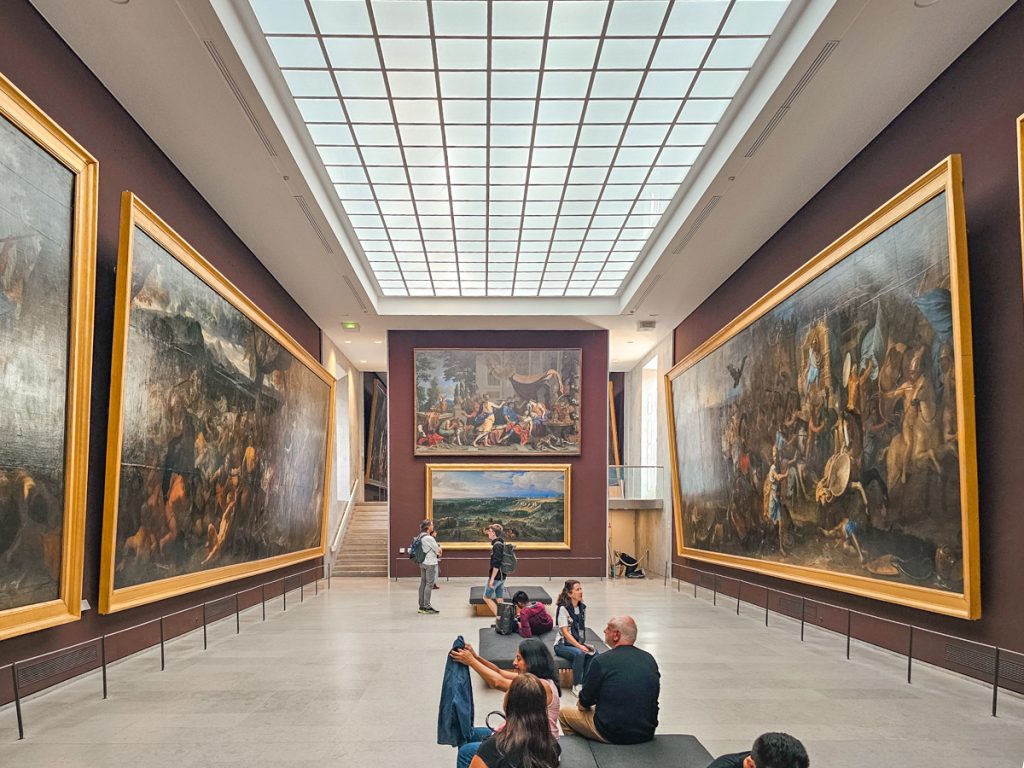
Level 2 of the Sully wing is one of the calmest parts of the Louvre. As soon as you head upstairs, the noise drops and the pace slows.
These galleries focus largely on 17th-century French painting. The rooms are smaller, the lighting is soft, and people tend to move through them quietly.
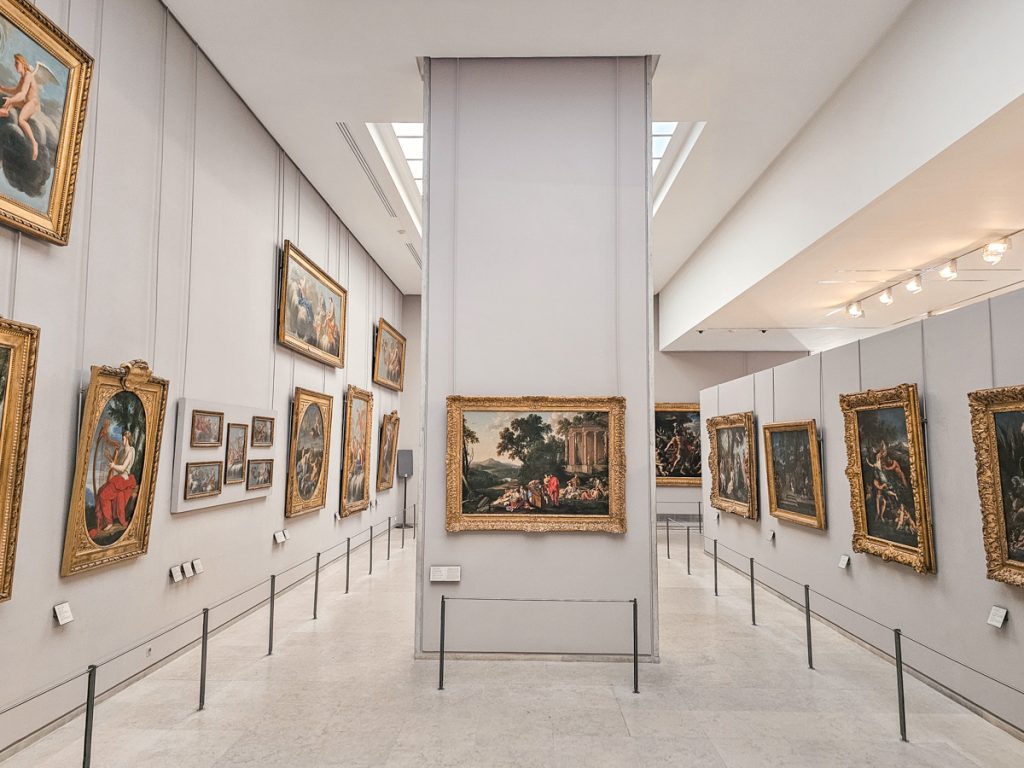
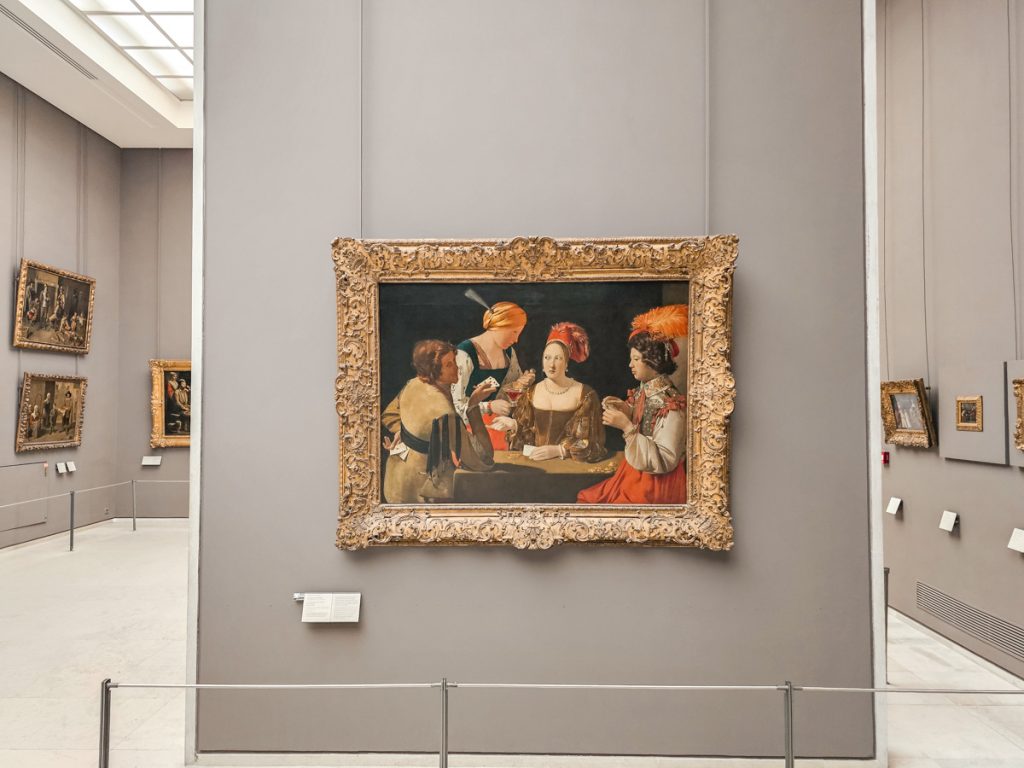
There are plenty of great works in these galleries , but I’ll highlight two here. First is The Cheat with the Ace of Clubs (Georges de La Tour, Room 912), a candlelit scene built around subtle tension and glances between figures.
Not far away is The Bather (Jean-Auguste-Dominique Ingres, Room 940), a very different work in tone, but one that fits naturally into the quiet of these upper galleries.
5. Northern European & French Paintings
Location: Richelieu Wing, Level 2
Level 2 of the Richelieu wing, like the Sully wing, is one of the most consistently uncrowded areas in the museum (Denon does not have a level 2). These galleries sit far outside the main visitor flow, which keeps them calm even on busy days.
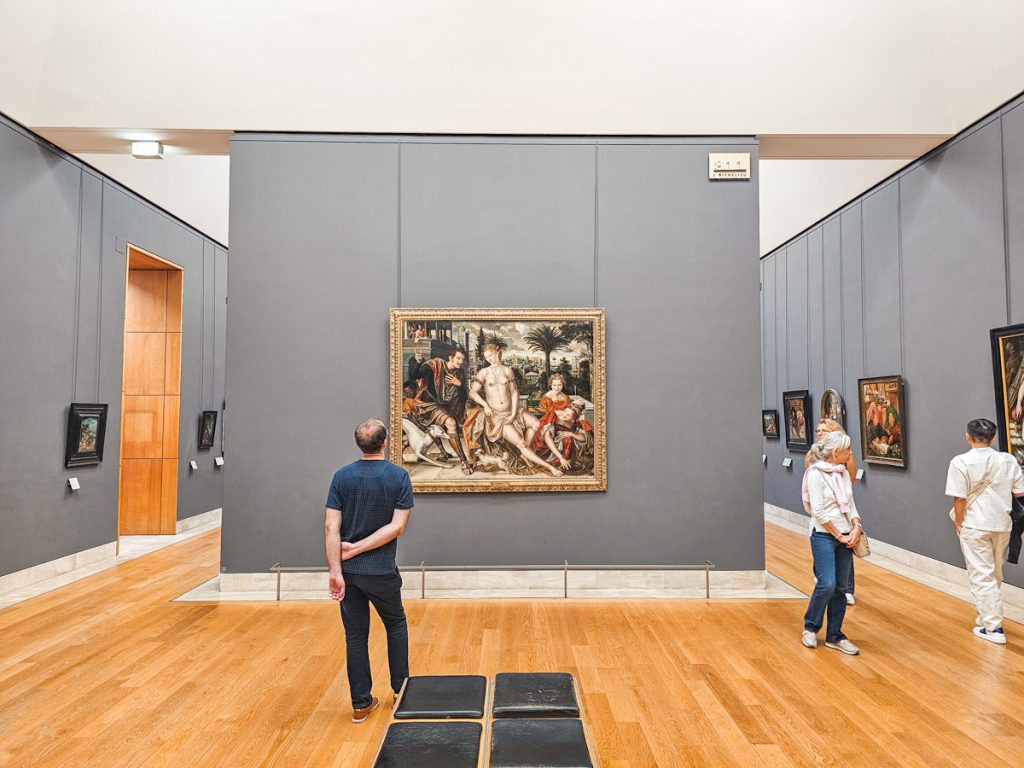
The focus here is Northern European and Flemish painting, along with a few key French works. Many of these paintings are small in scale and detail-driven, encouraging slower looking rather than quick pass-throughs.
Several standout works are easy to miss if you’re not specifically looking for them. The Moneylender and His Wife (Quentin Metsys, Room 814) and The Lacemaker (Johannes Vermeer, Room 837) are both major works here, and are similarly restrained, focused on concentration and stillness.
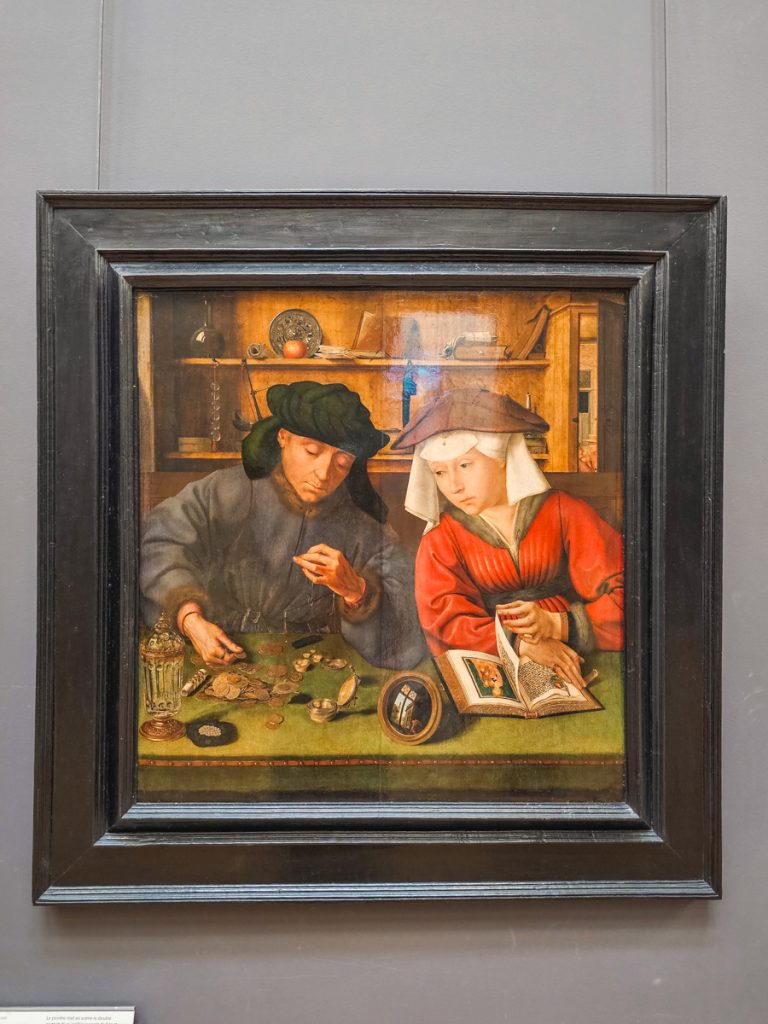
Room 844 includes Self-Portrait at the Easel and Bathsheba at Her Bath, both by Rembrandt and deeply personal works by the famed Dutch master.
6. Near Eastern Antiquities & Cour Khorsabad

Location: This area spreads between the Sully wing and Richelieu wing on Level 0, around rooms 229-307.
This is one part of the Louvre I’ve grown to really enjoy over the years – it’s not the type of art I’ve historically gravitated towards, but these rooms are calm and very impressive.

The most famous piece here is the Code of Hammurabi (which does sometimes attract a small crowd), which lays out one of the earliest known legal codes (from 1754 BC). Look closely at the surface and you’ll see how densely packed the text is, carved line after line into the stone.
Just beyond that, the Cour Khorsabad opens up into a dramatic space guarded by towering Lamassu, the winged bulls from an Assyrian palace. They’re massive, carved from single blocks of stone, and positioned exactly as they would have been originally, flanking an entrance.
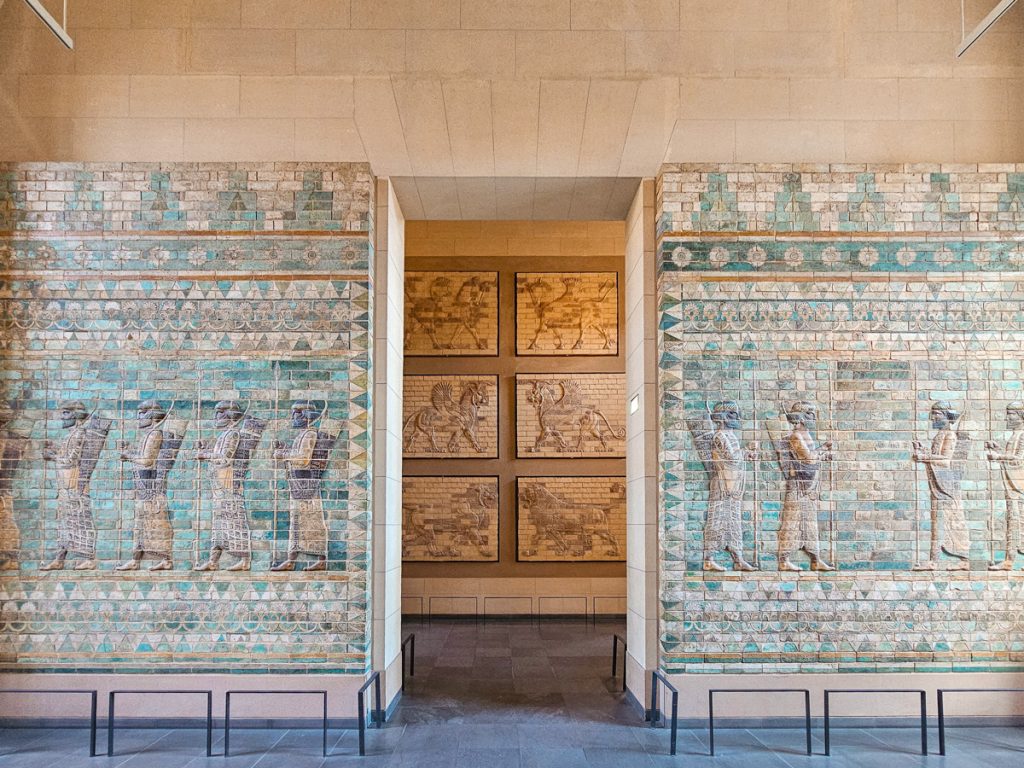
Around the courtyard and nearby galleries, the glazed friezes of archers and lions are genuinely beautiful. These are just a small sampling of the fascinating works on display in these quiet galleries.
7. Opulent Napoleon III Apartments
Location: Richelieu, Level 1, Room 544-545
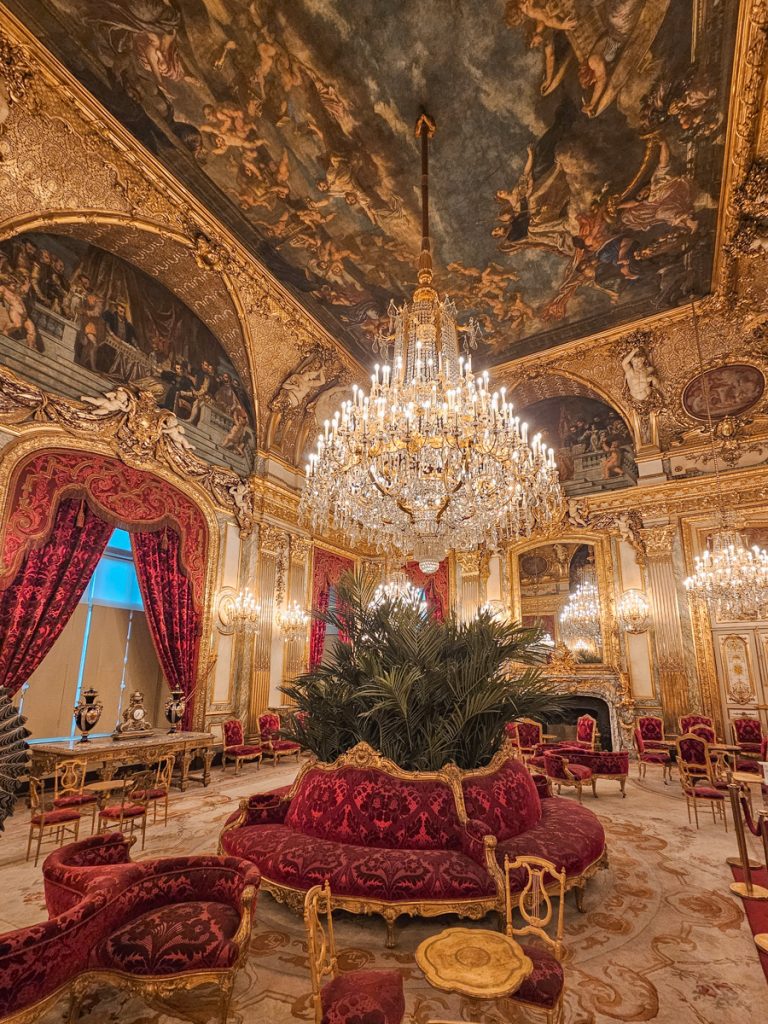
Tucked into a quieter corner of the Richelieu wing, the Napoleon III Apartments give you a rare look at how the Louvre once functioned as a place for power and entertaining, not art.
Built in the 1850s for the Minister of State under Napoleon III, these rooms were used for formal dinners, receptions, and large social events during the Second Empire.

These rooms are truly jaw-dropping, featuring gilded walls and ceilings, sparkling chandeliers, and draped in heavy fabrics. It’s also impressive how intact they are from the Second Empire – the design and décor from that time are still largely in place, so walking through almost feels like stepping back in time. It’s quite a difference from the other galleries of the Louvre, which often have a clean, crisp feel.

After the fall of the Second Empire, these apartments housed the Ministry of Finance until 1989, and have only been open to the public since the early 1990s.
Planning the Rest of Your Time in Paris?
The Louvre is just one part of a trip to Paris. If you’re continuing to plan the rest of your visit, these guides can help:
- Where to Stay in Paris – A neighborhood-by-neighborhood breakdown to help you choose the right base
- Ultimate List of Things to Do in Paris – Nearly 100 sights and experiences, from must-sees to hidden gems
- Paris Museums Guide – A practical way to decide which museums are actually worth your time
If you want everything in one place, my Paris travel guide page pulls together neighborhood guides, attraction and museum guides, foodie recommendations, and travel tips in one hub.
And if you’re feeling overwhelmed or short on time, I also offer Paris planning calls.
These one-on-one video sessions are great for getting feedback, asking questions, and sorting through options, whether you need a full plan or help fine-tuning what you already have.
