
The 8th Arrondissement of Paris: Your Guide to the Elysées Neighborhood

The 8th arrondissement, also known as the Élysée neighborhood, is one of the most upscale districts in Paris.
It doesn’t usually get the same hype as the Latin Quarter or Montmartre, but I’ve always really liked this area. It feels refined and beautiful, but also livable and residential, with quiet streets just a few blocks away from the big, monumental landmarks.
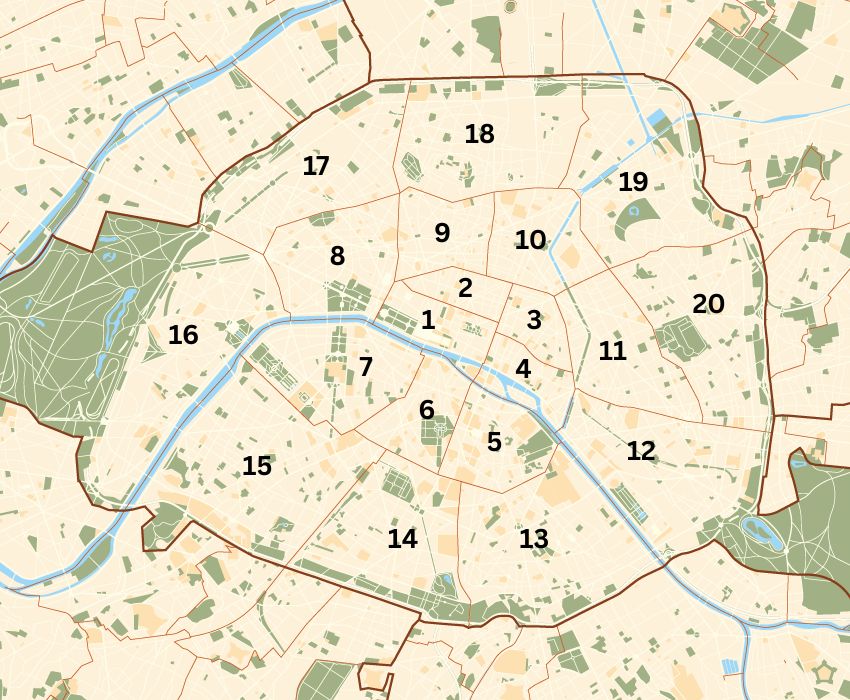
Image credit: ThePromenader CC BY-SA 3.0, via Wikimedia Commons, numbers added by me
This arrondissement is home to the Élysée Palace, where the French president lives, along with several other government buildings, major business headquarters, and flagship luxury fashion stores.
There’s also more to see and do here than people sometimes realize. Between iconic monuments, beautiful museums, elegant parks, and some of the city’s most famous avenues, the 8th has plenty to fill a day or two if you give it a chance.

Where to Stay in the 8th Arrondissement
- Splendid Etoile: Two blocks from the Arc de Triomphe
- New Orient Hotel: Located in a residential part of the 8th
- Hôtel Lancaster: Gorgeous hotel right off the Champs Elysées
Experiences to Book Ahead
- Dinner Cruise on the Seine – Intimate experience with dinner
- Galerie Dior – Ensure your spot and skip long lines
Top Sites
This first section includes the most iconic, most popular spots in the 8thth arrondissement that belong on any itinerary.
1. Place de la Concorde

Place de la Concorde is probably my favorite square in Paris – it’s elegant and grand, with incredible views in multiple directions.
It sits along Paris’s main historic axis, the straight line that runs from the Louvre through the Tuileries and up the Champs-Élysées toward La Défense. The Seine is just steps away, and the Eiffel Tower rises behind the buildings in the distance.

At the center of the square stands the 23-meter Luxor Obelisk, carved more than 3,000 years ago under Pharaoh Ramses II and weighing around 220 tons. It was brought from Egypt in the 1830s, originally as part of a pair, though only one ever made it to Paris because transporting it was such a massive undertaking.
On either side are two large fountains from the 1840s. The Fontaine des Fleuves represents France’s rivers, while le Fontaine des Mers represents its seas. The sculptures and figures decorating the fountains are tied to navigation, trade, and harvests.

As beautiful as the square is today, the history here is pretty dark. During the French Revolution, this was the main execution site, under the name Place de la Révolution. Louis XVI, Marie Antoinette, and more than a thousand others were guillotined here. The name was changed to “Concorde” in the 1800s to signal reconciliation.
2. Avenue des Champs Elysées
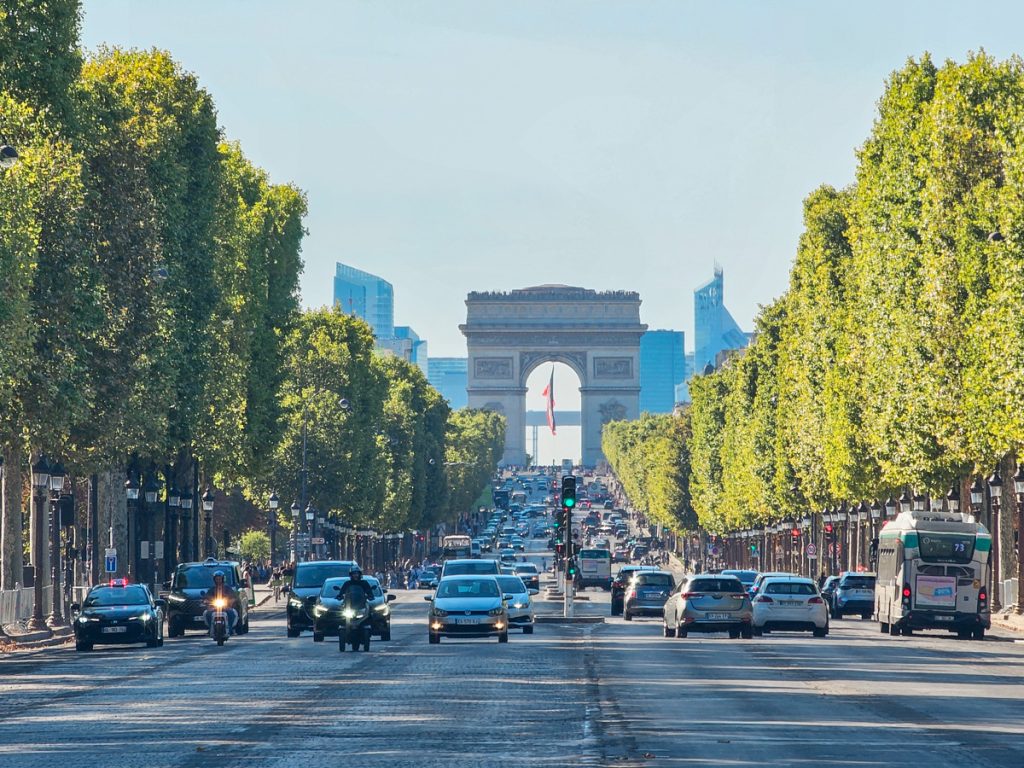
The Champs Élysées is one of the most famous avenues in the world, stretching about 1.4 miles (2.2 km) from Place de la Concorde up to the Arc de Triomphe. The name means “Elysian Fields,” a paradise for heroes of Greek mythology, and the avenue is wide, tree-lined, and designed to feel grand.
For me, this street is much more about the walking experience than the shopping. Yes, there are luxury boutiques and big-name brands, but the real highlights are the view and the vibes.

If you can, walk up toward the Arc, not away from it. The way the avenue gently rises and frames the massive Arc is one of the most iconic views in Paris. At some point, cross the street just so you can see the full perspective straight up the center.
If you don’t want to walk the entire length, metro stops are spaced along the avenue, including George V, Franklin D. Roosevelt, and Champs-Élysées–Clemenceau.
The Champs Elysées is a focal point for big celebrations in Paris. Fireworks go off over the Arc de Triomphe every New Year’s Eve, the Tour de France finishes here, and a big military parade marches down the avenue every 14 July.
If you’re in Paris on the first Sunday of the month, the Champs has a completely different feel. From about 11am–5pm, most of the avenue closes to cars and opens to pedestrians.

People stroll down the middle of the street, locals come out to enjoy it, and the whole atmosphere feels lighter and more festive. Just double check the dates before you go, since some months this event is on the 2nd or 3rd Sunday instead of the 1st.
3. Arc de Triomphe
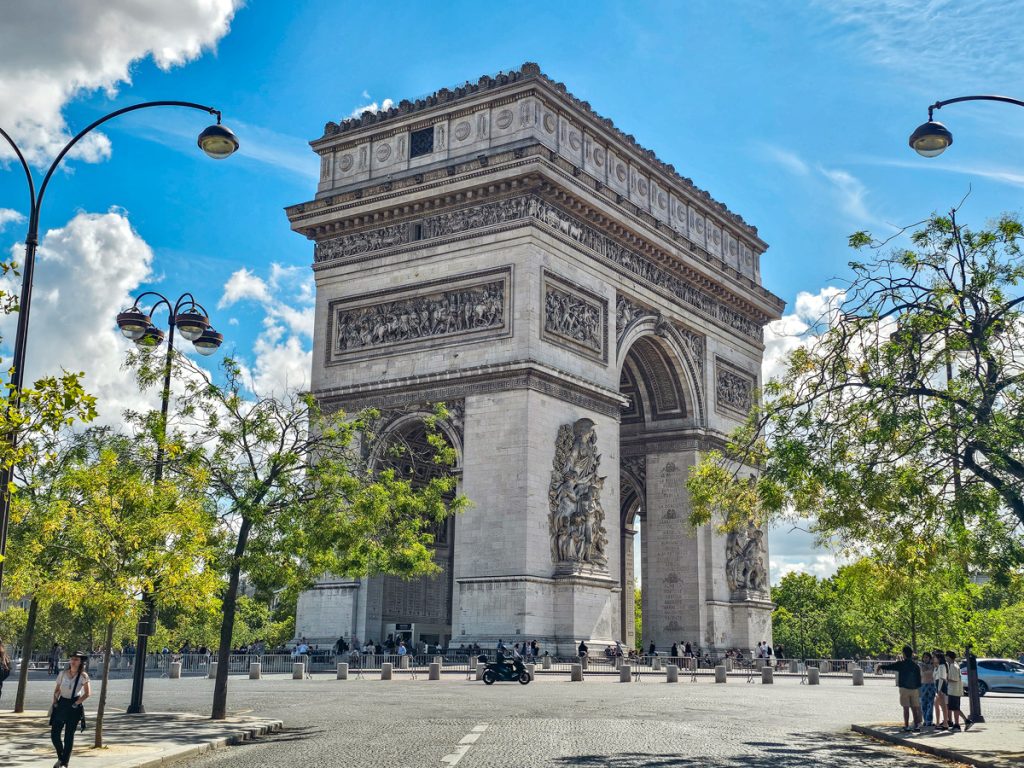
The Arc de Triomphe sits at the end of the Champs Elysées and at center of Place Charles de Gaulle, also called Place de l’Étoile. “Étoile” means star, which makes sense when you realize 12 grand avenues radiate out from the monument in every direction.
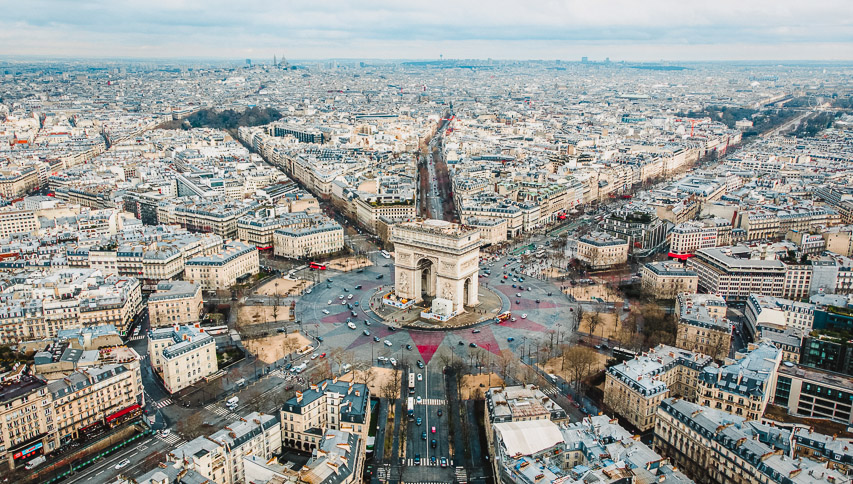
An enormous roundabout circles the arch, and it’s… an experience. Traffic technically follows the “priorité à droite” rule, meaning you yield to the driver on your right, but from above it mostly looks like semi-controlled chaos.
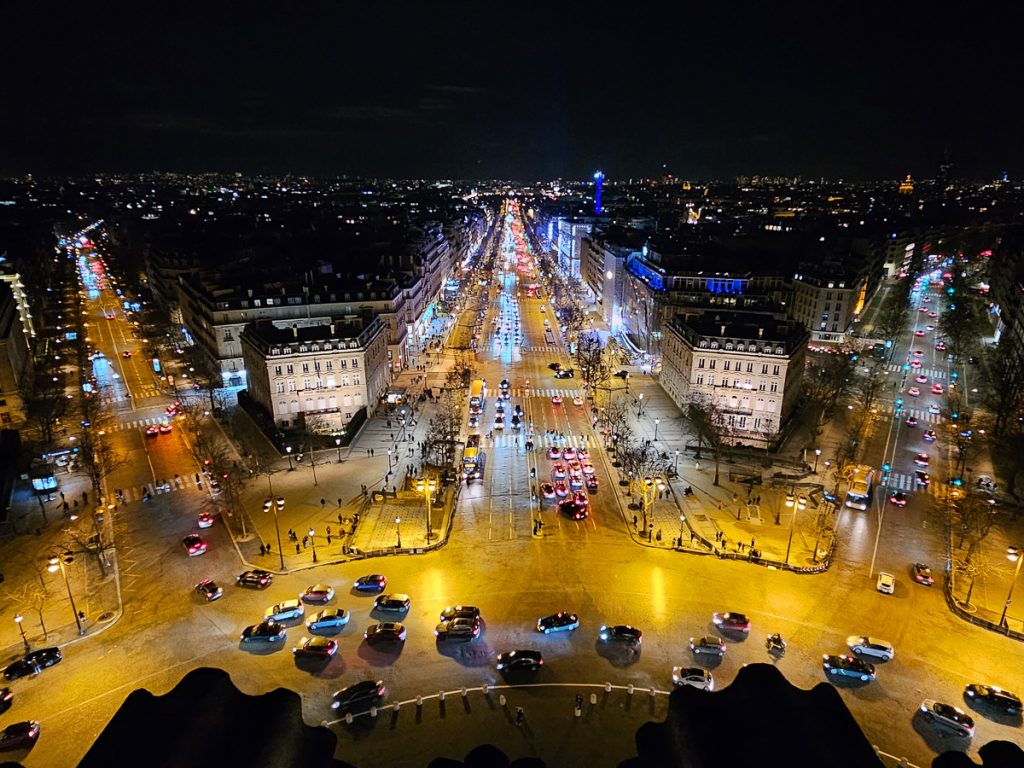
Napoleon commissioned the Arc de Triomphe in 1806 to honor France’s armies, though it wasn’t completed until 1836, long after he was gone. Beneath the arch is the Tomb of the Unknown Soldier, honoring the 1.4 million French soldiers who died in World War I. An eternal flame is rekindled here each evening.

You can climb the spiral staircase to the top for some of the best views in Paris. It’s one of my favorite spots to see the Eiffel Tower, especially at night when it sparkles every hour on the hour.
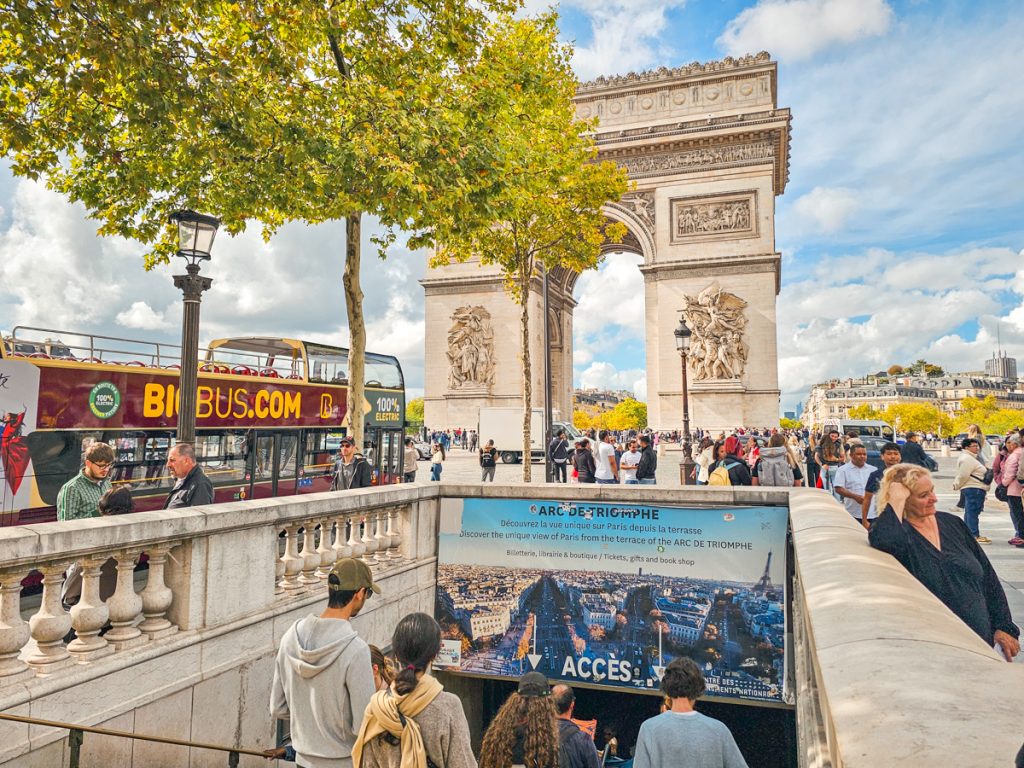
Important tip: don’t try to cross the street at ground level. There are no crosswalks leading directly to the arch. Instead, use the underground pedestrian tunnel, either from the top of the Champs-Élysées or from Avenue de la Grande Armée on the opposite side, to safely reach the monument.
4. Pont Alexandre III
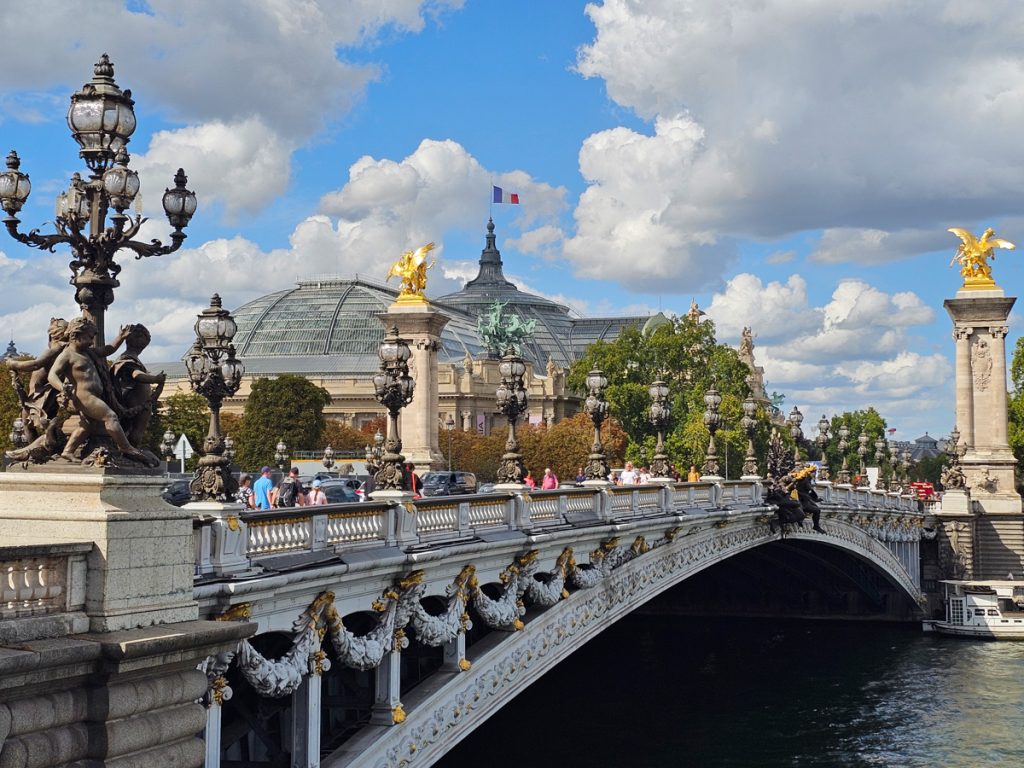
Pont Alexandre III connects the 8th and 7th arrondissements, linking the Grand Palais and Petit Palais on the Right Bank to Les Invalides on the Left. If you’re walking between those areas, this is the bridge you want to take.
The Alexandre III is ornate and intricate, and easily the most beautiful bridge in Paris. It was built for the 1900 Paris Exposition to commemorate the Franco-Russian alliance and was named after Tsar Alexander III. It’s been a designated monument historique since 1975.

The style is Beaux-Arts, with elegant Art Nouveau lampposts and four massive corner pillars topped with gilded winged horses that represent Science, Arts, Commerce, and Industry.
This is certainly a bridge in Paris worth going out of your way to walk across.
5. Bateaux Mouches

A Bateaux-Mouches cruise along the Seine is one of the easiest ways to see a lot of Paris without much effort. Boats depart from the Pont de l’Alma area in the 8th arrondissement and pass many of the city’s biggest landmarks, including the Louvre, Musée d’Orsay, and Notre Dame.
The standard sightseeing cruise lasts about an hour. You can sit or stand along the railings while an intercom describes what you’re passing. I especially like doing this early in a trip to get your bearings.
They also run 3-hour evening dinner cruises, that serve you a multi-course meal as the city lights come on. Passing the Eiffel Tower while it sparkles from the river is one of those classic Paris moments.
👉Book ahead your spot on the Seine dinner cruises here
Worth a Visit
The next section of this list includes attractions that are not quite as iconic or popular as the Top Sites. I’d call these “mid-range attractions” that are still important sites and worth a stop if you have the time.
6. Grand Palais
The Grand Palais sits right along the Seine next to the Pont Alexandre II, and was built for the 1900 Universal Exposition. It’s a massive exhibition hall with a pretty iconic steel-and-glass dome that you can spot from all over this part of the city.

There are several gallery spaces inside that host rotating temporary exhibitions, each with its own ticket and entrance. But you don’t actually need a ticket to step into the main entrance off Square Jean Perrin.
From there, you can buy tickets, or just pause to admire the Grand Nef. It’s often closed off unless there’s a public event happening, but you can usually see into it from the room next door and get a sense of the scale and design from underneath.

The real free highlight is the Rotonde d’Antin. You can walk right in and look up at the detailed plaster ceilings, gold accents, and mosaic floors. It’s stunning.

And if you’re in Paris from mid-December to mid-January, the entire Grand Nef turns into a giant ice skating rink, an unforgettable experience during Paris’s Christmas market season.
7. Petit Palais

The Petit Palais is a fine arts museum directly across from Grand Palais, and like its larger neighbor, it was built for the 1900 Universal Exposition. Even if you didn’t go inside, the building itself would catch your attention, especially the huge, ornate doorway.
Inside, the sculpture gallery is the real attraction. It’s a grand, arched space, and many of the sculptures are plaster casts from the 1800s that were used for monuments and decorations around Paris.
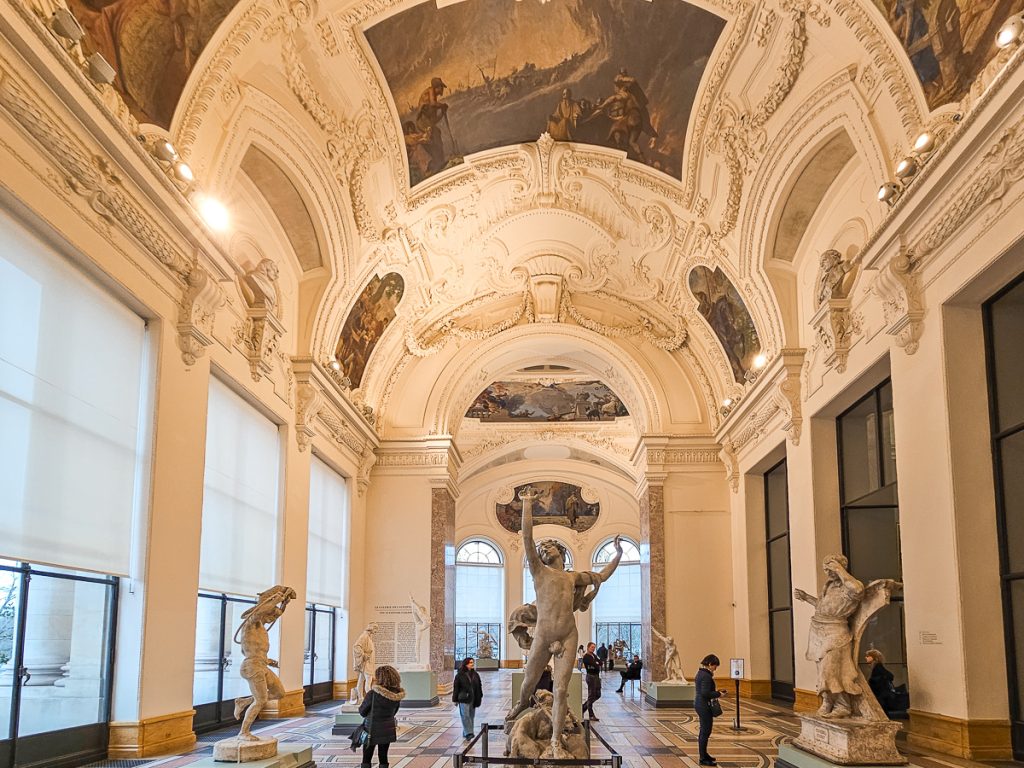
The museum also has a great lineup of paintings and decorative arts. You’ll see names like Monet, Cézanne, Rembrandt, Rubens, and Rodin scattered throughout, along with some really lovely large-scale works and tapestries.

Make sure you step into the interior courtyard before you leave. The small garden and café tucked inside feel like a little escape from the busy street outside.
And the best part is that this is one of the several free museums in Paris, which makes this one of the easiest art stops to add to your time in the 8th.

8. Galerie Dior

Galerie Dior is a fascinating Parisian museum dedicated to Christian Dior and the fashion house he built, and honestly, it’s so impressive even if you’re not into haute couture.
The exhibits walk you through Dior’s life and upbringing, the early days of the brand, and the launch of the “New Look,” which completely changed postwar fashion. But the real draw is the dresses themselves. The museum goes out of its way to present them as works of art, and the rooms are designed to match.


For example, one space is entirely filled with white pieces. Another is dark, set against a Paris skyline, with black gowns on display. There’s even a floral-themed room where dresses inspired by flowers are tucked into little coves.
At the center of the building is the now-iconic white staircase, rising four stories and lined from top to bottom with miniature gowns, shoes, bags, and accessories arranged in a descending rainbow. It’s a showstopper.

Overall, this gallery is visually jaw-dropping, and everyone I know who has visited has raved about it.
At the end, there’s Café Dior. The desserts are beautifully designed and very on-brand… and they come with designer-level prices.
Definitely try to reserve a timed ticket a couple weeks in advance for Galerie Dior, as the museum regularly sells out. You can queue for same-day entry, but you may wait a while, and later afternoon arrivals sometimes don’t get in at all.
9. Haute Couture & Luxury Fashion
The 8th arrondissement is also where Paris’s high fashion world really lives.
In the heart of the neighborhood is the Golden Triangle, or Triangle d’Or, which is the area bordered by Avenue Montaigne, Avenue George V, and the Champs-Élysées. This is where you’ll find flagship boutiques from houses like Dior, Chanel, Saint Laurent, Louis Vuitton, and more.
Avenue Montaigne in particular is known for couture. Christian Dior opened his house here after World War II, and many major fashion brands followed. Even if you’re not shopping, it’s interesting to walk through and see the window displays and storefronts.
Rue du Faubourg Saint-Honoré is another important street, home to Hermès, Cartier, and many other heritage brands, just steps from the Élysée Palace.
Hidden Gems
Definitely off the beaten tourist path, this section highlights other charming places to discover in the 8th.
10. La Madeleine Church
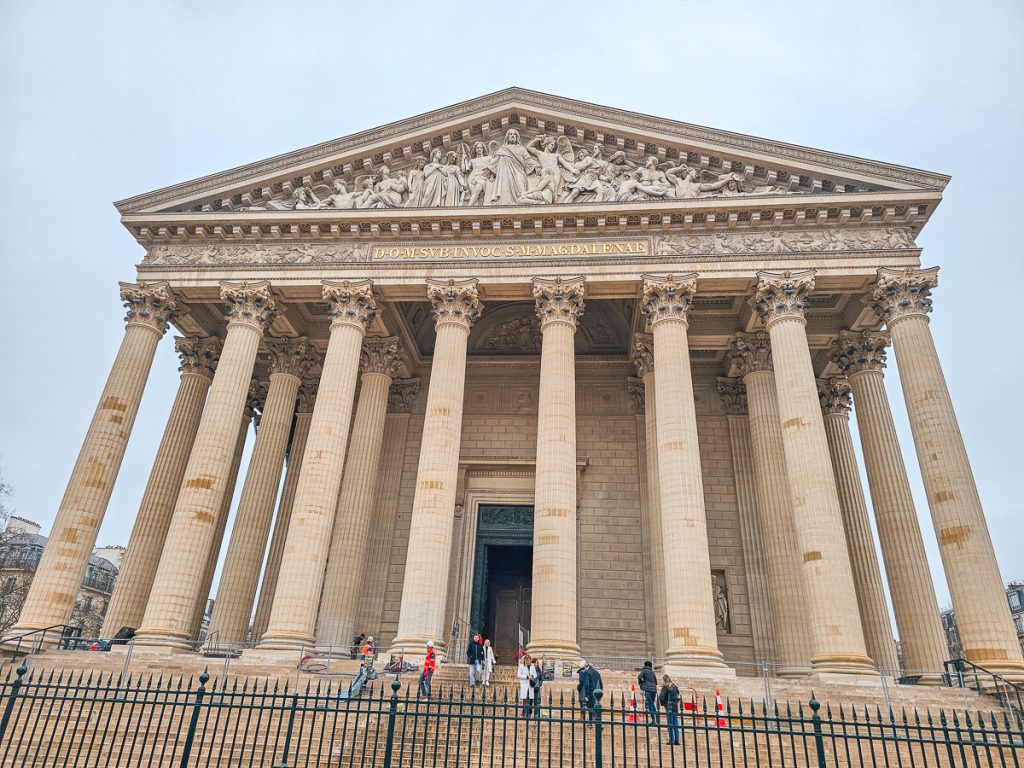
La Madeleine sits just steps from Place de la Concorde, a little removed from the Tuileries to Champs-Élysées axis. Even with that prime location, it’s far less crowded than other Parisian churches like Notre Dame or Sacré-Cœur.
From the outside, it doesn’t look like a typical church at all. With 52 massive Corinthian columns wrapping all four sides, it resembles an ancient Greek temple more than anything you’d expect in Paris.

Inside, however, the style is Baroque, with domes, dramatic frescoes, and large sculptures and embellishments. It’s absolutely beautiful, and very different from the clean, columned exterior.
King Louis XV first commissioned the church in the mid-1700s, but construction stalled during the French Revolution. When Napoleon came to power, he redesigned it in a strict Neoclassical style as a monument to the glory of his armies.
After his fall in 1814, those plans were scrapped, and it was eventually completed as a Catholic church in 1842.
12. Musée Jacquemart-André
The Musée Jacquemart-André is a magnificent 19th-century mansion in a very residential part of the 8th. It belonged to wealthy artist Nélie Jacquemart and her banker husband, Édouard André, and together they created their “art palace,” showcasing their extensive art collection.

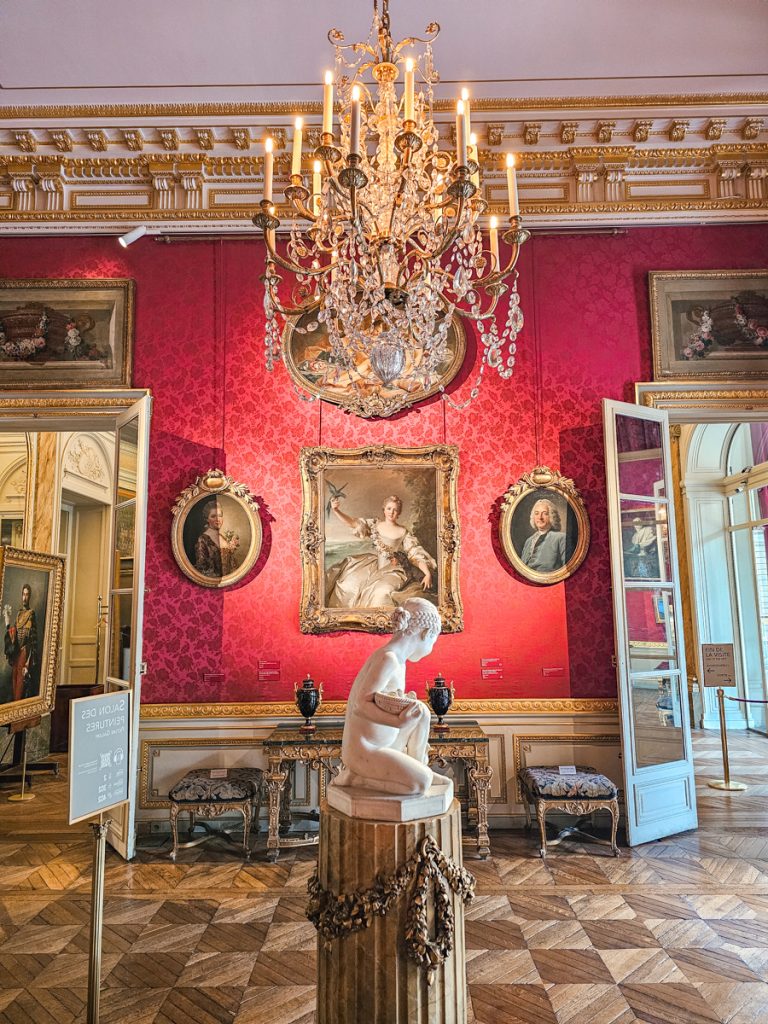

The visit takes you through their former reception rooms and private apartments, all incredibly decorated and intentionally designed to show off their collection. Most of the art is incorporated into the design of the home, but there are a few rooms upstairs that read more like a “museum gallery.”
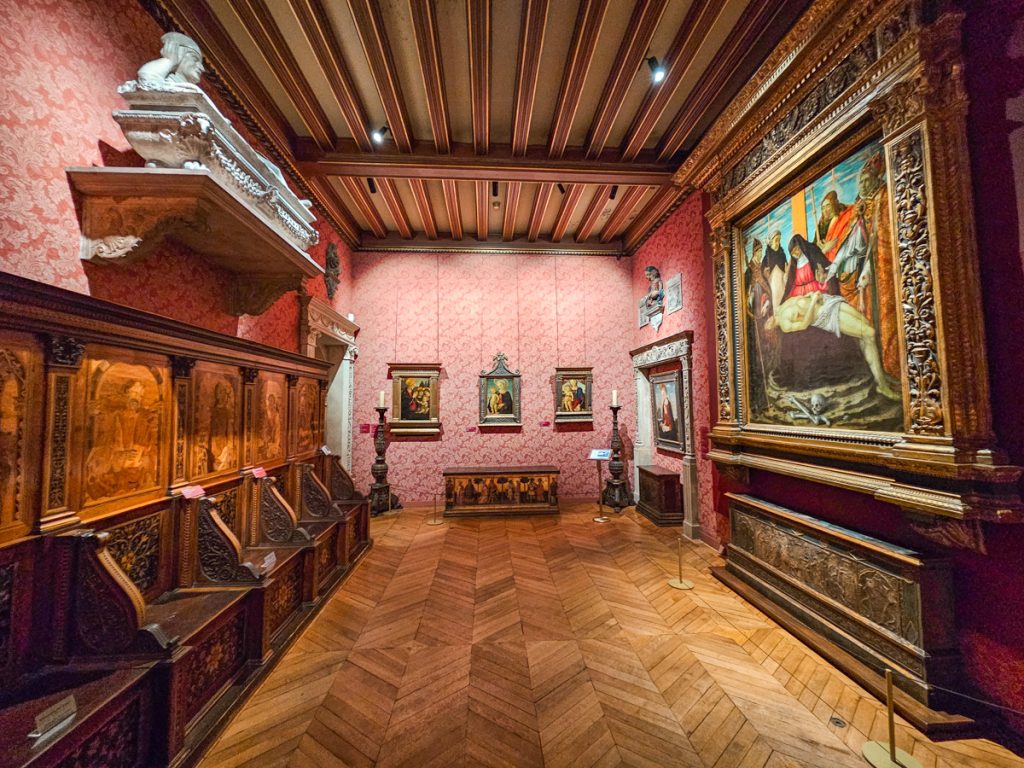

You’ll pass through ornate salons with gilded ceilings, an elegant winter garden lined with marble columns and plants beneath a glass roof, and a grand staircase that feels straight out of a period drama.
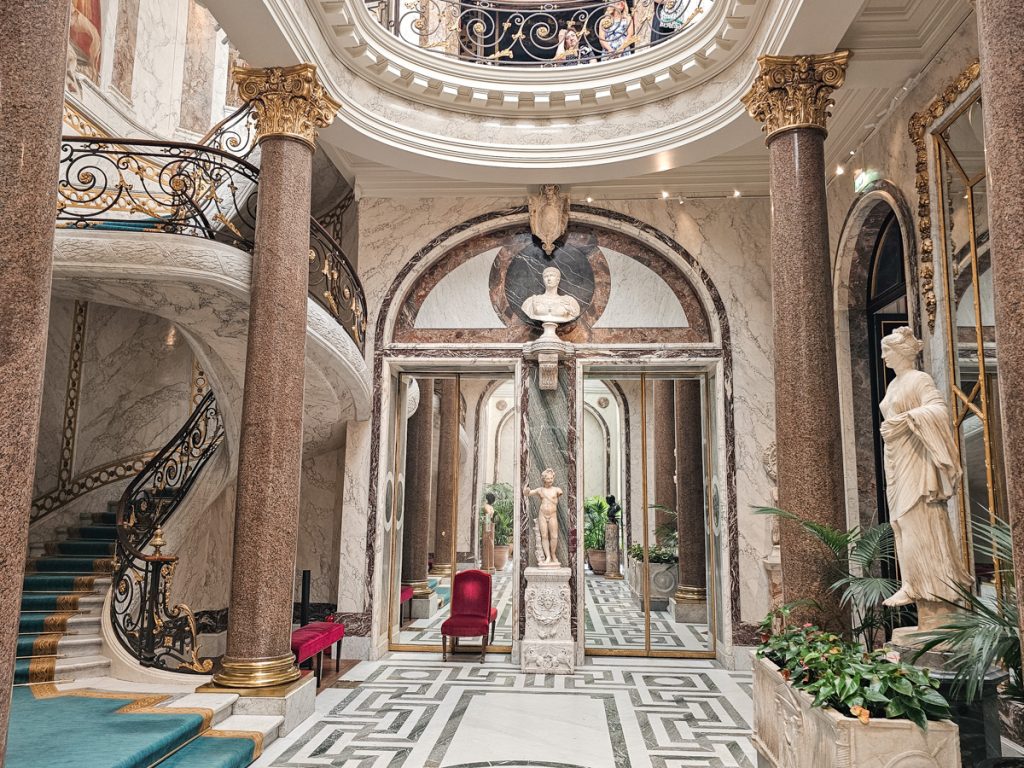
I loved this gorgeous house museum, and it’s easily one of my favorite hidden gems in Paris. (Especially since it was quiet and almost completely empty even in the height of high season).
13. Parc Monceau

Parc Monceau is one of my favorite parks in Paris. I lived just down the street when I spent a semester in Paris, and I came to this park all the time. I completely fell in love with it back then, and I’m still so happy every time I come back.
Monceau is in a very residential part of the 8th and feels more local than bigger-name gardens like Tuileries or Luxembourg. It was originally laid out in the 1700s as a place to surprise and delight visitors with unexpected, whimsical features tucked throughout.
A lot of the original over-the-top elements are gone now, but you still get that sense that something interesting might be around the next bend.
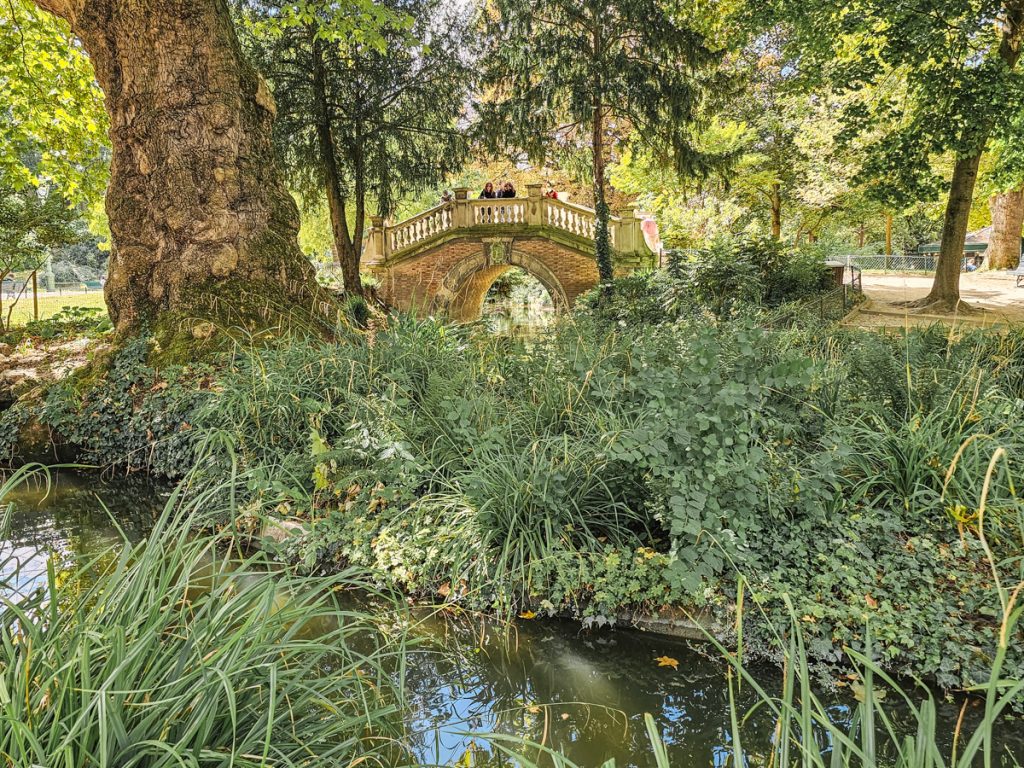
The most recognizable spot is the pond, draped in willows and framed by a curved colonnade. The rest of the park is a mix of open lawns (usually full of people), wide walking paths, statues scattered throughout, a small arched bridge, a carousel and puppet house, and a grand rotunda at the entrance.
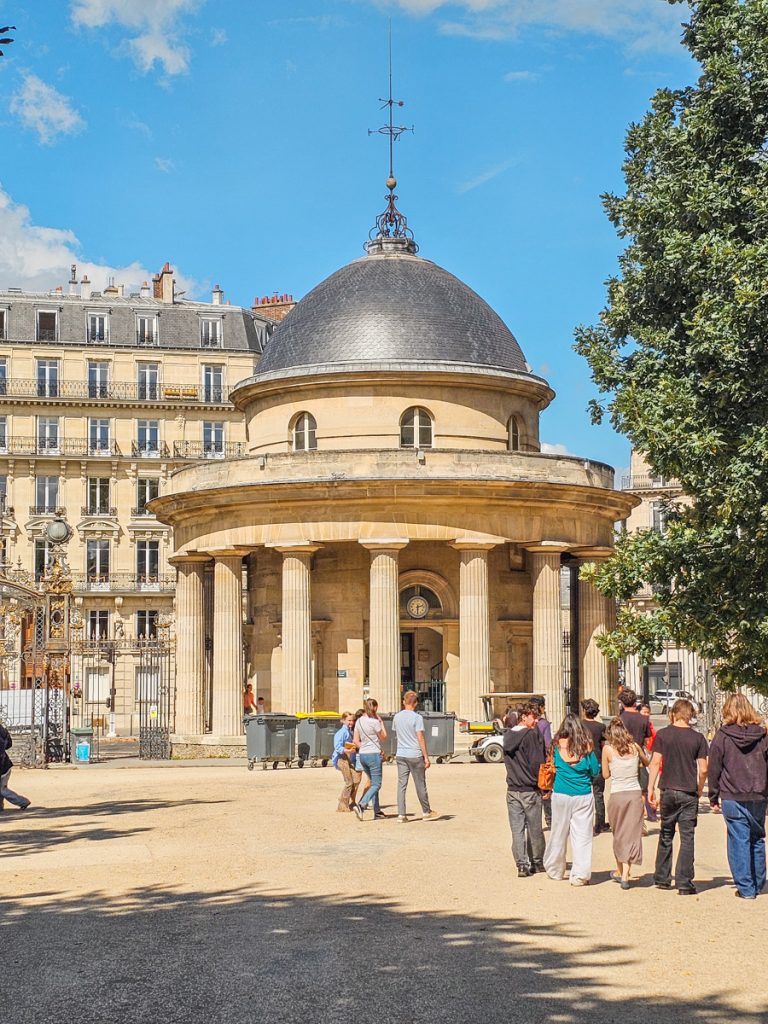

And while the wrought iron and gold-tipped fence and all the little features give the park a very stately and elegant look, the overall feel of the park is laidback and relaxed.
14. Hotel de la Marine
Hotel de la Marine is an impressive historical building facing Place de la Concorde. Originally, it served as the “Garde-Meuble Royal,” where the king’s furniture for his many palaces was managed. This responsibility and proximity to grandeur meant the residence was decorated like a palace.


Today, you can tour through the sumptuous rooms decorated in the 1700’s, learning about their history and use.
Of course, all the rooms are beautiful, but the ballroom is truly breathtaking, with intricate, golden details and ornamentation covering the walls and ceiling, and beautiful chandeliers hanging from the ceiling.

Even though Hotel de la Marine is in many ways as sumptuous and ornate as Versailles, it remains a hidden gem in Paris (at least for now – the museum only opened to the public very recently, in 2021).
Where to Stay in the 8th Arrondissement
These are 3 great hotels I’d recommend in this neighborhood:
- Splendid Etoile: Two blocks from the Arc de Triomphe (technically just barely out of the 8th), some rooms have views of the Arc and/or Eiffel Tower
- New Orient Hotel: Charming boutique hotel located in a residential part of the 8th, away from tourists
- Hôtel Lancaster: Gorgeous luxury hotel with beautiful architectural details, right off the Champs Elysées
Map of 8th Arrondissement Attractions
Key:
*Red stars: top sites
*Orange stars: mid-range sites
*Purple stars: hidden gems
*Black beds: recommended hotels
If you click the star right next to my name, the map will save to your Google account for you to access later.
Want to Explore More Paris Neighborhoods?
Check out my other detailed Paris neighborhood guides:
- 1st Arrondissement: Your Ultimate Guide to Paris’ Central Neighborhood
- 2nd Arrondissement: Your Guide to Paris’s Smallest Neighborhood
- Le Marais: A Complete Guide to Paris’s 3rd and 4th Arrondissements
- Paris’s 5th Arrondissement: A Complete Guide to the Latin Quarter
- Saint Germain: Your Complete Guide to Paris’s 6th Arrondissement
- 7th Arrondissement: Your Guide to the Eiffel Tower Neighborhood
- Your Ultimate Guide to Montmartre: A Self-Guided Walking Tour
And if you’re feeling overwhelmed or short on time, I also offer Paris planning calls.
These one-on-one video sessions are great for getting feedback, asking questions, and sorting through options, whether you need a full plan or help fine-tuning what you already have.
