
25 Beautiful & Overlooked Churches in Paris Worth Visiting Beyond the Famous 3

When you think of beautiful churches in Paris, Notre-Dame, Sainte-Chapelle, and Sacré-Cœur are probably the first three that come to mind. And for good reason! They’re all incredible and absolutely deserve a visit.
But Paris has SO much more to offer beyond these famous edifices, and that’s what this list is all about. I honestly cannot get over how many magnificent churches are scattered throughout the city.
It really has been one of my favorite parts of exploring Paris, and I’ve discovered some truly spectacular places that most visitors probably don’t even know exist.
These are 25 of my favorites, all of which I’ve personally visited and photographed.
The Most Famous Churches in Paris After the Big 3
The first section of this list covers some of the more important and historically significant churches in Paris. These are major landmarks in their own right, but they don’t get anywhere close to the same attention as Notre-Dame, Sainte-Chapelle, or Sacré-Cœur. I’ve generally found them to be fairly quiet, despite their incredible architecture and history.
In the second section, we’ll get into some of the true hidden gem churches in the city.
1. Saint-Étienne-du-Mont

Located just behind the Panthéon, Église Saint-Étienne-du-Mont is one of the most unusual churches in Paris, and one of my personal favorites. Built between the late 1400s and mid-1600s, it combines Flamboyant Gothic and Renaissance architectural styles.
The interior has gleaming white stone walls and soaring vaulted ceilings, but the real highlight is the elaborate stone rood screen, the only surviving example in Paris.
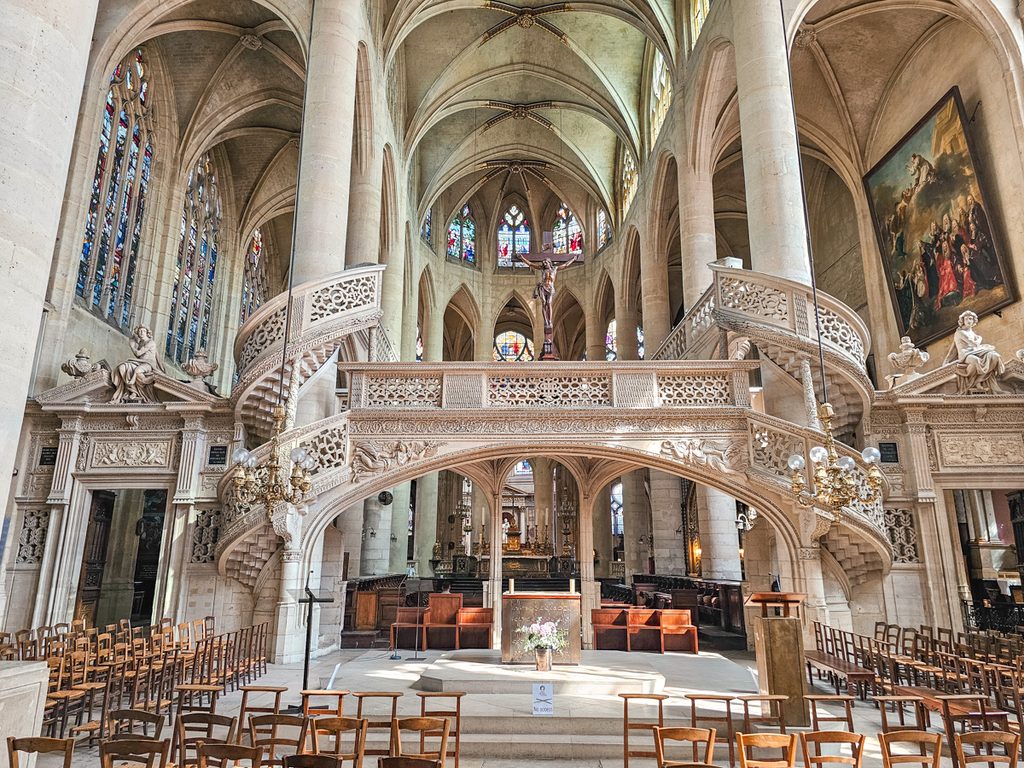
Dating to around 1530, the rood screen separates the nave from the choir and was once used as a platform for reading scripture to the congregation. These screens were common in medieval churches, but most were removed in later centuries to give worshippers a clearer view of the altar.

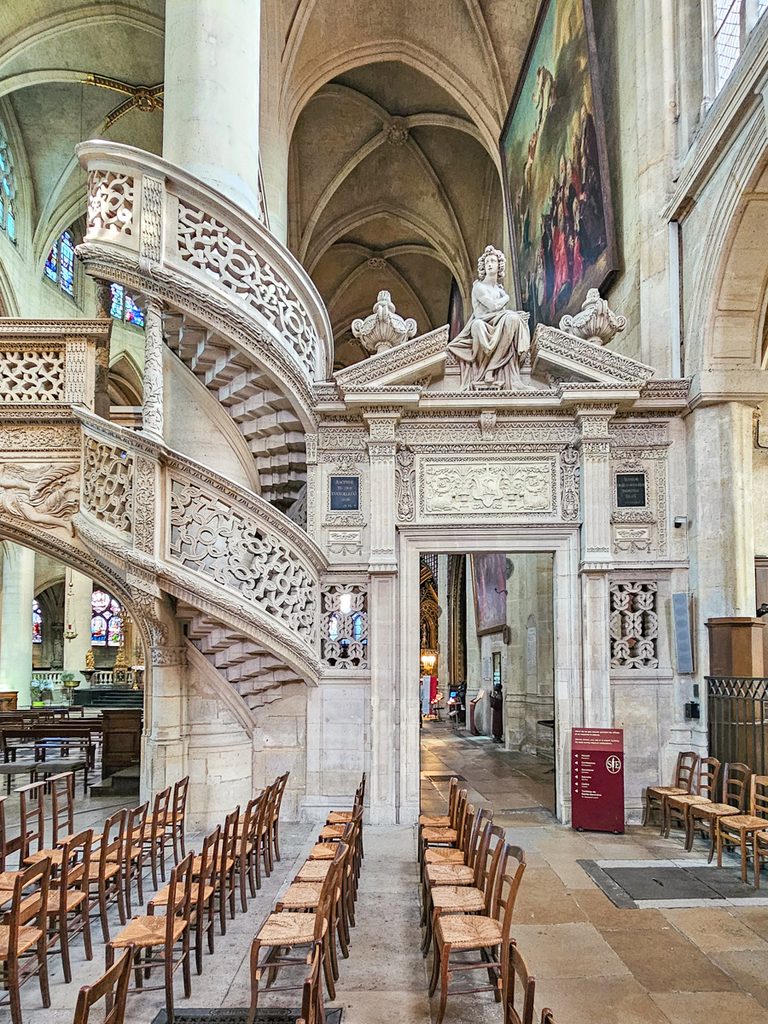
What makes this one particularly spectacular are the two spiral staircases wrapping around the columns on either side, with intricate stone carvings that almost look like lace.
There are several other features worth looking for as you explore the church:
- Saint Geneviève’s shrine: Dedicated to the patron saint of Paris, the shrine contains a fragment of her original tomb.
- Chapel of Communion: This chapel has vibrant 17th-century stained glass windows displayed at eye level, allowing you to examine their intricate details up close.
- Other Historic tombs: The church is the burial place of mathematician and philosopher Blaise Pascal and playwright Jean Racine.


Address: Place Sainte-Geneviève, 5th arrondissement
2. Saint-Sulpice

Saint-Sulpice is one of the largest churches in Paris and is a major landmark of the 6th arrondissement. Built primarily in the 17th and 18th centuries, it combines Baroque and classical architecture, with a distinctive Neoclassical facade featuring two stacked rows of columns between its towers.
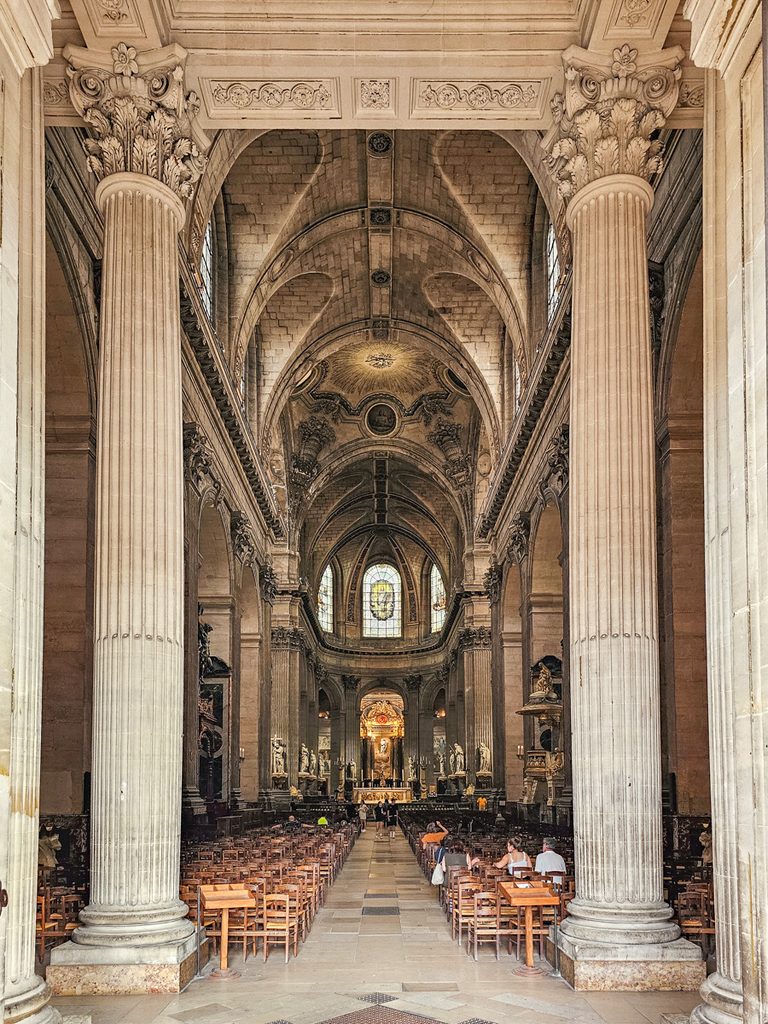
The enormous scale of the church is immediately apparent inside, with massive Corinthian columns lining the nave, and large paintings and sculptures decorating the walls and side chapels.
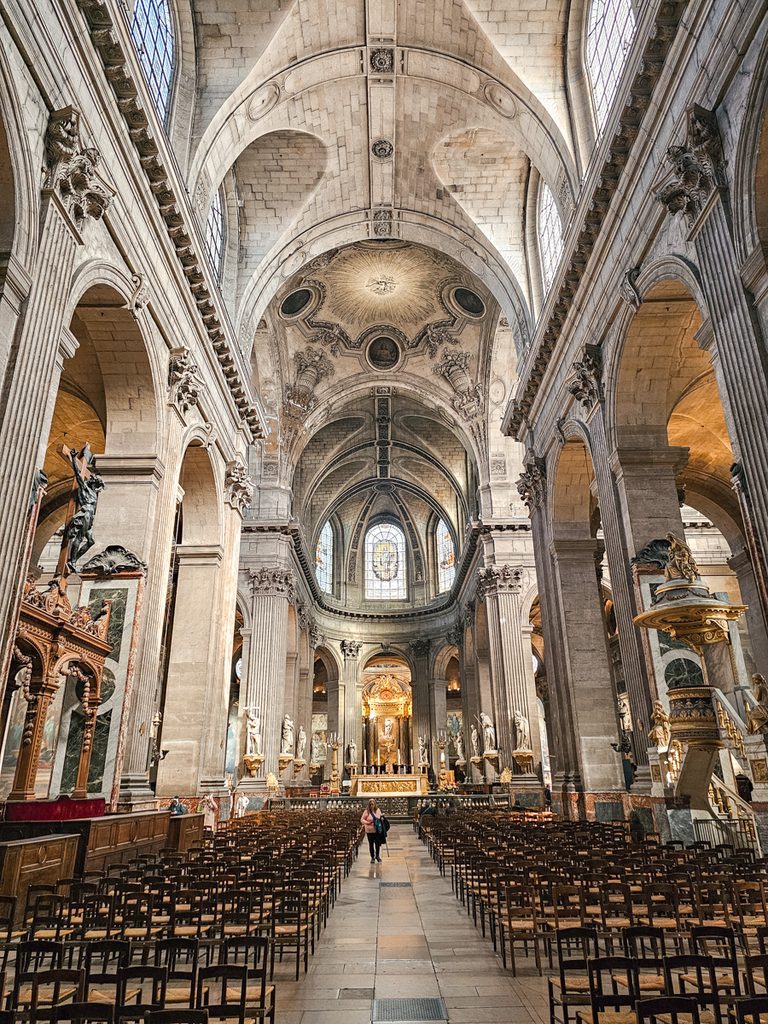
Don’t miss the Chapel of the Holy Angels, which contains three monumental works by French painter Eugène Delacroix, including Jacob Wrestling with the Angel.
Another unusual feature is the 18th-century gnomon, a brass line embedded in the floor and an obelisk used to track the sun’s movement and help calculate the date of Easter.

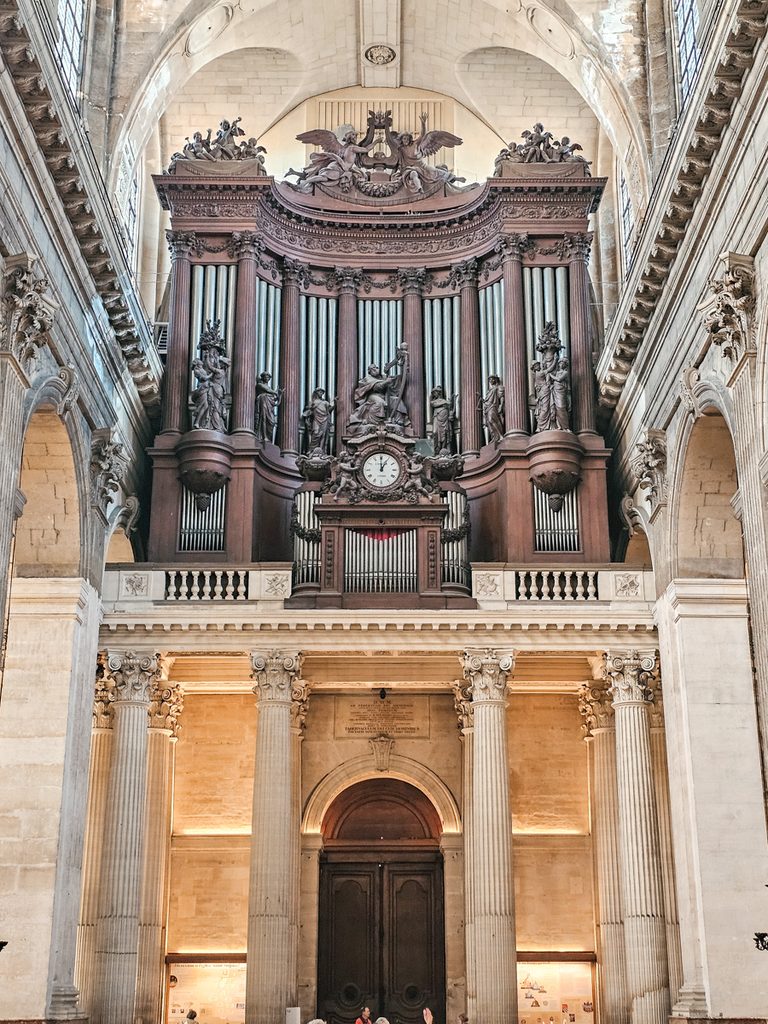
Saint-Sulpice is also famous for its magnificent Cavaillé-Coll pipe organ, completed in 1862, with more than 6,000 pipes. Some of the world’s most renowned organists have played here, including Charles-Marie Widor and Marcel Dupré.
You can hear the organ for free on Sundays, with performances typically scheduled before the 11 a.m. Mass or at 4 p.m. Check the schedule beforehand, but if you can time your visit to hear the organ playing, I highly recommend it.
Address: 2, Rue Palatine, 6th arrondissement
3. La Madeleine
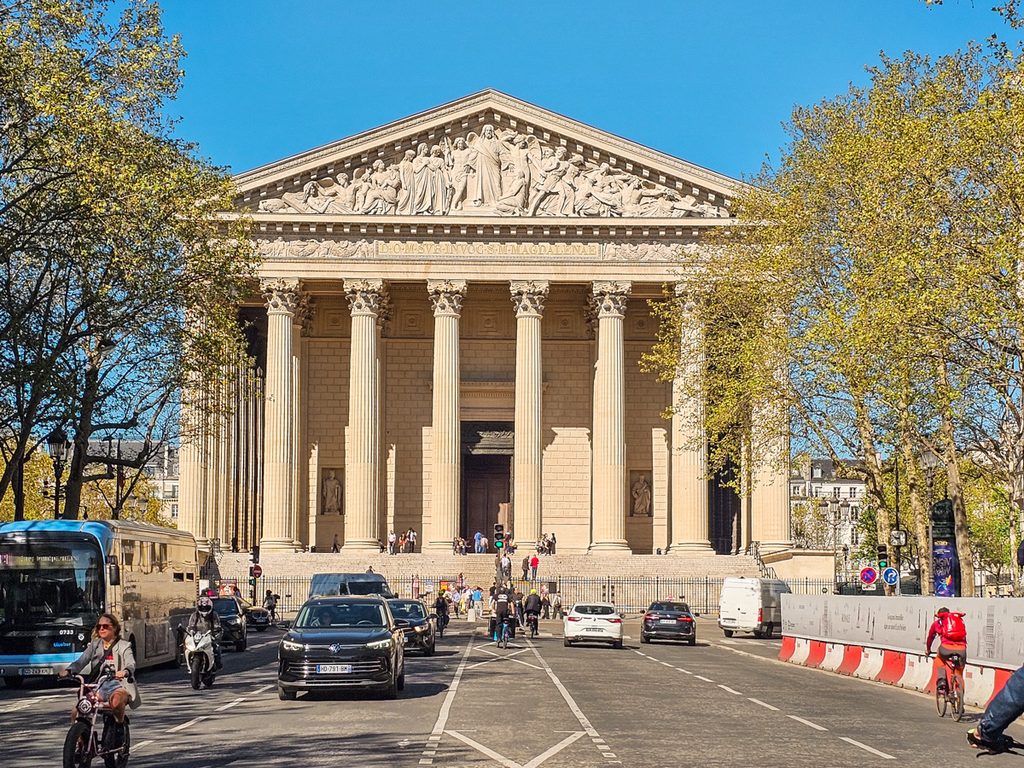
La Madeleine sits just north of Place de la Concorde, at the end of the grand Rue Royale. From the outside, it doesn’t look like a typical church at all. With 52 massive Corinthian columns wrapping around all four sides, it looks like an ancient Greek temple, without even a bell tower or cross.
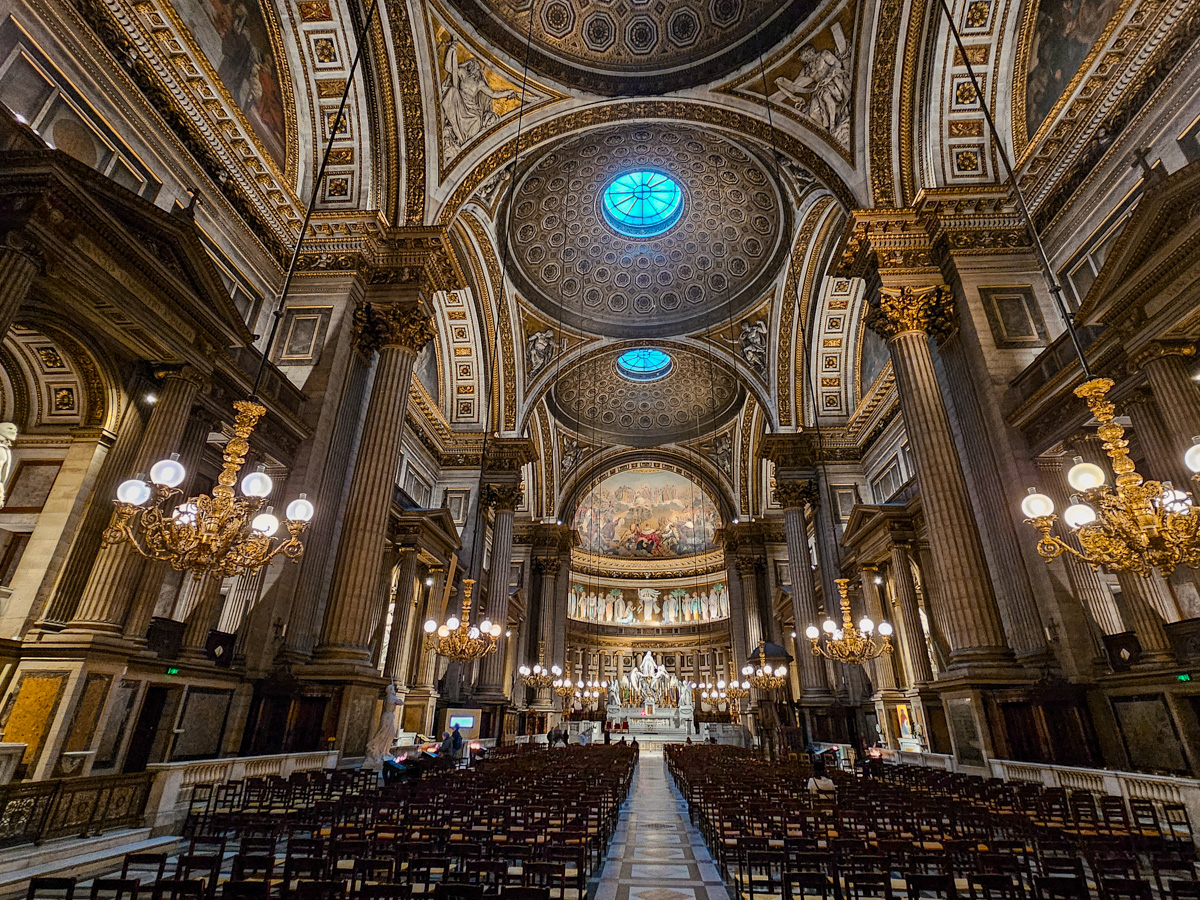
Inside, the church is almost shockingly ornate, with three enormous domes, intricately decorated ceilings, colorful marble columns, gilded details, and large sculptures. The focal point is the altar area, where a dramatic sculpture of Mary Magdalene being carried to heaven by angels sits beneath an enormous fresco.
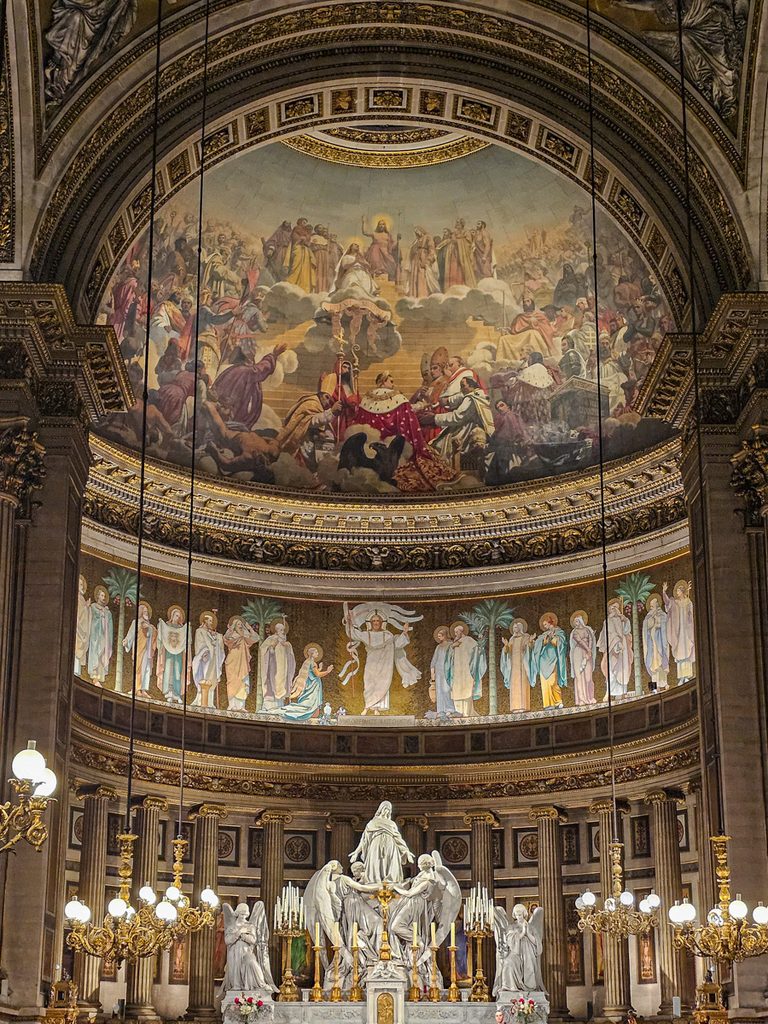
King Louis XV first commissioned the church in the mid-1700s, but construction stalled during the French Revolution. In 1806, Napoleon ordered it redesigned in a strict Neoclassical style as a monument to the glory of his armies.
After Napoleon’s fall, the plans changed again, and La Madeleine was eventually completed as a Catholic church in 1842.
Address: Place de la Madeleine, 8th arrondissement
4. Saint-Germain-des-Prés
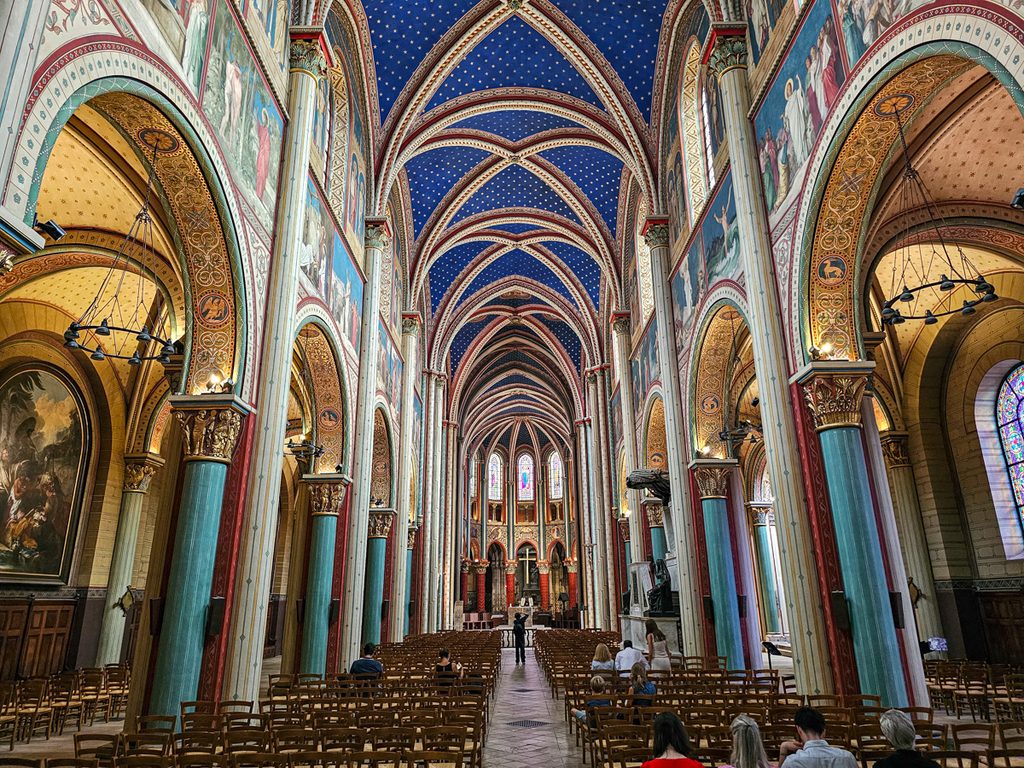
Église Saint-Germain-des-Prés is one of the oldest churches in Paris and has been at the center of the Saint-Germain neighborhood for nearly 1,500 years.
It’s an important example of Romanesque architecture in Paris, with rounded arches, thick stone columns and some Gothic elements added over the centuries.
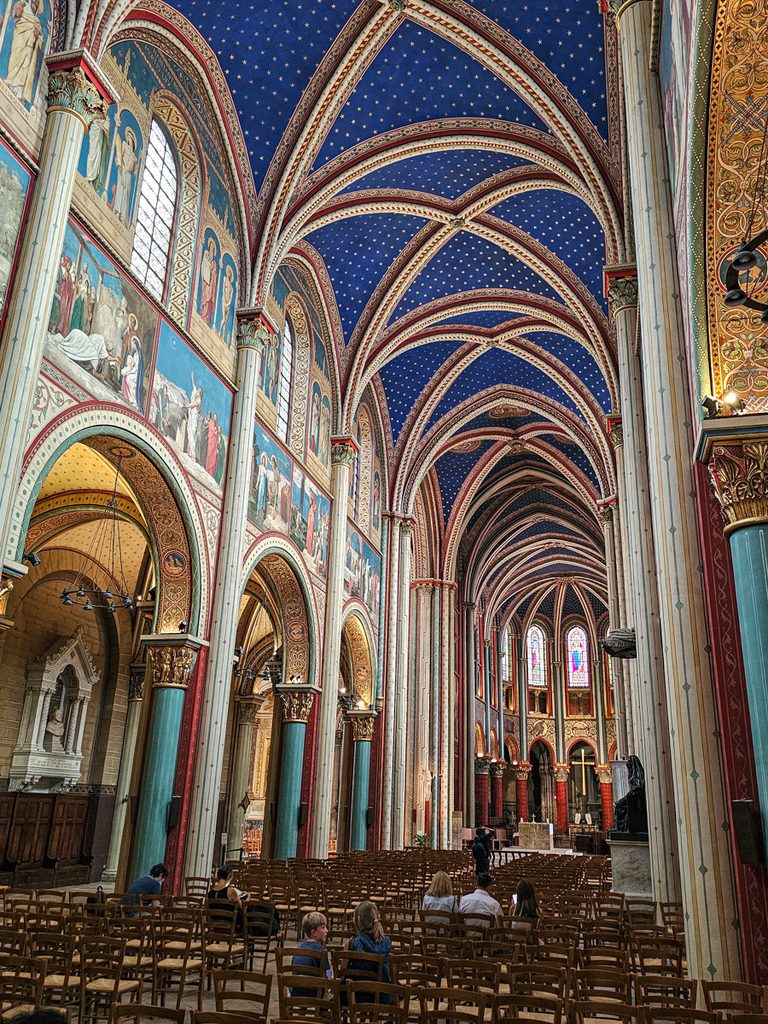
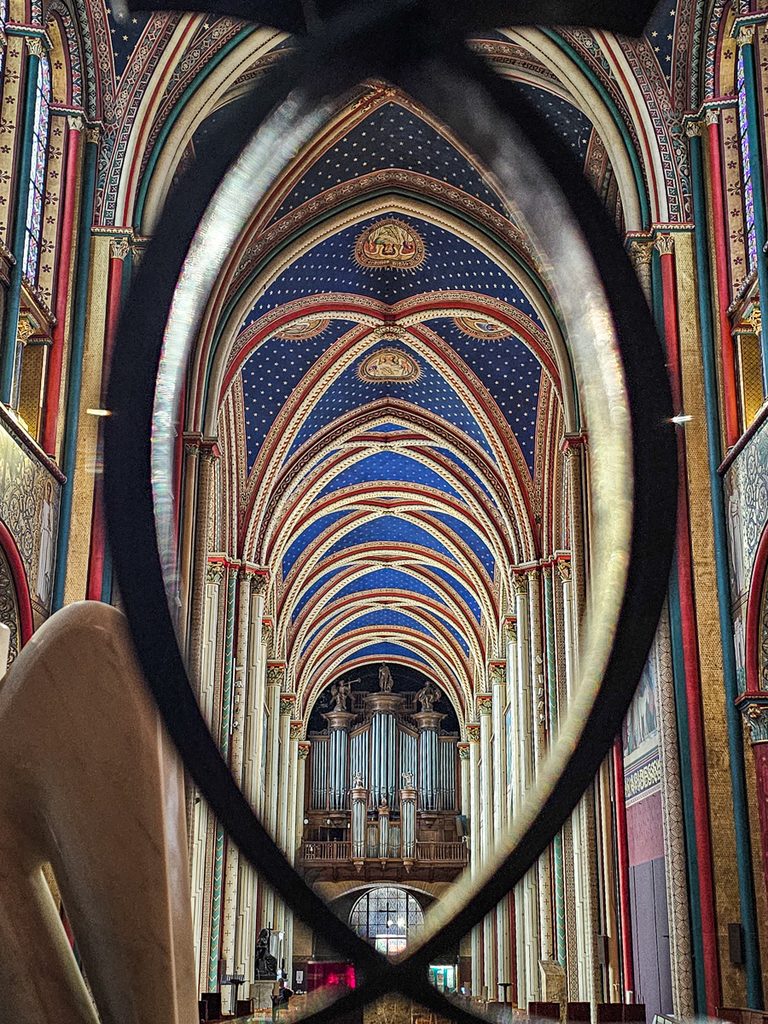
During the French Revolution, the church was badly damaged and nearly demolished. It underwent a major restoration and redecoration in the 1800s, which gave it the incredibly colorful interior you see today.
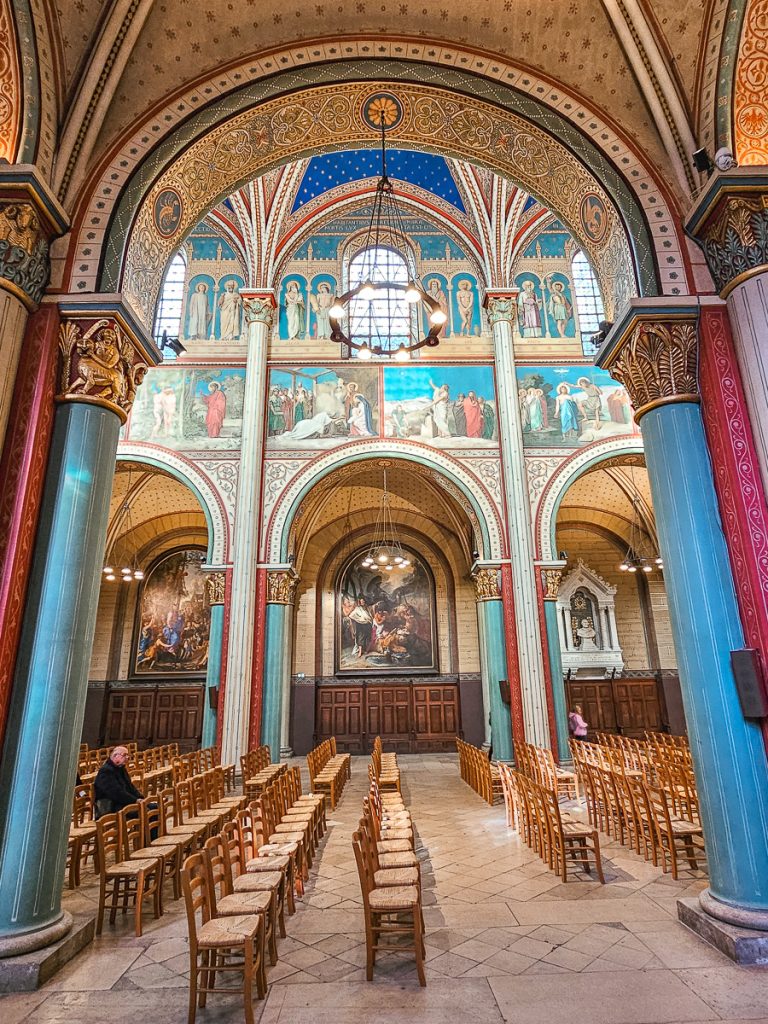

The nave ceiling is painted deep blue and covered in gold stars, while the arches and columns are painted in different colors and covered in geometric patterns. Large murals by French painter Hippolyte Flandrin cover the walls, depicting scenes from the Bible.
It’s one of the most colorful churches I’ve visited in Paris. The vibrant interior is pretty jaw-dropping when you first walk in!
Address: 3, Place Saint-Germain des Prés, 6th arrondissement
5. Saint-Paul-Saint-Louis
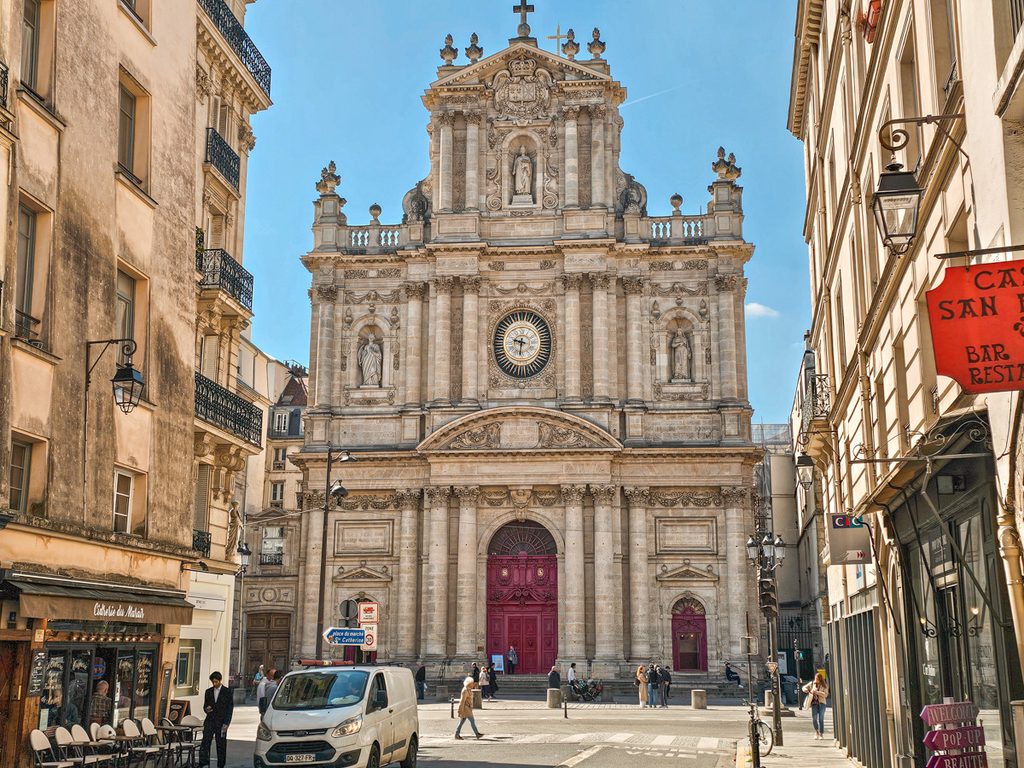
Located in the Marais, Église Saint-Paul-Saint-Louis was one of the first major churches in Paris to break completely from the traditional Gothic style and embrace the new Baroque architecture coming out of Italy.
Built by the Jesuits between 1627 and 1641, the church was inspired by the Church of the Gesù in Rome, with an elaborate facade featuring multiple levels of Corinthian columns, sculptures and decorative carvings.


Inside, the church has a grand, open nave with soaring arches and a massive dome rising 55 meters (180 feet) overhead. It was one of the earliest large church domes built in Paris and helped influence later churches, including Les Invalides.
The church also contains several notable works of art, including Eugène Delacroix’s Christ in the Garden of Olives.
Interestingly, the church was originally called Saint-Louis. The name Saint-Paul was added in 1802 to commemorate a nearby medieval church that was destroyed during the French Revolution.
Address: 99, Rue Saint-Antoine, 4th arrondissement
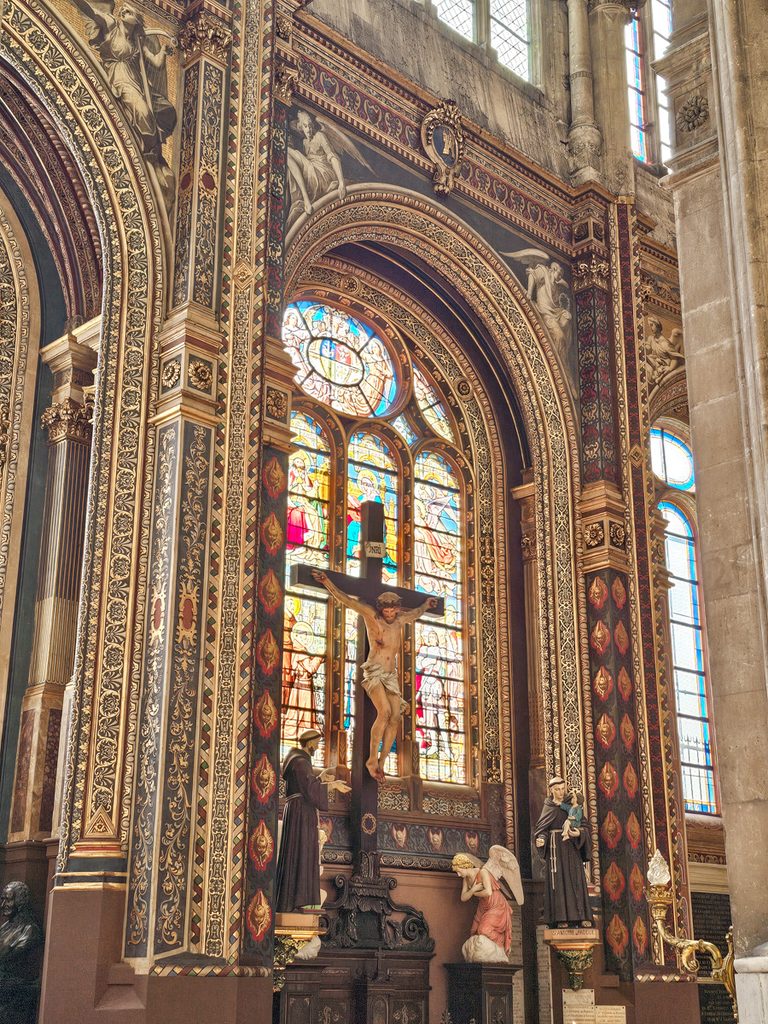
6. Saint-Eustache
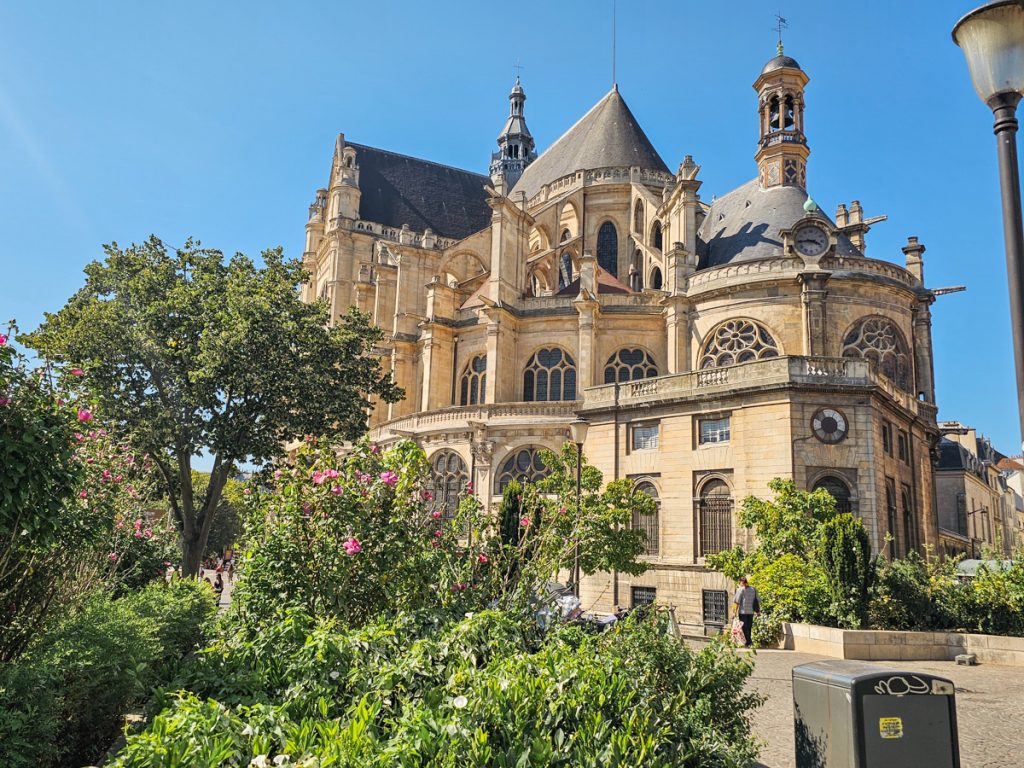
Saint-Eustache sits just behind Les Halles and is one of the largest churches in Paris. Built between 1532 and 1634, it’s mainly Gothic in style with some Renaissance and classical decorative details.
The church really is enormous, with dramatic flying buttresses visible from the gardens of Les Halles. The soaring vaulted ceilings are actually higher than those of Notre-Dame, with massive columns, intricate stonework, gilded details around the chapels and beautiful stained glass windows.
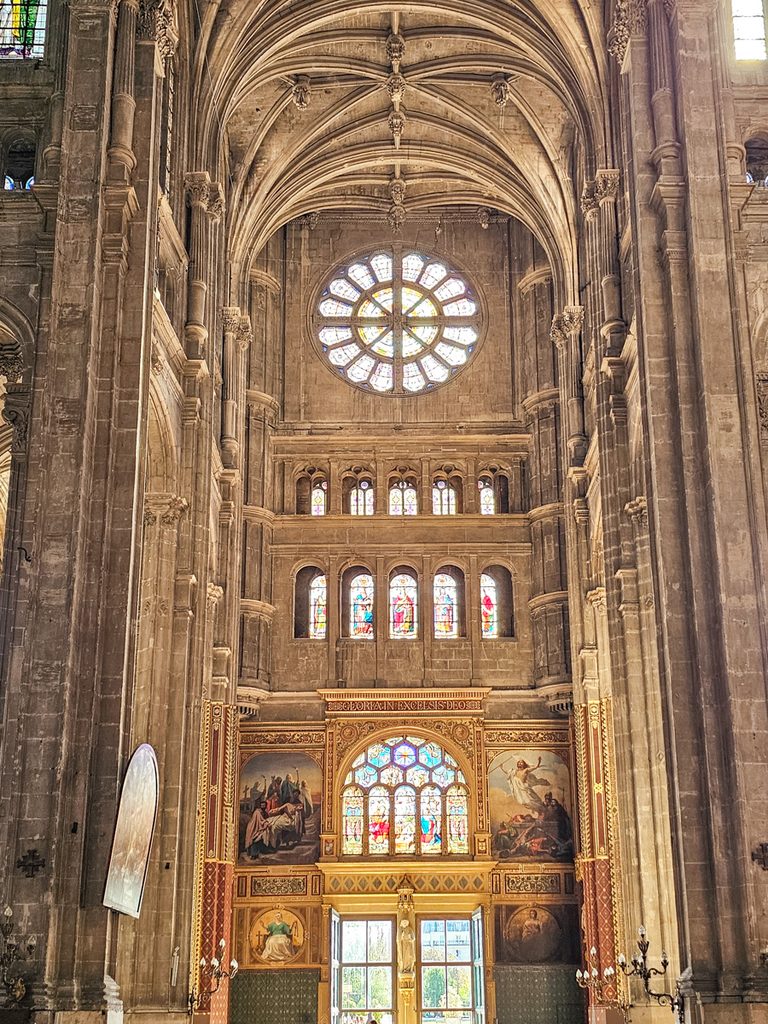
Saint-Eustache also has some interesting connections to well-known figures in French history. King Louis XIV received his first Communion here in 1649, while Cardinal Richelieu and playwright Molière were both baptized in the church.
One of the other highlights is the enormous pipe organ, one of the largest in France, with around 8,000 pipes. You can hear it during free organ performances on Sundays, usually at 5 pm, and the church also hosts concerts and choral performances throughout the year.

Address: 2, Impasse Saint-Eustache, 1st arrondissement
7. Basilica of Saint-Denis
Located just north of the official Paris city limits, the Basilica of Saint-Denis is one of the most historically significant churches in France. It’s the burial place of French kings and queens, and is considered the birthplace of Gothic architecture.
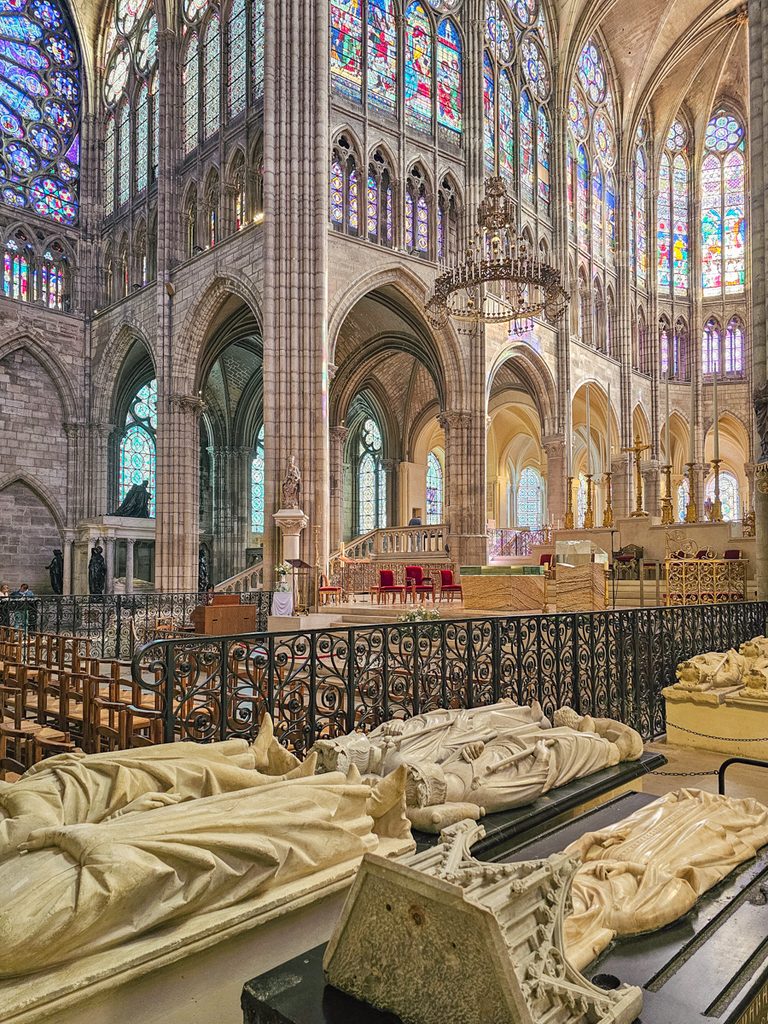
In the 12th century, Abbot Suger oversaw a major reconstruction of the church, introducing architectural features like pointed arches, ribbed vaults and large stained glass windows that would go on to define Gothic architecture throughout Europe.
But just as remarkable as the architecture is the royal necropolis around the choir, where around 70 elaborate tombs and funerary monuments are displayed, including Catherine de Medici and Francois I.
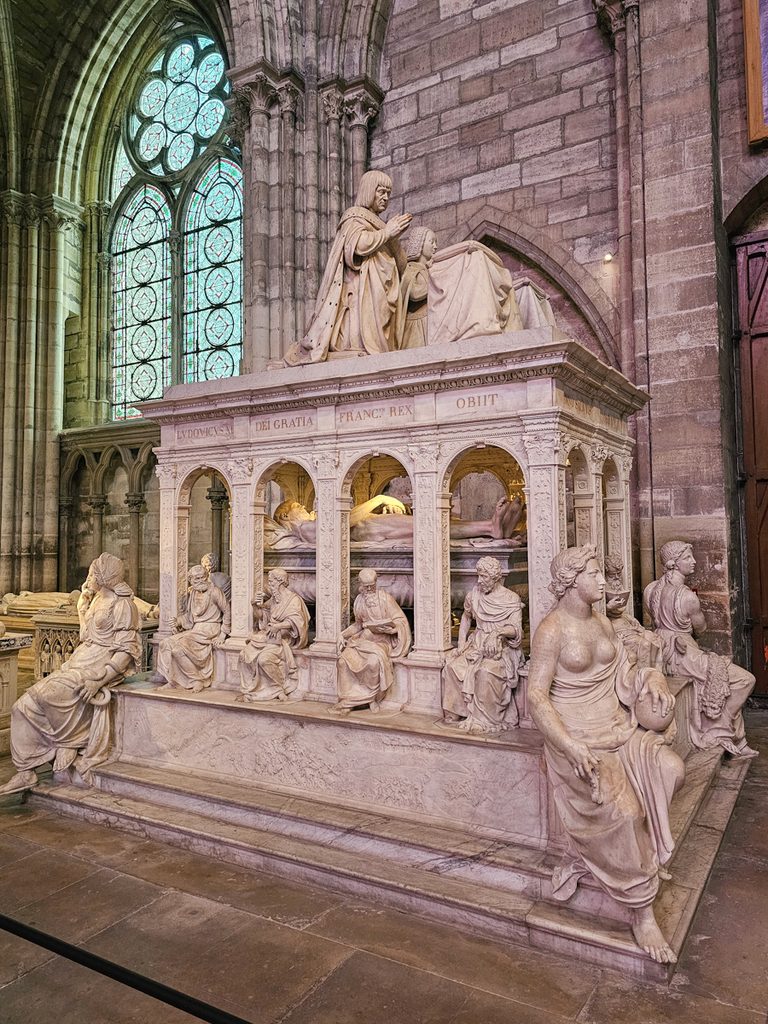
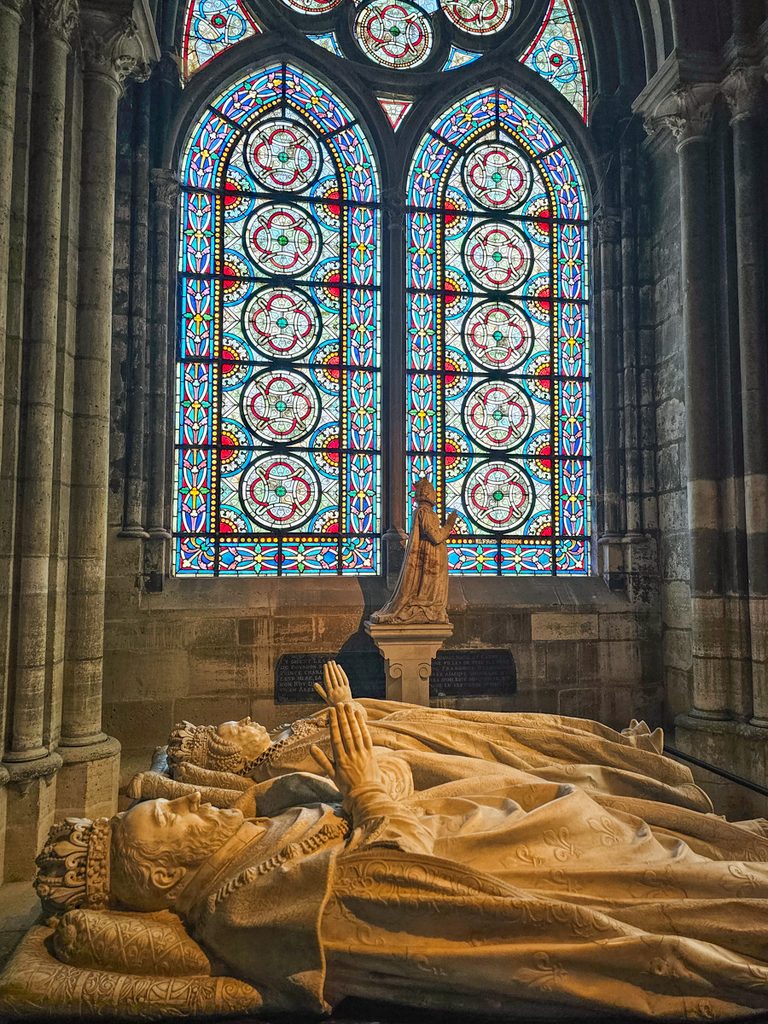
Dozens of medieval tombs feature stone sculptures of kings and queens lying on top, while three enormous Renaissance monuments depict royal couples both lying in death and kneeling in prayer. The combination of intricate stone sculptures and tall, colorful stained glass windows is absolutely beautiful.
Note that the main church is free to enter, but you’ll need a ticket to visit the royal necropolis and crypt. It’s absolutely worth the cost.
Address: 1, Rue de la Légion d’Honneur, 93200 Saint-Denis
Hidden Gem Churches in Paris
Now we’re moving into the churches that really fly under the radar. Most tourists probably won’t recognize these names, but there are some absolutely spectacular places in this section.
8. Saint-Eugène-Sainte-Cécile
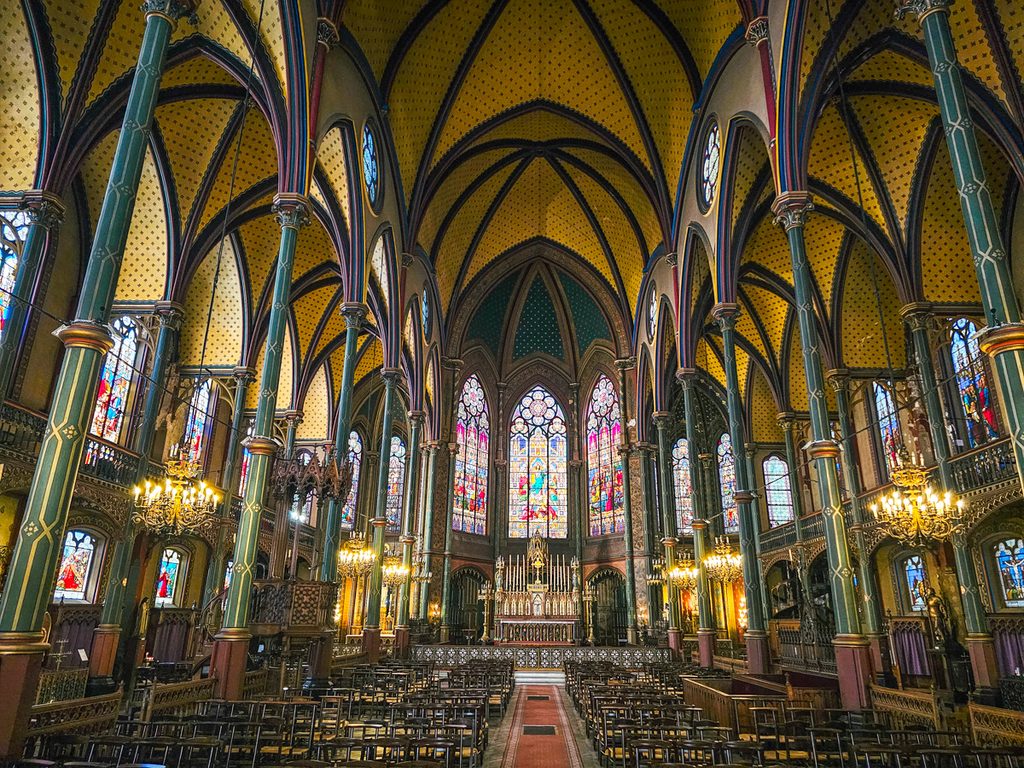
Saint-Eugène-Sainte-Cécile is an absolutely stunning church in the 9th arrondissement. Inside, tall, slender columns painted deep green rise into pointed arches and vaulted ceilings painted a beautiful golden yellow.
The entire ceiling is covered in tiny, repeating motifs, with dark ribs and red and blue accents outlining each section. It’s a really unusual color scheme for a Gothic-style church, and the effect is beautiful.
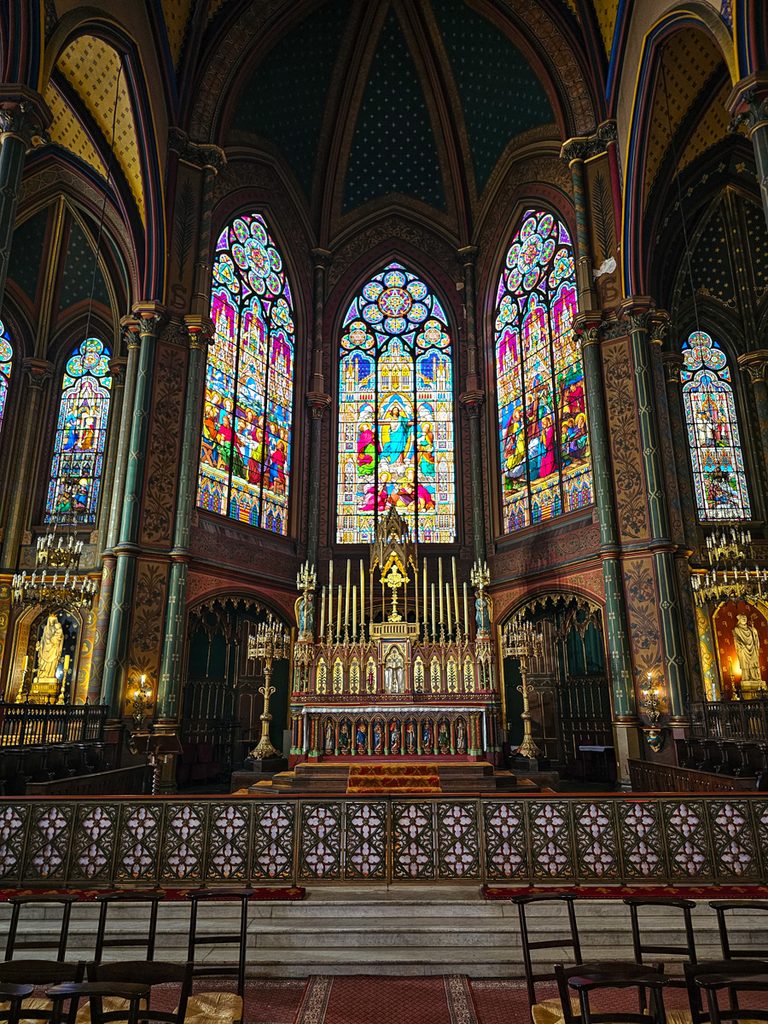
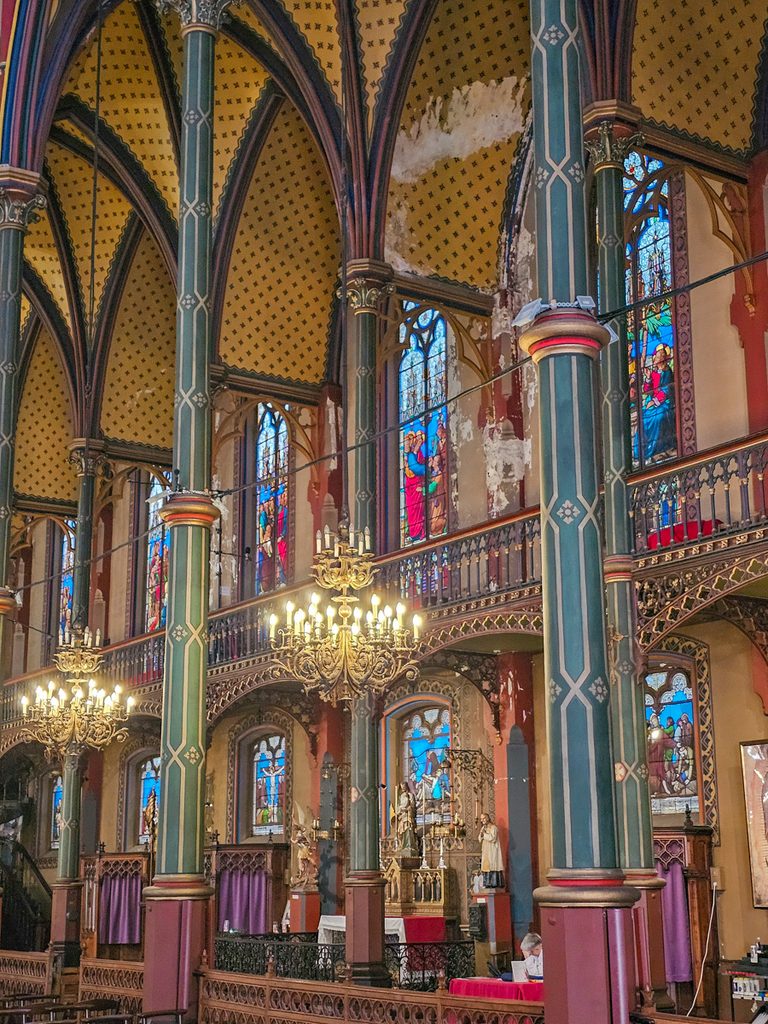
Built in 1854–1855, this Neo-Gothic church was one of the first in France to use an iron framework instead of traditional stone supports. This made it possible to use much thinner columns than in traditional Gothic churches, creating a much lighter and more airy feeling.
Vibrant stained glass windows line both levels of the church, with three particularly large windows behind the elaborate altar. The lower windows depict all 14 Stations of the Cross, another unique feature of this church.
Address: 4, Rue du Conservatoire, 9th arrondissement
9. Notre-Dame-de-Lorette

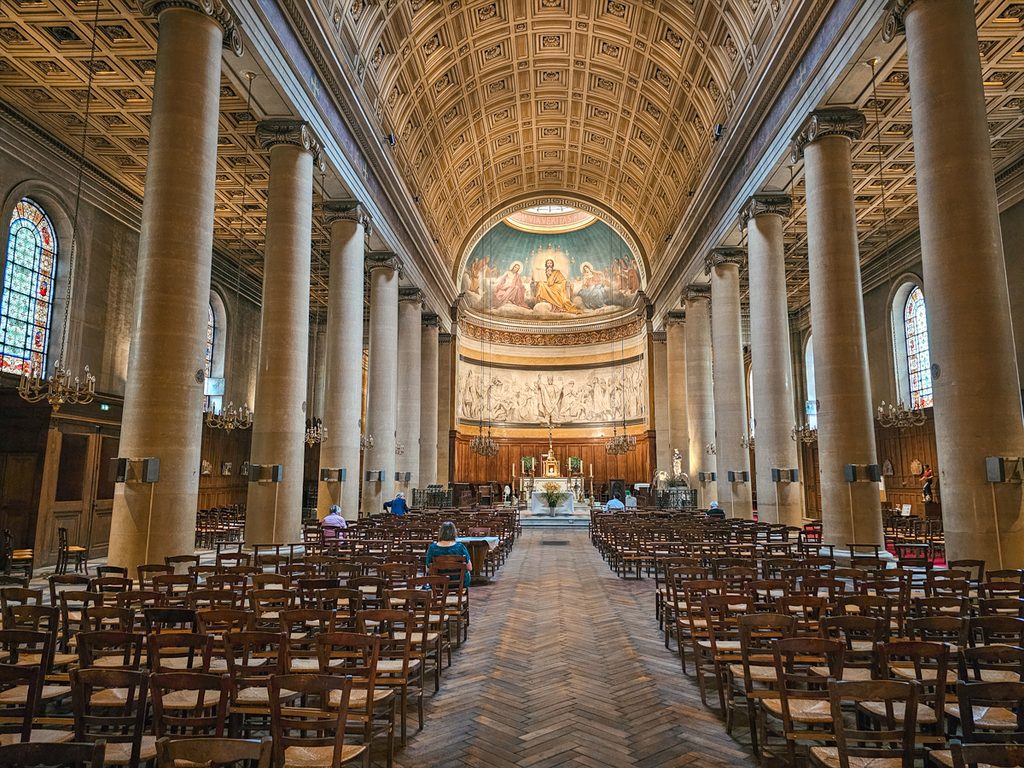
Also in the 9th arrondissement, Notre-Dame-de-Lorette (built 1823-1836) resembles a Greek temple on the exterior, with four Corinthian columns supporting a triangular pediment. Walk inside, though, and if you’re like me, you’ll be blown away by the design.
Inside, an incredible coffered ceiling stretches the length of the nave, with interlocking geometric patterns and decorative rosettes. Two long rows of Doric columns line the nave, with large religious paintings covering the upper walls.


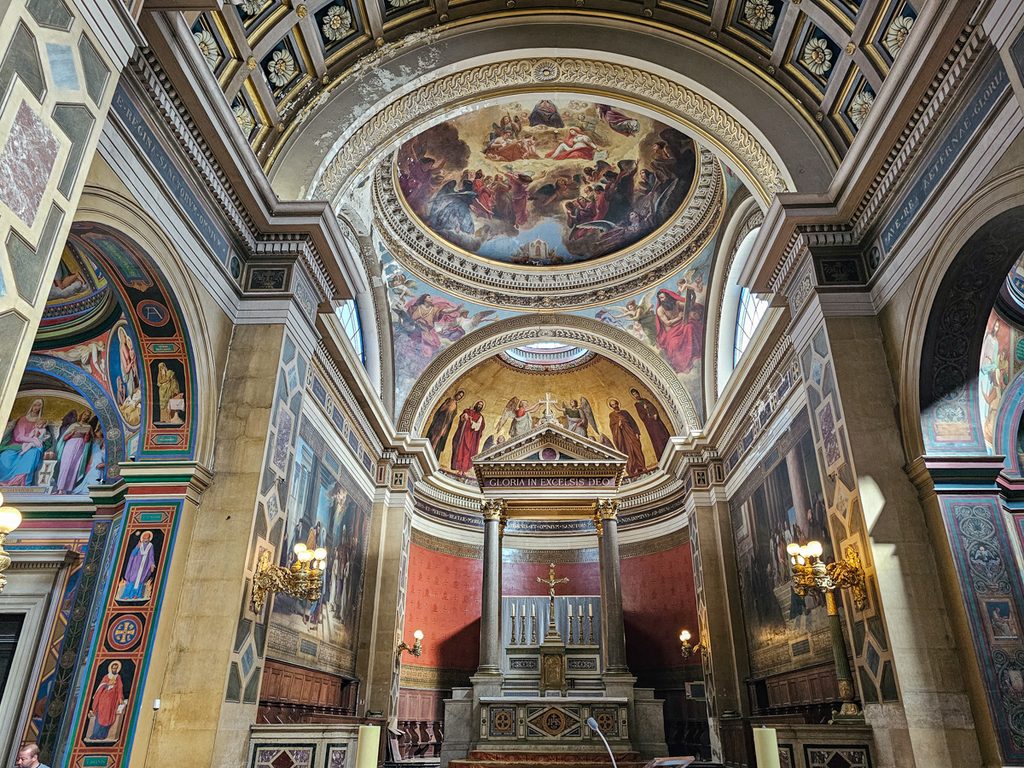
And it’s not just the main ceiling that’s decorated. Nearly every surface of the church is covered in paintings, colorful patterns or sculptural details. The side aisles have their own coffered ceilings above black-and-white tiled floors, and the arches and domes around the choir are covered in beautiful frescoes.
A fun historical detail is that Claude Monet was baptized here in 1841.

Before you leave the neighborhood, head a little farther back along Rue Laffitte for a fantastic view of Notre-Dame-de-Lorette with the white domes of Sacré-Cœur rising above it in the distance.
Address: 18, bis Rue de Châteaudun, 9th arrondissement
10. Saint-Séverin
Just a few blocks from Notre-Dame, Église Saint-Séverin is a beautiful medieval Gothic church that is much quieter and calmer than its famous neighbor.
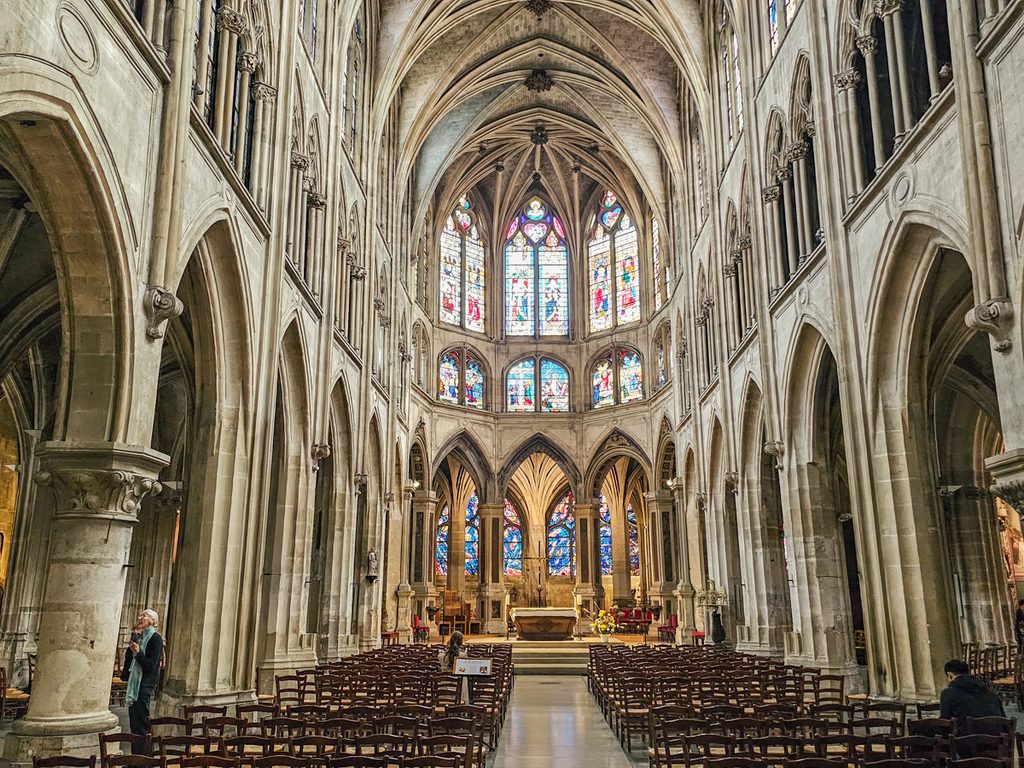
It’s one of the oldest churches on the Left Bank, with construction beginning in the 1200s, around the same general period as Notre-Dame and Sainte-Chapelle. Much of the church was rebuilt in the 1400s in the Flamboyant Gothic style.
Inside, you’ll find two rows of massive stone columns on either side of the church, with tall Gothic arches and vaulted ceilings overhead. And behind the choir is a particularly unusual feature: a twisting stone pillar that branches out across the ceiling like a palm tree.
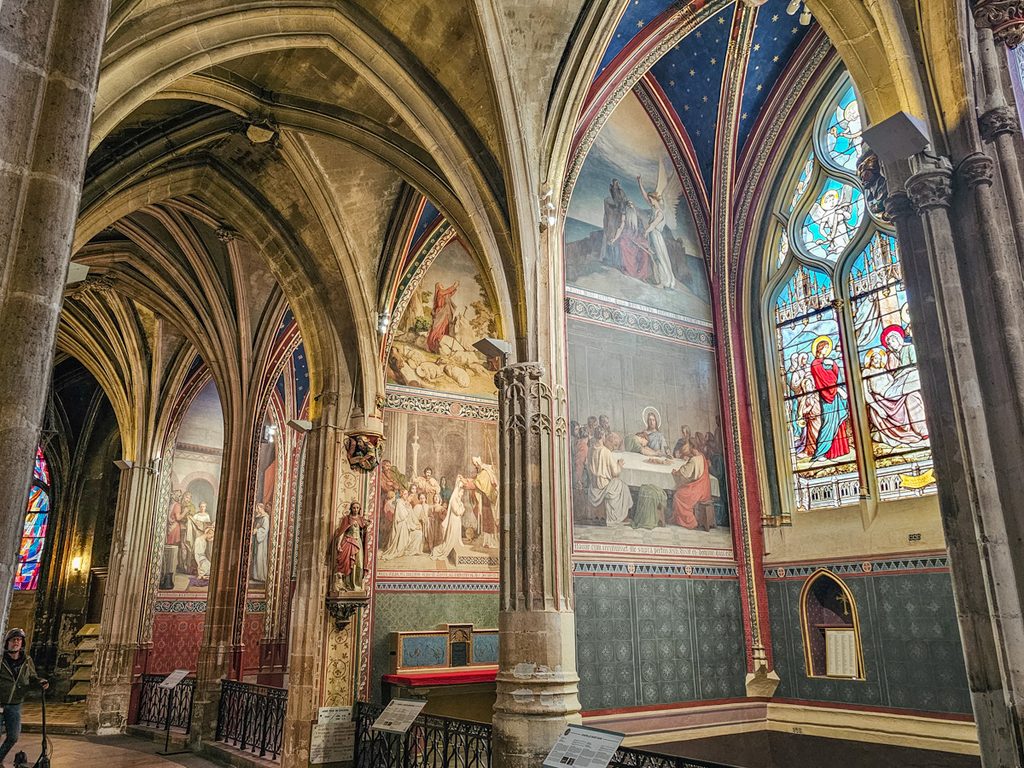
The side chapels are also lovely. Next to stained glass windows, you’ll find large religious paintings covering the walls, and beautifully painted ceilings with deep blue backgrounds and gold stars.
Address: 1, Rue des Prêtres Saint-Séverin, 5th arrondissement
11. Saint-Augustin
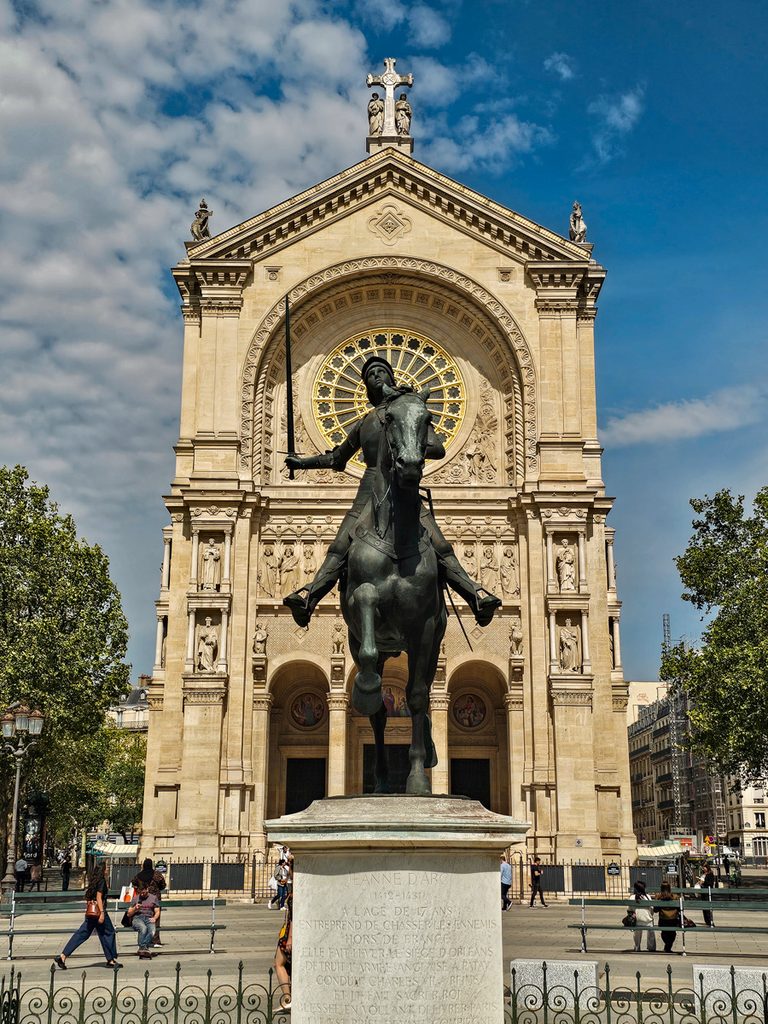
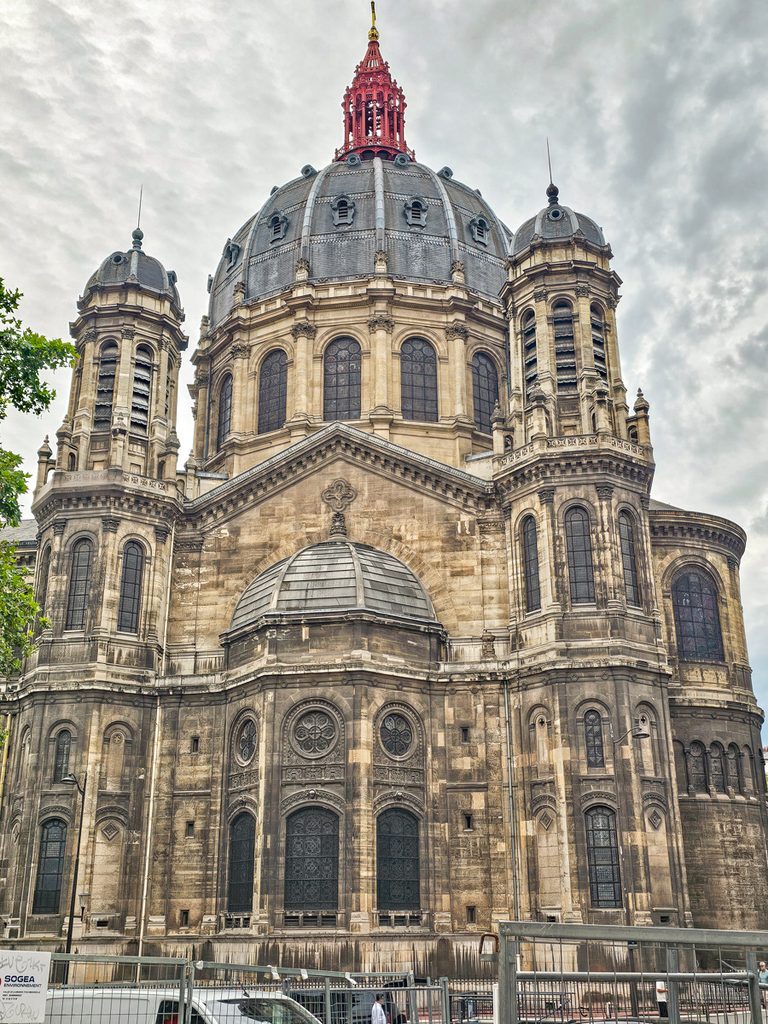
Église Saint-Augustin is an enormous church in the 8th arrondissement, built between 1860 and 1871 as part of Haussmann’s transformation of Paris. It was designed to be a major landmark where several of the new, wide boulevards met.
The church is a mix of Romanesque, Gothic, and Byzantine styles, with an enormous central dome rising above the surrounding buildings. A large equestrian statue of Joan of Arc stands directly in front of the church, sword raised. Interestingly, an identical statue stands outside Reims Cathedral, where Joan accompanied Charles VII for his coronation in 1429.
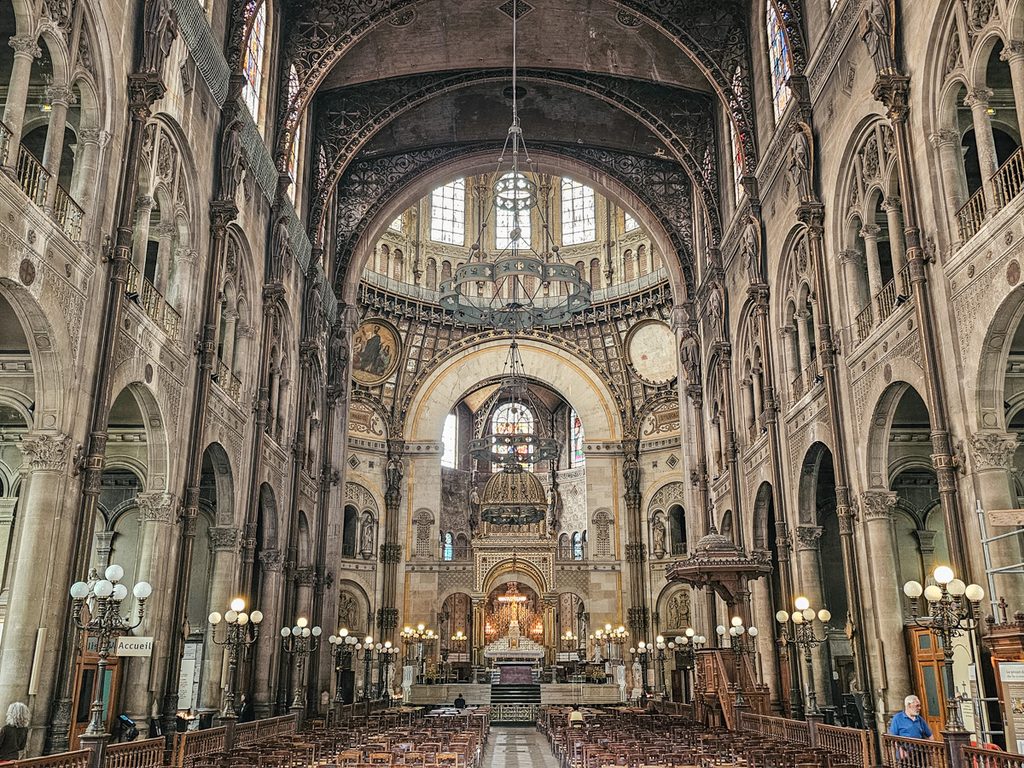
The church feels much older than its 19th-century construction date. The large, open interior was made possible by a combination of stone construction and a cast-iron framework, which was unusual for churches at the time. You can actually see the iron framework throughout the church.
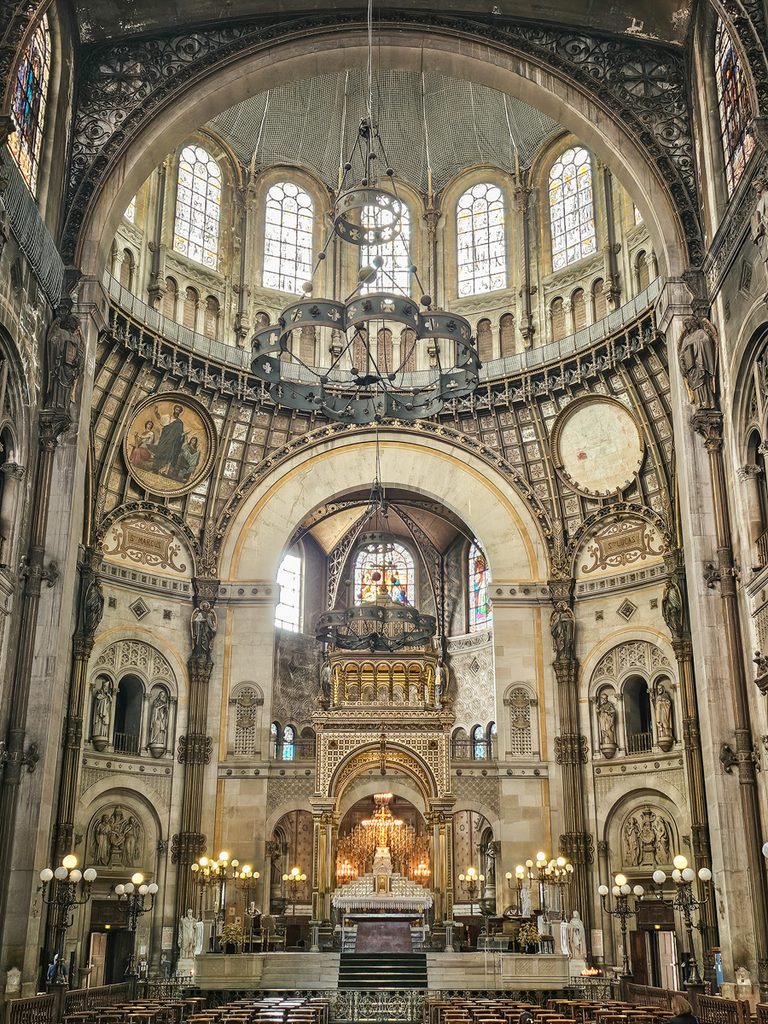
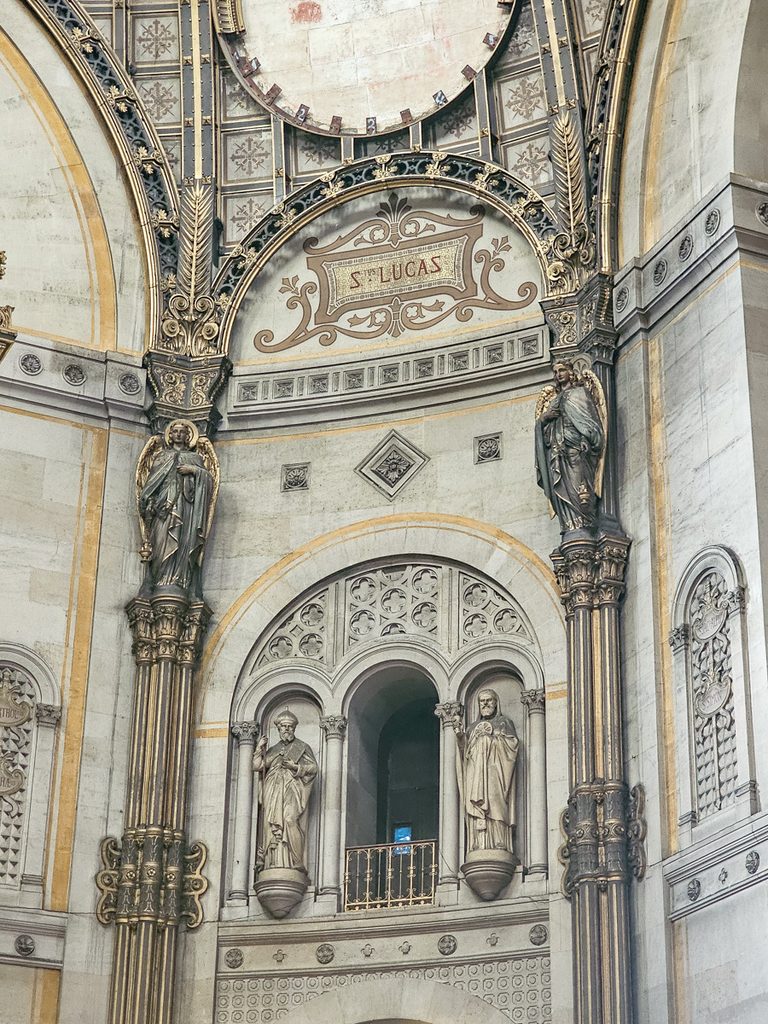
There’s a lot of detail that’s easy to miss at first glance. Angels sit atop the columns lining the nave, statues fill niches along the walls, and large paintings fill the spaces above the arches. At the far end of the church, the massive dome rises above the choir, with a ring of stained glass windows around its base and a beautifully decorated canopy over the altar.
Address: Place Saint-Augustin, 8th arrondissement
12. Notre-Dame-du-Travail

Notre-Dame-du-Travail is located in the 14th arrondissement, not far from Gare Montparnasse, and has quite the interesting origin story. It was built between 1897 and 1902 to serve the working-class population of the neighborhood, including laborers who helped build the exhibits and attractions for the 1900 World Fair in Paris.
The church was specifically designed to feel familiar to people who spent their days working in factories. The architect used exposed iron columns and metal trusses, some of which are believed to have come from the Palace of Industry, built for the 1855 World’s Fair.


The result is a surprisingly light and airy interior, with tall iron arches stretching across the nave, windows running along the upper walls and a beautiful wooden parquet floor.
Despite its industrial appearance, the church is quite elegant, and it’s certainly one of the most unusual churches in Paris.
Address: 59, Rue Vercingétorix, 14th arrondissement
13. Saint-Louis-en-l’Île

Right in the middle of Île Saint-Louis, one of the two islands in the Seine in central Paris, is Église Saint-Louis-en-l’Île. The church was built between 1664 and 1726 in the French Baroque style and is dedicated to King Louis IX, also known as Saint Louis.
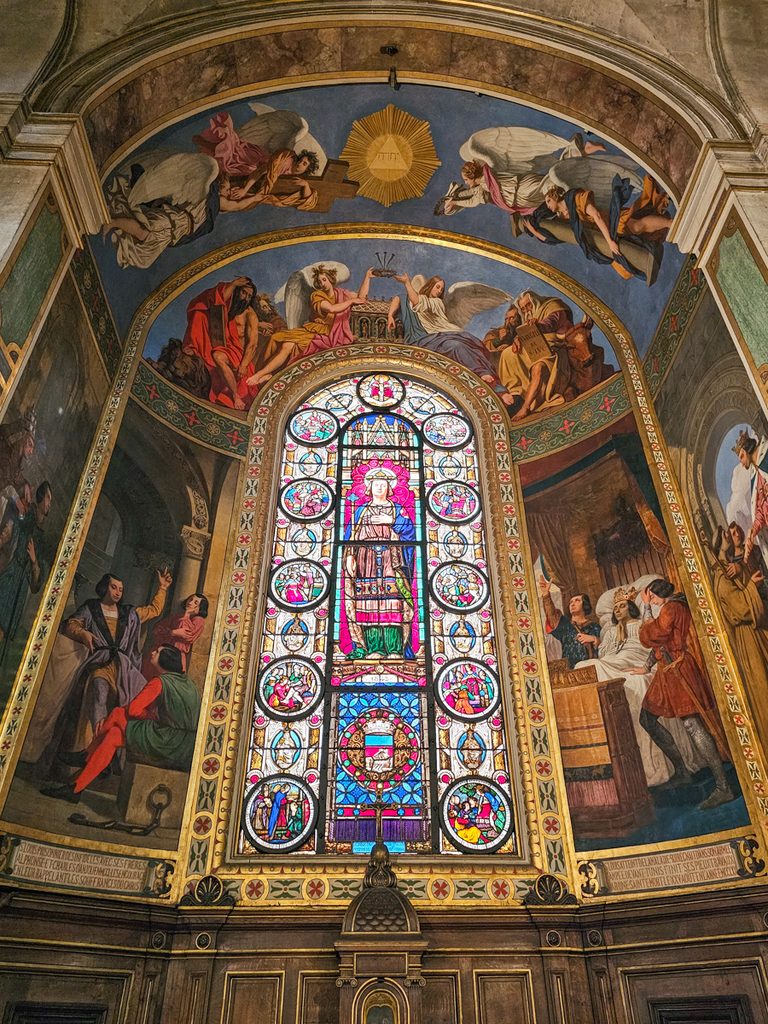
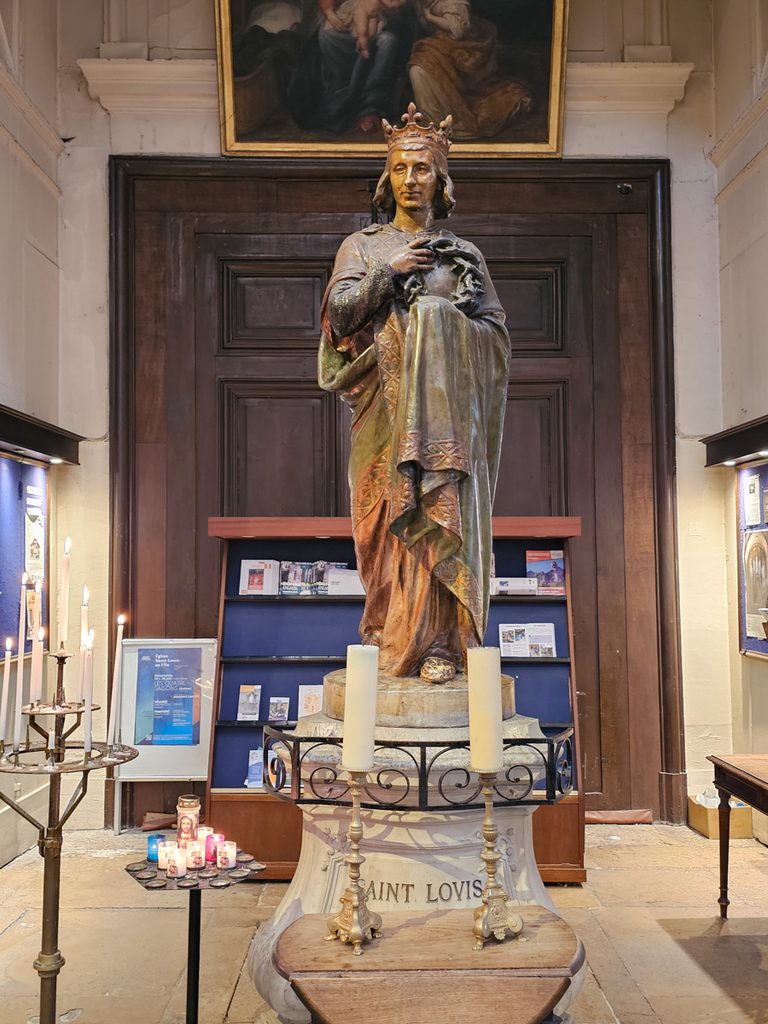
The interior is extremely ornate, with grand archways, Corinthian columns, intricate stonework, and a soaring dome.
One interesting detail on the exterior is the tall, openwork bell tower, designed to let the strong winds on the island pass through. There’s also an unusual clock hanging over the street, almost like a shop sign.

I was really impressed by this church, and it’s definitely worth popping into while exploring Île Saint-Louis, one of my favorite areas to wander around in central Paris.
Address: 19, bis Rue Saint-Louis en l’Île, 4th arrondissement
14. Notre-Dame-des-Victoires

Notre-Dame-des-Victoires is a 17th-century church in the 2nd arrondissement, originally built after King Louis XIII vowed to dedicate a church to the Virgin Mary following his victory at the Siege of La Rochelle in 1628.
What makes this church particularly interesting is the more than 37,000 ex-voto offerings left by worshippers over the years, many with personal messages thanking the Virgin Mary for answered prayers and blessings received.

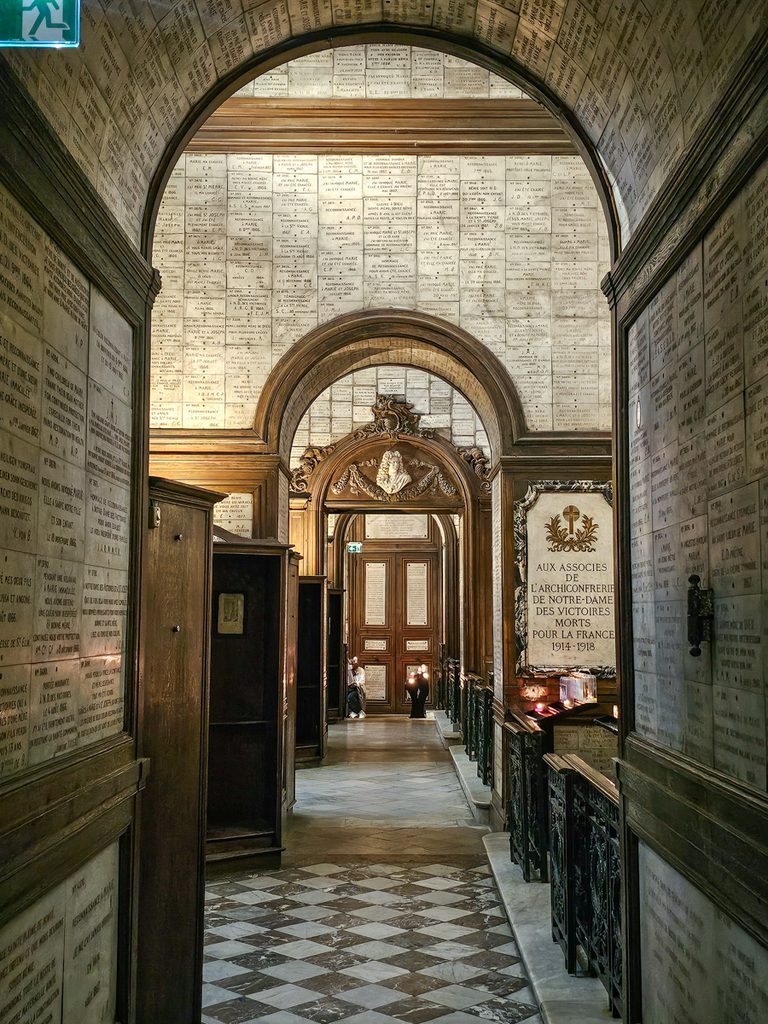
Thousands of small marble plaques cover the walls, columns, and archways, extending into the side chapels. It’s hard to fully appreciate in photos, but it’s a truly incredible sight in person.

The church also has a lovely classical interior, with rounded arches, an ornate ceiling, and a series of large 18th-century paintings surrounding the choir. These paintings, by Charles-André van Loo, depict scenes from the life of Saint Augustine, along with Louis XIII dedicating the church to the Virgin Mary.
Address: 7, Place des Petits Pères, 2nd arrondissement
15. Saint-Germain-l’Auxerrois
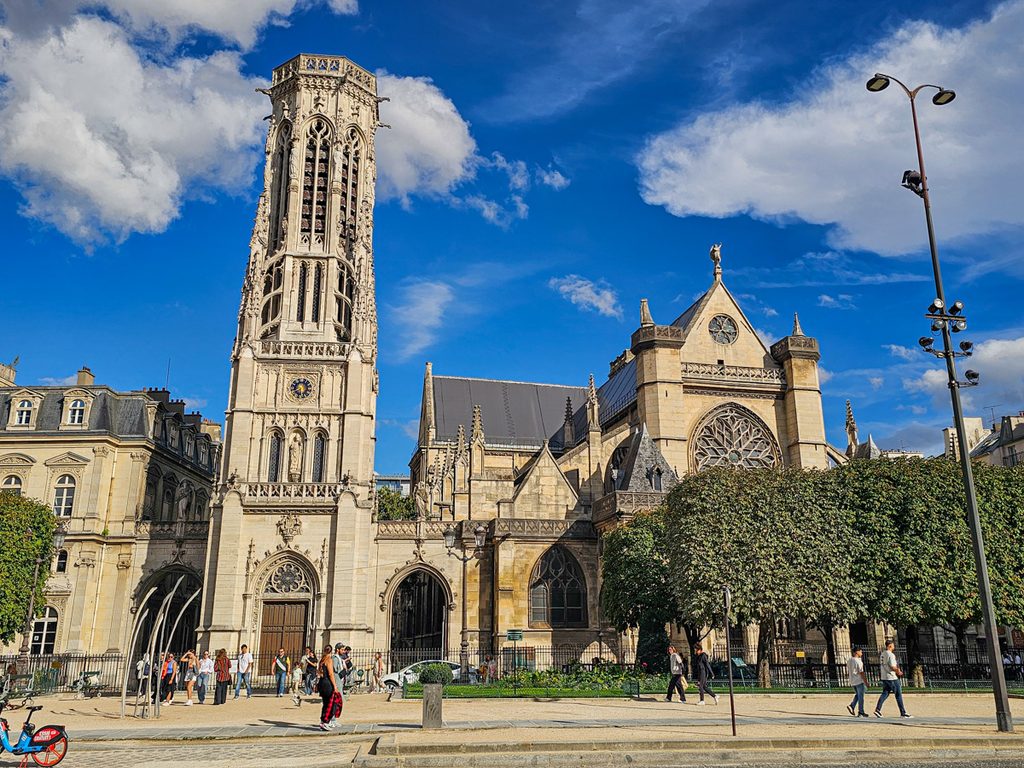
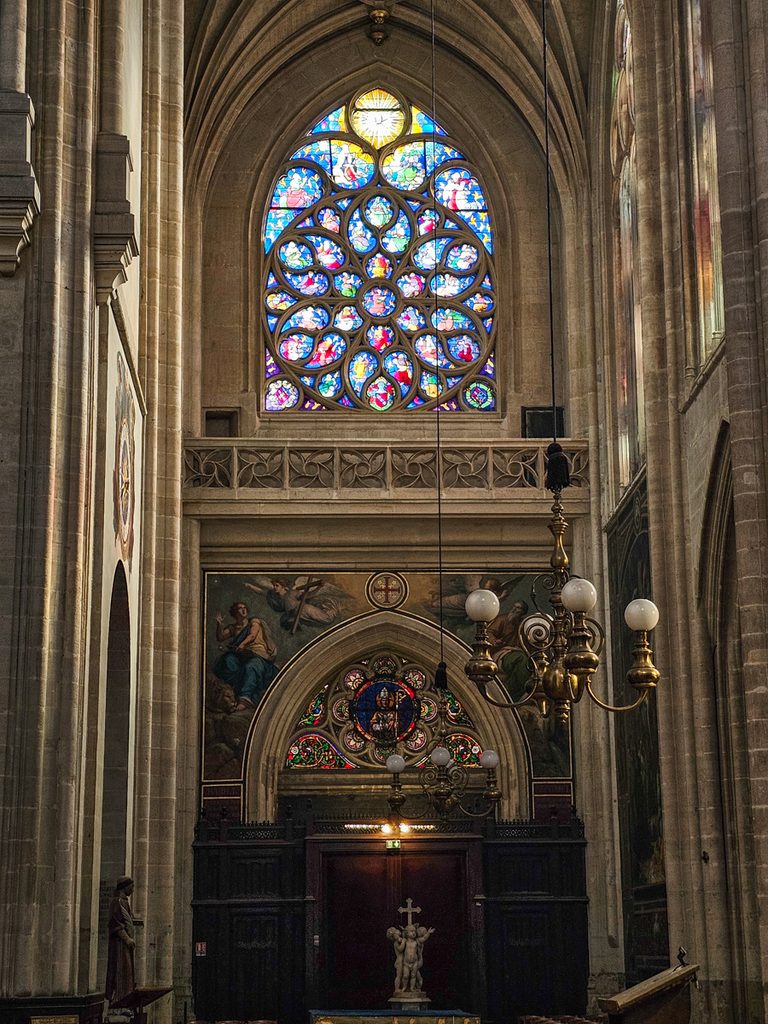
Directly behind the Louvre is Église Saint-Germain-l’Auxerrois, a medieval Gothic church that gets routinely overlooked despite its prominent location. The current building dates largely to the 13th through 16th centuries, and for hundreds of years, it served as the parish church for people living and working at the Louvre.
The church also has a darker connection to French history. Its bell is traditionally associated with the signal that began the St. Bartholomew’s Day Massacre in 1572, when thousands of French Protestants were killed.
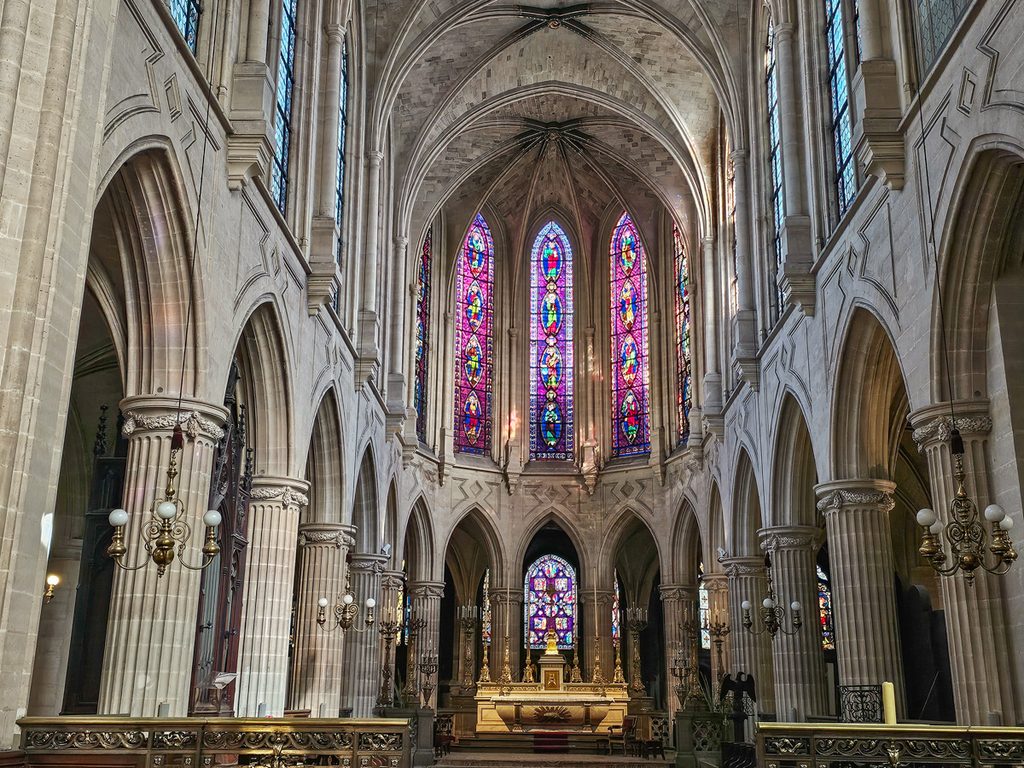
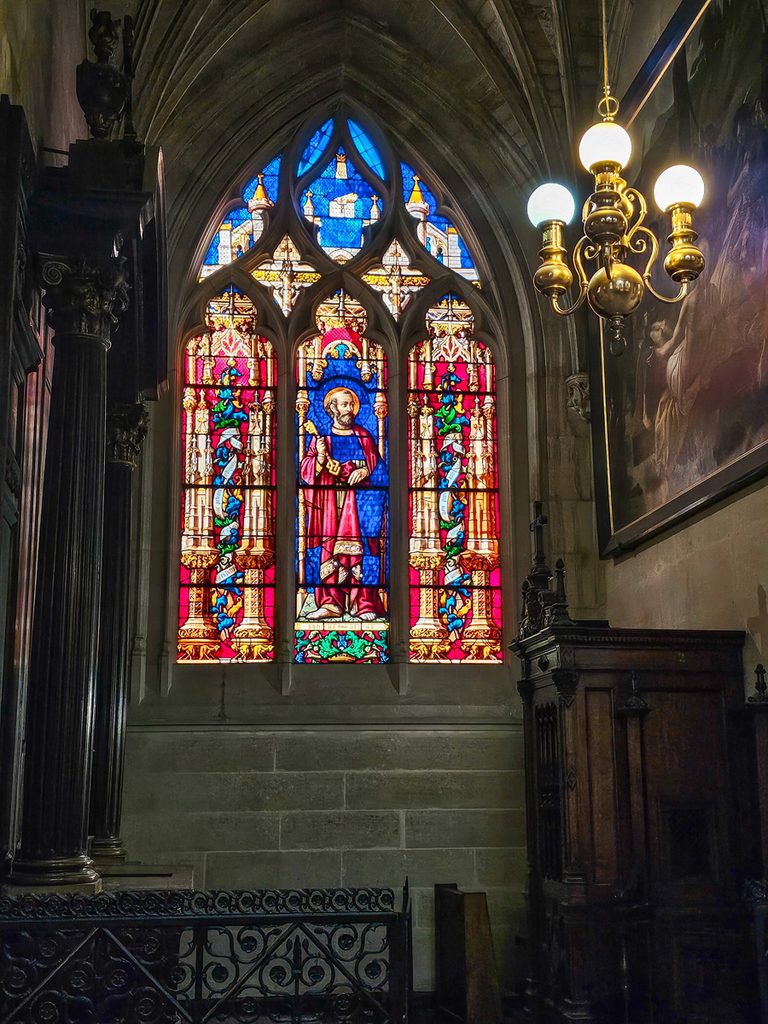
The exterior is impressive, with its tall Gothic bell tower, elaborate stonework, and large rose windows. Inside, you’ll find high vaulted ceilings, massive stone columns, and colorful stained glass windows, including some that date back to the Renaissance.
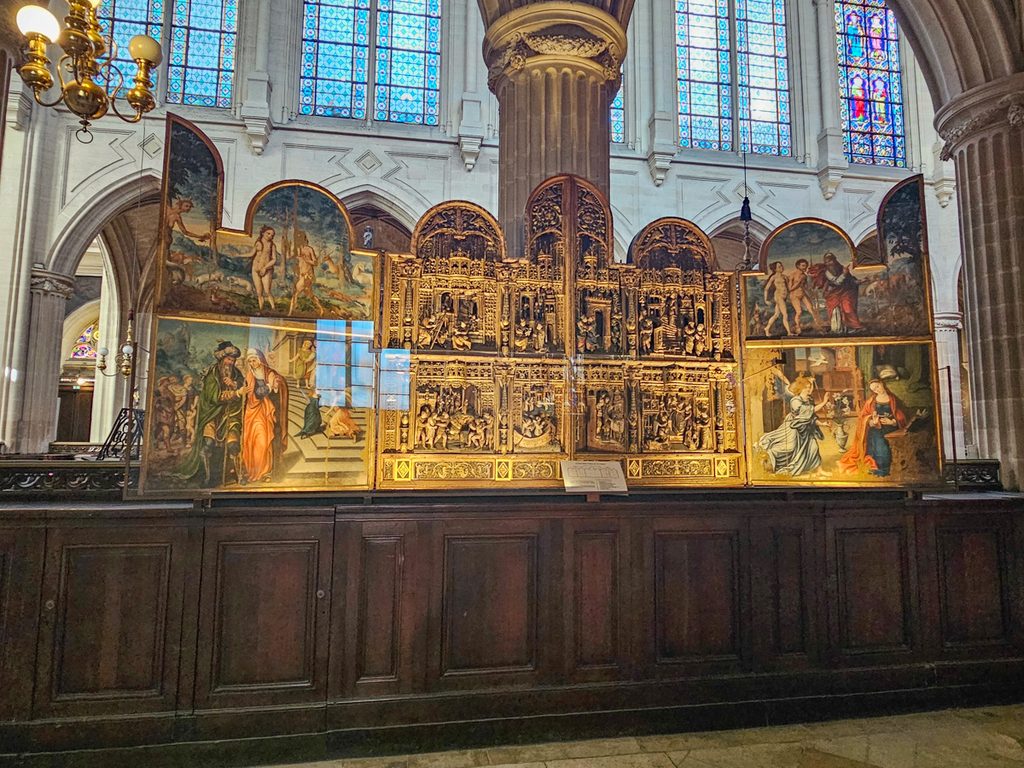
There are also several interesting works of art worth seeking out, including a carved Flemish altarpiece from the early 1500s, filled with intricate scenes and tiny figures.
Address: 2, Place du Louvre, 1st arrondissement
16. Saint-Roch
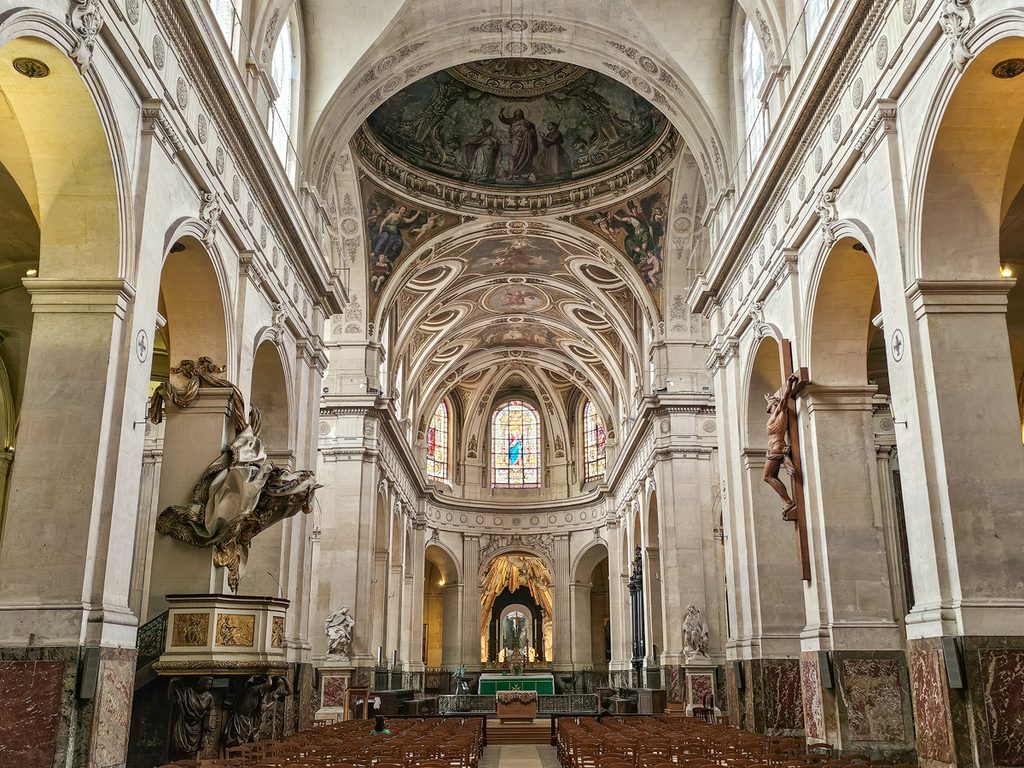
Located on Rue Saint-Honoré in the 1st arrondissement, Église Saint-Roch is a beautiful church that combines classical and Baroque architecture. Construction began in 1653, when King Louis XIV laid the first stone.
The interior features white stone walls, marble columns and arches, and an elaborately painted ceiling with gilded details and religious scenes.
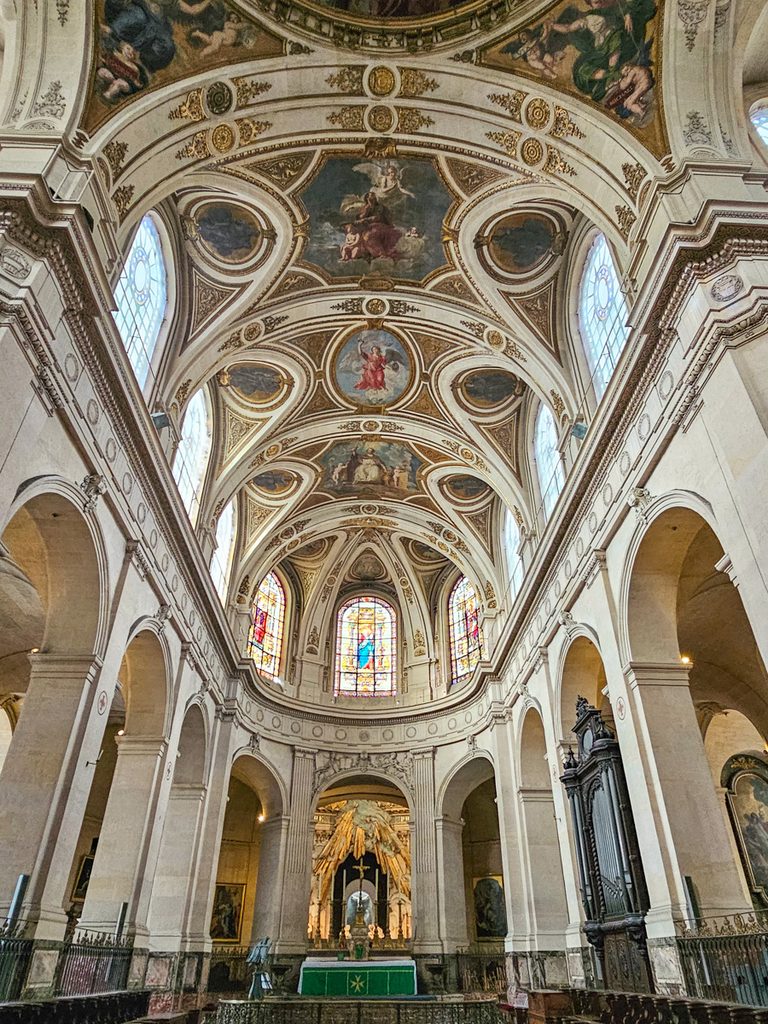
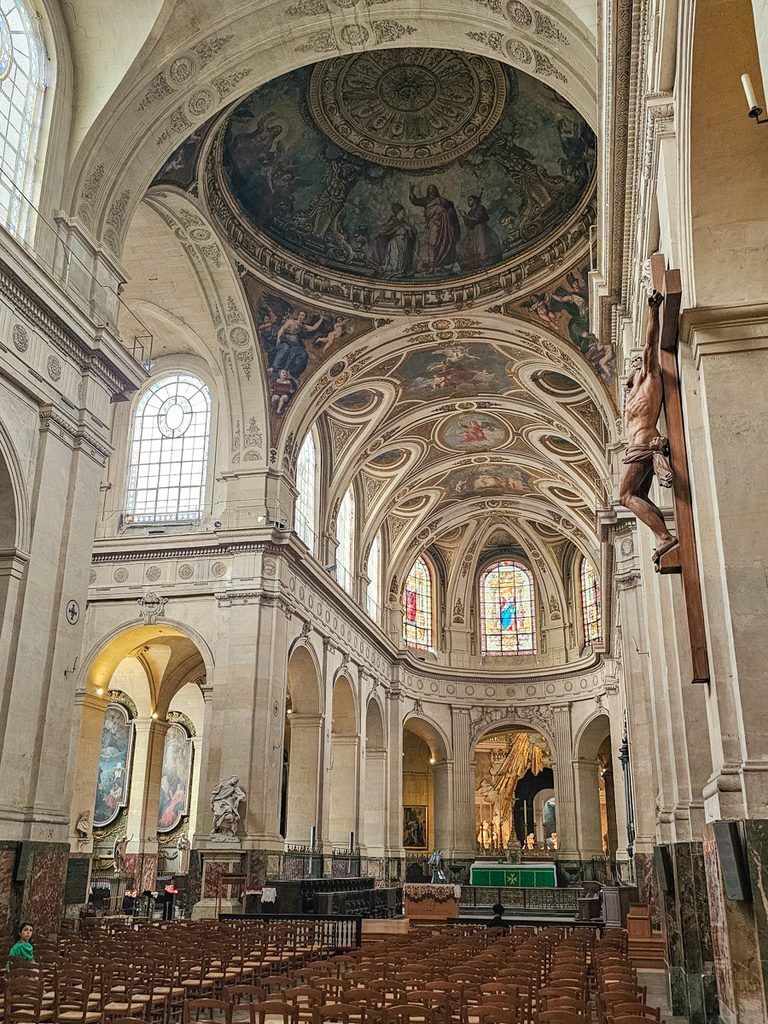
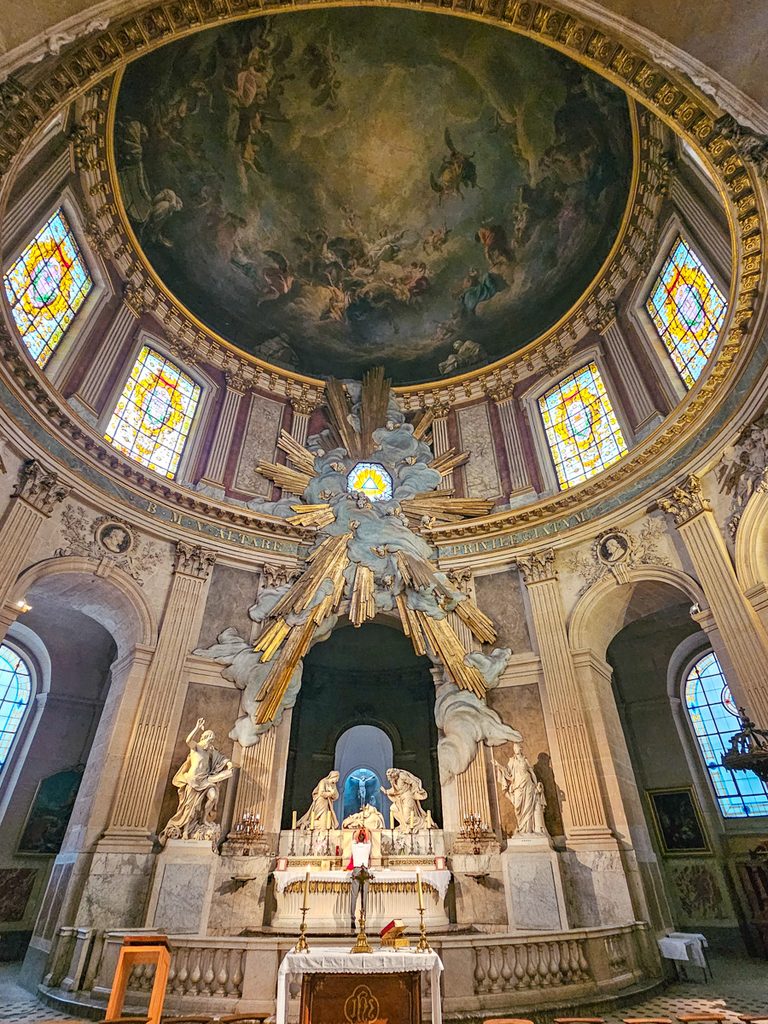
But the most impressive part is the Chapel of the Virgin, a large oval chapel behind the main altar, designed by one of the principal architects of Versailles. The centerpiece is an enormous gilded sunburst surrounded by sculpted clouds and angels. It’s just stunning.
Saint-Roch also has an interesting connection to Napoleon. In 1795, he used cannons to suppress a royalist uprising outside the church, and marks from the cannon fire can reportedly still be seen on its facade.
Address: 296, Rue Saint-Honoré, 1st arrondissement
17. Grande Mosquée de Paris
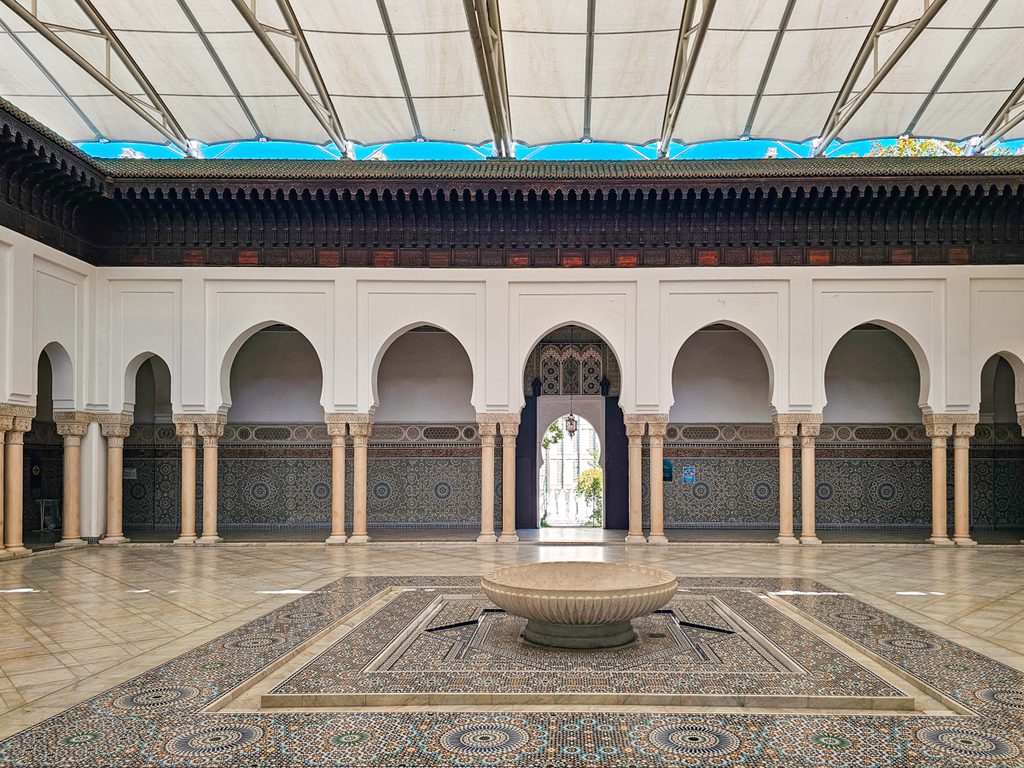
The Grande Mosquée de Paris is located in the 5th arrondissement, near the Jardin des Plantes. Opened in 1926, the mosque was built in part to honor the Muslim soldiers who fought and died for France during World War I.
Now, I know that a mosque isn’t a church (churches are for Christians, mosques are for Muslims), but it’s such a stunning religious building that I couldn’t leave it off the list.
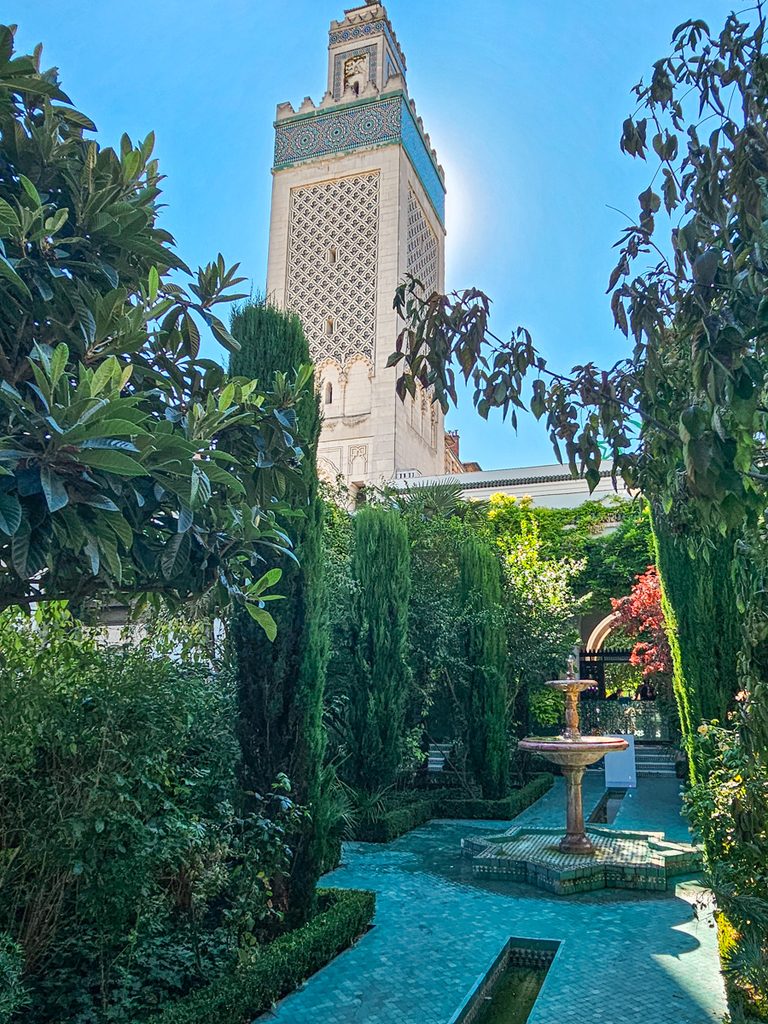
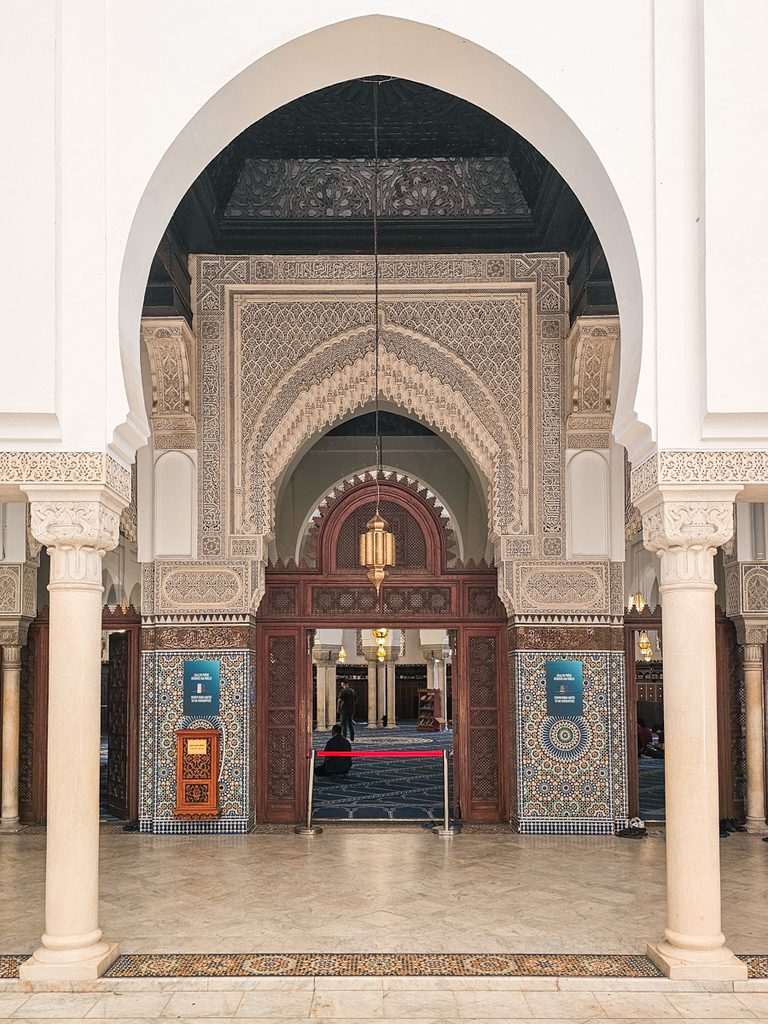
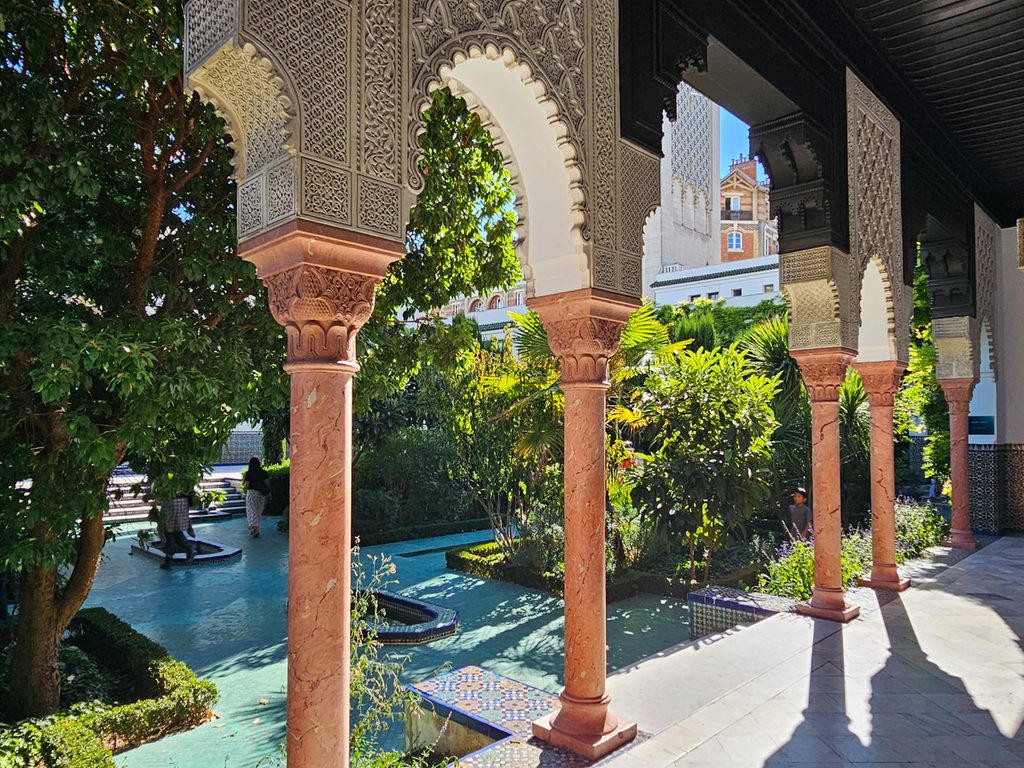
The mosque was built in a Moorish style inspired by the architecture of North Africa and Andalusia (southern Spain), with colorful geometric mosaics, carved stucco arches, and beautiful courtyards filled with plants and fountains.
Visitors can explore several areas of the complex, including the gardens and courtyards, with views of the 33-meter-tall minaret. There’s also a restaurant, tea room, hammam and shops associated with the mosque.
Note that there is a €2 entrance fee and the site is closed to visitors on Friday.
Address: 2, bis Place du Puits de l’Ermite, 5th arrondissement
18. Chapelle Notre Dame de la Médaille Miraculeuse
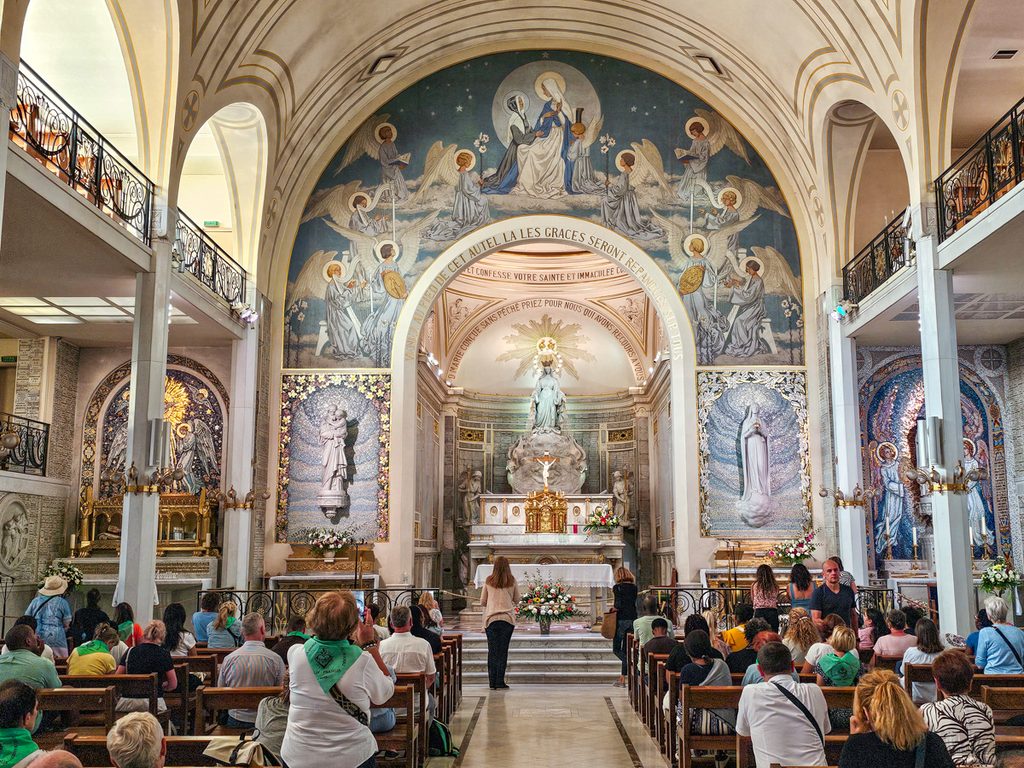
In 1830, a young nun named Catherine Labouré reported seeing the Virgin Mary inside a small chapel in Paris. Today, it’s one of Paris’s most important Catholic pilgrimage sites, drawing worshippers from around the world.
Labouré reported three apparitions of the Virgin Mary that year. During one of these visions, she described Mary standing on a globe, with rays of light shining from her hands, and said Mary instructed her to have a medal made depicting what she had seen.
The first medals were distributed in 1832, during a deadly cholera epidemic in Paris. Reports of miraculous healings and answered prayers helped the medal become enormously popular, and it eventually spread around the world.
The chapel itself is quite lovely, with a large painted archway framing the altar, colorful mosaics with gold accents, and several side shrines. Above the main altar is a statue of the Virgin Mary representing the visions described by Catherine Labouré.
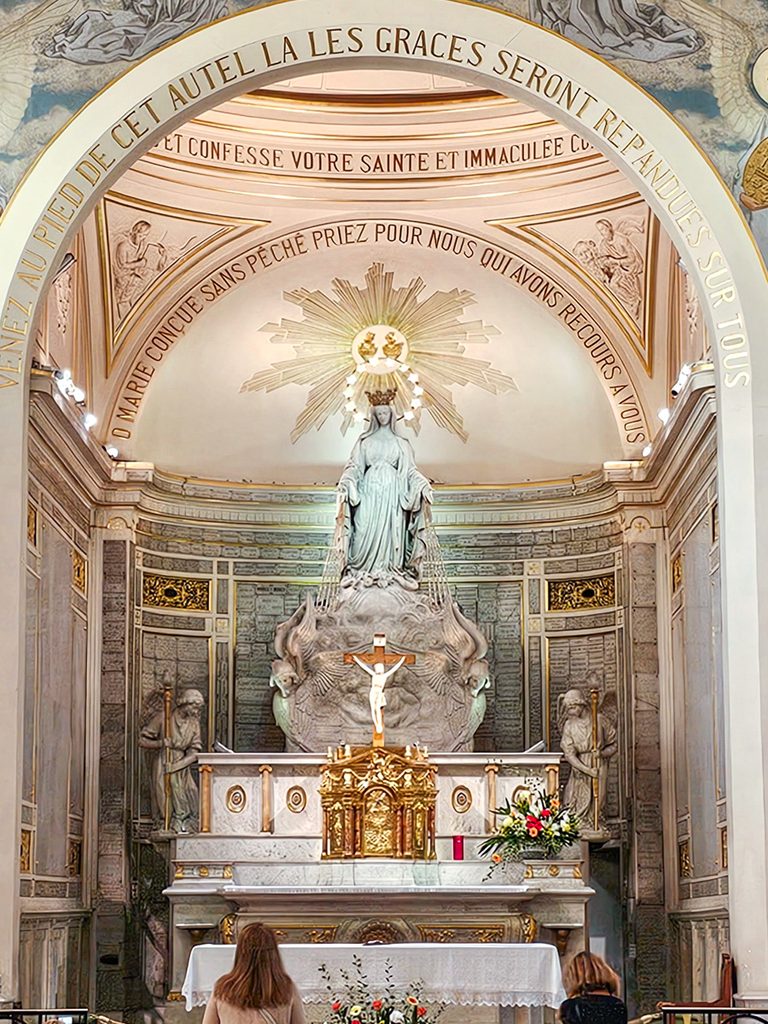

In 1897, Pope Leo XIII authorized its ceremonial coronation, a special Catholic honor recognizing the importance of the statue and the devotion associated with it. You can also see the glass tomb of Saint Catherine Labouré, who was canonized in 1947.
I was really surprised by how popular this chapel is. There were people lined up waiting to enter when it opened, and the chapel was packed with worshippers praying even though there wasn’t a service taking place. It’s clearly a place of tremendous religious significance, and I found it really interesting to visit.
Address: 140, Rue du Bac, 7th arrondissement
19. Sainte-Clotilde
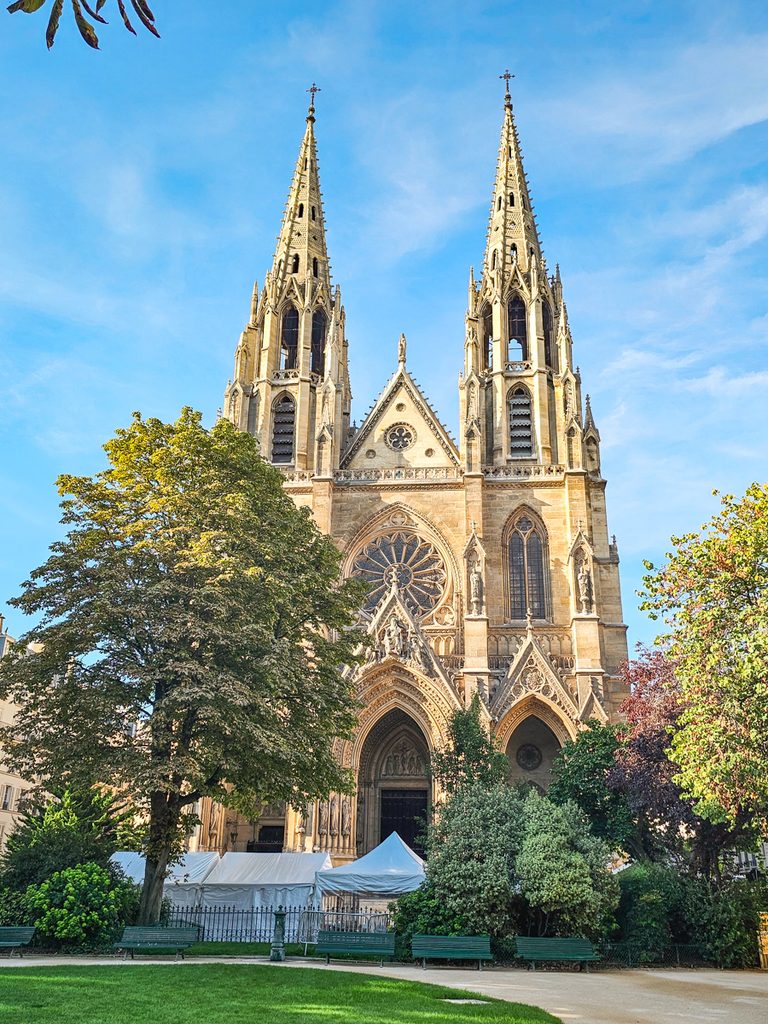
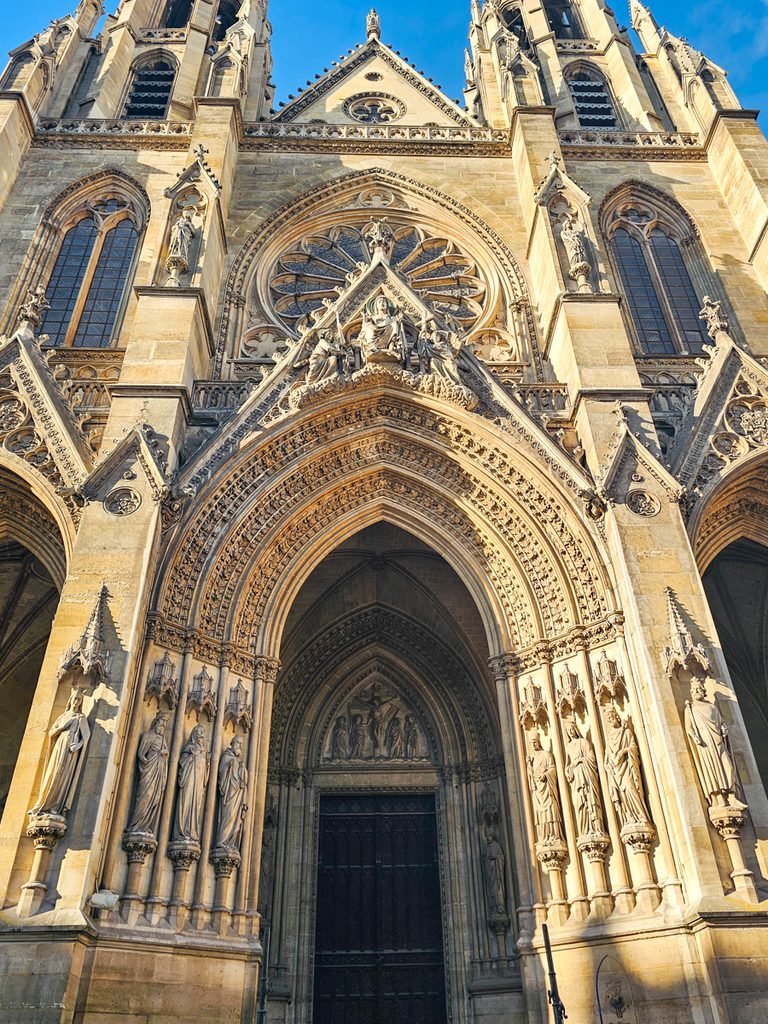
Basilique Sainte-Clotilde looks like a medieval Gothic cathedral, but it was actually built in the mid-19th century, and named for a Frankish queen who helped persuade her husband, King Clovis I, to convert to Christianity. Completed in 1857, it was the first church in Paris constructed in the Neo-Gothic style, with great care taken to recreate the appearance of a medieval church.
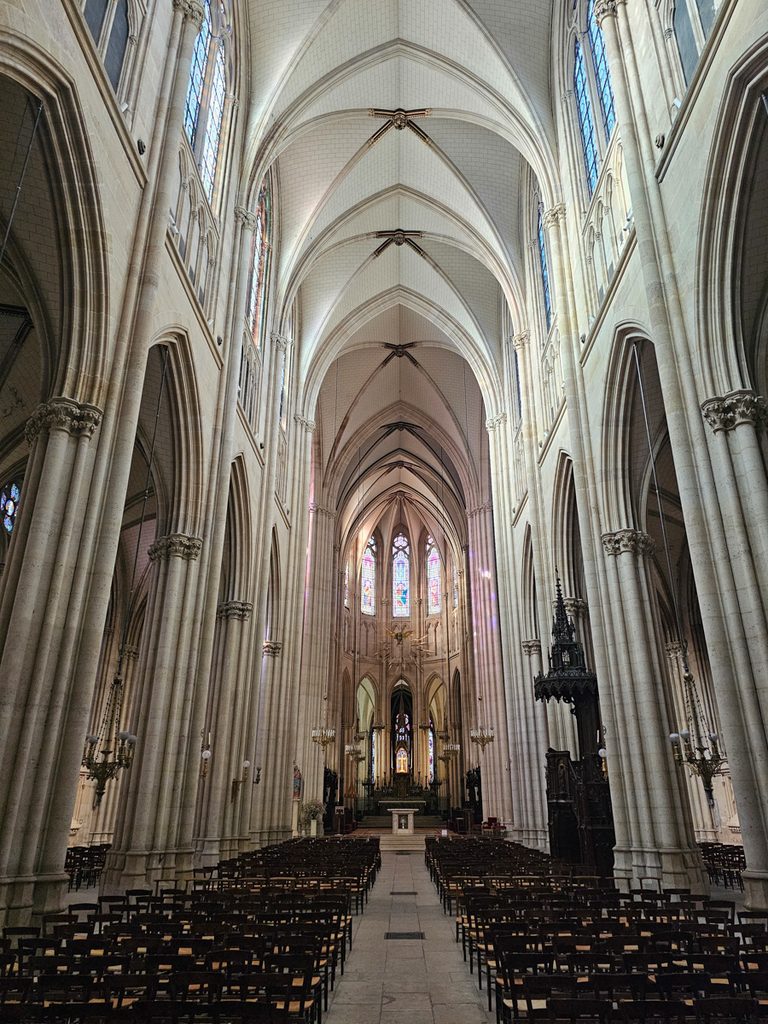
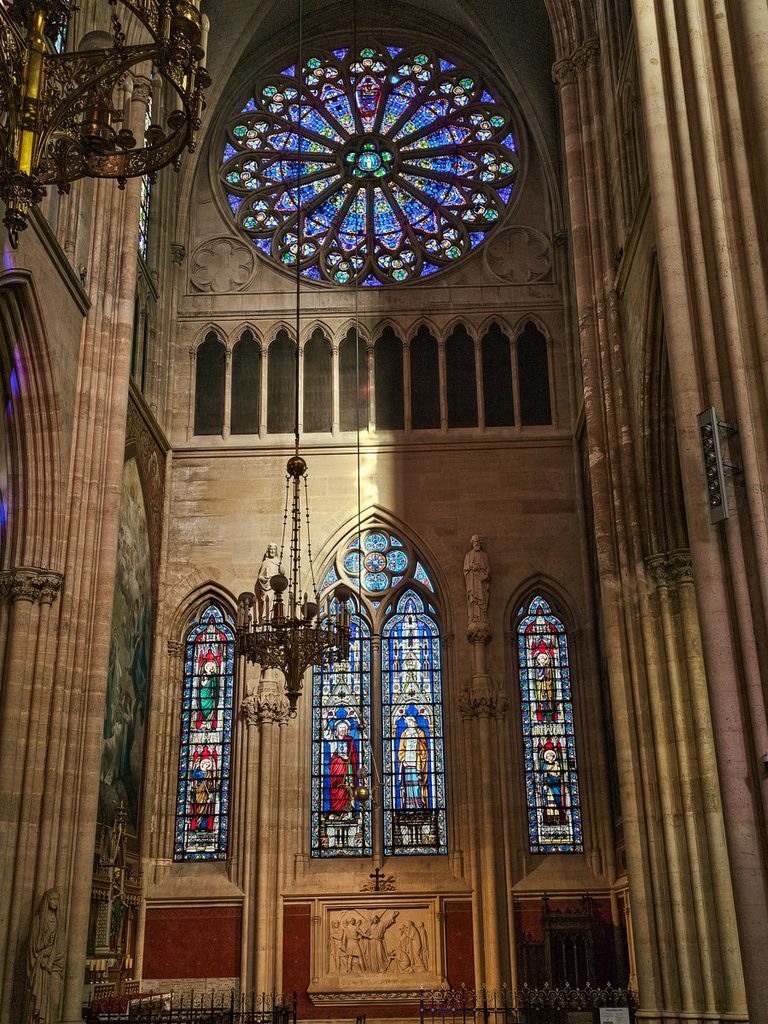
The design was inspired by the Flamboyant Gothic architecture of Saint-Ouen Abbey Church in Rouen, a style known for its elaborate stonework and decorative details. The exterior features two 70-meter-tall spires, which are easily visible from several viewpoints around Paris.
Tall stone columns support high vaulted ceilings, while colorful stained glass windows and decorated side chapels continue the medieval Gothic appearance.
Address: 23B Rue las Cases, 7th arrondissement
20. Saint-Gervais-Saint-Protais
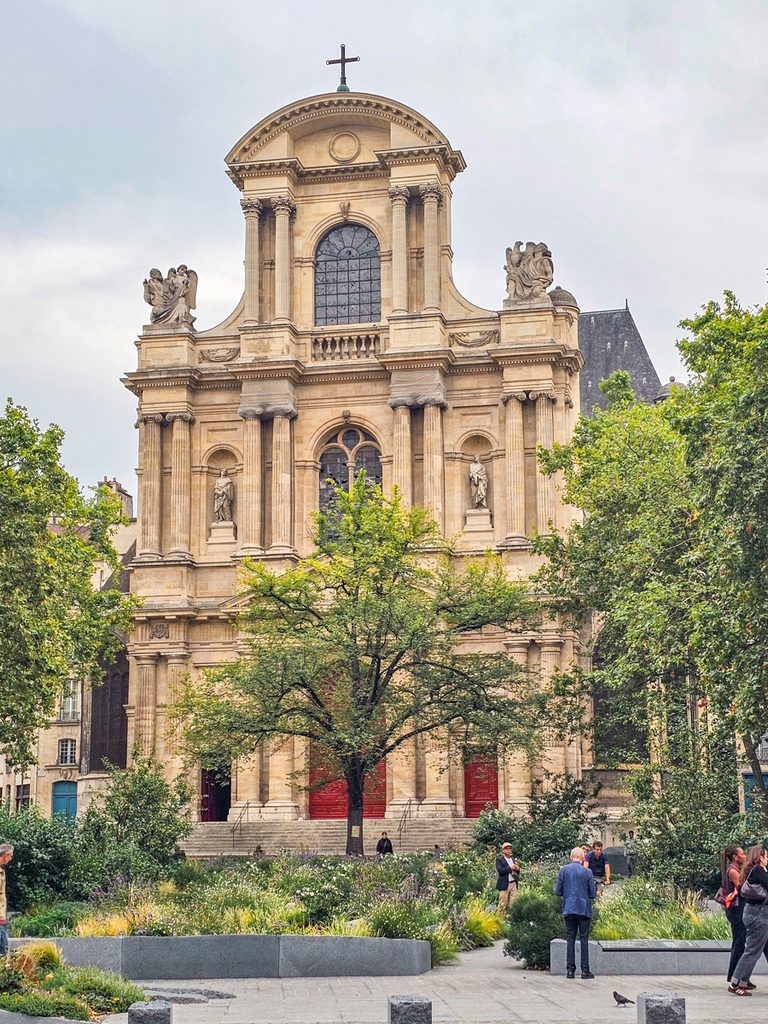
Just behind the Hôtel de Ville (City Hall), Église Saint-Gervais-Saint-Protais has an unusual combination of Gothic and classical architecture. Construction began in 1494, and while the interior was built in the Flamboyant Gothic style, the façade, completed in the early 1600s, was one of the first examples of French Baroque architecture in Paris.
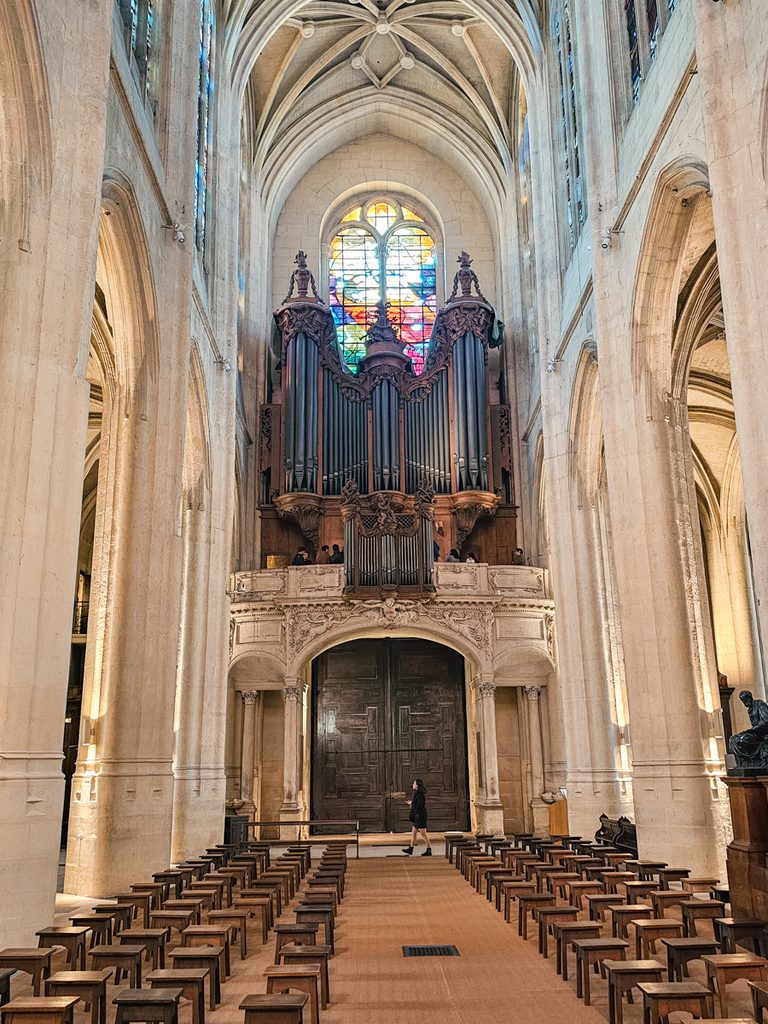
Inside, the church has exceptionally tall stone columns, elaborate vaulted ceilings, and colorful stained glass windows, some dating back to the 16th century. At the back of the nave is an ornate organ associated with the Couperin family, a famous dynasty of French musicians who served as organists here for generations.

The church also witnessed a tragedy during World War I. On Good Friday in 1918, a German artillery shell struck the building during a service, killing 91 people.
Today, Saint-Gervais is home to the Monastic Fraternities of Jerusalem, a religious community that holds daily prayers here. The church faces a small square and the Jardin du 13 Novembre 2015, a memorial garden dedicated to the victims of the November 2015 terrorist attacks.
Address: 13, Rue des Barres, 4th arrondissement
21. Romanian Orthodox Cathedral of the Holy Archangels

Tucked away in the Latin Quarter, the Romanian Orthodox Cathedral of the Holy Archangels is a small medieval Gothic chapel with a surprisingly colorful interior.
The chapel was originally built in the 14th century for the Collège de Dormans-Beauvais, with King Charles V personally laying the foundation stone in 1374. It was designed by Raymond du Temple, an architect who also worked on the Louvre, and its Gothic architecture was influenced by Sainte-Chapelle.

After centuries of changing uses, the chapel was bought by the Romanian Crown in 1882 and restored for Orthodox use. Today, it serves as the metropolitan cathedral of the Romanian Orthodox Church in Western and Southern Europe.
Inside, the chapel is filled with intense, rich stained glass windows, large hanging chandeliers, and red carpets. One of the most interesting features is the ornate, gilded iconostasis. This is a traditional feature of Orthodox churches that separates the altar from the rest of the chapel, and is decorated with religious images and intricate details.


I really enjoyed visiting this little church. The mix of medieval Gothic architecture and colorful Orthodox decorations makes it quite different from most of the other churches in Paris.
Address: 9 Bis Rue Jean de Beauvais, 5th arrondissement
22. Saint-Vincent-de-Paul
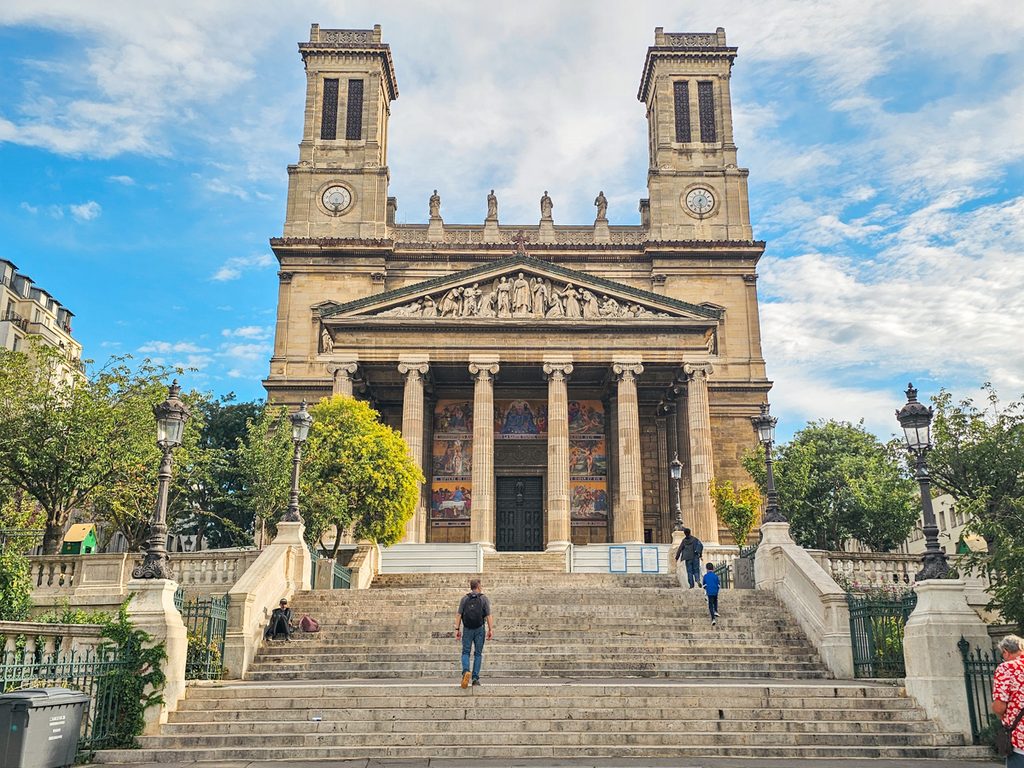
Perched above a large square in the 10th arrondissement, Église Saint-Vincent-de-Paul is one of the grander Neoclassical churches in Paris. A wide staircase leads up to the imposing façade, which resembles an ancient Greek temple.
The church was built between 1824 and 1844 on the site of the former Saint-Lazare priory, where Saint Vincent de Paul lived and worked in the 17th century. He dedicated much of his life to helping the poor and sick and founded the Congregation of the Mission here in 1625.
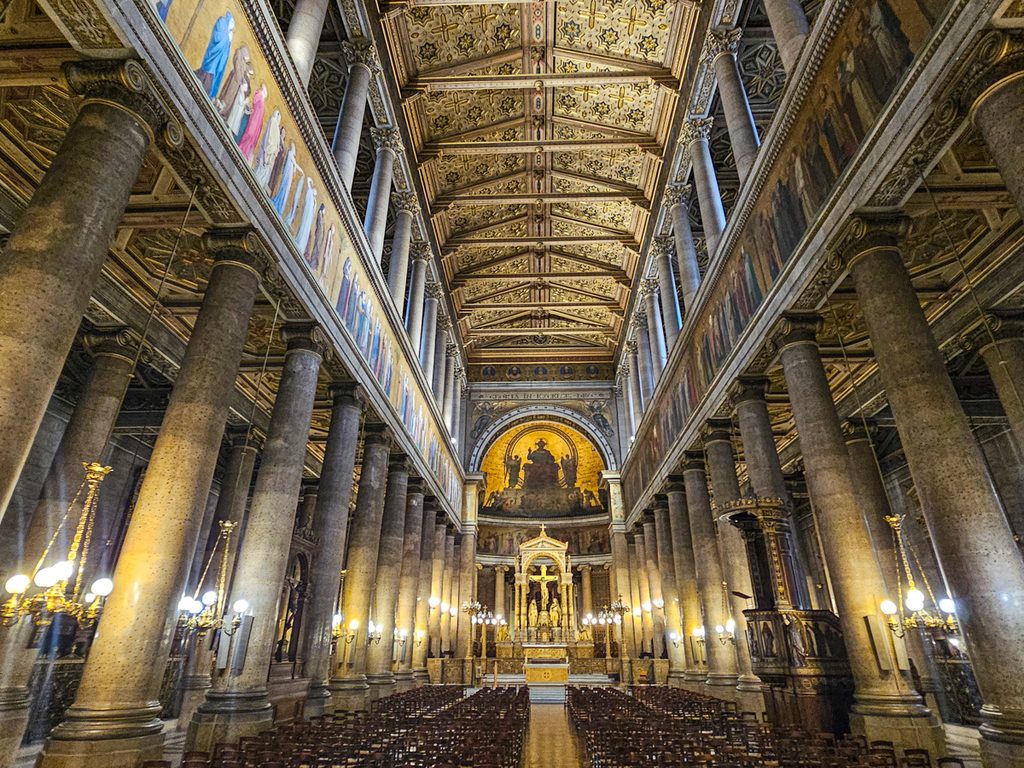


Inside, two levels of massive stone columns run along the nave, but the real highlight is the extraordinary ceiling. It’s covered in intricate geometric patterns, with carved stars, crosses, and gold detailing.
Just below the upper level of columns, a long painted frieze by Hippolyte Flandrin stretches along both sides of the nave. It features 235 religious figures, including saints, bishops, and martyrs.
The church is just two blocks from Gare du Nord, so it’s an easy stop if you’re traveling by train.
Address: Square Cavaillé-Coll, 10th arrondissement
23. Sainte-Trinité
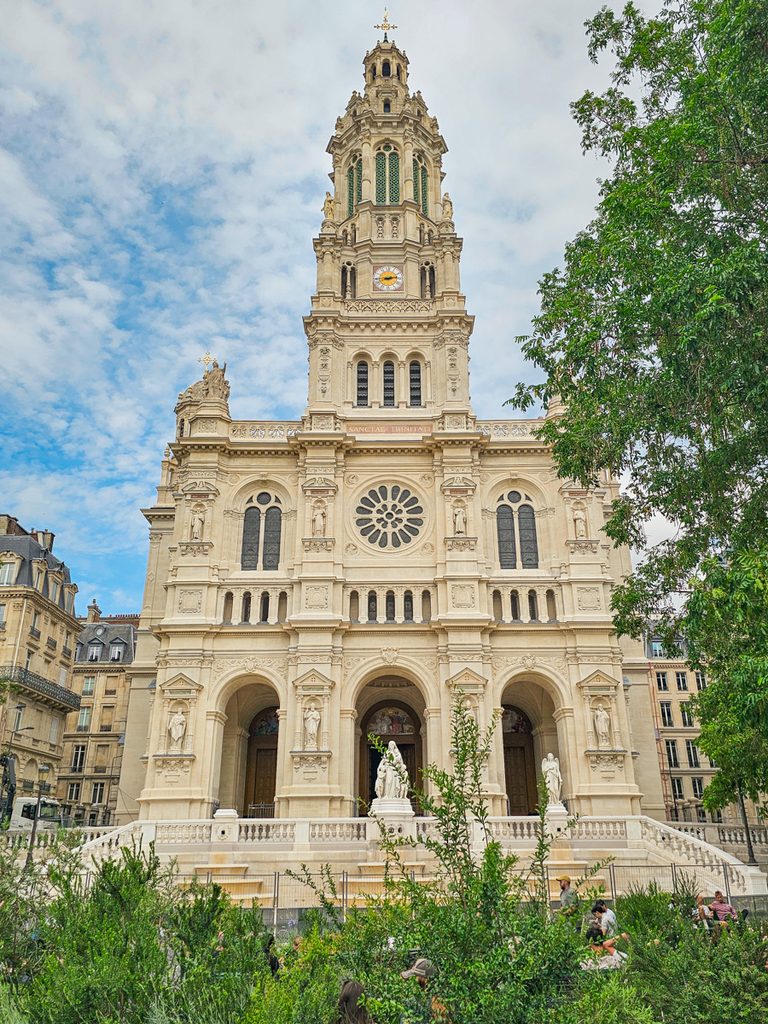
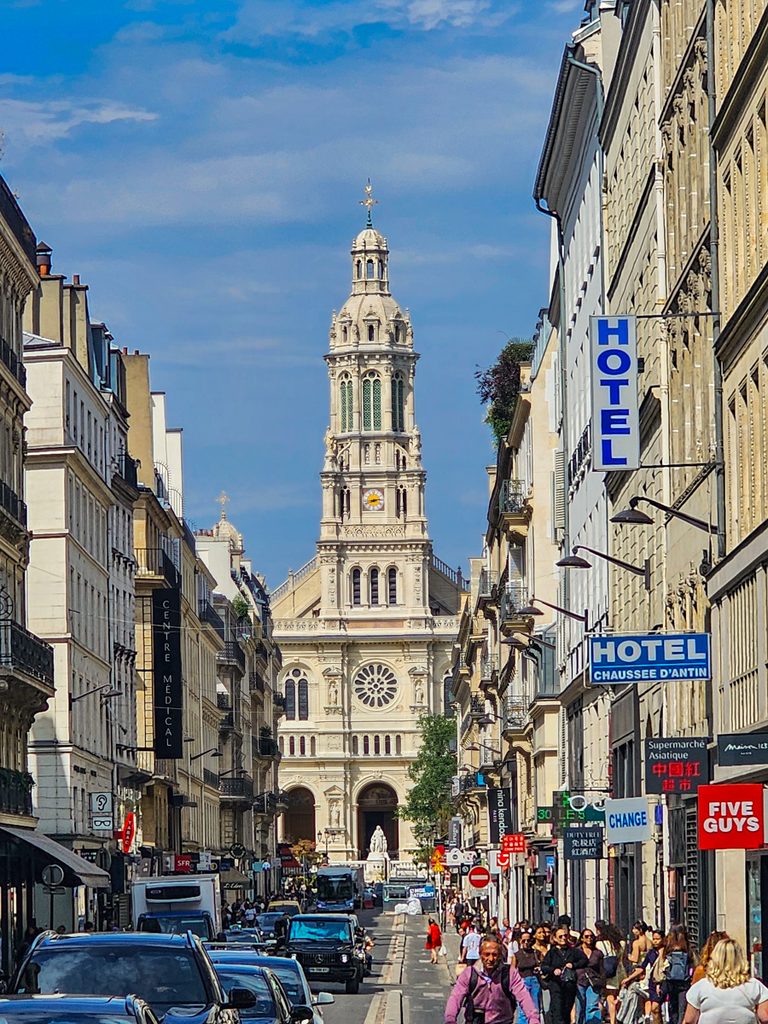
Église de la Sainte-Trinité is located just down the street from Galeries Lafayette in the 9th arrondissement. One of its most distinctive features is its tall, single bell tower, which is perfectly framed along Rue de la Chaussée-d’Antin. This view was actually intentional, as the church was built between 1861 and 1867 as part of Haussmann’s transformation of Paris.
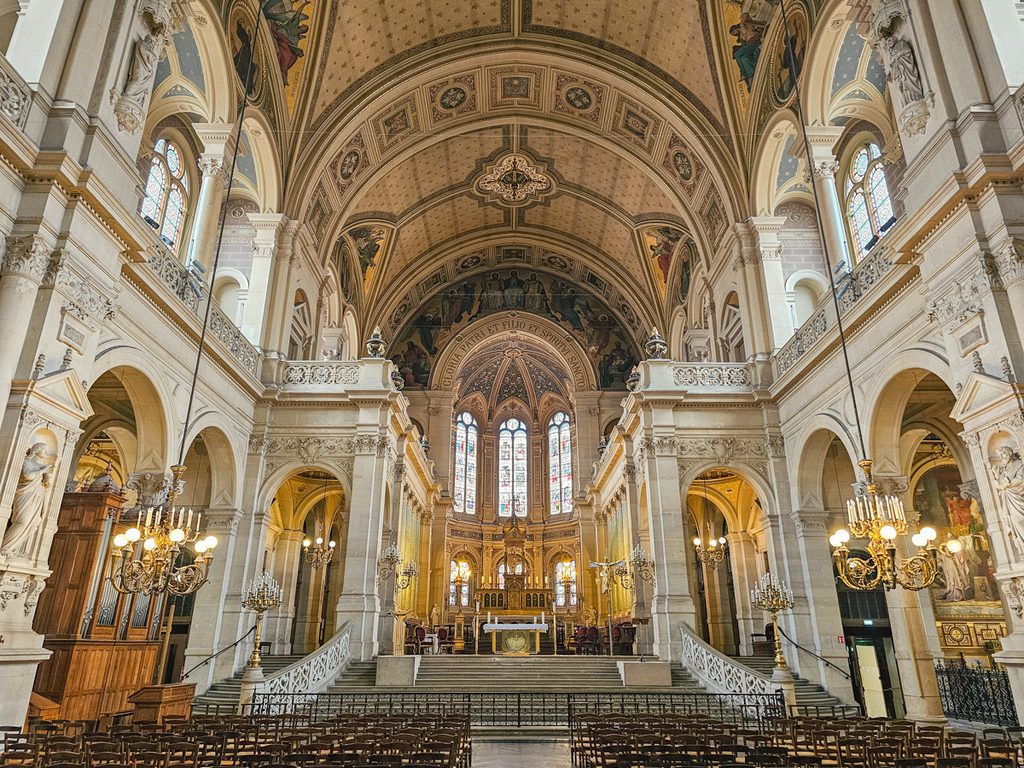
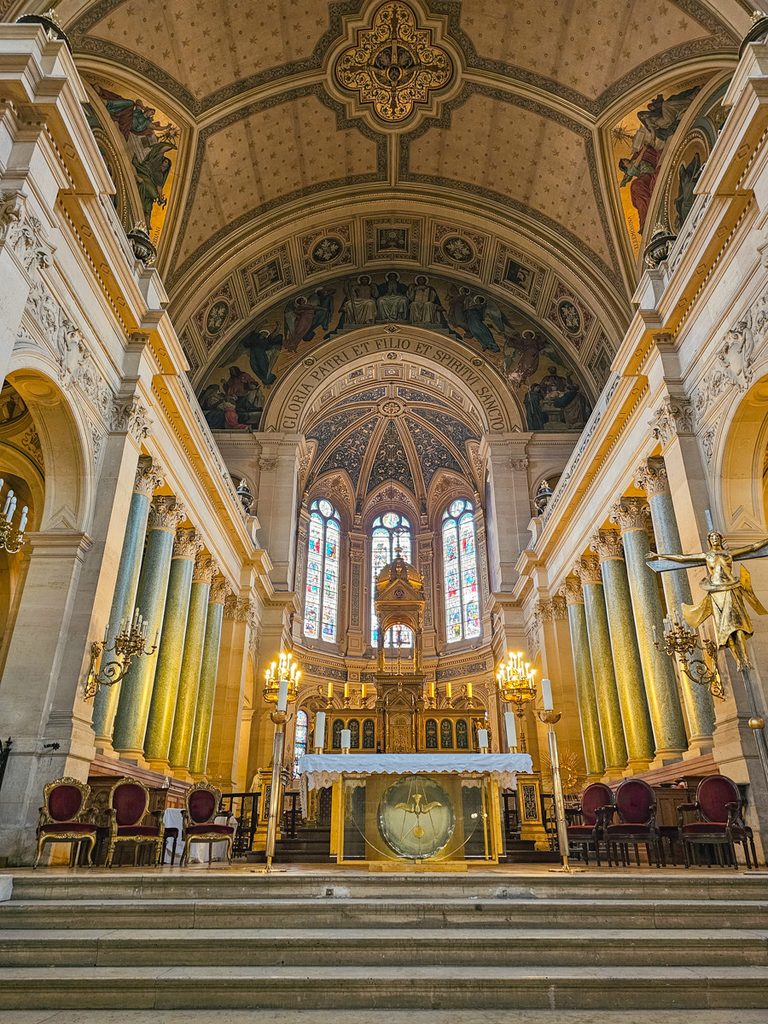
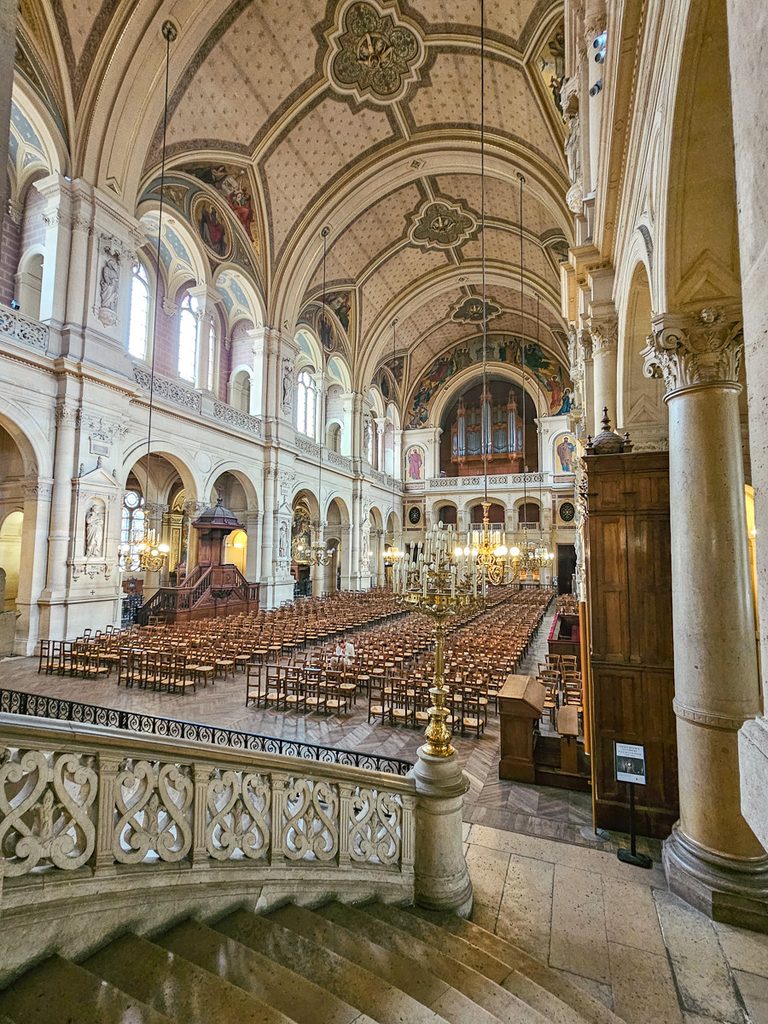
Inside, the church feels very open and spacious, with rows of pale stone columns and arches. The high, vaulted ceiling is covered in small stars and decorative patterns, and colorful paintings fill the spaces above the arches.
One of the most interesting features inside is the pair of sweeping staircases on either side of the choir. They curve up toward the altar, with beautifully carved stone railings.
Address: Place d’Estienne d’Orves, 9th arrondissement
24. Saint-Ambroise
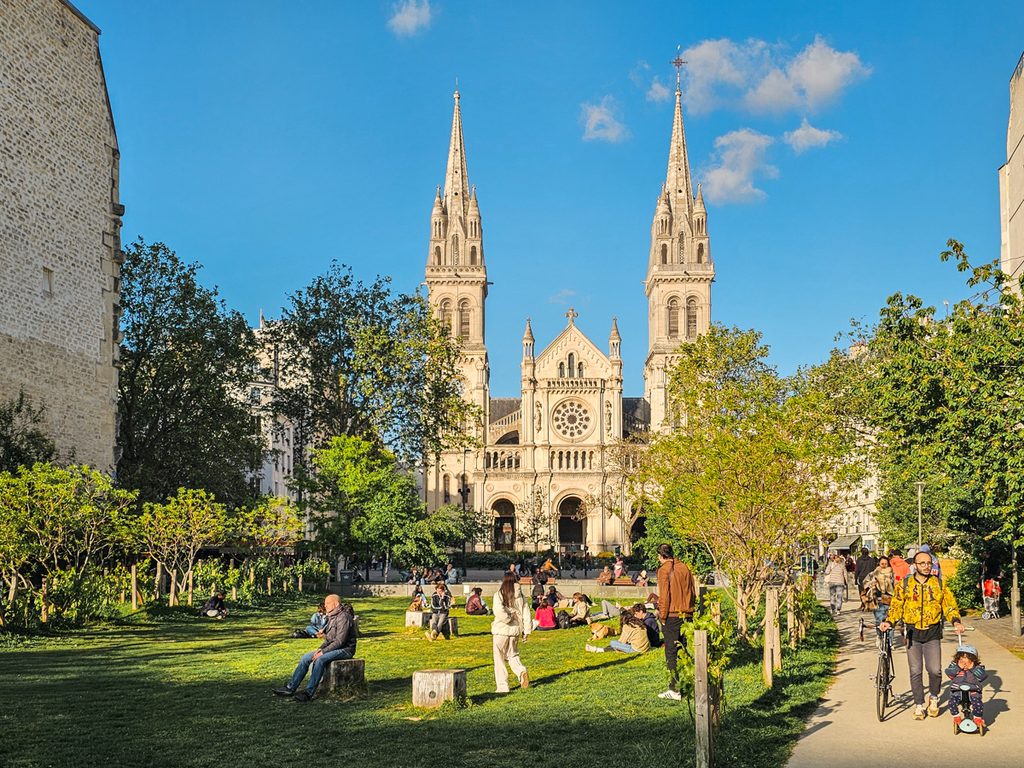
With its two tall bell towers and pointed spires, Église Saint-Ambroise has an imposing presence in the 11th arrondissement. It was built during Napoleon III’s major transformation of Paris, replacing an older, smaller church that no longer suited the growing neighborhood and its grand new boulevards.
The church was designed by Théodore Ballu, the city’s chief architect for religious buildings, who also designed Église de la Sainte-Trinité. It’s a good example of the eclectic architecture popular during the Second Empire, combining Romanesque and Gothic styles.
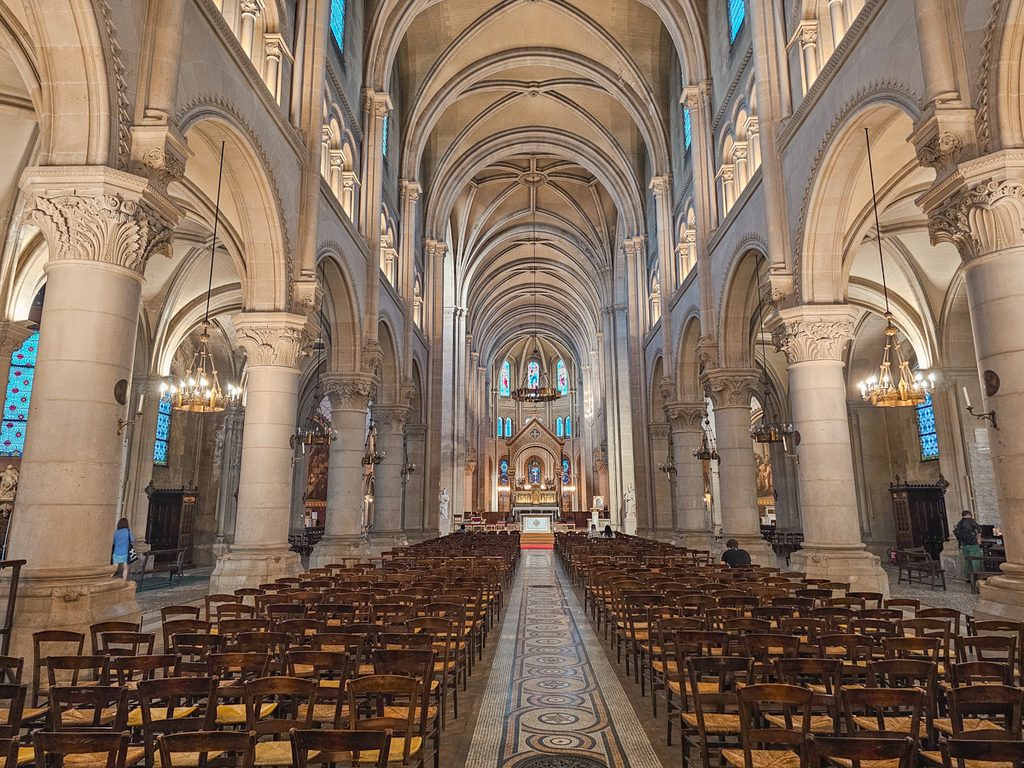
Inside, massive stone columns and rounded arches line the nave, with high vaulted ceilings and colorful stained glass windows. I particularly liked the stained glass surrounding the altar.
For the best view of the exterior, head to Jardin Truillot, a lovely neighborhood park where locals gather to relax on the grass, with the church’s twin towers rising above the greenery.
Address: 71 bis Bd Voltaire, 11th arrondissement
25. Saint-Denys-du-Saint-Sacrement
Located in the heart of the Marais, Église Saint-Denys-du-Saint-Sacrement is a 19th-century Neoclassical church with tall stone columns, a lovely coffered ceiling with gold detailing, and a beautiful painted dome above the altar.
But the most interesting thing to see here is a Pietà by the French painter Eugène Delacroix, displayed in a side chapel at the front of the church.

Painted in the 1840s, the work shows the Virgin Mary grieving over the body of Jesus after his crucifixion. Delacroix actually painted it here in the church, sometimes working on Sundays because he found the music during Mass so inspiring.
I thought the painting was particularly beautiful, and it’s quite special to see an original Delacroix in the very church where he created it. If you’re exploring the Marais, this is an easy stop to make, especially if you enjoy art.
Address: 68, ter Rue de Turenne, 3rd arrondissement
Final Thoughts
So which churches would I recommend most? That’s an incredibly difficult question, and I’m not sure I can give you a fair answer!
Saint-Étienne-du-Mont, Saint-Denis, La Madeleine, Saint-Eugène-Sainte-Cécile, Saint-Augustin, and Notre-Dame-de-Lorette would all be strong contenders. But then I start thinking about the others and remember all the things I loved about them, and then I just don’t want to leave any out!
I guess that’s a pretty good problem to have when you’re exploring Paris 🙂. My advice is to see which ones are near the places you’re already planning to visit in Paris. You might be surprised by how many wonderful churches are just a few minutes away from the city’s most famous attractions.
Planning the Rest of Your Time in Paris?
If you enjoy exploring Paris’s history, architecture, and lesser-known places, I have plenty more guides to help you plan your trip:
- 30 Hidden Gems in Paris – More fascinating places around the city that many visitors overlook.
- 11 Charming Passageways in Paris – Historic covered arcades and tucked-away streets worth exploring.
- Ultimate List of Things to Do in Paris – 99 sights and experiences, from major landmarks to lesser-known favorites.
- Where to Stay in Paris – A neighborhood-by-neighborhood breakdown to help you choose the right base.
If you want everything in one place, my Paris travel guide page pulls together neighborhood guides, attraction and museum guides, foodie recommendations, and travel tips in one hub.
And if you’re feeling overwhelmed or short on time, I also offer Paris planning calls.
These one-on-one video sessions are great for getting feedback, asking questions, and sorting through options, whether you need a full plan or help fine-tuning what you already have.
