
How the 1900 World’s Fair Changed Paris Forever

For seven months in 1900, a huge section of Paris was transformed for one of the largest World’s Fairs ever held. Enormous exhibition palaces appeared along the Seine, countries from around the world built elaborate pavilions, and millions of visitors poured into the city.
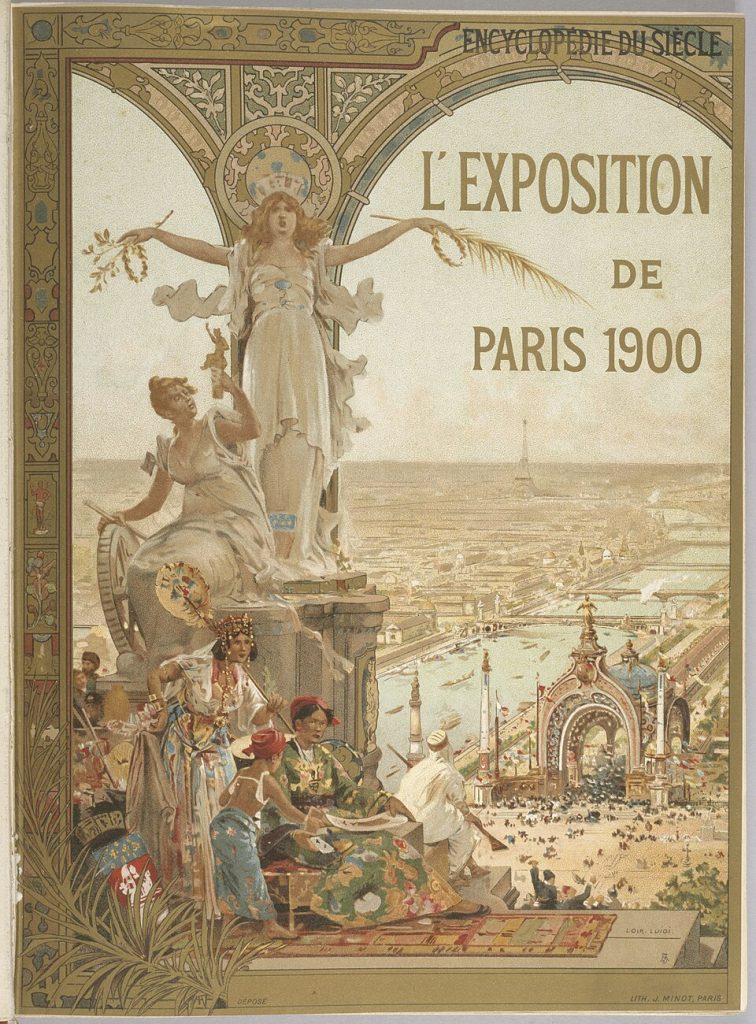
The 1900 World’s Fair, or Exposition Universelle, was all about pushing the boundaries of technology, architecture, and industry. Paris wanted to show that it was ready to lead the world into the new 20th century. But the city didn’t simply put on an enormous exhibition and then pack it all away.
Many of Paris’ most recognizable landmarks, transportation systems, bridges, museums, and even restaurants exist because of the 1900 World’s Fair. They were created or transformed for the Exposition and, in the process, permanently changed Paris.
What Was a World’s Fair?
The World’s Fair tradition began with London’s Great Exhibition in 1851. Industrialization was rapidly changing Europe, and these enormous international exhibitions gave countries a chance to showcase their latest achievements in technology, manufacturing, architecture, art, and design.
This was well before radio, television, or the internet, so World’s Fairs gave ordinary people an opportunity to see inventions and ideas from around the world firsthand.
By 1900, Paris had already hosted four previous World’s Fairs, including the famous 1889 Exposition Universelle, for which Gustave Eiffel built the Eiffel Tower. But with the start of a new century approaching, France set out to make the 1900 Exposition the biggest and most impressive yet.
And arguably, they achieved it.
Why the 1900 Fair Was Such a Big Deal
More than 50 million people visited the 1900 Exposition Universelle during its seven-month run from April to November.
Keep in mind, this was long before commercial flights and modern mass tourism. Coming from North America meant crossing the Atlantic by ship, while even traveling from elsewhere in Europe could require extensive train and boat journeys. Bringing more than 50 million people to Paris was an extraordinary feat.
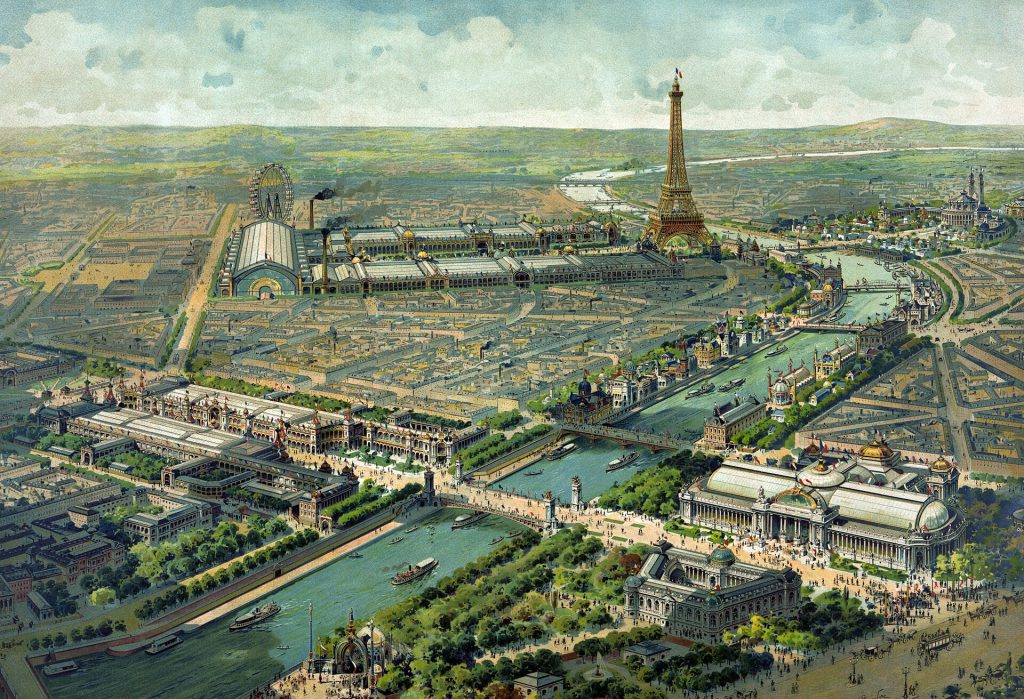
The fair itself was enormous. Its main exhibition grounds stretched across about 120 hectares, or nearly 300 acres, including the banks of the Seine, Champ de Mars, Invalides, Champs-Élysées, and Place de la Concorde. Another large exhibition area was set up in the Bois de Vincennes.
More than 80,000 exhibitors and participants showcased everything from industrial machinery and electricity to art, furniture, transportation, and consumer goods. Paris even gave the Eiffel Tower a new look for the occasion: in 1899, it was repainted in yellow.
But a long-lasting legacy of the Exposition wasn’t what visitors saw inside the exhibits. It was what Paris built to accommodate them. In preparation for a single international event, Paris dramatically transformed a large section of the city.
The Landmarks Paris Kept
Many of the fair’s biggest construction projects were concentrated along the Seine between the Champs-Élysées, Invalides, Champ de Mars, and Trocadéro.
Many other structures were built only for the fair and torn down afterward. But several were designed to last, so the Exposition ended up reshaping an entire section of central Paris into the monumental landscape you still see today.
These are 10 of the most impressive and iconic landmarks Paris kept from the 1900 World’s Fair.
1. Grand Palais & Petit Palais
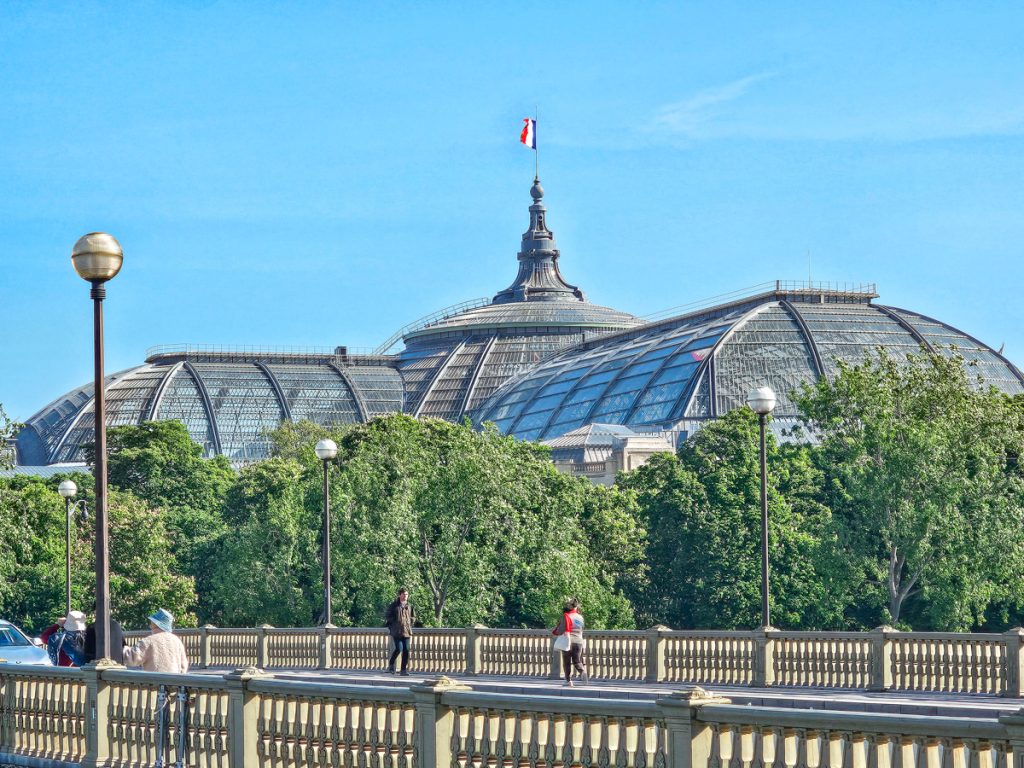
One of the biggest architectural projects for the fair was the construction of the Grand Palais and Petit Palais, constructed across the street from each other and completed in only about three years. The two buildings combine monumental Beaux-Arts architecture with the modern materials and decorative influences appearing around the turn of the century.
The Grand Palais is particularly famous for its enormous iron-and-glass roof. Its central nave covers 13,500 square meters beneath what is considered the largest glass roof in Europe.
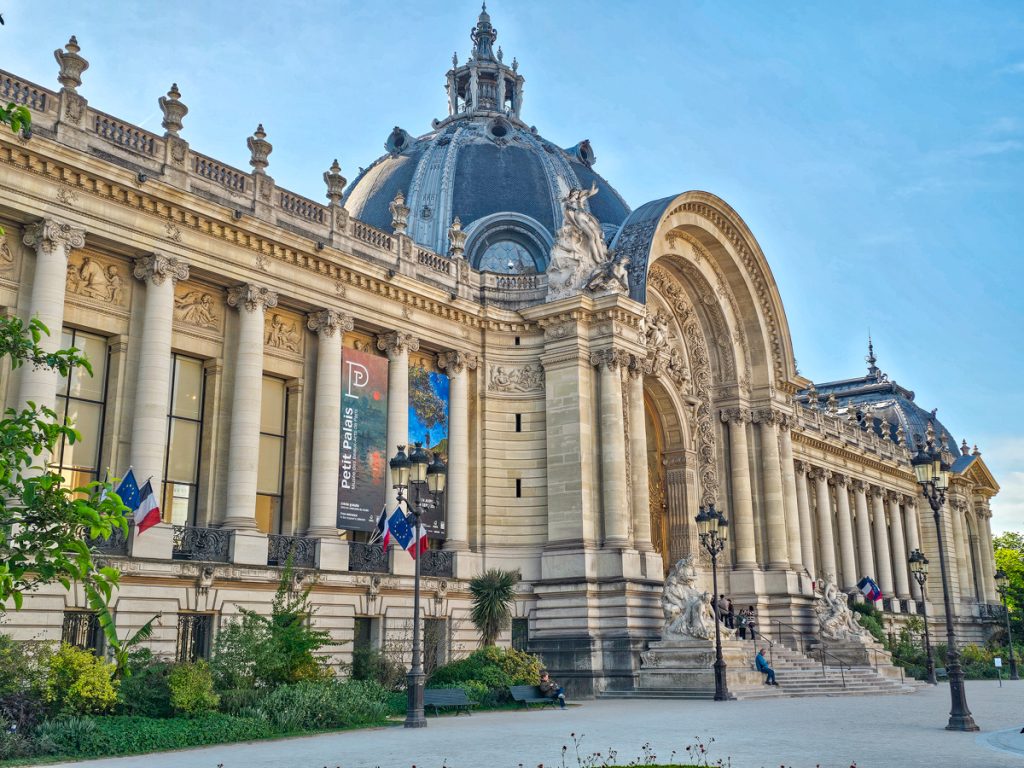
Both buildings became permanent Paris landmarks. The Petit Palais is now home to the City of Paris Museum of Fine Arts (free to visit), while the Grand Palais continues to host major exhibitions, cultural events, fashion shows, and the Palace of Discovery.
2. Pont Alexandre III
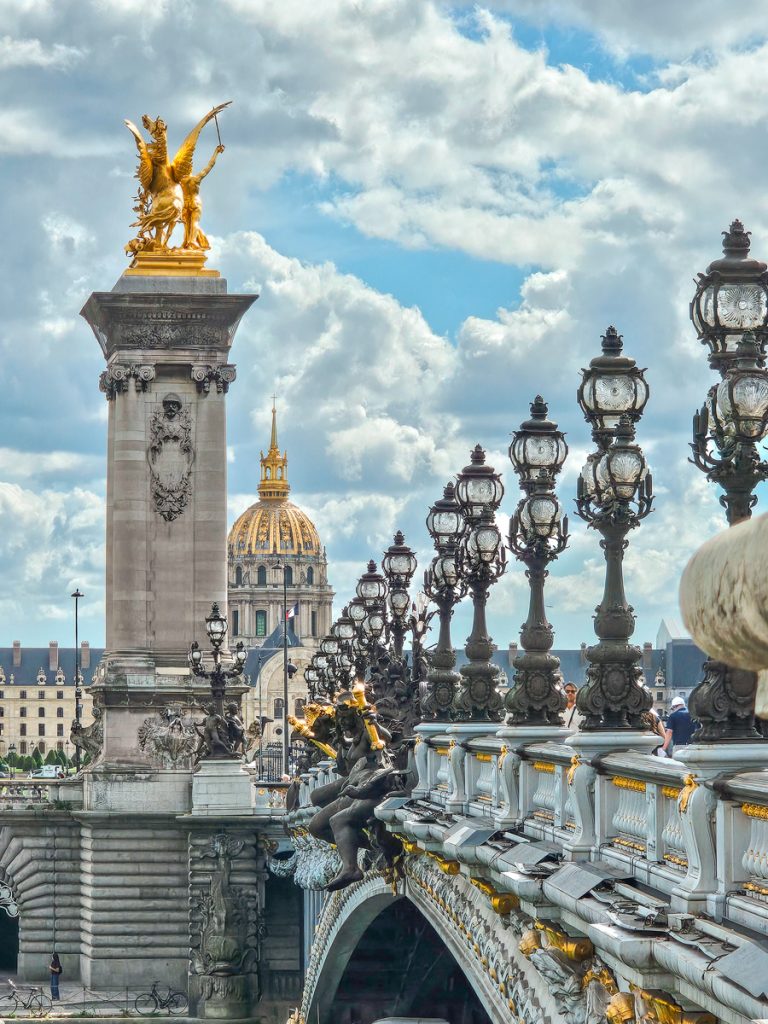
Pont Alexandre III was one of the major showpieces created for the 1900 World’s Fair. Connecting the Champs-Élysées with the exhibition grounds around Les Invalides, it wasn’t enough for the new bridge to simply get visitors across the Seine. It needed to make an impression.
And it certainly did. The bridge was designed in the elaborate Beaux-Arts style, with Art Nouveau lampposts, ornate sculptures, and four enormous pillars marking its corners. Each pillar is topped by a gilded bronze sculpture of a winged horse, representing Science, Arts, Commerce, and Industry.
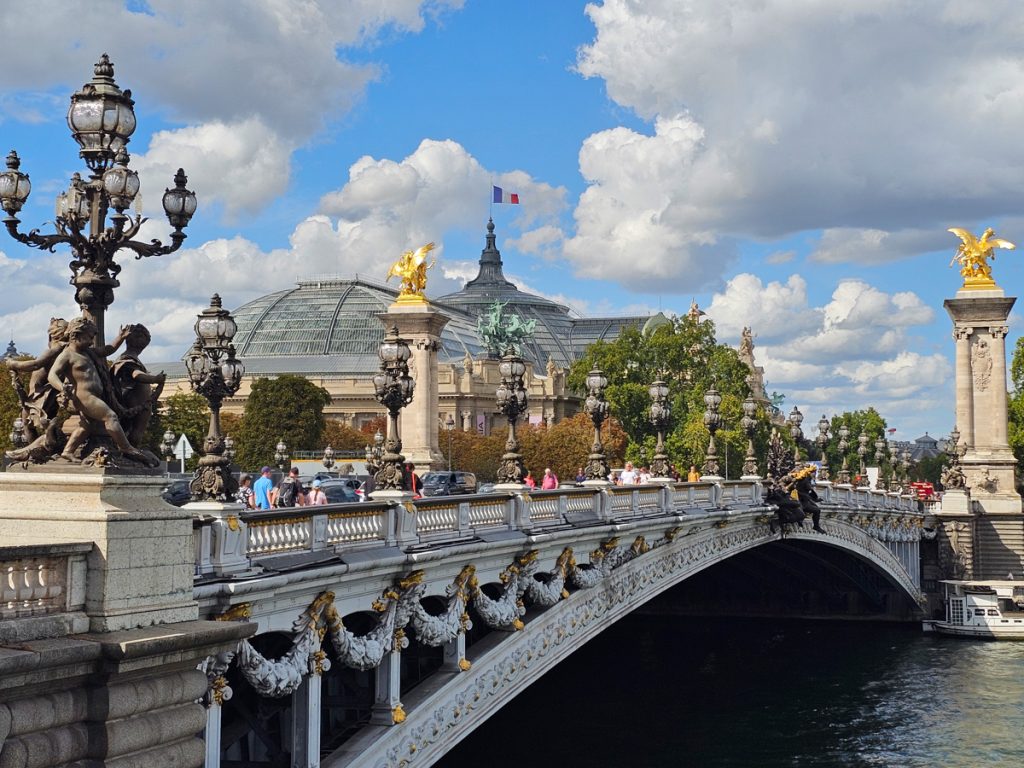
The bridge was also intended as a symbol of the Franco-Russian alliance, which is why it was named after Russian Tsar Alexander III. Today, all that decoration makes Pont Alexandre III one of the most recognizable bridges in Paris, and arguably its most beautiful.
3. Gare d’Orsay → Musée d’Orsay
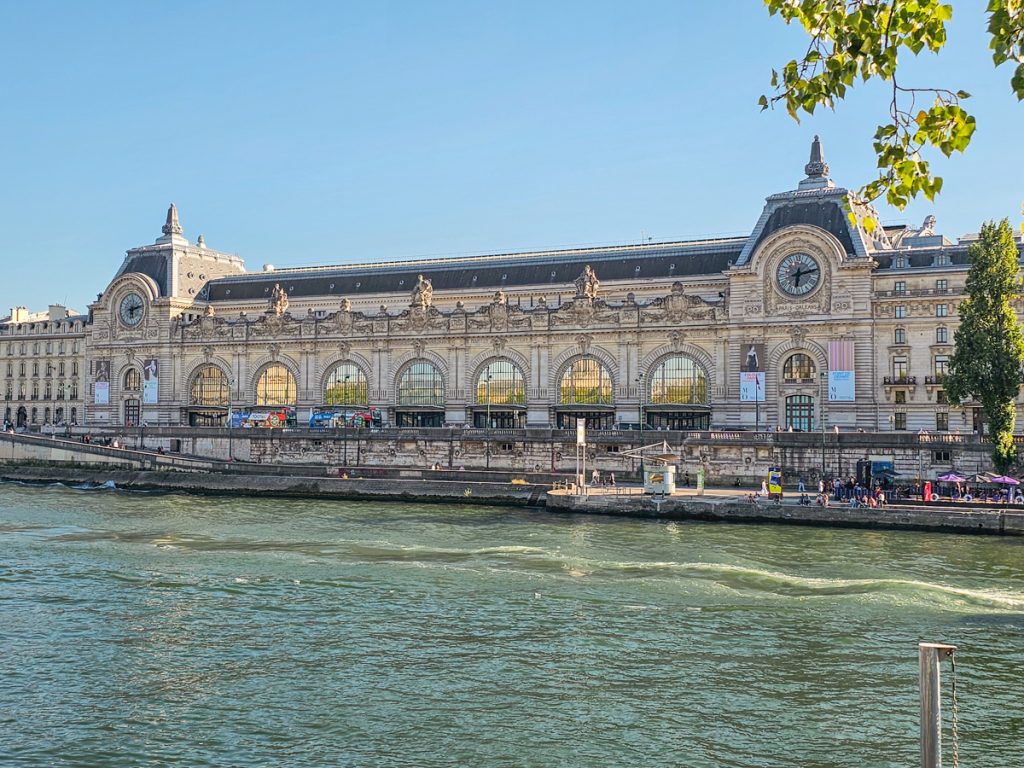
Today, the Musée d’Orsay is one of the most beloved museums in Paris, but the building originally opened as a train station for the 1900 World’s Fair. Gare d’Orsay was built to bring passengers arriving from southwestern France much closer to the heart of Paris for the Exposition.
Architect Victor Laloux hid the modern railway infrastructure behind an elaborate stone exterior. Inside, the station was remarkably advanced for its time, with electric trains, passenger elevators, luggage lifts, and underground tracks beneath an enormous glass-and-metal hall.
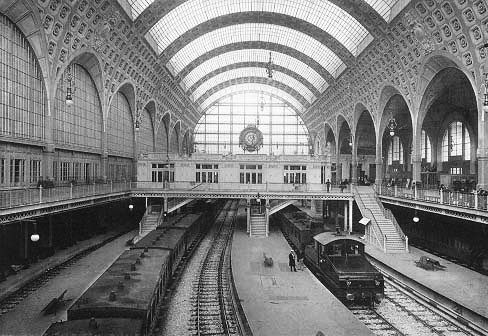
Gare d’Orsay continued operating for decades, but by 1939, its platforms had become too short for modern trains. After narrowly escaping demolition in the 1970s, the building was eventually transformed into the Musée d’Orsay, which opened in 1986.
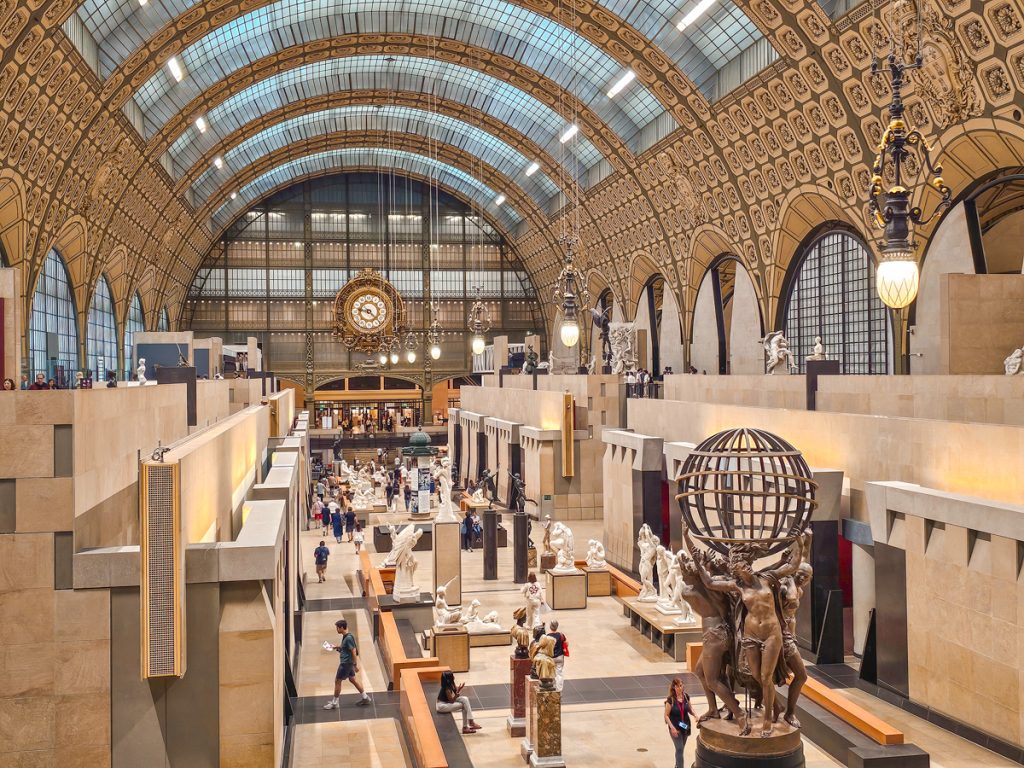
Today, you can still easily recognize its former life as a railway station in the enormous central hall and two massive clocks that remain on the upper floors.
4. The Paris Metro
By the end of the 19th century, Paris desperately needed a better way to move people through its increasingly crowded streets. The millions of visitors expected for the Exposition made the need even more urgent.
Construction began on the city’s first Metro line in 1898. Just two years later, Line 1 opened on July 19, 1900, running from Porte Maillot in western Paris to Porte de Vincennes in the east and providing access to the Exposition.
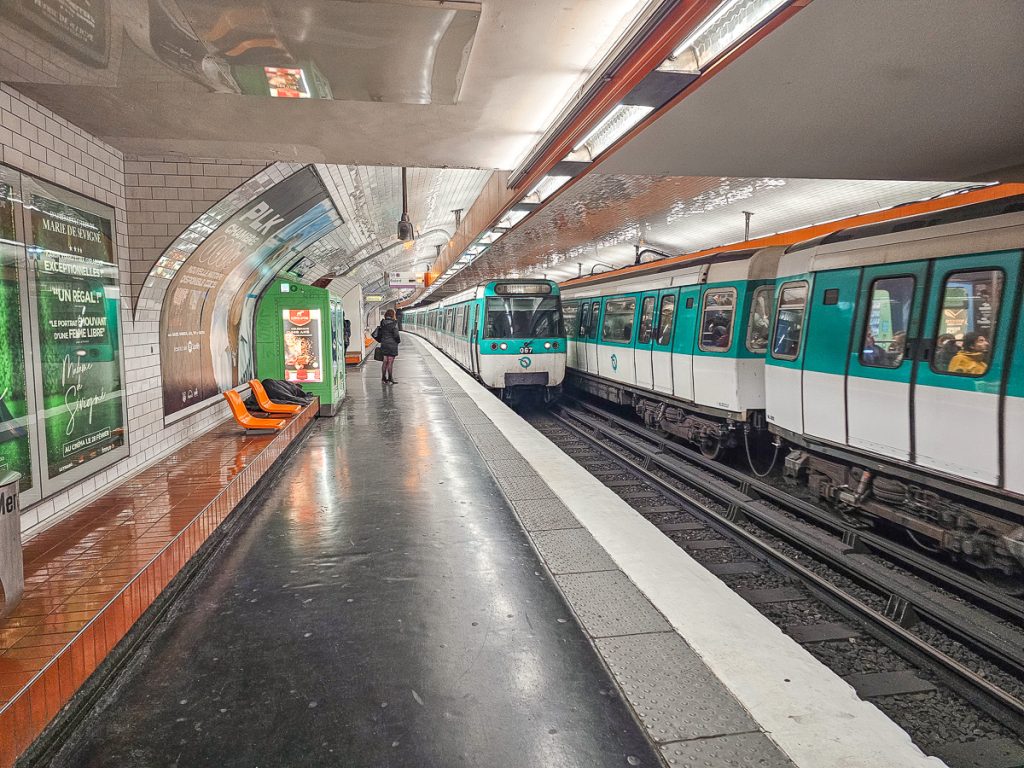
However, not everyone was excited about this new mode of transportation. Underground railways were still relatively new, and some Parisians were wary of traveling beneath the city. Nevertheless, the Metro quickly proved successful.
More lines followed, eventually creating the sprawling underground system that millions of Parisians and visitors use today. If you’ve ever ridden Line 1 between the Arc de Triomphe, Louvre, and central Paris, you’ve traveled along the route that launched the Paris Metro in 1900.
5. Guimard Metro Entrances
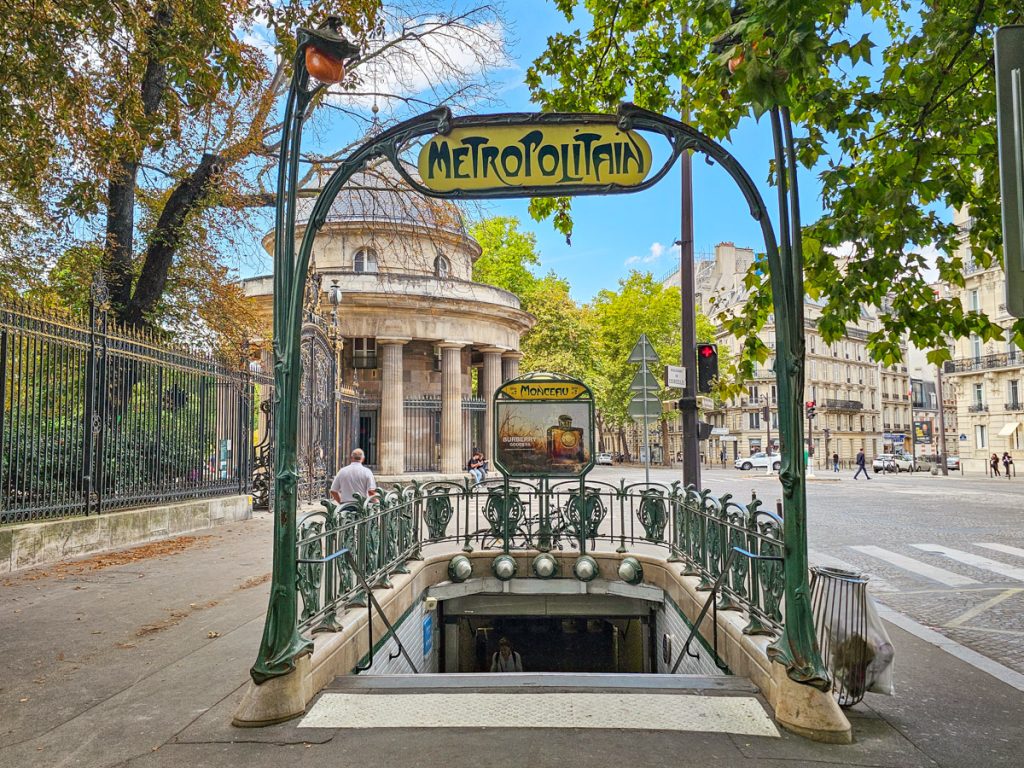
The new Metro needed entrances, and Paris wasn’t going to settle for ordinary staircases and railings. Hector Guimard, one of the leading architects of the Art Nouveau movement, was selected to create a distinctive design for the new system.
His entrances used green cast iron, curving lines inspired by plants, unusual lamps, and the distinctive “Métropolitain” lettering that is now instantly associated with Paris.
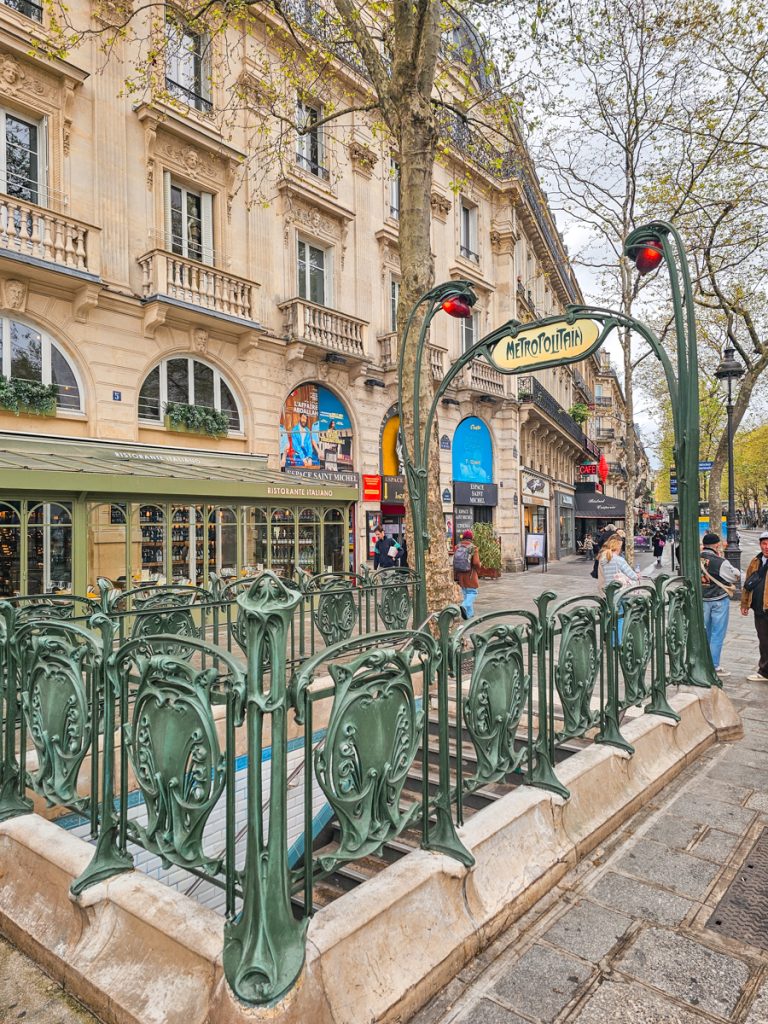
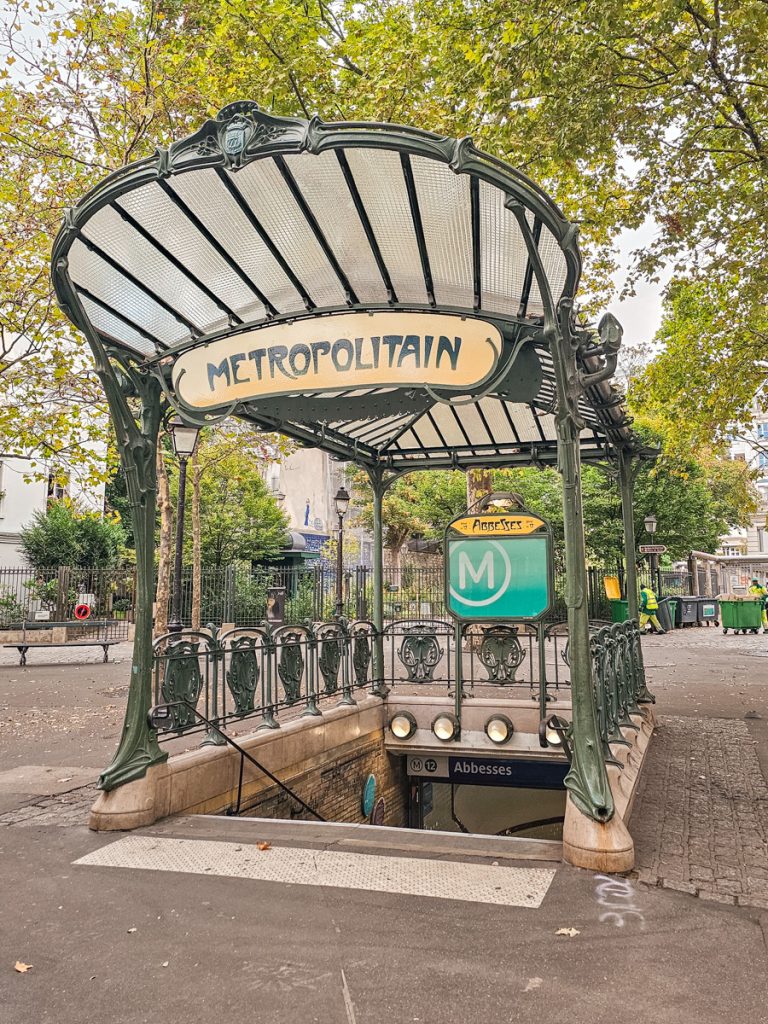
The designs helped make the new subway feel artistic rather than purely industrial, but they were also controversial. As Art Nouveau fell out of fashion, many of the original entrances were gradually removed.
Out of 167 Guimard structures originally installed at 107 stations, 88 survive today. Ironically, the designs that were once criticized as too strange for Paris are now among the city’s most recognizable and beautiful pieces of street architecture.
6. Gare de Lyon & Le Train Bleu
Gare de Lyon was extensively rebuilt for the 1900 World’s Fair, including the addition of its distinctive clock tower. Inside the station, another legacy of the Exposition survives.
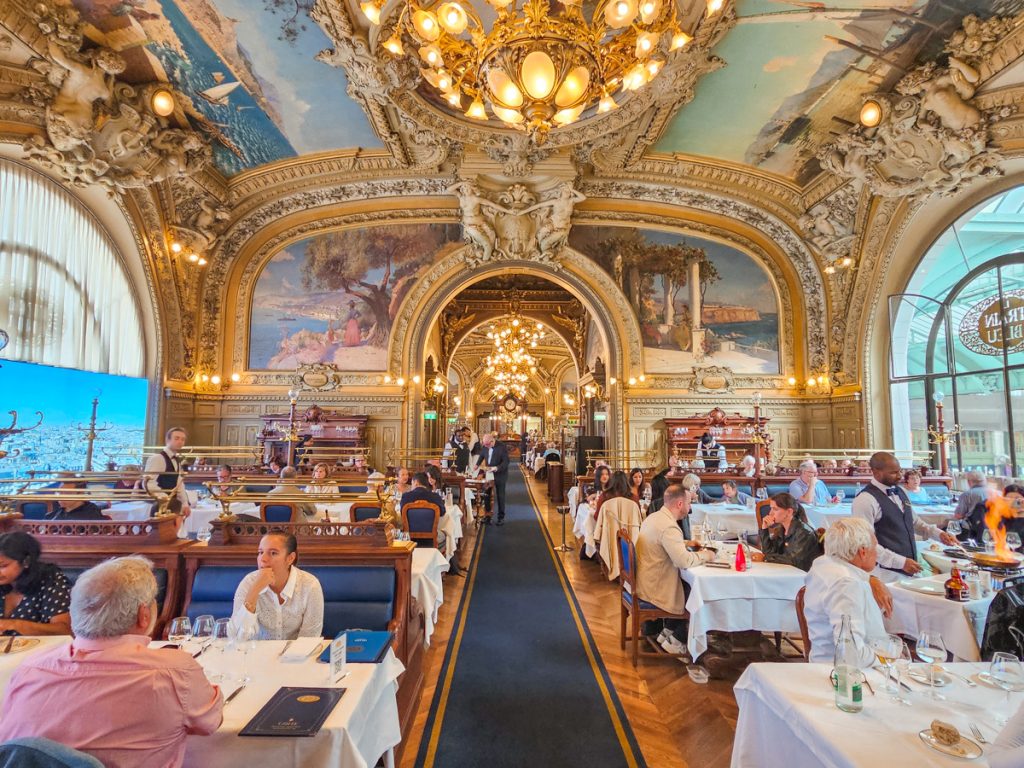
The restaurant now known as Le Train Bleu was built during the fair and opened shortly afterward, in 1901, as a lavishly decorated dining room designed to impress the wealthy travelers passing through the station.
Its gilded details, painted ceilings, and large murals depicting destinations served by the railway make the dining room feel more like part of a palace than a train station restaurant.
The restaurant is still open and operational, and the gorgeous decor and excellent food make it one of my favorite places to eat in Paris.
7. Passerelle Debilly

Pont Alexandre III wasn’t the only new crossing built across the Seine for the fair. The much smaller Passerelle Debilly was constructed to connect exhibition areas on opposite banks, including the military exhibition palaces.
Originally called the Passerelle de l’Exposition Militaire, it was supposed to be demolished after the fair. Instead, it survived, was later renamed Passerelle Debilly, and has been protected as a historic monument since 1966.
8. Notre Dame du Travail
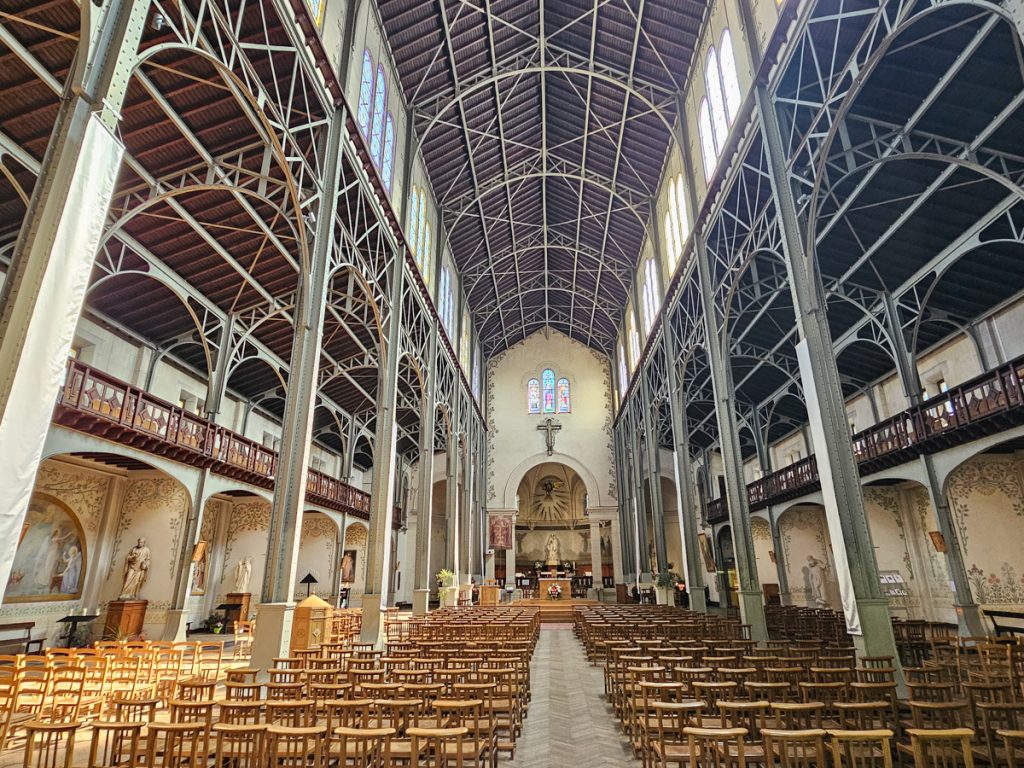
Notre-Dame-du-Travail is another spot with an unexpected, if indirect, connection to the 1900 World’s Fair. The church was built in the 14th arrondissement in 1899 to serve the working-class neighborhood and the many laborers who had come to Paris to help prepare for the Exposition.
Its design was intentionally industrial, meant to feel familiar to workers more accustomed to factories than palaces. Inside, exposed iron columns and metal trusses support the nave, some reportedly reused from the Palais de l’Industrie that was demolished to make way for the Grand and Petit Palais.
The result is surprisingly beautiful, and today Notre-Dame-du-Travail is a fabulous hidden gem on Paris’s Left Bank.
9. A Statue of Liberty
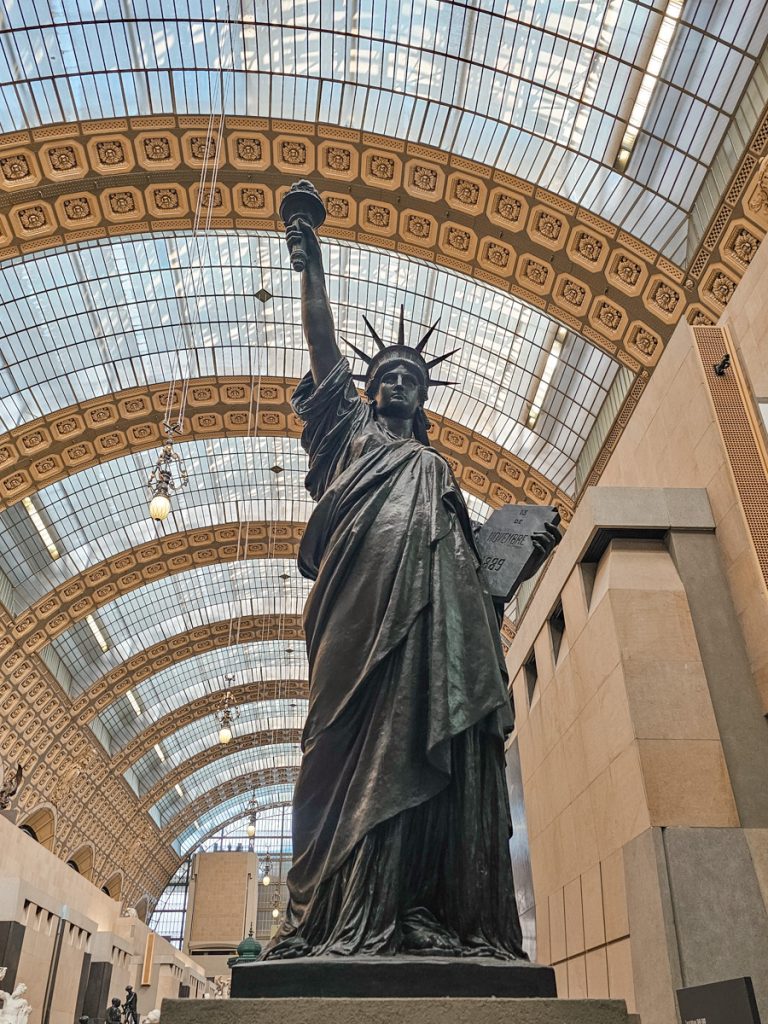
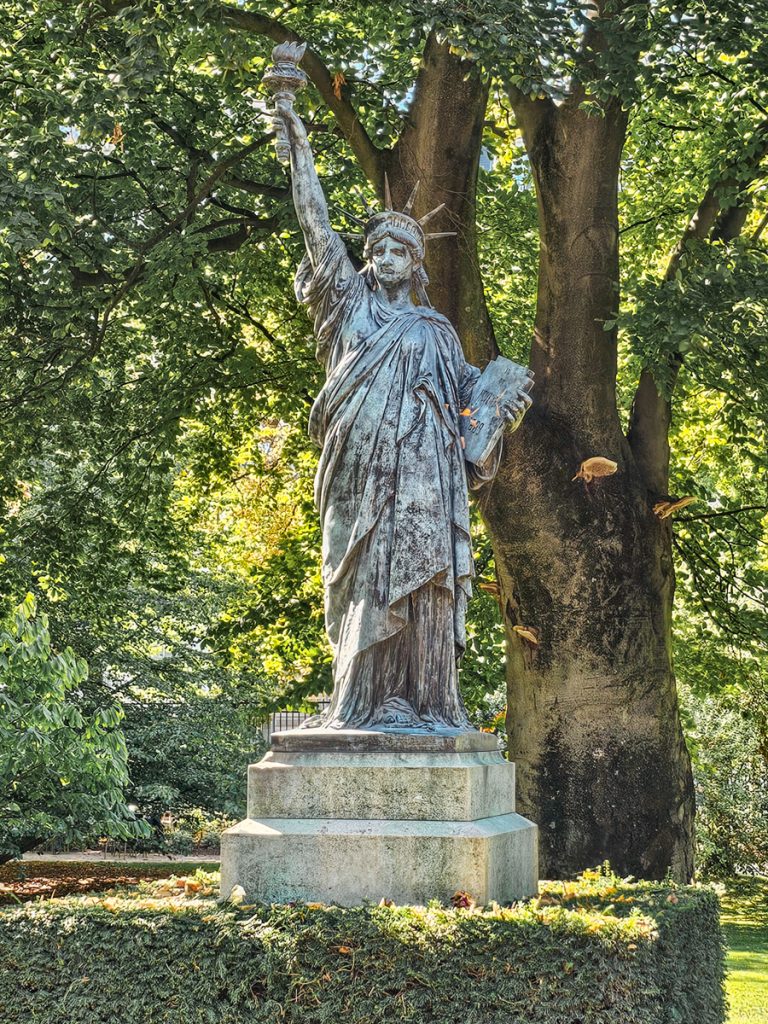
A 9-foot version of Frédéric Bartholdi’s famous Statue of Liberty was displayed at the 1900 Exposition. Bartholdi later gave it to the Musée du Luxembourg, and in 1906 it was moved to the Luxembourg Gardens, where it remained for more than a century.
The original was moved to the Musée d’Orsay in 2012 for preservation, but a bronze replica now stands in its place in the Luxembourg Gardens.
10. The Sèvres Portal at Saint-Germain-des-Prés
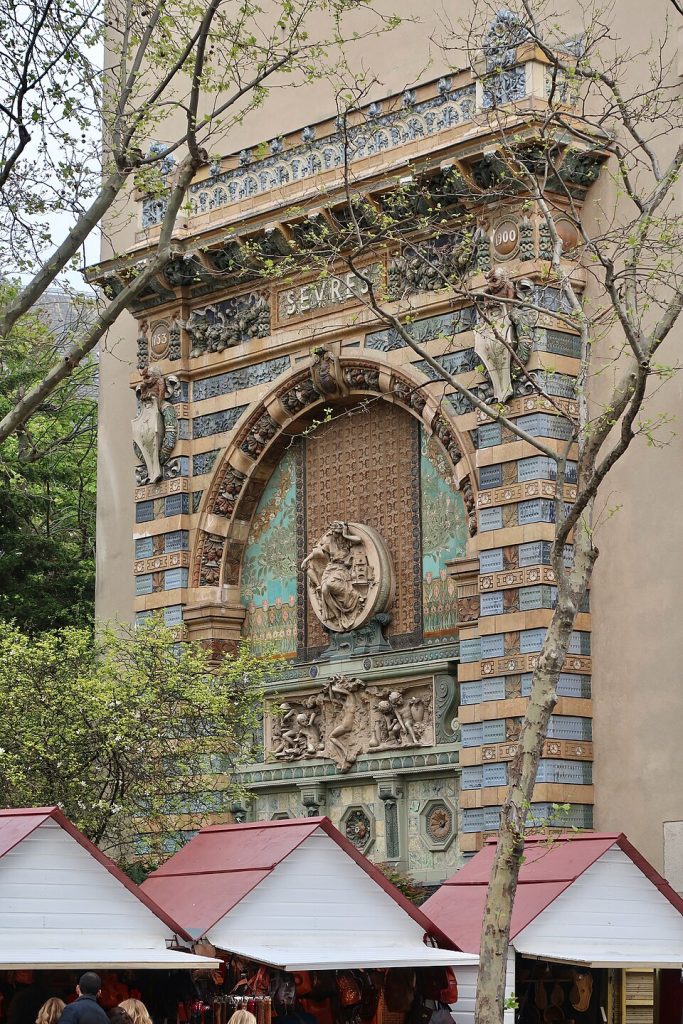
One of the more unexpected remnants of the fair is hiding beside the Church of Saint-Germain-des-Prés in the 6th arrondissement.
The colorful ceramic portal was originally part of the Palais des Manufactures Nationales, one of the fair’s enormous exhibition buildings. After the Exposition, it was moved to Square Félix-Desruelles beside the church, where you can still see it today.
Temporary Wonders That Disappeared
While some of the Exposition’s structures became permanent Paris landmarks, much of the fair was designed to be short-lived.
For seven months, enormous palaces, national pavilions, exhibition halls, and attractions created what was essentially a temporary city along the Seine. Then much of it was dismantled.
But just because these structures disappeared doesn’t mean their influence did. Many showcased the new technologies, artistic styles, and ideas that would become part of life in Paris during the new century.
1. The Palace of Electricity
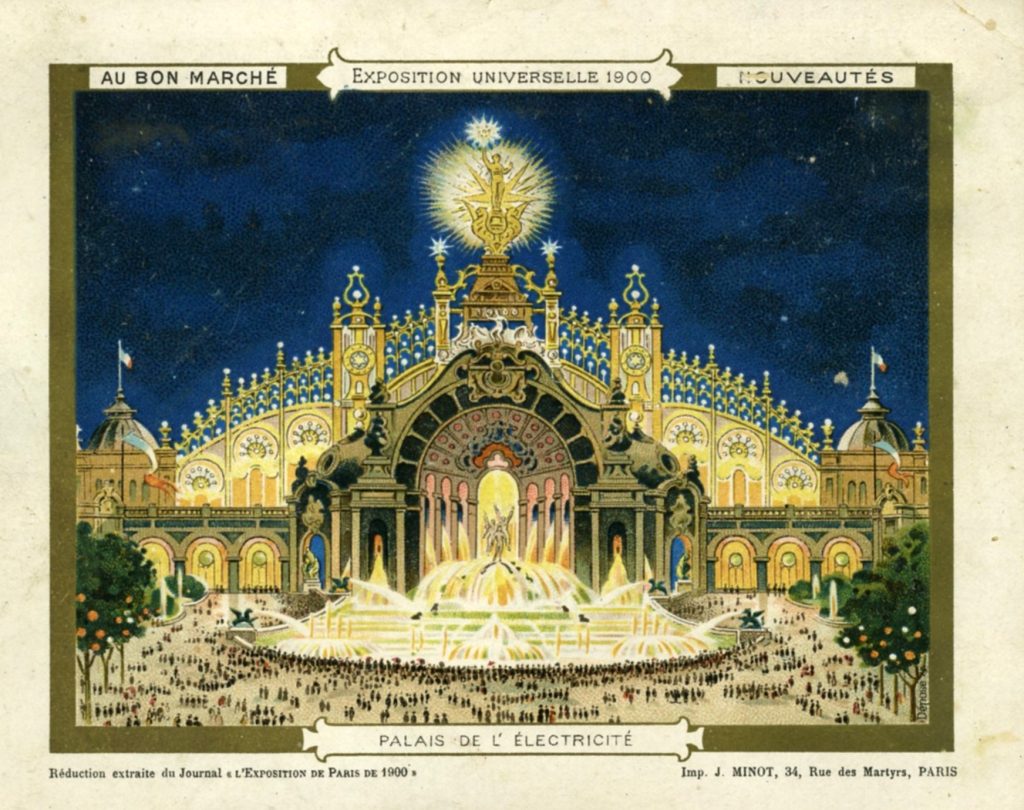
Electricity was one of the stars of the Exposition, and nowhere was that more obvious than at the enormous Palace of Electricity. At a time when electrical power was still relatively new, the fair gave millions of visitors a chance to see what this technology could do on a scale they had never experienced before.
The palace helped generate power for the fair and was itself part of the spectacle. Thousands of electric lamps illuminated its elaborate facade, while a huge illuminated fountain stood in front, creating one of the fair’s most impressive sights after dark.
The Palace of Electricity was demolished after the Exposition, but it gave visitors a glimpse of how dramatically electricity would change everyday life in the new century.
2. National Pavilions

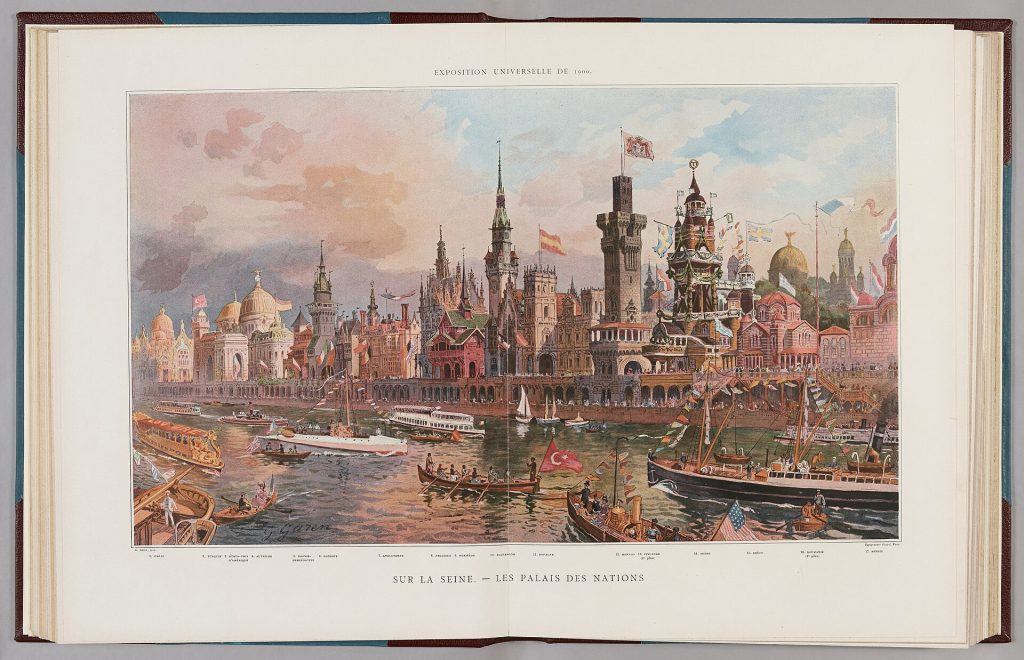
More than 40 countries participated in the Exposition, many constructing elaborate temporary pavilions along the Seine to showcase their architecture, culture, history, and products.
Together, these buildings formed the Rue des Nations, or Street of Nations, where visitors could walk past architectural displays representing countries from across Europe and around the world.
At a time when international travel was beyond the reach of most people, this offered a rare chance to experience places and cultures they might otherwise only have read about.
3. Giant Exhibition Halls
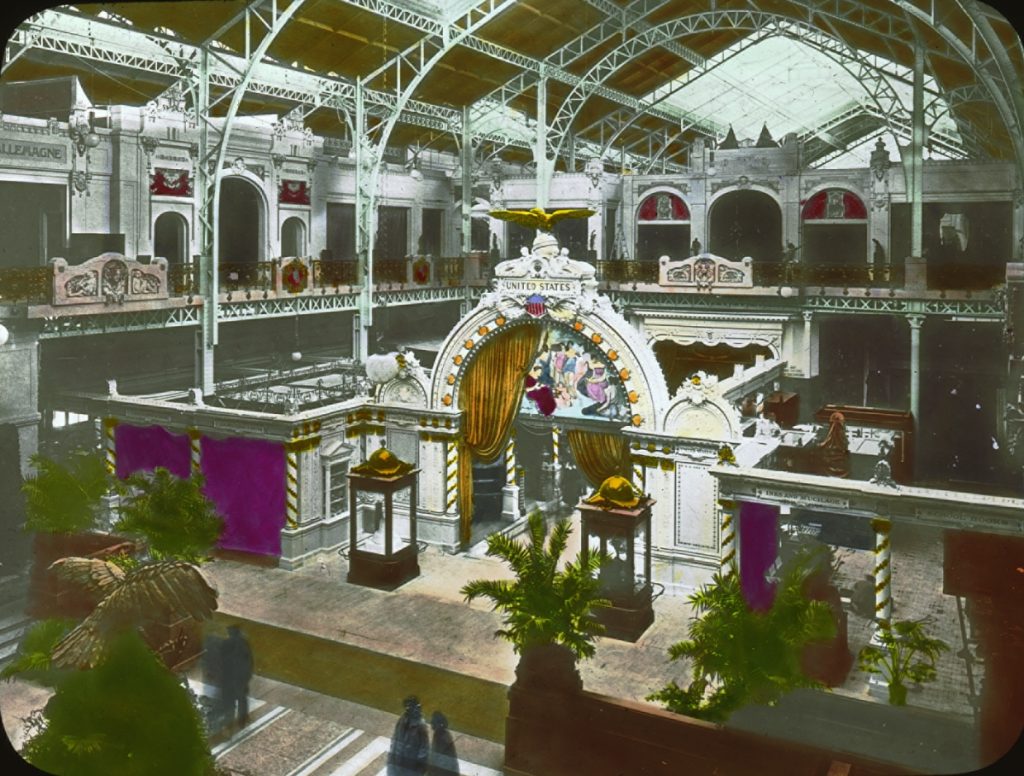
Beyond the national pavilions, enormous exhibition halls showcased the latest developments in practically every aspect of modern life, from industrial machinery and agricultural equipment to trains, early automobiles, furniture, jewelry, and fine arts.
For visitors, this was a chance to see technologies and products that were just beginning to change everyday life, from how people traveled to what they used in their homes. The fair essentially offered a preview of what life in the new century might look like.
4. The Grande Roue de Paris
Today, a Ferris wheel is a pretty standard attraction, but in 1900, the concept was still brand new. The world’s first Ferris wheel had debuted just seven years earlier at the 1893 World’s Fair in Chicago, and riding one was an incredible novelty.
Paris built its own enormous version for the 1900 Exposition. The Grande Roue de Paris stood 106 meters, or about 348 feet, tall near the Champ de Mars, with 40 passenger cars that could collectively carry as many as 1,600 people.
Unlike most of the fair’s temporary attractions, the Grande Roue survived long after the Exposition before eventually being dismantled in the 1920s.
5. The Porte Monumentale
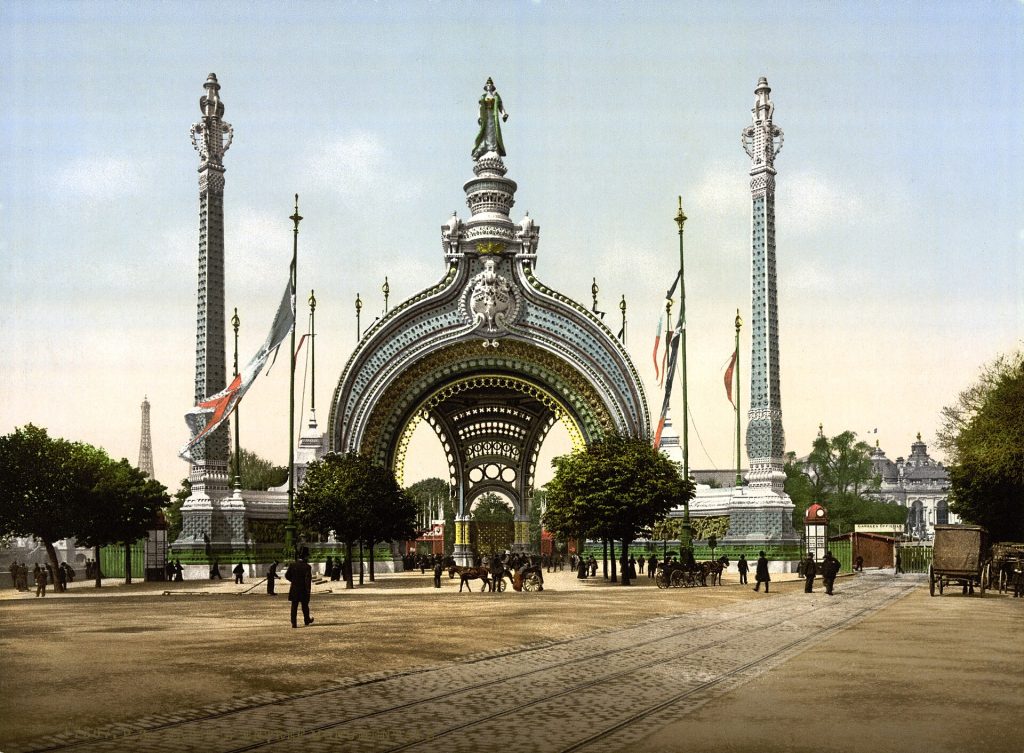
Of course, the entrance to the fair had to be as extravagant as the fair itself. The main entrance at Place de la Concorde was an enormous, brightly colored gateway topped by a 21-foot statue called La Parisienne and illuminated by thousands of electric lights at night.
New Technology on Display
Beyond the massive buildings and attractions, the fair also gave visitors a chance to experience almost shocking new technologies that were just beginning to change everyday life.
One of the biggest sensations was the Rue de l’Avenir, or Street of the Future, an elevated moving sidewalk that carried visitors around a roughly 3-kilometer loop of the exhibition grounds. It actually had two moving platforms traveling at different speeds, allowing passengers to step onto the slower platform before transferring to the faster one.
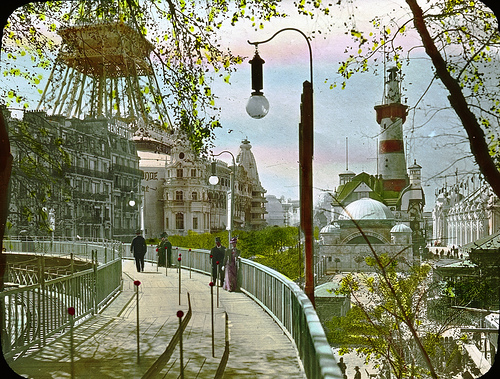
Film was another relatively new technology on display. The Lumière brothers had held their famous public screenings in Paris only five years earlier, and the Exposition introduced moving pictures to much larger audiences, including screenings projected onto enormous screens.
These examples are only a small part of the dozens of elaborate attractions and new technologies on display at the fair. Visitors could also see the world’s largest telescope, walk through a Palace of Illusions filled with mirrors and electric lights, visit a giant aquarium, ride an electric train, and see demonstrations of everything from X-rays to escalators.
Art Nouveau Takes Center Stage

Art Nouveau was another major feature of the 1900 Exposition, which helped introduce the relatively new style to a huge international audience.
Its flowing lines and nature-inspired designs appeared in architecture, furniture, jewelry, glassware, posters, and decorative arts throughout the fair. Hector Guimard’s new Metro entrances brought the style directly onto the streets of Paris.
More than a century later, Art Nouveau is still closely associated with Belle Époque Paris, making it another lasting influence of the 1900 World’s Fair.
The 1900 Olympics
As if the World’s Fair wasn’t enough, Paris also hosted the second modern Olympic Games in 1900. However, these Olympics looked very different from the event we know today.
The sporting competitions were often mixed with the Exposition and weren’t always clearly identified as Olympic events. In fact, some competitors reportedly didn’t realize until years later that they had participated in the Olympics. The 1900 Games were also the first modern Olympics in which women officially competed.
More Than 125 Years Later
Most of the 1900 World’s Fair disappeared after just seven months, but its impact on Paris didn’t. Every time you cross Pont Alexandre III, ride Metro Line 1, pass beneath a Guimard entrance, or visit the Musée d’Orsay, Petit Palais, or Grand Palais, you’re seeing part of what the Exposition left behind.
Paris built these landmarks to impress millions of visitors in 1900, and remarkably, they’re still doing that today. The rest of the fair showcased new technologies, art, and ideas that pointed toward the century ahead.
More than 125 years later, some of that future is simply Paris.
