
15 Masterpieces That Made the Musée d’Orsay Paris’s Most Loved Museum

Paris has no shortage of big-name museums, but the Musée d’Orsay just hits different. For many travelers, it’s a favorite museum in the city, thanks to its unique location and a collection that feels more approachable than previous art periods.
Part of what makes the experience so memorable is the setting itself. The museum is housed inside the former Gare d’Orsay, a Belle Époque train station built for the 1900 World’s Fair, and it still feels very much like wandering through a train station.
But more importantly, the Orsay is home to the largest collection of Impressionist and post-Impressionist art in the world. This is where painters moved away from polished, idealized scenes and began focusing instead on light, mood, movement, and modern life.
The collection begins with Realism, where artists painted modern life and everyday people as they actually looked. Then Impressionism followed, which traded fine detail for fleeting light, movement, and color. Post-Impressionism became bolder, more vivid, emotional, and personal.
All of this marked a major shift in how art was being made, which is why a visit here feels like watching the art world reinvent itself.
In this list, I’m rounding up 15 of the Musée d’Orsay’s most unforgettable works, from iconic Impressionist scenes to striking Realist paintings and portraits that caused a stir when they first appeared.
Note: The Orsay rotates paintings, so not all of these are always on display.
1. Bal du Moulin de la Galette
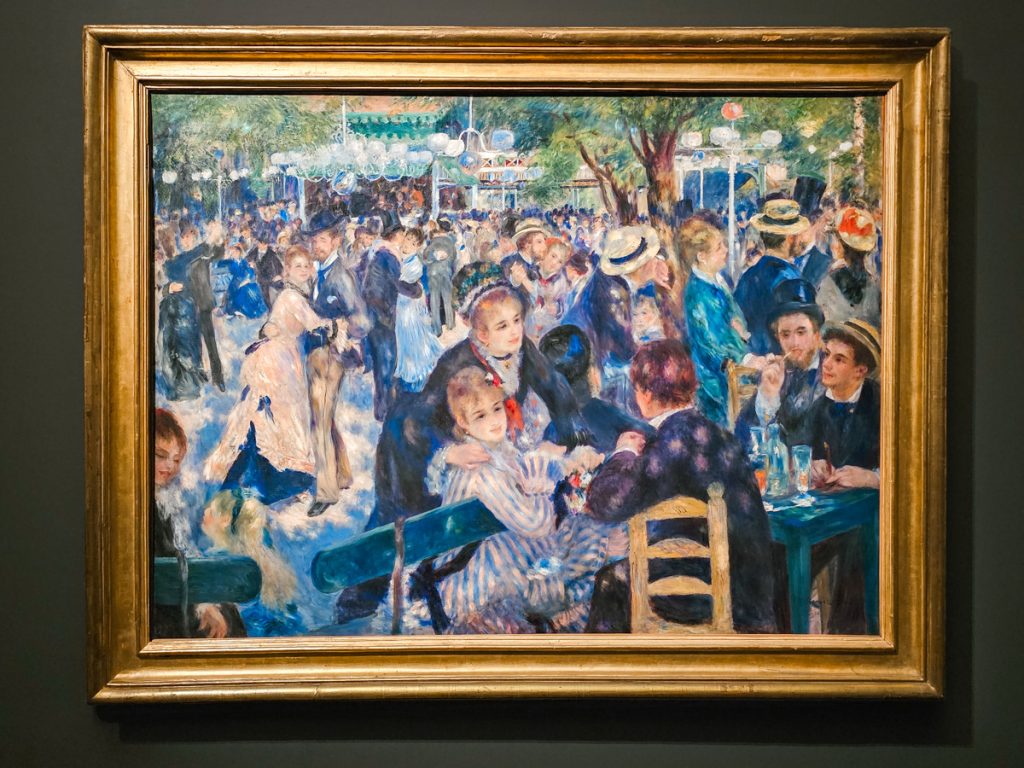
- Artist: Pierre-Auguste Renoir, painted in 1876
Renoir’s Bal du Moulin de la Galette is, in essence, the ultimate Paris snapshot. The scene takes place in Montmartre, where locals gathered on Sundays to dance, drink, flirt, and enjoy the afternoon in the open air. It’s crowded, lively, and a little chaotic in the best way, like you’ve stepped into the middle of a real conversation.
What makes it feel so alive is Renoir’s brushwork and his obsession with light. The dappled sunlight filtering through the trees lands on faces, hats, and sleeves in quick flickers, which is pure Impressionism at its best.
Seeing it in person at the Musée d’Orsay is an almost surreal experience – this just might be the most famous work of art in the building.
2. Starry Night Over the Rhône
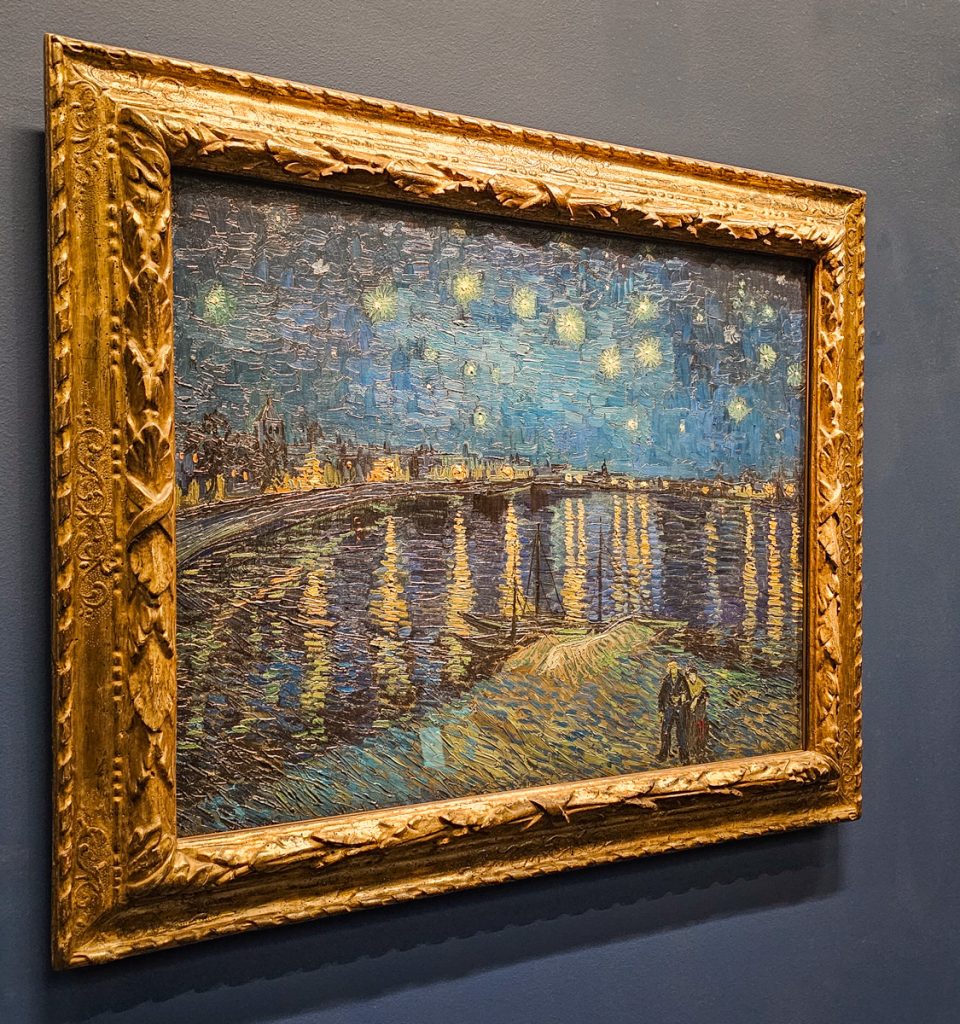
- Artist: Vincent van Gogh, painted in 1888
This isn’t the world-famous Starry Night (housed at the MoMA in New York), but an earlier and equally compelling work Van Gogh painted the year before.
Starry Night Over the Rhône comes from his time in Arles, when he was deeply focused on the night sky and the way color changes after sunset. The scene shows the Rhône River glowing under gas lamps and stars, with the lamps’ reflections rippling across the water.
What’s especially striking is how Van Gogh uses bold blues and deep yellows to build contrast, almost like he’s painting light itself instead of the objects it lands on. The brushstrokes are thick and intentional, so even the darkness feels textured and alive.
Up close, you can really see the energy in the paint, which makes the scene feel less like a peaceful postcard and more like Van Gogh’s personal and emotional version of the world.
3. Olympia

- Artist: Édouard Manet, painted in 1863
When Manet (not to be confused with Monet) unveiled Olympia, it caused an uproar, and it wasn’t subtle. Instead of dressing his subject up as a mythical goddess, he painted a modern woman staring straight back at the viewer. Confident, unsmiling, and completely uninterested in playing the polite role art usually demanded.
The brushwork is bold and flattened, with sharp contrasts that feel more graphic than traditionally “pretty.” That deliberate directness is part of what made Manet such a bridge between Realism and the artists who would soon break into Impressionism.
Standing in front of it, the power is in the gaze and the attitude, not the nudity. It’s not just famous because it shocked people; it’s famous because it changed what a painting was allowed to say.
4. Coquelicots
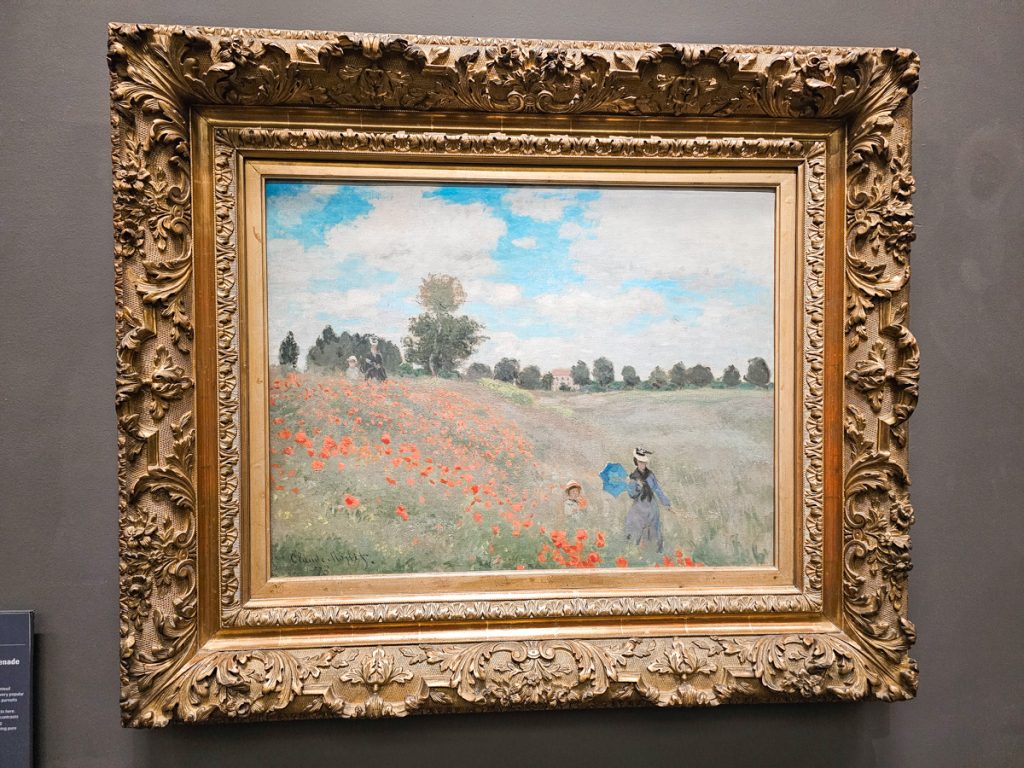
- Artist: Claude Monet, painted in 1873
Monet’s Coquelicots (Poppies, in English) is one of the most instantly likeable paintings in the Musée d’Orsay. It shows a sunlit hillside near Argenteuil, with a field scattered in bright red poppies and two figures walking through the tall summer grass like they’ve got nowhere urgent to be.
The magic is in how effortless it looks, even though it’s anything but. Monet uses loose brushstrokes and quick pops of color to suggest flowers, wind, and movement without painting every detail, which is exactly the point of Impressionism.
In person, the scene feels airy and alive, like the whole painting is lit from within. It feels less like a formal masterpiece and more like a memory you somehow stepped into: simple and calm, yet quietly brilliant.
5. The Artist’s Studio

- Artist: Gustave Courbet, painted in 1855
Courbet’s The Artist’s Studio is a full-on statement. The title sounds simple, but what you’re really looking at is Courbet placing himself at the centre of his own world, painting calmly while two very different groups of people surround him.
On one side, you have figures that represent everyday life, including poverty and struggle, which Courbet refused to romanticize. On the other side, there are friends, supporters, and people tied to the cultural scene, almost like he’s showing who fuels his art and who he’s making it for.
It’s Realism with ambition, and it shows why Courbet was such a force before Impressionism even arrived. The scale alone is overwhelming, taking up an entire wall. The longer you look, the more it feels like a whole society squeezed into one room.
6. Déjeuner Sur l’Herbe

- Artist: Édouard Manet, painted in 1863
Déjeuner Sur l’Herbe by Manet was another one of those paintings that broke the rules so loudly people couldn’t ignore it. On the surface, it’s just a picnic scene: two fully dressed men chatting casually beside a nude woman who looks completely unfazed by the situation.
The outrage wasn’t only about nudity, it was about modernity. Manet wasn’t painting a mythological Greek goddess, he was putting a real woman into a contemporary setting, with a boldness that felt almost disrespectful to traditional art standards.
The technique is part of the rebellion, too. The brushwork is direct, the lighting is strange and flattened, and the background feels intentionally less “finished.”
7. The Ballet Class

- Artist: Edgar Degas, painted in 1874
Degas often focused on the behind-the-scenes world of ballet at the Paris Opera, rather than the polished performances audiences expected. The Ballet Class captures those in-between moments, with dancers stretching, adjusting, and waiting, some looking visibly tired, while the ballet master oversees the room with quiet authority.
One thing that makes Degas so memorable is his sense of composition. The scene feels cropped like a candid photo, with figures cut off at the edges and angles that make you feel like you’re standing just outside the dancers’ circle, watching quietly.
The colours are soft, but the drawing is sharp, and you can tell he cared as much about posture and anatomy as he did about beauty. In person, it feels intimate and slightly nosy, like you’ve wandered into a private rehearsal you weren’t meant to see.
8. Young Girls at the Piano
- Artist: Pierre-Auguste Renoir, painted in 1892
Renoir’s Young Girls at the Piano is a painting that feels gentle on purpose. Two young girls sit at a piano in a warm interior, one playing while the other leans in close, and the whole scene has that quiet, domestic sweetness that Renoir loved to paint, without tipping into something overly staged.
It was painted later in Renoir’s career, when his style became softer and more rounded, with an even bigger focus on skin tones, warm light, and a kind of glowing harmony. The brushwork is still lively, but everything feels smoother and more blended than his earlier Impressionist scenes.
It’s easy to understand why this painting became so beloved. It’s intimate, calm, and full of small details, such as the sheet music and the way the girls’ hands mirror each other in motion.
9. City Dance / Country Dance
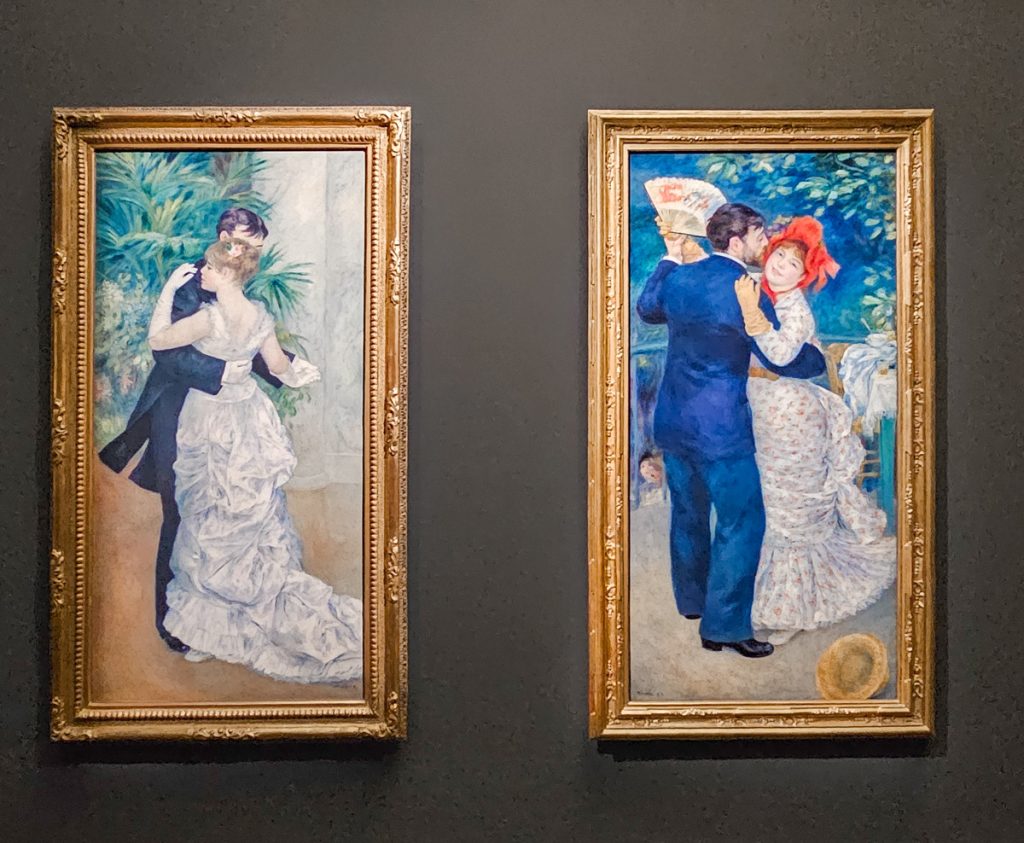
- Artist: Pierre-Auguste Renoir, painted in 1883
Renoir’s City Dance and Country Dance are often treated like a matched pair, and seeing them with that mindset makes them even more fun. Both paintings show couples dancing, but the mood shifts completely depending on the setting, almost like Renoir is showing two versions of romance in 1880s France.
In City Dance, everything feels polished and elegant, with fashionable clothing and a sense of performance, like the couple knows they’re being watched. Country Dance is looser and more playful, with brighter colour and a more casual energy that feels closer to a real flirtation than social theatre.
The real glue between them is Renoir’s gift for movement. The fabric swirls, bodies lean in, and you can practically feel the music keeping time in the background.
10. Londres, le Parlement
- Artist: Claude Monet, painted in 1904
Monet’s Londres, le Parlement is part of his famous series painting the Houses of Parliament through fog, smoke, and shifting light. Instead of focusing on architecture and detail, he turns the building into a silhouette, letting atmosphere take over, as if London itself is dissolving into colour.
This is Monet in full later-career mode: chasing the same subject again and again to capture different moments of the day. The brushwork is soft but layered, and the palette leans into moody purples, blues, and warm glows that make the scene almost dream-like.
Up close, the painting has a surprising intensity, because the surface is built from quick strokes. It’s one of those works where the “subject” matters less than the sensation, and it’s unforgettable once you’ve stood in front of it.
11. The Bedroom
- Artist: Vincent van Gogh, painted in 1889
Van Gogh’s The Bedroom looks simple at first, almost like a child’s drawing brought to life, but that simplicity is the point. He painted it as a personal refuge, showing his room in Arles as a space of calm and stability, even though his real life at the time was anything but calm.
The colours are bold and slightly unreal, with strong outlines that flatten the furniture and make the room feel tilted and off-balance. That odd perspective isn’t a mistake; it’s part of the emotional logic of the painting, like you’re seeing the room through Van Gogh’s nervous and intense way of looking at the world.
It’s also packed with quiet details, from the portraits on the wall to the empty chairs that make the space feel both welcoming and lonely. The result is intimate and instantly recognizable.
12. Self-Portrait
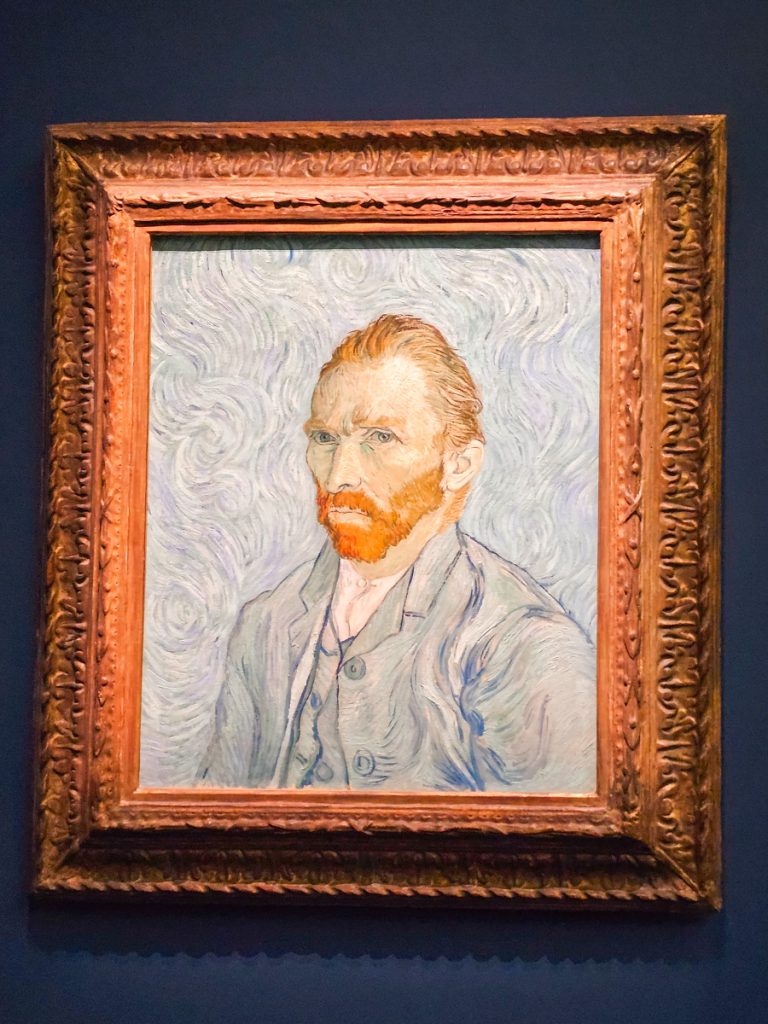
- Artist: Vincent van Gogh, painted in 1889
Van Gogh’s 1889 Self-Portrait is one of the most unforgettable faces in art, partly because he painted himself regularly, and partly because it feels so exposed.
This version was painted during his stay at the asylum in Saint-Rémy. It shows him steady and composed on the surface, but the tension sits right under the skin, especially in the eyes.
The background is pure motion: a swirl of blue-green strokes that feels like energy vibrating behind him. Van Gogh’s brushwork is thick and directional, almost sculptural, and it gives his face a kind of nervous intensity, like he’s holding himself together through paint.
What makes this portrait so powerful is how controlled it is. It’s not dramatic in a loud way, it’s focused, honest, and slightly haunting. Seeing the texture up close, you realize how much of the emotion lives in the strokes, not just the expression.
13. The Floor Scrapers
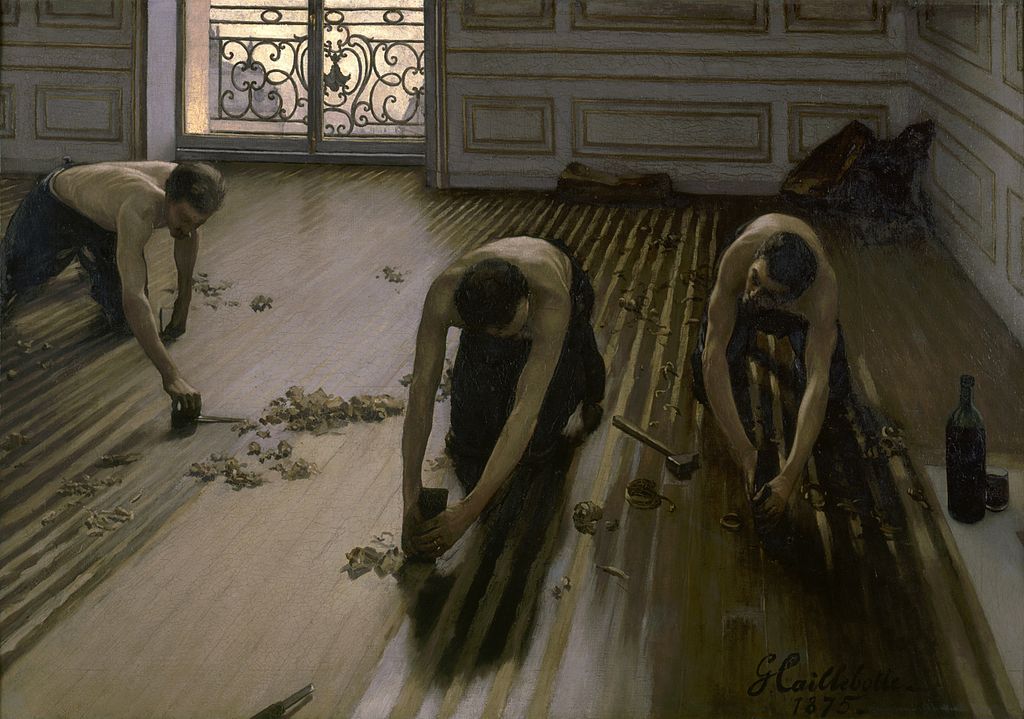
- Artist: Gustave Caillebotte, painted in 1875
Caillebotte’s The Floor Scrapers feels modern in a way that still surprises people. Instead of painting grand history or “important” people, he puts working-class labour front and centre: three men scraping a wooden floor with total focus, their bodies bent into strong, repeating shapes.
The scene is Realism in subject, but the execution is sharper and more contemporary than you’d expect. The perspective pulls your eye straight into the room, the light stretches across the boards, and the smooth geometry of the floor almost turns the painting into a study of space and structure.
There’s also something quietly intimate about it. You can almost hear the scrape of the tools and feel the warm sunlight coming through the windows, which makes the whole moment feel lived-in rather than staged. It’s a masterpiece of ordinary life made remarkable.
14. Arrangement in Grey and Black No. 1 (Whistler’s Mother)
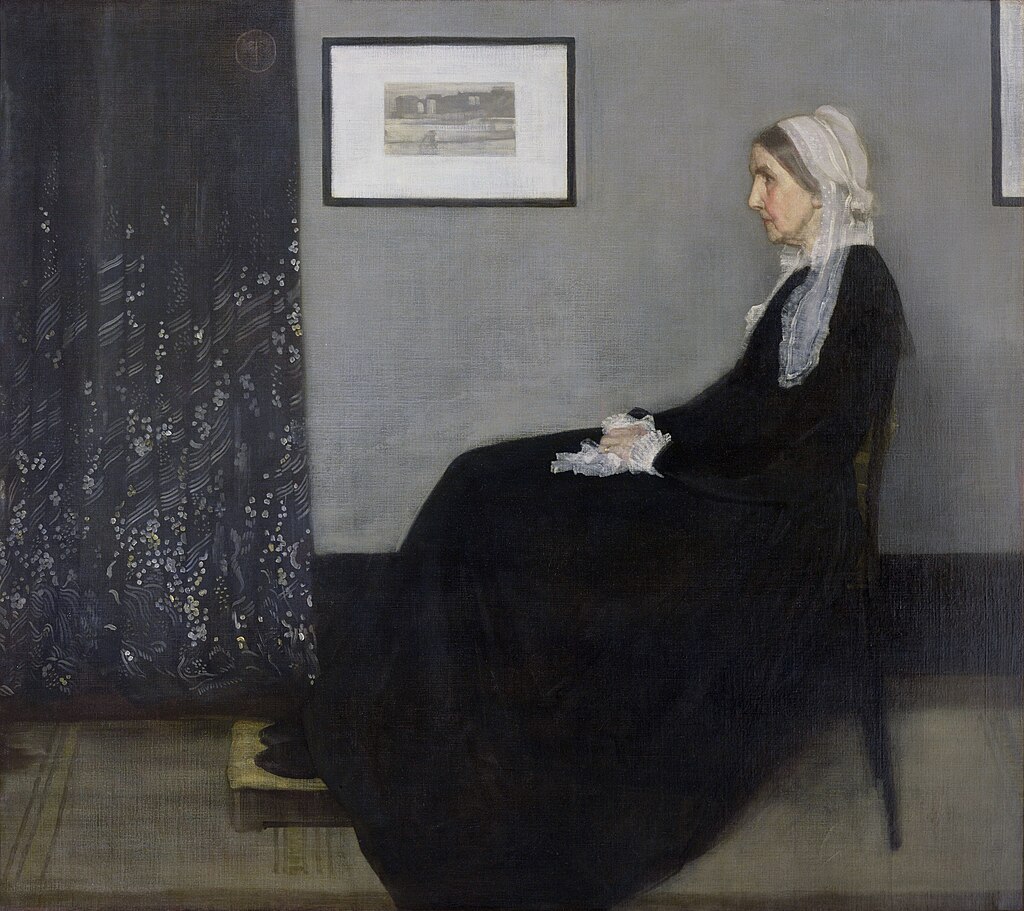
- Artist: James Abbott McNeill Whistler, painted in 1871
Whistler’s Arrangement in Grey and Black No. 1 is one of the most recognizable portraits in the world, even for people who couldn’t name the artist. Officially, it’s a painting of his mother, Anna McNeill Whistler, seated in profile, calm and still, with almost nothing in the room competing for attention.
But the real point isn’t biography, it’s composition. Whistler was obsessed with harmony, and he treats the portrait like a carefully balanced arrangement of shapes, textures, and tones. The curtain, the framed print, and the sharp line of the floor all work like quiet architecture around her.
It’s restrained, controlled, and surprisingly bold in its minimalism. Standing in front of it, the simplicity feels almost dramatic, and you start noticing how much emotion can exist inside a painting that barely raises its voice.
15. The Gleaners

- Artist: Jean-François Millet, painted in 1857
Millet’s The Gleaners is one of the most important paintings of rural life in 19th-century France, and it isn’t sentimental about it. It shows three peasant women bent over in a harvested field, collecting leftover stalks of wheat, which was backbreaking work tied directly to poverty and survival.
When it was first shown, the painting made wealthy viewers uncomfortable, because it treated working-class labour with a seriousness usually reserved for nobility or religious subjects. Millet paints the women with weight and dignity, using warm earth tones and a steady, grounded composition that makes them feel monumental.
What’s especially striking is the contrast between the close-up struggle and the distant abundance. The haystacks and workers in the background hint at plenty, while the women in front are left to gather the scraps… and that message still lands.
Final Thoughts
One of the most striking things about the Musée d’Orsay is just how many major works are concentrated in one place. As you move through the galleries, it feels like one masterpiece after another, which made narrowing this list down to just 15 truly very difficult.
These selections offer a strong cross-section of what makes the Orsay special, from groundbreaking Realist works to some of the most iconic Impressionist and Post-Impressionist paintings in the world. They give you a clear sense of how dramatically art changed during this period, and why the Orsay remains such a favorite for so many visitors.
Planning the Rest of Your Time in Paris?
The Orsay is just one part of a trip to Paris. If you’re continuing to plan the rest of your visit, these guides can help:
- Ultimate List of Things to Do in Paris – Nearly 100 sights and experiences, from must-sees to hidden gems
- Where to Stay in Paris – A neighborhood-by-neighborhood breakdown to help you choose the right base
If you want everything in one place, my Paris travel guide page pulls together neighborhood guides, attraction and museum guides, foodie recommendations, and travel tips in one hub.
And if you’re feeling overwhelmed or short on time, I also offer Paris planning calls.
These one-on-one video sessions are great for getting feedback, asking questions, and sorting through options, whether you need a full plan or help fine-tuning what you already have.
