
11 Beautiful Paris Metro Stations That Are So Much More Than Just a Way to Get Around

The Paris Metro is one of the densest transit systems in the world, with over 300 stations packed into just over 40 square miles. It’s fast and efficient – hands down the most convenient way to get around the city (as well as offering a glimpse into everyday Parisian life).
But beyond being practical, the metro can also be surprisingly beautiful. Many stations have their own personality, with designs that reflect nearby landmarks or bits of Parisian history, or are just beautiful for the sake of being beautiful.
These are 11 beautiful and interesting metro stops that are worth taking the time to appreciate.
1. Place Colette

The Palais Royal–Musée du Louvre metro stop (serving lines 1 and 7) at Place Colette might be Paris’s prettiest metro entrance. Just a couple of blocks from the Louvre and just next to the entrance to the Palais Royal gardens in the 1st arrondissement, it’s hard to miss the dome of colorful glass beads glinting in the light.
Created in 2000 by artist Jean-Michel Othoniel, the entrance was made with over 800 Murano glass beads. It truly is a work of art, and like any masterpiece, it has a name: Le Kiosque des Noctambules, or The Night Revellers’ Kiosk.
The metallic frame and jewel-like orbs give the whole structure an almost playful elegance, standing out amid the classic Parisian architecture around it.
2. Louvre-Rivoli
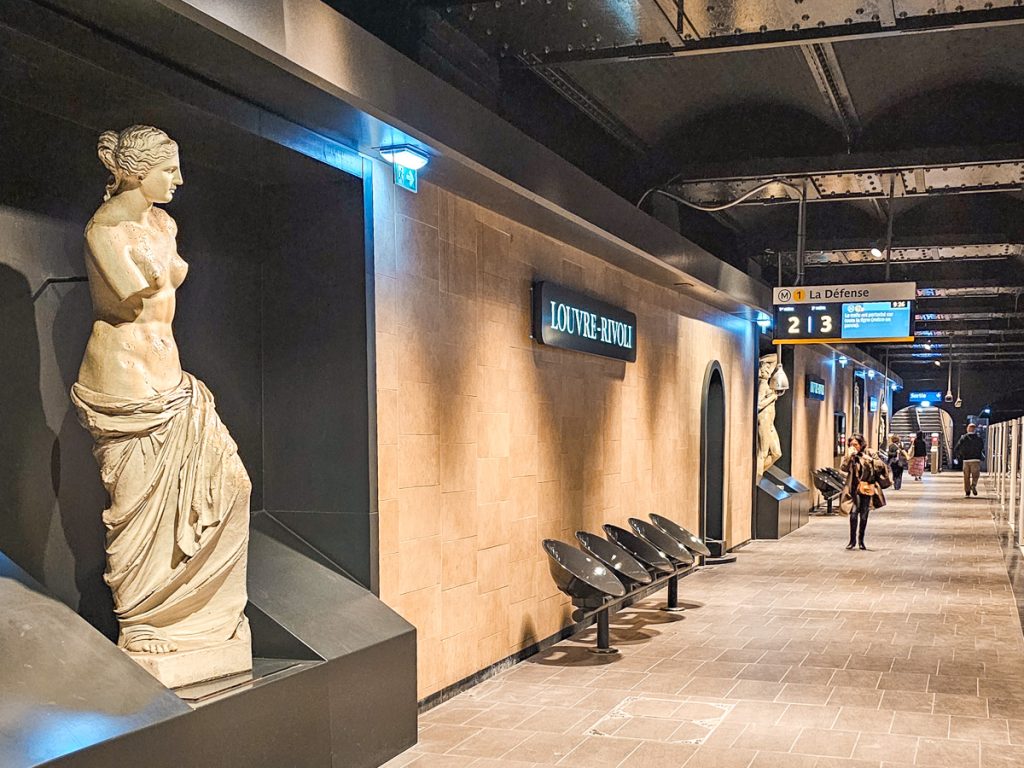
Just down the street from the Louvre, the Louvre–Rivoli metro stop (serving line 1) almost feels like an extension of the museum rather than a metro station.
Replica statues stand in softly lit alcoves along the platform, making it look like an underground art gallery. You’ll spot familiar figures like the Venus de Milo, the Code of Hammurabi, and Les Esclaves, along with other Greek and Egyptian sculptures.
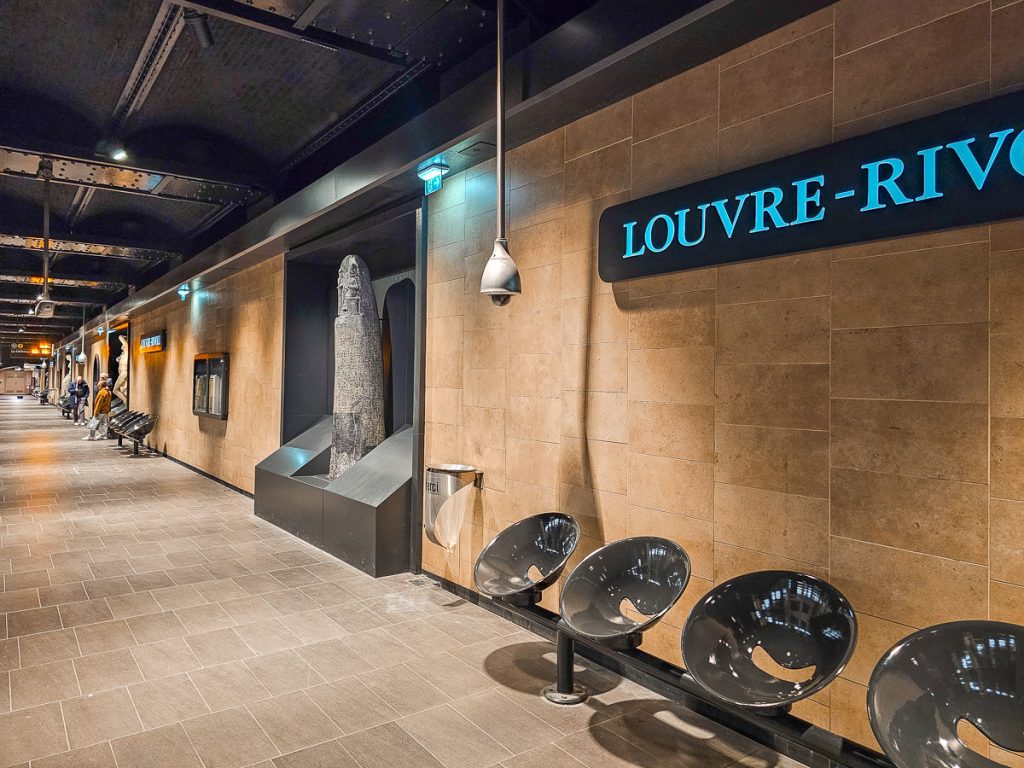
The station was originally named “Louvre” and got its elegant redesign in 1968 to reflect the museum above. When the Palais Royal–Musée du Louvre stop opened in 1989, closer to the museum entrance, this one was renamed Louvre–Rivoli.
It’s a fun stop to peek at, especially if you’re already heading toward the museum.
3. Bastille

The Bastille metro station (lines 1, 5, and 8) sits beneath one of Paris’s most symbolic squares, the site where revolutionaries stormed the Bastille prison in 1789, a pivotal moment at the beginning of the French Revolution.
What makes this stop special is the design of the line 1 platforms, which are partially above ground (which is fairly rare in central Paris).
The walls of the station are lined with colorful ceramic murals created by artists Liliane Belembert and Odile Jacquot in 1989 to mark the bicentennial of the Revolution.
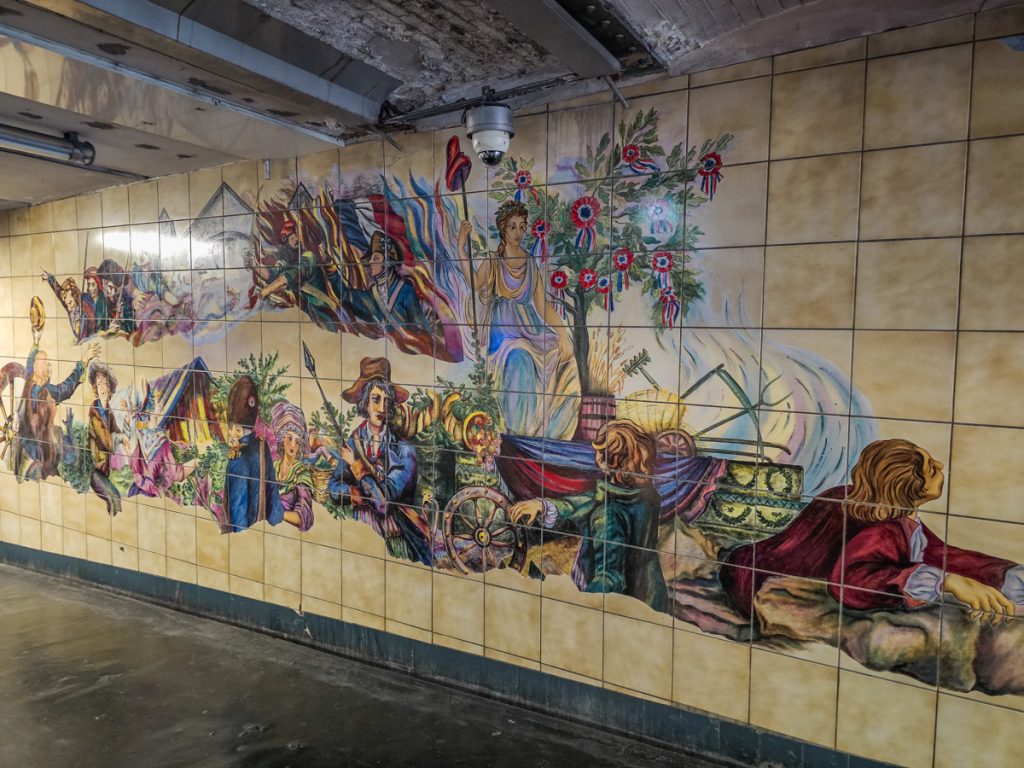
The murals are vivid and full of movement, showing scenes of the uprising, people marching with bread baskets and flags, and tributes to the revolutionary leaders. It’s certainly one of the most meaningful metro stations in the city.
4. Arts et Métiers
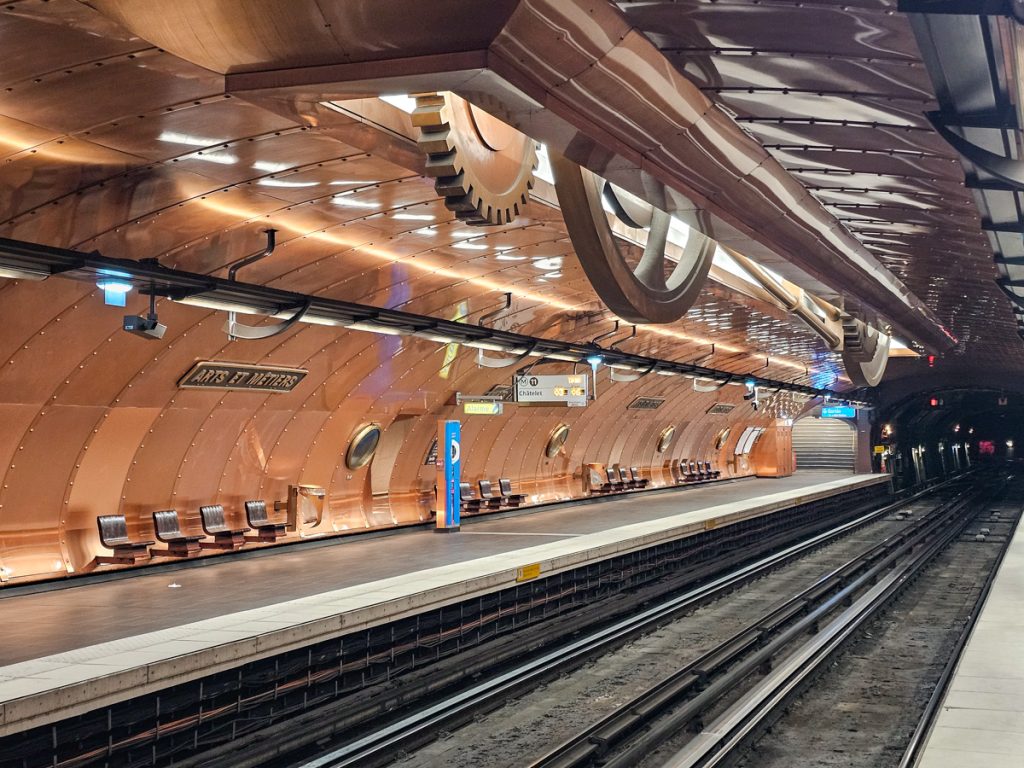
The Arts et Métiers station (serving lines 3 and 11) is named after the nearby Conservatoire National des Arts et Métiers and the Musée des Arts et Métiers, or Museum of Arts and Trades, a conservatory and museum dedicated to science, invention, and technology.
The design of the line 11 platform fits the theme perfectly. Everything is wrapped in gleaming copper panels with rivets, gears, and portholes, making you feel like you’ve stepped inside a giant submarine straight out of Twenty Thousand Leagues Under the Sea.
The curved walls are covered in copper plates, with gears overhead and small “windows” in the walls that reveal miniature displays tied to the museum’s collection – like models of satellites and water wheels.
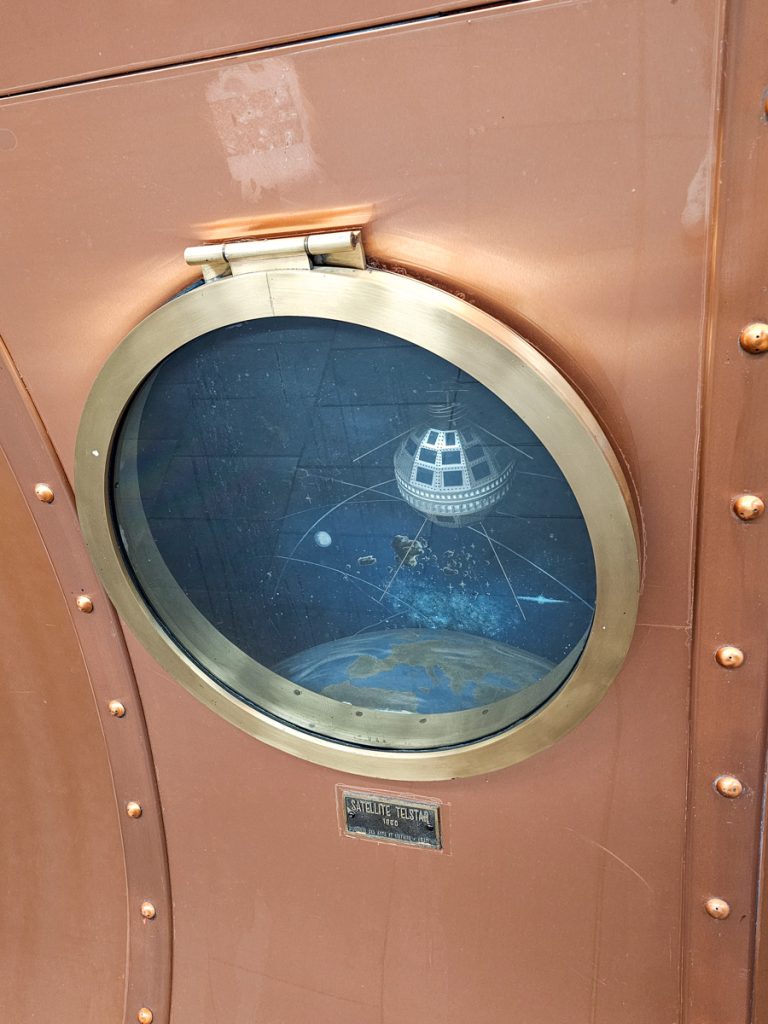
Even the benches, signs, and lighting match the metallic theme, making Arts et Métiers one of the most creative and immersive metro stations in Paris.
5. Cluny-La Sorbonne
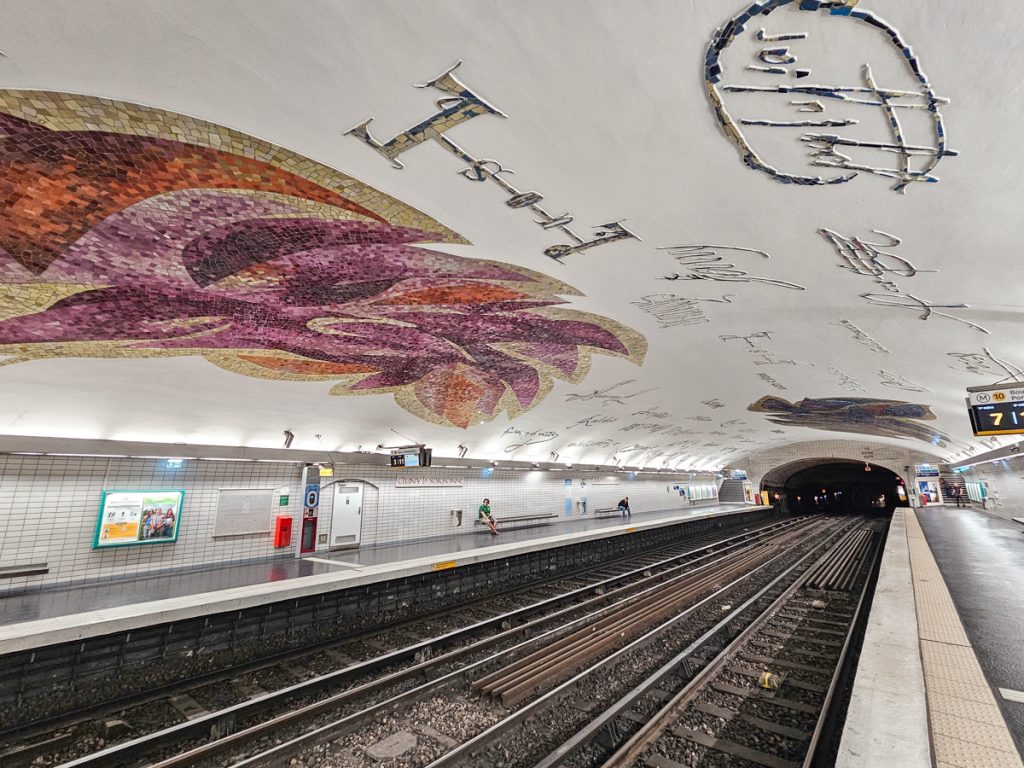
Located in the Latin Quarter, the Cluny–La Sorbonne station (serving line 10) sits right between the Cluny Museum, the Museum of the Middle Ages, and La Sorbonne, France’s oldest and most well-known university.
The ceiling is decorated with Ailes et Flammes (Wings and Flames), a mosaic installation by French artist Jean René Bazaine. The design mixes bursts of color with mosaic signatures from famous writers and thinkers connected to the area, like Victor Hugo, Molière, Jean Racine, and Arthur Rimbaud.
It’s a simple but fitting nod to the neighborhood’s long history of students and writers. Even the station’s name signs are different, written in red cursive letters instead of the usual Metro font.
6. Assemblée Nationale
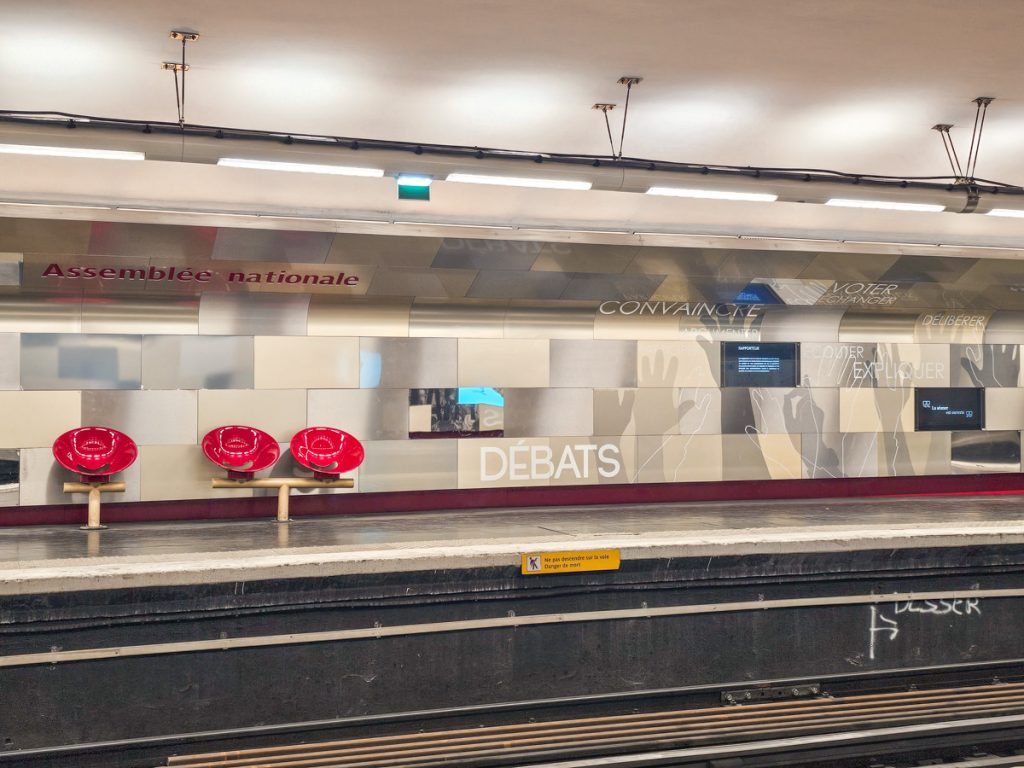
The Assemblée Nationale station (line 12) in the 7th arrondissement sits right next to France’s parliament building, the Palais Bourbon — home to the National Assembly.
The station’s walls are etched with words related to the democratic process, like débats (debates), voter (vote), or ordre (order). You’ll also find articles of the French Constitution and excerpts from the historic Tennis Court Oath, from the French Revolution.
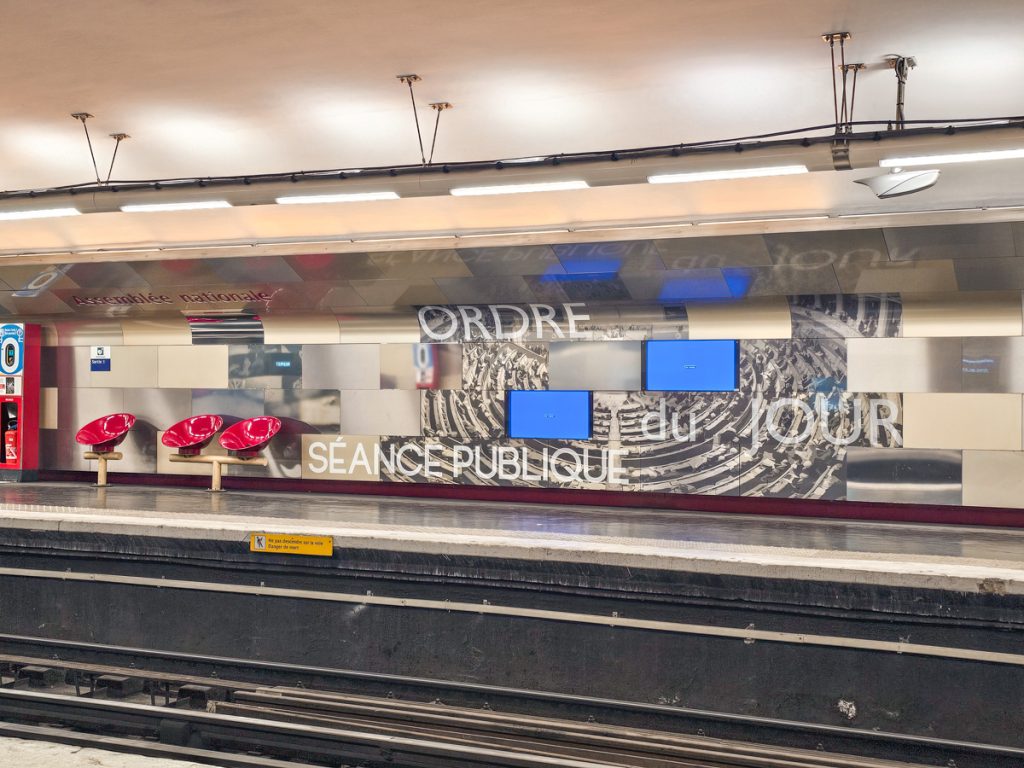
Mirrors along the platform are meant to remind riders that the Assembly reflects the will of the people, and when parliament is in session, screens even broadcast live debates.
It’s certainly the most civically minded metro station in Paris, creating a small window into France’s democratic process.
7. Metro Line 6 Between Bir-Hakeim and Passy
This item on the list isn’t actually a station; rather, it’s the view and the experience between the Bir-Hakeim and Passy stations on Metro Line 6.
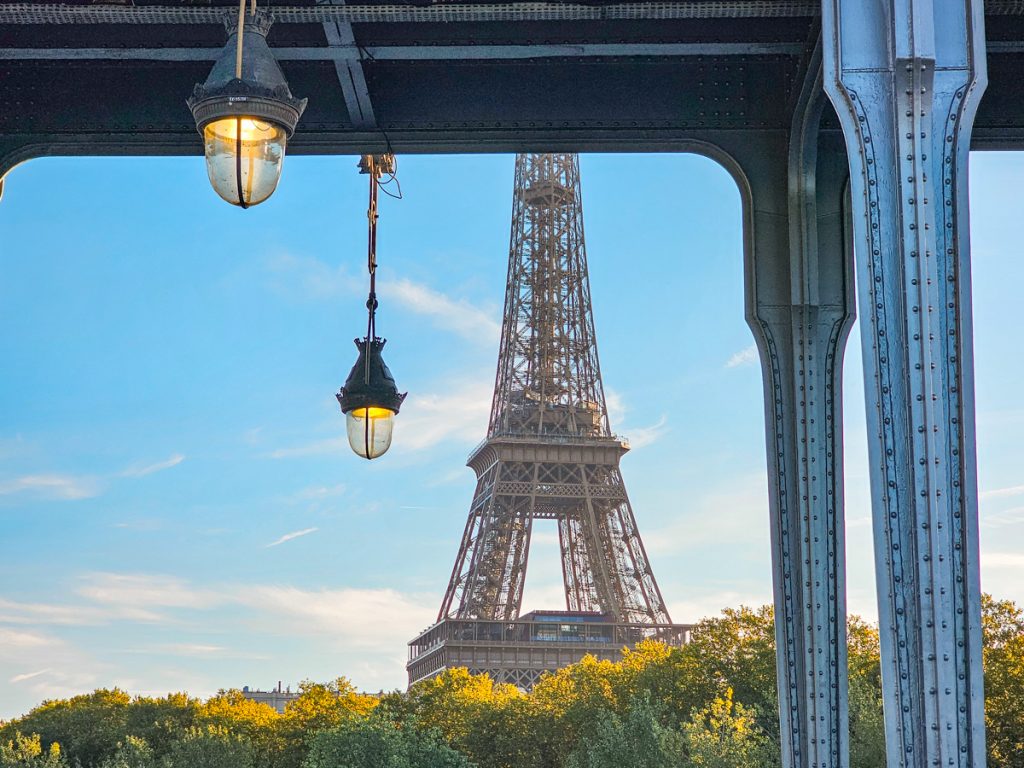
Metro Line 6 crosses the Seine on the upper level of the Pont de Bir-Hakeim — a striking double-deck bridge. The lower level is for cars and pedestrians, while the elevated open-air metro line offers incredible views of the Eiffel Tower just to the north.
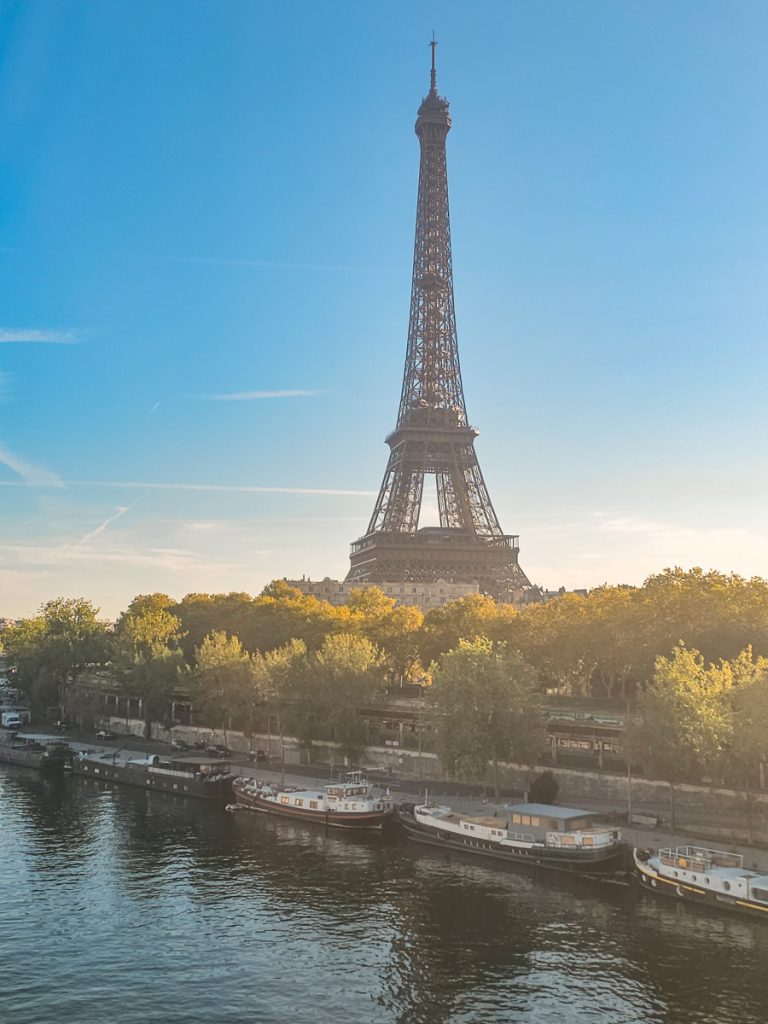
As the train leaves the station and glides onto the bridge, the streets suddenly give way to open sky and the river below, with the Eiffel Tower almost seeming to burst onto the scene. It’s easily the most scenic metro ride you can take, and almost feels like a cinematic experience.
8. Concorde
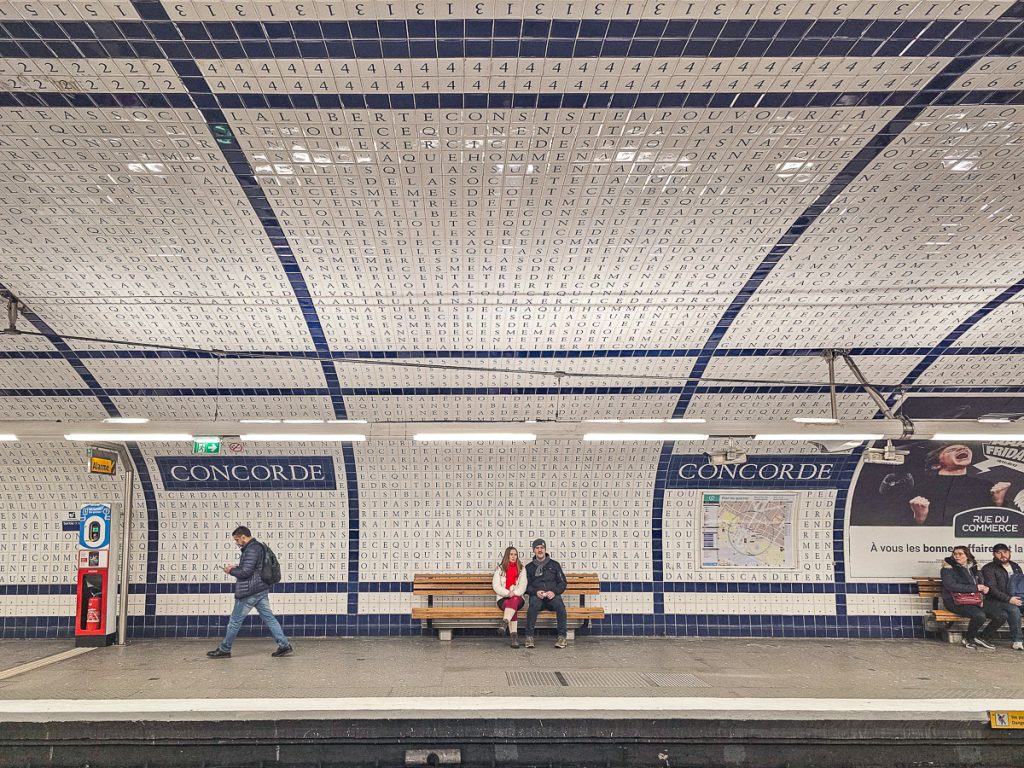
Located beneath Place de la Concorde in the 8th arrondissement, this metro station (served by lines 1, 8, and 12) sits below one of Paris’s most famous and historic squares.
During the French Revolution, this was Place de la Révolution, the site of the guillotine where more than a thousand people, including King Louis XVI and Queen Marie Antoinette, were executed. It was later renamed Place de la Concorde in 1795 to symbolize peace and reconciliation.
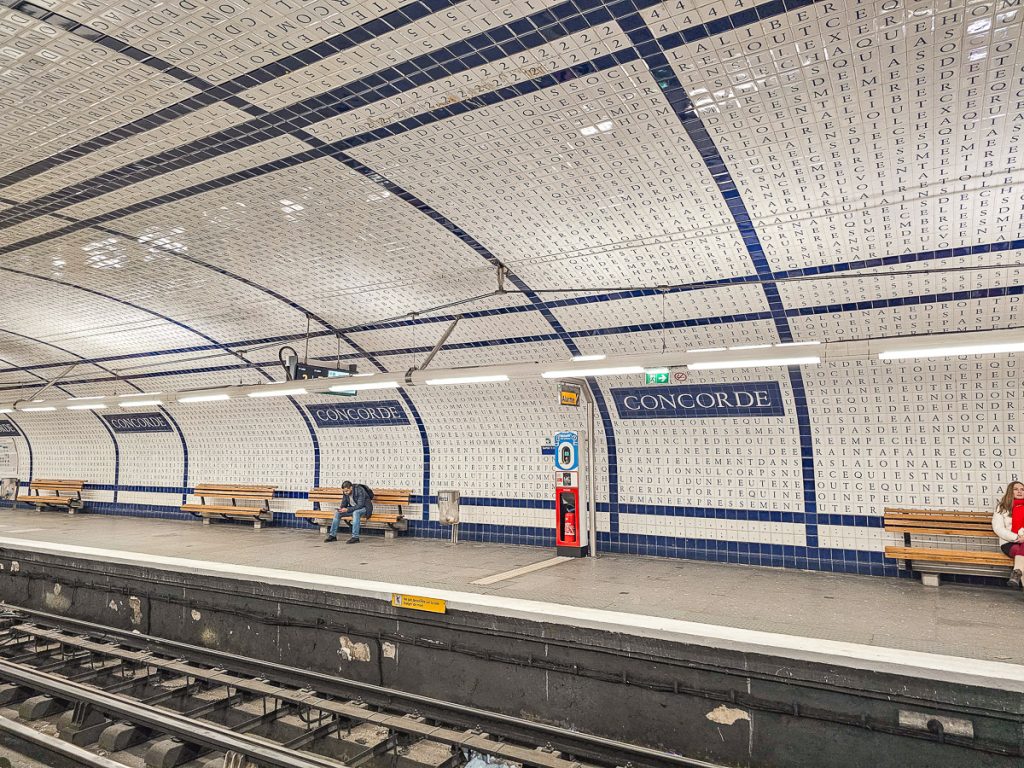
The line 12 platform is the one to look for here. Its walls are covered in white tiles with blue letters spelling out the text of the Declaration of the Rights of Man and of the Citizen, the 1789 document that laid the foundation for human and civil rights in France.
Designed by artist Françoise Schein, I love how the station’s design is quite symbolic — the tiled letters form a larger-than-life version of the text, representing the Enlightenment ideals that helped shape modern democracy around the world.
9. Chatelet-Les Halles
Châtelet–Les Halles isn’t known for its beauty, but for its sheer size – it’s the largest underground metro station in the world.
Located right in the center of Paris, it’s the city’s main transit hub, connecting three of the five RER commuter lines (A, B, and D) with five metro lines (1, 4, 7, 11, and 14). On an average weekday, around 750,000 travelers pass through here.

The station sits beneath the site of Les Halles, once Paris’s main food market. Today, the area has transformed into a massive complex with a shopping mall, cinema, restaurants, and even a swimming pool.
It might not be glamorous, but Châtelet–Les Halles is the heartbeat of the Paris metro, and a spot you’ll likely pass through at least once.
10. Guimard Metro Entrances

We can’t talk about Paris’s metro stations without mentioning the iconic Art Nouveau entrances that have become a symbol of the city itself.
Designed by architect Hector Guimard between 1900-1913, these green, wrought-iron structures with their flowing lines gave the new metro system its instantly recognizable look.
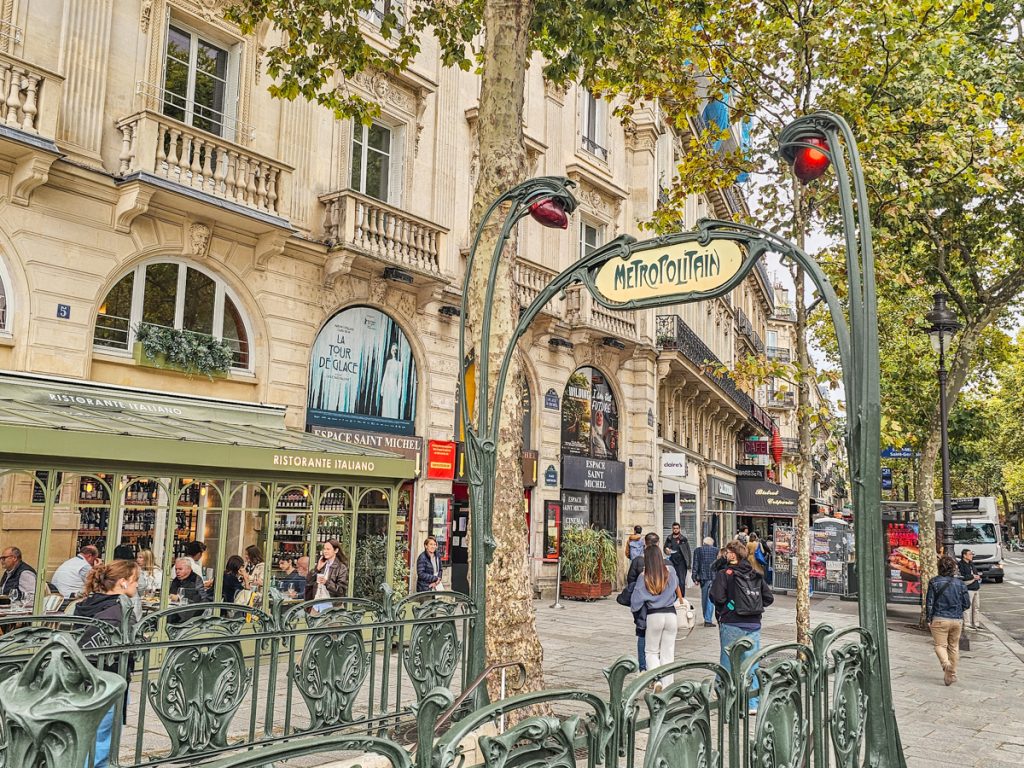
At the time, Parisians worried that the subway would spoil the city’s appearance, so a design competition was held to make the entrances feel elegant rather than industrial. Guimard’s design did exactly that, creating well over a hundred light, decorative open-air entrances called entourages.
While nearly half of these entrances were demolished over the years, 86 still remain and are now protected as historical monuments. You’ll spot them all over the city, a distinctive detail of Parisian streets.
11. Abbesses & Porte Dauphine
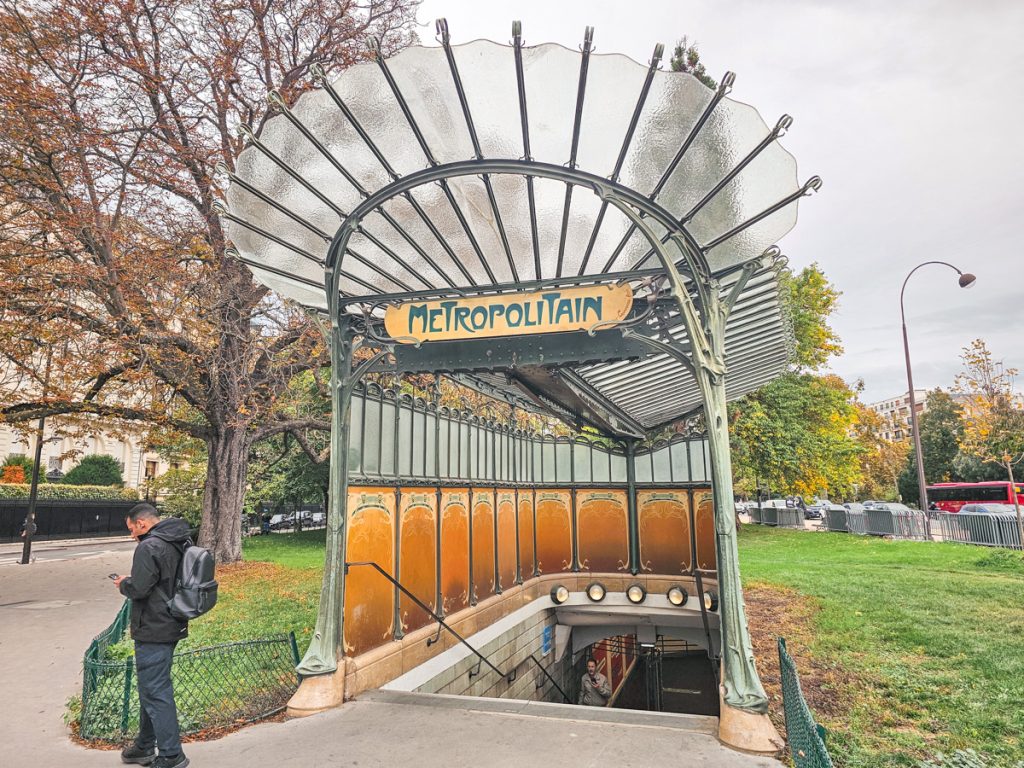
While most of Hector Guimard’s Art Nouveau metro entrances were open-air, a few had glass canopies known as édicules B. These three-sided structures with curved glass roofs enclosed the stairways and gave the entrances a more sculptural feel with their delicate glass canopies
Only two original édicule B entrances remain today, at Abbesses in Montmartre and Porte Dauphine on the western edge of Paris.
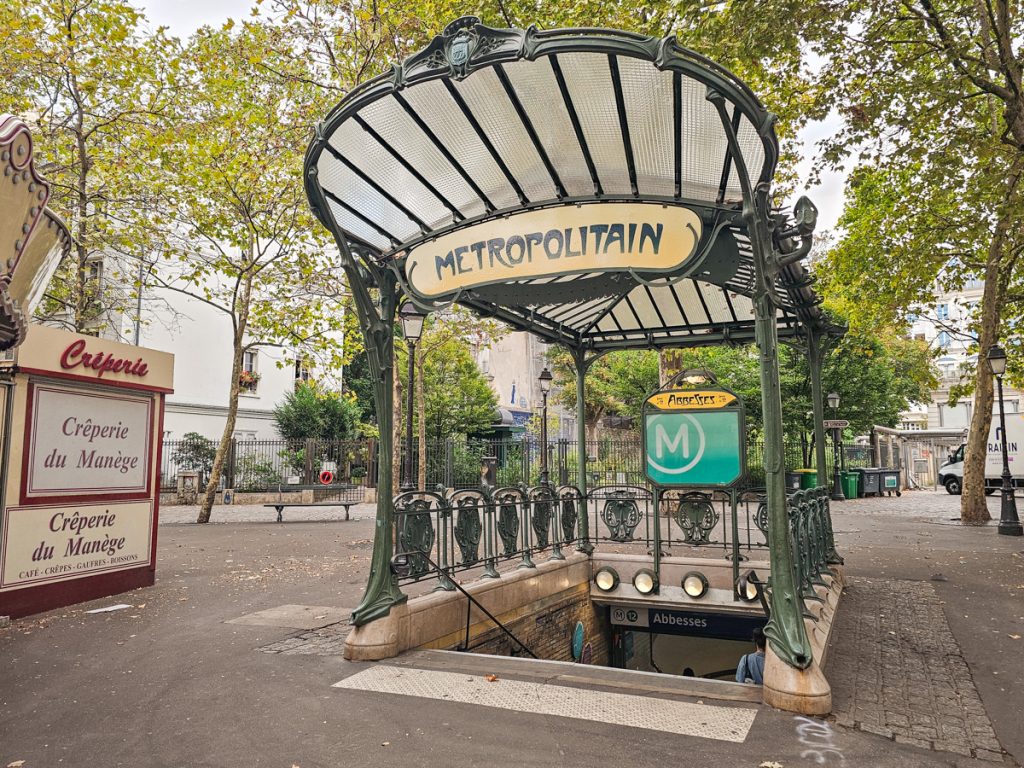
Porte Dauphine’s entrance is the most original and best preserved, while the one at Abbesses was originally installed at Hôtel de Ville and later moved to Montmartre in 1974.
Abbesses also happens to be the deepest metro station in Paris and is over 30 meters underground. You can either take the elevator or climb 176 spiraling steps that seem to go on forever (trust me, take the elevator).
There is a third edicule at one of the Chatelet entrances; however, it is a 2000 recreation.
