
7 Incredible Things to Do in Les Baux-de-Provence

A hilltop village unlike any other in France, this Provencal town sits atop sheer limestone cliffs, surrounded by jagged hills and olive groves in a fertile Provençal valley, with the Alpilles mountains rising just beyond.
Suffice it to say, Les Baux-de-Provence is both visually dramatic and full of charm.
Despite its tiny size, Les Baux has a surprisingly robust lineup of things to see, from historic landmarks and quaint chapels to scenic viewpoints and cultural museums.
The stone streets are narrow and winding, the buildings impossibly cute, and the views in every direction are jaw-dropping. And looming above it all is a sprawling, ruined medieval castle that seems to grow straight out of the rock.
A Brief Look at Les Baux’s History
In the Middle Ages, the powerful Les Baux family controlled dozens of towns across the region. They built the massive fortress in the village to oversee and protect the road between Arles and Aix-en-Provence.
By the 12th century, Les Baux-de-Provence was at its height, with up to 3,000 people living in the castle and surrounding town. The area saw a brief revival during the Renaissance, but after rebelling against the crown, it was dismantled on orders from King Louis XIII.
From there, the village faded in influence, leaving behind the dramatic ruins you can visit today.
What to See in Les Baux-de-Provence
1. The Castle

The main draw of Les Baux is the massive ruined castle that covers nearly 5 hectares at the top of the village.
While hilltop castles are common in France, Les Baux is unique in how raw and rugged it feels. Massive stone walls rise from the cliffs, seemingly merging with the rocky outcroppings, and the dramatic drops and sweeping views across the valley are second to none.
The castle complex has a host of interesting sites. As you enter the castle grounds, the first thing you’ll walk through is the Quiqueran Garden, a small medicinal garden that once provided herbs and food for the nearby hospital in the 1500s.
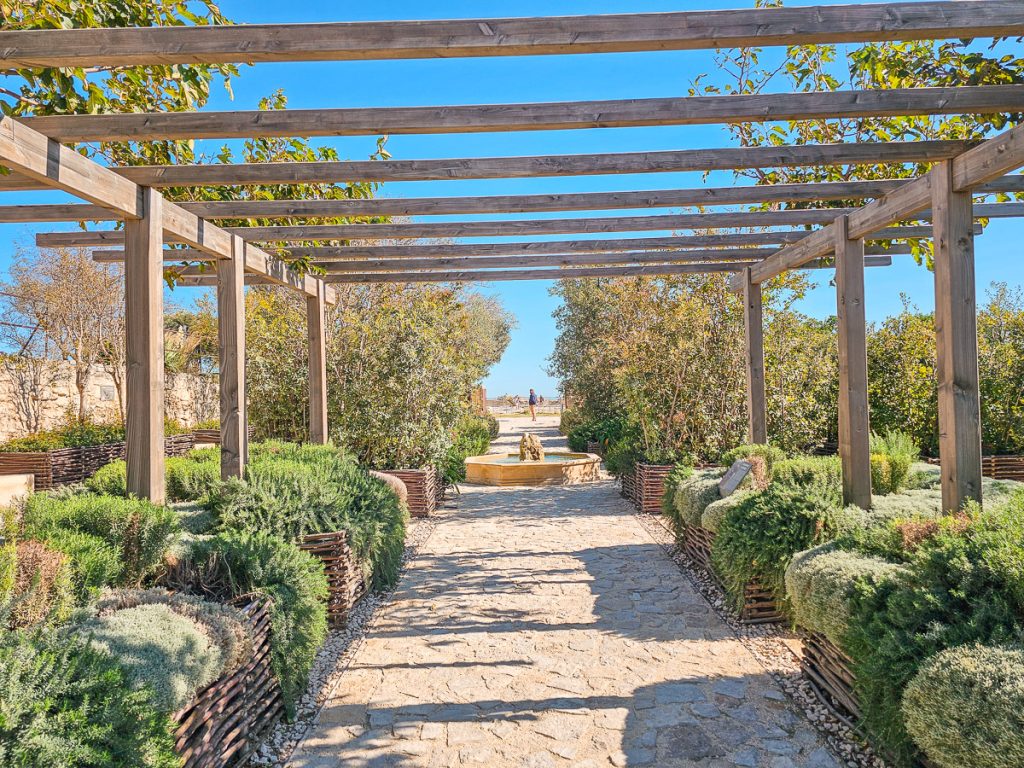
From there, you’ll wind through landscaped paths and start to spot some of the more rugged features of the castle. Massive stone walls rise around you, with little coves, dwellings, and outbuildings built right into the rock.
You can explore the old keep and even step into some of the cave-like spaces where people once lived.

Make your way up to the ramparts, where you can actually climb sections of the ruined wall and towers. The views from up here are seriously impressive.

Looking back, you get a full bird’s-eye view of the village tucked into the cliffs.

And looking out, the landscape stretches for miles; you can see all the way to Arles, with olive groves and farmland filling the valley below. On a clear day, you can even spot the sea and a few small ports just west of Marseille.

One of the coolest parts of the castle is the collection of medieval siege weapons. There’s a full-sized trebuchet, a battering ram, and a ballista, and in the summer, there are sometimes live demonstrations.
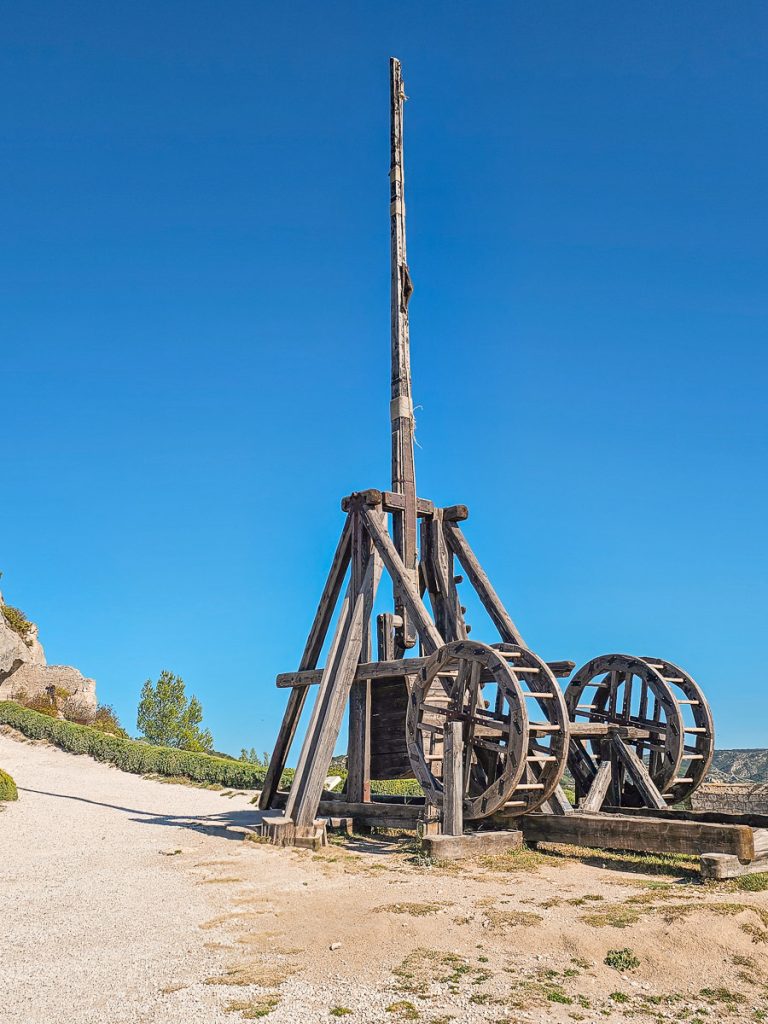
However, despite all its strength and massive size, Les Baux was ultimately defeated by a small force of less than 50 men, who besieged the village by cutting off the narrow resupply route to the fortress.
- Cost: €8
2. Explore the Town
Wandering through the streets of Les Baux is an absolute delight.

The town is full of winding streets and little stone alleys to explore as you make your way toward the castle, along with unexpected viewpoints over the Entreconque valley and ravine.

The buildings are all made of pale stone, and the cobblestone streets are lined with shops selling local goods.

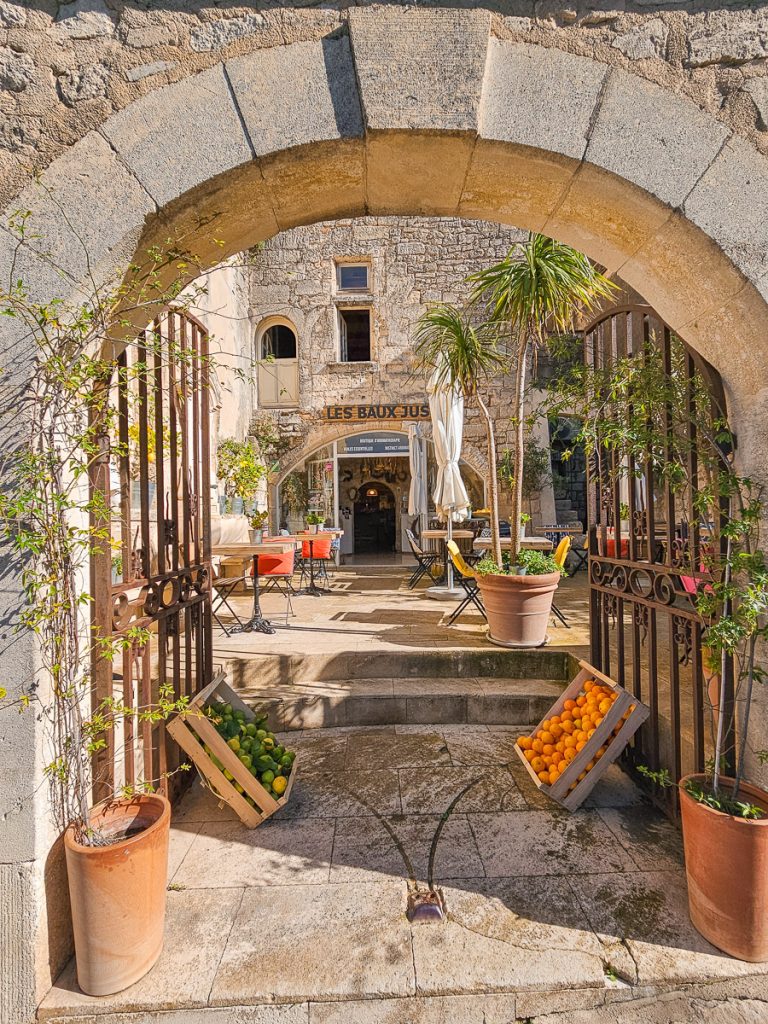
One of the most interesting details is the limestone itself – if you look closely at the streets and walls, you’ll spot large, intact shells embedded in the stone. While limestone is made from the seabed, it’s rare to see shells this well-preserved.
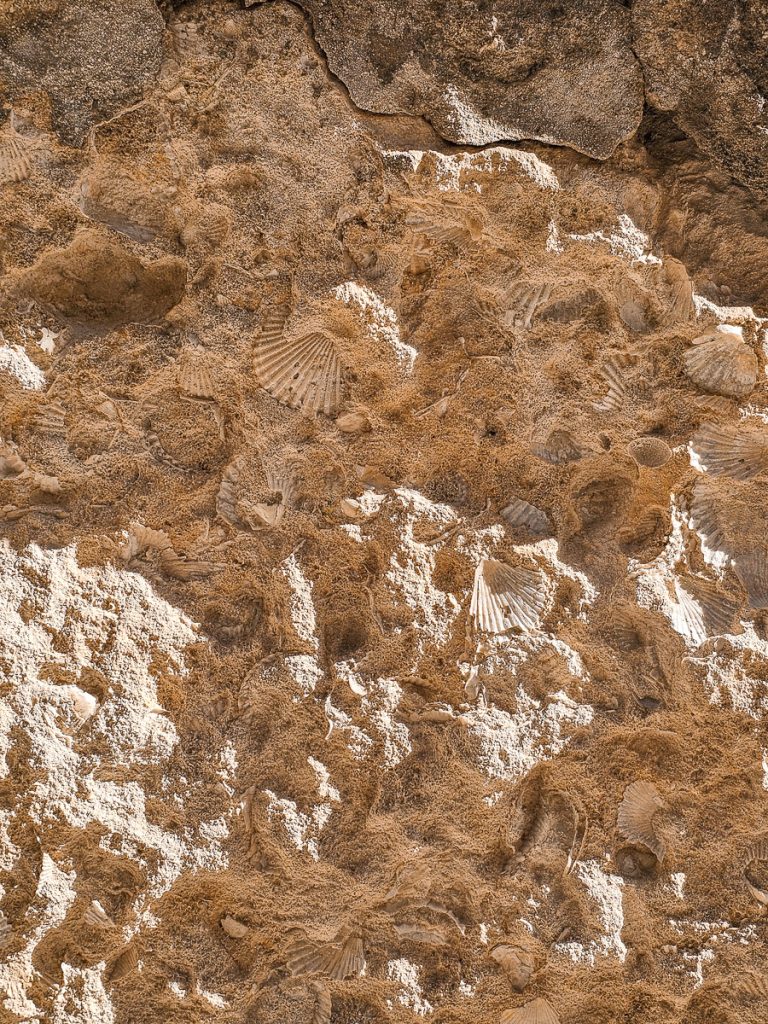
You’ll also pass several historic homes and buildings, like the Hôtel de Manville, a Renaissance-era mansion that now serves as the town hall. It has a charming courtyard you can peek into.

3. History of Les Baux Museum

Housed in a historic building, this museum is full of photos and information detailing the history of Les Baux-de-Provence.
For example, the name Baux comes from a word meaning “rocky plateau.” Some of the houses and parts of the castle were carved directly into the rock, then finished with stone from nearby quarries, a few of which are still active today.
It’s not flashy, but I really enjoyed spending 20 minutes learning a little bit more about the village’s story.
4. Musée des Santons
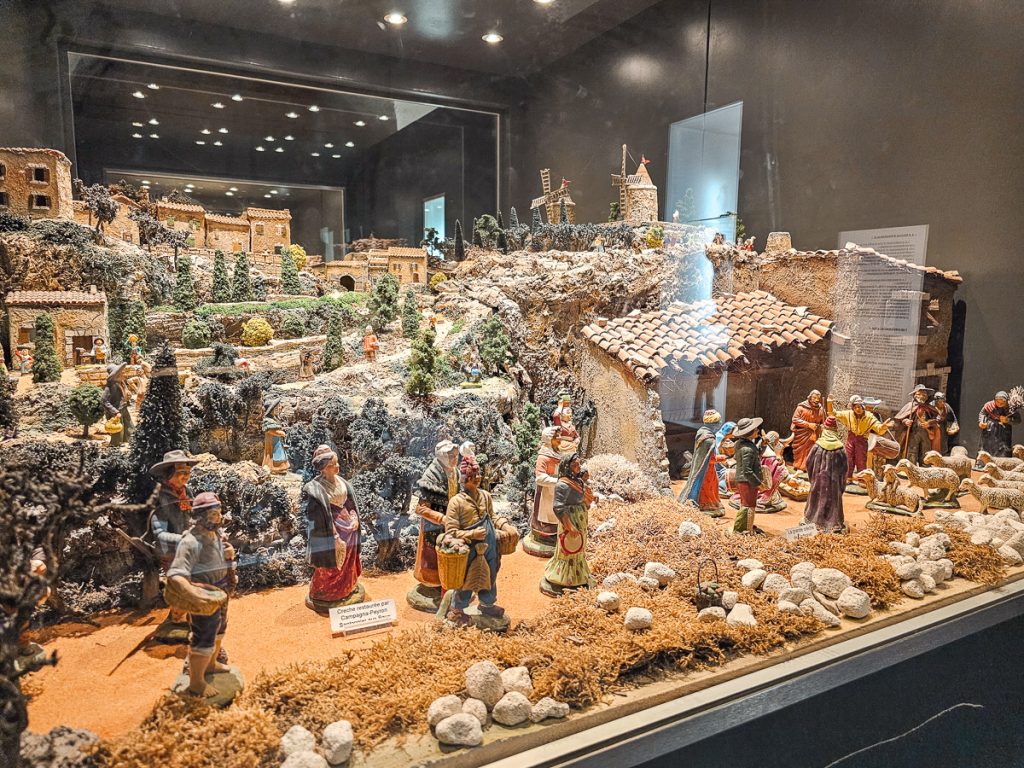
This small museum has an extensive collection of santons — traditional handmade Provençal clay figurines that are especially popular at Christmastime.
They’re typically used to create nativity scenes that go far beyond the biblical story. Alongside Mary and Joseph, you’ll find farmers, bakers, shepherds, musicians — everyday scenes of village life in Provence.
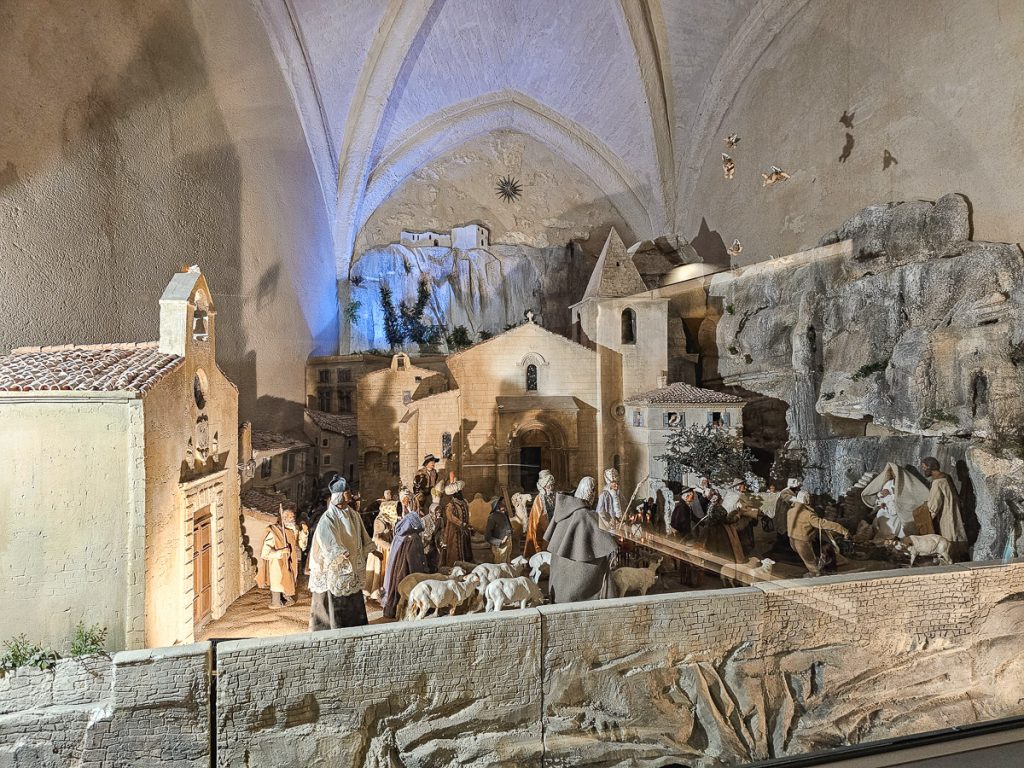
I’ve seen santons for sale at stalls in Christmas markets all over France. The stalls are sprawling, packed with every kind of figure, animal, and accessory you can imagine: cottages, wells, flower pots, wheelbarrows, benches, market stands. It’s basically like a dollhouse for adults 🙂
The museum is free and small, and I think it’s worth stopping in to see this traditional craft for yourself and admire such a large, detailed collection all in one place.
5. Visit the Churches
Les Baux is also home to several churches that are worth a stop:
👉Chapelle des Penitents Blancs

This little chapel is known for its wraparound fresco by Yves Brayer, a famous 20th century French painter. The fresco depicts the shepherds’ Christmas set in a Provençal landscape.
The colors are warm and earth-toned, yet vibrant, and very rooted in the region. Brayer was living nearby when he painted it, and he really brought Provence to life in the scene.
👉Saint Vincent aux Baux Church
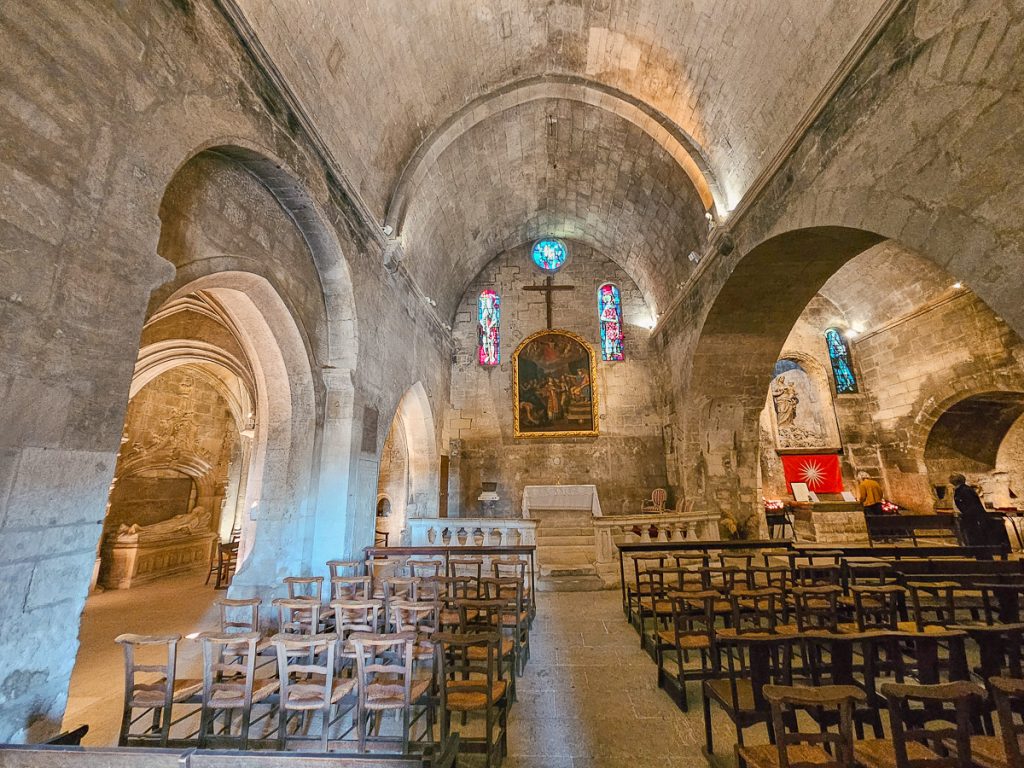
The main church in Les Baux, Saint Vincent was constructed in Romanesque style, and is partially built into the rock of the mountain. Inside, it’s made entirely of smooth stone, with vaulted ceilings and rounded arches, and it almost feels reminiscent of the quarries nearby.
👉Chapelle Saint Blaise
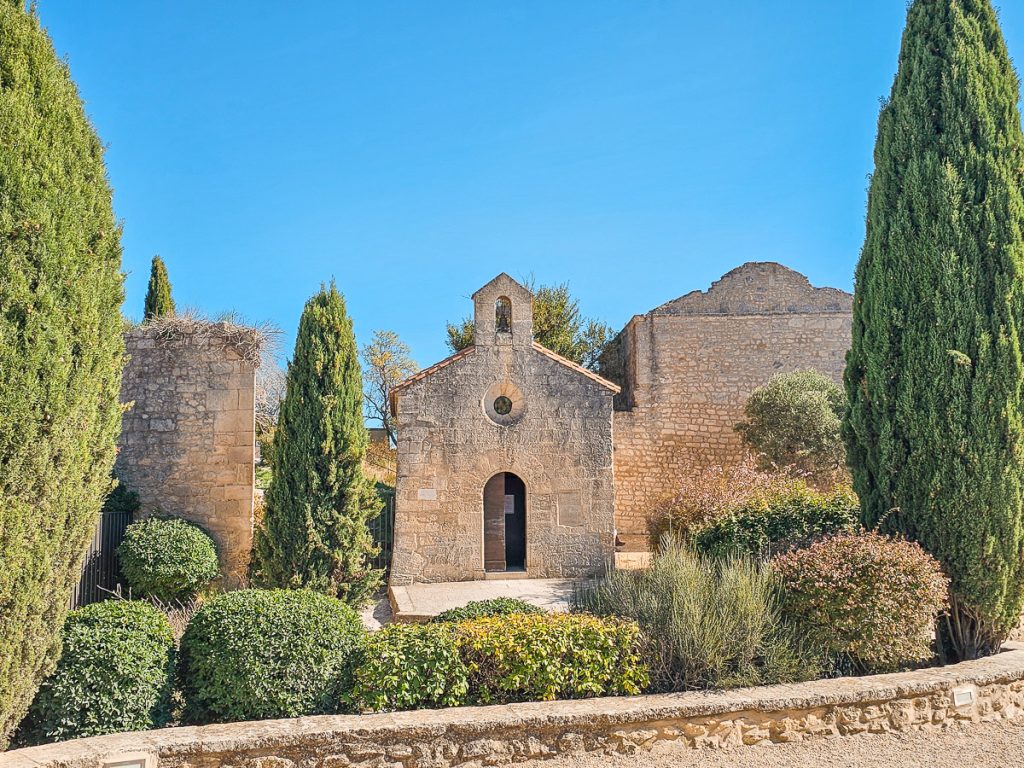
This tiny chapel is right in front of the castle entrance. There’s not really anything to see inside, but it makes a charming scene nestled among the surrounding cypress trees.
6. Carrière des Lumieres

This immersive art experience is set inside a massive, cave-like stone quarry just below the village. The entire space is lit up with moving projections: paintings, animations, and video that cover the walls, floor, and ceiling. The effect is mesmerizing!
It’s part of a network of similar installations across France and internationally (I’ve also been to the one in Bordeaux, and there’s one in Paris), and the theme changes every few months.

The show lasts about an hour and plays on a loop, with a series of short vignettes all centered around a single theme. When we visited, it was focused on ancient Egypt, and the combination of music, scale, and visuals definitely made it feel cinematic.
Cost: €15 if you buy a combo ticket with the castle
7. Viewpoint of Les Baux

Probably the best panoramic view of Les Baux is from a viewpoint a few minutes’ drive north of town. This spot showcases the ruined castle above, the village beneath, and the rocky hills all around.
It was beautiful when we visited in mid-afternoon, but I think this would also be a phenomenal sunset spot.

Practical Information
Getting to Les Baux
By Public Transit: The #707 bus connects Les Baux with cities like Arles and Saint-Remy-de-Provence during the summer months.
By Car: Driving through Provence to get to Les Baux is easy and straightforward. There is a teeny tiny parking lot right at the entrance to Les Baux that fills up immediately, but plenty of parking spots along road D27A, to the south/east of town (general location here). Parking was a few euros for several hours.
By Tour: A small group guided tour is a great way to see a lot in one day, without the hassle of driving, navigating, and finding parking. This full-day tour from Avignon takes you to Les Baux, Gordes, Roussillon, Pont du Gard, and Fontaine de Vaucluse.
How Long Do You Need in Les Baux?
A half day is the perfect amount of time to explore the town and visit the sites.
Where to Visit Next
Provence is full of amazing spots to visit, including:
- Arles for Roman monuments and Medieval history
- Gordes for the most picturesque hilltop village around
- Aix-en-Provence – my favorite Provencal city
- Avignon for the historic Palais des Papes and the Bénézet bridge
- The Camargue – a large marshland south of Arles (take a jeep tour)
- Saint-Remy-de-Provence: A charming village that Van Gogh called home
The Wrap Up
Les Baux isn’t big, but there’s a lot packed into this little clifftop village. Between the castle, the views, the adorable streets, and the cave show, it ended up being one of the most delightful stops in Provence.
