
Your Detailed Guide to Visiting Chamonix in Summer [French Alps]

Chamonix is France’s premier ski town and is well-known for luxurious lodges and great slopes to hit in the winter. But it’s also so, so beautiful in summer.

Chamonix fills a valley carved between giants. The valley is narrow and dramatic, hemmed in on one side by the Mont Blanc massif and on the other by the rugged Aiguilles Rouges peaks that rise just as steeply (though not nearly as high).
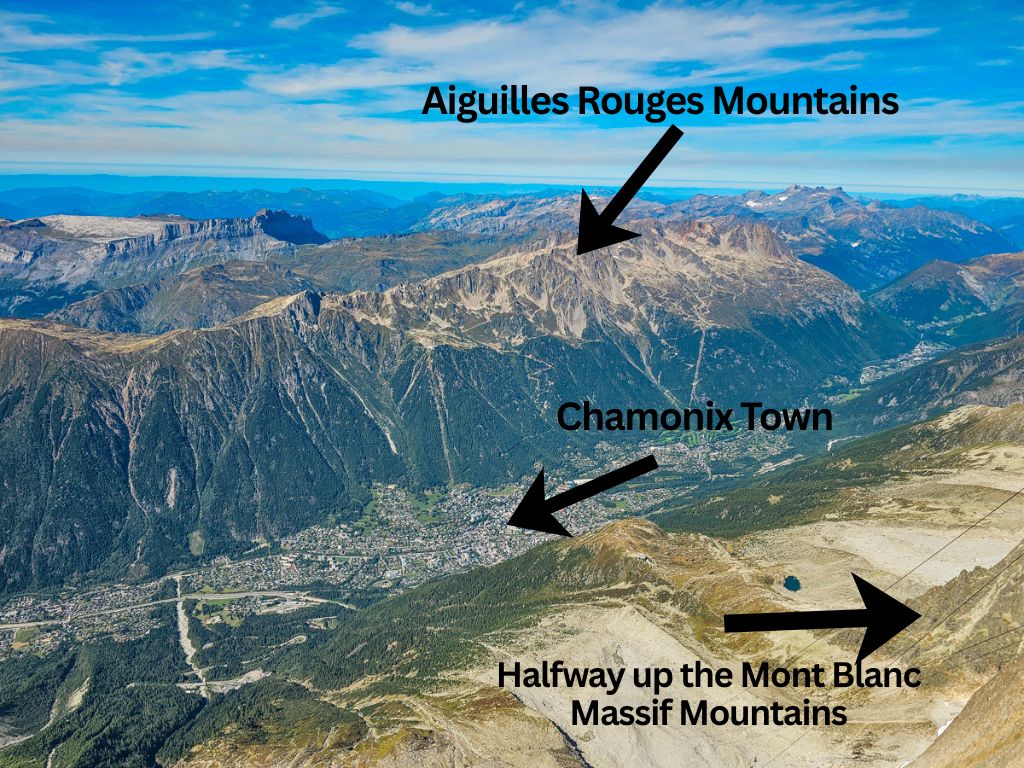
Paragliders sail overhead, catching the uplifts created by the mountains, waterfalls tumble down the cliffs, and the glacier-fed river flows through the center of town.
And, of course, presiding over it all is Mont Blanc, impossibly massive, snow-covered, and visible from almost every part of the valley.
While you’ll enjoy simply exploring the town and availing yourself of its many restaurants and views, Chamonix also offers access to the numerous hiking trails and other activities found in the surrounding mountains.
We truly loved our visit to the Chamonix area. In this guide, we’ll cover what you should prioritize in your trip and offer some practical tips for visiting.

The Town of Chamonix
Chamonix is very pretty and well-kept, with classic alpine chalet-style buildings mixed with some colorful buildings and more modern architecture. The town sits right in the middle of the valley, so wherever you walk you’re surrounded by huge mountain walls rising on both sides.

It’s a great place to wander for a while. The center is compact and very walkable, with cafés, bakeries, outdoor gear shops, and plenty of restaurants. You’ll also notice quite a bit of high-end shopping mixed in among the more typical alpine town businesses.


One spot worth stopping at is the Paroisse Saint-Bernard du Mont-Blanc church right in the center of town. The church itself is fairly simple and in a distinct alpine style you’ll see all over the region, and the setting is incredible, with the mountains towering behind it.
It’s a very classic Chamonix view and definitely worth a quick look as you explore town.

Main Attractions in Chamonix
The following are some of the most popular experiences, as well as several hikes you should consider.
Aiguille du Midi
The crown jewel experience in Chamonix is visiting the Aiguille du Midi. “Aiguille” means needle, and the Aiguille du Midi is a soaring, narrow rock spire near Mont Blanc. While it’s high up in the mountains, you can actually still see it from the valley. Amazingly, there’s an entire complex of buildings built on top that visitors can explore.

To get there, you ride a cable car from the valley floor, but you’ll need to reserve a time slot in advance.
We made a best-guess reservation before our trip but ended up changing it about 30 minutes before our scheduled time because of clouds. As long as you have a valid pass and there’s availability, you can modify your reservation online or at the information booth.
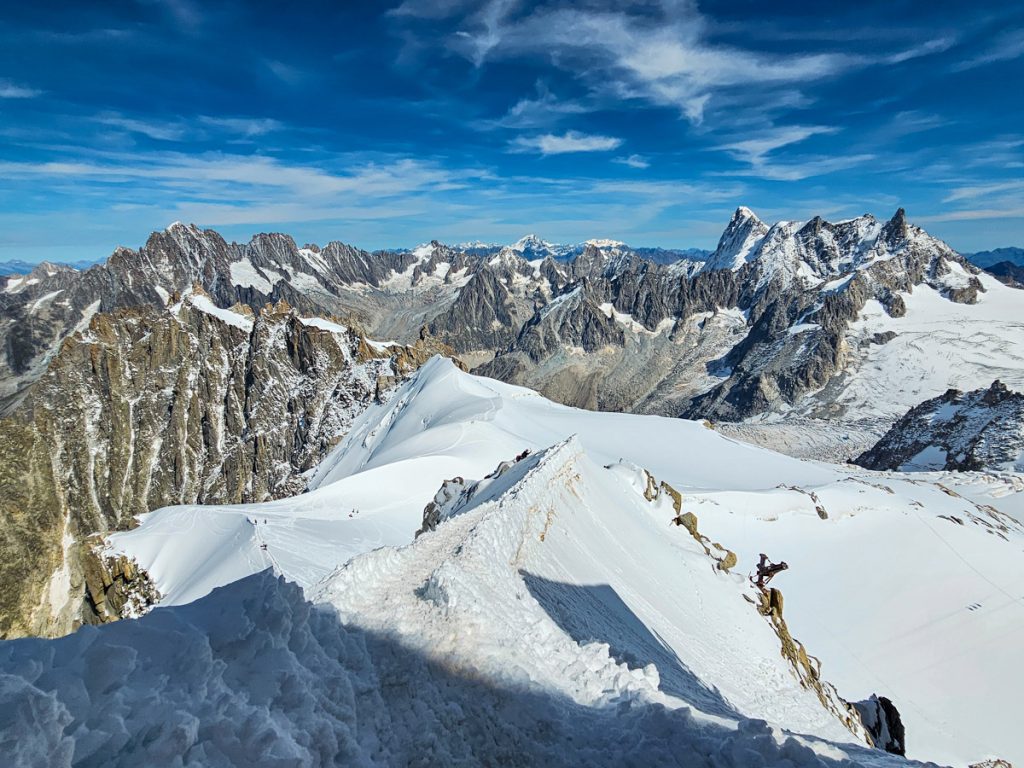
On a clear day, the views are staggering. You’re suddenly eye-level with Mont Blanc and surrounded by glaciers that look close enough to touch. Visiting the Aiguille du Midi was easily one of the highlights of our trip.
Le Brévent: The Opposite Perspective
On the almost exact opposite side of the valley from Mont Blanc is Le Brévent. This area is also accessed by lift, but unlike the Aiguille du Midi, no reservation is required. You’ll take the Plan Praz gondola from the valley floor and then switch to the Le Brévent cable car to reach the top.

From here, you get direct views across the valley to Mont Blanc and the Aiguille du Midi, which are absolutely stunning. You can also look down the length of the valley and over the ridge into other alpine corridors. This area is also a great starting point for several hikes, including Lac Cornu and the Grand Balcon Sud.
One of the best things about Brévent is how it lets you step back and see the entire Mont Blanc skyline all at once. It’s a fantastic complement to the experiences on the other side of the valley.
Other Hikes and Experiences:
- Mer de Glace – Accessible by a fun cog train system, Mer de Glace is an enormous glacier that you can admire and even go inside via an ice cave. It’s a classic Chamonix experience.
- Grand Balcon Sud – A beautiful traverse-style hike with continuous Mont Blanc views. Moderately difficult, but manageable with lift access.
- Lac Blanc – The iconic reflective alpine lake. Absolutely epic on a clear day. You should prioritize this hike!
- Albert 1er – This hike has a demanding ending, but features an epic glacier that feels wilder and less polished than other hikes.
- Paragliding – If you’re adventurous and want an incredible view of the valley and mountains, you can sign up for an experience of tandem paragliding. Be aware that most places require you to provide your own lift ticket up to the launch site.

The Lift System
If you haven’t noticed, I’ve mentioned taking lifts several times so far. If you take nothing else from this post, take this: get the multi-day pass.
There is an impressive set of lifts along the valley that take you from the valley floor up the steep mountainsides to the upper benches. In many places, a second set of lifts takes you even higher.

If you zoom out and around on Google Maps, you’ll see plenty of other lifts near Chamonix and other villages in the Alps.
While the lifts were built for skiing, they’re incredibly useful in summer because they let you skip the long climb from the valley floor and start your hikes high in the mountains.

Individual lift tickets run roughly €20–40 per ride, depending on the destination. A day pass is around €90.
But the multi-day pass is a dramatically better value and includes almost every form of transport in the region: trains, buses, and cable cars. Each day you put on the pass adds only a little extra to the cost, so even a week pass is only around €160 per person.
If you’re planning to explore more than one major viewpoint or hike, the pass quickly pays for itself.

You can purchase your passes online ahead of time, and then you can pick up the physical card at several kiosks around town. We chose to get ours at the Tourism Office so we could also check out maps and get other information.
You do need to be aware of the time requirements of the lifts, though. Operating hours are generally:
- Opening: 8:00–8:30am
- Closing: Around 5:00pm
- If a lift has multiple levels, the upper station usually closes about 15 minutes earlier than the lower one.
You’ll find several stations throughout the valley and even in surrounding areas that all work with the pass.

Other Towns and Hikes
If you have a car, it’s worth exploring beyond Chamonix itself. Chamonix is just one among a huge number of beautiful towns in the area. Numerous valleys cut their way through the French Alps here, and so many are worth visiting. A couple stand outs are:
Megève: This beautiful resort village on the west of Mont Blanc was a delight. Rather upscale, it had an impressive market, great food, and impressive views.

Combloux: This village gave us perhaps the best spot for sunset with Mont Blanc. Definitely worth a visit.

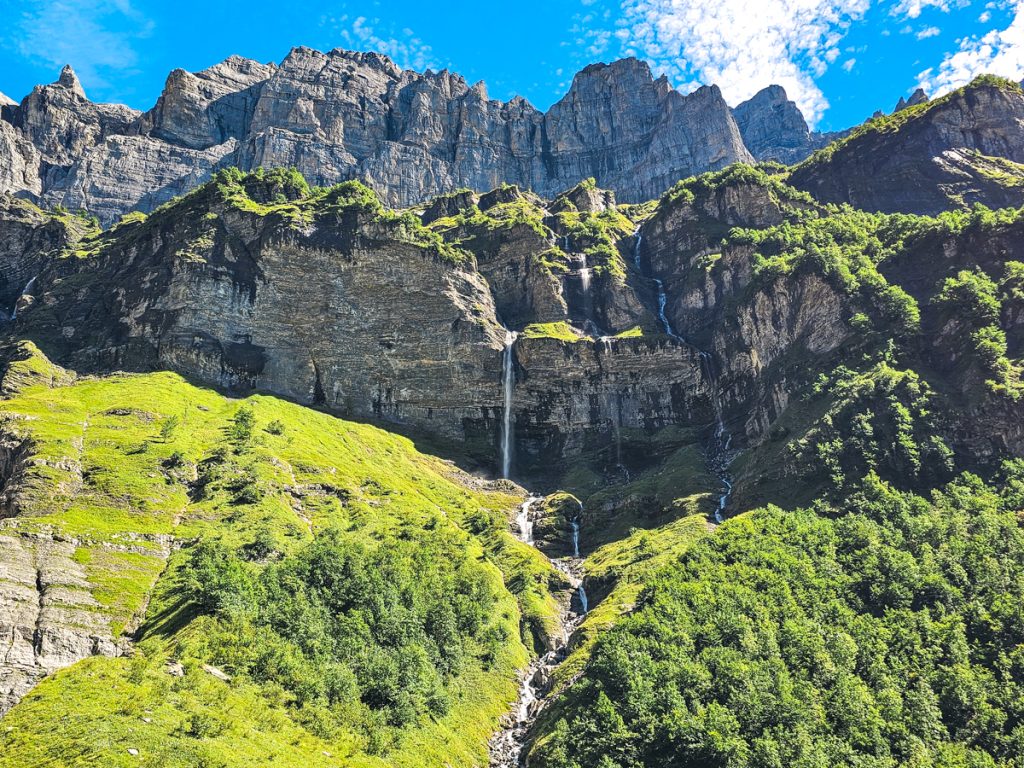
Sixt-Fer-à-Cheval: This tiny town is the gateway to Le Bout du Monde hike, which includes several stunning waterfalls.
Weather
Mountain weather in Chamonix is unpredictable. There is often a small chance of storms and heavy clouds are frequent.
This means that a week out, your forecast will probably show rain and storms. Two weeks out? Definitely rain and storms. But here’s what we were told by several people in Chamonix (and what we experienced): don’t believe the forecast beyond 24 hours. Definitely not beyond 48.
The weather shifts constantly.
This matters because so many of the big attractions require at least semi-clear skies. If the clouds are low, you’re simply inside them. Views gone. Mont Blanc gone. Glacier gone.

The official Chamonix forecast is actually excellent because it shows:
- Which side of the valley clouds will sit on
- Cloud elevation
- Short-term detail (1–2 days out)
But even that changes frequently. I’d recommend scheduling big-ticket items like the Aiguille du Midi and Lac Blanc early in your stay, so that if you need to adjust because of weather, you still have time to do so.
Where to Stay
Chamonix has a wide range of accommodations, from luxury alpine hotels to more budget-friendly lodges. You can stay right in town or in slightly quieter on the edges of the valley. A few good options are:
- Hôtel Hameau Albert 1er – luxurious lodge in downtown
- Park Hotel Suisse & Spa – near the Brevent lift
- Langley Hotel Gustavia – a more budget option in the heart of the city
- Hotel Les Lanchers – conveniently located near the La Flégère lift, a bit north of Chamonix
- Big Sky Hotel & Spa – lovely, relaxing hotel a bit south of Chamonix
We stayed at Big Sky Hotel & Spa, we had a great stay and I would absolutely recommend it.
Where to Eat
When in the French Alps, there are 3 main regional dishes you simply must try:
- Raclette: Melted raclette (an Alpine cheese) heated under a broiler at your table and scraped over potatoes, charcuterie, and pickles
- Fondue savoyarde: A blend of melted cheeses (usually Comté, Beaufort, and Emmental or Tomme de Savoie), eaten by dipping pieces of bread
- Tartiflette: Thinly sliced potatoes baked with cheese, bacon, and cream
For a classic Savoyarde dinner, go to La Calèche. You can’t go wrong with the Fondue Savoyarde Complete. It comes with bread, potatoes, and charcuterie, and it is exactly what you want after a mountain day.

We also really enjoyed Le Tablée and its hearty tartiflette.

And for dessert, stop at Mer de Glace, the gelato shop in town with an excellent name and excellent flavors.
Driving and Parking
Driving in Chamonix is quite easy, and I was extremely happy that we had a car. While you could stay in central Chamonix and use the bus, train, and walking to get between attractions and trailheads right in the area, I loved visiting other villages and doing other hikes outside the central Chamonix area. For many people, I think a car will be very helpful.
That said, parking in Chamonix can be a bit tricky, especially during the busy summer and winter seasons. There are several large garages and surface lots around town, containing a total of around 4,000 parking spaces.

P+R Centre Ville is one of the main parking areas as you enter Chamonix, but you’ll also see electronic signs around town directing you to other garages and showing how many spaces are available. You can also simply search for parking near wherever you’re headed.
While there are a lot of options for parking, they really can fill up fast. The town strongly encourages visitors to use public transportation instead. There’s a good network of buses and a train running through the valley, which can save you the hassle of dealing with parking.
However, we ended up using the bus and train only a few times. The timetables often didn’t line up well with our plans, especially since we like to start hikes early in the morning. And we didn’t have any trouble finding parking when we arrived in town around 8:00am.
If you’re parking for most of the day, expect to pay roughly €20–30 depending on the lot.
You can find more specific details about Chamonix’s parking options here.
How Many Days to Visit Chamonix?
I would plan on at least 3 days if you are planning to do the major attractions and a couple hikes. Even then, you’ll have a pretty hectic pace. Realistically, you can probably do one major attraction or hike and one smaller one each day.
We spent 5 days in the area, doing a lot of hikes and viewpoints, as well as visiting quite a few surrounding villages, and still could have happily spent more.
Final Thoughts
Summer in Chamonix is wonderful.
The scale of the mountains is hard to overstate. Mont Blanc doesn’t just sit in the background, it dominates the skyline, pulling your eyes upward constantly.
The glaciers feel alive. The hikes are unbelievable. And the lifts make getting into the mountains so much more accessible! You’re going to love your visit.
