
Most People Don’t Realize These Hidden Passageways Exist in Paris—But They’re Absolutely Worth Discovering

One of the simple pleasures of visiting Paris is just walking. The city really is best experienced on foot, taking in the sights and sounds, admiring the picturesque, tree-lined avenues and beautiful architecture.
Scattered throughout the city are passageways that you could easily miss if you weren’t looking for them. Some are covered arcades built in the 1800s, with mosaic floors and glass roofs. Others are narrow, open-air walkways that now house workshops or quiet cafés.
This guide features both types: the historic, glass-roofed galleries in the center of the city, and a few open-air passages that are worth wandering a little farther to find.
19th Century Covered Arcades
In the early 1800s, Paris saw a wave of glass-roofed shopping arcades pop up across the city. These covered passageways gave wealthy Parisians a warm, dry, and elegant place to shop and dine, away from the muddy, chaotic streets outside.
At their peak, there were over 150 of these arcades. Most are long gone, but a few have survived and been beautifully restored. These are 7 you shouldn’t miss:
1. Galerie Vivienne
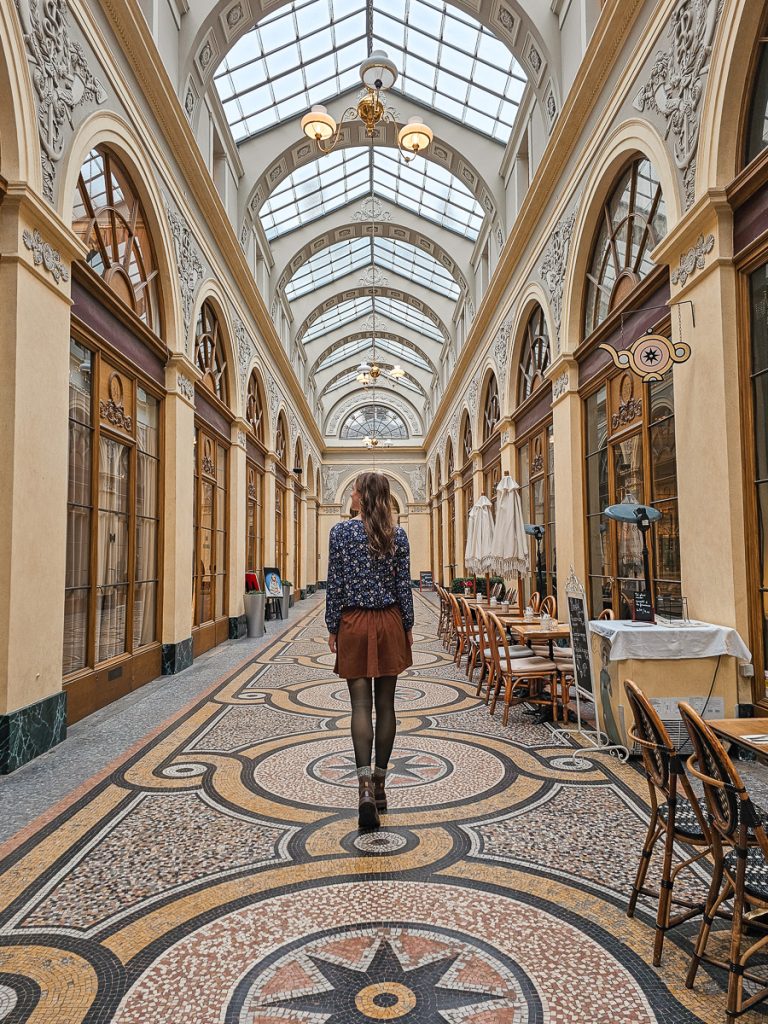
Galerie Vivienne is the best-known of Paris’s covered passageways, but it still feels delightfully tucked away. Built in 1823 in a neoclassical style, it has rounded skylights, geometric mosaic floors, and sculptures set above arched windows.
It’s a wide and elegant passage, and is an easy detour from the nearby Palais Royal gardens.
Inside, you’ll find antique bookstores, clothing boutiques, wine shops, and tea rooms. One of the oldest shops here, Librairie Jousseaume, still operates as a secondhand bookshop.
2. Galerie Véro-Dodat

Galerie Véro-Dodat, built in 1826, is also tucked near Palais Royal in the 1st arrondissement. It’s smaller than many others but visually striking thanks to the checkered black-and-white floors, elegant wooden paneling, and ceiling murals.
It’s home to luxury boutiques and art galleries, as well as a few unique spots like a Christian Louboutin shop and an antique doll seller. And while all of these galleries do feel way out of my tax bracket, Galerie Véro-Dodat felt particularly expensive.
3. Passage des Panoramas
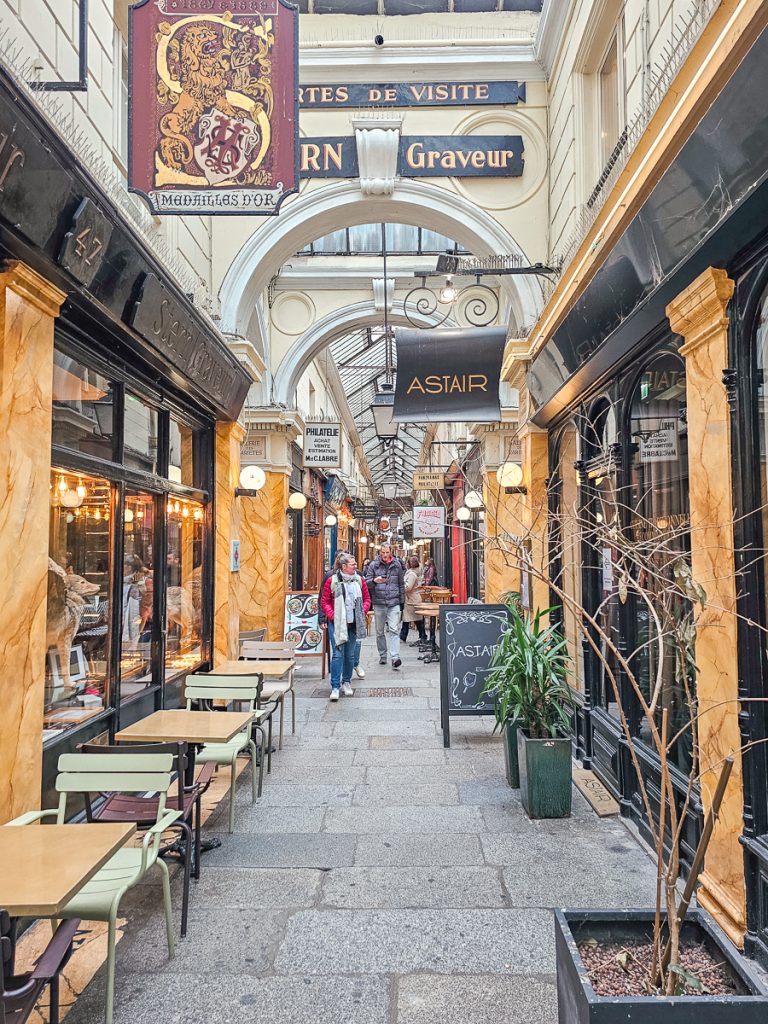
Built in 1799, Passage des Panoramas is the oldest of Paris’s covered passageways, and you can feel it in the woodwork, the antique signage, and the slightly narrower layout that makes the whole space feel more intimate.
It’s lined with small restaurants (I had a great meal here at Au Saveurs de l’Orient), postcard sellers, and specialty shops, including dealers in stamps, coins, and other old-school collectibles. You’ll also find bits of its history preserved in the faded façades of spots like the former Stern printing house.
Interestingly, the passage got its name from two massive rotundas that were once here, which displayed panoramic paintings of cities like Paris, Rome, and Jerusalem.
4. Passage Jouffroy

Passage Jouffroy was built in 1845 as a direct continuation of Passage des Panoramas across the boulevard, created to ride the wave of that passage’s popularity.
Passage Jouffroy took things a step further, as it was the first Parisian passage constructed entirely of metal and glass, with floor heating and decorative wooden touches.
This gallery has some of the most fun shops I came across, such as two different toy stores (La Boite à JouJoux, and Pain d’Epices) filled with intricate miniatures. There’s also the Librairie du Passage, a bookstore with a particularly intriguing selection of maps and vintage prints.
You’ll also find a side entrance to the Musée Grévin, Paris’ wax museum, tucked inside.
5. Passage Verdeau
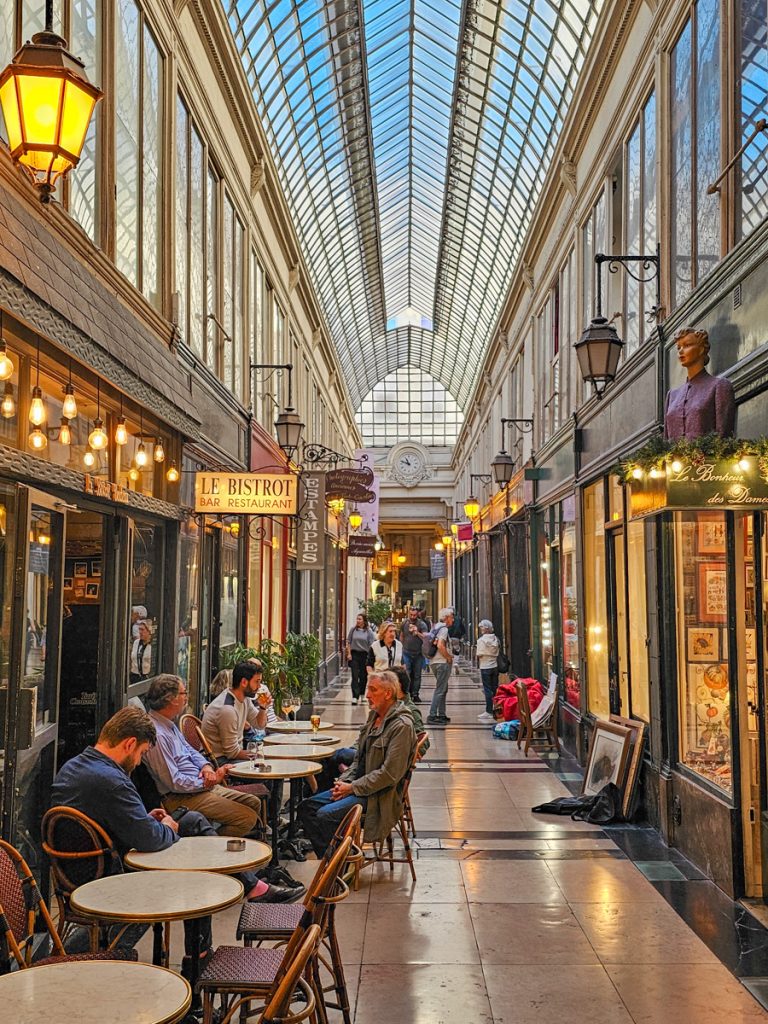
Directly across from Passage Jouffroy, Passage Verdeau picks up the thread and continues extending the walkway north. Built in 1846, it quickly attracted antique dealers after the nearby Hôtel Drouot auction house opened, and it’s still a favorite for collectors.
Expect a handful of shops with old postcards, vintage cameras, and plenty of rare books. Even if you’re not a collector, it’s fun to browse.
This passage has a fairly high roof with a distinctive fishbone pattern. It’s one of the brighter walkways and has a more low-key vibe than its neighbors.
6. Passage du Grand Cerf

Passage du Grand Cerf, built in 1825, is tucked in the 2nd arrondissement near rue Montorgueil. It’s one of the tallest covered arcades in Paris, with a glass roof that’s nearly 12 meters (40 ft) tall.
Inside, you’ll find an eclectic mix of specialty shops: jewelry, antiques, yarn, fabric, real estate, lighting, and vintage luxury. Combined with the quirky signs hanging overhead, this is one of Paris’s more unique covered passageways.
7. Passage Bourg l’Abbé

This one-block arcade near Arts et Métiers is much quieter than most. It’s lined with offices, workshops, and interior design studios, not shops geared toward shoppers or casual browsers.
You’ll find a café-epicerie at one end, but otherwise, this passage feels more like a workday corridor than a shopping destination. Still, the old-fashioned storefronts and faded details give it a timeless charm.
Open Air Passageways
The final four passages on this list aren’t covered arcades like the others, and they weren’t built as part of the early 1800s boom of galleries either. These are open-air walkways, often residential, industrial, or more local in feel, and are charming and worth a visit.
8. Passage de l’Ancre
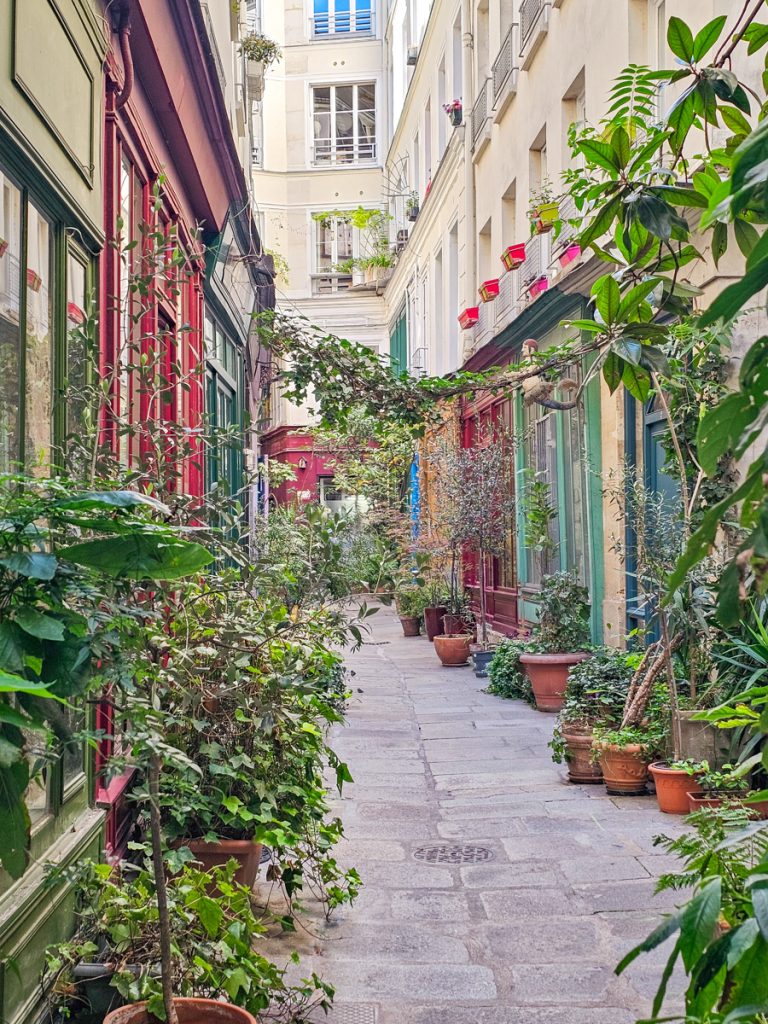
Passage de l’Ancre is quite old – its history dates back to the early 1600s, when it was filled with artisan workshops and small inns.
It’s much quieter now and not a shopping destination anymore, but there’s something lovely about how calm and green it feels. The narrow lane is lined with plants and really feels like a secret garden oasis tucked between city blocks.
The residents here really care about this little corner of Paris and ask visitors to help keep things peaceful and clean.
9. Cour de Commerce Saint-André

This cobblestone passageway in the 6th arrondissement dates back to 1735 and is one of the most charming spots on the list. It cuts quietly behind the busy Boulevard Saint-Germain, lined with restaurant terraces, a couple gourmet food shops, and leafy decor that feels like something out of a Paris postcard.
Le Procope is the big name here. Founded in 1686, it’s the oldest café in Paris and has some incredibly famous clientele, including Voltaire, Napoleon, and Benjamin Franklin.
I ended up eating at La Jacobine just next door, and my meal was fabulous.
10. Cour Damoye

Just off Place de la Bastille in the 11th arrondissement, Cour Damoye is a peaceful cobblestoned alleyway. Early on, this passage was popular with tradesmen and was much more industrial.
Today, the small workshops have been turned into offices, art galleries, and a couple small cafés. The lamps, signs, and overgrown greenery all add to the old-world charm.
11. Passage Lhomme

Passage Lhomme is a small, quiet lane tucked just off Rue de Charonne in the 11th arrondissement, not far from Cour Damoye. It’s cobblestoned and lined with workshops and plants, with a couple of buildings that give it a slightly industrial, rustic feel.
Just off the passage, there’s a little bookstore that’s worth a peek if you’re in the area.
The Wrap Up
Walking Paris’s broad streets is obviously a great experience, but these narrow lanes and covered passages offer a glimpse into a different side of the capital, one where history, industry, and luxury meet with a distinct aesthetic. As you get ready for your Paris adventure, make time to explore some of these unique Parisian passageways – they’re worth the detour.
