

Oradour-sur-Glane: A Haunting Walk Through France’s Martyr Village

Oradour-sur-Glane is a village just outside of Limoges in the Limousin region of central France. It is one of the most haunting places I have ever visited in France, with one of the most tragic and heartbreaking stories of World War 2.
On June 10, 1944, a Nazi SS unit rolled into this quiet village in the middle of the French countryside. Within a few hours, 643 people would be massacred, virtually the entire town, and 328 buildings burned and razed.
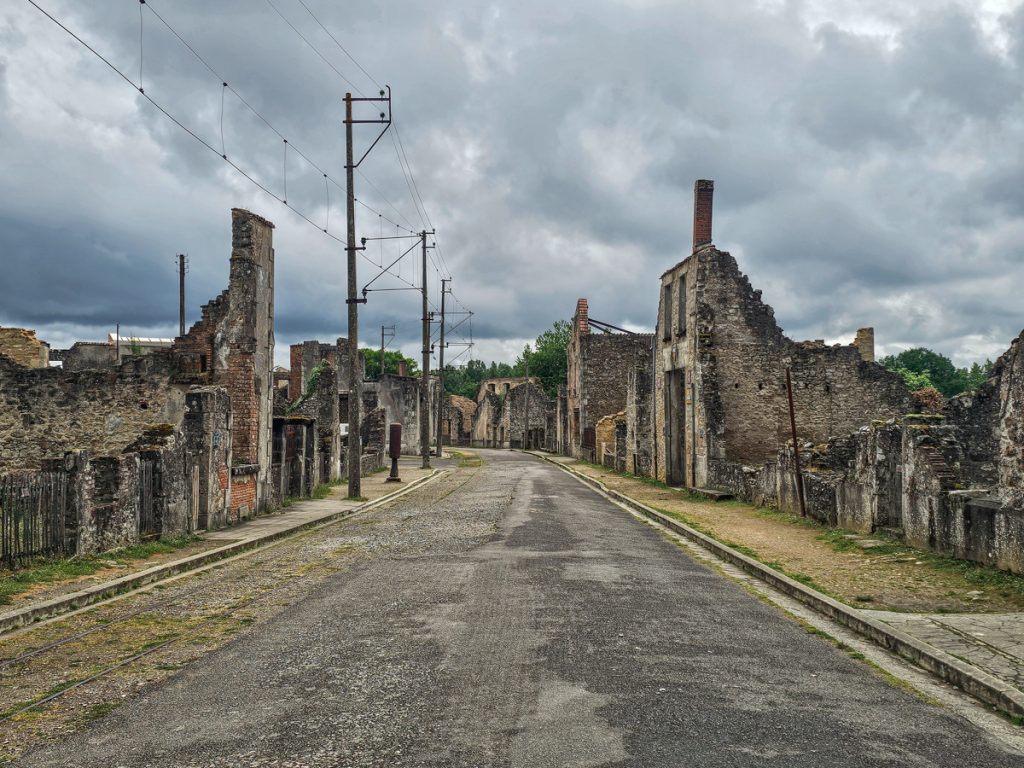
After the war, General de Gaulle visited and decided to preserve the ruins exactly as they were, to bear witness for the rest of humankind to the consequences of the barbarity of war.
The ruins are still there today, frozen in time, and you can walk through them to see up close the horrors of war.
The Village Before June 10, 1944
Before that day, Oradour-sur-Glane was nothing particular of note, just a peaceful, prosperous village in the Limousin countryside, the kind you pass through hundreds of times driving through rural France.
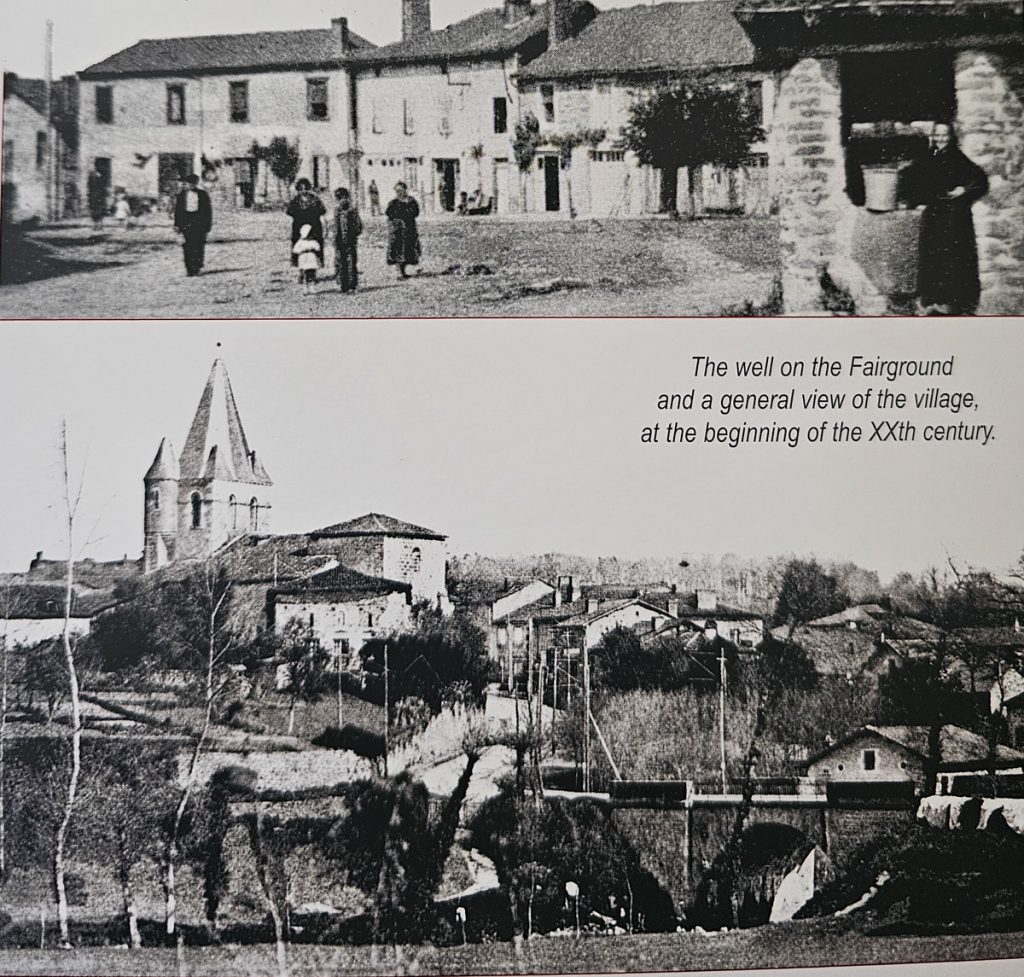
In 1936, the population was about 1,500 people, with around 330 living together in the main part of the village.
On June 10, 1944, there were more people in town than usual. Children from the surrounding countryside were in school. Men from nearby farms had come for the distribution of tobacco. The village had also taken in some displaced people from neighboring regions. Nobody had any reason to think it would be anything other than an ordinary day.
What Happened on June 10, 1944
The SS unit responsible was the 2nd SS Panzer Division “Das Reich,” which was moving north toward Normandy following D-Day four days earlier. The exact reason Oradour was targeted has never been definitively established.
Around 2:00 pm, the SS surrounded the village and ordered everyone to go to the fairground. At first, people weren’t worried; they thought it was just a standard check. But by 3:00 pm everyone was rounded up and machine guns had been installed at the place of assembly.
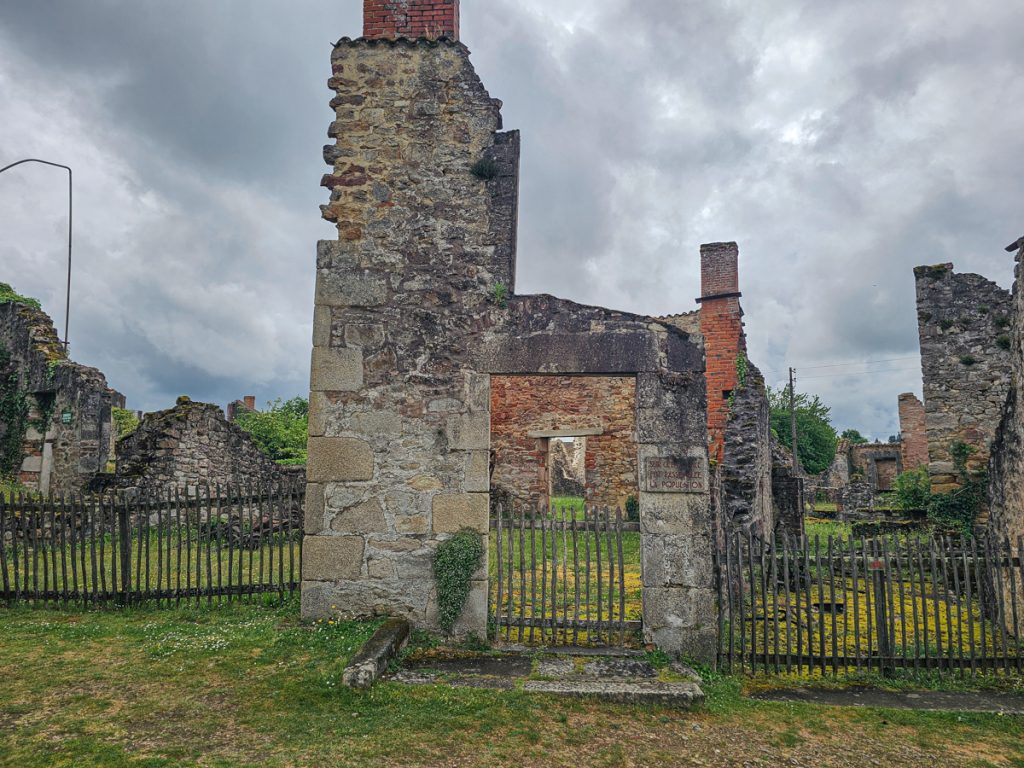
At 3:30, soldiers separated the men from the women and children. The women and children were directed toward the church. The men were divided into groups and taken to different buildings around town, such as barns, sheds, and storehouses.
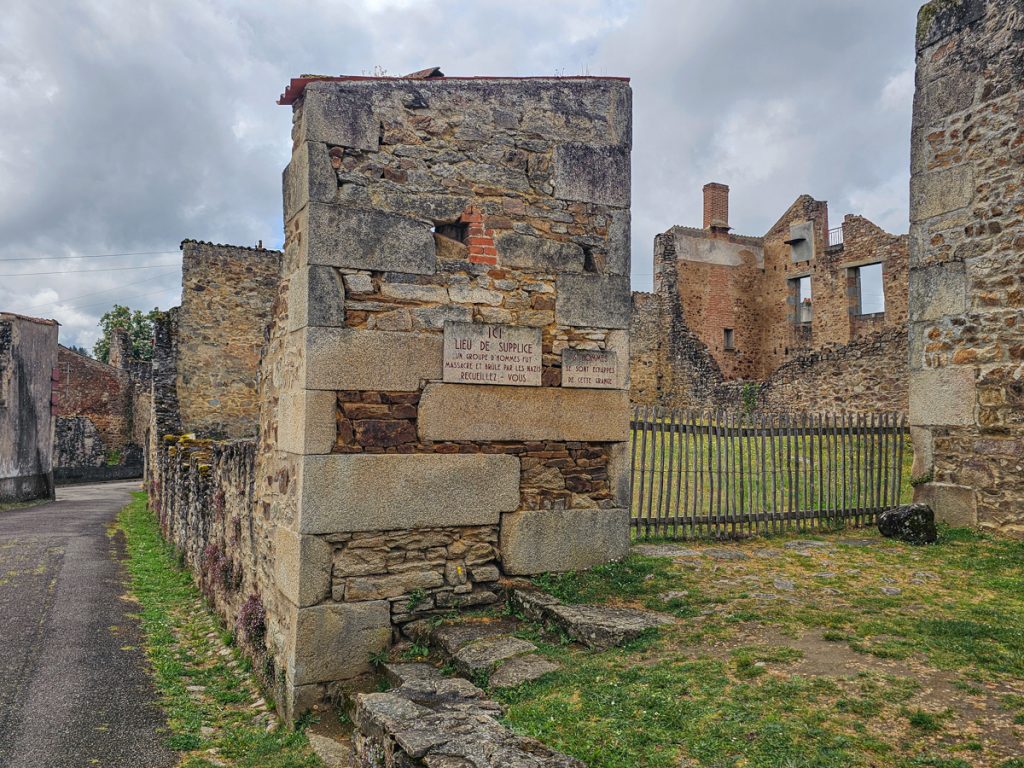
At 4:00 pm, an explosion was heard. That was the signal. Machine guns opened fire on the men, killing almost everyone, and the buildings were set alight.
At 5:00 pm, a smoke device was set off inside the church. As the women and children tried to escape, machine gun fire cut them down outside. People either died from the gunfire or from the smoke and fire inside.
Only one woman escaped from the church. She ran, was shot multiple times, and hid in the surrounding gardens until it was over. A handful of men survived by hiding underneath the bodies of those who had been killed. One child survived by running off while the initial gathering was happening.
After it was all over, the entire village was burned and razed before the Nazis left.
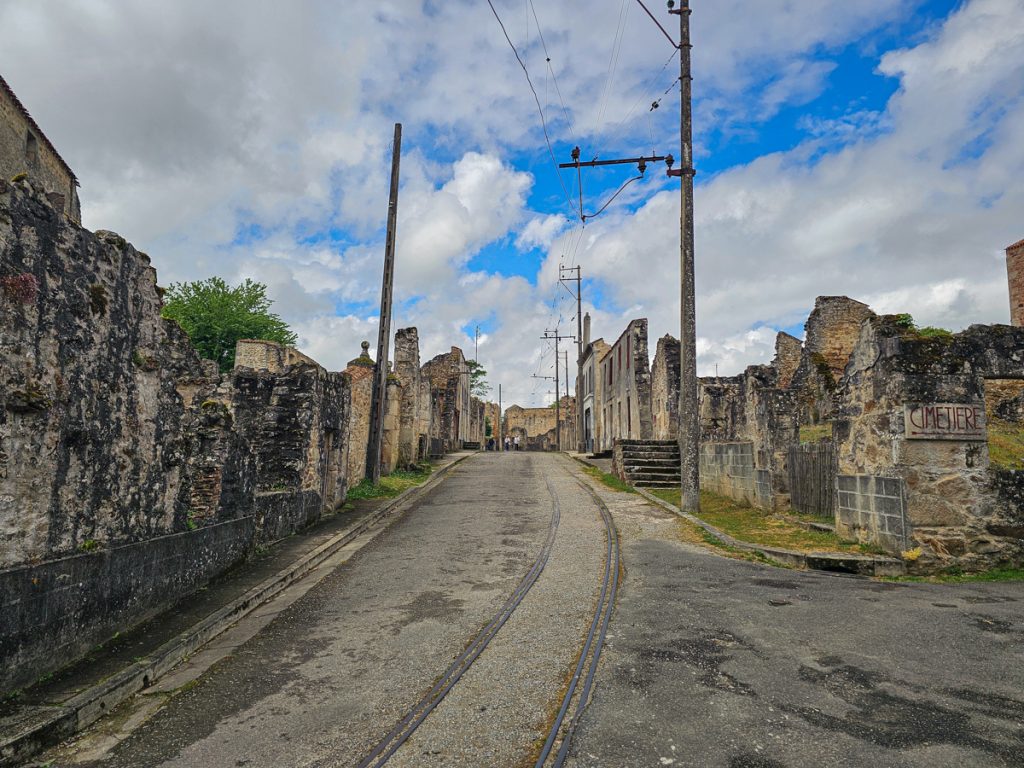
Walking Through the Ruins Today
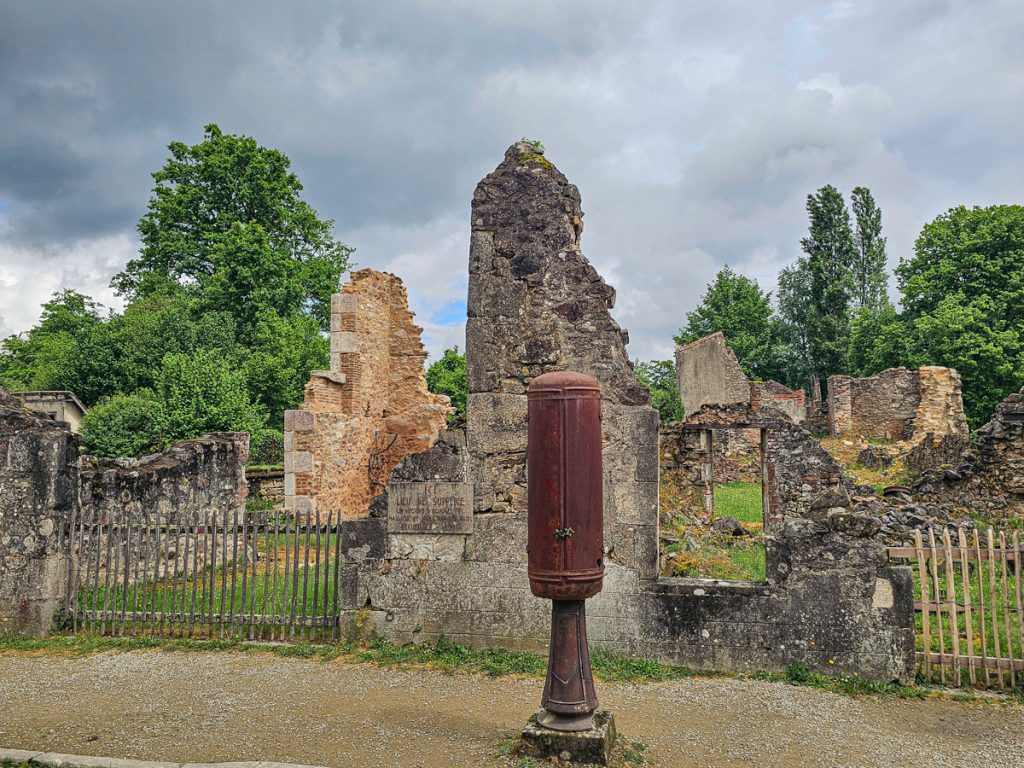
The ruins of the village have been completely preserved, surrounded by a stone wall erected after the war. All of the buildings are still present in various stages of ruin, with walls partially collapsed, roofs gone, and leftover vestiges of daily life strewn inside the houses.
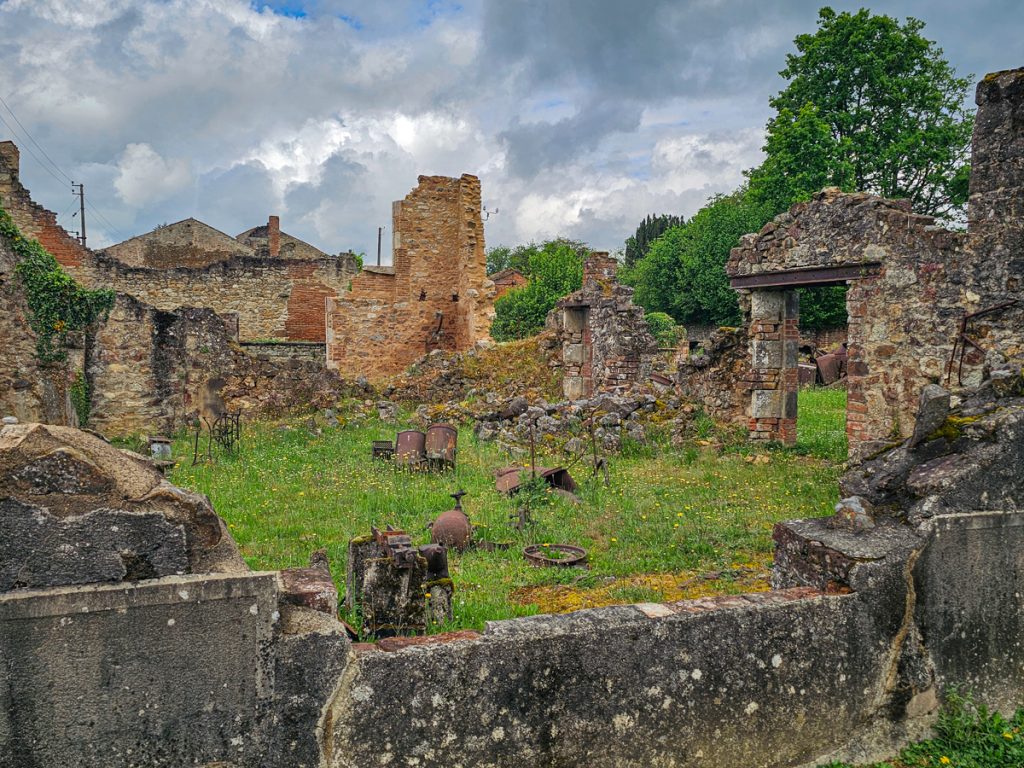
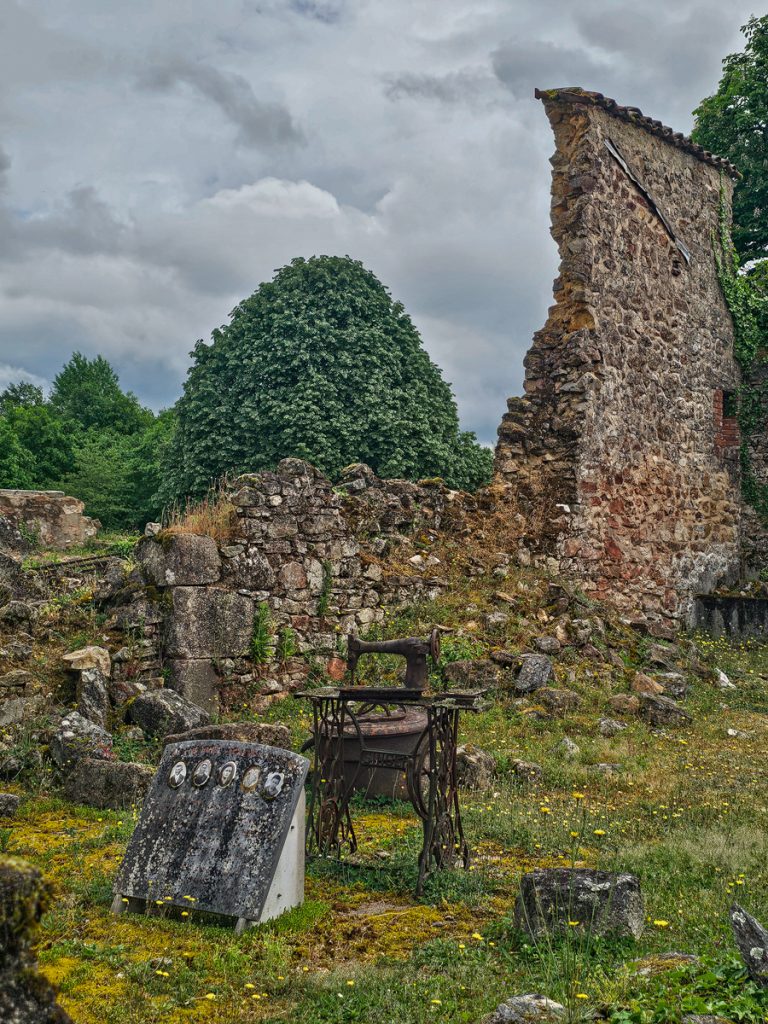
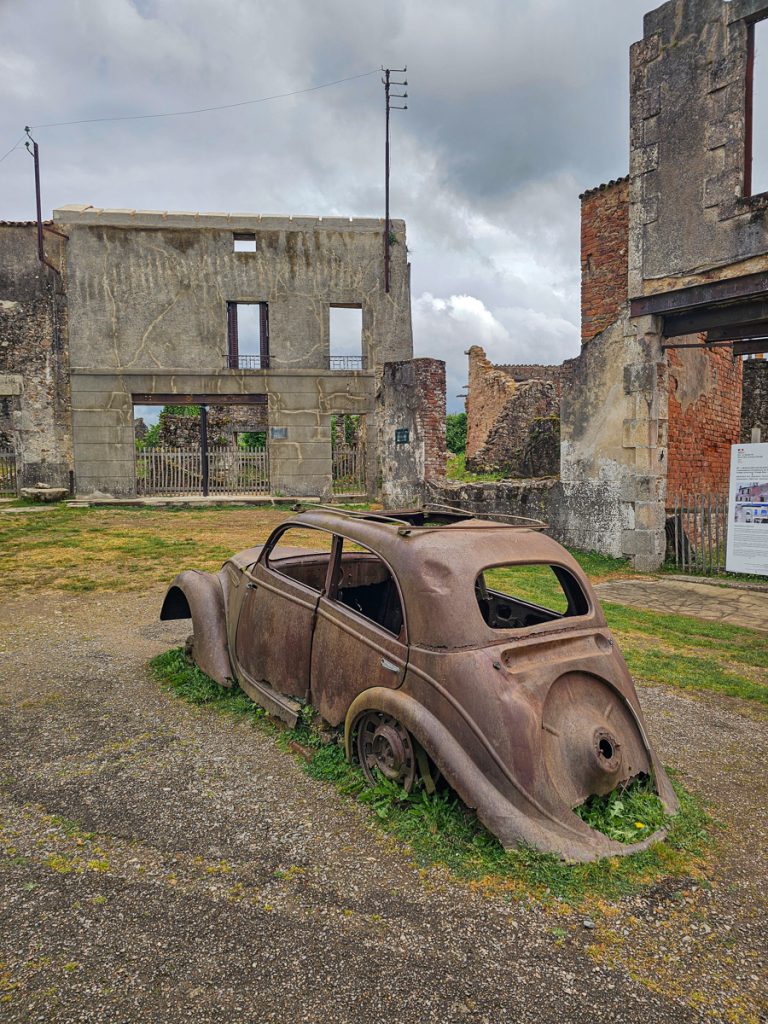
There are several details around town that make the experience feel much more personal.
Sometimes you see bikes, sewing machines, pots and pans, farming equipment, and other remnants of the lives that were lived there. There’s even a car sitting in the middle of the center of town, rusted and frozen in place.
Little plaques are attached to each building identifying what it was, such as a bakery, a café, a dentist’s office, or a service center, and the name of the person who lived there.
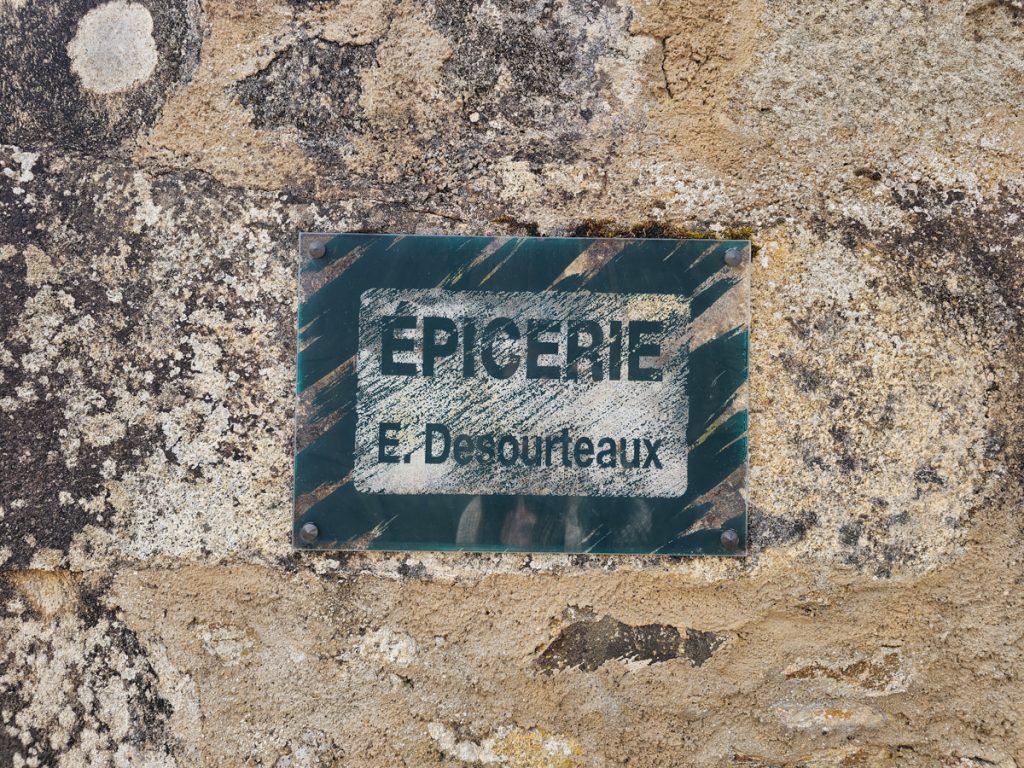
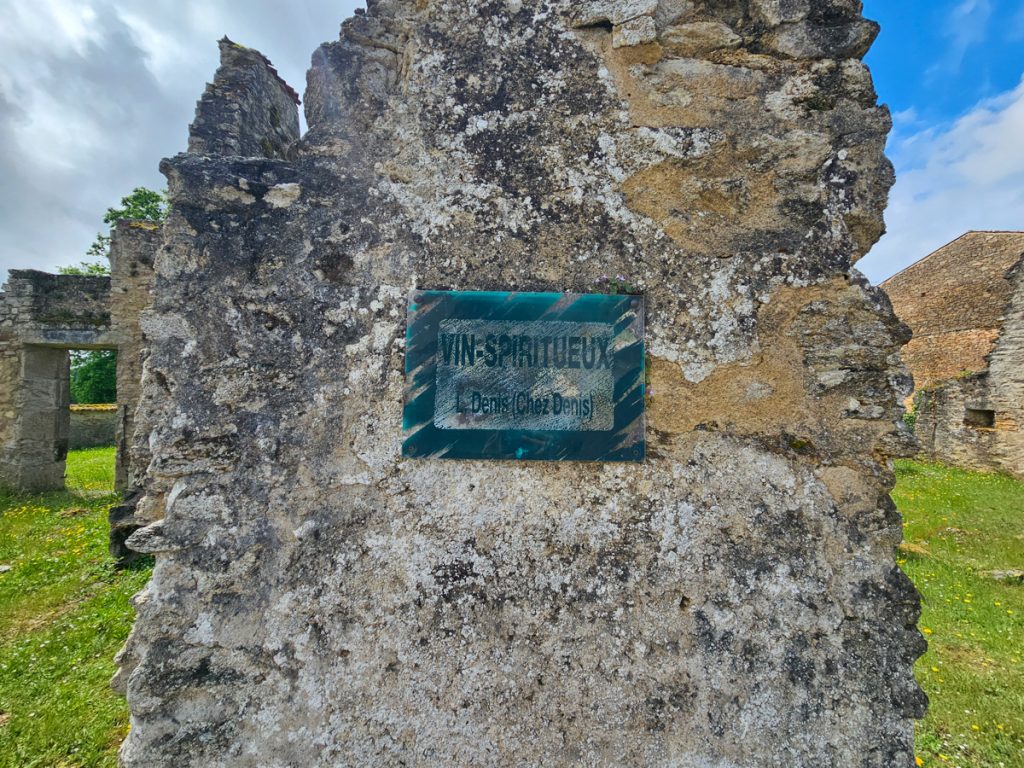
A few of the buildings had pictures of the people who died there— small remembrances in the middle of the ruins.
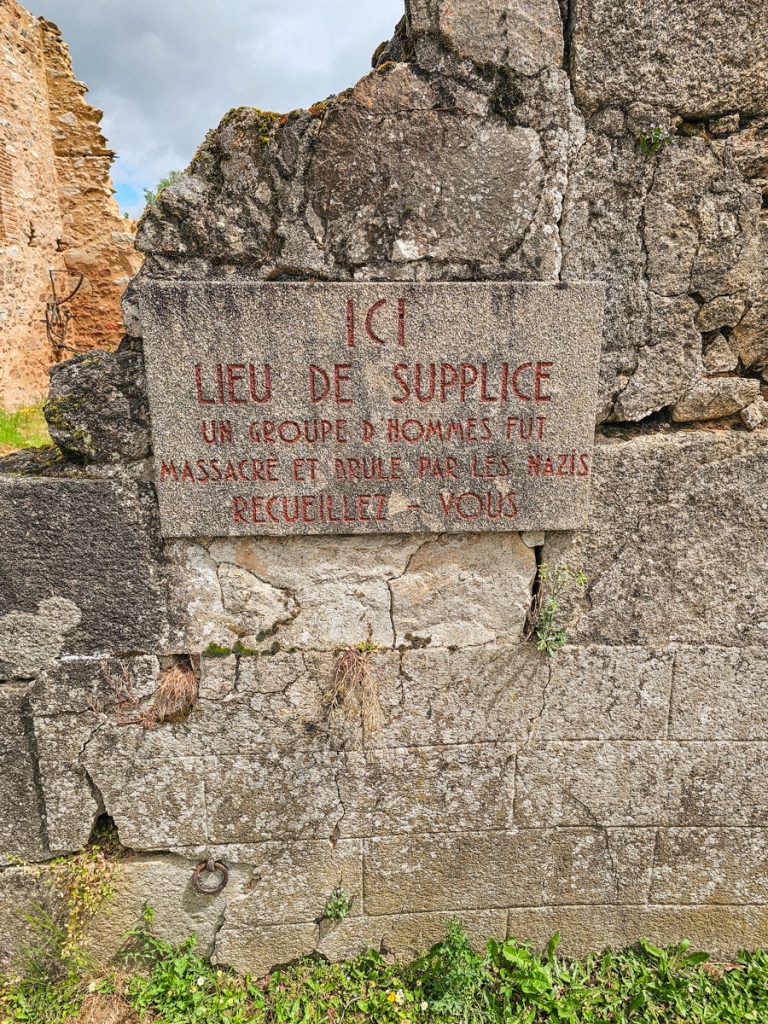
The eight spots around town where the men were separated and killed each have a stone plaque on the side of the building:
Visiting the Church
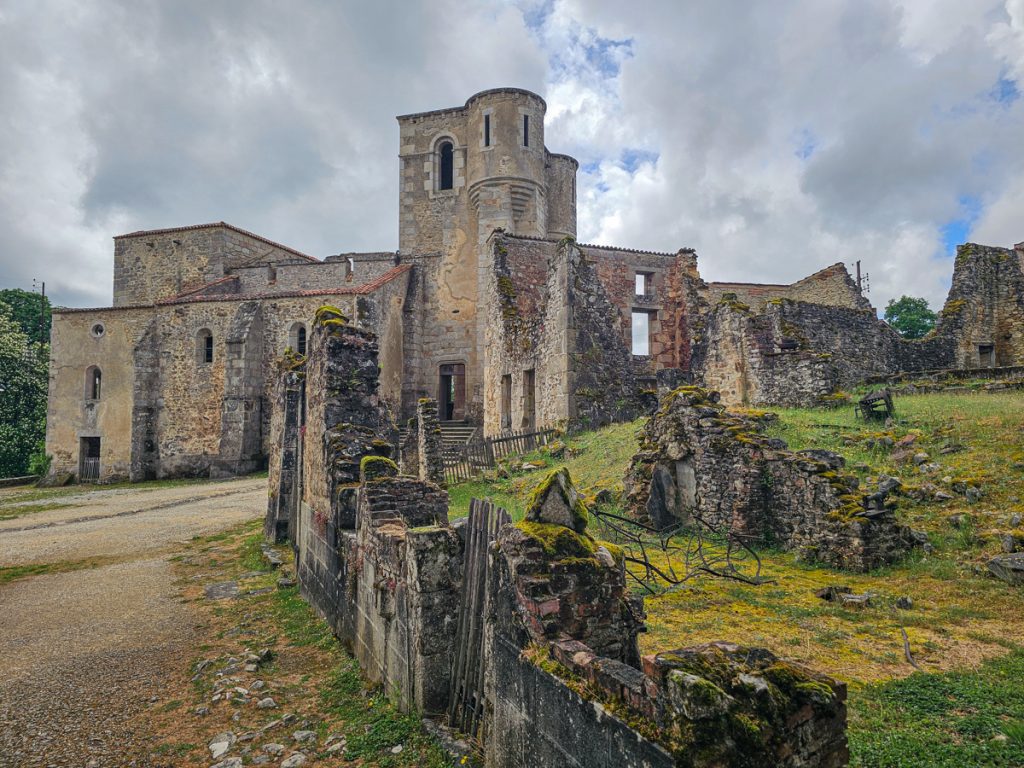
Visiting the church is, again, just a sobering, haunting experience. You walk up to it still towering over the rest of the buildings in town, as it had before.
The roof is completely gone. Most of the walls are still standing, but parts are crumbling, and parts of the side chapels are damaged and partially ruined.
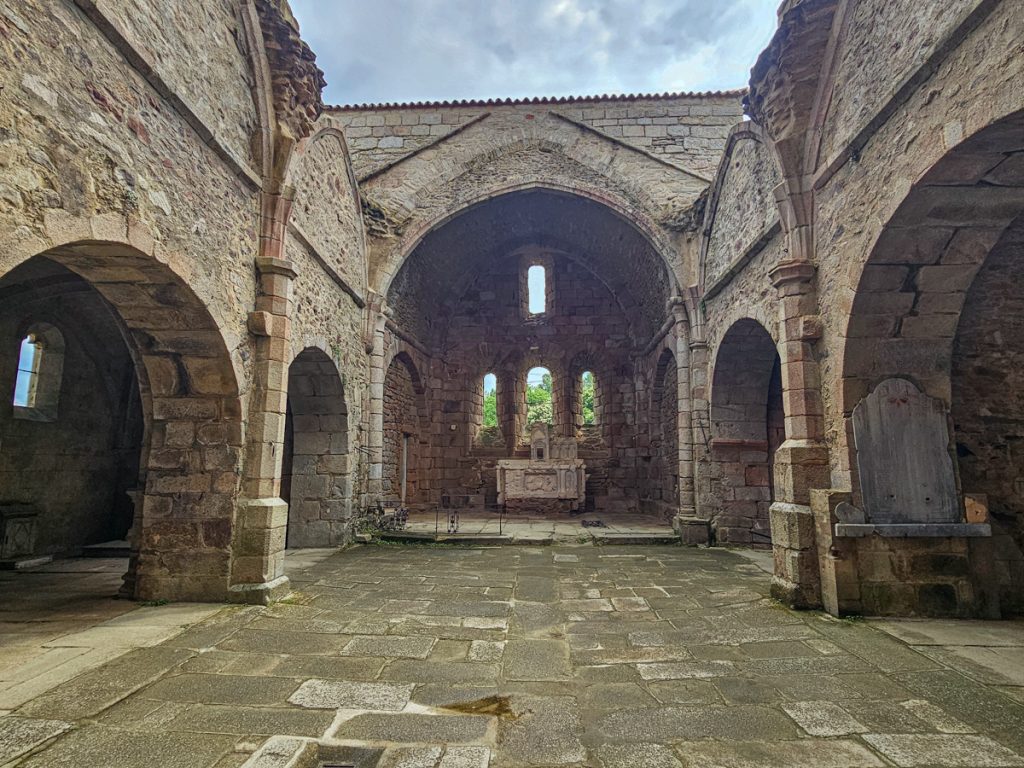
It was the centerpiece of this community, a beautiful Romanesque church, yet it became a spot for unspeakable suffering. It felt heavy walking through, truly feeling like a witness to the victim’s pain.
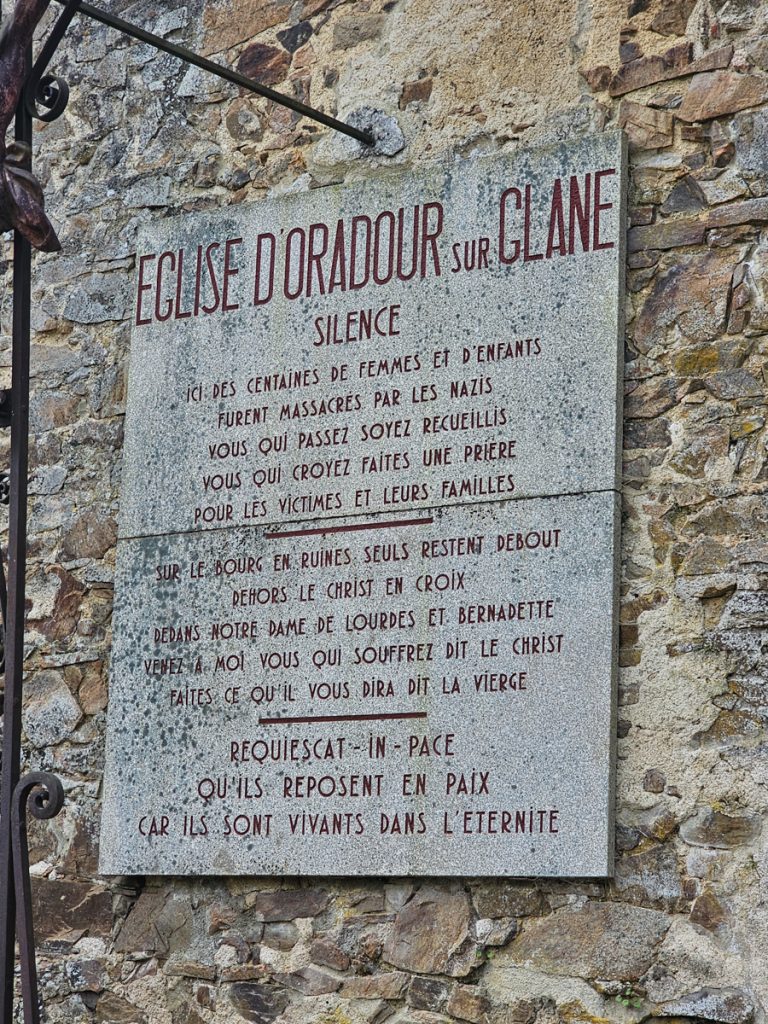
The Memorial Field and Cemetery
Don’t miss the memorial field to the east of the village buildings. It’s still part of the Martyr Village and worth the short walk. From there, the cemetery is just nearby.
The cemetery has been in use for centuries and continues to be used today as a new village emerged after the war just next to the Martyr Village. Many of the graves are family graves, with people buried here over the centuries. Scattered throughout the family graves are tributes to the victims of June 10, 1944.
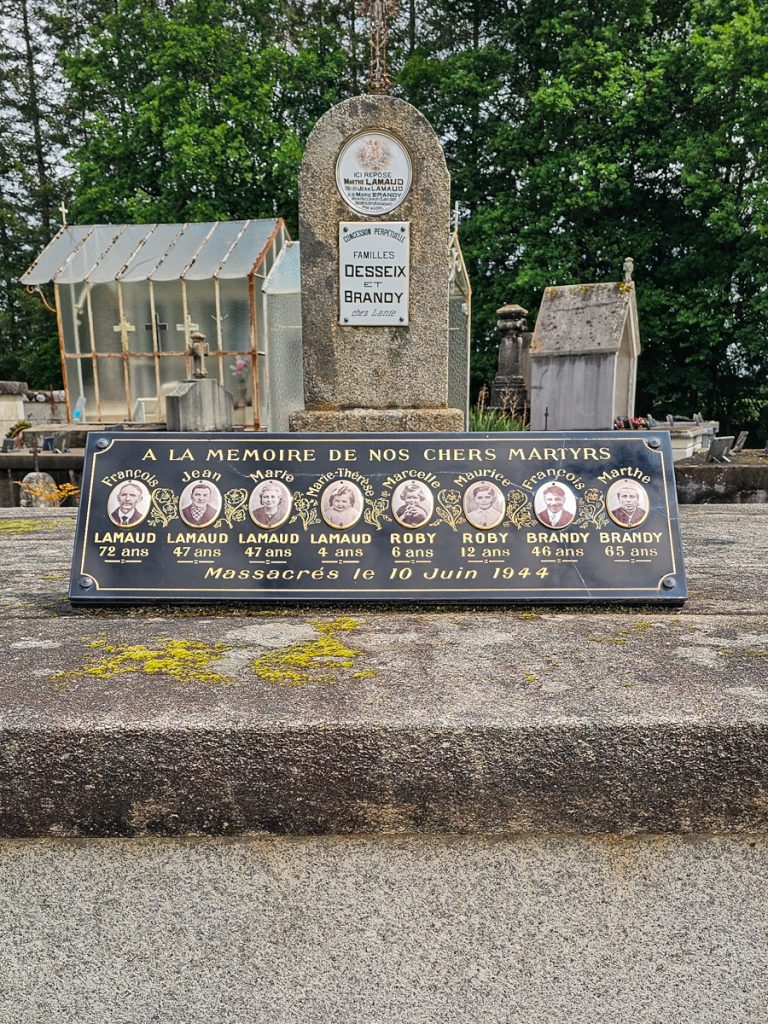
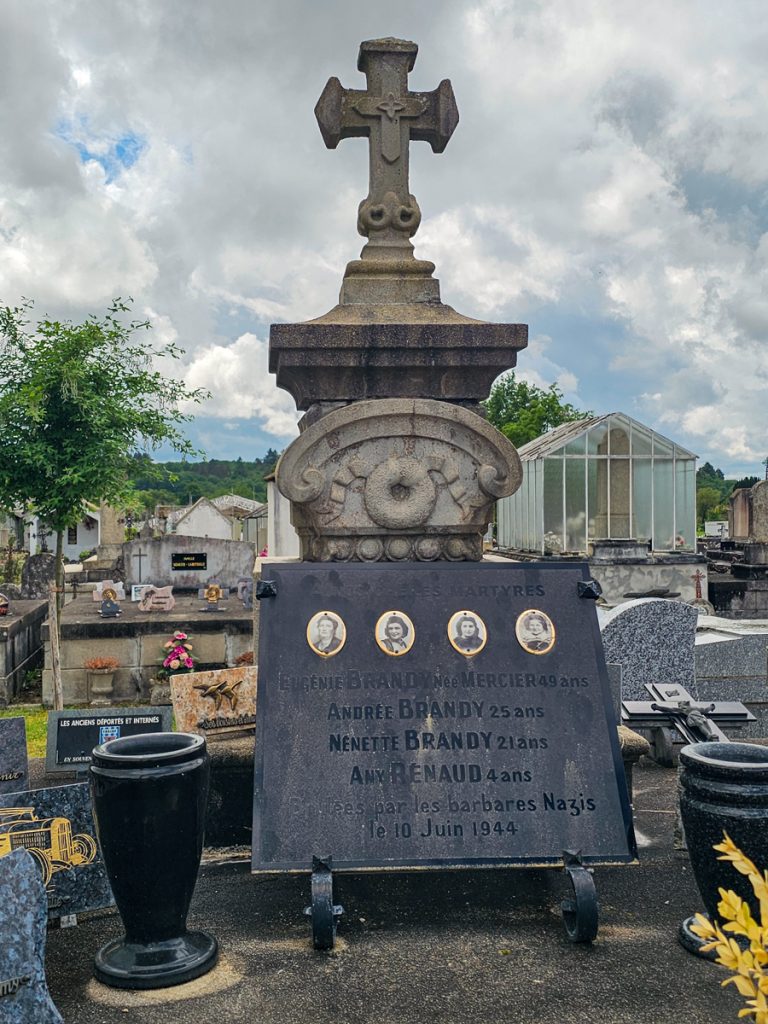
Most follow the same formula: “to the memory of our dear martyrs,” followed by pictures, names, and ages, and the words “burned by the barbarian Nazis 10 June 1944.” You see those phrases repeated over and over throughout the cemetery.
The faces looking back at you, children, teenagers, young adults, entire families, make the whole experience feel so much more personal and devastating.
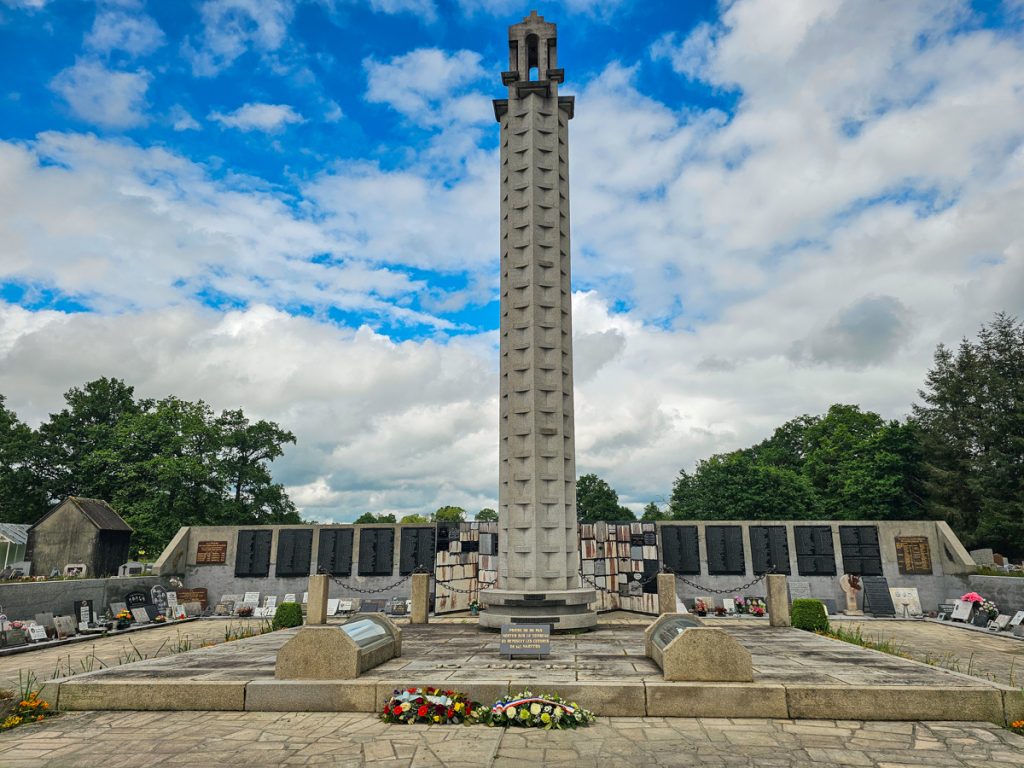
At the center is a large memorial dedicated to the victims. There is a tall spire at the center, flanked by covered glass cases containing charred wood mixed with bone fragments. Individual plaques installed by grieving families, lists of names and ages, and homage plaques sent from towns and societies across France and around the world line the perimeter.
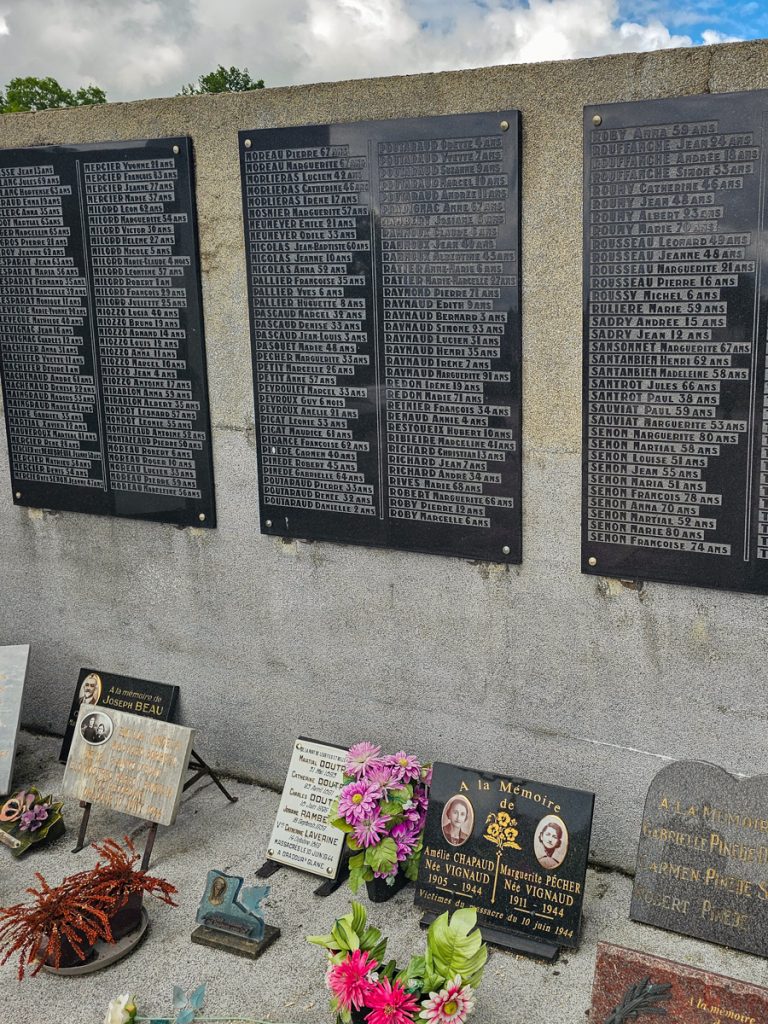
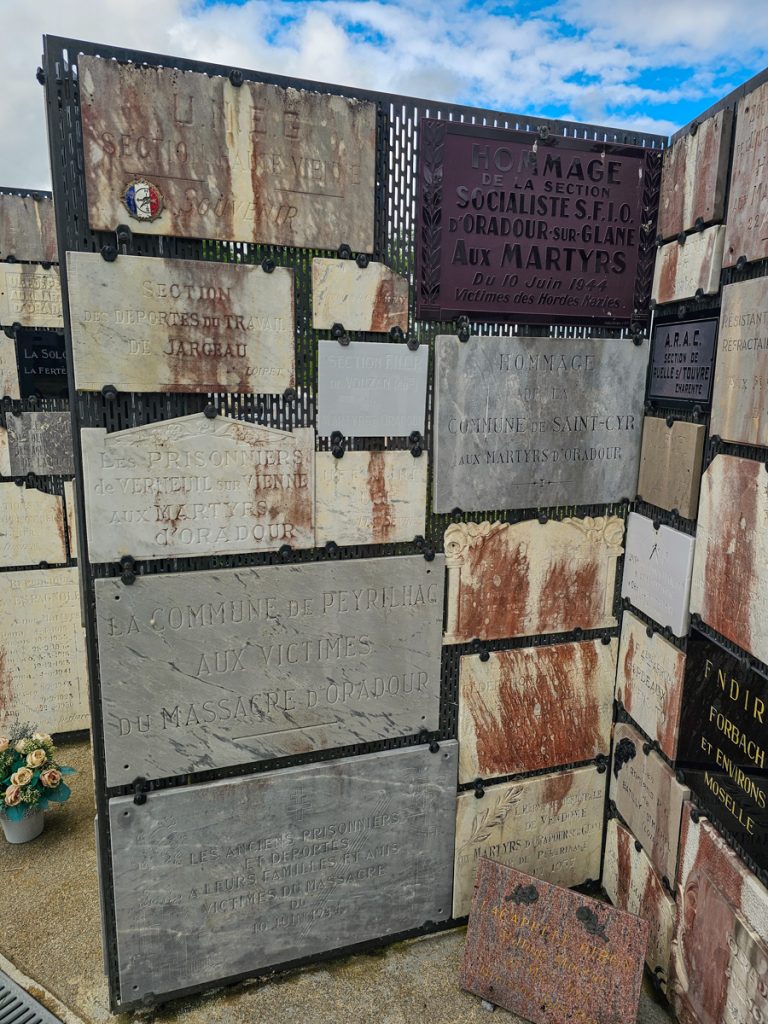
It’s incredibly moving and a heartbreakingly personal end to your visit.
Why It’s Worth Visiting
While visiting Oradour-sur-Glane certainly isn’t a “fun” stop, I do think it’s important to remember and pay homage to the victims of cruelty and war. Oradour is a place that does that as well as anywhere I’ve been.
The preserved ruins, the names on the buildings, the faces in the cemetery all combine to make the history feel immediate and real rather than distant and abstract.
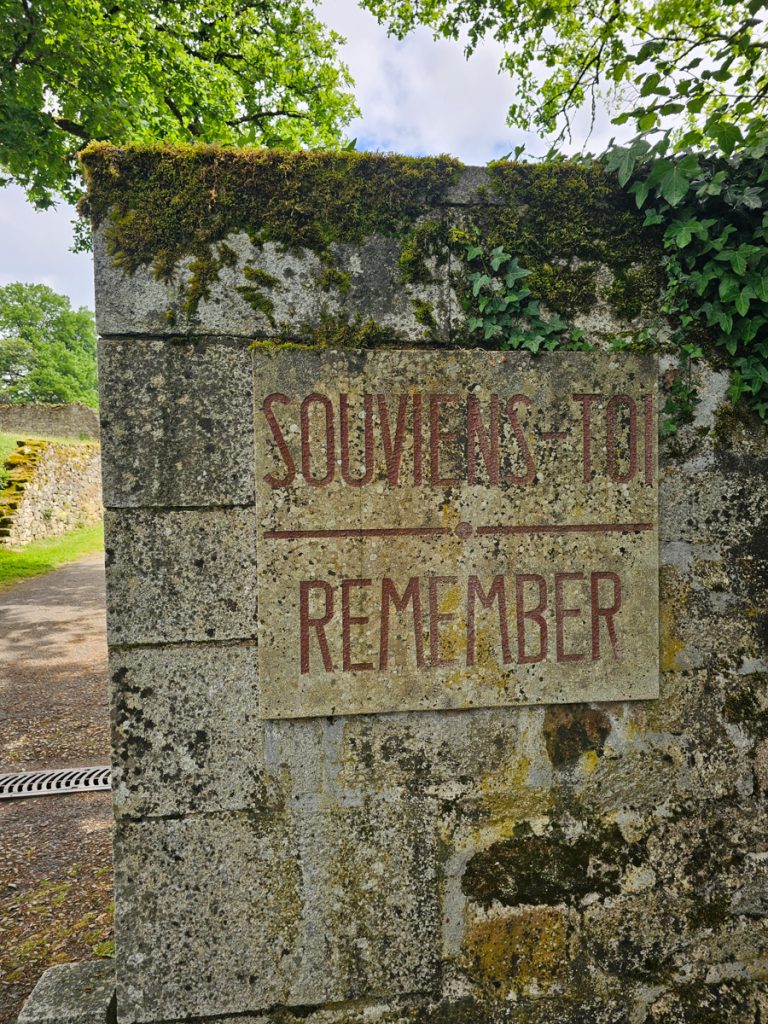
There’s a small inscription somewhere in the village that reads “France will never forget Oradour.” After walking through it, it’s hard to imagine anyone who visits forgetting it either.
Practical Information
Getting There:
By Car: Oradour-sur-Glane is located in west-central France, about twenty to thirty minutes northwest of the city of Limoges by car. There is a free parking lot at the site.
By Bus: If you don’t have a car, the #192 bus connects Limoges to Oradour and runs several times a day in each direction. You can find the bus schedule here. It is an old schedule, but I couldn’t find anything else more up-to-date. I assume it’ll still give a fairly accurate approximation of the bus times.
There’s also this site, but I don’t think it’s officially associated with the regional transit system. If you’re in Limoges the day before you go to Oradour, I’d stop in at the tourism office to double-check bus timetables.
Arriving at the Site:
Entry to the village is free. Dogs are not allowed inside.
From the parking lot, there is a small welcome center and memorial center, and then you cross the street to enter the village. When I visited, the memorial center was closed, but if it’s open, I would definitely stop in.
Hours:
- November through February: 9:00 am to 5:00 pm
- March to mid-May & mid-September through October: 9:00 am to 6:00 pm
- Mid-May to mid-September: 9:00 am to 7:00 pm
It’s open every day but December 25 and January 1.
