
13 Unbelievably Adorable Towns in the Dordogne

France’s Dordogne region has an almost unfair concentration of beautiful villages. It feels like around every corner there’s another adorable medieval town with stone buildings, cobblestone lanes, roses climbing the walls, ivy covering the facades, and restaurant terraces set up in the sun.
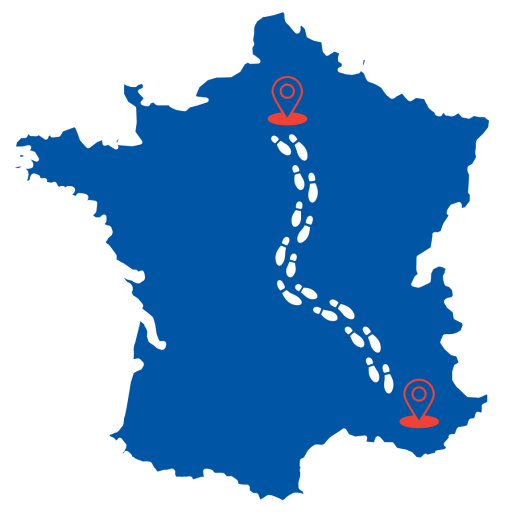
The Dordogne is a département (like a county in the USA) in southwest France, about two hours east of Bordeaux. It’s a pretty magical area, with river valleys, prehistoric caves, incredible châteaux, and stunning gardens that could fill a trip on their own. But the villages, ooooooh the villages. They’re pretty special.
All of these villages started as purely practical places. Bastides were planned defensive towns laid out on a grid and centered around a market. Clifftop châteaux were positioned to repel attackers. River villages connected trade routes, but were also often strongly fortified for the same reason.
The Dordogne was fought over for centuries, and almost every town on this list has the walls, gates, and defensive architecture to prove it. Everything was designed with survival in mind, but today, that practicality has turned into the most unbelievably charming locations.
These are 13 villages I fell in love with in the Dordogne, listed roughly from the most well-known spots to the most off the beaten path.
1. Sarlat-la-Canéda
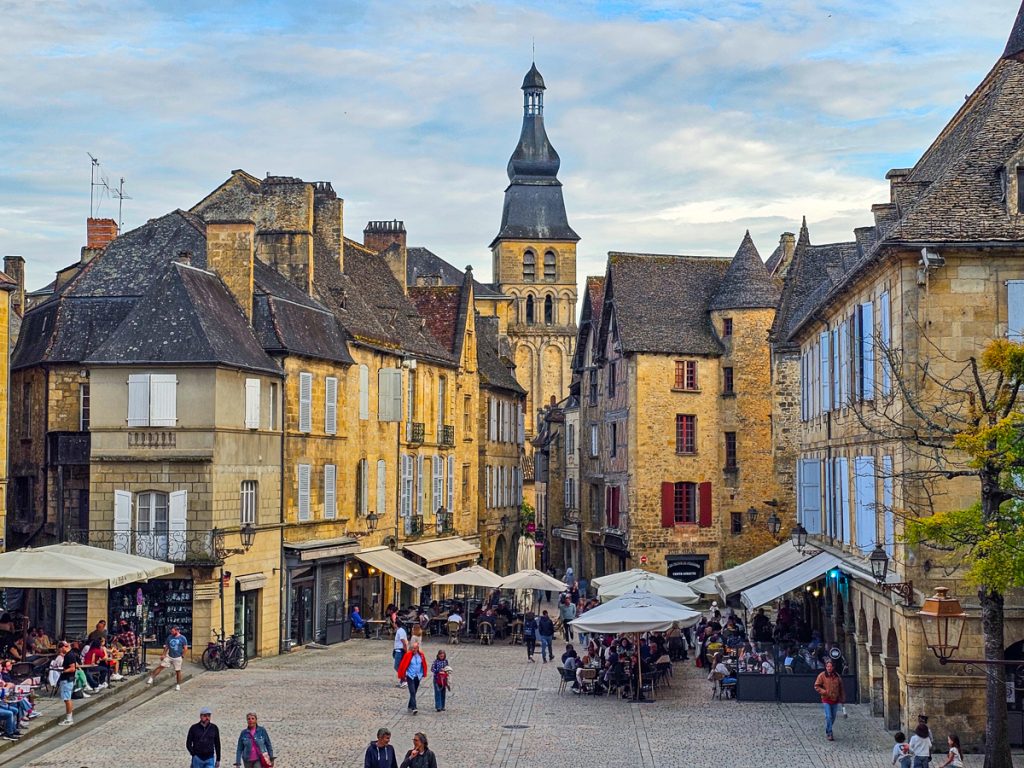
What it’s Like: Sarlat is probably the most well-known and one of the largest towns on this list. Every single street in the historic center is lined with warm-toned stone buildings, restaurant terraces spilling onto the pavement, wrought iron lampposts, and little boutiques. It’s busier than many other spots, but it also looks almost too perfect to be real.
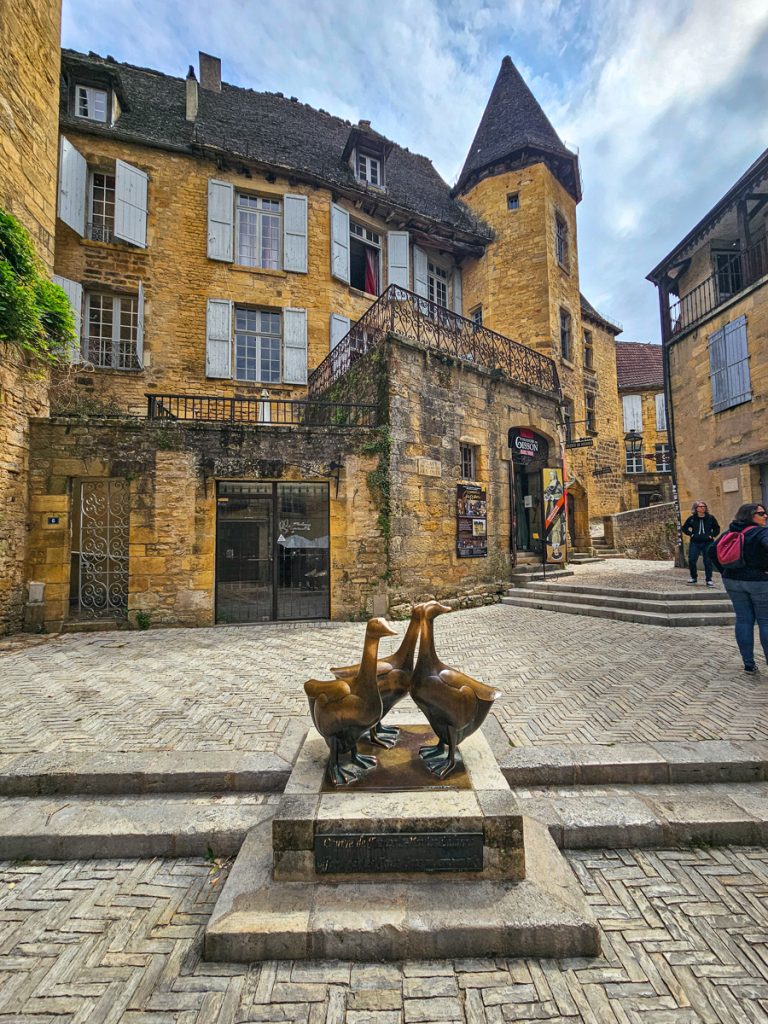

What Makes it Special: Sarlat has a unique style that is instantly recognizable through its honey colored stone buildings. It also has a rich history related to trade.
In its heyday it was home to 6,000 people, including nobles, wealthy merchants, and bishops, and you can still see that history in the mansions and architecture around every corner. Interestingly, it has one of the most densely concentrated collections of classified historic monuments of any town in France.
It’s especially known for goose products, particularly goose foie gras, and you’ll see nods to geese throughout the city.


The view from the main square, with the cathedral tower rising above the warm stone rooftops, is one of the most memorable in the Dordogne.
And the Saturday and Wednesday markets are the most famous in the entire region, with foie gras, duck confit, truffles, walnut products, seasonal produce, and regional specialties as far as the eye can see.
What Else to See and Do:
- The daily covered market inside the converted Church of Sainte-Marie is worth a visit, and the panoramic elevator inside the clock tower gives 360-degree views over the rooftops.
- Behind the cathedral, a path leads to a 12th-century lantern of the dead, a funerary structure unique in France.
- The Manoir de Gisson is a beautifully preserved 17th-century mansion with a great terrace view over the square below.
- The Truffle Museum is small but interesting, and ends with a tasting.
Good to Know: Sarlat is my top choice as a base town for exploring the Dordogne, thanks to its central location and many restaurants and accommodation options.
2. La Roque-Gageac
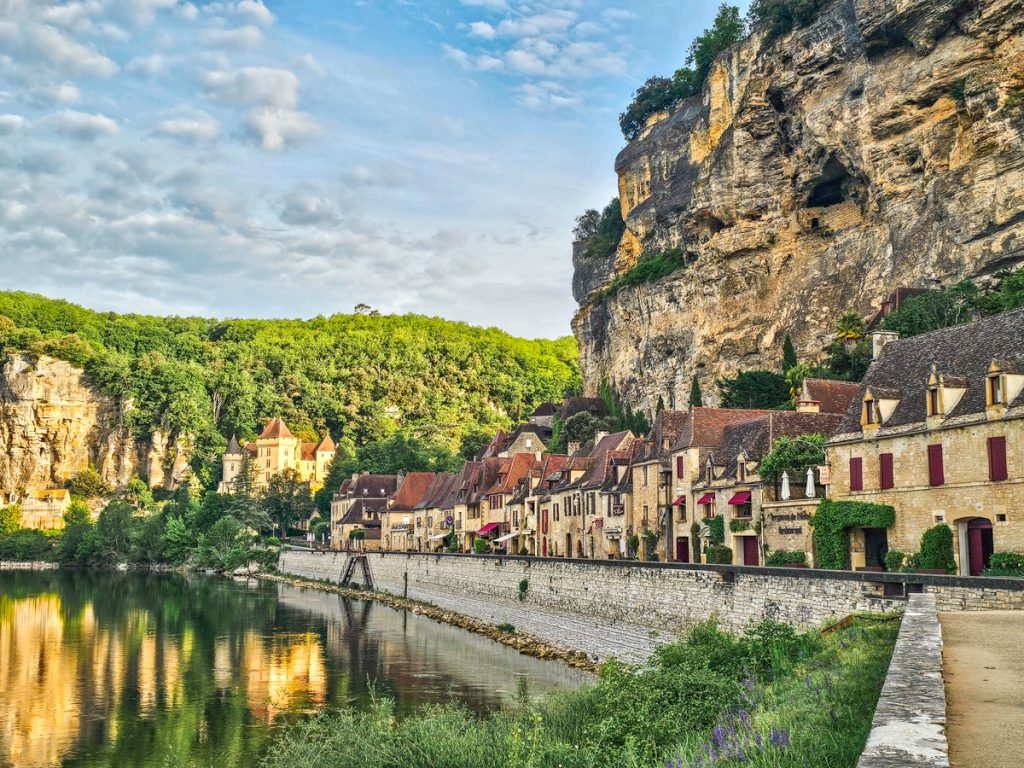
What it’s Like: La Roque-Gageac sits against the dramatic golden cliffs along the Dordogne River, with houses climbing up the rock face and a medieval fort built into the cliff 120 meters above. It’s not a hidden gem by any stretch, but it’s just the most idyllic location, and I came back multiple times during my stay in the Dordogne.
What Makes it Special: The setting of La Roque-Gageac is what makes it a must-visit. Walking along the riverfront and seeing the village reflected in the waters of the Dordogne, with the cliffs and fort towering above, is one of those views that truly stops you in your tracks.


It’s also the main departure point for gabare boat cruises (historic riverboats for shipping goods) along the Dordogne, which are not to be missed.
What Else to See and Do:

- Climb up to the troglodyte fort built into the cliffs above town. 140 steps, incredible views over the river valley, and a fascinating look at medieval defensive architecture
- Canoe rentals are also available at the riverfront, with options ranging from one hour to a full day
Good to Know: Come in the morning for the best light, as the sun hits the village directly and the photos are spectacular. Evenings are lovely too, with a slower pace and restaurant terraces open along the river. La Table Costa has an incredible dining terrace overlooking the river.
3. Beynac-et-Cezanac

What it’s Like: Beynac is one of the most emblematic villages in the Dordogne. It starts at river level and winds steeply up the cliff face to the château at the top, with narrow lanes, stone houses, pastel shutters, and vines and roses climbing the walls.


What Makes it Special: The Château de Beynac has stood above the Dordogne for nine centuries and has ties to some of the biggest names in medieval history, including Richard the Lionheart, Eleanor of Aquitaine, and Simon de Montfort.


As you climb toward it, the views open up over the river valley with two rival châteaux visible in the distance (Fayrac and Castelnaud), which opposed Beynac during the Hundred Years’ War.
What Else to See and Do:
- The château is the main attraction of the village. You can walk the ramparts, visit the medieval rooms, and climb the towers for views over the river and valley below
- The Chemin des Artistes along the riverfront has plaques dedicated to the many artists and writers who were inspired by Beynac
4. Domme

What it’s Like: Domme is a bastide town perched at the top of a plateau high above the Dordogne Valley. For such a small village, there’s quite a lot to do here, and the views are among the best in the region. The streets are lined with rose bushes, vines, artisanal shops, and warm stone walls, and three medieval gates still mark the entrances into town.
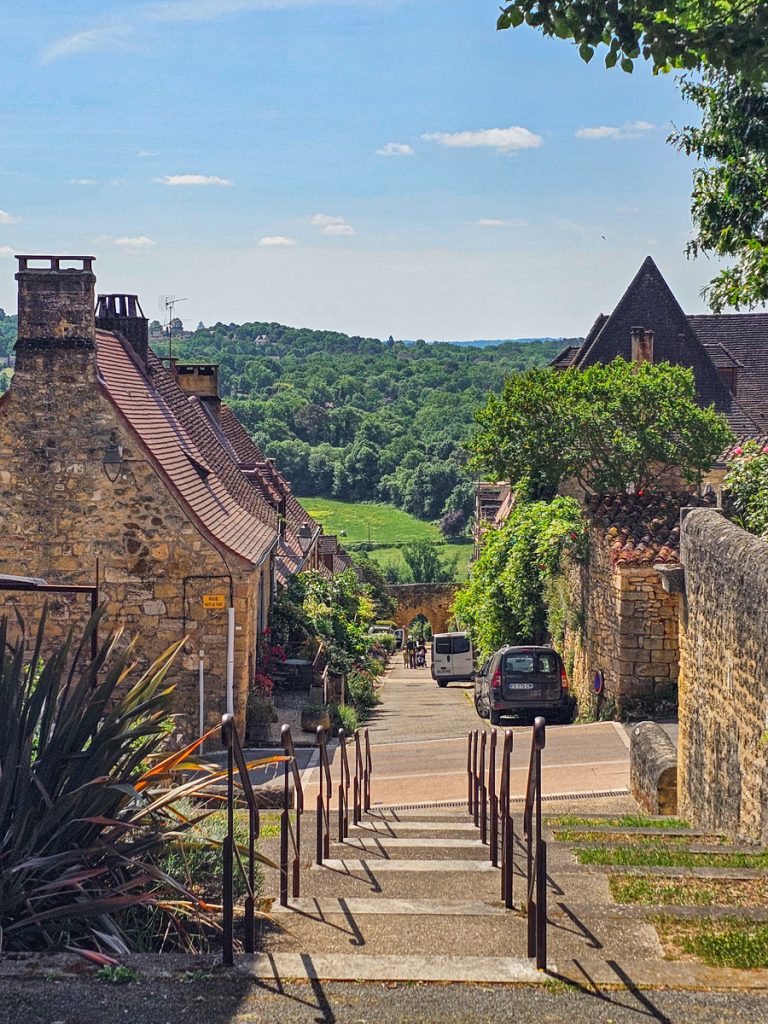

What Makes it Special: The Promenade des Falaises is, in my opinion, the star of Domme. This cliffside walk is 150 meters above the Dordogne with sweeping views over the river valley below. You can see canoes on the water, farmland and forest stretching out across the valley, and on a clear day, Beynac, Castelnaud, and La Roque-Gageac all at once. It’s simply breathtaking.

What Else to See and Do:
- Visit the Domme Cave directly beneath the town center. You descend through a staircase in the middle of town, walk through impressive stalactite and stalagmite formations, and exit via elevator at the natural cliff opening.
Good to Know: I highly recommend the Restaurant l’Esplanade, thanks to its idyllic terrace looking out over the cliffs and valley below.
5. Castelnaud-la-Chapelle

What it’s Like: Castelnaud is dominated by its enormous château, one of the largest and most impressive along the Dordogne.
It sits high on a cliff and is visible from much of the surrounding valley: from the gabare cruise, from Beynac, from the Marqueyssac Gardens across the river. The village below is tiny and fairly tourist-focused, but you’re really here for the castle.
What Makes it Special: Unlike most château visits, Castelnaud is primarily a museum of medieval warfare rather than a house tour. The rooms are filled with period weapons, suits of armor, crossbow collections, trebuchets, and life-size war machinery.


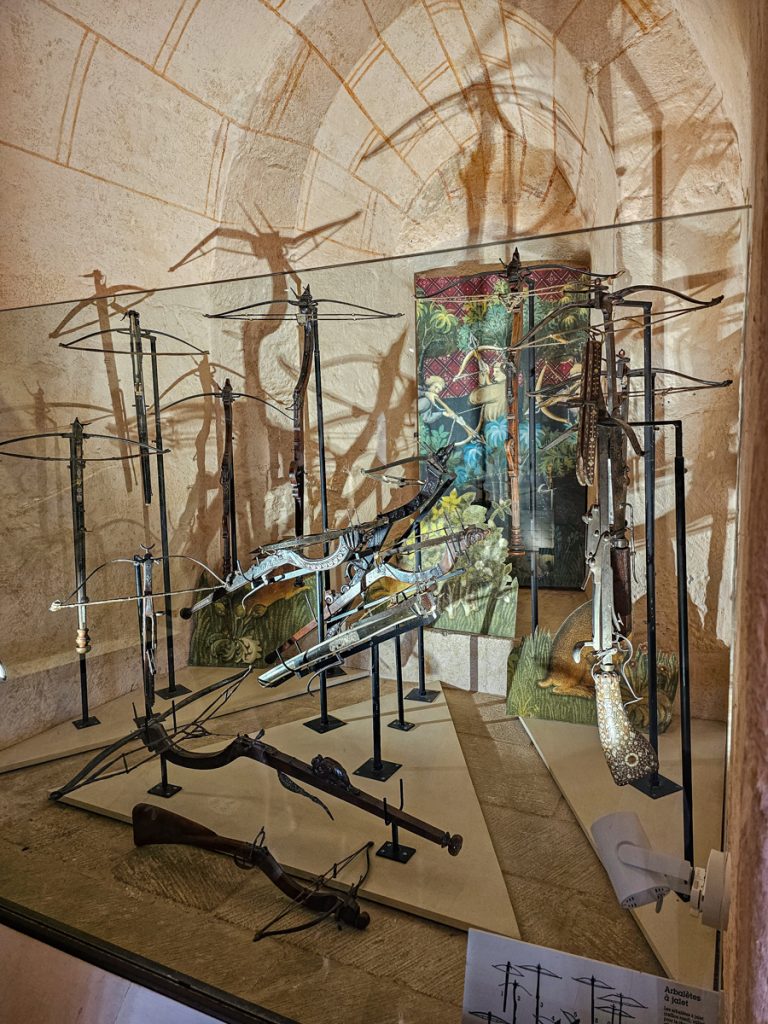
It’s also one of the most historically significant castles in the region, caught between French and English forces through the Hundred Years’ War, seized during the Albigensian Crusade, and thoroughly restored before opening in 2012. The views from the castle terraces, particularly toward Beynac, are absolutely incredible.

What to See and Do:
- Live demonstrations run throughout the day, including blacksmithing, medieval gardening, a knight’s presentation, and trebuchet firings, making it particularly good for families with kids… or, you know, just men in general.
6. Bergerac
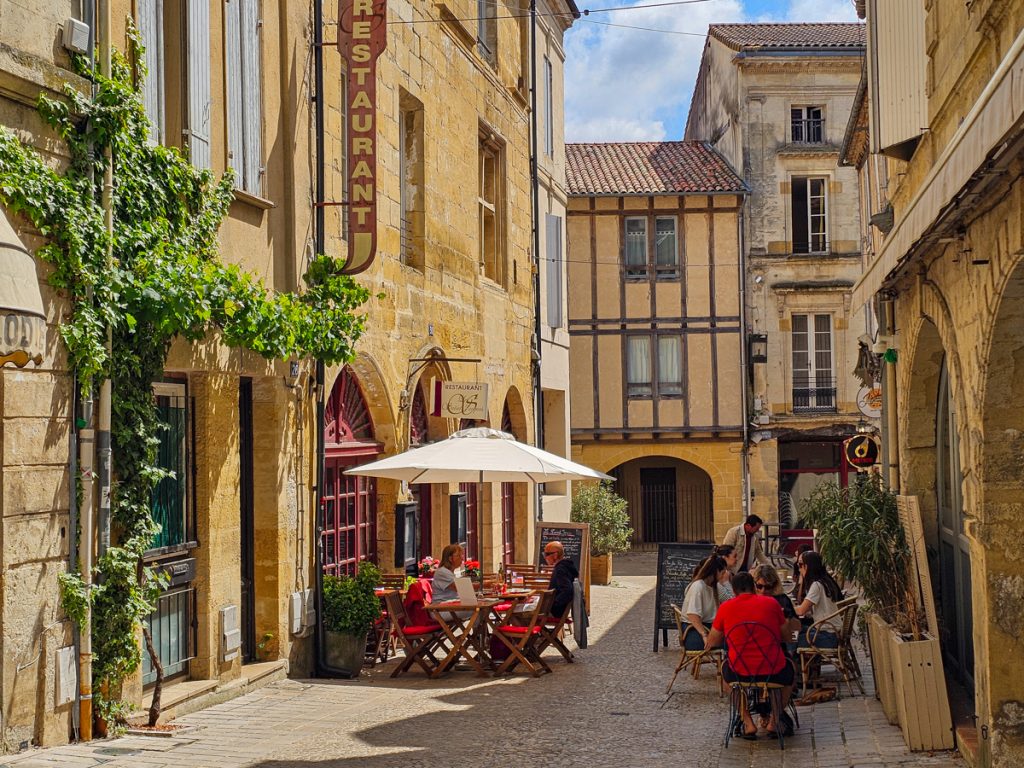
What it’s Like: Bergerac is a bit larger than the other villages on this list (more town-sized), and it’s a spot I was going to completely skip. I decided to come here at the last minute anyway, and I ended up being so charmed by the atmosphere.
The streets feel sun-drenched and warm, with half-timbered houses, large stone buildings, and patio seating everywhere. Plus, for a small town, there is quite a bit to see and do.
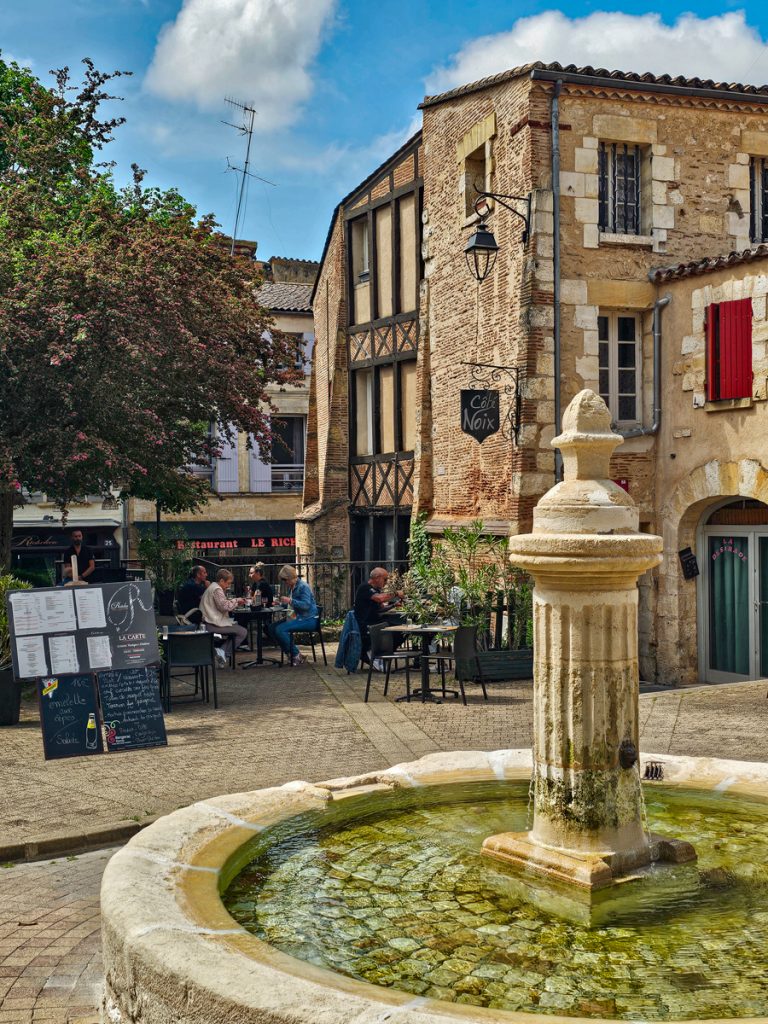
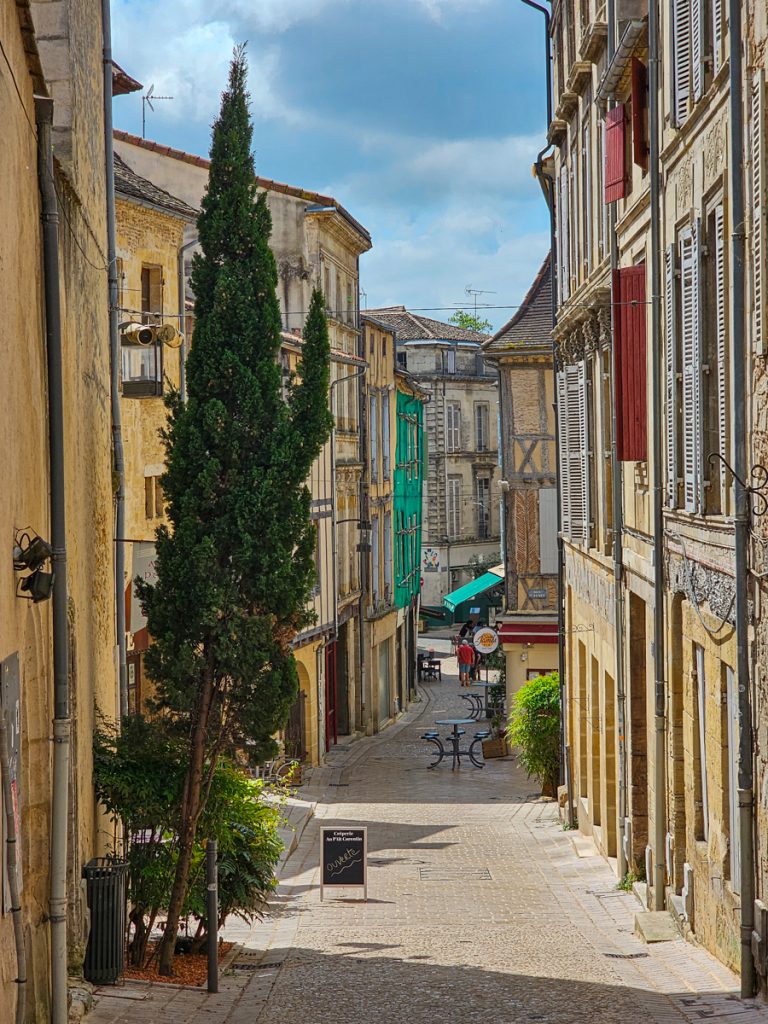
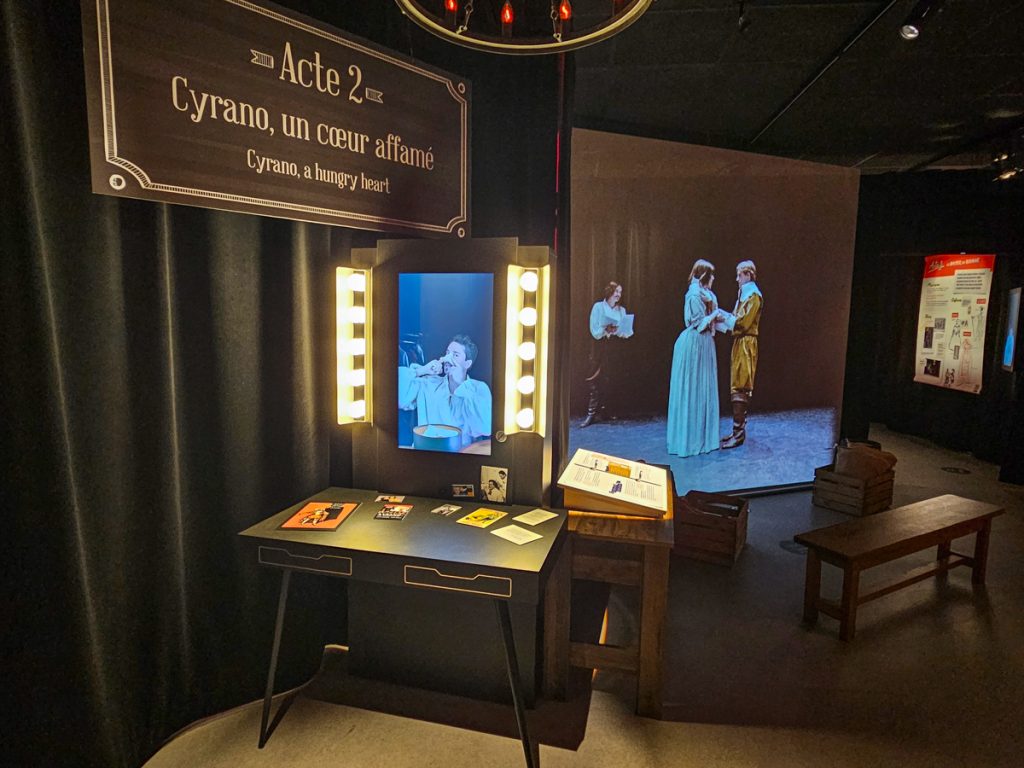
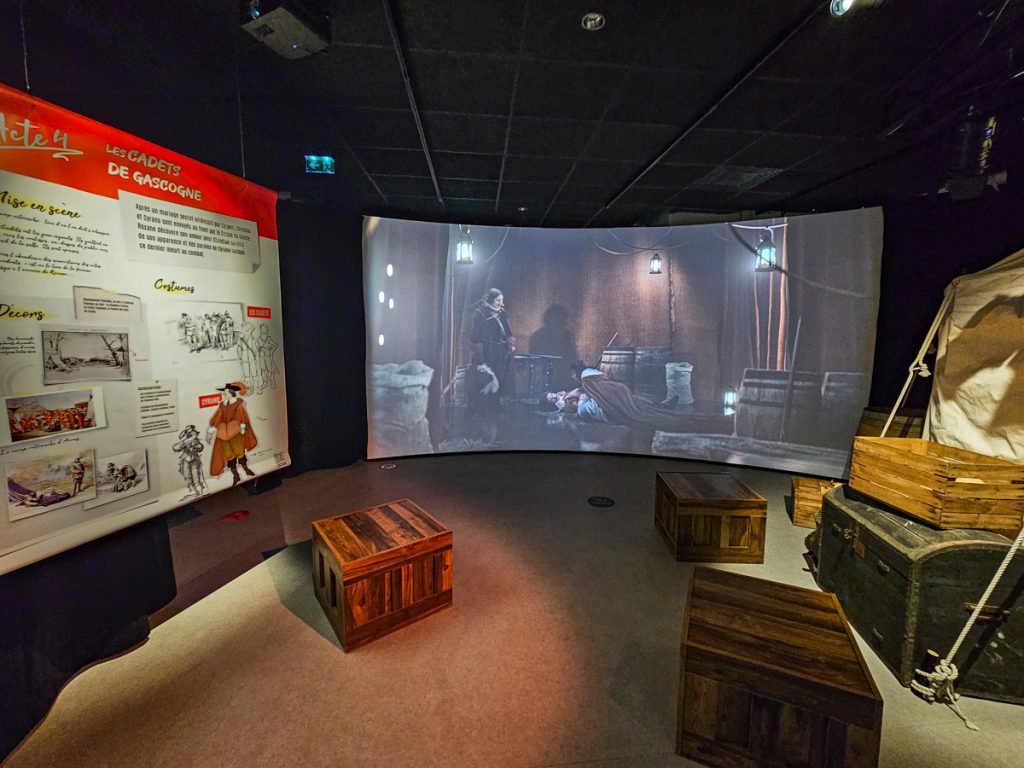
What Makes it Special: Bergerac has fully embraced its connection to Cyrano de Bergerac, the famous play written by Edmond Rostand in 1897. The play is based on a real person, Savinien de Cyrano de Bergerac, whose family owned an estate near the town, although the real Cyrano was actually born in Paris, not the Dordogne.
However, Bergerac has still claimed him enthusiastically. Don’t miss the Cyrano Experience, a beautifully designed “museum,” which is an immersive walk through the story and staging of the play.
What Else to See and Do:

- Place Pélissière is the main square, with the primary Cyrano statue, restaurant terraces, and the Gothic Église Saint-Jacques
- Walk down to the Quai Salvette, a historic port where an old gabare boat is on display, and you can continue along the river on the Promenade du Barrage
- The Récollets cloister courtyard is a pleasant spot to sit, with a wine bar inside the former convent
7. Monpazier
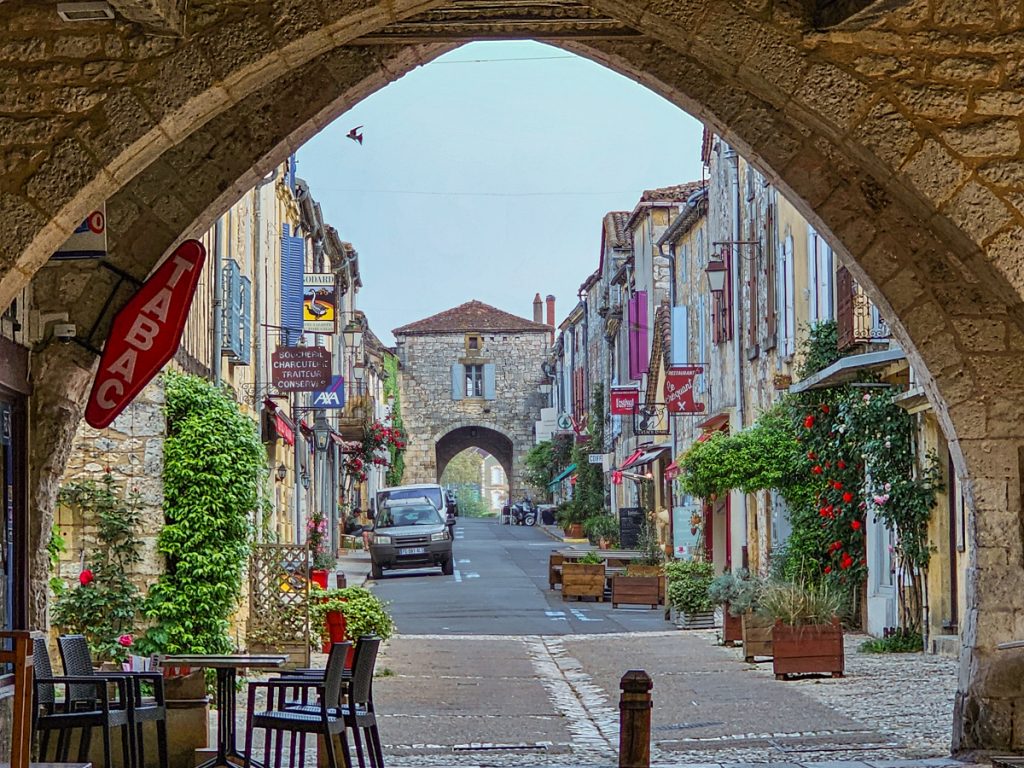
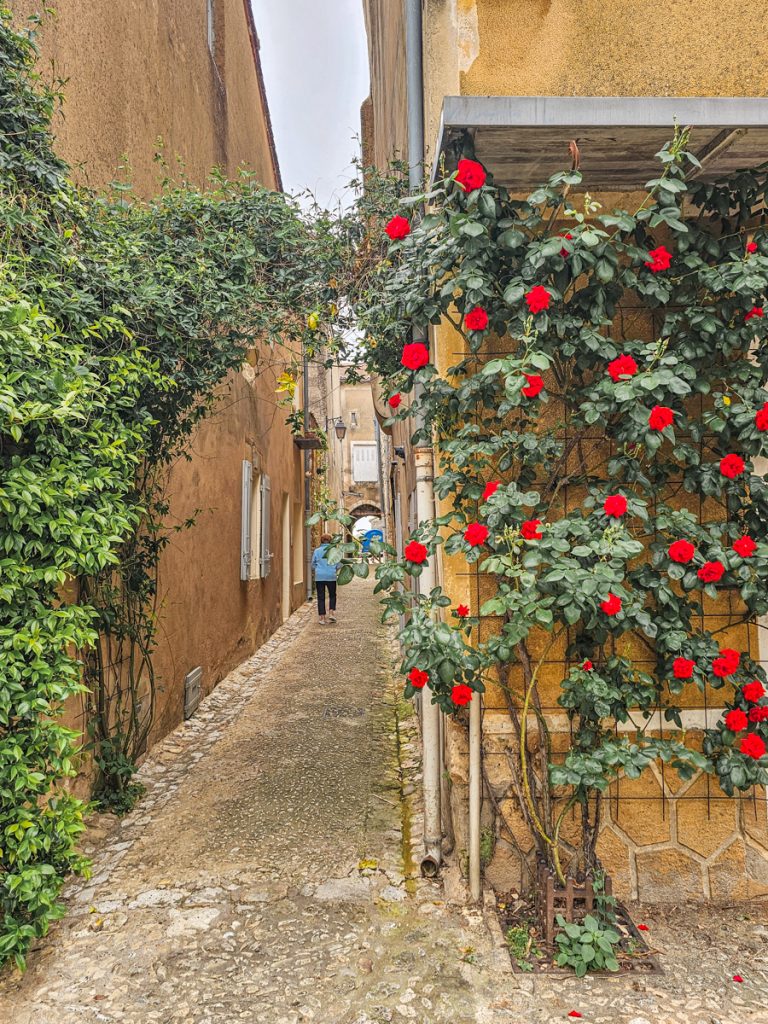
What it’s Like: Monpazier is one of the best-preserved bastide towns in southern France. The streets are orderly and lined with archways, stone walls, and flowering rose bushes. It feels like a true step back in time.
What Makes it Special: The central Place des Cornières is remarkable. This large square has a historic covered market hall at one end and arched galleries running along all four sides, lined with shops and restaurant terraces.
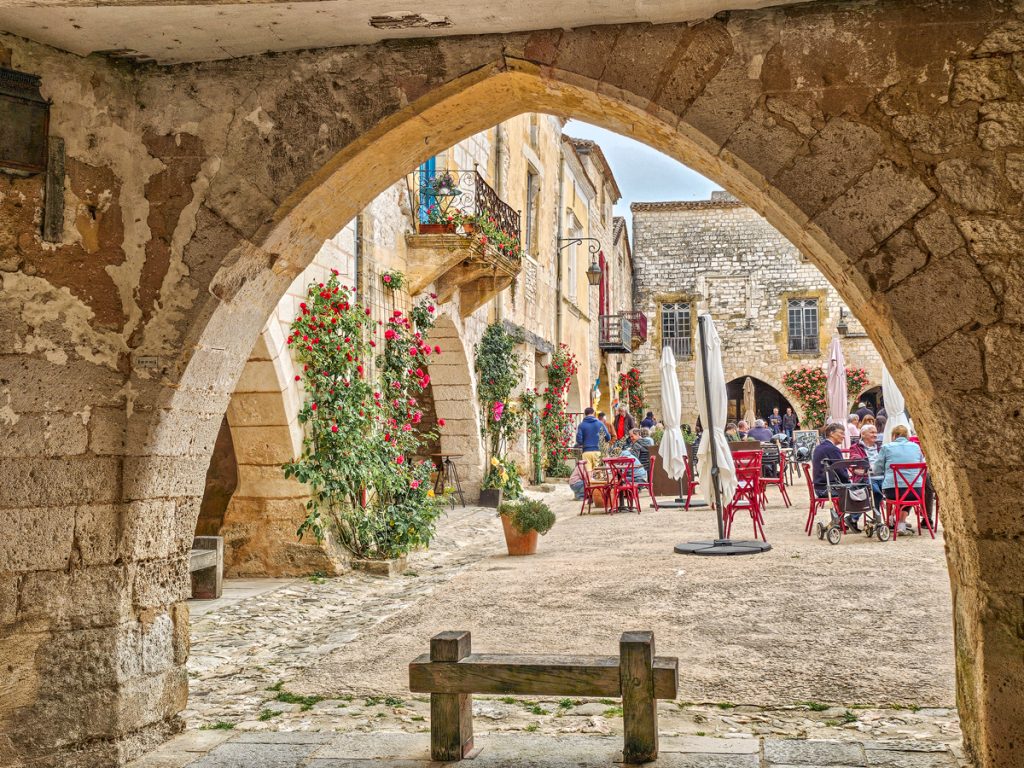
Founded in 1284 by King Edward I of England, Monpazier sat at the meeting point of three regional boundaries, making it highly strategic in the Middle Ages… but much less so as regional warfare subsided in the Renaissance.
Its relative isolation from industrialization in the 19th century is actually what saved it. The town changed so little that it became considered a model bastide, one of the most authentic and intact examples anywhere.

What Else to See and Do:
- The Bastéidium is the main attraction: an interpretation center on the history of bastide towns, with interactive exhibits and a reconstructed medieval street complete with a cobbler, baker, and cloth seller
- Walk the carreyrous, the narrow alleyways between buildings that are characteristic of Monpazier, particularly the Carreyroux du Chapitre through the center of town
8. Brantome
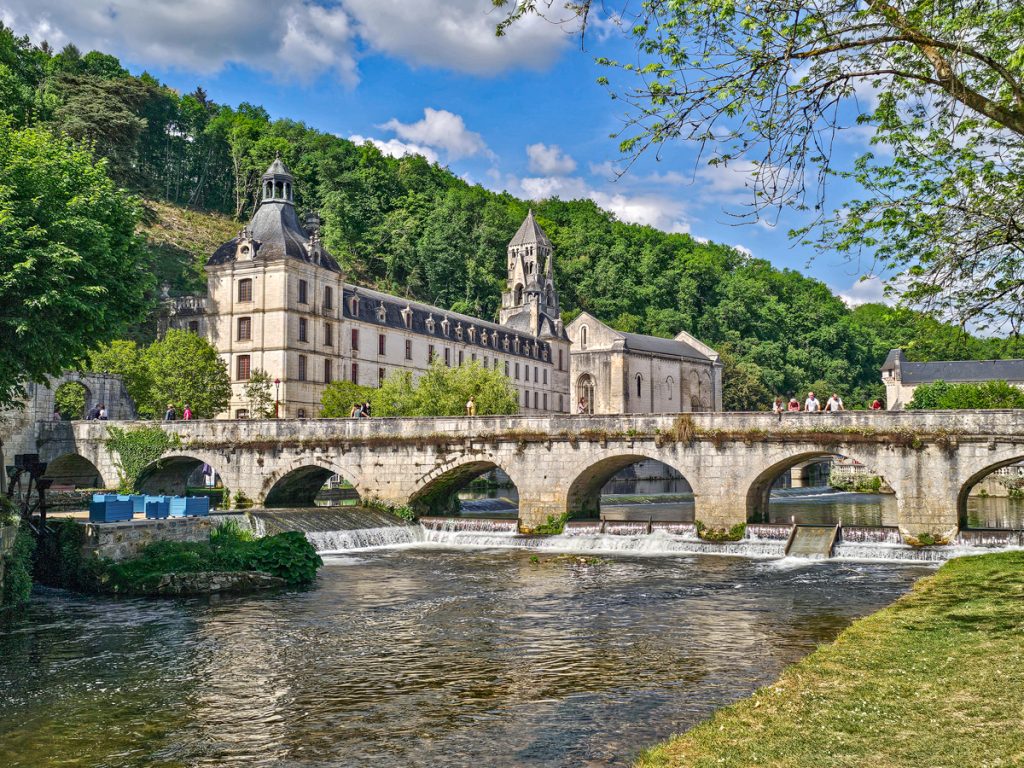
What it’s Like: Brantôme sits on an island in the Dronne River on the northern end of the Dordogne. The medieval village developed on the island as the river splits and wraps around it.
The whole setting, with the abbey backed against the cliff, river on both sides of the village, and stone bridges connecting it all, is unlike anywhere else in the Dordogne.
What Makes it Special: The Abbey of Brantôme is the centerpiece of town and one of the more unusual sites in the Dordogne. It’s a troglodyte abbey built directly into the limestone cliff, with a series of caves cut into the rock behind it.


The biggest and most important is known as the Last Judgment Cave, which has a remarkable bas-relief carving full of religious symbolism. The interpretation is still not entirely understood, with some of the original symbolism and intent lost through time.
What Else to See and Do:

- The abbey complex is the main attraction: the church, cloisters, bell tower perched on a natural rocky outcrop, and the caves behind it are all part of the visit
- Le Jardin Tranquille, about ten minutes outside of town, is a lovely garden and worth visiting on your way in or out
- The Moulin de l’Abbaye is a former mill with ivy climbing the walls and a little water wheel, now a hotel and restaurant with a terrace right on the river
- River cruises on the Dronne leave from the quai and run about 50 minutes
Good to Know: The restaurant in the Moulin de l’Abbaye has one Michelin star and is worth the splurge for a special dinner. The seven-course tasting menu is €150.
9. Limeuil

What it’s Like: Limeuil is a quaint medieval village sitting at the confluence of the Dordogne and Vézère rivers, winding up the side of a hill to the gardens on top. The setting along the rivers is lovely, and it’s a popular starting point for canoeing and river activities.
What Makes it Special: The Panoramic Gardens on Limeuil’s hilltop are the highlight of any visit. This two-hectare garden is full of little themed areas, including a medicinal garden, a medieval garden, a water garden, and more. The most spectacular spot is at the far tip, where you get an incredible panoramic view over the confluence of the two rivers.


What Else to See and Do:
- After visiting the gardens, walk down through the village on your way back for a look at the cute medieval streets and buildings
Good to Know: Park at the Parking du Jardin on the east side of the hill for the most direct access to the gardens. A footpath leads straight up from the parking lot, though it doesn’t show up on Google Maps.
10. Cadouin

What it’s Like: Cadouin is a tiny village centered almost entirely around its abbey and cloister. The village itself is charming, with adorable stone buildings clustered around the abbey church, but you’re really coming here for one thing.
What Makes it Special: The Cloître de Cadouin is considered a masterpiece of Flamboyant Gothic art and one of the finest cloisters in France. While the abbey was founded in 1115, the cloisters date to the late 1400s and feature finely carved columns, interlaced vaulted ceilings, and detailed stone decoration covering almost every surface.
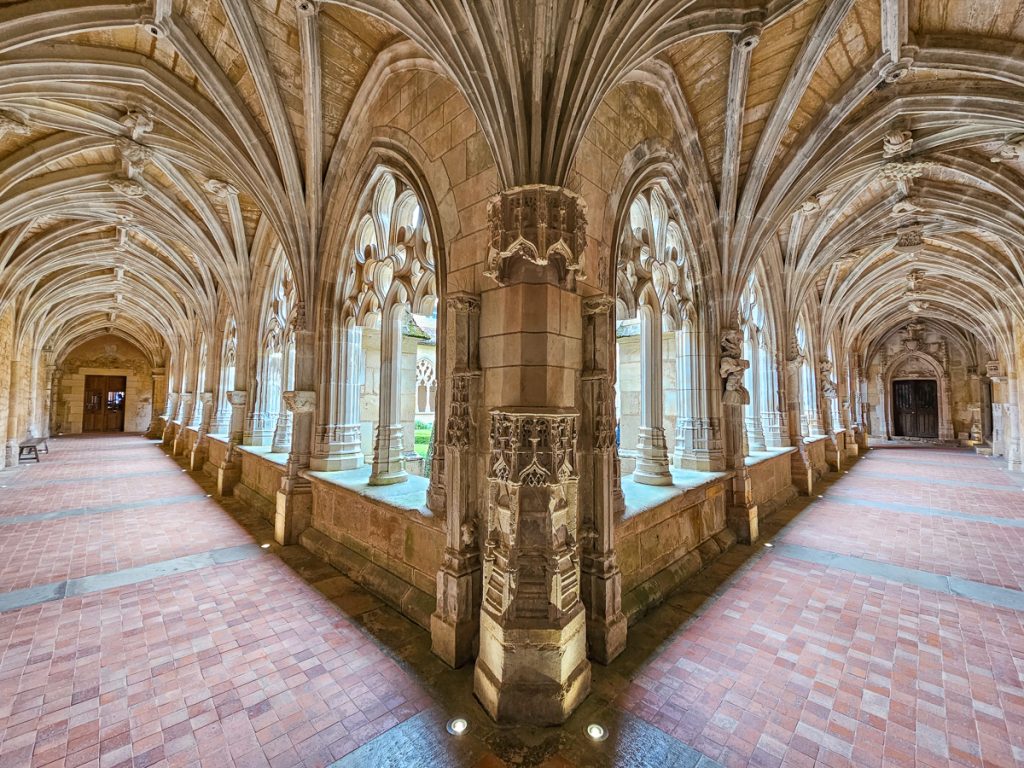
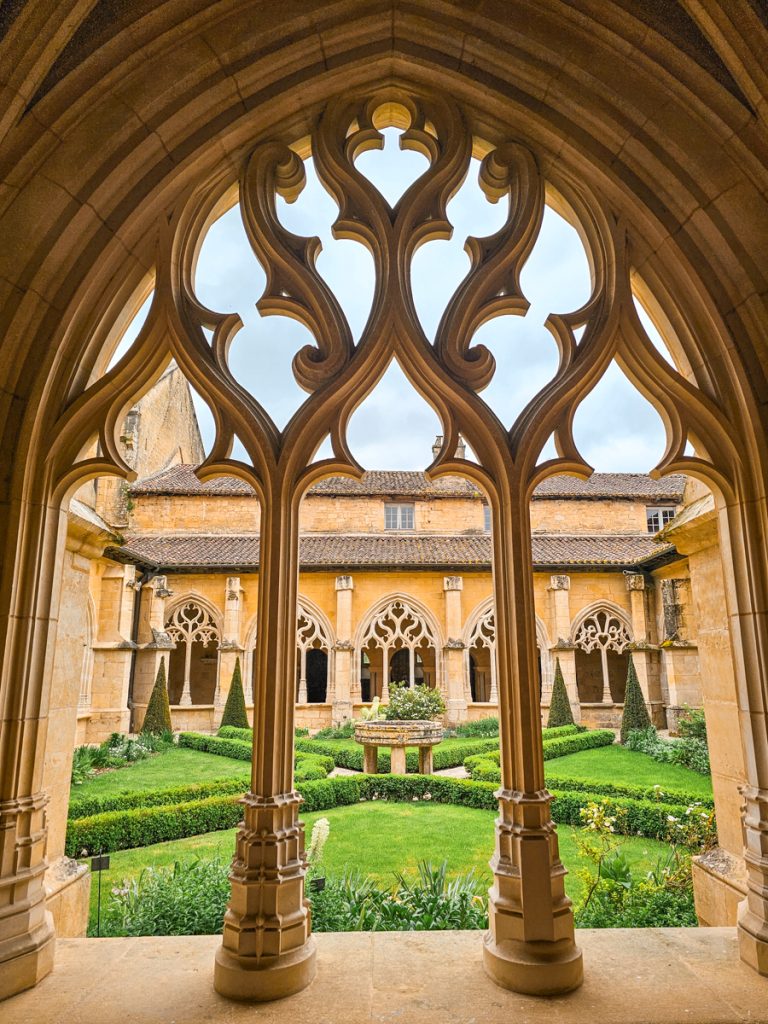
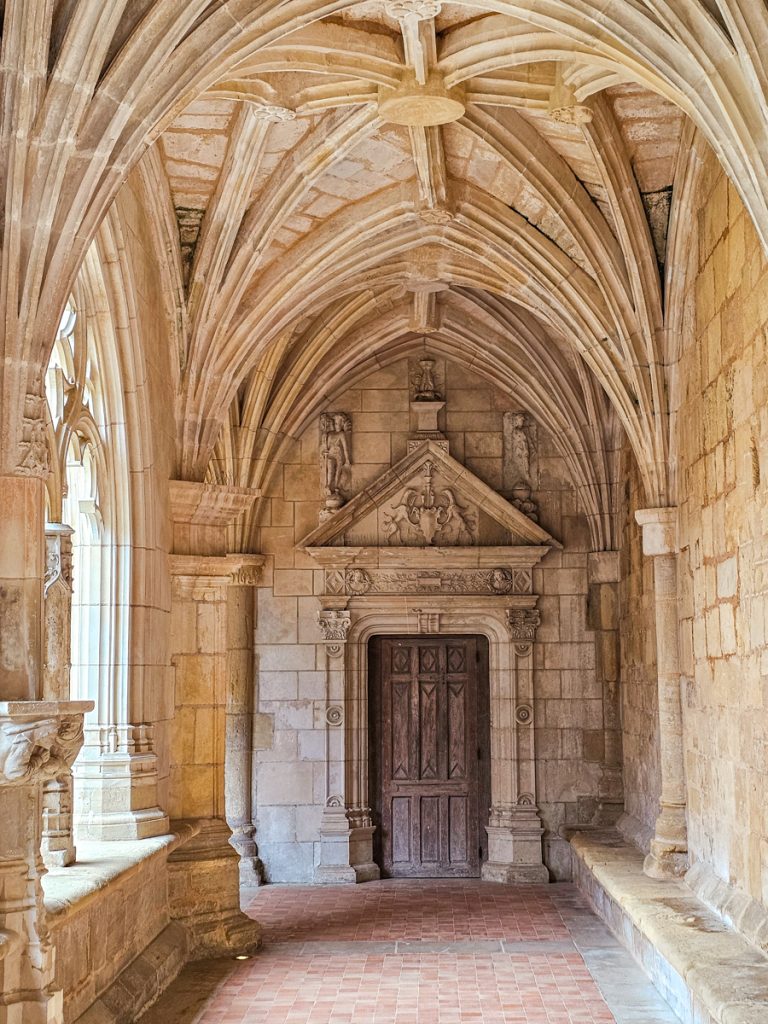
The abbey is part of the UNESCO-listed Pilgrims’ Way to Santiago de Compostela. For centuries, it was a major pilgrimage destination in its own right, as it housed the Shroud of Christ (the covering over his face when he was buried).
Later testing determined the cloth wasn’t authentic, but the abbey drew pilgrims from across the region for hundreds of years regardless.
What Else to See and Do:
- The abbey church and Romanesque elements from the 12th century are also worth seeing
- Look for the sundials along the abbey walls, some obvious, many easy to miss
11. Saint-Léon-sur-Vezere
What it’s Like: Saint-Léon-sur-Vézère is one of the tiniest villages on this list, sitting right along the Vézère River. It packs a ton of charm into a small space, with roses climbing the buildings, ivy-covered walls, warm stone lanes, and picturesque little vignettes everywhere.


What Makes it Special: The Donjon Manoir et Jardin de la Salle is the main attraction in town, a complex made up of a 12th-century defensive tower, a manor house, and lovely gardens.
The tower has some unique features, such as a medieval herbalist storehouse, a judgment room where you can sit on the throne, and a rooftop walkway with views over the village. It’s a more hands-on visit than most château tours in the region.

What Else to See and Do:
- The 11th-century Romanesque church is one of the finest in Périgord, built on the remains of a Gallo-Roman villa, with a beautifully painted dome over the altar
- Walk the path along the Vézère River, which starts just next to the church
- Canoe or kayak down the Vézère, there are several outfitters in town


Good to Know: Le Petit Léon is a Michelin-starred restaurant (1*) in the village with a beautiful garden terrace that makes for a special lunch or dinner.
12. Belves

What it’s Like: Belvès is a hilltop bastide village built on a rocky promontory overlooking the Nauze Valley, known as the city of seven bell towers, and one of the lesser-visited spots on this list. The town centers around the Place d’Armes, a main square with a large covered market hall.
What Makes it Special: Directly underneath the main square are eight troglodyte cave dwellings that you can visit on a guided tour. These old habitations are carved into the rock beneath the town, which is a pretty remarkable thing to find right in the center of a village.

There’s also a beautiful panoramic viewpoint looking back at the village just outside of town, where you can admire it perched on the hilltop, bell towers rising above the rooftops.
What Else to See and Do:
- Walk through the Cité Médiévale for a look at the fortified medieval streets, and continue to the esplanade viewpoint over the Nauze Valley
- Walk down Rue Manchotte, the main shopping street, which is narrow, cobblestoned, and full of history
- Walk along Rue du Petit Sol just underneath the ramparts, where the original city walls are still standing and impressively tall


13. Issigeac

What it’s Like: Issigeac is a small circular medieval village in the southern Dordogne, with winding lanes that spiral inward around the church and main square. There are a lot of half-timbered buildings along the narrow lanes, more than most other towns.
As you walk through, you’ll notice a lot of interesting historic buildings, such as the 17th-century Bishop’s Palace, the Gothic church of Saint-Félicien, and the quirky Maison des Têtes with its carved stone faces. It’s a really lovely place to wander.
What Makes it Special: The Sunday market is the main event and one of the best in the entire Dordogne region. It winds through a large section of the adorable old town streets and into the main square, with stalls selling produce, regional specialties, cheese, bread, fresh roasted chicken, dried sausages, honey, olives, and more.


It felt a bit more local than the Sarlat market (although there are still a number of tourists), and the medieval setting makes it particularly atmospheric.
Good to Know: It’s really worth coming on a Sunday morning for the market. The market runs year-round but is at its best from spring through fall. In summer it gets very busy, so arriving early is a good idea.
Final Thoughts
The Dordogne is one of those regions that’s hard to oversell. You keep thinking the next village can’t possibly be as good, and then it is (and then the next one after that, too).
If you’re planning a trip here, give yourself more time than you think you need. You could fill a week without even trying. Two weeks can still leave you with places you want to see.
If you can, plan your trip for spring or fall. Summers are very hot and busy, and in winter the flowers are dead and a few sites are closed. Spring and fall are the sweet spots.
Honestly, the hardest part of visiting the Dordogne is leaving. Yes, it sounds like a cliché, but it’s also absolutely true.
