
The Wallace Fountains: How Paris Turned A Post-War Gift Into an Icon

Wallace fountains are a classic Parisian feature, but if you don’t know what to look for, they’re also easy to miss.
Most of the time as you stroll around Paris, you’re looking up at buildings, dodging bikes, and trying to remember whether you’re on Rue Saint-Jacques or Rue des Écoles. That dark green fountain on the corner just blends into the background.

But once you know what to look for, suddenly you’ll see them everywhere: at the edge of a small square, under plane trees, or right where two busy streets meet.
And while these fountains are beautiful, they’re certainly not just decorative. The original wave of fountains was installed in 1872, after Paris had been through a rough period. The story behind them is a mix of practical public health and one person deciding to do something useful at a large scale.
How the Wallace Fountains Came to Be
Wallace fountains didn’t start as a charming Paris detail. Instead, they were a practical response to a city coming out of crisis, when basics like affordable drinking water weren’t a given.
Paris After the Franco-Prussian War
In 1870–1871, Paris endured the Franco-Prussian War, a long siege, followed by the Paris Commune and its collapse. Parts of the city’s infrastructure were badly damaged, and everyday costs, including water, rose sharply.
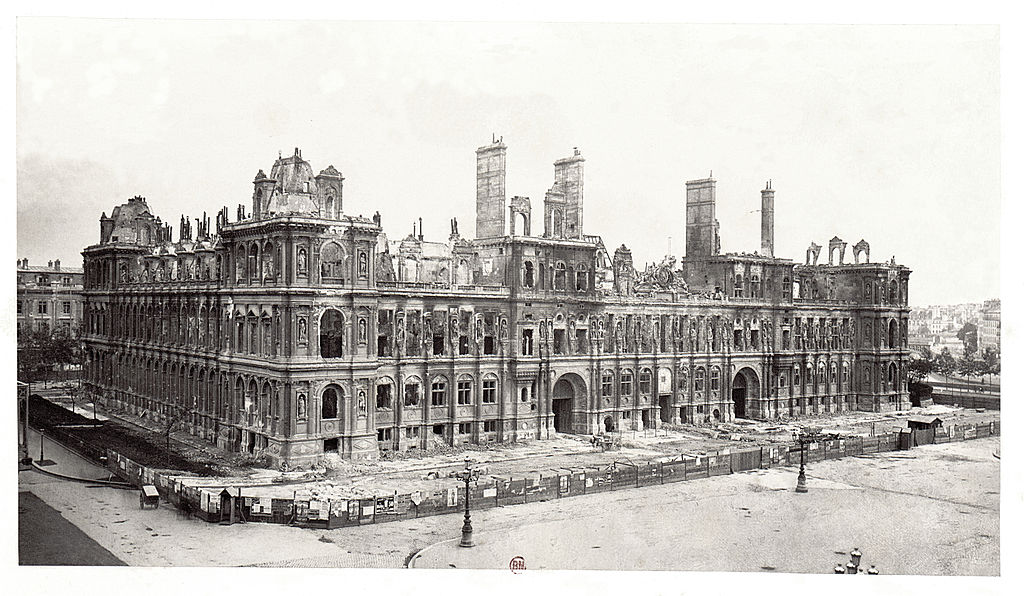
Source: Charles Marville, Public domain, via Wikimedia Commons
While some clean water was available, many residents, especially poorer Parisians, faced a difficult choice: drink potentially contaminated water or buy it from a vendor. The second option was expensive and still not always trustworthy.
Who Was Richard Wallace
Richard Wallace wasn’t a city official or an engineer, and he wasn’t even French. Wallace was a wealthy British heir who had spent most of his adult life in Paris. He came into his fortune in 1870, right as war hit the city.
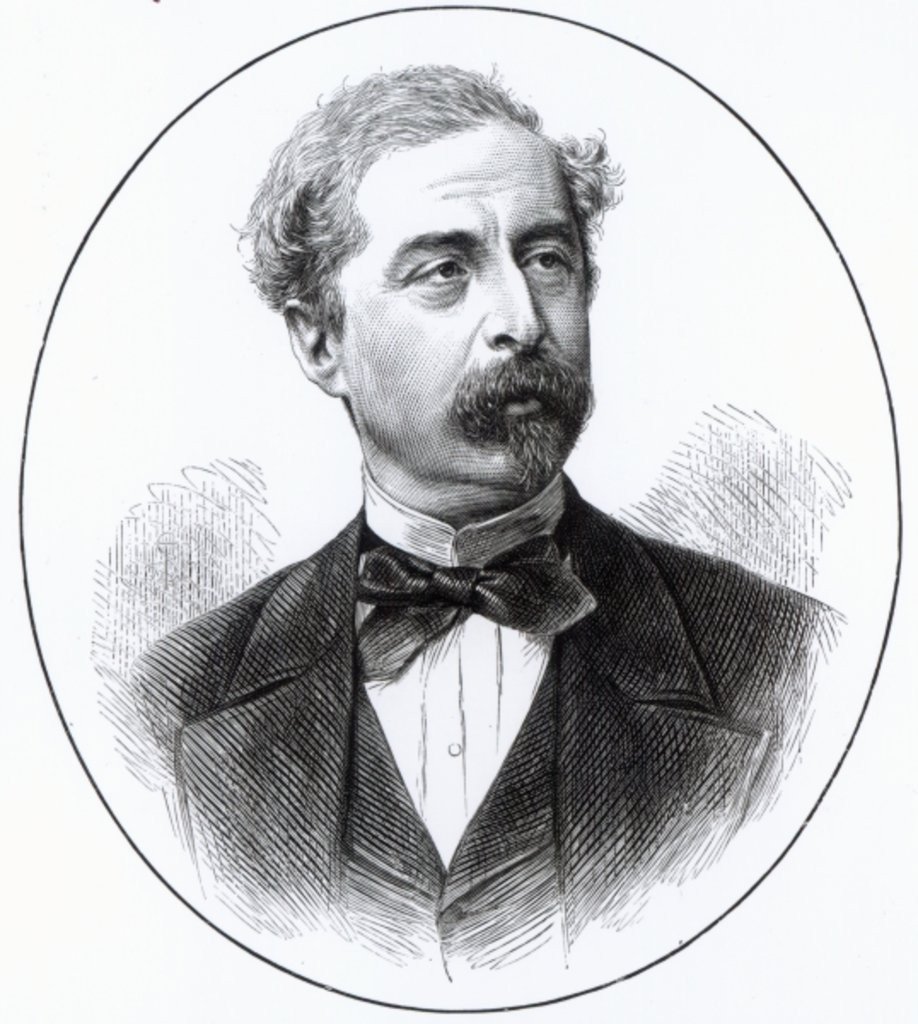
Richard Wallace
Photo source: See page for author, Public domain, via Wikimedia Commons
Throughout his life and continuing during the Siege of Paris and beyond, he was known for practical, on-the-ground philanthropy. He created field hospitals and soup kitchens, and distributed coal and food vouchers. The fountains fit his pattern and vision: make something free and accessible so the general public can get relief from a concrete problem.
For his efforts, Wallace was knighted in 1871.
How Paris Got The First Wallace Fountains
Wallace saw the pressing public health crisis for clean water, and decided to design a system that worked at street level: put drinkable water where people already walk, make it free, design it in a way that water couldn’t sit and stagnate, and make it durable enough to live outdoors for decades.
Wallace didn’t just pay for a few fountains and call it a day. He funded an initial set of 50 fountains and worked with the city to place them in public areas where they would actually get used.
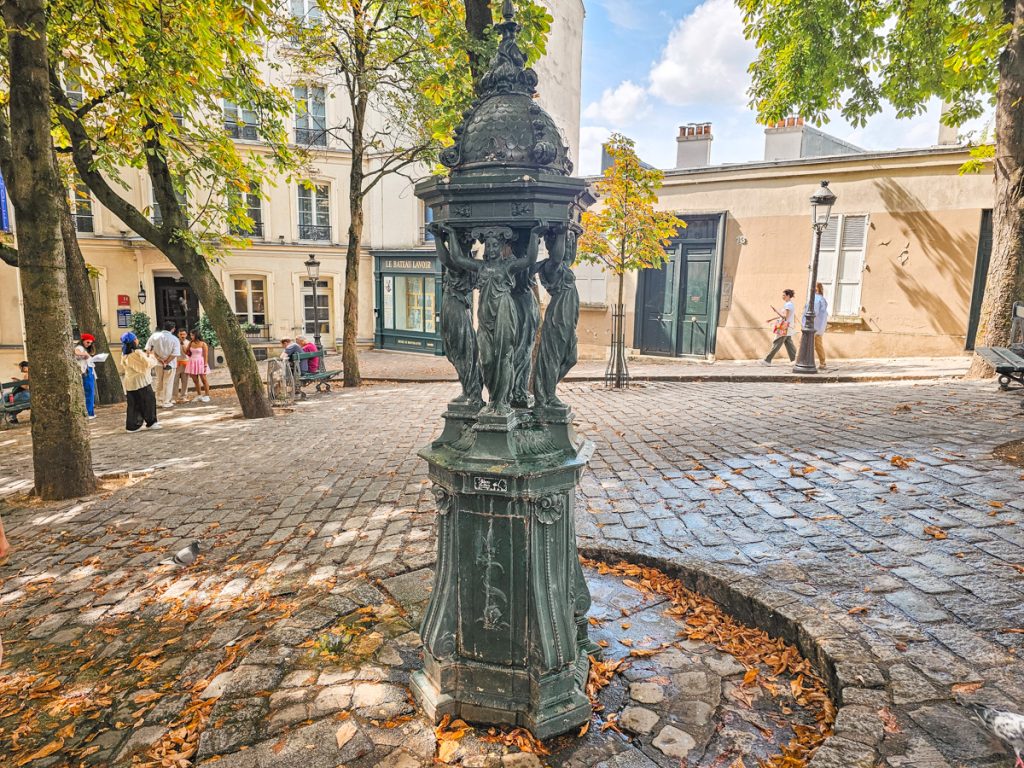
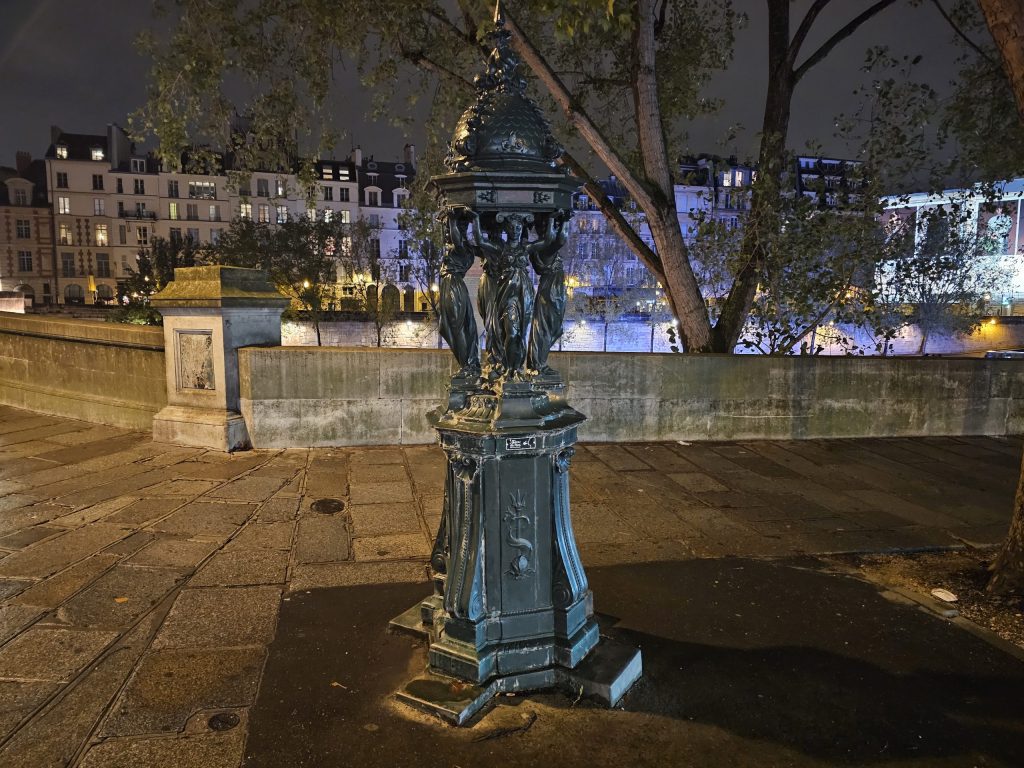
The design matters, too, because it explains why the fountains feel so “Parisian” without trying too hard. The best-known model is the tall fountain with four female figures (caryatids) holding up a small dome.
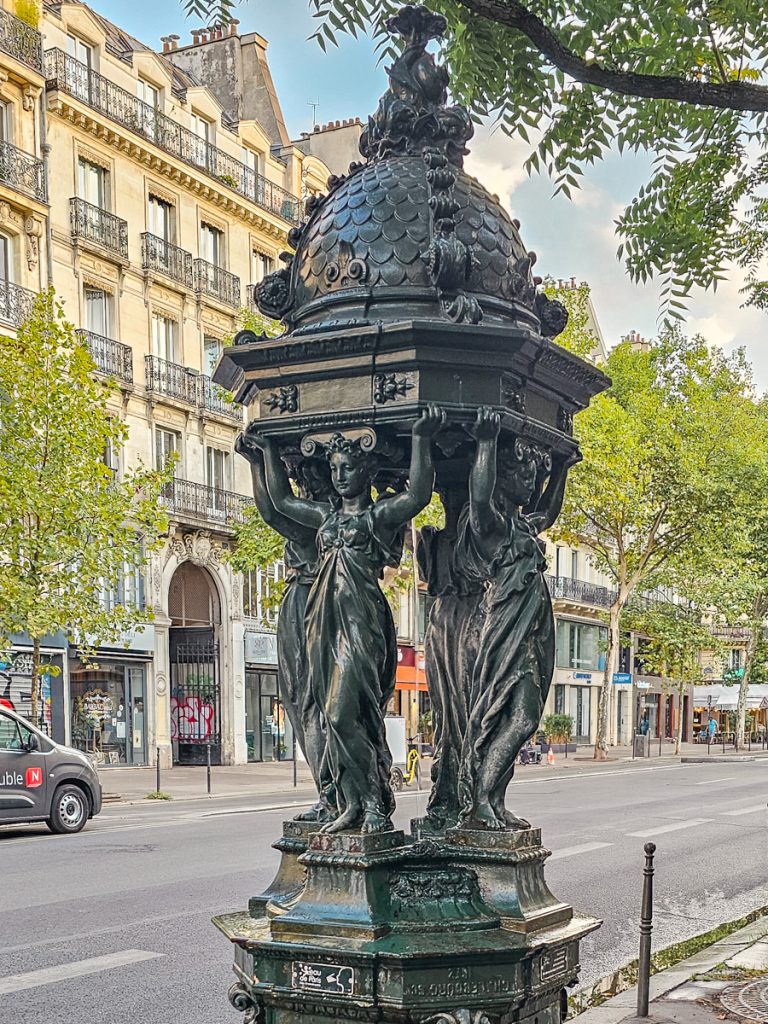
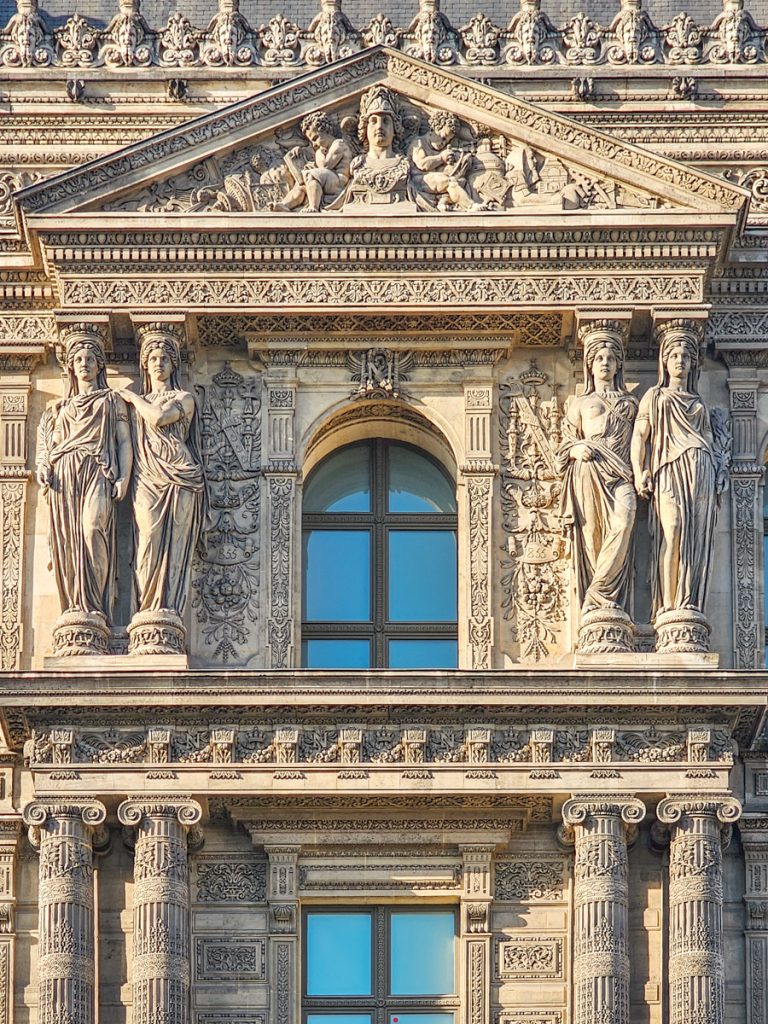
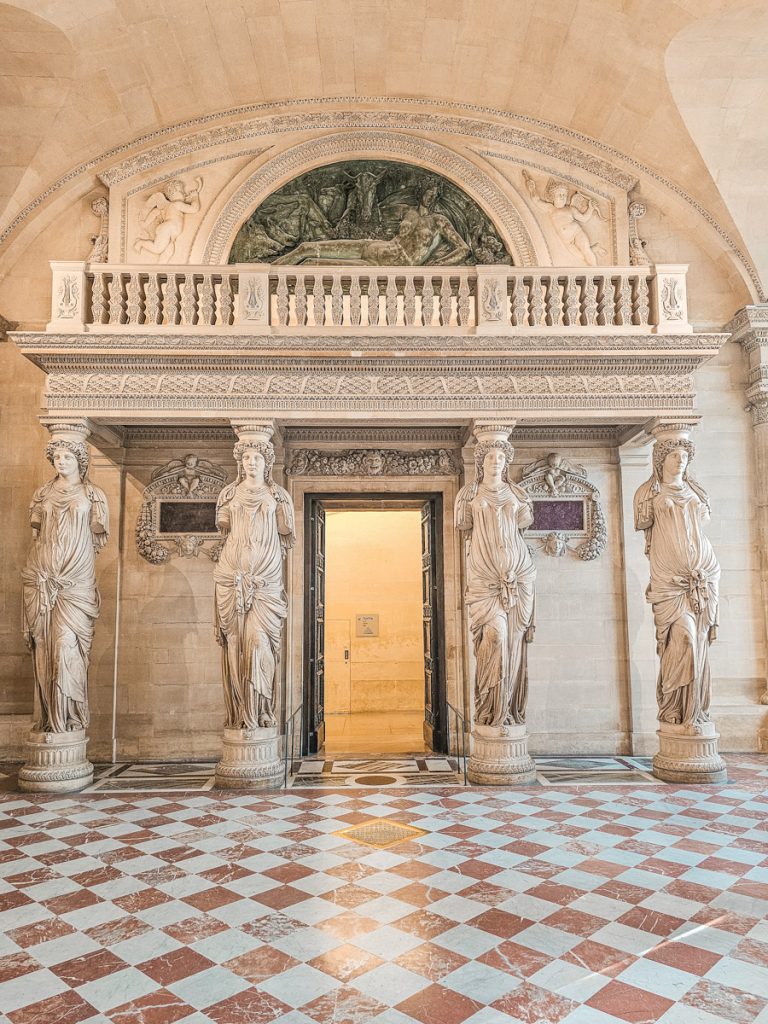
Caryatids are a somewhat common classical design element – you can see some on the facade of the Louvre, and in the Salle des Caryatides within the Louvre as well.
These figures are cast in dark green iron, and there are four spouts around the base. It’s decorative, but it’s also built to handle weather, knocks, and constant use.
You’ll also see other Wallace fountain types around the city, including simpler wall-mounted versions. Paris has moved, removed, and reinstalled fountains over the decades, so the exact mix depends on the neighborhood, the street layout, and the local renovation schedule.
The Wallace Fountains Today
A lot of Wallace fountains still do exactly what they were built to do. If you’re walking in Paris in warmer months, they’re one of the easiest ways to refill a bottle without buying water every time you’re thirsty.
Here’s what’s worth knowing as a traveler.
Water Safety Basics
Paris tap water is generally considered safe to drink, and these fountains are part of the public drinking-water system. If you’re comfortable drinking tap water, you can usually treat a running Wallace fountain the same way.
Seasonal Shutdowns
Not every fountain runs year-round. Many are shut off in colder months to prevent freezing and damage. So if you visit in late fall or winter and find a fountain dry, it doesn’t necessarily mean it’s broken.
Renovations and Maintenance
Today, Eau de Paris is responsible for maintaining the Wallace fountains and checking water quality. Like all of Paris’s public drinking fountains, they’re fully disinfected every two weeks.
Minor cleaning, painting, and servicing happen on-site, but major repairs are handled at a dedicated fountain workshop. On average, about twenty fountains undergo major restoration each year.
If you see one fenced off or freshly repainted, that’s just part of the cycle – and in central areas, the next working fountain is usually only a few blocks away.
Where You’ll See Them in Paris
You can find Wallace fountains all over Paris, but they’re most common in places where people naturally stop or pass through. Parks and park edges are a classic bet.
You’ll also spot them in squares and small intersections, anywhere pedestrians naturally cluster near benches and shade. And they show up on busy neighborhood streets, especially in areas where walking is the default way to get around.
If you want a few specific areas, start looking here:
- Latin Quarter streets around the Panthéon and the Seine: lots of foot traffic, lots of little squares
- Le Marais: dense walking routes, short blocks, frequent intersections
- Montmartre: popular for strolling and exploring
Wallace Fountains Around the World
The Wallace Fountains spread beyond just Paris. The design was copied and installed elsewhere in France, and a handful of cities outside France also have Wallace fountains. If you’ve ever seen one and done a double-take, that’s part of the point: the design is distinctive enough to travel.
If you’re curious, Bordeaux is often mentioned as an early French example that received several Wallace fountains soon after Paris did. Internationally, you’ll sometimes find them in places with strong French ties or French-themed public spaces.
- London, United Kingdom: at Hertford House (The Wallace Collection)
- Québec City, Canada: one near Grande Allée & Avenue Cartier, and another by the Old Port on Rue Saint-Paull
- New Orleans, USA: in Latrobe Park, tied to a Paris gift around the 1984 Louisiana World Exposition
- Amman, Jordan: at Square de Paris (Paris Circle), near the French Institute
- Zurich, Switzerland: in Pestalozzi Park along Bahnhofstrasse
A 150-Year Story Hidden in Plain Sight
The Wallace fountains are a good reminder that some of Paris’s best features aren’t the ones you buy tickets for, but the small things the city built for ordinary life.
If you’re visiting, it’s worth paying attention to these lovely fountains as you stroll the streets. You’ll start seeing them the way Parisians do: not as a sightseeing stop, but as part of the background that quietly makes walking the city easier.

