
17 Surprising Paris Facts You Definitely Didn’t Learn in French Class

Paris is one of the most visited cities in the world and makes frequent appearances in media – so you might feel like you already know a lot about this popular city.
But, there is always another layer and more to discover. Read on to learn some of my favorite interesting fun facts and history about Paris.
1. The Meaning of the “City of Light”

Paris earned the nickname La Ville-Lumière in the 17th century under King Louis XIV. At the time, Paris was actually a very dangerous city, so in 1667, the king appointed Gabriel Nicolas de la Reynie as the city’s first police chief and tasked him with restoring order after years of unrest.
One of his key measures was installing lanterns on nearly every main street and asking residents to light their windows at night. This made Paris one of the first European cities with widespread street lighting, deterring crime and creating a safer city after dark.
The name took on a second meaning during the Age of Enlightenment in the 18th century, when Paris became a hub for ideas that shaped Europe.
Writers and philosophers like Voltaire, Jean-Jacques Rousseau, Denis Diderot, and Baron de Montesquieu lived and worked here, contributing to debates on science, politics, and human rights. Their influence solidified Paris’s role as a center of knowledge, progress, and enlightenment.
By the early 1800s, Paris introduced gas street lighting, later replaced by electric lights in 1878, making it one of the first cities to be fully illuminated at night.
So both its literal glow and its role as a center of ideas helped the nickname “City of Light” endure.
2. Colors of the Eiffel Tower
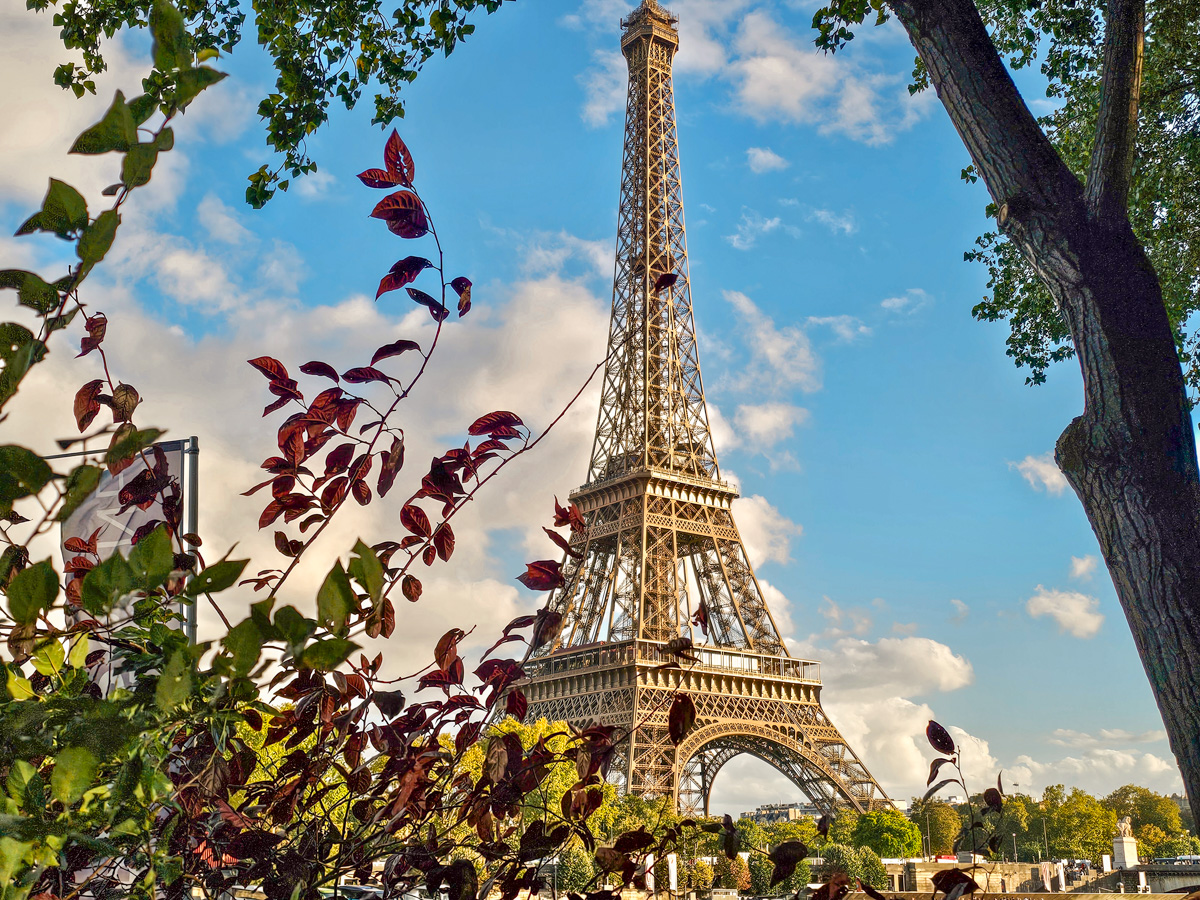
The Eiffel Tower has had about 20 paint jobs since it was built, and each one is done entirely by hand. With a surface area of 250,000 square meters, this is no small job!
Gustave Eiffel himself recommended a fresh coat every seven years to keep the structure in top shape, and that tradition continues today.
The Tower is made from puddle iron, a material that can last almost forever if it’s well cared for. But between Paris pollution, weather, bird droppings, and the ever-present threat of rust, it needs consistent maintenance. That means cleaning it and carefully applying new layers of paint to protect it from the elements.
Over the decades, its color palette has gone through several shades: reddish brown, yellow-ochre, chestnut brown, and today’s warm yellow-brown.
3. Eiffel Tower Height

When it was completed in 1889, the Eiffel Tower stood at 312 meters (1,024 feet) and held the title of the tallest structure in the world for 40 years. It wasn’t surpassed until 1930, when New York’s Chrysler Building edged it out by just 7 meters.
Today, the Tower is actually taller than it was back then. Thanks to modern radio and television antennas, its height now reaches around 330 meters (1,083 feet).
Fun fact: its height isn’t completely fixed. The iron expands in the summer heat and contracts in the winter cold, meaning the Tower can grow or shrink by up to 15 centimeters depending on the season.
4. Paris by the Numbers

Around 50 million visitors explore Paris and the surrounding Île-de-France region each year. Paris accounts for 31% of France’s total GDP, with about 7% of the GDP from tourism.
And while the Eiffel Tower is certainly the unofficial symbol of the city, it’s not Paris’s most visited landmark.
Notre Dame held the top spot for years, drawing around 12 million visitors annually. After a 5.5-year closure for renovations following the 2019 fire, it has now reopened and is expected to reclaim that title.
At the moment, Disneyland Paris leads with 9.9 million visitors, followed by the Louvre at 7.7 million. The Eiffel Tower comes in third, drawing 5.9 million people annually.
5. There Are No Stop Signs in Paris
For years, there was exactly one stop sign in the entire city, tucked away in the 16th arrondissement, but it was removed in 2016.
Instead, traffic is managed with stoplights for major streets, roundabouts, and a rule called priorité à droite (priority to the right), meaning drivers must yield to vehicles coming from the right unless otherwise indicated.
It’s a system that sometimes feels chaotic, but Parisians navigate it just fine.
6. There Are Multiple Statue of Liberties in Paris

Paris is home to four official replicas of the Statue of Liberty — you’ll find them at:
- Île aux Cygnes (an island in the Seine just downriver from the Eiffel Tower)
- The Musée d’Orsay
- The Musée des Arts et Métiers
- The grounds of the Jardin du Luxembourg
Beyond those, there are a handful of smaller, unofficial versions scattered around the city.
The statue’s connection to Paris runs deep. France gifted the original to the United States, with the design created by Auguste Bartholdi, a sculptor from Colmar in eastern France. And the iron framework that holds it all together? That was designed by none other than Gustave Eiffel himself.
7. Place de la Concorde Has a Fascinating History
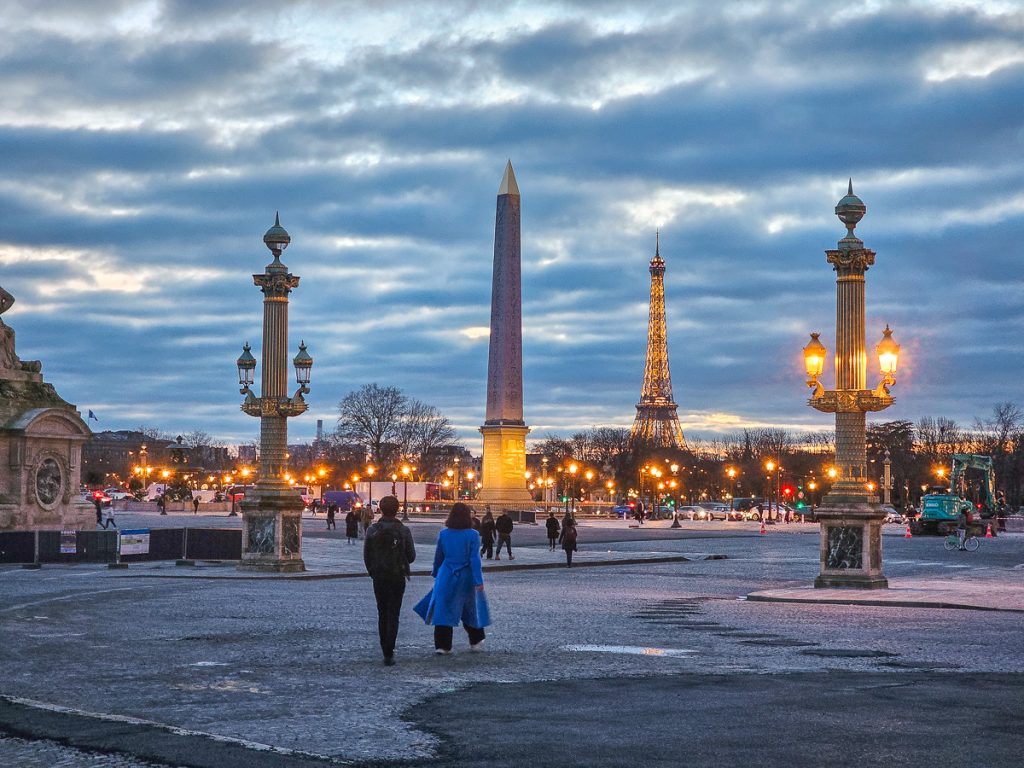
Today, Place de la Concorde is one of the most beautiful open squares in Paris, but its history is anything but serene.
The square was first laid out as Place Louis XV, complete with a grand equestrian statue of the king. It was then renamed Place Louis XVI, but took on a far darker role during the French Revolution.
Under the name Place de la Révolution, it became the city’s main execution site. King Louis XVI, Queen Marie Antoinette, and more than 1,100 others were beheaded here. This includes Maximilien Robespierre, one of the Revolution’s most powerful leaders, who ultimately met the same fate at the end of the Reign of Terror.
In the 1830s, the square got a new landmark: a 23-meter-high Egyptian obelisk brought from Luxor, Egypt. Built under Pharaoh Ramses II, the obelisk dates back over 3,000 years and weighs an astonishing 220 tons.
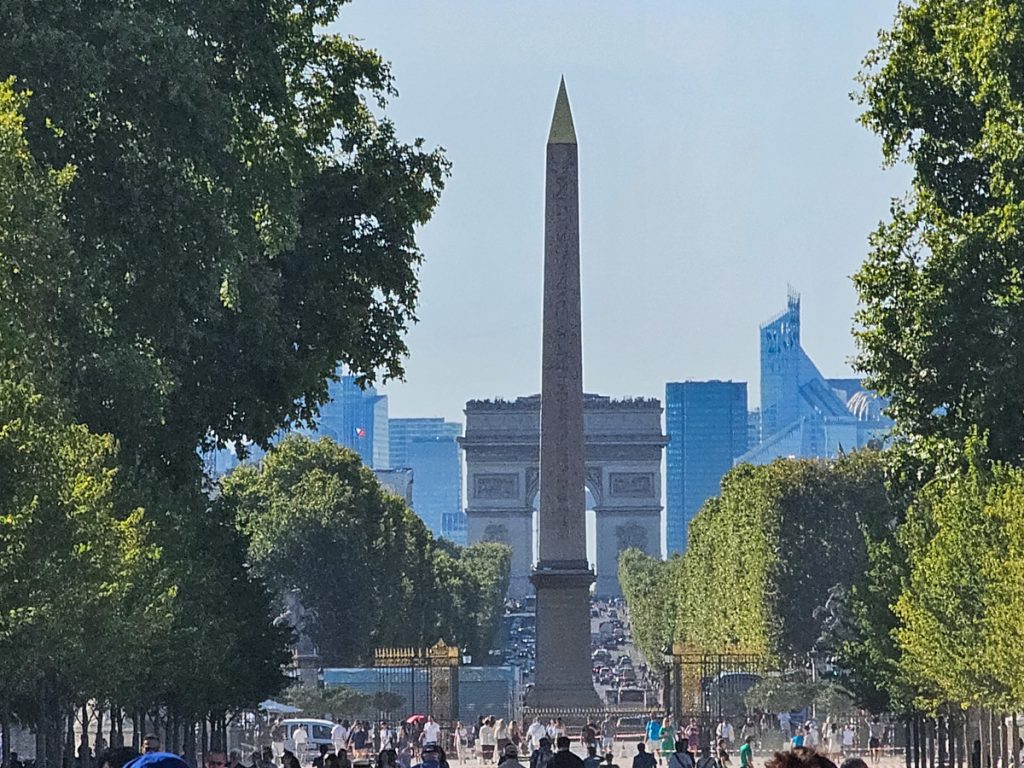
It was a gift from Egypt in gratitude for French linguist Jean-François Champollion’s work in deciphering hieroglyphs. Originally, two matching obelisks from Luxor were to arrive in Paris, but the enormous cost and difficulty of transporting the first meant the second stayed in Luxor.
Not long after, the square was renamed Place de la Concorde, symbolizing reconciliation and unity after the Revolution’s turbulent years.
8. Montmartre: From Rural Hilltop to Artistic Haven

Perched on a hill in the far north of Paris, Montmartre was once a quiet farming community well beyond the city limits. For hundreds of years, it was dotted with orchards, gardens, vineyards, and windmills – thirteen of them in the 1500s alone.
A small vineyard, the Clos du Montmartre, still operates here today, producing a limited batch of wine each year that’s auctioned for charity.
One of the only surviving windmills, the Moulin de la Galette, can be spotted from Rue Lepic, and today is part of a restaurant.
When Montmartre was annexed into Paris in 1860, it began to transform. During the Belle Époque period of the late 1800s and early 1900s, it became a magnet for artists drawn by the low rents and carefree atmosphere.
Studios, cafés, and cabarets filled its narrow streets, creating an energy that still lingers in the neighborhood’s winding lanes.
9. The Smallest Street in Paris

Tucked into the Latin Quarter right next to the Seine, Rue du Chat-qui-Pêche holds the title of the narrowest street in Paris. At just 1.8 meters (about 6 feet) wide, it’s barely enough for two people to pass each other.
Its name translates to “Street of the Fishing Cat,” a quirky detail that just adds to the charm.
10. The Bones Beneath Paris
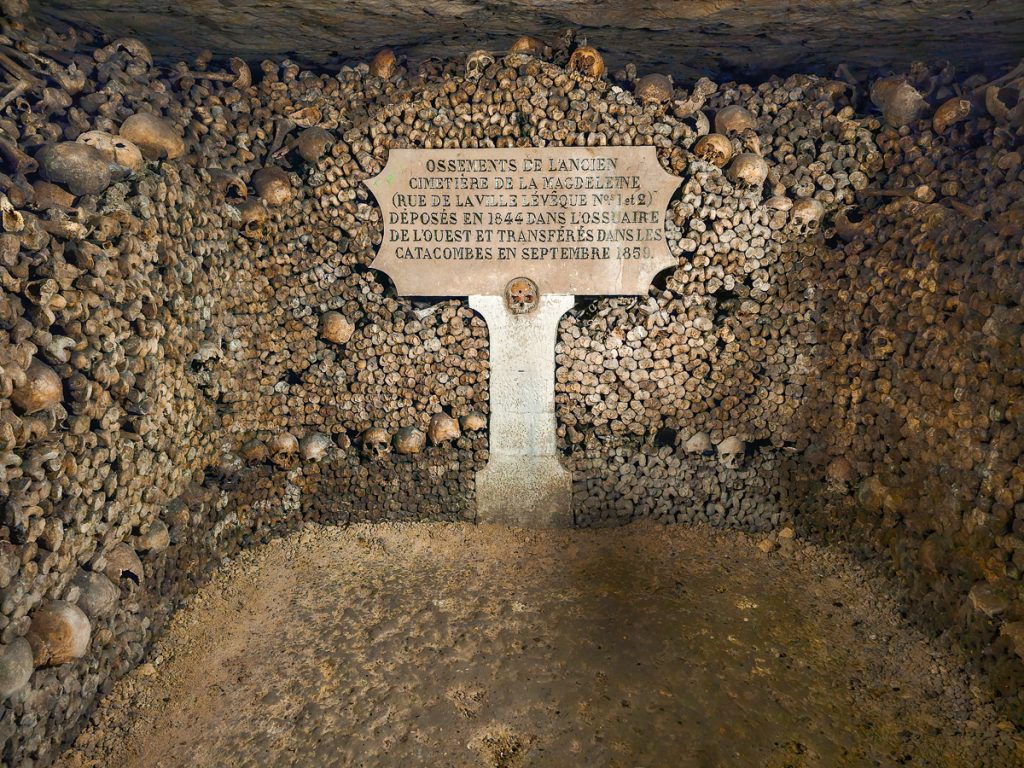
Far below the streets of Paris lies a shadow city: a maze of limestone tunnels that once furnished the stone that built the city above, and later became its massive underground cemetery.
The story starts in the Middle Ages, when quarrymen carved out stone underground for churches, bridges, and homes. Over centuries, the city expanded over the hollowed ground. By the 1700s, another problem emerged: Paris’s cemeteries were overflowing, creating both a stench and a serious health hazard.
The solution was grim but practical. In 1786, workers began moving remains from the city’s largest cemetery, Saint-Innocents, into the abandoned quarry tunnels. Over the next decades, bones from other burial grounds followed, stacked neatly into walls and patterns that still line the corridors today.
The catacombs now hold the remains of 6-7 million people, stretching for miles and miles under the city. A small portion of the Catacombs is open to the public, and is a fascinatingly morbid place to visit.
11. Pont Neuf
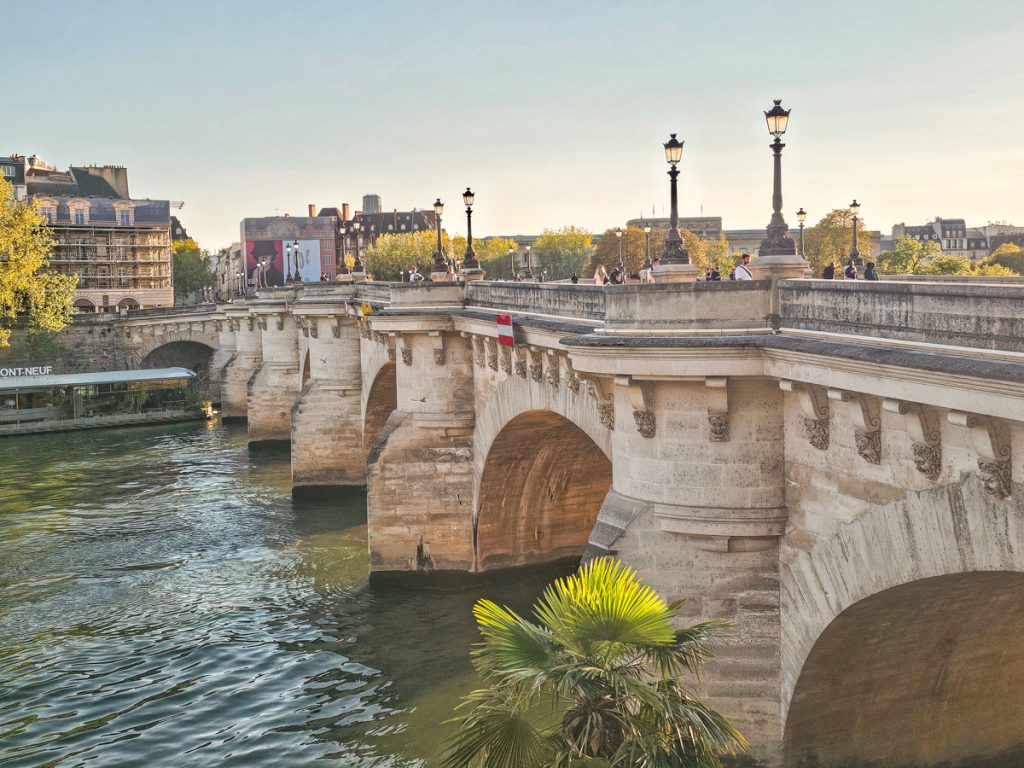
Pont Neuf is a historic stone bridge that stretches across the western tip of Île de la Cité, the island where Notre Dame stands. Pont Neuf means “New Bridge,” but it’s actually the oldest bridge in Paris, completed in 1578.
Pont Neuf offers some of the best river views in the city, and has been officially recognized as a monument historique since 1889.
12. There’s An Annual Competition for Best Baguette in Paris

Every year, Paris hosts the Concours de la Meilleure Baguette de Paris, a fiercely competitive event to crown the city’s top baguette. Officially called the Grand Prix de la baguette de tradition française de la ville de Paris, it’s been held every year since 1994.
The winner not only earns a medal and €4,000 but also gets the prestigious honor of supplying the Élysée Palace (home to the President of France) for an entire year. Plus, unsurprisingly, the winning boulangerie sees a big boost in sales.
The competition has strict rules. Each baguette must meet exact measurements for length and weight, and can only be entered if it’s a baguette de tradition.
By law, a baguette de tradition must be made entirely on-site at the bakery and can contain only four ingredients: wheat flour, yeast, salt, and water. No additives, no shortcuts, just skill, patience, and perfect technique.
In 2025, the winner was La Parisienne bakery in the 10th arrondissement.
13. And a Similar Competition for Best Croissant in Paris

If the best baguette in Paris gets its own high-stakes showdown, you’d better believe there’s one for croissants. The Concours du Meilleur Croissant au Beurre Charentes-Poitou AOP – Grand Paris crowns the finest butter croissant in the Île-de-France region.
To qualify, bakers must use Charentes-Poitou AOP butter, keep the weight between 45–65 grams, and deliver perfectly golden layers.
In 2025, the top prize went to Des Racines et du Pain in Clamart (a town in the greater Paris region). If you’re looking for the best in Paris proper, La Parisienne and Mille et Un were 2nd and 3rd place.
There’s even a separate contest for croissants made with Isigny AOP butter. Proof, once again, that in Paris, pastries are serious business.
14. Ile de la Cité Is the Oldest Part of Paris

Ile de la Cité is the larger of the two islands in the Seine, and is actually where the first recorded settlements of Paris were. Around 250 BC, the Parisii, a Celtic tribe, settled on the Ile de la Cité and spent the next 200 years establishing their society.
Today, Ile de la Cité is considered the very center of Paris, and an engraved marker embedded in the square in front of Notre Dame marks the official Point Zero of Paris.
15. The Romans Were Here Too
In 52 BC, the Romans attacked and defeated the Parisii, and transformed the settlement into a garrison town called Lutetia. They laid out roads, aqueducts, baths, and an amphitheater, and continued to inhabit and control the area for nearly four centuries.
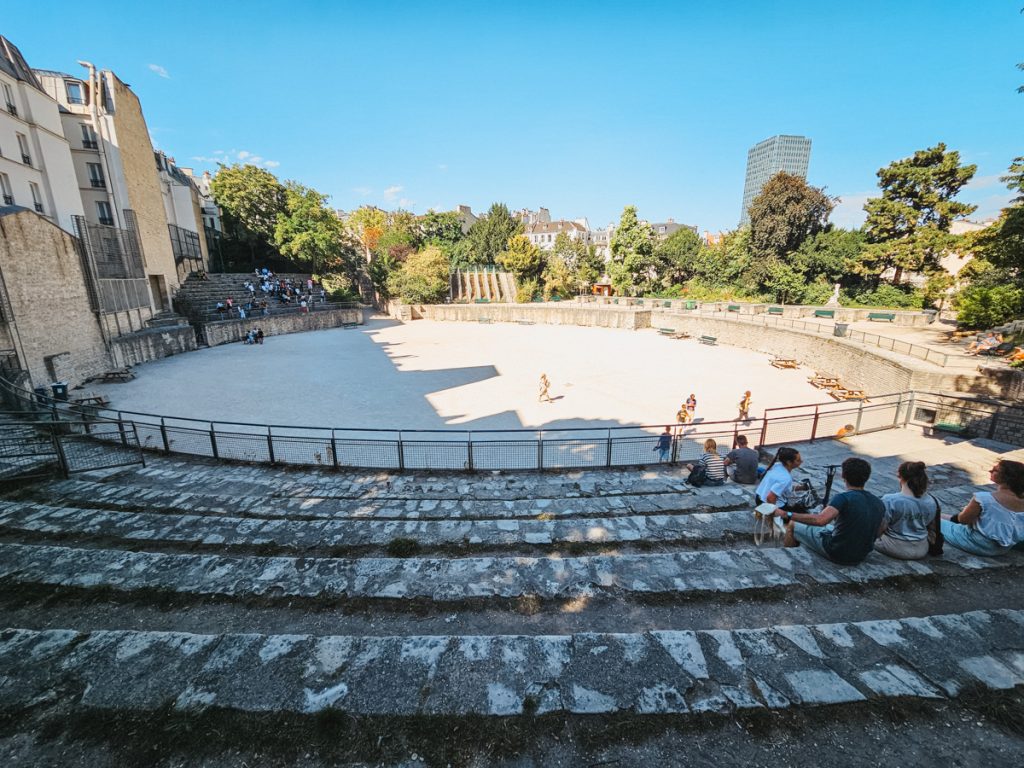
Some remnants from the time of Roman rule are still left in Paris today. Walls from the thermal baths are part of the Cluny Museum, and you can walk through the Arenes de Lutece, the Roman arena and amphitheater tucked away in a corner of the Latin Quarter.
16. The Louvre By the Numbers

- The Louvre is the most visited museum in the world
- 35,000 works of art are on display at any given time. If you spent just 10 seconds looking at each object, it would take you over 4 days to see everything on display in the museum.
- The exhibits cover 652,300 square feet (60,600 square meters)
- Over 20,000 people visit the Louvre each day, on average
17. The Louvre Used to Be a Palace

Long before it became the world’s most visited museum, the Louvre was a royal stronghold. Built in the late 12th century under Philip II, it began as a medieval fortress, remnants of which you can still see in the museum’s basement.
By the mid-1500s, Francis I transformed it into the main royal residence, and it continued to be improved and expanded over the next several centuries.
That changed in 1682, when King Louis XIV moved his court to Versailles to cement his image as an absolute monarch and surround himself with unmatched grandeur. The Louvre was left to house the royal art collection, including Greek and Roman sculptures, and later it became home to France’s art academies.
During the French Revolution, the National Assembly declared the Louvre a public museum for the nation’s masterpieces. It opened its doors on August 10, 1793, with 537 paintings, marking the start of its transformation into the beloved museum we know today.
As you walk through the Louvre, the opulent ceilings, gilded moldings, grand staircases and marble corridors make it clear this was once a palace—the building itself is as awe-inspiring as many of the masterpieces it holds.
