
6 Places to See the Statue of Liberty in Paris (+ A Bonus!)

The Statue of Liberty is one of the most recognizable monuments in the world, standing proudly in New York Harbor as a symbol of freedom and democracy. But long before it became an American icon, it was taking shape in the workshops of Paris.
The story begins in 1865, when French historian and abolitionist Édouard de Laboulaye proposed creating a monument to celebrate American independence, the abolition of slavery, and the friendship between France and the United States.
The project eventually landed in the hands of Frédéric Auguste Bartholdi, a French sculptor born in Colmar, Alsace, who had long been fascinated by enormous monuments.
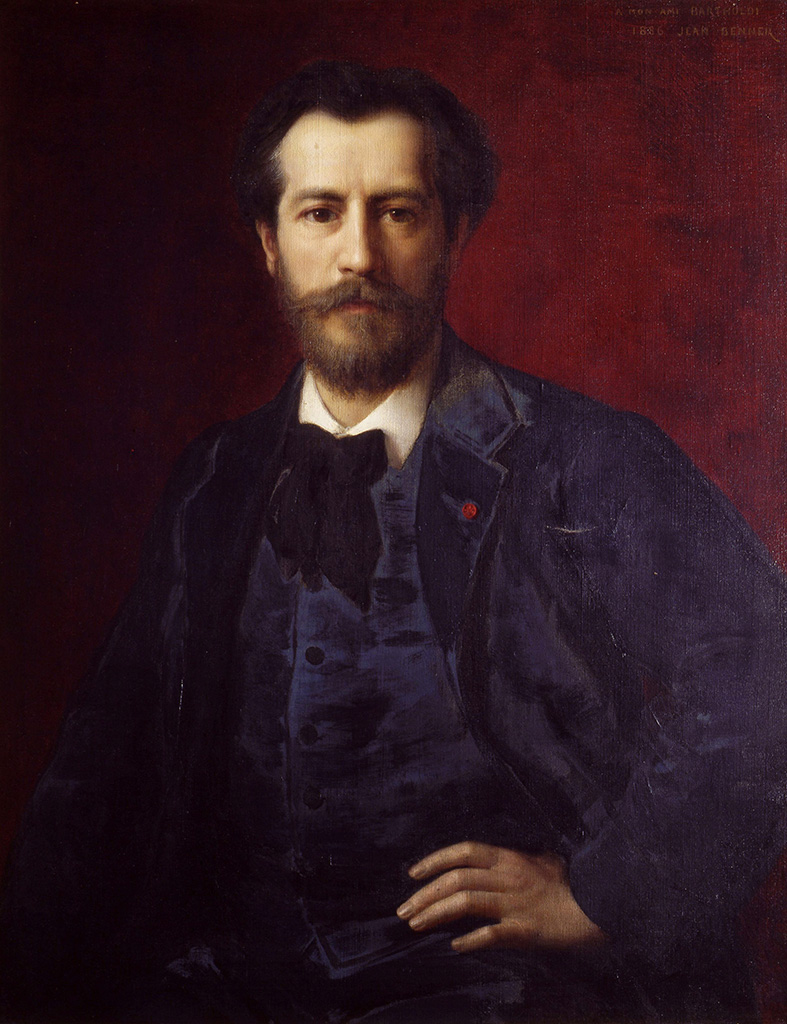
During his travels in Egypt, he’d admired the colossal statues of the ancient Egyptians and even proposed building a giant, torch-bearing female figure at the entrance to the Suez Canal. That project never materialized, but it helped shape his ideas for the Statue of Liberty.
Bartholdi’s design was full of symbolism. The statue, officially named Liberty Enlightening the World, depicts a robed woman inspired by the Roman goddess of liberty. Her raised torch represents enlightenment, while the tablet in her left hand bears the date of American independence, July 4, 1776. At her feet are broken chains, symbolizing the end of slavery and freedom from oppression.
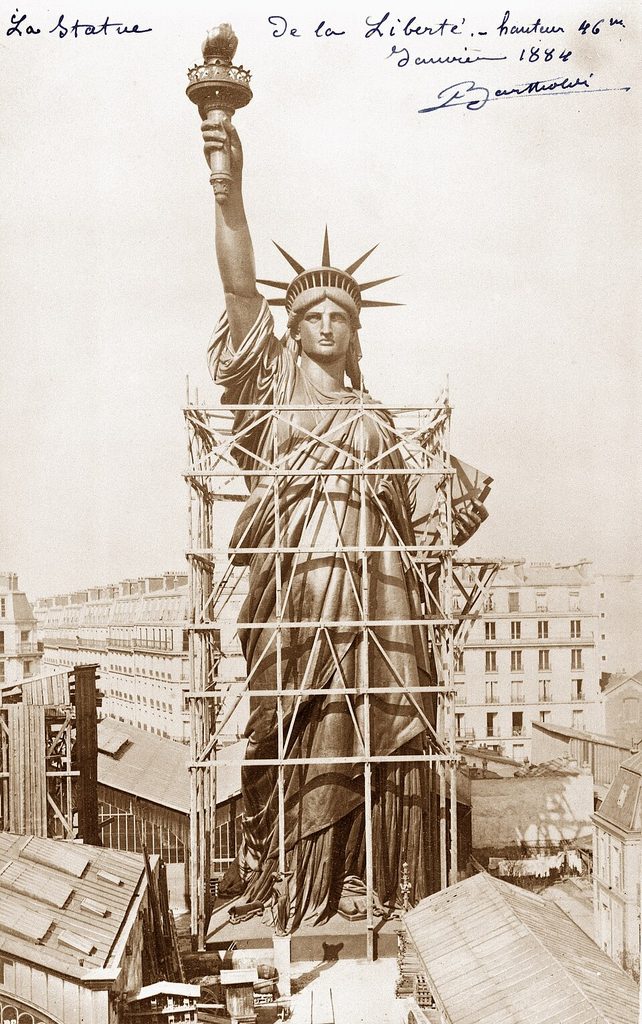
Constructing such an enormous statue was no small undertaking. Bartholdi enlisted the help of engineer Gustave Eiffel, who designed the internal iron framework that supports the statue’s copper exterior. Yes, the same Eiffel who would go on to build the Eiffel Tower!
The entire statue was constructed and assembled in Paris before being dismantled, packed into hundreds of crates, and shipped across the Atlantic. It was finally unveiled in New York Harbor on October 28, 1886, as a gift from the people of France to the United States.
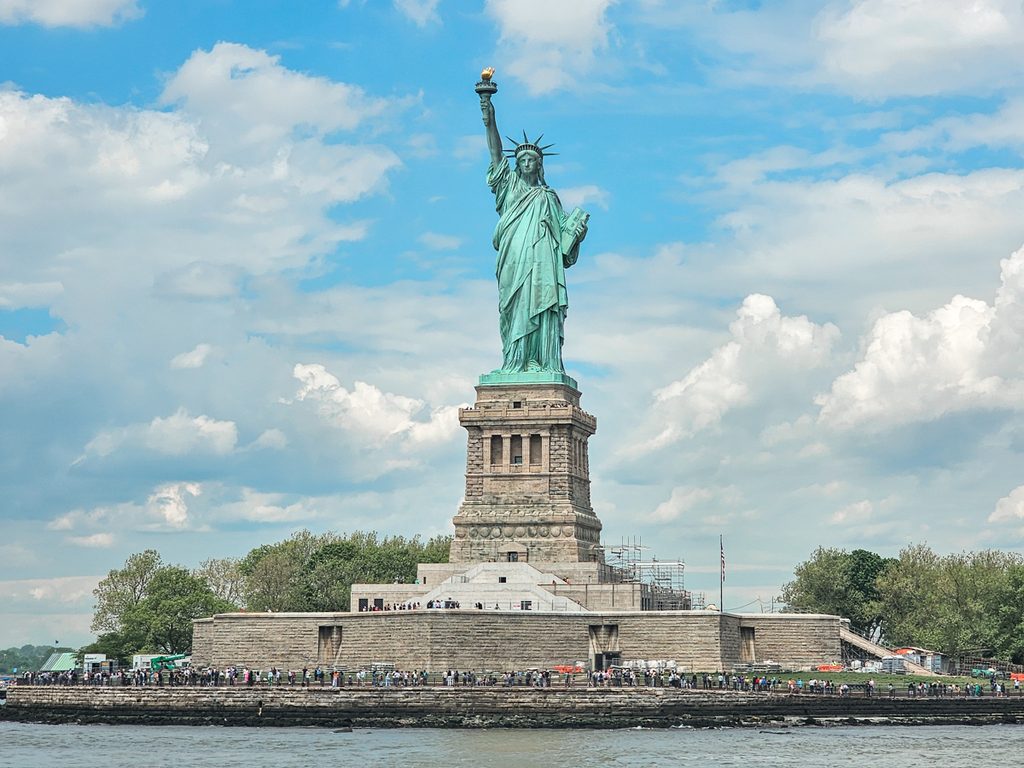
Over the years, the Statue of Liberty has become one of the world’s most famous symbols of freedom, and replicas have appeared in cities around the globe.
And perhaps unsurprisingly, you’ll find quite a few of them right here in Paris, where the original statue was created. Some are prominent landmarks, while others are hidden in museums, gardens, and even unexpected works of art.
Here are six places to see the Statue of Liberty in Paris, plus one bonus location elsewhere in France that I think should be on your radar.
1. Île des Cygnes
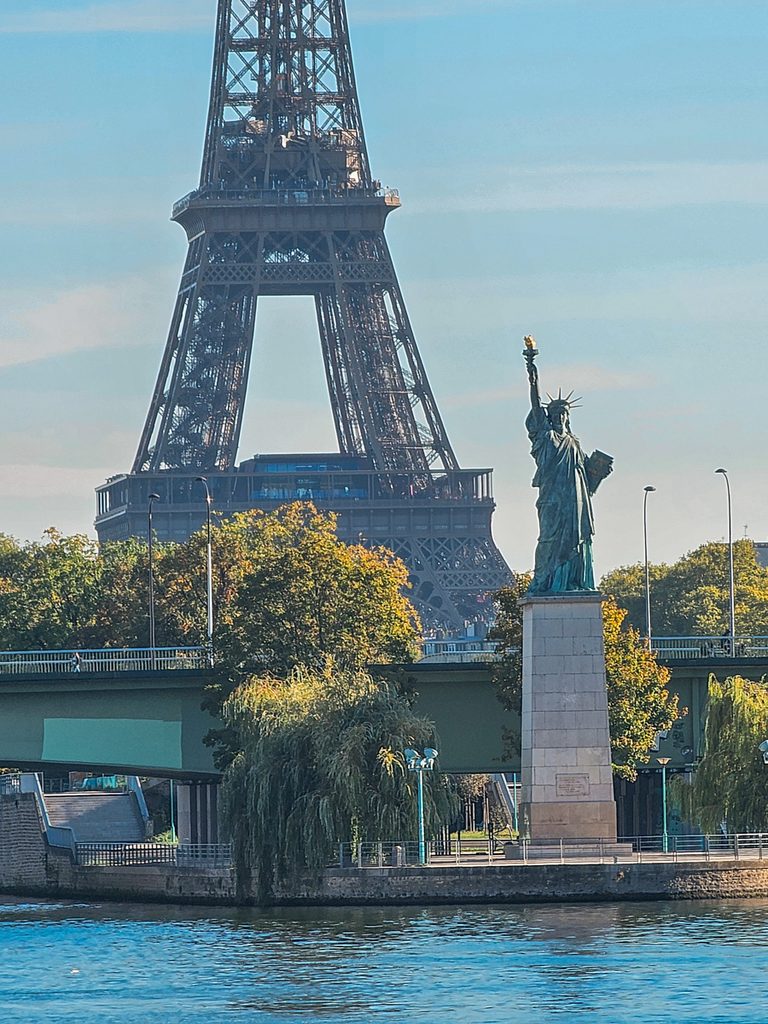
The largest and most iconic Statue of Liberty in Paris stands on a small island in the Seine, just southwest of the Eiffel Tower. At 37 feet tall, it’s a quarter-scale replica of the famous statue in New York Harbor.
This smaller version was a gift from Americans living in Paris to commemorate the 100th anniversary of the French Revolution. It was inaugurated on July 4, 1889, just three years after the much larger Statue of Liberty was unveiled in New York.
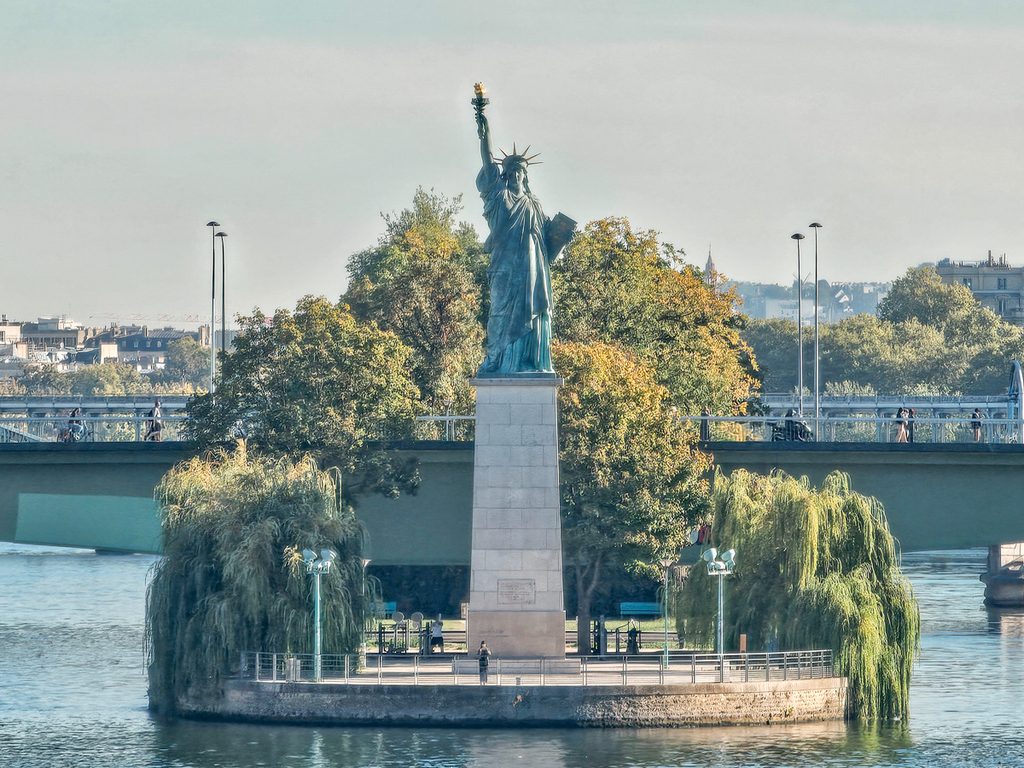
Interestingly, the statue originally faced east, toward the Eiffel Tower. But in 1937, it was turned around to face west, in the direction of its much larger counterpart in New York.
There’s another interesting detail on the tablet in her left hand. Two dates are inscribed: July 4, 1776, the date of the Declaration of Independence, and July 14, 1789, the storming of the Bastille. The dates are joined by an equal sign, symbolizing the connection between the two countries and their revolutions.
The statue stands at the southern tip of Île aux Cygnes, a narrow island built in the Seine in 1827. A tree-lined walkway runs the length of the island, and you can walk all the way to the statue’s base.
To see this Statue of Liberty up close, head to the Pont de Grenelle, the bridge that passes directly behind the statue. You can admire it from the bridge or take the stairs down to the island to walk right beneath it.
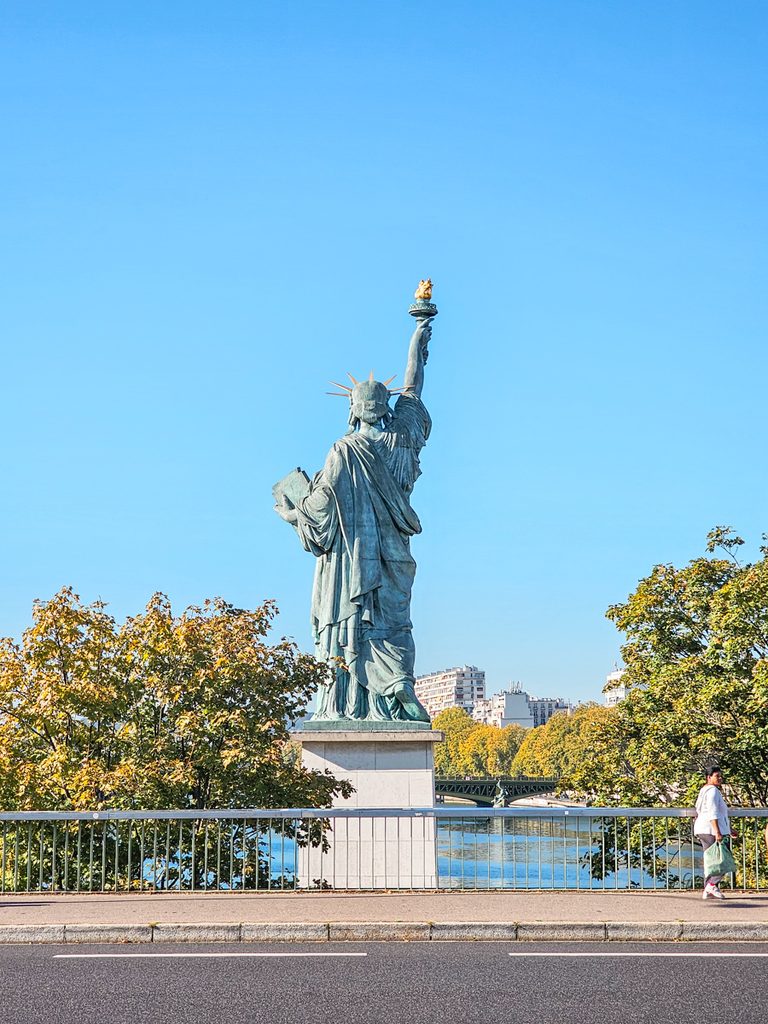
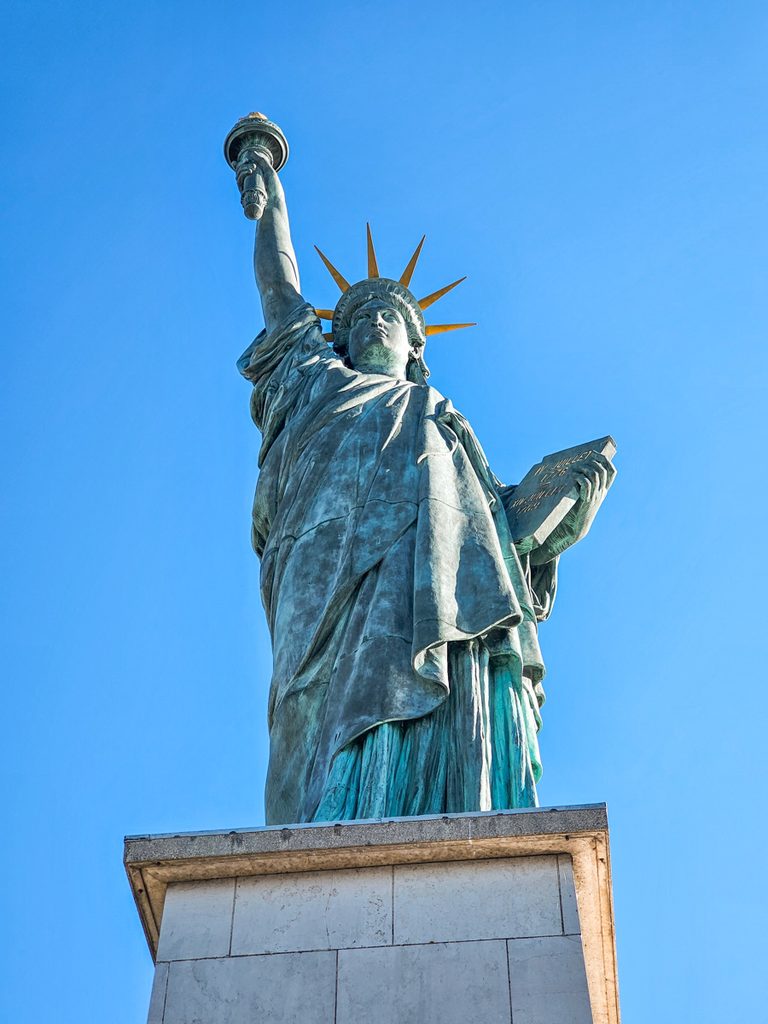
But for my favorite photo angle, head one bridge farther south to the Pont Mirabeau. From here, you can photograph the Statue of Liberty with the Eiffel Tower directly behind it, which makes for a pretty spectacular shot of both landmarks.
2. Musée d’Orsay
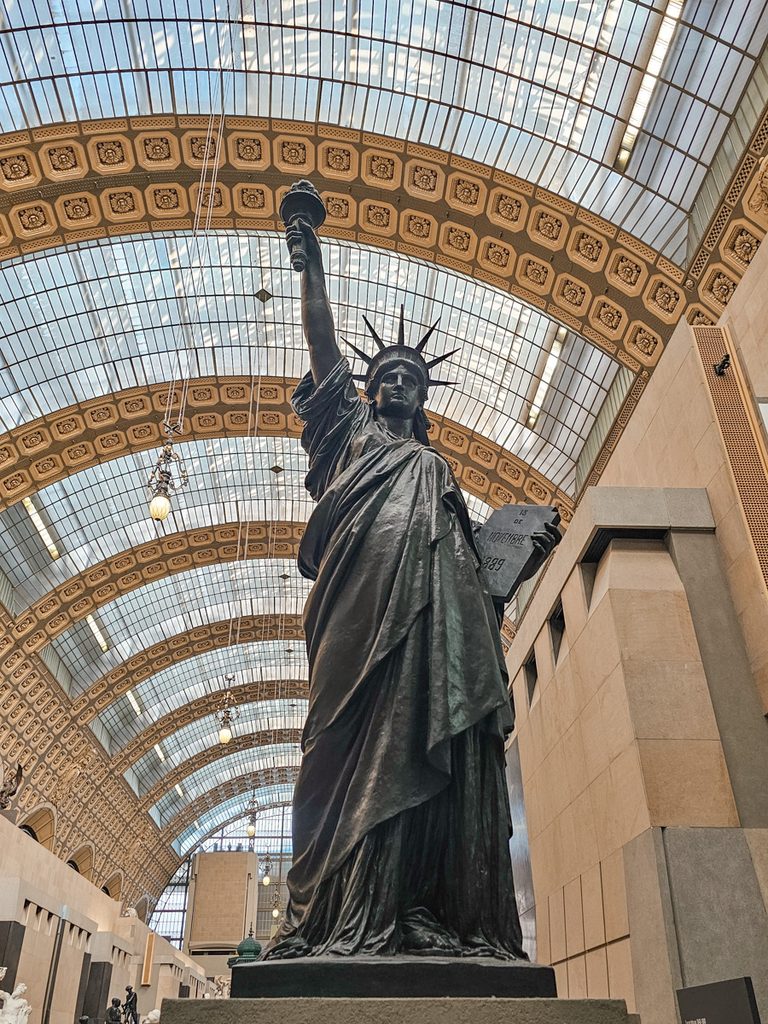
The Musée d’Orsay is one of the most beloved museums in Paris, and it houses its own Statue of Liberty. This bronze statue is just under 10 feet tall and was cast in 1889 from an earlier model Bartholdi had made in 1876.
The French government purchased the statue in 1900 for the Musée du Luxembourg, which was then one of Paris’s major art museums. In 1906, at the request of Bartholdi’s widow, it was moved outdoors to the nearby Luxembourg Gardens, where it remained for more than a century.
Unfortunately, the statue suffered damage over the years, including the theft of its torch in 2011. The following year, it was transferred to the Musée d’Orsay, where it could be better protected and preserved.
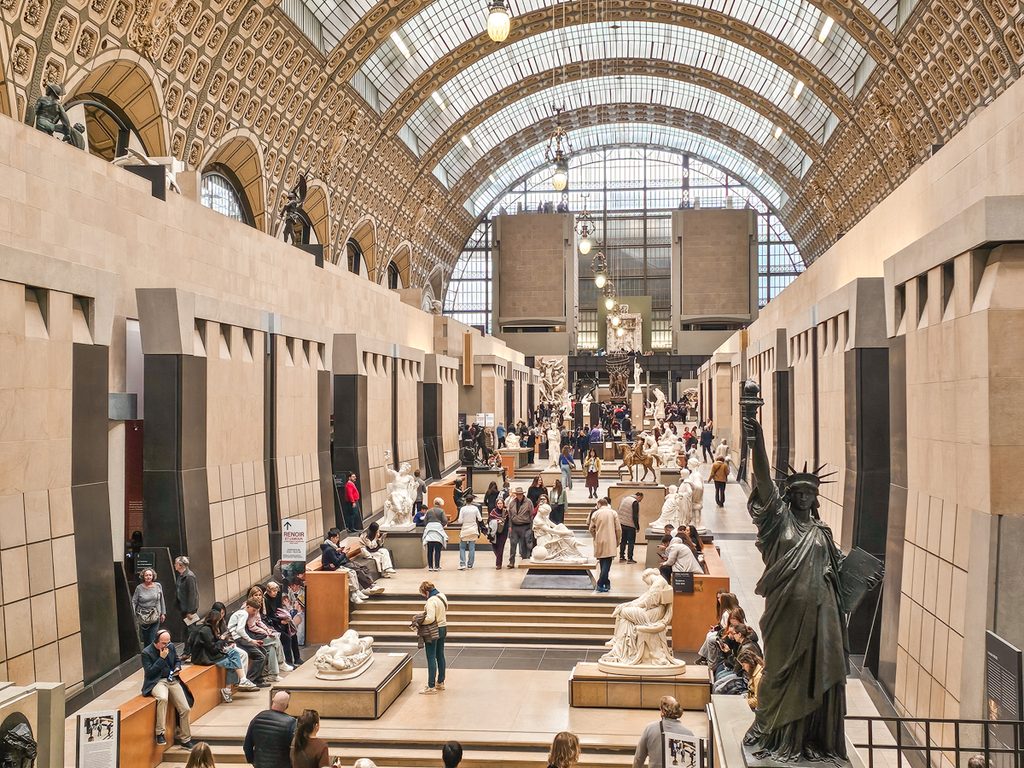
Today, it’s displayed near the entrance to the museum’s spectacular central sculpture gallery, surrounded by works from the 19th century. It’s a particularly fitting setting, since the Orsay inherited much of the collection of the former Musée du Luxembourg.
3. Jardin du Luxembourg
Even though the original Statue of Liberty was moved from the Luxembourg Gardens to the Musée d’Orsay for conservation in 2012, its longtime spot in the gardens wasn’t left empty. The French Senate commissioned a new bronze replica to take its place, so you can still see the Statue of Liberty here today.
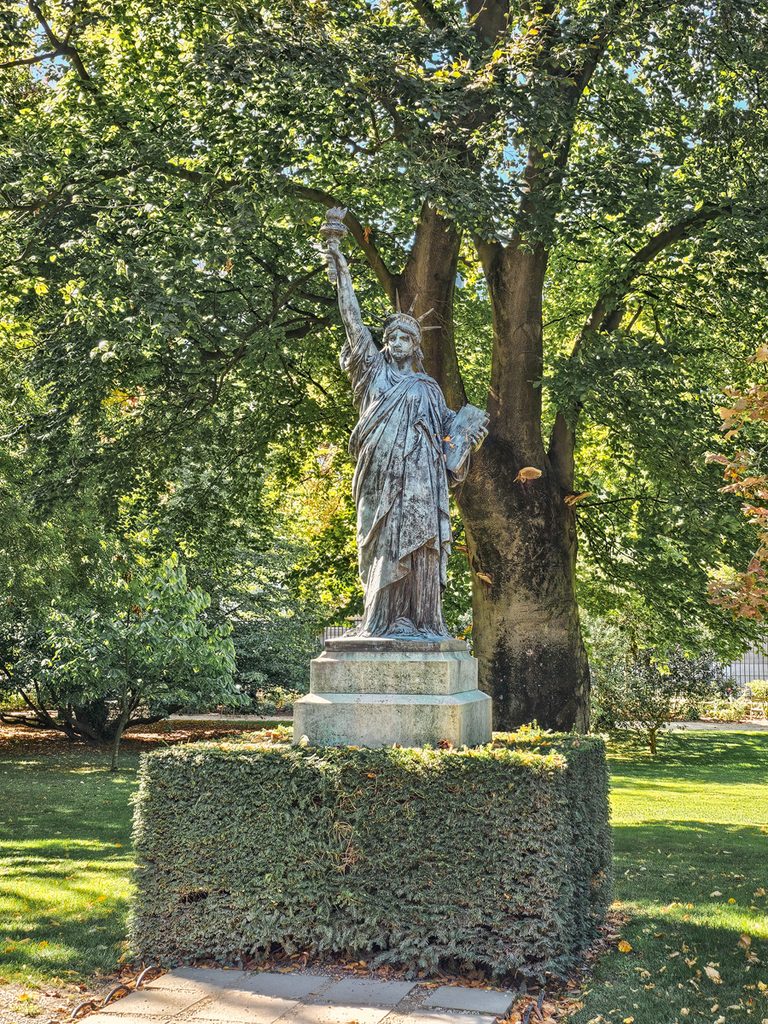
You’ll find it along one of the smaller pathways near Rue Guynemer, on the western side of the gardens, well away from the Luxembourg Palace and the popular Grand Bassin where visitors gather to sail miniature boats.
It’s a lovely little spot, surrounded by trees, hedges, walking paths, and benches. It’s also very easy to miss if you don’t know where to look, so I’d recommend pulling it up on Google Maps (location here) so you know where to go.
There’s also another interesting connection to the United States right beside the statue. An American oak tree was planted here on January 30, 2002, in memory of the victims of the September 11 attacks. The tree was a gift from the American community in Paris, intended as a symbol of friendship between France and the United States.
4. Musée des Arts et Métiers
The Musée des Arts et Métiers is a fascinating and often overlooked museum in Paris, dedicated to the history of science, technology, and inventions. One of its many treasures is an original model of the Statue of Liberty, created by Bartholdi in 1878.
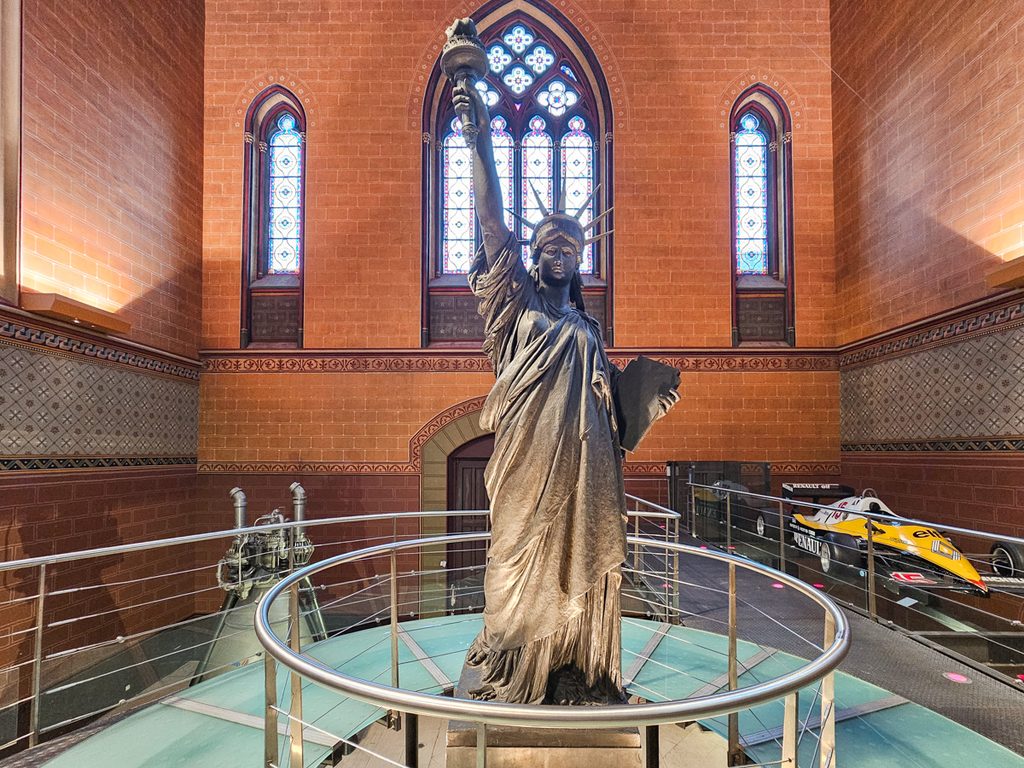
It stands just over nine feet tall and is made from plaster, wood, and iron, with a dark painted finish that makes it look almost like bronze. After Bartholdi’s death in 1904, his widow donated the model to the museum, where it has remained ever since.
You’ll find the statue in one of the coolest parts of the museum: the former church of Saint-Martin-des-Champs. This beautiful medieval church has been turned into an exhibition space, with historic airplanes suspended overhead and old automobiles displayed on raised platforms. There’s even a walkway that takes you up alongside the exhibits so you can admire everything up close.
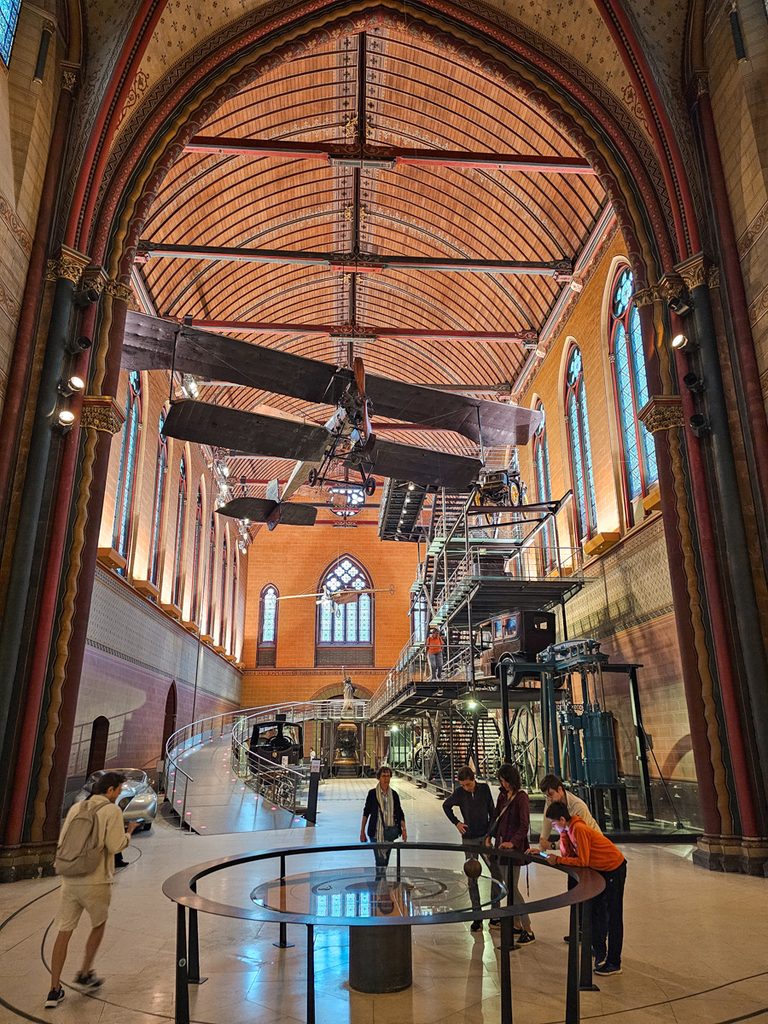
The Statue of Liberty stands on an elaborately decorated pedestal alongside this walkway, surrounded by the church’s soaring ceilings and stained-glass windows.
You’ll also find Foucault’s famous pendulum here, which was designed to demonstrate the rotation of the Earth, along with plenty of other fascinating inventions.
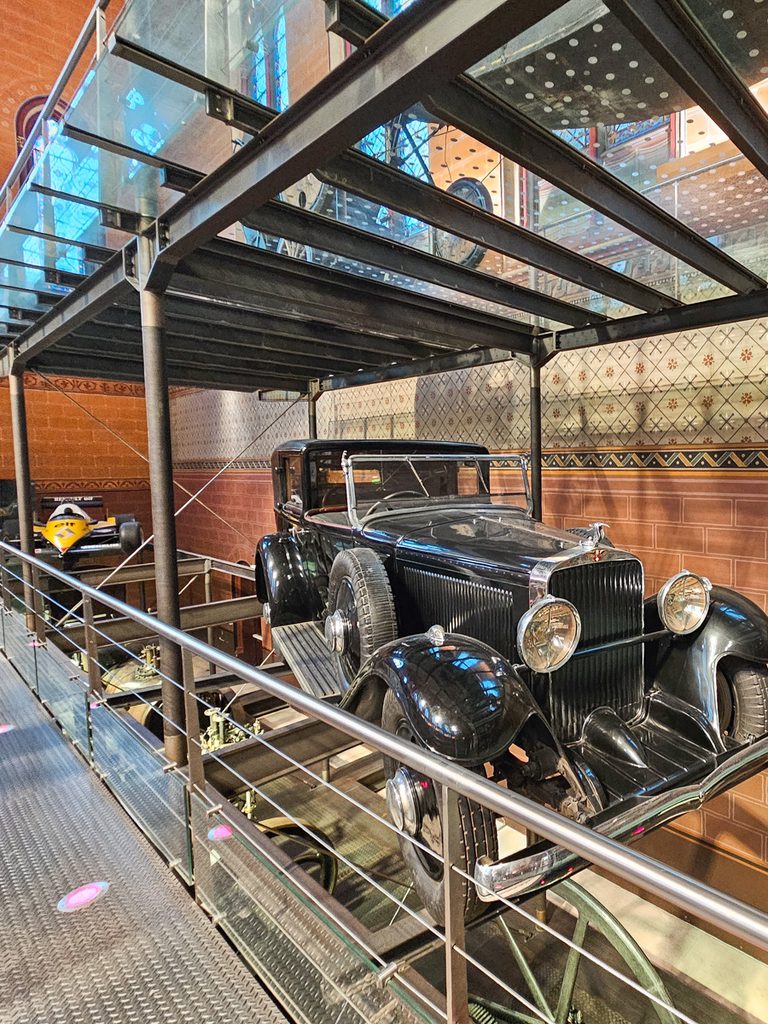
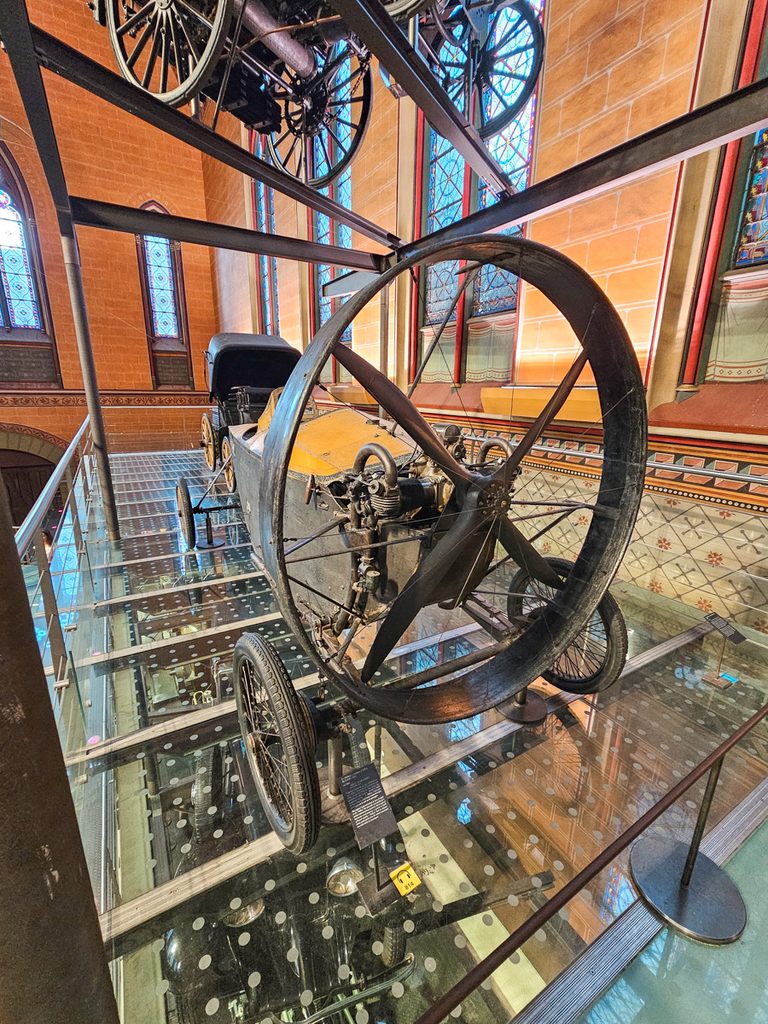
Interestingly, there was once another Statue of Liberty outside the museum, too. A bronze replica cast from Bartholdi’s model stood in the square near the entrance until 2021, when it was sent to the United States. After a temporary exhibition on Ellis Island, it was installed at the French ambassador’s residence in Washington, DC.
Special exhibition: From September 22, 2026, through August 1, 2027, the Musée des Arts et Métiers is hosting Lady Liberty: Sweat, Audacity, and Genius, an exhibition celebrating the 250th anniversary of American independence. Through videos, 3D installations, and recreated historical settings, it explores how Bartholdi’s enormous Statue of Liberty was constructed in Parisian workshops during the 19th century.
5. Flamme de la Liberté
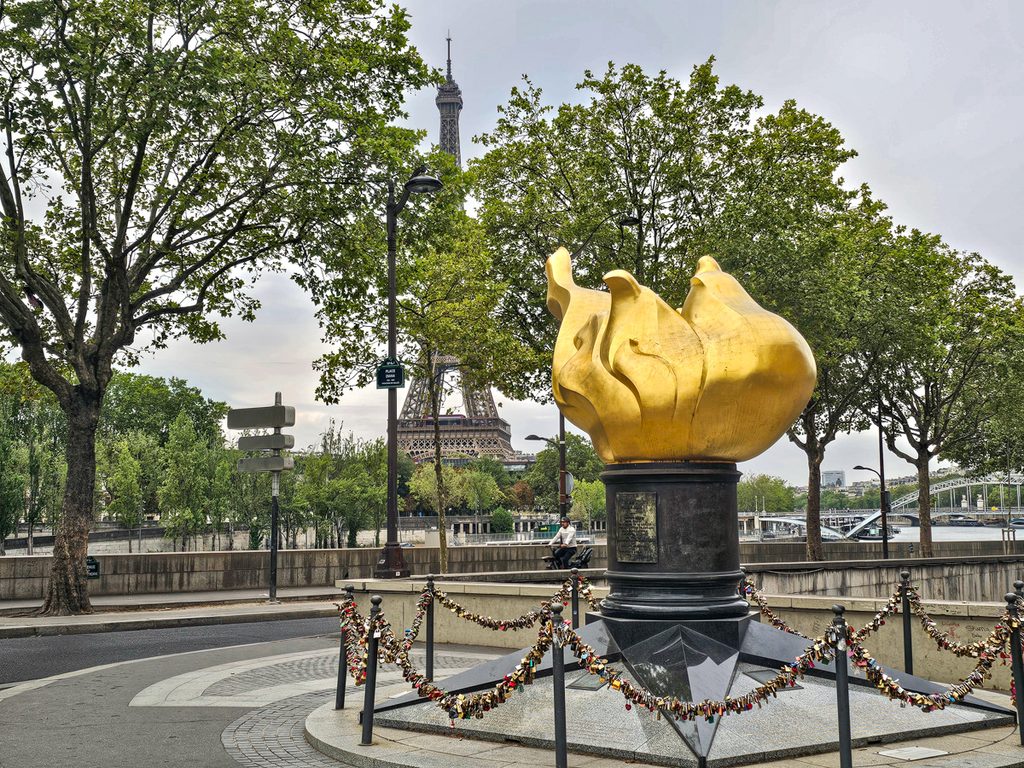
This next “version” of the Statue of Liberty is a little different from the others. Rather than a small-scale replica of the entire statue, the Flamme de la Liberté (Flame of Liberty) is a full-scale reproduction of the golden flame held in the Statue of Liberty’s torch.
You’ll find it near the Pont de l’Alma bridge, on the Right Bank of the Seine, not far from the Eiffel Tower. The flame is made from gilded copper and stands on a black-and-gray marble pedestal.
The monument was given to Paris in 1989 to celebrate French-American friendship and the 100th anniversary of the International Herald Tribune, an English-language newspaper published in Paris. It also recognized the restoration work that had recently been completed on the Statue of Liberty in New York.
But today, the Flame of Liberty is probably better known for a very different reason.
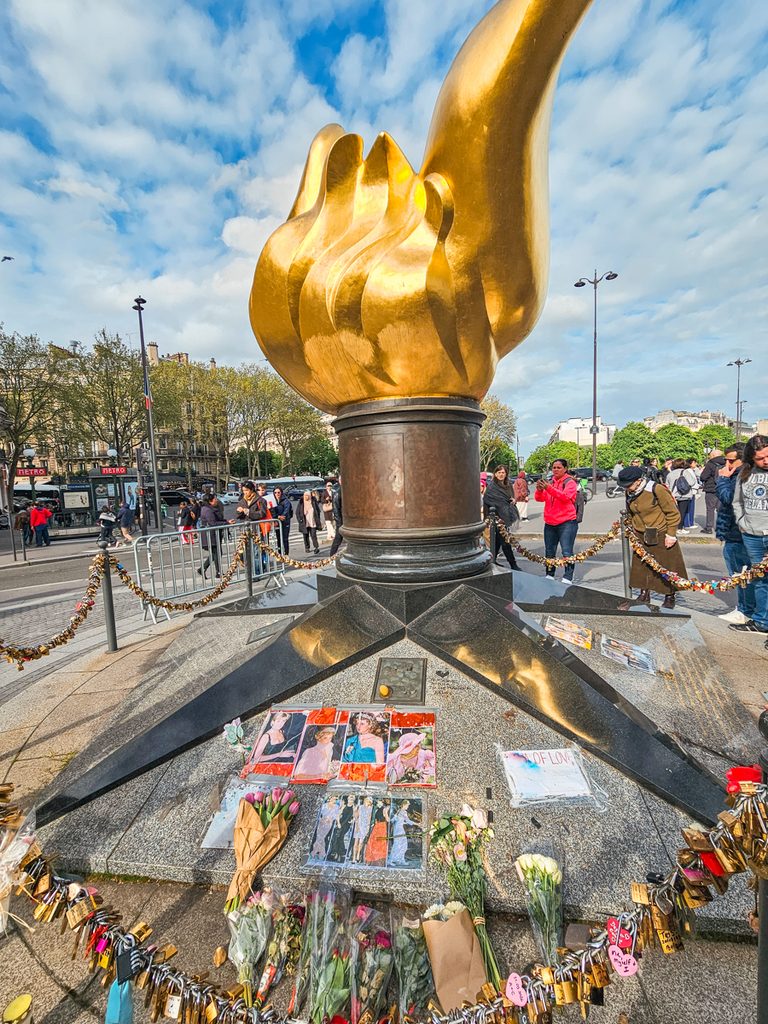
On August 31, 1997, Princess Diana died following a car crash in the tunnel beneath the Pont de l’Alma. Almost immediately, people began leaving flowers, photographs, and messages around the flame, turning it into an unofficial memorial.
That connection has continued for nearly 30 years. Visitors still leave tributes at the base of the monument, and in 2019, the square where it stands was officially renamed Place Diana in her honor.
6. Place Michel Debré
Of all the Statues of Liberty in Paris, this one is probably the hardest to spot! That’s because it’s actually a tiny figure hidden within a much larger sculpture in Place Michel Debré, in the 6th arrondissement.
The sculpture is called Le Centaure (The Centaur), and it’s a massive, nearly 16-foot-tall bronze statue depicting the mythical creature that’s half man and half horse. It was created by French sculptor César Baldaccini from 1983-1985.
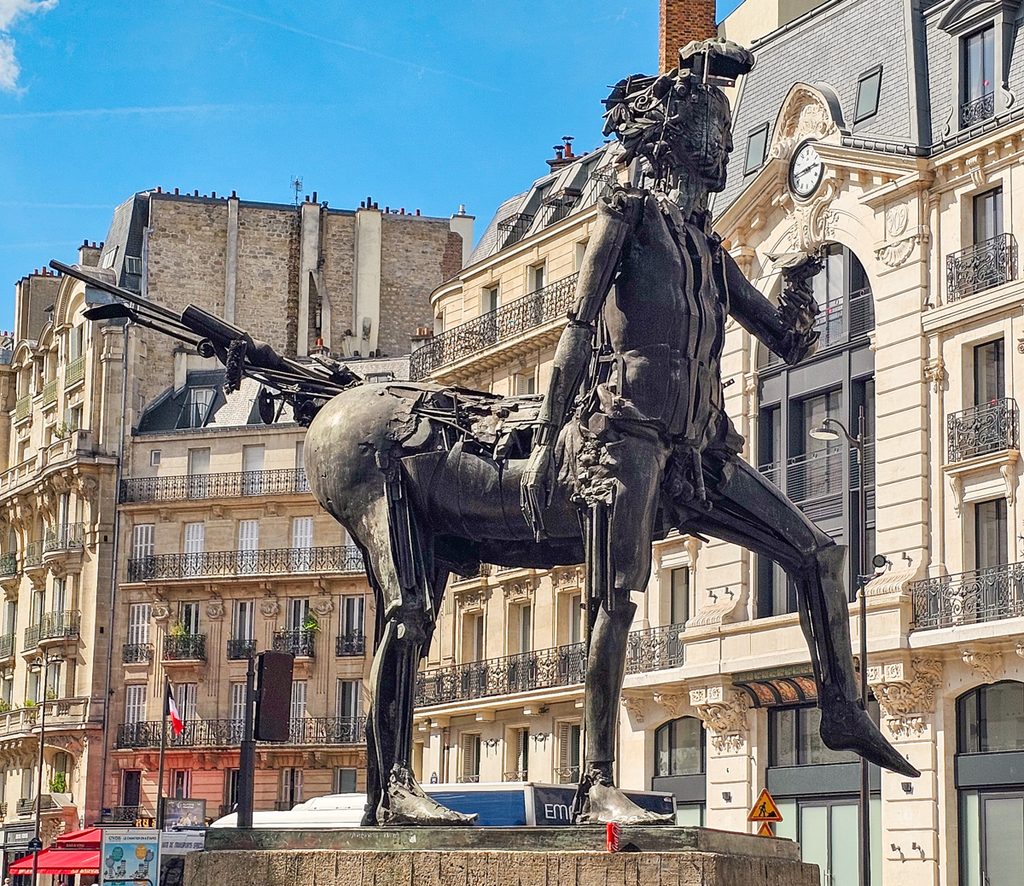
You’ll quickly notice this centaur isn’t quite what you’d expect. Its body is covered in metal plates and mechanical parts, giving it an almost robotic appearance.
This is because César was fascinated by the fact that the 20th century was the first era in which humans no longer depended on horses for transportation and everyday life. As cars and machines replaced horses, he wondered what this growing dependence on technology might mean for humanity. In Le Centaure, even the human half of the creature seems to be turning into a machine.
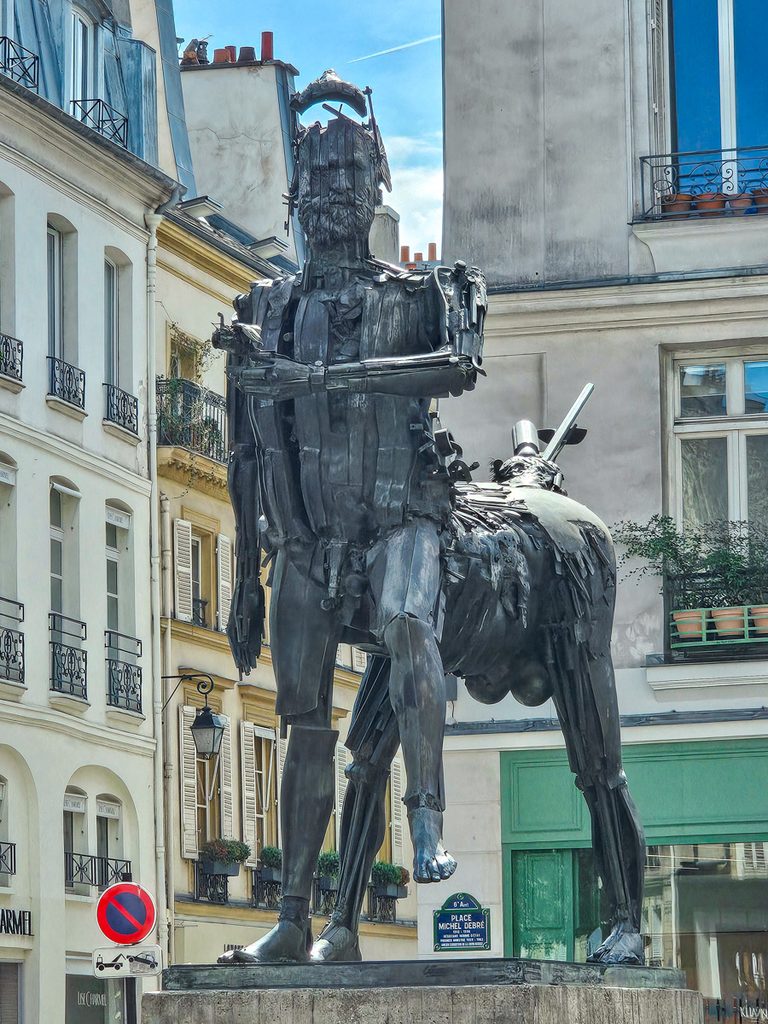
The sculpture was also created as a tribute to Pablo Picasso, whom César greatly admired. The centaur’s face is actually a self-portrait of César, while a second face representing Picasso looks upward from the top of its head.
And hidden among all those mechanical details is a miniature Statue of Liberty! You’ll find her embedded in the centaur’s armor at the top of his torso, just under his neck. She’s surprisingly easy to miss unless you know exactly where to look. The best way to spot her is to stand right at the base of the statue and look straight up.
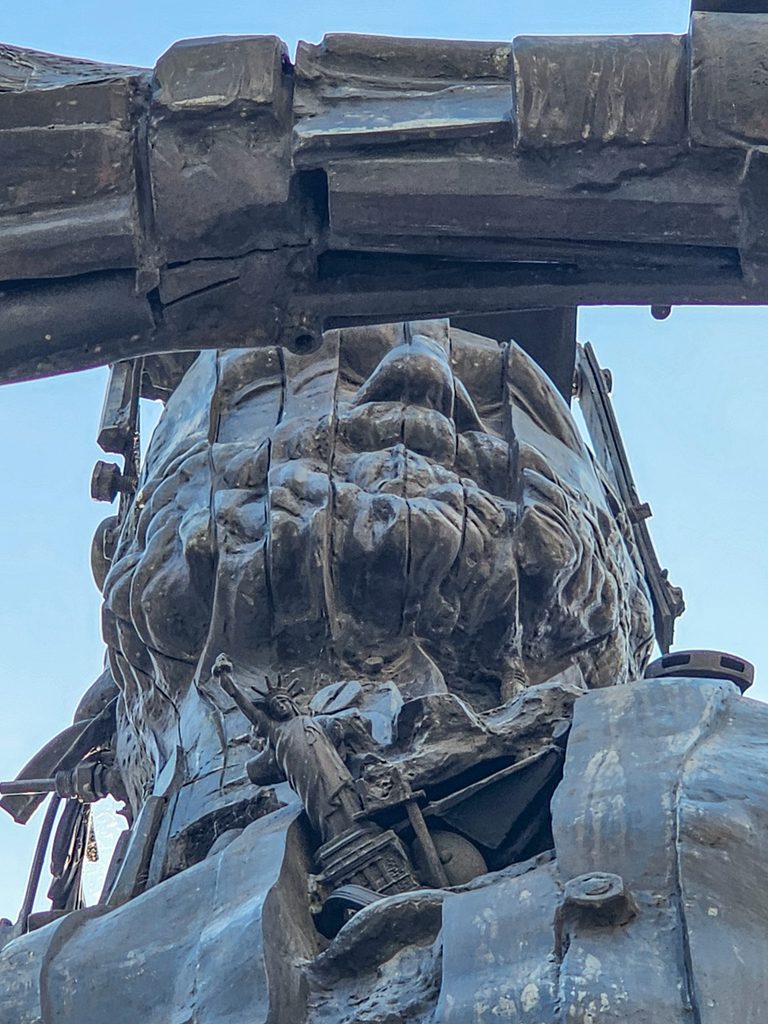
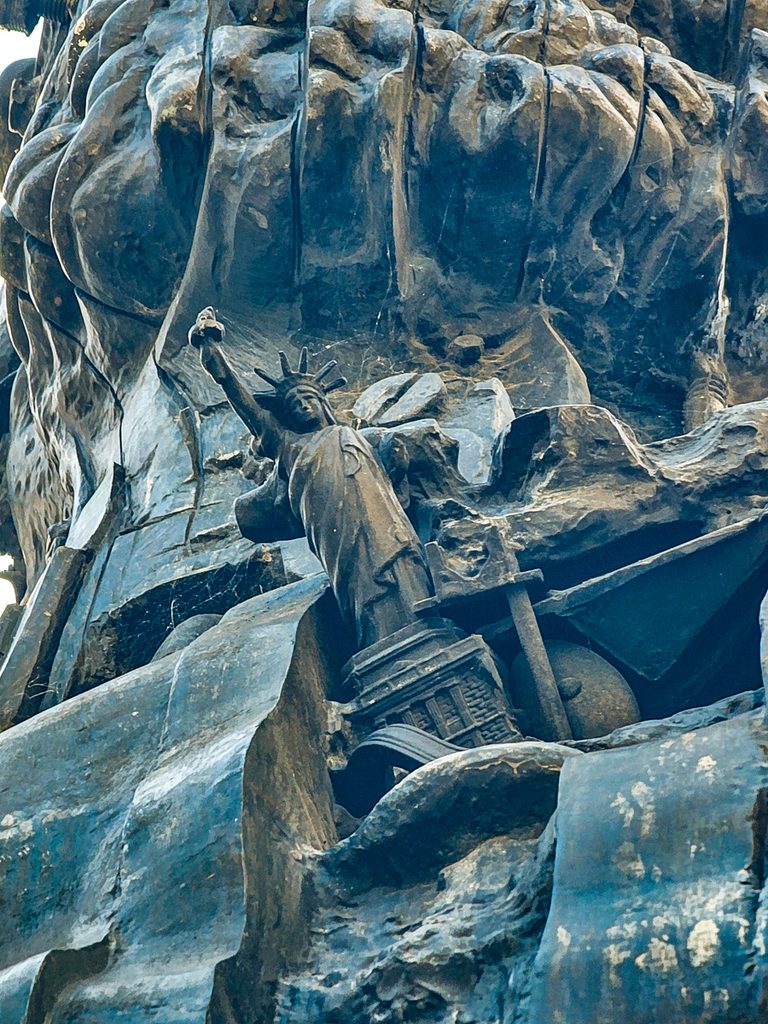
The little statue is thought to represent freedom, one of the ideals associated with Picasso’s work. You’ll also notice a dove in the centaur’s hand, another symbol of peace.
You’ll find Le Centaure at the intersection of Rue de Sèvres and Rue du Cherche-Midi, in the Saint-Germain-des-Prés area.
7. Bonus: Colmar
Paris isn’t the only place in France where you can find a Statue of Liberty! There are actually quite a few replicas scattered around the country, but one of the most significant is just outside the town of Colmar, in the Alsace region of eastern France.
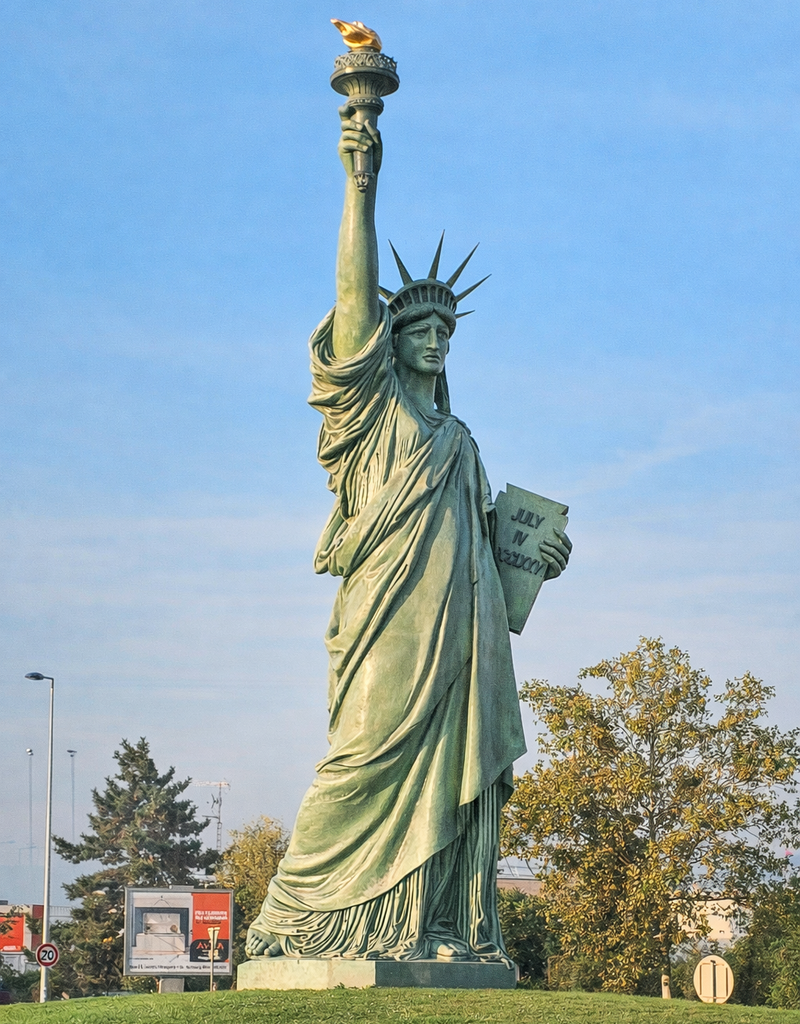
Colmar is best known for its colorful half-timbered houses and picturesque canals, but it’s also the birthplace of Frédéric Auguste Bartholdi, the sculptor of the statue himself.
To honor its most famous artist, Colmar installed a 39-foot-tall replica of the Statue of Liberty in 2004, to mark the 100th anniversary of Bartholdi’s death. The statue is made from resin and stands in the middle of a roundabout at the northern entrance to town, outside the historic center, which is certainly an unusual setting.
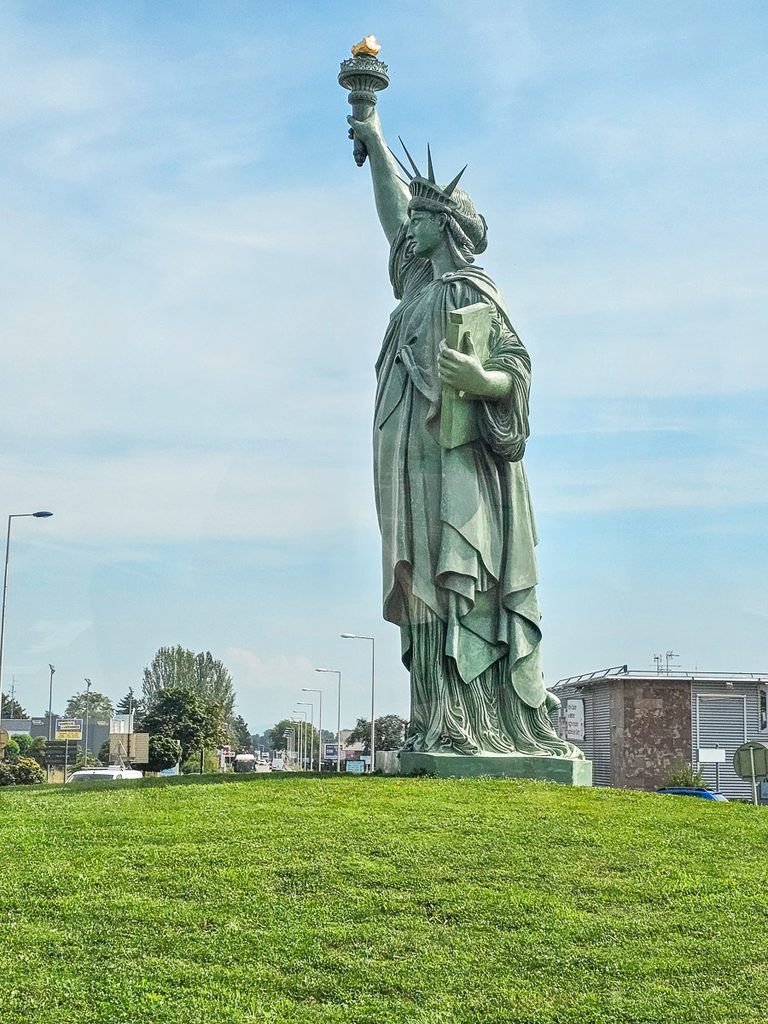
The statue was unveiled on July 4, a fitting date given the connection to American independence.
If you’re visiting Colmar, you can also stop by the Musée Bartholdi, located in the house where the sculptor was born. The museum is dedicated to his life and work, with sculptures, drawings, and models related to his many projects, including the Statue of Liberty.
The Wrap Up
The Statue of Liberty might be most closely associated with New York City, but it’s fun to discover just how many versions of this famous monument you can find around Paris.
Whether you’re visiting one of the city’s major museums or simply exploring its neighborhoods, keep an eye out for Lady Liberty. You might be surprised where she turns up!
