
10 Reasons Lyon Is the French City You’ve Been Overlooking


Lyon ended up being one of the biggest surprises of my France travels. Despite being the country’s third-largest city, it flies under the radar, especially with international visitors.
I expected to enjoy Lyon, but I was surprised by just how much I loved it. And the longer I was there, the more I wondered why people don’t talk about it more. Lyon is full of history, great food, fascinating landmarks, and neighborhoods that each feel completely different. It has the attractions and energy of a big city, but it still feels relaxed and easy to take in.
But beyond the general vibe, let’s get into 10 specific reasons Lyon absolutely deserves a spot on your bucket list.
1. The Old Town feels frozen in time

Vieux Lyon is one of the most atmospheric neighborhoods in France, bar none. The main streets, Rue Saint Jean and Rue de Boeuf, wind through the area with cobblestones, charming facades, and interesting architectural details.
One particularly unique part of Vieux Lyon are the traboules. These hidden passageways cut straight through buildings and link the streets, and were originally used to carry silk and water around the city.

A few are open to the public today, and walking through them feels like discovering your own little secret.
2. Two rivers and two hills mean constant views and scenic walks
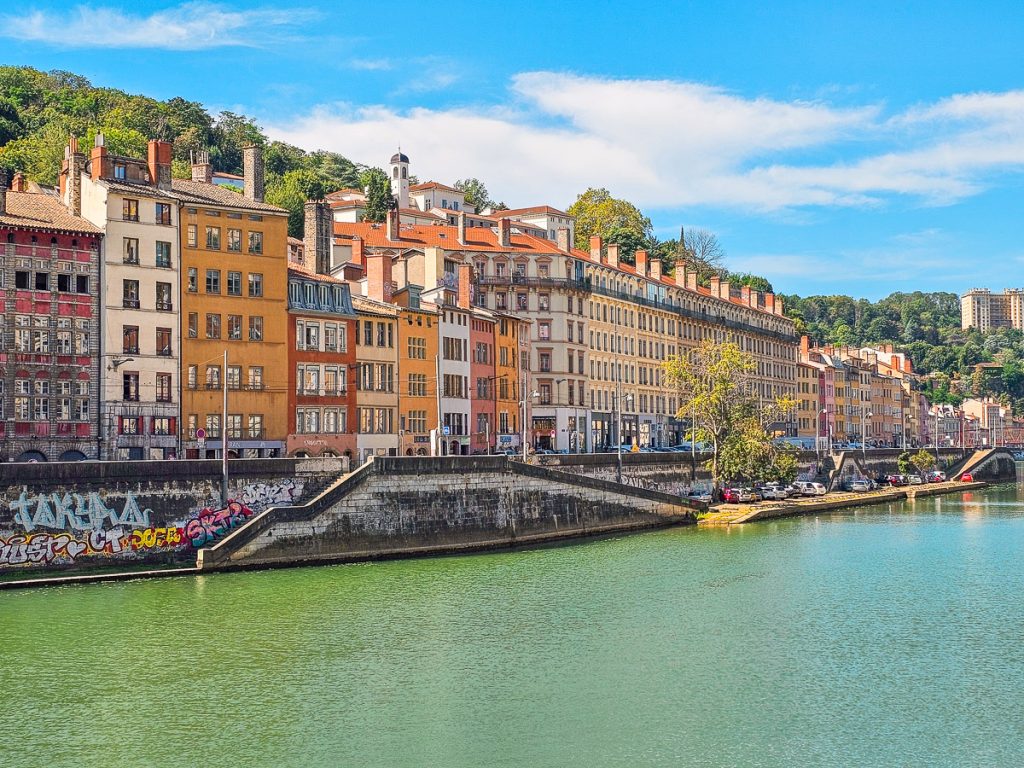
Lyon is shaped by both its rivers and its hills. The Saône and Rhône run through the city and meet at the southern end, while Fourvière Hill and Croix-Rousse rise above the rivers, which means you’re almost always walking with some kind of view. Bridges, rooftops, water, and hills all mix together to make some incredibly scenic walks.
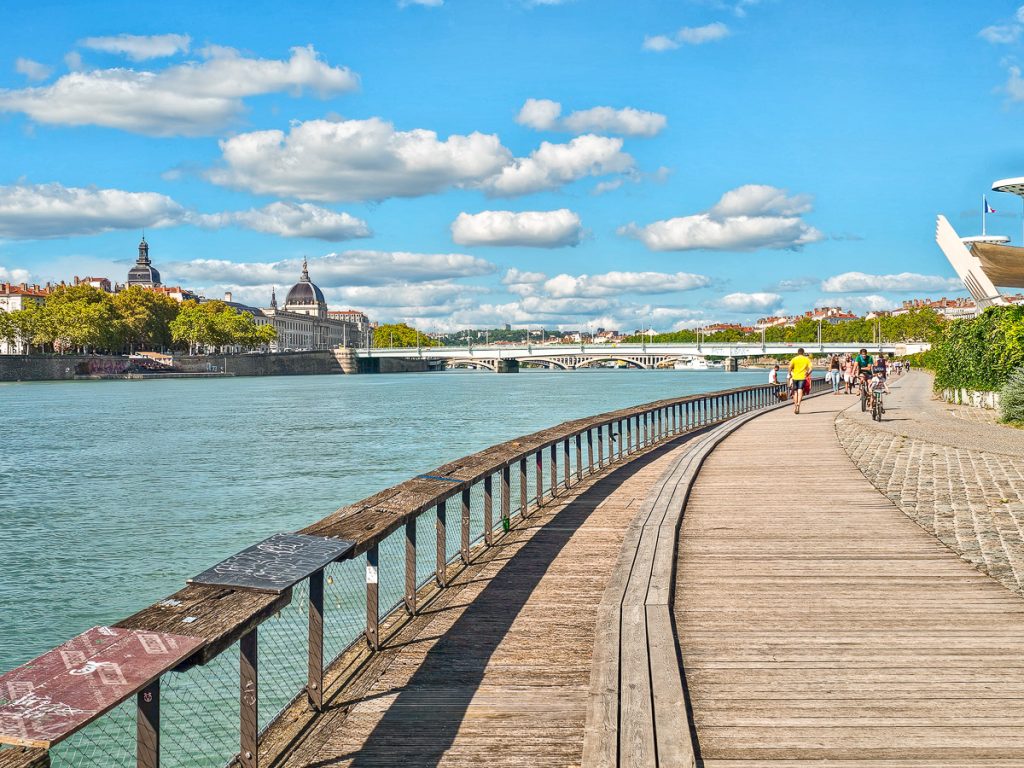
I especially loved walking along the Saône between Passerelle Saint Georges and Pont de la Feuillée. It’s a really picturesque stretch along the water, with great views looking at the colorful riverfront buildings and up toward Fourvière Hill the whole way.
3. The Fourvière Basilica is one of the most jaw-dropping churches in France

The Fourvière Basilica sits high on Fourvière Hill and is visible from all over Lyon. From the outside, it almost looks like a fortress watching over the city, and its origins are tied to a vow made during the Franco-Prussian War.

But it’s the inside that really stopped me in my tracks. The mosaics, carvings, and marble cover nearly every surface, and my jaw genuinely dropped when I walked in. It’s easily one of France’s most stunning churches.
You can also visit the underground crypt and the small chapel next door, then step out onto the terrace behind the basilica for sweeping views over Lyon’s rooftops and both rivers.
4. You can climb onto the basilica rooftop for a totally different perspective

The Fourvière Basilica rooftop tour was easily one of my favorite things I did in Lyon. You start by heading into the church’s upper levels, where you can look down into the basilica and see the mosaic ceilings up close, which alone is pretty amazing.
From there, you step out onto the roof, right beside the towers, carvings, and statues, and suddenly you’re seeing the building in a completely different way. The views from the top are fantastic, looking out over the basilica and the city spread out below.
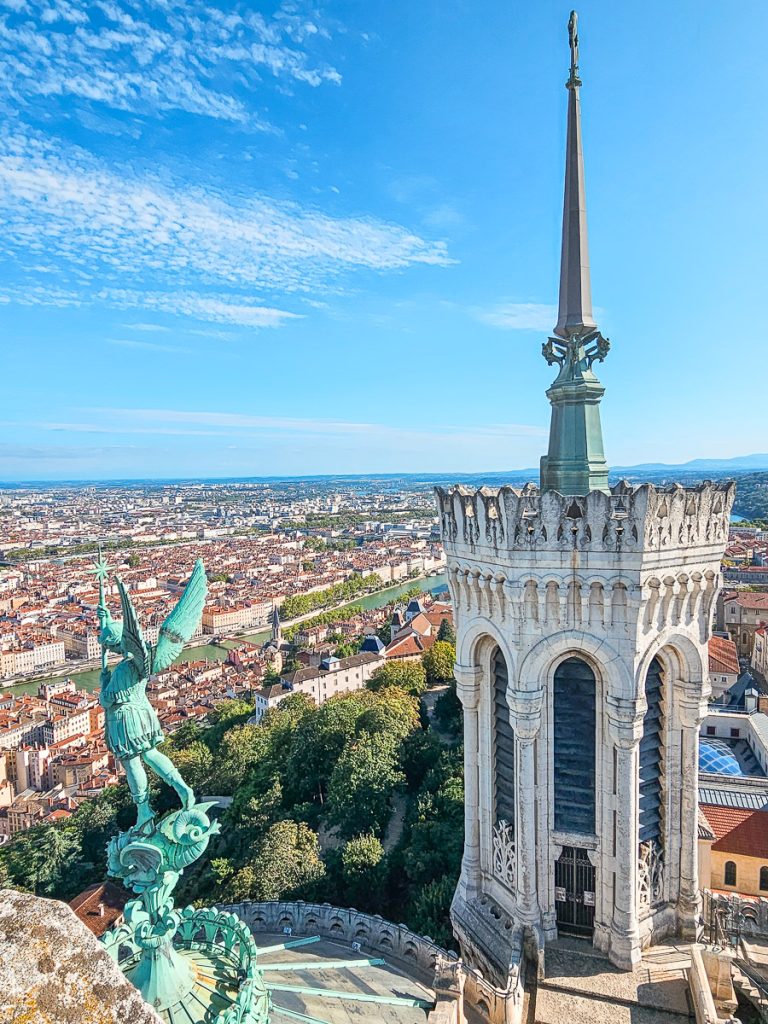
Even though I already mentioned the basilica on this list, this experience feels so unique that it really does deserve its specific mention.
5. Lyon is packed with Roman history you can actually walk through

Lyon began as the Roman city of Lugdunum, and you can still explore that ancient world today. The Lugdunum Museum has an incredible collection of mosaics and artifacts, and two stone amphitheaters, the Roman Theater and Odeon, are just outside. You’re free to wander the steps and stand on the stages where performances once took place.

A smaller amphitheater, the Amphitheater des Trois Gaules, is tucked away in the Croix-Rousse neighborhood. Even though you can only see it from the street, it’s another reminder of just how much Roman history is buried in Lyon.
6. Lyon’s food scene lives up to the “gastronomic capital of France” reputation
Lyon’s reputation as the gastronomic capital of France really does hold up. The city’s food scene is built around bouchons, traditional Lyonnais restaurants that serve hearty, comforting dishes in a relaxed, no-frills setting.
Think salade lyonnaise, sausages, and quenelle de brochet, along with plenty of classic, filling plates that feel very tied to the region. My favorite specialty, though, was the Lyon’s tarte aux pralines rouges dessert – absolutely delicious!

One place you really shouldn’t skip is Les Halles de Lyon, the covered market packed with local specialties, cheese counters, pastry stands, and places to grab a bite.
No matter where you go in France, regional food is a big part of the experience, but it’s especially true in Lyon.
7. The murals and frescos turn regular streets into open-air galleries
Lyon is known for its murals, and there are over 100 of them scattered throughout the city. That said, you don’t need to see all of them to appreciate what makes Lyon’s fresco scene special.
Several frescos are easy to visit and definitely worth your time, and they turn regular streets into something much more interesting.

The Mur des Canuts, the largest painted wall in Europe, fills an entire building and depicts daily life in the city’s silk-producing neighborhood.
The Fresque des Lyonnais covers two sides of a building and shows famous local figures going about everyday life, almost like you’re looking at a real street scene.
I also really liked the Bibliothèque de la Cité, painted to look like a giant bookshelf.

8. The Presqu’île feel grand and elegant without being stuffy
The Presqu’ile is a historic neighborhood of central Lyon, full of wide boulevards, elegant 19th-century buildings, and some really beautiful, grand squares.

For example, Place des Terreaux sits between Lyon’s Fine Arts Museum and City Hall, with a dramatic, large scale fountain as its centerpiece.
Place Bellecour is massive (it’s the largest pedestrian square in Europe) and because of that, it feels bright and open. You’ll almost certainly end up walking through this square as you explore the city.
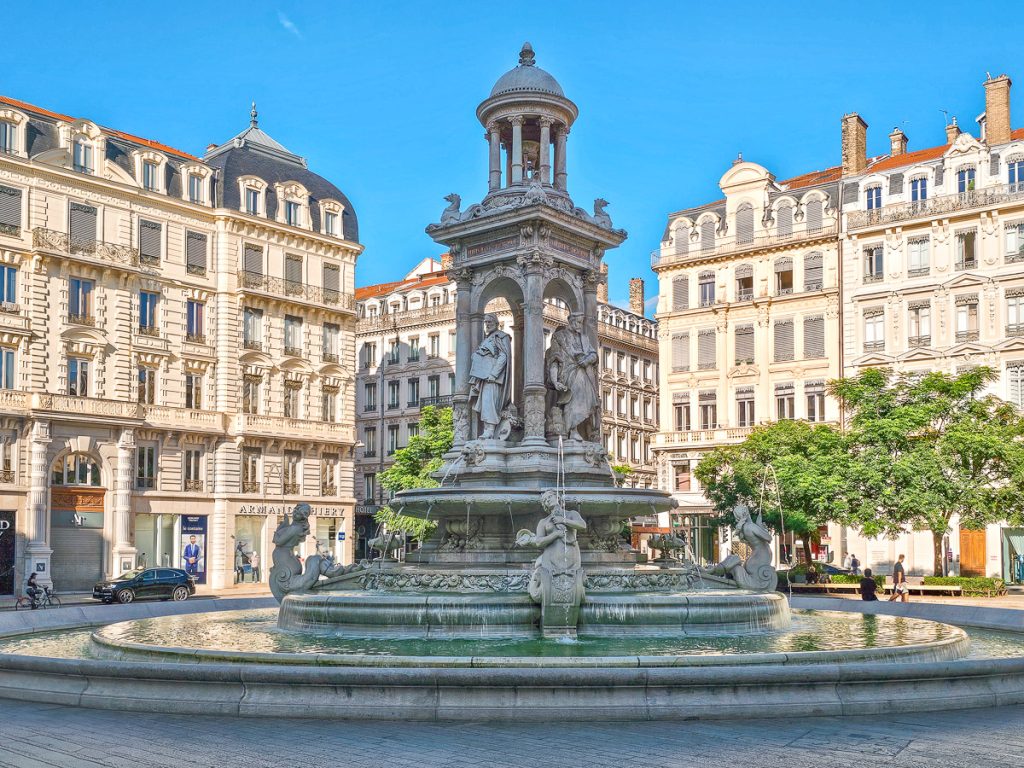
And Place des Jacobins is a perfect example of Europe being extra simply because it can, with a gorgeous, sculpted fountain in the middle of an already beautiful square.
9. Croix-Rousse adds a different side of history with silk workers and a village vibe

Croix-Rousse feels noticeably different from the rest of Lyon. It has a strong connection to the city’s silk industry, and you can still see it in the tall buildings that were designed to house weaving workshops.
The Maison des Canuts is a quick, interesting stop if you want a better sense of how important silk was to the neighborhood and to Lyon as a whole.

One of the nicest ways to explore the area is along the Montée de la Grande Côte, a steep but charming pedestrian street that winds through the neighborhood.
The Mur des Canuts (mentioned in the fresco section) is nearby and well worth seeing, and you’ll also find traboules here that were originally used by silk workers to move materials around the hill.
10. Lyon works beautifully for 3–4 days and makes a great base for side trips
Lyon is easy to get around and compact enough that it never feels overwhelming. Spending three to four days here gives you time to explore the neighborhoods, see the main sights, and actually enjoy the food scene without feeling rushed.
It also makes a great base if you want to branch out beyond the city. A few easy options nearby include:
- Annecy for lake views, canals, and mountain backdrop
- Chamonix for dramatic mountain scenery and access to the Mont Blanc area (for hiking or skiing)
- Beaujolais wine region for rolling vineyards, charming villages, and wine tastings

It’s a nice way to add variety to your trip without constantly moving from place to place.
Final Thoughts
Lyon ended up being one of my favorite cities in France. I loved that there was always something interesting nearby, but it never felt overwhelming. It’s a place I’ve happily returned back to (and is just as good on subsequent visits). I’m confident you’ll enjoy your visit, too!
