
10 Incredible Chateaux That Show Why The Loire Valley Is So Special

The Loire Valley is one of France’s most magical regions, filled with 300+ chateaux that seem straight out of a storybook.
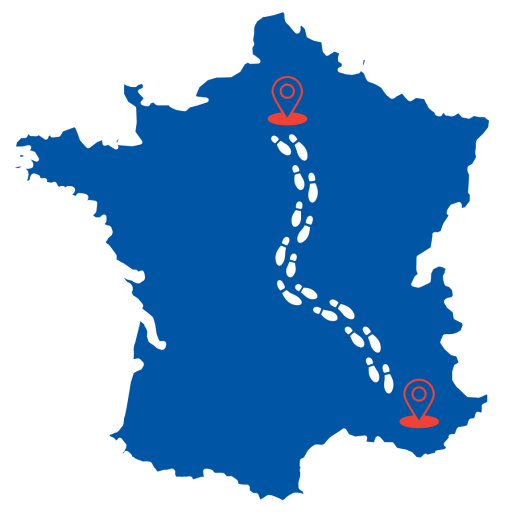
The Loire is about 250 km/150 miles southwest of Paris, in a wide stretch of countryside shaped by the Loire River and its tributaries. The area is filled with forests, rolling farmland, and small towns.
A big reason for this concentration of châteaux is that, during the Renaissance, the French royal court didn’t stay put. Kings moved from château to château throughout the year, traveling with an enormous entourage that included nobles, advisors, servants, guards, and suppliers.
The Loire made that lifestyle possible. The river helped move goods, the land could support thousands of people, and the surrounding forests were ideal for hunting.
And while some of the castles here date back to Medieval times, the Renaissance chateaux are what truly shine. Royal dwellings moved from protected fortresses designed to stave off invaders, and moved to elegant palaces designed to impress.
These are 10 of the most stunning chateaux of the Loire Valley you won’t want to miss. I’ve also included 4 additional options of places to visit at the end of the post, as well as some practical information and tips for your visit.

Want to Stay in a Chateau?
Don’t just tour the castles by day, you can actually stay in a castle during your Loire Valley trip:
Chateau De Rochecotte: Beautiful property that feels like a step back in time
Relais de Chambord: Upscale outbuilding adjacent to Chambord Castle, with incredible veiws
Château de Jallanges: Historic property with spa and gardens
1. Chenonceau
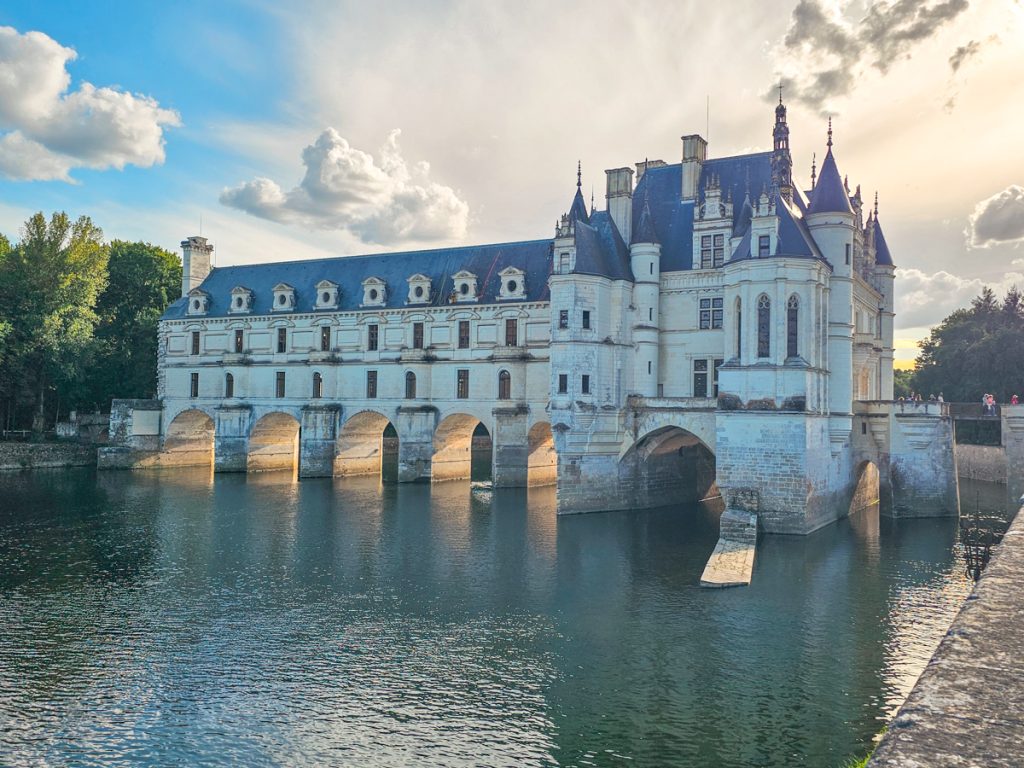
It’s not the biggest, but Chenonceau is one of the most unique castles in the world, and it is the darling of the Loire Valley. The design and setting are instantly recognizable, with the château stretching straight across the River Cher.
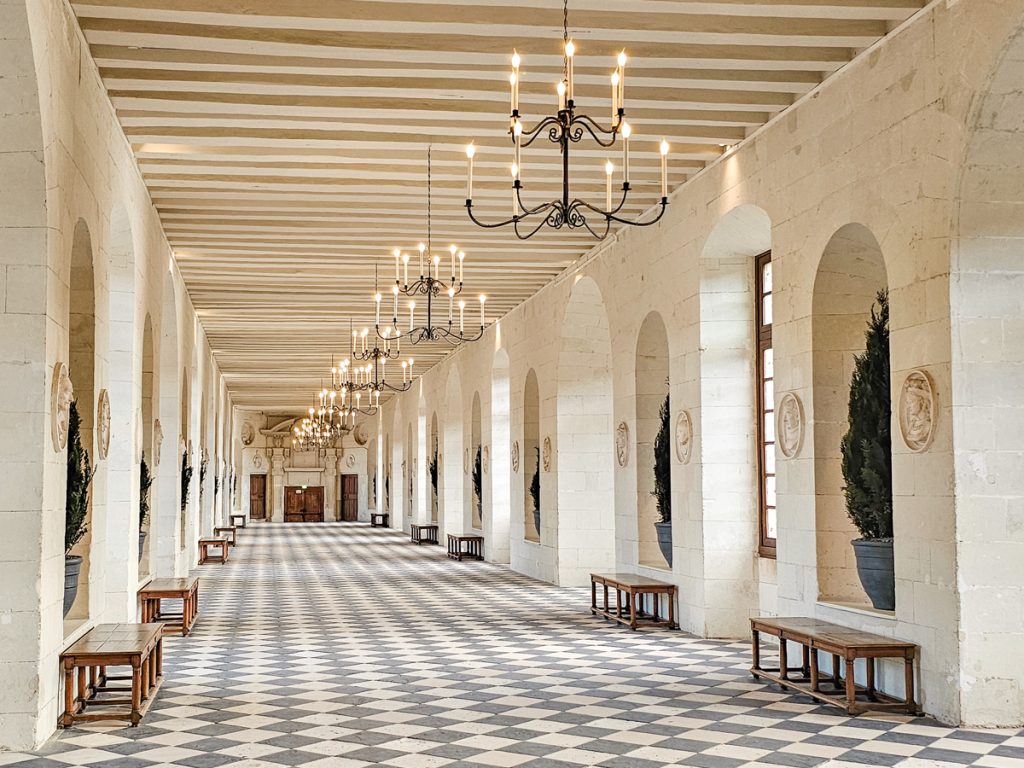
The entire portion that crosses the river is dedicated to the Gallery, a long hall with black-and-white checkerboard floors, arched windows and alcoves overlooking the water, and chandeliers running the full length. It’s easily one of the most beautiful rooms in any Loire castle.
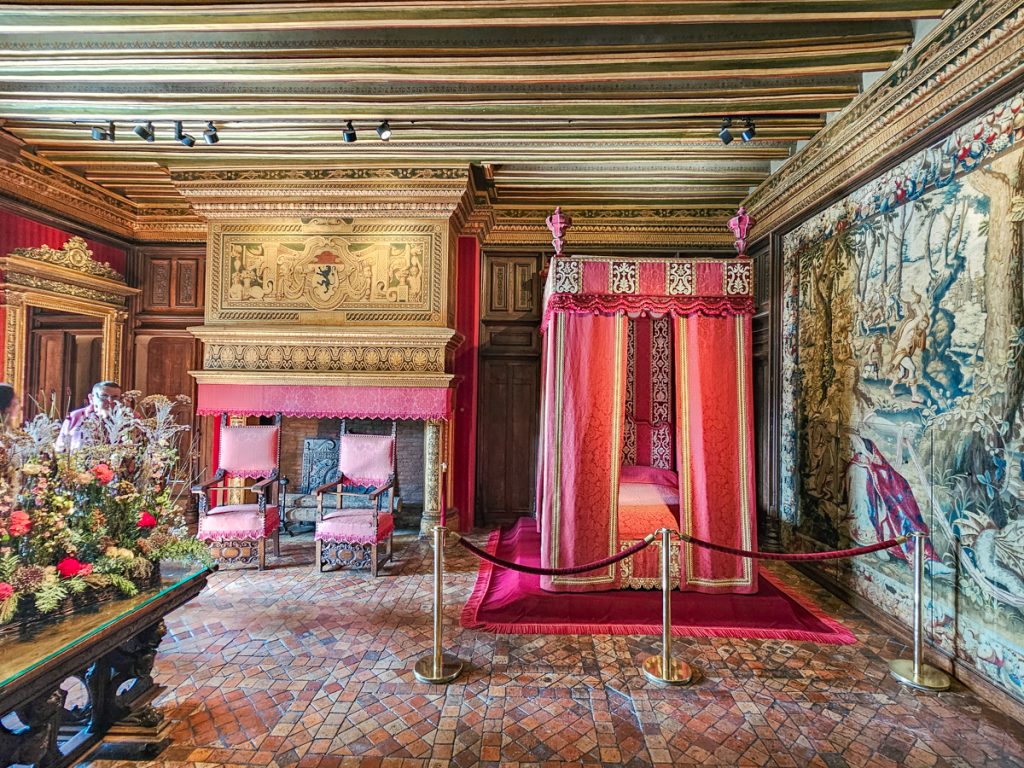
Chenonceau is often called the “Ladies’ Château,” thanks to the many influential women who shaped it over the centuries, including Catherine Briçonnet, Diane de Poitiers, and Catherine de’ Medici. Their impact is still very visible in both the layout and the overall feel of the château.
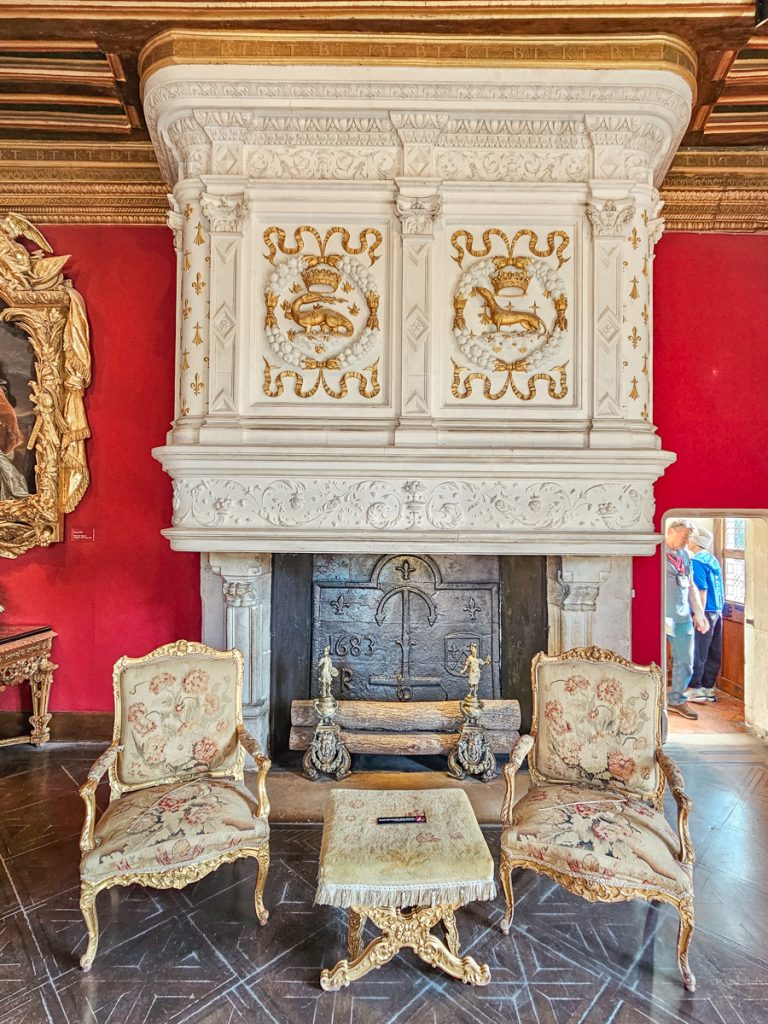
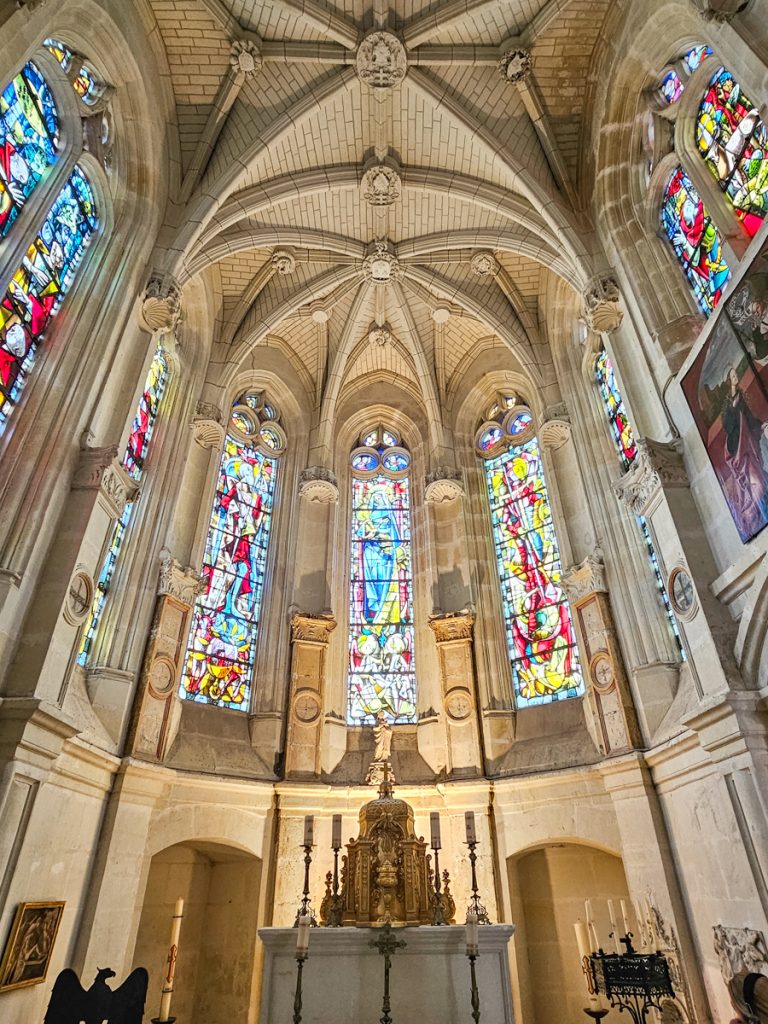
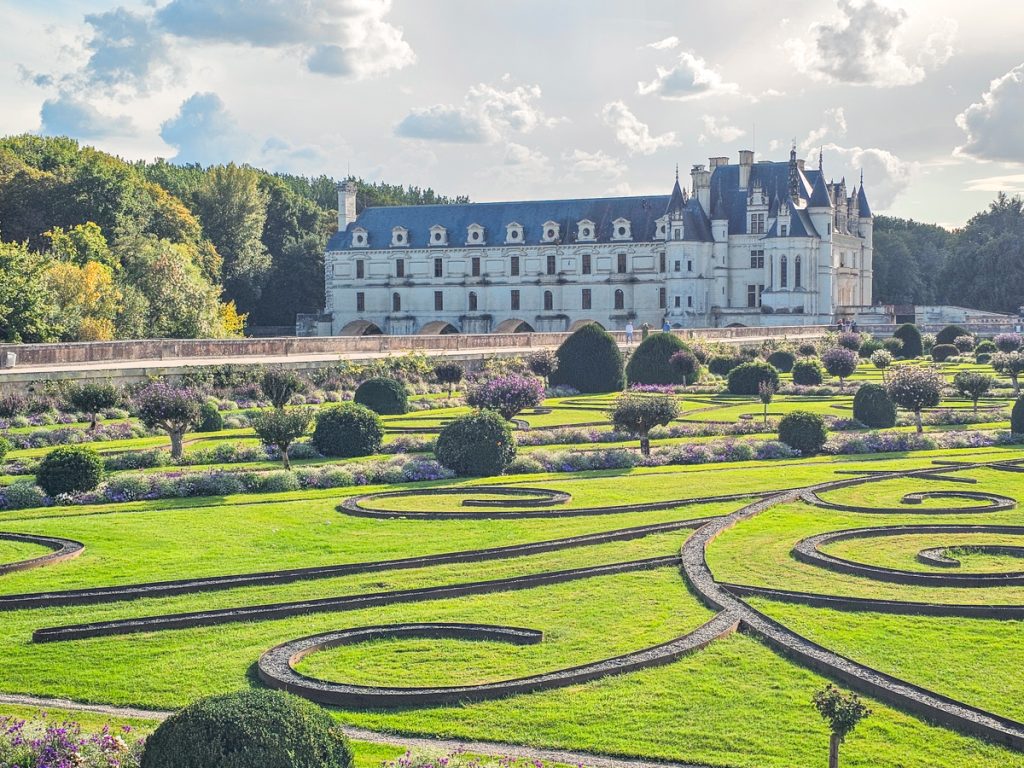
Beyond the chateau itself, the gardens are incredible. Diane de Poitiers’ garden sits on the east side of the château and Catherine de’ Medici’s on the west, each laid out in a very formal, geometric style.
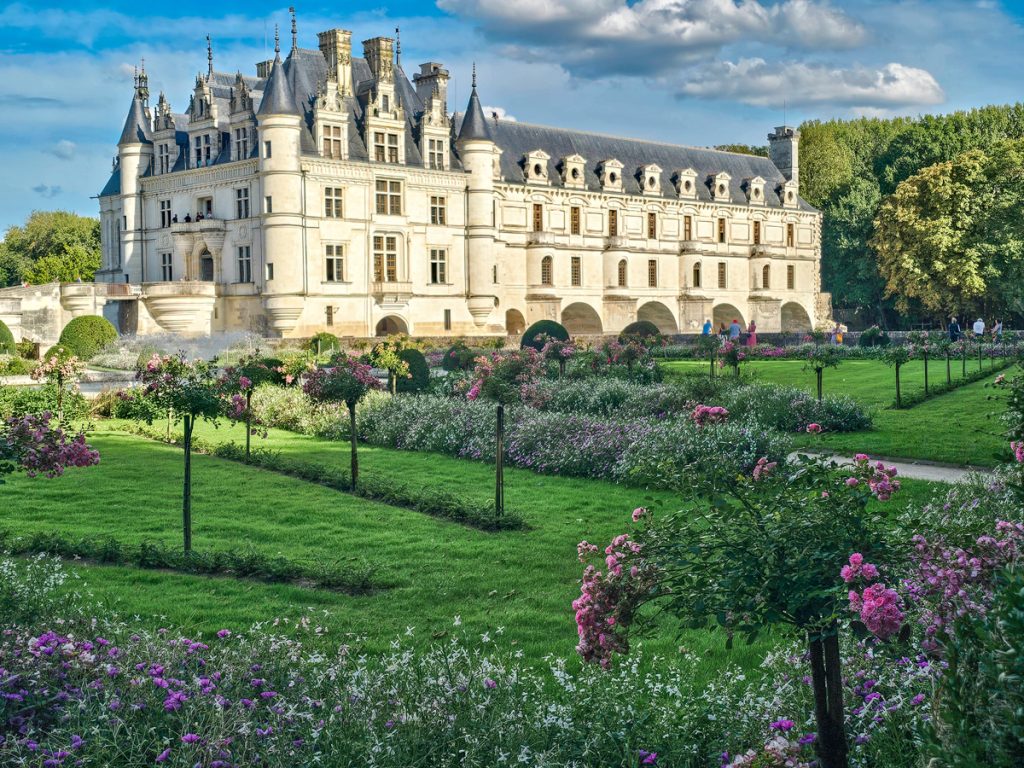
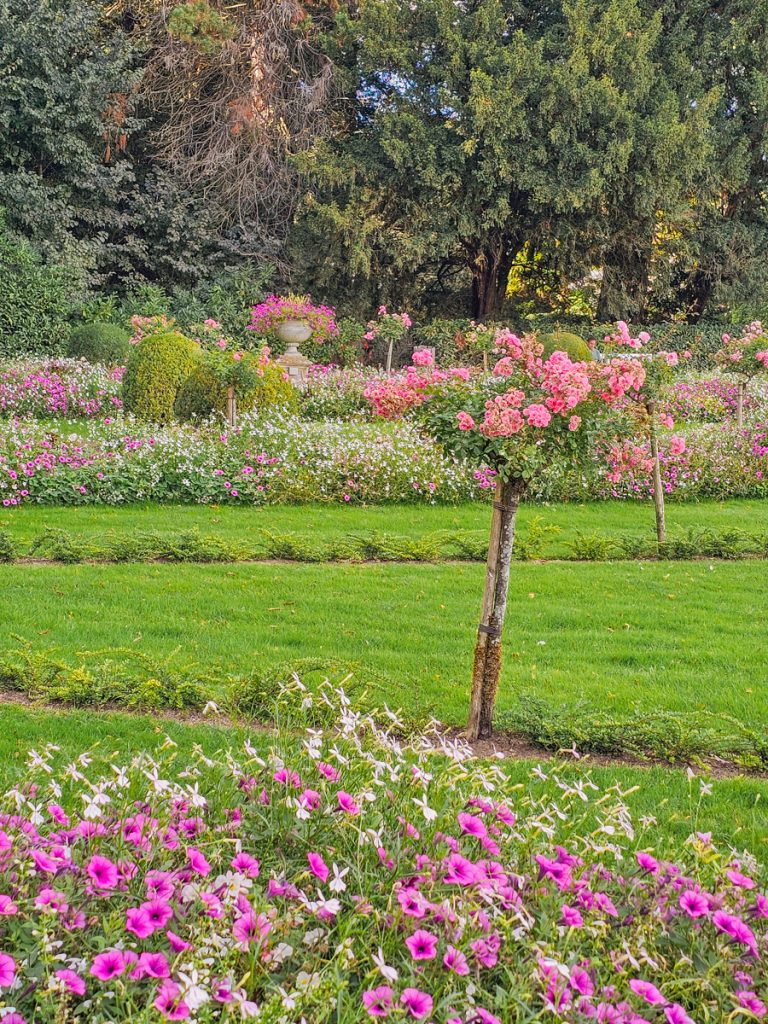
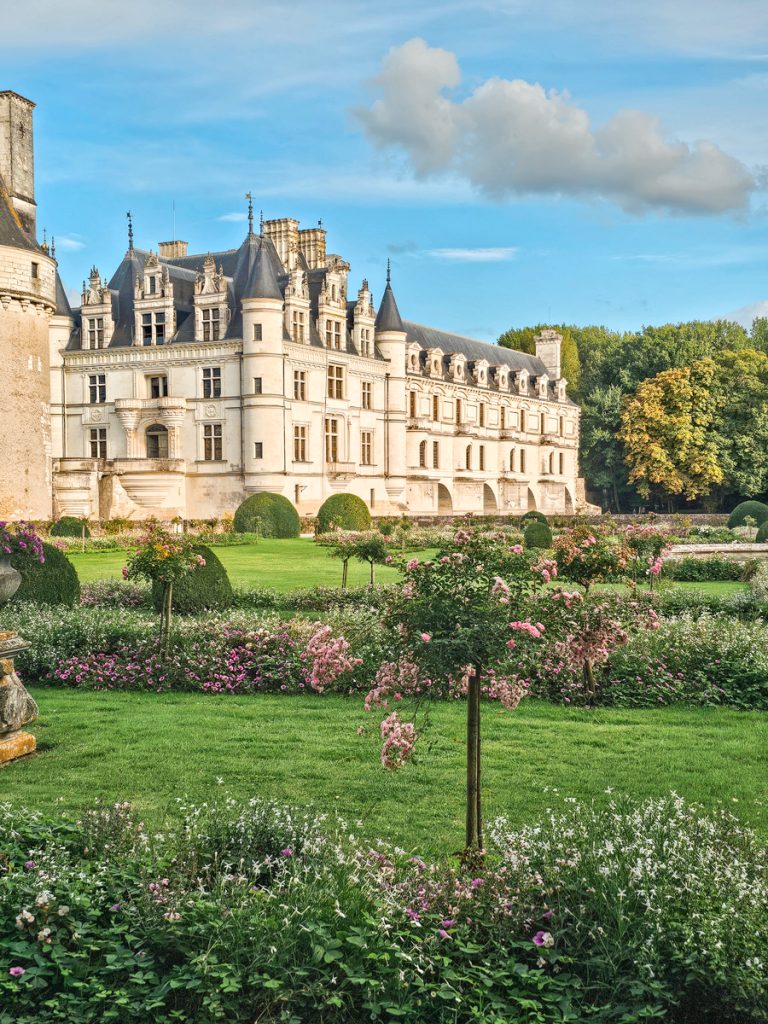
I slightly preferred the Medici garden, with its pink and white flowers, but the Diane de Poitiers garden is also lovely. I particularly enjoyed the raised walkway around the perimter of this garden too.
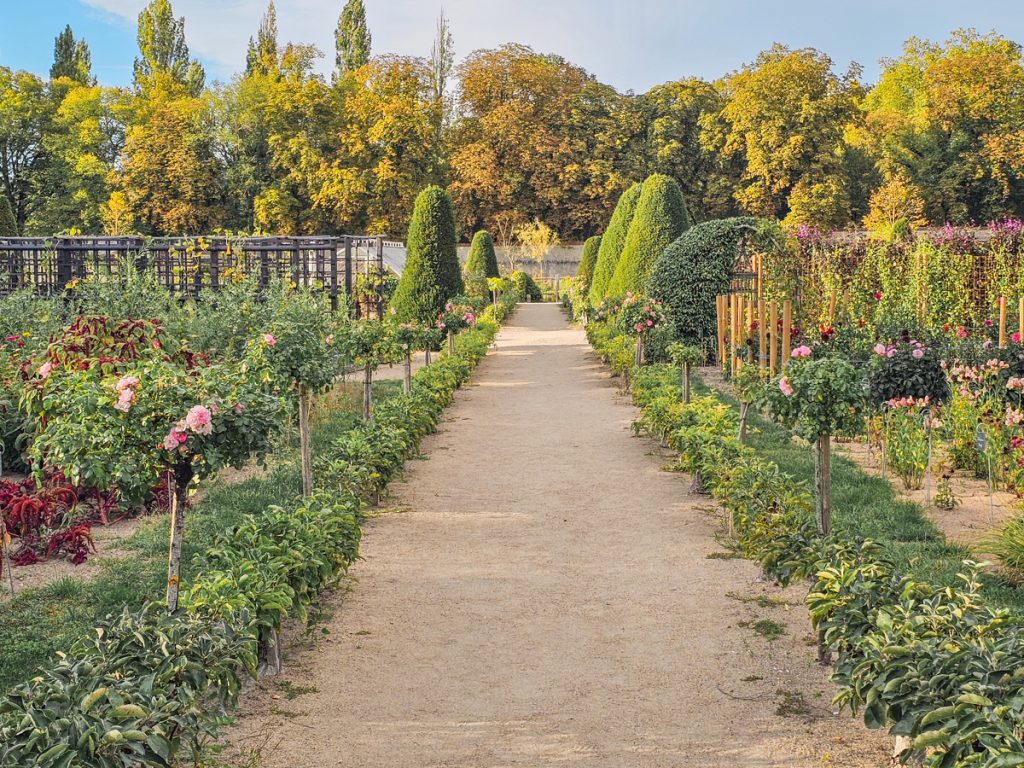
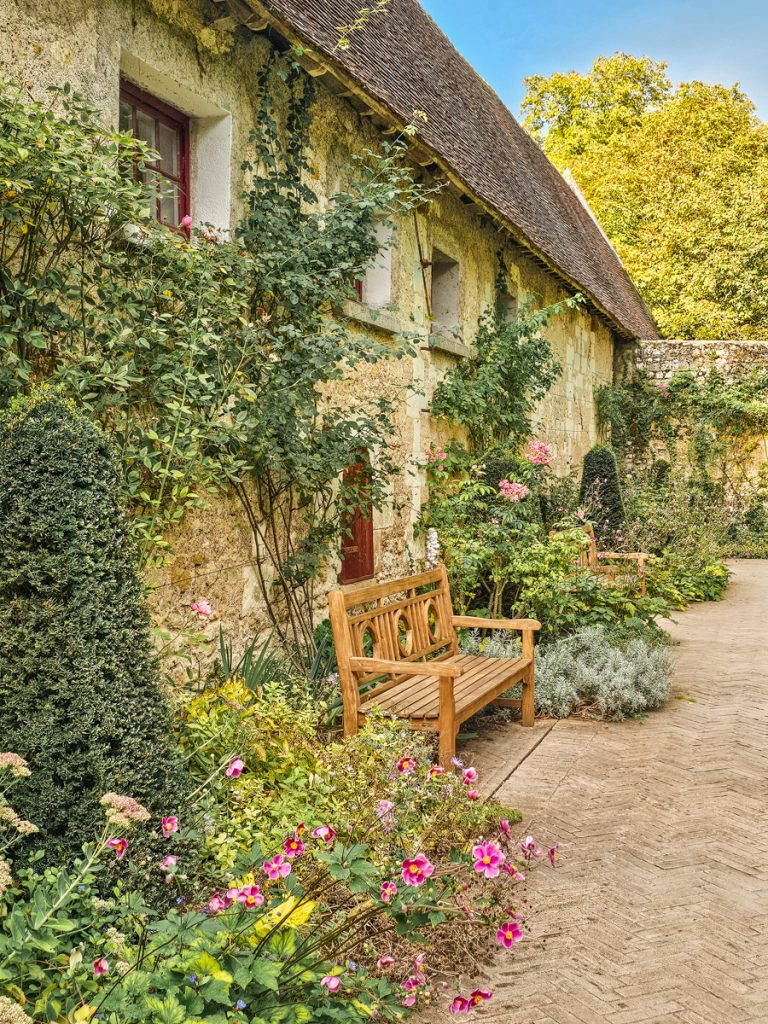
There are also other, less formal gardens and cute outbuildings around the estate – there’s a lot to explore and discover.
This is one of the Loire’s most famous and visited castles, and it can get busy. I’d recommend visiting either first thing in the morning, or last thing in the evening. Plan for 2-3 hours to leisurely explore the castle + grounds, as they are extensive and lovely!
For an unforgettable experience, take a hot air balloon ride that flies you over Chenonceau Castle (or another chateau, depending on weather conditions).
I did this hot air balloon ride on my last trip to the Loire, and seeing the castle reflected in the river from above was one of the most memorable experiences I’ve had in France.
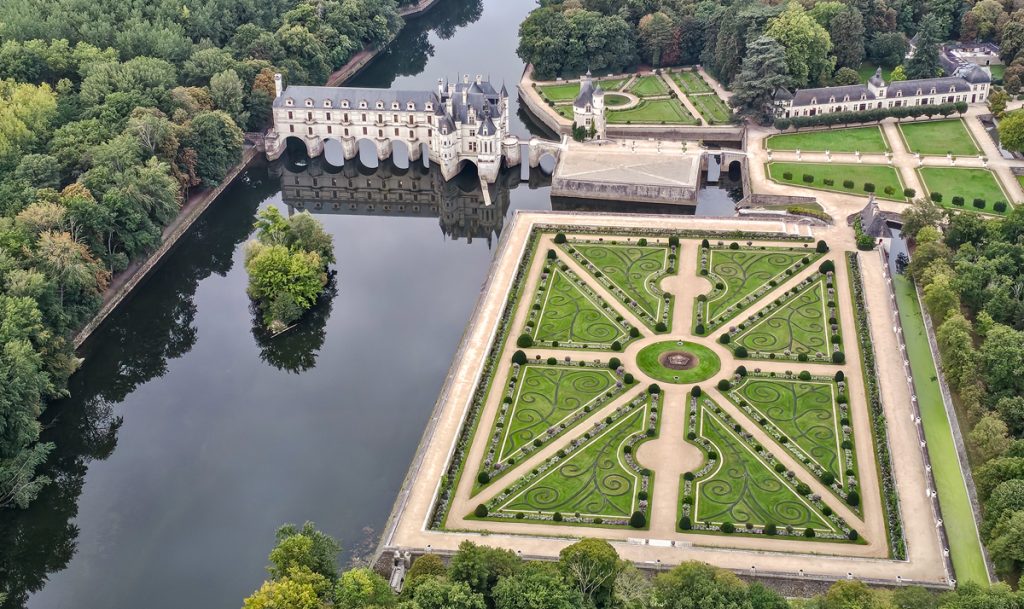
The Loire is often cited as one of the best places to go hot air ballooning in the world (and in fact, hot air balloons were invented not far from here), and I can’t recommend it enough.
👉Read more about my experience
👉Check prices and availability for the hot air balloon ride we did
2. Chambord

Chambord was built by François I in the early 1500s. It was originally designed as a hunting lodge, which feels almost funny once you see it in person – it’s absolutely enormous.
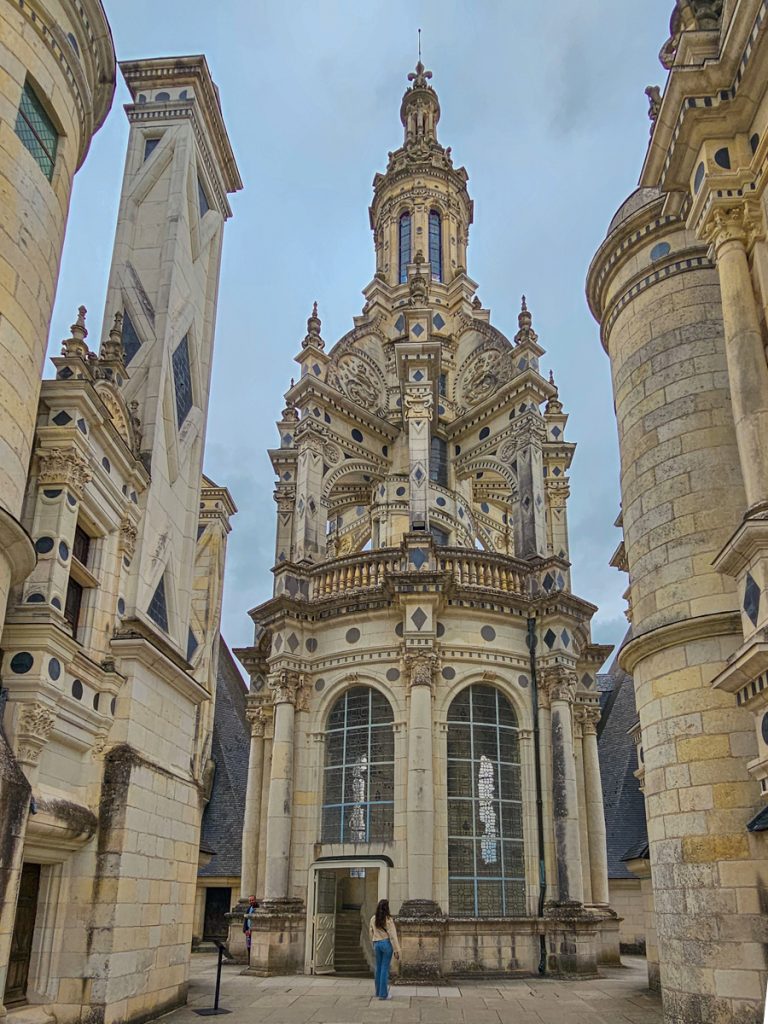
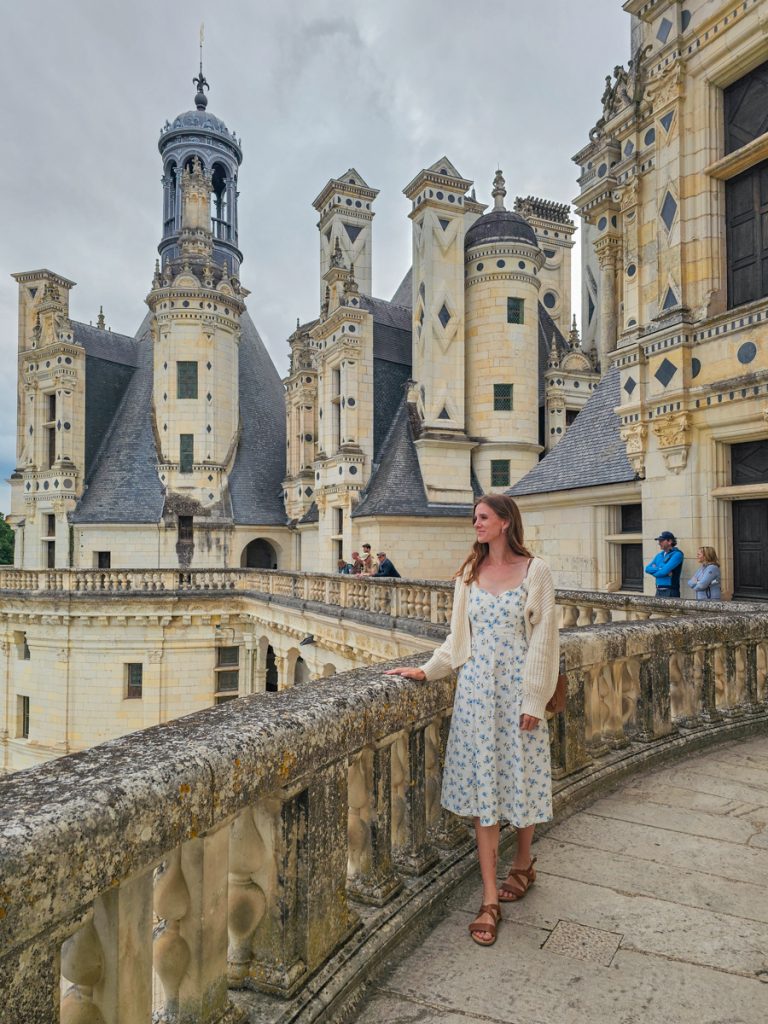
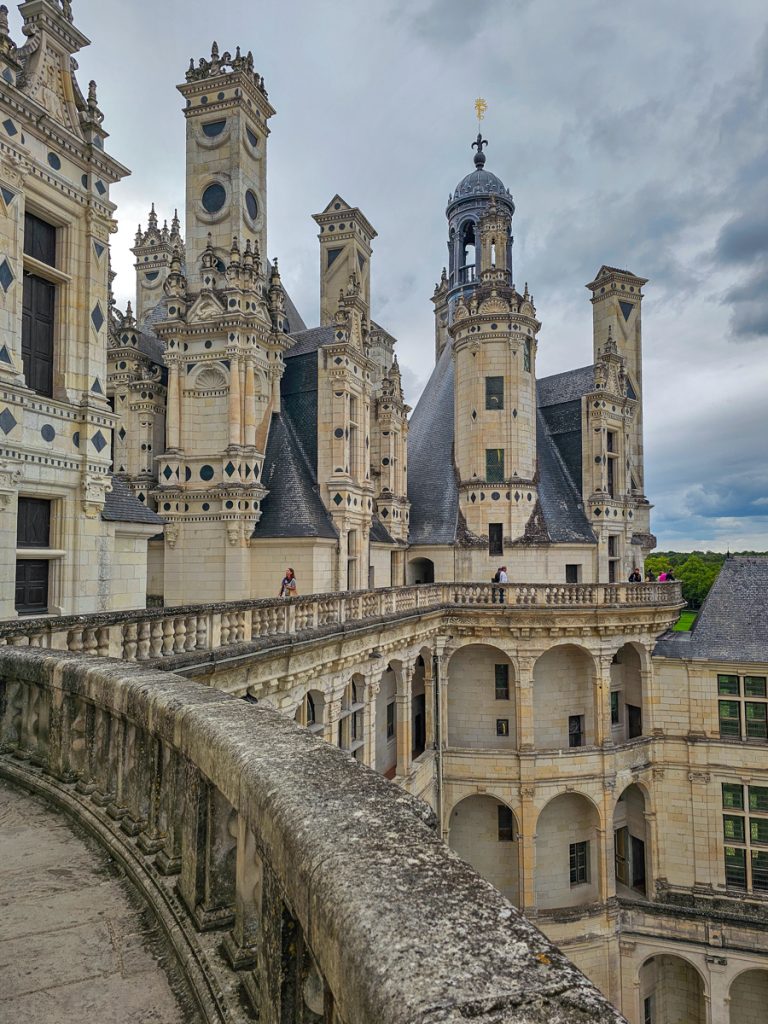
Photos don’t come close to capturing the scale, and the longer you stand in front of it, the more unreal it feels. The rooftop has been compared to a city skyline, and the resemblance really is striking.
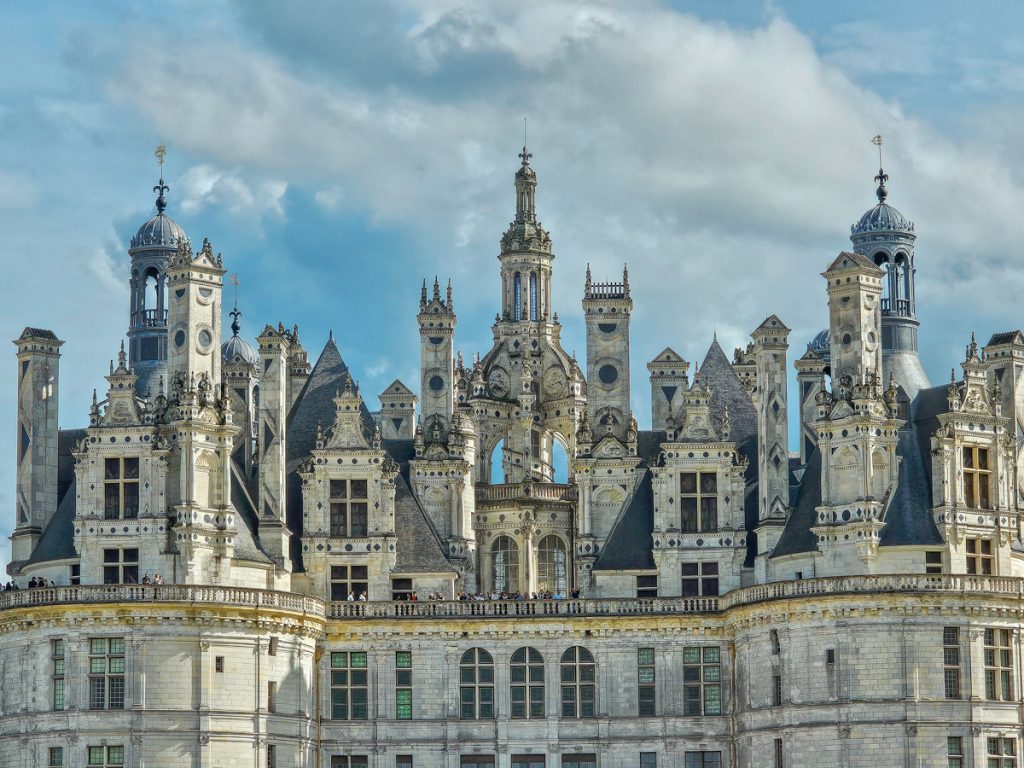
The interiors are interesting, and while some rooms are beautifully done, overall they don’t compete with some of the other decorative interiors in the Loire.
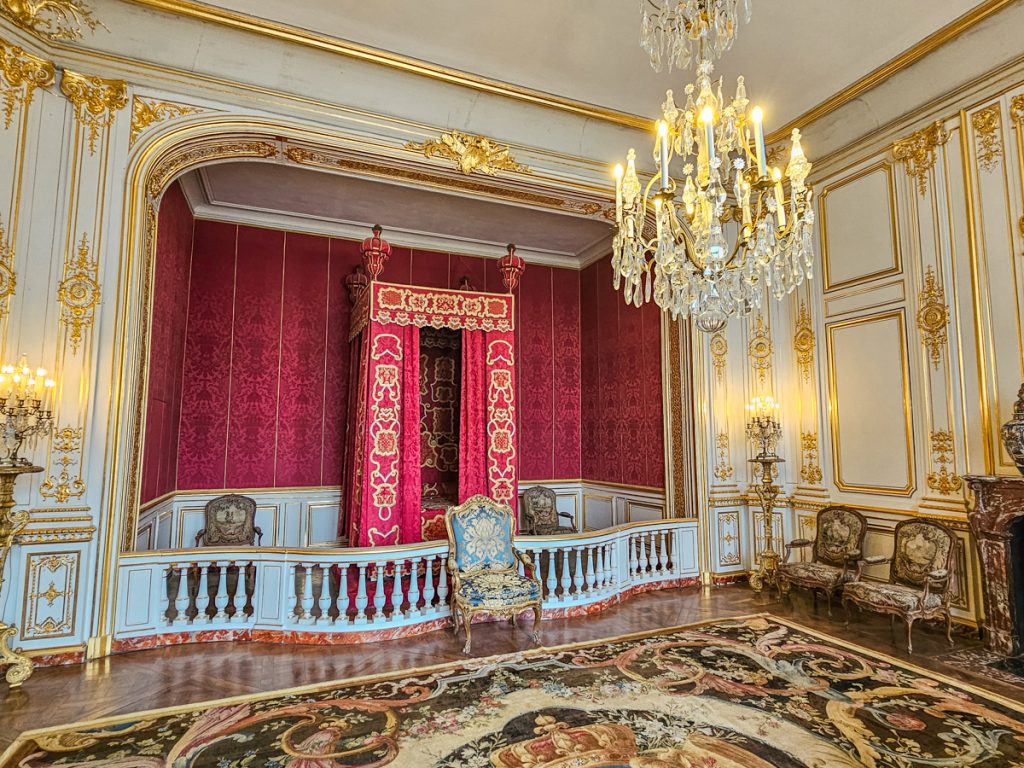
What is impressive is the sheer number of rooms and how easy it is to lose your sense of direction. The layout encourages wandering; in fact, it was intentionally designed to feel disorienting.
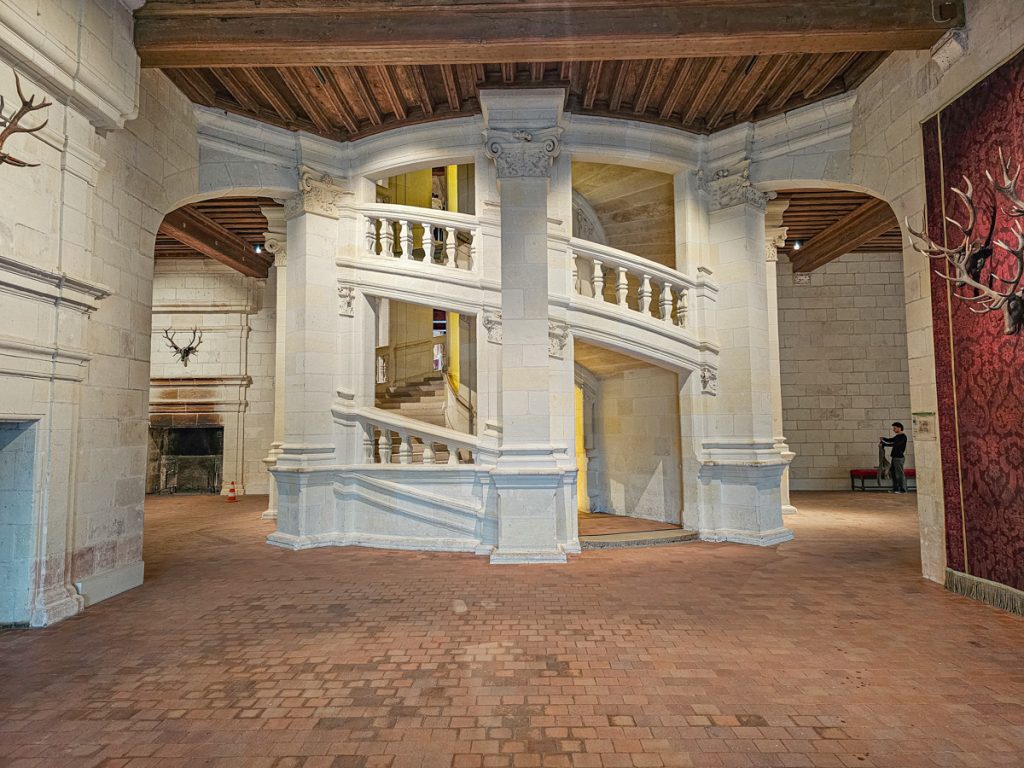
At the center of castle is the famous double helix staircase, often attributed to Leonardo da Vinci. It’s a clever design where two staircases spiral together, allowing people to go up and down without ever crossing paths.
My very favorite part of Chambord, though, was the rooftop terraces. You can walk right along the roofline, up close to the chimneys, with wide views over the grounds.
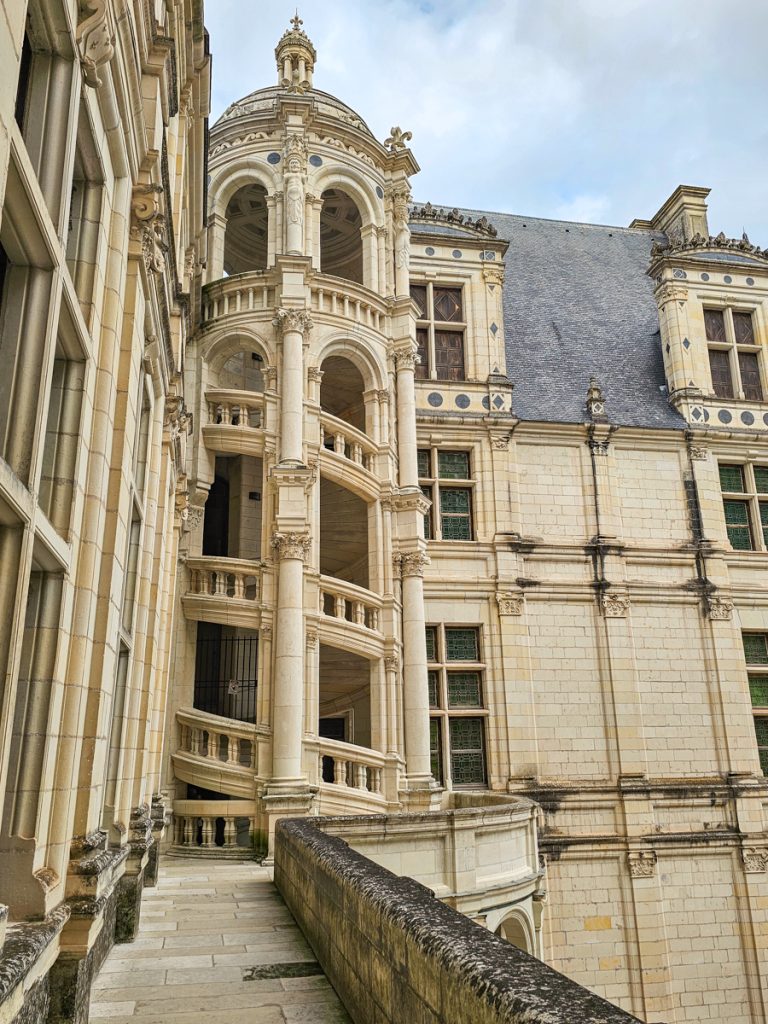
The grounds themselves are massive. If you have more time, you can even rent golf carts to explore farther out.
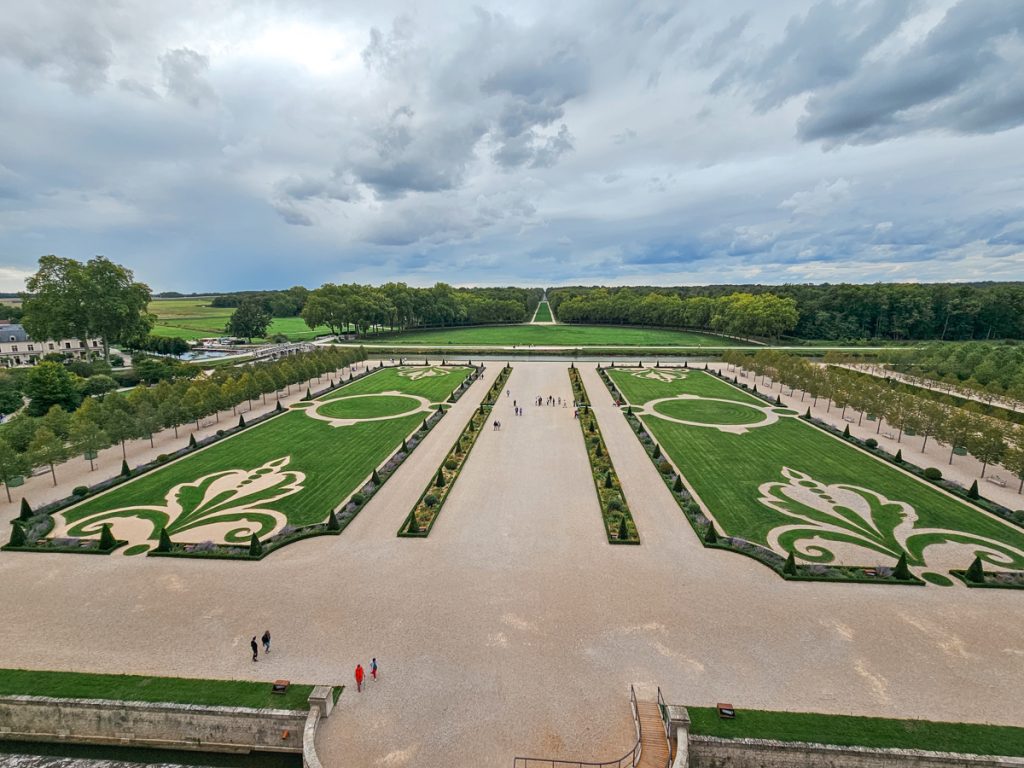
Plan for ~3 hours to really take everything in, especially if you want to walk the grounds more.
3. Villandry

Many Loire Valley chateaux have incredible gardens, but Villandry is on a completely different level. In fact, I’d say it has the best gardens in the entire region.
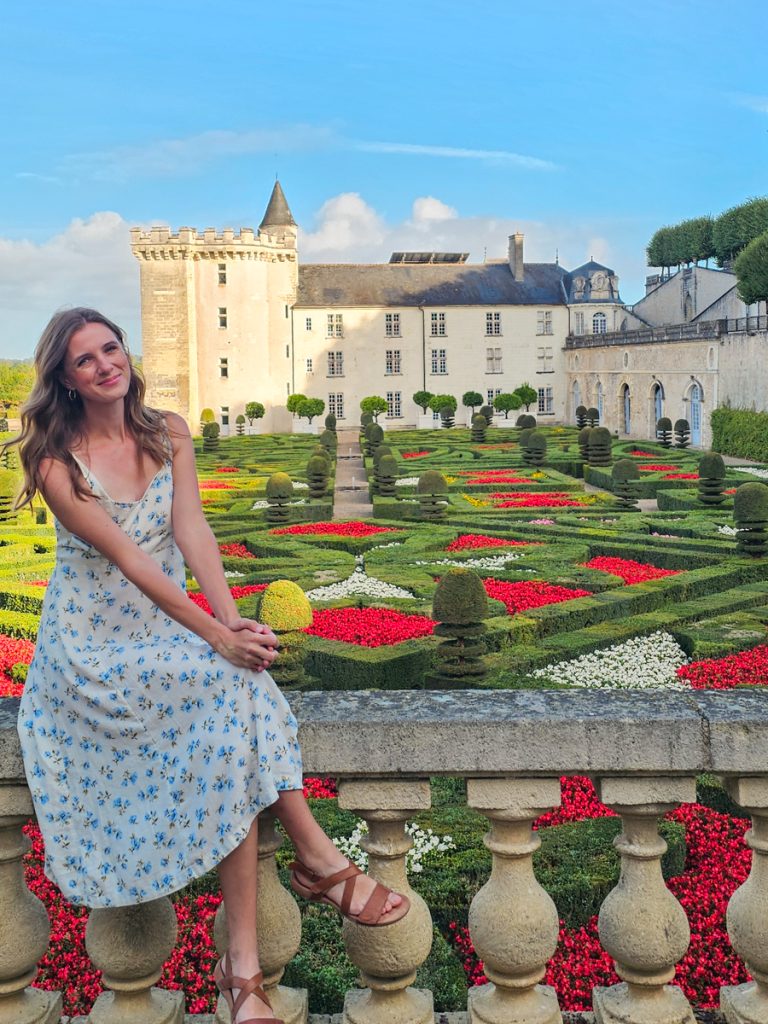

The grounds are vibrant and expansive, with so many distinct areas that you’re constantly turning corners and finding something new. What impressed me most were the designs built directly into the garden beds themselves. It’s not just beautiful flower gardens; it’s intricate designs and patterns within the beds themselves.
Villandry has eight different gardens, including the Ornamental Gardens, the Maze, the Water Garden, the Herb Garden, and the Ornamental Kitchen Garden. Each is so unique and so beautiful in its own way.

Of any of the garden areas, I would have to say the Ornamental Kitchen Garden is the most spectacular. It’s made up of nine square plots filled with detailed, geometric designs created entirely with vegetable plants along with just a few flowers and herbs.
Everything is incredibly precise, and it’s obvious how much work goes into maintaining it.
Another favorite spot was the elevated terrace walkways, covered with pergolas and grapevines overhead and views looking over the gardens.

The chateau interior is very pretty and a little more understated than many Loire châteaux. It feels less Renaissance-heavy, with fewer tapestries and more parquet floors and box molding on the walls.
There are some really charming children’s rooms with antique toys on display, and overall it feels more like a family home than a royal showpiece.
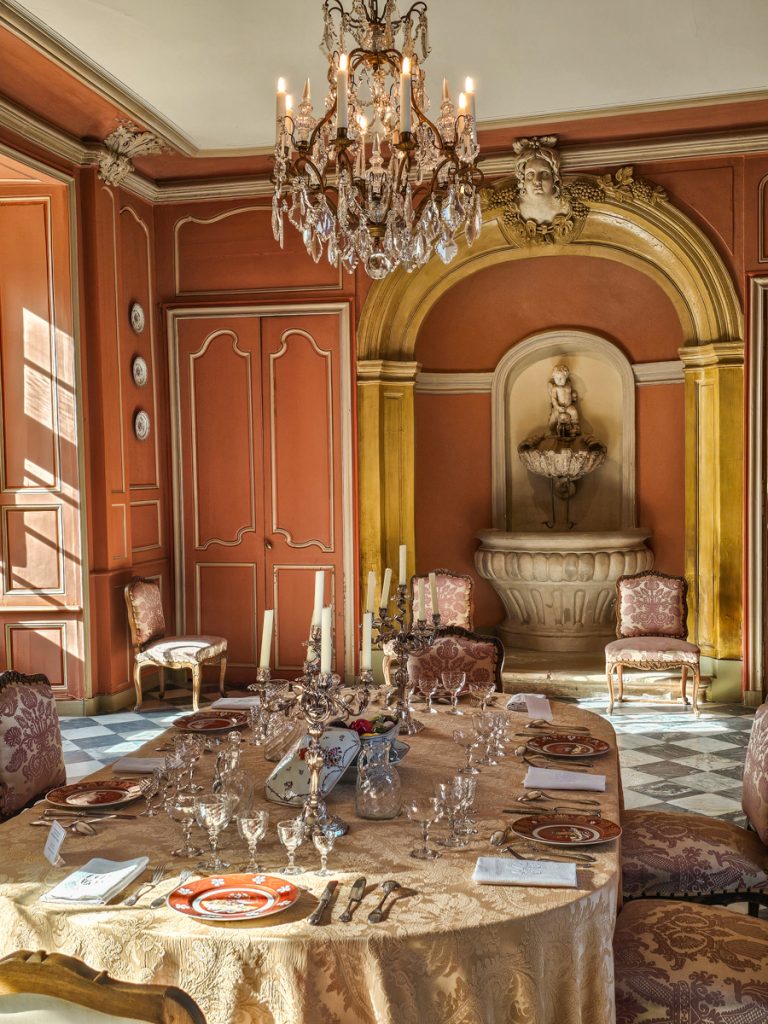
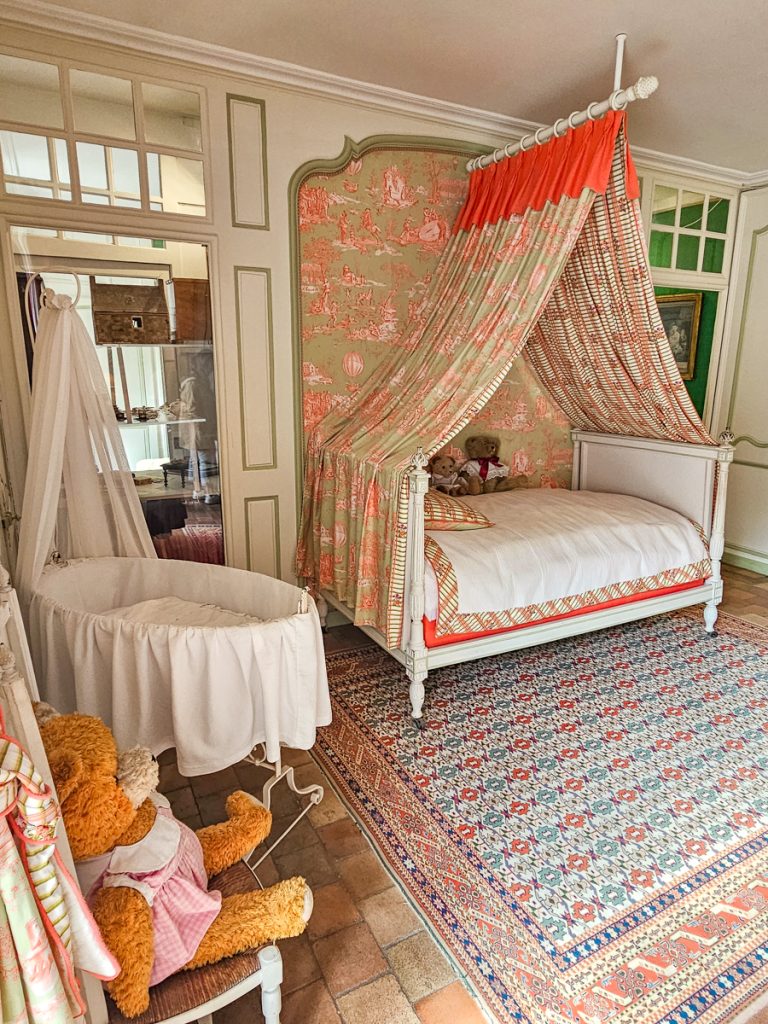
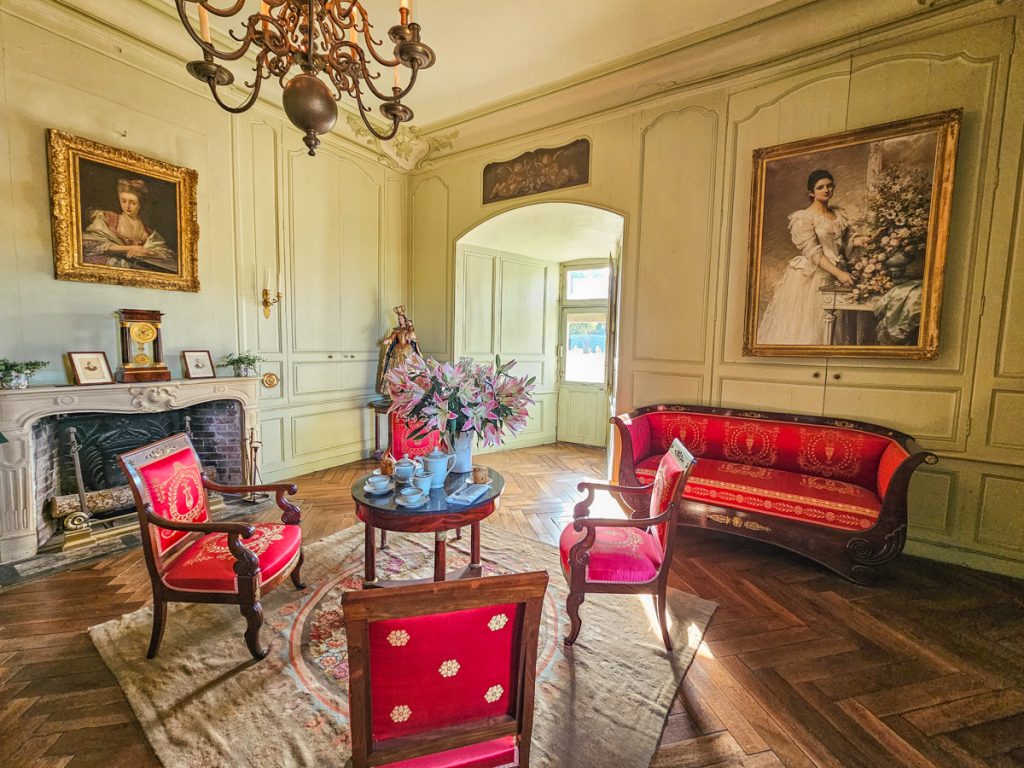
For me, Villandry is a must-do in the Loire.
4. Amboise
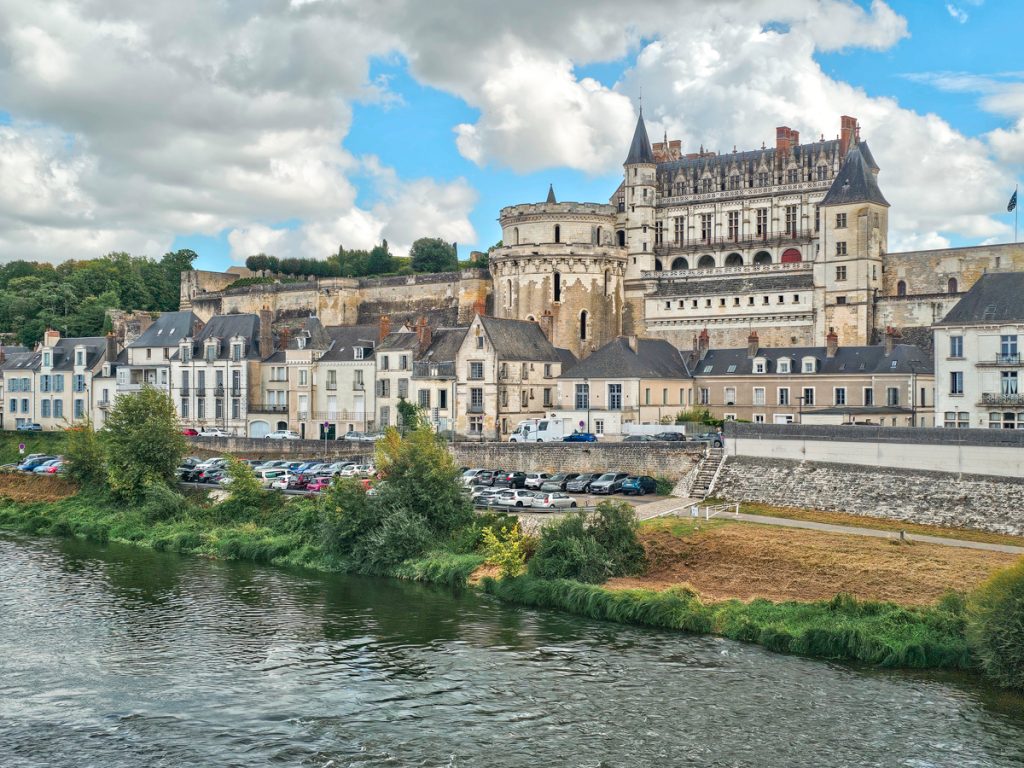
Amboise is one of the most important royal châteaux in the Loire, and it feels very different from many of the others. The castle is heavily fortified, with tall walls and rooms set high above the town below, giving it a much more defensive, powerful presence.
When it came into royal hands in the 15th century, Amboise was transformed from a medieval fortress into a royal residence. Under Charles VIII and François I, it became one of the earliest and most important places tied to the arrival of Renaissance architecture in France, with Italian artists and ideas mixing with French tastes during its peak years.
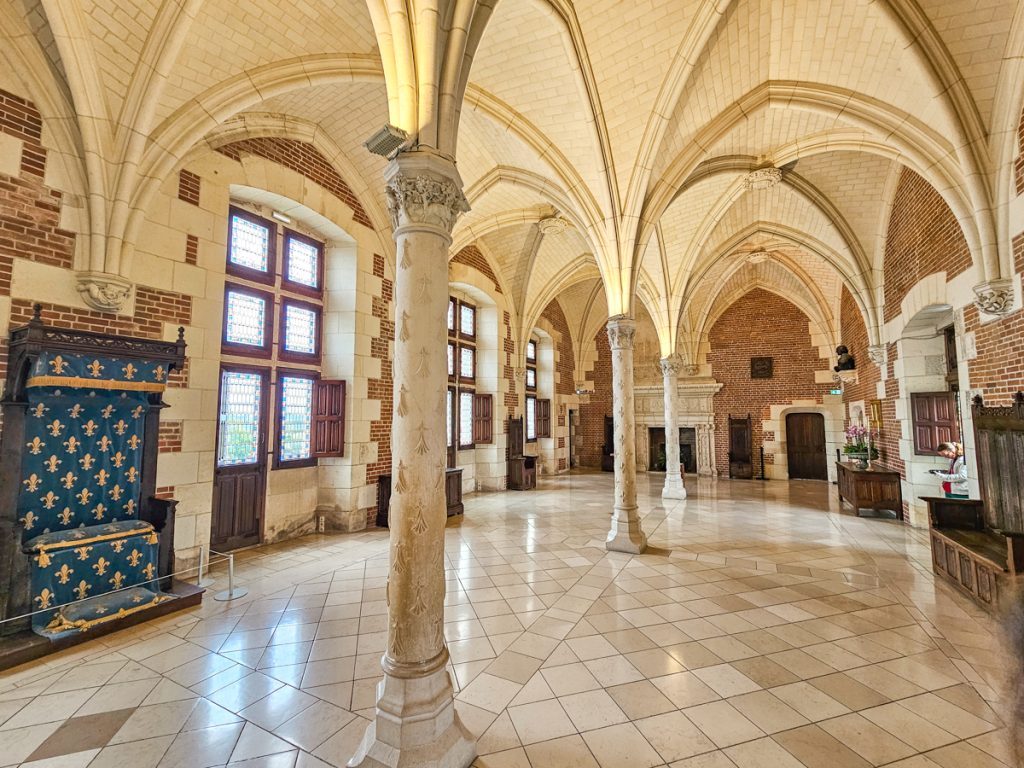
One of the most famous figures associated with Amboise is Leonardo da Vinci, who was invited to France by François I in 1516. He lived and worked nearby at Clos Lucé, and is believed to be buried in the Chapel of Saint Hubert on the château grounds.
The interior rooms are lovely and thoughtfully presented, though not as lavish as some other Loire châteaux. However, Amboise does offer a histopad for the tour, which is very well done and helps bring Renaissance history to life as you walk through the rooms.
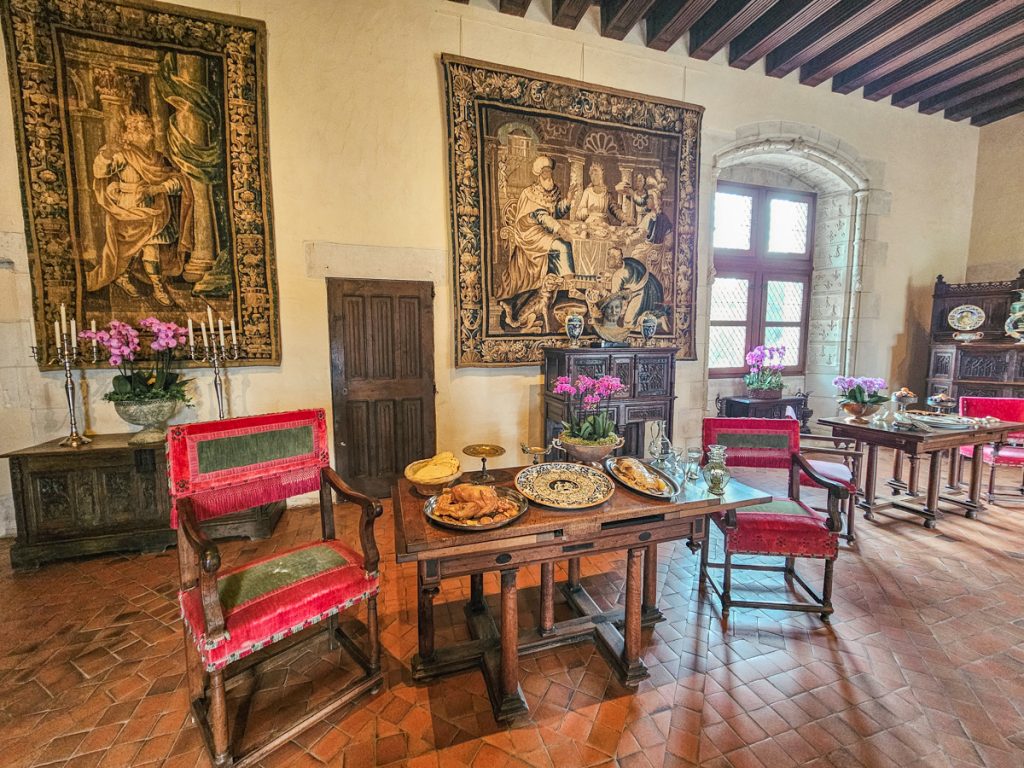
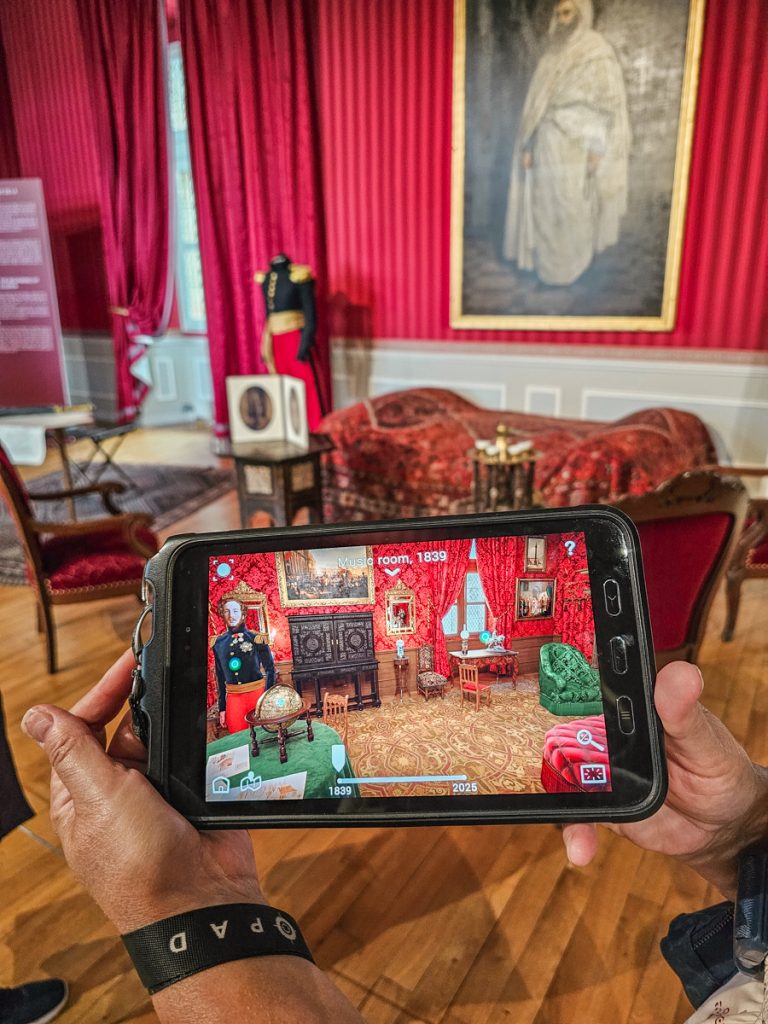
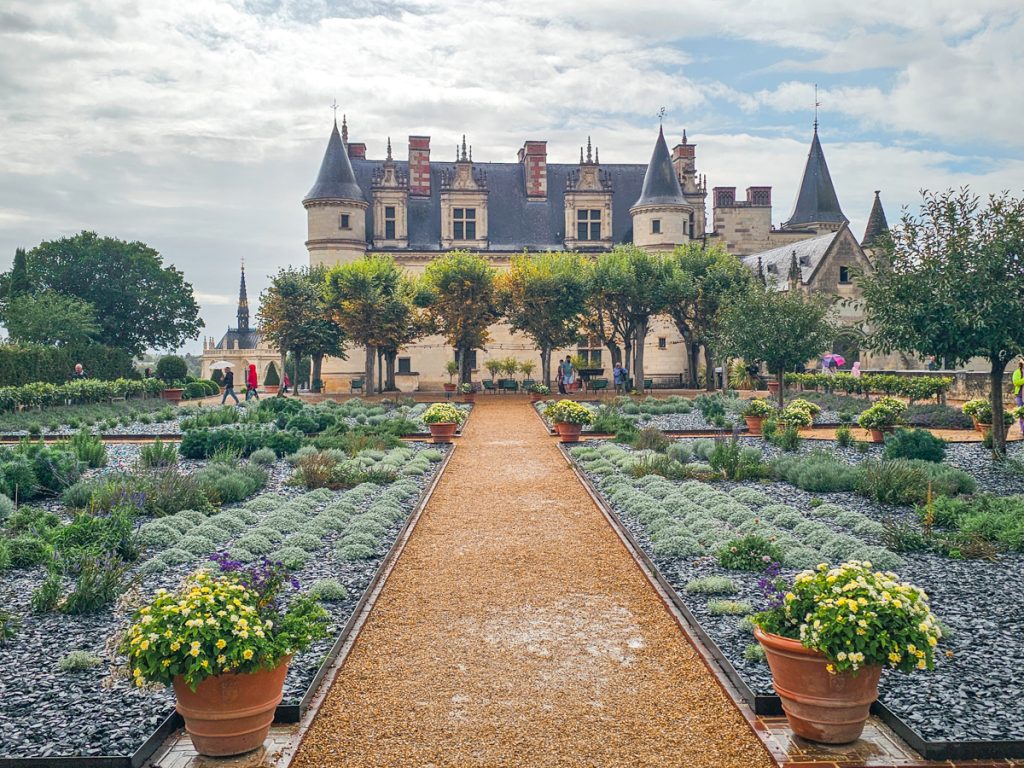
Outside, the grounds are lovely, with the Naples Terrace offering wide views while still perched high above the town.
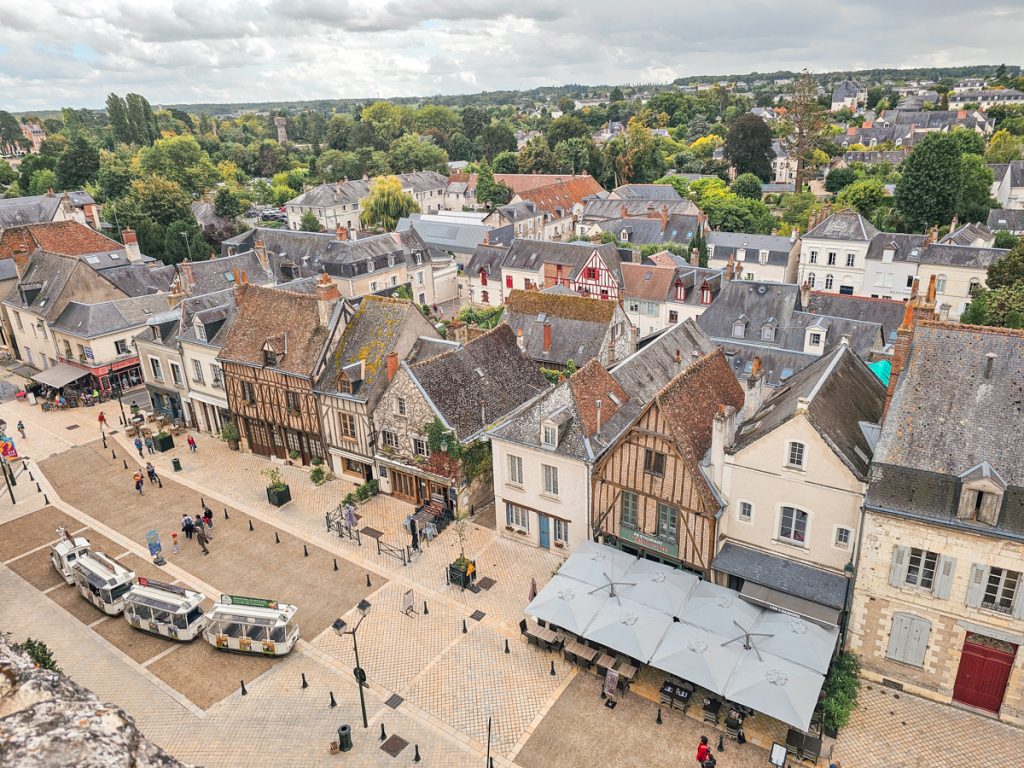
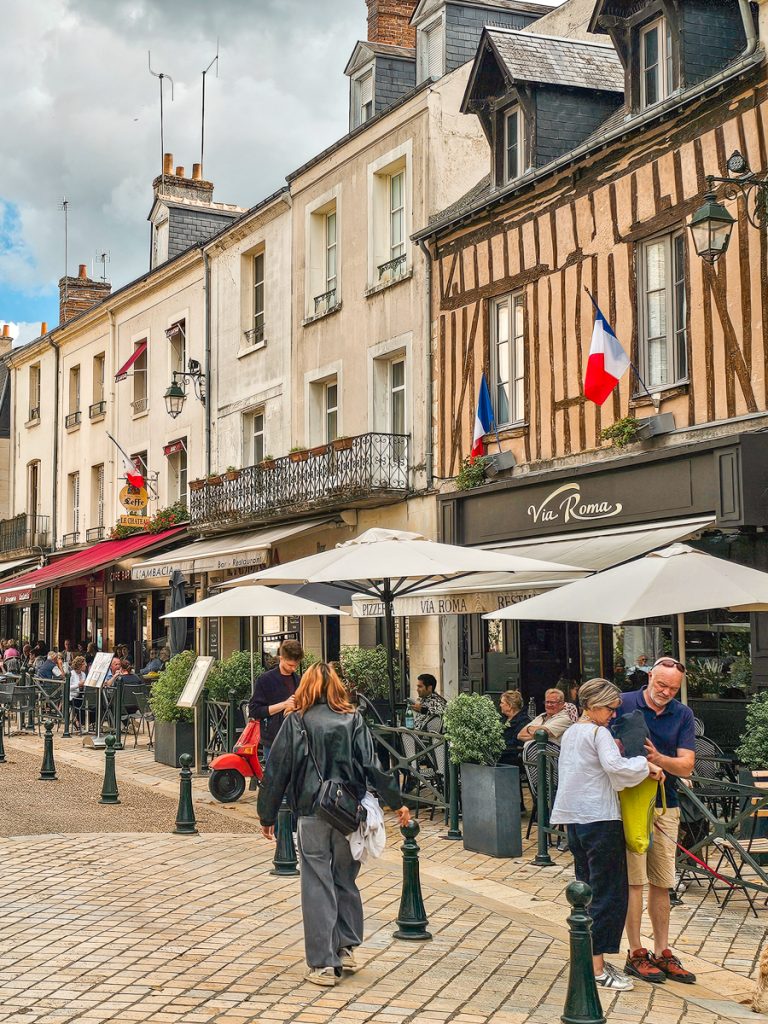
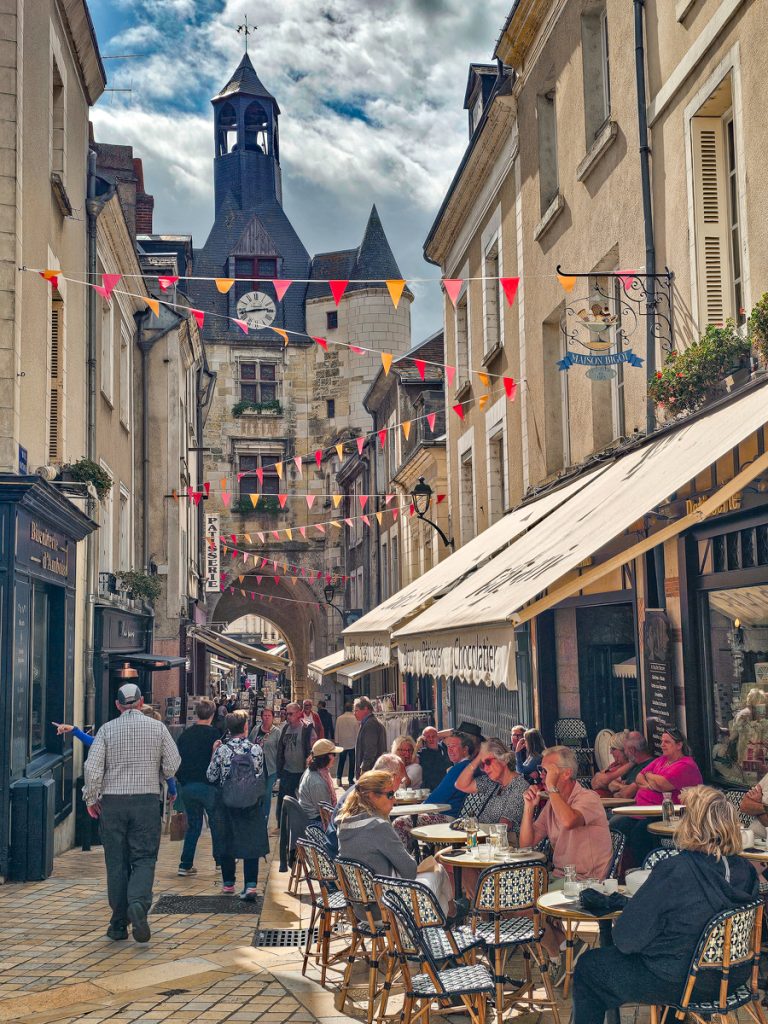
Unlike many of the quieter villages surrounding Loire castles, Amboise feels very much alive. The streets below are busy, restaurant terraces fill up quickly, and it’s a great place to wander or enjoy a slow evening after touring the château.
Need Personalized Help Planning Your Trip to France?
If you’re feeling overwhelmed with options or short on time, my France planning calls can help.
These one-on-one video sessions are great for getting feedback, asking questions, and sorting through options, whether you’re building an itinerary from scratch or fine-tuning plans you already have.
5. Clos Lucé
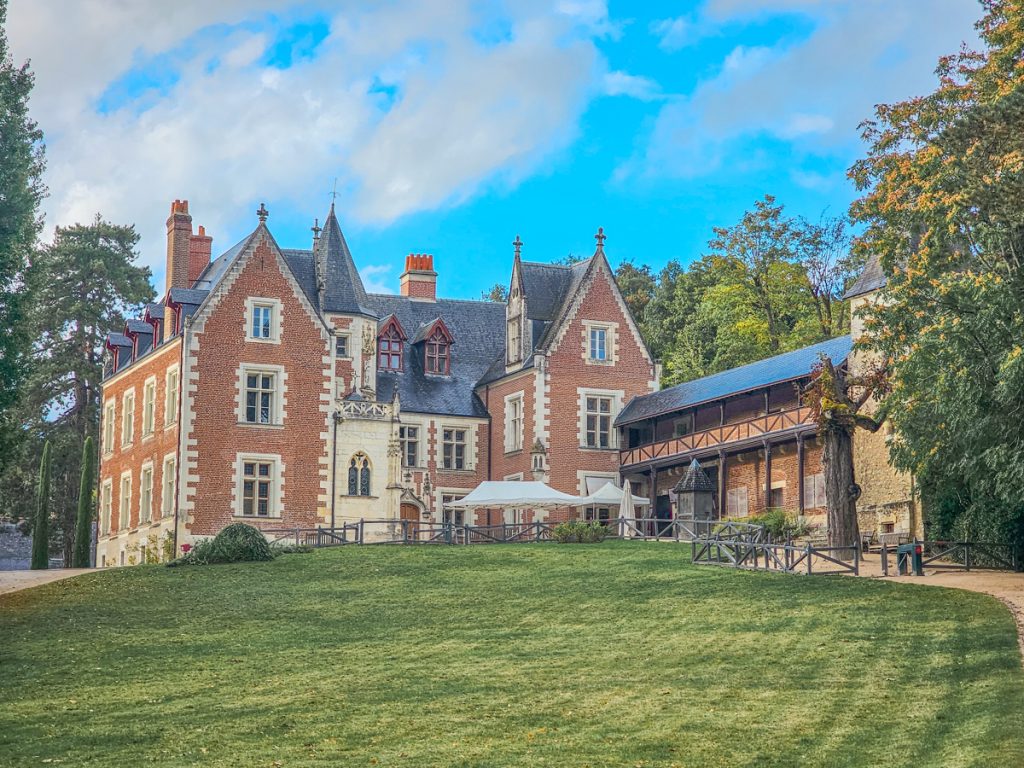
Just minutes away from Chateau d’Amboise is Chateau de Clos Lucé (really more of a mansion), given to Leonardo da Vinci by King Francois I. Da Vinci lived here for the last three years of his life, continuing to work on art and a wide range of projects until his death in 1519.
A visit to the chateau and domain of Clos Lucé means you get to visit the bedchambers, great hall, and kitchen, but the most fascinating rooms by far are Leonardo’s workshops and the basement model rooms.
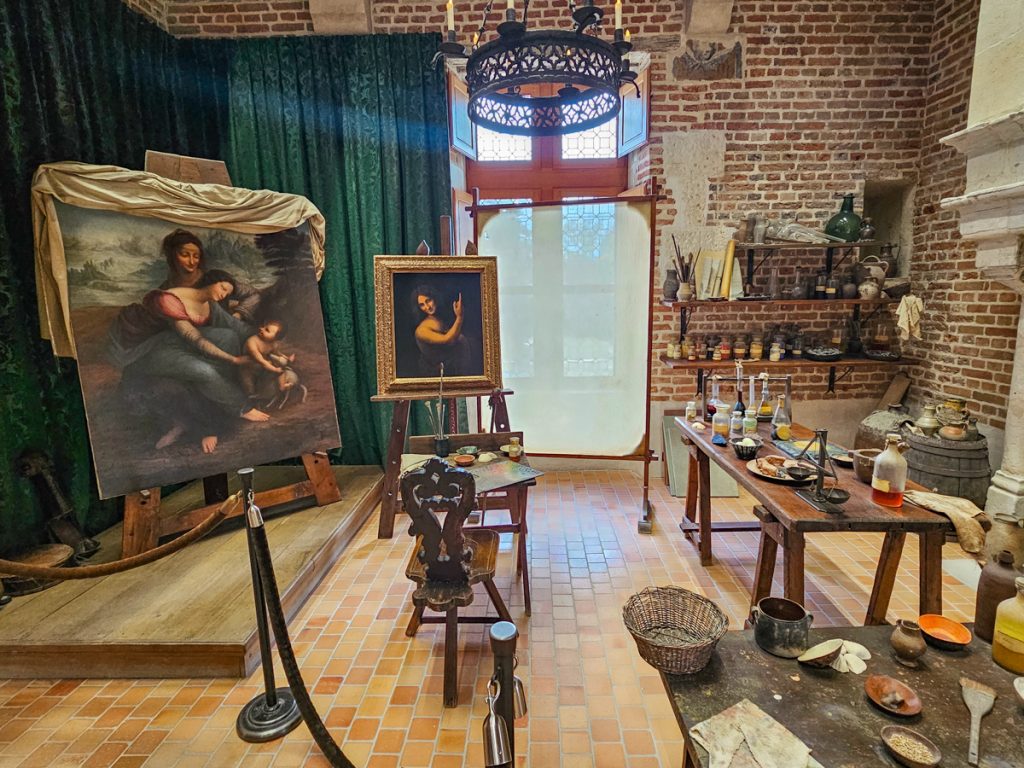
The three workshops focus on painting, sculpture, and drawing, with displays of reproductions of his tools, notebooks, drawings, models, and paintings. Seeing the spaces where he worked was honestly pretty surreal.
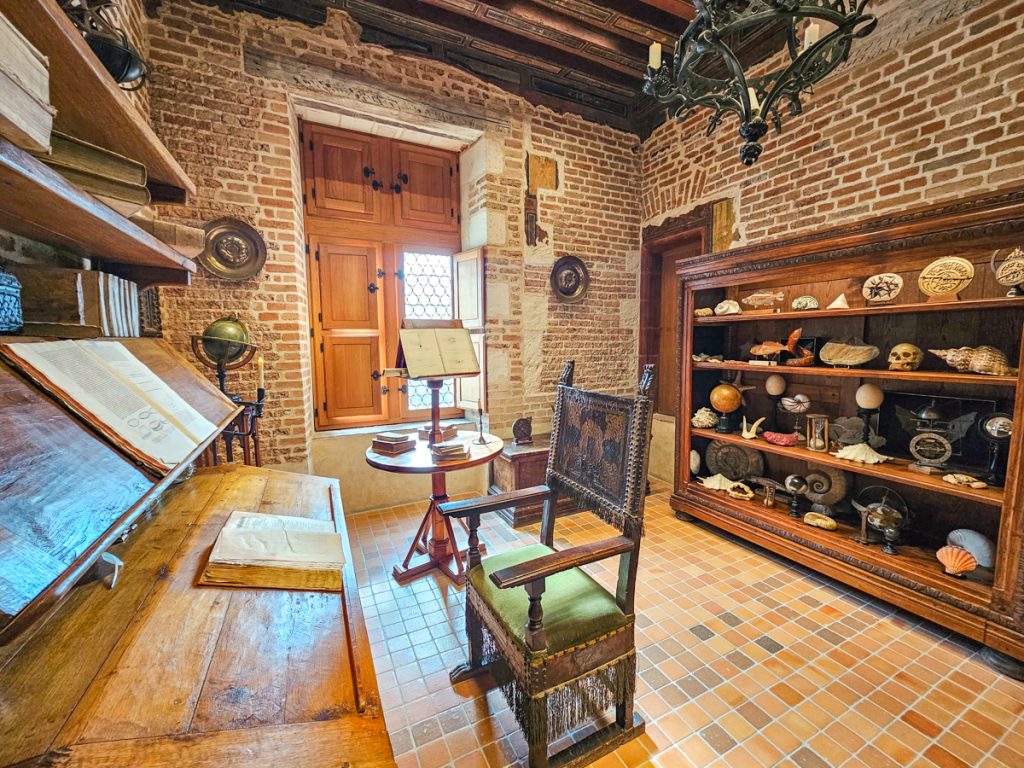
The basement takes things a step further. Leonardo is best known as a painter, but he was also an engineer, architect, and inventor, coming up with clever inventions that were groundbreaking for his time.
Many of his ideas are presented here through physical models, along with explanations and videos showing how they were meant to function. We spent a lot of time down here – it was incredibly fascinating.
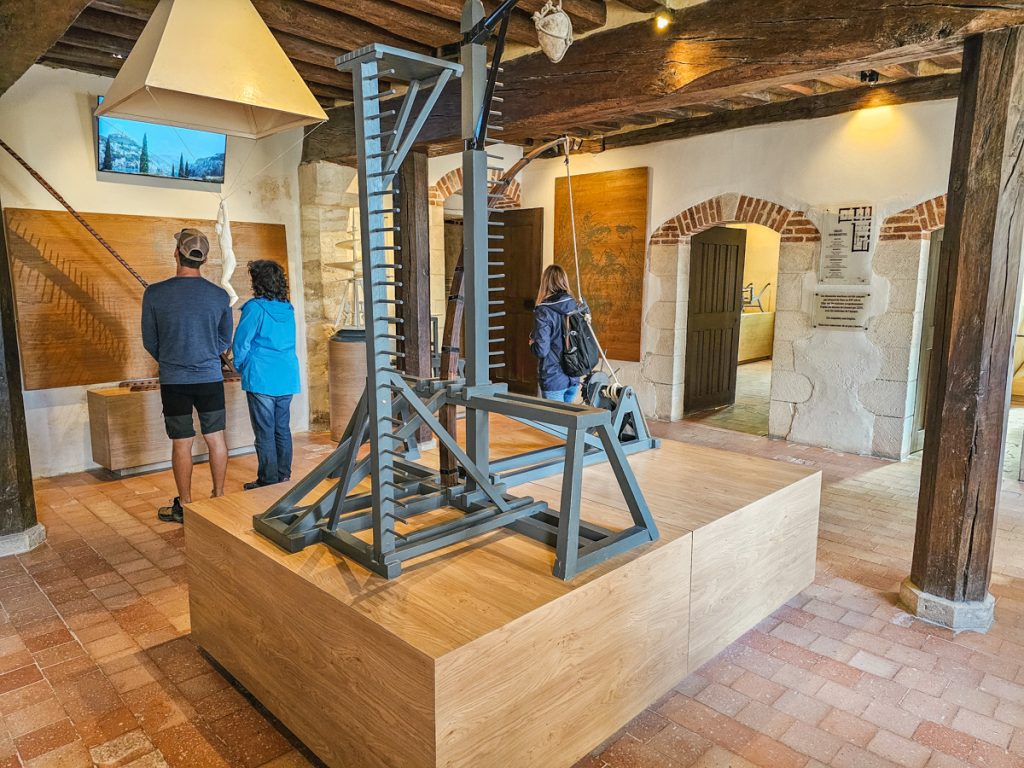
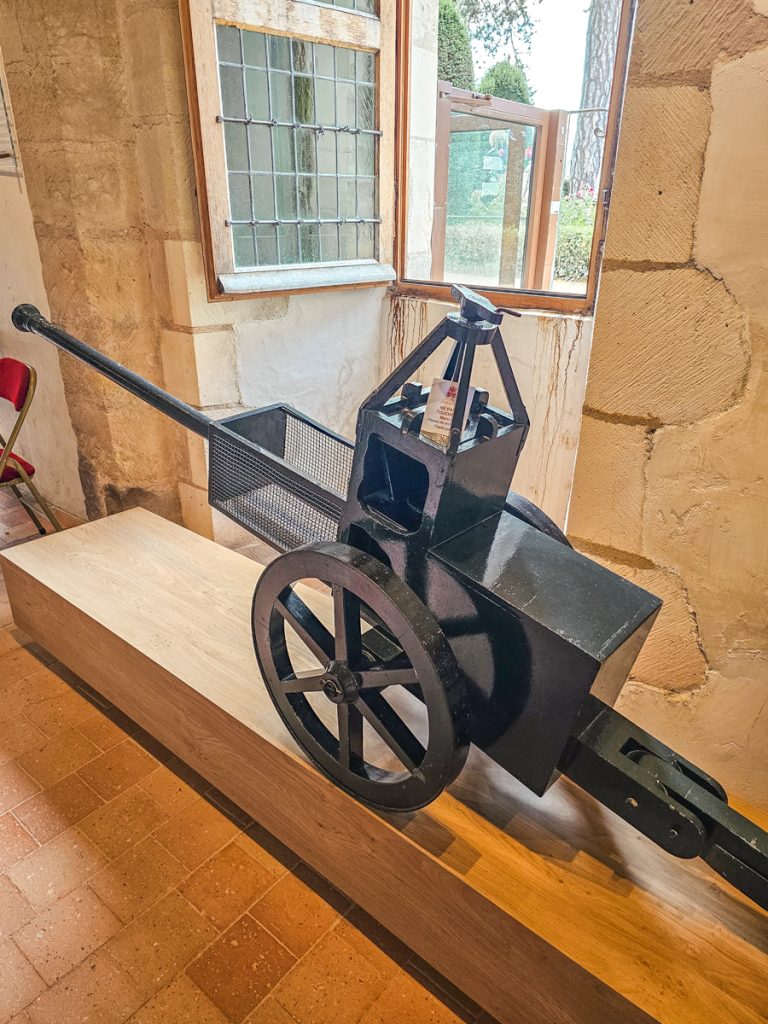
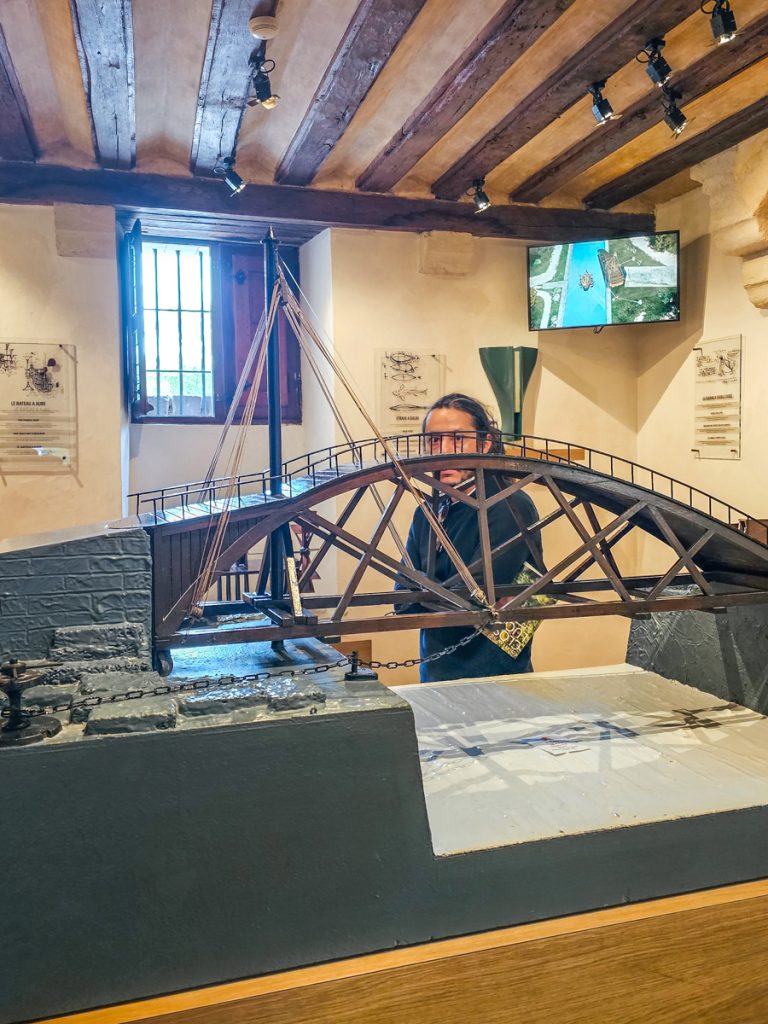
The gardens continue the same theme. Leonardo was also a botanist, and the grounds of the estate are still laid out like they were in the 1500s. Scattered around the grounds are full-scale models of his inventions, many of which you’ll have already seen downstairs.
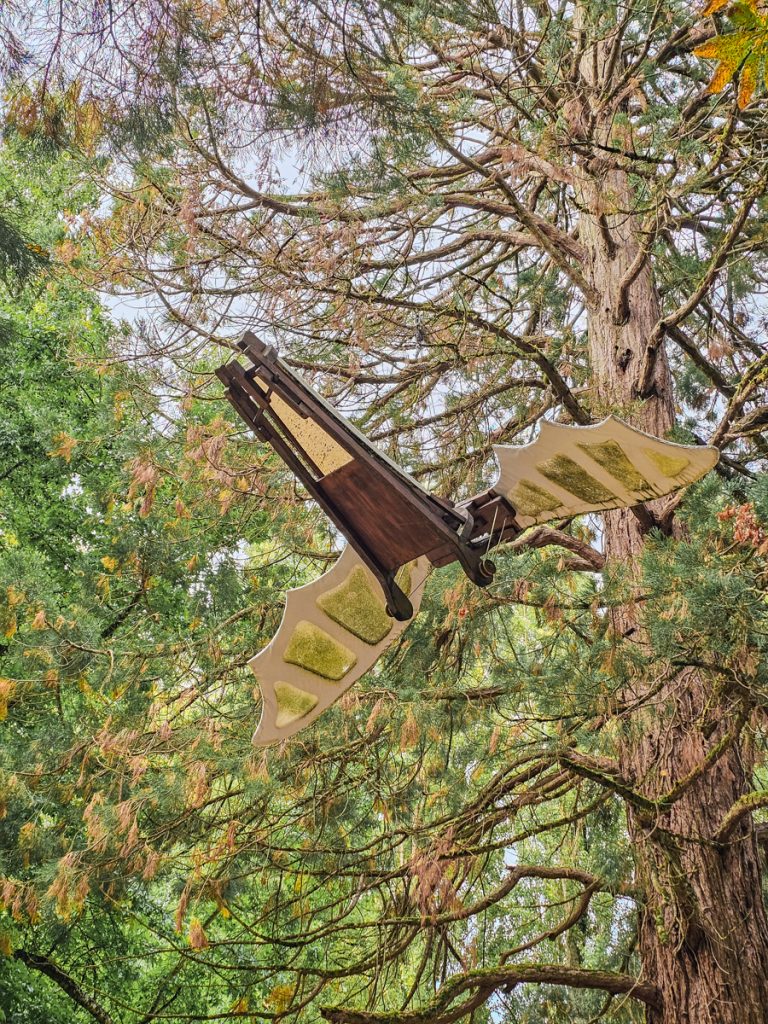
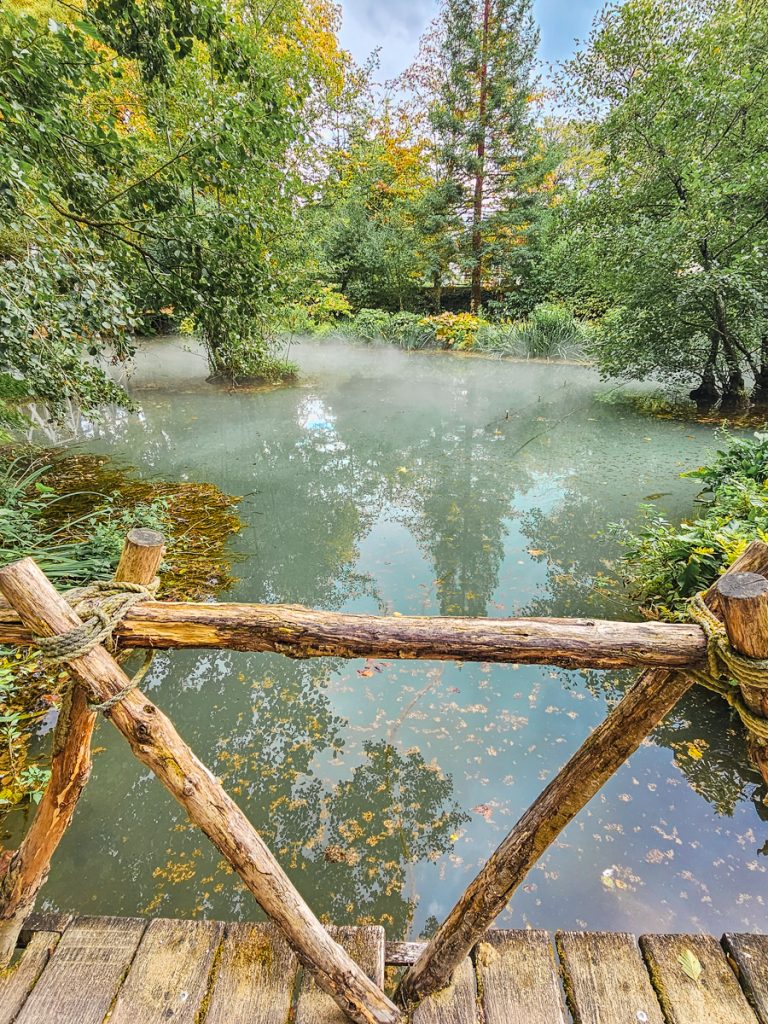
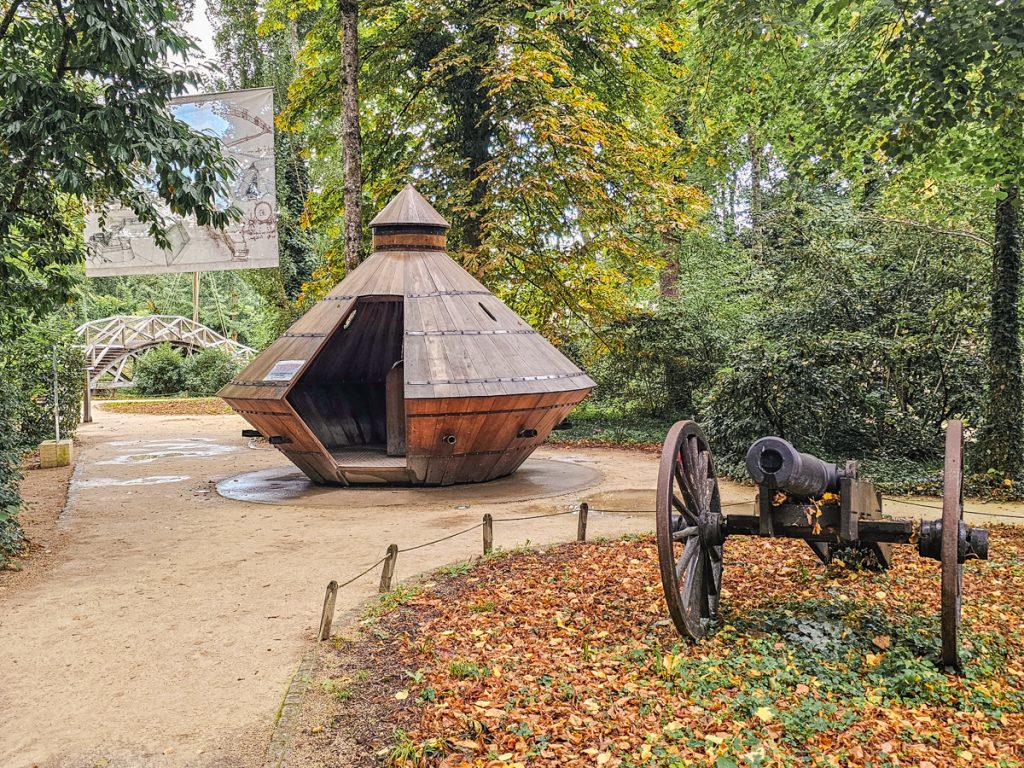
Clos Lucé isn’t flashy in the way Chambord or Chenonceau are, but it’s a very interesting stop in the Loire and one we really loved.
6. Blois

Blois is one of the most important royal châteaux in the Loire, and architecturally it’s unlike anything else in the region. Rather than a single style, the château is made up of distinct wings from different periods, all facing a central courtyard.
The oldest section dates back to the medieval period, which includes the 13th-century Estates General Room. The Louis XII wing from the late 1400s is built in Flamboyant Gothic style, with its distinctive red brick and stone façade.

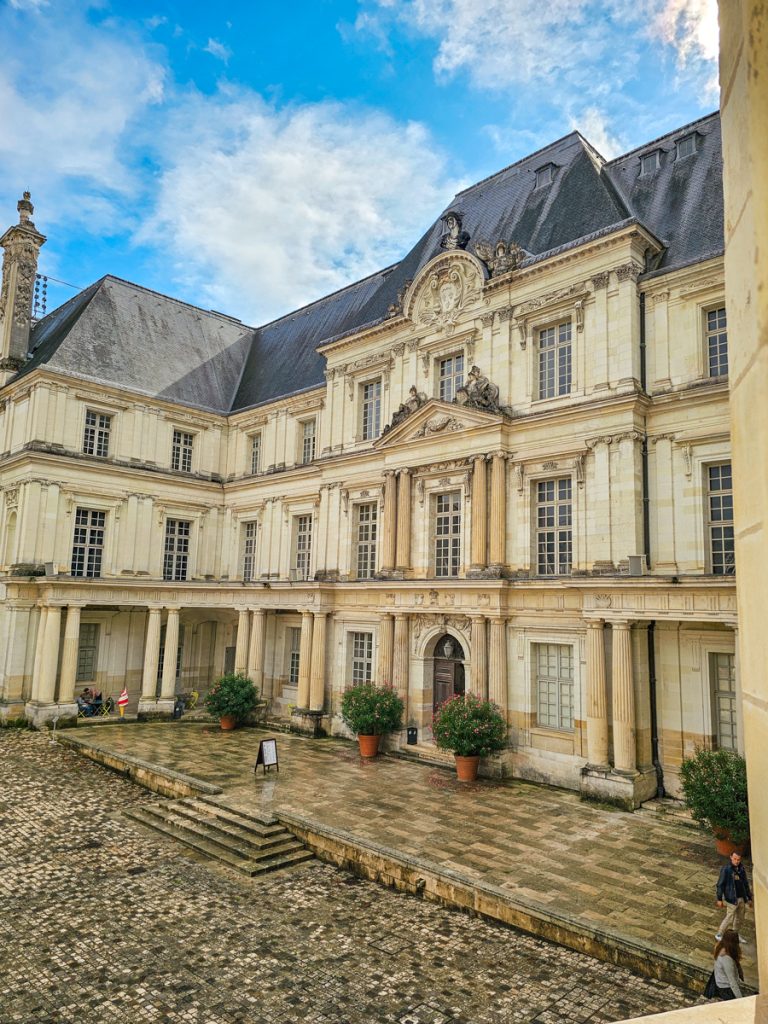
The Renaissance wing, built under François I in the early 1500s, is the most visited part of the château, featuring the famous spiral staircase influenced by Italian Renaissance design. The final wing, begun in the 1600s under Gaston d’Orléans, represents early Classicism and was never completed.
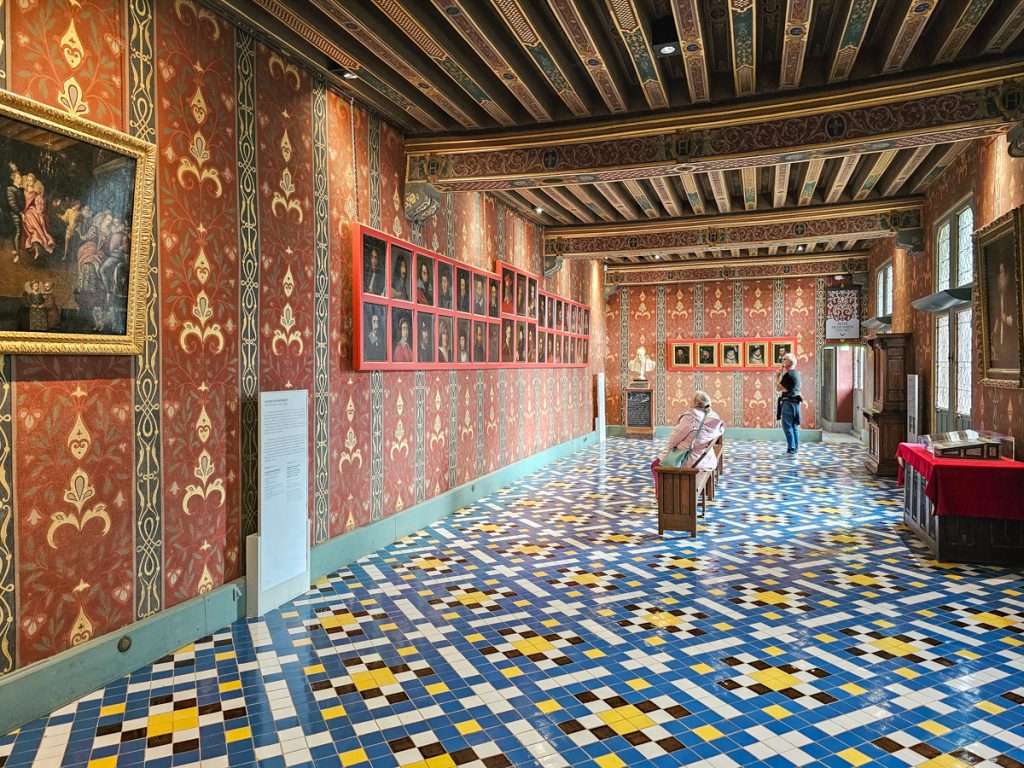
The main interior visit focuses on the François I wing, where the rooms are grand and richly decorated, with paneled ceilings, ornate fireplaces, tiled floors, and fabric-covered walls.
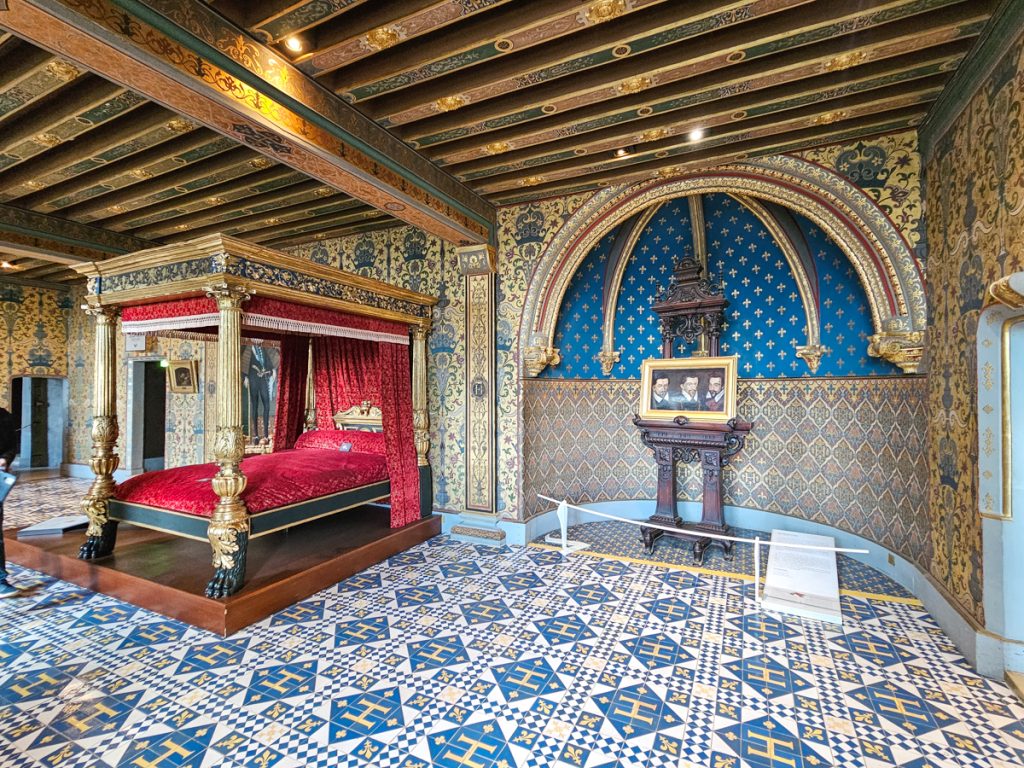
Blois is also closely tied to Catherine de’ Medici, one of the most powerful figures in French history. She lived here for long stretches and died at Blois in 1589.
In the evenings, the château hosts a sound-and-light show in the courtyard, which brings the history of Blois to life and is well worth seeing if you’re in town at night.
7. Ussé
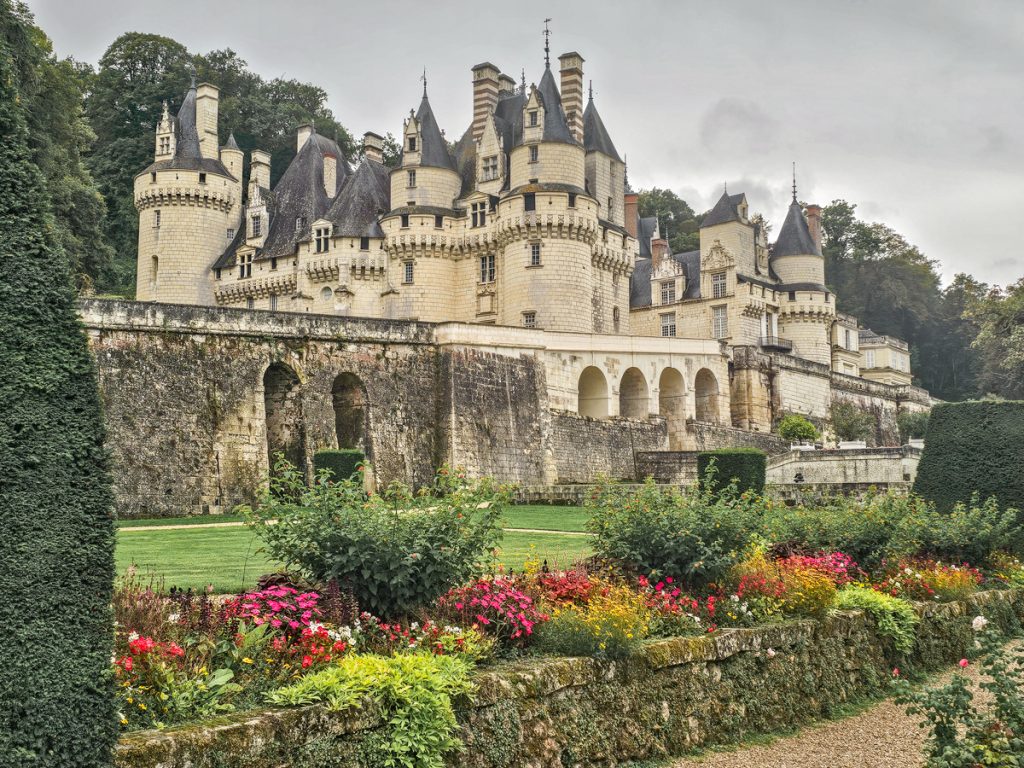
Ussé was such a delightful surprise for us, and ended up being one of the funnest château visits in the Loire.
Ussé is often called the Sleeping Beauty castle, because the writer of “La Belle au Bois Dormant“, Charles Perrault, stayed here in 1697 while he wrote the story. The Disneyland Castle really does resemble Ussé, with the lower profile and clusters of turrets.
That connection is handled in a really clever way. One of the towers is dedicated to telling the story of Sleeping Beauty as written in the original book, with window displays showing different scenes, complete with costumes, sets, and short text excerpts.
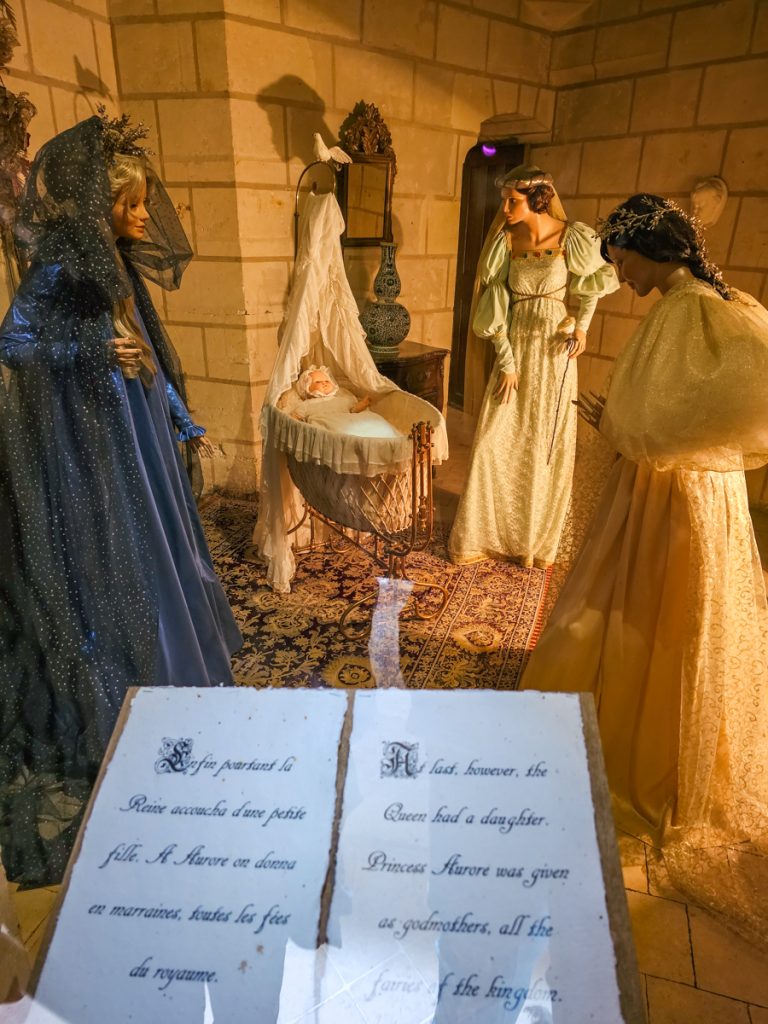
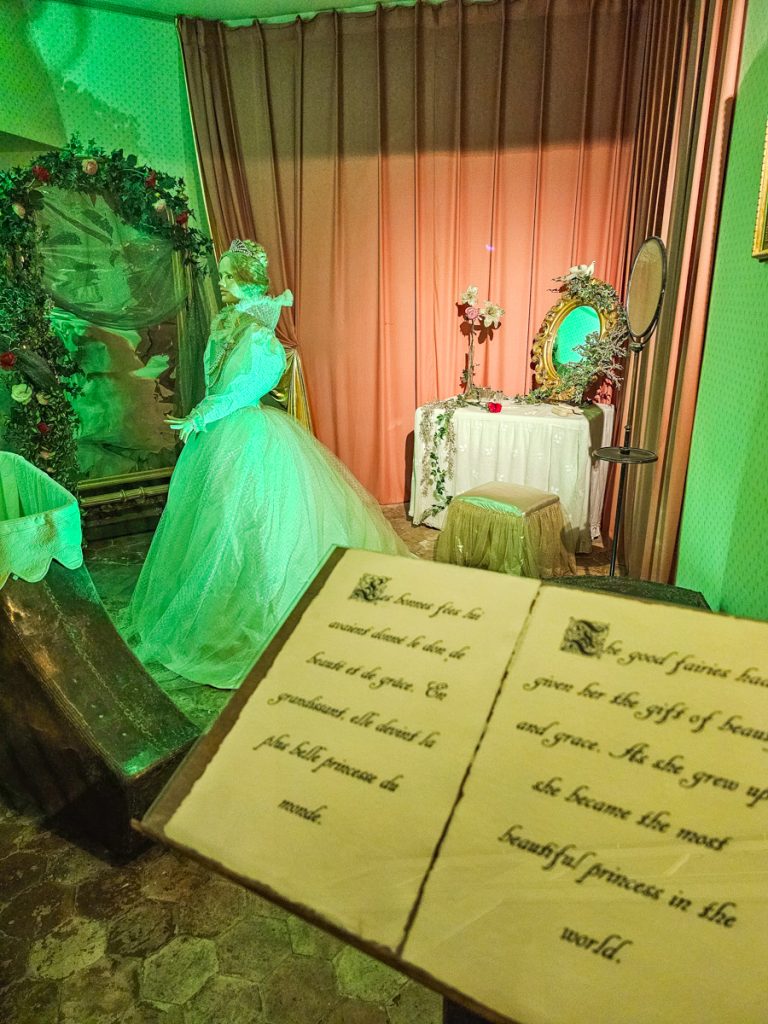
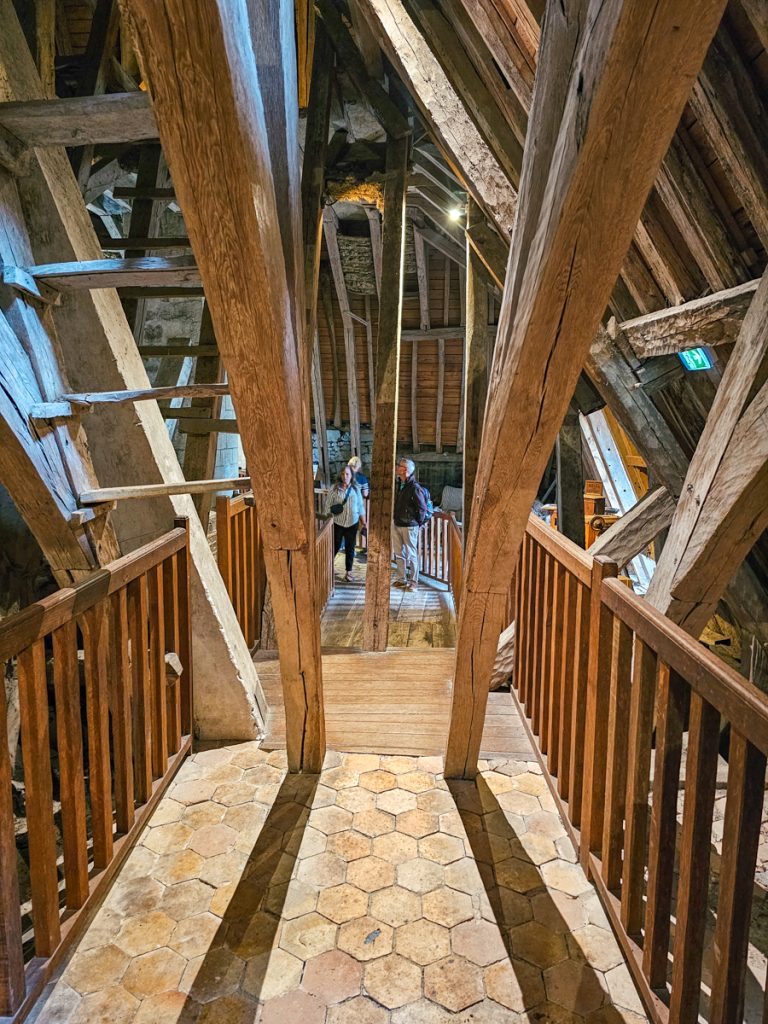
You walk through the tower by moving up and down staircases and through small rooms, following the story as you go. It’s playful and immersive without turning the entire château into a theme attraction.

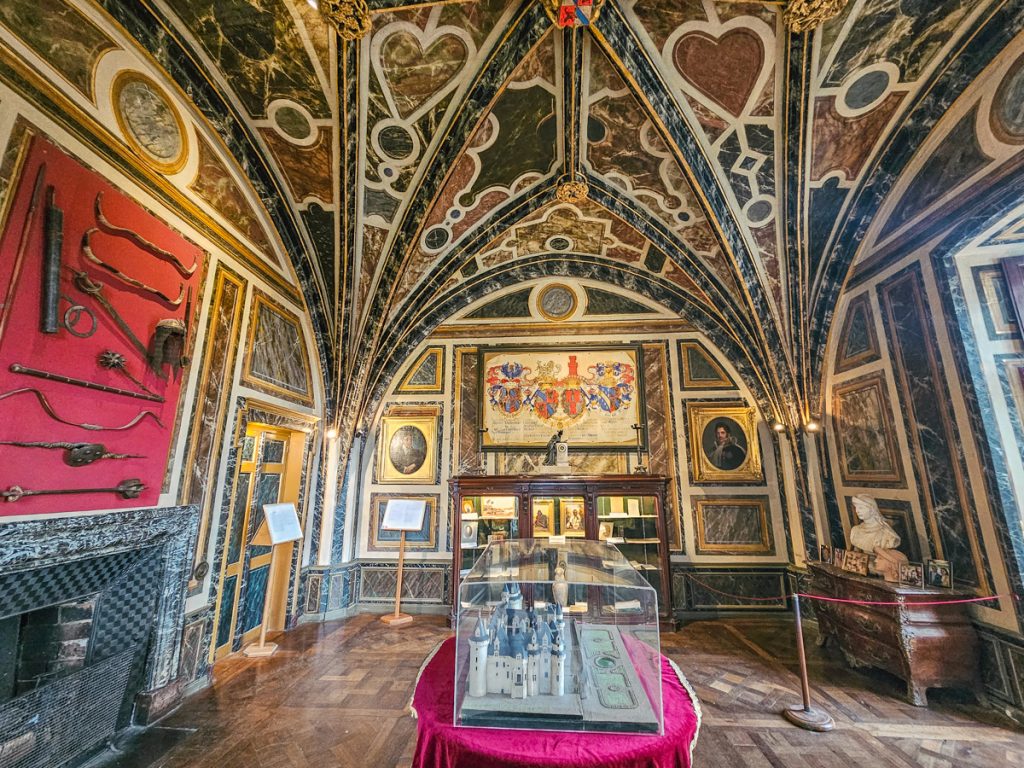
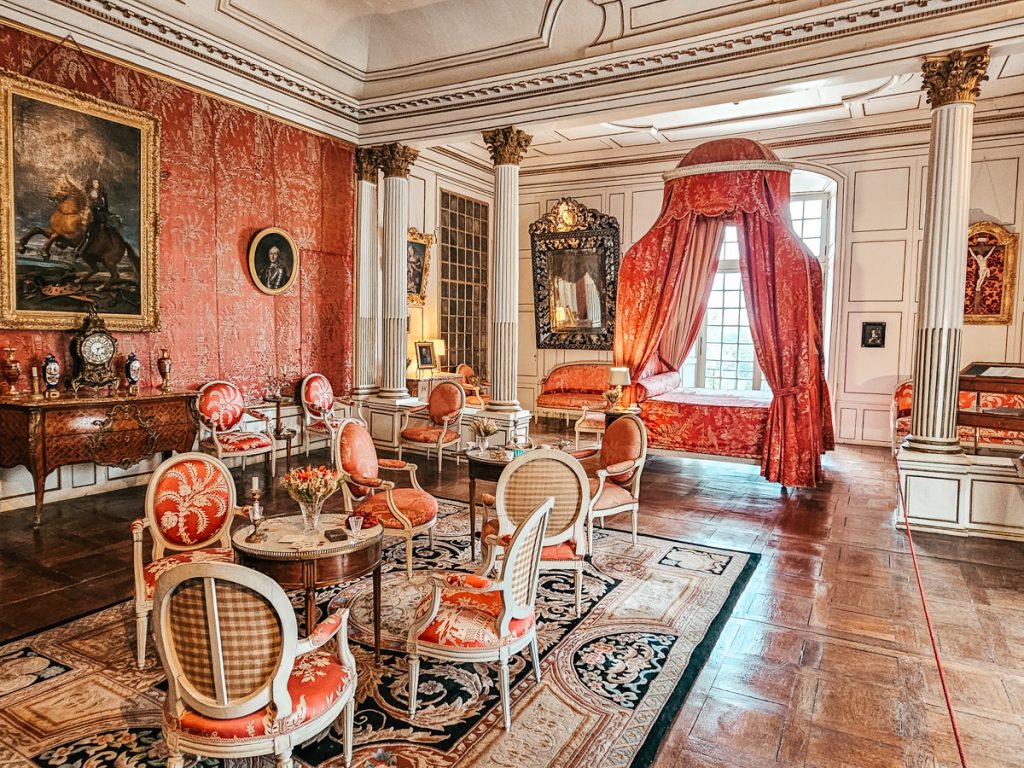
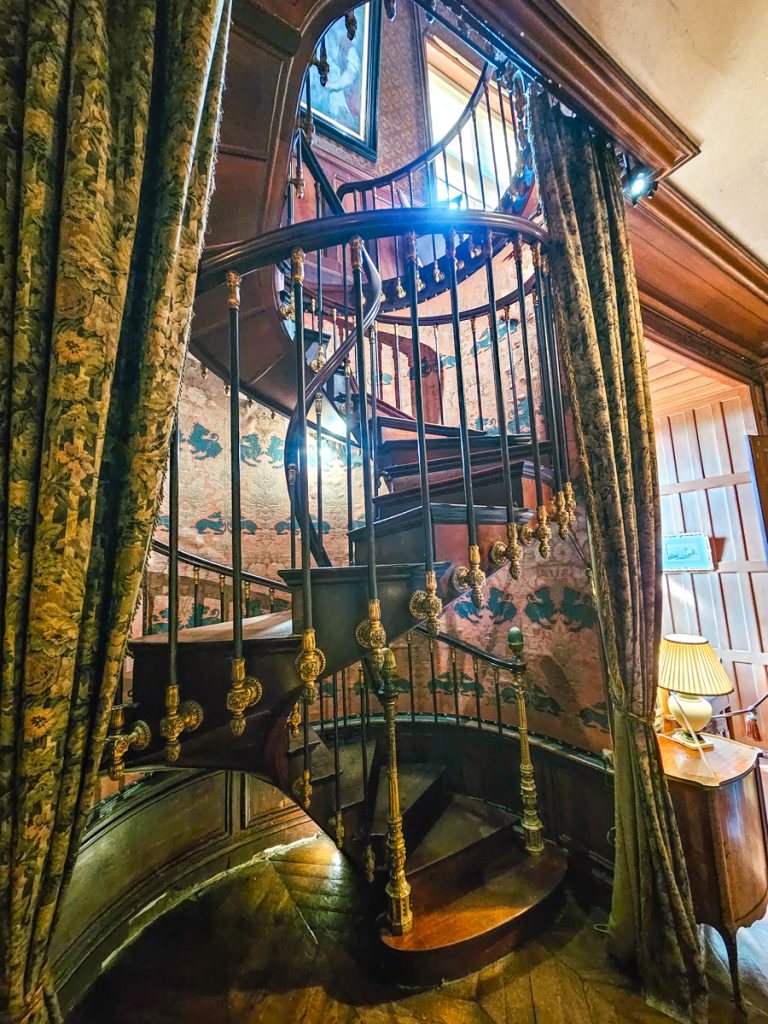
From there, you enter the main area of the château separately. The rooms are elegant and refined, with some truly beautiful ceilings and a striking wrought-iron staircase. Overall, Ussé had some of my favorite rooms in the castles of the Loire.


The gardens aren’t huge, but they’re beautifully laid out directly in front of the château. Below the main flower garden is a vegetable and herb garden, with all the plants labeled. It’s really fun to walk up and down the rows and see what’s planted, read the labels, and smell the herbs.
There are also several outbuildings to explore, including the old prison.
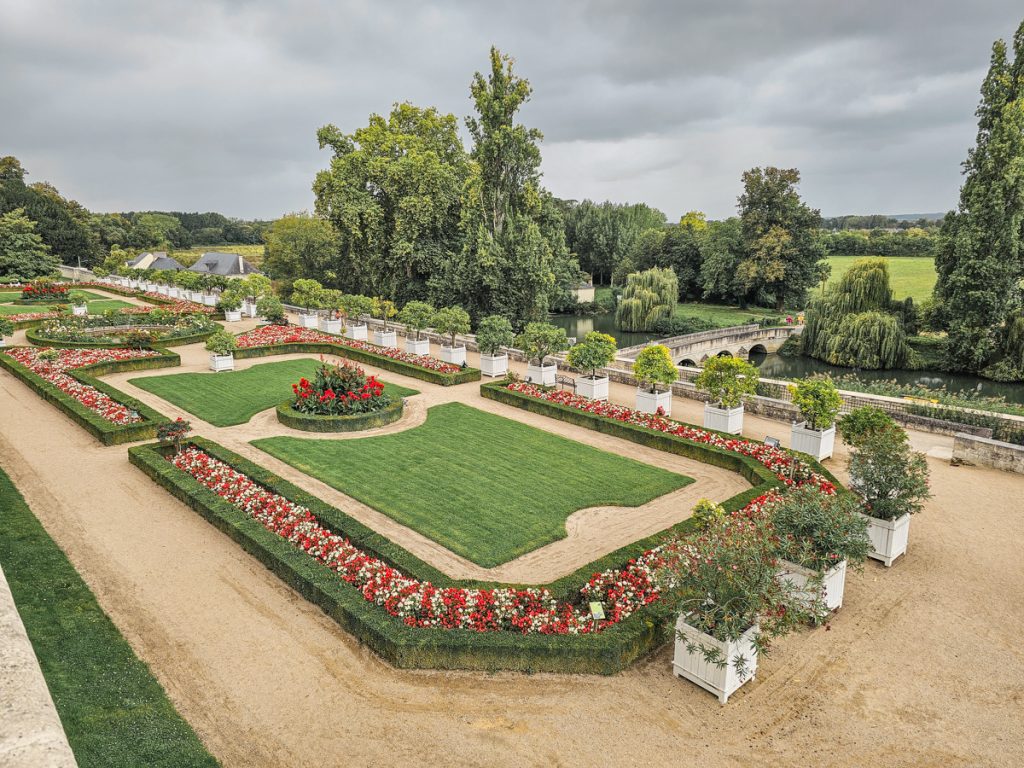


8. Azay-le-Rideau

Azay-le-Rideau has such a calm, romantic setting, right along the water’s edge of a small, green-tinted lake created in the Indre River. While the castle itself is shaped like an L, from across the water it looks like a perfectly balanced rectangle.
The walls and turrets rise straight out of the water. With lily pads and low greenery along the edge, the château is almost perfectly reflected and seems to float in place.
Architecturally, Azay-le-Rideau sits right at the transition between Gothic and Renaissance styles. The towers and turrets feel more medieval and defensive, while the windows, symmetry, and decorative elements clearly point toward the Renaissance.

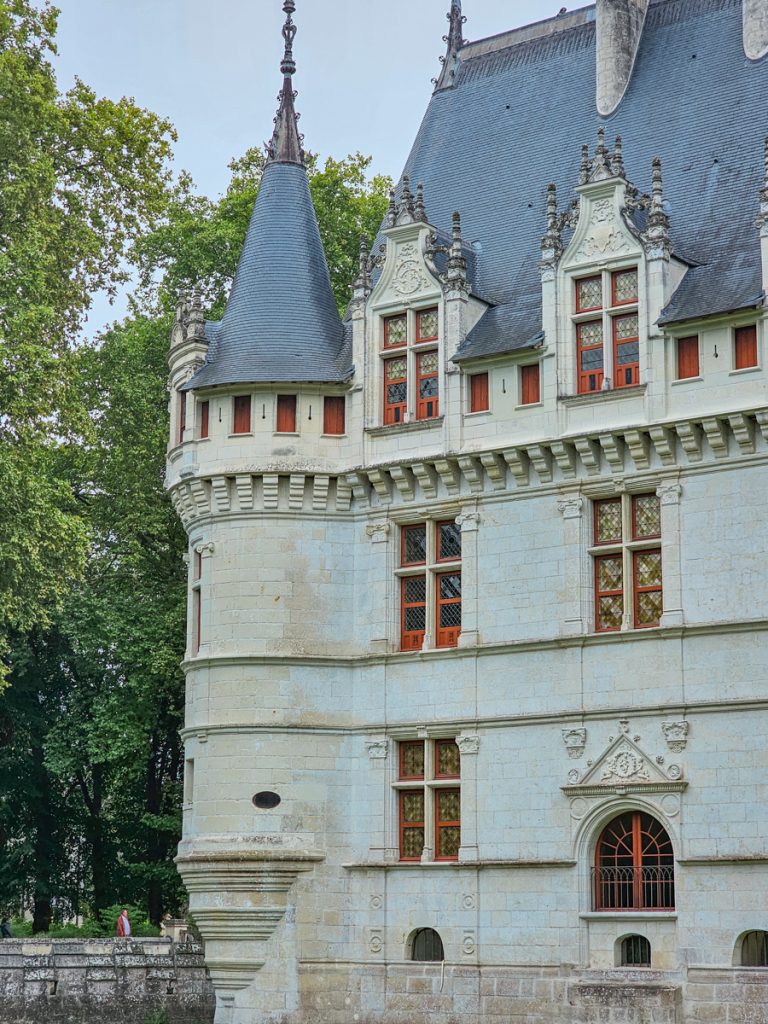
The château was built in the early 1500s by Gilles Berthelot, a high-ranking financial official under King François I, which explains why royal symbols (like Francois’s salamander) appear throughout the building even though the king never lived here.
Another thing that makes the interior fascinating is how clearly it shows different periods of the château’s life. Some rooms reflect the early 16th century, when construction first began, including the Great Hall, or the personal bedchambers of Philippe Lesbahy, the first lady of the house.
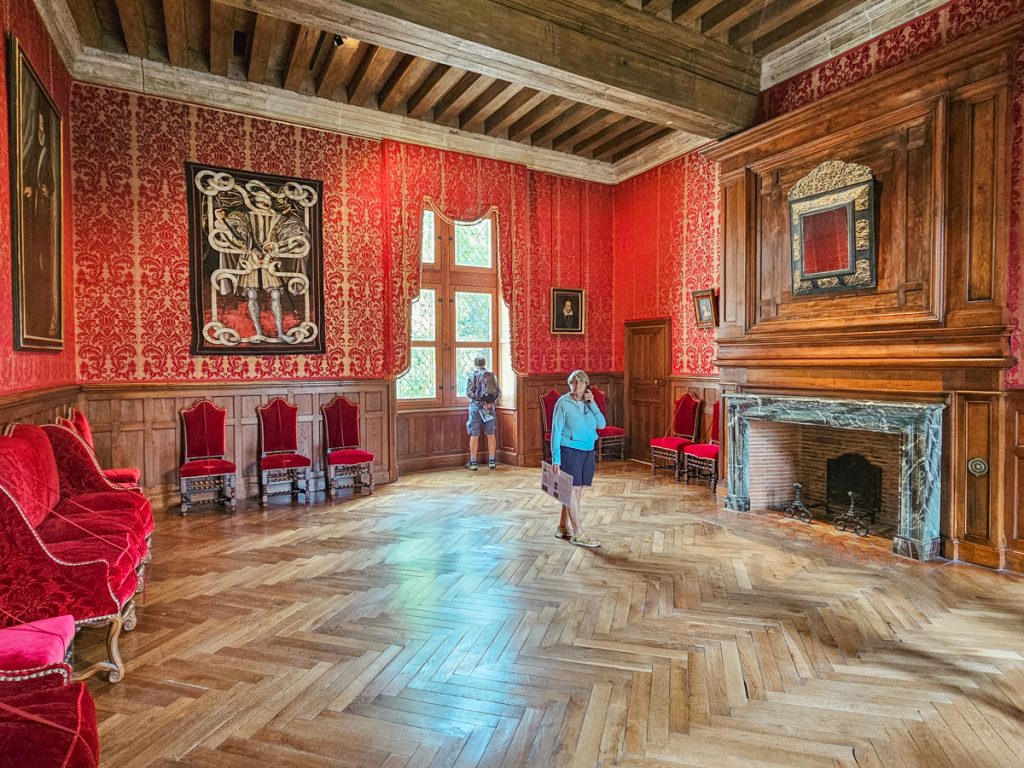
Other rooms show how the château was later lived in during the 1800s, when it was owned by the Biencourt family. The Salon Biencourt was my favorite room – it felt elegant but also comfortable and cozy.

9. Chaumont-sur-Loire

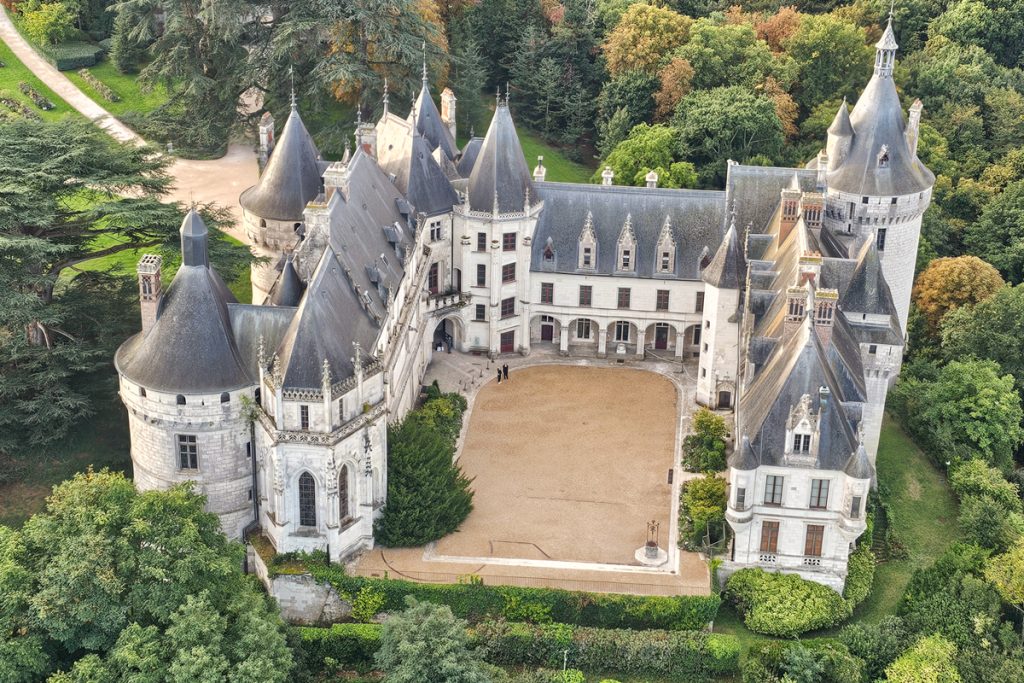
Chaumont-sur-Loire sits high above the Loire River on a rocky bluff, with wide views over the water below.
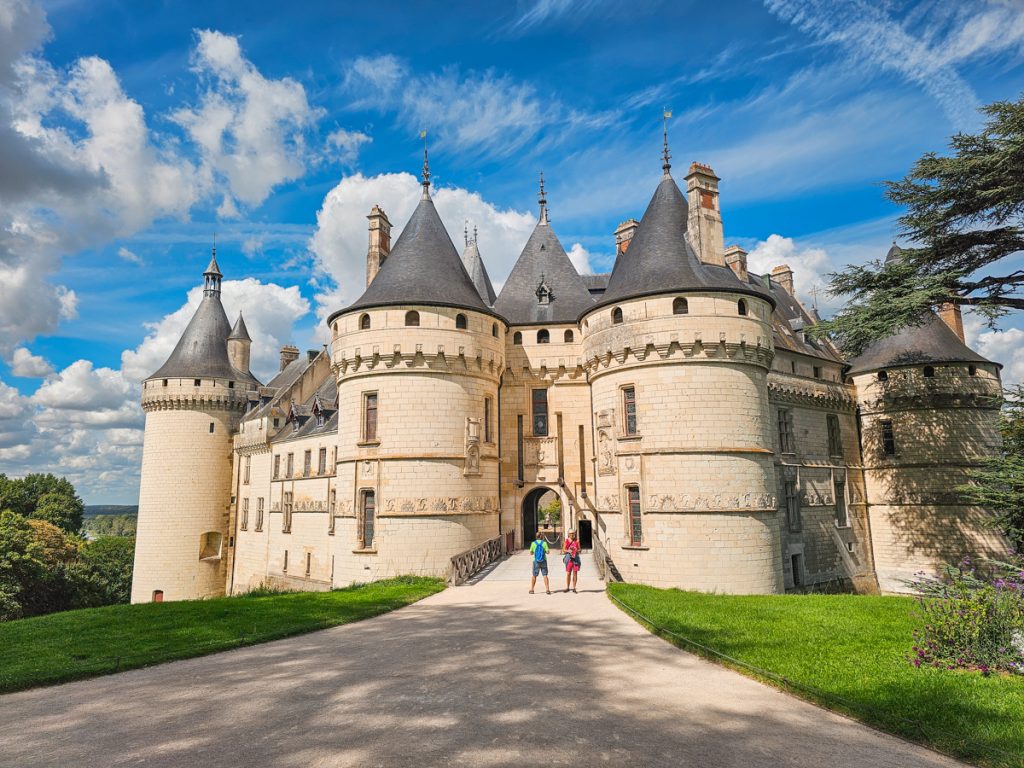
One of Chaumont-sur-Loire’s most famous owners was Queen Catherine de’ Medici, wife of Henri II. She owned the château for about a decade before forcing Diane de Poitiers, mistress of Henri II, to exchange Chenonceau for Chaumont.
The interior rooms are beautiful and atmospheric, with intricate, hung tapestries and richly decorated rooms. We especially loved the main courtyard, where you can linger and look out over the river.
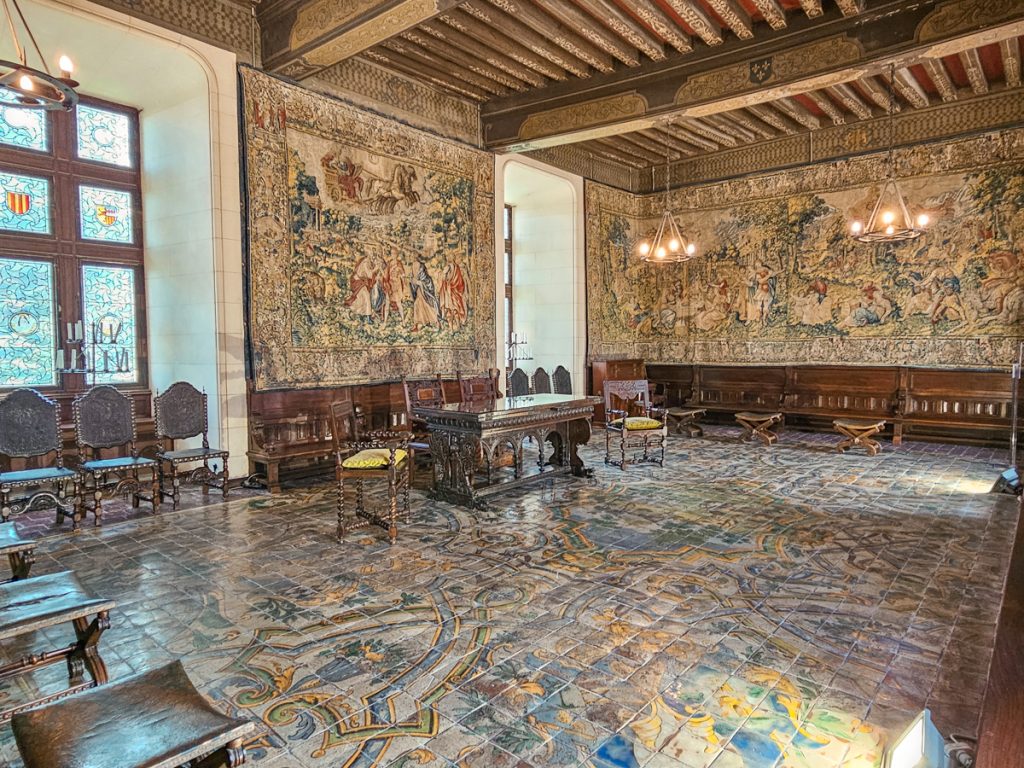
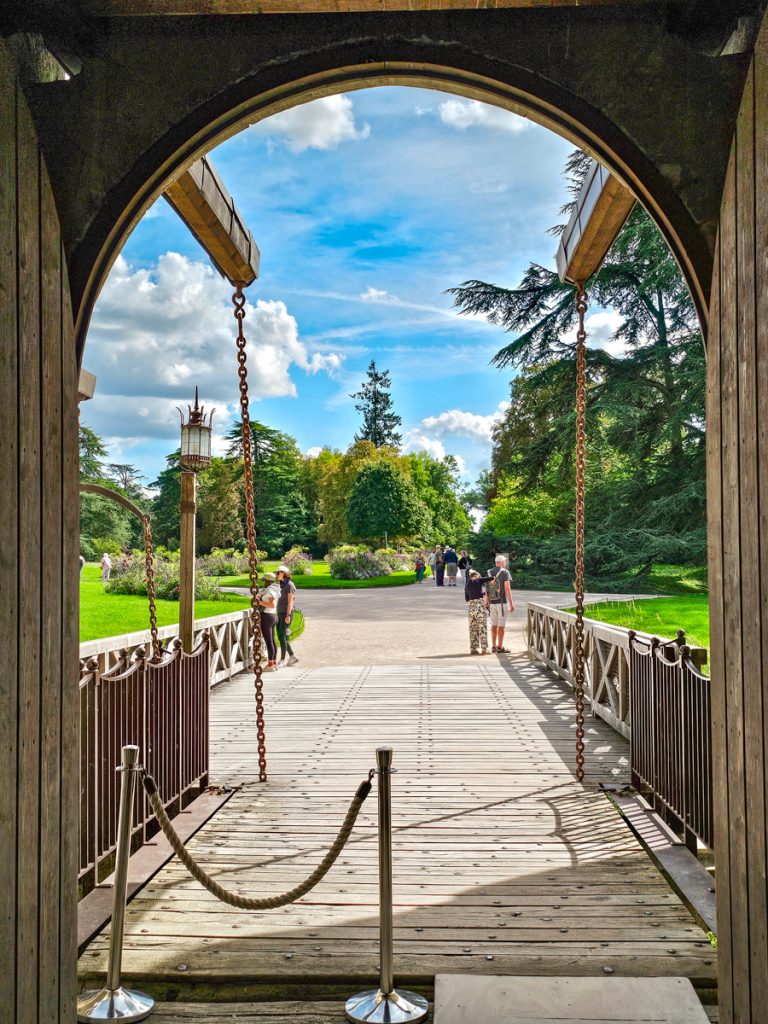


What really sets Chaumont apart today, though, are the grounds. The château is now a Center for Art and Nature, and part of the castle, as well as the surrounding farmyard, stables, and gardens, are filled with contemporary art installations.
Every year, Chaumont hosts an International Garden Festival with a new theme. When we visited, the theme was Once Upon a Time, and the gardens were full of playful, storybook-like scenes tucked into little alcoves throughout the grounds.

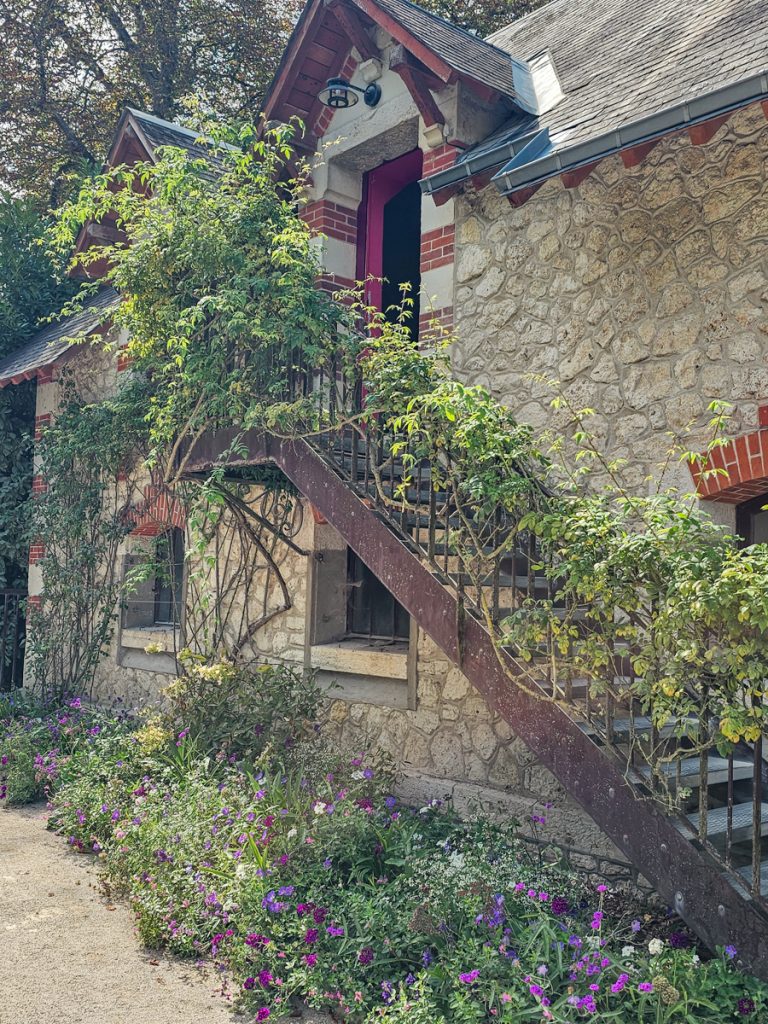
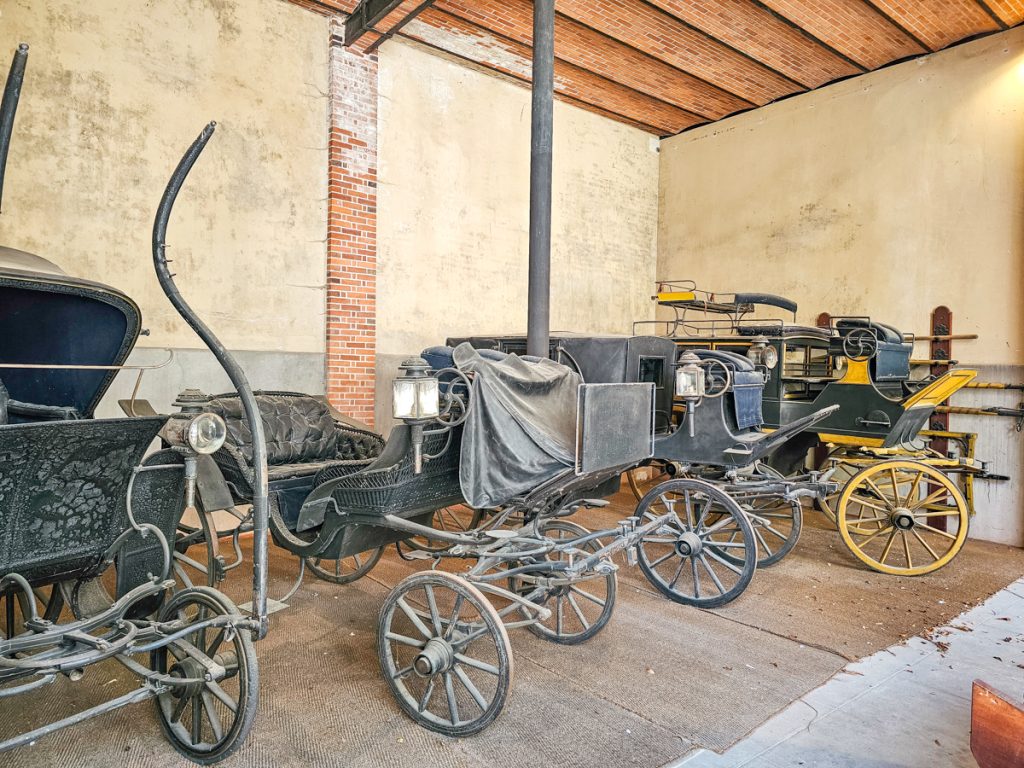
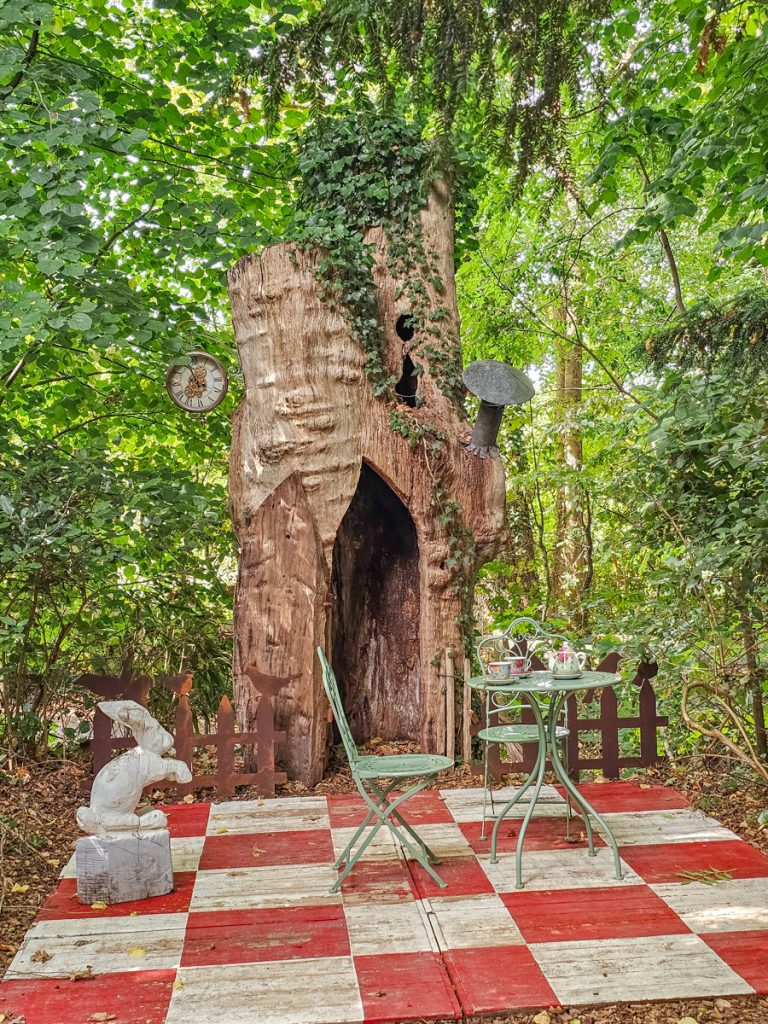


Much of what you see outside the château today dates to the late 1800s, when the Princess and Prince de Broglie owned Chaumont and reshaped the area around and below the château, replacing a small hamlet with English-style gardens and farm buildings.
The visit ends up feeling part historic château, part open-air garden and art experience, and it’s a really nice change of pace from the more traditional Loire stops.
Chaumont-sur-Loire was a second chateau we floated over on our hot air balloon ride. Seeing it from above was another magical moment.
👉Read more about what hot air ballooning in the Loire was like
👉Check prices and availability for the hot air balloon ride we did
10. Cheverny
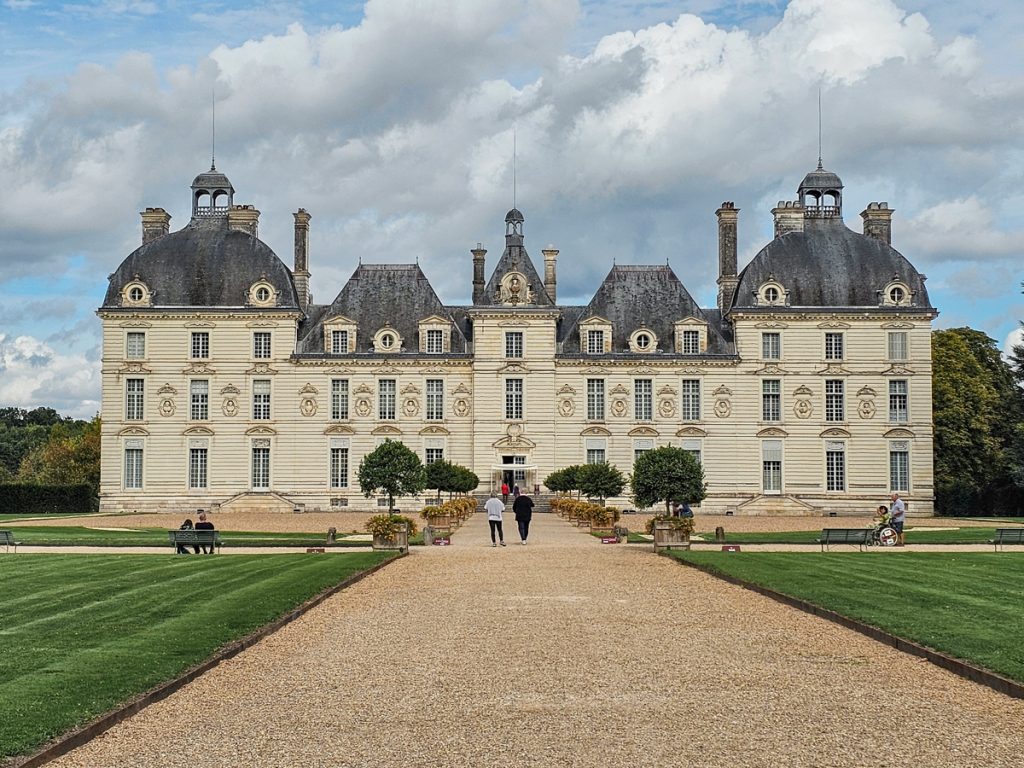
Cheverny isn’t one of the most talked about Loire châteaux, but we loved the interiors, the grounds, and the overall atmosphere. It feels welcoming and lived-in, with a lighter, more cheerful energy than many of the grand royal castles.
Part of that comes from its history. Cheverny has belonged to the Hurault family for centuries, with only a couple of short interruptions (such as when Diane de Poitiers lived here temporarily while overseeing renovations at Chaumont-sur-Loire after being forced out of Chenonceau).
Even today, members of the family still live in private apartments within the château.
Every room felt thoughtfully and beautifully decorated, with a style that leans more elegant and a little whimsical.
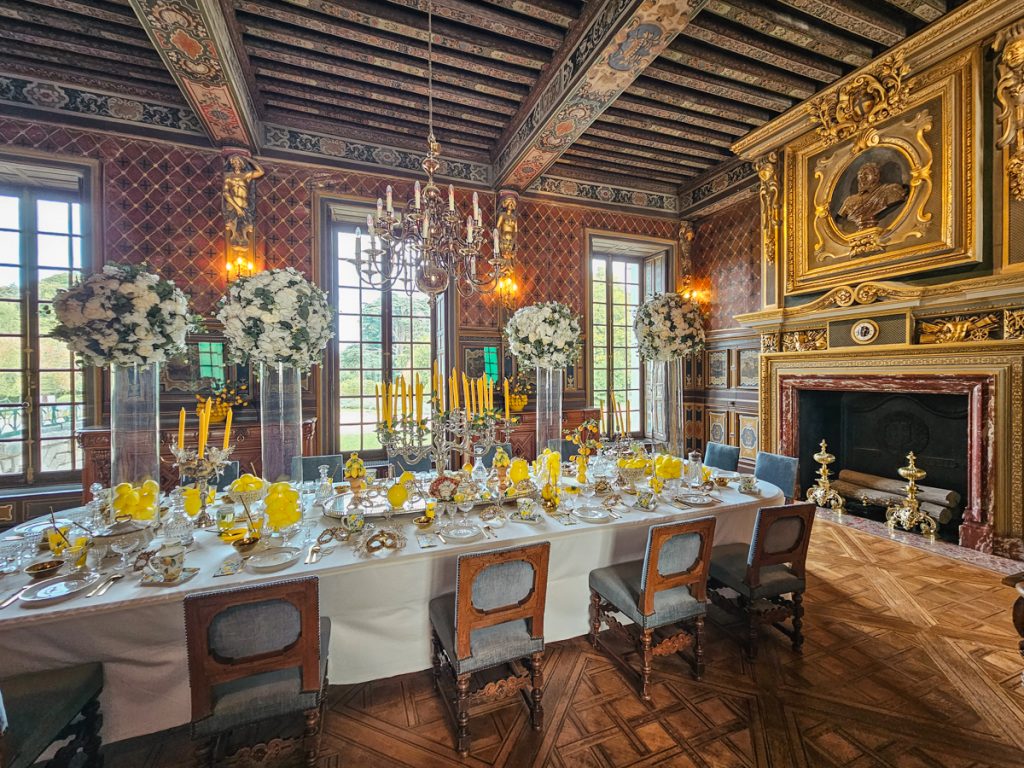
For example, the dining room was decorated with a lemon theme, complete with the scent of citrus in the air, and the painted, colorfully beamed ceiling was stunning.
There were multiple really beautiful bedrooms belonging to children and women that we enjoyed looking at.
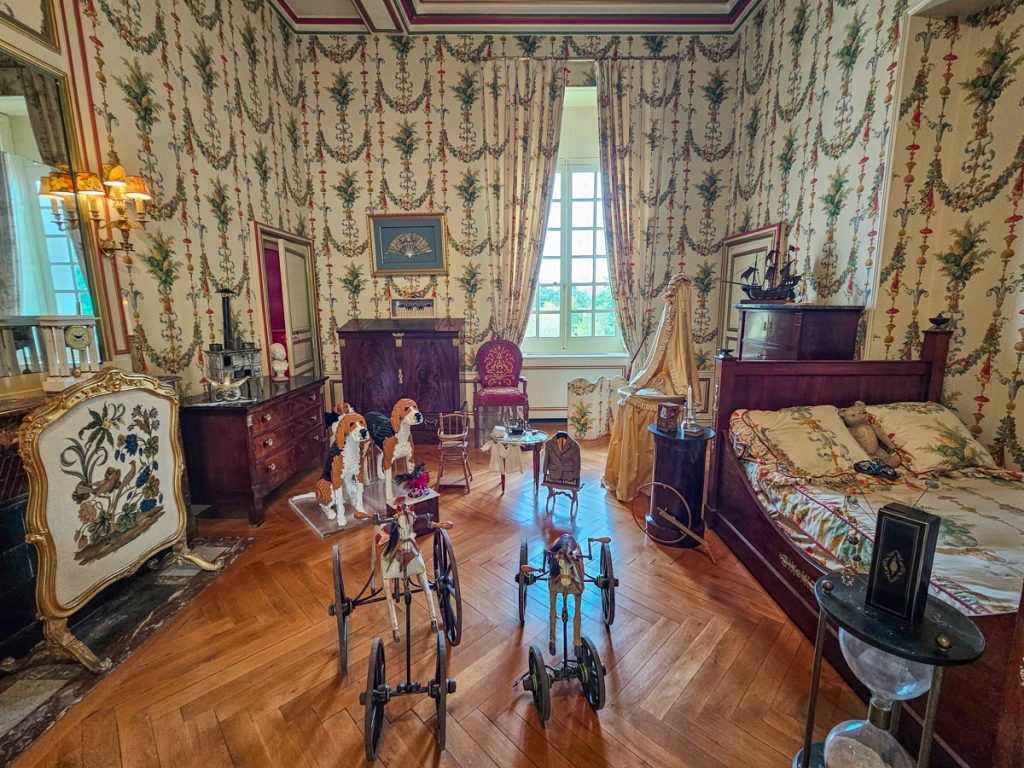
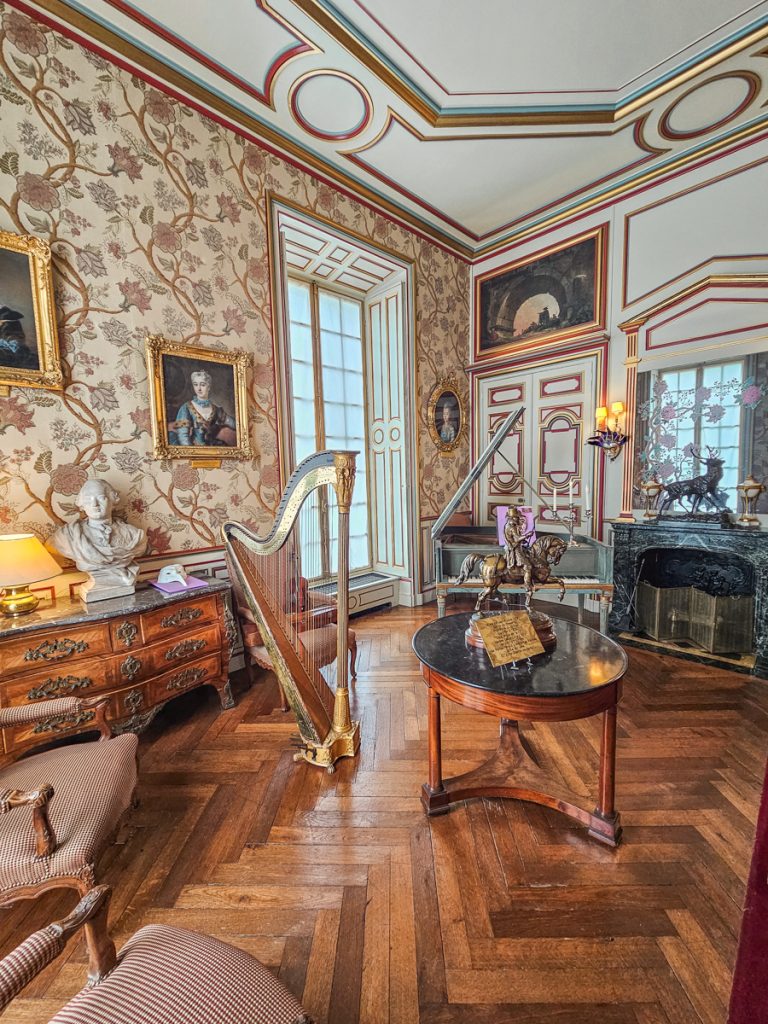
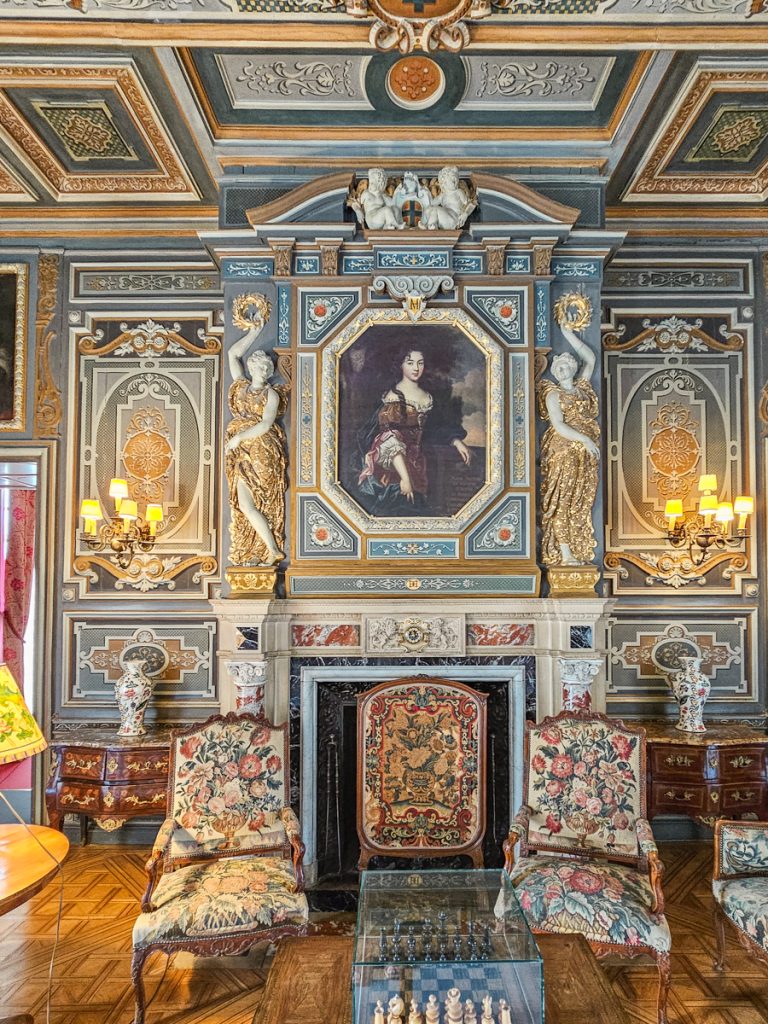
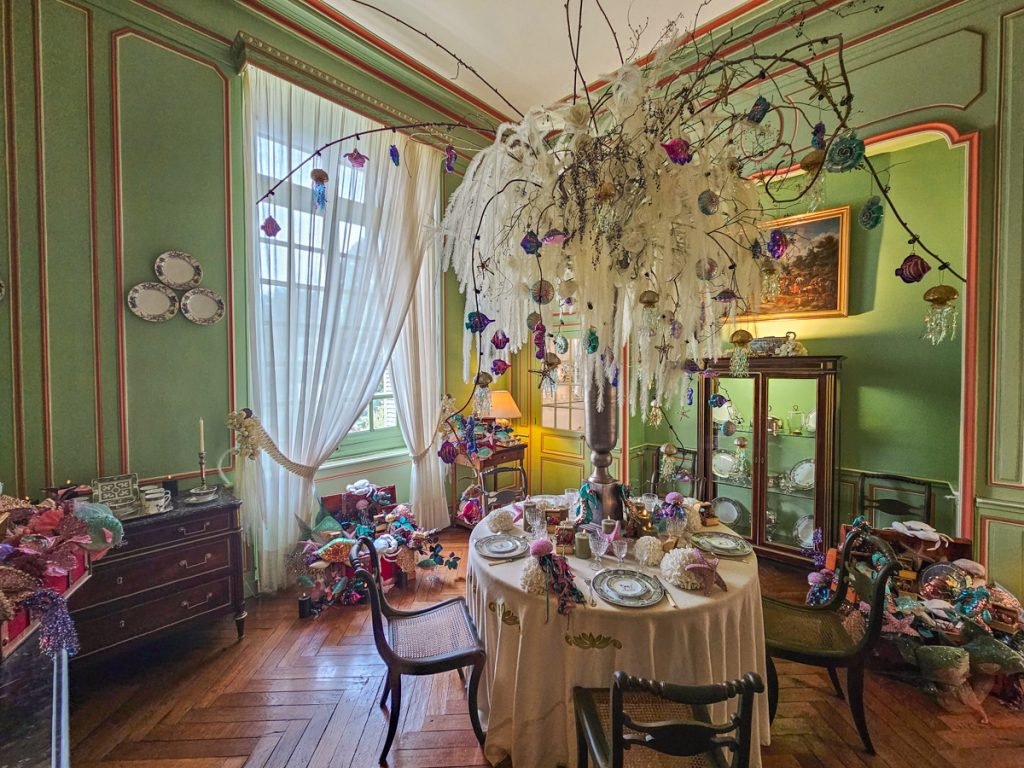
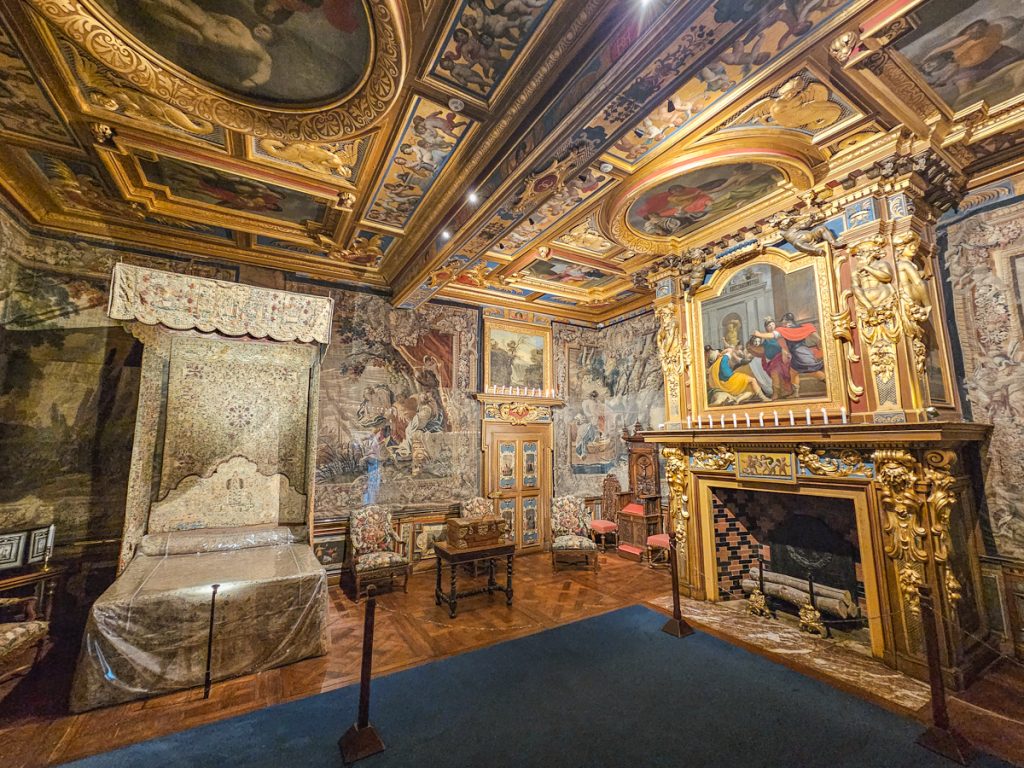
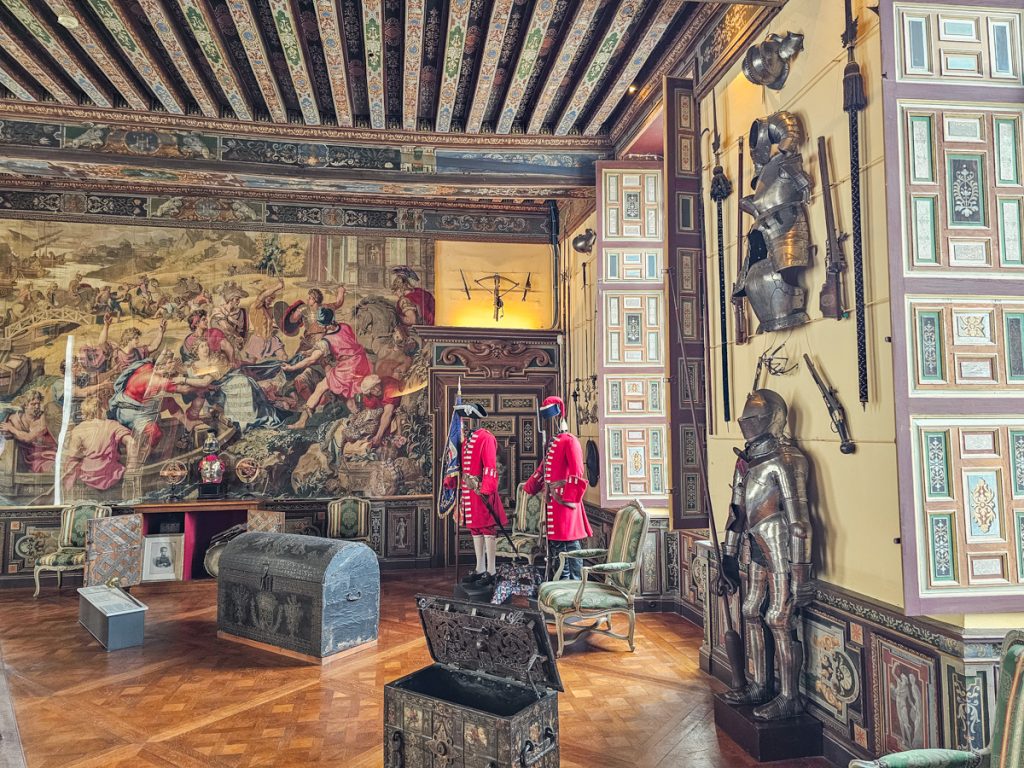
The King’s Room was the most ornate space in the château, with a ceiling covered in painted murals and intricate gold detailing. Upstairs, the arms room is the largest room in the château, filled with suits of armor and weapons.
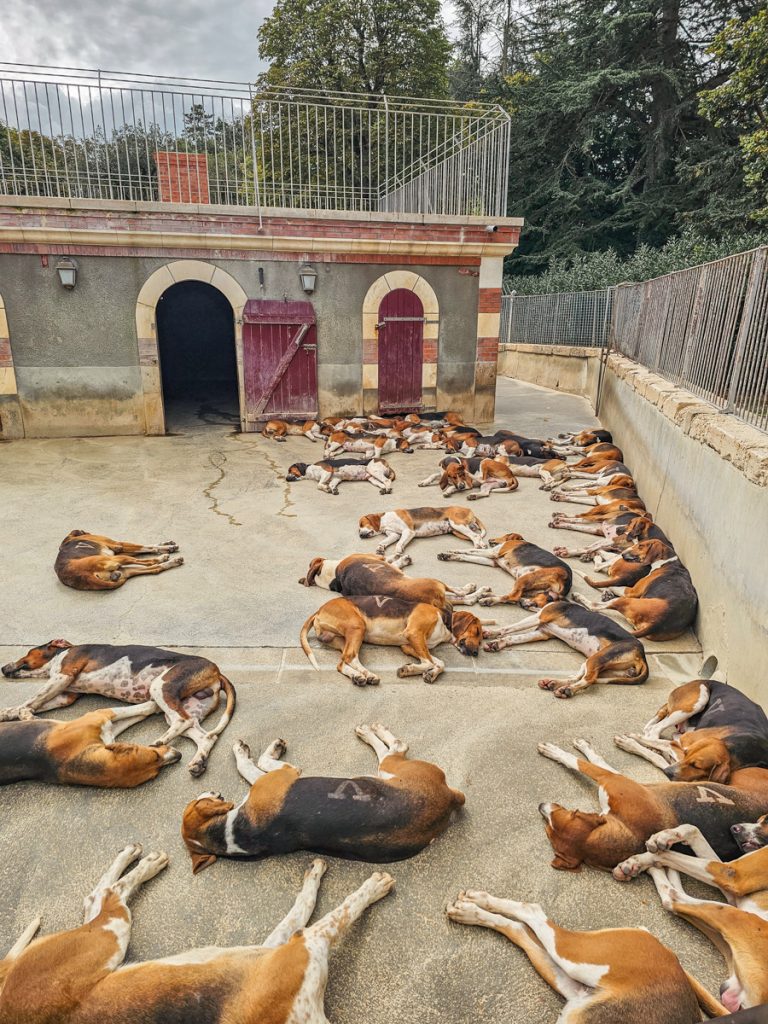
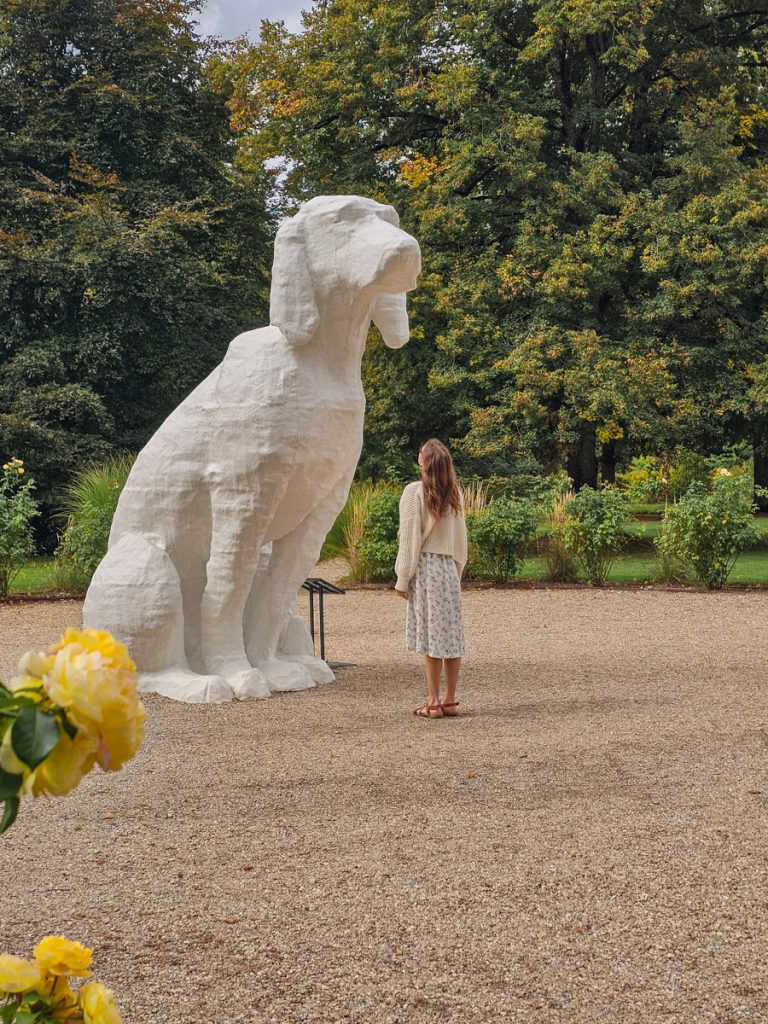
Cheverny is also very proud of its hunting traditions. As you walk in, you pass the kennels, home to around 100 French hounds. When we arrived, most of them were piled together napping, with a few lazily wandering around. There’s a large hound statue on the grounds, and smaller dog references tucked throughout the décor.
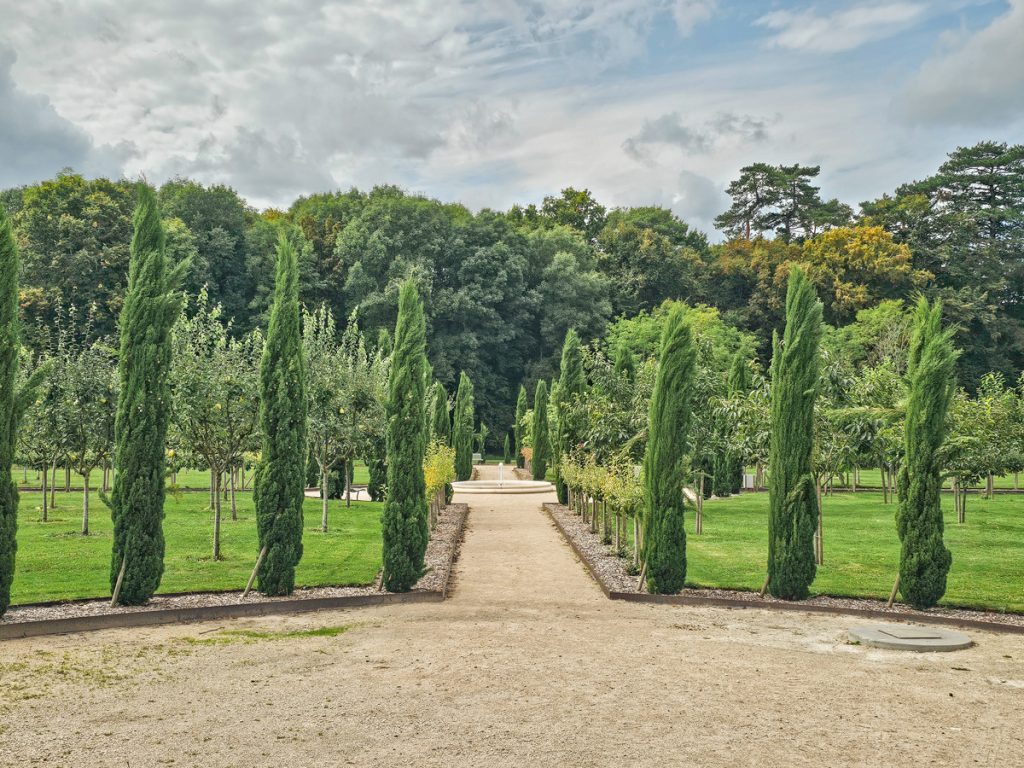
The grounds themselves are pleasant, but Cheverny really shines indoors. It felt polished but relaxed, elegant without being intimidating, and easily one of my favorite “under-the-radar” château visits in the Loire.
Four Other Castles to Consider
I would consider these last four a lesser priority compared to the 10 main castles on the list. However, I’m still sharing for anyone who has more time and wants even more variety.
11. Langeais
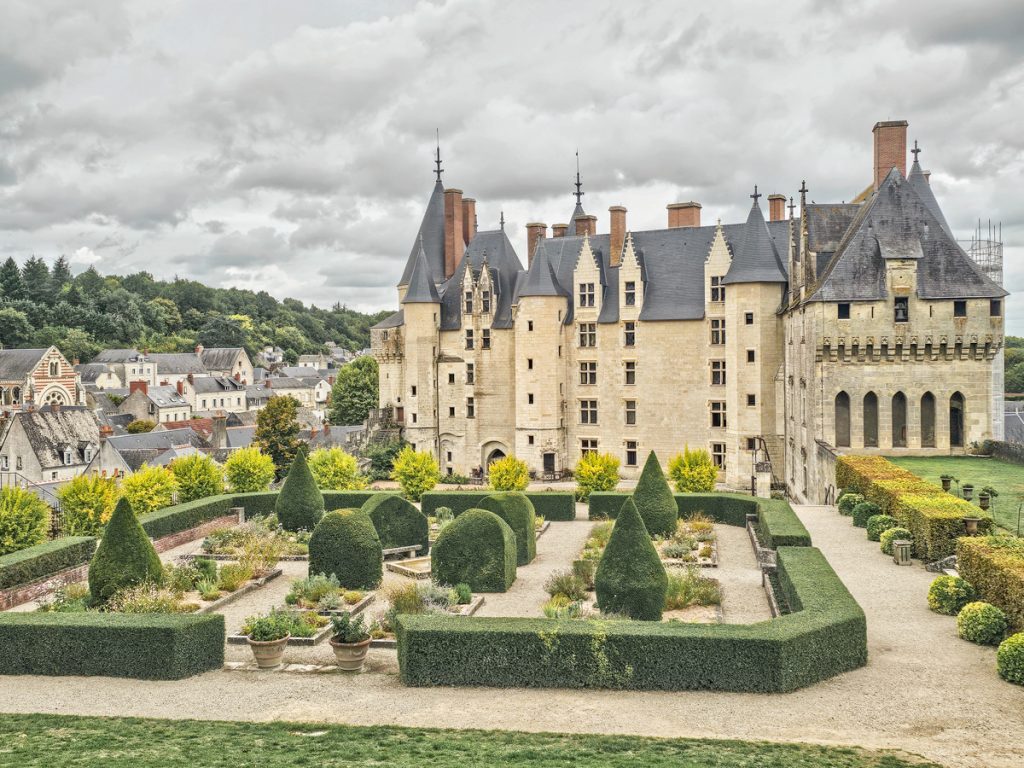
Langeais is a smaller château with a strong medieval character and a specific historical focus. Overall, it leans much more toward defense than decoration, and it feels closer to a medieval fortress than a true Renaissance palace.
The château was a royal residence from the 1200s through the 1600s before passing into noble and then private hands. Its biggest historical claim is that it was the site of the secret marriage between Charles VIII and Anne of Brittany.
That marriage effectively brought Brittany into the French kingdom, making it one of the more politically significant events tied to any Loire château.
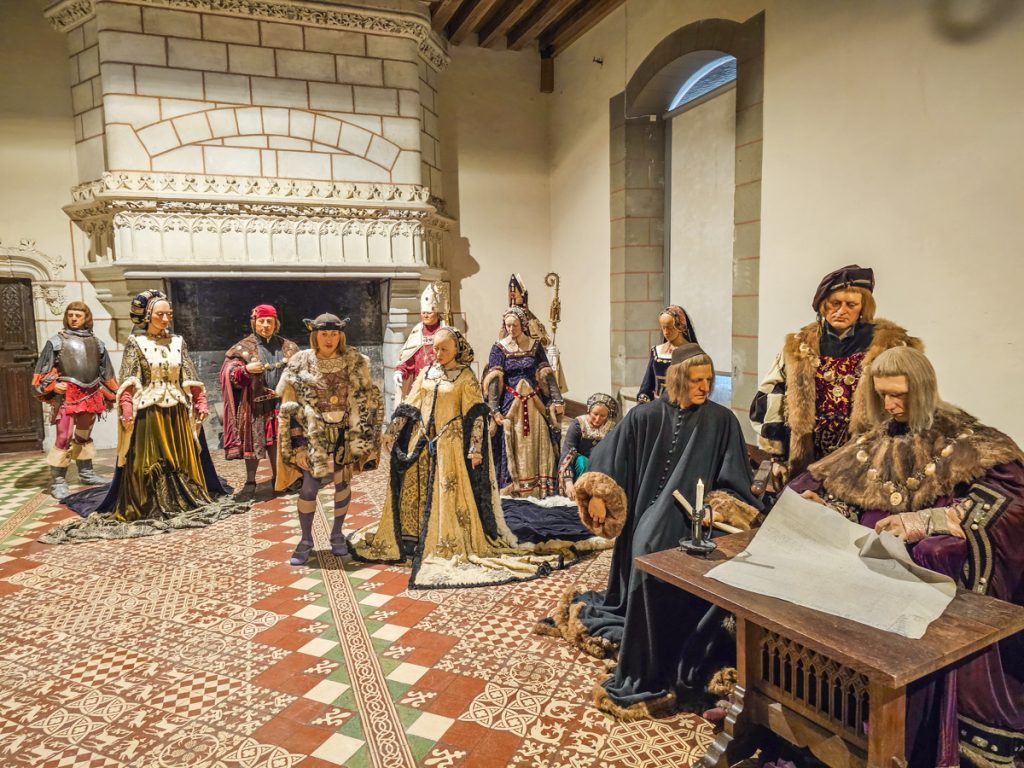
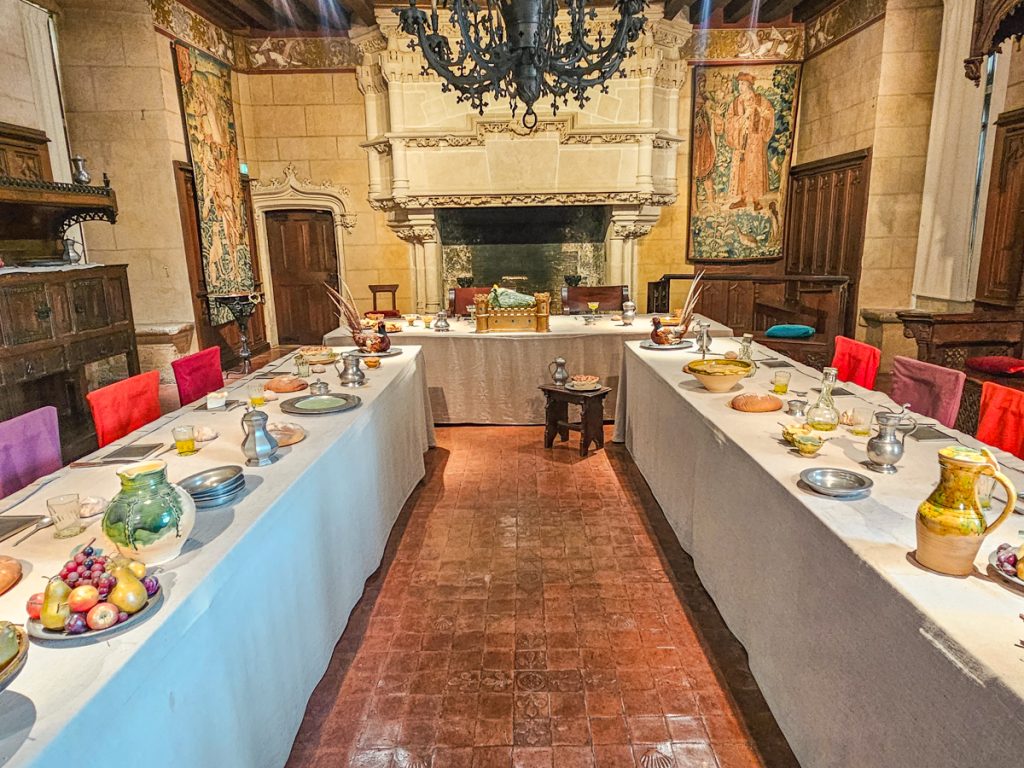
This moment is brought to life in the castle’s Wedding Hall, which recreates the ceremony using mannequins dressed as they would have been on the day.
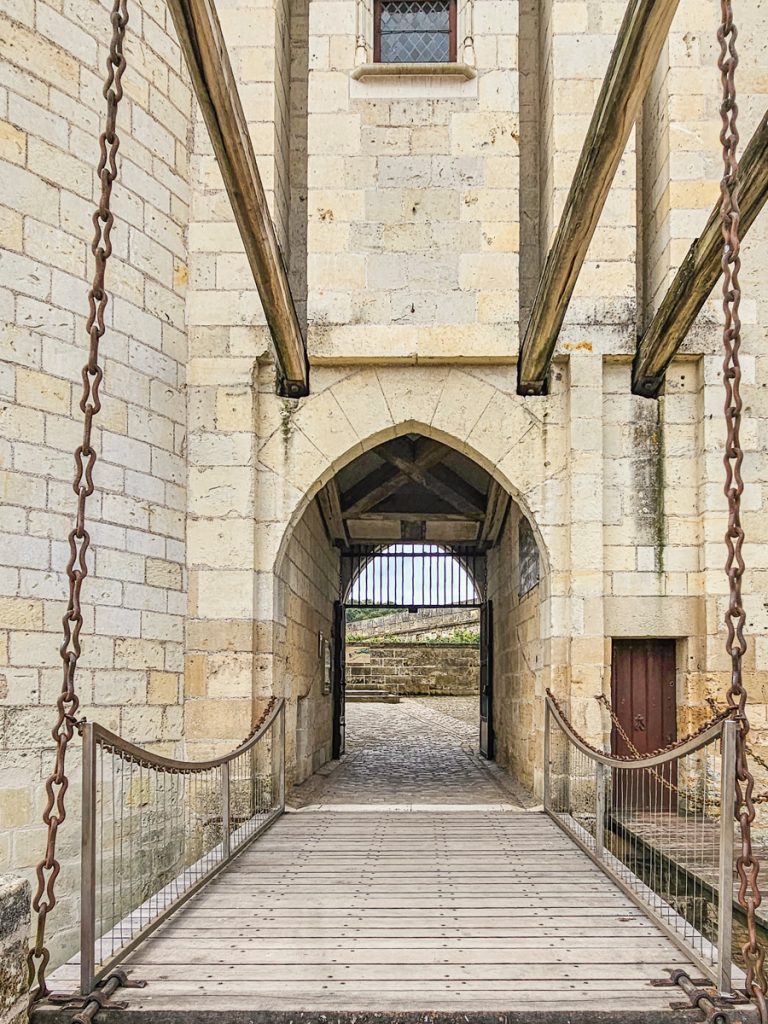
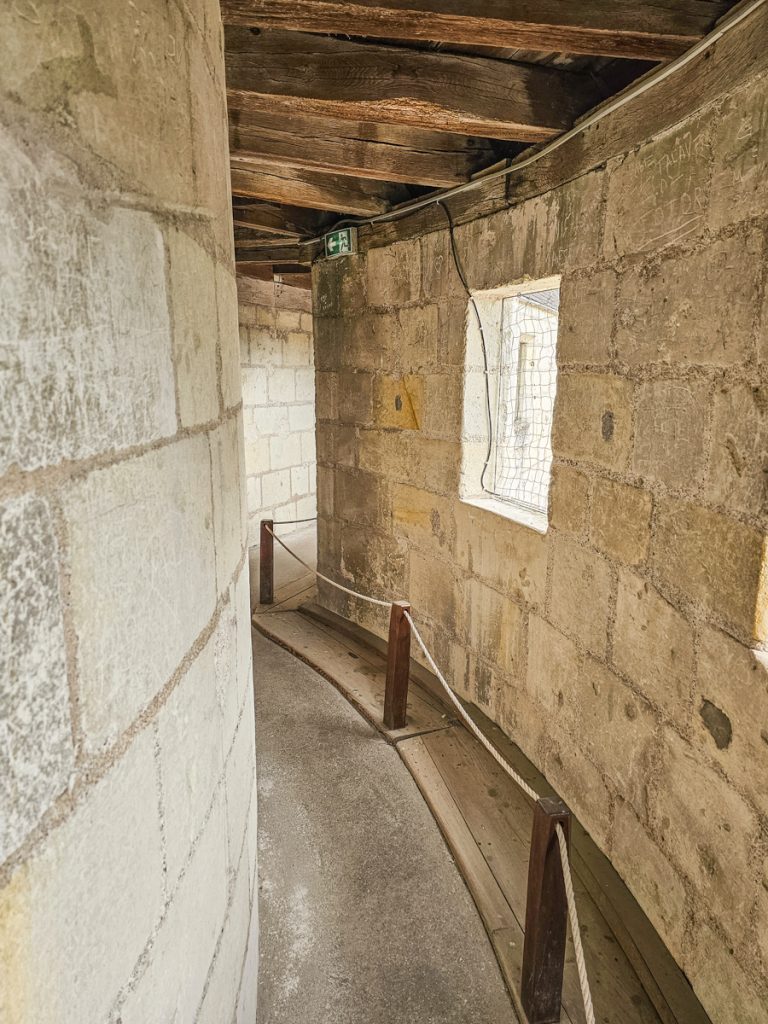
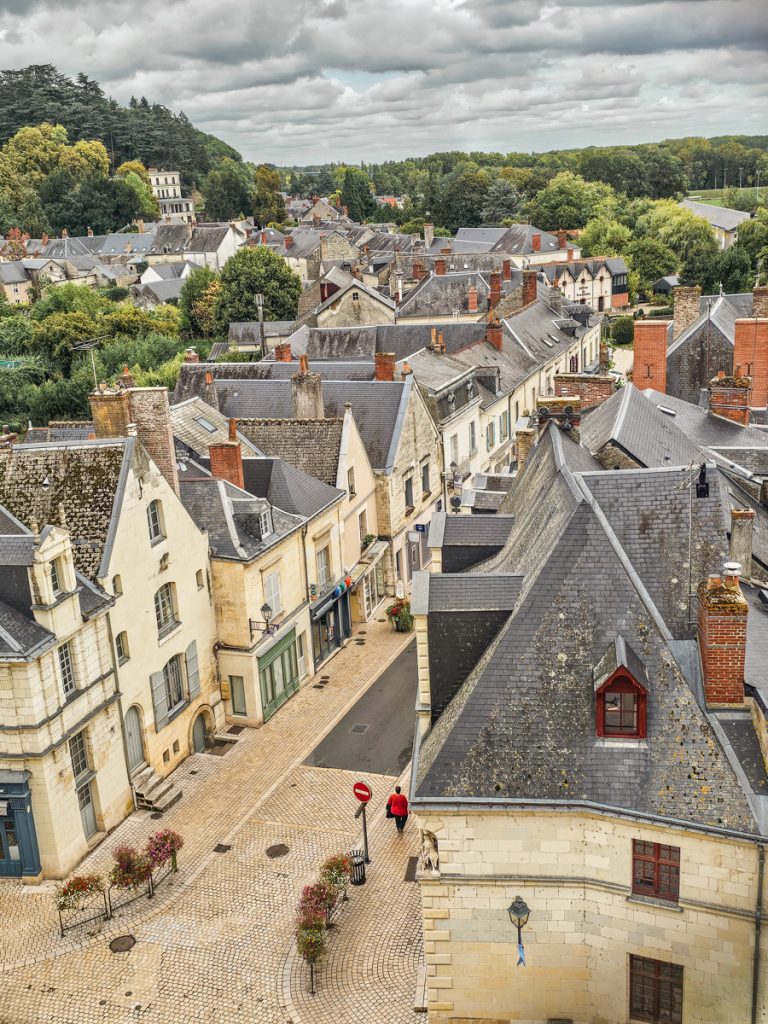
A few other interesting features include the drawbridge you cross to enter the château, a spinning room with a tapestry still on the loom, and a tower you can climb. From the top, you walk along a narrow pathway around the tower and look down over the town, the river, and the bridge below.
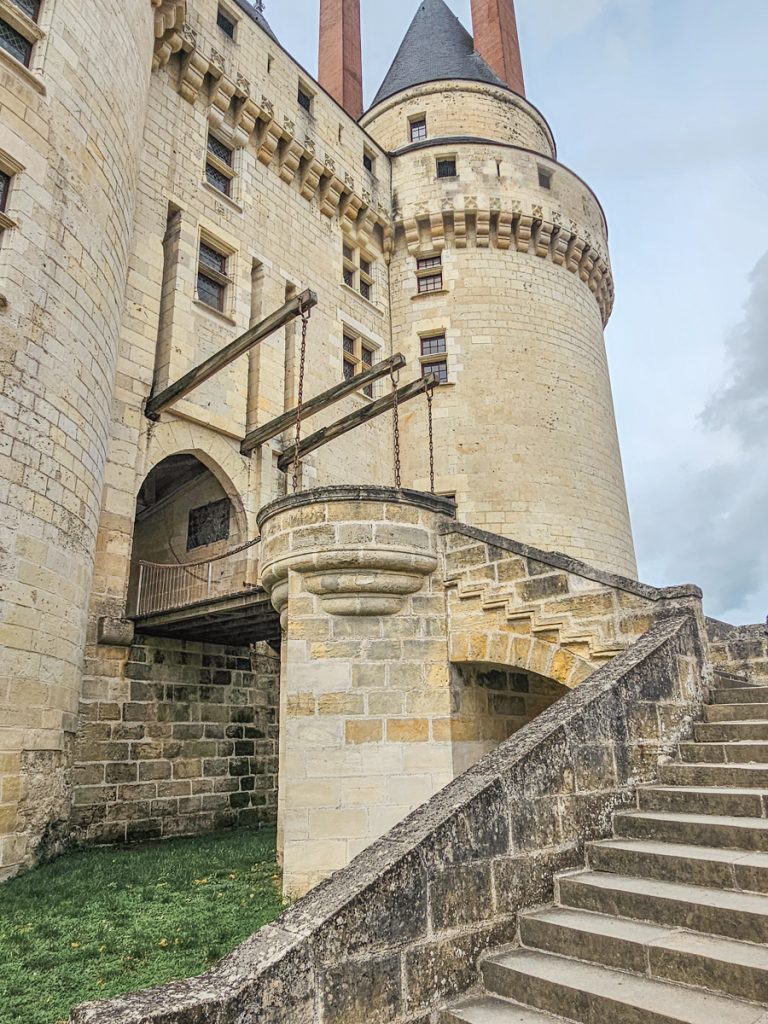
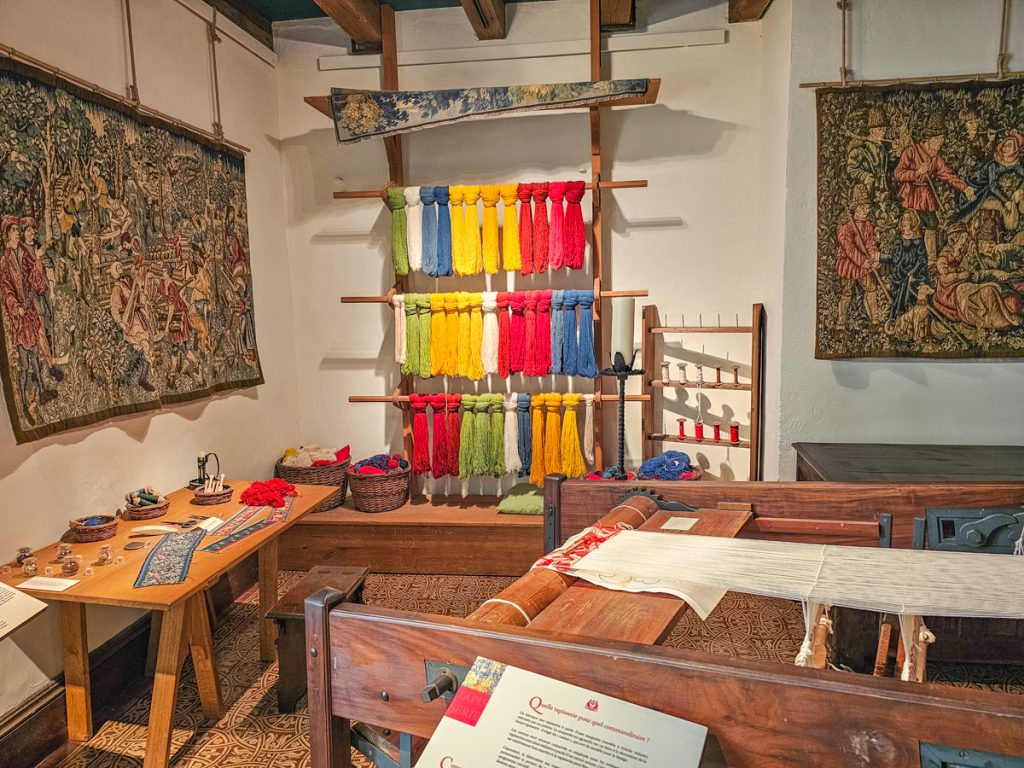
Outside, there are small gardens set into the hillside, along with the remains of a medieval tower wall that you can walk behind.
Langeais is definitely more off the beaten path, so it can be a good option if you want to visit somewhere a little different. That said, I’d personally call this a lower priority compared to some of the Loire’s more memorable châteaux.
12. Montrésor

Montrésor is a tiny but very charming village in the Loire Valley, officially part of the Les Plus Beaux Villages de France designation (The Most Beautiful Villages in France). It’s set right along the Indrois River, with postcard views of the village and château reflected in the water below.

This is much more of a village-focused stop than a château-first experience. A visit here is about wandering the riverside path, strolling through a handful of quiet but charming lanes, and enjoying the atmosphere rather than touring a grand palace.
The château itself feels more like a large manor house than a typical Loire showstopper. In the mid-1800s, it was purchased by Xavier Branicki, a Polish noble who settled here after the failed 1830 uprising against Russia. He later became mayor of Montrésor, and the Polish connection is still very present in both the château and the town.

Inside, the rooms are preserved much as they were during Branicki’s time. Some spaces are elegant, while others are a little eccentric, including a dining room filled with taxidermy that’s definitely memorable, to say the least.


One of the best parts of visiting the château is the garden terrace, where you get lovely views back down over the village and river below.
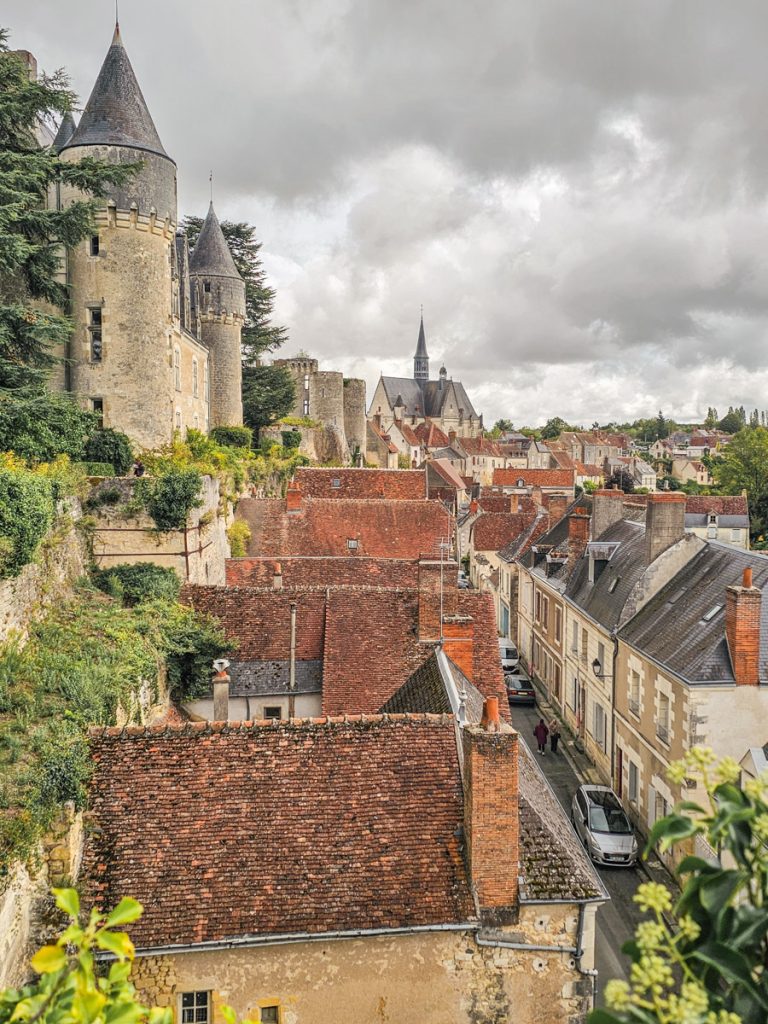
Montrésor isn’t one of the Loire’s iconic château stops, but if you’re looking for a slower visit and a genuinely pretty village to wander, it’s a great option to include.
13. Chinon

Like Montrésor, Chinon is a small medieval town set along a river, with a château resting above it on a hill. Unlike Montrésor, though, the Vienne River is much wider here, and instead of being a luxurious residence, what dominates Chinon is a sprawling medieval fortress that has largely fallen into ruin.

Chinon’s château was first fortified by the Counts of Blois along an important trade route. In 1156, it became a royal residence under Henry II of England. Various kings used it as a residence before the site eventually declined and fell into ruin by the late 1500s.

Most notably, Chinon is closely tied to Joan of Arc. In 1429, Joan came to the Château de Chinon to meet Charles VII, where she persuaded him to support her mission to lift the Siege of Orléans and pave the way for his coronation as king of France.
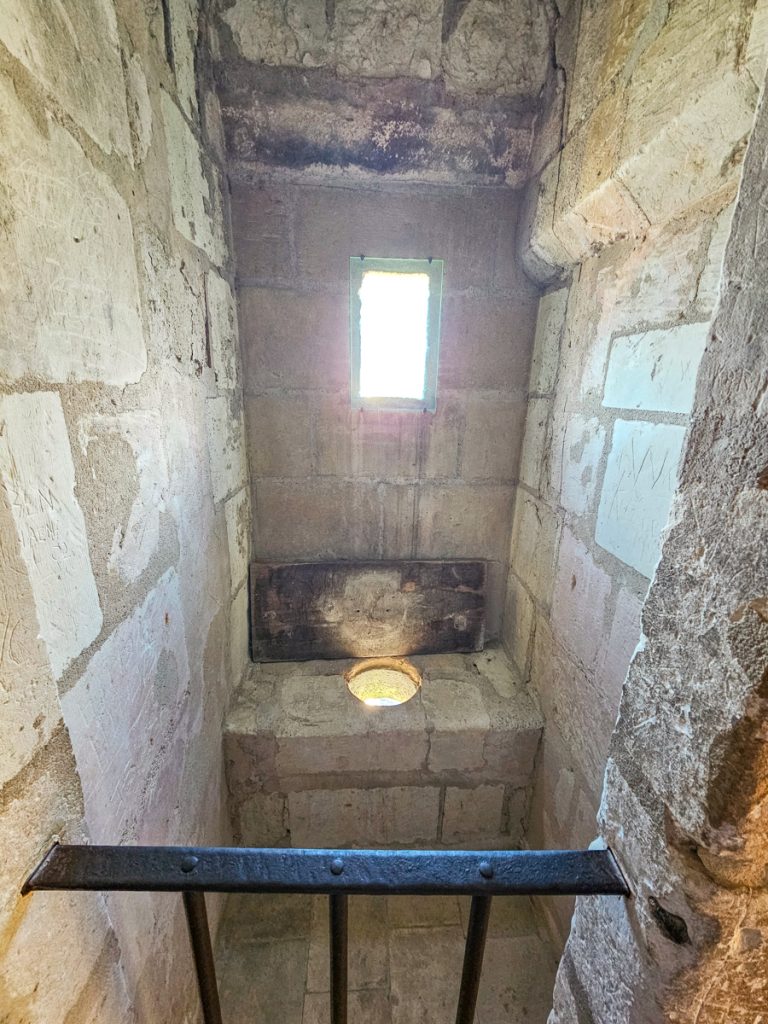
Even in ruin, Chinon is fascinating to visit. You can walk through the remains of the fortress, including the keep, towers, and several outbuildings, and the views down over the town and river from the castle walls are excellent. The scale of the site is impressive, and it feels completely different from the Loire’s refined palaces.
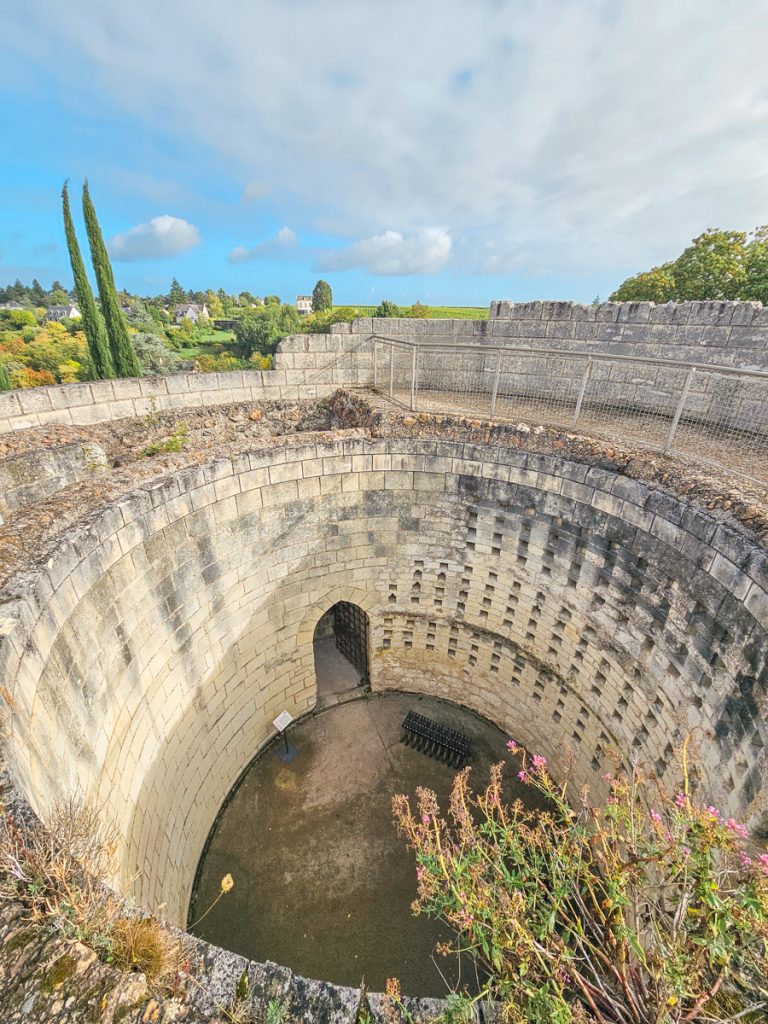
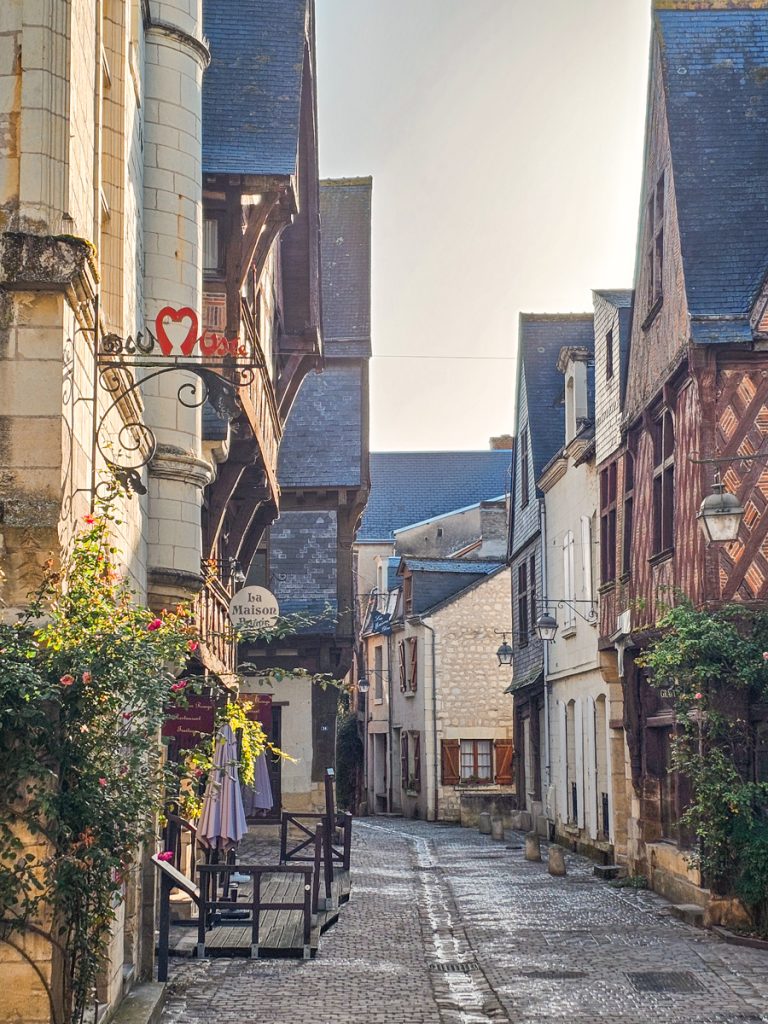
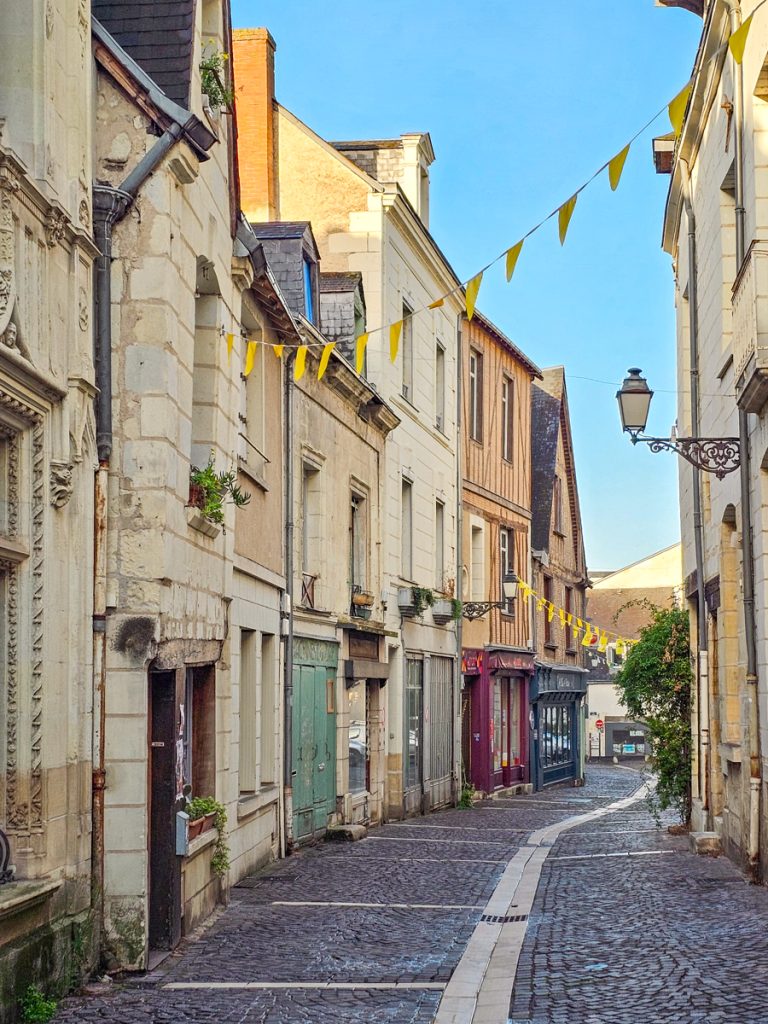
Plus, the town is really lovely to walk through before or after your castle visit, with charming streets and riverside paths. This is a nice alternate stop for the Loire, especially if you’re interested in the more defensive, medieval side of Loire Valley history.
14. Rivau
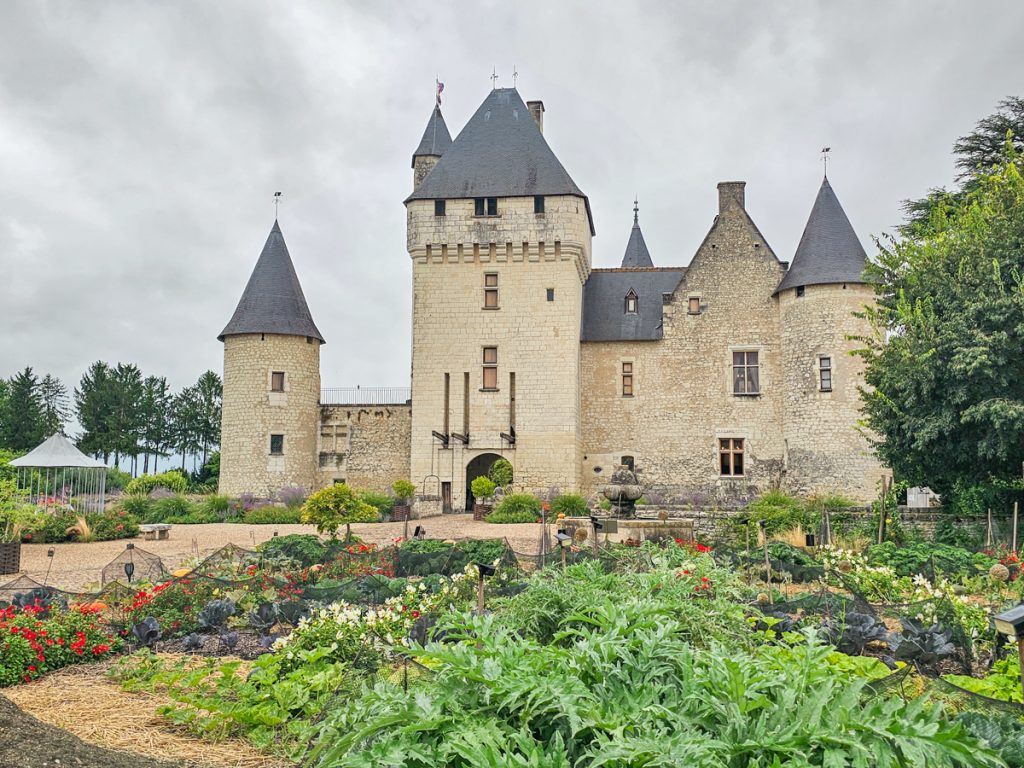
Château du Rivau was built in the early 1400s and remained closely tied to the Beauvau family, who served the French kings for centuries.
Originally fortified under Pierre de Beauvau, First Chamberlain to Charles VII, the château later became known for its royal stables, built in the early 1500s to house the king’s horses and now listed as a Historic Monument.
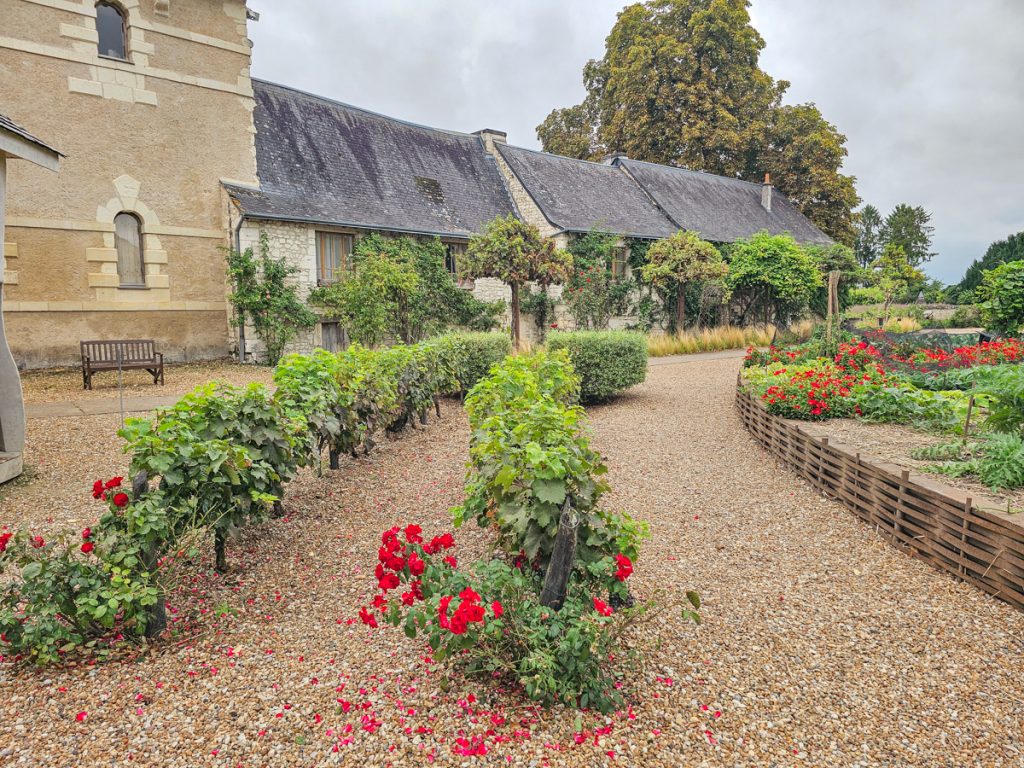
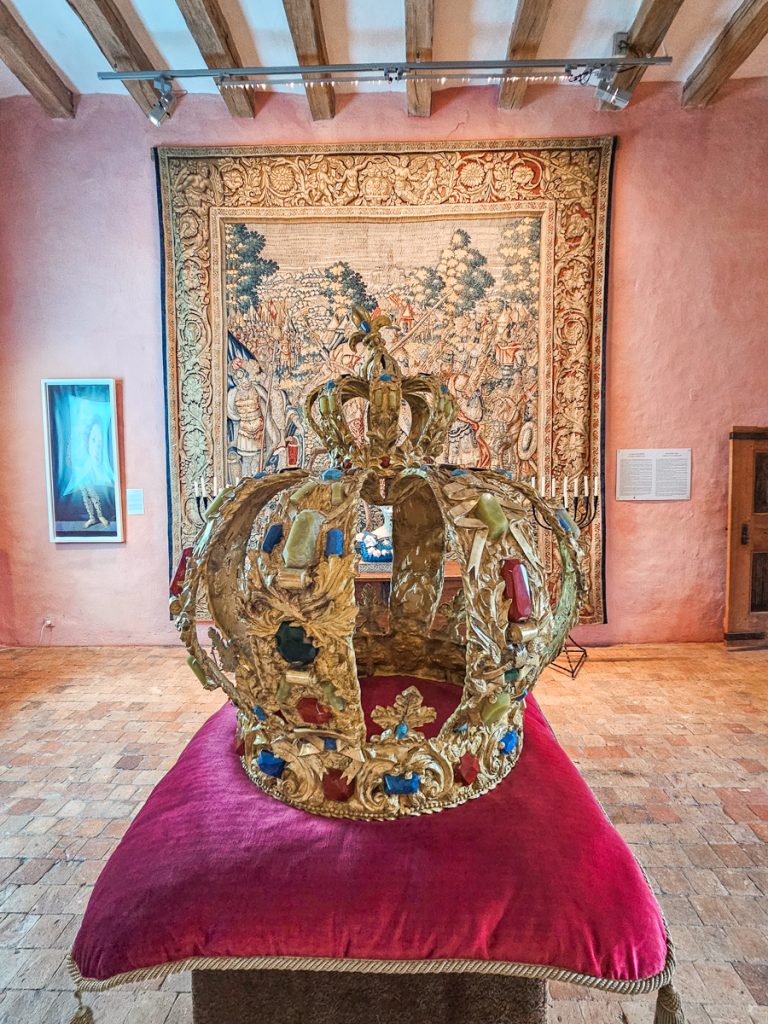
Today, Rivau is smaller and more intimate, and the focus is less on grand interiors and more on art and gardens. The château was purchased by a private family in the 1990s, and their restoration approach leans heavily into supporting artists and contemporary exhibitions.
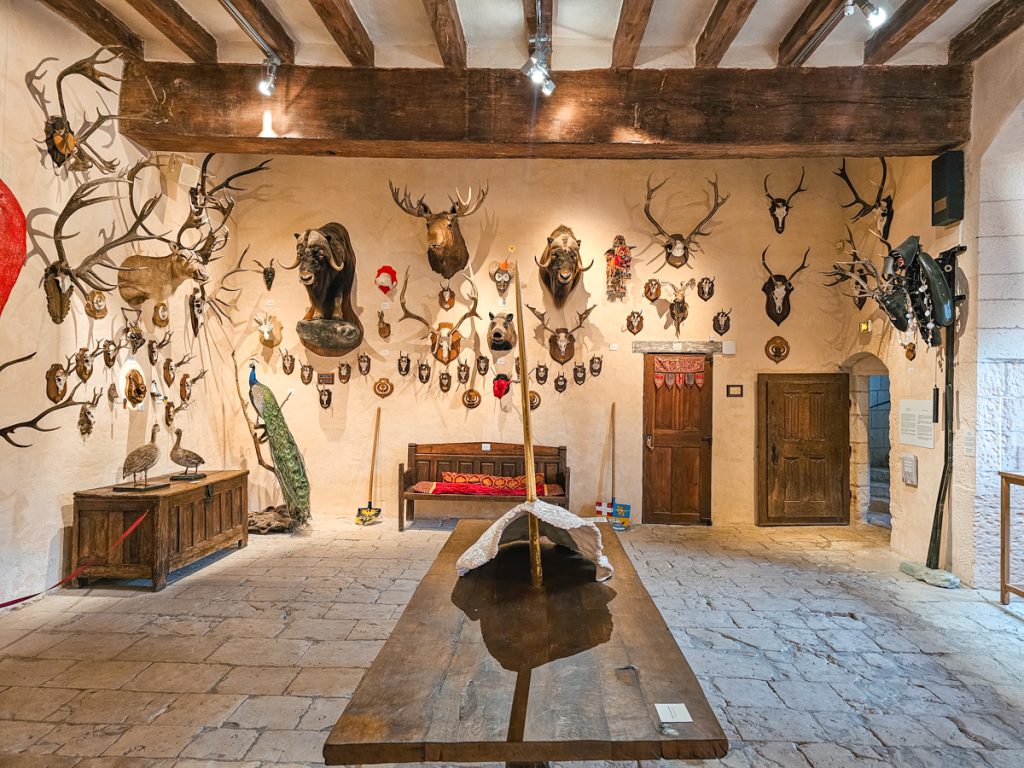
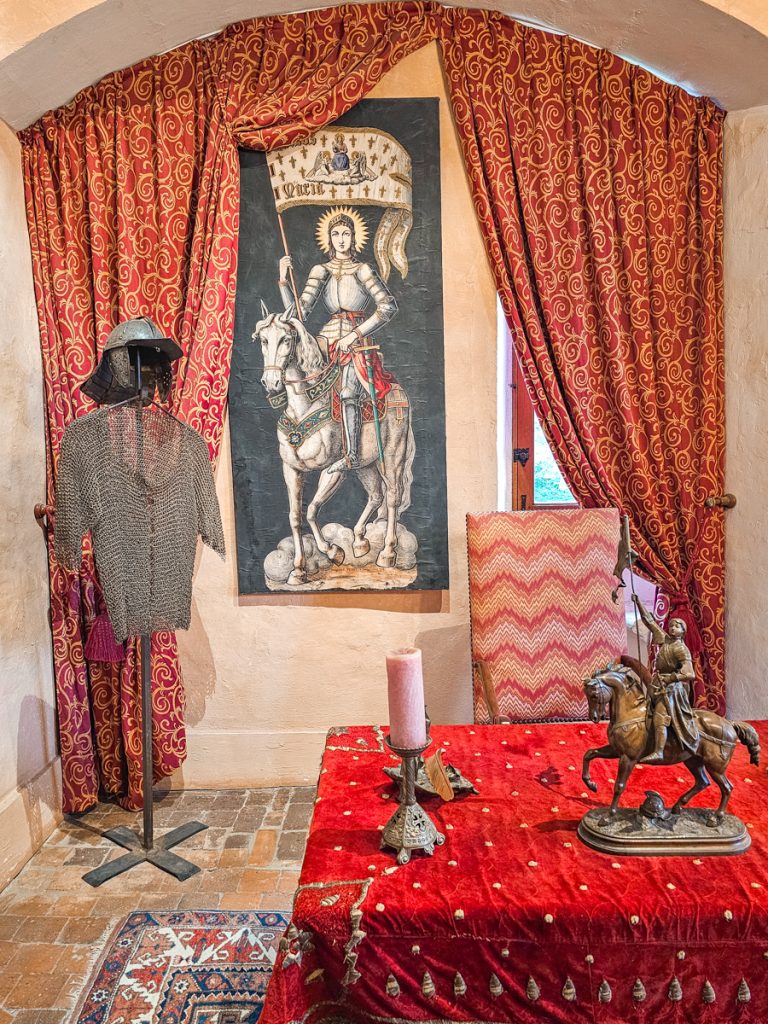
There are only a handful of interior rooms open to visitors, and they’re presented more as art spaces than fully restored historic rooms. One room is filled with mounted animal heads, another has more modern art pieces, and one smaller room is dedicated entirely to artwork inspired by Joan of Arc.
Rivau has a real historical connection to Jeanne d’Arc, who came here in 1429 to collect horses on the eve of the Battle of Orléans.
We really enjoyed the gardens surrounding the château, they’re lovely to walk through and thoughtfully designed.
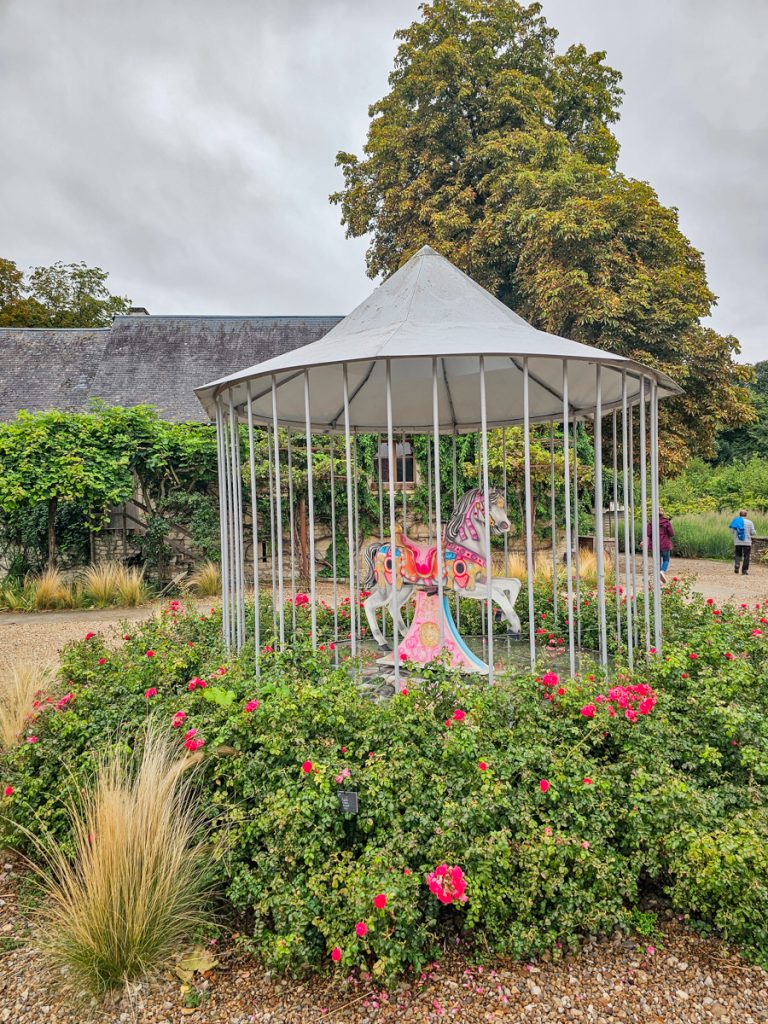
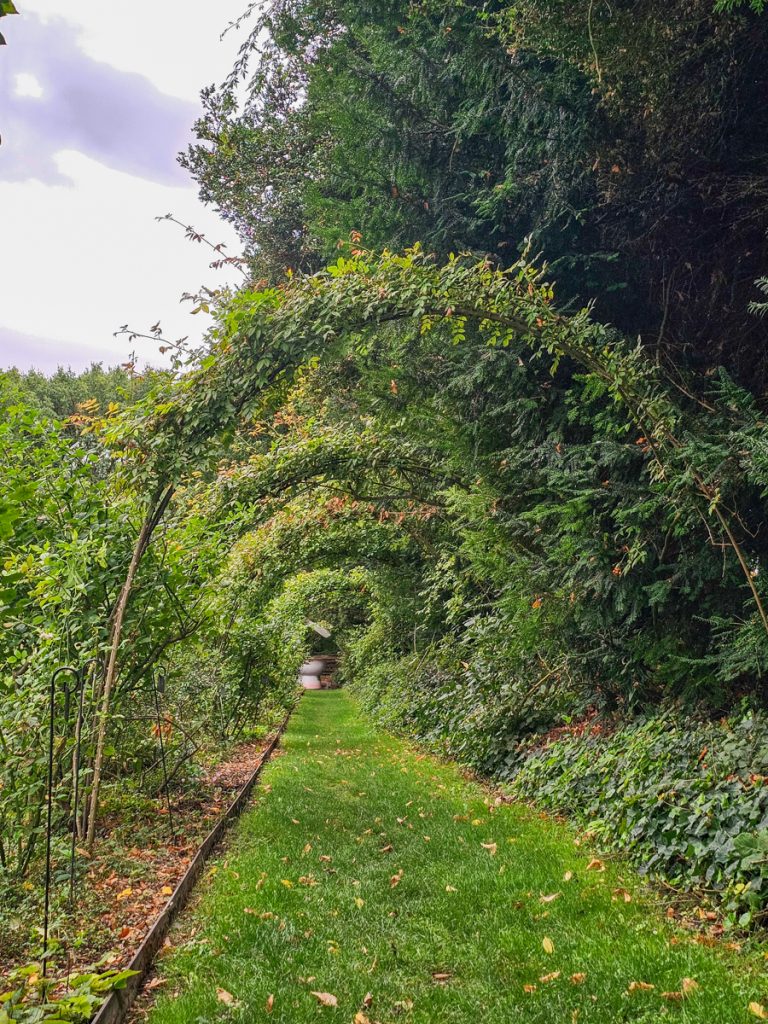
Overall, though, Rivau wasn’t a favorite stop for us. It’s quite a bit out of the way, and unless you have plenty of time in the Loire and are specifically interested in art-centered château visits, I wouldn’t prioritize it.
Practical Information & Tips
Map of Loire Valley Sites
The chateaux mentioned in this post are pinned on this interactive map. The top 10 castles are pinned in red, the final four options are pinned in purple.
3 Top Guided Tours from Paris
Only have time for a day trip to the Loire? These highly rated tours take you 2-3 of the best castles in the Loire:
✅ Guided Tour to Chenonceau & Chambord: See the Loire’s most famous castles
✅ Guided Tour to Chenonceau, Chambord, & Amboise: Includes one of the most important royal castles
✅ Guided Tour to Chenonceau, Chambord & Cheverny: Includes a more off-the-beaten-path castle
Or, read my detailed guide on daytripping from Paris to the Loire.
Consider a Hot Air Balloon Ride

I mentioned this within the post, but it deserves its own callout. Riding in a hot air balloon over Chenonceau and Chaumont-sur-Loire was a true bucket list experience, and I can’t recommend it enough.
Read all the details about our hot air balloon experience here.
Some Timing Considerations
You could easily spend 7–10 days in the Loire, without question. On my last trip, I spent a full 7 days there, and could have done more.
That said, if you’re visiting Paris and only have time for a day trip, it’s still a very doable option. In one long day, you can get a solid taste of the region and visit 2–3 châteaux.
With 3–4 days, you can see many of the châteaux on this list and still have time to stop in a couple of small towns along the way.
When it comes to pacing, it’s very manageable to visit two places in one day, whether that’s two château, two villages, or one of each. If you start first thing in the morning, three castles or villages in a single day is also possible.
Most châteaux open around 9:00–9:30 am and close between 6:00 and 7:00 pm, but the hours vary quite a bit by season. A typical visit takes 2–3 hours, though a few can be done in closer to 1–2 hours. Driving times between stops usually fall in the 30–60 minute range, depending on your route.
These are the castles I would say are shorter stops (1-2 hours instead of 2-3):
- Clos Lucé
- Blois
- Azay-le-Rideau
- Cheverny
- All 4 of the “extra” castles on this list
How to Get Around the Loire
If you’re doing multiple days in the Loire, you really need a rental car – there is some public transportation, but having a rental will give you SO much more flexibility and ability to visit any castle you want.
I always check this rental car aggregate and this rental car aggregate to find the best prices and options for my travel.
Final Thoughts
If there’s one takeaway from all of this, it’s that the Loire has an incredible amount of flexibility and variety. No two châteaux feel the same, and there’s no single “right” way to see the region.
Some castles are grand and memorable. Others are quieter, more atmospheric, or interesting for very specific reasons, and mixing a few bigger stops with smaller châteaux and some quaint villages can make for an incredible visit.
Need Personalized Help Planning Your Trip to France?
If you’re feeling overwhelmed with options or short on time, my France planning calls can help.
These one-on-one video sessions are great for getting feedback, asking questions, and sorting through options, whether you’re building an itinerary from scratch or fine-tuning plans you already have.
