
How to Visit Camargue Natural Park: Provence’s Mysterious Marshland

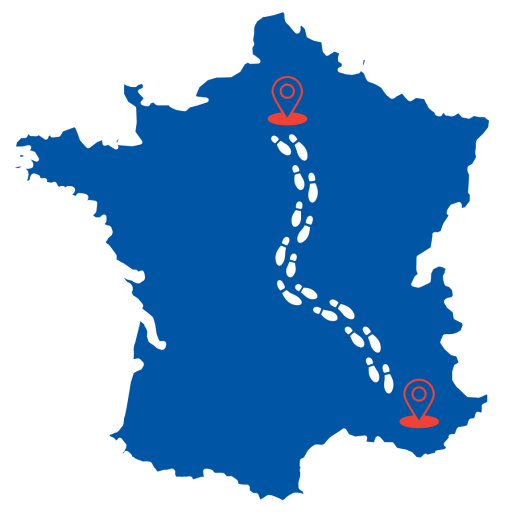
The Camargue is one of the most unique landscapes in southern France. Set in the Rhône River Delta of Provence, the Camargue is formed where the river meets the Mediterranean and fans out into a maze of channels and wetlands. Interestingly, it’s the second largest delta in the Mediterranean region after the Nile Delta.
It’s a region of salt flats, open marshes, and wide skies that feels totally different from the rest of Provence. (The Rhône flows from Lyon down through Avignon before reaching the sea here.)
Much of the land here is part of a protected natural park, but sections are still privately owned and actively farmed.
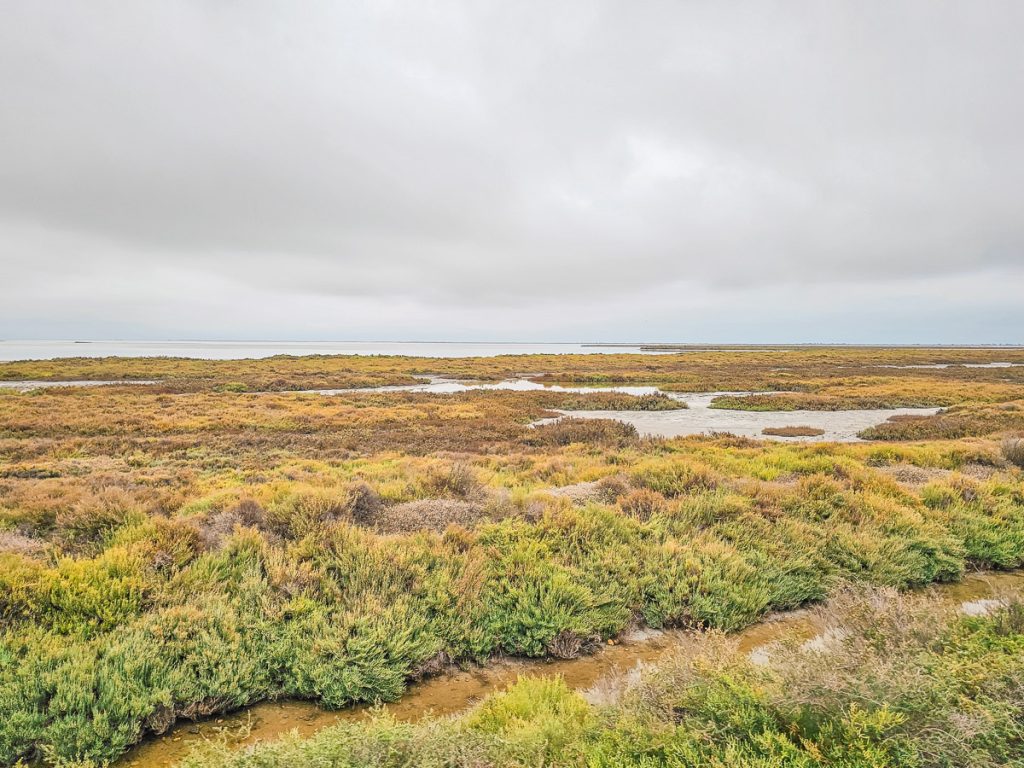
You’ll find rice paddies throughout the park (the Camargue grows 99% of France’s rice), and the closer you get to the coast, the saltier the ground becomes, giving the whole area its swampy, almost otherworldly feel.
How to Explore the Camargue
There are a few different ways to explore the Camargue, but I decided to do a half-day jeep safari tour leaving from Arles, and it ended up being a fantastic experience.
While you can drive through some of the Camargue on your own, it’s not like a more “traditional” national park with marked trails and designated overlooks.

The landscape is laced with dozens of small, unmarked roads, many of which are bumpy and narrow. And there are things to see, but sometimes they can be hard to find.
It really helps to go with a local who knows where to find the animals and where to take you off-road, plus they will explain what you’re actually seeing and experiencing.
👉This is the jeep tour I did (and loved!)
Going Out in the Jeep
Our local guide took our small group (8 travelers or less) out in an open-top jeep to wander through the Camargue. We got to stand up while driving the backroads, which honestly was such a fun and exhilarating way to experience the countryside.

We stopped at many different spots, sometimes just listening to a quick explanation, other times getting out to see something closer up.
The guide told us all about the history of the region, the culture, the crops, the different animals, and the legends, sharing so much fascinating information about this incredibly unique part of France.
The Manades
One of the biggest features of the Camargue are the local manades—the Provencal word for farms that raise Camargue bulls and white horses. These animals are deeply tied to the identity and culture of the region.
The horses are hardy and docile, raised in open pastures and trained to herd the bulls. They’re not particularly large or showy, but the bulls respect them and will allow themselves to be herded by these horses.


The Camargue bulls, on the other hand, are quick and very aggressive. At one spot, we stopped and chatted outside a fenced-in pasture with a few dozen bulls roaming around.

Apparently, one of these bulls was NOT cool with us even being in the vicinity, and he started pawing the ground at us while we talked (we promptly moved farther away – we didn’t want to agitate the animals).

Many of the bulls are used in the Camargue bull games. Unlike Spanish bullfighting traditions, the Camargue bull games don’t involve harm to the animals.
Instead, young men try to grab small white flags that are tied between the bull’s horns, and then escape the ring while the bull chases them. The bulls only “play” for about 15 minutes at a time and are not harmed, and then spend the rest of their lives relaxing in the fields.
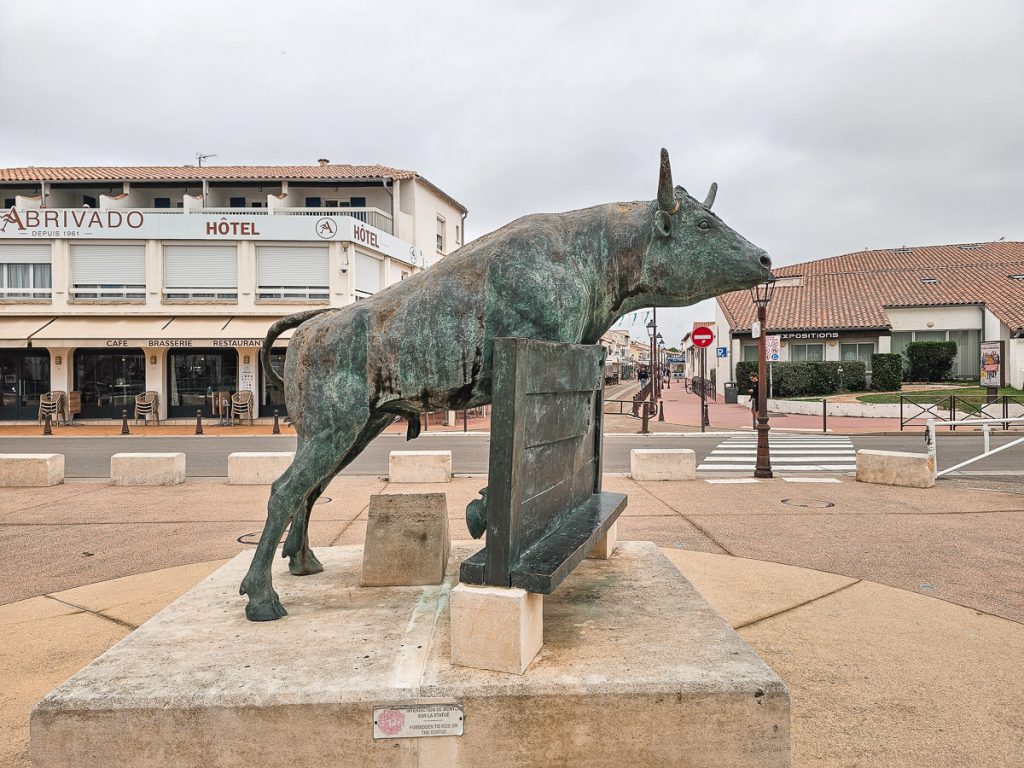
And some of the bulls become so well-known they’re practically celebrities, with statues and even gravesites honoring them across the Camargue. (We got to visit a couple of these spots on the tour, too).
Flamingoes and Wetlands
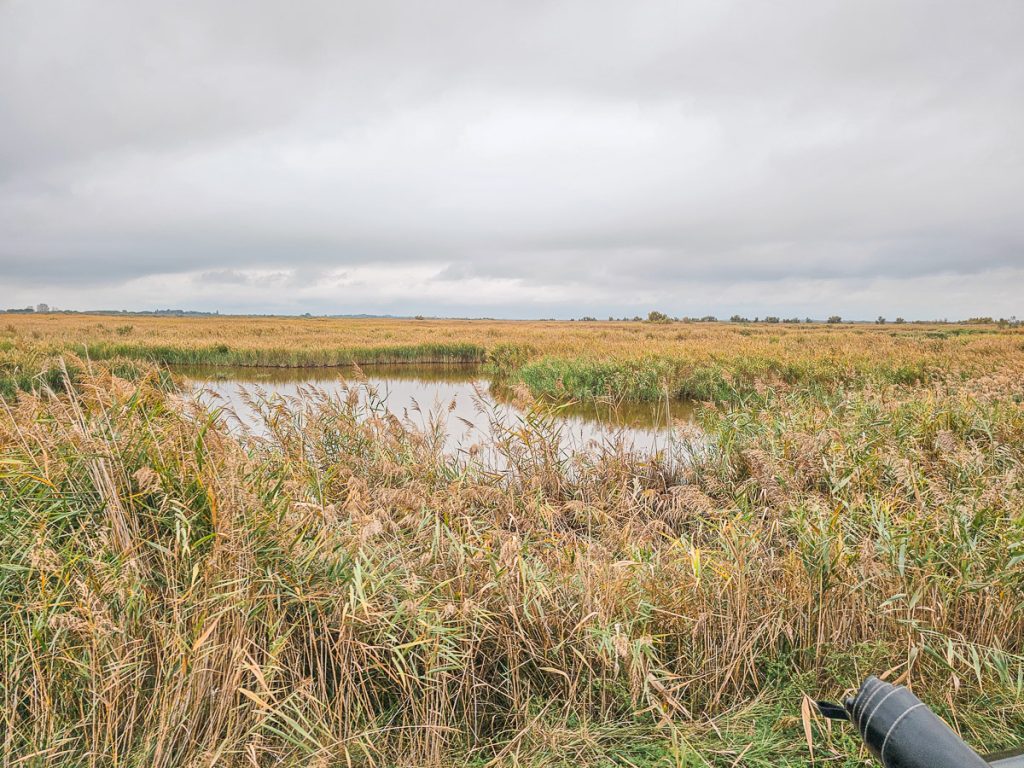
The Camargue’s landscape is a mix of wetlands, lagoons, and rice fields. As you get closer to the sea, the water becomes saltier, creating briny lagoons in varying shades, including the pink waters near the region’s salt farms.
Camargue salt is well known for its flavor, and you can find it at markets all over Provence.

One of the largest bodies of water here is the Étang de Vaccarès, a vast saltwater lagoon connected to a network of smaller lakes. We drove along its shoreline, with wide views of the water stretching out beside us.
Inland, the wetlands turn fresher, this is where crops like rice or pomegranates are grown.

We also stopped to see flamingos! The Camargue is home to the tallest of the world’s six flamingo species, and you can spot them wading in the marshes throughout the park. We saw dozens of them casually hanging out in ponds and lagoons—such a unique sight!
Their pale pink feathers hide flashes of brighter color under their wings, and it was SO fun to watch them from the side of the road.

Another fun detail in the marshes is samphire, a red-green plant that thrives in salty soil. Our guide picked some from the side of the road and let us all taste it – it has a crisp texture and tastes a little like a salty peapod!

Sainte-Marie-de-la-Mer
Our final stop on the tour was Sainte-Marie-de-la-Mer, the small town that serves as the capital of the Camargue. As we came into town, we spotted quite a few of the traditional thatched-roof huts that used to be common homes in the region.

We had about 30 minutes to explore the town on our own— enough time to wander through the small winding streets, pop into the church, and walk along the rather large port.


The Wrap Up
This was such a fantastic half-day trip. I learned so much about the Camargue and came away with a real appreciation for the area.
Without the tour, I probably would’ve just driven around hoping to spot a marsh or a flamingo, without knowing the incredible history and ecology behind what I was seeing. Plus, the open-top jeep was just very fun.
By the end of the four hours, I felt like I had a much deeper connection to the region. And the Camargue truly feels like its own little world, unlike anywhere else in France.
Practical Details
The jeep safari tour I did leaves from Arles – a very convenient location for most people visiting Provence. There are usually multiple departure times during the day.
The tour is 4 hours long, which felt like the perfect amount of time. I never got bored, and it left me the rest of the day to explore more of Provence.
👉Check rates and availability for the Camargue jeep tour here
