
Southwest France Is One Of the Most Famous Cave Regions in the World—These Are 10 You Cannot Miss

Southwest France, and the Dordogne in particular, is the heart of one of the most cave-rich regions in the world. The limestone cliffs running through the Vézère Valley have been used continuously for over 50,000 years, and the valley is now a UNESCO World Heritage Site, recognized for its 147 prehistoric sites and 25 decorated caves.
But the caves here aren’t just prehistoric. The same cliffs that sheltered early humans were later carved into medieval fortresses, cliff villages, abbeys, and underground churches.
These are called troglodyte sites, from the Greek for ‘cave dweller,’ meaning structures built directly into or carved out of the rock face rather than constructed from the ground up. The Dordogne has some of the finest examples of troglodyte sites anywhere.
And then there are the natural cave systems themselves, which are in a category of their own.
This list covers ten sites I’ve personally visited, spanning prehistoric cave art, troglodyte dwellings and fortifications, natural cave formations, and everything in between. They’re all extremely unique, and they’re all worth visiting.
(Note: The pictures from the spots where I note that no photos are allowed are from postcards I bought at the gift shop.)
1. Gouffre de Padirac
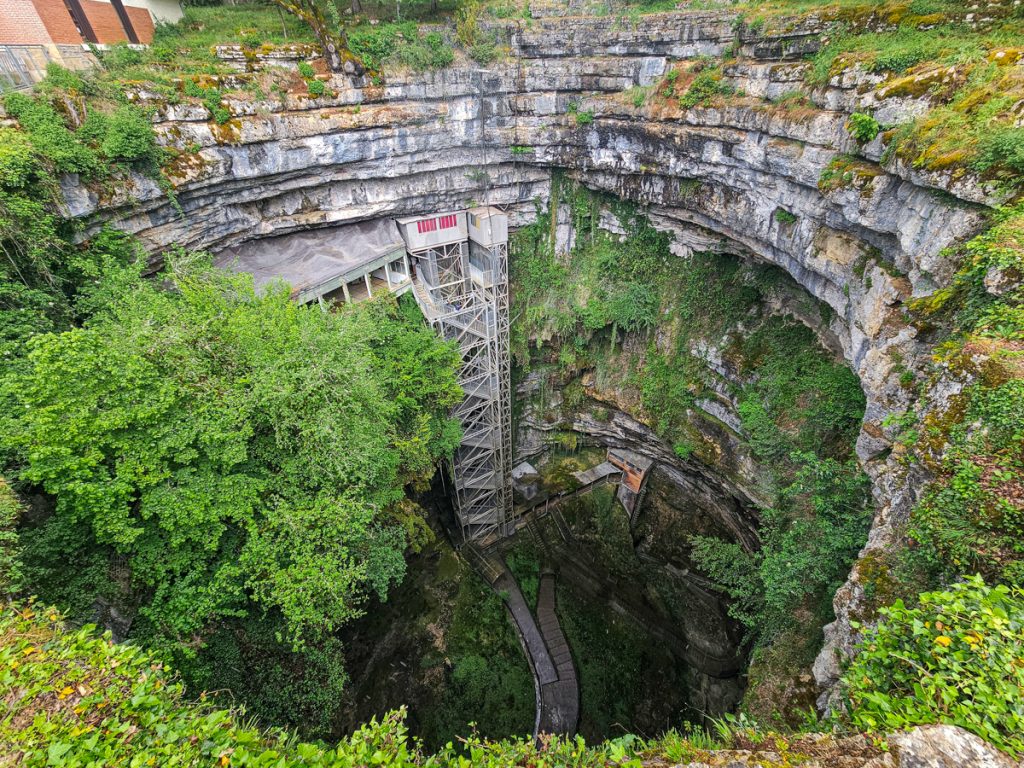
The Gouffre de Padirac is just spectacular. The entrance is a vast cylindrical hole, 75 meters deep and 33 meters across, dropping straight into the earth. You can stand at the edge and look straight down in – a pretty wild view, and you easily understand the name “gouffre,” which means chasm or abyss.
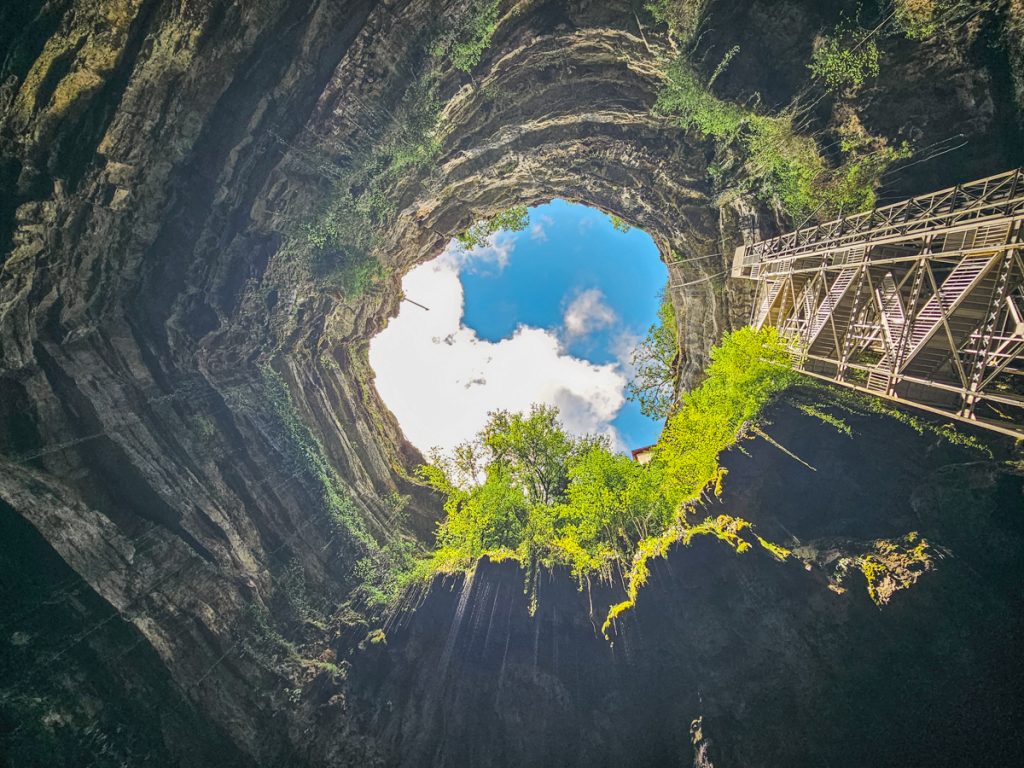
You descend by staircase or elevator to the bottom of the chasm, where you look straight up at that nearly circular opening above you. Then you continue down into the actual cave and walk along an incredible path beside a little stream, with textured walls rising high above your head.
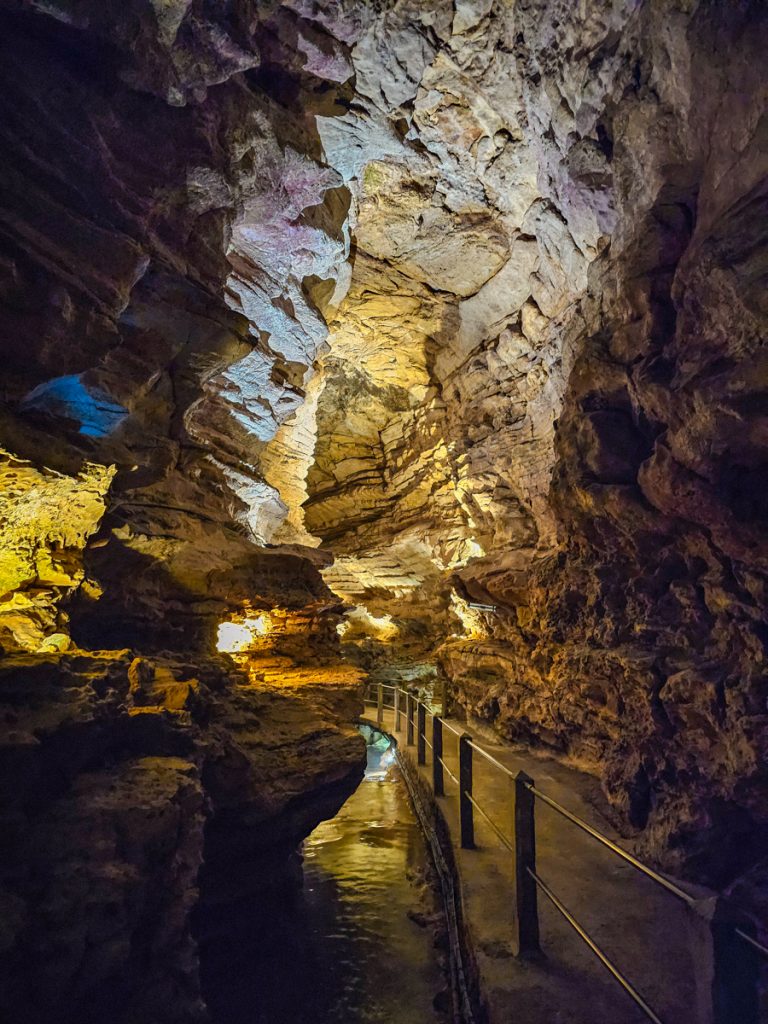
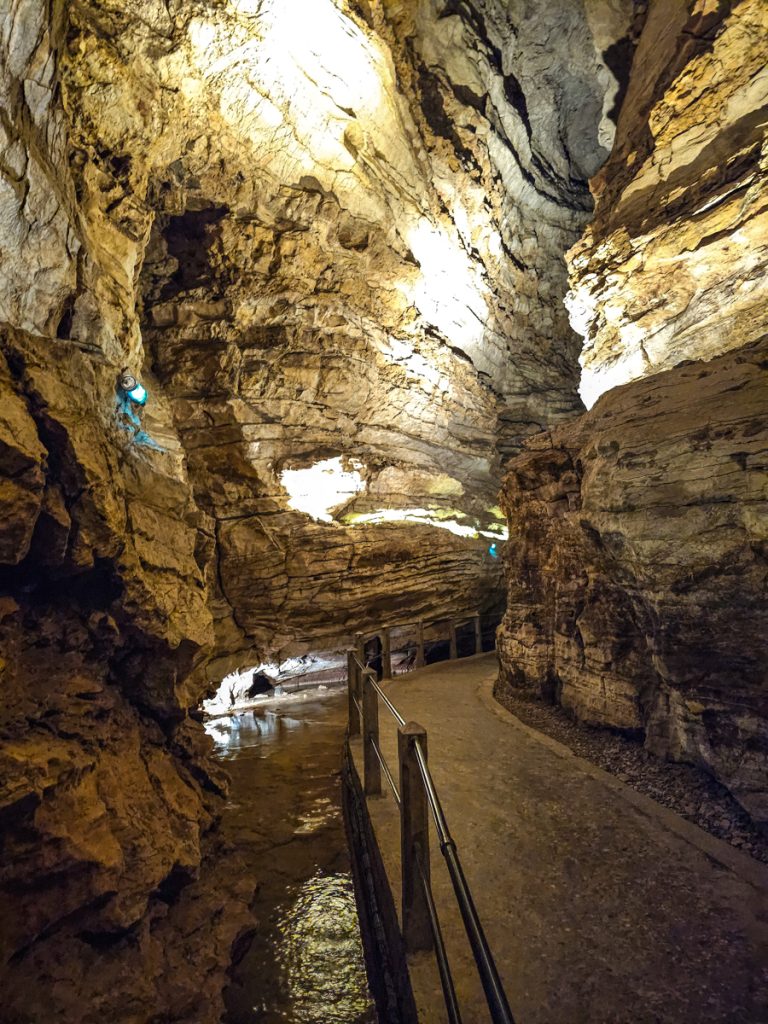
When I’m not in France, I love hiking in the American Southwest, and this part of the cave felt so similar to the slot canyons I’ve hiked there.
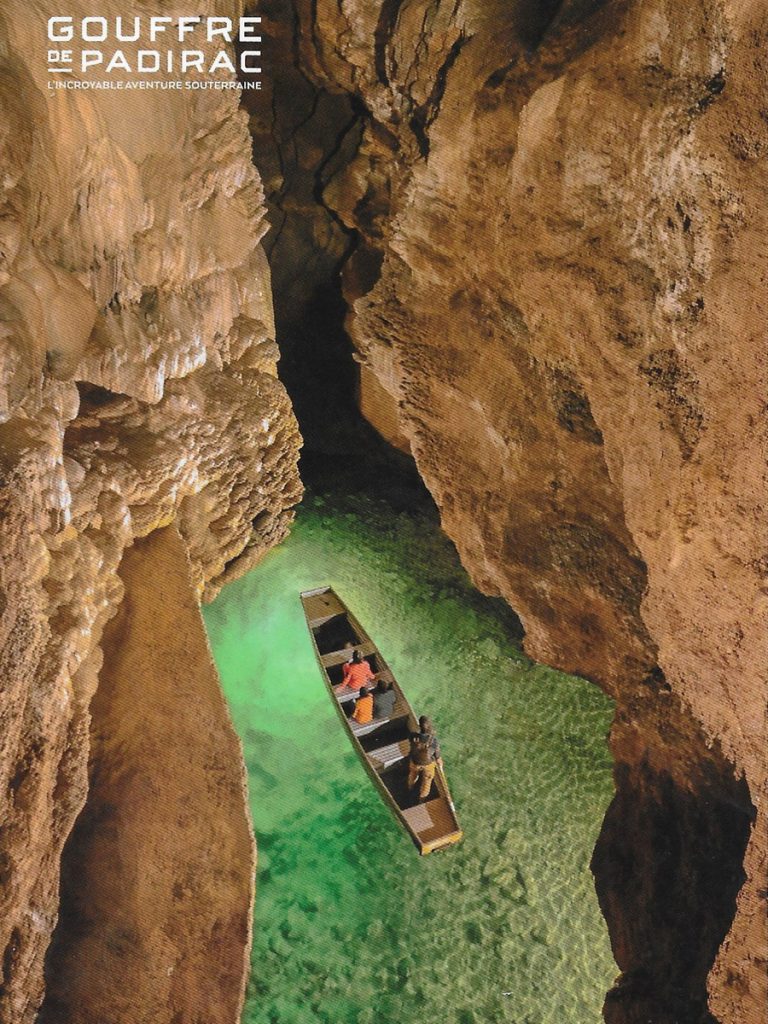
Finally you reach the underground river, 103 meters below the surface, and board a flat-bottomed boat that a guide pushes through the cave using a long pole. The calm river winds through narrow rock walls with high ceilings (more slot canyon vibes) and was truly magical.
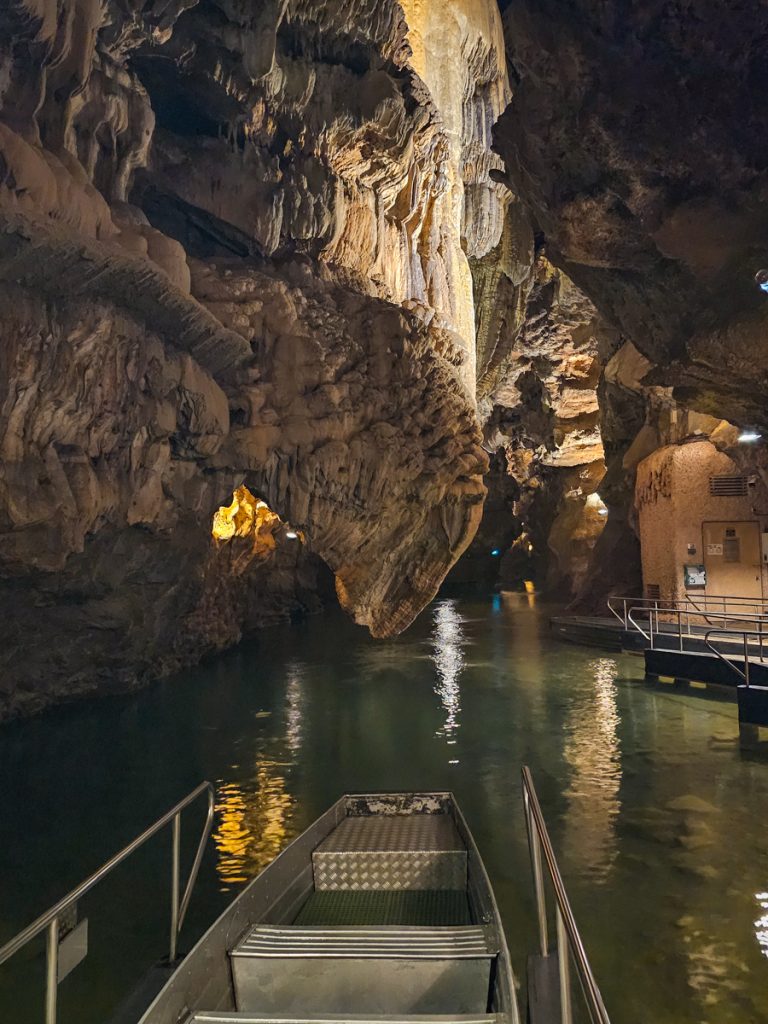
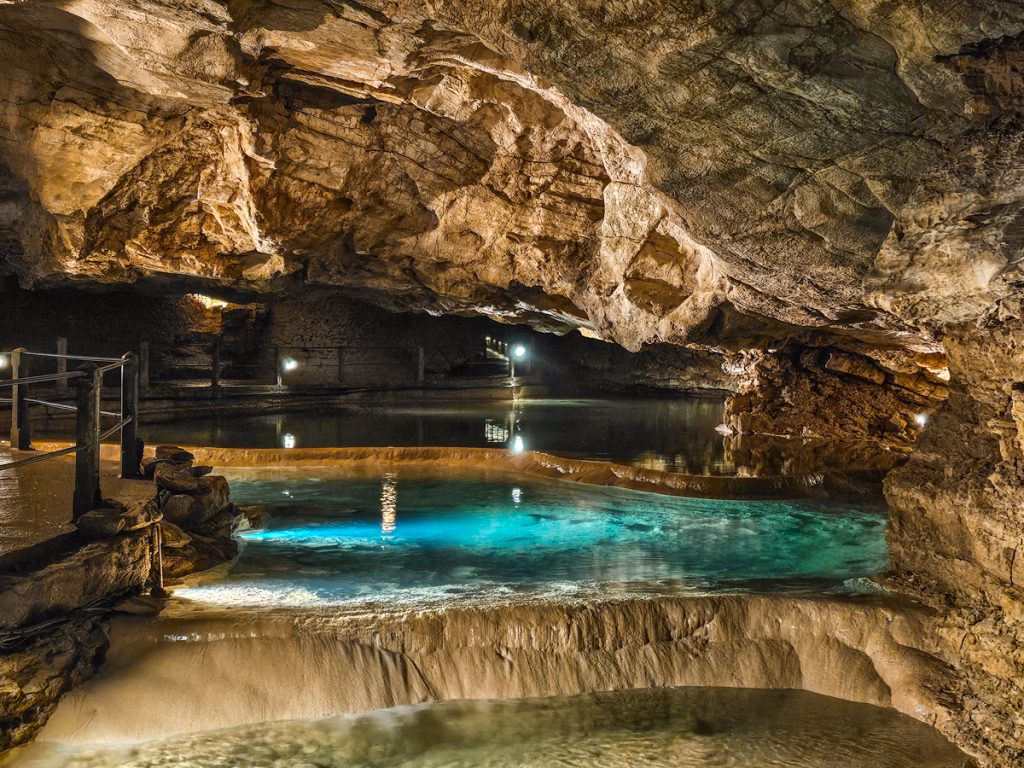
On the other side, you continue on foot past the Lac des Gours, a series of terraced natural pools, and the Salle du Grand Dôme, a cavern 94 meters tall. Then you boat back and retrace your steps to the surface.
It’s an almost dream-like experience, and I really can’t overstate how much I loved it.
Book tickets online in advance as it sells out regularly, especially in summer. It’s open late March through early November, and closed during the winter. Pictures are allowed in the cave, but not while you’re on the boat.
2. Lascaux IV
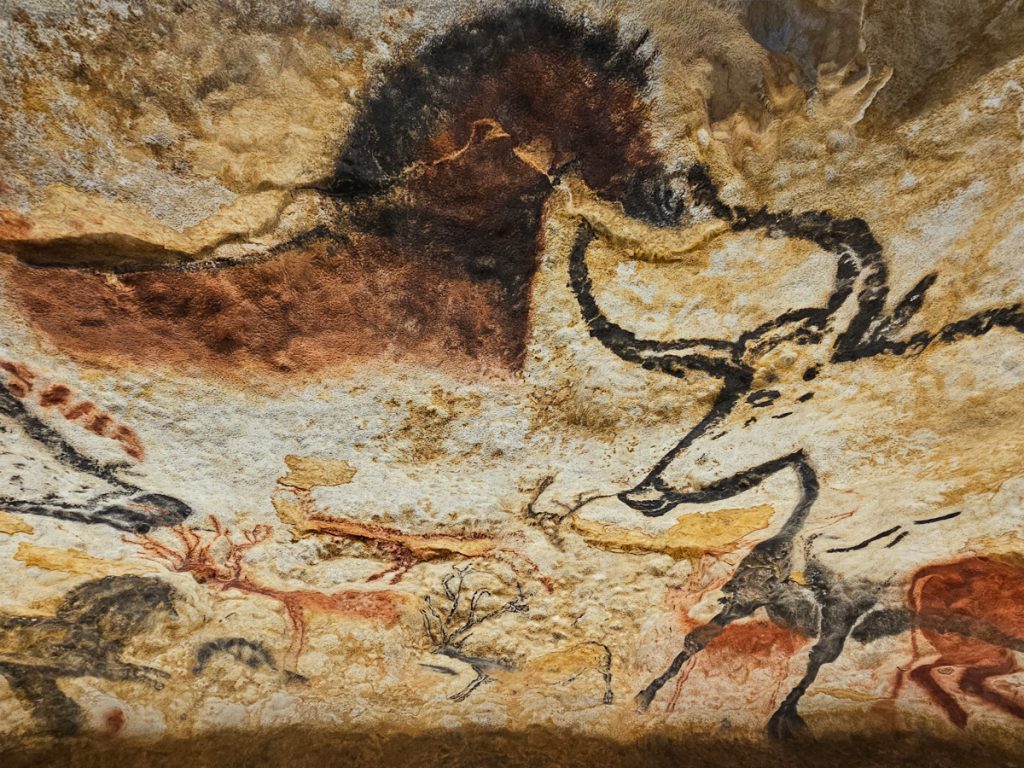
The Lascaux Caves are among the most important prehistoric sites in the world, and part of a UNESCO World Heritage Site, thanks to over 2,000 paintings and engravings dating back around 21,000 years.
The original cave was discovered in September 1940 by four teenagers and a dog, becoming an immediate sensation. It was open to the public for about 25 years before being permanently closed, as the sheer number of visitors was causing the paintings to degrade.
What you visit today is Lascaux IV, a reproduction of the cave built at the foot of the same hill. And while it is a reproduction, it feels incredibly authentic. Twenty-five artists spent two years hand-painting 900 meters of resin rock, using the same pigments the original painters used 20,000 years ago. The result is astonishing.
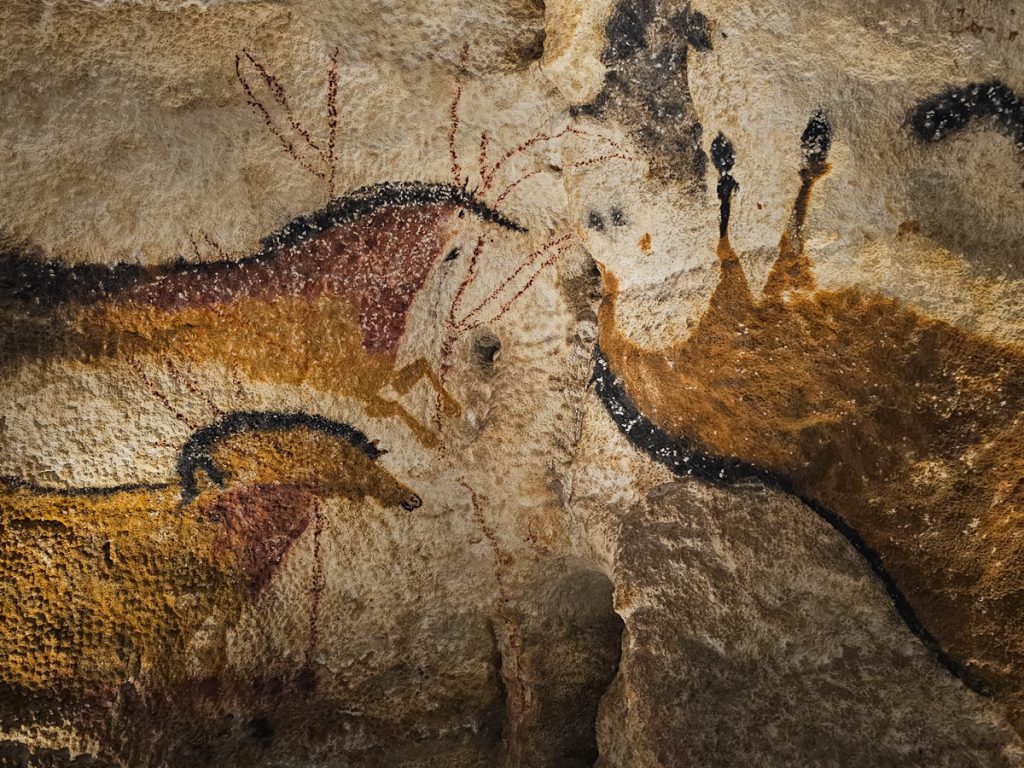
The paintings, predominantly horses, aurochs (cattle), and deer, plus a mysterious unidentified creature near the entrance known as the Unicorn of Lascaux, are incredibly beautiful. The skill on display, created in cramped conditions by candlelight tens of thousands of years ago, is hard to wrap your head around.
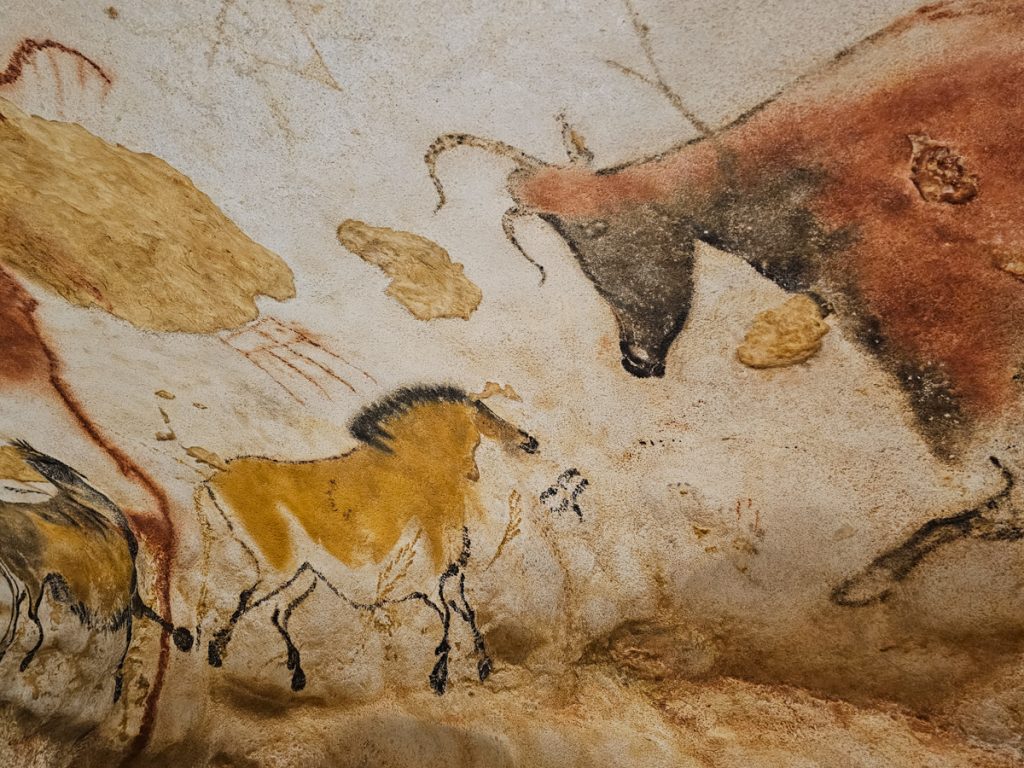
The guided tour takes about an hour, followed by self-guided interpretive rooms where photography is allowed. Plan for two to three hours if you want to see everything. Book well in advance, as Lascaux usually sells out.
3. Rouffignac Caves
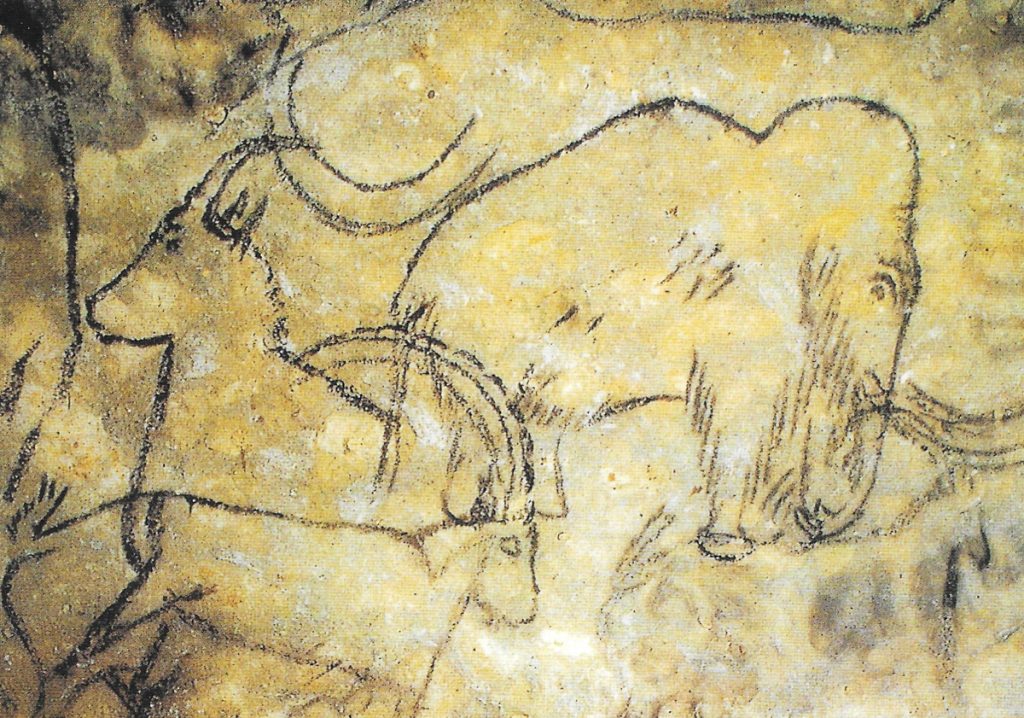
Rouffignac is one of the most distinctive prehistoric cave experiences in the region, filled with incredibly skilled drawings and engravings dating back 13,000 to 17,000 years. You explore it on a small electric train that takes you about a kilometer into the cave, stopping while a guide shines lights on the drawings and points out details.
Of the 260 prehistoric figures in the cave, 170 are mammoths, an enormous concentration found nowhere else in the region. You’ll see panels like the Rhinoceros Frieze, with three rhinos in a row, or the Patriarch Panel, with an incredibly detailed mammoth and a horse.
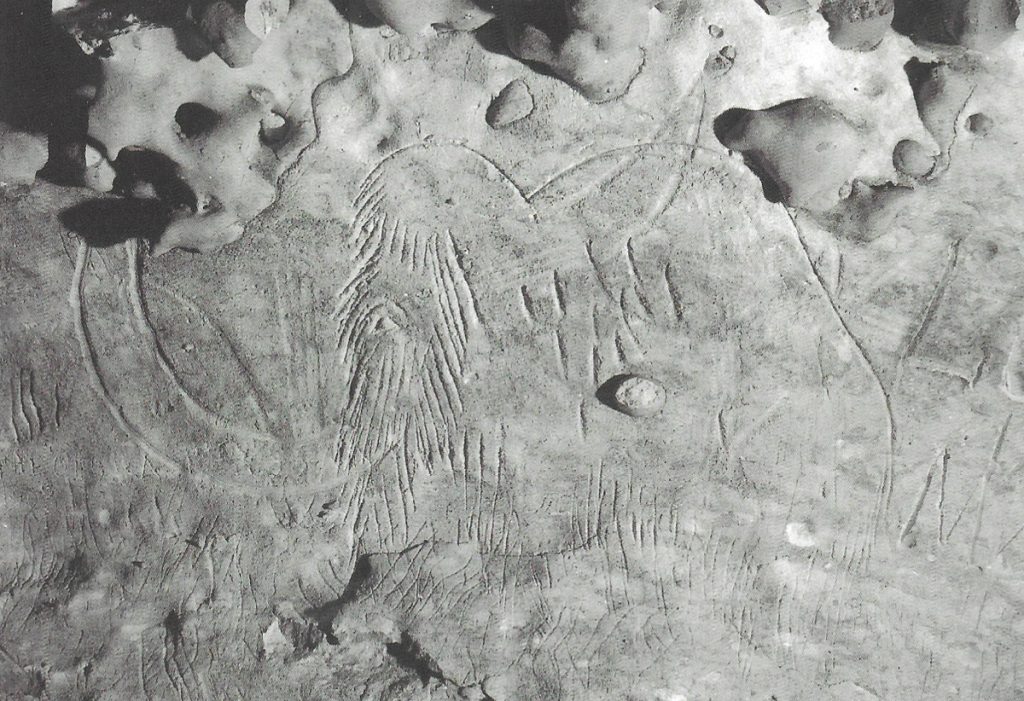
The highlight is the Great Ceiling, a chamber where the entire ceiling is covered with overlapping animal depictions that the artists had to draw lying on their backs.
No photos are allowed. Book online in advance as time slots sell out even midweek.
4. La Roque Saint-Christophe
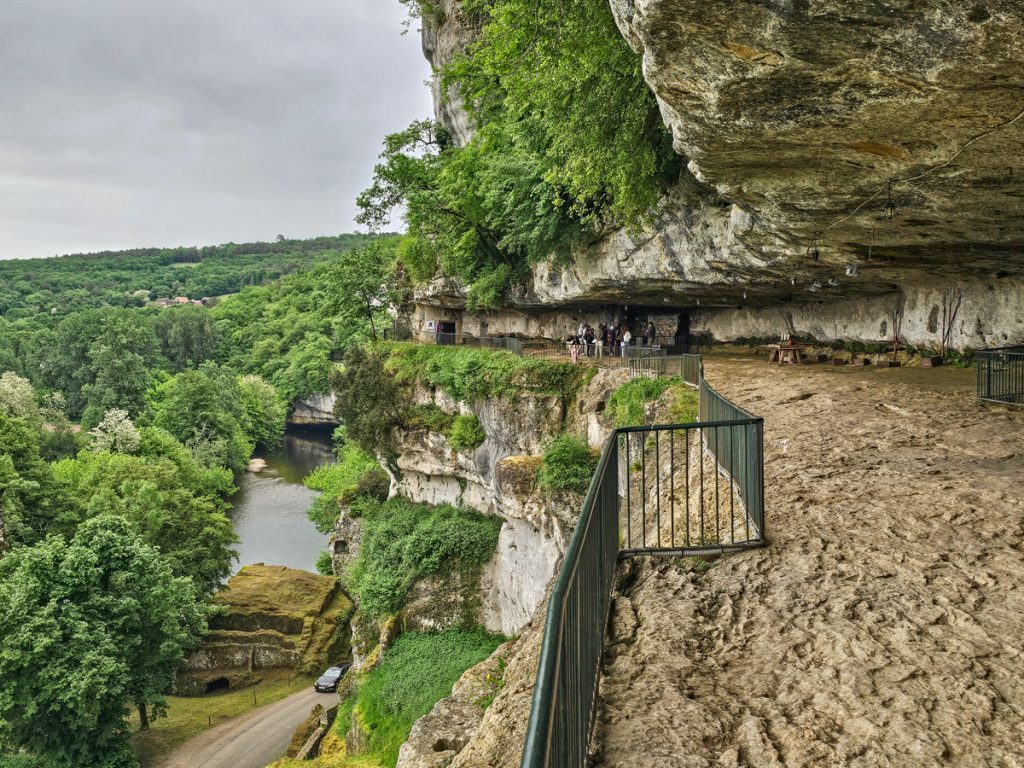
La Roque Saint-Christophe is a massive natural terrace recessed into a limestone cliff above the Vézère River. It’s essentially a long, narrow ledge (almost like a crack in the rock) running an entire kilometer along the cliff face, with a deep overhang of rock above it.
People have lived, worked, and taken shelter under this overhang for nearly 55,000 years. During the Middle Ages it became a fortress and cliff city of around 1,000 people, built to defend against Viking raids and regional conflict, before being completely destroyed during the Wars of Religion in 1588.
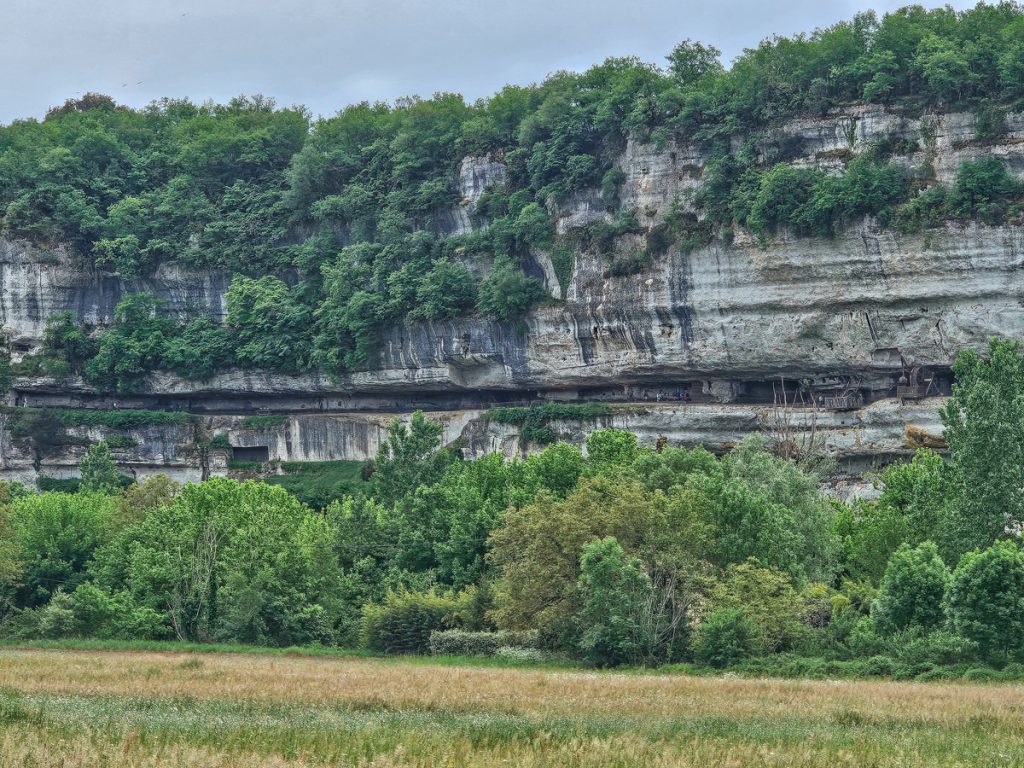
Today you walk the length of the terrace under the cliff, passing through what remains, including cave stables, a medieval kitchen, a small church with tombs hewn directly into the rock floor, and a bell tower you can actually ring.
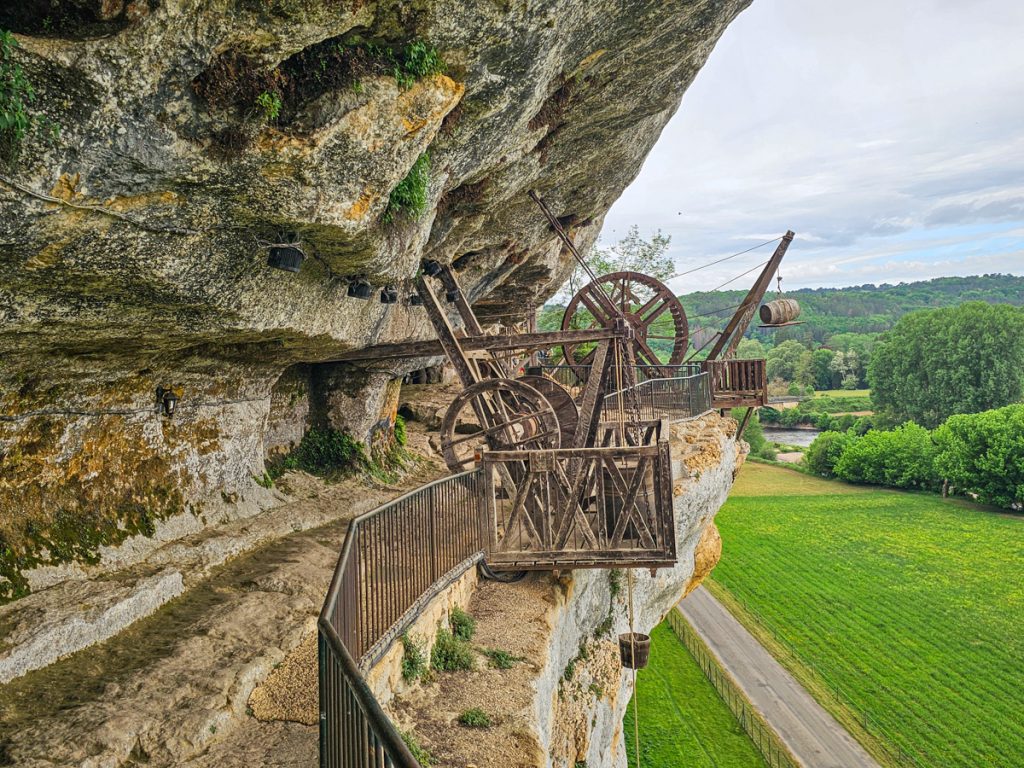
At the far end there’s a collection of medieval tools and machinery demonstrating how heavy materials were raised from the valley floor.
This is a seriously cool site, and the setting honestly made it feel a bit like an adventure. Highly recommend!
5. Fortified House of Reignac
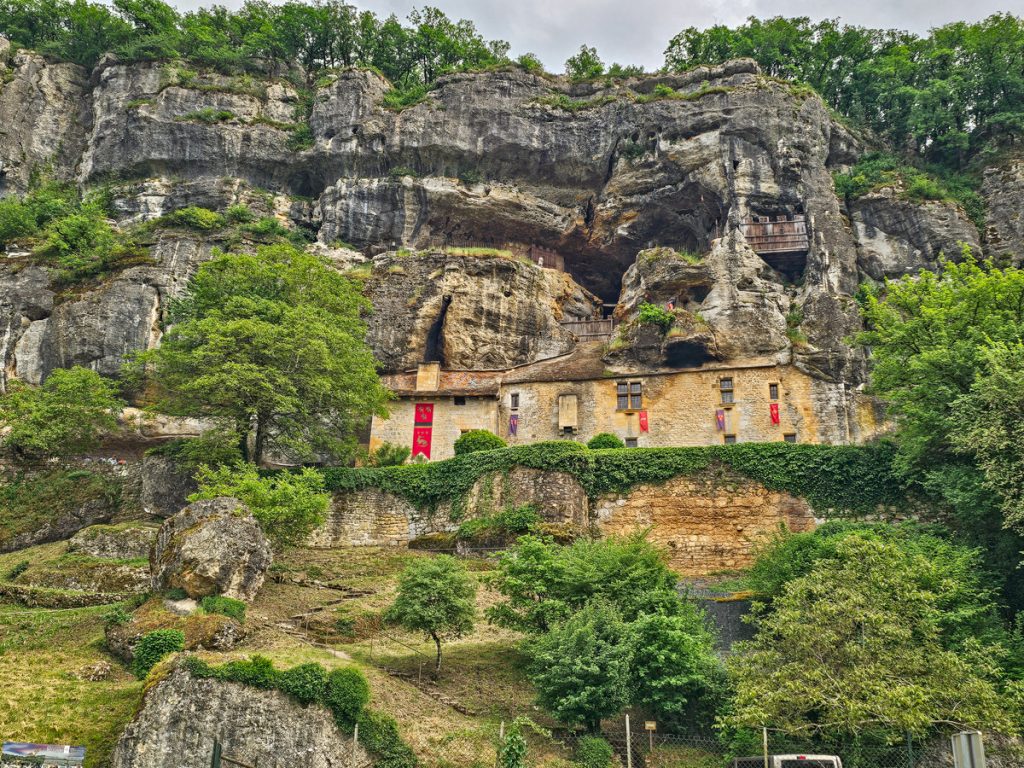
The Fortified House of Reignac is the only cliff castle of its type in France — a medieval manor house built directly into a limestone cliff, with the front half looking like a regular stone house and the back half opening straight into the rock.
It’s over 700 years old and exceptionally well preserved, fully furnished with period antiques and almost entirely unmodified.
As you walk through the house, the contrast between the normal-looking front rooms and the raw cliff face at the back of each one never stops being strange.
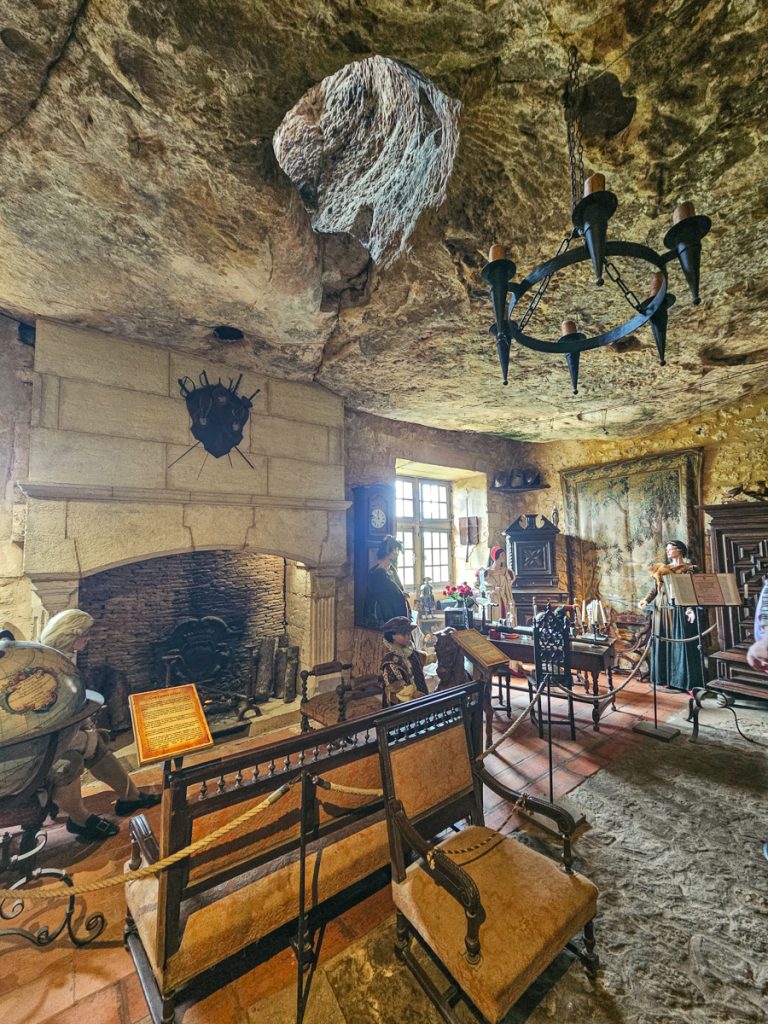
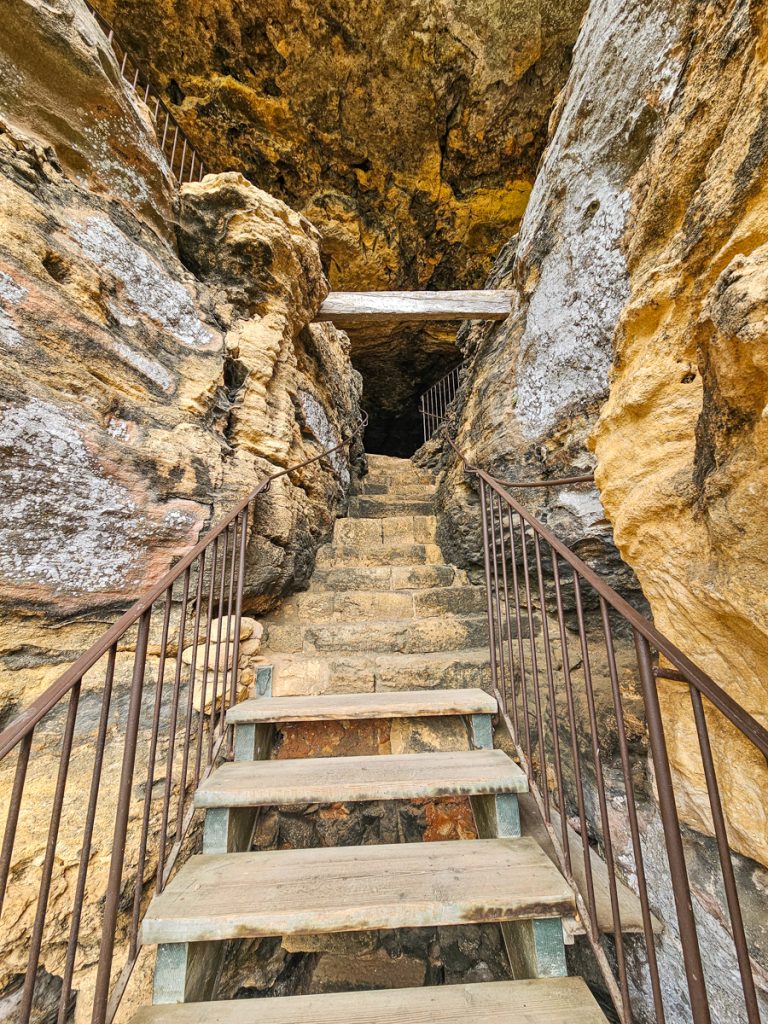
The house goes up several levels, finishing at defensive terraces at the top of the cliff known as the Eagle’s Nests. The lord’s soldiers would survey the countryside below, relying on the defensive position on the cliffside to resist bandits and local threats.
6. Saint-Émilion Underground Monolithic Church
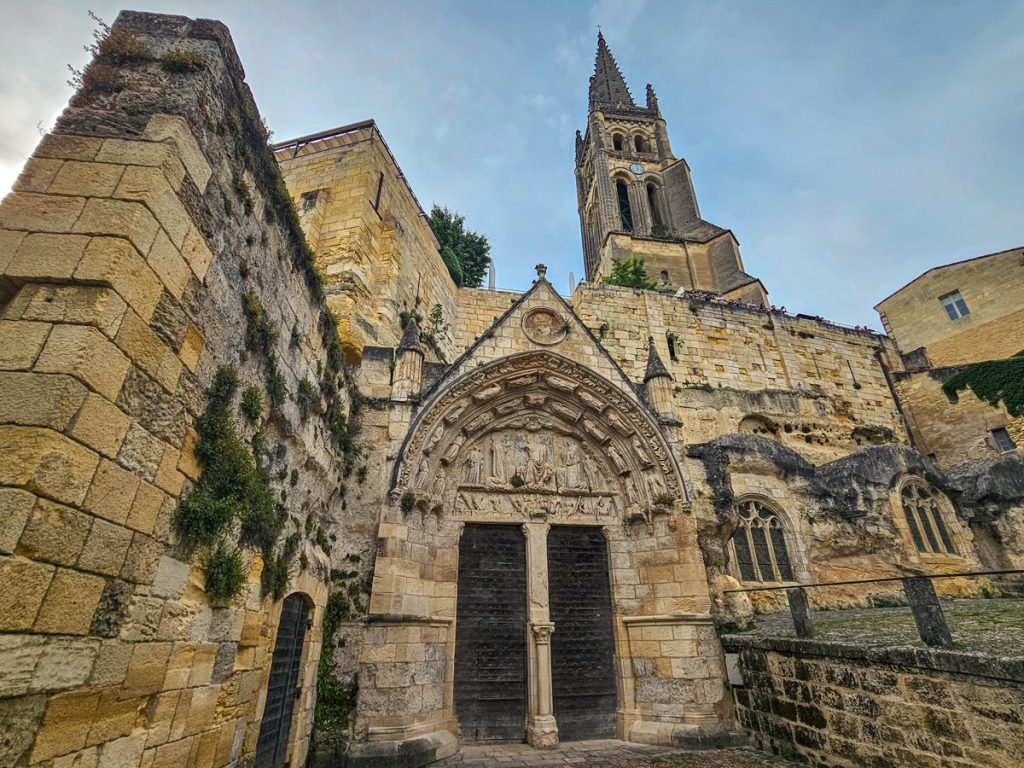
The Monolithic Church of Saint-Émilion is the largest underground church in Europe, carved entirely out of a single block of limestone in the 12th century. It’s 38 meters long and 12 meters high, and the fact that it even exists is pretty remarkable.
The church is part of a complex of four connected religious sites, all underground, that you visit on a one-hour guided tour: the hermitage cave where the monk Émilion lived, the catacombs with their underground burial spots, a chapel, and the church itself.
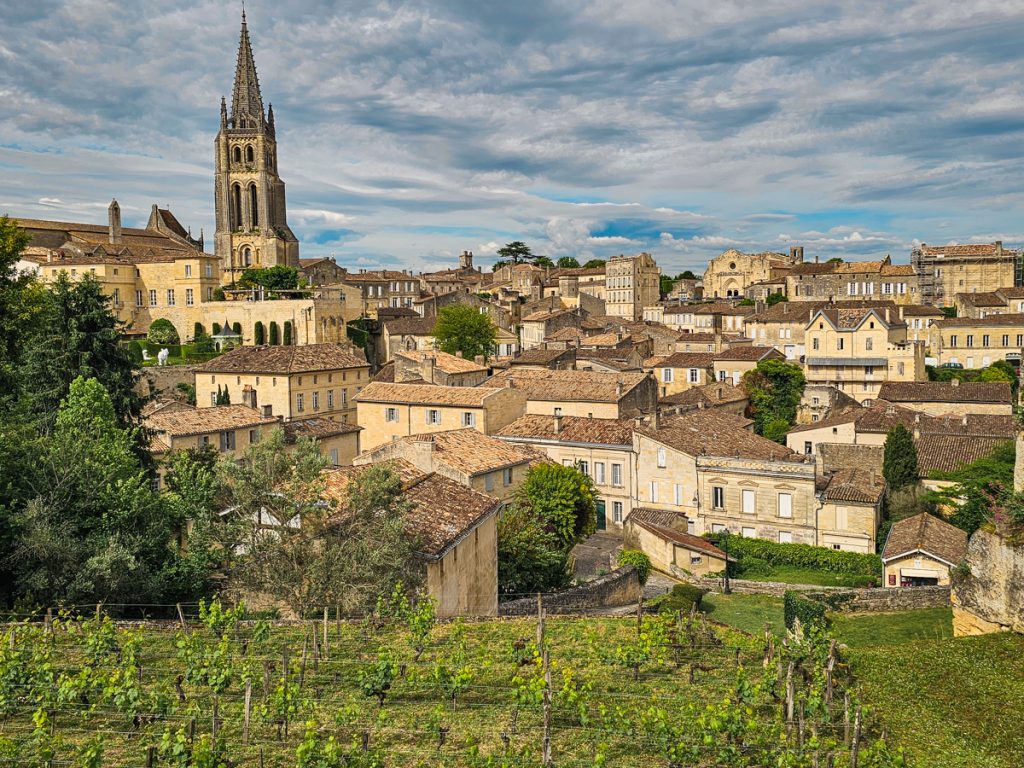
The monk Émilion lived in this area in the 8th century, performed miracles, and served the poor. He was eventually sainted, and the village was named after him. His presence here made Saint-Émilion a major stop on the pilgrimage route to Santiago de Compostela.
Tours run daily with an English option usually at 2pm. Book online during high season, or stop by the tourism office on the day. No photos are allowed inside.
7. Abri de la Madeleine
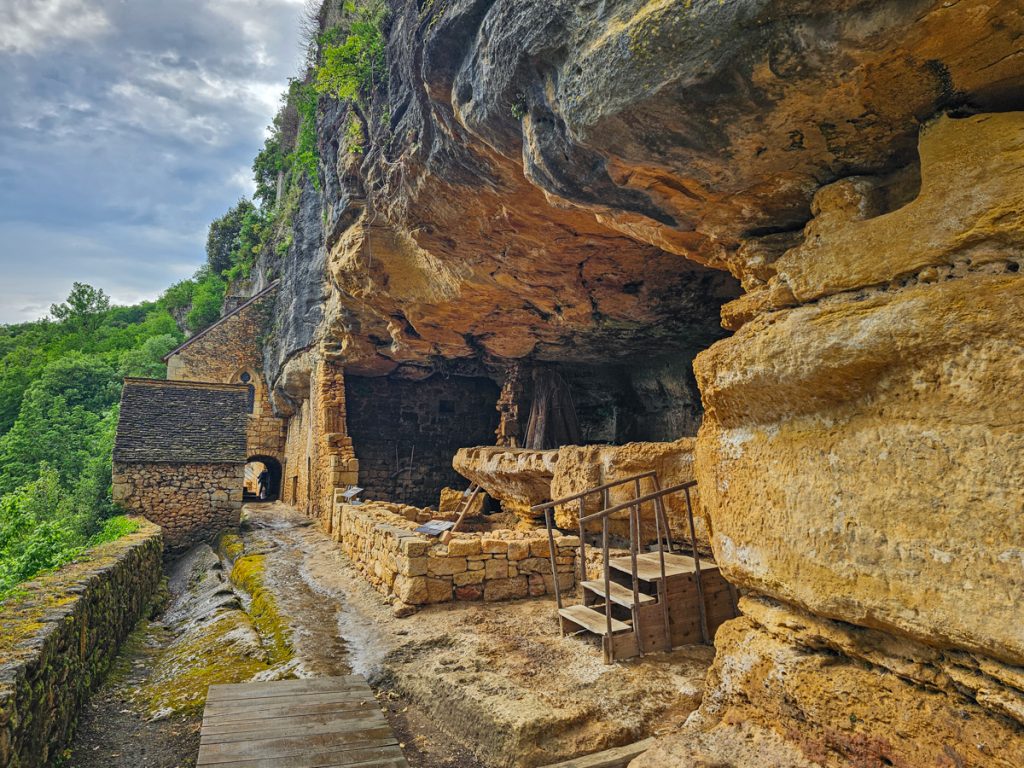
La Madeleine is part of the UNESCO-listed Prehistoric Sites and Decorated Caves of the Vézère Valley, and one of the most historically significant spots in the region.
The prehistoric shelter belonged to a civilization dating back 17,000 to 12,000 BC. Excavations between 1863 and 1980 uncovered 22,000 objects, including weapons, tools, engravings, and sculptures, though the deposits are closed to the public for conservation.
The site sits on a dramatic horseshoe meander in the river, where the loop is only 65 meters across at its narrowest point, creating essentially a natural “moat” that made it easy to defend across thousands of years of occupation. In the Middle Ages, cliff dwellers built an entire village in the rock cavities above the river, which were inhabited continuously until the late 19th century.
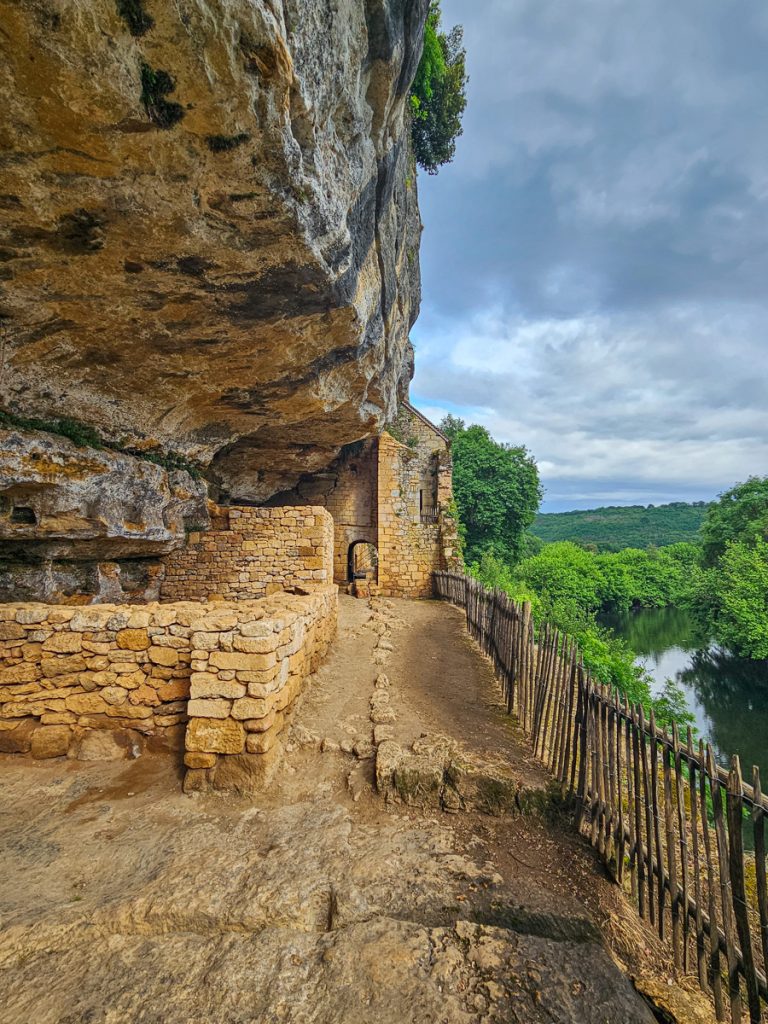
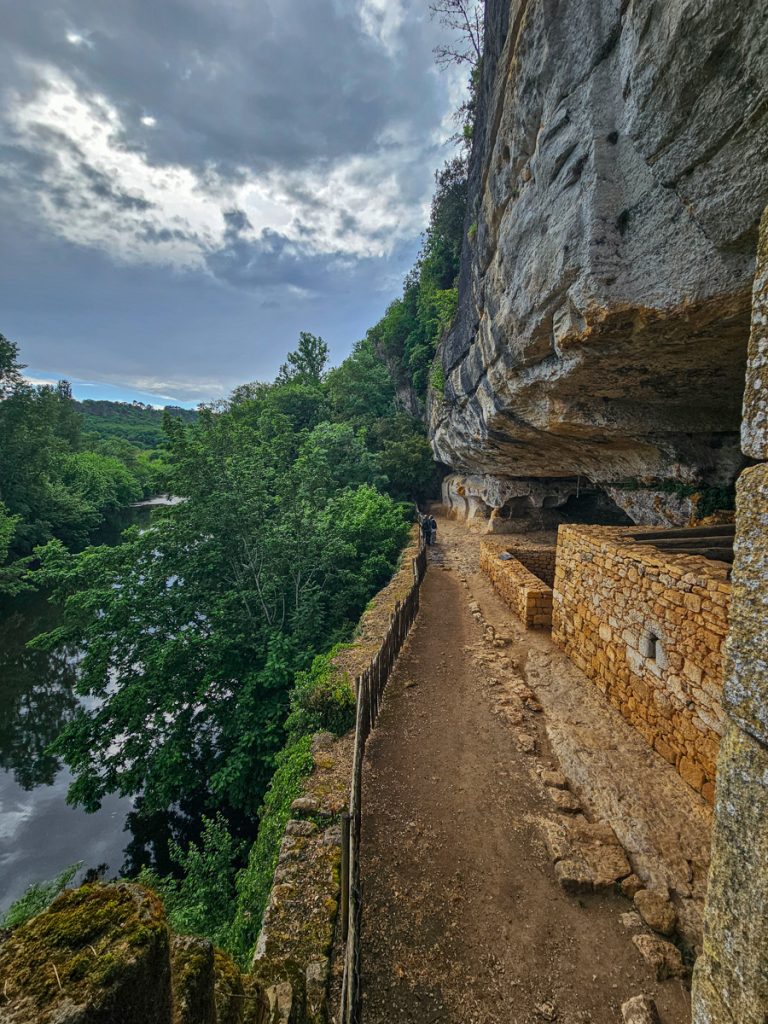
You walk the hundred-meter main street along the cliffs, entering cave rooms and chambers where craftsmen, nobles, peasants, and a small castle all existed side by side, with a reconstructed shelter showing how buildings were actually constructed into the rock.
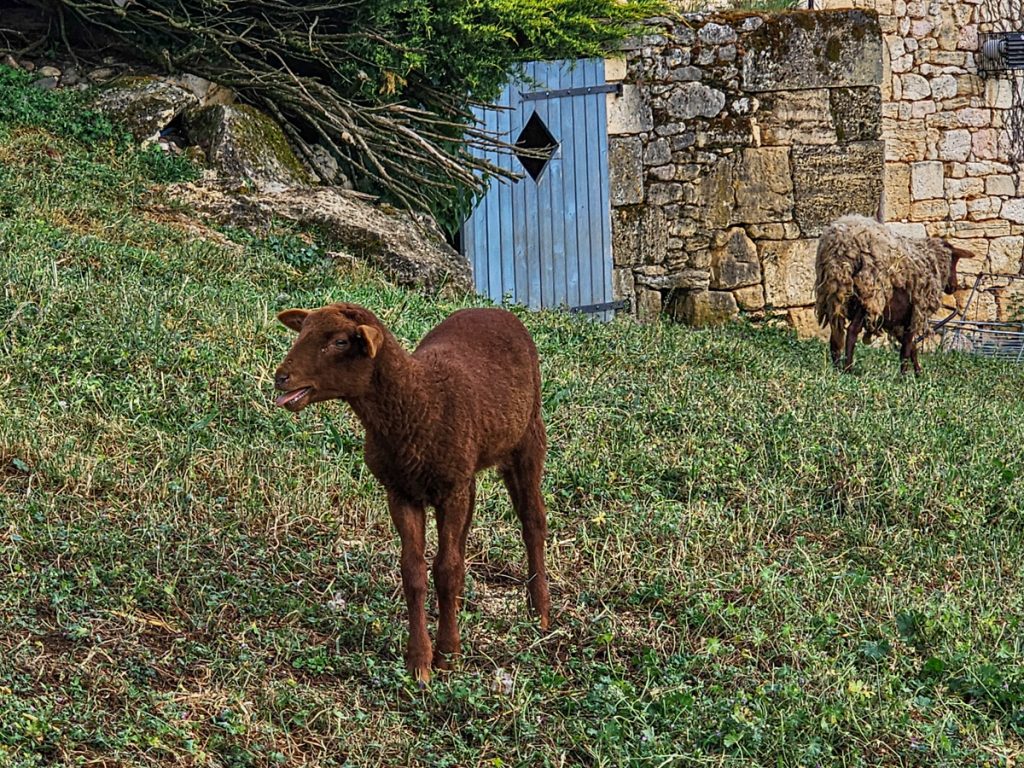
The visit also includes a small farm with donkeys, horses, sheep, pigs, and poultry. Closed December through February.
8. Abbaye de Brantôme
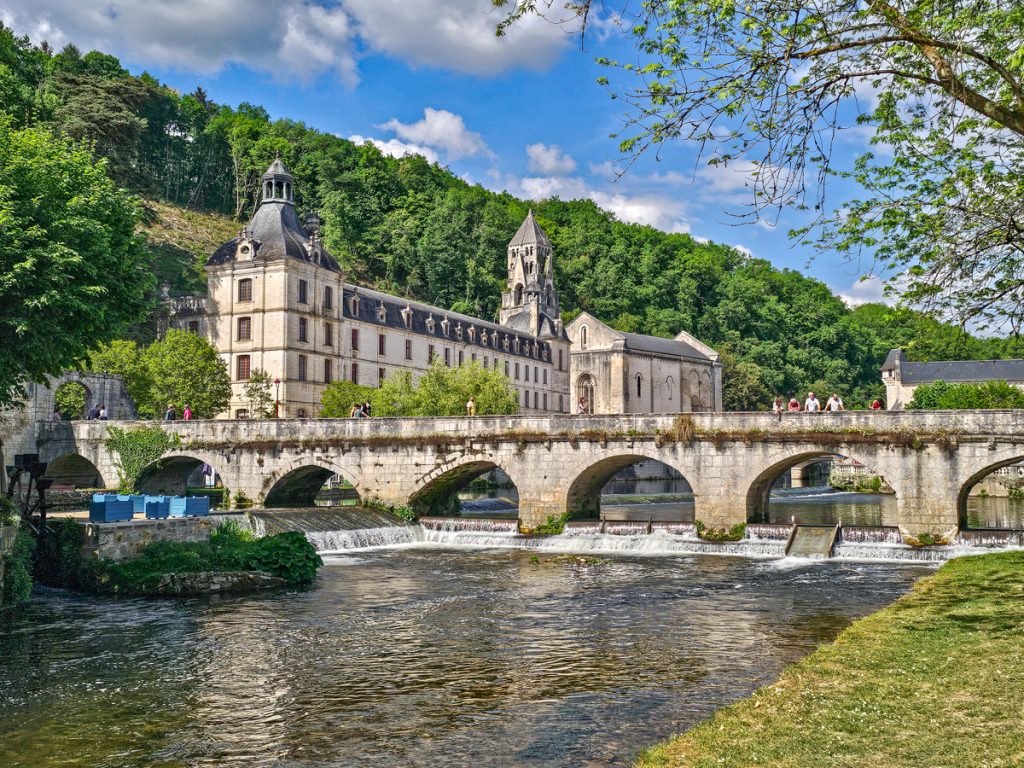
Brantôme is a charming medieval village built on an island in the Dronne River, and the Abbey of Brantôme sits just off the island, built right next to the limestone cliff that runs along the river.
Like many other sites, it incorporates both constructed buildings and cave dwellings together, and the bell tower is actually built directly onto a natural rocky outcrop of the cliff.
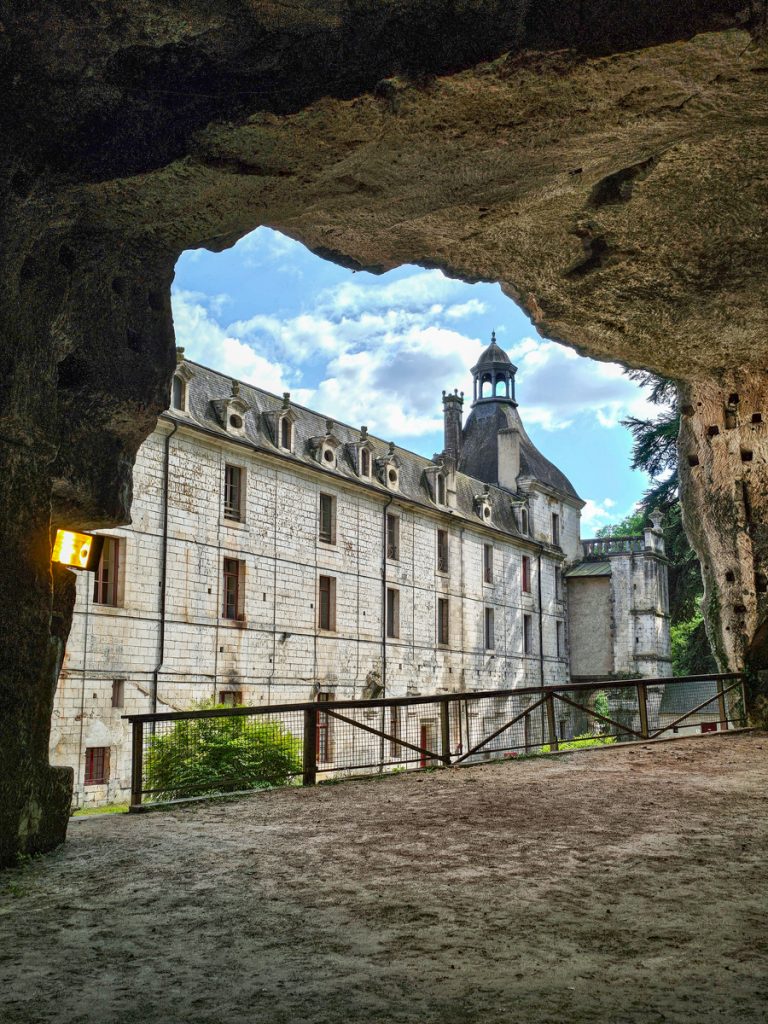
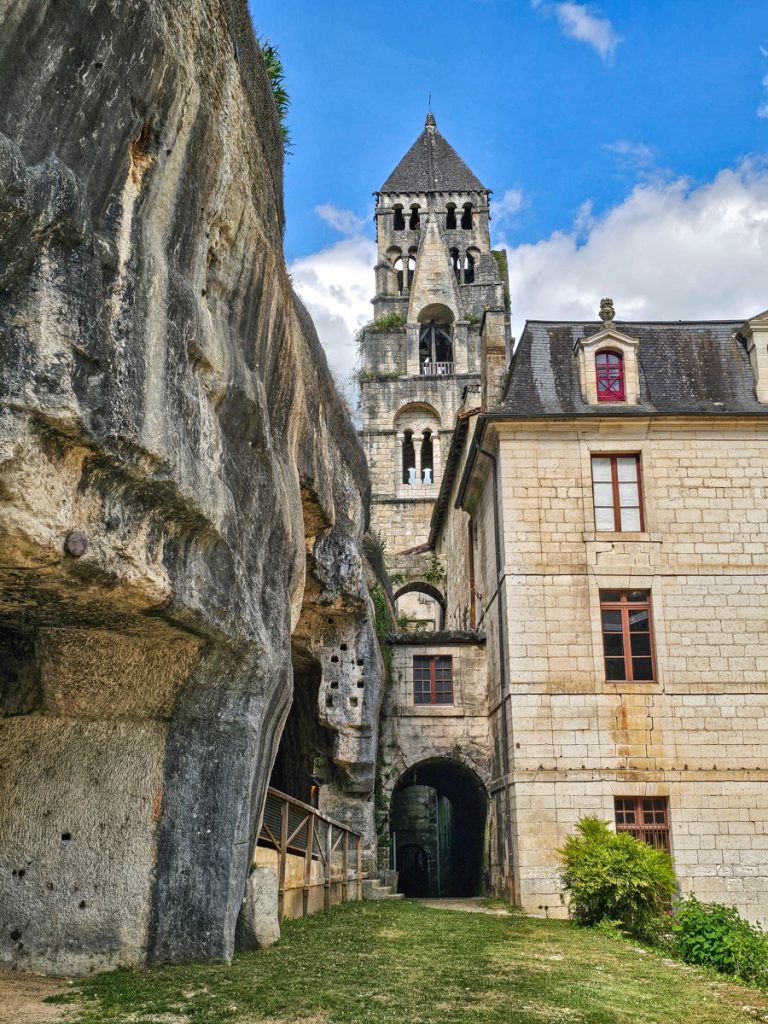
The visit takes you behind the abbey building and into the cliff itself, where a series of caves were used by monks as wine cellars, private chapels, and places of worship. The belief is that the caves were actually the original site of the monastery, established here in the 800s, long before any stone buildings were constructed.
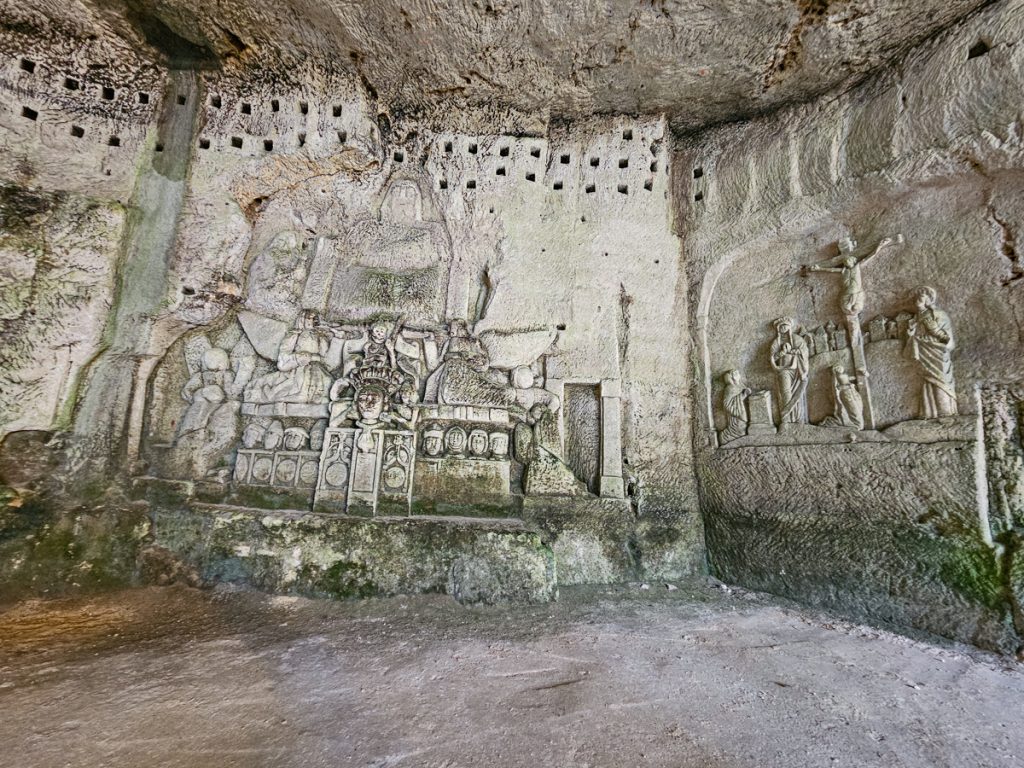
The highlight is the Last Judgment Cave, which has remarkable, detailed, bas-relief carvings covering one wall, filled with religious figures, angels, scrolls, and symbols of death. Scholars still disagree on what it all depicts, which I think makes it more fascinating.
9. La Roque-Gageac Troglodyte Fort
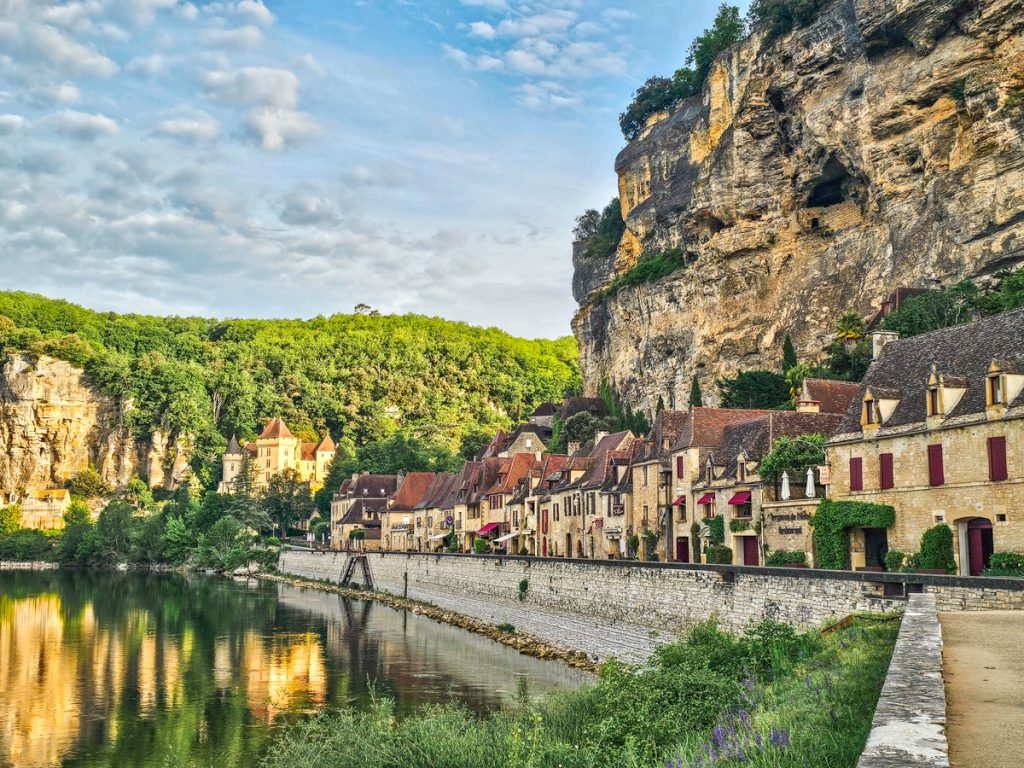
La Roque-Gageac is one of the most scenic villages in the Dordogne, built tight against dramatic golden cliffs along the river, but the fort built into those cliffs above the town is worth coming for in its own right.
The fort sits 120 meters above the Dordogne River, built in the 12th century into a natural opening in the rock face. It was highly defensible, offering a 180-degree view over the valley that allowed the garrison to control river traffic and anticipate attacks from any direction.
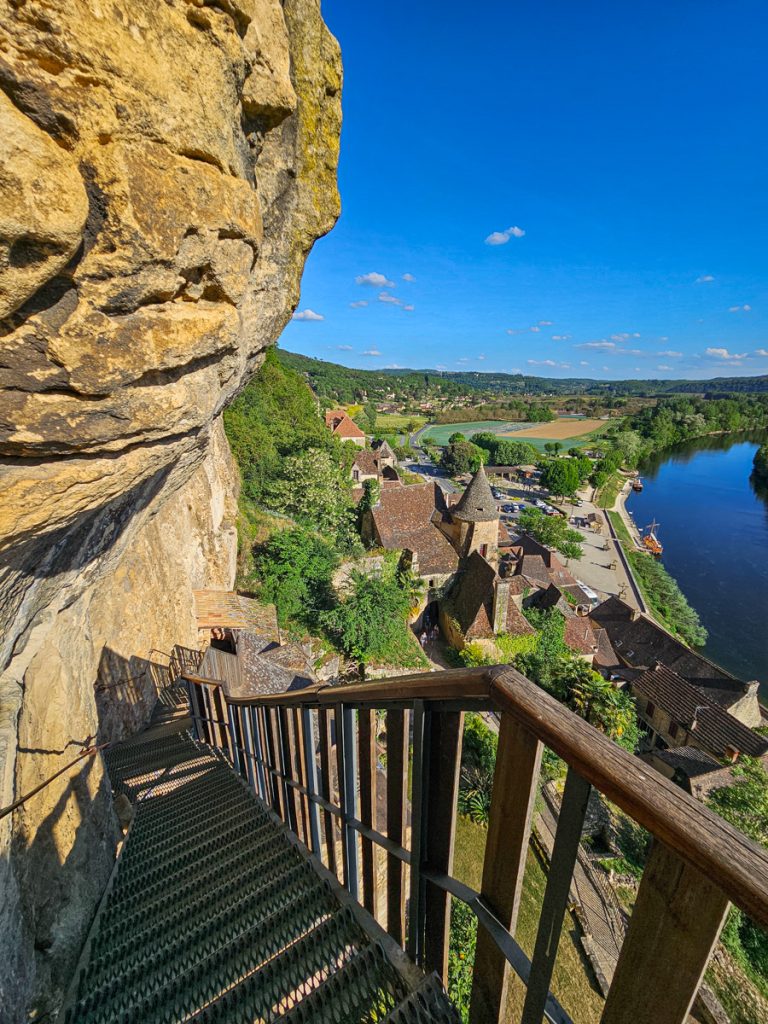
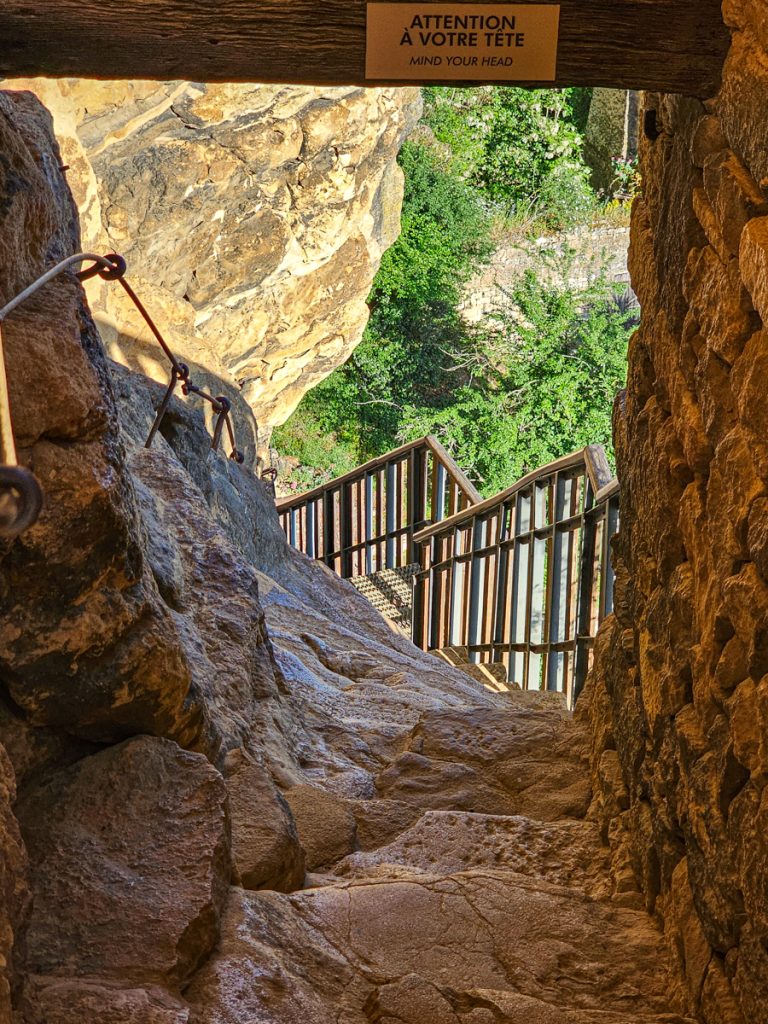
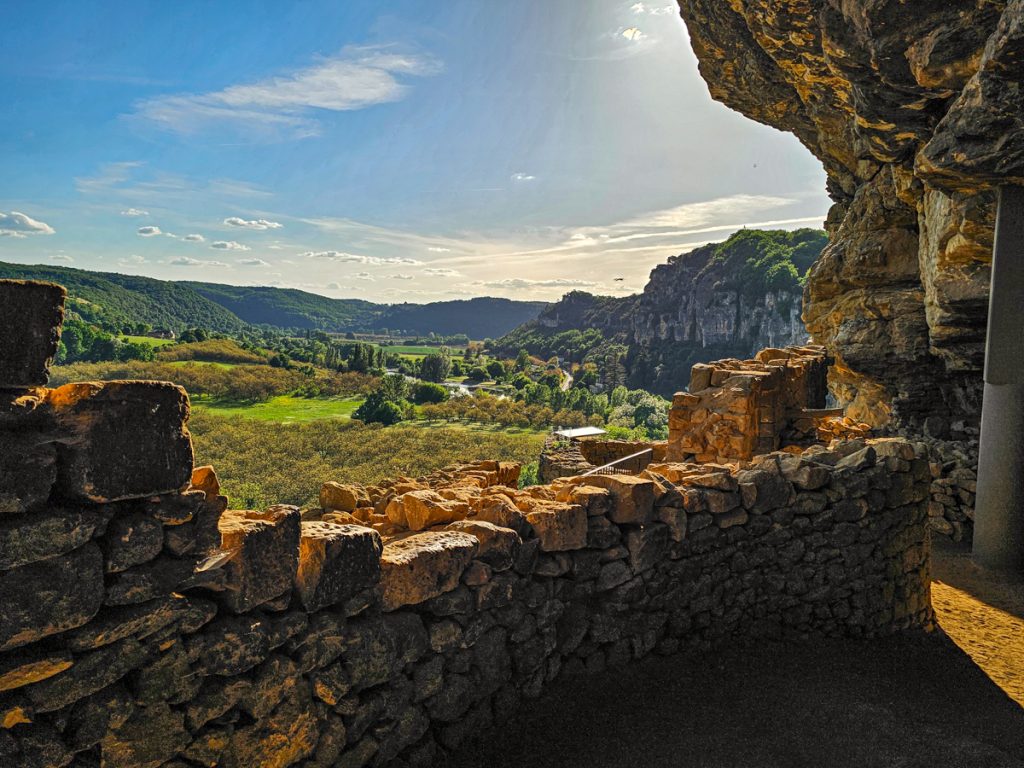
From the village, you climb 140 steps directly alongside the cliff to get there, the last 32 of which are carved straight into the rock and get pretty uneven toward the top.
Once inside, the fort is partially ruined but still atmospheric. You can walk through the old dwellings, see exhibits on the history of the village and the fort, and look out over the river far below.
10. Domme Cave

Domme is a charming hilltop village perched above the Dordogne Valley, and right underneath the center of town is an incredibly beautiful cave.
Of all the sites on this list, this is the one that feels most like a traditional cave experience, and the formations are really impressive, with stalactites, stalagmites, calcite deposits, drapery formations, and columns throughout.
You descend via a staircase right in the center of town, walk through with a guide for about 45 minutes, and exit through the natural opening on the side of the cliff, where an elevator takes you back up to the village.
Interestingly, the cave was discovered by two teenagers who stumbled into that natural cliff entrance while scrambling around on the rock face in 1912. Later, an entrance was added in the center of town.
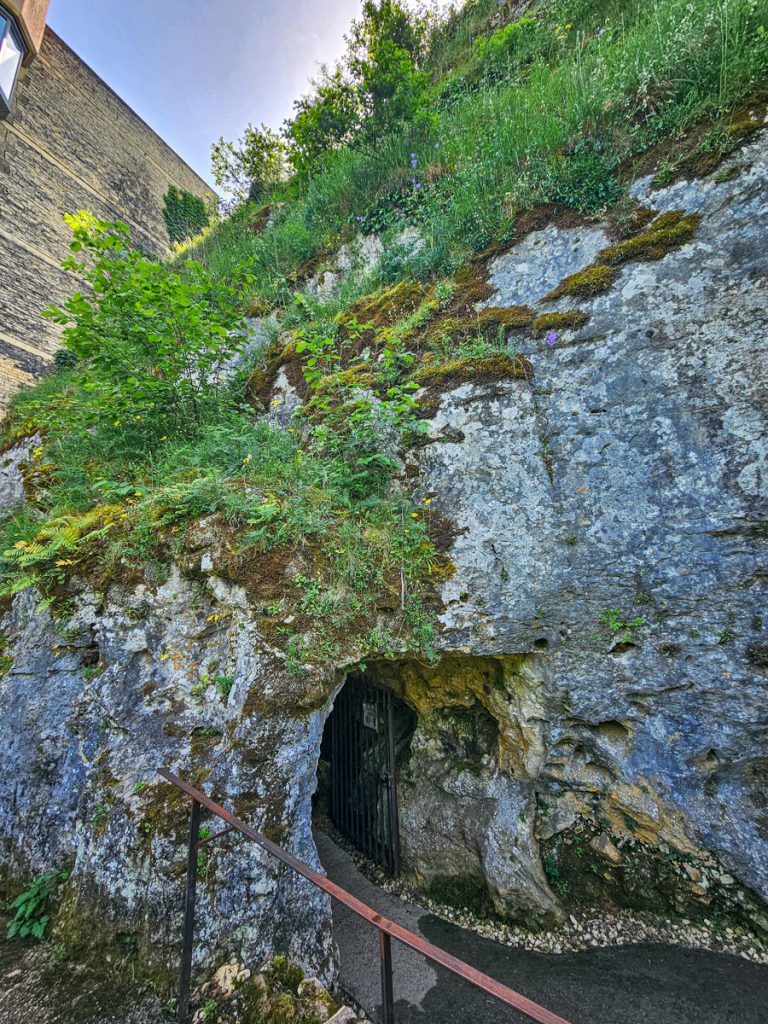
The tour is in French with a sparse English translation sheet, so you’ll get more out of it if you speak some French. No photos are allowed in the cave. Buy tickets at the tourist office in the old market hall in the center of town, with multiple tours throughout the day.
(No pictures because they’re not allowed in the cave and I forgot to grab some postcards at the gift shop. But you can see some posted from the Tourism Board here).
Final Thoughts
This list covers ten genuinely phenomenal sites (Padirac, Lascaux, and Rouffignac in particular just blew me away and alone are worth a trip to the region), but it’s also far from comprehensive.
The area around the town of Les Eyzies is considered the prehistoric capital of the world and is home to some of the most significant sites on the entire UNESCO list. Font-de-Gaume and Les Combarelles, in particular, are two decorated caves with original prehistoric paintings that are high on my list for my next visit (and if you go, book well in advance).
Southwest France has so many charms, but the caves themselves could keep you busy and delighted for weeks.
