
10 Colorful Cities in France You Need to Discover

While France is well-known for gorgeous historical buildings, impressive monuments, and adorable villages, it’s not often associated with colorful cities (certainly not like Italy, Singapore, or Colombia).
Yet, France has its share of vibrant, colorful villages and towns, full of charming and delightful squares and passageways.
As I’ve traveled throughout France, it’s been so fun to uncover some of these pastel-colored cities and bask in their rainbow hues. Without further ado, these are 10 of the most colorful cities in France you need to visit:
10 Colorful Cities to Discover in France
1. Villefranche-sur-Mer: A Gem on the Mediterranean

Villefranche-sur-Mer is a small town with pastel-colored houses along its narrow streets creating a striking contrast against the Mediterranean Sea. It’s situated on the French Riviera between Nice and Monaco.

One of the main draws of Villefranche-sur-Mer is its Old Town. As you wander through the maze of alleys and staircases, you’ll find charming cafés, hidden chapels, and unique boutiques.

The harbor is the town’s focal point, and watching boats in the clear water while enjoying a meal at one of the waterfront restaurants is a highlight.
The Chapelle St Pierre, decorated by artist Jean Cocteau, is a must-see for its unique interior. Don’t miss the Citadel, a fortress from the 16th century that now houses museums and gardens.

And just a couple of minutes’ walk from the city center takes you to a beautiful beach where you can relax and soak up the sun.
People should visit Villefranche-sur-Mer not just for its colors, but also for its laidback vibes and simple charm, which makes it one of my all-time favorite spots on the Riviera.
2. Colmar: A Fairytale Town in Alsace

Colmar, located in the Alsace region of northeastern France, is a town straight out of a storybook. Known for its well-preserved old town and colorful half-timbered houses, Colmar is a visual delight.
Colmar’s old town is a maze of cobblestone streets and historic buildings. The architecture reflects a mix of German and French influences (this part of France has changed hands between France and Germany multiple times in its history), giving the town a unique character.

The Petite Venise area is easily the most picturesque part of Colmar and is where you’ll find the most color. Here, charming canals are lined with brightly painted houses, flower-filled window boxes, and quaint bridges, making every turn feel like stepping into a fairytale.

The Église Saint-Martin, a beautiful Gothic church, is a must-see. The town’s museums, such as the Unterlinden Museum, provide insight into its history and art.
If you visit in winter, the Christmas market in Colmar is absolutely adorable and one of the best in Europe.

I seriously loved Colmar so much and just walked around with a goofy grin on my face – the town’s colorful buildings, half-timbered houses, and scenic canals create a magical setting that’s hard to resist.
3. Menton: The Pearl of the Riviera
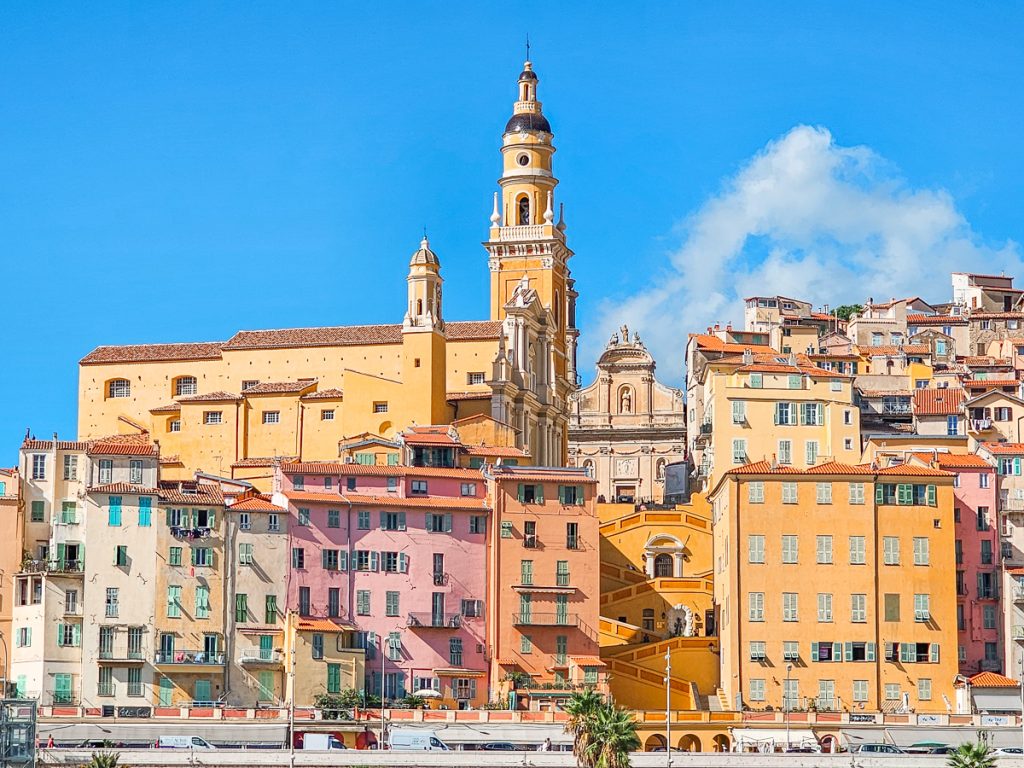
Menton, located on the French Riviera just 5 miles/3 km from the Italian border, is often called the “Pearl of the Riviera.” This town is known for its beautiful gardens, colorful buildings, and great beaches, but what truly sets Menton apart are its lemons.
Thanks to its unique micro-climate, Menton is the only spot in France where lemons are grown, and they are a big part of the town’s identity. The annual Lemon Festival celebrates this heritage with elaborate citrus displays and parades, and you can find lemon tarts, drinks, and desserts all around the city.
One of the most charming things to do in Menton is, of course, explore the Old Town. As you wander through its narrow streets, you’ll see houses painted in shades of yellow, orange, and red.
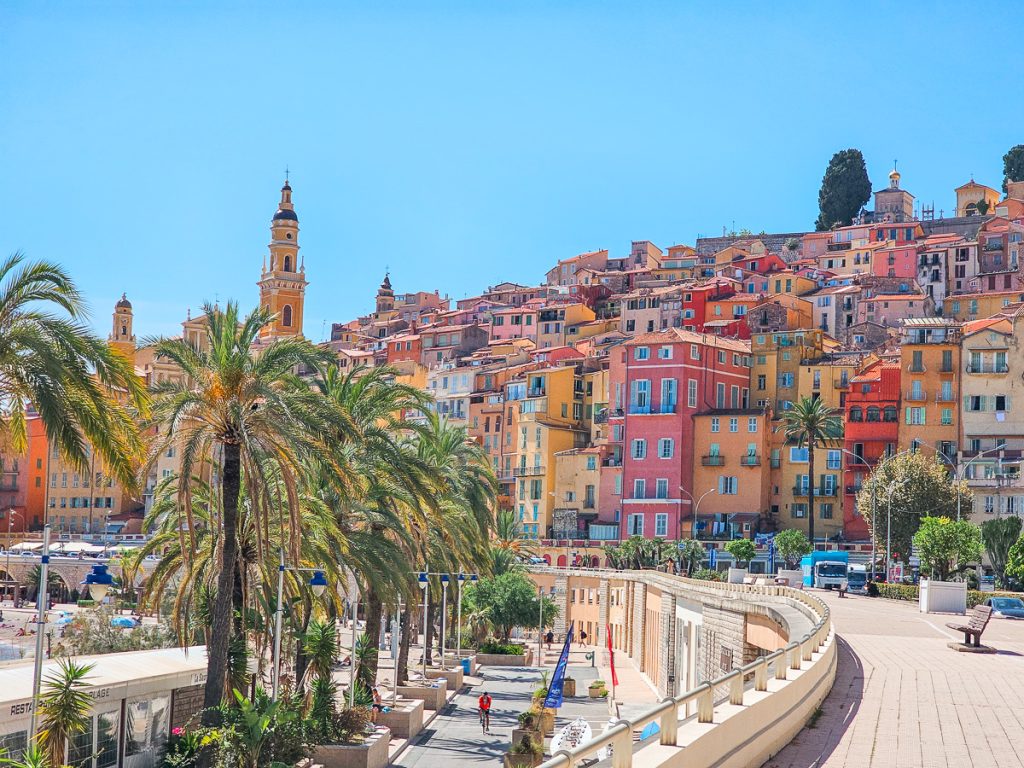
The Basilica of Saint Michael Archangel, with its stunning baroque architecture, stands proudly in the heart of the old town. Climbing the zig-zagging steps to the basilica offers a great view of the town and the Mediterranean Sea.
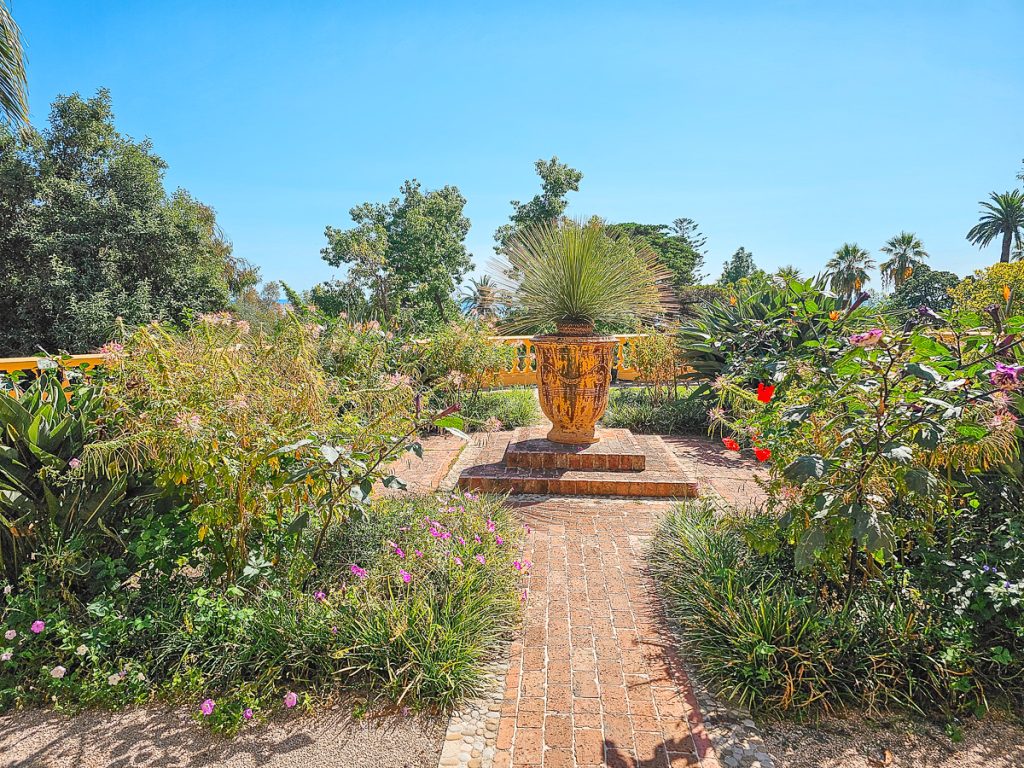
Menton is also famous for its many well-designed and well-manicured gardens, which are filled with exotic plants and offer a serene escape from the bustling town.
The Val Rahmeh-Menton Botanical Garden and the Serre de la Madone Garden are two of the relaxing gardens to stroll through in the city.
The beaches in Menton are perfect for a swim in the clear blue waters. The Plage des Sablettes is a favorite spot with its soft sand and calm sea, ideal for a relaxing day by the water, and is one of my favorite beaches on the French Riviera.

If you don’t want to swim, Menton’s seafront promenade is lined with palm trees and offers stunning views of the coast and colorful city. It’s a great place to relax, enjoy a gelato, and watch the world go by.
4. Toulouse: The Pink City with a Colorful Twist

Toulouse, known as the Pink City, is situated in the heart of the Occitanie region in southwest France. Toulouse is known for being constructed with bricks from the Garonne River, which flows through the city center.
While these bricks give Toulouse its nickname, the buildings range in various shades of pink, dark and light red, tan, and peach, with accents and shutters in green, blue, and red. Many buildings feature alternating red and white stones around windows, creating a striped appearance.

One of the highlights of Toulouse is the Canal du Midi, a UNESCO World Heritage site. This canal and other interconnected canals were originally conceived to connect the Atlantic to the Mediterranean, and offer picturesque walking or biking paths along the banks.

The Place du Capitole is the main square in Toulouse, surrounded by the city’s characteristic light red buildings. The Capitole building itself, with its pink marble columns and grand architecture, dominates the square.
Inside, the Salle des Illustres is a series of beautifully decorated rooms celebrating Toulouse’s heritage, adorned with sculptures, paintings, and frescoes that highlight the city’s history.

A must-see is the Chapelle des Carmelites, a stunning chapel with an oak-paneled vaulted ceiling and murals inspired by the Sistine Chapel.
5. Annecy: The Venice of the Alps

Annecy, nestled in the French Alps, is known for its stunning lake and charming old town. Often called the “Venice of the Alps,” this picturesque town is famous for its canals, pastel buildings, and breathtaking mountain views.
The heart of Annecy is its Old Town, where narrow cobblestone streets are lined with multi-colored houses in shades of peach, yellow, and light blue, accented with vibrant shutters and flowers, creating a cheerful atmosphere. The canals winding through the town add to its charm, making it a delight to stroll through.

The Palais de l’Isle, a historic building situated in the middle of the Thiou Canal, is a must-see. This 12th-century structure, often photographed for its unique shape and picturesque location, now houses a local history museum.
Another significant landmark is the Château d’Annecy, a restored castle overlooking the town. The castle offers panoramic views of Annecy and its surroundings and hosts a museum with exhibits on the region’s art and history.

One of the highlights of Annecy is Lake Annecy, often considered one of the cleanest lakes in Europe. The crystal-clear water, surrounded by mountains, is perfect for swimming, boating, or simply relaxing by the shore.
The promenade along the lake is a great place for a leisurely walk or bike ride, offering stunning views at every turn.
The colorful buildings, scenic canals, and stunning lake views make Annecy a truly enchanting destination.
6. Perpignan: Hidden Gem of Southwest France
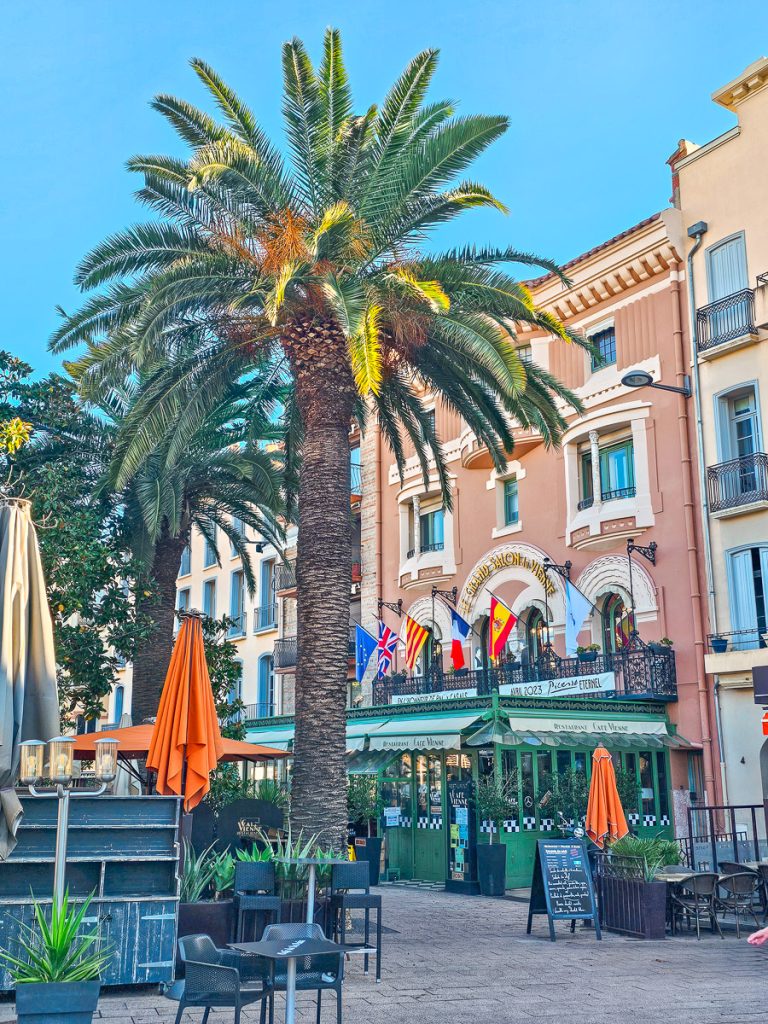
Perpignan sits in the far south of France, not far from the Spanish border, and is the capital of the Pyrénées-Orientales department.
With its palm-lined streets, vivid facades, and Catalan-French identity, Perpignan has an incredibly unique vibe for France.
Walking the streets, I just fell in love with how picturesque and colorful everything was — rich red and ochre buildings, marble sidewalks, hanging art installations (plus almost no other tourists around.)
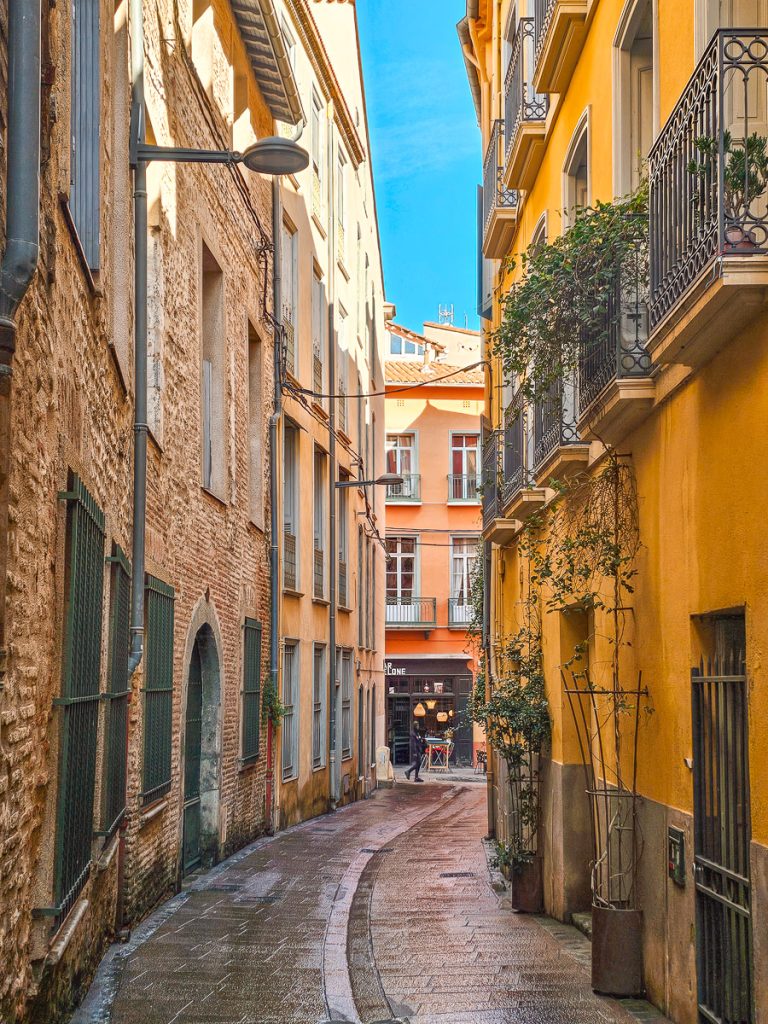
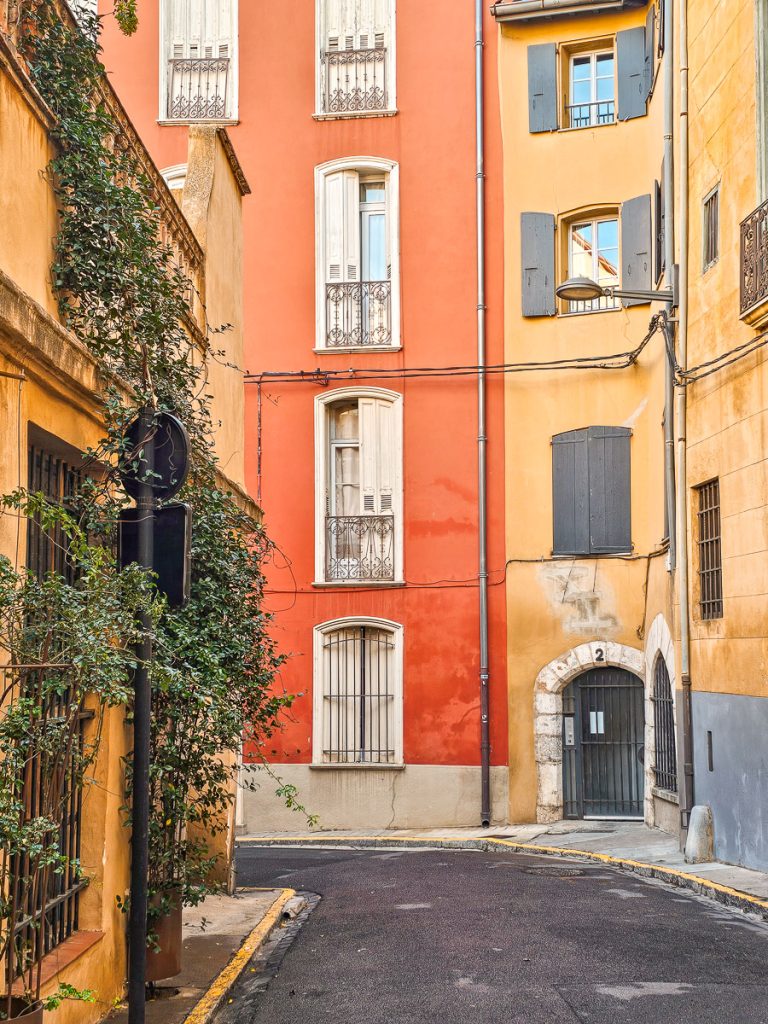
Historically, Perpignan shifted between French and Catalan (Spanish) rule, which is reflected in its mix of architecture, names, and culture. The 13th-century Palace of the Kings of Majorca is the city’s most impressive monument — a Gothic citadel and royal residence with arcaded courtyards and sweeping views.
But the absolute highlight for me was Hôtel Pams, a jaw-droppingly ornate mansion with onyx staircases, Art Nouveau salons, and a lush inner courtyard that feels like a secret garden. It’s free to visit and one of the most opulent historic homes I’ve ever seen.
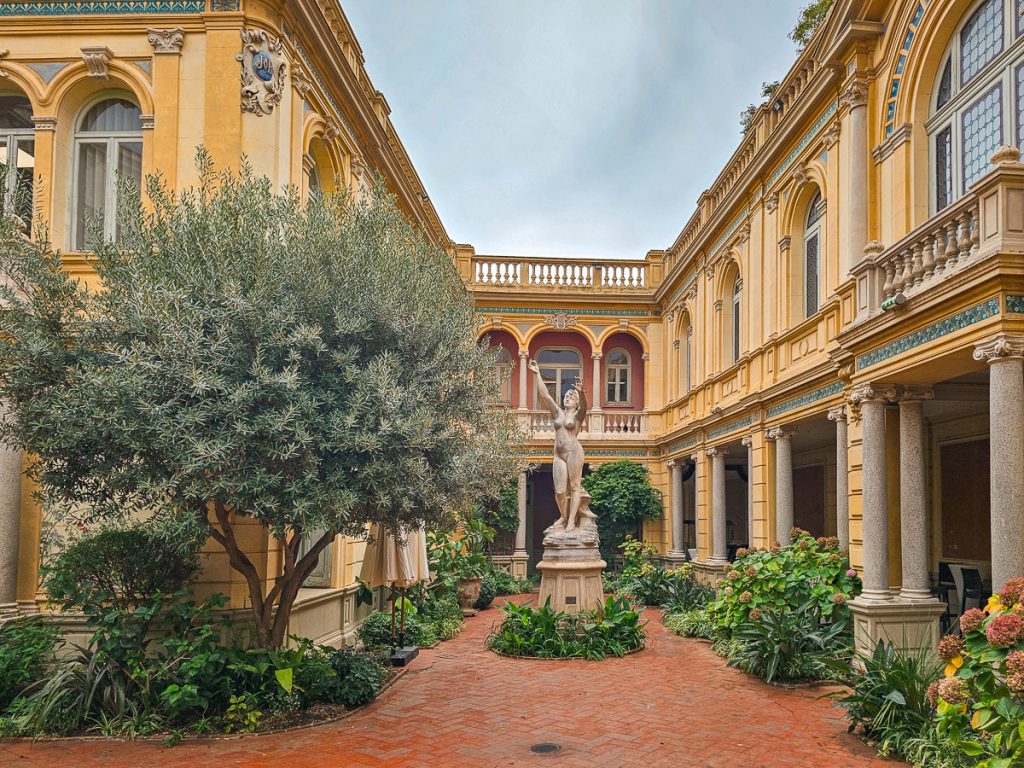
Perpignan is one of those places that feels completely off the radar but absolutely worth the detour — a vibrant, historically rich city that took me totally by surprise.
7. Collioure: Seaside Village That Inspired an Art Movement
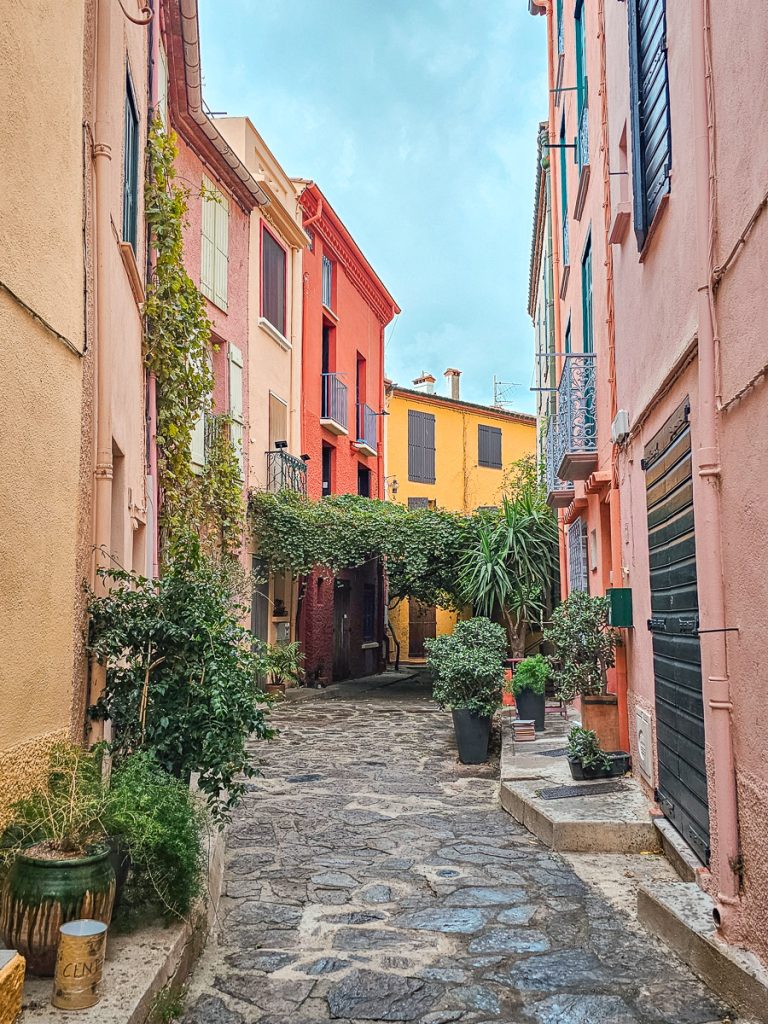
Tucked along the Vermillion Coast just 25 km from the Spanish border, Collioure is a picture-perfect Mediterranean village known for its vivid facades, historic fortress, and influential art history.
The streets are narrow and winding, the buildings glow in rich reds, yellows, and oranges, and the sea sparkles just steps away. Vineyards climb the hills behind town, and the whole scene is picture-perfect.
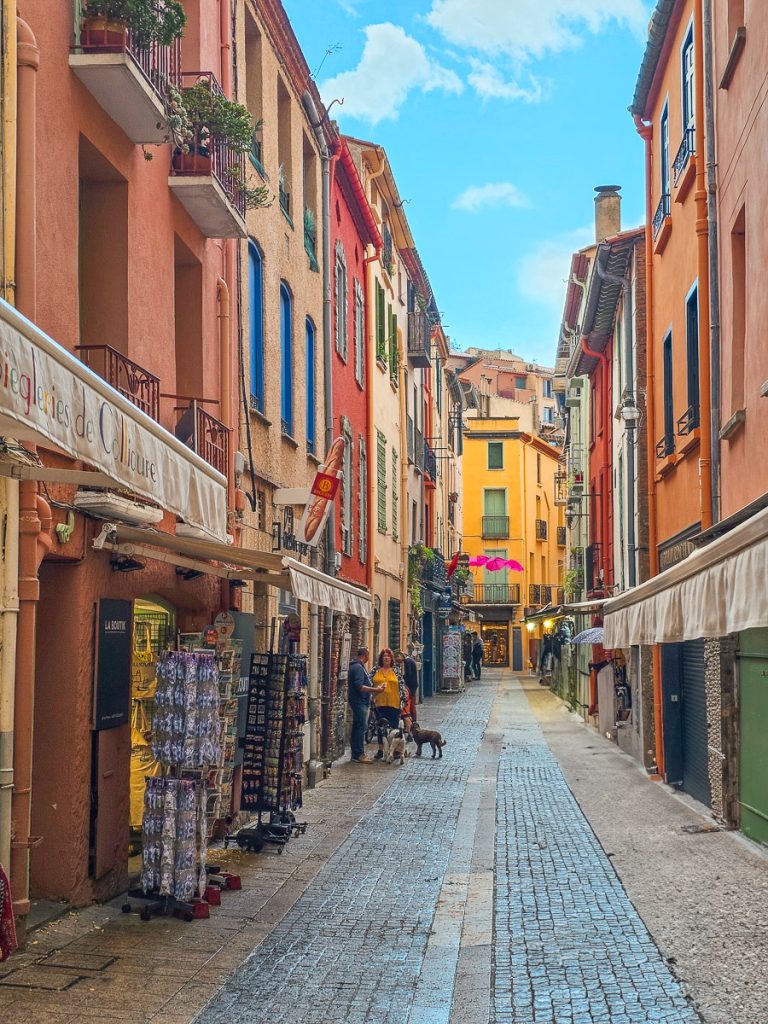
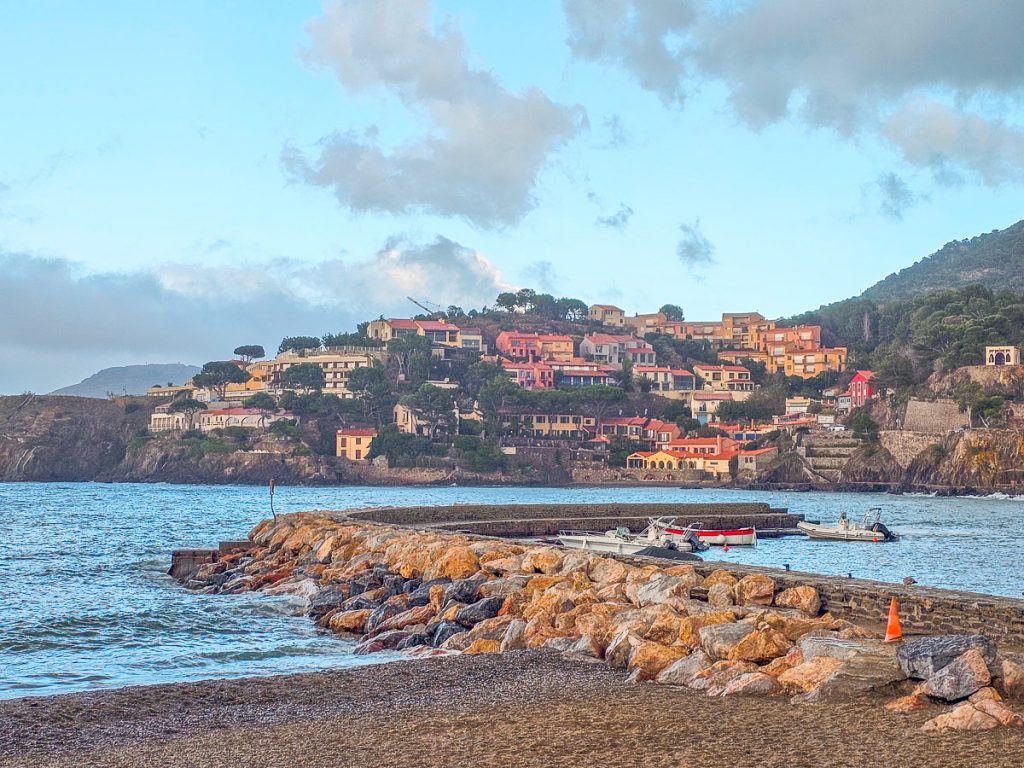
The Château Royal de Collioure, built on the site of an old Roman fort, practically sits on the beach, and was later used by the Kings of Majorca. You also can’t miss Notre-Dame-des-Anges, a beachside church that was converted from an old lighthouse.
Perched on a tall hill above the town, Fort Saint-Elme offers panoramic views over the coast.
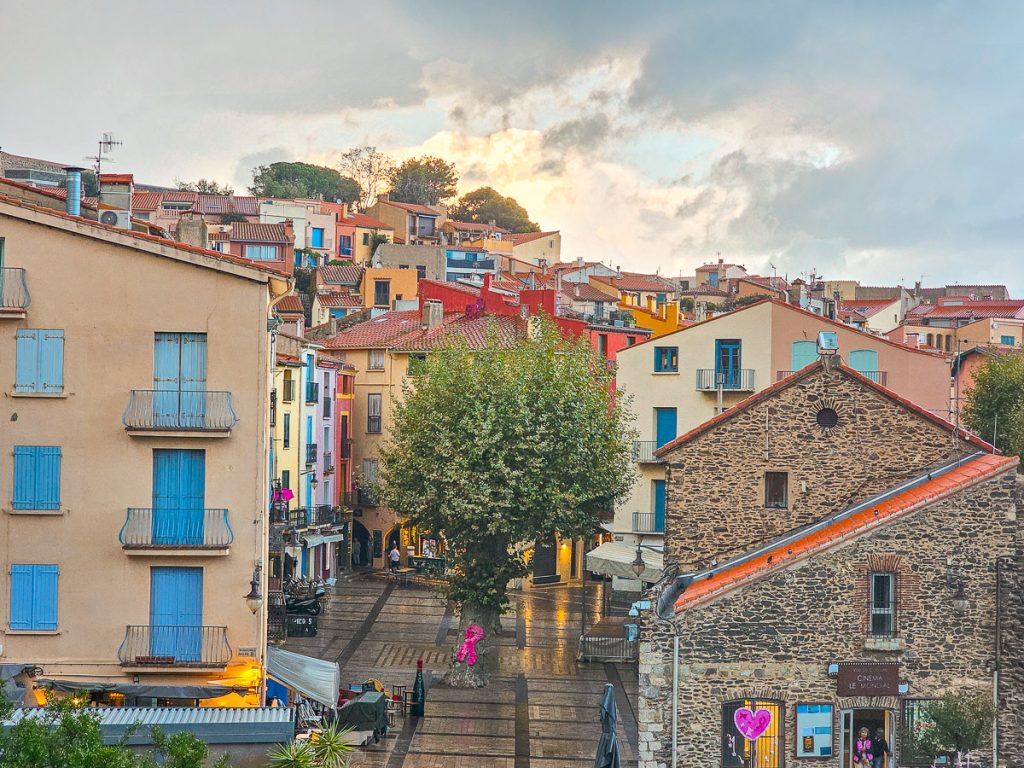
Collioure is well-known for its connection to Fauvism. In 1905, André Derain and renowned painter Henri Matisse arrived here and were captivated by the town’s vivid colors and light. Their paintings launched the Fauvist movement, and today, you can follow a trail of 20 reproductions throughout the village.
Finally, Collioure is also known for its anchovy fishing, and you can find many shops around town that serve fresh anchovies taken from the nearby sea.
8. Isle-sur-la-Sorgue: Vibrant Market Town

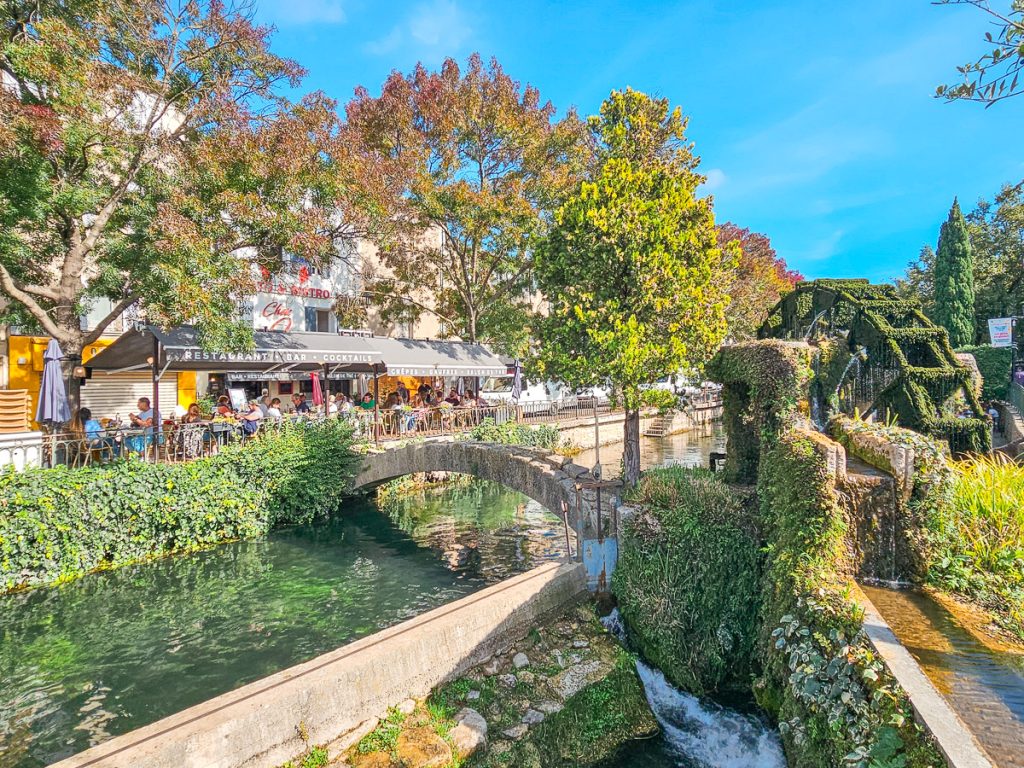
Located about an hour east of Avignon, L’Isle-sur-la-Sorgue is a small Provençal town known for its winding canals, famous markets, and reputation as France’s antique capital. The Sorgue River splits around the old center, creating a true island in the water—hence the name.
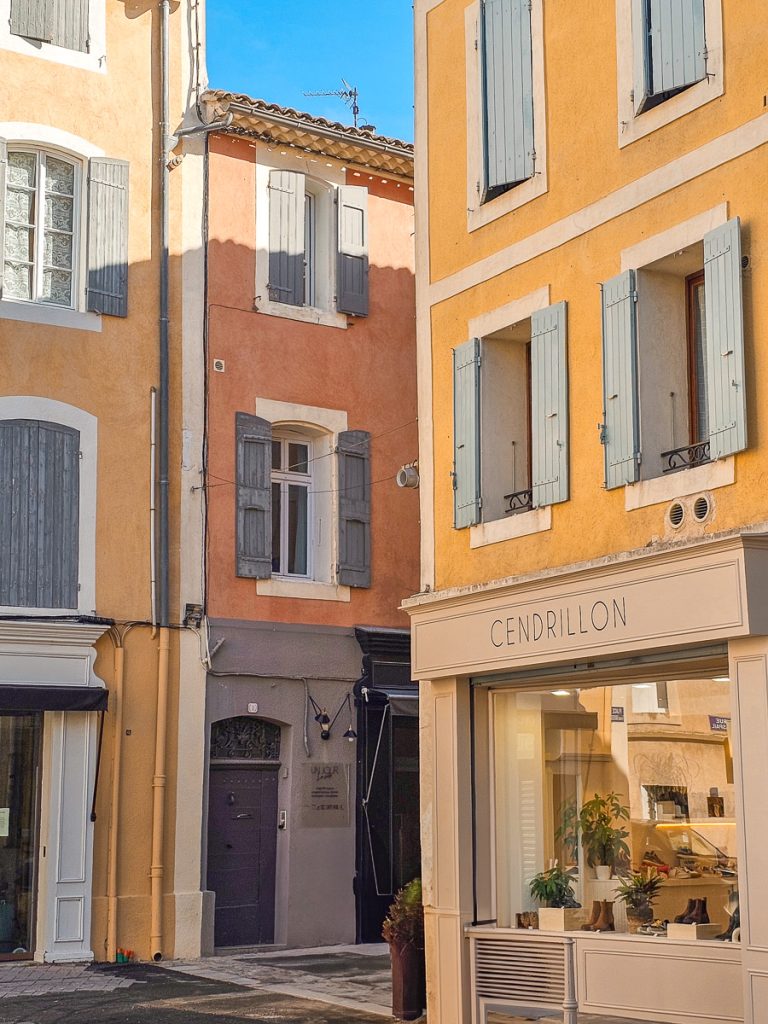
The town itself has plenty of color, with warm-toned buildings in pinks, golds, and reds, and shutters in every shade from lavender to turquoise.
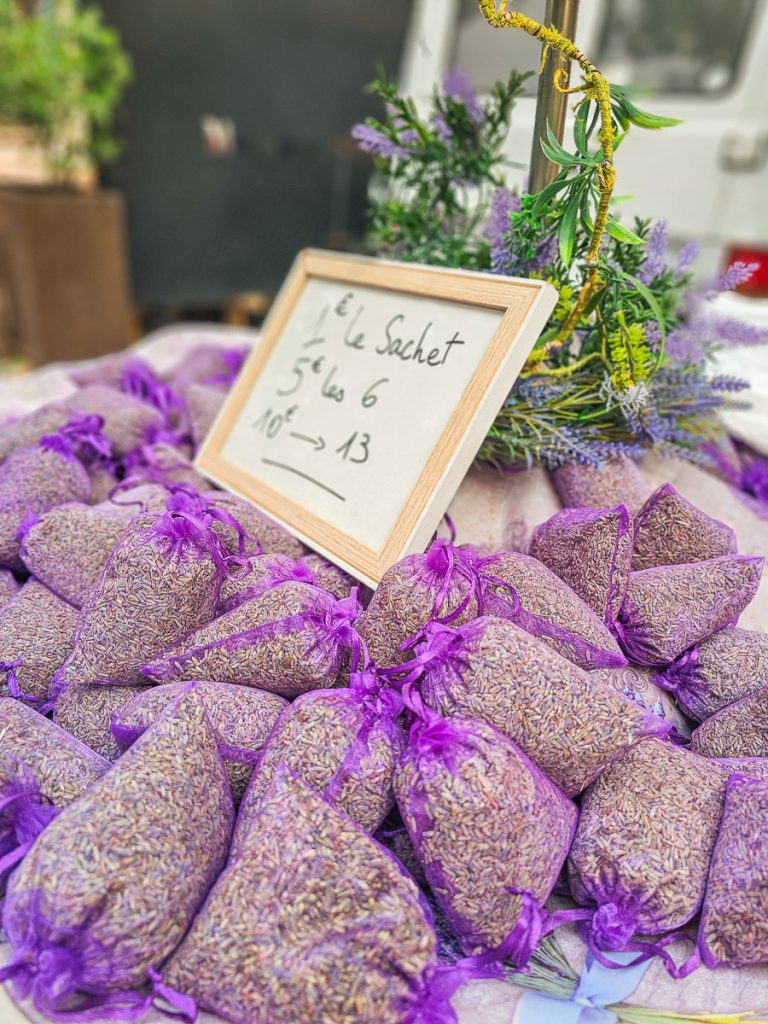
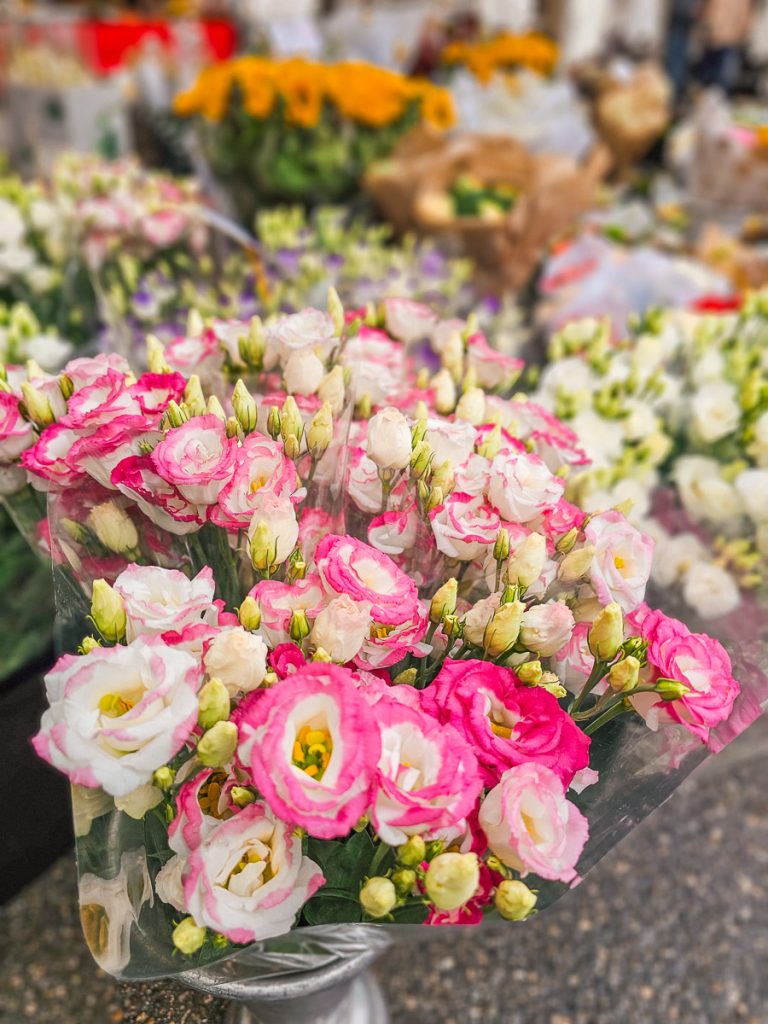
But on market days, the streets explode with even more vibrancy. Around 300 stalls take over the village every Thursday and Sunday morning, offering everything from vibrant produce and bread to pastel-colored soaps, scarves, and nougat.
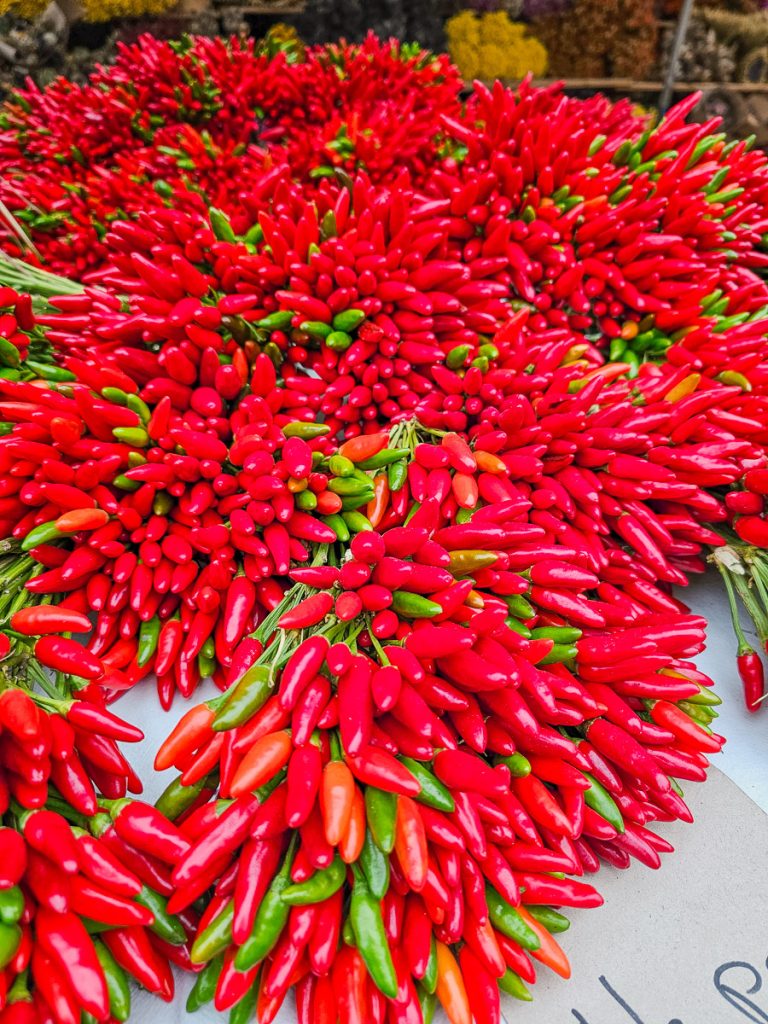
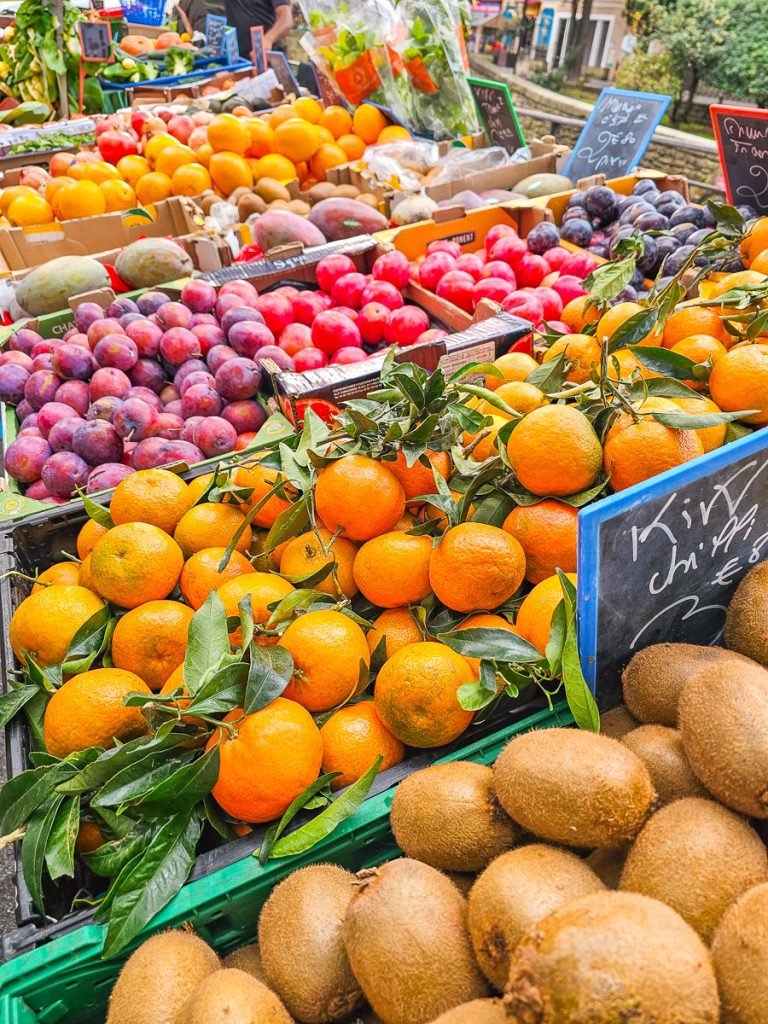
The displays are part of the charm—goods are carefully arranged in baskets and bowls, often spilling out onto checked cloth tables or tucked beneath shady awnings.
Beyond the markets, it’s worth following the river around the island to admire several historic wheels leftover from the town’s days as a milling hub. The mossy “Roue à Aube de la Porte d’Avignon” wheel and old stone bridge are especially charming.
9. Arcachon
Located on the Atlantic coast about an hour south of Bordeaux, this colorful resort town has long been a retreat for the wealthy.
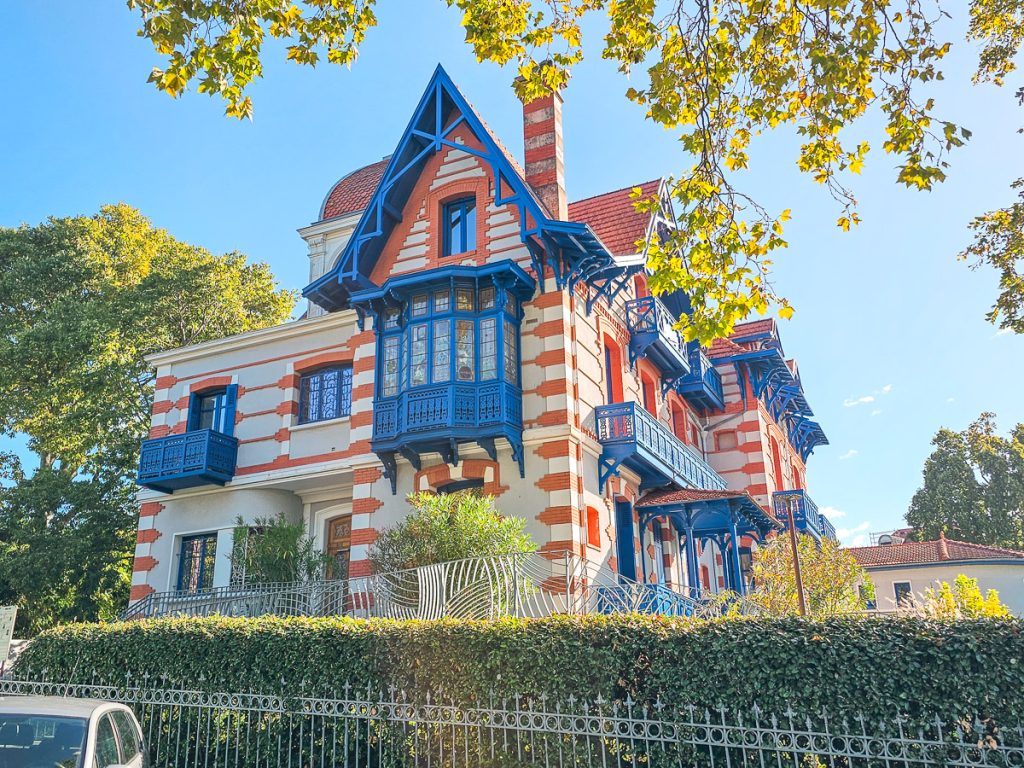
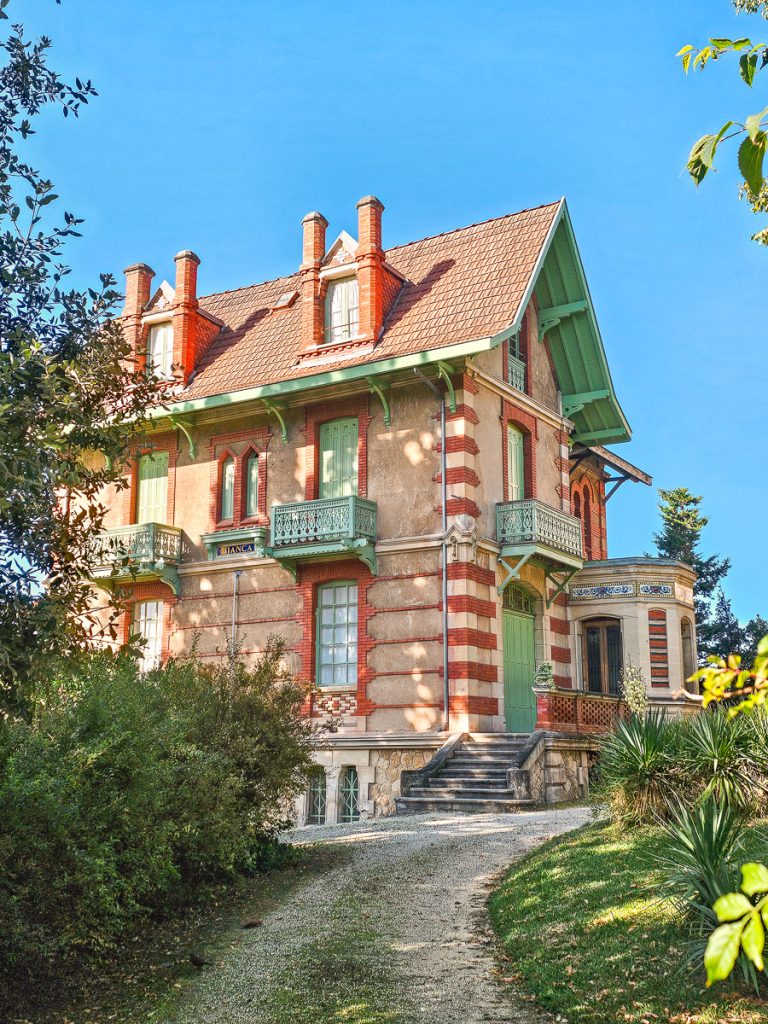
In the late 1800s, Arcachon became known as the “Winter Town” thanks to its mild climate and the grand villas built as seasonal getaways. These homes are tall and striking, with pointed gables, art nouveau balconies, and bright accent bricks and tiles—unlike anything else you’ll see in France.
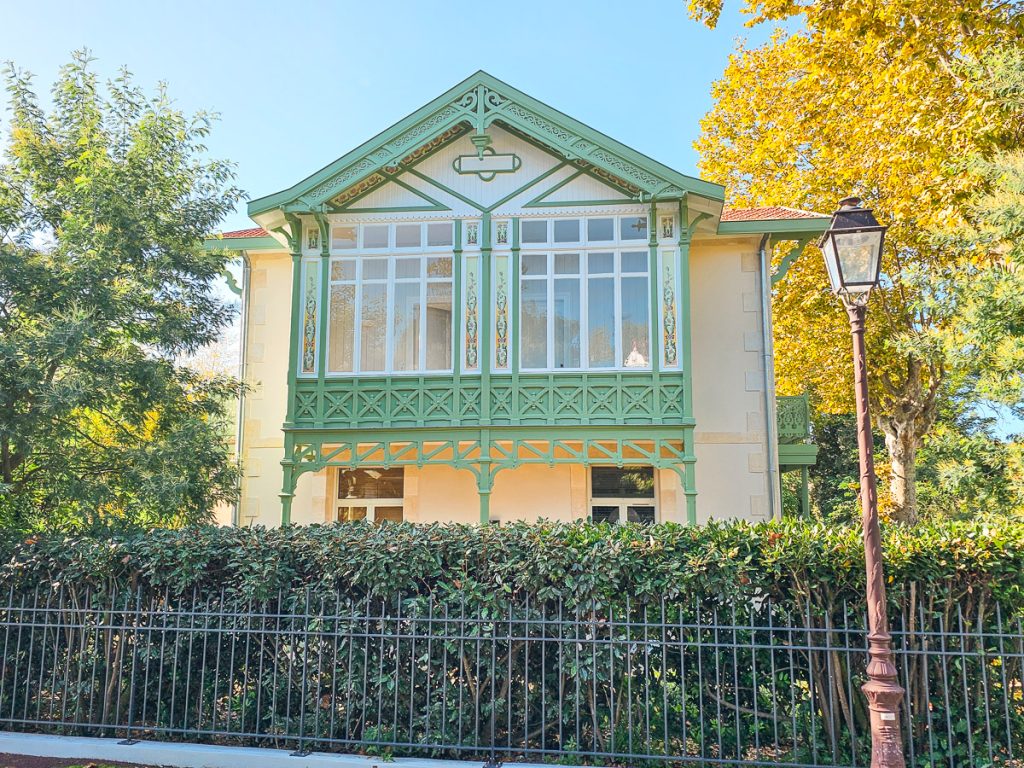
The town is flat and easy to explore on foot. Avenue Gambetta and the surrounding streets form a walkable shopping district, filled with boutiques and outdoor cafés just a few blocks from the sea.
The beach itself is long, clean, and sandy, with a peaceful promenade running along the shoreline and piers stretching into the water.
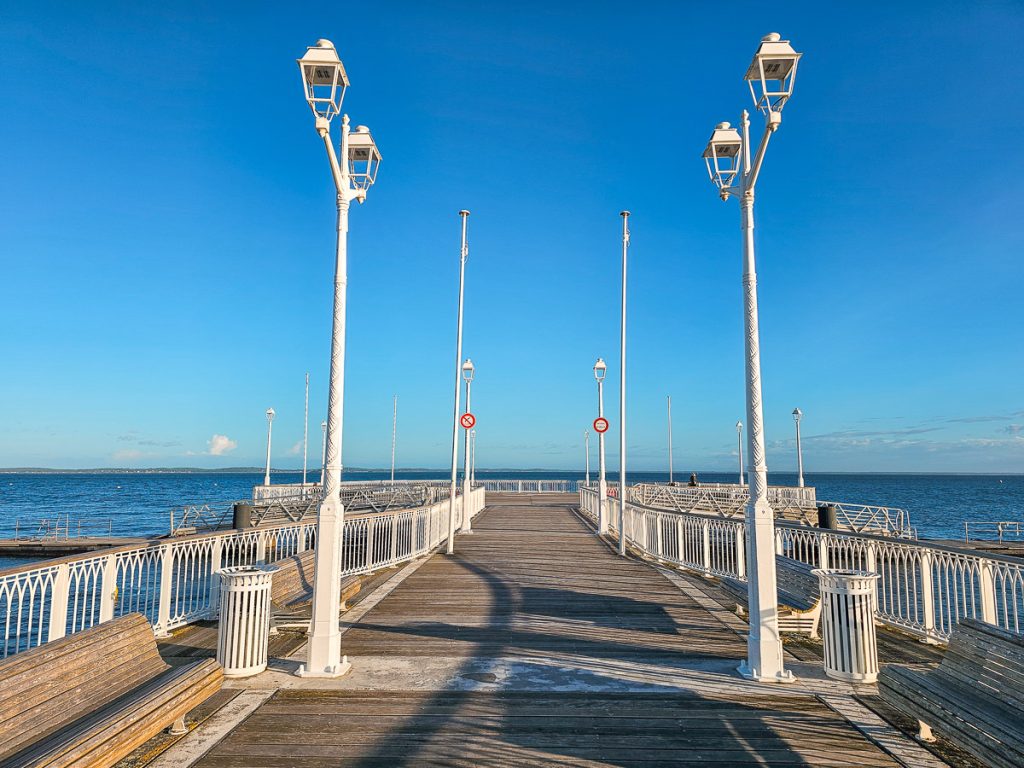
If you have time, you can loop around Arcachon Bay to explore the oyster villages and Cap Ferret, home to a tall white lighthouse and fresh seafood.
10. Lyon
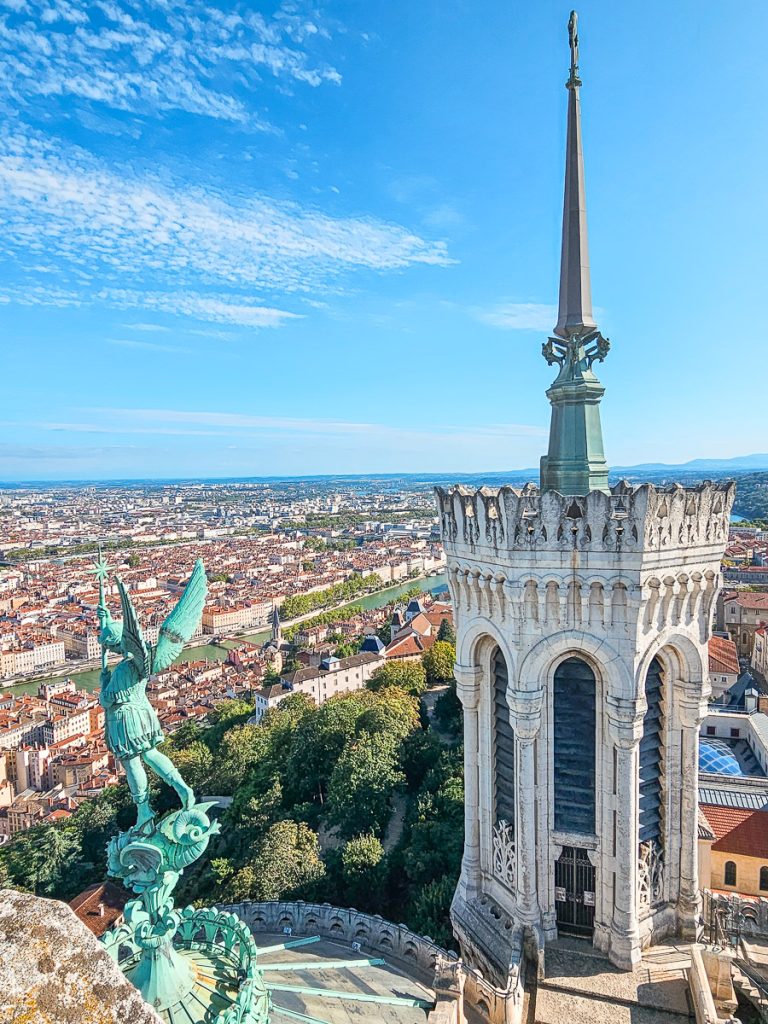
Finally, we’ll wrap up this list with Lyon, France’s 3rd largest city. While Lyon is a large, dynamic city with multiple neighborhoods to explore, one of its most colorful corners lies along the banks of the Saône.
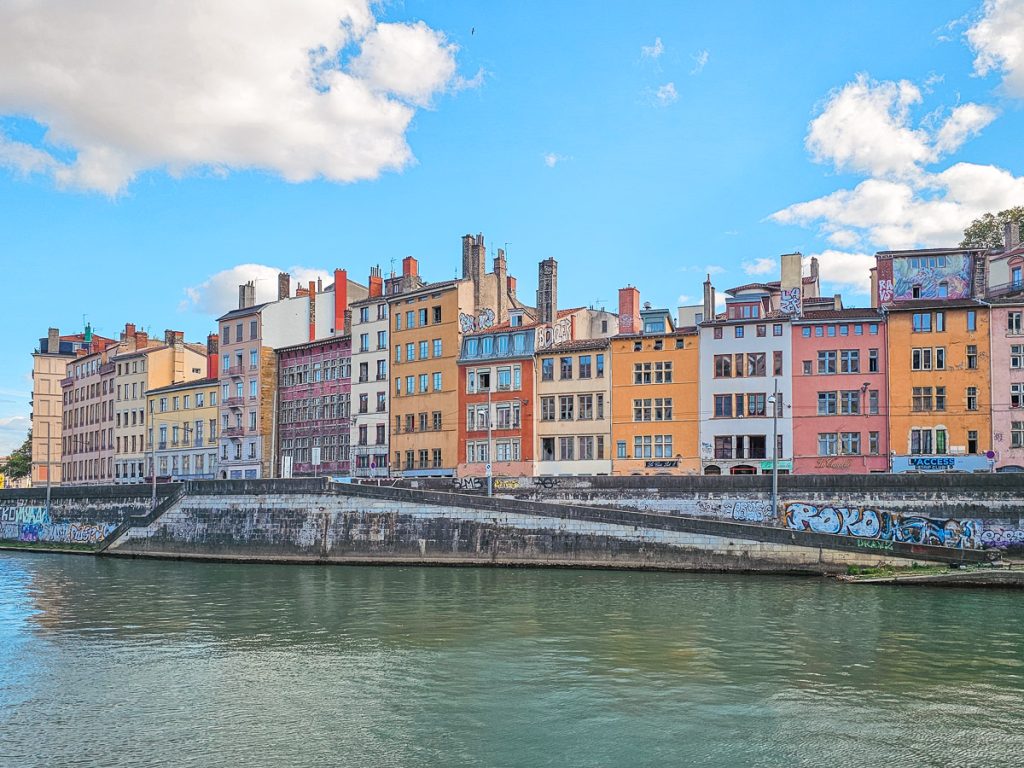
This stretch of riverfront is lined with tall, narrow buildings painted in warm shades of ochre, pink, gold, and red—remnants of the city’s Renaissance-era prosperity.
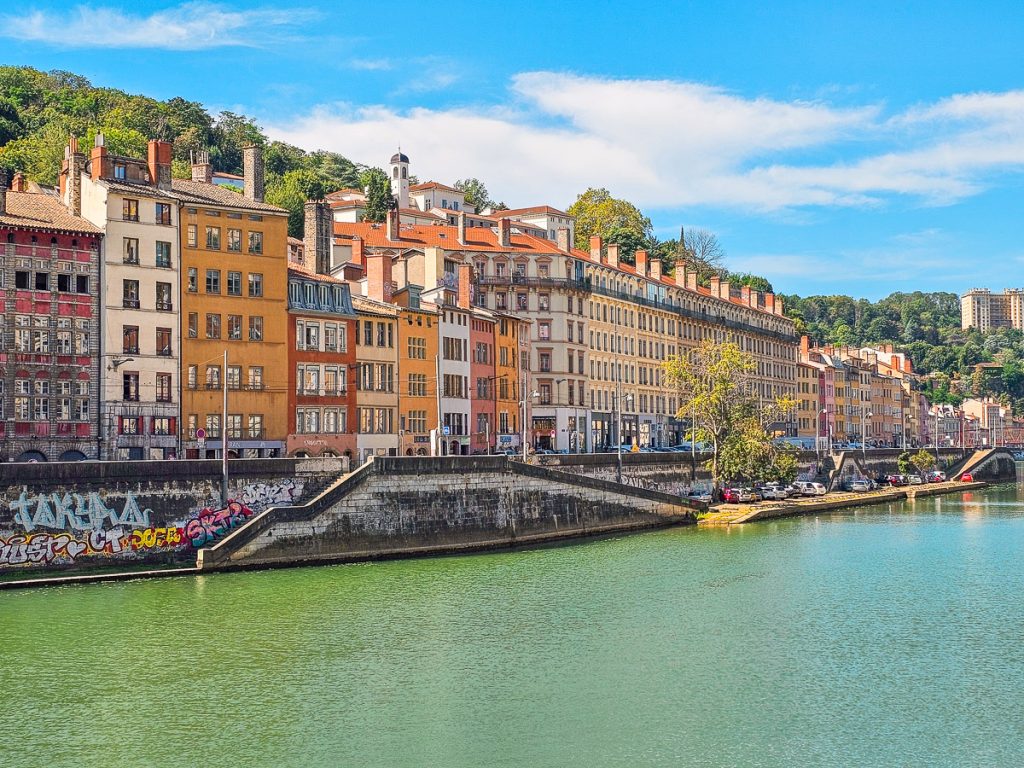
These facades reflect Lyon’s role as a trade and banking hub in the 1500’s, when Italian merchants brought both wealth and Italian style with them to France.
The best way to admire these rainbow facades is by walking along the riverbank on the east side of the river, or while on a Saone river cruise (a must do in Lyon!).
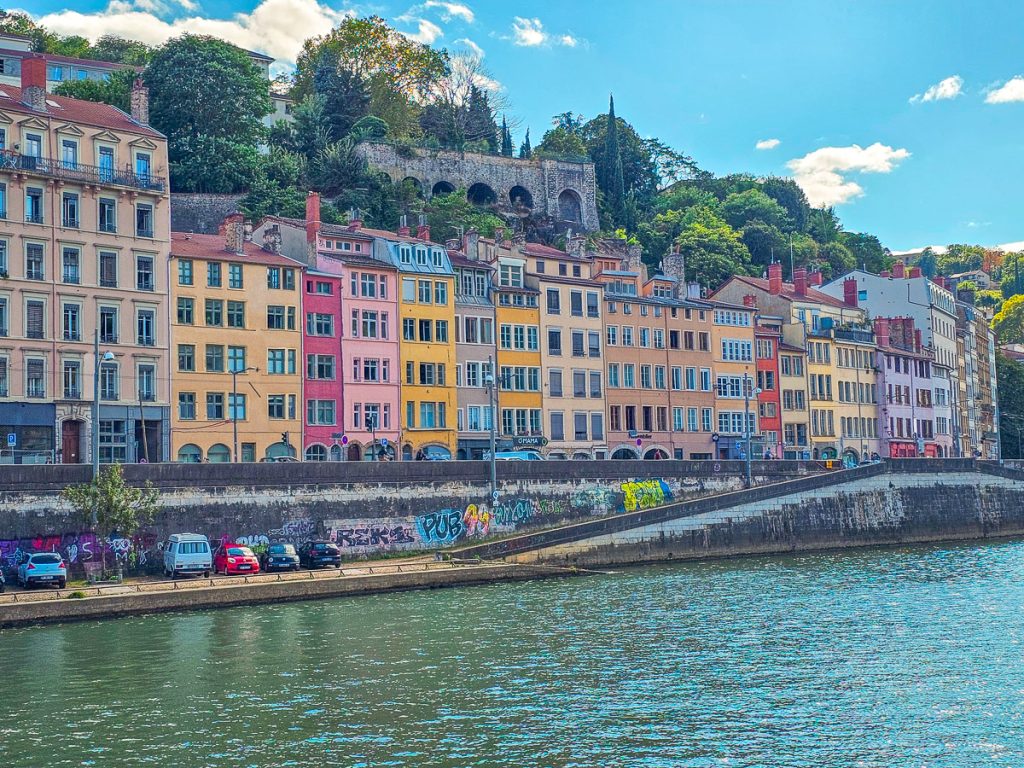
The rest of the city is full of contrasts, shaped by its two rivers (the Rhone and Saone) and two iconic hills, Fourvière and Croix-Rousse.
From the hilltop Fourvière Basilica to the traboules of Old Town and the creative energy in Croix-Rousse, Lyon offers plenty to explore—but its riverfront color palette makes it worthy of a spot on this list.
The Wrap Up
While by no means an exhaustive list of colorful spots in France, these cities encapsulate some of the country’s most beautiful and colorfully vibrant places to visit. Which one are you going to travel to first?
