
10 Beautiful Paris Metro Stations Worth Stopping For

The Paris Metro isn’t just a way to get around – it’s also home to some surprisingly beautiful stations. From mosaic-covered ceilings to historic murals, a few stops are destinations in their own right. These are ten metro stations that show even a quick ride across Paris can turn into a sightseeing stop.
Louvre-Rivoli

The Louvre–Rivoli station, just a short walk from the Louvre, feels more like a mini museum than a metro stop. Replica statues of famous works like the Venus de Milo and the Code of Hammurabi stand in alcoves along the softly lit platform, giving it the look of an underground gallery.
Place Colette

The Palais Royal–Musée du Louvre station at Place Colette is instantly recognizable for its colorful glass-bead dome, created by artist Jean-Michel Othoniel. Made from over 800 Murano glass beads, the entrance, called Le Kiosque des Noctambules, is practically a work of art in its own right, and adds a whimsical touch to one of Paris’s most historic areas.
Arts et Métiers

Arts et Métiers station, inspired by the nearby science and invention museum of the same name, looks like something out of Twenty Thousand Leagues Under the Sea. The platforms are lined with gleaming copper panels, rivets, and gears, creating the illusion of being inside a giant submarine. Even the benches and lights follow the theme, making it one of the most inventive metro designs in Paris.
Bastille
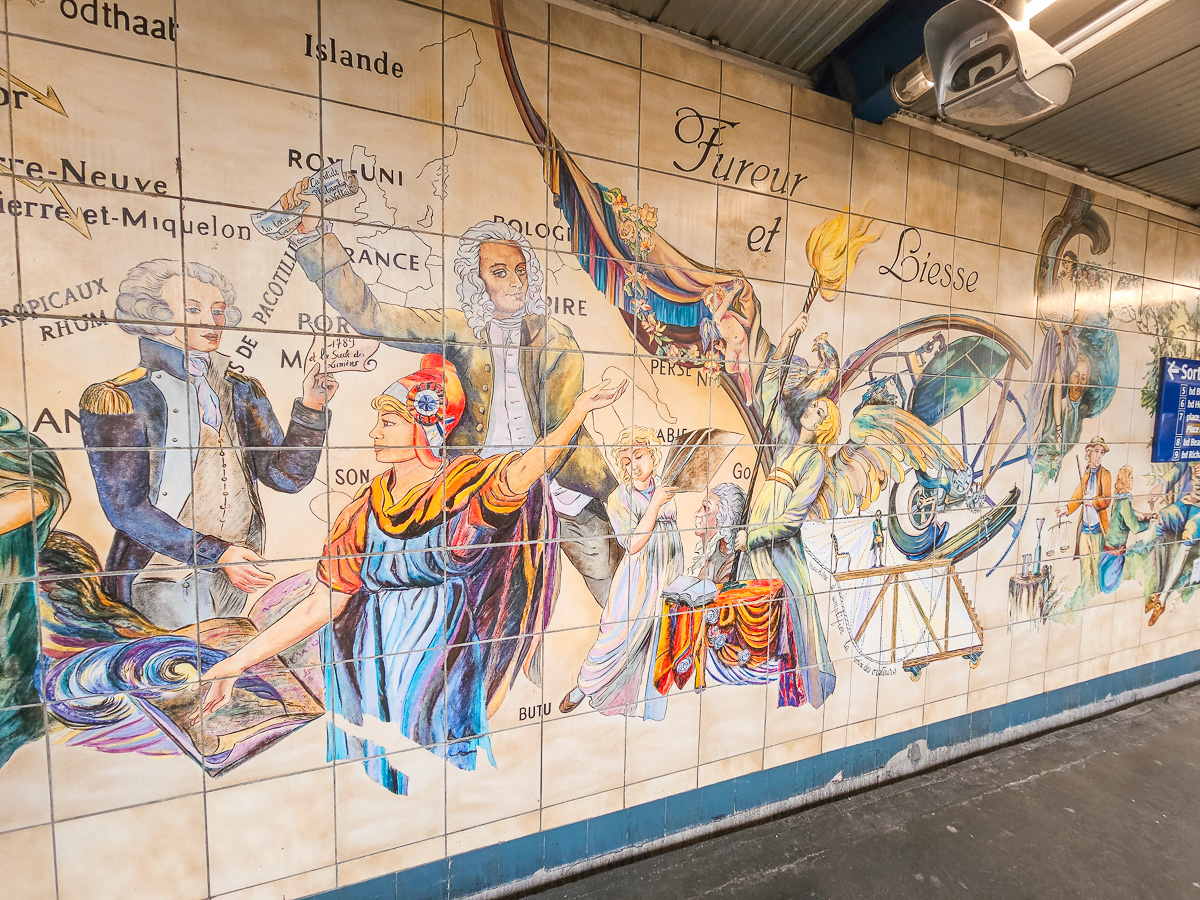
The Bastille station, located on the site of the former Bastille prison, pays tribute to the Revolution that began there in 1789. Along the line 1 platforms, bright ceramic murals depict scenes of the uprising, including marchers with flags, revolutionary leaders, and Enlightenment ideals. It’s one of Paris’s most symbolic metro stops.
Metro Line 6 Between Bir-Hakeim and Passy
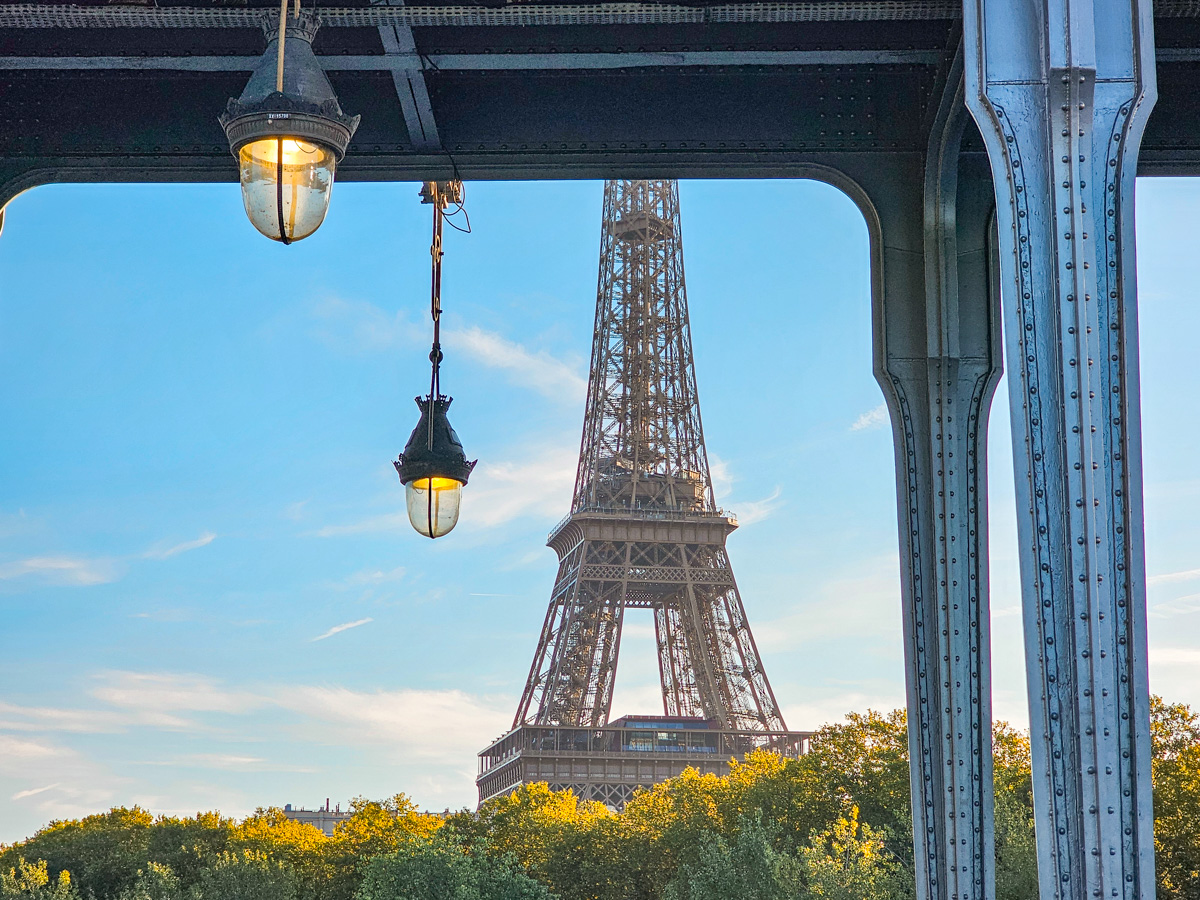
The stretch of Metro Line 6 between the Bir-Hakeim and Passy stations offers one of the most scenic moments in Paris transit. As the train leaves the station, it quickly crosses the Seine on the elevated Pont de Bir-Hakeim bridge, with the Eiffel Tower suddenly coming into full view right beside you. It’s a quick ride, but the open-air bridge and sweeping panorama make it feel straight out of a movie.
Concorde

Under Place de la Concorde, a square central to the French Revolution, the Concorde station carries a powerful reminder of the era. The line 12 platform is covered in tiles forming the text of the Declaration of the Rights of Man and of the Citizen, connecting the space to the Enlightenment ideals that helped inspire the revolution.
Guimard Art Nouveau Entrances

The Art Nouveau metro entrances designed by Hector Guimard between 1900 and 1913 have become true Paris icons. With their curving green ironwork and signature “Métropolitain” signs, they turned practical subway access points into works of art. Around 86 of Guimard’s elegant designs still remain across the city today, now protected as historic monuments.
Abbesses & Porte Dauphine
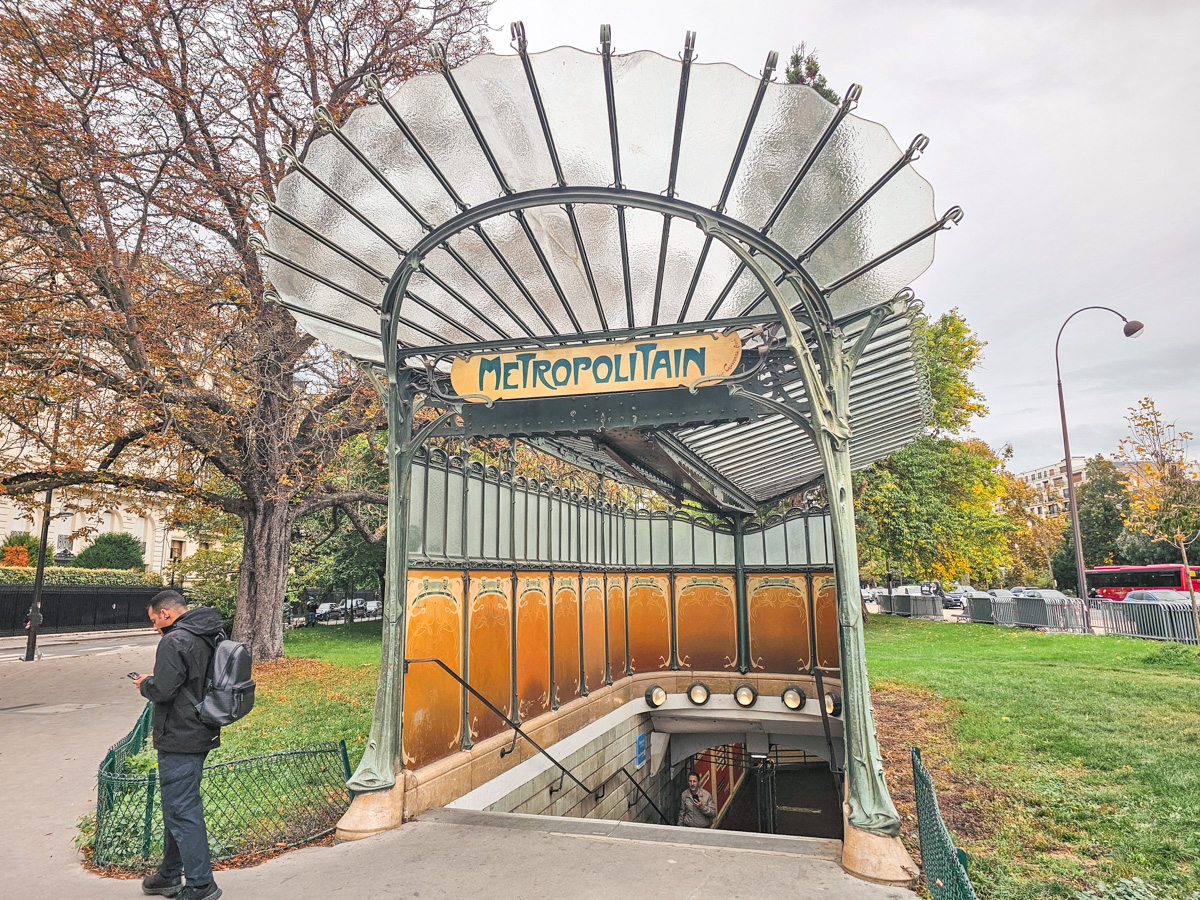
Unlike most of Guimard’s open-air Art Nouveau entrances, the ones at Abbesses and Porte Dauphine feature rare glass canopies called édicules B, designed to almost fully enclose the stairways. Only these two originals remain today: Porte Dauphine’s is the most intact, while Abbesses also holds the title of the city’s deepest metro station.
Assemblée Nationale
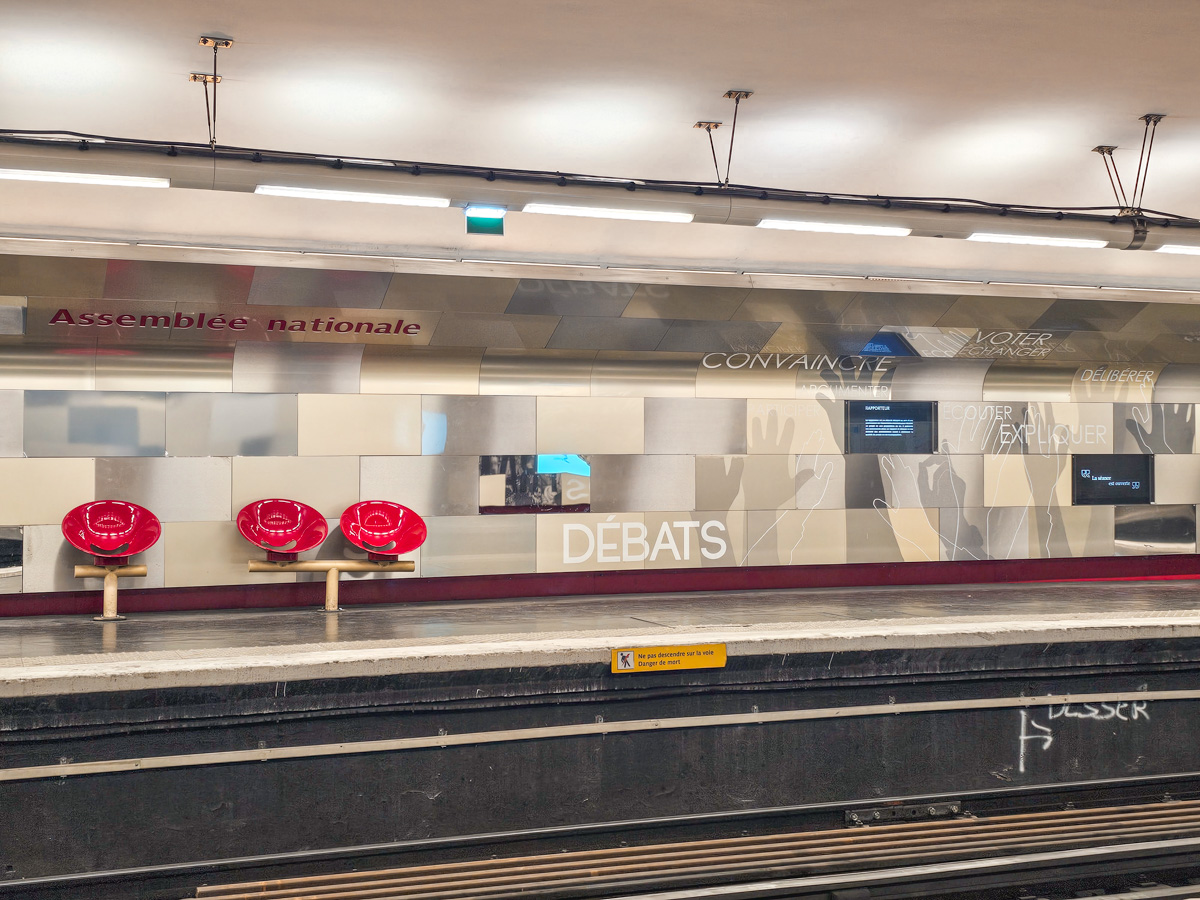
The Assemblée Nationale station sits right next to the French National Assembly – one of the country’s main governing bodies. Its walls are covered with words like vote, debate, and order, along with excerpts from the French Constitution. Screens showing live sessions link the metro to the democratic process happening just above.
Cluny-La Sorbonne

Cluny–La Sorbonne station, in the heart of the Latin Quarter, is near La Sorbonne, France’s oldest university. Its ceiling features Ailes et Flammes (Wings and Flames), a colorful mosaic by Jean René Bazaine with the signatures of writers like Victor Hugo and Molière woven into the design, a nod to the neighborhood’s literary and intellectual roots.
